Download to read offline



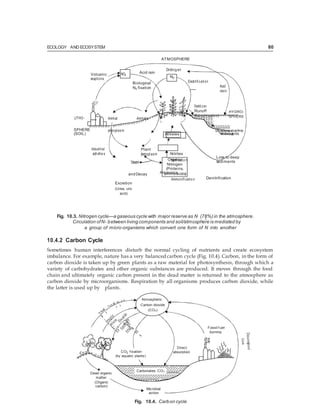




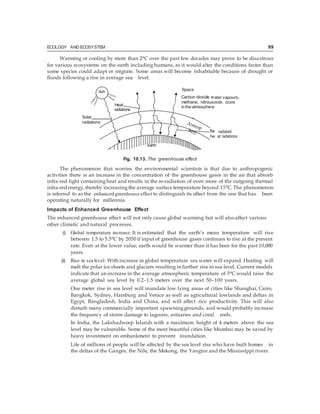




















The document discusses the concepts of environment, ecology, and ecosystems. It defines environment as the physical and biological factors surrounding an organism, including interactions between air, water, land, living organisms, and materials. Ecology is defined as the study of organisms in their natural environment and interactions. Key points: - Ecosystems consist of biotic (living) and abiotic (non-living) components that interact, including plants, animals, microorganisms, climate, soil and other physical factors. - Food chains and food webs show the feeding relationships between organisms in an ecosystem and how energy and nutrients flow between trophic levels. - Both biotic and abiotic factors influence ecosystem structure and function


![Ecosystem and it's characters [Recovered] 12.pptx](https://cdn.slidesharecdn.com/ss_thumbnails/ecosystemrecovered12-241213040441-dc7a3f7a-thumbnail.jpg?width=640&height=640&fit=bounds)


