NATURAL
RESOURCES
Natural ResourcesNatural Resources are all that exists without the
actions of humankind. This includes all natural
characteristics such as magnetic, gravitational, and
electrical properties and forces.
A natural resource may exist as a separate entity
such as fresh water, and air, as well as a living
organism such as a fish, or it may exist in an
alternate form which must be processed to obtain the
resource such as metal ores, oil, and most forms of
energy.
TYPES OF NATURAL RESOURCES
 FOREST RESOURCES
 WATER RESOURCES
 MINERAL RESOURCES
 LAND RESOURCES
 ENERGY RESOURCES
FOREST RESOURCES
• Introduction
• Use and over exploitation
FOREST RESOURCES
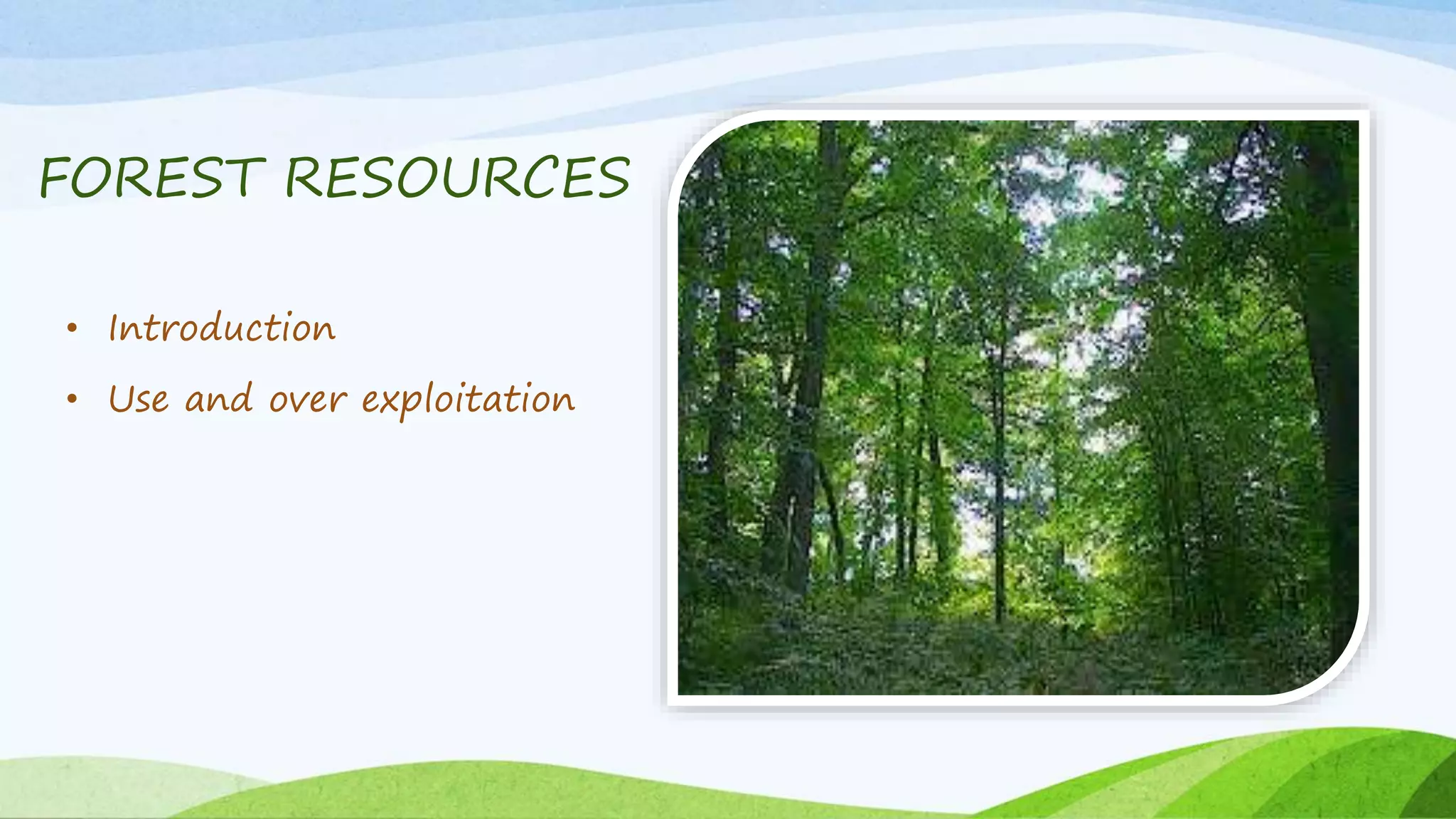
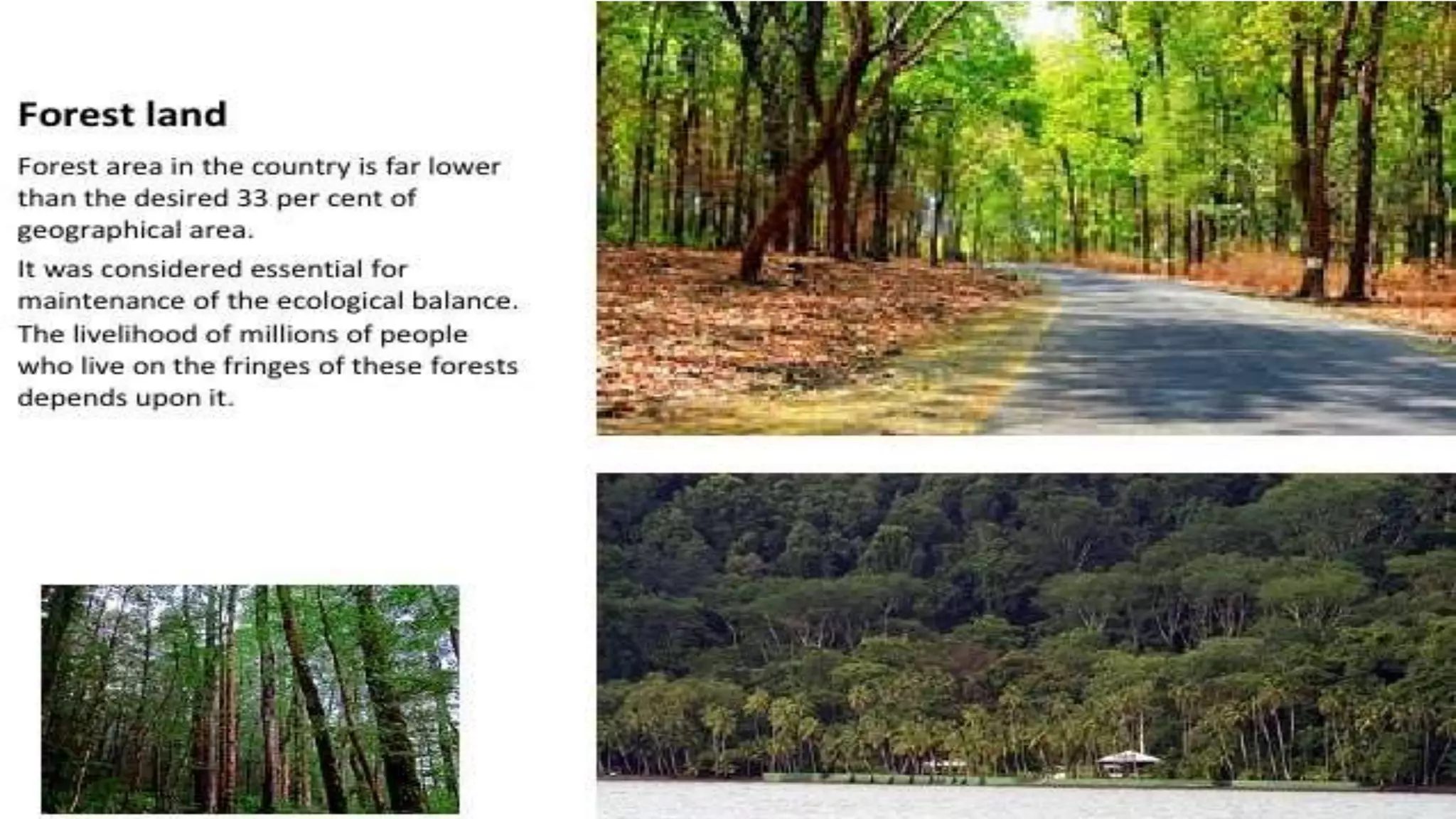
INTRODUCTION: In India, forests form 23 percent of the
total land area. The word ‘forest’ is derived from the Latin word
‘foris’ means ‘outside’.
A forest is a natural, self-sustaining community
characterized by vertical structure created by presence of
trees. Trees are large, generally single-stemmed, woody
plants.
A forest is a collection of past responses to
outside influences and internal competitive interactions.
Therefore, the present status of any forest, indeed of any
natural community, reflects what has gone on before.
Use and Over Exploitation:
A forest is a biotic community predominantly
of trees, shrubs and other woody vegetation, usually with a
closed canopy. This invaluable renewable natural resource is
beneficial to man in many ways.
(a) Conservation of Soil: Forests prevent soil erosion by binding the
soil with the network of roots of the different plants and reduce the
velocity of wind and rain — which are the chief agents causing
erosion.
(b) Reduction of Atmospheric Pollution: By using up carbon
dioxide and giving off oxygen during the process of
photosynthesis, forests reduce pollution and purify the
environment.
(C)Control of Water flow: In the forests, the thick layer of humus
acts like a big sponge and soaks rain water preventing run-off,
thereby preventing flash-floods. Humus prevents quick
evaporation of water, thereby ensuring a perennial supply of
water to streams, springs and wells.
MINERAL RESOURCES
Definition: Minerals provide
the material used to make
most of the things of
industrial- based society;
roads, cars, computers,
fertilizers, etc.
Types of Mineral Resources:
Minerals in general have been
categorized into three classes’ fuel, metallic and non-
metallic. Fuel minerals like coal, oil and natural gas have
been given prime importance as they account for nearly
87% of the value of mineral production whereas
metallic and non-metallic constitutes 6 to 7%.
Fuel Minerals
 Natural Gas
 Crude Oil
 Coal
Metallic and Non-metallic Minerals
WATER RESOURCES
• Introduction
• Uses
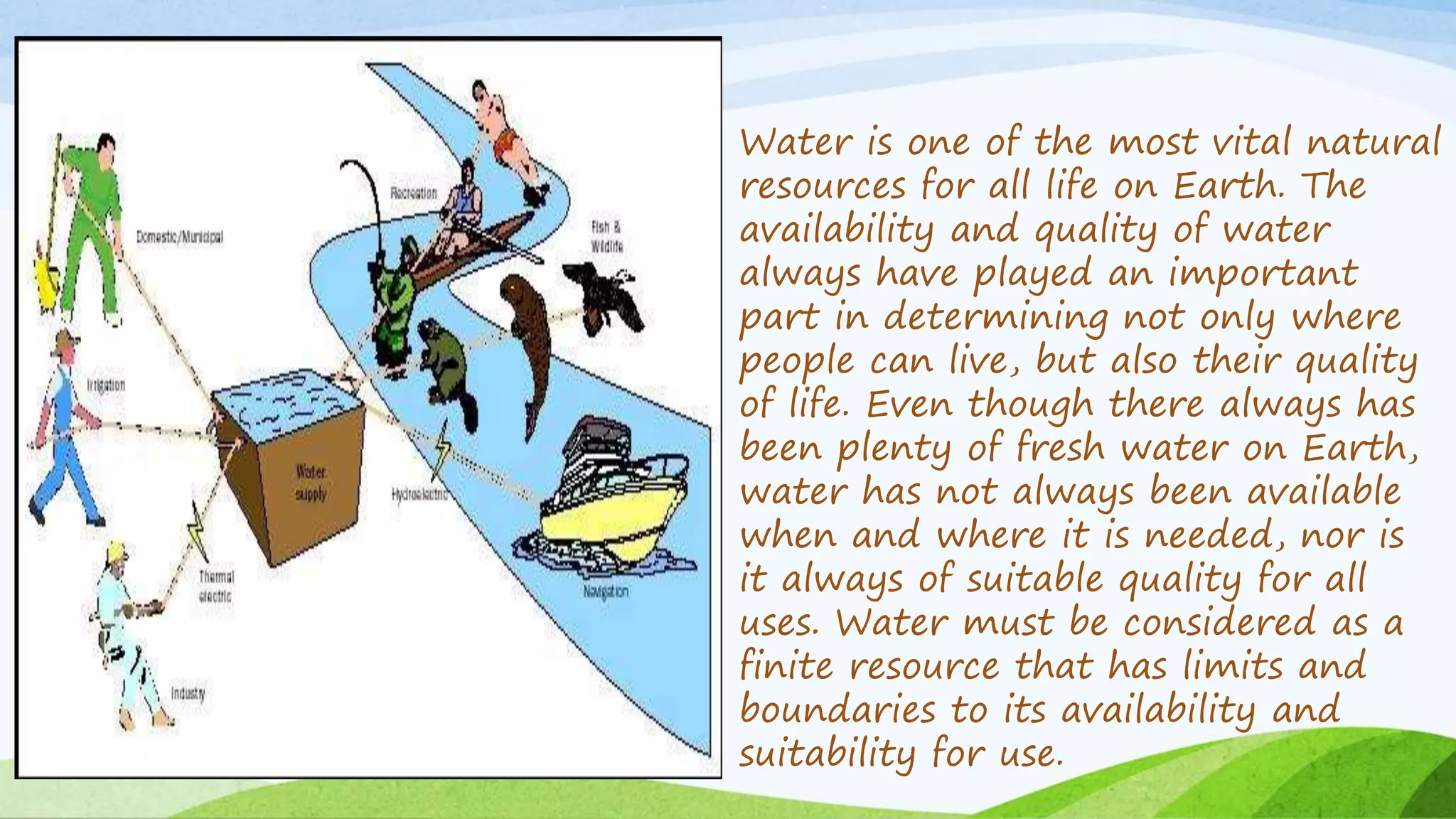
Water is one of the most vital natural
resources for all life on Earth. The
availability and quality of water
always have played an important
part in determining not only where
people can live, but also their quality
of life. Even though there always has
been plenty of fresh water on Earth,
water has not always been available
when and where it is needed, nor is
it always of suitable quality for all
uses. Water must be considered as a
finite resource that has limits and
boundaries to its availability and
suitability for use.
Uses Of Water
 Agricultural needs
 Industrial Needs
 House Hold Needs
 Energy Generation
Water is the most amazing thing on the
earth.It has many uses as follows
Land Resources
They occupy nearly 20 percent of the earth surface. It
covers around 13000 million hectares of the area. The
houses, roads and factories occupy nearly one third of the
land.
The soil is defined as a natural body which keeps on
changing and allows the plants to grow.
Energy Resources
Energy may be defined as the capacity to do work. In today’s
world development is impossible without energy. Life is
unthinkable without energy. Both energy production and energy
utilization are the indicators of a country’s progress as it is a
primary input for industrial operation.
• Thermal energy
• Chemical energy
• Mechanical energy
• Nuclear energy
• Solar energy
• Electrical energy
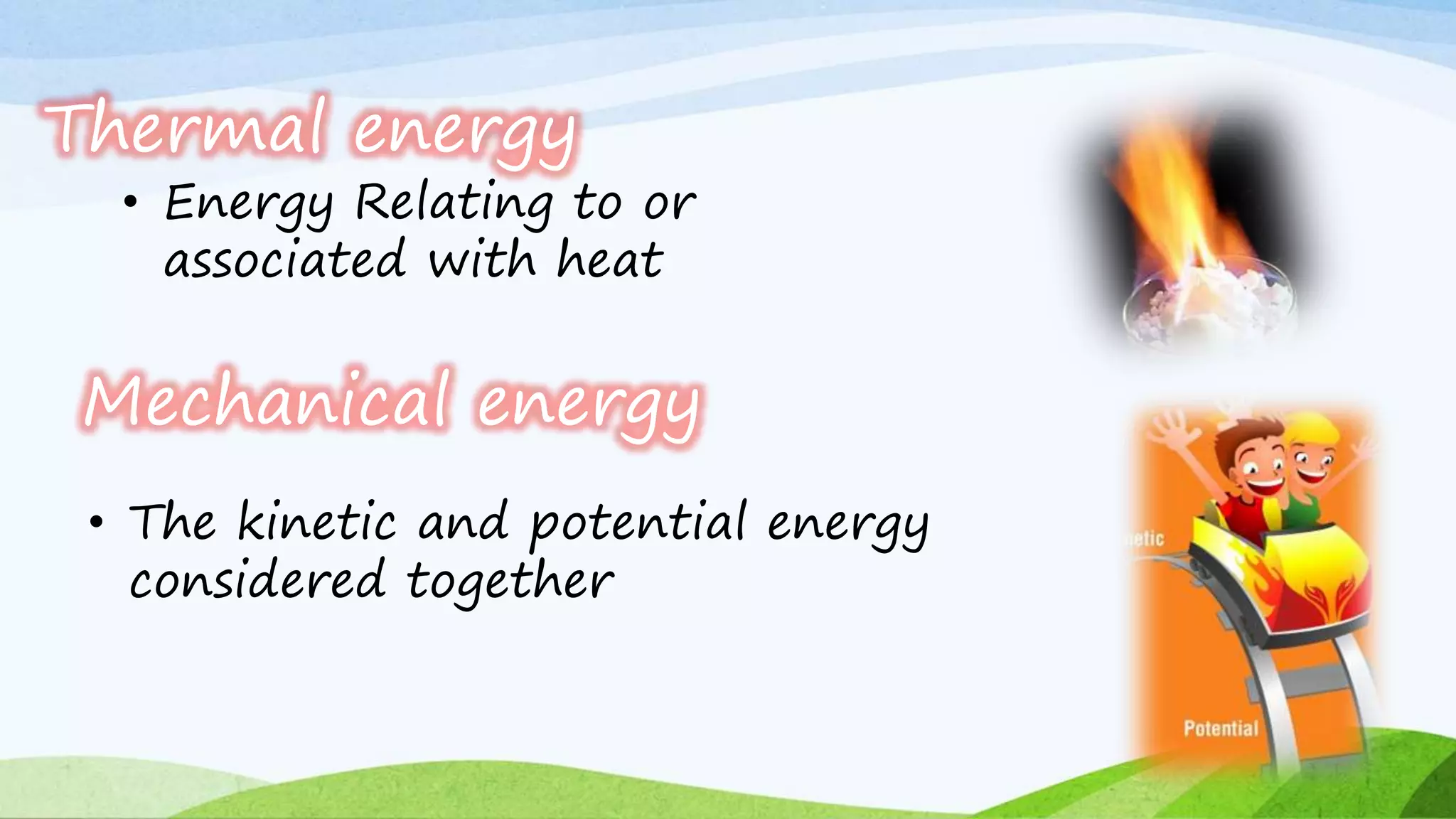
• Energy Relating to or
associated with heat
Mechanical energy
• The kinetic and potential energy
considered together
Thermal energy
Chemical energy
• That part of the energy in a substance that
can be released by a chemical reaction
Electrical energy
• Energy made available by the flow of
electric charge through a conductor
Nuclear energy
• Energy produced by fusion or fission
of the nuclei of an atom or simply the
energy released by a nuclear reaction
Solar energy
• Energy radiated by the sun.
Primary Energy Resources
• Renewable/Inexhaustible/Non-Conventional sources of
energy.
• Example : Wood, Solar energy etc
Secondary Energy Resources
• Does occur in nature but are derived from primary
energy sources
• Example: Petrol, Hydrogen obtained through
electrolysis of water etc.
Save Nature To
Live Happy
Natural resources

Natural resources

  • 1.
  • 2.
    Natural ResourcesNatural Resourcesare all that exists without the actions of humankind. This includes all natural characteristics such as magnetic, gravitational, and electrical properties and forces. A natural resource may exist as a separate entity such as fresh water, and air, as well as a living organism such as a fish, or it may exist in an alternate form which must be processed to obtain the resource such as metal ores, oil, and most forms of energy.
  • 3.
    TYPES OF NATURALRESOURCES  FOREST RESOURCES  WATER RESOURCES  MINERAL RESOURCES  LAND RESOURCES  ENERGY RESOURCES
  • 4.
    FOREST RESOURCES • Introduction •Use and over exploitation
  • 5.
    FOREST RESOURCES INTRODUCTION: InIndia, forests form 23 percent of the total land area. The word ‘forest’ is derived from the Latin word ‘foris’ means ‘outside’. A forest is a natural, self-sustaining community characterized by vertical structure created by presence of trees. Trees are large, generally single-stemmed, woody plants. A forest is a collection of past responses to outside influences and internal competitive interactions. Therefore, the present status of any forest, indeed of any natural community, reflects what has gone on before.
  • 6.
    Use and OverExploitation: A forest is a biotic community predominantly of trees, shrubs and other woody vegetation, usually with a closed canopy. This invaluable renewable natural resource is beneficial to man in many ways. (a) Conservation of Soil: Forests prevent soil erosion by binding the soil with the network of roots of the different plants and reduce the velocity of wind and rain — which are the chief agents causing erosion. (b) Reduction of Atmospheric Pollution: By using up carbon dioxide and giving off oxygen during the process of photosynthesis, forests reduce pollution and purify the environment. (C)Control of Water flow: In the forests, the thick layer of humus acts like a big sponge and soaks rain water preventing run-off, thereby preventing flash-floods. Humus prevents quick evaporation of water, thereby ensuring a perennial supply of water to streams, springs and wells.
  • 7.
    MINERAL RESOURCES Definition: Mineralsprovide the material used to make most of the things of industrial- based society; roads, cars, computers, fertilizers, etc.
  • 8.
    Types of MineralResources: Minerals in general have been categorized into three classes’ fuel, metallic and non- metallic. Fuel minerals like coal, oil and natural gas have been given prime importance as they account for nearly 87% of the value of mineral production whereas metallic and non-metallic constitutes 6 to 7%. Fuel Minerals  Natural Gas  Crude Oil  Coal Metallic and Non-metallic Minerals
  • 9.
  • 10.
    Water is oneof the most vital natural resources for all life on Earth. The availability and quality of water always have played an important part in determining not only where people can live, but also their quality of life. Even though there always has been plenty of fresh water on Earth, water has not always been available when and where it is needed, nor is it always of suitable quality for all uses. Water must be considered as a finite resource that has limits and boundaries to its availability and suitability for use.
  • 11.
    Uses Of Water Agricultural needs  Industrial Needs  House Hold Needs  Energy Generation Water is the most amazing thing on the earth.It has many uses as follows
  • 12.
    Land Resources They occupynearly 20 percent of the earth surface. It covers around 13000 million hectares of the area. The houses, roads and factories occupy nearly one third of the land. The soil is defined as a natural body which keeps on changing and allows the plants to grow.
  • 18.
    Energy Resources Energy maybe defined as the capacity to do work. In today’s world development is impossible without energy. Life is unthinkable without energy. Both energy production and energy utilization are the indicators of a country’s progress as it is a primary input for industrial operation.
  • 19.
    • Thermal energy •Chemical energy • Mechanical energy • Nuclear energy • Solar energy • Electrical energy
  • 20.
    • Energy Relatingto or associated with heat Mechanical energy • The kinetic and potential energy considered together Thermal energy
  • 21.
    Chemical energy • Thatpart of the energy in a substance that can be released by a chemical reaction Electrical energy • Energy made available by the flow of electric charge through a conductor
  • 22.
    Nuclear energy • Energyproduced by fusion or fission of the nuclei of an atom or simply the energy released by a nuclear reaction Solar energy • Energy radiated by the sun.
  • 23.
    Primary Energy Resources •Renewable/Inexhaustible/Non-Conventional sources of energy. • Example : Wood, Solar energy etc Secondary Energy Resources • Does occur in nature but are derived from primary energy sources • Example: Petrol, Hydrogen obtained through electrolysis of water etc.
  • 24.