ECOSYSTEM
What is an ecosystem?
Concept of an ecosystem:
An ‘ecosystem’ is a region with a specific and
recognizable landscape form ,such as a forest,
grassland , desert, wetland or coastal area.
The nature of the ecosystem depends on its
geographical features such as hills, mountains
,plains ,rivers ,lakes , coastal areas or islands.
 The ecosystem is controlled by the climatic conditions such as the amount
of sunlight temperature and rainfall in the region.
 Ecosystems form the foundations of biospheres and determine the life of
organisms, everywhere on the earth.
 Living organism depend on other non-living factors for their survival and
the absence of one can affect all the organisms in an ecosystem.
 Human beings are also very much dependent on the ecosystem for their
survival.
 The ecosystem provides us countless benefits which include food, water,
soil formation , pollination and air purification.
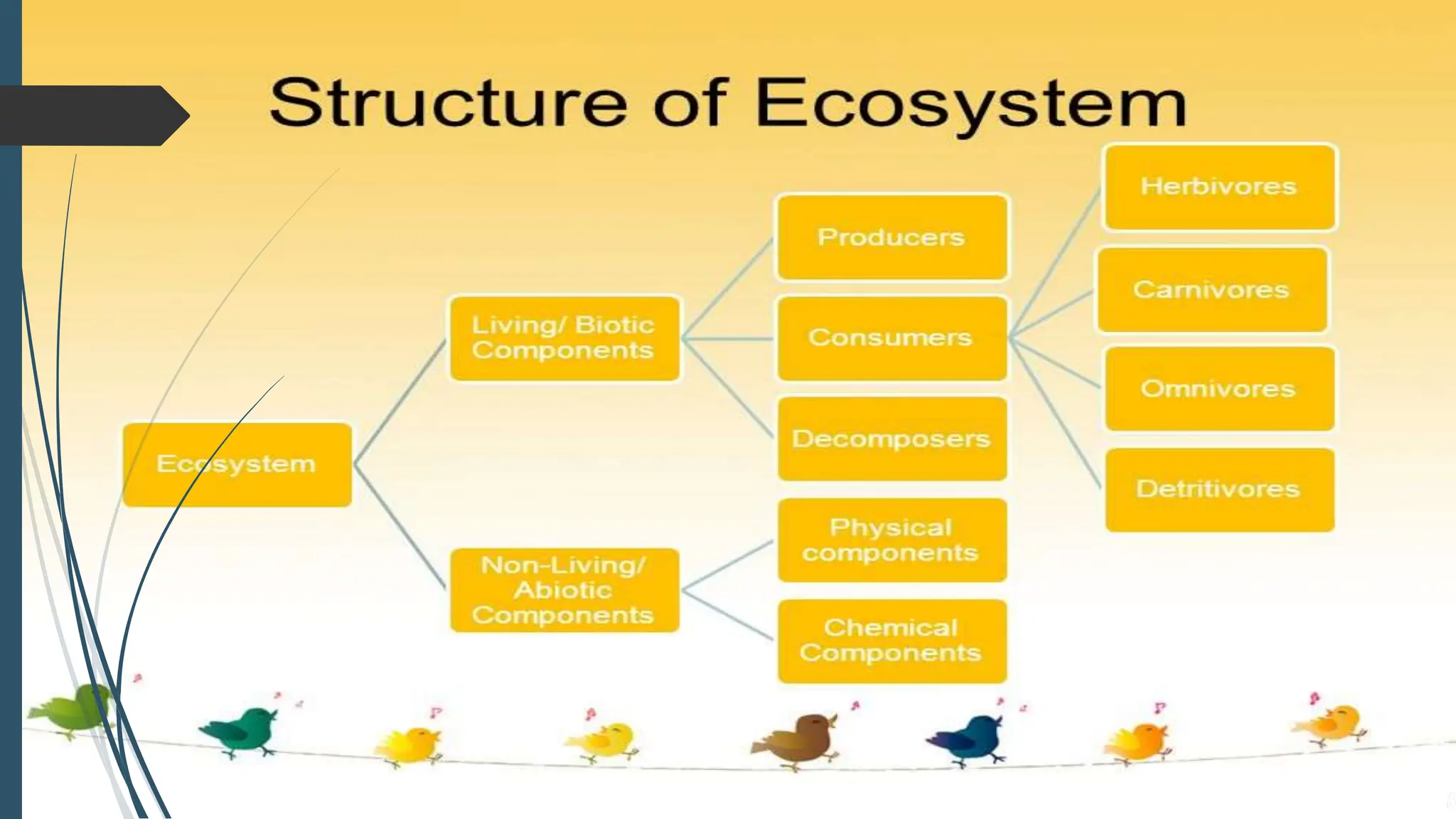
 Mainly, the ecosystem means the living community of plants and animals
in any area together with non-living components of the environment-soil,
air and water.
RESOURCE UTILIZATION:
 Resources can be consumed by one organism
and as a result , become unavailable to another
organism.
 For plants key resources are light ,nutrients
water and place to grow.
 For animals key resources are food and water .
KEY RESOURCES FOR PLANTS:
 Plants form the critical base of food chain in nearly all
ecosystems.
 Through photosynthesis ,plants harvest the energy of the
sun ,providing both food and habitat for other organisms.
 For example ,plants are fed upon by insects which may
be eaten by birds ,which are in turn are eaten by insects
of prey and so on.
 Plants provide our food , materials for shelter ,fuel to
warm us and the air we breathe.
 Plants provide food for animals and habitat for wild life.
KEY RESOURCES FOR ANIMALS:
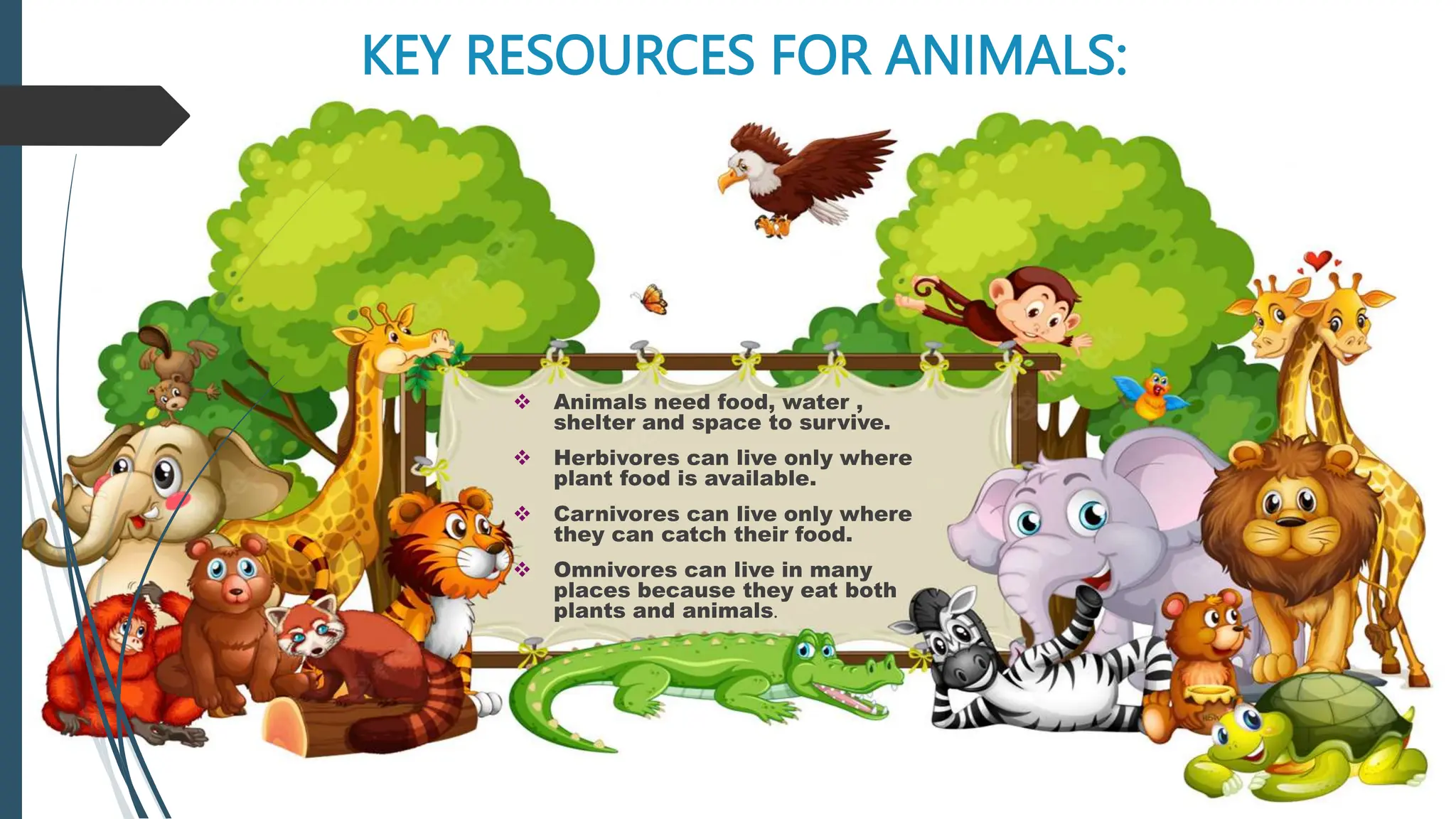
 Animals need food, water ,
shelter and space to survive.
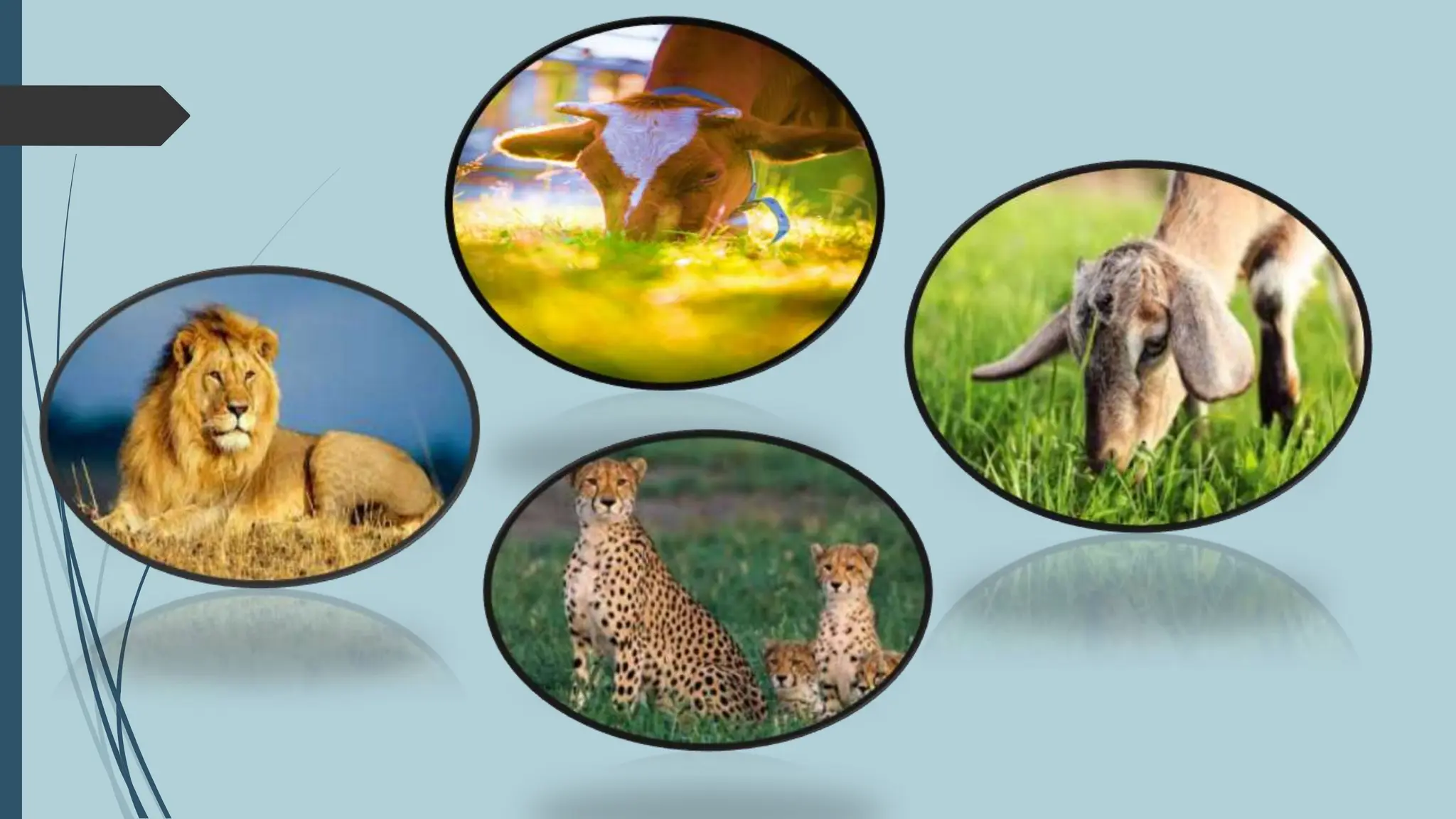
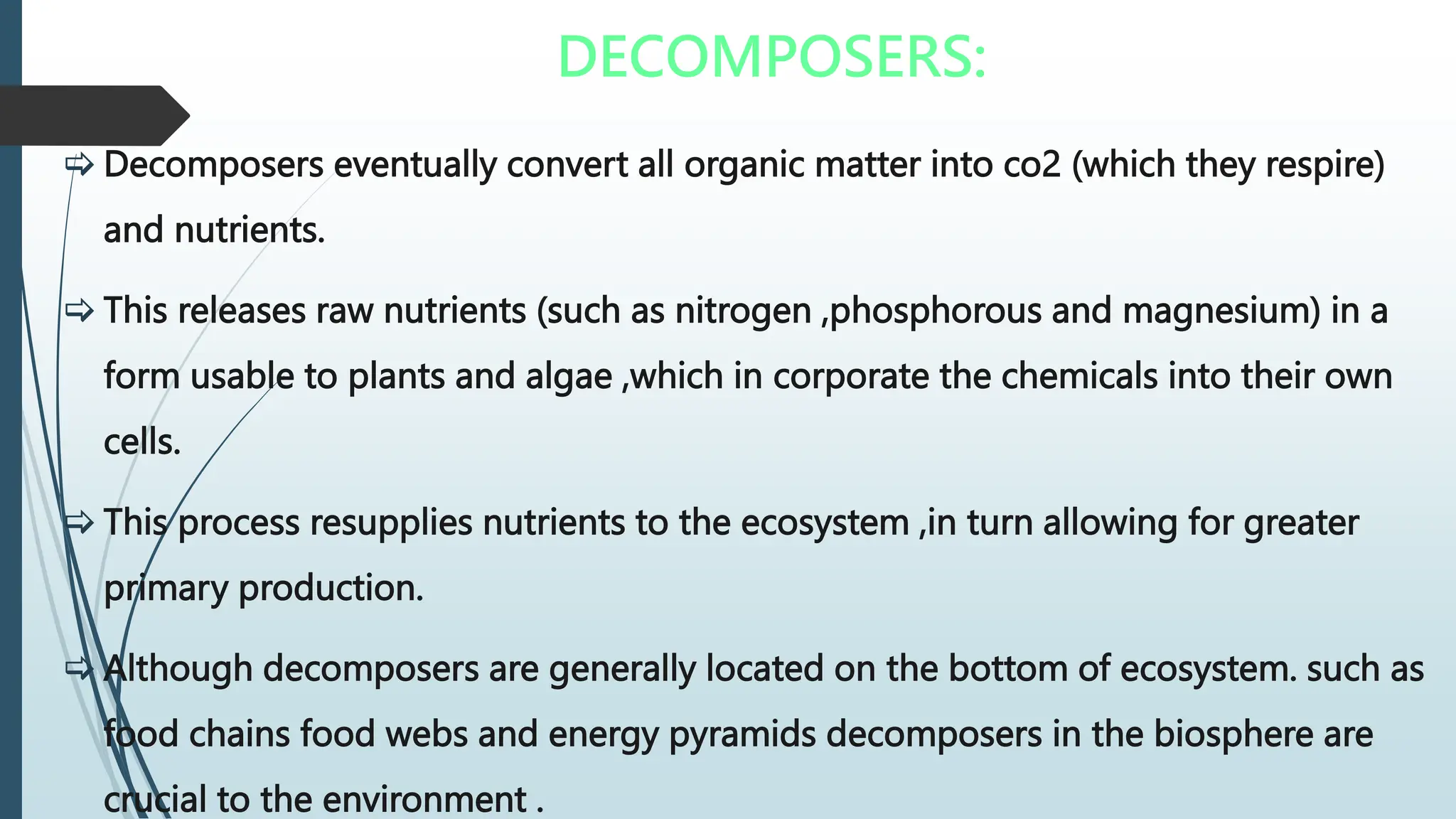
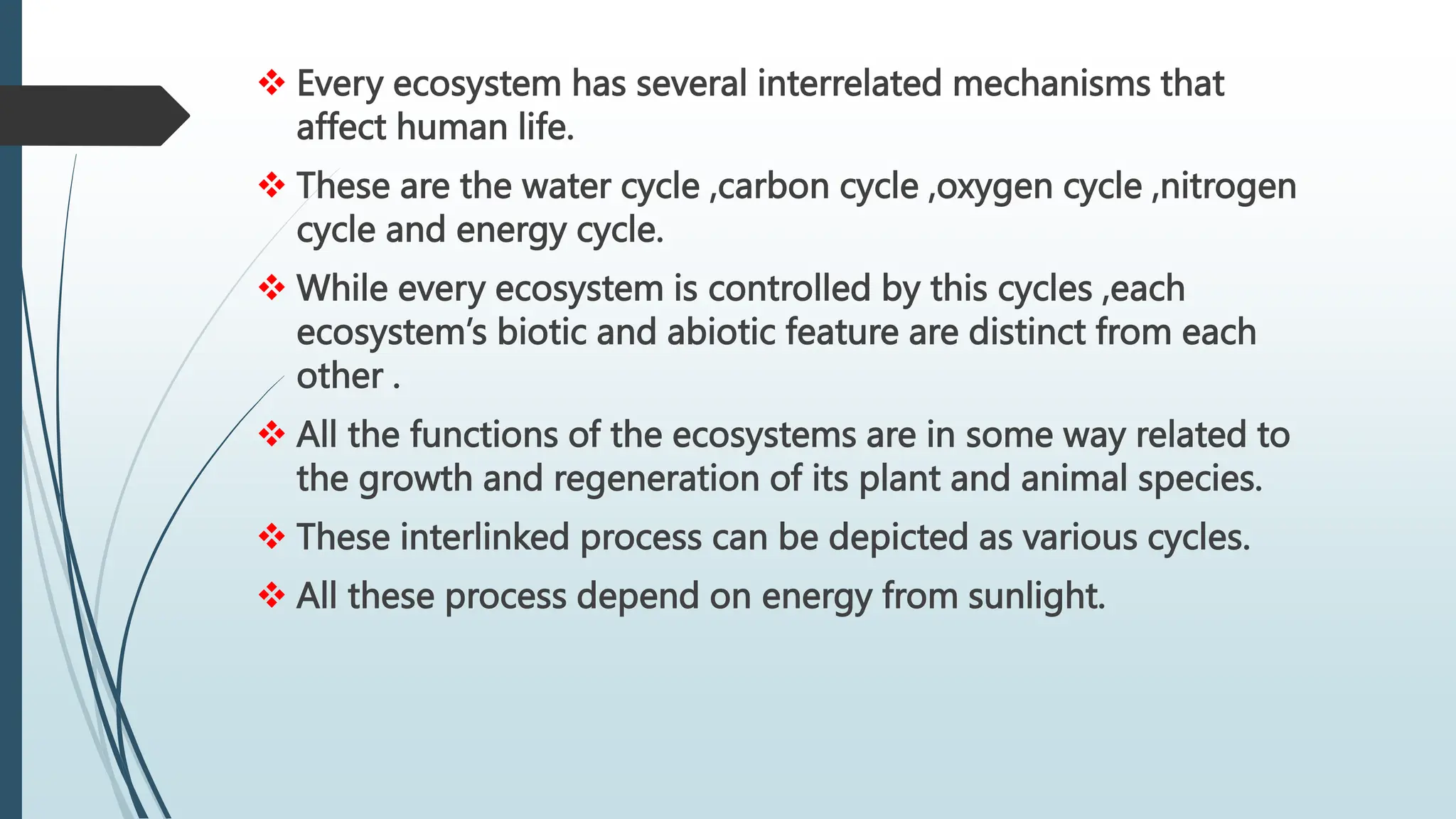
 Herbivores can live only where
plant food is available.
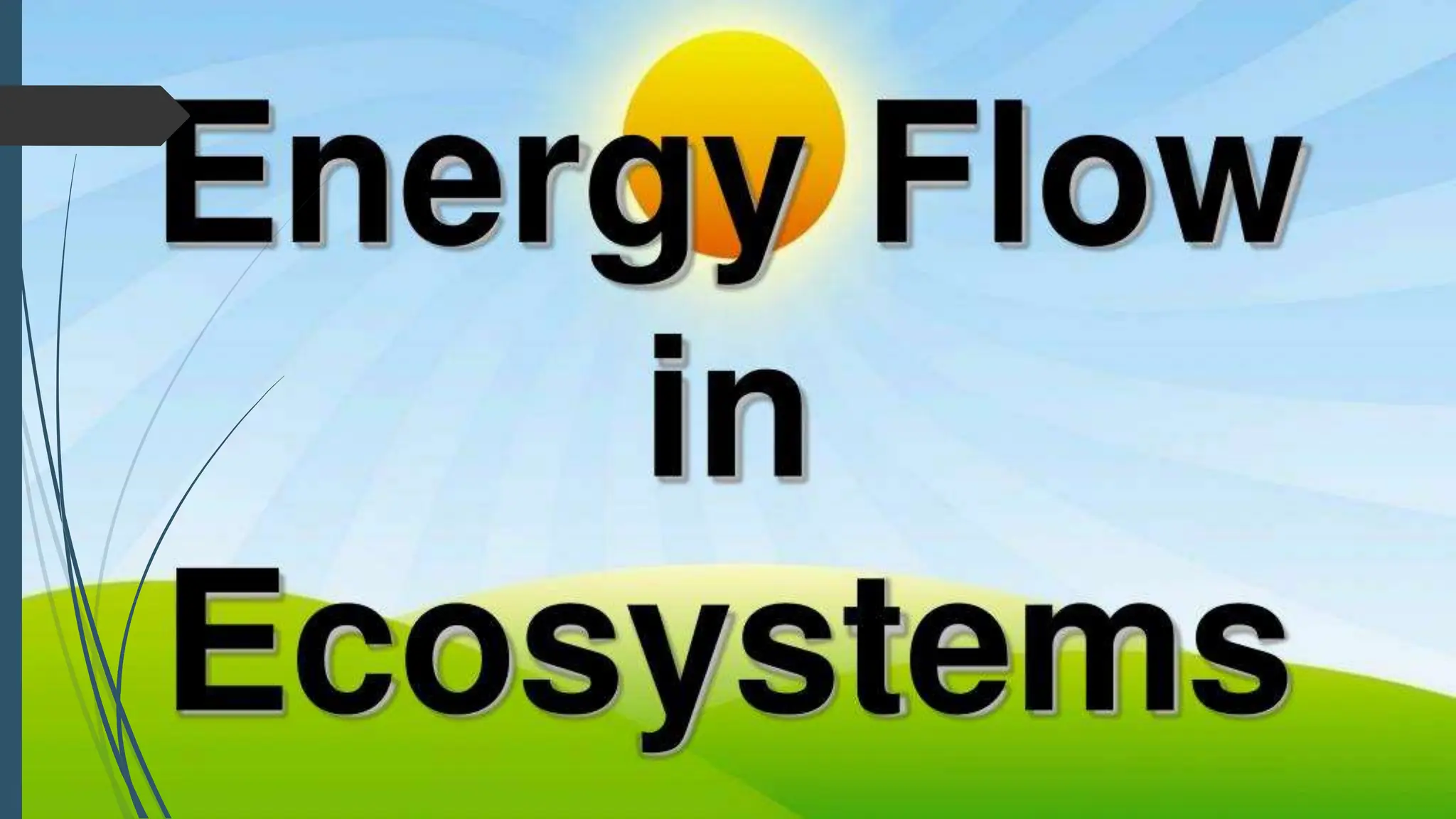
 Carnivores can live only where
they can catch their food.
 Omnivores can live in many
places because they eat both
plants and animals.
HABITAT:
Habitat is the physical area where an animal
lives.
In term habitat has several meanings .
In ecology it means either the area and
resources used by a particular species.
A habitat meets all the environment conditions
an organism needs to survive.
A habitat is a home environment for plants and
animals or other organisms.
STRUCTURE AND FUNCTION OF AN ECOSYSTEM:
* Since each ecosystem has a non-living and a living part that are
linked to each other one needs to look around and observe this
closely.
* The non-living components of an ecosystem are the amount of
water, inorganic substances and organic compound and climatic
conditions,
* Which depend on geographical conditions and location.
* The living organisms in an ecosystem are inseperable from their
ecosystem.
* It regulates the essential ecological process, supports life
ecosystem and renders stability.
* It is also responsible for the cycling of nutrients between biotic
and abotic components.
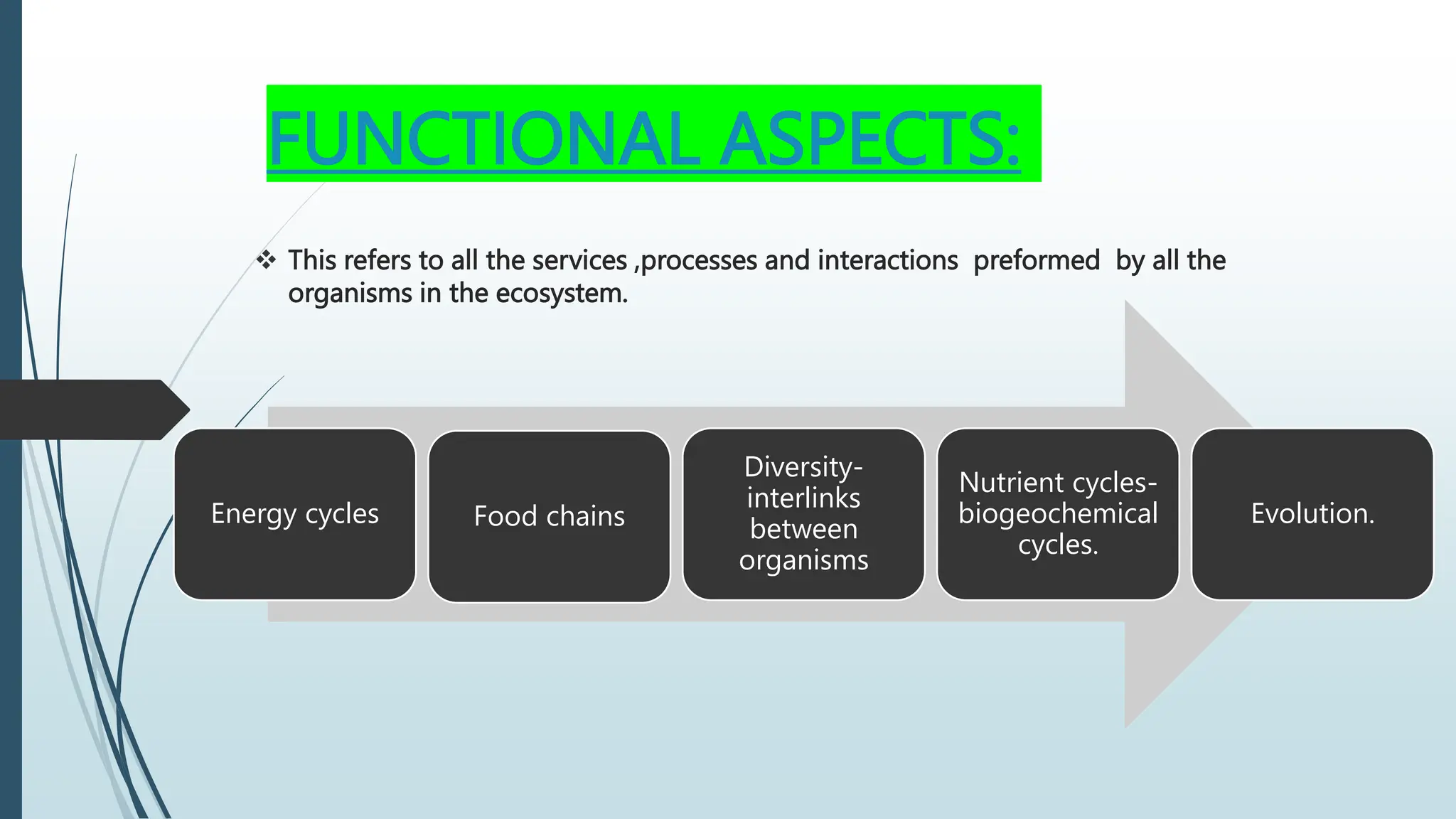
FUNCTIONAL ASPECTS:
 This refers to all the services ,processes and interactions preformed by all the
organisms in the ecosystem.
Energy cycles Food chains
Diversity-
interlinks
between
organisms
Nutrient cycles-
biogeochemical
cycles.
Evolution.
PRODUCERS CONSUMERS AND DECOMPOSERS:
Every living organism is
is in some way
dependent on other
organisms.
Plants are food for
herbivores animals
,which are in turn food
for carnivorous
animals.
So there are different
trophic levels in the
ecosystem some
organisms such as
fungi live only on dead
material and inorganic
matter.
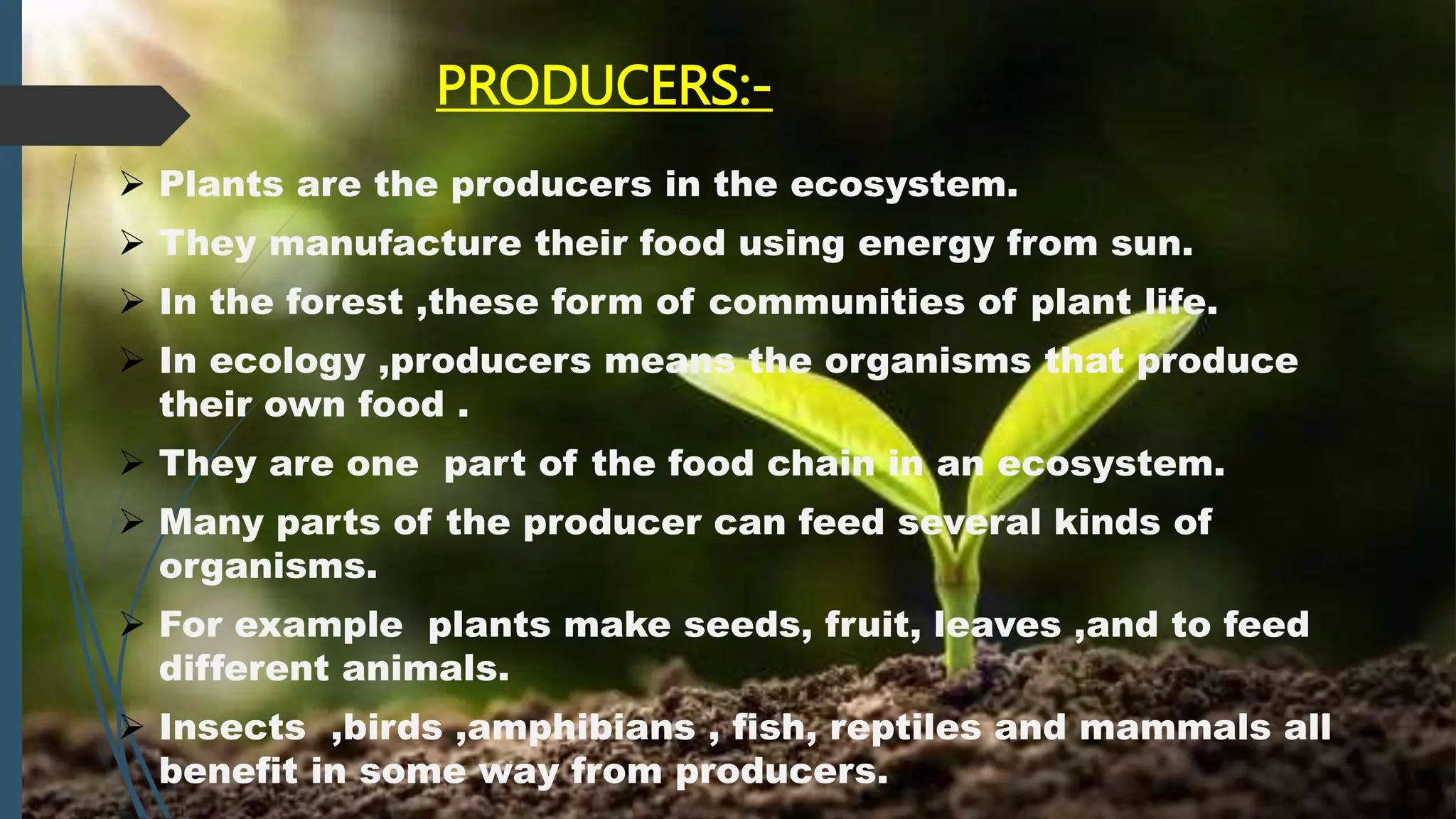
PRODUCERS:-
 Plants are the producers in the ecosystem.
 They manufacture their food using energy from sun.
 In the forest ,these form of communities of plant life.
 In ecology ,producers means the organisms that produce
their own food .
 They are one part of the food chain in an ecosystem.
 Many parts of the producer can feed several kinds of
organisms.
 For example plants make seeds, fruit, leaves ,and to feed
different animals.
 Insects ,birds ,amphibians , fish, reptiles and mammals all
benefit in some way from producers.
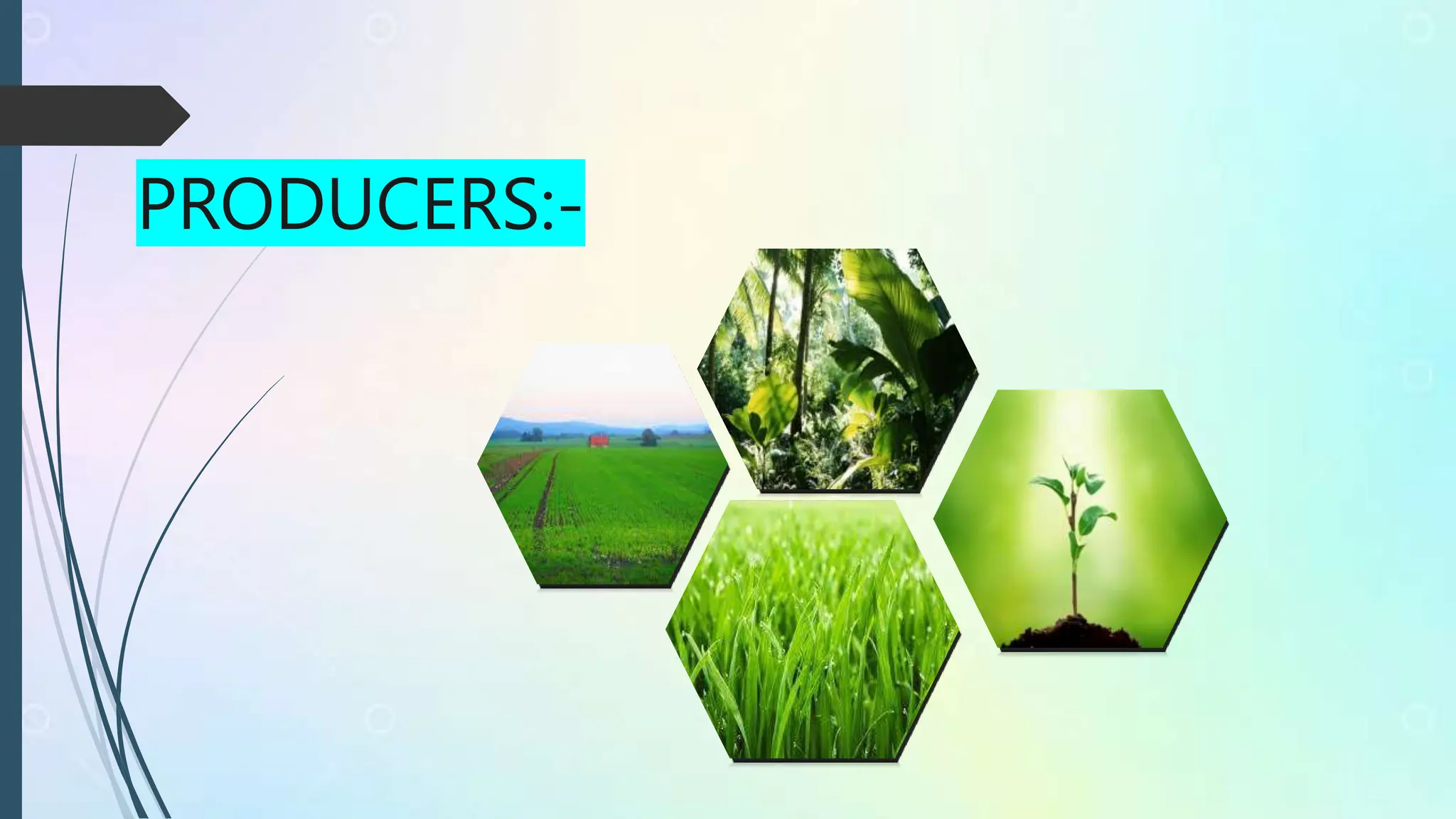
PRODUCERS:-
CONSUMERS:-
Consumers are organisms (including humans) that they get their
energy from producers ,the flow of energy through an ecosystem.
For example ,producers(such as plants) make their own food by the
process of photosynthesis.
An organism ate this plants ,that it would be a primary consumer.
The animal that eats this animal is known as the second order
consumer.
Scientifically ,all consumers are either herbivores ,carnivores
,omnivores or detrivors.
Consumers doesn’t make its own food, but gets it from eating plants
or other animals.
DECOMPOSERS:
 Decomposers eventually convert all organic matter into co2 (which they respire)
and nutrients.
 This releases raw nutrients (such as nitrogen ,phosphorous and magnesium) in a
form usable to plants and algae ,which in corporate the chemicals into their own
cells.
 This process resupplies nutrients to the ecosystem ,in turn allowing for greater
primary production.
 Although decomposers are generally located on the bottom of ecosystem. such as
food chains food webs and energy pyramids decomposers in the biosphere are
crucial to the environment .
 Every ecosystem has several interrelated mechanisms that
affect human life.
 These are the water cycle ,carbon cycle ,oxygen cycle ,nitrogen
cycle and energy cycle.
 While every ecosystem is controlled by this cycles ,each
ecosystem’s biotic and abiotic feature are distinct from each
other .
 All the functions of the ecosystems are in some way related to
the growth and regeneration of its plant and animal species.
 These interlinked process can be depicted as various cycles.
 All these process depend on energy from sunlight.
ENERGYFLOW:
 The energy cycle is based on the flow of energy through the
ecosystem.
 The energy from sunlight is converted by plants into growing
new plant material which includes the leaves ,flowers, fruits,
branches, trunks, and roots of plants.
 Since plants can grow by converting the sun’s energy directly
into their tissues ,they are known as producers in the
ecosystem.
 The plants are used by herbivore as food ,which given them
energy.
 Energy is also used for food activities such looking for food
,finding shelter ,breeding and rearing young ones.
 The carnivores ,in turn depend on the herbivores on which
they feed.
ECOLOGICAL SUCCESSION:-
 Ecological succession is a process through which ecosystems
tend to change over a period of time.
 Succession can be related to seasonal environmental changes
,which create changes in the community of plants and animals
living in the ecosystem.
 The present day communities in the world have come to be
because of succession that has occurred over millions of years
since life started on earth.
 Examples of areas where primary succession occurs are newly
cooled lava ,bare rock ,newly created pondeservoir.
FOOD CHAIN:-
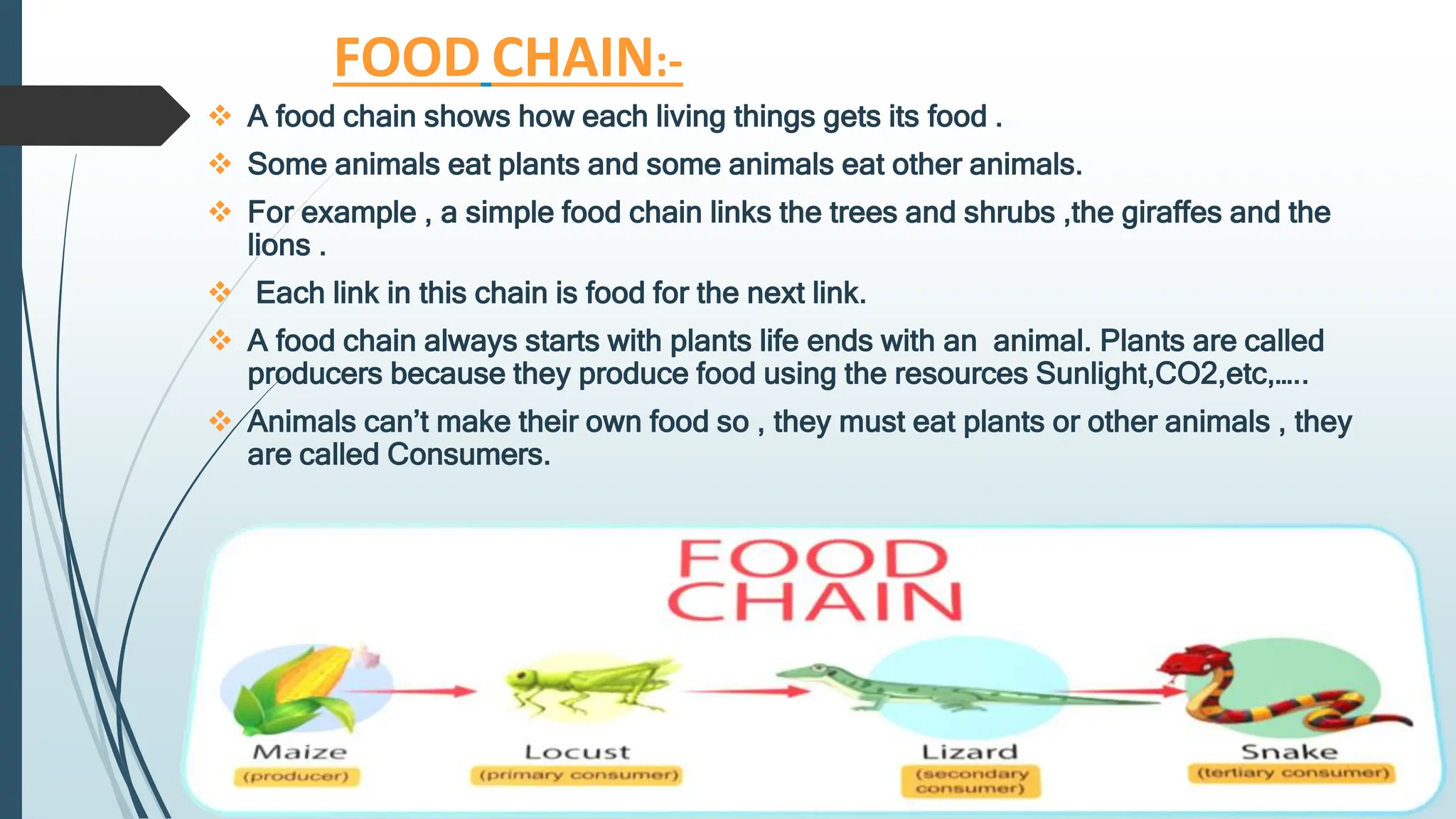
 A food chain shows how each living things gets its food .
 Some animals eat plants and some animals eat other animals.
 For example , a simple food chain links the trees and shrubs ,the giraffes and the
lions .
 Each link in this chain is food for the next link.
 A food chain always starts with plants life ends with an animal. Plants are called
producers because they produce food using the resources Sunlight,CO2,etc,…..
 Animals can’t make their own food so , they must eat plants or other animals , they
are called Consumers.
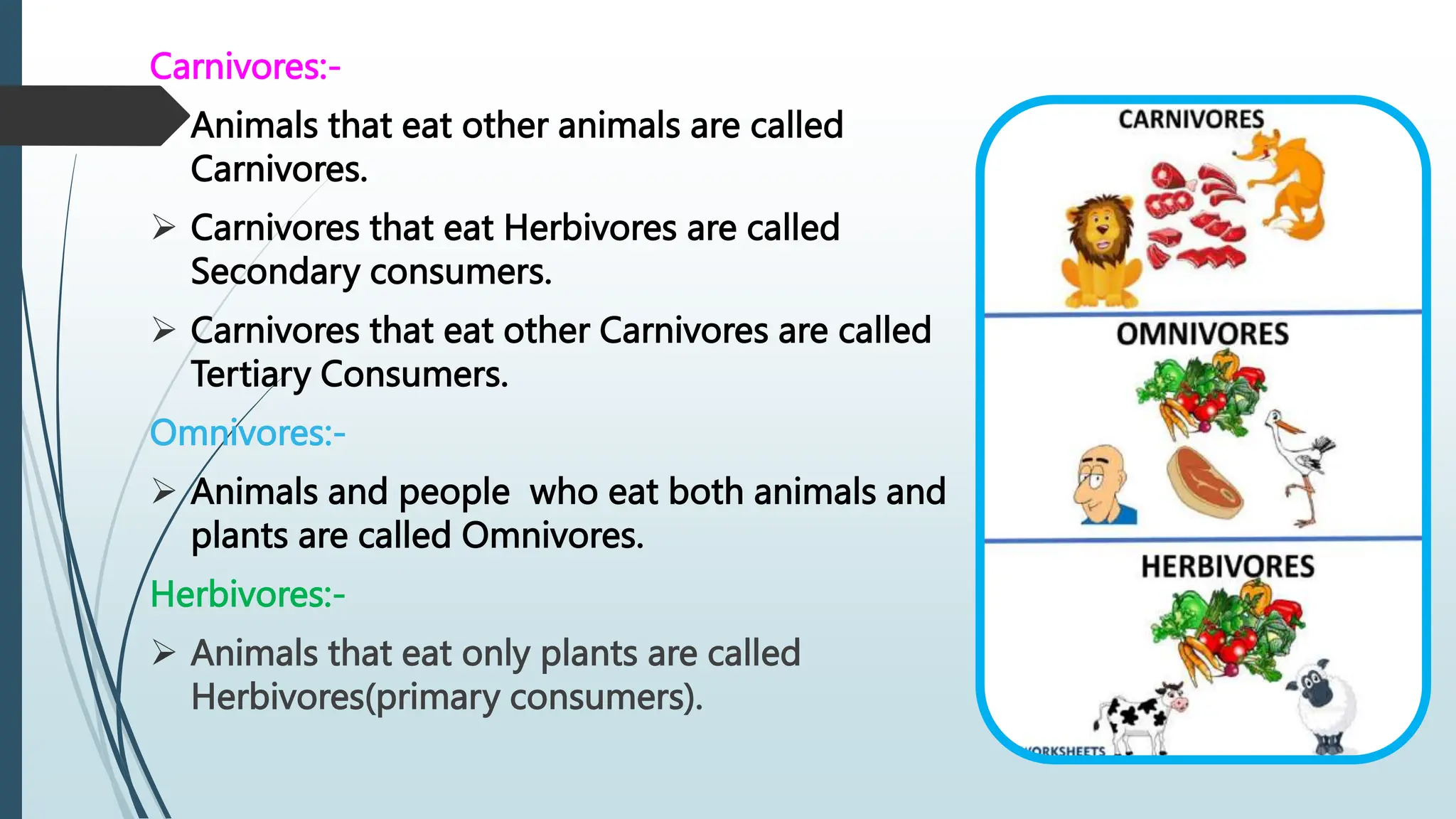
Carnivores:-
 Animals that eat other animals are called
Carnivores.
 Carnivores that eat Herbivores are called
Secondary consumers.
 Carnivores that eat other Carnivores are called
Tertiary Consumers.
Omnivores:-
 Animals and people who eat both animals and
plants are called Omnivores.
Herbivores:-
 Animals that eat only plants are called
Herbivores(primary consumers).
Types of food chains
There are two kinds of food chains namely the detritus food chain and the grazing food chain.
DETRITUS FOOD CHAIN :
 Beginning with dead organisms.
 The detritus food chain includes different species of organisms and plants like algae, bacteria, fungi,
protozoa, mites , insects, worms and so on.
 The food energy passes into decomposers and detrivorus , which area further eaten by smaller
organisms like carnivores.
 Carnivores like maggots ,become a meal for bigger carnivores like frogs ,snakes and so on.
 Primary consumers like fungi ,bacteria , protozoans, and so on are detrivorus which feed on detritus.
Grazing food chains:
 Beginning with producers.
 The grazing food chain is a type of food chain that starts with green plants passes through
herbivores and then to carnivores .
 In a grazing food chain ,energy is the lowest trophic level is acquired from photosynthesis.
 In this food chain the first energy transfer is from plants to herbivores.
FOOD WEB:
 There can’t be too many links in a single food chain because
the animals at the end of food chain would not get enough
food (and energy)to stay alive.
 Most animals are part of more than one food chain and eat
more than one kind of food in order to meet their food and
energy requirements.
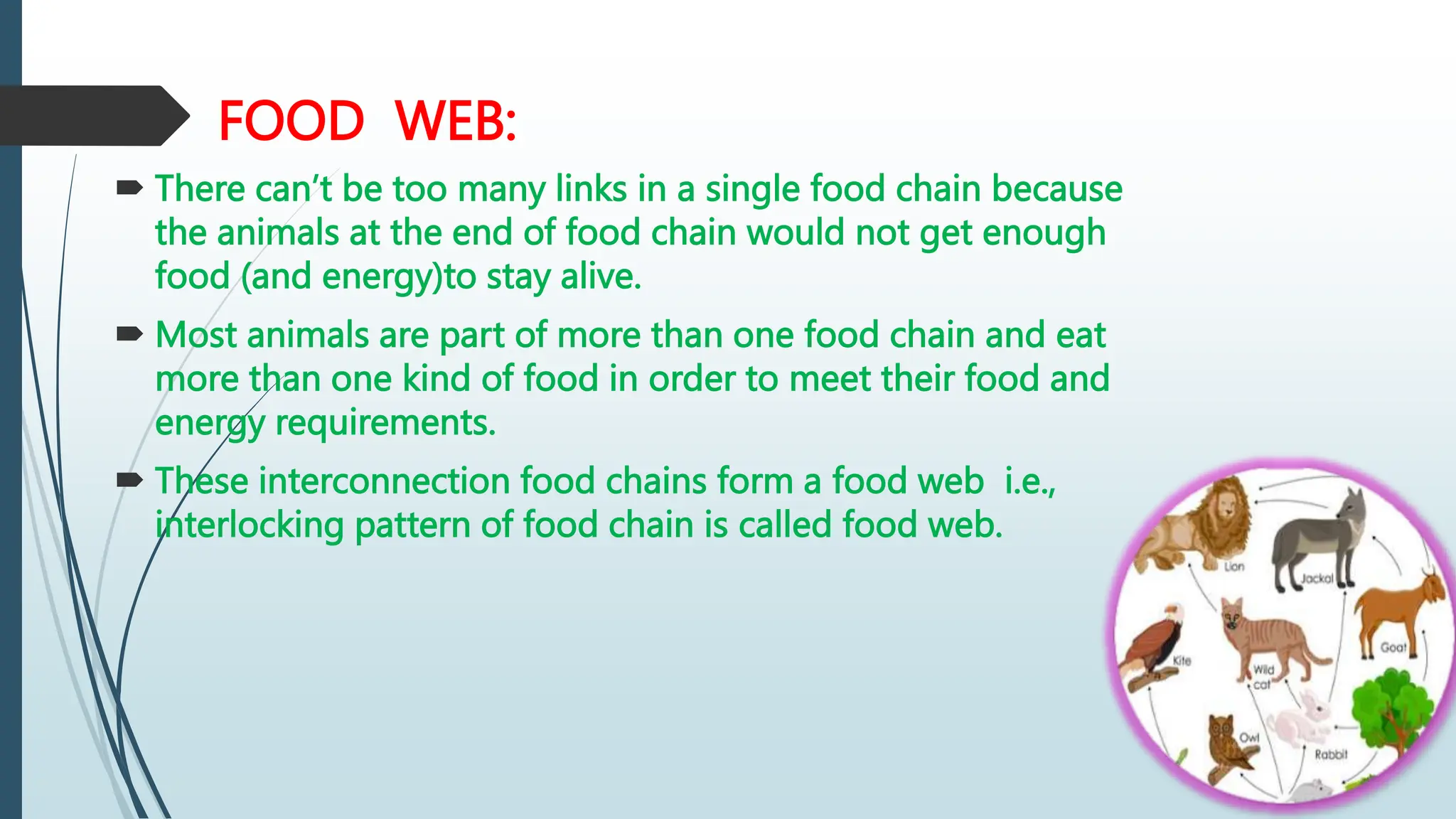
 These interconnection food chains form a food web i.e.,
interlocking pattern of food chain is called food web.
Ecosystem.pptx                   which is

Ecosystem.pptx which is

  • 1.
  • 2.
    What is anecosystem?
  • 3.
    Concept of anecosystem: An ‘ecosystem’ is a region with a specific and recognizable landscape form ,such as a forest, grassland , desert, wetland or coastal area. The nature of the ecosystem depends on its geographical features such as hills, mountains ,plains ,rivers ,lakes , coastal areas or islands.
  • 4.
     The ecosystemis controlled by the climatic conditions such as the amount of sunlight temperature and rainfall in the region.  Ecosystems form the foundations of biospheres and determine the life of organisms, everywhere on the earth.  Living organism depend on other non-living factors for their survival and the absence of one can affect all the organisms in an ecosystem.  Human beings are also very much dependent on the ecosystem for their survival.  The ecosystem provides us countless benefits which include food, water, soil formation , pollination and air purification.  Mainly, the ecosystem means the living community of plants and animals in any area together with non-living components of the environment-soil, air and water.
  • 5.
    RESOURCE UTILIZATION:  Resourcescan be consumed by one organism and as a result , become unavailable to another organism.  For plants key resources are light ,nutrients water and place to grow.  For animals key resources are food and water .
  • 6.
    KEY RESOURCES FORPLANTS:  Plants form the critical base of food chain in nearly all ecosystems.  Through photosynthesis ,plants harvest the energy of the sun ,providing both food and habitat for other organisms.  For example ,plants are fed upon by insects which may be eaten by birds ,which are in turn are eaten by insects of prey and so on.  Plants provide our food , materials for shelter ,fuel to warm us and the air we breathe.  Plants provide food for animals and habitat for wild life.
  • 7.
    KEY RESOURCES FORANIMALS:  Animals need food, water , shelter and space to survive.  Herbivores can live only where plant food is available.  Carnivores can live only where they can catch their food.  Omnivores can live in many places because they eat both plants and animals.
  • 8.
    HABITAT: Habitat is thephysical area where an animal lives. In term habitat has several meanings . In ecology it means either the area and resources used by a particular species. A habitat meets all the environment conditions an organism needs to survive. A habitat is a home environment for plants and animals or other organisms.
  • 11.
    STRUCTURE AND FUNCTIONOF AN ECOSYSTEM: * Since each ecosystem has a non-living and a living part that are linked to each other one needs to look around and observe this closely. * The non-living components of an ecosystem are the amount of water, inorganic substances and organic compound and climatic conditions, * Which depend on geographical conditions and location. * The living organisms in an ecosystem are inseperable from their ecosystem. * It regulates the essential ecological process, supports life ecosystem and renders stability. * It is also responsible for the cycling of nutrients between biotic and abotic components.
  • 12.
    FUNCTIONAL ASPECTS:  Thisrefers to all the services ,processes and interactions preformed by all the organisms in the ecosystem. Energy cycles Food chains Diversity- interlinks between organisms Nutrient cycles- biogeochemical cycles. Evolution.
  • 13.
    PRODUCERS CONSUMERS ANDDECOMPOSERS: Every living organism is is in some way dependent on other organisms. Plants are food for herbivores animals ,which are in turn food for carnivorous animals. So there are different trophic levels in the ecosystem some organisms such as fungi live only on dead material and inorganic matter.
  • 14.
    PRODUCERS:-  Plants arethe producers in the ecosystem.  They manufacture their food using energy from sun.  In the forest ,these form of communities of plant life.  In ecology ,producers means the organisms that produce their own food .  They are one part of the food chain in an ecosystem.  Many parts of the producer can feed several kinds of organisms.  For example plants make seeds, fruit, leaves ,and to feed different animals.  Insects ,birds ,amphibians , fish, reptiles and mammals all benefit in some way from producers.
  • 15.
  • 16.
    CONSUMERS:- Consumers are organisms(including humans) that they get their energy from producers ,the flow of energy through an ecosystem. For example ,producers(such as plants) make their own food by the process of photosynthesis. An organism ate this plants ,that it would be a primary consumer. The animal that eats this animal is known as the second order consumer. Scientifically ,all consumers are either herbivores ,carnivores ,omnivores or detrivors. Consumers doesn’t make its own food, but gets it from eating plants or other animals.
  • 18.
    DECOMPOSERS:  Decomposers eventuallyconvert all organic matter into co2 (which they respire) and nutrients.  This releases raw nutrients (such as nitrogen ,phosphorous and magnesium) in a form usable to plants and algae ,which in corporate the chemicals into their own cells.  This process resupplies nutrients to the ecosystem ,in turn allowing for greater primary production.  Although decomposers are generally located on the bottom of ecosystem. such as food chains food webs and energy pyramids decomposers in the biosphere are crucial to the environment .
  • 20.
     Every ecosystemhas several interrelated mechanisms that affect human life.  These are the water cycle ,carbon cycle ,oxygen cycle ,nitrogen cycle and energy cycle.  While every ecosystem is controlled by this cycles ,each ecosystem’s biotic and abiotic feature are distinct from each other .  All the functions of the ecosystems are in some way related to the growth and regeneration of its plant and animal species.  These interlinked process can be depicted as various cycles.  All these process depend on energy from sunlight.
  • 21.
    ENERGYFLOW:  The energycycle is based on the flow of energy through the ecosystem.  The energy from sunlight is converted by plants into growing new plant material which includes the leaves ,flowers, fruits, branches, trunks, and roots of plants.  Since plants can grow by converting the sun’s energy directly into their tissues ,they are known as producers in the ecosystem.  The plants are used by herbivore as food ,which given them energy.  Energy is also used for food activities such looking for food ,finding shelter ,breeding and rearing young ones.  The carnivores ,in turn depend on the herbivores on which they feed.
  • 22.
    ECOLOGICAL SUCCESSION:-  Ecologicalsuccession is a process through which ecosystems tend to change over a period of time.  Succession can be related to seasonal environmental changes ,which create changes in the community of plants and animals living in the ecosystem.  The present day communities in the world have come to be because of succession that has occurred over millions of years since life started on earth.  Examples of areas where primary succession occurs are newly cooled lava ,bare rock ,newly created pondeservoir.
  • 23.
    FOOD CHAIN:-  Afood chain shows how each living things gets its food .  Some animals eat plants and some animals eat other animals.  For example , a simple food chain links the trees and shrubs ,the giraffes and the lions .  Each link in this chain is food for the next link.  A food chain always starts with plants life ends with an animal. Plants are called producers because they produce food using the resources Sunlight,CO2,etc,…..  Animals can’t make their own food so , they must eat plants or other animals , they are called Consumers.
  • 24.
    Carnivores:-  Animals thateat other animals are called Carnivores.  Carnivores that eat Herbivores are called Secondary consumers.  Carnivores that eat other Carnivores are called Tertiary Consumers. Omnivores:-  Animals and people who eat both animals and plants are called Omnivores. Herbivores:-  Animals that eat only plants are called Herbivores(primary consumers).
  • 25.
    Types of foodchains There are two kinds of food chains namely the detritus food chain and the grazing food chain. DETRITUS FOOD CHAIN :  Beginning with dead organisms.  The detritus food chain includes different species of organisms and plants like algae, bacteria, fungi, protozoa, mites , insects, worms and so on.  The food energy passes into decomposers and detrivorus , which area further eaten by smaller organisms like carnivores.  Carnivores like maggots ,become a meal for bigger carnivores like frogs ,snakes and so on.  Primary consumers like fungi ,bacteria , protozoans, and so on are detrivorus which feed on detritus. Grazing food chains:  Beginning with producers.  The grazing food chain is a type of food chain that starts with green plants passes through herbivores and then to carnivores .  In a grazing food chain ,energy is the lowest trophic level is acquired from photosynthesis.  In this food chain the first energy transfer is from plants to herbivores.
  • 26.
    FOOD WEB:  Therecan’t be too many links in a single food chain because the animals at the end of food chain would not get enough food (and energy)to stay alive.  Most animals are part of more than one food chain and eat more than one kind of food in order to meet their food and energy requirements.  These interconnection food chains form a food web i.e., interlocking pattern of food chain is called food web.