CompTIA Security +
Abolfazl Naderi
Naderi.traning@gmail.com
3.1 Malware
 Adware
 Virus
 Worm
 Spyware
 Trojan
 Rootkits
 Backdoors
 Botnets
 Ransomware
What is Malware?
 Type of threats
 “mal” refer to malicious and “ware’ refer to
Software
 Malicious computer software or piece of
software
 Damage or disturb system
 Before 1990 malicious software was referred
to as computer viruses
 Book : “art of computer virus research and
defense” by “Peter Szor”
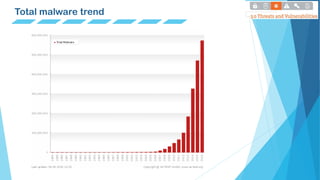
Total malware trend
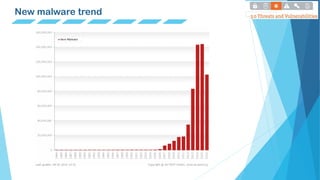
New malware trend
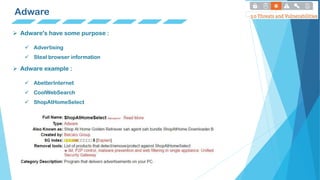
Adware
 Adware's have some purpose :
 Advertising
 Steal browser information
 Adware example :
 AbetterInternet
 CoolWebSearch
 ShopAtHomeSelect
Virus
 Malicious computer program.
 Without permission or knowledge of the user.
 Attach to files.
 Need to execute by user.
 Some latest virus : I Love you, Melissa, Code Red, …
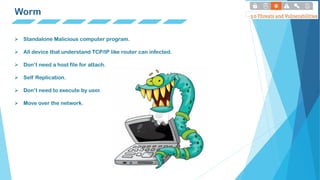
Worm
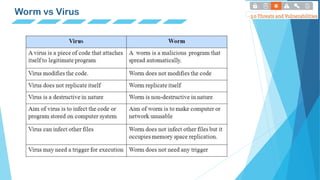
 Standalone Malicious computer program.
 All device that understand TCP/IP like router can infected.
 Don’t need a host file for attach.
 Self Replication.
 Don’t need to execute by user.
 Move over the network.
Worm vs Virus
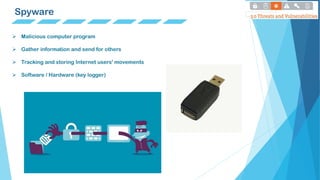
Spyware
 Malicious computer program
 Gather information and send for others
 Tracking and storing Internet users' movements
 Software / Hardware (key logger)
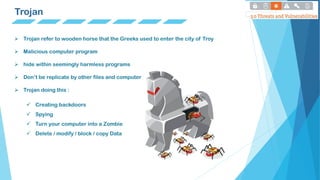
Trojan
 Trojan refer to wooden horse that the Greeks used to enter the city of Troy
 Malicious computer program
 hide within seemingly harmless programs
 Don’t be replicate by other files and computer
 Trojan doing this :
 Creating backdoors
 Spying
 Turn your computer into a Zombie
 Delete / modify / block / copy Data
Rootkit
 Malicious computer software or set of software
 Rootkits are generally associated with other malwares (Trojans, worms, viruses).
 Using some of the lower layers of the operating system than very difficult to detect
 A rootkit active when a system boots up
 Rootkits are most dangerous malware.
 Don’t replicate to other file or computer
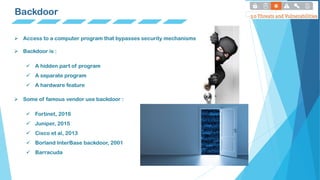
Backdoor
 Access to a computer program that bypasses security mechanisms
 Backdoor is :
 A hidden part of program
 A separate program
 A hardware feature
 Some of famous vendor use backdoor :
 Fortinet, 2016
 Juniper, 2015
 Cisco et al, 2013
 Borland InterBase backdoor, 2001
 Barracuda
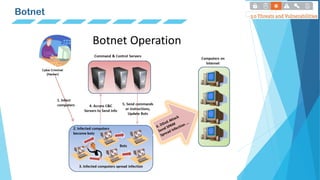
Botnet
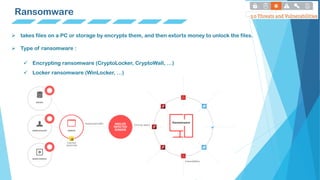
Ransomware
 takes files on a PC or storage by encrypts them, and then extorts money to unlock the files.
 Type of ransomware :
 Encrypting ransomware (CryptoLocker, CryptoWall, …)
 Locker ransomware (WinLocker, …)

Malwares

  • 1.
    CompTIA Security + AbolfazlNaderi Naderi.traning@gmail.com
  • 2.
    3.1 Malware  Adware Virus  Worm  Spyware  Trojan  Rootkits  Backdoors  Botnets  Ransomware
  • 3.
    What is Malware? Type of threats  “mal” refer to malicious and “ware’ refer to Software  Malicious computer software or piece of software  Damage or disturb system  Before 1990 malicious software was referred to as computer viruses  Book : “art of computer virus research and defense” by “Peter Szor”
  • 4.
  • 5.
  • 6.
    Adware  Adware's havesome purpose :  Advertising  Steal browser information  Adware example :  AbetterInternet  CoolWebSearch  ShopAtHomeSelect
  • 7.
    Virus  Malicious computerprogram.  Without permission or knowledge of the user.  Attach to files.  Need to execute by user.  Some latest virus : I Love you, Melissa, Code Red, …
  • 8.
    Worm  Standalone Maliciouscomputer program.  All device that understand TCP/IP like router can infected.  Don’t need a host file for attach.  Self Replication.  Don’t need to execute by user.  Move over the network.
  • 9.
  • 10.
    Spyware  Malicious computerprogram  Gather information and send for others  Tracking and storing Internet users' movements  Software / Hardware (key logger)
  • 11.
    Trojan  Trojan referto wooden horse that the Greeks used to enter the city of Troy  Malicious computer program  hide within seemingly harmless programs  Don’t be replicate by other files and computer  Trojan doing this :  Creating backdoors  Spying  Turn your computer into a Zombie  Delete / modify / block / copy Data
  • 12.
    Rootkit  Malicious computersoftware or set of software  Rootkits are generally associated with other malwares (Trojans, worms, viruses).  Using some of the lower layers of the operating system than very difficult to detect  A rootkit active when a system boots up  Rootkits are most dangerous malware.  Don’t replicate to other file or computer
  • 13.
    Backdoor  Access toa computer program that bypasses security mechanisms  Backdoor is :  A hidden part of program  A separate program  A hardware feature  Some of famous vendor use backdoor :  Fortinet, 2016  Juniper, 2015  Cisco et al, 2013  Borland InterBase backdoor, 2001  Barracuda
  • 14.
  • 15.
    Ransomware  takes fileson a PC or storage by encrypts them, and then extorts money to unlock the files.  Type of ransomware :  Encrypting ransomware (CryptoLocker, CryptoWall, …)  Locker ransomware (WinLocker, …)