CompTIA Security+
Attacks, Threats and Vulnerabilities
Friendly Tip: Please take notes to better remember concepts
In this video we will
learn about Malware
and Types of
malwares
What is Malware ?
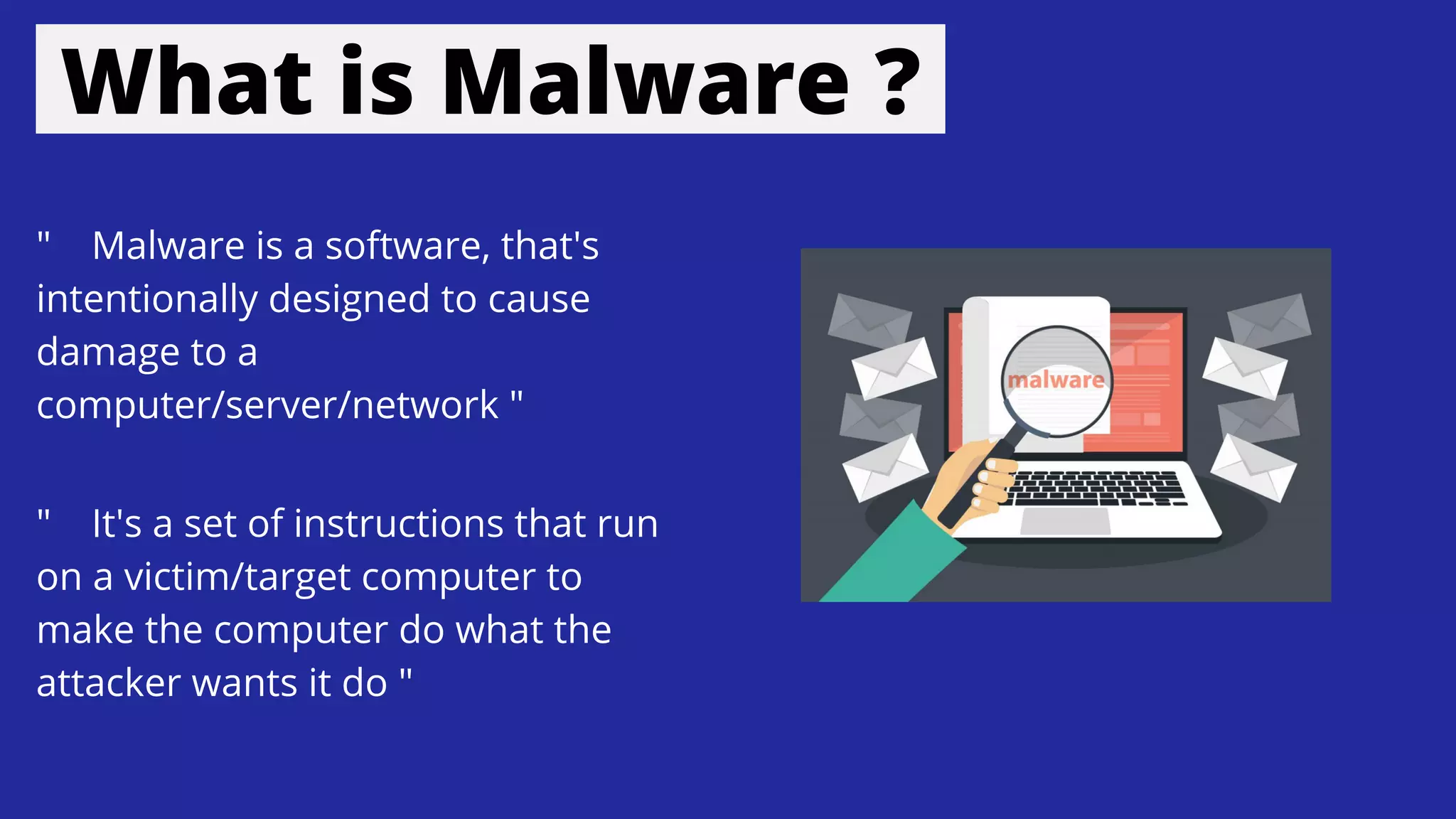
" Malware is a software, that's
intentionally designed to cause
damage to a
computer/server/network "
" It's a set of instructions that run
on a victim/target computer to
make the computer do what the
attacker wants it do "
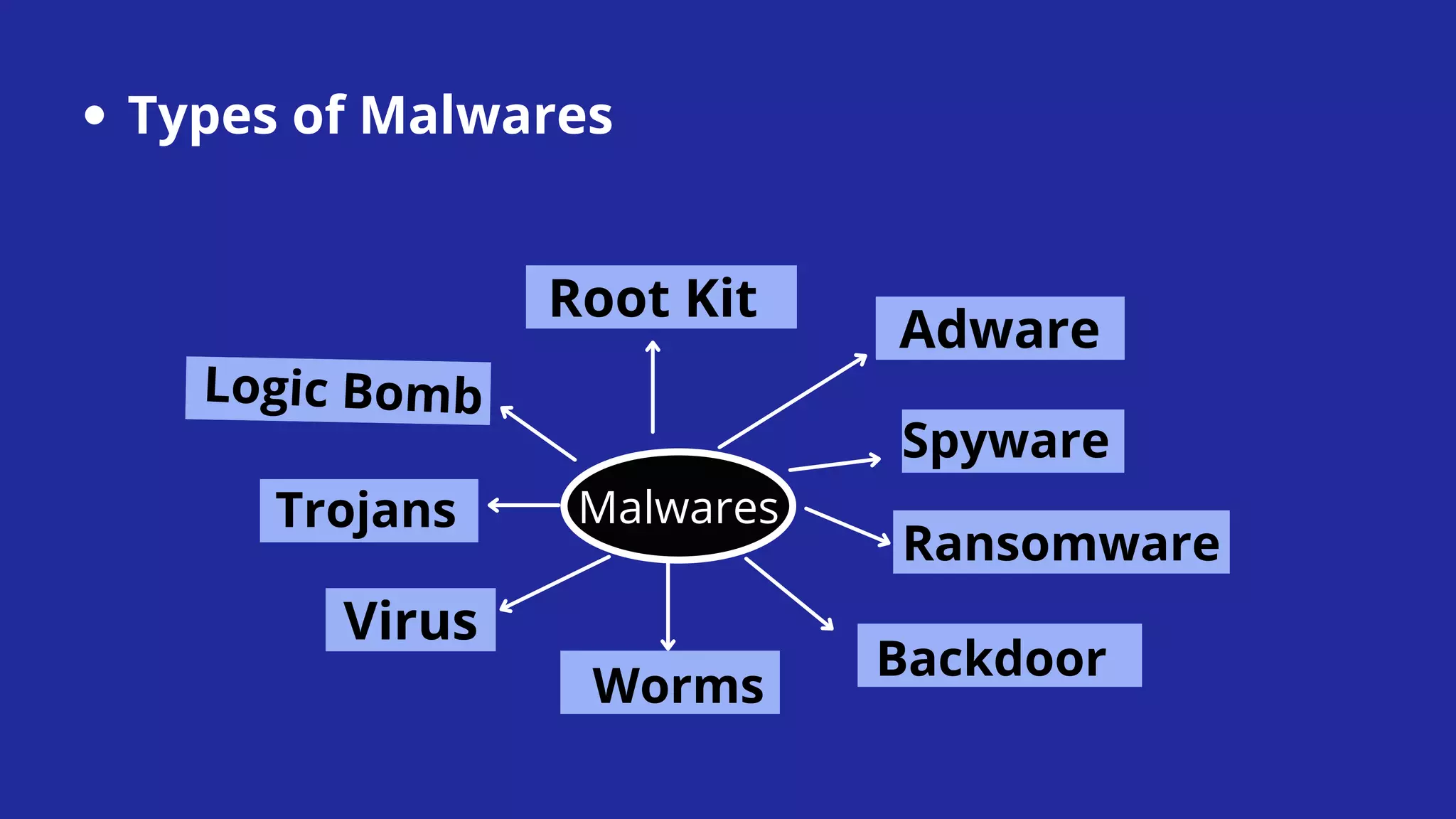
Types of Malwares
Malwares
Root Kit
Adware
Spyware
Ransomware
Backdoor
Worms
Virus
Trojans
Logic Bomb
-> Worms
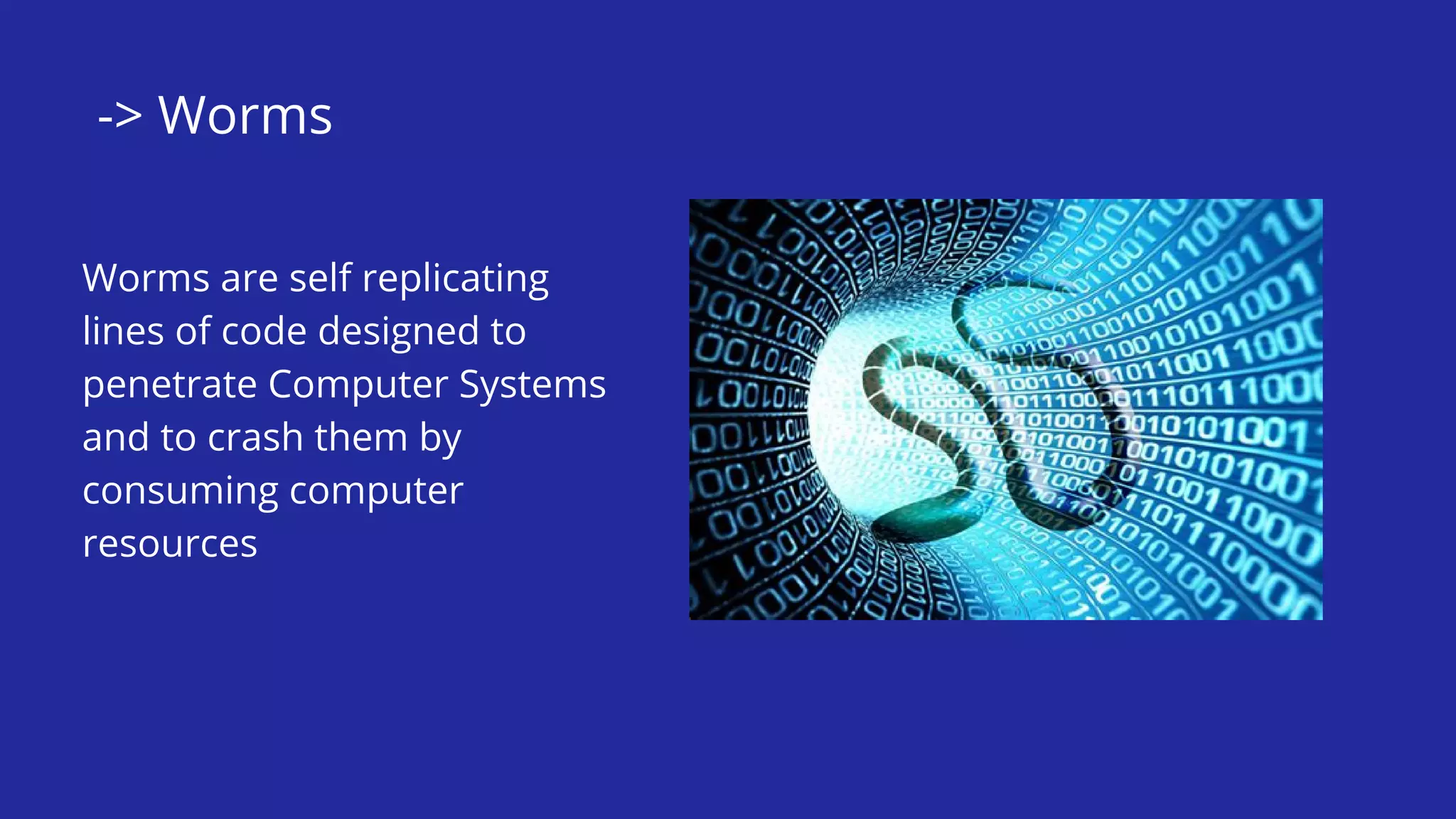
Worms are self replicating
lines of code designed to
penetrate Computer Systems
and to crash them by
consuming computer
resources
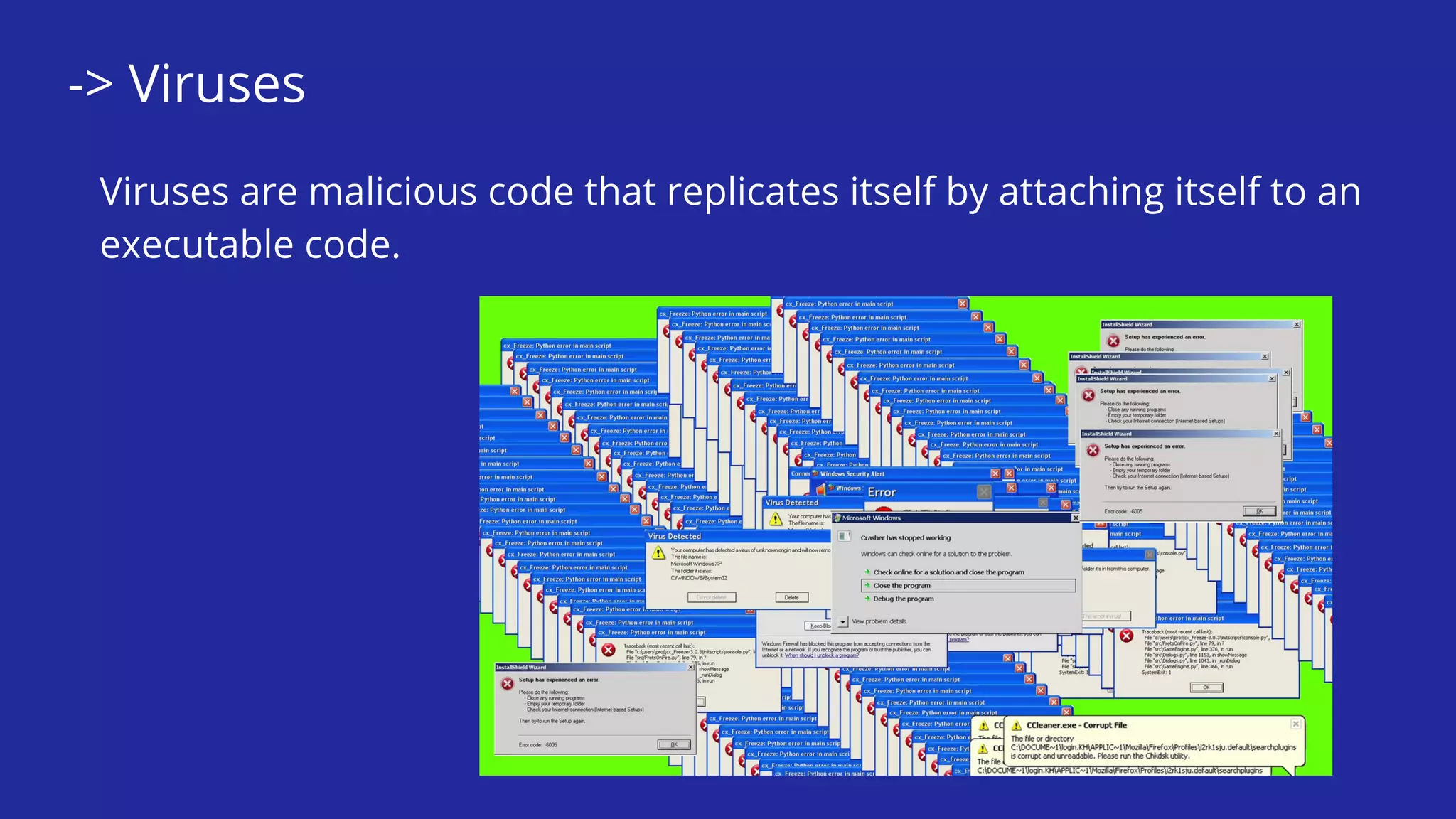
-> Viruses
Viruses are malicious code that replicates itself by attaching itself to an
executable code.
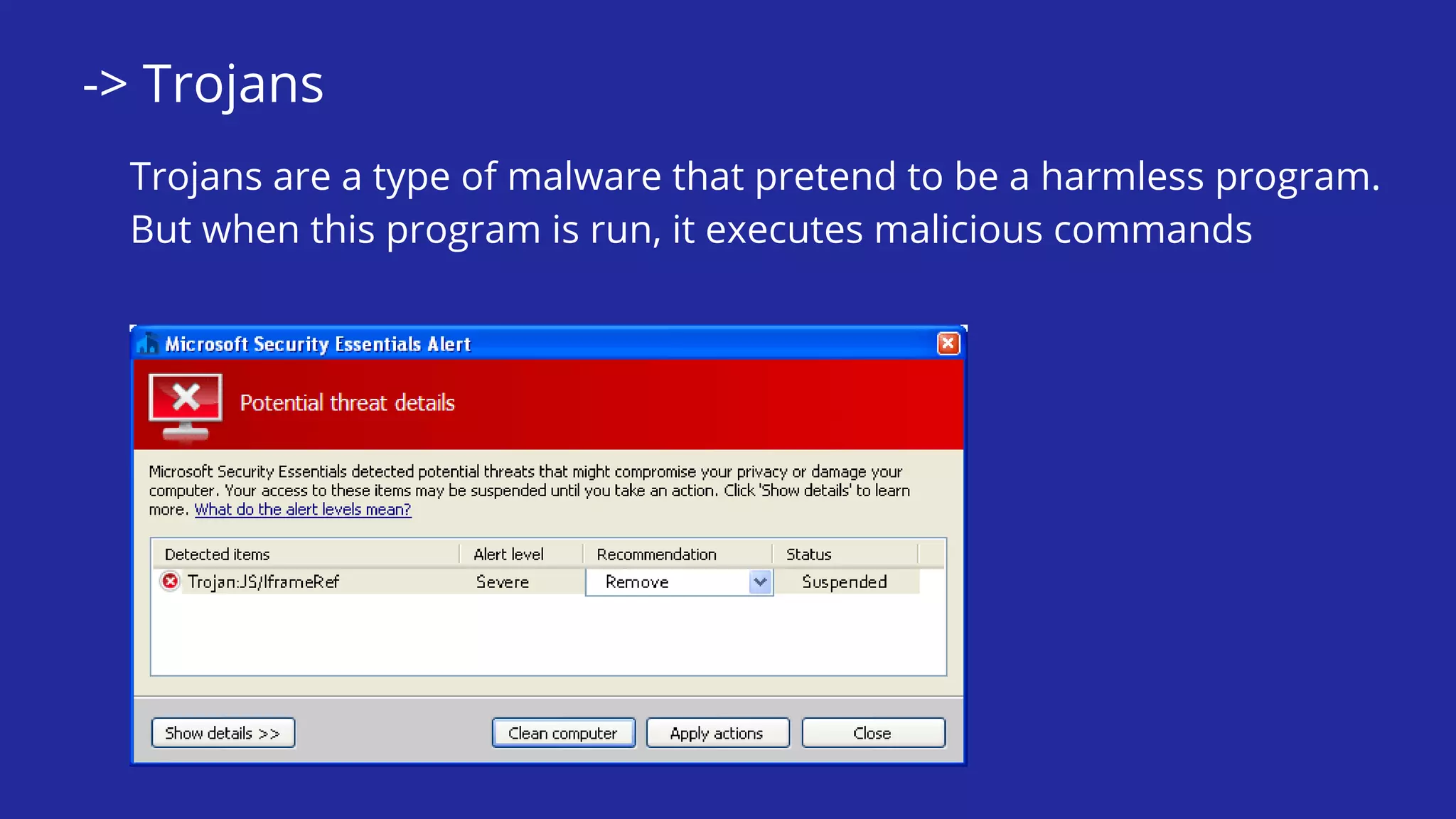
-> Trojans
Trojans are a type of malware that pretend to be a harmless program.
But when this program is run, it executes malicious commands
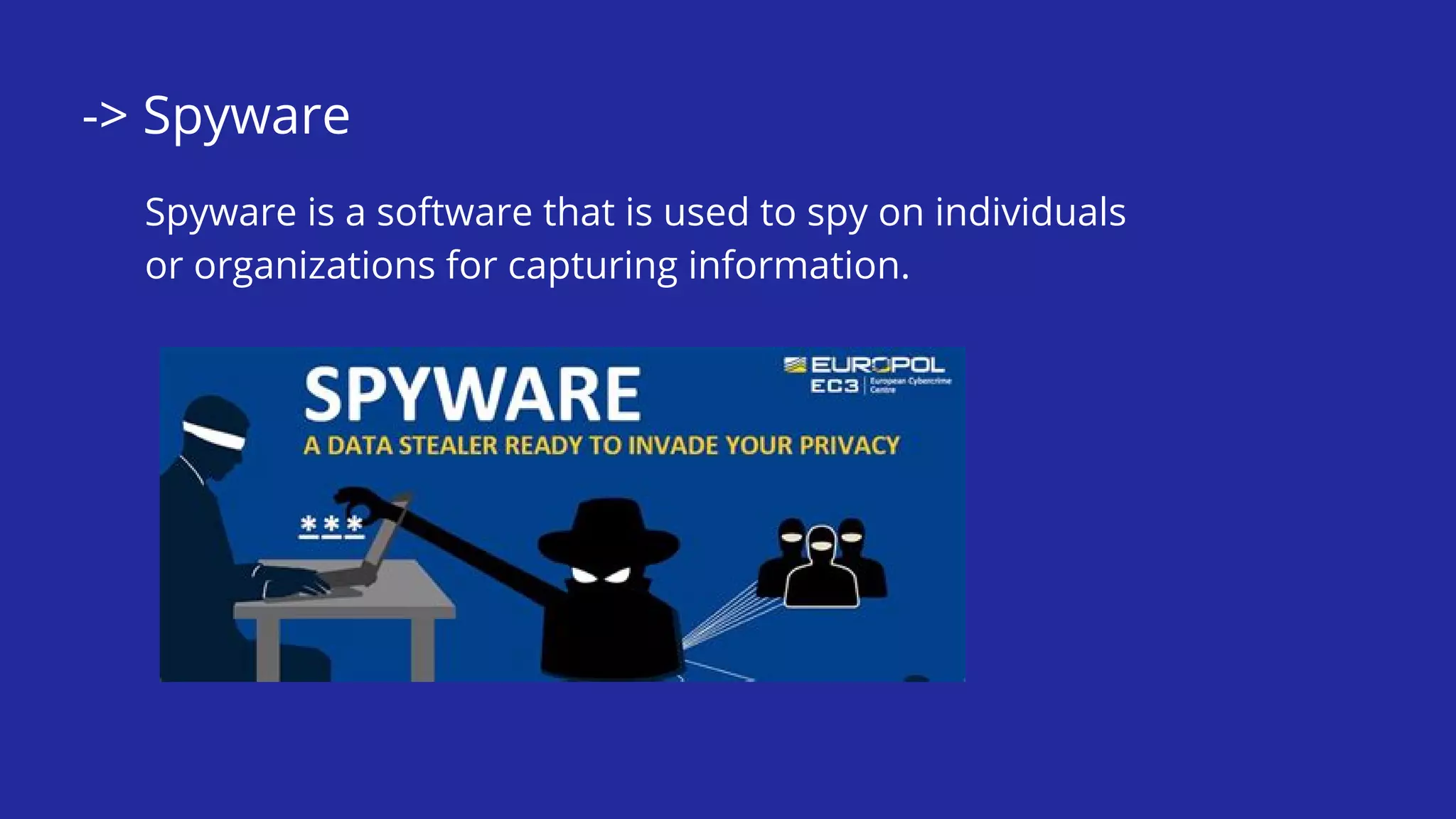
-> Spyware
Spyware is a software that is used to spy on individuals
or organizations for capturing information.
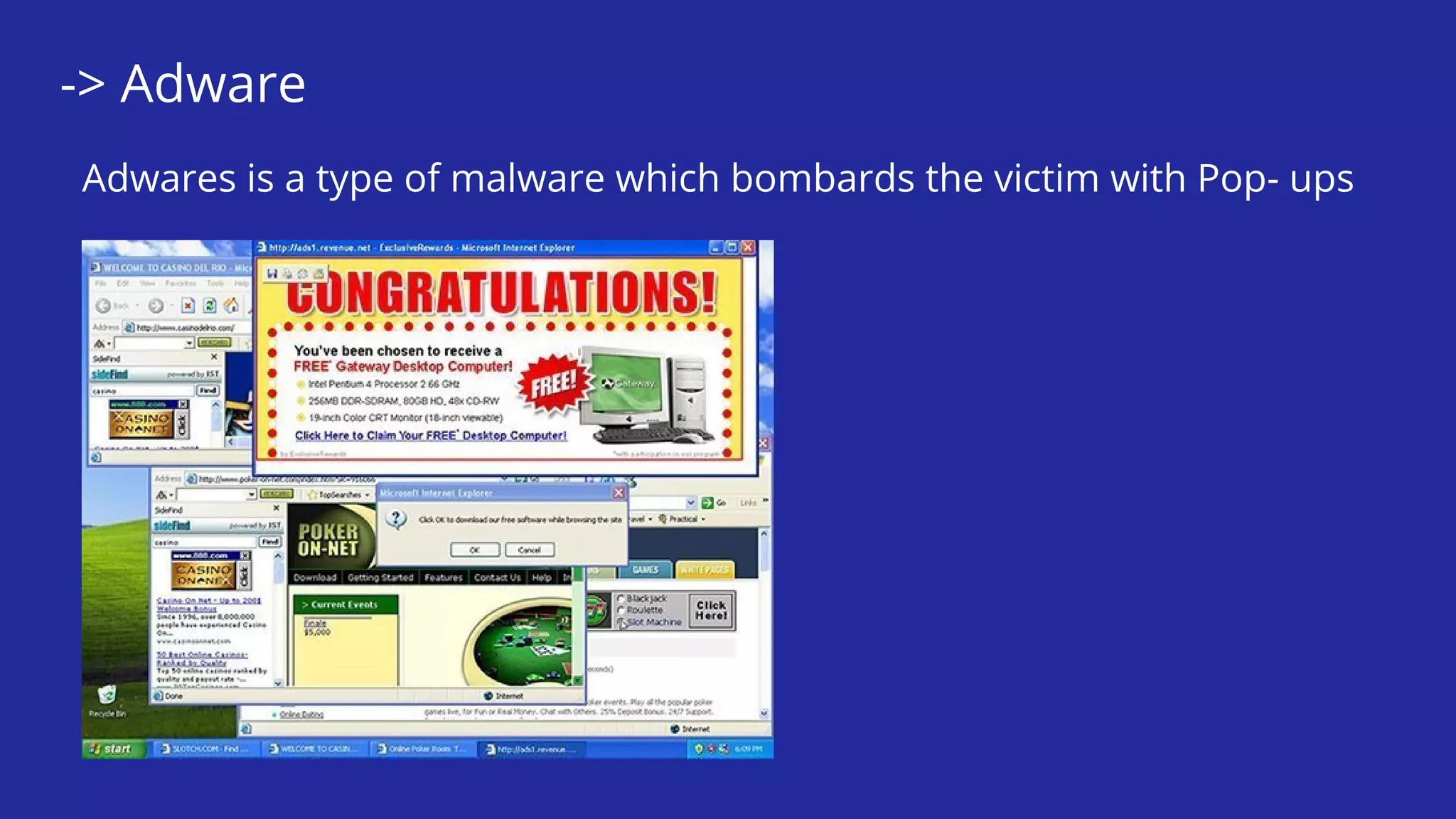
-> Adware
Adwares is a type of malware which bombards the victim with Pop- ups
-> Root Kit
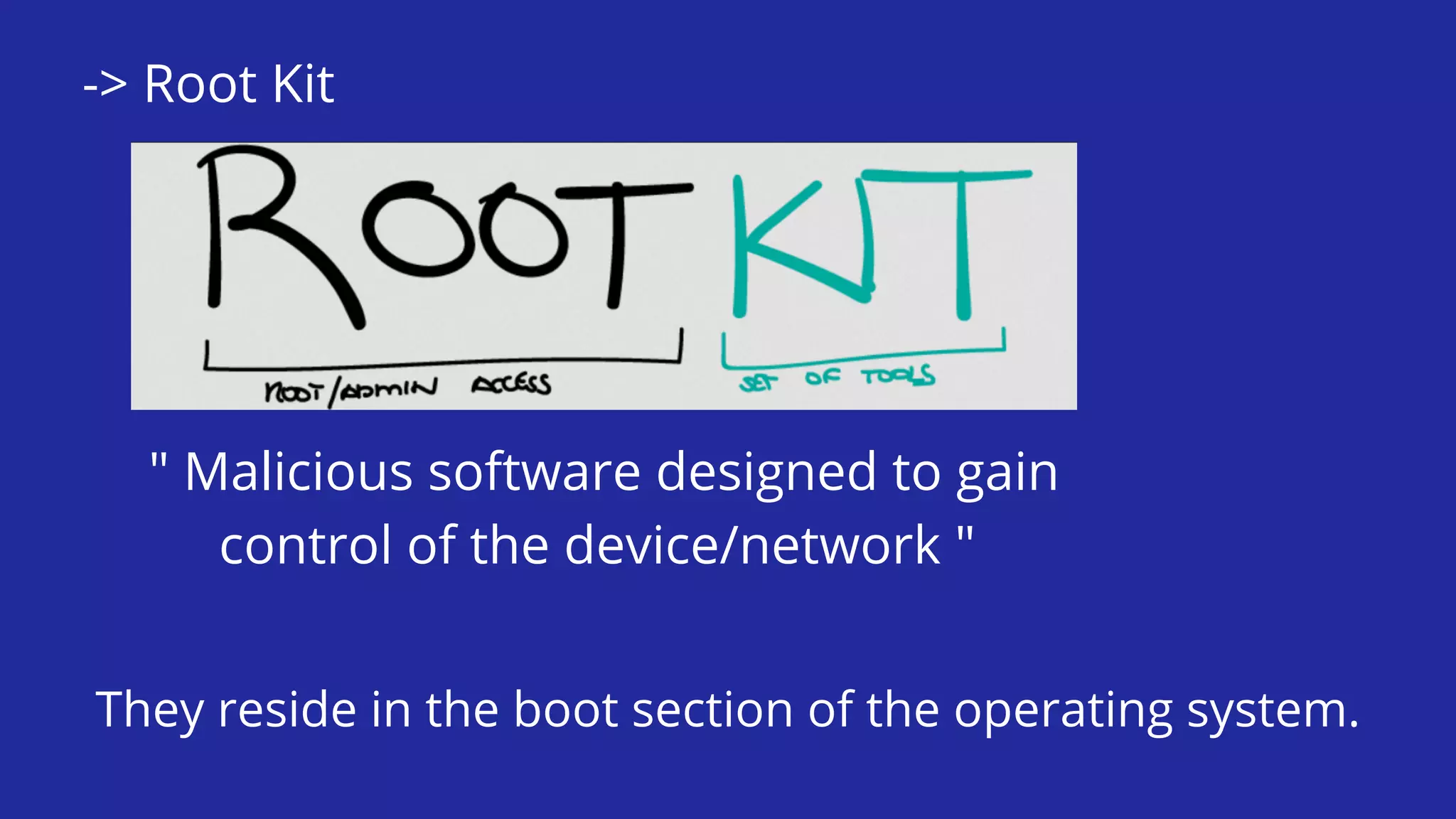
" Malicious software designed to gain
control of the device/network "
They reside in the boot section of the operating system.
-> Root Kit
-> Backdoor
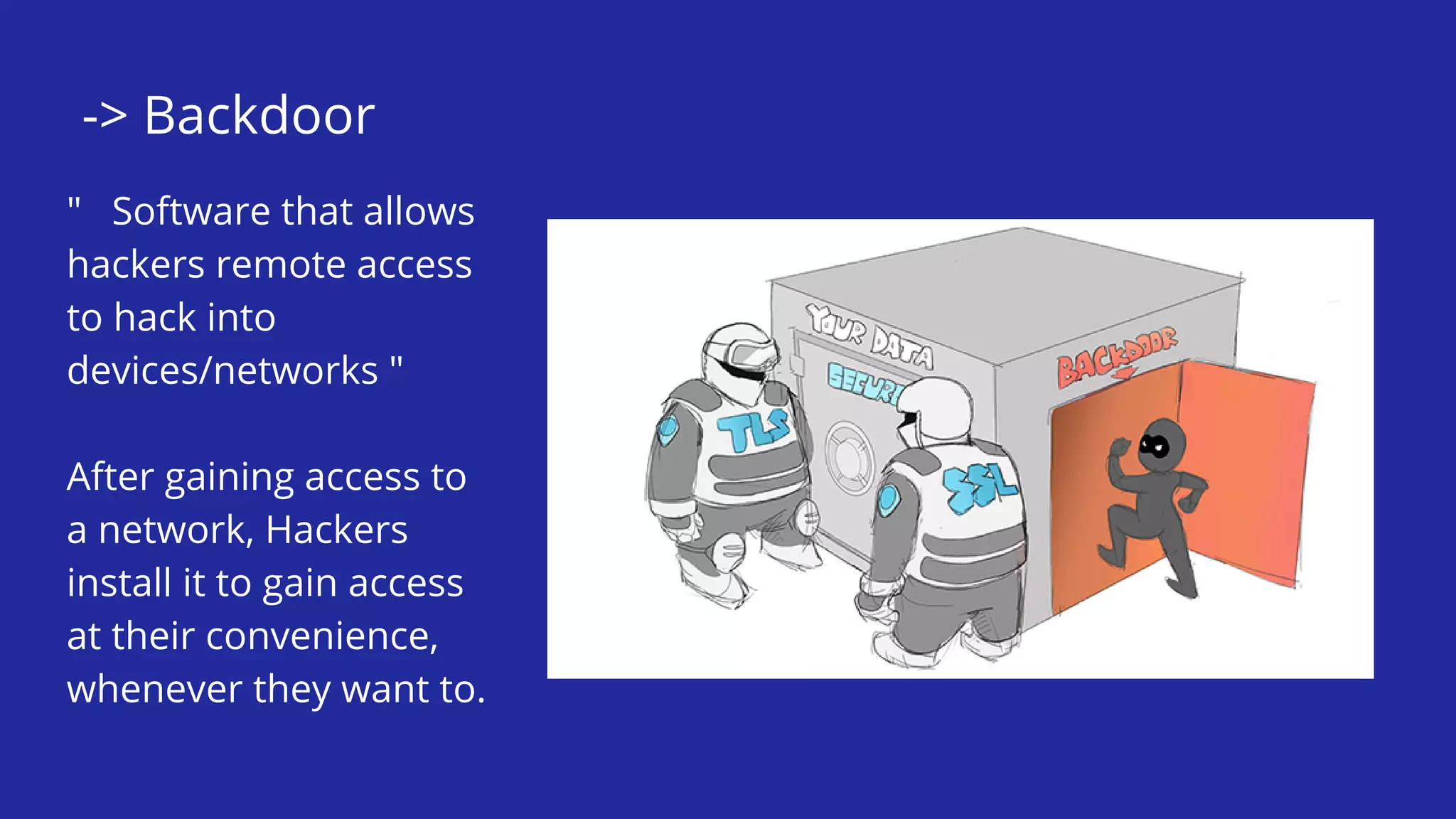
" Software that allows
hackers remote access
to hack into
devices/networks "
After gaining access to
a network, Hackers
install it to gain access
at their convenience,
whenever they want to.
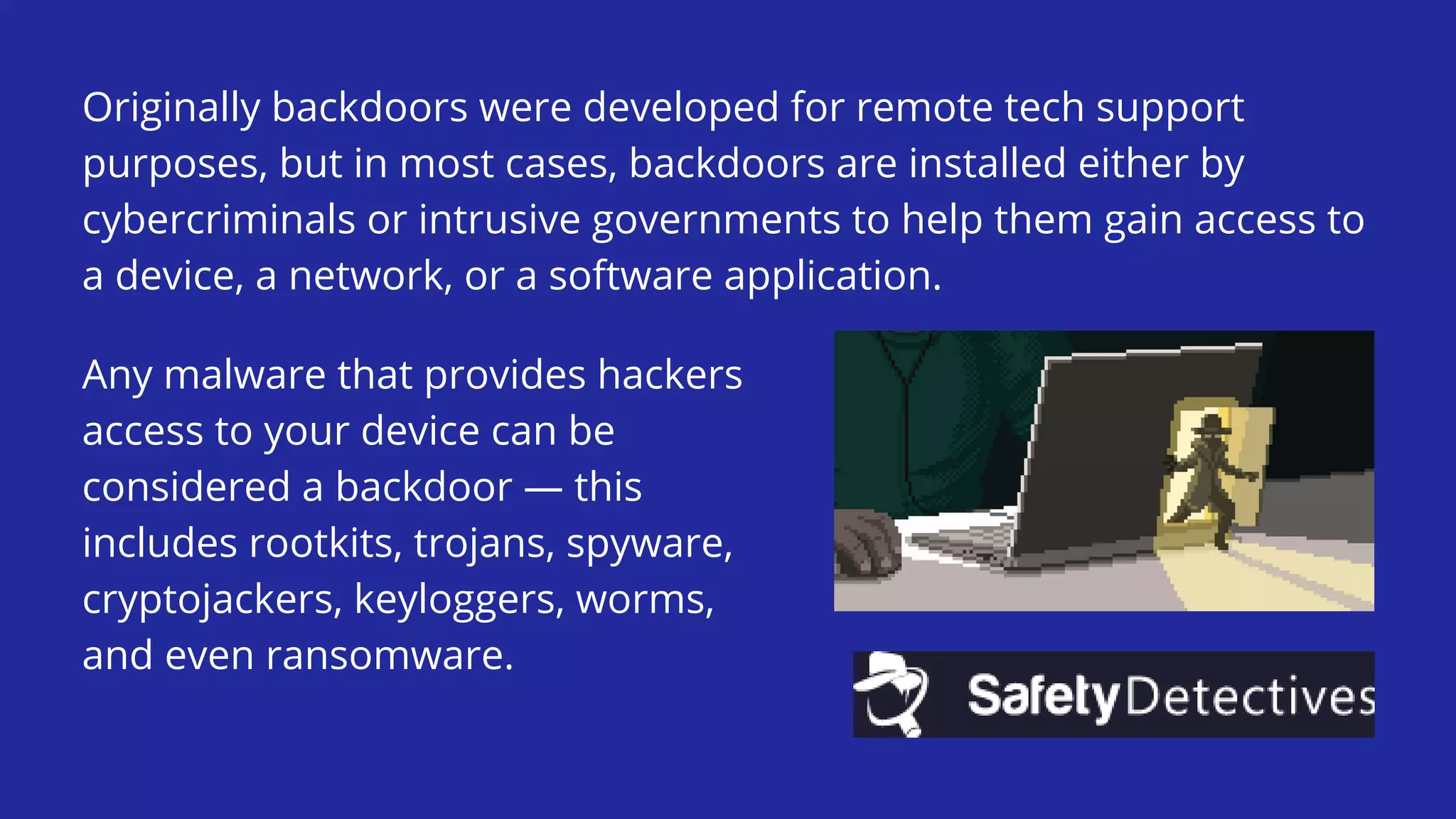
Originally backdoors were developed for remote tech support
purposes, but in most cases, backdoors are installed either by
cybercriminals or intrusive governments to help them gain access to
a device, a network, or a software application.
Any malware that provides hackers
access to your device can be
considered a backdoor — this
includes rootkits, trojans, spyware,
cryptojackers, keyloggers, worms,
and even ransomware.
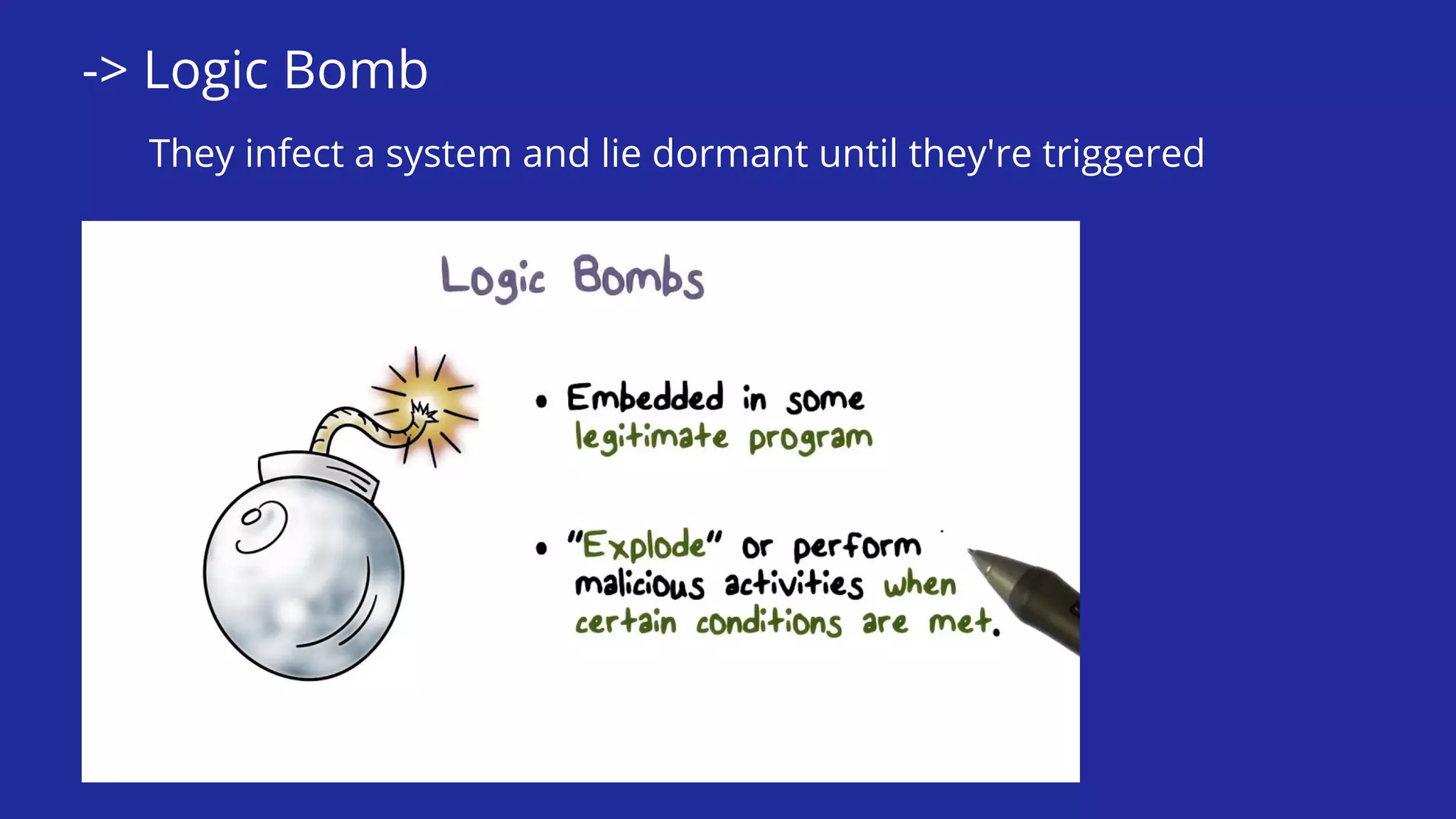
-> Logic Bomb
They infect a system and lie dormant until they're triggered
-> Logic Bomb
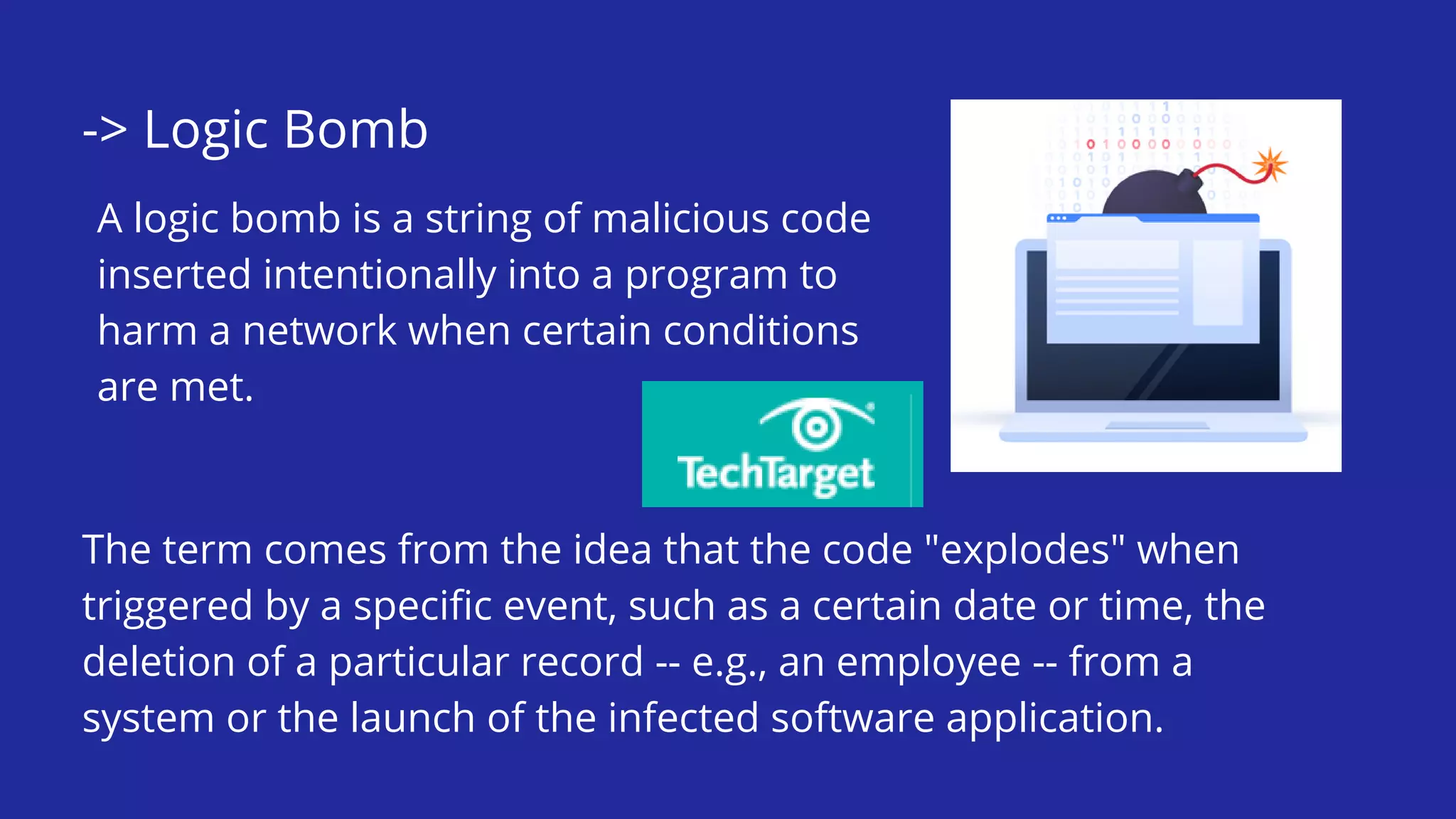
A logic bomb is a string of malicious code
inserted intentionally into a program to
harm a network when certain conditions
are met.
The term comes from the idea that the code "explodes" when
triggered by a specific event, such as a certain date or time, the
deletion of a particular record -- e.g., an employee -- from a
system or the launch of the infected software application.
-> Logic Bomb
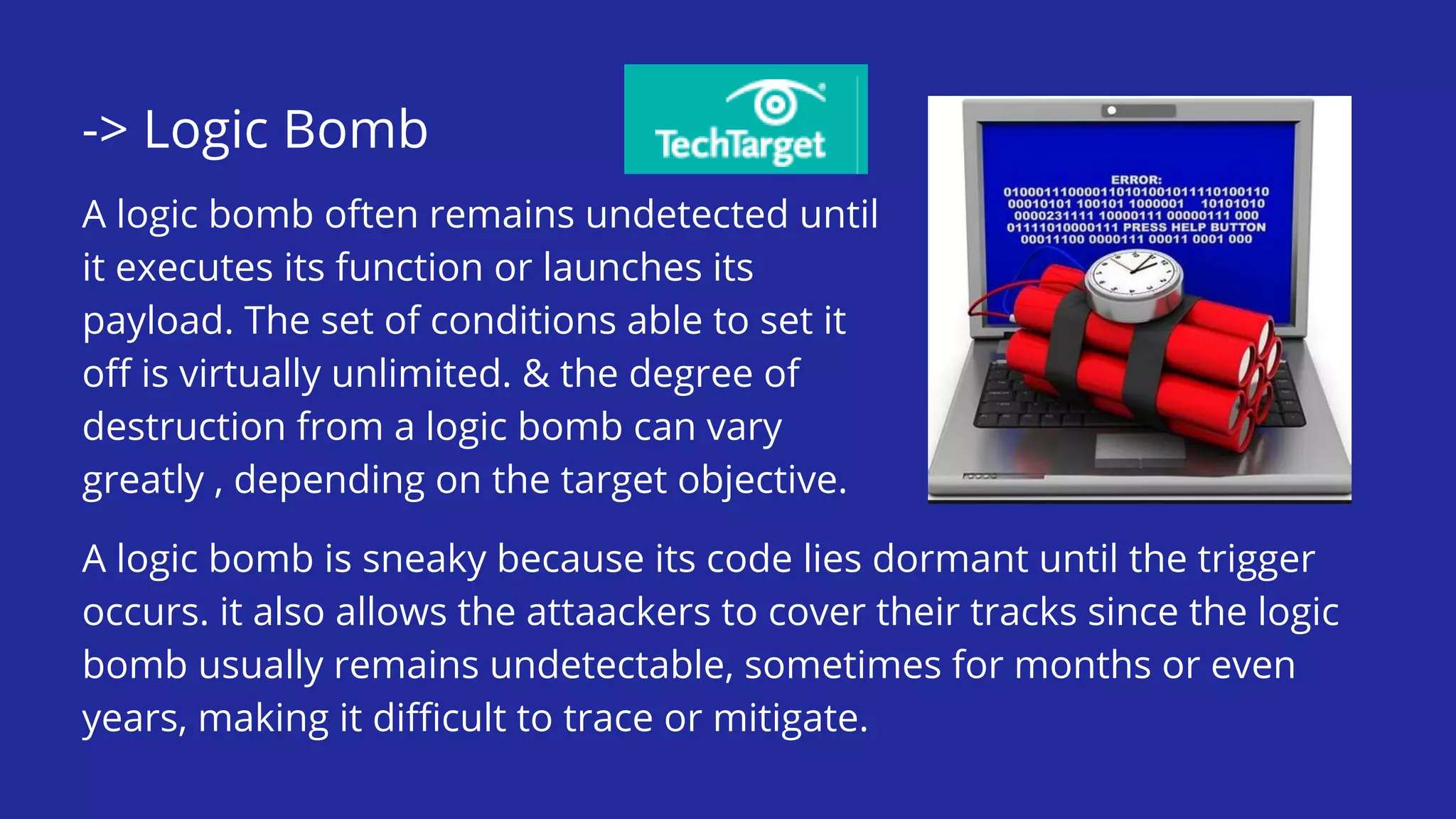
A logic bomb often remains undetected until
it executes its function or launches its
payload. The set of conditions able to set it
off is virtually unlimited. & the degree of
destruction from a logic bomb can vary
greatly , depending on the target objective.
A logic bomb is sneaky because its code lies dormant until the trigger
occurs. it also allows the attaackers to cover their tracks since the logic
bomb usually remains undetectable, sometimes for months or even
years, making it difficult to trace or mitigate.
-> Ransomware
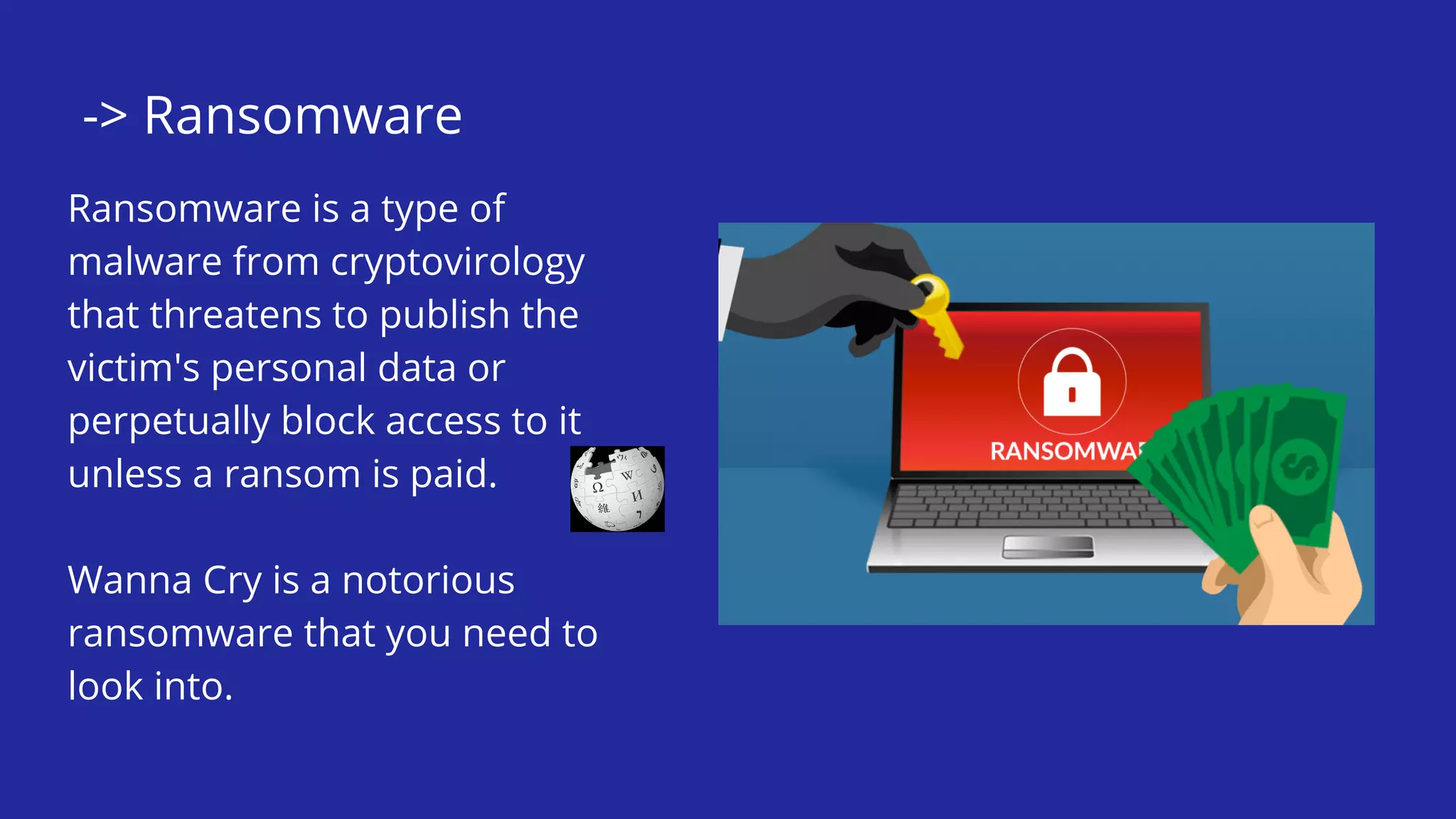
Ransomware is a type of
malware from cryptovirology
that threatens to publish the
victim's personal data or
perpetually block access to it
unless a ransom is paid.
Wanna Cry is a notorious
ransomware that you need to
look into.
Popular Malware Attacks :
-> WANNACRY
-> MIRAI
-> GHOST
->KOVTER
-> ZEUS or ZBOT
Here's a list of popular malware attacks you need to know. As a
learning exercise, Please do take the time to look into them.
https://www.safetydetectives.com/blog/what-is-a-backdoor-
and-how-to-protect-against-it/
https://www.techtarget.com/searchsecurity/definition/logic-
bomb
https://resources.infosecinstitute.com/topic/malware-what-are-
rootkits/
Source:

Malware and Types of malwares.pdf

  • 1.
    CompTIA Security+ Attacks, Threatsand Vulnerabilities Friendly Tip: Please take notes to better remember concepts In this video we will learn about Malware and Types of malwares
  • 2.
    What is Malware? " Malware is a software, that's intentionally designed to cause damage to a computer/server/network " " It's a set of instructions that run on a victim/target computer to make the computer do what the attacker wants it do "
  • 3.
    Types of Malwares Malwares RootKit Adware Spyware Ransomware Backdoor Worms Virus Trojans Logic Bomb
  • 4.
    -> Worms Worms areself replicating lines of code designed to penetrate Computer Systems and to crash them by consuming computer resources
  • 5.
    -> Viruses Viruses aremalicious code that replicates itself by attaching itself to an executable code.
  • 6.
    -> Trojans Trojans area type of malware that pretend to be a harmless program. But when this program is run, it executes malicious commands
  • 7.
    -> Spyware Spyware isa software that is used to spy on individuals or organizations for capturing information.
  • 8.
    -> Adware Adwares isa type of malware which bombards the victim with Pop- ups
  • 9.
    -> Root Kit "Malicious software designed to gain control of the device/network " They reside in the boot section of the operating system.
  • 10.
  • 11.
    -> Backdoor " Softwarethat allows hackers remote access to hack into devices/networks " After gaining access to a network, Hackers install it to gain access at their convenience, whenever they want to.
  • 12.
    Originally backdoors weredeveloped for remote tech support purposes, but in most cases, backdoors are installed either by cybercriminals or intrusive governments to help them gain access to a device, a network, or a software application. Any malware that provides hackers access to your device can be considered a backdoor — this includes rootkits, trojans, spyware, cryptojackers, keyloggers, worms, and even ransomware.
  • 13.
    -> Logic Bomb Theyinfect a system and lie dormant until they're triggered
  • 14.
    -> Logic Bomb Alogic bomb is a string of malicious code inserted intentionally into a program to harm a network when certain conditions are met. The term comes from the idea that the code "explodes" when triggered by a specific event, such as a certain date or time, the deletion of a particular record -- e.g., an employee -- from a system or the launch of the infected software application.
  • 15.
    -> Logic Bomb Alogic bomb often remains undetected until it executes its function or launches its payload. The set of conditions able to set it off is virtually unlimited. & the degree of destruction from a logic bomb can vary greatly , depending on the target objective. A logic bomb is sneaky because its code lies dormant until the trigger occurs. it also allows the attaackers to cover their tracks since the logic bomb usually remains undetectable, sometimes for months or even years, making it difficult to trace or mitigate.
  • 16.
    -> Ransomware Ransomware isa type of malware from cryptovirology that threatens to publish the victim's personal data or perpetually block access to it unless a ransom is paid. Wanna Cry is a notorious ransomware that you need to look into.
  • 17.
    Popular Malware Attacks: -> WANNACRY -> MIRAI -> GHOST ->KOVTER -> ZEUS or ZBOT Here's a list of popular malware attacks you need to know. As a learning exercise, Please do take the time to look into them.
  • 18.