What is malware
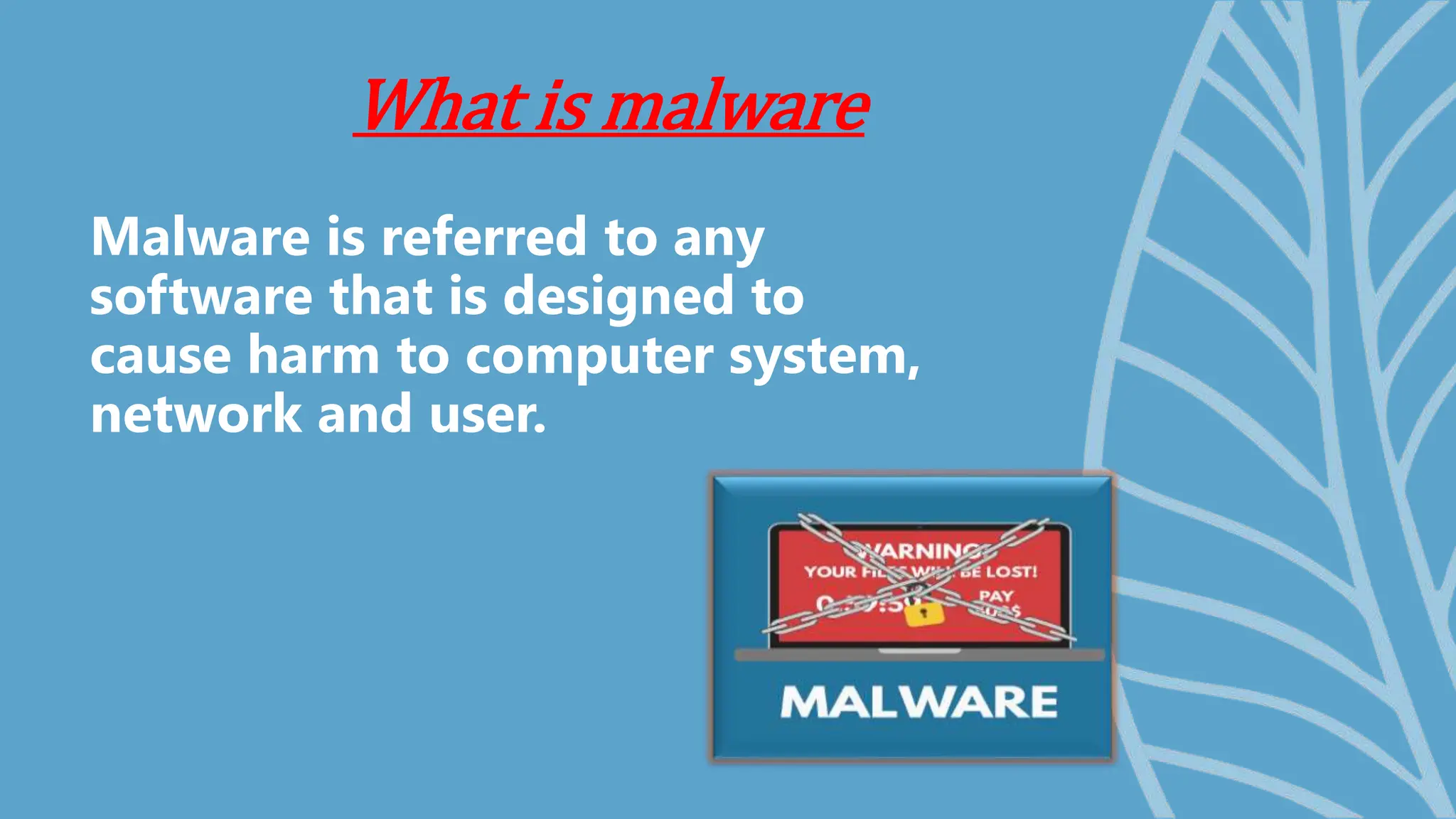
Malware is referred to any
software that is designed to
cause harm to computer system,
network and user.
Malware can take many forms. It’s important
for individuals and organizations to be aware
of the different types of malware and take
steps to protect their systems, such as using
antivirus software, keeping software and
systems up-to-date, and being cautious when
opening email attachments or downloading
software from the internet.
Forms of malware
.
Virus
The virus spreads when an infected file is
passed from system to system. Viruses
can be harmless or they can modify or
delete data. Opening a file can trigger a
virus. Once a program virus is active, it
will infect other programs on the
computer. is the program that in fact
other’s software and replicates itself
spreading from one computer to another
computer.
Worms
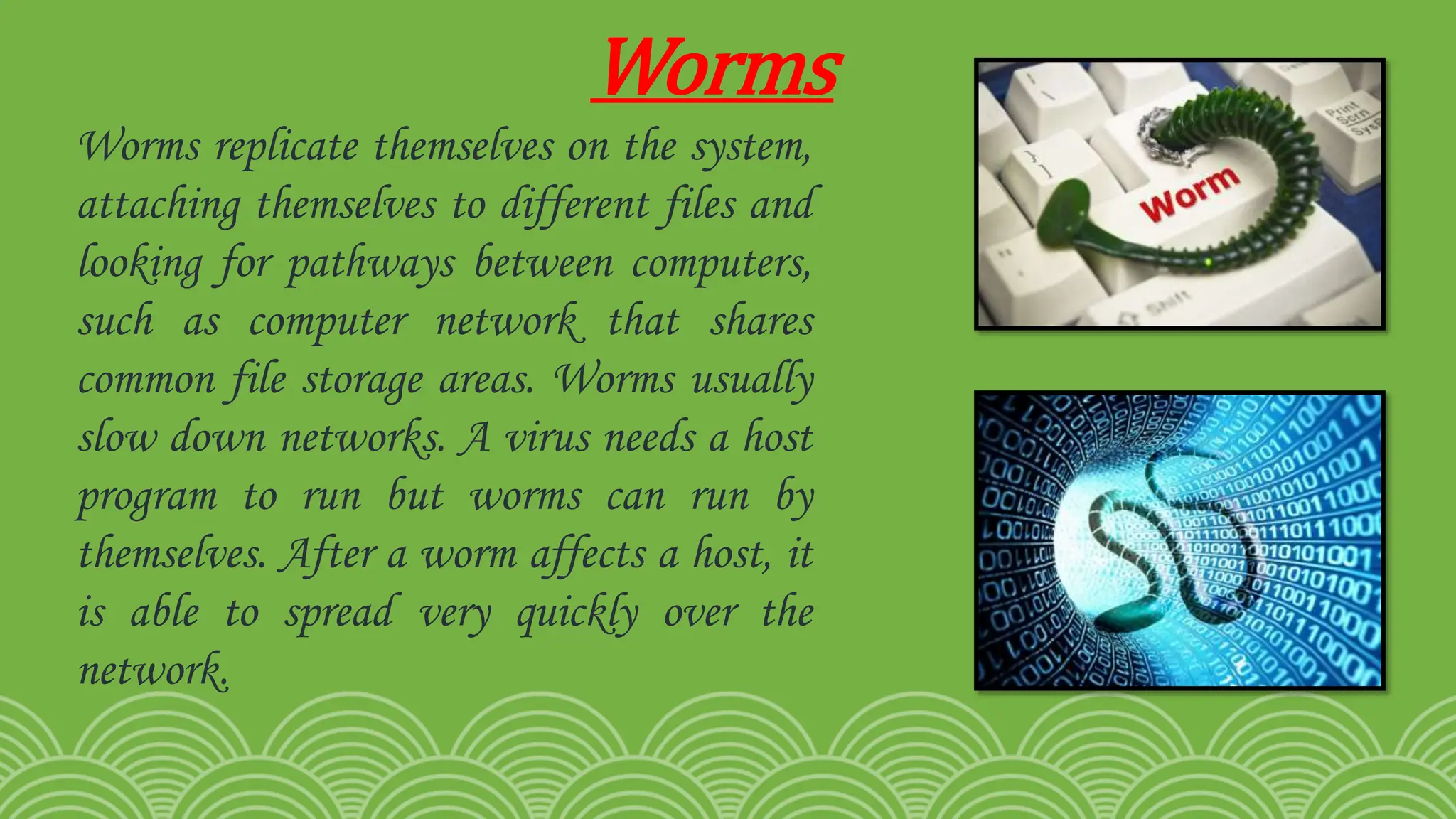
Worms replicate themselves on the system,
attaching themselves to different files and
looking for pathways between computers,
such as computer network that shares
common file storage areas. Worms usually
slow down networks. A virus needs a host
program to run but worms can run by
themselves. After a worm affects a host, it
is able to spread very quickly over the
network.
Ransomware
Ransomware grasps a computer system or
the data it contains until the victim makes
a payment. Ransomware encrypts data in
the computer with a key that is unknown
to the user. The user has to pay a ransom
(price) to the criminals to retrieve data.
Once the amount is paid the victim can
resume using his/her system
Adware
It displays unwanted ads and pop-ups on the
computer. It comes along with software
downloads and packages. It generates revenue
for the software distributer by displaying ads.
Spyware
Its purpose is to steal private information from a
computer system for a third party. Spyware
collects information and sends it to the hacker.
and literature
Rootkits
A rootkit modifies the OS to make a backdoor. Attackers
then use the backdoor to access the computer distantly.
Most rootkits take advantage of software vulnerabilities
to modify system files.
Backdoors
A backdoor bypasses the usual authentication used to
access a system. The purpose of the backdoor is to grant
cyber criminals future access to the system even if the
organization fixes the original vulnerability used to
attack the system.
Antivirus
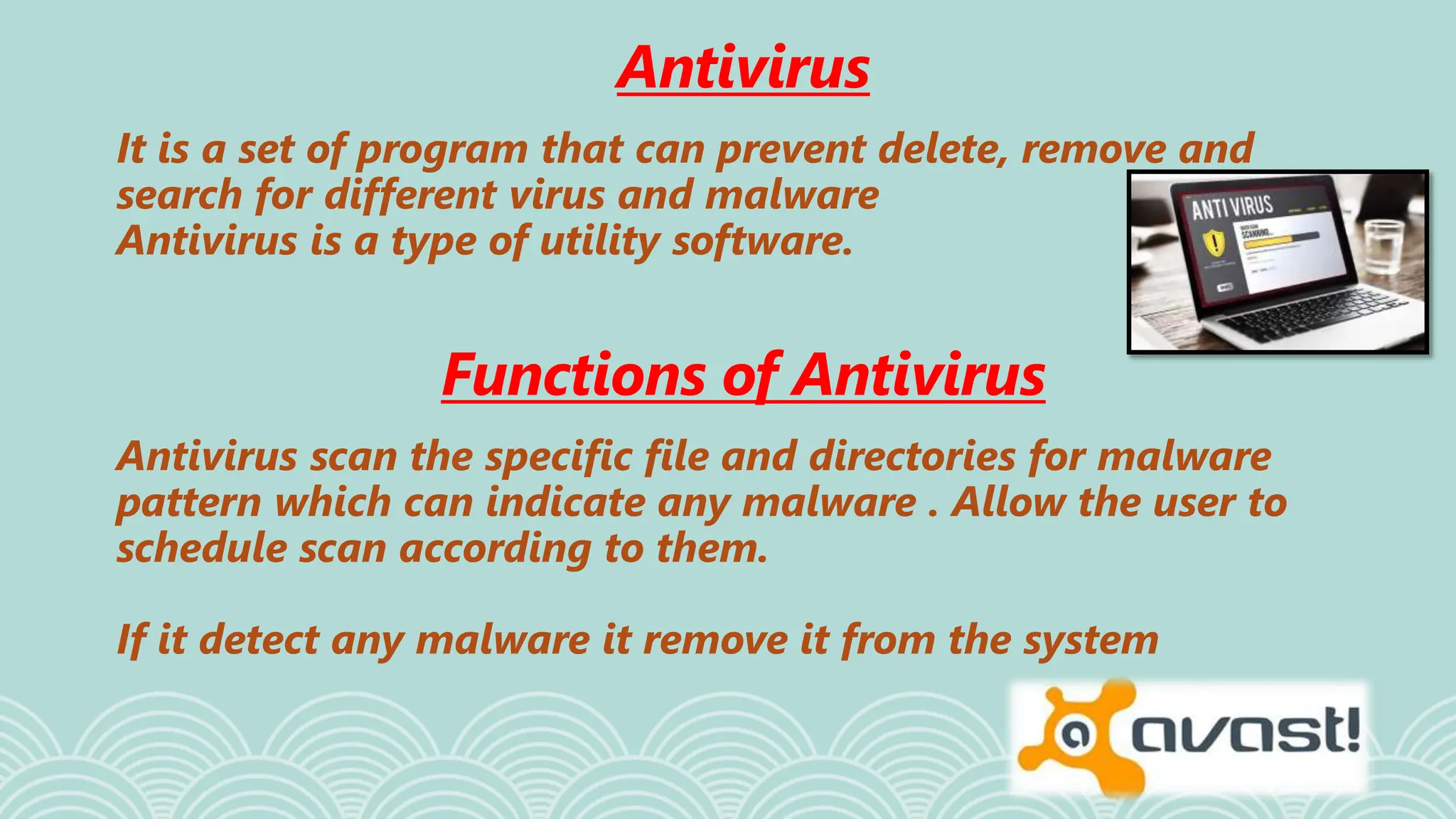
It is a set of program that can prevent delete, remove and
search for different virus and malware
Antivirus is a type of utility software.
Functions of Antivirus
Antivirus scan the specific file and directories for malware
pattern which can indicate any malware . Allow the user to
schedule scan according to them.
If it detect any malware it remove it from the system
Need for antivirus software
We need it to protect us from different malware and virus.
Working of antivirus
If a virus enters in a system it affects the working by
making changes in the file and directories it can also slow
down working of the system and important file.
Antivirus has following virus detecting techniques:
1. Signature based detection
2. Behavior based detection
3. Sandbox based detection
4. Data mining.
malware ppt.pptx

malware ppt.pptx

  • 1.
    What is malware Malwareis referred to any software that is designed to cause harm to computer system, network and user.
  • 2.
    Malware can takemany forms. It’s important for individuals and organizations to be aware of the different types of malware and take steps to protect their systems, such as using antivirus software, keeping software and systems up-to-date, and being cautious when opening email attachments or downloading software from the internet.
  • 3.
  • 5.
    Virus The virus spreadswhen an infected file is passed from system to system. Viruses can be harmless or they can modify or delete data. Opening a file can trigger a virus. Once a program virus is active, it will infect other programs on the computer. is the program that in fact other’s software and replicates itself spreading from one computer to another computer.
  • 6.
    Worms Worms replicate themselveson the system, attaching themselves to different files and looking for pathways between computers, such as computer network that shares common file storage areas. Worms usually slow down networks. A virus needs a host program to run but worms can run by themselves. After a worm affects a host, it is able to spread very quickly over the network.
  • 7.
    Ransomware Ransomware grasps acomputer system or the data it contains until the victim makes a payment. Ransomware encrypts data in the computer with a key that is unknown to the user. The user has to pay a ransom (price) to the criminals to retrieve data. Once the amount is paid the victim can resume using his/her system
  • 8.
    Adware It displays unwantedads and pop-ups on the computer. It comes along with software downloads and packages. It generates revenue for the software distributer by displaying ads.
  • 9.
    Spyware Its purpose isto steal private information from a computer system for a third party. Spyware collects information and sends it to the hacker. and literature
  • 10.
    Rootkits A rootkit modifiesthe OS to make a backdoor. Attackers then use the backdoor to access the computer distantly. Most rootkits take advantage of software vulnerabilities to modify system files. Backdoors A backdoor bypasses the usual authentication used to access a system. The purpose of the backdoor is to grant cyber criminals future access to the system even if the organization fixes the original vulnerability used to attack the system.
  • 11.
    Antivirus It is aset of program that can prevent delete, remove and search for different virus and malware Antivirus is a type of utility software. Functions of Antivirus Antivirus scan the specific file and directories for malware pattern which can indicate any malware . Allow the user to schedule scan according to them. If it detect any malware it remove it from the system
  • 12.
    Need for antivirussoftware We need it to protect us from different malware and virus. Working of antivirus If a virus enters in a system it affects the working by making changes in the file and directories it can also slow down working of the system and important file. Antivirus has following virus detecting techniques: 1. Signature based detection 2. Behavior based detection 3. Sandbox based detection 4. Data mining.