Maglev trains Eddie Lim (20) Lim Zheng Xiang (21) Anthony Low (24) Class: 1A2
Agenda Introduction Fast facts How it works Maglev technology Electromagnetic suspension  Electrodynamic suspension Stability Power and energy usage  Advantages and disadvantages of Maglev Train
Introduction Magnetic levitation  transport is a form of  transportation  that  suspends guides and propels vehicles  through  the harnessing of electromagnetic force. The term  "maglev"  refers not only to the  vehicles  but also to the  railway system. Maglev train uses  magnetic levitation  from a very  large number of magnets  for  lift  and  propulsion. Has  the potential  to be  faster, quieter and smoother  than  wheeled mass transit systems
Introduction Power needed for levitation  is usually not a  large percentage  of the  overall consumption In the present moment  there are  several countries  working on the  development of Magnetic Levitating trains :  Japan  and  Germany  were pioneers;  USA  and  Australia  are working in on it now.  China  is not a pioneer having build a maglev train from Shanghai to its city
Did you Know? Maglev trains can attain speeds of 250 mph easily (the speed of a jet aircraft). The Japanese Maglev's last record was of 581km/h. The Shanghai Maglev Train can speed up to 431 km/h, or 267 mph.  The first commercial Maglev was opened in 1984 in Birmingham, England, covering some 600 meters between its airport and rail hub
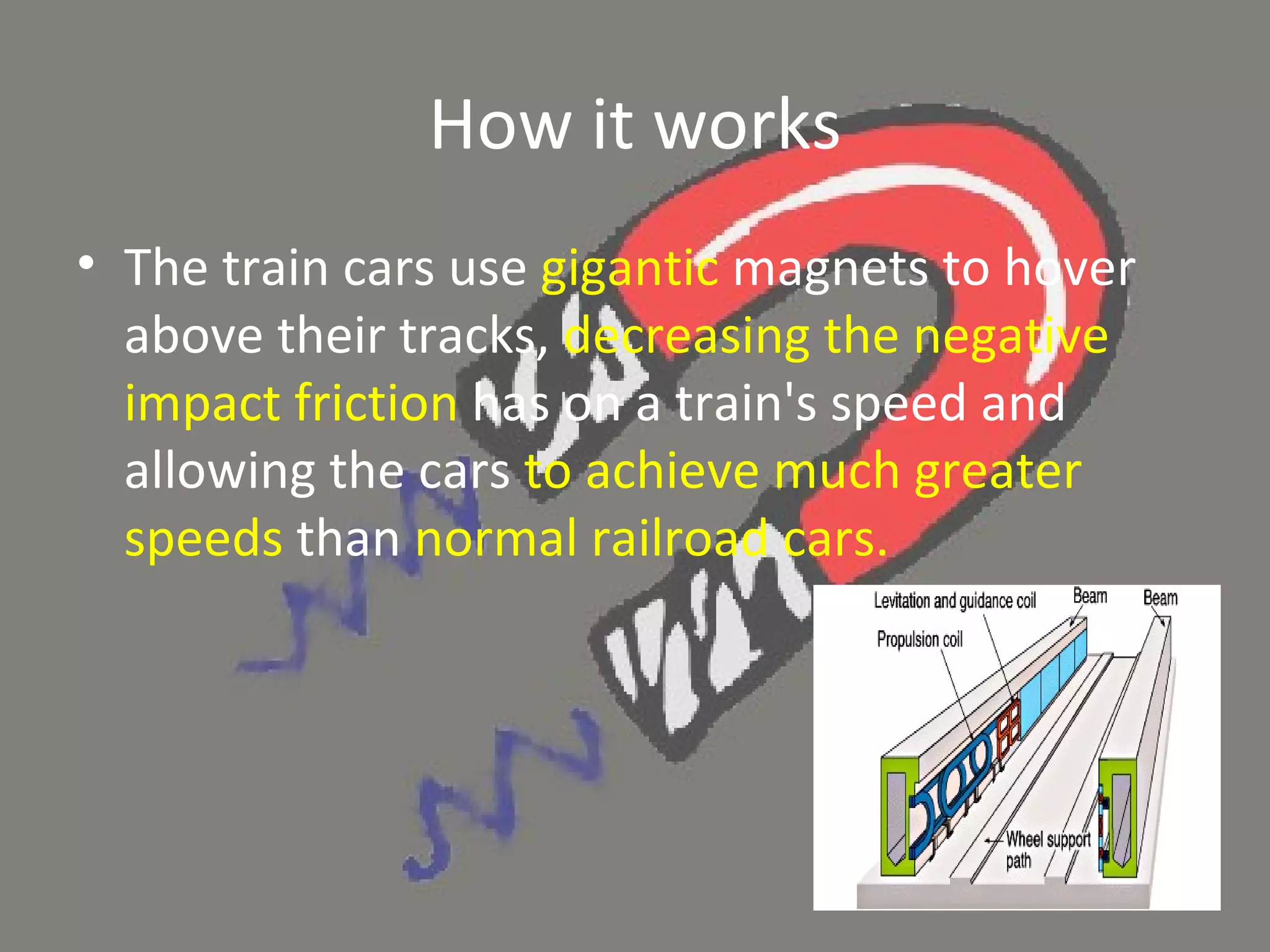
How it works A maglev train  floats about 10mm  above the  guideway on a magnetic field. It is  propelled  by the  guideway  itself rather than an  onboard engine by changing magnetic fields Once the train is pulled into the next section the  magnetism switche s so that the  train is pulled on again .  The  Electro-magnets  run the  length of the guideway.
How it works The train cars use  gigantic  magnets to hover above their tracks,  decreasing the negative impact friction  has on a train's speed and allowing the cars  to achieve much greater speeds  than  normal railroad cars.
Maglev technology There are two  primary  types of  maglev technology : electromagnetic suspension (EMS) electrodynamic suspension (EDS)
Electromagnetic suspension In current EMS systems, the train  levitates above a steel rail  while  electromagnets,  attached to the train, are  oriented toward the rail  from below.  The  electromagnets  use  feedback control  to maintain a train at a  constant distance  from the track.
Advantage Proven, commercially  available  technology  that can attain  very high speeds  (500 km/h) No wheels  or  secondary propulsion system  needed
Disadvantage The  separation  between the  vehicle  and the  guide way  must be  constantly monitored  and  corrected  by  computer systems  to avoid  collision  due to the  unstable nature of electromagnetic attraction.
Electrodynamic suspension In  Electrodynamic suspension , both the rail and the train exert a  magnetic field , and the train is  levitated  by the  repulsive force  between these  magnetic fields The  magnetic field  in the  train  is  produced  by either  electromagnets  or by  an array of permanent magnets. The  repulsive force  in the  track  is  created by  an  induced magnetic field  in  wires  or other  conducting strips in the track .
Electrodynamic suspension At  slow  speeds, the  current induced  in these  coils  and the  resultant magnetic flux  is  not large enough  to  support the weight  of the train. For this reason the train  must have wheels  or  some other form of landing gear  to  support  the train until it  reaches a speed  that can  sustain levitation .
Electrodynamic suspension  Propulsion coils  on the  guideway  are used to  exert a force on the magnets  in the train and make the train  move forward .  The  propulsion coils  that  exert a force on the train  are  effectively a linear motor . An  alternating current  flowing through the coils  generates  a  continuously varying magnetic field  that  moves forward  along the track.
Electrodynamic suspension The  frequency  of the  alternating current  is  synchronized  to  match the speed of the train . The  offset  between  the field exerted by magnets on the train  and  the applied field create a force moving the train forward.
Advantage Onboard magnets  and  large margin  between  rail  and  train  enable  highest recorded train speeds (581 km/h) and heavy load capacity Successful operations  using  high temperature superconductors  in its  onboard magnets ,  cooled with inexpensive liquid nitrogen.
Disadvantage Strong magnetic fields  onboard the train would make the train  inaccessible  to passengers with  pacemakers  or  magnetic data storage media  such as hard drives and credit cards,  necessitating the use of magnetic shielding ; vehicle must be  wheeled for travel at low speeds ; system  per mile cost  still considered  prohibitive ; the system is not yet out of  prototype phase.
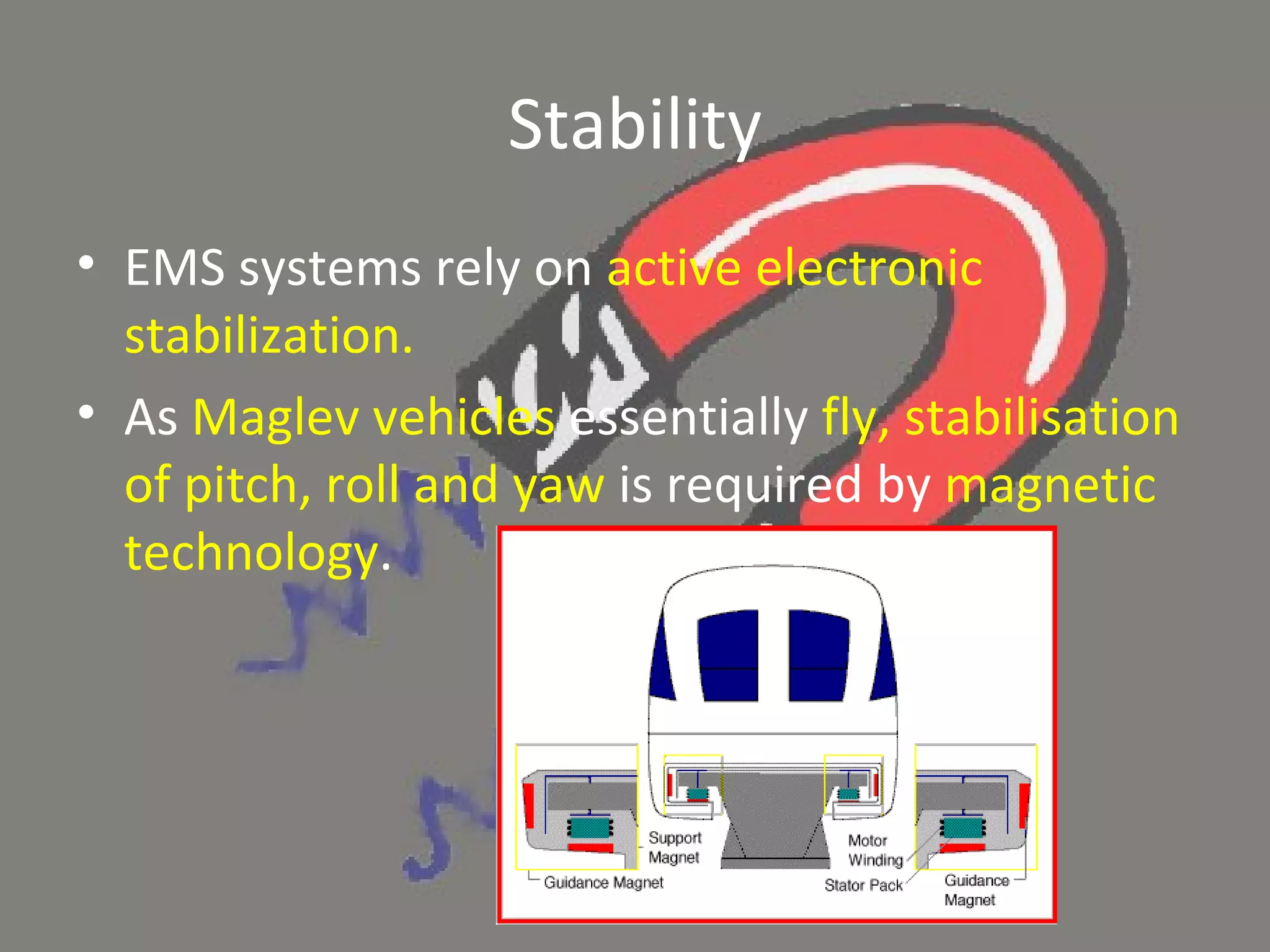
Stability EMS systems rely on  active electronic stabilization.  As  Maglev vehicles  essentially  fly, stabilisation of pitch, roll and yaw  is required by  magnetic technology .
Power and energy usage Energy  for  maglev trains  is used to  accelerate the train , and  may be regained  when  the train slows down. Also  used  to  make the train levitate  and to  stabilise the movement  of the train Main part of the energy  is needed to  force the train through the air Some energy  is used for  air conditioning, heating, lighting.
Power and energy usage At  very low speeds  the  percentage of power  used for levitation  can be  significant. Also for  very short distances  the  energy used for acceleration  might be  considered .  The  power used  to  overcome air drag increases  with the  cube of the velocity , and hence  dominates at high speed
Advantages of Maglev  A  Maglev  is  way faster  than  your usual bullet train . Maglevs  can reach speeds up to 500 kilometres per hour.   Due to its lack of wheels , MagLevs are  quieter  than normal trains, or sometimes even traffic.  Maglevs  use 30% less energy  than  normal trains .  In theory, a  Maglev  and  its track  would  require very little maintenance  since  the train never touches the track  there is  virtually no wear and tear.
Disadvantages of Maglev The  Maglev's track   is much  more expensive than railroad tracks .  Whole new sets of tracks  would have to be  built for the Maglev to run .  Many Transportation vehicles in Europe  run on  existing track , like the  TGV trains in France .  Although  Maglevs are pretty quiet ,  noise  caused by  air disturbance  still occurs.
Thank You! Any questions?

Maglev trains

  • 1.
    Maglev trains EddieLim (20) Lim Zheng Xiang (21) Anthony Low (24) Class: 1A2
  • 2.
    Agenda Introduction Fastfacts How it works Maglev technology Electromagnetic suspension Electrodynamic suspension Stability Power and energy usage Advantages and disadvantages of Maglev Train
  • 3.
    Introduction Magnetic levitation transport is a form of transportation that suspends guides and propels vehicles through the harnessing of electromagnetic force. The term "maglev" refers not only to the vehicles but also to the railway system. Maglev train uses magnetic levitation from a very large number of magnets for lift and propulsion. Has the potential to be faster, quieter and smoother than wheeled mass transit systems
  • 4.
    Introduction Power neededfor levitation is usually not a large percentage of the overall consumption In the present moment there are several countries working on the development of Magnetic Levitating trains : Japan and Germany were pioneers; USA and Australia are working in on it now. China is not a pioneer having build a maglev train from Shanghai to its city
  • 5.
    Did you Know?Maglev trains can attain speeds of 250 mph easily (the speed of a jet aircraft). The Japanese Maglev's last record was of 581km/h. The Shanghai Maglev Train can speed up to 431 km/h, or 267 mph. The first commercial Maglev was opened in 1984 in Birmingham, England, covering some 600 meters between its airport and rail hub
  • 6.
    How it worksA maglev train floats about 10mm above the guideway on a magnetic field. It is propelled by the guideway itself rather than an onboard engine by changing magnetic fields Once the train is pulled into the next section the magnetism switche s so that the train is pulled on again . The Electro-magnets run the length of the guideway.
  • 7.
    How it worksThe train cars use gigantic magnets to hover above their tracks, decreasing the negative impact friction has on a train's speed and allowing the cars to achieve much greater speeds than normal railroad cars.
  • 8.
    Maglev technology Thereare two primary types of maglev technology : electromagnetic suspension (EMS) electrodynamic suspension (EDS)
  • 9.
    Electromagnetic suspension Incurrent EMS systems, the train levitates above a steel rail while electromagnets, attached to the train, are oriented toward the rail from below. The electromagnets use feedback control to maintain a train at a constant distance from the track.
  • 10.
    Advantage Proven, commercially available technology that can attain very high speeds (500 km/h) No wheels or secondary propulsion system needed
  • 11.
    Disadvantage The separation between the vehicle and the guide way must be constantly monitored and corrected by computer systems to avoid collision due to the unstable nature of electromagnetic attraction.
  • 12.
    Electrodynamic suspension In Electrodynamic suspension , both the rail and the train exert a magnetic field , and the train is levitated by the repulsive force between these magnetic fields The magnetic field in the train is produced by either electromagnets or by an array of permanent magnets. The repulsive force in the track is created by an induced magnetic field in wires or other conducting strips in the track .
  • 13.
    Electrodynamic suspension At slow speeds, the current induced in these coils and the resultant magnetic flux is not large enough to support the weight of the train. For this reason the train must have wheels or some other form of landing gear to support the train until it reaches a speed that can sustain levitation .
  • 14.
    Electrodynamic suspension Propulsion coils on the guideway are used to exert a force on the magnets in the train and make the train move forward . The propulsion coils that exert a force on the train are effectively a linear motor . An alternating current flowing through the coils generates a continuously varying magnetic field that moves forward along the track.
  • 15.
    Electrodynamic suspension The frequency of the alternating current is synchronized to match the speed of the train . The offset between the field exerted by magnets on the train and the applied field create a force moving the train forward.
  • 16.
    Advantage Onboard magnets and large margin between rail and train enable highest recorded train speeds (581 km/h) and heavy load capacity Successful operations using high temperature superconductors in its onboard magnets , cooled with inexpensive liquid nitrogen.
  • 17.
    Disadvantage Strong magneticfields onboard the train would make the train inaccessible to passengers with pacemakers or magnetic data storage media such as hard drives and credit cards, necessitating the use of magnetic shielding ; vehicle must be wheeled for travel at low speeds ; system per mile cost still considered prohibitive ; the system is not yet out of prototype phase.
  • 18.
    Stability EMS systemsrely on active electronic stabilization. As Maglev vehicles essentially fly, stabilisation of pitch, roll and yaw is required by magnetic technology .
  • 19.
    Power and energyusage Energy for maglev trains is used to accelerate the train , and may be regained when the train slows down. Also used to make the train levitate and to stabilise the movement of the train Main part of the energy is needed to force the train through the air Some energy is used for air conditioning, heating, lighting.
  • 20.
    Power and energyusage At very low speeds the percentage of power used for levitation can be significant. Also for very short distances the energy used for acceleration might be considered . The power used to overcome air drag increases with the cube of the velocity , and hence dominates at high speed
  • 21.
    Advantages of Maglev A Maglev is way faster than your usual bullet train . Maglevs can reach speeds up to 500 kilometres per hour. Due to its lack of wheels , MagLevs are quieter than normal trains, or sometimes even traffic. Maglevs use 30% less energy than normal trains . In theory, a Maglev and its track would require very little maintenance since the train never touches the track there is virtually no wear and tear.
  • 22.
    Disadvantages of MaglevThe Maglev's track is much more expensive than railroad tracks . Whole new sets of tracks would have to be built for the Maglev to run . Many Transportation vehicles in Europe run on existing track , like the TGV trains in France . Although Maglevs are pretty quiet , noise caused by air disturbance still occurs.
  • 23.
    Thank You! Anyquestions?