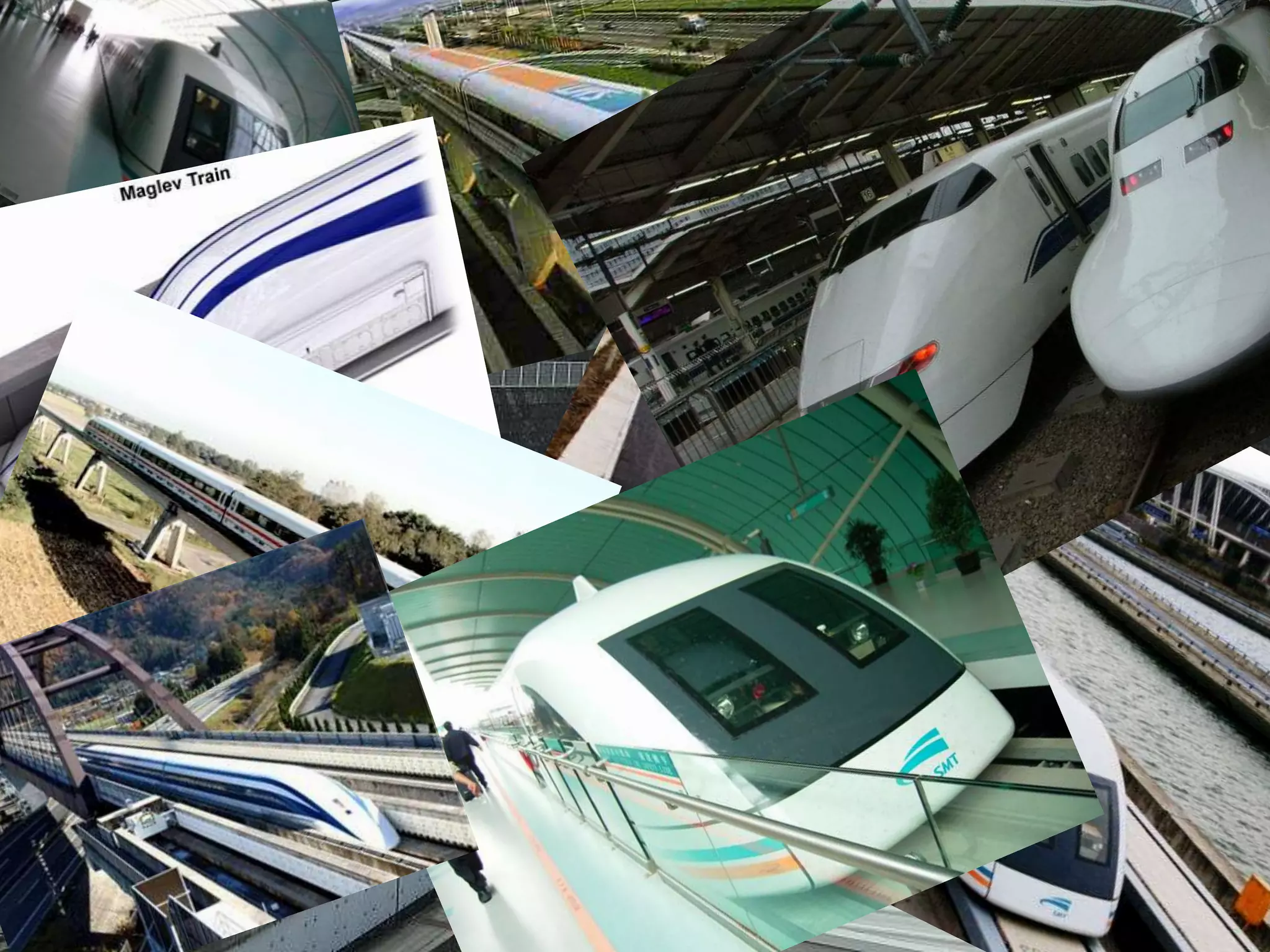
Magnetic Travel


By BHARAT YADAV
The Maglev Train History
In the 1960s in Britain Eric Laithwaite
developed a functional maglev train. His
maglev had 1.6 km of track and was in
detail tested. His research was stopped in
1973 because lack of money and his
progress was not enough. In the
1970s, Germany and Japan also began
research and after some failures both
nations developed mature technologies in
t                     h                  e
1990’s……………………………………...                      Eric Laithwaite
The Maglev Train
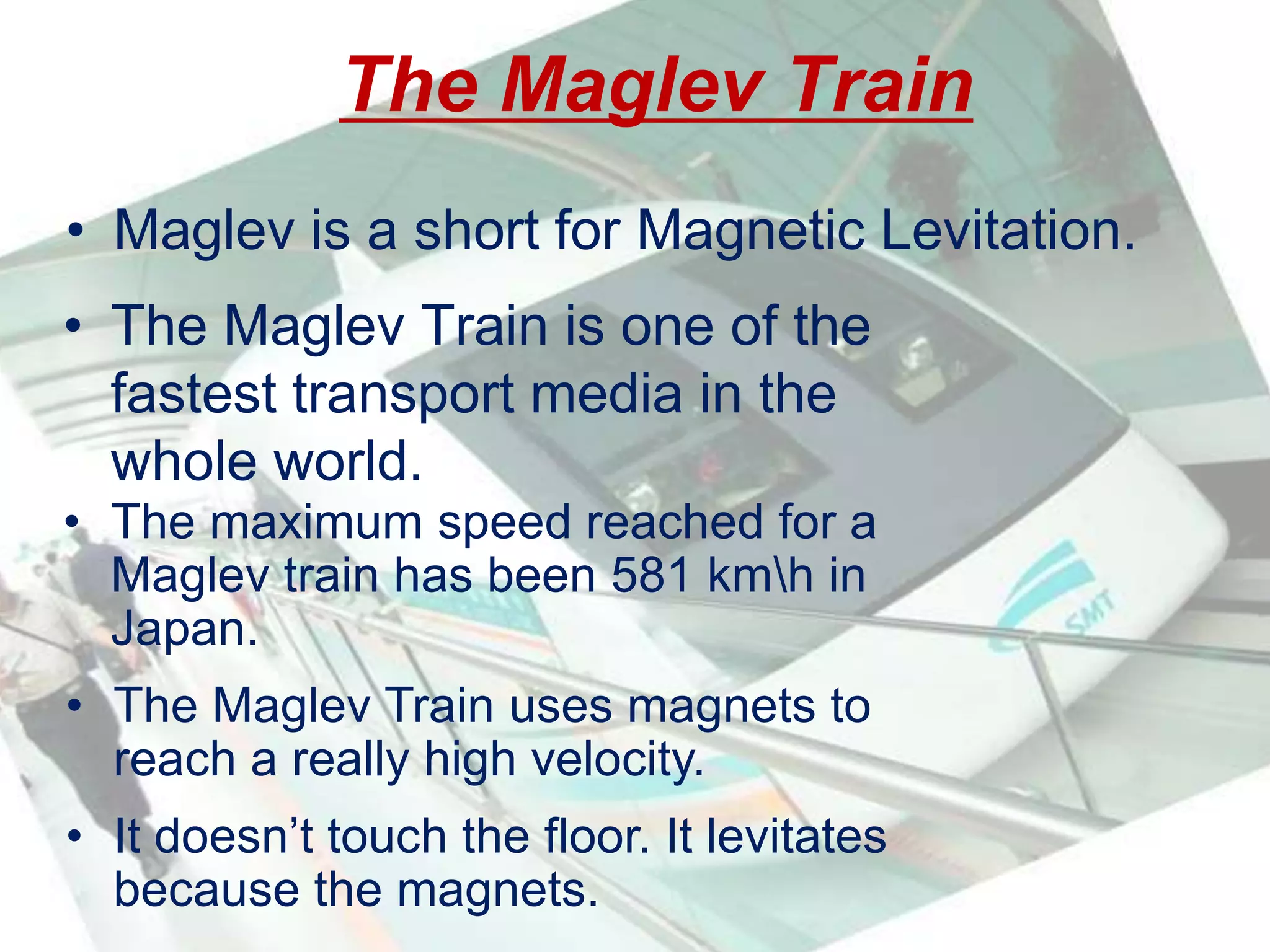
• Maglev is a short for Magnetic Levitation.
• The Maglev Train is one of the
  fastest transport media in the
  whole world.
• The maximum speed reached for a
  Maglev train has been 581 kmh in
  Japan.
• The Maglev Train uses magnets to
  reach a really high velocity.
• It doesn’t touch the floor. It levitates
  because the magnets.
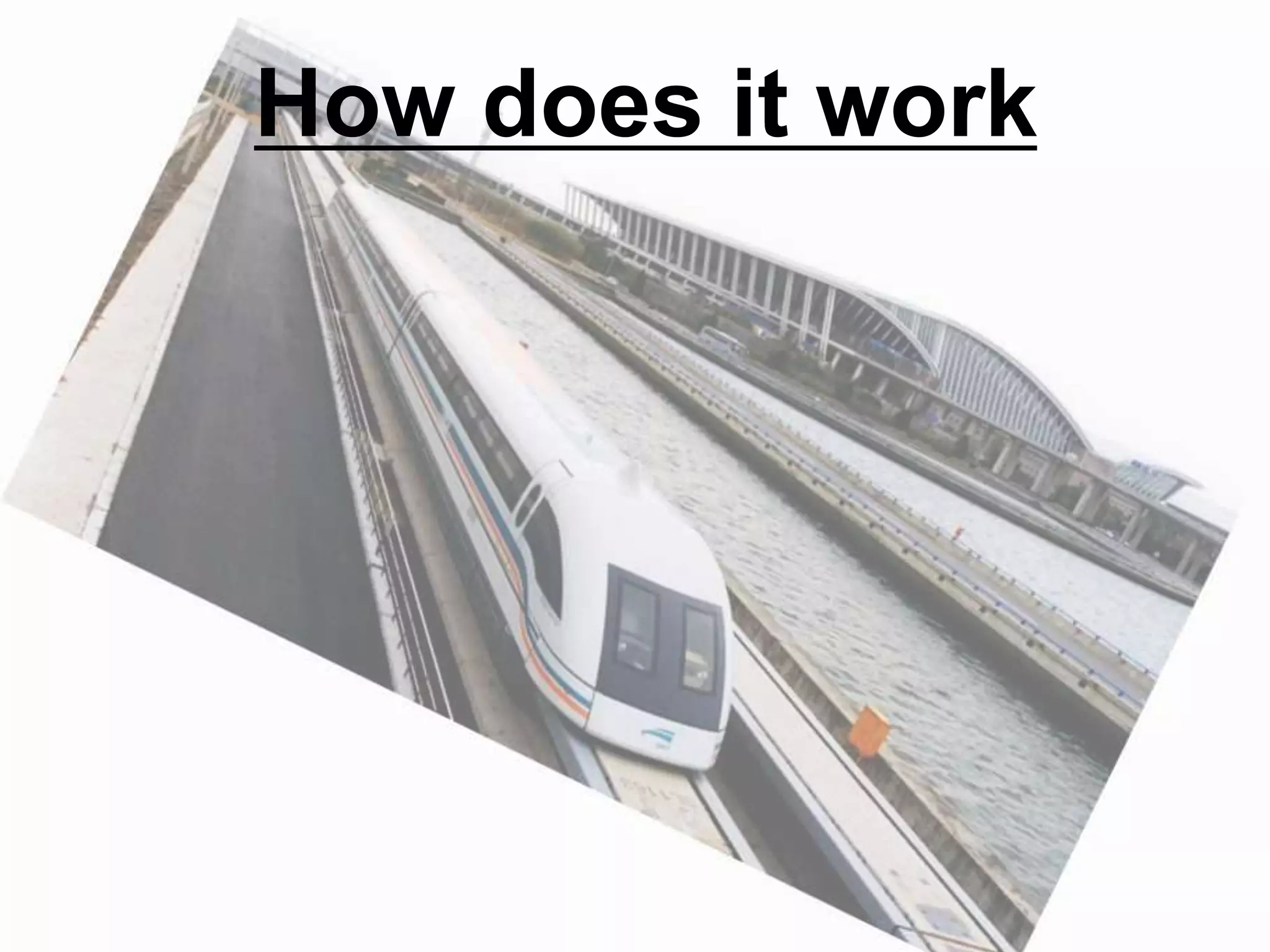
How does it work
It works like this
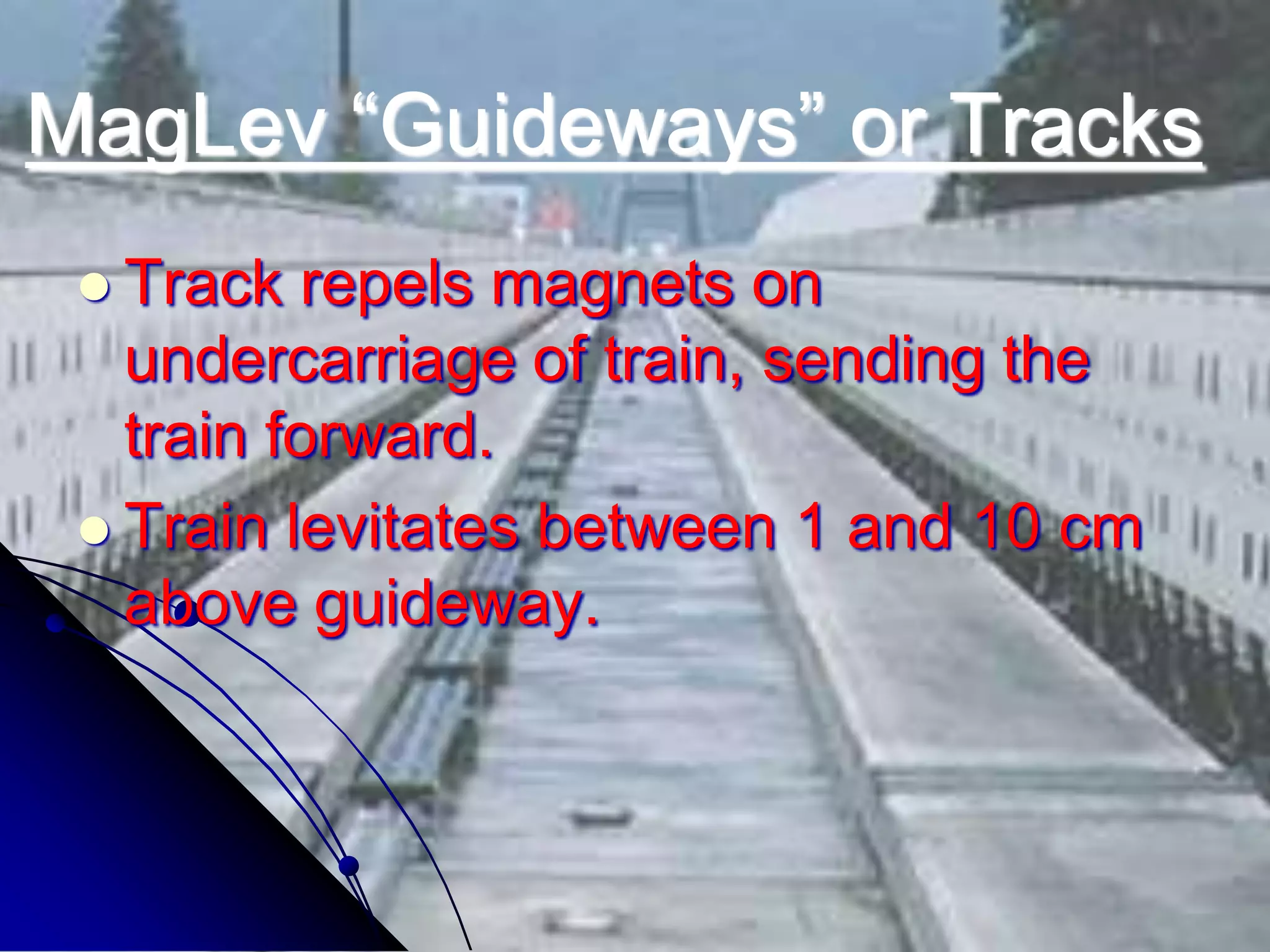
MagLev “Guideways” or Tracks
  Track  repels magnets on
   undercarriage of train, sending the
   train forward.
  Train levitates between 1 and 10 cm
   above guideway.
MagLev vs. Conventional Trains

    MagLev Trains       Conventional Trains
No Friction = Less    Routine Maintenance
Maintenance           Needed
No Engine = No fuel   Engine requires fossil
required              fuels
Speeds in excess of   Speeds up to 110 mph
300 mph
Advantages of a maglev Train
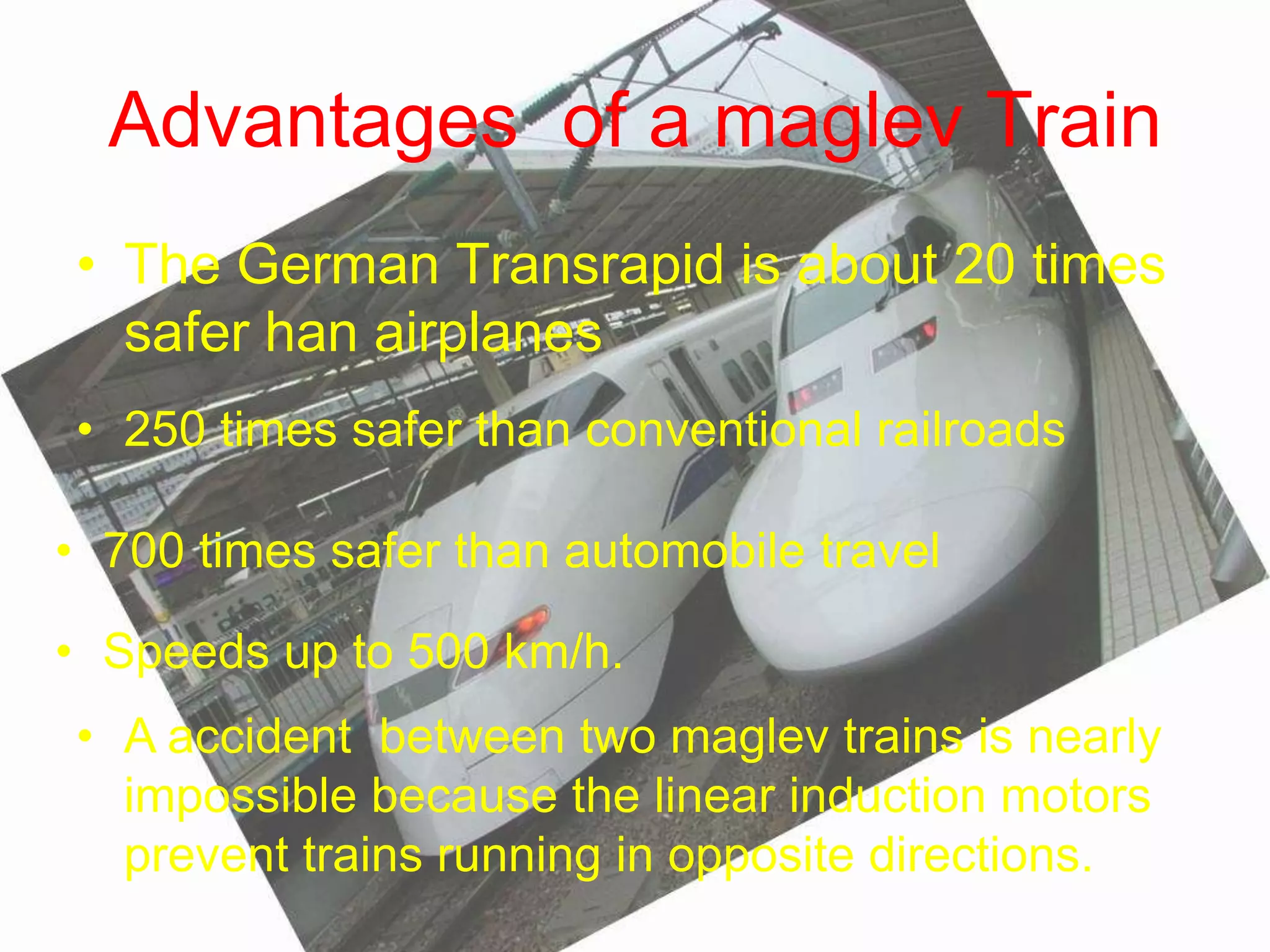
• The German Transrapid is about 20 times
  safer han airplanes
• 250 times safer than conventional railroads

• 700 times safer than automobile travel

• Speeds up to 500 km/h.
• A accident between two maglev trains is nearly
  impossible because the linear induction motors
  prevent trains running in opposite directions.
Limitation’s

• Cost is major issue when considering maglev trains, it
  costing approximately $8.5 billions.


• The weight of the electromagnets

• A very strong magnetic field is required to levitate the
  heavy trains,and maintaining the field constant requires
  a lot of energy which is expensive.
The Maglev Train and Society
• The Scientifics want the Maglev train to be
  fast and economical.
• They want it to be something that anyone
  can use.
• The big problem about this is that the
  pieces for the maglev are really expensive
• The procedure to build it up is very
  expensive as well
The Maglev Train and Environment

 Less energy consumption because no
  rail-track friction
 Requires no fossil fuel which can harm
  the environment.
 Less noise pollution since the train
  never hits the track
 MagLev guideways and trains take up
  less space than conventional trains
References
   Bonsor, Kevin. “How Maglev Trains Work”. 5 September, 2002.
    <http://travel.howstuffworks.com/maglev-train.htm>

   Keating, Oliver. “Maglevs (Magnetically Levitated Trains)”. 16
    June, 2000. <http://www.okeating.com/hsr/maglev.htm>

   Disney Online. “California Screamin’”. August, 1999.
    <http://disneyland.disney.go.com/disneyland/en_US/parks/attraction
    s/detail?name=CaliforniaScreaminAttractionPage>

   MagLev Systems. “Electromagnetic Systems”. General Atomics
    and Affiliated Companies. 2005. <http://www.ga.com/atg/ems.php>.
QUERY

Maglev train

  • 1.
  • 3.
    The Maglev TrainHistory In the 1960s in Britain Eric Laithwaite developed a functional maglev train. His maglev had 1.6 km of track and was in detail tested. His research was stopped in 1973 because lack of money and his progress was not enough. In the 1970s, Germany and Japan also began research and after some failures both nations developed mature technologies in t h e 1990’s……………………………………... Eric Laithwaite
  • 4.
    The Maglev Train •Maglev is a short for Magnetic Levitation. • The Maglev Train is one of the fastest transport media in the whole world. • The maximum speed reached for a Maglev train has been 581 kmh in Japan. • The Maglev Train uses magnets to reach a really high velocity. • It doesn’t touch the floor. It levitates because the magnets.
  • 5.
  • 6.
  • 7.
    MagLev “Guideways” orTracks  Track repels magnets on undercarriage of train, sending the train forward.  Train levitates between 1 and 10 cm above guideway.
  • 8.
    MagLev vs. ConventionalTrains MagLev Trains Conventional Trains No Friction = Less Routine Maintenance Maintenance Needed No Engine = No fuel Engine requires fossil required fuels Speeds in excess of Speeds up to 110 mph 300 mph
  • 9.
    Advantages of amaglev Train • The German Transrapid is about 20 times safer han airplanes • 250 times safer than conventional railroads • 700 times safer than automobile travel • Speeds up to 500 km/h. • A accident between two maglev trains is nearly impossible because the linear induction motors prevent trains running in opposite directions.
  • 10.
    Limitation’s • Cost ismajor issue when considering maglev trains, it costing approximately $8.5 billions. • The weight of the electromagnets • A very strong magnetic field is required to levitate the heavy trains,and maintaining the field constant requires a lot of energy which is expensive.
  • 11.
    The Maglev Trainand Society • The Scientifics want the Maglev train to be fast and economical. • They want it to be something that anyone can use. • The big problem about this is that the pieces for the maglev are really expensive • The procedure to build it up is very expensive as well
  • 12.
    The Maglev Trainand Environment  Less energy consumption because no rail-track friction  Requires no fossil fuel which can harm the environment.  Less noise pollution since the train never hits the track  MagLev guideways and trains take up less space than conventional trains
  • 14.
    References  Bonsor, Kevin. “How Maglev Trains Work”. 5 September, 2002. <http://travel.howstuffworks.com/maglev-train.htm>  Keating, Oliver. “Maglevs (Magnetically Levitated Trains)”. 16 June, 2000. <http://www.okeating.com/hsr/maglev.htm>  Disney Online. “California Screamin’”. August, 1999. <http://disneyland.disney.go.com/disneyland/en_US/parks/attraction s/detail?name=CaliforniaScreaminAttractionPage>  MagLev Systems. “Electromagnetic Systems”. General Atomics and Affiliated Companies. 2005. <http://www.ga.com/atg/ems.php>.
  • 15.