Project   PPT   A  Hwa Chong Instituition  Initiation Youth for the  Environment Day P romoting   P ublic   T ransport
A genda 1) Introduction of global warming 2) Dangers and causes of global warming 3) Rationale  4) Statistics and data 5) Target audience 6) Methodology  7) Products 8) Timeline 9) Acknowledgement
What is Global Warming?
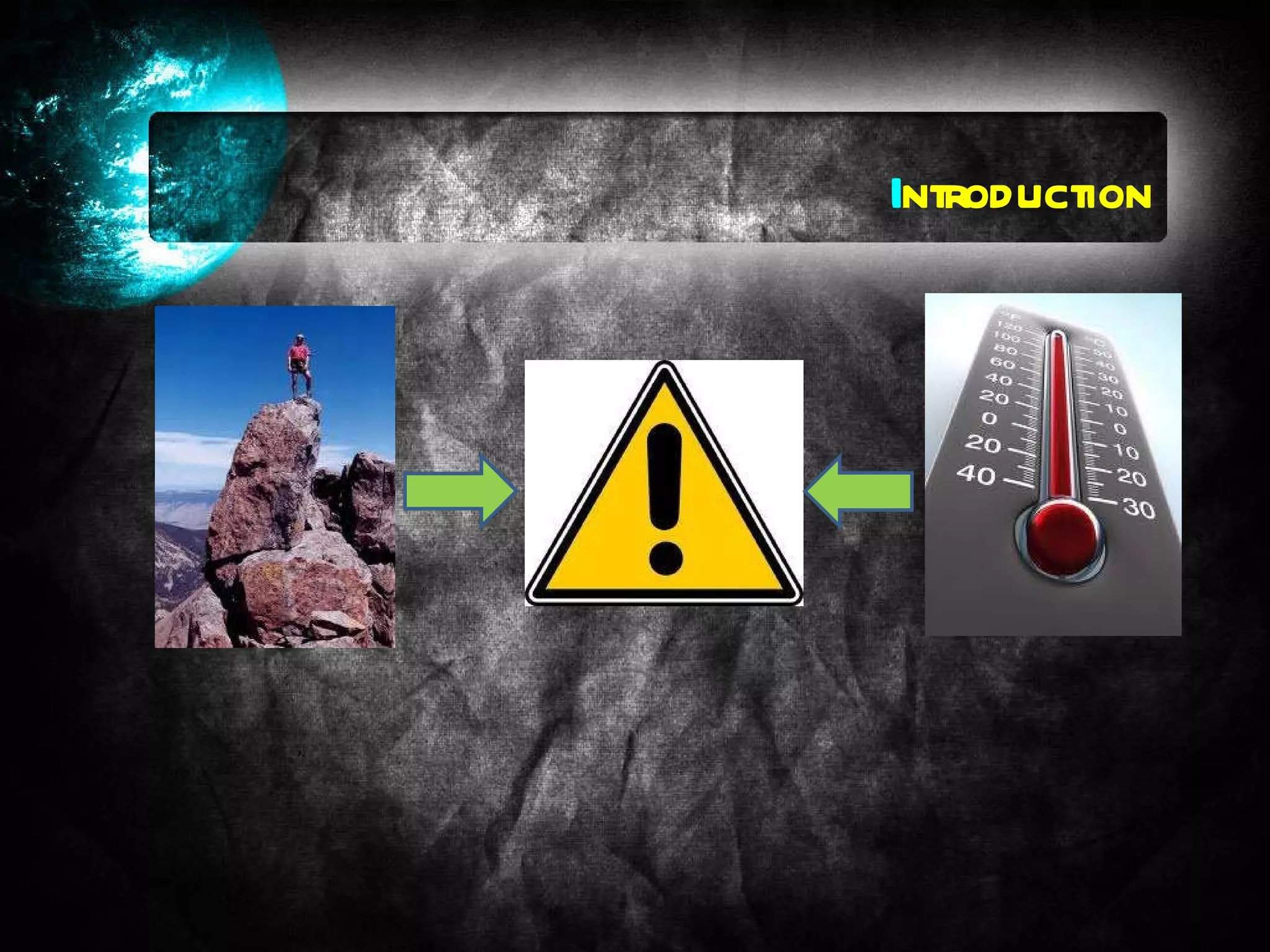
Dictionary Definition An increase in the average temperature of the earth's atmosphere (especially a sustained increase that causes climatic changes) I ntroduction
Global Warming I ntroduction
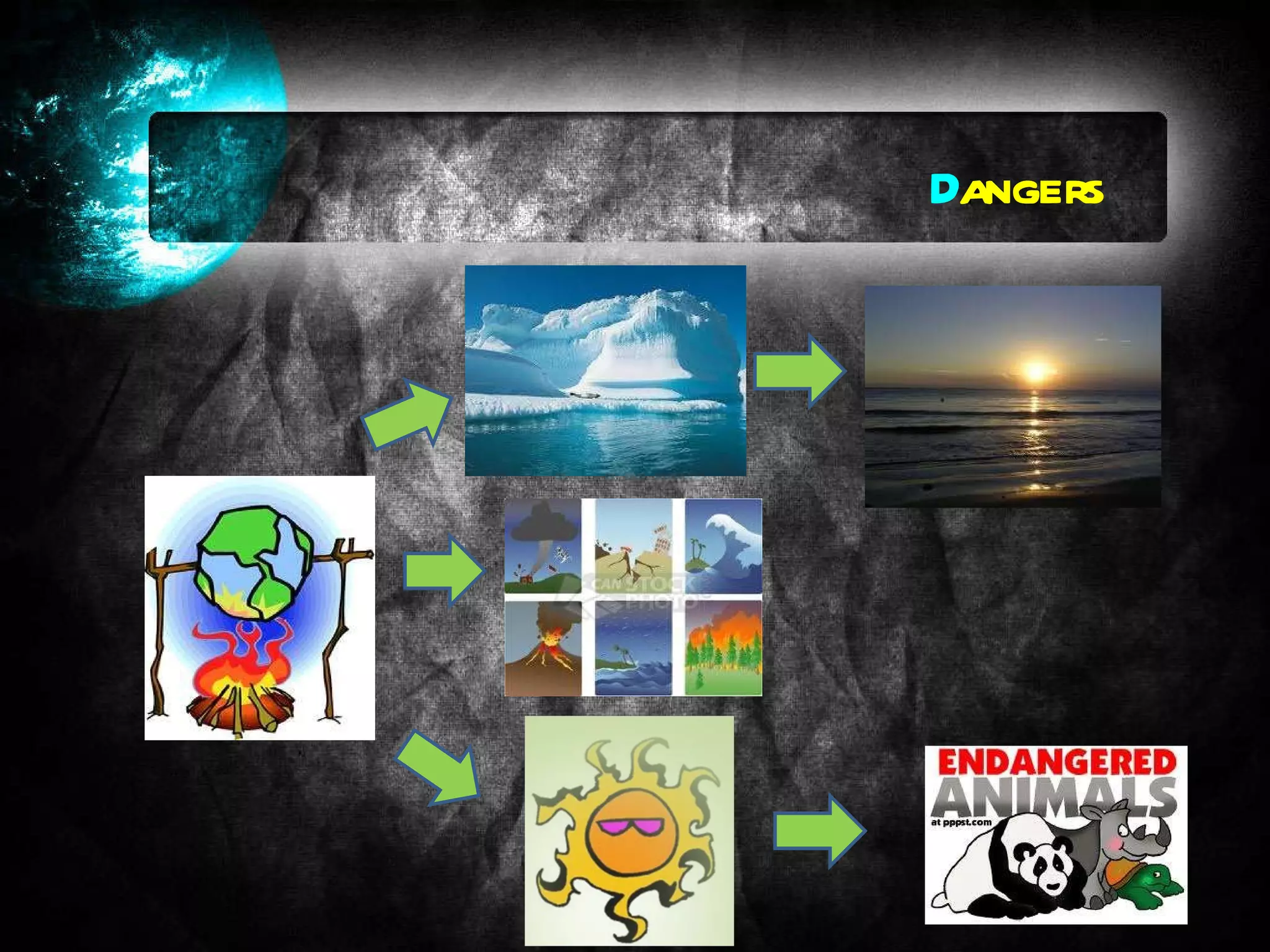
D angers
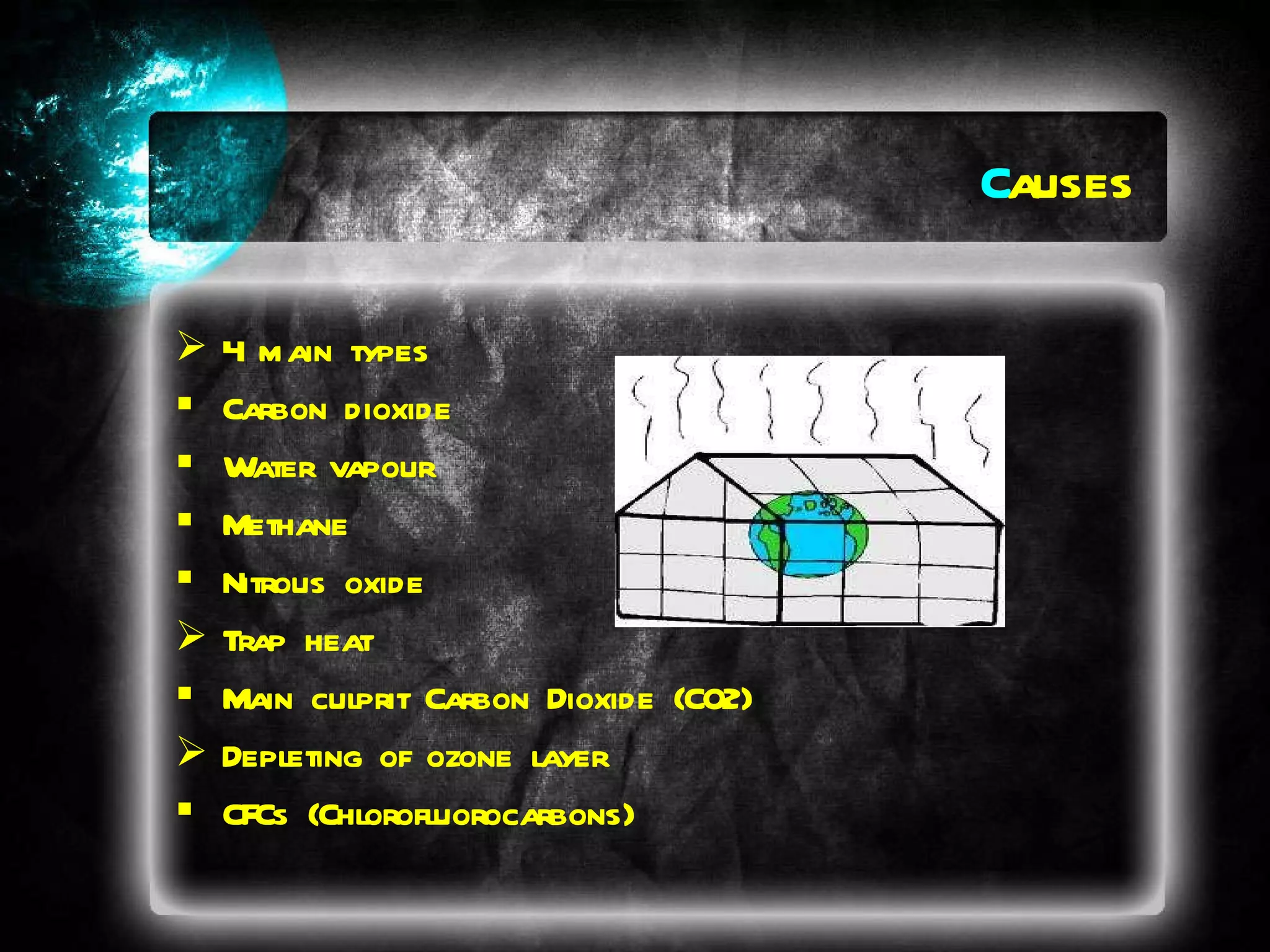
C auses 4 main types Carbon dioxide Water vapour Methane Nitrous oxide  Trap heat Main culprit Carbon Dioxide (CO2) Depleting of ozone layer CFCs (Chlorofluorocarbons)
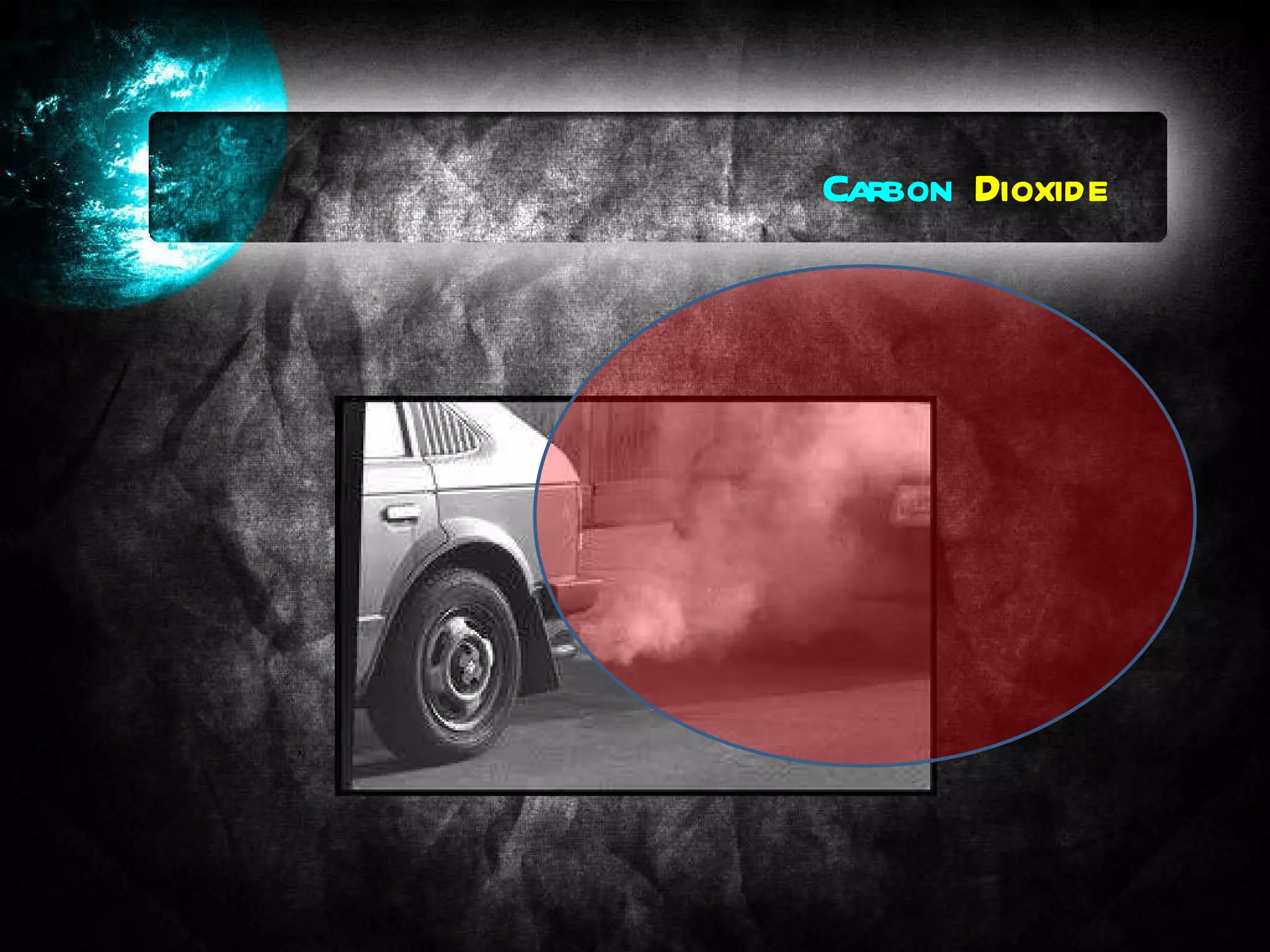
Carbon  Dioxide
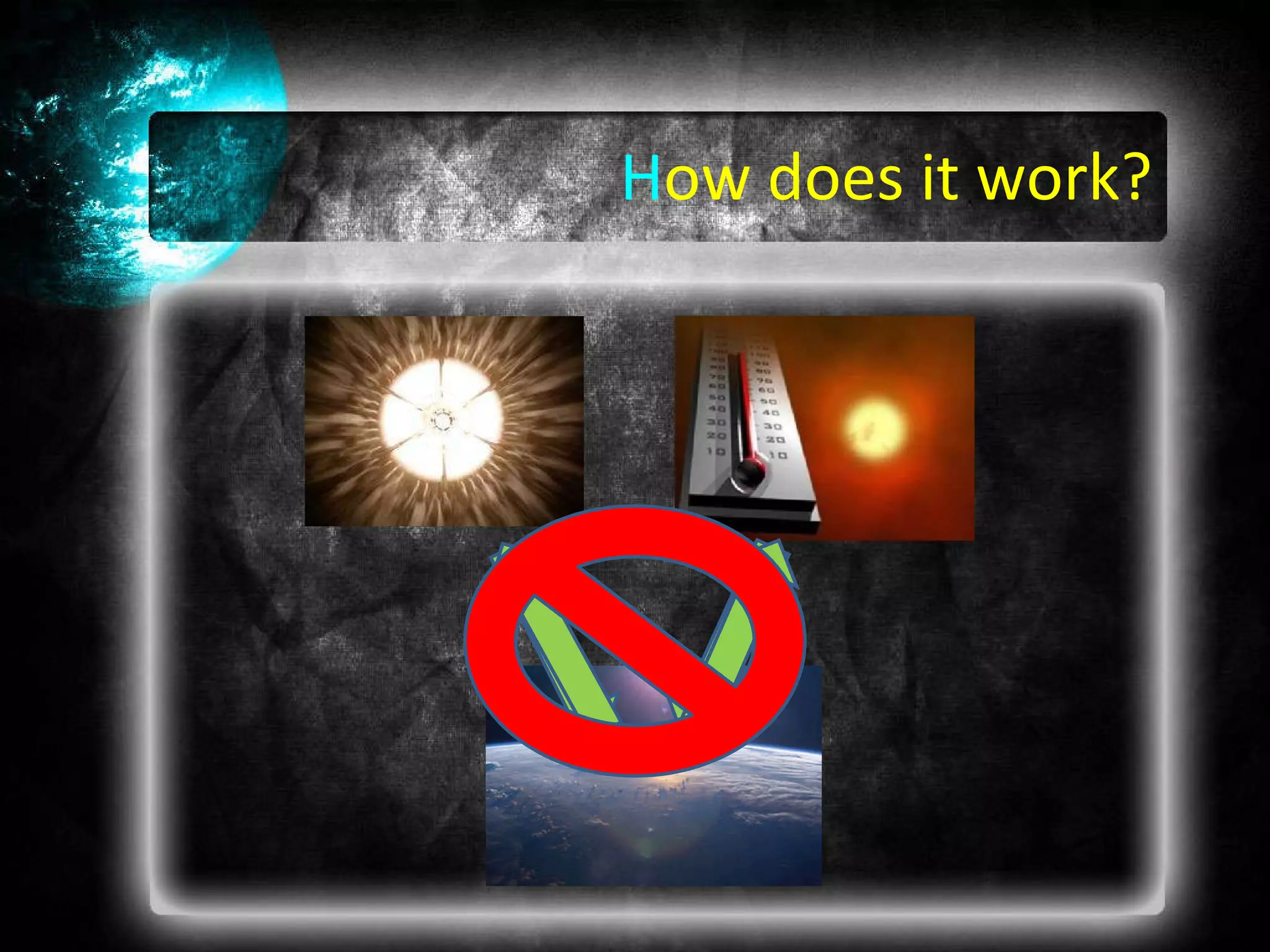
H ow does it work?
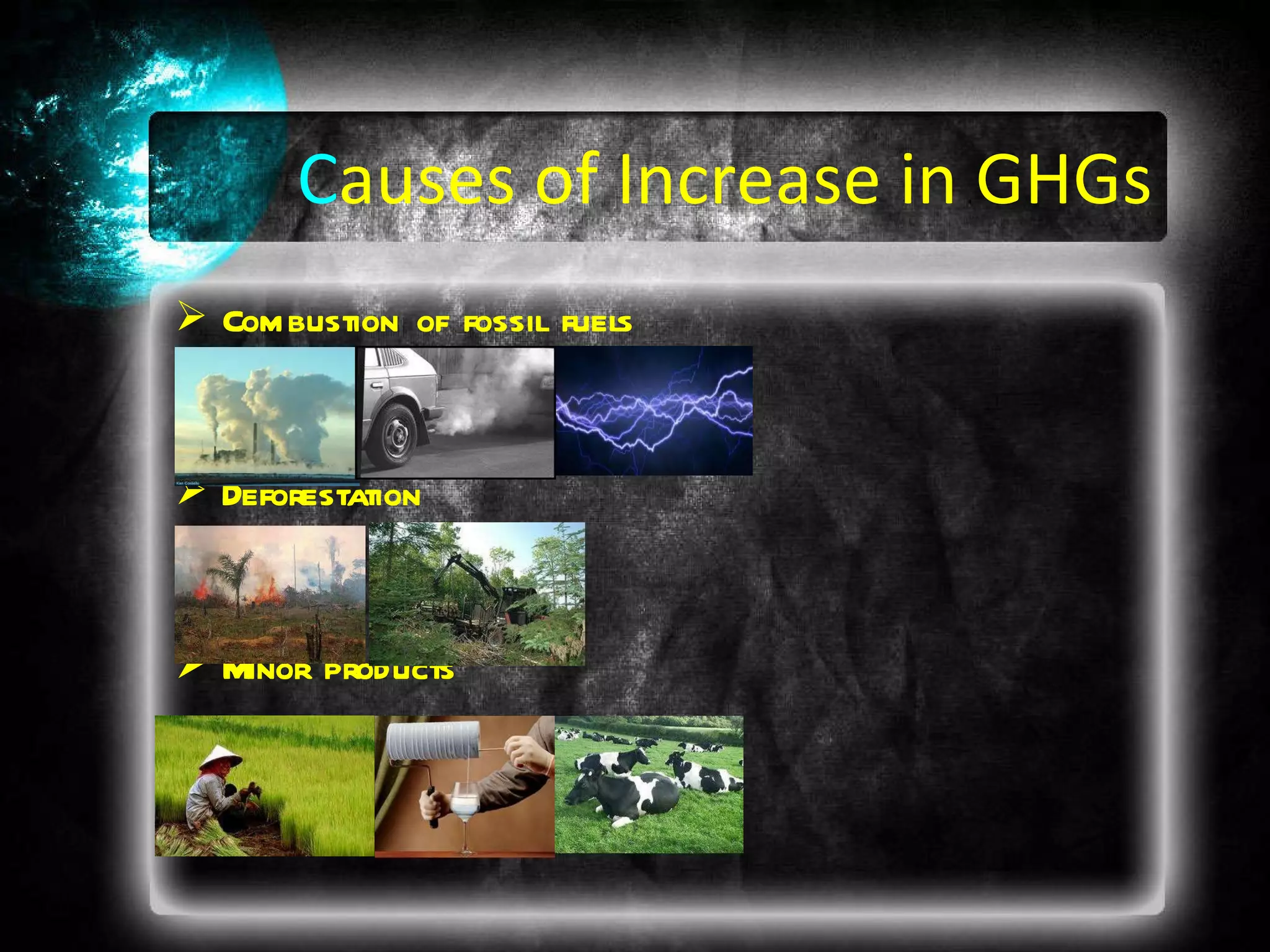
C auses of Increase in GHGs Combustion of fossil fuels  Deforestation Minor products
OR
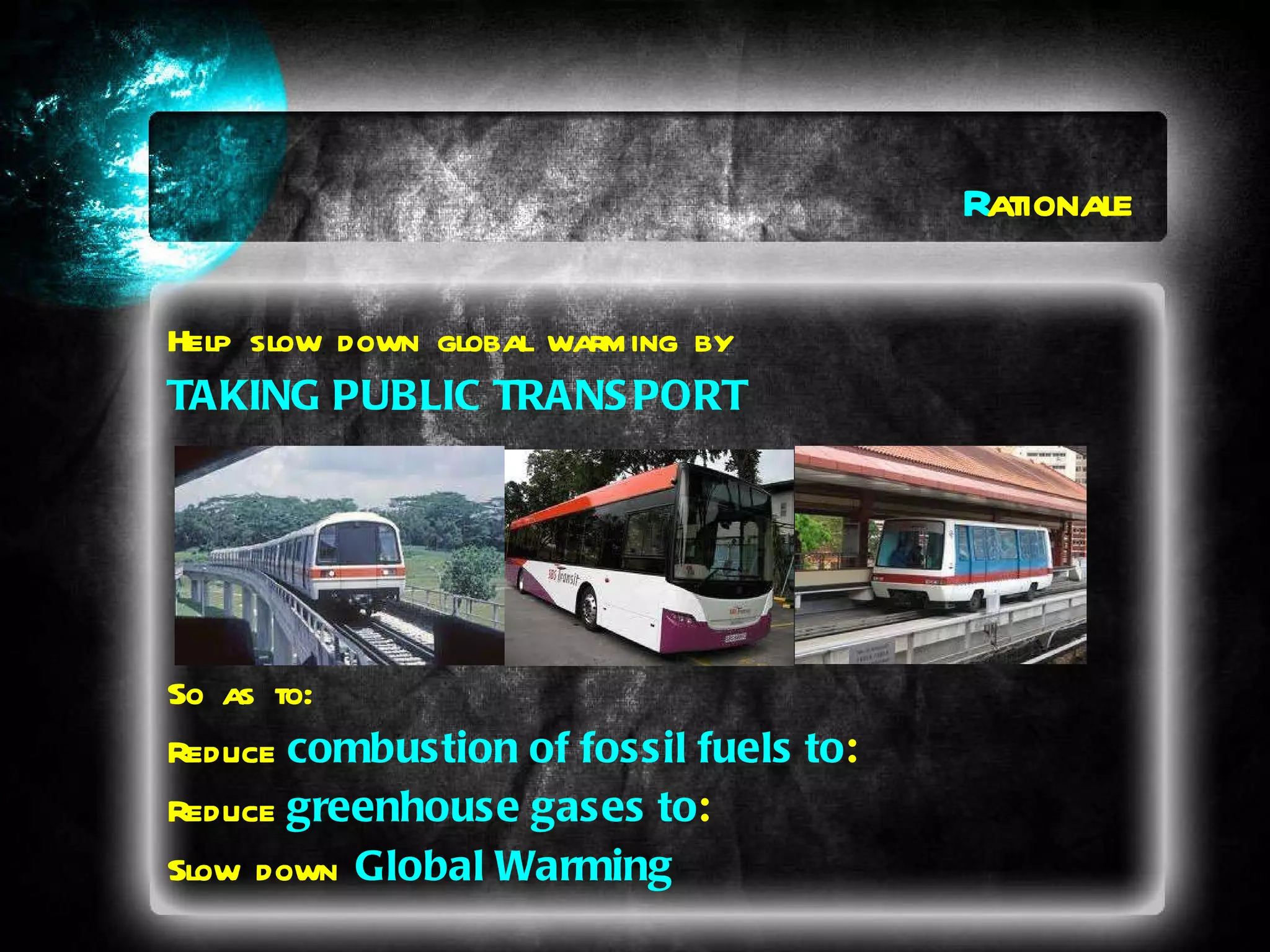
R ationale Help slow down global warming by TAKING PUBLIC TRANSPORT So as to: Reduce   combustion of fossil fuels to : Reduce   greenhouse gases to : Slow down  Global Warming
S afety Issues “ My parents do not allow me to take public transport because of safety issues”
M ethedology
Statistics  Analysis
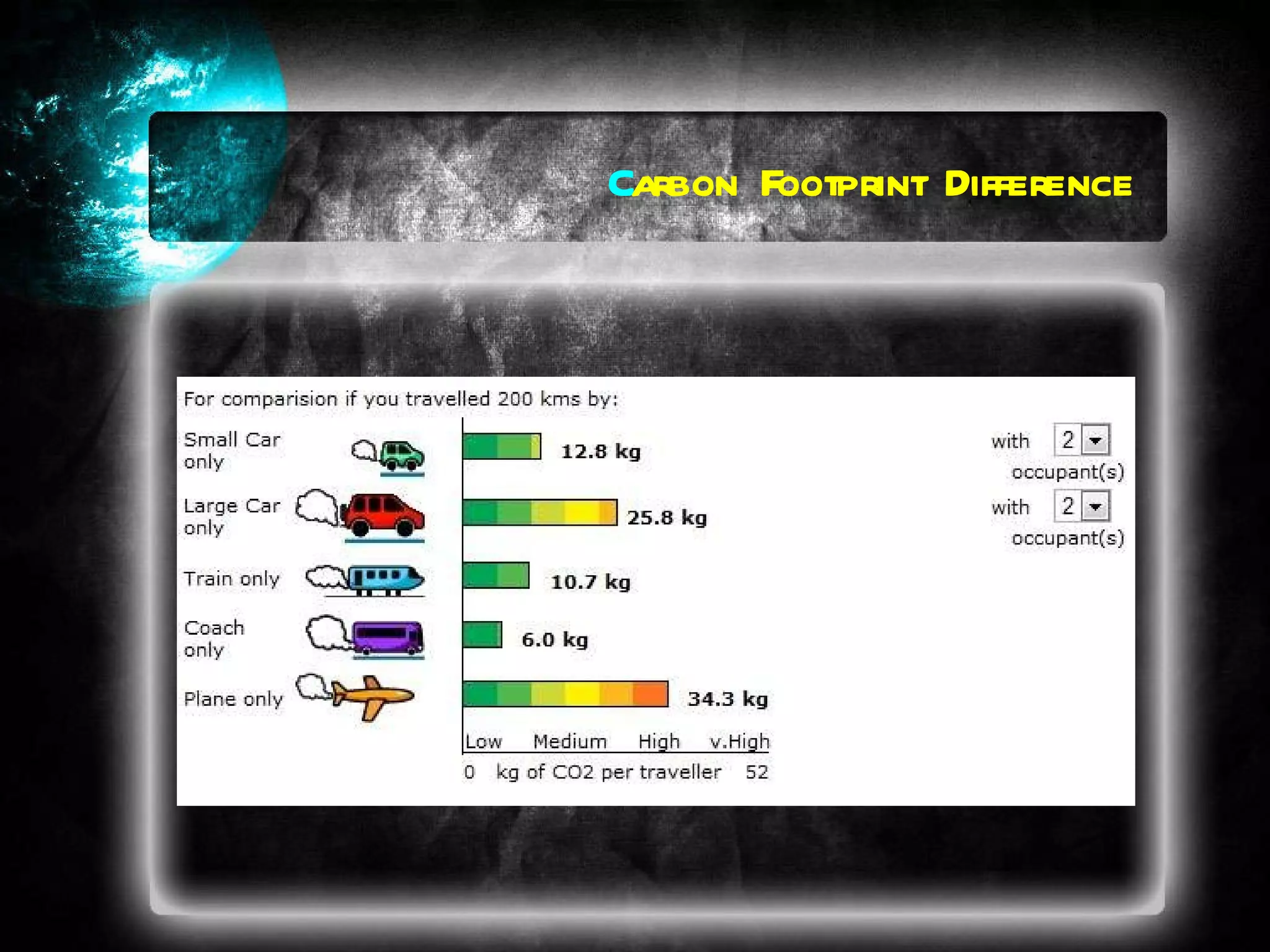
C arbon Footprint Difference
D ifference
C ost Difference [Taking a bus instead of a car would be about $5.70 cheaper] [Excluding cost of car, COE, insurance etc] Travelling by Car Travelling by Bus Assuming Route=26km Assuming Route=26km 1 liter can travel approx. 10km Maximum bus for students=$0.58 1 liter costs approx. $4.40 Maximum bus fare for adults=$4 Amount of petrol needed=26/10 =2.6 liter Total costs, assuming 3 students 1 adult =$4+$0.58x3 =$5.74 If people travel by car, it will cost 2.6x$4.40=$11.44 If people travel by bus, it will cost $5.74
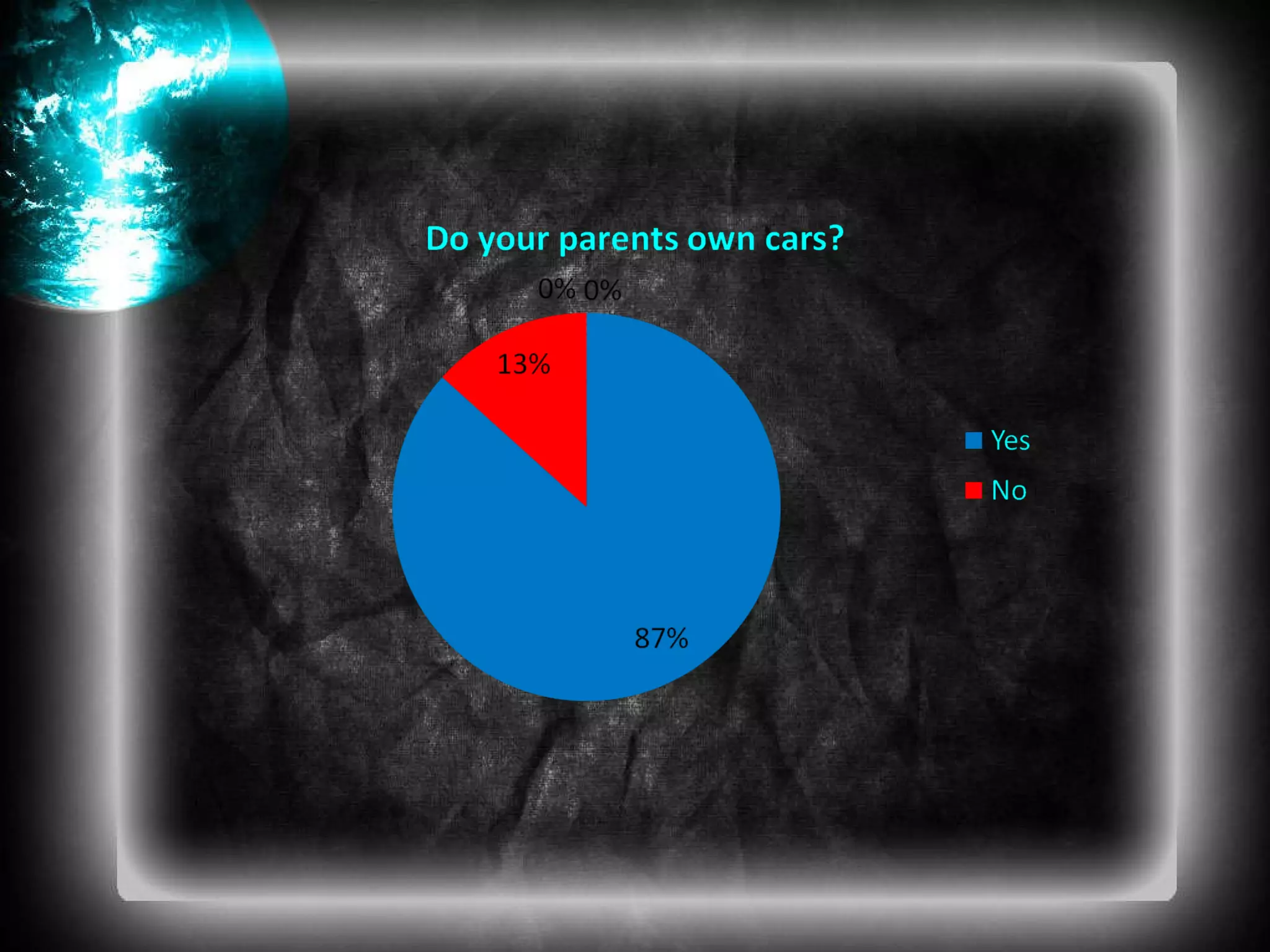
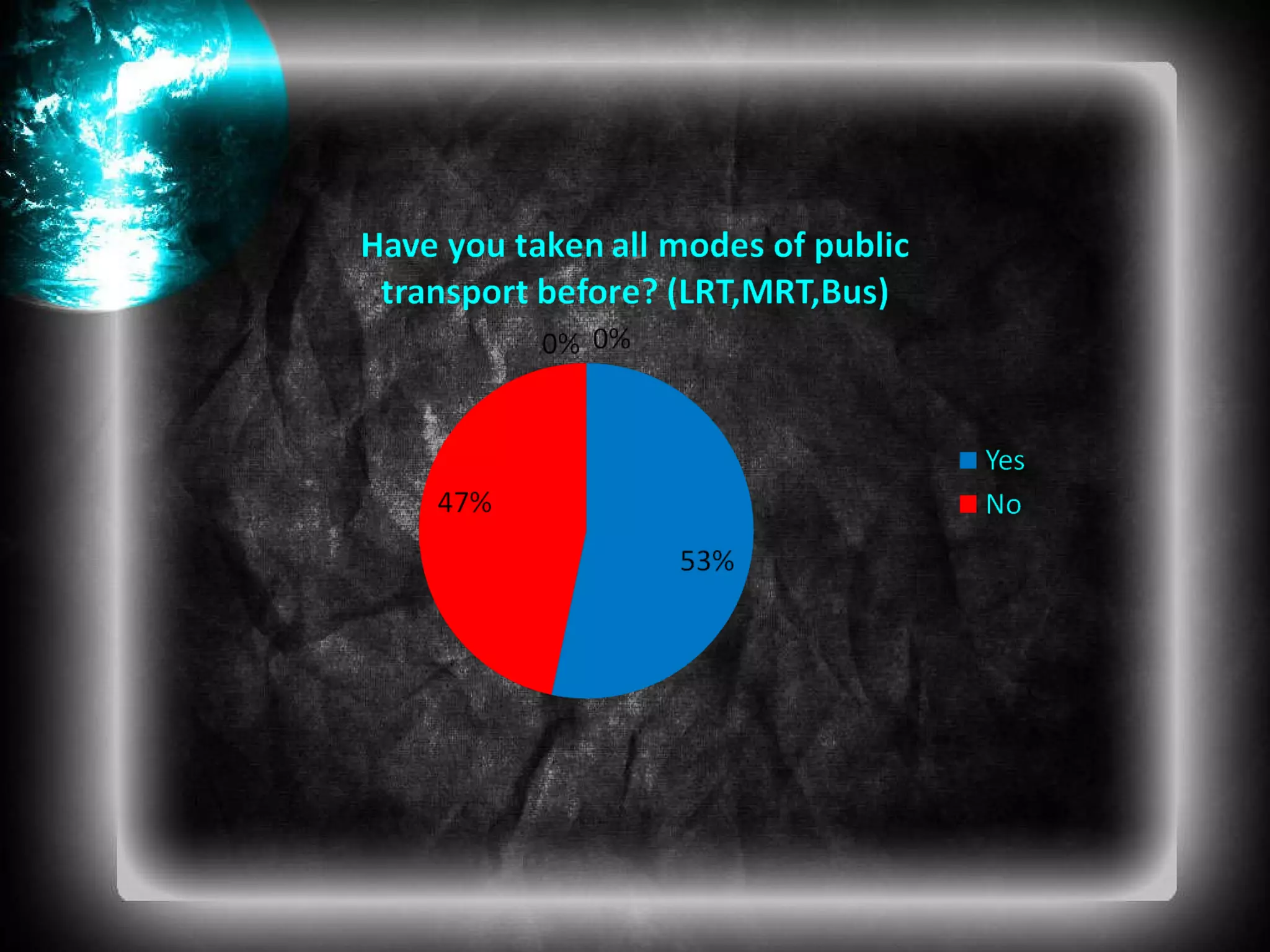
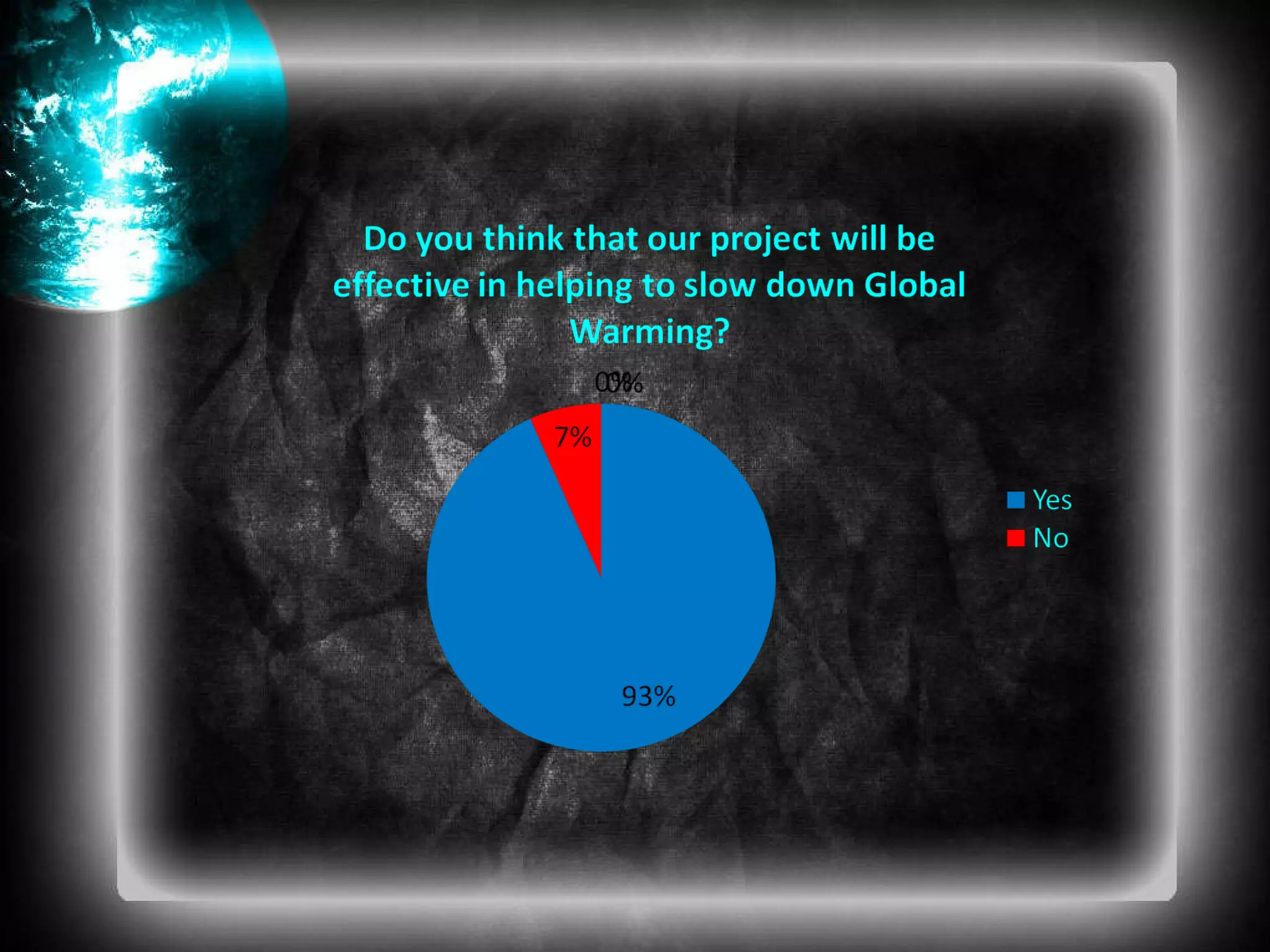
Survey   Data 75 surveyed
 
[excluding those without cars]
[excluding those without cars]
 
 
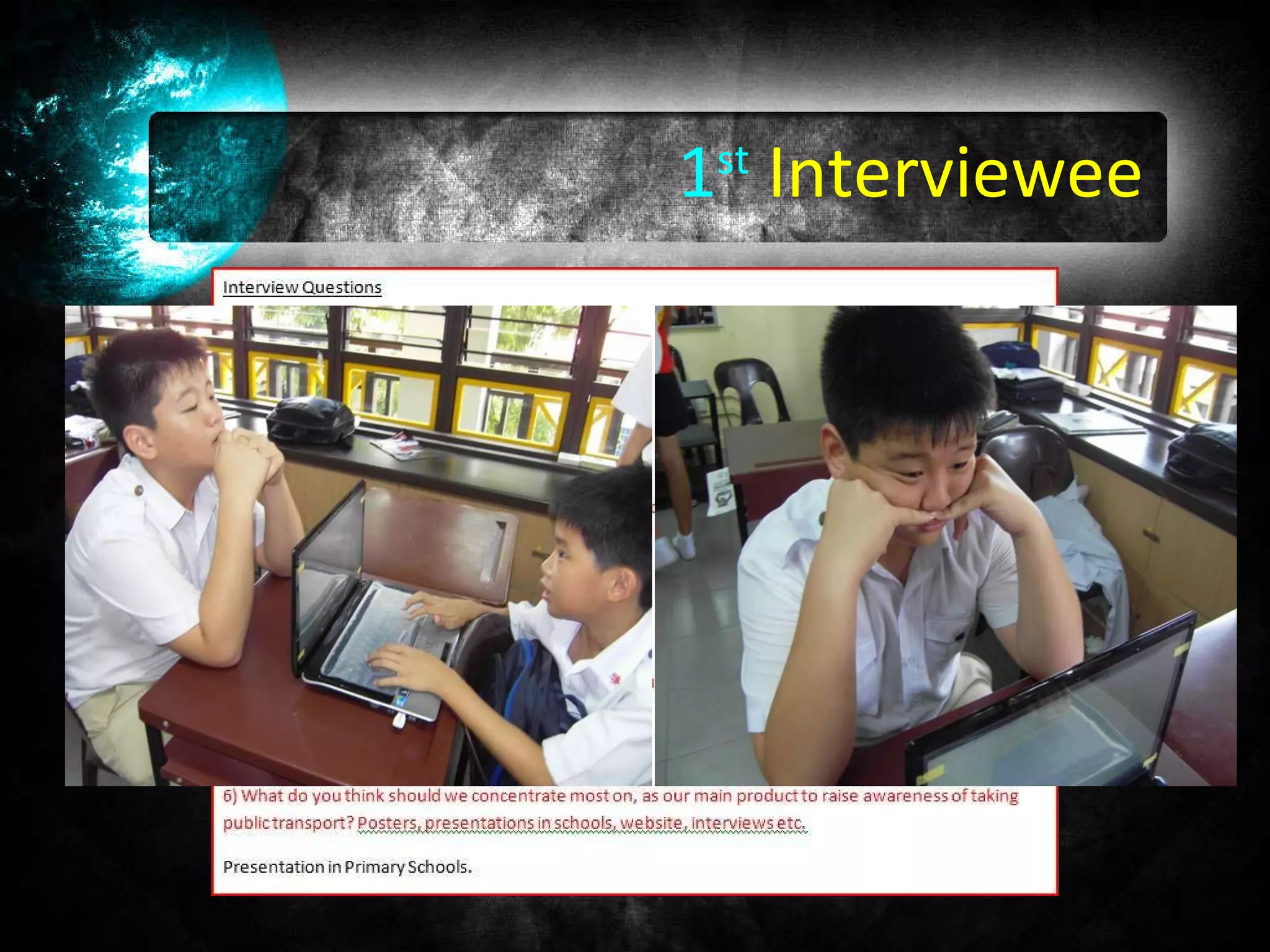
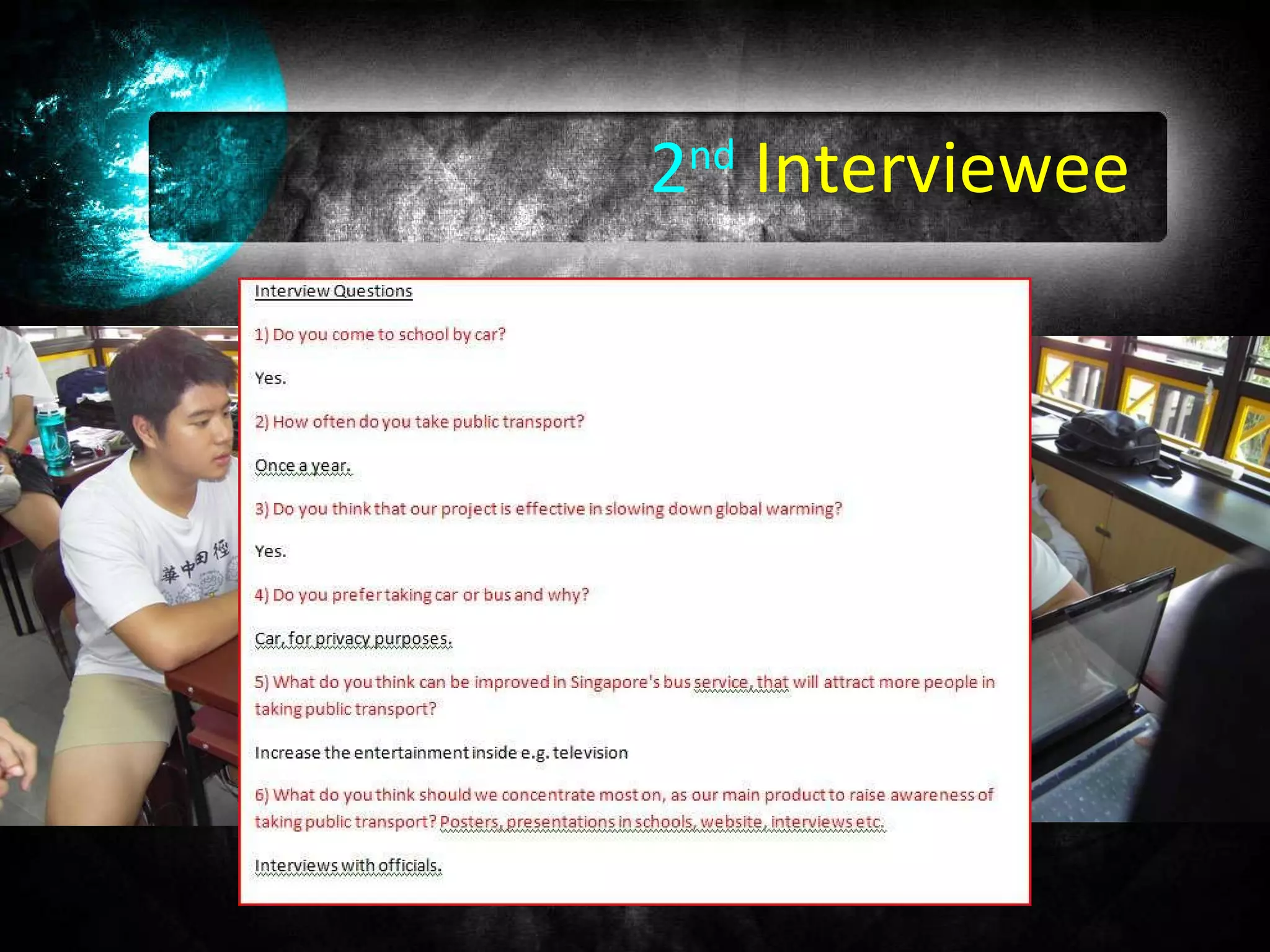
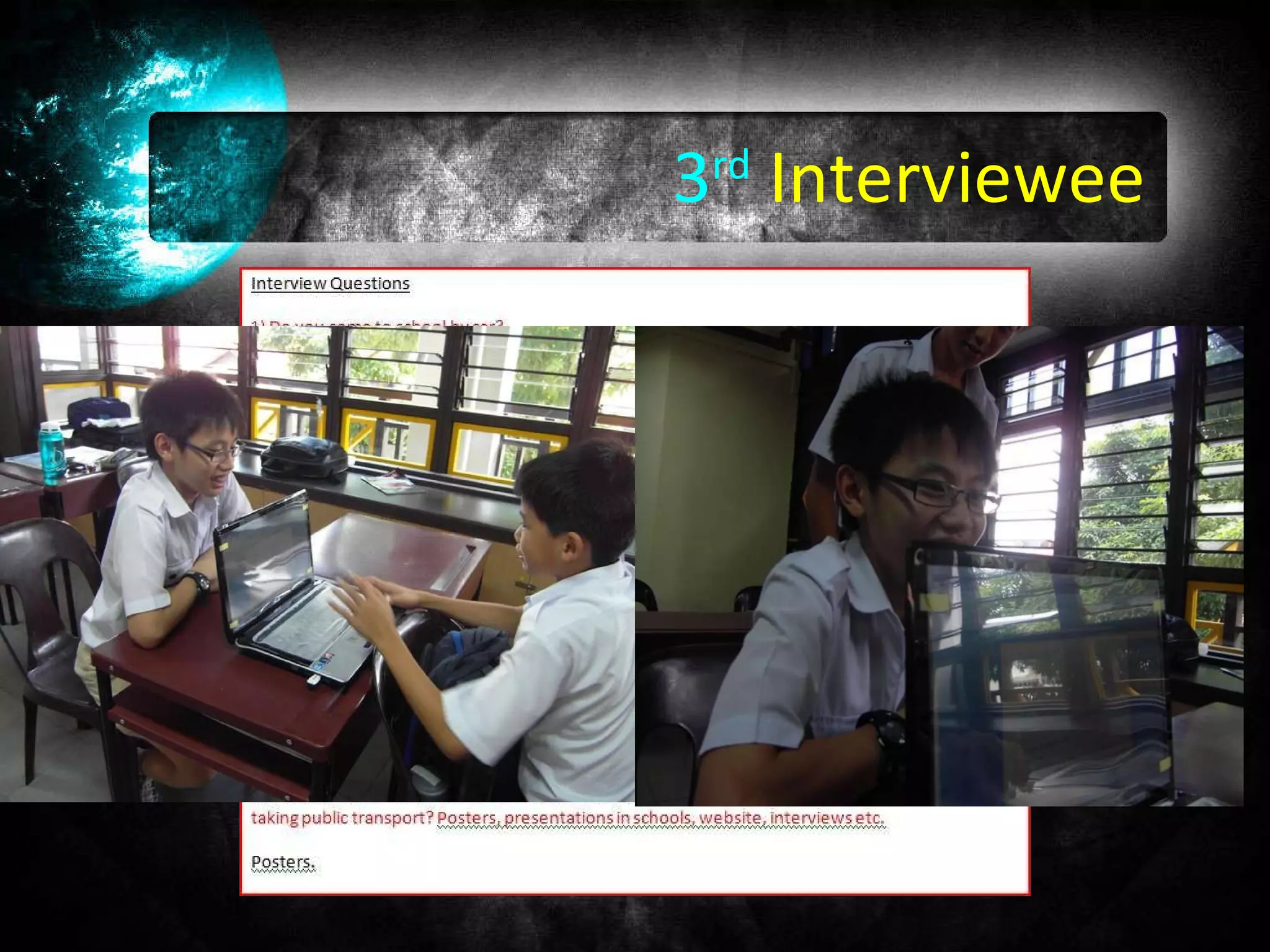
I nterviews 3 interviewed
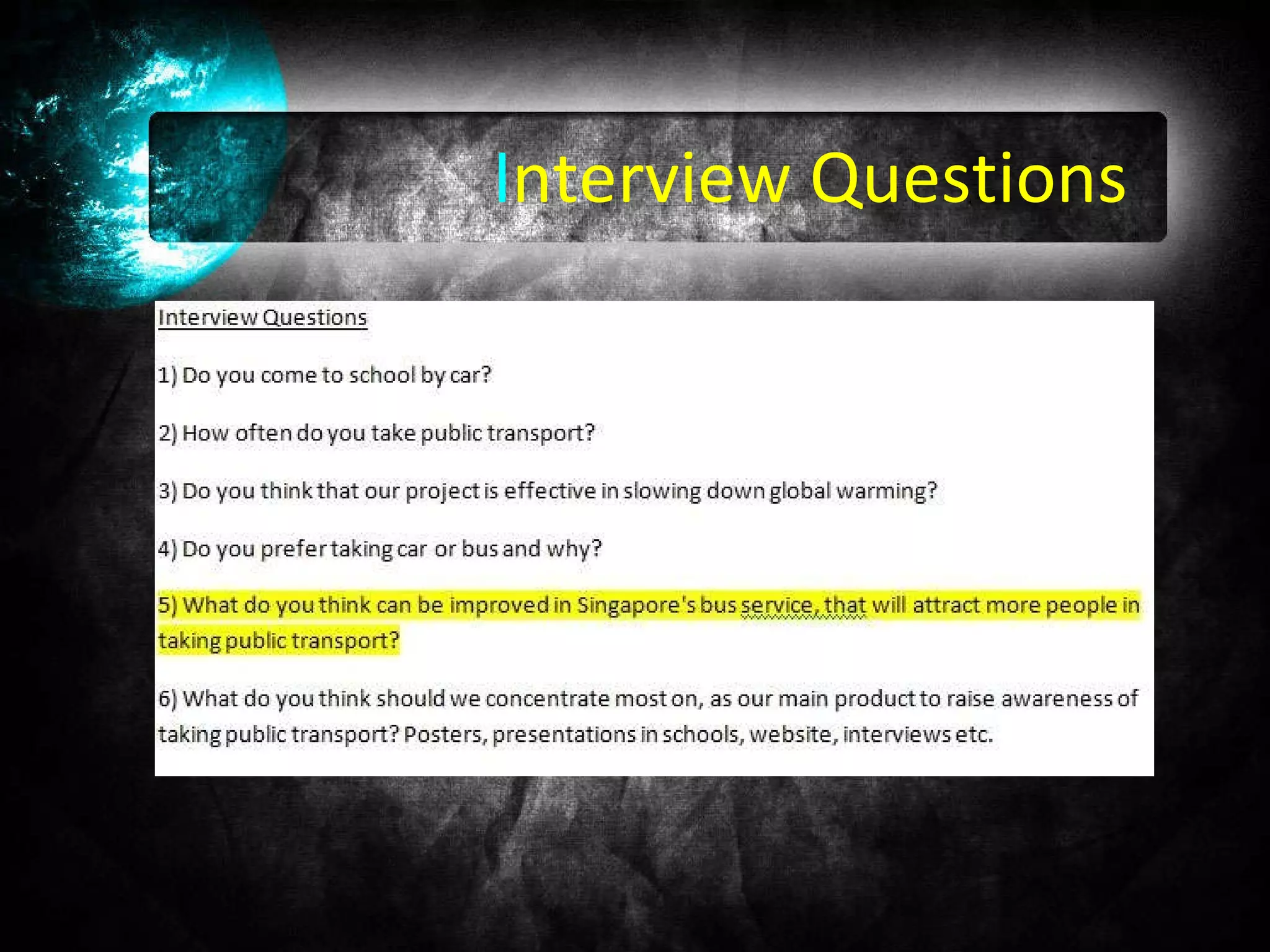
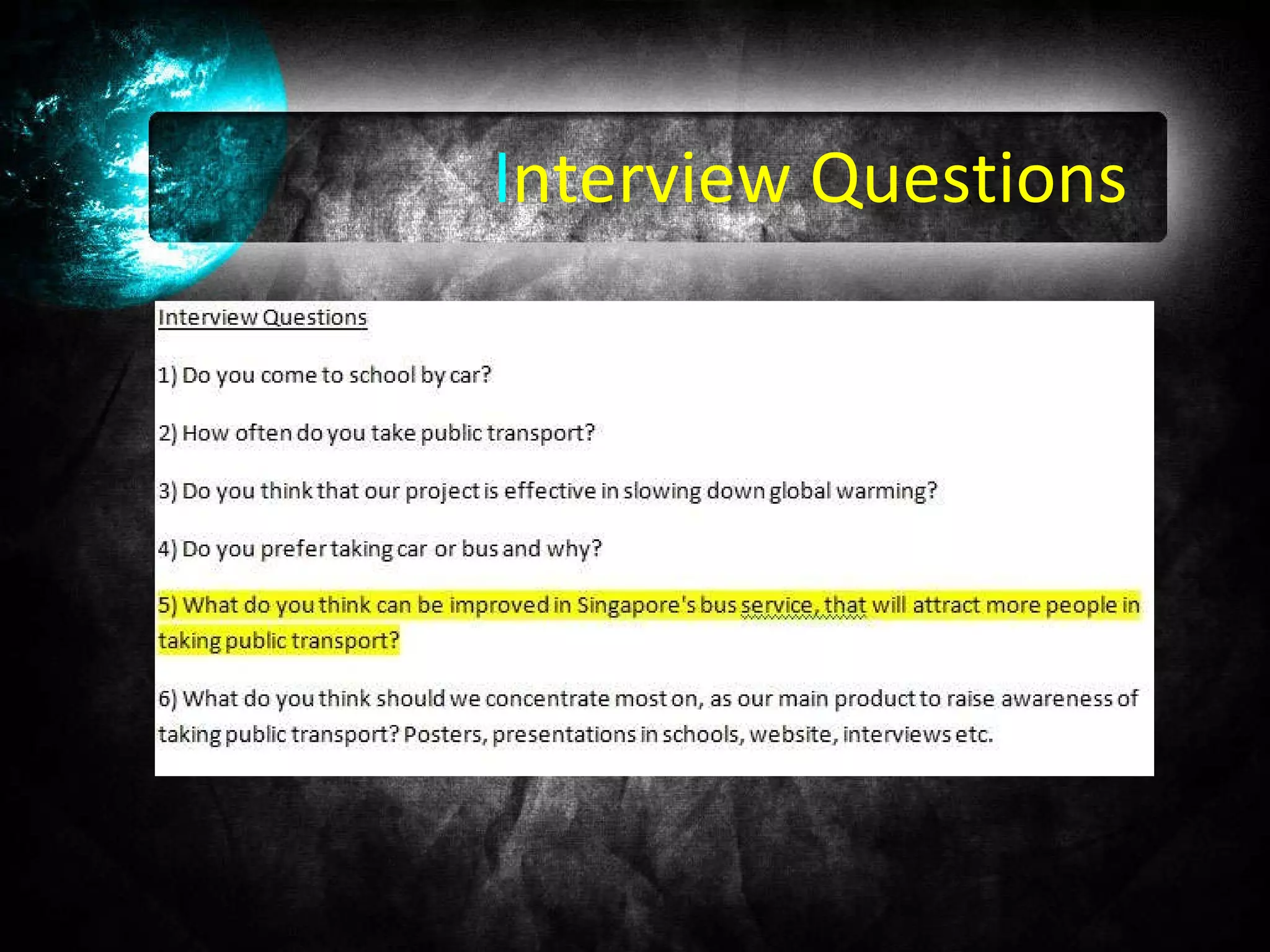
I nterview Questions
1 st   Interviewee
2 nd   Interviewee
3 rd   Interviewee
I nterview Questions
T arget Audience
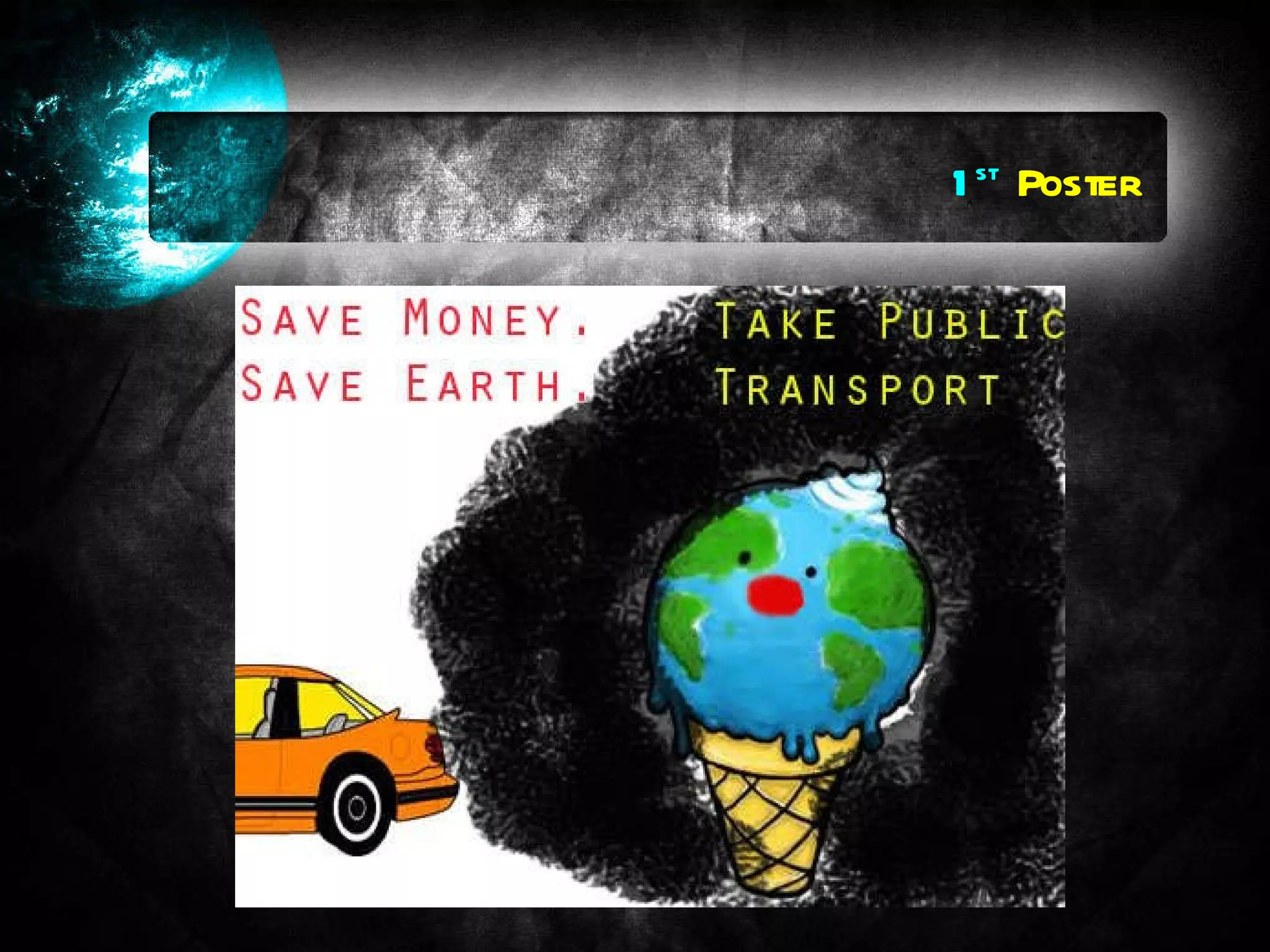
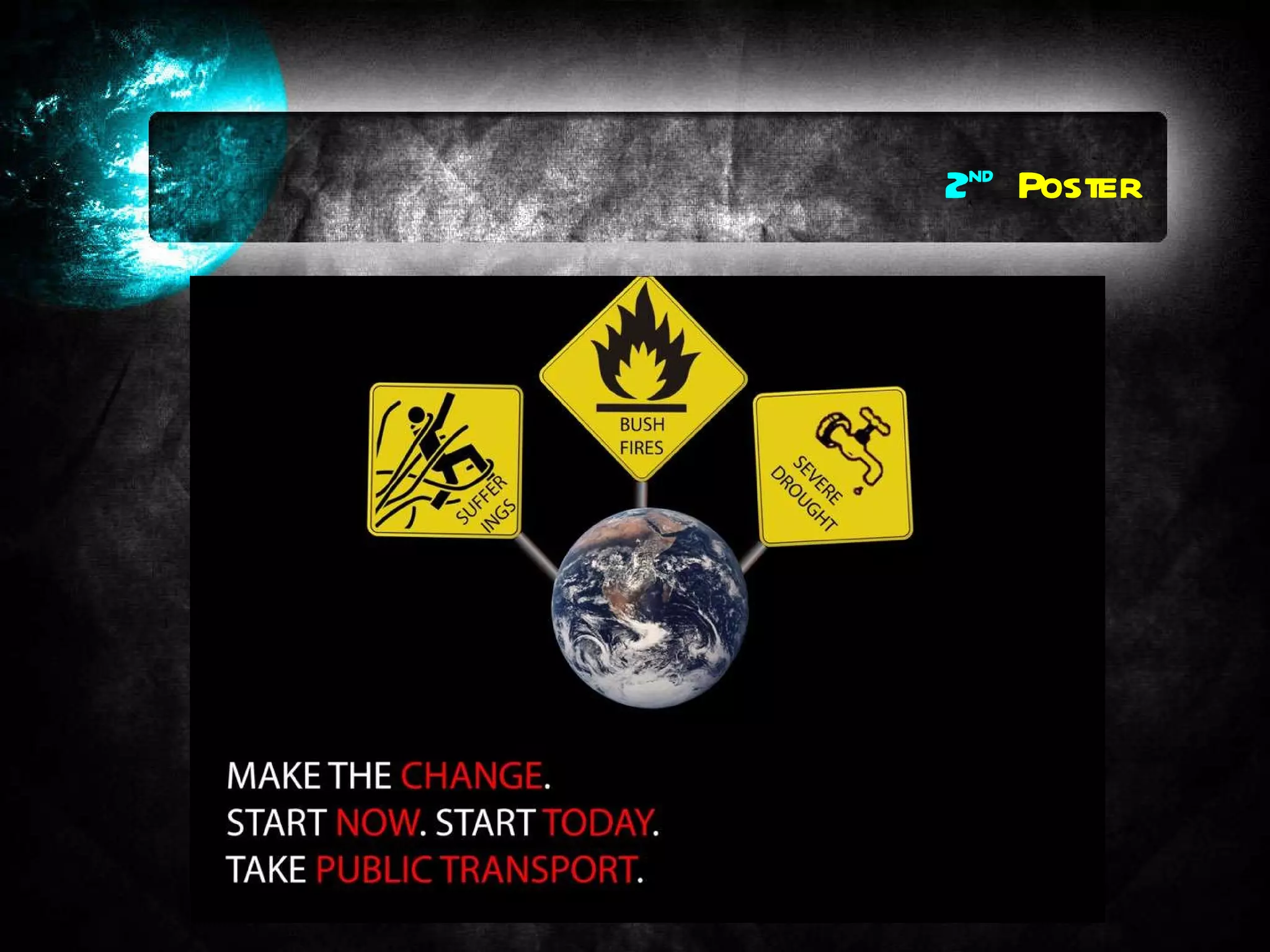
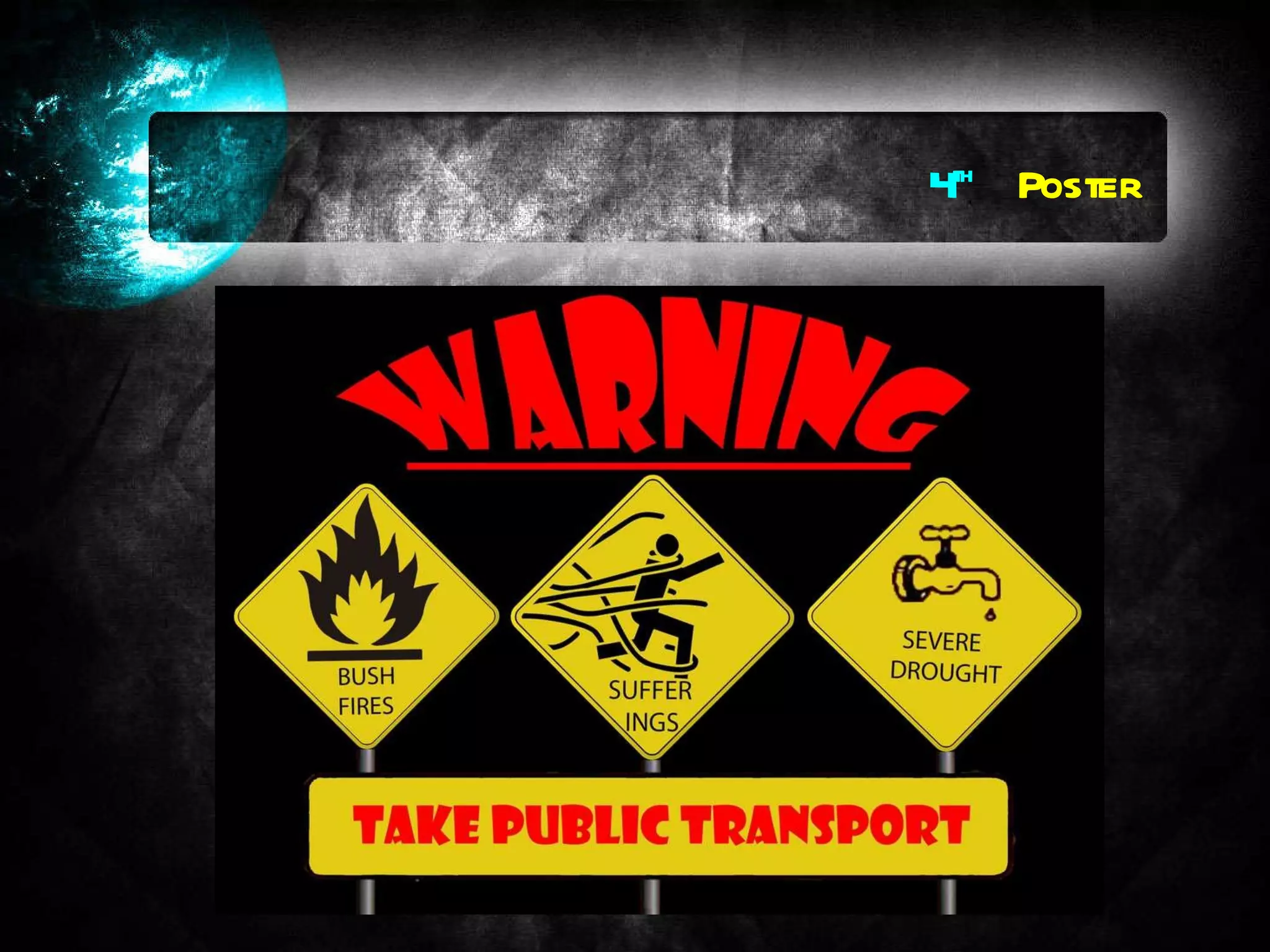
P roducts
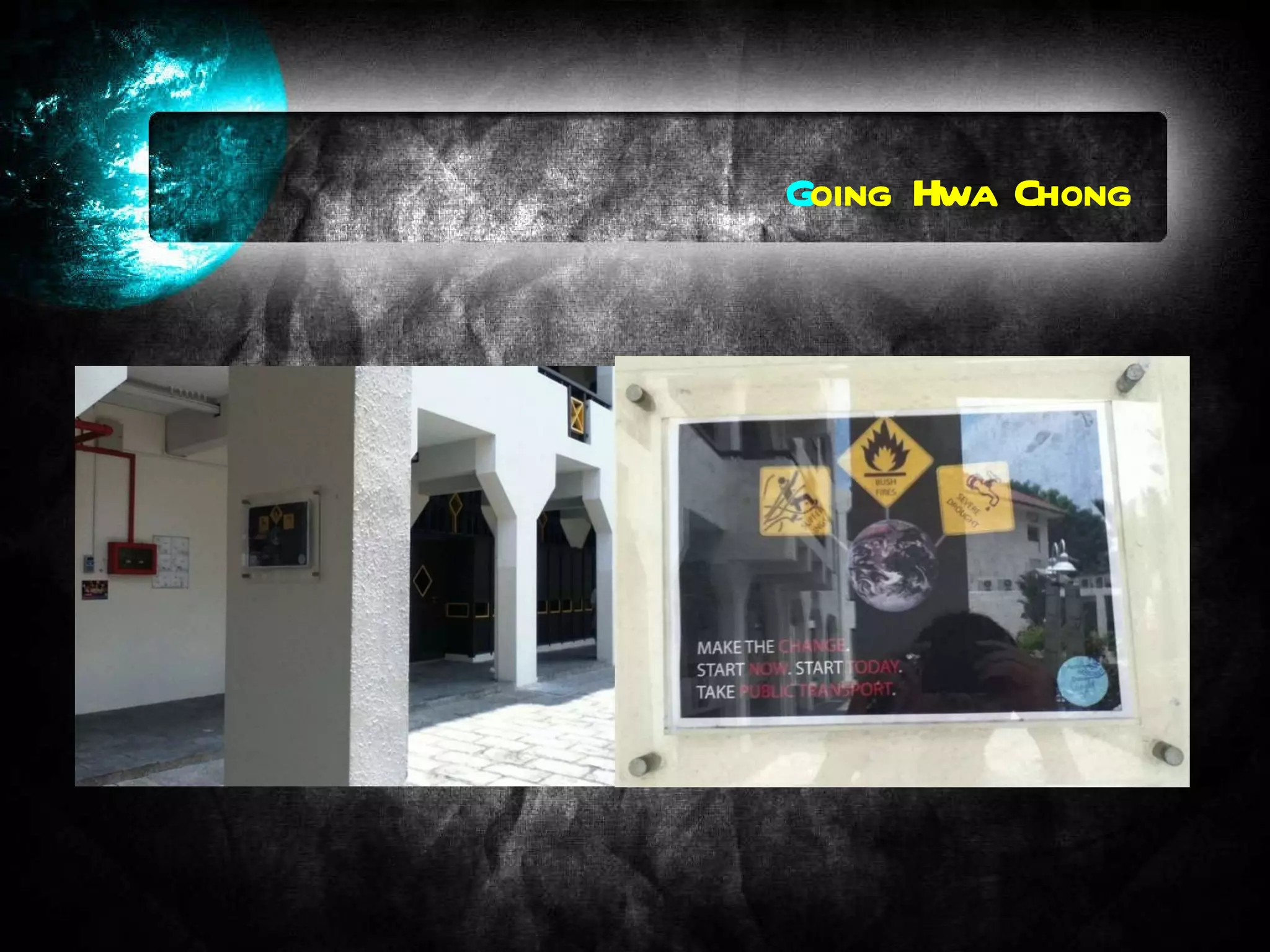
1 st   Poster
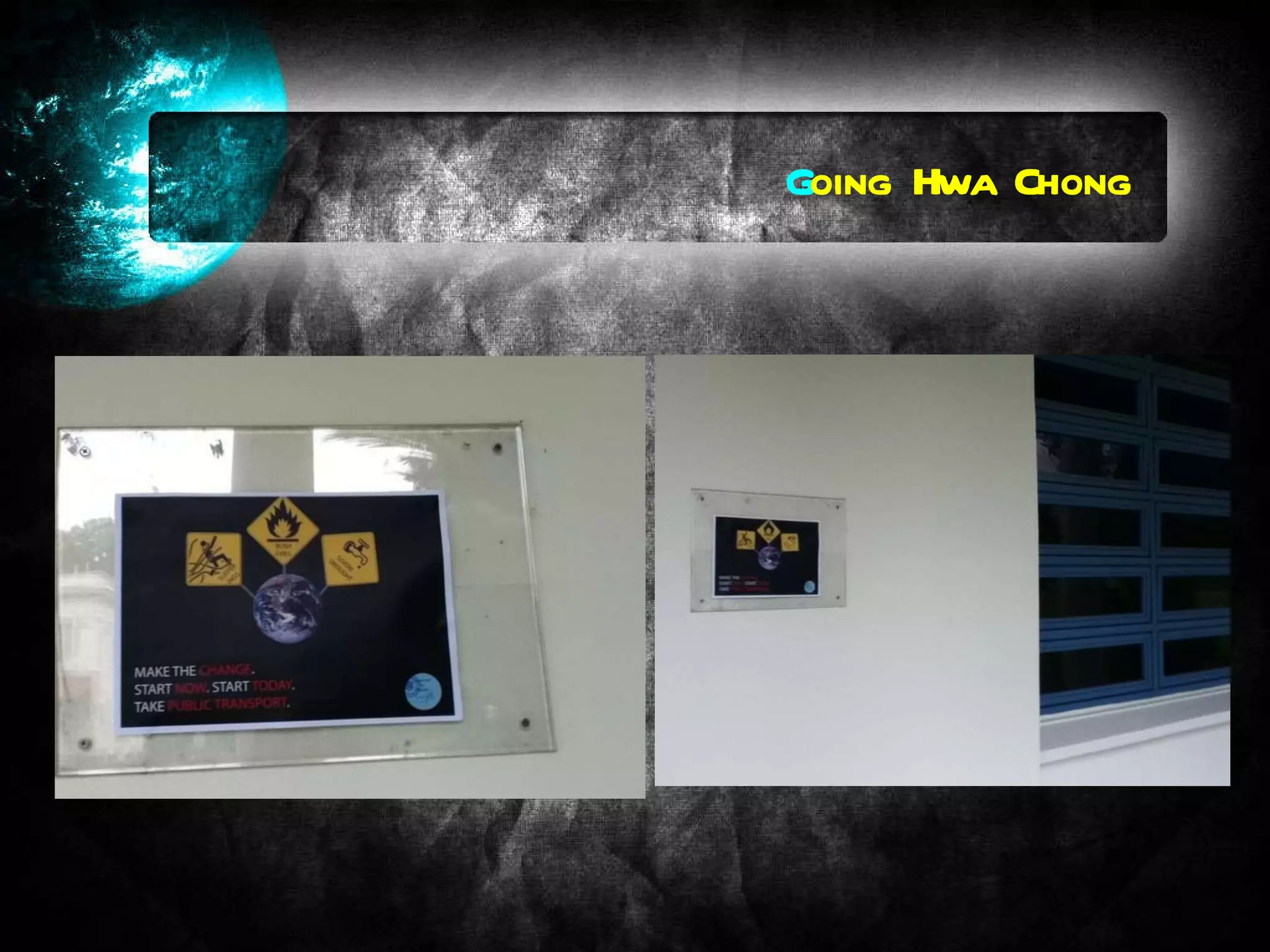
2 nd   Poster
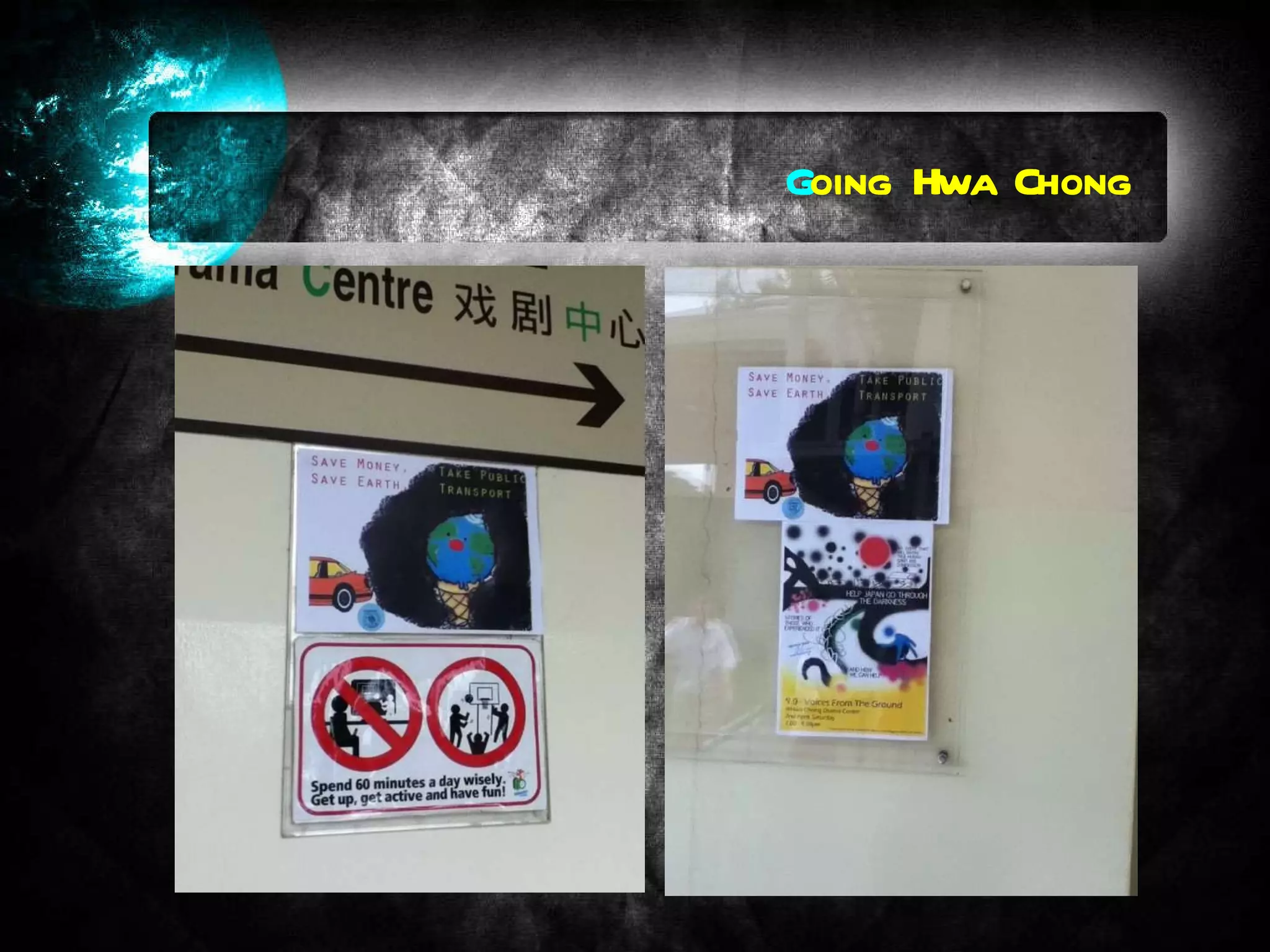
3 rd   Poster
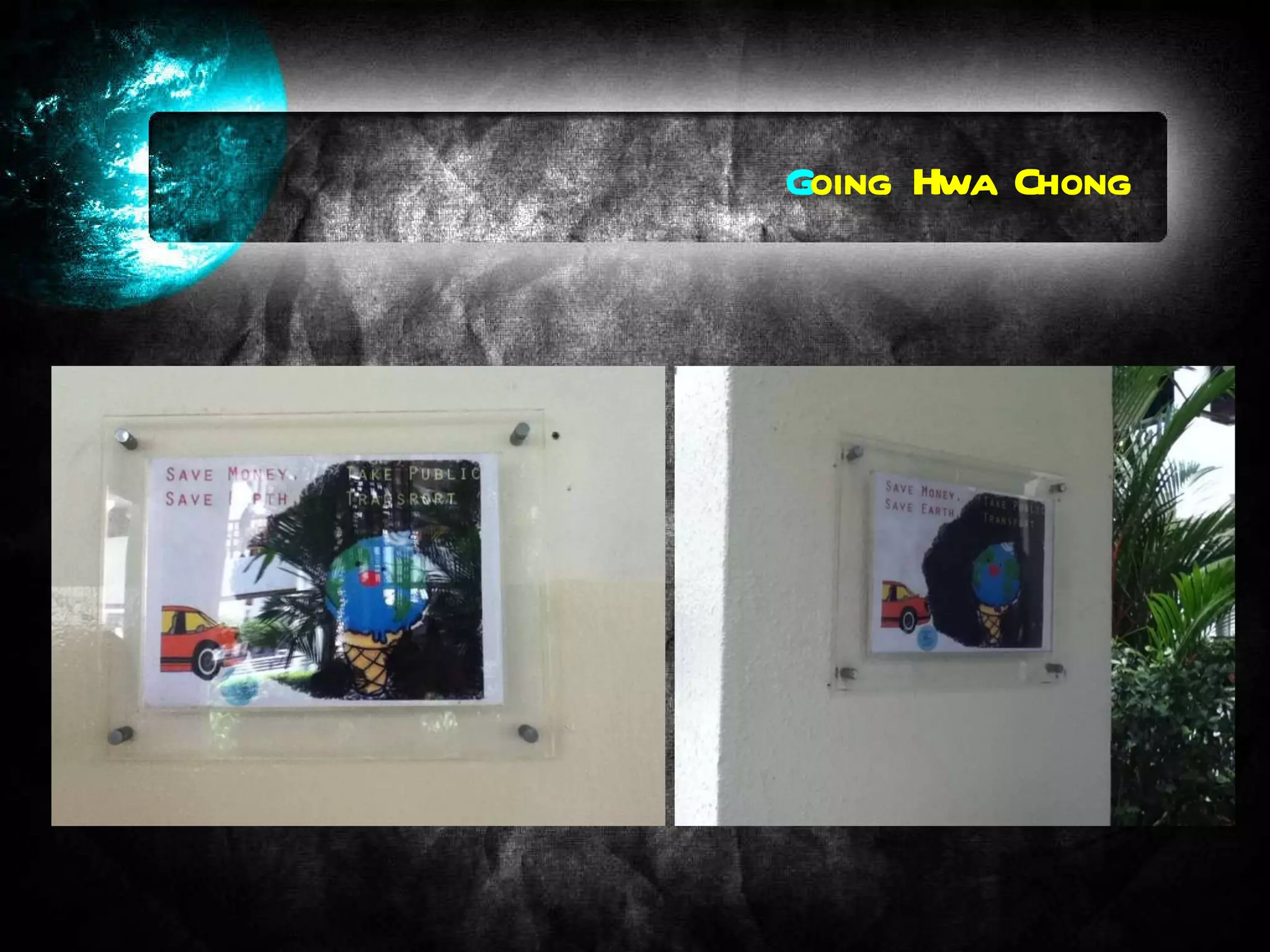
4 th   Poster
G oing Hwa Chong
G oing Hwa Chong
G oing Hwa Chong
G oing Hwa Chong
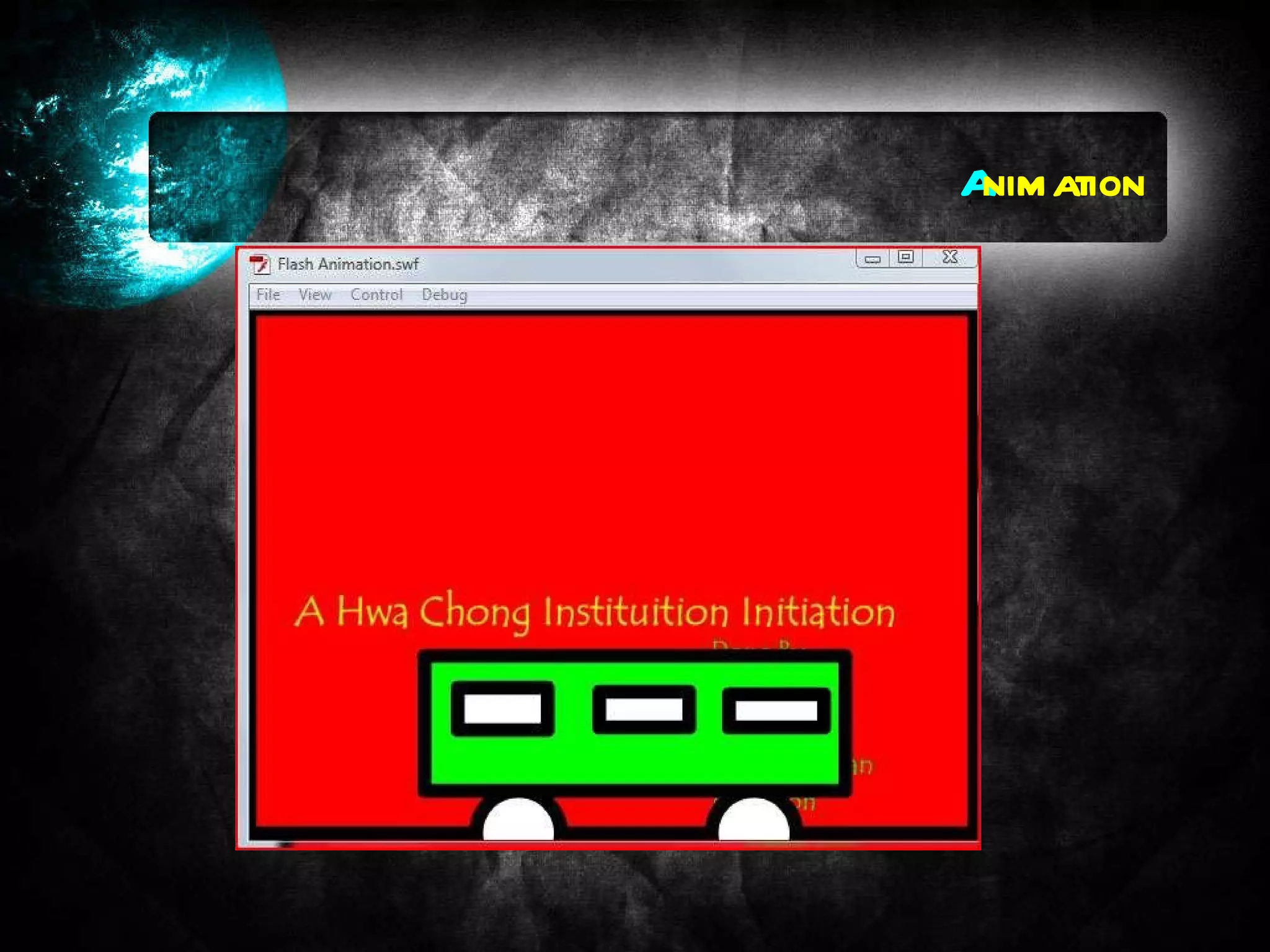
A nimation
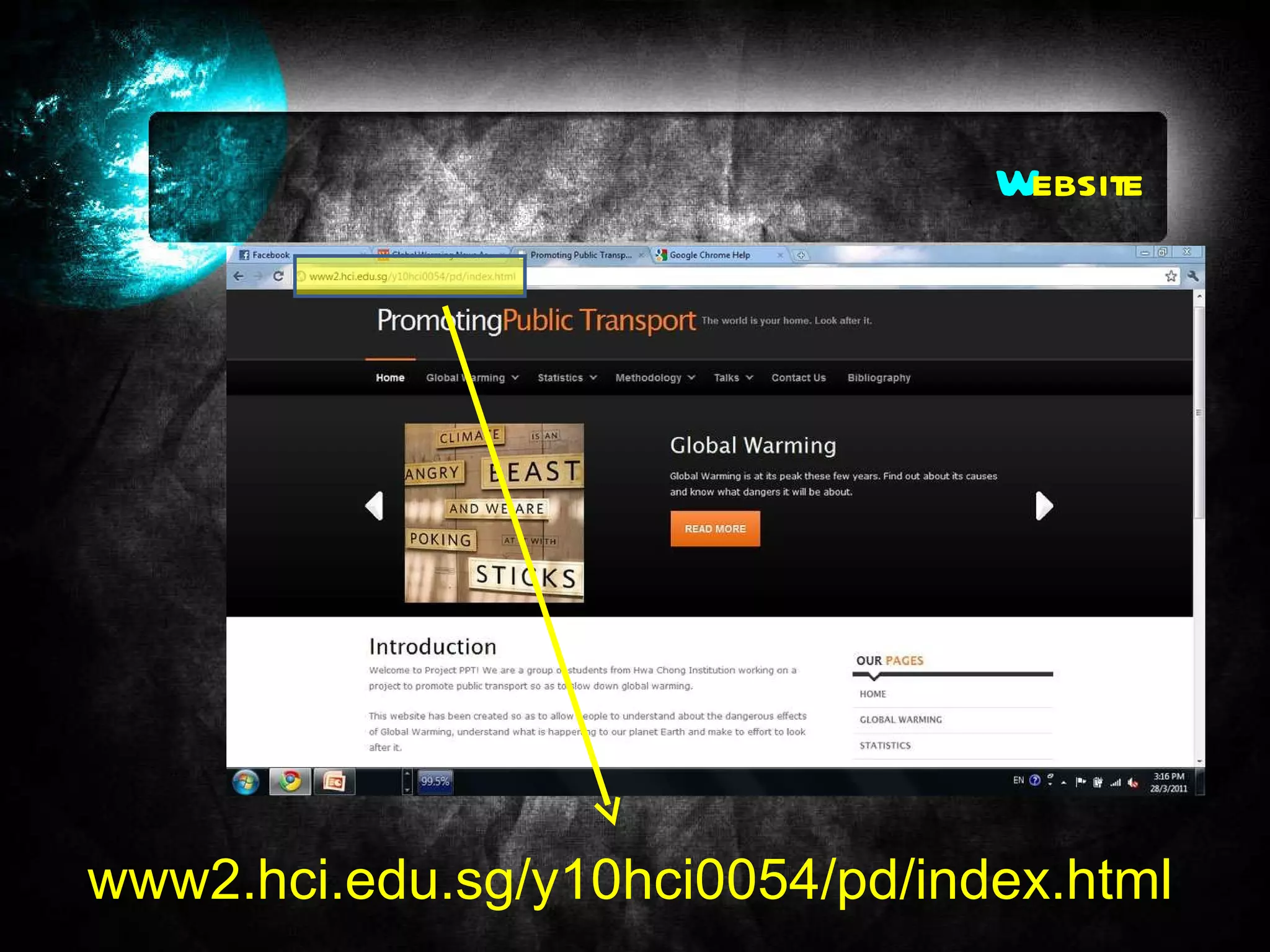
W ebsite www2.hci.edu.sg/y10hci0054/pd/index.html
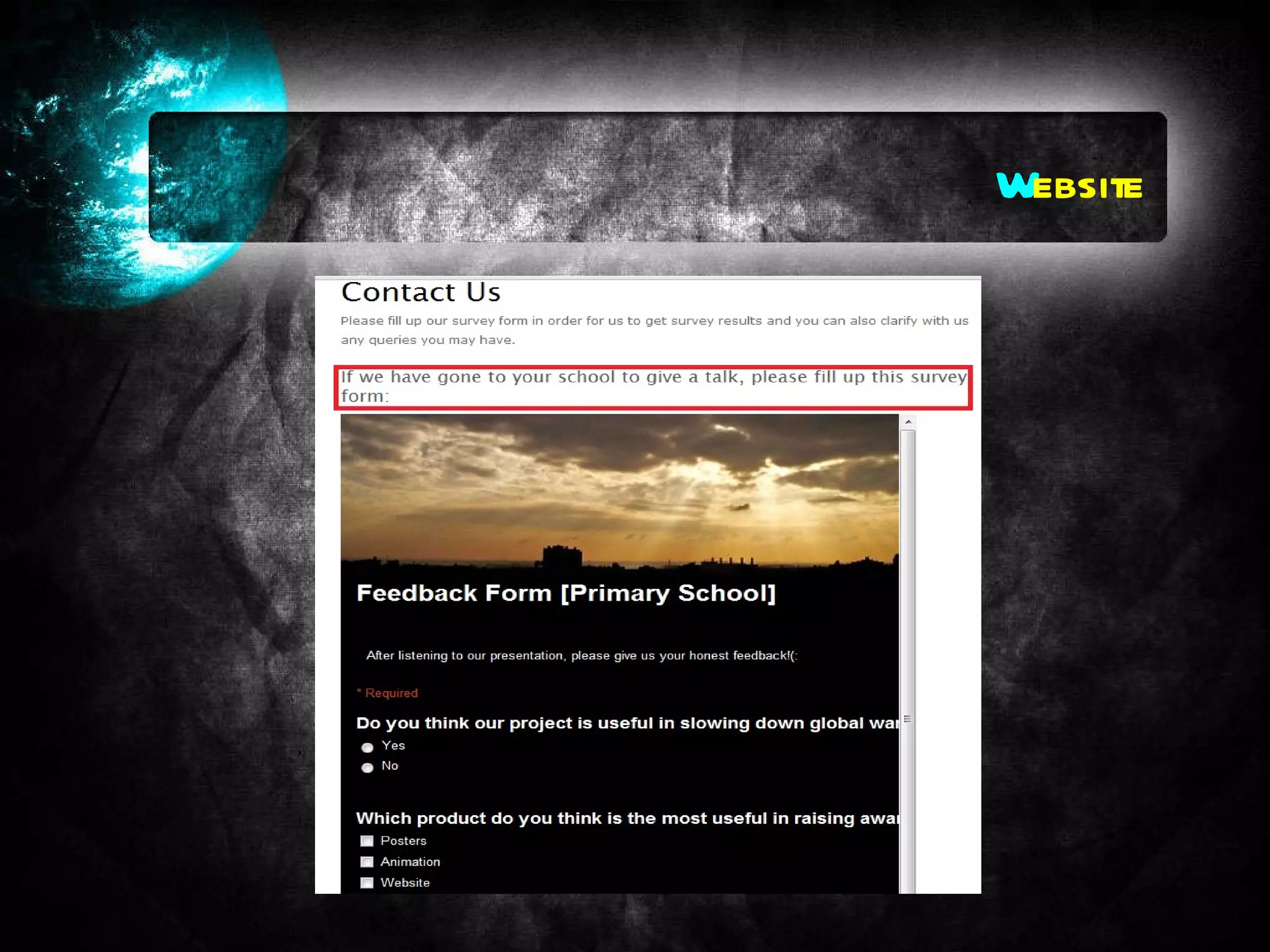
W ebsite
W ebsite
W ebsite
F acebook Page
T imeline Geylang Methodist School [Primary]  19 th  April 2011 Morning Assembly Slot Holy Innocents Primary School 20 th  May 2011 Afternoon Assembly Slot
A cknowledgements FTA- Carbon Calculator Publictransporation.org- Carbon Savings Calculator WildSgNews- Singapore's ecological footprint PureTravel- Maldives Global Warming National Geographic- Energy Conservation National Geographic- Global warming effects Wikipedia- Current sea level rise Pakobserver-  Weather patterns unpredictable due to  climate changes National Geographic- Global Warming Solutions Buzzle- Global Warming on Animals Transportdirect-  Journey Emissions
THANK YOU! :D

Final primary school powerpoint [97]

Editor's Notes

  • #9 A gallon of gasoline, we learned, adds a whopping 19.6 pounds of CO2 to the atmosphere, a big chunk of our daily allowance. A kilowatt-hour (kWh) of electricity in the U.S. produces 1.5 pounds of CO2. Every 100 cubic feet of natural gas emits 12 pounds of CO2.
  • #10 The greenhouse effect is when the temperature rises because the sun's heat and light is trapped in the earth's atmosphere. This is like when heat is trapped in a car. On a very hot day, the car gets hotter when it is out in the parking lot. This is because the heat and light from the sun can get into the car, by going through the windows, but it can't get back out. This is what the greenhouse effect does to the earth. The heat and light can get through the atmosphere, but it can't get out. As a result, the temperature rises.