


The Magic of …….

                 MOTIVATING
                  STUDENTS
Created by Nita Hoelscher
How do you motivate your
      students?
There are five variables in motivation theory:
I-Interest
S-Success
C-Level of Concern
F-Feeling Tone
K-Knowledge of Results (feedback)
Pneumonic: I Sure Can Fire-Up Kids!
Motivation Means:
• Maintaining focus on a
  task………..

Motivation does not mean:
 “I like this class”
There are two forms of motivation
• Intrinsic-the task is its own reward; “I do this for
  the joy of……..” Successful people know this
  information and I will be a successful person.


• Extrinsic-something that impels us to achieve a
  goal; it changes with out environment.
  Examples: candy, bonus points on grades, pat
  points
Thought:
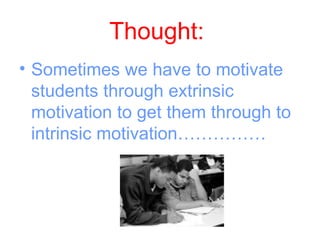
• Sometimes we have to motivate
  students through extrinsic
  motivation to get them through to
  intrinsic motivation……………
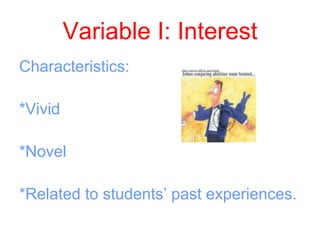
Variable I: Interest
Characteristics:

*Vivid

*Novel

*Related to students’ past experiences.
Interest is only limited to
    your own creativity!
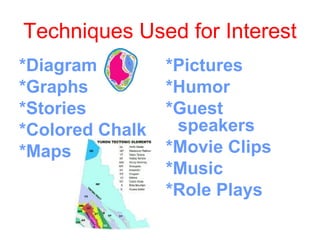
Techniques Used for Interest
*Diagram         *Pictures
*Graphs          *Humor
*Stories         *Guest
*Colored Chalk    speakers
*Maps            *Movie Clips
                 *Music
                 *Role Plays
Closure on Interest
• Think about a way you have
  used interest in motivating your
  students this semester.
  Include that reflection in this
  motivation reflection section.
*reminder: close on small
  segments of learning.
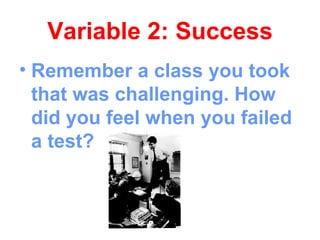
Variable 2: Success
• Remember a class you took
  that was challenging. How
  did you feel when you failed
  a test?
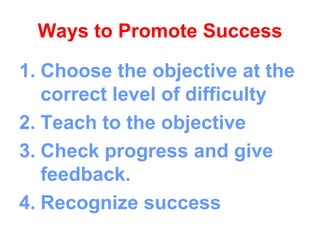
Ways to Promote Success

1. Choose the objective at the
   correct level of difficulty
2. Teach to the objective
3. Check progress and give
   feedback.
4. Recognize success
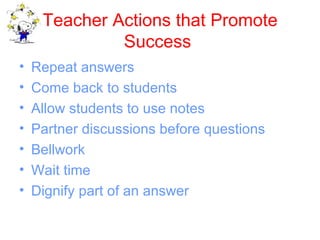
Teacher Actions that Promote
              Success
•   Repeat answers
•   Come back to students
•   Allow students to use notes
•   Partner discussions before questions
•   Bellwork
•   Wait time
•   Dignify part of an answer
Closure on Success
• Think back to the class you
  had difficulty with. How did
  your teacher make you feel
  when you struggled? Did that
  person help you through? How
  will your students remember
  you?
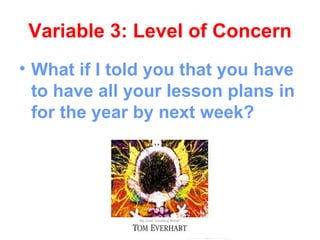
Variable 3: Level of Concern
• What if I told you that you have
  to have all your lesson plans in
  for the year by next week?
THEN…………..
I told you I would probably
  never look at them……..
Level of Concern is
• The degree of expectancy
  that someone is feeling. It
  can produce a relaxed
  atmosphere……..
OR
It can produce a great
  deal of ANXIETY……
Ways to Manipulate Level of
          Concern
*Time (5 minutes vs. 45
 minutes)
*Amount and Complexity of
 content
*Teacher proximity
*Pacing (Brisk)
Think about……..
• What happens when you give
  your students too much time to
  work on an assignment?
• What happens when you put
  them on the timer?
• When you give a test that is too
  long?
Are you using level of
  concern wisely?
Variable 4: Feeling Tone
• Think back to a teacher you
  remember well who really
  taught you something. This is
  not necessarily your “favorite
  teacher,” but maybe your best
  teacher. What was the
  atmosphere in his/her room
  like?
Feeling Tone is……
The feeling in the environment
 encountered by the learner.
There are three types:
  *pleasant
  *unpleasant
  *neutral
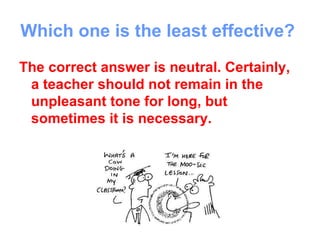
Which one is the least effective?
The correct answer is neutral. Certainly,
 a teacher should not remain in the
 unpleasant tone for long, but
 sometimes it is necessary.
When using unpleasant tone….

The teacher should deal with the
 situation (Fred Jones would call
 this “meaning business”) and then
 move back to a pleasant tone as
 quickly as possible.
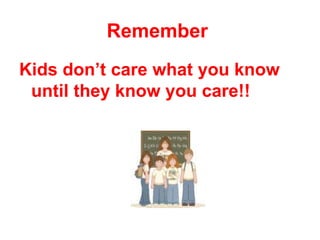
Remember
Kids don’t care what you know
 until they know you care!!
Important to Remember!
Feeling tone is not the teacher’s
 mood on a particular day……it
 is the classroom environment!
The teacher may not even be
 feeling well, but the students
 still know there is care and
 concern in the room!
Intermittent Closure
Remember, it is always good to stop when
 covering a large amount of material and
 review…….can you list the four variables
 in motivation we have covered so far?

What are the two types of motivation?

Out of those four, at which are you best?
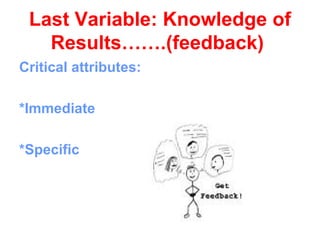
Last Variable: Knowledge of
   Results…….(feedback)
Critical attributes:

*Immediate

*Specific
Think about………..
• A time you might have given
  homework and the kids just “didn’t get
  it.” Sometimes we give homework
  without giving our students the proper
  feedback to accomplish a task. With
  so many of our students “on their
  own” at home, we really need to
  teach everything they need to know…
Homework should
 really only be
 practice!!!!!!!!
Let’s review the variables of
           motivation:
• Interest
• Success
• Level of Concern
• Feeling Tone
• Knowledge of Results
I Sure Can Fire-Up Kids!!!!!
REFLECTIONS
• Assess where you are in using
  motivation techniques. In which
  areas are you strong? Where
  do you need to work? Were any
  motivational techniques used
  in this slide show? Which ones,
  if any? Are you magically
  motivating your students?

Magic Of Motivating Students

  • 1.
    The Magic of……. MOTIVATING STUDENTS Created by Nita Hoelscher
  • 2.
    How do youmotivate your students? There are five variables in motivation theory: I-Interest S-Success C-Level of Concern F-Feeling Tone K-Knowledge of Results (feedback) Pneumonic: I Sure Can Fire-Up Kids!
  • 3.
    Motivation Means: • Maintainingfocus on a task……….. Motivation does not mean: “I like this class”
  • 4.
    There are twoforms of motivation • Intrinsic-the task is its own reward; “I do this for the joy of……..” Successful people know this information and I will be a successful person. • Extrinsic-something that impels us to achieve a goal; it changes with out environment. Examples: candy, bonus points on grades, pat points
  • 5.
    Thought: • Sometimes wehave to motivate students through extrinsic motivation to get them through to intrinsic motivation……………
  • 6.
  • 7.
    Interest is onlylimited to your own creativity!
  • 8.
    Techniques Used forInterest *Diagram *Pictures *Graphs *Humor *Stories *Guest *Colored Chalk speakers *Maps *Movie Clips *Music *Role Plays
  • 9.
    Closure on Interest •Think about a way you have used interest in motivating your students this semester. Include that reflection in this motivation reflection section. *reminder: close on small segments of learning.
  • 10.
    Variable 2: Success •Remember a class you took that was challenging. How did you feel when you failed a test?
  • 11.
    Ways to PromoteSuccess 1. Choose the objective at the correct level of difficulty 2. Teach to the objective 3. Check progress and give feedback. 4. Recognize success
  • 12.
    Teacher Actions thatPromote Success • Repeat answers • Come back to students • Allow students to use notes • Partner discussions before questions • Bellwork • Wait time • Dignify part of an answer
  • 13.
    Closure on Success •Think back to the class you had difficulty with. How did your teacher make you feel when you struggled? Did that person help you through? How will your students remember you?
  • 14.
    Variable 3: Levelof Concern • What if I told you that you have to have all your lesson plans in for the year by next week?
  • 15.
    THEN………….. I told youI would probably never look at them……..
  • 16.
    Level of Concernis • The degree of expectancy that someone is feeling. It can produce a relaxed atmosphere……..
  • 17.
    OR It can producea great deal of ANXIETY……
  • 18.
    Ways to ManipulateLevel of Concern *Time (5 minutes vs. 45 minutes) *Amount and Complexity of content *Teacher proximity *Pacing (Brisk)
  • 19.
    Think about…….. • Whathappens when you give your students too much time to work on an assignment? • What happens when you put them on the timer? • When you give a test that is too long?
  • 20.
    Are you usinglevel of concern wisely?
  • 21.
    Variable 4: FeelingTone • Think back to a teacher you remember well who really taught you something. This is not necessarily your “favorite teacher,” but maybe your best teacher. What was the atmosphere in his/her room like?
  • 22.
    Feeling Tone is…… Thefeeling in the environment encountered by the learner. There are three types: *pleasant *unpleasant *neutral
  • 23.
    Which one isthe least effective? The correct answer is neutral. Certainly, a teacher should not remain in the unpleasant tone for long, but sometimes it is necessary.
  • 24.
    When using unpleasanttone…. The teacher should deal with the situation (Fred Jones would call this “meaning business”) and then move back to a pleasant tone as quickly as possible.
  • 25.
    Remember Kids don’t carewhat you know until they know you care!!
  • 26.
    Important to Remember! Feelingtone is not the teacher’s mood on a particular day……it is the classroom environment! The teacher may not even be feeling well, but the students still know there is care and concern in the room!
  • 27.
    Intermittent Closure Remember, itis always good to stop when covering a large amount of material and review…….can you list the four variables in motivation we have covered so far? What are the two types of motivation? Out of those four, at which are you best?
  • 28.
    Last Variable: Knowledgeof Results…….(feedback) Critical attributes: *Immediate *Specific
  • 29.
    Think about……….. • Atime you might have given homework and the kids just “didn’t get it.” Sometimes we give homework without giving our students the proper feedback to accomplish a task. With so many of our students “on their own” at home, we really need to teach everything they need to know…
  • 30.
    Homework should reallyonly be practice!!!!!!!!
  • 31.
    Let’s review thevariables of motivation: • Interest • Success • Level of Concern • Feeling Tone • Knowledge of Results I Sure Can Fire-Up Kids!!!!!
  • 32.
    REFLECTIONS • Assess whereyou are in using motivation techniques. In which areas are you strong? Where do you need to work? Were any motivational techniques used in this slide show? Which ones, if any? Are you magically motivating your students?