TRANSCODING
LINEAR
AND NON-LINEAR TEXT
MYLANIE Y. ALEJANDRO
Master Teacher I, English
Most Essential Learning Competency
Transcode information from linear to non-
linear texts and vice-versa.
(EN8RC-IIe-11)
Objectives:
1. identify linear texts and non-linear texts;
2. interpret linear and non-linear text;
3. extract information from a story and
transcode it into a flow chart; and
4. extract information from charts and
graphs, and transcode them into
paragraphs.
Definition of Linear and Non-
linear Text-
LINEAR TEXT
• sentences and
paragraphs
NON-LINEAR TEXT
• simple—just a few
shapes and lines
LINEAR TEXT
• a text that is written
in a traditional way
without the aid of
graphics. It is read
from left to right,
from beginning to
end, and has syntactic
and grammatical
features
NON-LINEAR TEXT
• represented using
different kinds of
graphics such as
charts and graphs
and other figures.
LINEAR TEXT
• presented in a
paragraph form
NON-LINEAR TEXT
• non-linear
because the
reader does not
read it
sequentially;
instead the reader
of the text decides
the sequence in
reading the text
Presenting information in both text
(linear) and graphic (non-linear) formats is
one of the most basic ways to make a
lesson more understandable to all students
KINDS OF NON-LINEAR TEXT
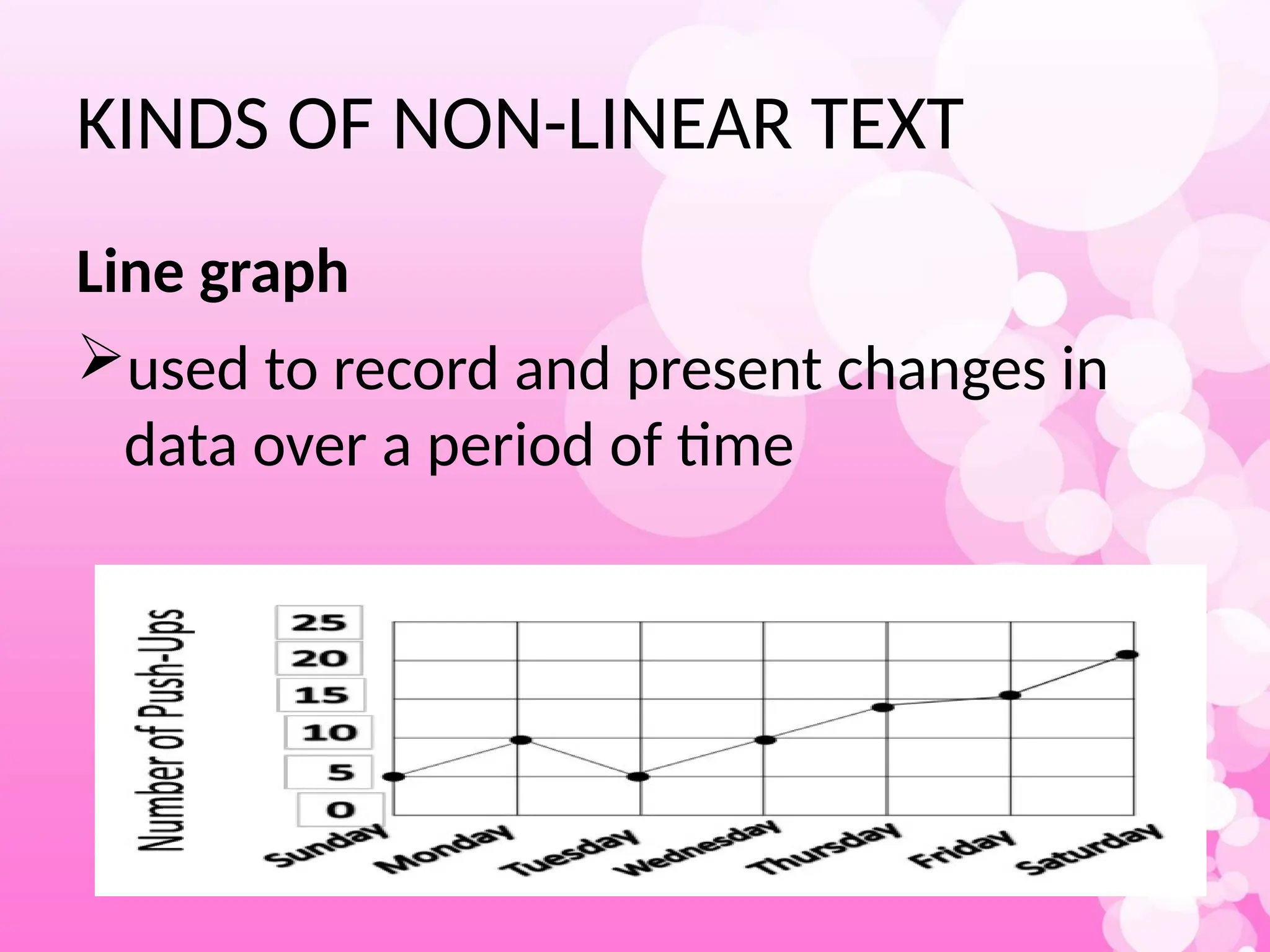
Line graph
used to record and present changes in
data over a period of time
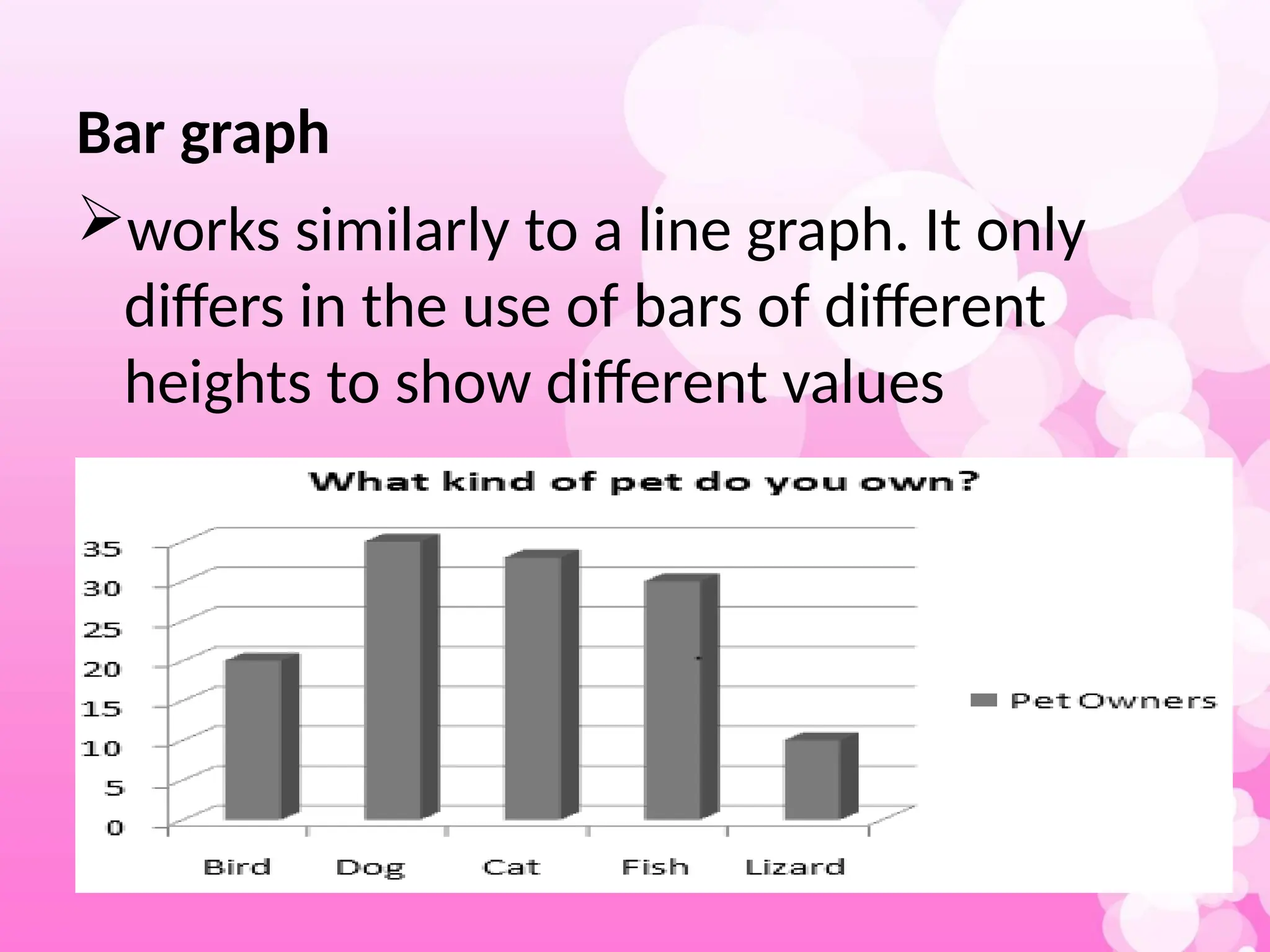
Bar graph
works similarly to a line graph. It only
differs in the use of bars of different
heights to show different values
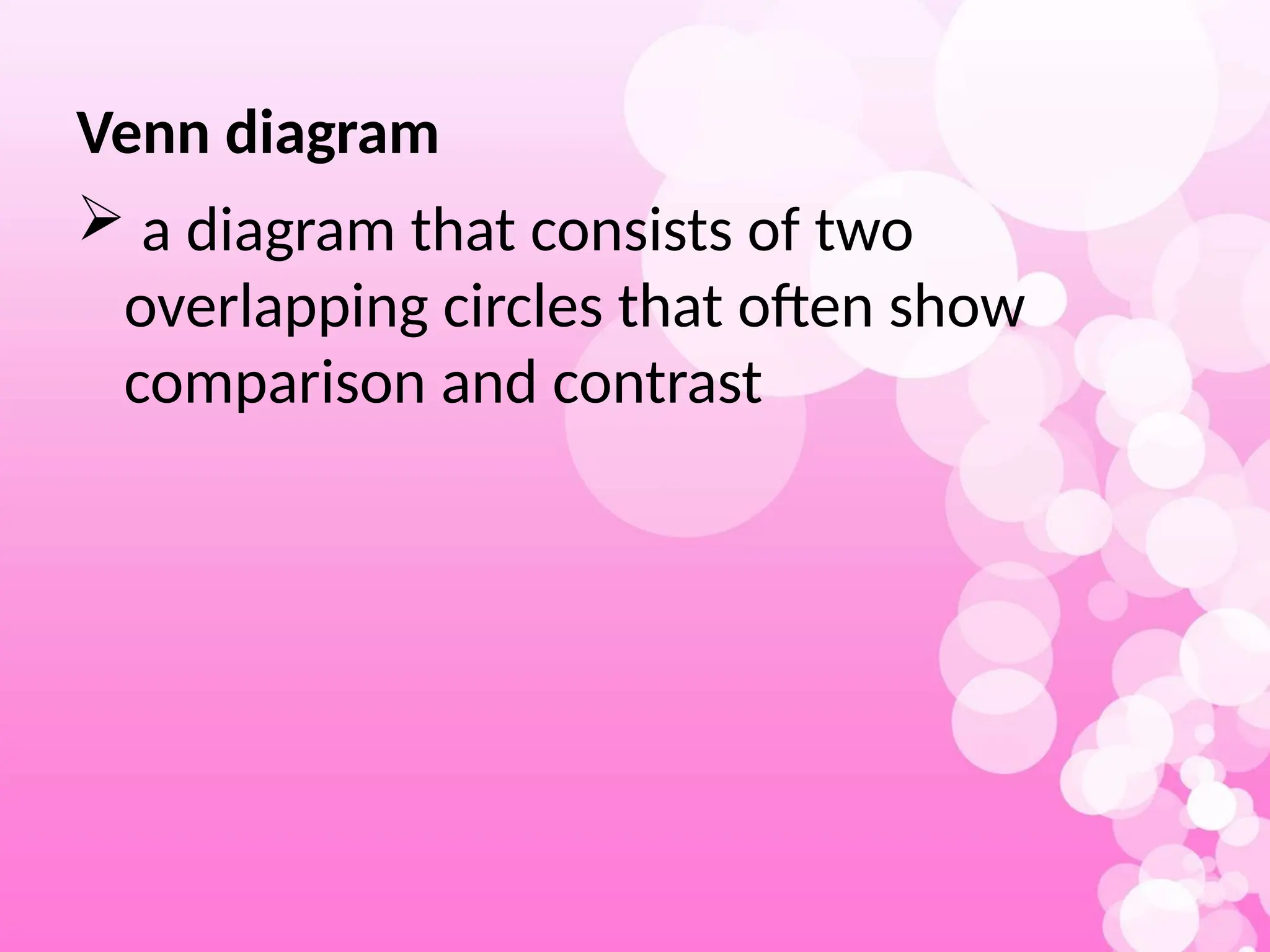
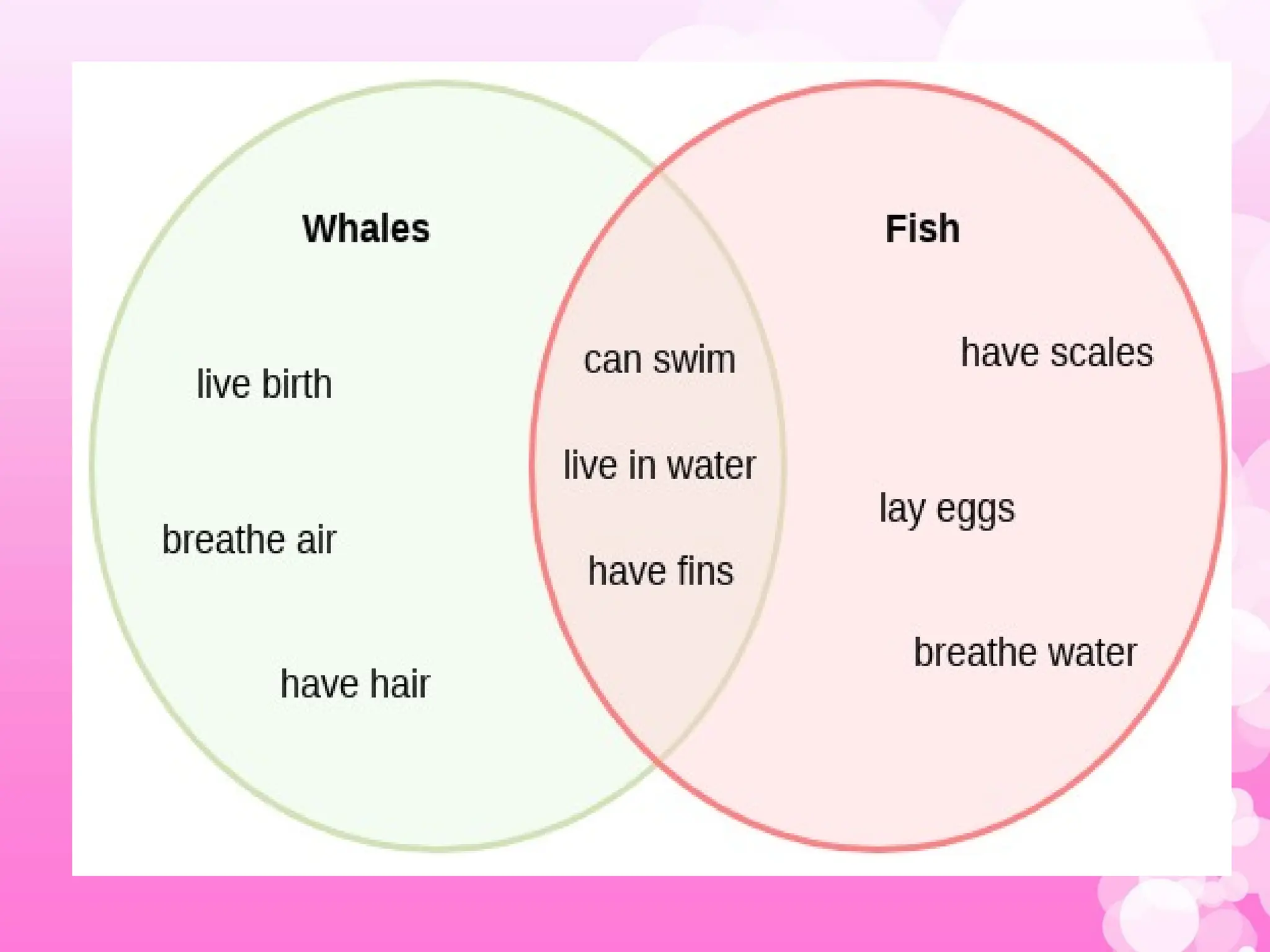
Venn diagram
 a diagram that consists of two
overlapping circles that often show
comparison and contrast
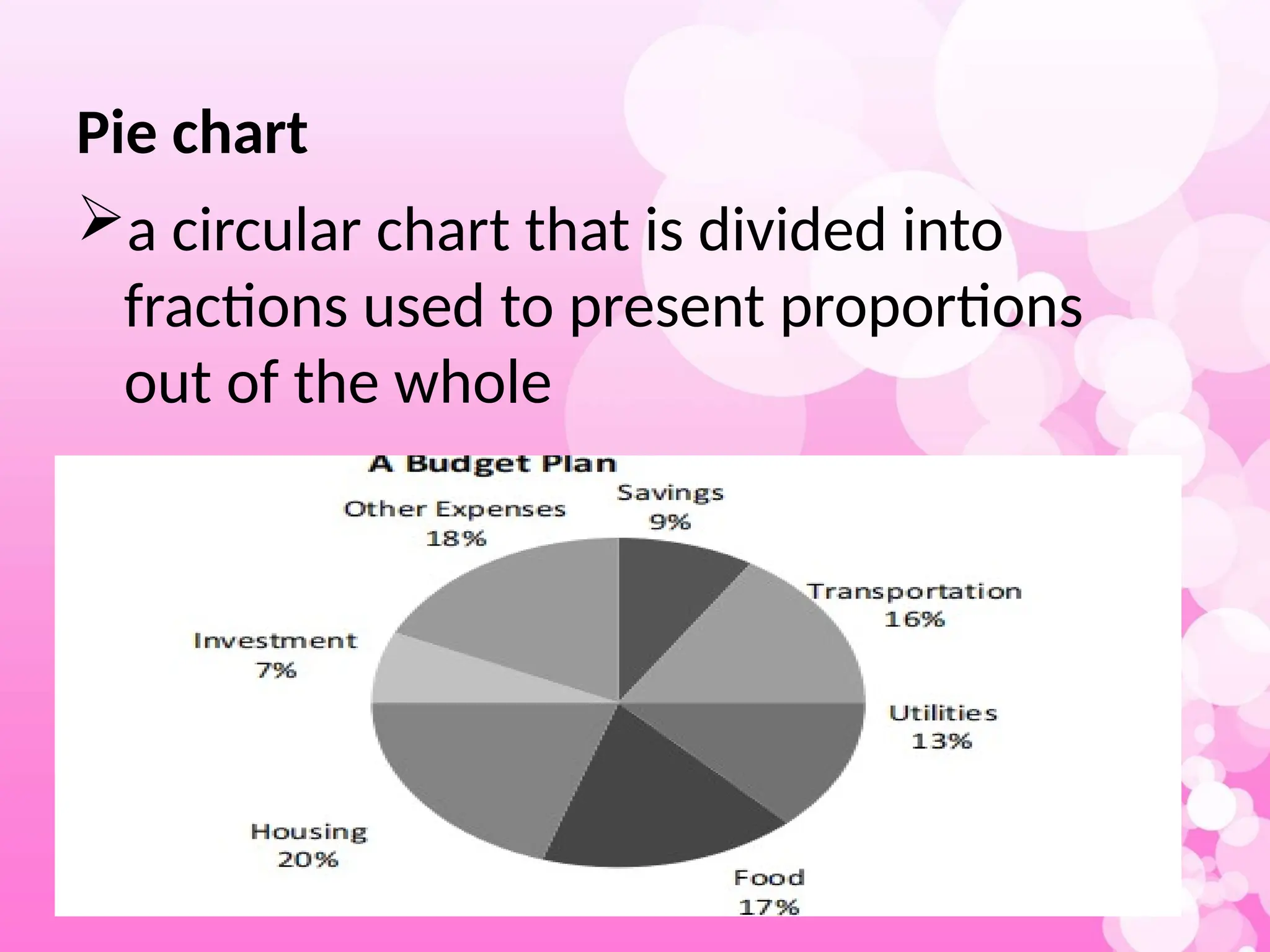
Pie chart
a circular chart that is divided into
fractions used to present proportions
out of the whole
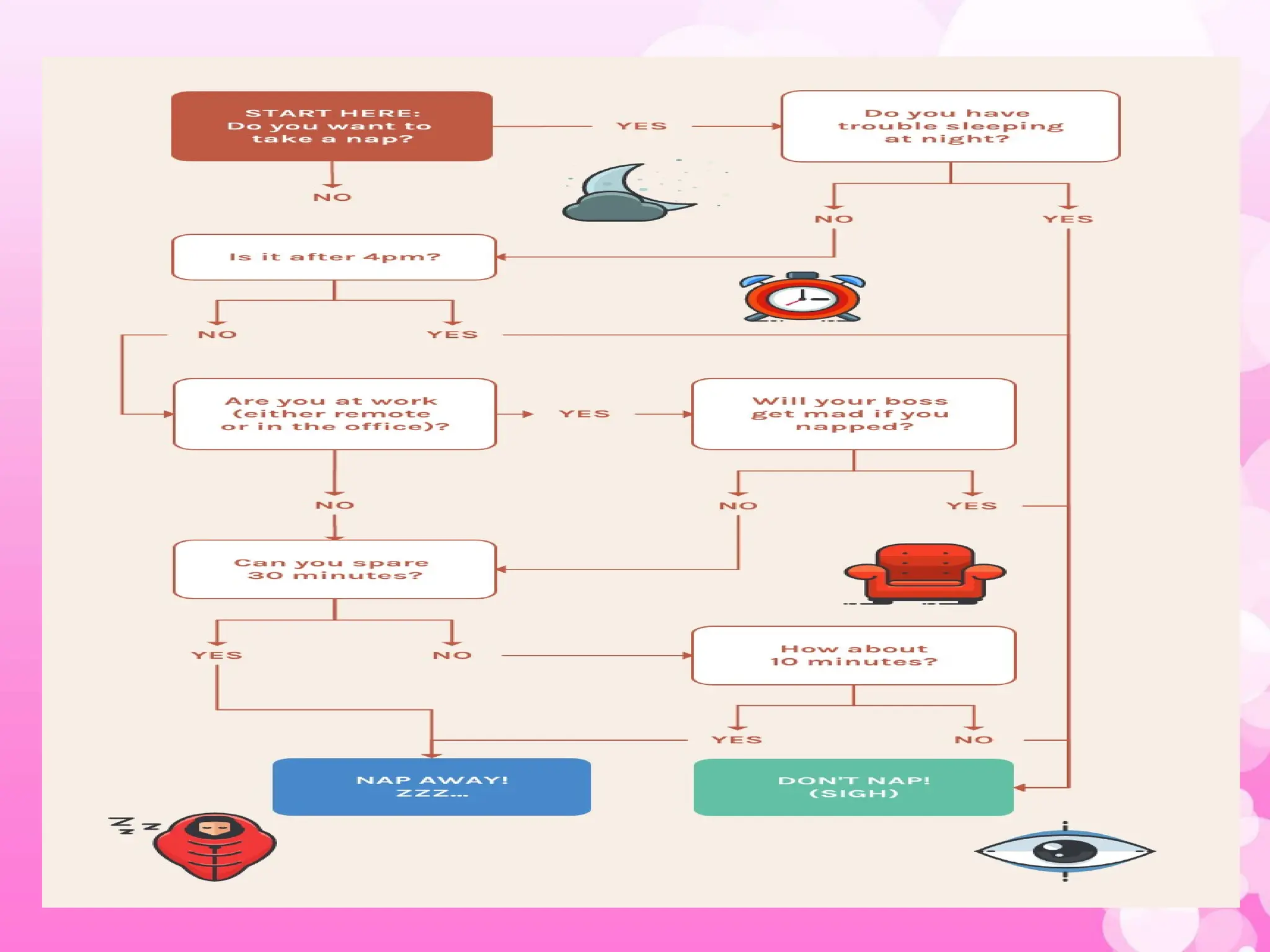
Flowchart
 a type of diagram representing a
process using different symbols
containing information about steps or a
sequence of events
 each of these symbols in linked with
arrows to illustrate the flow direction of
the process
ACTIVITY 1
Warm Me Up!
Analyze the statements below. Write L if
the statement is a linear text and write
NL if it is a non-linear text. Write your
answers in a sheet of paper.
1. Summary of Maria Makiling.
2. Enrollment graph of Sinait National
High School.
3. A pie chart showing a budget plan of a
government employee.
4. A short story of Rizal’s life.
5. A bar graph about CoViD-19 positive
patients in Region I.
6. A news article about the plans and
programs of the Department of Education.
7. A line graph showing the economic
progress of Ilocos Sur.
8. A poem written by Jose M. Hernandez.
9. A short story about the origin of Sinait.
10. A Venn diagram showing the
comparison between flu and COVID-19.
Interpreting Linear and Non-linear
Text
It is important to interpret linear and
non-linear text to accurately get the
information we intend to provide to the
readers.
Transcoding Linear to Non-linear
and vice-versa
The word transcode means to change
language or information from one
form of representation to another
In transcoding, you should extract
information from a linear text to non-
linear text
LINEAR TEXT TO NON-LINEAR
Step 1: Read the passage to get a general
idea of the subject matter.
Step 2: Look at the visual to identify what
information is needed to complete the chart
or graph.
Step 3: Locate the relevant information in
the passage and transfer it to the chart or
graph. Use only key words or phrases- not
whole sentences.
Step 4: You may be required to classify
information into categories under headings.
You may have to come up with your
headings.
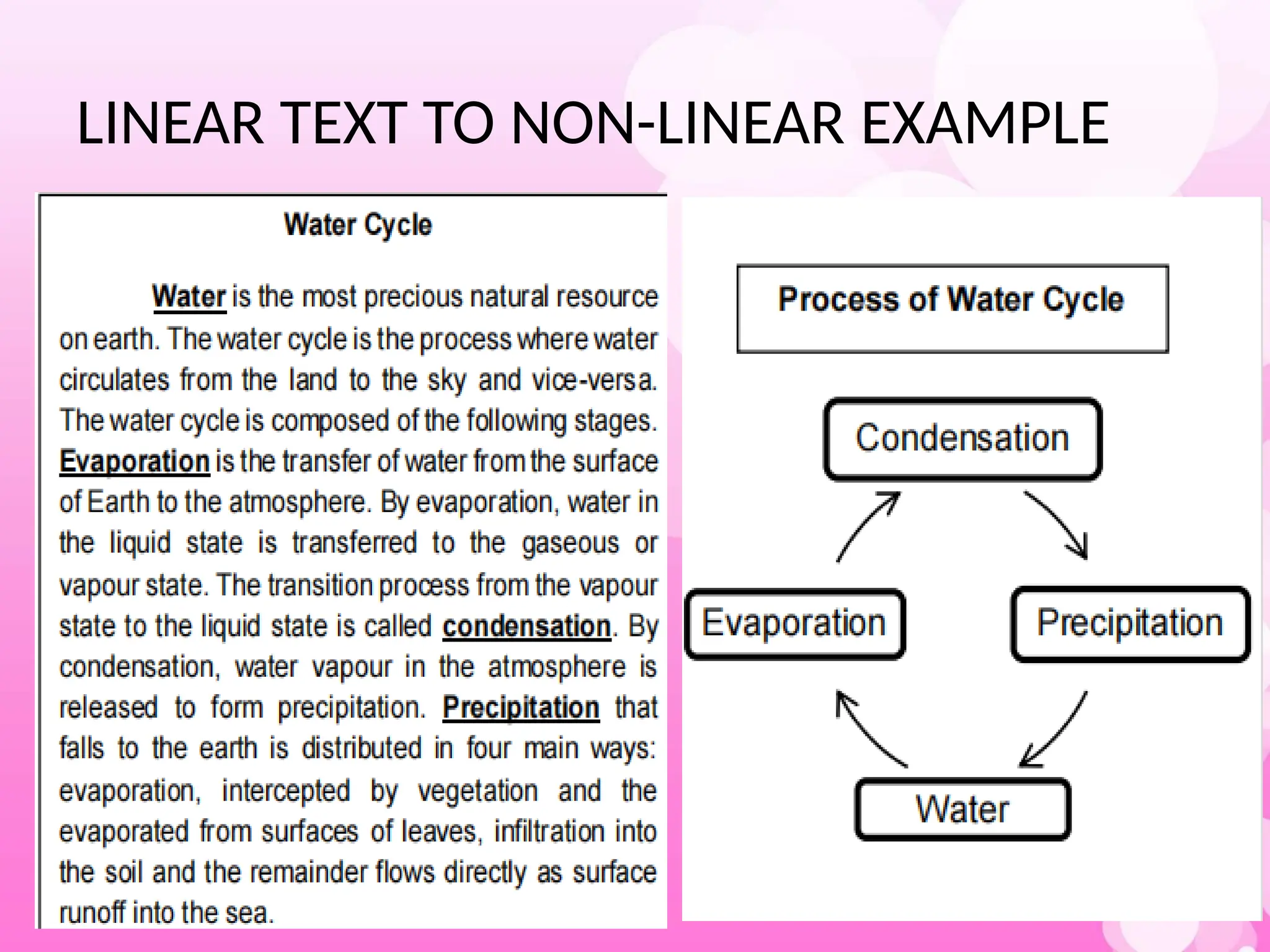
LINEAR TEXT TO NON-LINEAR EXAMPLE
NON LINEAR TEXT TO LINEAR
Step 1: Spend 5 minutes reading the
graphs/charts, etc.
Step 2: Make sure you understand axes.
Step 3: Make sure you follow lines on graph.
Step 4: Focus on the key information.
Step 5: Observe correct grammatical structure.
Step 6: Vary your vocabulary.
Step 7: Organize information clearly.
Step 8: Write neatly.
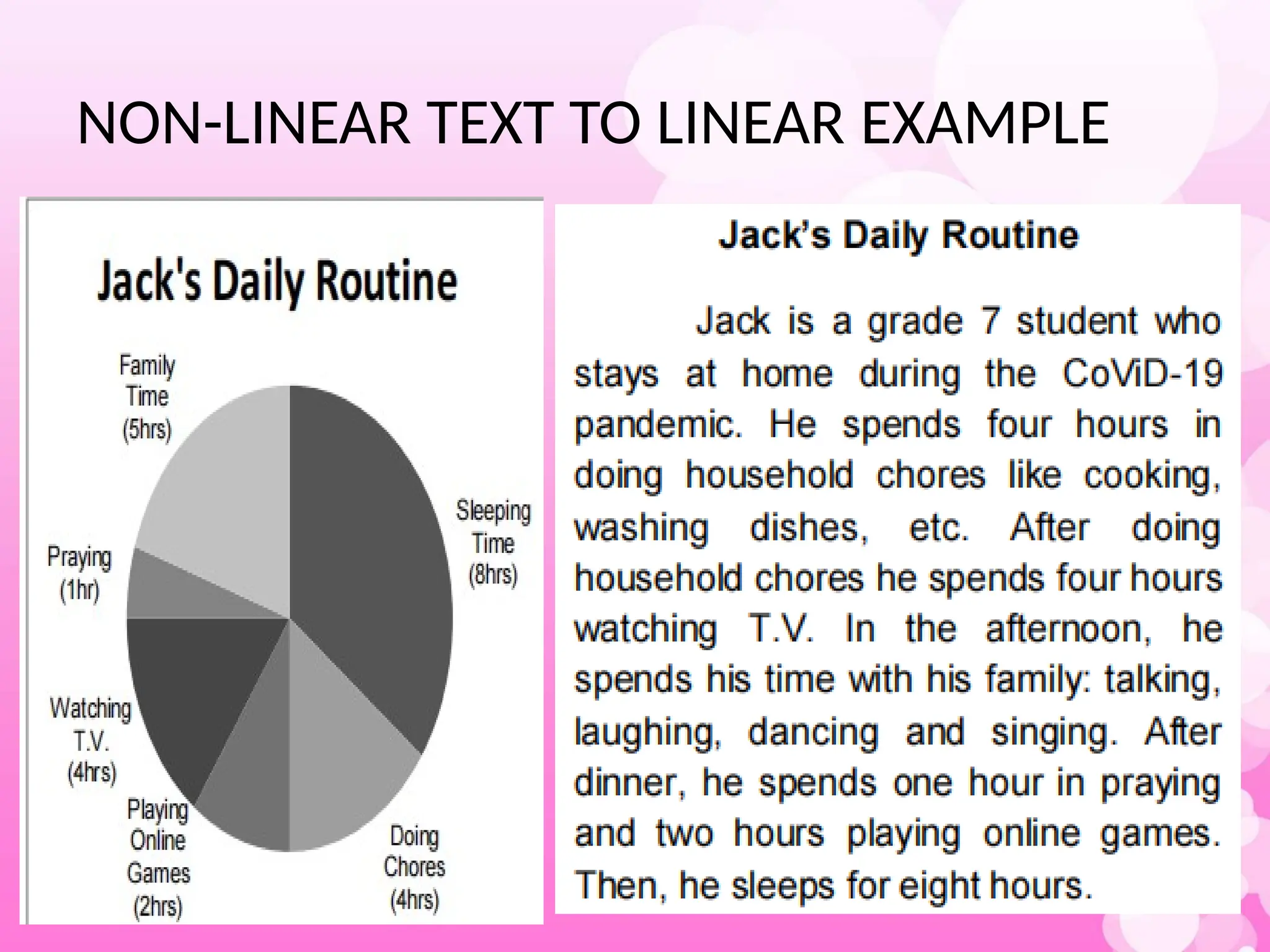
NON-LINEAR TEXT TO LINEAR EXAMPLE
ACTIVITY 2: Transcoding (L-NL)
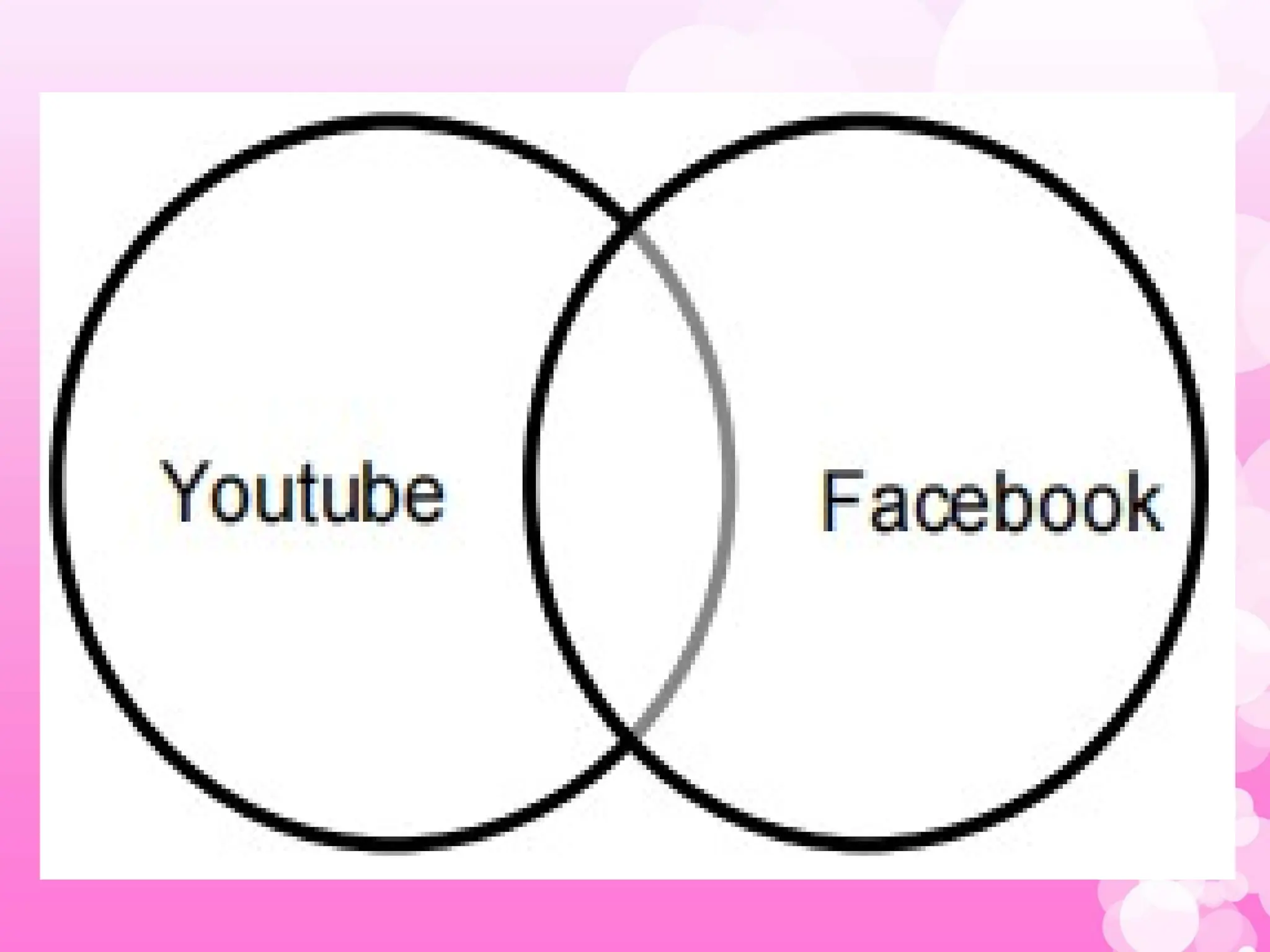
Read carefully the selection below. Copy the
Venn diagram and write the
similarities and differences between Youtube
and Facebook. For the similarities,
write your answers inside the overlapping
space. For their differences, write your
answers inside the common space of the two
circles. Use a sheet of paper.
The DNA of Youtube and Facebook are different.
Youtube is a video hosting platform which is run by
its parent organization – Google (Alphabet).
Google’s DNA is search and hence the same DNA is
applicable to Youtube. What this essentially means is
that – Videos which we create are properly
‘searchable’.
Where in a Facebook is a ‘video also’ sharing
platform and its DNA is ‘virality’. In fact, we need
Facebook only to make ‘Youtube video’ viral. Having
said that, the problem with Facebook is that, it is
difficult to search for a particular video.
ACTIVITY 3: Transcoding (NL-L)
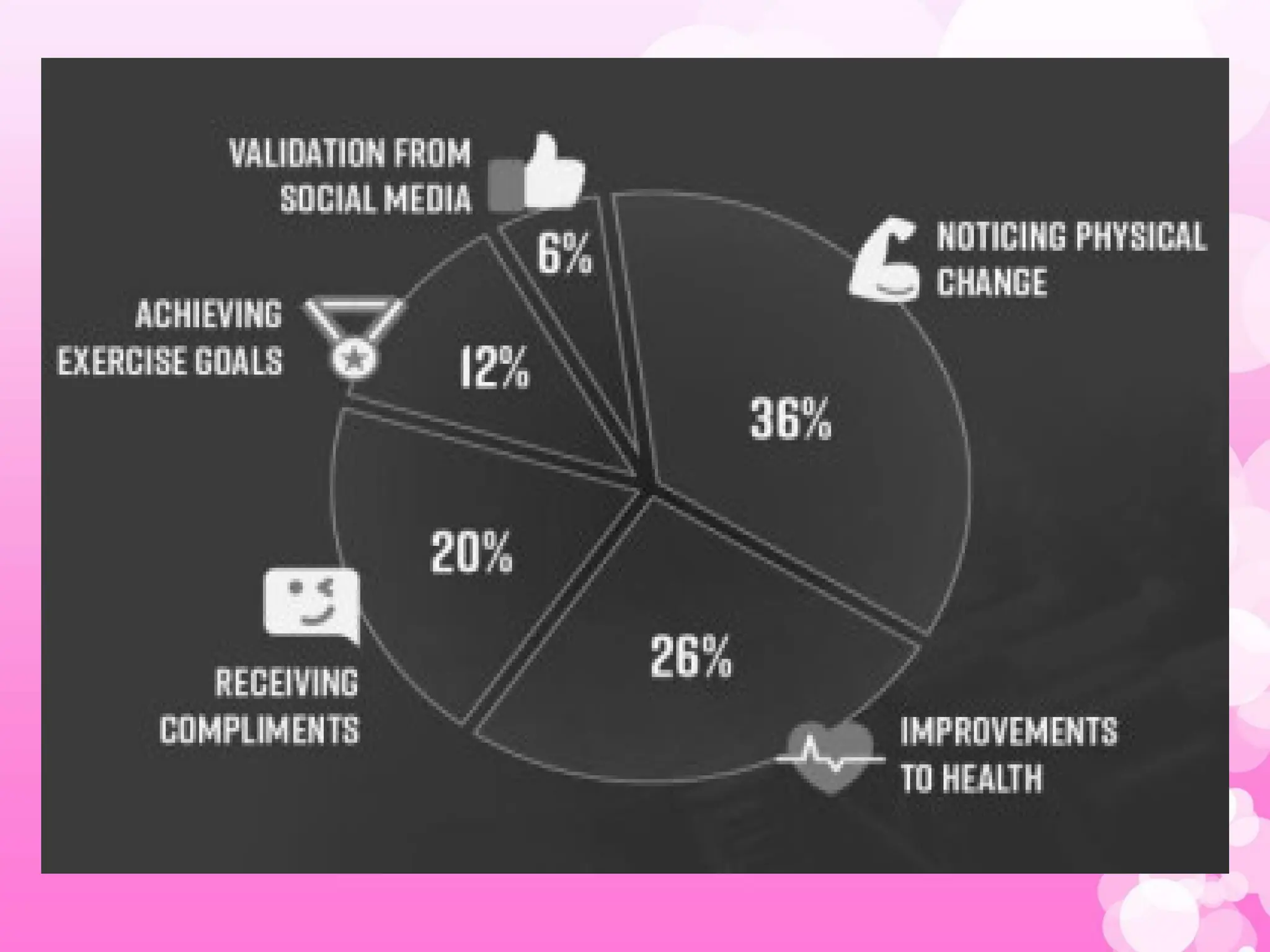
Transcode the graph below by writing a
five-sentence paragraph. The
first sentence has been done for you.
Write your answers in a sheet of paper.
The pie chart above shows the factors in developing
self-confidence.
___________________________________________
___________________________________________
___________________________________________
___________________________________________
___________________________________________
M6-Transcoding-Linear-to-Non-linear-Text.pptx

M6-Transcoding-Linear-to-Non-linear-Text.pptx

  • 1.
    TRANSCODING LINEAR AND NON-LINEAR TEXT MYLANIEY. ALEJANDRO Master Teacher I, English
  • 2.
    Most Essential LearningCompetency Transcode information from linear to non- linear texts and vice-versa. (EN8RC-IIe-11)
  • 3.
    Objectives: 1. identify lineartexts and non-linear texts; 2. interpret linear and non-linear text; 3. extract information from a story and transcode it into a flow chart; and 4. extract information from charts and graphs, and transcode them into paragraphs.
  • 4.
    Definition of Linearand Non- linear Text-
  • 5.
    LINEAR TEXT • sentencesand paragraphs NON-LINEAR TEXT • simple—just a few shapes and lines
  • 6.
    LINEAR TEXT • atext that is written in a traditional way without the aid of graphics. It is read from left to right, from beginning to end, and has syntactic and grammatical features NON-LINEAR TEXT • represented using different kinds of graphics such as charts and graphs and other figures.
  • 7.
    LINEAR TEXT • presentedin a paragraph form NON-LINEAR TEXT • non-linear because the reader does not read it sequentially; instead the reader of the text decides the sequence in reading the text
  • 8.
    Presenting information inboth text (linear) and graphic (non-linear) formats is one of the most basic ways to make a lesson more understandable to all students
  • 9.
    KINDS OF NON-LINEARTEXT Line graph used to record and present changes in data over a period of time
  • 10.
    Bar graph works similarlyto a line graph. It only differs in the use of bars of different heights to show different values
  • 11.
    Venn diagram  adiagram that consists of two overlapping circles that often show comparison and contrast
  • 13.
    Pie chart a circularchart that is divided into fractions used to present proportions out of the whole
  • 14.
    Flowchart  a typeof diagram representing a process using different symbols containing information about steps or a sequence of events  each of these symbols in linked with arrows to illustrate the flow direction of the process
  • 16.
    ACTIVITY 1 Warm MeUp! Analyze the statements below. Write L if the statement is a linear text and write NL if it is a non-linear text. Write your answers in a sheet of paper.
  • 17.
    1. Summary ofMaria Makiling. 2. Enrollment graph of Sinait National High School. 3. A pie chart showing a budget plan of a government employee. 4. A short story of Rizal’s life. 5. A bar graph about CoViD-19 positive patients in Region I.
  • 18.
    6. A newsarticle about the plans and programs of the Department of Education. 7. A line graph showing the economic progress of Ilocos Sur. 8. A poem written by Jose M. Hernandez. 9. A short story about the origin of Sinait. 10. A Venn diagram showing the comparison between flu and COVID-19.
  • 19.
    Interpreting Linear andNon-linear Text
  • 20.
    It is importantto interpret linear and non-linear text to accurately get the information we intend to provide to the readers.
  • 21.
    Transcoding Linear toNon-linear and vice-versa
  • 22.
    The word transcodemeans to change language or information from one form of representation to another
  • 23.
    In transcoding, youshould extract information from a linear text to non- linear text
  • 24.
    LINEAR TEXT TONON-LINEAR Step 1: Read the passage to get a general idea of the subject matter. Step 2: Look at the visual to identify what information is needed to complete the chart or graph.
  • 25.
    Step 3: Locatethe relevant information in the passage and transfer it to the chart or graph. Use only key words or phrases- not whole sentences. Step 4: You may be required to classify information into categories under headings. You may have to come up with your headings.
  • 26.
    LINEAR TEXT TONON-LINEAR EXAMPLE
  • 27.
    NON LINEAR TEXTTO LINEAR Step 1: Spend 5 minutes reading the graphs/charts, etc. Step 2: Make sure you understand axes. Step 3: Make sure you follow lines on graph. Step 4: Focus on the key information.
  • 28.
    Step 5: Observecorrect grammatical structure. Step 6: Vary your vocabulary. Step 7: Organize information clearly. Step 8: Write neatly.
  • 29.
    NON-LINEAR TEXT TOLINEAR EXAMPLE
  • 30.
    ACTIVITY 2: Transcoding(L-NL) Read carefully the selection below. Copy the Venn diagram and write the similarities and differences between Youtube and Facebook. For the similarities, write your answers inside the overlapping space. For their differences, write your answers inside the common space of the two circles. Use a sheet of paper.
  • 31.
    The DNA ofYoutube and Facebook are different. Youtube is a video hosting platform which is run by its parent organization – Google (Alphabet). Google’s DNA is search and hence the same DNA is applicable to Youtube. What this essentially means is that – Videos which we create are properly ‘searchable’. Where in a Facebook is a ‘video also’ sharing platform and its DNA is ‘virality’. In fact, we need Facebook only to make ‘Youtube video’ viral. Having said that, the problem with Facebook is that, it is difficult to search for a particular video.
  • 33.
    ACTIVITY 3: Transcoding(NL-L) Transcode the graph below by writing a five-sentence paragraph. The first sentence has been done for you. Write your answers in a sheet of paper.
  • 35.
    The pie chartabove shows the factors in developing self-confidence. ___________________________________________ ___________________________________________ ___________________________________________ ___________________________________________ ___________________________________________