Leukemia By: Janet Arroyo Branislava Panic Jovana Mirkovic Definition: Leukemia is a form of cancer in which the body produces too many white blood cells. Many forms of leukemia have been identified. They are divided into two general types: acute and chronic. An acute condition comes on fairly quickly. A chronic disorder develops more slowly over time.
Causes  No one knows what causes leukemia. Researchers have strong suspicions about four possible causes, however. They are radiation, chemicals, viruses, and genetic factors. Radiation.  The term "radiation" refers to various forms of energy, such as X rays and ultraviolet (UV) light found in sunlight. Radiation can tear chemicals apart, thus damaging or destroying cells. Some researchers believe that exposure to radiation can cause some forms of leukemia.  Chemicals.  Some types of chemicals are known to be carcinogens (pronounced car-SIN-o-genz). A carcinogen is anything that can cause cancer. Chemicals can cause cancer by damaging cells and the substances within them.  Viruses.  Some researchers believe that some types of leukemia are viral infections. A virus is a very small organism that can cause a disease. The link between viruses and leukemia is strong in some cases, but it has not been proved.  Genetics.  Leukemia tends to occur in some families more commonly than in others. This suggests that at least some forms of leukemia may be hereditary.
One could have Fever or night sweats (any excess sweating occurring during the night). Frequent Infections  Headaches  Bleeding and bruising easily (bleeding gums, purplish patches in the skin, or tiny red spots under the skin) Pain  or aches in joints or bones Discomfort or inflammation in abdomen from an enlarged spleen Swollen lymph nodes (part of lymphatic system, act as filters foreign particles and contain white blood cells), especially in the neck or armpit Weight Loss Anemia (shortage of red blood cells which carry oxygen to body)    SYMPTOMS OF LEUKEMIA SYMPTOMS
Treatment For Leukemia Chemotherapy* Usage of drugs that destroy cancer cells by blocking growth & reproduction given by injection or mouth. Fractional Dose Chemotherapy Total dose of chemotherapy broken down into smll.  amounts over period of 3 days.  Radiation Therapy* Delivers high doses of radiation to cancer cells External Beam Radiation This tech. uses a beam to direct radiation to a tumor Tomo Therapy HI-ART radiation therapy using built-in CT scanning  Biotherapy / Immunotherapy* Uses your body’s own immune system directly or indirectly to fight Leukemia, intended to repair, simulate, and boost immune system. Interferon's Natural substance produced by your body in response to infections and disease. INTERFERONS: alpha, beta, & gamma.
Long and Short Term Effects  Developing new cancers increased risk of infection heart problems sexual development problems Children: Learning Disabilities  Growth Problems  osteoporosis, scoliosis eye problems such as cataracts and glaucoma 5. lung complications 6. immunologic complications  Adults:  Endocrine and Reproductive Impairment: Lung Tissue Injury: Heart Muscle Injury and Heart Failure:
Side Effects For Chemotherapy  While chemotherapy drugs kill cancer cells, they can also damage normal cells. This happens because they target rapidly growing cells such as cancer cells but in the process they also damage other fast growing cells   hair loss   mouth sores   higher risk of infection (due to low white blood cells)  easy bruising or bleeding (due to low  blood platelets)  tiredness (due to low red blood cells)   Loss of appetite   nausea  vomiting
Current Research  Chemotherapy with Stem Cell Transplant:  a method of administering chemotherapy and replacing blood-forming cells destroyed by the leukemia treatment  Biological Therapy:  Treatment that uses the patient's immune system to fight cancer. Substances made by the body (or in a laboratory) are used to boost, direct, or restore the body's natural defenses against cancer.  Currents Areas on Focus:  New anticancer drugs, doses Various drugs  Combinations of drugs radiation therapy
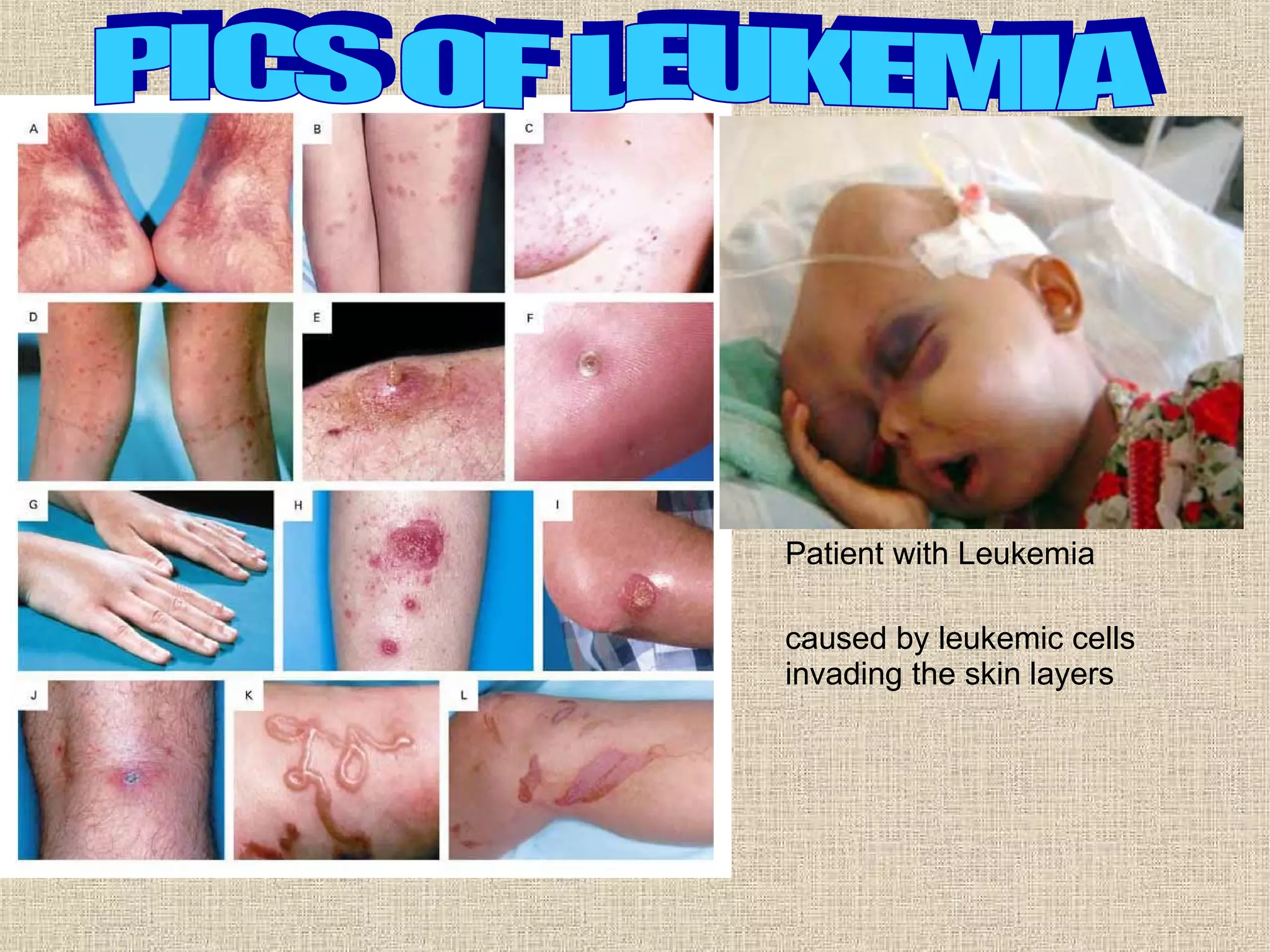
caused by leukemic cells invading the skin layers  Patient with Leukemia PICS OF LEUKEMIA
http://www.medicinenet.com/leukemia/page4.htm http://www.righthealth.com/Health/What%20Are%20Lymph%20Nodes-s?lid=goog-ads-sb-8536643334 http://www.nortonhealthcare.com/specialties/cancer/leukemia/leukemia.aspx http://www.stanford.edu/class/humbio103/ParaSites2006/Myiasis/images/skin%20lesions.jpeg http://www.about-teen-depression.com/images/head.jpg http://www.cancercenter.com/leukemia/leukemia-treatment.cfm?source=googlesw&c=11047:1:1 http://www.webmd.com/cancer/tc/leukemia-topic-overview   http://www.mayoclinic.com/health/leukemia/DS00351/DSECTION=3   http://www.cancercompass.com/leukemia-information/causes-and-risk-factors.htm http://www.mayoclinic.com/health/chronic-lymphocytic-leukemia/DS00565/DSECTION=3 http://www.webmd.com/cancer/tc/leukemia-cause http://www.faqs.org/health/Sick-V3/Leukemia.html http://www.leukemia-lymphoma.org/attachments/National/br_1098117804.pdf http://www.candlelighters.org/treatmentcoglateeffects1.stm http://www.associatedcontent.com/article/241044/long_term_side_effects_of_leukemia.html http://www.ncbi.nlm.nih.gov/sites/entrez?db=pubmed&uid=14766128&cmd=showdetailview&indexed=google http://www.mamashealth.com/cancer/ceffects.asp http://www.lpch.org/DiseaseHealthInfo/HealthLibrary/oncology/leukemia.html  http://www.cancer.net/patient/Cancer+Types/Leukemia+-+T-Cell  Credits

Luekemia

  • 1.
    Leukemia By: JanetArroyo Branislava Panic Jovana Mirkovic Definition: Leukemia is a form of cancer in which the body produces too many white blood cells. Many forms of leukemia have been identified. They are divided into two general types: acute and chronic. An acute condition comes on fairly quickly. A chronic disorder develops more slowly over time.
  • 2.
    Causes Noone knows what causes leukemia. Researchers have strong suspicions about four possible causes, however. They are radiation, chemicals, viruses, and genetic factors. Radiation. The term "radiation" refers to various forms of energy, such as X rays and ultraviolet (UV) light found in sunlight. Radiation can tear chemicals apart, thus damaging or destroying cells. Some researchers believe that exposure to radiation can cause some forms of leukemia. Chemicals. Some types of chemicals are known to be carcinogens (pronounced car-SIN-o-genz). A carcinogen is anything that can cause cancer. Chemicals can cause cancer by damaging cells and the substances within them. Viruses. Some researchers believe that some types of leukemia are viral infections. A virus is a very small organism that can cause a disease. The link between viruses and leukemia is strong in some cases, but it has not been proved. Genetics. Leukemia tends to occur in some families more commonly than in others. This suggests that at least some forms of leukemia may be hereditary.
  • 3.
    One could haveFever or night sweats (any excess sweating occurring during the night). Frequent Infections Headaches Bleeding and bruising easily (bleeding gums, purplish patches in the skin, or tiny red spots under the skin) Pain or aches in joints or bones Discomfort or inflammation in abdomen from an enlarged spleen Swollen lymph nodes (part of lymphatic system, act as filters foreign particles and contain white blood cells), especially in the neck or armpit Weight Loss Anemia (shortage of red blood cells which carry oxygen to body) SYMPTOMS OF LEUKEMIA SYMPTOMS
  • 4.
    Treatment For LeukemiaChemotherapy* Usage of drugs that destroy cancer cells by blocking growth & reproduction given by injection or mouth. Fractional Dose Chemotherapy Total dose of chemotherapy broken down into smll. amounts over period of 3 days. Radiation Therapy* Delivers high doses of radiation to cancer cells External Beam Radiation This tech. uses a beam to direct radiation to a tumor Tomo Therapy HI-ART radiation therapy using built-in CT scanning Biotherapy / Immunotherapy* Uses your body’s own immune system directly or indirectly to fight Leukemia, intended to repair, simulate, and boost immune system. Interferon's Natural substance produced by your body in response to infections and disease. INTERFERONS: alpha, beta, & gamma.
  • 5.
    Long and ShortTerm Effects Developing new cancers increased risk of infection heart problems sexual development problems Children: Learning Disabilities Growth Problems osteoporosis, scoliosis eye problems such as cataracts and glaucoma 5. lung complications 6. immunologic complications Adults: Endocrine and Reproductive Impairment: Lung Tissue Injury: Heart Muscle Injury and Heart Failure:
  • 6.
    Side Effects ForChemotherapy While chemotherapy drugs kill cancer cells, they can also damage normal cells. This happens because they target rapidly growing cells such as cancer cells but in the process they also damage other fast growing cells hair loss  mouth sores  higher risk of infection (due to low white blood cells)  easy bruising or bleeding (due to low blood platelets)  tiredness (due to low red blood cells)  Loss of appetite  nausea  vomiting
  • 7.
    Current Research Chemotherapy with Stem Cell Transplant: a method of administering chemotherapy and replacing blood-forming cells destroyed by the leukemia treatment Biological Therapy: Treatment that uses the patient's immune system to fight cancer. Substances made by the body (or in a laboratory) are used to boost, direct, or restore the body's natural defenses against cancer. Currents Areas on Focus: New anticancer drugs, doses Various drugs Combinations of drugs radiation therapy
  • 8.
    caused by leukemiccells invading the skin layers Patient with Leukemia PICS OF LEUKEMIA
  • 9.
    http://www.medicinenet.com/leukemia/page4.htm http://www.righthealth.com/Health/What%20Are%20Lymph%20Nodes-s?lid=goog-ads-sb-8536643334 http://www.nortonhealthcare.com/specialties/cancer/leukemia/leukemia.aspxhttp://www.stanford.edu/class/humbio103/ParaSites2006/Myiasis/images/skin%20lesions.jpeg http://www.about-teen-depression.com/images/head.jpg http://www.cancercenter.com/leukemia/leukemia-treatment.cfm?source=googlesw&c=11047:1:1 http://www.webmd.com/cancer/tc/leukemia-topic-overview http://www.mayoclinic.com/health/leukemia/DS00351/DSECTION=3 http://www.cancercompass.com/leukemia-information/causes-and-risk-factors.htm http://www.mayoclinic.com/health/chronic-lymphocytic-leukemia/DS00565/DSECTION=3 http://www.webmd.com/cancer/tc/leukemia-cause http://www.faqs.org/health/Sick-V3/Leukemia.html http://www.leukemia-lymphoma.org/attachments/National/br_1098117804.pdf http://www.candlelighters.org/treatmentcoglateeffects1.stm http://www.associatedcontent.com/article/241044/long_term_side_effects_of_leukemia.html http://www.ncbi.nlm.nih.gov/sites/entrez?db=pubmed&uid=14766128&cmd=showdetailview&indexed=google http://www.mamashealth.com/cancer/ceffects.asp http://www.lpch.org/DiseaseHealthInfo/HealthLibrary/oncology/leukemia.html http://www.cancer.net/patient/Cancer+Types/Leukemia+-+T-Cell Credits