Presentation of Qinying Wang
leukemia
C
ONTENT
1
2
3
4
Survey
Introduce
Influence
Treatment
1
Survey
SURVEY
How does the
leukemia rate in
terms of
leading causes
of death in
America?
How many
people are
affected by the
leukemia in this
country?
What do we
need to know
about the
leukemia and
why?
Was there a
reason why you
choose
leukemia this
particular
cancer?
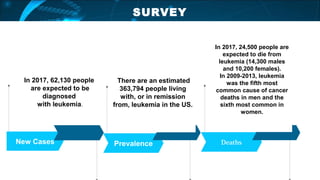
New Cases Prevalence
SURVEY
Deaths
In 2017, 62,130 people
are expected to be
diagnosed
with leukemia.
There are an estimated
363,794 people living
with, or in remission
from, leukemia in the US.
In 2017, 62,130 people
are expected to be
diagnosed
with leukemia.
In 2017, 24,500 people are
expected to die from
leukemia (14,300 males
and 10,200 females).
In 2009-2013, leukemia
was the fifth most
common cause of cancer
deaths in men and the
sixth most common in
women.
Survival
SURVEY
•The overall five-year
relative survival rate for
leukemia has more than
quadrupled since 1960.
From 1960 to 1963, the
five-year relative survival
rate among whites (only
data available) with
leukemia was 14 percent.
From 1975 to 1977, the
five-year relative survival
rate for the total
population with leukemia
was 34.2 percent, and
from 2006 to 2012, the
overall relative survival
rate was 62.7 percent.
From 2006-2012, the
five-year relative
survival rates overall
were
CML - 65.9 percent
CLL - 85.1 percent
AML - 26.8 percent
overall and 66.8
percent for children
and adolescents
younger than 15 years
ALL - 70.7 percent
overall, 92.3 percent for
children and
adolescents younger
than 15 years, and 94.1
percent for children
younger than 5 years.
Rate
SURVEY
Survey
Some knowledge that we need
to know
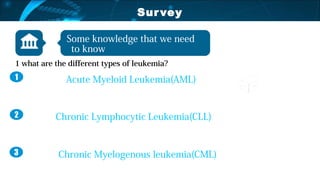
Acute Myeloid Leukemia(AML)
1 what are the different types of leukemia?
1
Chronic Lymphocytic Leukemia(CLL)2
3 Chronic Myelogenous leukemia(CML)
Survey
Some knowledge that we need
to know
People with adult leukemia may
experience fever, fatigue,
bruising easily, shortness of
breath, pain or feeling of fullness
below the ribs, appetite loss,
and weight loss.
2. What are the symptoms of leukemia?
Survey
Some knowledge that we need
to know
While studies have shown men to be
more at risk than women, some other
risk factors include older age, smoking,
having had chemotherapy or radiation
exposure in the past, and having certain
genetic disorders, such as Down
syndrome.
3. What are the risk factors for developing leukemia?
Survey
Some knowledge that we need
to know
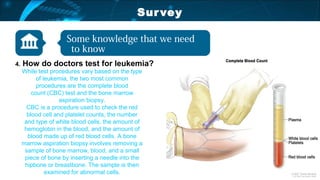
While test procedures vary based on the type
of leukemia, the two most common
procedures are the complete blood
count (CBC) test and the bone marrow
aspiration biopsy.
CBC is a procedure used to check the red
blood cell and platelet counts, the number
and type of white blood cells, the amount of
hemoglobin in the blood, and the amount of
blood made up of red blood cells. A bone
marrow aspiration biopsy involves removing a
sample of bone marrow, blood, and a small
piece of bone by inserting a needle into the
hipbone or breastbone. The sample is then
examined for abnormal cells.
4. How do doctors test for leukemia?
Survey
Some knowledge that we need
to know
Leukemia is treated differently depending on
the type and specific diagnosis. The most
common treatments
include chemotherapy and stem-cell
transplantation .
Patients may also consider treatment through
a clinical trial. Dana-Farber currently has
more than 30 clinical trials for adult
leukemia. A national list of clinical trials is
available at clinicaltrials. gov .
For more information on adult leukemia, visit
the website for the Dana-Farber/Brigham and
Women's Cancer Center Adult Leukemia
Program .
5. How is leukemia treated?
Reason
SURVEY
Leukemia is a type of cancer that is common
in children. The mortality of this disease is
high and the treatment process has great
side effects. This has led many people to
have a fear of leukemia, thinking that
suffering from leukemia is a terminal illness.
So I want to use this demonstration to let
more people understand leukemia and learn
some knowledge about leukemia.
Reason
SURVEY
2
Introduce
Introduce
2 What are the
symptoms
leukemia ?
1 What are the
possible
environmental and/or
genetic causes of
leukemia ?
3 What are the stages
or progression of leukemia?
What is the
prognosis for each
stage?
Introduce
Introduce
5 maternal-fetal transmission: Children born to mothers who use fertility drugs to induce ovulation are more
than twice as likely to develop leukemia during their childhoods than other children.
1 natural and artificial ionizing radiation
Leukemia, like other cancers, results from mutations in the DNA. Certain mutations can trigger
leukemia by activating oncogenes or deactivating tumor suppressor genes, and thereby
disrupting the regulation of cell death, differentiation or division. These mutations may occur
spontaneously or as a result of exposure to radiation or carcinogenic substances.
4 Use of tobacco is associated with a small increase in the risk of developingacute myeloid leukemia in adults.
causes
2 a few viruses such as human T-lymphotropic virus
3 some chemicals, notablybenzene and alkylating chemotherapy agents for previous malignancies.
6 Genetic conditions: Some people have a genetic predisposition towards developing leukemia and people
with chromosomal abnormalities or certain other genetic conditions have a greater risk of leukemia.
Introduce
Introduce
1 The most common symptoms in children are easy bruising, pale skin, fever, and an enlarged spleen or
liver.
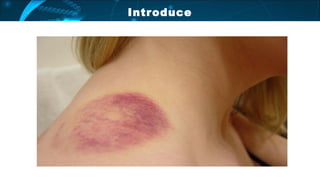
2 Lack of blood platelets, this means people with leukemia may easily become bruised, bleed excessively,
or develop pinprick bleeds .
3 White blood cells, which are involved in fighting pathogens, may be suppressed or dysfunctional. Some
patients experience frequent infection, ranging from infected tonsils, sores in the mouth or diarrhea to
life-threatening pneumonia or opportunistic infections.
4 Red blood cell deficiency leads to anemia, which may cause dyspnea and pallor.
5 Some patients experience other symptoms, such as feeling sick, having fevers, chills, night sweats,
feeling fatigued and other flu-like symptoms.
6 Some patients experience nausea or a feeling of fullness due to an enlarged liver and spleen, this can
result in unintentional weight loss.
7 Blasts affected by the disease may come together and become swollen in the liver or in the lymph
nodes causing pain and leading to nausea.
8 If the leukemic cells invade the central nervous system, then neurological symptoms
(notably headaches) can occur.
symptoms
Introduce
1 Progression
Leukemia can be divided into acute and chronic leukemia. The differentiation of acute leukemia cells in
the early stage of stagnation, mainly to the original and early young cells, the rapid development of the
disease, the course of several months. Chronic leukemia cells are well differentiated, mainly in naive or
mature cells, and develop slowly, with a course of several years.
The treatment of leukemia can be generally divided into two main stages: induced remission therapy and
post-remission therapy. The latter can be further divided into two phases: consolidating treatment
intensive treatment and maintenance treatment. The purpose of induction of remission is to quickly
reduce the leukemia cells as much as possible, so that the hematopoietic function of the bone marrow
can be restored to a normal level to achieve complete remission. The purpose of post-remission therapy
is to further eliminate the remaining leukemic cells in the body, prevent recurrence of leukemia, prolong
remission and survival time, and strive to cure leukemia by adopting consolidation and intensive
treatment for a longer period of time.
Progression and prognosis
Introduce
Introduce
2 Prognosis
The success of treatment depends on the type of leukemia and the age of the person. Outcomes have
improved in the developed world. The average five-year survival rate is 57% in the United States. In
children under 15, the five-year survival rate is greater than 60 to 85%, depending on the type of
leukemia.
In children with acute leukemia who are cancer-free after five years, the cancer is unlikely to return.
Outcomes depend on whether it is acute or chronic, the specific abnormal white blood cell type, the
presence and severity of anemia or thrombocytopenia, the degree of tissue abnormality, the presence
of metastasis and lymph node and bone marrow infiltration, the availability of therapies and the skills of
the health care team. Treatment outcomes may be better when people are treated at larger centers with
greater experience.
Progression and prognosis
3
Effect
Effect
effect
Swollen
Lymph
Nodes
General
Loss of
Wellbeing
Anemia
Easy
Bruising or
Bleeding
Susceptibili
ty to
Infections
03
02
01
05
04
1. Anemia
Leukemia causes anemia
because the production of
red blood cells is reduced
to an abnormally low level,
which slows down oxygen
delivery to body muscles
and organs. People with
anemia tend to have a pale
complexion and get tired
easily.
Effect
Introduce
03
02
01
05
04
2. Easy Bruising or
Bleeding
Individuals with leukemia
may bleed from their
noses, gums or may find
blood in urine or stool.
Even minor bumps may
cause severe bleeding and
small discolored spots
referred to as petechiae
may develop under the
skin.
Effect
Introduce
03
02
01
05
04
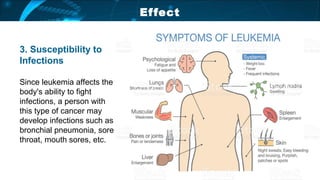
3. Susceptibility to
Infections
Since leukemia affects the
body's ability to fight
infections, a person with
this type of cancer may
develop infections such as
bronchial pneumonia, sore
throat, mouth sores, etc.
Effect
Introduce
03
02
01
05
04
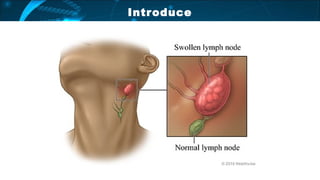
4. Swollen Lymph
Nodes
Lymph nodes are tiny
bean-sized structures that
are composed of a cluster
of lymphocytes. People
with leukemia have
abnormal white blood cells
and the lymphocytes may
collect on the lymph nodes
in the groin, armpits, and
throat, resulting in
enlarged lymph nodes.
Effect
Introduce
03
02
01
05
04
5. General Loss of
Wellbeing
Leukemia can affect the body
in other ways, such as loss of
weight and appetite, and
discomfort under the left
lower ribs because of the
swollen spleen and abnormal
collection of lymphocytes. A
feeling of weakness all the
time also characterizes the
disease. Leukemic
individuals may have a fever
lasting 1-2 weeks coupled
with night sweats.
Introduce
Introduce
4
Treatment
01 02 03
What are the
treatment options?
What are the side
effects of these
treatments?
Is there hope?
Treatment
Treatment
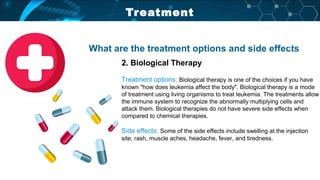
What are the treatment options and side effects
1. Chemotherapy
Treatment options: Chemotherapy refers to the administration of
medications that kills tumorous cells such as leukemia cells and other
cancer cells. Chemotherapy may involve taking oral pills or may be
delivered through the intravenous line directly to the bloodstream. The
drugs are usually a combination of various effective medicines, which kills
cancer cells. The mode of administration is in cycles and rest period is
between them.
Side effects: The side effects of chemotherapy largely depend on the
drugs and the regimen. However, some common symptoms of people on
chemotherapy include nausea, hair loss, mouth sores, vomiting, easy
bruising, loss of appetite and increased risk of developing other infections
because of low immunity.
Treatment
Treatment
What are the treatment options and side effects
2. Biological Therapy
Treatment options: Biological therapy is one of the choices if you have
known "how does leukemia affect the body". Biological therapy is a mode
of treatment using living organisms to treat leukemia. The treatments allow
the immune system to recognize the abnormally multiplying cells and
attack them. Biological therapies do not have severe side effects when
compared to chemical therapies.
Side effects: Some of the side effects include swelling at the injection
site, rash, muscle aches, headache, fever, and tiredness.
Treatment
Treatment
What are the treatment options and side effects
3. Targeted Therapy
Treatment options: Targeted therapies are drugs which disrupt the
specific mechanism of the tumor cells rather than eradicate the cancer
cells rapidly. Targeted therapy causes less damage to normal cells when
compared to chemotherapy. A targeted cancer therapy causes the target
cells to cease from enlarging rather than dying, and they interfere with
specific molecules that promote growth or spread of cancers. The mode of
administration of targeted therapy is usually injection or pill.
Side effects: The side effects include bloating, swelling, a sudden weight
gain, diarrhea, nausea, vomiting, rash and muscle cramps.
Treatment
Treatment
What are the treatment options and side effects
4. Radiation Therapy
Treatment options: Radiation therapy utilizes high-energy radiation
which targets cancer cells. The radiation therapy is used if leukemia has
spread to the brain and it can be used to target areas such as spleen
where the leukemic cells have accumulated.
Side effects: Radiation therapy has its own side effects. The side effects
usually depend on the location where the radiation is applied. If radiation is
applied to the abdominal area, then it can result in diarrhea, vomiting, and
nausea. For radiations on the skin, it may cause reddening, tenderness,
and dryness of the skin. General tiredness is common during the therapy.
Treatment
Treatment
What are the treatment options and side effects
5. Stem Cell Transplant
Treatment options: This type of therapy refers to administration of high
radiation or chemotherapy to destroy cancerous cells in the bone
marrow. Thereafter, transplanted stem cells are intravenously delivered,
which will produce new blood cells. Stem cells may originate from the
patient or from a donor.
Side effects: The chance of meeting a suitable donor is small
Treatment
Treatment
What are the treatment options and side effects
6. Supportive Treatments
Treatment options: Supportive treatments are used to prevent
complications arising from the cancer therapy. In addition, the supportive
treatments are important in minimizing the side effects of radiation or
medical therapy. Supportive treatments given to patients undergoing
therapy include flu vaccines, anti-nausea medications, and antibiotics
among others.
Side effects: The regular treatment for leukemia deplete normal blood
cells, this increases the risk of infections and bleeding.
Treatment
Treatment
Is there hoping?
Stem cell transplants give some patients the possibility of healing,
but some patients also relapse. In addition, other factors such as
finding a donor match, toxicity and long-term hospitalization have
created a very high level of patient burden. The current study aims
to develop novel therapies to solve the unmet medical needs in the
treatment of acute leukemia to obtain disease control, maintain
remission, prevent relapse and prolong survival. In addition,
researchers are investigating the combined effects of the most
effective methods to limit undesired aspects of chemotherapy. For
example, new therapeutic inhibitors (TKIs) of tyrosine kinases have
reduced the relative annual survival rate of CML from early 31% to
63% of patients diagnosed from the 1990s to 2005 to 2011 and
CML patients are now Life is close to normal life.
Treatment
Works cited
http://blog.dana-
farber.org/insight/2014/09/
adult-leukemia-five-things-
you-need-to-know/
http://www.pfizer.c
om/files/health/VO
M_Leukemia_2017
.PDF
https://www.lls.org/http
%3A/llsorg.prod.acquia-
sites.com/facts-and-
statistics/facts-and-statistics-
overview/facts-and-
statistics#Leukemia
https://zhidao.baidu.com/q
uestion/189425397155863
5260
。
https://iask.sina.com.cn/b/2
811954.html
http://www.newhealthadviso
r.com/how-does-leukemia-
affect-the-body.html
http://www.newhealthadvisor.
com/how-does-leukemia-
affect-the-body.html
Thanks for
watching

Ppt biol316 presentation

  • 1.
  • 3.
  • 4.
  • 5.
    SURVEY How does the leukemiarate in terms of leading causes of death in America? How many people are affected by the leukemia in this country? What do we need to know about the leukemia and why? Was there a reason why you choose leukemia this particular cancer?
  • 6.
    New Cases Prevalence SURVEY Deaths In2017, 62,130 people are expected to be diagnosed with leukemia. There are an estimated 363,794 people living with, or in remission from, leukemia in the US. In 2017, 62,130 people are expected to be diagnosed with leukemia. In 2017, 24,500 people are expected to die from leukemia (14,300 males and 10,200 females). In 2009-2013, leukemia was the fifth most common cause of cancer deaths in men and the sixth most common in women.
  • 7.
    Survival SURVEY •The overall five-year relativesurvival rate for leukemia has more than quadrupled since 1960. From 1960 to 1963, the five-year relative survival rate among whites (only data available) with leukemia was 14 percent. From 1975 to 1977, the five-year relative survival rate for the total population with leukemia was 34.2 percent, and from 2006 to 2012, the overall relative survival rate was 62.7 percent. From 2006-2012, the five-year relative survival rates overall were CML - 65.9 percent CLL - 85.1 percent AML - 26.8 percent overall and 66.8 percent for children and adolescents younger than 15 years ALL - 70.7 percent overall, 92.3 percent for children and adolescents younger than 15 years, and 94.1 percent for children younger than 5 years.
  • 8.
  • 9.
    Survey Some knowledge thatwe need to know Acute Myeloid Leukemia(AML) 1 what are the different types of leukemia? 1 Chronic Lymphocytic Leukemia(CLL)2 3 Chronic Myelogenous leukemia(CML)
  • 10.
    Survey Some knowledge thatwe need to know People with adult leukemia may experience fever, fatigue, bruising easily, shortness of breath, pain or feeling of fullness below the ribs, appetite loss, and weight loss. 2. What are the symptoms of leukemia?
  • 11.
    Survey Some knowledge thatwe need to know While studies have shown men to be more at risk than women, some other risk factors include older age, smoking, having had chemotherapy or radiation exposure in the past, and having certain genetic disorders, such as Down syndrome. 3. What are the risk factors for developing leukemia?
  • 12.
    Survey Some knowledge thatwe need to know While test procedures vary based on the type of leukemia, the two most common procedures are the complete blood count (CBC) test and the bone marrow aspiration biopsy. CBC is a procedure used to check the red blood cell and platelet counts, the number and type of white blood cells, the amount of hemoglobin in the blood, and the amount of blood made up of red blood cells. A bone marrow aspiration biopsy involves removing a sample of bone marrow, blood, and a small piece of bone by inserting a needle into the hipbone or breastbone. The sample is then examined for abnormal cells. 4. How do doctors test for leukemia?
  • 13.
    Survey Some knowledge thatwe need to know Leukemia is treated differently depending on the type and specific diagnosis. The most common treatments include chemotherapy and stem-cell transplantation . Patients may also consider treatment through a clinical trial. Dana-Farber currently has more than 30 clinical trials for adult leukemia. A national list of clinical trials is available at clinicaltrials. gov . For more information on adult leukemia, visit the website for the Dana-Farber/Brigham and Women's Cancer Center Adult Leukemia Program . 5. How is leukemia treated?
  • 14.
    Reason SURVEY Leukemia is atype of cancer that is common in children. The mortality of this disease is high and the treatment process has great side effects. This has led many people to have a fear of leukemia, thinking that suffering from leukemia is a terminal illness. So I want to use this demonstration to let more people understand leukemia and learn some knowledge about leukemia.
  • 15.
  • 16.
  • 17.
    Introduce 2 What arethe symptoms leukemia ? 1 What are the possible environmental and/or genetic causes of leukemia ? 3 What are the stages or progression of leukemia? What is the prognosis for each stage?
  • 18.
  • 19.
    Introduce 5 maternal-fetal transmission:Children born to mothers who use fertility drugs to induce ovulation are more than twice as likely to develop leukemia during their childhoods than other children. 1 natural and artificial ionizing radiation Leukemia, like other cancers, results from mutations in the DNA. Certain mutations can trigger leukemia by activating oncogenes or deactivating tumor suppressor genes, and thereby disrupting the regulation of cell death, differentiation or division. These mutations may occur spontaneously or as a result of exposure to radiation or carcinogenic substances. 4 Use of tobacco is associated with a small increase in the risk of developingacute myeloid leukemia in adults. causes 2 a few viruses such as human T-lymphotropic virus 3 some chemicals, notablybenzene and alkylating chemotherapy agents for previous malignancies. 6 Genetic conditions: Some people have a genetic predisposition towards developing leukemia and people with chromosomal abnormalities or certain other genetic conditions have a greater risk of leukemia.
  • 20.
  • 21.
    Introduce 1 The mostcommon symptoms in children are easy bruising, pale skin, fever, and an enlarged spleen or liver. 2 Lack of blood platelets, this means people with leukemia may easily become bruised, bleed excessively, or develop pinprick bleeds . 3 White blood cells, which are involved in fighting pathogens, may be suppressed or dysfunctional. Some patients experience frequent infection, ranging from infected tonsils, sores in the mouth or diarrhea to life-threatening pneumonia or opportunistic infections. 4 Red blood cell deficiency leads to anemia, which may cause dyspnea and pallor. 5 Some patients experience other symptoms, such as feeling sick, having fevers, chills, night sweats, feeling fatigued and other flu-like symptoms. 6 Some patients experience nausea or a feeling of fullness due to an enlarged liver and spleen, this can result in unintentional weight loss. 7 Blasts affected by the disease may come together and become swollen in the liver or in the lymph nodes causing pain and leading to nausea. 8 If the leukemic cells invade the central nervous system, then neurological symptoms (notably headaches) can occur. symptoms
  • 22.
    Introduce 1 Progression Leukemia canbe divided into acute and chronic leukemia. The differentiation of acute leukemia cells in the early stage of stagnation, mainly to the original and early young cells, the rapid development of the disease, the course of several months. Chronic leukemia cells are well differentiated, mainly in naive or mature cells, and develop slowly, with a course of several years. The treatment of leukemia can be generally divided into two main stages: induced remission therapy and post-remission therapy. The latter can be further divided into two phases: consolidating treatment intensive treatment and maintenance treatment. The purpose of induction of remission is to quickly reduce the leukemia cells as much as possible, so that the hematopoietic function of the bone marrow can be restored to a normal level to achieve complete remission. The purpose of post-remission therapy is to further eliminate the remaining leukemic cells in the body, prevent recurrence of leukemia, prolong remission and survival time, and strive to cure leukemia by adopting consolidation and intensive treatment for a longer period of time. Progression and prognosis
  • 23.
  • 24.
    Introduce 2 Prognosis The successof treatment depends on the type of leukemia and the age of the person. Outcomes have improved in the developed world. The average five-year survival rate is 57% in the United States. In children under 15, the five-year survival rate is greater than 60 to 85%, depending on the type of leukemia. In children with acute leukemia who are cancer-free after five years, the cancer is unlikely to return. Outcomes depend on whether it is acute or chronic, the specific abnormal white blood cell type, the presence and severity of anemia or thrombocytopenia, the degree of tissue abnormality, the presence of metastasis and lymph node and bone marrow infiltration, the availability of therapies and the skills of the health care team. Treatment outcomes may be better when people are treated at larger centers with greater experience. Progression and prognosis
  • 25.
  • 26.
  • 27.
    03 02 01 05 04 1. Anemia Leukemia causesanemia because the production of red blood cells is reduced to an abnormally low level, which slows down oxygen delivery to body muscles and organs. People with anemia tend to have a pale complexion and get tired easily. Effect
  • 28.
  • 29.
    03 02 01 05 04 2. Easy Bruisingor Bleeding Individuals with leukemia may bleed from their noses, gums or may find blood in urine or stool. Even minor bumps may cause severe bleeding and small discolored spots referred to as petechiae may develop under the skin. Effect
  • 30.
  • 31.
    03 02 01 05 04 3. Susceptibility to Infections Sinceleukemia affects the body's ability to fight infections, a person with this type of cancer may develop infections such as bronchial pneumonia, sore throat, mouth sores, etc. Effect
  • 32.
  • 33.
    03 02 01 05 04 4. Swollen Lymph Nodes Lymphnodes are tiny bean-sized structures that are composed of a cluster of lymphocytes. People with leukemia have abnormal white blood cells and the lymphocytes may collect on the lymph nodes in the groin, armpits, and throat, resulting in enlarged lymph nodes. Effect
  • 34.
  • 35.
    03 02 01 05 04 5. General Lossof Wellbeing Leukemia can affect the body in other ways, such as loss of weight and appetite, and discomfort under the left lower ribs because of the swollen spleen and abnormal collection of lymphocytes. A feeling of weakness all the time also characterizes the disease. Leukemic individuals may have a fever lasting 1-2 weeks coupled with night sweats. Introduce
  • 36.
  • 37.
  • 38.
    01 02 03 Whatare the treatment options? What are the side effects of these treatments? Is there hope? Treatment
  • 39.
    Treatment What are thetreatment options and side effects 1. Chemotherapy Treatment options: Chemotherapy refers to the administration of medications that kills tumorous cells such as leukemia cells and other cancer cells. Chemotherapy may involve taking oral pills or may be delivered through the intravenous line directly to the bloodstream. The drugs are usually a combination of various effective medicines, which kills cancer cells. The mode of administration is in cycles and rest period is between them. Side effects: The side effects of chemotherapy largely depend on the drugs and the regimen. However, some common symptoms of people on chemotherapy include nausea, hair loss, mouth sores, vomiting, easy bruising, loss of appetite and increased risk of developing other infections because of low immunity.
  • 40.
  • 41.
    Treatment What are thetreatment options and side effects 2. Biological Therapy Treatment options: Biological therapy is one of the choices if you have known "how does leukemia affect the body". Biological therapy is a mode of treatment using living organisms to treat leukemia. The treatments allow the immune system to recognize the abnormally multiplying cells and attack them. Biological therapies do not have severe side effects when compared to chemical therapies. Side effects: Some of the side effects include swelling at the injection site, rash, muscle aches, headache, fever, and tiredness.
  • 42.
  • 43.
    Treatment What are thetreatment options and side effects 3. Targeted Therapy Treatment options: Targeted therapies are drugs which disrupt the specific mechanism of the tumor cells rather than eradicate the cancer cells rapidly. Targeted therapy causes less damage to normal cells when compared to chemotherapy. A targeted cancer therapy causes the target cells to cease from enlarging rather than dying, and they interfere with specific molecules that promote growth or spread of cancers. The mode of administration of targeted therapy is usually injection or pill. Side effects: The side effects include bloating, swelling, a sudden weight gain, diarrhea, nausea, vomiting, rash and muscle cramps.
  • 44.
  • 45.
    Treatment What are thetreatment options and side effects 4. Radiation Therapy Treatment options: Radiation therapy utilizes high-energy radiation which targets cancer cells. The radiation therapy is used if leukemia has spread to the brain and it can be used to target areas such as spleen where the leukemic cells have accumulated. Side effects: Radiation therapy has its own side effects. The side effects usually depend on the location where the radiation is applied. If radiation is applied to the abdominal area, then it can result in diarrhea, vomiting, and nausea. For radiations on the skin, it may cause reddening, tenderness, and dryness of the skin. General tiredness is common during the therapy.
  • 46.
  • 47.
    Treatment What are thetreatment options and side effects 5. Stem Cell Transplant Treatment options: This type of therapy refers to administration of high radiation or chemotherapy to destroy cancerous cells in the bone marrow. Thereafter, transplanted stem cells are intravenously delivered, which will produce new blood cells. Stem cells may originate from the patient or from a donor. Side effects: The chance of meeting a suitable donor is small
  • 48.
  • 49.
    Treatment What are thetreatment options and side effects 6. Supportive Treatments Treatment options: Supportive treatments are used to prevent complications arising from the cancer therapy. In addition, the supportive treatments are important in minimizing the side effects of radiation or medical therapy. Supportive treatments given to patients undergoing therapy include flu vaccines, anti-nausea medications, and antibiotics among others. Side effects: The regular treatment for leukemia deplete normal blood cells, this increases the risk of infections and bleeding.
  • 50.
  • 51.
    Treatment Is there hoping? Stemcell transplants give some patients the possibility of healing, but some patients also relapse. In addition, other factors such as finding a donor match, toxicity and long-term hospitalization have created a very high level of patient burden. The current study aims to develop novel therapies to solve the unmet medical needs in the treatment of acute leukemia to obtain disease control, maintain remission, prevent relapse and prolong survival. In addition, researchers are investigating the combined effects of the most effective methods to limit undesired aspects of chemotherapy. For example, new therapeutic inhibitors (TKIs) of tyrosine kinases have reduced the relative annual survival rate of CML from early 31% to 63% of patients diagnosed from the 1990s to 2005 to 2011 and CML patients are now Life is close to normal life.
  • 52.
  • 53.
  • 54.

Editor's Notes