PROBIOTICS IN POULTRY
NUTRITION
__________________________
Cost or opportunity?
Baromfi Congress – Budapest 1° Oct 2013
Luca Vandi
Poultry Tech Manager EMA
Biomin GmbH
Probiotics in poultry nutrition: cost or opportunity?
BAROMFI CONGRESS 2013
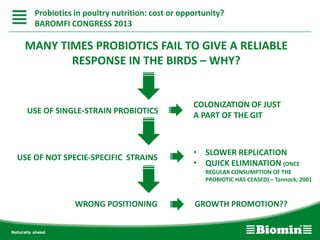
MANY TIMES PROBIOTICS FAIL TO GIVE A RELIABLE
RESPONSE IN THE BIRDS – WHY?
USE OF SINGLE-STRAIN PROBIOTICS
COLONIZATION OF JUST
A PART OF THE GIT
USE OF NOT SPECIE-SPECIFIC STRAINS
• SLOWER REPLICATION
• QUICK ELIMINATION (ONCE
REGULAR CONSUMPTION OF THE
PROBIOTIC HAS CEASED) – Tannock, 2001
WRONG POSITIONING GROWTH PROMOTION??
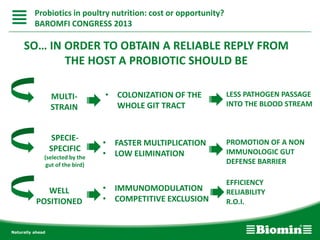
SO… IN ORDER TO OBTAIN A RELIABLE REPLY FROM
THE HOST A PROBIOTIC SHOULD BE
MULTI-
STRAIN
• COLONIZATION OF THE
WHOLE GIT TRACT
SPECIE-
SPECIFIC
(selected by the
gut of the bird)
• FASTER MULTIPLICATION
• LOW ELIMINATION
WELL
POSITIONED
• IMMUNOMODULATION
• COMPETITIVE EXCLUSION
LESS PATHOGEN PASSAGE
INTO THE BLOOD STREAM
PROMOTION OF A NON
IMMUNOLOGIC GUT
DEFENSE BARRIER
EFFICIENCY
RELIABILITY
R.O.I.
Probiotics in poultry nutrition: cost or opportunity?
BAROMFI CONGRESS 2013
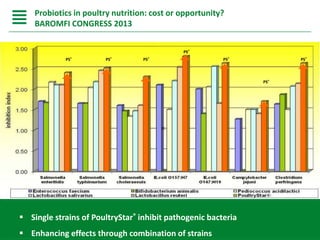
 Single strains of PoultryStar® inhibit pathogenic bacteria
 Enhancing effects through combination of strains
PS®PS®
PS®
PS® PS®PS®
PS®
Probiotics in poultry nutrition: cost or opportunity?
BAROMFI CONGRESS 2013
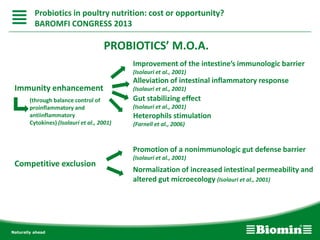
PROBIOTICS’ M.O.A.
Immunity enhancement
Improvement of the intestine’s immunologic barrier
(Isolauri et al., 2001)
Alleviation of intestinal inflammatory response
(Isolauri et al., 2001)
Gut stabilizing effect
(Isolauri et al., 2001)
(through balance control of
proinflammatory and
antiinflammatory
Cytokines) (Isolauri et al., 2001)
Heterophils stimulation
(Farnell et al., 2006)
Competitive exclusion
Promotion of a nonimmunologic gut defense barrier
(Isolauri et al., 2001)
Normalization of increased intestinal permeability and
altered gut microecology (Isolauri et al., 2001)
Probiotics in poultry nutrition: cost or opportunity?
BAROMFI CONGRESS 2013
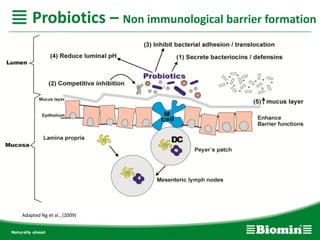
Probiotics – Non immunological barrier formation
Adapted Ng et al., (2009)
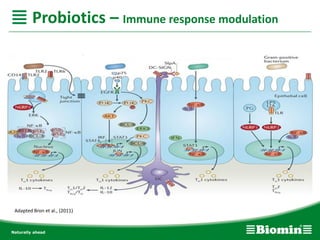
Probiotics – Immune response modulation
Adapted Bron et al., (2011)
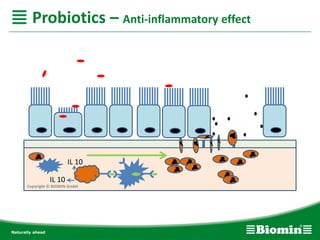
IL 10
IL 10
Copyright © BIOMIN GmbH
Probiotics – Anti-inflammatory effect
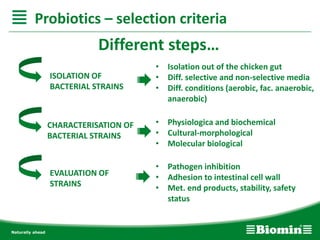
Different steps…
Probiotics – selection criteria
ISOLATION OF
BACTERIAL STRAINS
• Isolation out of the chicken gut
• Diff. selective and non-selective media
• Diff. conditions (aerobic, fac. anaerobic,
anaerobic)
CHARACTERISATION OF
BACTERIAL STRAINS
• Physiologica and biochemical
• Cultural-morphological
• Molecular biological
EVALUATION OF
STRAINS
• Pathogen inhibition
• Adhesion to intestinal cell wall
• Met. end products, stability, safety
status
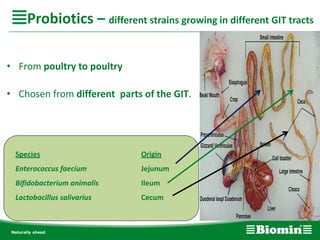
• From poultry to poultry
• Chosen from different parts of the GIT.
Species Origin
Enterococcus faecium Jejunum
Bifidobacterium animalis Ileum
Lactobacillus salivarius Cecum
Probiotics – different strains growing in different GIT tracts
THE
TRIALS
Probiotics in poultry nutrition: cost or opportunity?
BAROMFI CONGRESS 2013
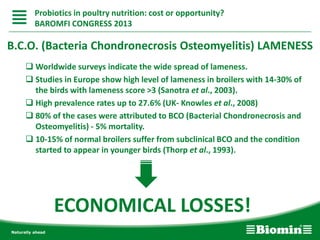
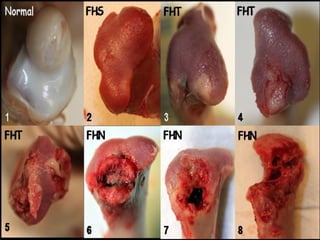
B.C.O. (Bacteria Chondronecrosis Osteomyelitis) LAMENESS
 Worldwide surveys indicate the wide spread of lameness.
 Studies in Europe show high level of lameness in broilers with 14-30% of
the birds with lameness score >3 (Sanotra et al., 2003).
 High prevalence rates up to 27.6% (UK- Knowles et al., 2008)
 80% of the cases were attributed to BCO (Bacterial Chondronecrosis and
Osteomyelitis) - 5% mortality.
 10-15% of normal broilers suffer from subclinical BCO and the condition
started to appear in younger birds (Thorp et al., 1993).
ECONOMICAL LOSSES!
Probiotics in poultry nutrition: cost or opportunity?
BAROMFI CONGRESS 2013
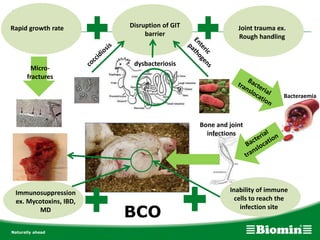
Rapid growth rate Disruption of GIT
barrier
Joint trauma ex.
Rough handling
Immunosuppression
ex. Mycotoxins, IBD,
MD
Inability of immune
cells to reach the
infection site
Bone and joint
infections
Micro-
fractures
dysbacteriosis
BCO
Bacteraemia
Effect of PoultryStar® on incidence
of BCO and lameness in commercial
broilers reared on wire flooring
University of Arkansas Division of Agriculture, Poultry
Environmental Research Lab Poultry Research Farm, Fayetteville,
Arkansas, USA
Prof. R.F. Wideman, Jr., Ph.D.
________________________________________________
Wideman et al. (2012) A wire-flooring model for inducing lameness
in broilers: Evaluation of probiotics as a prophylactic treatment,
Poultry Science 91: 870 – 883
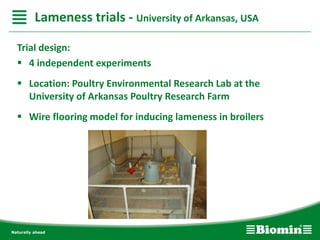
Trial design:
 4 independent experiments
 Location: Poultry Environmental Research Lab at the
University of Arkansas Poultry Research Farm
 Wire flooring model for inducing lameness in broilers
Lameness trials - University of Arkansas, USA
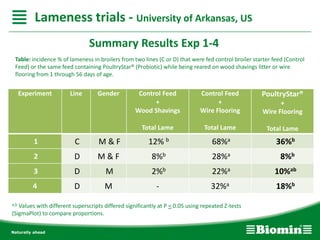
Table: incidence % of lameness in broilers from two lines (C or D) that were fed control broiler starter feed (Control
Feed) or the same feed containing PoultryStar® (Probiotic) while being reared on wood shavings litter or wire
flooring from 1 through 56 days of age.
a,b Values with different superscripts differed significantly at P < 0.05 using repeated Z-tests
(SigmaPlot) to compare proportions.
Experiment Line Gender Control Feed
+
Wood Shavings
Total Lame
Control Feed
+
Wire Flooring
Total Lame
PoultryStar®
+
Wire Flooring
Total Lame
1 C M & F 12% b 68%a 36%b
2 D M & F 8%b 28%a 8%b
3 D M 2%b 22%a 10%ab
4 D M - 32%a 18%b
Summary Results Exp 1-4
Lameness trials - University of Arkansas, US
Effect of PoultryStar®
on amelioration of acute phase
inflammation
____________________________
Purdue University
(USA)
Department of Animal Sciences
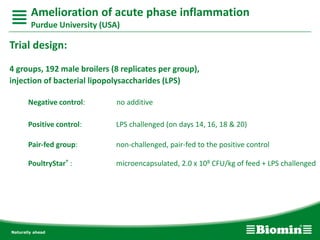
Trial design:
4 groups, 192 male broilers (8 replicates per group),
injection of bacterial lipopolysaccharides (LPS)
Negative control: no additive
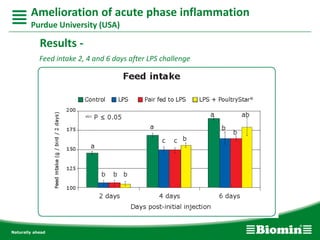
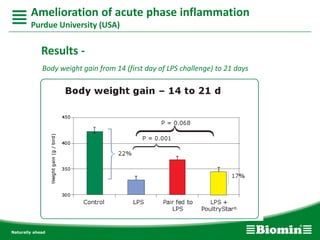
Positive control: LPS challenged (on days 14, 16, 18 & 20)
Pair-fed group: non-challenged, pair-fed to the positive control
PoultryStar® : microencapsulated, 2.0 x 10⁸ CFU/kg of feed + LPS challenged
Amelioration of acute phase inflammation
Purdue University (USA)
Feed intake 2, 4 and 6 days after LPS challenge
Amelioration of acute phase inflammation
Purdue University (USA)
Results -
Body weight gain from 14 (first day of LPS challenge) to 21 days
Amelioration of acute phase inflammation
Purdue University (USA)
Results -
Effect of PoultryStar®
on Clostridium perfringens-induced
Necrotic Enteritis
Ghent University (Belgium)
Faculty of Veterinary Medicine
Department of Pathology Bacteriology and Avian Diseases
____________________________________________________
M. Mohnl, F. Van Immerseel, R. Ducatelle2, G. Schatzmayr (2010)
Inhibition of Clostridium Perfringens through Probiotic Strains and
Efficacy of Multispecies Probiotic to Reduce Necrotic Enteritis in Poultry,
XIIIth European Poultry Conference, Tours. France, 23-27 August 2010,
Book of Abstracts, p. 254, oral presentation
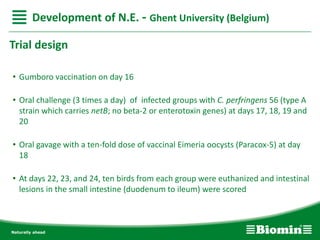
Trial design
Animals: day-old broiler chicks (mixed-sex; Ross)
3 groups, 90 birds, randomly assigend
Negative control: uninfected, untreated
Positive control: infected, untreated
NC + PoultryStar® me: infected, 1 kg/ton of feed
Feeding programm:
Starter: day 1 to 8, wheat/rye and soybean based
Grower: day 9 to 16, wheat/rye and soybean based
Grower: from day 17, soybean meal was replaced by fishmeal
Development of N.E. - Ghent University (Belgium)
Trial design
• Gumboro vaccination on day 16
• Oral challenge (3 times a day) of infected groups with C. perfringens 56 (type A
strain which carries netB; no beta-2 or enterotoxin genes) at days 17, 18, 19 and
20
• Oral gavage with a ten-fold dose of vaccinal Eimeria oocysts (Paracox-5) at day
18
• At days 22, 23, and 24, ten birds from each group were euthanized and intestinal
lesions in the small intestine (duodenum to ileum) were scored
Development of N.E. - Ghent University (Belgium)
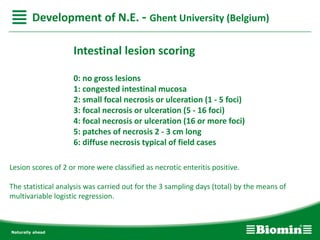
Intestinal lesion scoring
0: no gross lesions
1: congested intestinal mucosa
2: small focal necrosis or ulceration (1 - 5 foci)
3: focal necrosis or ulceration (5 - 16 foci)
4: focal necrosis or ulceration (16 or more foci)
5: patches of necrosis 2 - 3 cm long
6: diffuse necrosis typical of field cases
Lesion scores of 2 or more were classified as necrotic enteritis positive.
The statistical analysis was carried out for the 3 sampling days (total) by the means of
multivariable logistic regression.
Development of N.E. - Ghent University (Belgium)
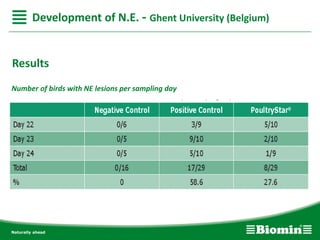
Number of birds with NE lesions per sampling day
Results
Development of N.E. - Ghent University (Belgium)
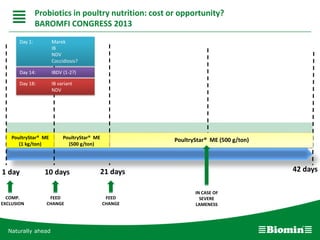
APPLICATION OF
PROBIOTICS
Probiotics in poultry nutrition: cost or opportunity?
BAROMFI CONGRESS 2013
Naturally ahead
21 days 42 days1 day
Day 1: Marek
IB
NDV
Coccidiosis?
Day 14: IBDV (1-2?)
Day 18: IB variant
NDV
10 days
FEED APPLICATIONPoultryStar® ME
(1 kg/ton)
FEED
CHANGE
FEED
CHANGE
PoultryStar® ME (500 g/ton)
IN CASE OF
SEVERE
LAMENESS
COMP.
EXCLUSION
Probiotics in poultry nutrition: cost or opportunity?
BAROMFI CONGRESS 2013
PoultryStar® ME
(500 g/ton)
YES
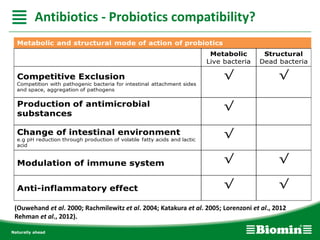
Antibiotics - Probiotics compatibility?
(Ouwehand et al. 2000; Rachmilewitz et al. 2004; Katakura et al. 2005; Lorenzoni et al., 2012
Rehman et al., 2012).
Antibiotics - Probiotics compatibility?
Naturally ahead
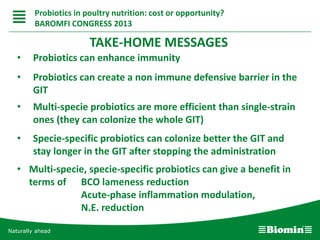
TAKE-HOME MESSAGES
• Probiotics can enhance immunity
• Probiotics can create a non immune defensive barrier in the
GIT
• Multi-specie probiotics are more efficient than single-strain
ones (they can colonize the whole GIT)
• Specie-specific probiotics can colonize better the GIT and
stay longer in the GIT after stopping the administration
• Multi-specie, specie-specific probiotics can give a benefit in
terms of BCO lameness reduction
Acute-phase inflammation modulation,
N.E. reduction
Probiotics in poultry nutrition: cost or opportunity?
BAROMFI CONGRESS 2013
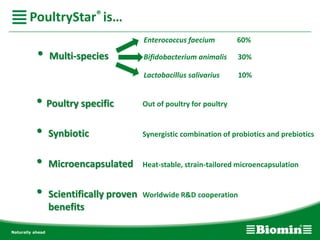
PoultryStar®
Healthy gut - Strong chick!
• Poultry specific Out of poultry for poultry
• Multi-species
• Synbiotic Synergistic combination of probiotics and prebiotics
PoultryStar® is…
• Microencapsulated Heat-stable, strain-tailored microencapsulation
• Scientifically proven
benefits
Worldwide R&D cooperation
Enterococcus faecium 60%
Bifidobacterium animalis 30%
Lactobacillus salivarius 10%
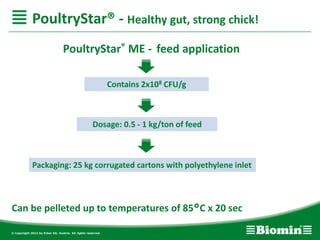
PoultryStar® ME - feed application
Can be pelleted up to temperatures of 85°C x 20 sec
Packaging: 25 kg corrugated cartons with polyethylene inlet
Contains 2x10⁸ CFU/g
Dosage: 0.5 - 1 kg/ton of feed
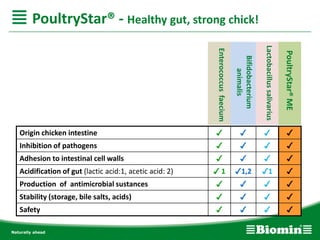
PoultryStar® - Healthy gut, strong chick!
Origin chicken intestine ✓ ✓ ✓ ✓
Inhibition of pathogens ✓ ✓ ✓ ✓
Adhesion to intestinal cell walls ✓ ✓ ✓ ✓
Acidification of gut (lactic acid:1, acetic acid: 2) ✓ 1 ✓1,2 ✓1 ✓
Production of antimicrobial sustances ✓ ✓ ✓ ✓
Stability (storage, bile salts, acids) ✓ ✓ ✓ ✓
Safety ✓ ✓ ✓ ✓
PoultryStar® - Healthy gut, strong chick!
PoultryStar®ME
Lactobacillussalivarius
Bifidobacterium
animalis
Enterococcusfaecium
PoultryStar® - Healthy gut, strong chick!
So… Probiotics can be just a cost or an opprtunity?
CATCH IT!!

Luca Vandi presentation

  • 1.
    PROBIOTICS IN POULTRY NUTRITION __________________________ Costor opportunity? Baromfi Congress – Budapest 1° Oct 2013 Luca Vandi Poultry Tech Manager EMA Biomin GmbH
  • 2.
    Probiotics in poultrynutrition: cost or opportunity? BAROMFI CONGRESS 2013 MANY TIMES PROBIOTICS FAIL TO GIVE A RELIABLE RESPONSE IN THE BIRDS – WHY? USE OF SINGLE-STRAIN PROBIOTICS COLONIZATION OF JUST A PART OF THE GIT USE OF NOT SPECIE-SPECIFIC STRAINS • SLOWER REPLICATION • QUICK ELIMINATION (ONCE REGULAR CONSUMPTION OF THE PROBIOTIC HAS CEASED) – Tannock, 2001 WRONG POSITIONING GROWTH PROMOTION??
  • 3.
    SO… IN ORDERTO OBTAIN A RELIABLE REPLY FROM THE HOST A PROBIOTIC SHOULD BE MULTI- STRAIN • COLONIZATION OF THE WHOLE GIT TRACT SPECIE- SPECIFIC (selected by the gut of the bird) • FASTER MULTIPLICATION • LOW ELIMINATION WELL POSITIONED • IMMUNOMODULATION • COMPETITIVE EXCLUSION LESS PATHOGEN PASSAGE INTO THE BLOOD STREAM PROMOTION OF A NON IMMUNOLOGIC GUT DEFENSE BARRIER EFFICIENCY RELIABILITY R.O.I. Probiotics in poultry nutrition: cost or opportunity? BAROMFI CONGRESS 2013
  • 4.
     Single strainsof PoultryStar® inhibit pathogenic bacteria  Enhancing effects through combination of strains PS®PS® PS® PS® PS®PS® PS® Probiotics in poultry nutrition: cost or opportunity? BAROMFI CONGRESS 2013
  • 5.
    PROBIOTICS’ M.O.A. Immunity enhancement Improvementof the intestine’s immunologic barrier (Isolauri et al., 2001) Alleviation of intestinal inflammatory response (Isolauri et al., 2001) Gut stabilizing effect (Isolauri et al., 2001) (through balance control of proinflammatory and antiinflammatory Cytokines) (Isolauri et al., 2001) Heterophils stimulation (Farnell et al., 2006) Competitive exclusion Promotion of a nonimmunologic gut defense barrier (Isolauri et al., 2001) Normalization of increased intestinal permeability and altered gut microecology (Isolauri et al., 2001) Probiotics in poultry nutrition: cost or opportunity? BAROMFI CONGRESS 2013
  • 6.
    Probiotics – Nonimmunological barrier formation Adapted Ng et al., (2009)
  • 7.
    Probiotics – Immuneresponse modulation Adapted Bron et al., (2011)
  • 8.
    IL 10 IL 10 Copyright© BIOMIN GmbH Probiotics – Anti-inflammatory effect
  • 9.
    Different steps… Probiotics –selection criteria ISOLATION OF BACTERIAL STRAINS • Isolation out of the chicken gut • Diff. selective and non-selective media • Diff. conditions (aerobic, fac. anaerobic, anaerobic) CHARACTERISATION OF BACTERIAL STRAINS • Physiologica and biochemical • Cultural-morphological • Molecular biological EVALUATION OF STRAINS • Pathogen inhibition • Adhesion to intestinal cell wall • Met. end products, stability, safety status
  • 10.
    • From poultryto poultry • Chosen from different parts of the GIT. Species Origin Enterococcus faecium Jejunum Bifidobacterium animalis Ileum Lactobacillus salivarius Cecum Probiotics – different strains growing in different GIT tracts
  • 11.
    THE TRIALS Probiotics in poultrynutrition: cost or opportunity? BAROMFI CONGRESS 2013
  • 12.
    B.C.O. (Bacteria ChondronecrosisOsteomyelitis) LAMENESS  Worldwide surveys indicate the wide spread of lameness.  Studies in Europe show high level of lameness in broilers with 14-30% of the birds with lameness score >3 (Sanotra et al., 2003).  High prevalence rates up to 27.6% (UK- Knowles et al., 2008)  80% of the cases were attributed to BCO (Bacterial Chondronecrosis and Osteomyelitis) - 5% mortality.  10-15% of normal broilers suffer from subclinical BCO and the condition started to appear in younger birds (Thorp et al., 1993). ECONOMICAL LOSSES! Probiotics in poultry nutrition: cost or opportunity? BAROMFI CONGRESS 2013
  • 14.
    Rapid growth rateDisruption of GIT barrier Joint trauma ex. Rough handling Immunosuppression ex. Mycotoxins, IBD, MD Inability of immune cells to reach the infection site Bone and joint infections Micro- fractures dysbacteriosis BCO Bacteraemia
  • 15.
    Effect of PoultryStar®on incidence of BCO and lameness in commercial broilers reared on wire flooring University of Arkansas Division of Agriculture, Poultry Environmental Research Lab Poultry Research Farm, Fayetteville, Arkansas, USA Prof. R.F. Wideman, Jr., Ph.D. ________________________________________________ Wideman et al. (2012) A wire-flooring model for inducing lameness in broilers: Evaluation of probiotics as a prophylactic treatment, Poultry Science 91: 870 – 883
  • 16.
    Trial design:  4independent experiments  Location: Poultry Environmental Research Lab at the University of Arkansas Poultry Research Farm  Wire flooring model for inducing lameness in broilers Lameness trials - University of Arkansas, USA
  • 17.
    Table: incidence %of lameness in broilers from two lines (C or D) that were fed control broiler starter feed (Control Feed) or the same feed containing PoultryStar® (Probiotic) while being reared on wood shavings litter or wire flooring from 1 through 56 days of age. a,b Values with different superscripts differed significantly at P < 0.05 using repeated Z-tests (SigmaPlot) to compare proportions. Experiment Line Gender Control Feed + Wood Shavings Total Lame Control Feed + Wire Flooring Total Lame PoultryStar® + Wire Flooring Total Lame 1 C M & F 12% b 68%a 36%b 2 D M & F 8%b 28%a 8%b 3 D M 2%b 22%a 10%ab 4 D M - 32%a 18%b Summary Results Exp 1-4 Lameness trials - University of Arkansas, US
  • 18.
    Effect of PoultryStar® onamelioration of acute phase inflammation ____________________________ Purdue University (USA) Department of Animal Sciences
  • 19.
    Trial design: 4 groups,192 male broilers (8 replicates per group), injection of bacterial lipopolysaccharides (LPS) Negative control: no additive Positive control: LPS challenged (on days 14, 16, 18 & 20) Pair-fed group: non-challenged, pair-fed to the positive control PoultryStar® : microencapsulated, 2.0 x 10⁸ CFU/kg of feed + LPS challenged Amelioration of acute phase inflammation Purdue University (USA)
  • 20.
    Feed intake 2,4 and 6 days after LPS challenge Amelioration of acute phase inflammation Purdue University (USA) Results -
  • 21.
    Body weight gainfrom 14 (first day of LPS challenge) to 21 days Amelioration of acute phase inflammation Purdue University (USA) Results -
  • 22.
    Effect of PoultryStar® onClostridium perfringens-induced Necrotic Enteritis Ghent University (Belgium) Faculty of Veterinary Medicine Department of Pathology Bacteriology and Avian Diseases ____________________________________________________ M. Mohnl, F. Van Immerseel, R. Ducatelle2, G. Schatzmayr (2010) Inhibition of Clostridium Perfringens through Probiotic Strains and Efficacy of Multispecies Probiotic to Reduce Necrotic Enteritis in Poultry, XIIIth European Poultry Conference, Tours. France, 23-27 August 2010, Book of Abstracts, p. 254, oral presentation
  • 23.
    Trial design Animals: day-oldbroiler chicks (mixed-sex; Ross) 3 groups, 90 birds, randomly assigend Negative control: uninfected, untreated Positive control: infected, untreated NC + PoultryStar® me: infected, 1 kg/ton of feed Feeding programm: Starter: day 1 to 8, wheat/rye and soybean based Grower: day 9 to 16, wheat/rye and soybean based Grower: from day 17, soybean meal was replaced by fishmeal Development of N.E. - Ghent University (Belgium)
  • 24.
    Trial design • Gumborovaccination on day 16 • Oral challenge (3 times a day) of infected groups with C. perfringens 56 (type A strain which carries netB; no beta-2 or enterotoxin genes) at days 17, 18, 19 and 20 • Oral gavage with a ten-fold dose of vaccinal Eimeria oocysts (Paracox-5) at day 18 • At days 22, 23, and 24, ten birds from each group were euthanized and intestinal lesions in the small intestine (duodenum to ileum) were scored Development of N.E. - Ghent University (Belgium)
  • 25.
    Intestinal lesion scoring 0:no gross lesions 1: congested intestinal mucosa 2: small focal necrosis or ulceration (1 - 5 foci) 3: focal necrosis or ulceration (5 - 16 foci) 4: focal necrosis or ulceration (16 or more foci) 5: patches of necrosis 2 - 3 cm long 6: diffuse necrosis typical of field cases Lesion scores of 2 or more were classified as necrotic enteritis positive. The statistical analysis was carried out for the 3 sampling days (total) by the means of multivariable logistic regression. Development of N.E. - Ghent University (Belgium)
  • 26.
    Number of birdswith NE lesions per sampling day Results Development of N.E. - Ghent University (Belgium)
  • 27.
    APPLICATION OF PROBIOTICS Probiotics inpoultry nutrition: cost or opportunity? BAROMFI CONGRESS 2013
  • 28.
    Naturally ahead 21 days42 days1 day Day 1: Marek IB NDV Coccidiosis? Day 14: IBDV (1-2?) Day 18: IB variant NDV 10 days FEED APPLICATIONPoultryStar® ME (1 kg/ton) FEED CHANGE FEED CHANGE PoultryStar® ME (500 g/ton) IN CASE OF SEVERE LAMENESS COMP. EXCLUSION Probiotics in poultry nutrition: cost or opportunity? BAROMFI CONGRESS 2013 PoultryStar® ME (500 g/ton)
  • 29.
  • 30.
    (Ouwehand et al.2000; Rachmilewitz et al. 2004; Katakura et al. 2005; Lorenzoni et al., 2012 Rehman et al., 2012). Antibiotics - Probiotics compatibility?
  • 31.
    Naturally ahead TAKE-HOME MESSAGES •Probiotics can enhance immunity • Probiotics can create a non immune defensive barrier in the GIT • Multi-specie probiotics are more efficient than single-strain ones (they can colonize the whole GIT) • Specie-specific probiotics can colonize better the GIT and stay longer in the GIT after stopping the administration • Multi-specie, specie-specific probiotics can give a benefit in terms of BCO lameness reduction Acute-phase inflammation modulation, N.E. reduction Probiotics in poultry nutrition: cost or opportunity? BAROMFI CONGRESS 2013
  • 32.
  • 33.
    • Poultry specificOut of poultry for poultry • Multi-species • Synbiotic Synergistic combination of probiotics and prebiotics PoultryStar® is… • Microencapsulated Heat-stable, strain-tailored microencapsulation • Scientifically proven benefits Worldwide R&D cooperation Enterococcus faecium 60% Bifidobacterium animalis 30% Lactobacillus salivarius 10%
  • 34.
    PoultryStar® ME -feed application Can be pelleted up to temperatures of 85°C x 20 sec Packaging: 25 kg corrugated cartons with polyethylene inlet Contains 2x10⁸ CFU/g Dosage: 0.5 - 1 kg/ton of feed PoultryStar® - Healthy gut, strong chick!
  • 35.
    Origin chicken intestine✓ ✓ ✓ ✓ Inhibition of pathogens ✓ ✓ ✓ ✓ Adhesion to intestinal cell walls ✓ ✓ ✓ ✓ Acidification of gut (lactic acid:1, acetic acid: 2) ✓ 1 ✓1,2 ✓1 ✓ Production of antimicrobial sustances ✓ ✓ ✓ ✓ Stability (storage, bile salts, acids) ✓ ✓ ✓ ✓ Safety ✓ ✓ ✓ ✓ PoultryStar® - Healthy gut, strong chick! PoultryStar®ME Lactobacillussalivarius Bifidobacterium animalis Enterococcusfaecium
  • 36.
    PoultryStar® - Healthygut, strong chick! So… Probiotics can be just a cost or an opprtunity? CATCH IT!!