COMMERCIAL POULTRY NUTRITION
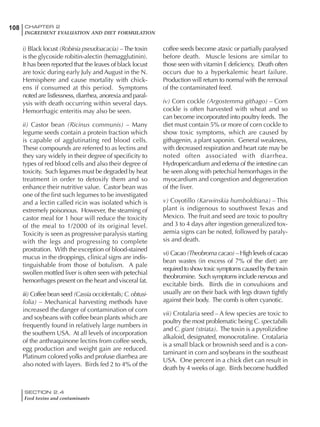
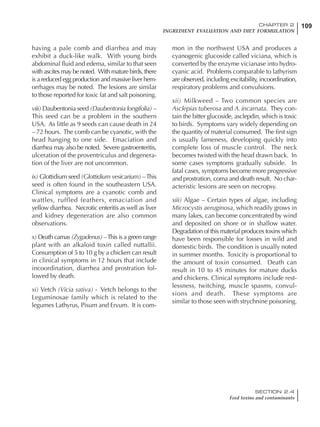
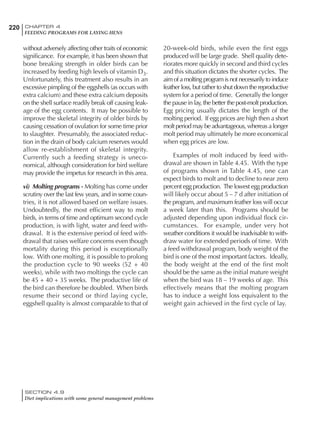
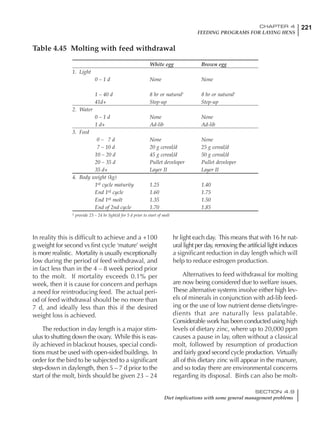
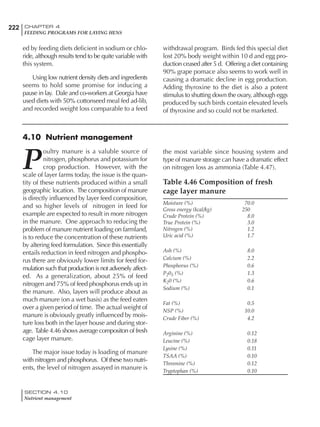
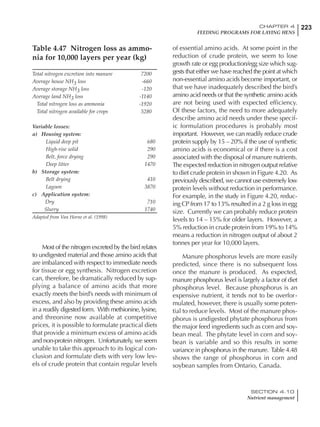
THIRD EDITION
by
STEVEN LEESON, Ph.D.
Professor of Animal Nutrition
and
JOHN D. SUMMERS, Ph.D.
Professor Emeritus
Department of Animal and Poultry Science
University of Guelph
Guelph, Ontario, Canada
PUBLISHED BY
UNIVERSITY BOOKS
P. O. Box 1326
Guelph, Ontario, Canada
N1H 6N8
Nottingham University Press
Manor Farm, Church Lane,
Thrumpton, Nottingham,
NG11 0AX, England
Commercial Poultry Nutrition, Third Edition
University Books
P.O. Box 1326
Guelph, Ontario
©2005 University Books
All rights reserved. No part of this publication may be reproducd, stored in a retrieval system,
or transmitted in any form by electronic, mechanical, photocopying or photographing or
otherwise, without the prior written permission of the publisher.
Canadian cataloguing in publication data
1. Poultry - Feeding and Nutrition 2. Birds 3. Nutrition
I Leeson, Steven, 1948, II Summers, John D. 1929.
ISBN 0-9695600-5-2
Digitally reprinted in 2008 from:
All rights reserved. No part of this publication
may be reproduced in any material form
(including photocopying or storing in any
medium by electronic means and whether or not
transiently or incidentally to some other use of
this publication) without the written permission
of the copyright holder except in accordance with
the provisions of the Copyright, Designs and
Patents Act 1988. Applications for the copyright
holder’s written permission to reproduce any part
of this publication should be addressed to the publishers.
British Library Cataloguing in Publication Data
Commercial Poultry Nutrition, Third Edition
I. Leeson, S., Summers, J.D.
ISBN 978-1-904761-78-5
Disclaimer
Every reasonable effort has been made to ensure that the material in this book is true, correct, complete and appropriate at the
time of writing. Nevertheless, the publishers and authors do not accept responsibility for any omission or error, or for any injury,
damage, loss or financial consequences arising from the use of the book.
PREFACE
The first edition of this book was published in 1991, while the second edition followed in
1997. It has been an interesting exercise to follow the development of poultry production over
this time, and to encapsulate ideas of associated changes in nutrition and feeding management.
For example, in 1991, the emphasis in broiler nutrition was on maximizing growth rate,
together with the new approach of considering breast meat yield. In 1997, the concept of
compensatory growth was emphasized, as a necessary management tool to control metabolic
disorders. In the intervening eight years, poultry geneticists have obviously reduced the
incidence of these disorders, and so we are once again considering rapid growth throughout
the entire grow-out period. It is such evolving circumstances within the industry that dictate
the need for periodic reappraisal of our feeding programs.
We have changed the layout of the book to accommodate a two-column presentation of
material. In response to reader requests, we have also included commercial data on the nutrient
requirements of layers, broilers and turkeys. This data is taken from Management Guides
available in early 2004. We realize that such information changes as bird genetics change.
The reader should always source the latest information available on a specific breed, from the
breeding company, and use this information, rather than that presented in this book as the
most accurate assessment of nutrients for a specific strain.
Many of the ideas in this book are based on work carried out in the Department of Animal
and Poultry Science at the University of Guelph. In this regard, we are indebted to the many
sponsors of our research program, and in particular, the on-going support of the Ontario
Ministry of Agriculture and Food, Guelph, Ontario.
Once again, we are indebted to the corporate sponsors of this book. Their names appear in
the front covers, while their company logos are displayed on the back cover. Their generous
support allows us to subsidize the cost of this book, and in so doing, hopefully allows us to
reach a wider audience.
Special thanks to Laurie Parr for her conscientious effort in typing the original version of the
book, and to Ford Papple of Papple Graphics for his assistance and ideas with the layout and
design. Thanks to Linda Caston for again proof reading numerous versions of the book, and
her attention to detail is much appreciated. Also thanks to Greg Hargreave, Baiada Poultry
for agreeing to proof read the final version. Greg’s constant reminder of the importance of
brown-egg layers is much appreciated.
Steven Leeson and John Summers
Guelph, 2005
PREFACE
The first edition of this book was published in 1991, while the second edition followed in
1997. It has been an interesting exercise to follow the development of poultry production over
this time, and to encapsulate ideas of associated changes in nutrition and feeding management.
For example, in 1991, the emphasis in broiler nutrition was on maximizing growth rate,
together with the new approach of considering breast meat yield. In 1997, the concept of
compensatory growth was emphasized, as a necessary management tool to control metabolic
disorders. In the intervening eight years, poultry geneticists have obviously reduced the
incidence of these disorders, and so we are once again considering rapid growth throughout
the entire grow-out period. It is such evolving circumstances within the industry that dictate
the need for periodic reappraisal of our feeding programs.
We have changed the layout of the book to accommodate a two-column presentation of
material. In response to reader requests, we have also included commercial data on the nutrient
requirements of layers, broilers and turkeys. This data is taken from Management Guides
available in early 2004. We realize that such information changes as bird genetics change.
The reader should always source the latest information available on a specific breed, from the
breeding company, and use this information, rather than that presented in this book as the
most accurate assessment of nutrients for a specific strain.
Many of the ideas in this book are based on work carried out in the Department of Animal
and Poultry Science at the University of Guelph. In this regard, we are indebted to the many
sponsors of our research program, and in particular, the on-going support of the Ontario
Ministry of Agriculture and Food, Guelph, Ontario.
Once again, we are indebted to the corporate sponsors of this book. Their names appear in
the front covers, while their company logos are displayed on the back cover. Their generous
support allows us to subsidize the cost of this book, and in so doing, hopefully allows us to
reach a wider audience.
Special thanks to Laurie Parr for her conscientious effort in typing the original version of the
book, and to Ford Papple of Papple Graphics for his assistance and ideas with the layout and
design. Thanks to Linda Caston for again proof reading numerous versions of the book, and
her attention to detail is much appreciated. Also thanks to Greg Hargreave, Baiada Poultry
for agreeing to proof read the final version. Greg’s constant reminder of the importance of
brown-egg layers is much appreciated.
Steven Leeson and John Summers
Guelph, 2005
SPONSORS
We are indebted to the following companies for their financial support which allowed us to subsidize
the cost of this publication.
ADM Animal Health Nutrition
4666 Faries Pkwy.
Decatur
IL 62526
U.S.A.
Alltech Inc.
3031 Catnip Hill Pike
Nicholasville, KY
40356 U.S.A.
Danisco Animal Nutrition
411 E. Gano
St. Louis
MO 63147
U.S.A.
DSM Nutrition Products Inc.
45 Waterview Blvd
Pursippany
NJ 07054-1298
U.S.A.
Hyline International
P.O. Box 65190
West Des Moines, IA 50265
U.S.A.
Novus International Inc.
530 Maryville Centre Dr.
St. Louis, MO
63141 U.S.A.
Provimi Holding B.V.
Veerlaan 17-23
NL-3072 AN Rotterdam
THE NETHERLANDS
Vetech Laboratories Inc.
131 Malcolm Road
Guelph, Ontario
N1K 1A8 CANADA
The publishers of the original version of this book are indebted to the following companies for their
financial support which allowed them to subsidize the cost of the original publication.
TABLE OF CONTENTS
CHAPTER 1 GLOBAL POULTRY PRODUCTION
CHAPTER 2 INGREDIENT EVALUATION AND DIET FORMULATION
CHAPTER 3 FEEDING PROGRAMS FOR GROWING EGG-STRAIN PULLETS
CHAPTER 4 FEEDING PROGRAMS FOR LAYING HENS
CHAPTER 5 FEEDING PROGRAMS FOR BROILER CHICKENS
CHAPTER 6 FEEDING PROGRAMS FOR BROILER BREEDERS
CHAPTER 7 FEEDING PROGRAMS FOR TURKEYS
CHAPTER 8 FEEDING PROGRAMS FOR DUCKS AND GEESE
CHAPTER 9 FEEDING PROGRAMS FOR GAME BIRDS, RATITES
AND PET BIRDS
APPENDIX - INGREDIENT COMPOSITION DATA
INDEX
1
SECTION 1.1
World Animal Production
GLOBAL POULTRY
PRODUCTION 1
1.1 World animal production . . . . . . . . . . . . . . . . . . . . . . . . . . . . . . . . . . . . . . . . . . . 1
1.2 Poultry meat production . . . . . . . . . . . . . . . . . . . . . . . . . . . . . . . . . . . . . . . . . . . 3
1.3 Egg production . . . . . . . . . . . . . . . . . . . . . . . . . . . . . . . . . . . . . . . . . . . . . . . . . . . 4
1.4 Future considerations for poultry production . . . . . . . . . . . . . . . . . . . . . . . . . . . 5
1.5 Global feed production . . . . . . . . . . . . . . . . . . . . . . . . . . . . . . . . . . . . . . . . . . . . 7
P
roduction of most farm animal species
has increased over the last 10 years,
and predictions are for this trend to
continue in the near future. Poultry has
seen the greatest increase in production
and again, this trend will likely continue. Both
poultry meat and eggs are well positioned to
meet demands for increased supply from
our growing world population. Prediction
of world populations is always subject to
adjustment, but it seems as though we will
have around 7 billion people to feed by
2008. However, an obvious trend occurring
is that this population is quickly aging and
also living in urban settings of ever increasing
size. Today almost 2% of the world’s pop-
ulation live in the 10 largest cities in the world,
and by 2008, we will likely have 20 cities with
populations in excess of 10 million people.
These large urban populations obviously
rely almost 100% on food supply from rural
areas. Traditionally such rural food supply
has been grown adjacent to the urban pop-
ulations, but this situation is becoming
increasingly more difficult as these urban
populations reach 10-15 million. National
and international movement of feed and
food will become critical to feeding these large
expanding populations. The population in
the developed world is predicted to change
little in the next 10 years, and so virtually all
growth will be in developing countries, and
especially in Africa and Asia. With its unpre-
dictable weather patterns, Africa has always
had difficulty feeding its growing population,
and with increased urbanization, this situa-
tion will only deteriorate.
In all countries, there is an aging of the
population, and it is predicted that the
proportion of people 60 years of age, will
double in the next 30 years. The purchasing
power of many such individuals may not be
adequate to sustain their usual diet supply.
Up to now, and in the near future, we have
been able to meet increased demands for food
through a combination of increased supply
coupled with improved production effi-
ciency. Such improvements in efficiency of
production will allow us to gradually upgrade
the general nutritional status of the world
population as a whole and it is evident that
Page
CHAPTER
1.1 World Animal Production
2 CHAPTER 1
GLOBAL POULTRY PRODUCTION
SECTION 1.1
World Animal Production
the poultry industry is playing a major role in this
important development. In the past, we have had
to face criticism of the energy used in animal
production and especially from the point of view
of the inefficiency of consuming animal vs. veg-
etable protein. Of the total energy used by most
developed countries, less than 4% is used for food
production. During this food production, by far
the greatest quantities of energy are used during
processing and household preparation to meet the
stringent demands of the consumer. Consequently,
of the 4% of energy used by the agrifood business,
only 18% (or 0.7% of total energy needs) is actu-
ally used in primary animal production. Increased
human consumption of vegetable proteins as an
alternative to meat and eggs has failed to mate-
rialize, essentially due to excessive energy use nec-
essary during manufacture, which is the same crit-
icism originally aimed at animal production.
The production of synthetic meat analogues is thus
very energy intensive, and their limited impact over
the last decade attests to problems with
economic viability and/or consumer acceptance.
With the economy of many third world countries
improving, there appears to be increased demand
for animal products and especially poultry meat
and eggs.
In developed countries, the current concerns
regarding meat and eggs are not lack of supply,
but rather wholesomeness and food safety. The
concern about genetic modification of plants and
animals quickly evolved in Europe, such that
currently their use is not allowed in food
production. Many plant species such as corn and
soybean meal are now routinely genetically
modified and used as ingredients in diets for
poultry and other animals in many countries.
Concern about using animal proteins in diets
for farm animals also arose in Europe following
the outbreak of BSE in the mid 1990’s. Europeans
are still uncertain about the health status of their
ruminant animals, and the ban on using products
such as meat meal continues. While it is
possible to formulate diets without meat meals,
it is more expensive, and does add a major
financial burden on most animal industries since
they have to find alternative means of disposal of
waste by-products.
It is impossible to produce meat or eggs
that are guaranteed to be free of pathogens. A
non-tolerance scenario for organisms such as
salmonella is untenable, and any such regulations
are unrealistic. Certainly there will be increased
emphasis on pathogen reduction, and both the
poultry meat and egg industries have made
significant progress with programs such as
HACCP at processing plants, feed mills and
poultry farms. Feed is one potential route of entry
for pathogens into meat and eggs, and so for-
mulation will have to be modified, or alternate
additives used, to try to reduce pathogen load
of feed to acceptable levels of tolerance. Feed
processing is now viewed with an aim to
pathogen control, in addition to concerns about
feed intake and bird growth. There will undoubt-
edly be reduced emphasis on antibiotic growth
promoters as are now commonly used in broiler
and turkey production and this situation adds even
more demand on feed pathogen control programs.
On a more positive note, the production of
so-called designer foods continues to increase;
with the best example being omega-3 enriched
eggs. It is simple to modify the fat-soluble
nutrient profile of meat and eggs, and so there
will be an increased demand, within niche
markets, for food products modified in relation
to improved human nutrition.
3CHAPTER 1
GLOBAL POULTRY PRODUCTION
SECTION 1.2
Poultry meat production
T
he broiler chicken industry has shown
unparalleled growth over the last 30
years, although there are now signs of a
maturing market in many countries. The
industry is relatively easy to establish and while
there are regional differences, production systems
in most countries are modeled in a similar
manner. Because of the increased growth poten-
tial in modern strains of broiler, it is now realized
that some degree of environmental control is
essential. Such systems can be full environ-
mental control through to curtain sided houses
in tropical countries. Even with the latter, cheaper
type housing, it seems essential to ensure adequate
air movement and so tunnel ventilation has
become popular over the last 10 years. Optimum
growth rate cannot be achieved much beyond the
range of 15-30ºC and so the ventilation systems
are designed to hopefully maintain the birds’
environment within this temperature range.
Chicken is usually the least expensive meat
in most countries and consequently it is first or
second for per capita consumption. This com-
petitive situation has occurred due to continued
improvements in efficiency of production that often
necessitate acceptance of new ideas and inno-
vations by poultry producers and agribusiness.
On the other hand, production systems for com-
peting meat products have shown little change
over the last two decades. Interestingly, the
swine industry is now starting to use ‘poultry’
models in production systems.
Much of the success of the chicken meat
industry relates to development of new consumer
products, largely because of continued advances
in further processing. The most successful single
product is undoubtedly the ‘chicken nugget’, now
featured by most fast food and retail outlets. Over
the last 10 years, some 30,000 non-chicken
fast-food outlets in North America have added
chicken products to their menu, and during
special advertising campaigns, chicken products
can be the leading sales item over such
conventional products as hamburgers. So-
called ‘fast-food’ stores are increasing in number
in Europe, in Asia and in South America, and
this will likely lead to increased demand for
chicken. In addition to developing new uses for
conventional parts of the chicken and turkey
carcass, the industry has also been successful in
developing technology to use its own ‘by-
products’ and then finding markets for these
(or vice versa). The demand for chicken wings
and chicken feet together with mechanically
deboned meat exemplify these types of products.
In addition to increasing overall poultry meat
consumption, these products also lead to
improved overall efficiency of production and
help maintain the economic advantage seen
with poultry meat.
Poultry meat is also ideally suited in terms of
meeting demands for leaner meat by health
conscious consumers. There has been consid-
erable publicity over the last few years con-
cerning the relative fat content of various meats,
yet the fact remains that when comparisons are
conducted on comparable products, poultry
meat is the leanest product. Comparison of a
highly trimmed steak or pork chop vs. a whole
broiler carcass certainly reduces the advantage
usually seen with poultry. However, the valid
comparison is trimmed steak vs. poultry breast
fillet, in which case the poultry product is by far
the leanest. Broiler chicken and especially
turkey are therefore ideal products for segments
of the food industry wishing to provide low-fat
meals. Poultry meat also has the almost unique
advantage of not being discriminated against due
to religious or cultural beliefs, making poultry prod-
ucts popular with airlines, hotels, institutions, etc.
1.2 Poultry Meat Production
4 CHAPTER 1
GLOBAL POULTRY PRODUCTION
SECTION 1.3
Egg production
The poultry meat industry has come under
recent scrutiny regarding the use of growth
promoters in the feed. When these are removed
from diets, broilers most frequently develop
necrotic enteritis and coccidiosis, and so their
main mode of action seems to be control over
clostridial infection. When growth promoters are
not used in the feed, then alternate strategies such
as competitive exclusion, water acidification, man-
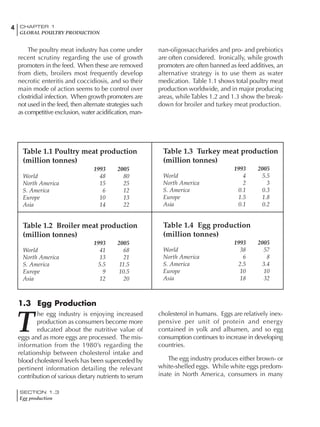
Table 1.1 Poultry meat production
(million tonnes)
1993 2005
World 48 80
North America 15 25
S. America 6 12
Europe 10 13
Asia 14 22
Table 1.2 Broiler meat production
(million tonnes)
1993 2005
World 41 68
North America 13 21
S. America 5.5 11.5
Europe 9 10.5
Asia 12 20
Table 1.3 Turkey meat production
(million tonnes)
1993 2005
World 4 5.5
North America 2 3
S. America 0.1 0.3
Europe 1.5 1.8
Asia 0.1 0.2
Table 1.4 Egg production
(million tonnes)
1993 2005
World 38 57
North America 6 8
S. America 2.5 3.4
Europe 10 10
Asia 18 32
1.3 Egg Production
T
he egg industry is enjoying increased
production as consumers become more
educated about the nutritive value of
eggs and as more eggs are processed. The mis-
information from the 1980’s regarding the
relationship between cholesterol intake and
blood cholesterol levels has been superceded by
pertinent information detailing the relevant
contribution of various dietary nutrients to serum
nan-oligossaccharides and pro- and prebiotics
are often considered. Ironically, while growth
promoters are often banned as feed additives, an
alternative strategy is to use them as water
medication. Table 1.1 shows total poultry meat
production worldwide, and in major producing
areas, whileTables 1.2 and 1.3 show the break-
down for broiler and turkey meat production.
cholesterol in humans. Eggs are relatively inex-
pensive per unit of protein and energy
contained in yolk and albumen, and so egg
consumption continues to increase in developing
countries.
The egg industry produces either brown- or
white-shelled eggs. While white eggs predom-
inate in North America, consumers in many
5CHAPTER 1
GLOBAL POULTRY PRODUCTION
SECTION 1.4
Future considerations for poultry production
5
countries demand a brown egg. Unfortunately,
such demand is based on the naive view that
brown-shelled eggs are more nutritious or whole-
some. In developing countries, this myth is
compounded with the demand for a highly
pigmented yolk, and both of those factors add
to the cost of production. North America has also
seen great success in production of designer eggs,
since some 5% of shell eggs are now enriched
with nutrients such as omega-3 fatty acids and
vitamin E. This profitable segment of the egg
industry has not merely displaced demand for
normal eggs, but rather has created a genuine
increased demand for eggs and egg products.
In North America, the most dynamic segment
of the egg industry relates to processing and
further processing of eggs, paralleling the
success seen in the poultry meat industry. By 2008,
it is estimated that at least 50% of eggs in North
America will be processed in some way or
expressed in an alternate way, only 50% of
eggs will be marketed in the shell. Expansion of
egg processing is raising new challenges to pro-
duction, where for instance egg mass is much more
important than egg size per se, and where shell
quality is of lesser importance. It is likely that
the white-egg strains will be developed for the
processing industry, while brown-shelled strains
will be selected for characteristics important
for the shell egg market. Disposal of the end-of-
lay bird is becoming more difficult in many
regions and so it seems important to develop new
food products from this potentially valuable
resource. Converting spent fowl into animal feed
ingredients and especially for layer feed seems
a very shortsighted approach in terms of consumer
perception. Table 1.4 shows global and region-
al egg production.
1.4 Future Considerations for Poultry Nutrition
O
ver the last 20 years, developments in
poultry nutrition have paralleled, or
made possible, increased productivity
of the various poultry industries. As production
conditions and goals have changed, we have been
able to revise our estimates of nutrient require-
ments. Greater variation in production goals has
imposed some degree of complication to
feeding programs, because ‘global’ recom-
mendations are now often not applicable. The
future emphasis in poultry nutrition must be
the development of life-cycle feeding programs
for various classes of birds, rather than consid-
eration of individual diets in isolation.
Unfortunately, there is still a dearth of research
information that views recommendations
within the context of an overall program. With
the sophistication we have today in our production
systems, birds seldom fully recover from
inappropriate nutrient intake at any time in
their production cycle.
Because feed still represents 60 – 70% of the
cost of production of most poultry products,
there is a continual need to evaluate new or
different sources of ingredients and to continu-
ally re-examine the more common ingredients.
A yearly review of the published research data
indicates that ingredient evaluation occupies the
major portion of practical poultry nutrition
research, and feed manufacturers should be
aware of the potential of such new ingredients.
Often, so-called new ingredients are not new in
the sense of being novel to poultry feeding per
se, rather they have not been as seriously con-
sidered in a particular geographical location. A
6 CHAPTER 1
GLOBAL POULTRY PRODUCTION
SECTION 1.4
Future considerations for poultry production
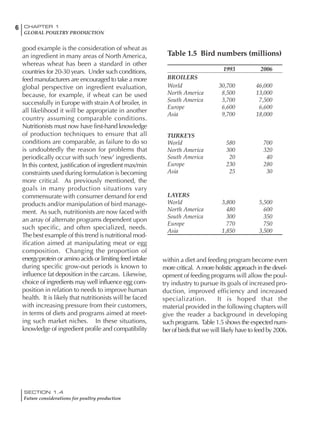
Table 1.5 Bird numbers (millions)
1993 2006
BROILERS
World 30,700 46,000
North America 8,500 13,000
South America 3,700 7,500
Europe 6,600 6,600
Asia 9,700 18,000
TURKEYS
World 580 700
North America 300 320
South America 20 40
Europe 230 280
Asia 25 30
LAYERS
World 3,800 5,500
North America 480 600
South America 300 350
Europe 770 750
Asia 1,850 3,500
good example is the consideration of wheat as
an ingredient in many areas of North America,
whereas wheat has been a standard in other
countries for 20-30 years. Under such conditions,
feed manufacturers are encouraged to take a more
global perspective on ingredient evaluation,
because, for example, if wheat can be used
successfully in Europe with strain A of broiler, in
all likelihood it will be appropriate in another
country assuming comparable conditions.
Nutritionists must now have first-hand knowledge
of production techniques to ensure that all
conditions are comparable, as failure to do so
is undoubtedly the reason for problems that
periodically occur with such ‘new’ ingredients.
In this context, justification of ingredient max/min
constraints used during formulation is becoming
more critical. As previously mentioned, the
goals in many production situations vary
commensurate with consumer demand for end
products and/or manipulation of bird manage-
ment. As such, nutritionists are now faced with
an array of alternate programs dependent upon
such specific, and often specialized, needs.
The best example of this trend is nutritional mod-
ification aimed at manipulating meat or egg
composition. Changing the proportion of
energy:protein or amino acids or limiting feed intake
during specific grow-out periods is known to
influence fat deposition in the carcass. Likewise,
choice of ingredients may well influence egg com-
position in relation to needs to improve human
health. It is likely that nutritionists will be faced
with increasing pressure from their customers,
in terms of diets and programs aimed at meet-
ing such market niches. In these situations,
knowledge of ingredient profile and compatibility
within a diet and feeding program become even
more critical. A more holistic approach in the devel-
opment of feeding programs will allow the poul-
try industry to pursue its goals of increased pro-
duction, improved efficiency and increased
specialization. It is hoped that the
material provided in the following chapters will
give the reader a background in developing
such programs. Table 1.5 shows the expected num-
ber of birds that we will likely have to feed by 2006.
7CHAPTER 1
GLOBAL POULTRY PRODUCTION
SECTION 1.5
Global feed production
7
T
he poultry industry accounts for 20–40%
of animal feed use in most countries,
and this proportion is invariably increas-
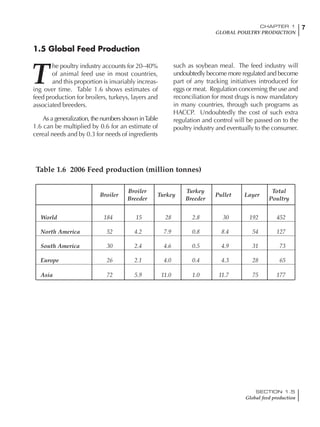
ing over time. Table 1.6 shows estimates of
feed production for broilers, turkeys, layers and
associated breeders.
As a generalization, the numbers shown inTable
1.6 can be multiplied by 0.6 for an estimate of
cereal needs and by 0.3 for needs of ingredients
such as soybean meal. The feed industry will
undoubtedly become more regulated and become
part of any tracking initiatives introduced for
eggs or meat. Regulation concerning the use and
reconciliation for most drugs is now mandatory
in many countries, through such programs as
HACCP. Undoubtedly the cost of such extra
regulation and control will be passed on to the
poultry industry and eventually to the consumer.
1.5 Global Feed Production
Table 1.6 2006 Feed production (million tonnes)
Broiler Turkey Total
Broiler Turkey Pullet Layer
Breeder Breeder Poultry
World 184 15 28 2.8 30 192 452
North America 52 4.2 7.9 0.8 8.4 54 127
South America 30 2.4 4.6 0.5 4.9 31 73
Europe 26 2.1 4.0 0.4 4.3 28 65
Asia 72 5.9 11.0 1.0 11.7 75 177
8
9
INGREDIENT
EVALUATION AND
DIET FORMULATION
2
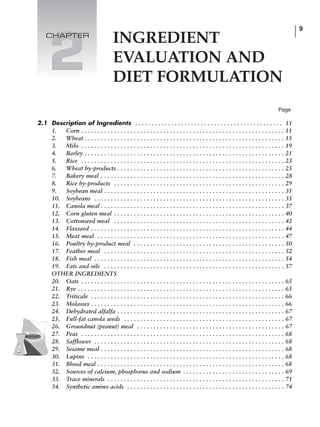
2.1 Description of Ingredients . . . . . . . . . . . . . . . . . . . . . . . . . . . . . . . . . . . . . . . . . . . . . 11
1. Corn . . . . . . . . . . . . . . . . . . . . . . . . . . . . . . . . . . . . . . . . . . . . . . . . . . . . . . . . . . . . . . 11
2. Wheat . . . . . . . . . . . . . . . . . . . . . . . . . . . . . . . . . . . . . . . . . . . . . . . . . . . . . . . . . . . . . 15
3. Milo . . . . . . . . . . . . . . . . . . . . . . . . . . . . . . . . . . . . . . . . . . . . . . . . . . . . . . . . . . . . . . 19
4. Barley . . . . . . . . . . . . . . . . . . . . . . . . . . . . . . . . . . . . . . . . . . . . . . . . . . . . . . . . . . . . . 21
5. Rice . . . . . . . . . . . . . . . . . . . . . . . . . . . . . . . . . . . . . . . . . . . . . . . . . . . . . . . . . . . . . . 23
6. Wheat by-products . . . . . . . . . . . . . . . . . . . . . . . . . . . . . . . . . . . . . . . . . . . . . . . . . . . 25
7. Bakery meal . . . . . . . . . . . . . . . . . . . . . . . . . . . . . . . . . . . . . . . . . . . . . . . . . . . . . . . . 28
8. Rice by-products . . . . . . . . . . . . . . . . . . . . . . . . . . . . . . . . . . . . . . . . . . . . . . . . . . . . 29
9. Soybean meal . . . . . . . . . . . . . . . . . . . . . . . . . . . . . . . . . . . . . . . . . . . . . . . . . . . . . . . 31
10. Soybeans . . . . . . . . . . . . . . . . . . . . . . . . . . . . . . . . . . . . . . . . . . . . . . . . . . . . . . . . . . 35
11. Canola meal . . . . . . . . . . . . . . . . . . . . . . . . . . . . . . . . . . . . . . . . . . . . . . . . . . . . . . . . 37
12. Corn gluten meal . . . . . . . . . . . . . . . . . . . . . . . . . . . . . . . . . . . . . . . . . . . . . . . . . . . . 40
13. Cottonseed meal . . . . . . . . . . . . . . . . . . . . . . . . . . . . . . . . . . . . . . . . . . . . . . . . . . . . 42
14. Flaxseed . . . . . . . . . . . . . . . . . . . . . . . . . . . . . . . . . . . . . . . . . . . . . . . . . . . . . . . . . . . 44
15. Meat meal . . . . . . . . . . . . . . . . . . . . . . . . . . . . . . . . . . . . . . . . . . . . . . . . . . . . . . . . . 47
16. Poultry by-product meal . . . . . . . . . . . . . . . . . . . . . . . . . . . . . . . . . . . . . . . . . . . . . . 50
17. Feather meal . . . . . . . . . . . . . . . . . . . . . . . . . . . . . . . . . . . . . . . . . . . . . . . . . . . . . . . 52
18. Fish meal . . . . . . . . . . . . . . . . . . . . . . . . . . . . . . . . . . . . . . . . . . . . . . . . . . . . . . . . . . 54
19. Fats and oils . . . . . . . . . . . . . . . . . . . . . . . . . . . . . . . . . . . . . . . . . . . . . . . . . . . . . . . 57
OTHER INGREDIENTS
20. Oats . . . . . . . . . . . . . . . . . . . . . . . . . . . . . . . . . . . . . . . . . . . . . . . . . . . . . . . . . . . . . . 65
21. Rye . . . . . . . . . . . . . . . . . . . . . . . . . . . . . . . . . . . . . . . . . . . . . . . . . . . . . . . . . . . . . . . 65
22. Triticale . . . . . . . . . . . . . . . . . . . . . . . . . . . . . . . . . . . . . . . . . . . . . . . . . . . . . . . . . . . 66
23. Molasses . . . . . . . . . . . . . . . . . . . . . . . . . . . . . . . . . . . . . . . . . . . . . . . . . . . . . . . . . . . 66
24. Dehydrated alfalfa . . . . . . . . . . . . . . . . . . . . . . . . . . . . . . . . . . . . . . . . . . . . . . . . . . . 67
25. Full-fat canola seeds . . . . . . . . . . . . . . . . . . . . . . . . . . . . . . . . . . . . . . . . . . . . . . . . . 67
26. Groundnut (peanut) meal . . . . . . . . . . . . . . . . . . . . . . . . . . . . . . . . . . . . . . . . . . . . . 67
27. Peas . . . . . . . . . . . . . . . . . . . . . . . . . . . . . . . . . . . . . . . . . . . . . . . . . . . . . . . . . . . . . . 68
28. Safflower . . . . . . . . . . . . . . . . . . . . . . . . . . . . . . . . . . . . . . . . . . . . . . . . . . . . . . . . . . 68
29. Sesame meal . . . . . . . . . . . . . . . . . . . . . . . . . . . . . . . . . . . . . . . . . . . . . . . . . . . . . . . . 68
30. Lupins . . . . . . . . . . . . . . . . . . . . . . . . . . . . . . . . . . . . . . . . . . . . . . . . . . . . . . . . . . . . 68
31. Blood meal . . . . . . . . . . . . . . . . . . . . . . . . . . . . . . . . . . . . . . . . . . . . . . . . . . . . . . . . . 68
32. Sources of calcium, phosphorus and sodium . . . . . . . . . . . . . . . . . . . . . . . . . . . . . . . 69
33. Trace minerals . . . . . . . . . . . . . . . . . . . . . . . . . . . . . . . . . . . . . . . . . . . . . . . . . . . . . . 71
34. Synthetic amino acids . . . . . . . . . . . . . . . . . . . . . . . . . . . . . . . . . . . . . . . . . . . . . . . . 74
Page
CHAPTER
10 CHAPTER 2
INGREDIENT EVALUATION AND DIET FORMULATION
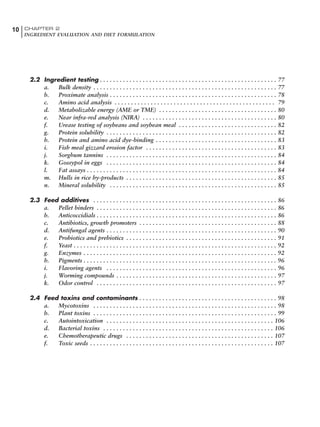
2.2 Ingredient testing . . . . . . . . . . . . . . . . . . . . . . . . . . . . . . . . . . . . . . . . . . . . . . . . . . . . . . 77
a. Bulk density . . . . . . . . . . . . . . . . . . . . . . . . . . . . . . . . . . . . . . . . . . . . . . . . . . . . . . . . 77
b. Proximate analysis . . . . . . . . . . . . . . . . . . . . . . . . . . . . . . . . . . . . . . . . . . . . . . . . . . . 78
c. Amino acid analysis . . . . . . . . . . . . . . . . . . . . . . . . . . . . . . . . . . . . . . . . . . . . . . . . . 79
d. Metabolizable energy (AME or TME) . . . . . . . . . . . . . . . . . . . . . . . . . . . . . . . . . . . . 80
e. Near infra-red analysis (NIRA) . . . . . . . . . . . . . . . . . . . . . . . . . . . . . . . . . . . . . . . . . 80
f. Urease testing of soybeans and soybean meal . . . . . . . . . . . . . . . . . . . . . . . . . . . . . . 82
g. Protein solubility . . . . . . . . . . . . . . . . . . . . . . . . . . . . . . . . . . . . . . . . . . . . . . . . . . . . 82
h. Protein and amino acid dye-binding . . . . . . . . . . . . . . . . . . . . . . . . . . . . . . . . . . . . . 83
i. Fish meal gizzard erosion factor . . . . . . . . . . . . . . . . . . . . . . . . . . . . . . . . . . . . . . . . 83
j. Sorghum tannins . . . . . . . . . . . . . . . . . . . . . . . . . . . . . . . . . . . . . . . . . . . . . . . . . . . . 84
k. Gossypol in eggs . . . . . . . . . . . . . . . . . . . . . . . . . . . . . . . . . . . . . . . . . . . . . . . . . . . . 84
l. Fat assays . . . . . . . . . . . . . . . . . . . . . . . . . . . . . . . . . . . . . . . . . . . . . . . . . . . . . . . . . . 84
m. Hulls in rice by-products . . . . . . . . . . . . . . . . . . . . . . . . . . . . . . . . . . . . . . . . . . . . . . 85
n. Mineral solubility . . . . . . . . . . . . . . . . . . . . . . . . . . . . . . . . . . . . . . . . . . . . . . . . . . . 85
2.3 Feed additives . . . . . . . . . . . . . . . . . . . . . . . . . . . . . . . . . . . . . . . . . . . . . . . . . . . . . . . . 86
a. Pellet binders . . . . . . . . . . . . . . . . . . . . . . . . . . . . . . . . . . . . . . . . . . . . . . . . . . . . . . . 86
b. Anticoccidials . . . . . . . . . . . . . . . . . . . . . . . . . . . . . . . . . . . . . . . . . . . . . . . . . . . . . . . 86
c. Antibiotics, growth promoters . . . . . . . . . . . . . . . . . . . . . . . . . . . . . . . . . . . . . . . . . . 88
d. Antifungal agents . . . . . . . . . . . . . . . . . . . . . . . . . . . . . . . . . . . . . . . . . . . . . . . . . . . . 90
e. Probiotics and prebiotics . . . . . . . . . . . . . . . . . . . . . . . . . . . . . . . . . . . . . . . . . . . . . . 91
f. Yeast . . . . . . . . . . . . . . . . . . . . . . . . . . . . . . . . . . . . . . . . . . . . . . . . . . . . . . . . . . . . . . 92
g. Enzymes . . . . . . . . . . . . . . . . . . . . . . . . . . . . . . . . . . . . . . . . . . . . . . . . . . . . . . . . . . . 92
h. Pigments . . . . . . . . . . . . . . . . . . . . . . . . . . . . . . . . . . . . . . . . . . . . . . . . . . . . . . . . . . . 96
i. Flavoring agents . . . . . . . . . . . . . . . . . . . . . . . . . . . . . . . . . . . . . . . . . . . . . . . . . . . . 96
j. Worming compounds . . . . . . . . . . . . . . . . . . . . . . . . . . . . . . . . . . . . . . . . . . . . . . . . . 97
k. Odor control . . . . . . . . . . . . . . . . . . . . . . . . . . . . . . . . . . . . . . . . . . . . . . . . . . . . . . . 97
2.4 Feed toxins and contaminants . . . . . . . . . . . . . . . . . . . . . . . . . . . . . . . . . . . . . . . . . . 98
a. Mycotoxins . . . . . . . . . . . . . . . . . . . . . . . . . . . . . . . . . . . . . . . . . . . . . . . . . . . . . . . . 98
b. Plant toxins . . . . . . . . . . . . . . . . . . . . . . . . . . . . . . . . . . . . . . . . . . . . . . . . . . . . . . . . 99
c. Autointoxication . . . . . . . . . . . . . . . . . . . . . . . . . . . . . . . . . . . . . . . . . . . . . . . . . . . 106
d. Bacterial toxins . . . . . . . . . . . . . . . . . . . . . . . . . . . . . . . . . . . . . . . . . . . . . . . . . . . . 106
e. Chemotherapeutic drugs . . . . . . . . . . . . . . . . . . . . . . . . . . . . . . . . . . . . . . . . . . . . . 107
f. Toxic seeds . . . . . . . . . . . . . . . . . . . . . . . . . . . . . . . . . . . . . . . . . . . . . . . . . . . . . . . . 107
11CHAPTER 2
INGREDIENT EVALUATION AND DIET FORMULATION
SECTION 2.1
Description of ingredients
11CHAPTER 2
INGREDIENT EVALUATION AND DIET FORMULATION
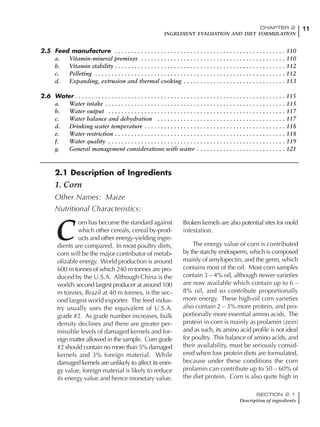
2.5 Feed manufacture . . . . . . . . . . . . . . . . . . . . . . . . . . . . . . . . . . . . . . . . . . . . . . . . . . . . 110
a. Vitamin-mineral premixes . . . . . . . . . . . . . . . . . . . . . . . . . . . . . . . . . . . . . . . . . . . . 110
b. Vitamin stability . . . . . . . . . . . . . . . . . . . . . . . . . . . . . . . . . . . . . . . . . . . . . . . . . . . . 112
c. Pelleting . . . . . . . . . . . . . . . . . . . . . . . . . . . . . . . . . . . . . . . . . . . . . . . . . . . . . . . . . . 112
d. Expanding, extrusion and thermal cooking . . . . . . . . . . . . . . . . . . . . . . . . . . . . . . . 113
2.6 Water . . . . . . . . . . . . . . . . . . . . . . . . . . . . . . . . . . . . . . . . . . . . . . . . . . . . . . . . . . . . . . . . 115
a. Water intake . . . . . . . . . . . . . . . . . . . . . . . . . . . . . . . . . . . . . . . . . . . . . . . . . . . . . . . 115
b. Water output . . . . . . . . . . . . . . . . . . . . . . . . . . . . . . . . . . . . . . . . . . . . . . . . . . . . . . 117
c. Water balance and dehydration . . . . . . . . . . . . . . . . . . . . . . . . . . . . . . . . . . . . . . . 117
d. Drinking water temperature . . . . . . . . . . . . . . . . . . . . . . . . . . . . . . . . . . . . . . . . . . . 118
e. Water restriction . . . . . . . . . . . . . . . . . . . . . . . . . . . . . . . . . . . . . . . . . . . . . . . . . . . . 118
f. Water quality . . . . . . . . . . . . . . . . . . . . . . . . . . . . . . . . . . . . . . . . . . . . . . . . . . . . . . 119
g. General management considerations with water . . . . . . . . . . . . . . . . . . . . . . . . . . . 121
C
orn has become the standard against
which other cereals, cereal by-prod-
ucts and other energy-yielding ingre-
dients are compared. In most poultry diets,
corn will be the major contributor of metab-
olizable energy. World production is around
600 m tonnes of which 240 m tonnes are pro-
duced by the U.S.A. Although China is the
world’s second largest producer at around 100
m tonnes, Brazil at 40 m tonnes, is the sec-
ond largest world exporter. The feed indus-
try usually uses the equivalent of U.S.A.
grade #2. As grade number increases, bulk
density declines and there are greater per-
missible levels of damaged kernels and for-
eign matter allowed in the sample. Corn grade
#2 should contain no more than 5% damaged
kernels and 3% foreign material. While
damaged kernels are unlikely to affect its ener-
gy value, foreign material is likely to reduce
its energy value and hence monetary value.
Broken kernels are also potential sites for mold
infestation.
The energy value of corn is contributed
by the starchy endosperm, which is composed
mainly of amylopectin, and the germ, which
contains most of the oil. Most corn samples
contain 3 – 4% oil, although newer varieties
are now available which contain up to 6 –
8% oil, and so contribute proportionally
more energy. These high-oil corn varieties
also contain 2 – 3% more protein, and pro-
portionally more essential amino acids. The
protein in corn is mainly as prolamin (zein)
and as such, its amino acid profile is not ideal
for poultry. This balance of amino acids, and
their availability, must be seriously consid-
ered when low protein diets are formulated,
because under these conditions the corn
prolamin can contribute up to 50 – 60% of
the diet protein. Corn is also quite high in
2.1 Description of Ingredients
1. Corn
Other Names: Maize
Nutritional Characteristics:
SECTION 2.1
Description of ingredients
12 CHAPTER 2
INGREDIENT EVALUATION AND DIET FORMULATION
the yellow/orange pigments, usually containing
around 5 ppm xanthophylls and 0.5 ppm
carotenes. These pigments ensure that corn-fed
birds will have a high degree of pigments in their
body fat and in egg yolks.
While #2 grade is the standard for animal feeds,
lower grades are often available due to adverse
growing, harvesting or storage conditions.
Dependent upon the reason for lower grade, the
feeding value of corn usually declines with
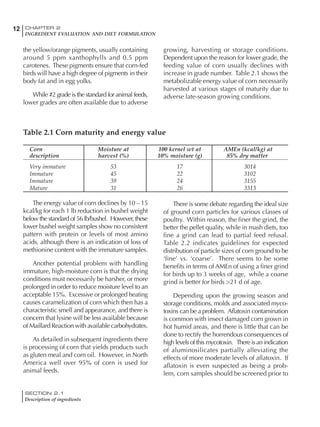
increase in grade number. Table 2.1 shows the
metabolizable energy value of corn necessarily
harvested at various stages of maturity due to
adverse late-season growing conditions.
Corn Moisture at 100 kernel wt at AMEn (kcal/kg) at
description harvest (%) 10% moisture (g) 85% dry matter
Very immature 53 17 3014
Immature 45 22 3102
Immature 39 24 3155
Mature 31 26 3313
The energy value of corn declines by 10 – 15
kcal/kg for each 1 lb reduction in bushel weight
below the standard of 56 lb/bushel. However, these
lower bushel weight samples show no consistent
pattern with protein or levels of most amino
acids, although there is an indication of loss of
methionine content with the immature samples.
Another potential problem with handling
immature, high-moisture corn is that the drying
conditions must necessarily be harsher, or more
prolonged in order to reduce moisture level to an
acceptable 15%. Excessive or prolonged heating
causes caramelization of corn which then has a
characteristic smell and appearance, and there is
concern that lysine will be less available because
of Maillard Reaction with available carbohydrates.
As detailed in subsequent ingredients there
is processing of corn that yields products such
as gluten meal and corn oil. However, in North
America well over 95% of corn is used for
animal feeds.
There is some debate regarding the ideal size
of ground corn particles for various classes of
poultry. Within reason, the finer the grind, the
better the pellet quality, while in mash diets, too
fine a grind can lead to partial feed refusal.
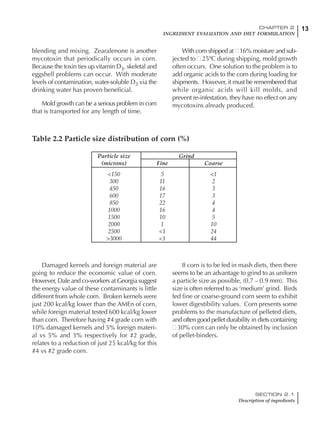
Table 2.2 indicates guidelines for expected
distribution of particle sizes of corn ground to be
‘fine’ vs. ‘coarse’. There seems to be some
benefits in terms of AMEn of using a finer grind
for birds up to 3 weeks of age, while a coarse
grind is better for birds >21 d of age.
Depending upon the growing season and
storage conditions, molds and associated myco-
toxins can be a problem. Aflatoxin contamination
is common with insect damaged corn grown in
hot humid areas, and there is little that can be
done to rectify the horrendous consequences of
high levels of this mycotoxin. There is an indication
of aluminosilicates partially alleviating the
effects of more moderate levels of aflatoxin. If
aflatoxin is even suspected as being a prob-
lem, corn samples should be screened prior to
Table 2.1 Corn maturity and energy value
13CHAPTER 2
INGREDIENT EVALUATION AND DIET FORMULATION
SECTION 2.1
Description of ingredients
13
blending and mixing. Zearalenone is another
mycotoxin that periodically occurs in corn.
Because the toxin ties up vitamin D3, skeletal and
eggshell problems can occur. With moderate
levels of contamination, water-soluble D3 via the
drinking water has proven beneficial.
Mold growth can be a serious problem in corn
that is transported for any length of time.
Damaged kernels and foreign material are
going to reduce the economic value of corn.
However, Dale and co-workers at Georgia suggest
the energy value of these contaminants is little
different from whole corn. Broken kernels were
just 200 kcal/kg lower than the AMEn of corn,
while foreign material tested 600 kcal/kg lower
than corn. Therefore having #4 grade corn with
10% damaged kernels and 5% foreign materi-
al vs 5% and 3% respectively for #2 grade,
relates to a reduction of just 25 kcal/kg for this
#4 vs #2 grade corn.
If corn is to be fed in mash diets, then there
seems to be an advantage to grind to as uniform
a particle size as possible, (0.7 – 0.9 mm). This
size is often referred to as ‘medium’ grind. Birds
fed fine or coarse-ground corn seem to exhibit
lower digestibility values. Corn presents some
problems to the manufacture of pelleted diets,
and often good pellet durability in diets containing
30% corn can only be obtained by inclusion
of pellet-binders.
With corn shipped at 16% moisture and sub-
jected to 25ºC during shipping, mold growth
often occurs. One solution to the problem is to
add organic acids to the corn during loading for
shipments. However, it must be remembered that
while organic acids will kill molds, and
prevent re-infestation, they have no effect on any
mycotoxins already produced.
Particle size Grind
(microns) Fine Coarse
<150 5 <1
300 11 2
450 16 3
600 17 3
850 22 4
1000 16 4
1500 10 5
2000 1 10
2500 <1 24
>3000 <1 44
Table 2.2 Particle size distribution of corn (%)
SECTION 2.1
Description of ingredients
14 CHAPTER 2
INGREDIENT EVALUATION AND DIET FORMULATION
Dry Matter 85.0 Methionine 0.20
Crude Protein 8.5 Methionine + Cystine 0.31
Metabolizable Energy: Lysine 0.20
(kcal/kg) 3330 Tryptophan 0.10
(MJ/kg) 13.80 Threonine 0.41
Calcium 0.01 Arginine 0.39
Av. Phosphorus 0.13
Sodium 0.05 Dig Methionine 0.18
Chloride 0.05 Dig Meth + Cys 0.27
Potassium 0.38 Dig Lysine 0.16
Selenium (ppm) 0.04 Dig Tryptophan 0.07
Fat 3.8 Dig Threonine 0.33
Linoleic acid 1.9 Dig Arginine 0.35
Crude Fiber 2.5
Nutrient Profile: (%)
Bulk Density:
Formulation Constraints:
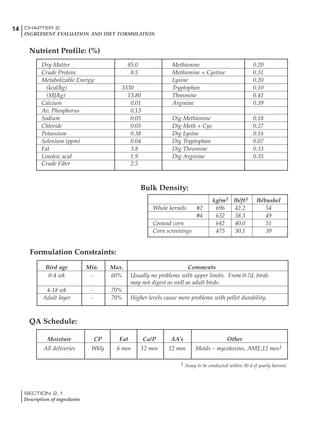
kg/m3 lb/ft3 lb/bushel
Whole kernels #2 696 42.2 54
#4 632 38.3 49
Ground corn 642 40.0 51
Corn screenings 475 30.1 39
Bird age Min. Max. Comments
0-4 wk - 60% Usually no problems with upper limits. From 0-7d, birds
may not digest as well as adult birds.
4-18 wk - 70%
Adult layer - 70% Higher levels cause more problems with pellet durability.
Moisture CP Fat Ca/P AA’s Other
All deliveries Wkly 6 mos 12 mos 12 mos Molds – mycotoxins, AME,12 mos1
1 Assay to be conducted within 30 d of yearly harvest.
QA Schedule:
15CHAPTER 2
INGREDIENT EVALUATION AND DIET FORMULATION
SECTION 2.1
Description of ingredients
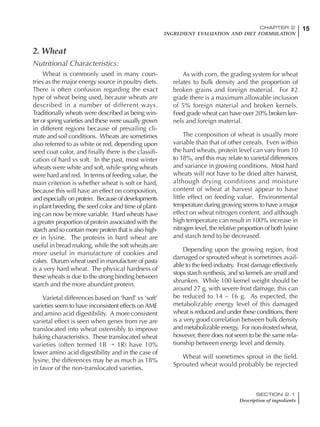
2. Wheat
Nutritional Characteristics:
Wheat is commonly used in many coun-
tries as the major energy source in poultry diets.
There is often confusion regarding the exact
type of wheat being used, because wheats are
described in a number of different ways.
Traditionally wheats were described as being win-
ter or spring varieties and these were usually grown
in different regions because of prevailing cli-
mate and soil conditions. Wheats are sometimes
also referred to as white or red, depending upon
seed coat color, and finally there is the classifi-
cation of hard vs soft. In the past, most winter
wheats were white and soft, while spring wheats
were hard and red. In terms of feeding value, the
main criterion is whether wheat is soft or hard,
because this will have an effect on composition,
and especially on protein. Because of developments
in plant breeding, the seed color and time of plant-
ing can now be more variable. Hard wheats have
a greater proportion of protein associated with the
starch and so contain more protein that is also high-
er in lysine. The proteins in hard wheat are
useful in bread making, while the soft wheats are
more useful in manufacture of cookies and
cakes. Durum wheat used in manufacture of pasta
is a very hard wheat. The physical hardness of
these wheats is due to the strong binding between
starch and the more abundant protein.
Varietal differences based on ‘hard’ vs ‘soft’
varieties seem to have inconsistent effects on AME
and amino acid digestibility. A more consistent
varietal effect is seen when genes from rye are
translocated into wheat ostensibly to improve
baking characteristics. These translocated wheat
varieties (often termed 1B → 1R) have 10%
lower amino acid digestibility and in the case of
lysine, the differences may be as much as 18%
in favor of the non-translocated varieties.
As with corn, the grading system for wheat
relates to bulk density and the proportion of
broken grains and foreign material. For #2
grade there is a maximum allowable inclusion
of 5% foreign material and broken kernels.
Feed grade wheat can have over 20% broken ker-
nels and foreign material.
The composition of wheat is usually more
variable than that of other cereals. Even within
the hard wheats, protein level can vary from 10
to 18%, and this may relate to varietal differences
and variance in growing conditions. Most hard
wheats will not have to be dried after harvest,
although drying conditions and moisture
content of wheat at harvest appear to have
little effect on feeding value. Environmental
temperature during growing seems to have a major
effect on wheat nitrogen content, and although
high temperature can result in 100% increase in
nitrogen level, the relative proportion of both lysine
and starch tend to be decreased.
Depending upon the growing region, frost
damaged or sprouted wheat is sometimes avail-
able to the feed industry. Frost damage effectively
stops starch synthesis, and so kernels are small and
shrunken. While 100 kernel weight should be
around 27 g, with severe frost damage, this can
be reduced to 14 – 16 g. As expected, the
metabolizable energy level of this damaged
wheat is reduced and under these conditions, there
is a very good correlation between bulk density
and metabolizable energy. For non-frosted wheat,
however, there does not seem to be the same rela-
tionship between energy level and density.
Wheat will sometimes sprout in the field.
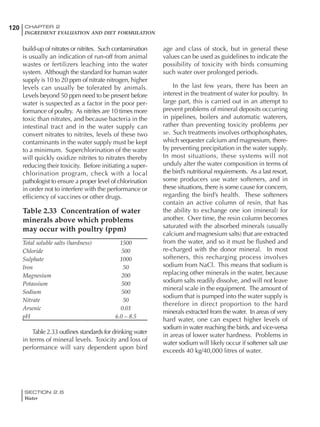
Sprouted wheat would probably be rejected
SECTION 2.1
Description of ingredients
16 CHAPTER 2
INGREDIENT EVALUATION AND DIET FORMULATION
16
simply based on appearance, although research
data suggests that metabolizable energy level is
only reduced by 3 - 5%. There are no problems
in feeding sprouted wheat, as long as it has been
dried to 14% moisture, and can be
economical if discounted accordingly. Wheat con-
taminated with ‘rust’ however seems to more
seriously affect feeding value, and metabolizable
energy value can be reduced by up to 25%.
While wheats are much higher in protein
content compared to corn, and provide only
slightly less energy, there are some potential
problems from feeding much more than 30% in
a diet, especially for young birds. Wheat
contains about 5 – 8% of pentosans, which
can cause problems with digesta viscosity,
leading to reduced overall diet digestibility and
also wet manure. The major pentosan
components are arabinoxylans, which are linked
to other cell wall constituents, and these are able
to adsorb up to 10 times their weight in water.
Unfortunately, birds do not produce adequate
quantities of xylanase enzymes, and so these
polymers increase the viscosity of the digesta. The
10 - 15% reduction in ME of wheats seen with
most young birds (<10 d age) likely relates to their
inability to handle these pentosans. Variability
in pentosan content of wheats per se likely
accounts for most of the variability of results seen
in wheat feeding studies, together with our
inability to predict feeding value based on
simple proximate analyses. These adverse effects
on digesta viscosity seem to decrease with
increased storage time for wheats. Problems with
digesta viscosity can be controlled to some
extent by limiting the quantity of wheat used,
especially for young birds, and/or by using
exogenous xylanase enzymes (see Section 2.3 g).
Wheats also contain -amylase inhibitors.
Although these inhibitors have not been fully
identified, they are thought to be albumin
proteins found predominantly in the endosperm.
These inhibitors can apparently be destroyed by
the relatively mild temperatures employed
during pelleting. Compared to corn, wheat is also
very low in levels of available biotin. Whereas
it is sometimes difficult to induce signs of biotin
deficiency in birds fed corn diets devoid of
synthetic biotin, problems soon develop if wheat
is the major cereal. While newly hatched chicks
have liver biotin levels of around 3,000 ng/g, this
number declines to 600 ng/g within 14 d in the
wheat fed bird. Adding just 50 µg biotin/kg diet
almost doubles the liver biotin reserve, while adding
300 µg/kg brings levels back to that seen in the
day-old chick. There is also concern that wheat
causes a higher incidence of necrotic enteritis
in broiler chicks. It seems as though wheat
provides a more suitable medium for the pro-
liferation of certain pathogenic bacteria. The
problem is most severe when wheat is finely
ground, and incidence of necrotic enteritis can
be tempered by grinding wheat through a roller
mill rather than a hammer mill. Fine grinding
of wheat can also cause beak impaction in
young birds. The proteins in wheat tend to be
‘sticky’, and so adhere to the beak and mouth
lining of the bird. Severe beak impaction tends
to reduce feeding activity, increase feed
deposited in open bell drinkers, and provides a
medium in the mouth region that is ideal for
bacterial and fungal growth. These problems can
be resolved by coarse grinding of wheat.
Using wheat in diets for meat birds does
however improve pellet durability. The same
proteins that enhance the baking characteristics
of hard wheats, also help to bind ingredients
during pelleting. Adding 25% wheat to a
diet has the same effect as including a pellet binder
in diets that are difficult to pellet.
17CHAPTER 2
INGREDIENT EVALUATION AND DIET FORMULATION
SECTION 2.1
Description of ingredients
17
INGREDIENT EVALUATION AND DIET FORMULATION
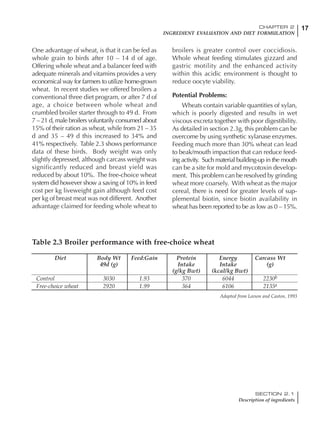
One advantage of wheat, is that it can be fed as
whole grain to birds after 10 – 14 d of age.
Offering whole wheat and a balancer feed with
adequate minerals and vitamins provides a very
economical way for farmers to utilize home-grown
wheat. In recent studies we offered broilers a
conventional three diet program, or after 7 d of
age, a choice between whole wheat and
crumbled broiler starter through to 49 d. From
7 – 21 d, male broilers voluntarily consumed about
15% of their ration as wheat, while from 21 – 35
d and 35 – 49 d this increased to 34% and
41% respectively. Table 2.3 shows performance
data of these birds. Body weight was only
slightly depressed, although carcass weight was
significantly reduced and breast yield was
reduced by about 10%. The free-choice wheat
system did however show a saving of 10% in feed
cost per kg liveweight gain although feed cost
per kg of breast meat was not different. Another
advantage claimed for feeding whole wheat to
broilers is greater control over coccidiosis.
Whole wheat feeding stimulates gizzard and
gastric motility and the enhanced activity
within this acidic environment is thought to
reduce oocyte viability.
Potential Problems:
Wheats contain variable quantities of xylan,
which is poorly digested and results in wet
viscous excreta together with poor digestibility.
As detailed in section 2.3g, this problem can be
overcome by using synthetic xylanase enzymes.
Feeding much more than 30% wheat can lead
to beak/mouth impaction that can reduce feed-
ing activity. Such material building-up in the mouth
can be a site for mold and mycotoxin develop-
ment. This problem can be resolved by grinding
wheat more coarsely. With wheat as the major
cereal, there is need for greater levels of sup-
plemental biotin, since biotin availability in
wheat has been reported to be as low as 0 – 15%.
Diet Body Wt Feed:Gain Protein Energy Carcass Wt
49d (g) Intake Intake (g)
(g/kg Bwt) (kcal/kg Bwt)
Control 3030 1.93 370 6044 2230b
Free-choice wheat 2920 1.99 364 6106 2135a
Table 2.3 Broiler performance with free-choice wheat
Adapted from Leeson and Caston, 1993
SECTION 2.1
Description of ingredients
18 CHAPTER 2
INGREDIENT EVALUATION AND DIET FORMULATION
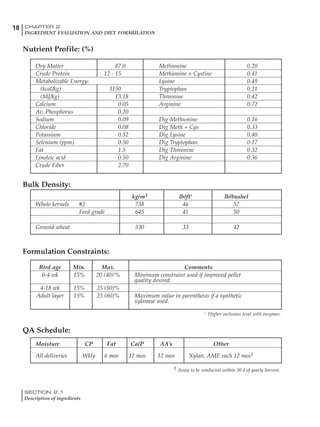
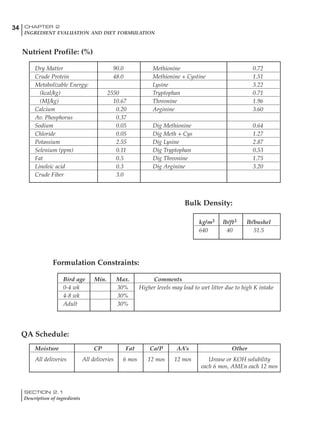
Dry Matter 87.0 Methionine 0.20
Crude Protein 12 - 15 Methionine + Cystine 0.41
Metabolizable Energy: Lysine 0.49
(kcal/kg) 3150 Tryptophan 0.21
(MJ/kg) 13.18 Threonine 0.42
Calcium 0.05 Arginine 0.72
Av. Phosphorus 0.20
Sodium 0.09 Dig Methionine 0.16
Chloride 0.08 Dig Meth + Cys 0.33
Potassium 0.52 Dig Lysine 0.40
Selenium (ppm) 0.50 Dig Tryptophan 0.17
Fat 1.5 Dig Threonine 0.32
Linoleic acid 0.50 Dig Arginine 0.56
Crude Fiber 2.70
Nutrient Profile: (%)
kg/m3 lb/ft3
lb/bushel
Whole kernels #2 738 46 57
Feed grade 645 41 50
Ground wheat 530 33 42
Bulk Density:
Bird age Min. Max. Comments
0-4 wk 15% 20 (40)1
% Minimum constraint used if improved pellet
quality desired.
4-18 wk 15% 25 (50)%
Adult layer 15% 25 (60)% Maximum value in parenthesis if a synthetic
xylanase used.
Formulation Constraints:
1
Higher inclusion level with enzymes.
Moisture CP Fat Ca/P AA’s Other
All deliveries Wkly 6 mos 12 mos 12 mos Xylan, AME each 12 mos1
QA Schedule:
1 Assay to be conducted within 30 d of yearly harvest.
19CHAPTER 2
INGREDIENT EVALUATION AND DIET FORMULATION
SECTION 2.1
Description of ingredients
3. Milo
Other Names: sorghum, kaffir corn
Nutritional Characteristics:
In many characteristics, milo is almost com-
parable to corn in feeding value. There seem to
be more varietal differences with sorghum,
although on average, its energy value will be slight-
ly less than that of corn. For those not wanting
any marked degree of pigmentation of eggs or
skin, milo offers the best high energy alternative
to corn.
The feeding value of milo is essentially 95 – 96%
that of corn, although in many markets it is
priced at less than this. The starch in milo is
intimately associated with the protein, and this
leads to slightly reduced digestibility, especially
in the absence of any heat processing. The
major concern with milo, is the content of
tannins, which are a group of polyphenols
having the property of combining with various
proteins. Birds fed tannins therefore exhibit
reduced growth rate and in some instances
increased incidence and severity of skeletal
disorders. Hydrolyzable tannins are charac-
terized by having a gallic acid unit combined by
ester linkages to a central glucose moiety.
Condensed tannins on the other hand are based
on flavan-3-ols (catechin). Because tannins in
milo are essentially condensed tannins, studies
involving tannic acid (hydrolyzable) as a source
of tannin may be of questionable value. The tan-
nins are located in the outer seed coat and the
underlying testa layer. Generally, the darker the
seed coat, the higher the tannin content, although
the tannins in the testa layer may be more indica-
tive of general tannin content in the milo.
So-called bird resistant milos are usually
very high in tannin, and are characterized by a
darker seed coat color. These higher levels of
tannin can result in up to 10% reduction of
dry matter and amino acid digestibility. There
is a good correlation between tannin content and
AMEn, and as a generalization the following
formula can be used:
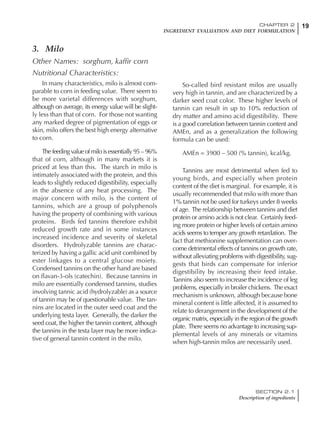
AMEn = 3900 – 500 (% tannin), kcal/kg.
Tannins are most detrimental when fed to
young birds, and especially when protein
content of the diet is marginal. For example, it is
usually recommended that milo with more than
1% tannin not be used for turkeys under 8 weeks
of age. The relationship between tannins and diet
protein or amino acids is not clear. Certainly feed-
ing more protein or higher levels of certain amino
acids seems to temper any growth retardation. The
fact that methionine supplementation can over-
come detrimental effects of tannins on growth rate,
without alleviating problems with digestibility, sug-
gests that birds can compensate for inferior
digestibility by increasing their feed intake.
Tannins also seem to increase the incidence of leg
problems, especially in broiler chickens. The exact
mechanism is unknown, although because bone
mineral content is little affected, it is assumed to
relate to derangement in the development of the
organic matrix, especially in the region of the growth
plate. There seems no advantage to increasing sup-
plemental levels of any minerals or vitamins
when high-tannin milos are necessarily used.
SECTION 2.1
Description of ingredients
20 CHAPTER 2
INGREDIENT EVALUATION AND DIET FORMULATION
Various mechanisms have been tried to
reduce the level or effect of tannins in milo.
Unfortunately, most of these processes involve
wet chemical treatment, which although quite
simple, are expensive when re-drying of the
milo is considered. Water treatment (25% with
propionic acid for 10 d) has been shown to
improve protein and energy availability by up to
10%. Alkali treatment seems the most effective
means of reducing tannin levels, and products
such as potassium and sodium hydroxide have
both been used. Adding non-ionic polymers, such
as polyethylene glycol also seems to be beneficial,
while the problem of impaired bone development
can be partially corrected by adding up to 0.8%
available phosphorus to the diet of young birds.
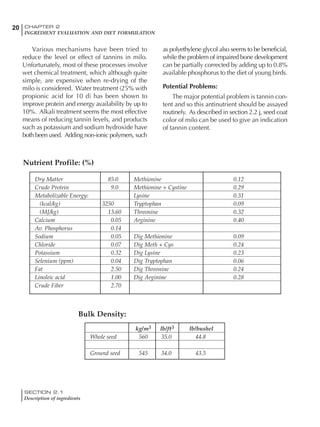
Potential Problems:
The major potential problem is tannin con-
tent and so this antinutrient should be assayed
routinely. As described in section 2.2 j, seed coat
color of milo can be used to give an indication
of tannin content.
Dry Matter 85.0 Methionine 0.12
Crude Protein 9.0 Methionine + Cystine 0.29
Metabolizable Energy: Lysine 0.31
(kcal/kg) 3250 Tryptophan 0.09
(MJ/kg) 13.60 Threonine 0.32
Calcium 0.05 Arginine 0.40
Av. Phosphorus 0.14
Sodium 0.05 Dig Methionine 0.09
Chloride 0.07 Dig Meth + Cys 0.24
Potassium 0.32 Dig Lysine 0.23
Selenium (ppm) 0.04 Dig Tryptophan 0.06
Fat 2.50 Dig Threonine 0.24
Linoleic acid 1.00 Dig Arginine 0.28
Crude Fiber 2.70
Nutrient Profile: (%)
kg/m3 lb/ft3 lb/bushel
Whole seed 560 35.0 44.8
Ground seed 545 34.0 43.5
Bulk Density:
21CHAPTER 2
INGREDIENT EVALUATION AND DIET FORMULATION
SECTION 2.1
Description of ingredients
4. Barley
Nutritional Characteristics:
Barley is a cereal with medium content of both
energy and protein, and while it can be used in
poultry feeds, most is used in swine diets. Young
birds are less able to digest barley, although
this may be a consequence of ß-glucan content,
and so this effect may relate to variety and
growing conditions. The protein content of
barley is usually around 11 – 12%, although much
higher levels to 14 – 16% are sometimes encoun-
tered. These high-protein varieties are often
little changed in content of essential amino
acids. The lysine content of barley, within the
range of 10 – 14% CP, is described by the equa-
tion 0.13 +0.024 x %CP. The metabolizable ener-
gy level of barley is correlated with bulk densi-
ty, and there is a strong negative correlation
with fiber.
Barley contains moderate levels of trypsin
inhibitor, whose mode of action relates to seques-
tering of arginine, although by far the major
problem with barley is content of ß-glucan.
Most varieties of barley will contain 4 – 7% ß-
glucan, although with dry growing
conditions that involve rapid maturation and early
harvest, the content can increase to 12 – 15%.
As previously described for wheat, the main
problem of these ß-glucans is the bird’s inability
to digest the structure, resulting in the formation
of a more viscous digesta. This increased viscosity
slows the rate of mixing with digestive enzymes
and also adversely affects the transport of digest-
ed nutrients to the absorptive mucosal surface.
The rate of diffusion to the intestinal microvilli
is a function of the thickness of the unstirred bound-
ary layer, and this increases with increased
digesta viscosity. Motility of the digesta will also
indirectly affect the thickness of the unstirred
boundary layer, which will also affect rate of absorp-
tion of all nutrients. The adverse effect of ß-glucan
is most pronounced with nutrients such as fats
and fat-soluble compounds. Adding synthetic
ß-glucanase enzymes to diets containing more
than 15 – 20% barley seems to resolve many of
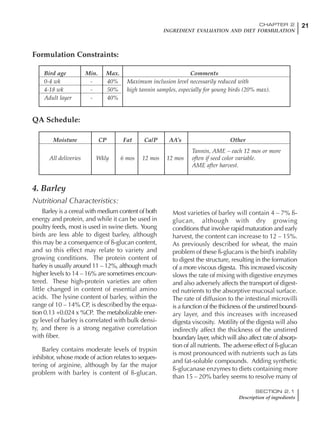
Bird age Min. Max. Comments
0-4 wk - 40% Maximum inclusion level necessarily reduced with
4-18 wk - 50% high tannin samples, especially for young birds (20% max).
Adult layer - 40%
Formulation Constraints:
Moisture CP Fat Ca/P AA’s Other
Tannin, AME – each 12 mos or more
All deliveries Wkly 6 mos 12 mos 12 mos often if seed color variable.
AME after harvest.
QA Schedule:
SECTION 2.1
Description of ingredients
22 CHAPTER 2
INGREDIENT EVALUATION AND DIET FORMULATION
these problems, the usual outward sign of which
is wet litter. Unfortunately, the description of
exogenous enzymes is not standardized, as
neither is the standard for units of efficacy, and
so it is often difficult to compare products on the
basis of the concentration of specific enzymes.
Early studies show that any product should
provide at least 120 units ß-glucanase/kg diet.
Enzymes seem to be less efficacious as the
birds get older. Our studies show slight improve-
ment in energy value of high ß-glucan barley when
enzymes are used in diets for adult birds, and that
some enzymes actually cause reduction in energy
value when used with low ß-glucan barley.
With this low ß-glucan barley, the addition of
ß-glucanase enzymes actually caused birds to
be in severe negative nitrogen balance for the 3
d duration of the balance study. For younger birds
however, the efficacy of ß-glucanase enzymes
is well established and many nutritionists
consider barley plus enzymes as being equiva-
lent in feeding value to wheat. These values can
be used as a basis for economic evaluation of
enzymes. While ß-glucans are most often
regarded as being problematic to birds, there seems
to be one advantage to their inclusion in the diet.
Feeding ß-glucans reduces blood cholesterol in
birds, and this likely positive effect is reversed by
use of synthetic ß-glucanases. The mode of
action of ß-glucans may well be simply via
sequestering of fats and bile acids in the digesta.
Barley can be used in choice-feeding
studies, as previously described for wheat. Due
to the physical structure of the kernel however,
with its sharp spinets, birds are often reluctant
to consume whole barley grain. Turkeys at
least seem to readily eat whole barley in a
choice-feeding situation after 50 d of age.
Potential Problems:
The moderate level of energy usually limits
the inclusion of barley in most poultry diets.
Additionally, the level of ß-glucan can be
problematic in terms of poor performance and
wet litter/manure. Synthetic enzymes can be used
to overcome most of the problems.
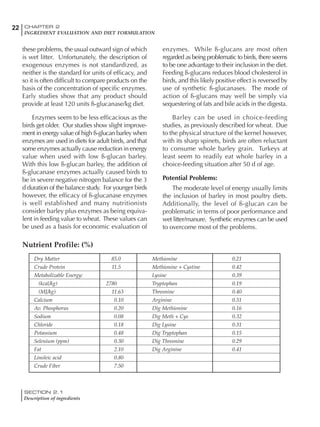
Dry Matter 85.0 Methionine 0.21
Crude Protein 11.5 Methionine + Cystine 0.42
Metabolizable Energy: Lysine 0.39
(kcal/kg) 2780 Tryptophan 0.19
(MJ/kg) 11.63 Threonine 0.40
Calcium 0.10 Arginine 0.51
Av. Phosphorus 0.20 Dig Methionine 0.16
Sodium 0.08 Dig Meth + Cys 0.32
Chloride 0.18 Dig Lysine 0.31
Potassium 0.48 Dig Tryptophan 0.15
Selenium (ppm) 0.30 Dig Threonine 0.29
Fat 2.10 Dig Arginine 0.41
Linoleic acid 0.80
Crude Fiber 7.50
Nutrient Profile: (%)
23CHAPTER 2
INGREDIENT EVALUATION AND DIET FORMULATION
SECTION 2.1
Description of ingredients
5. Rice
Nutritional Characteristics:
Almost without exception, rice is grown for
human consumption, although periodically in
rice growing areas, samples unfit for human
consumption, or damaged samples are available
for animal feeding. Rice is a relatively poor qual-
ity ingredient for poultry, containing only 7 – 8
% CP and providing just 2600 – 2700 kcal
ME/kg. Rice does contain high levels of trypsin
inhibitor that will be destroyed at normal pelleting
temperatures. As detailed in the next section on
cereal by-products, rice bran and rice polishings
are more commonly used in poultry feeds than
is rice grain itself.
Potential Problems:
Because most feed sources will have been
graded as unfit for human consumption, then the
reason for rejection should be ascertained.
Mold growth and mycotoxin (aflatoxin)
contamination are often the basis for such grading.
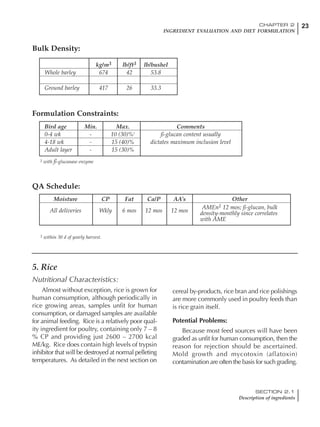
kg/m3 lb/ft3 lb/bushel
Whole barley 674 42 53.8
Ground barley 417 26 33.3
Bird age Min. Max. Comments
0-4 wk - 10 (30)%1
ß-glucan content usually
4-18 wk - 15 (40)% dictates maximum inclusion level
Adult layer - 15 (30)%
Bulk Density:
Formulation Constraints:
1 with ß-glucanase enzyme
Moisture CP Fat Ca/P AA’s Other
All deliveries Wkly 6 mos 12 mos 12 mos
AMEn1 12 mos; ß-glucan, bulk
density-monthly since correlates
with AME
QA Schedule:
1 within 30 d of yearly harvest.
SECTION 2.1
Description of ingredients
24 CHAPTER 2
INGREDIENT EVALUATION AND DIET FORMULATION
Dry Matter 85.0 Methionine 0.12
Crude Protein 7.3 Methionine + Cystine 0.23
Metabolizable Energy: Lysine 0.22
(kcal/kg) 2680 Tryptophan 0.11
(MJ/kg) 11.21 Threonine 0.34
Calcium 0.04 Arginine 0.62
Av. Phosphorus 0.13
Sodium 0.03 Dig Methionine 0.09
Chloride 0.28 Dig Meth + Cys 0.15
Potassium 0.34 Dig Lysine 0.17
Selenium (ppm) 0.17 Dig Tryptophan 0.07
Fat 1.70 Dig Threonine 0.27
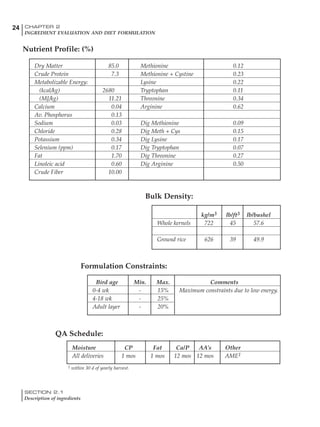
Linoleic acid 0.60 Dig Arginine 0.50
Crude Fiber 10.00
Nutrient Profile: (%)
kg/m3 lb/ft3 lb/bushel
Whole kernels 722 45 57.6
Ground rice 626 39 49.9
Bulk Density:
Formulation Constraints:
QA Schedule:
Bird age Min. Max. Comments
0-4 wk - 15% Maximum constraints due to low energy.
4-18 wk - 25%
Adult layer - 20%
Moisture CP Fat Ca/P AA’s Other
All deliveries 1 mos 1 mos 12 mos 12 mos AME1
1 within 30 d of yearly harvest.
25CHAPTER 2
INGREDIENT EVALUATION AND DIET FORMULATION
SECTION 2.1
Description of ingredients
During the processes of cleaning wheat and
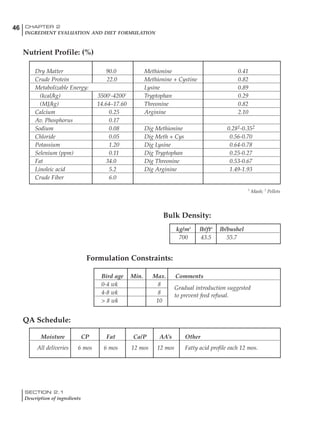
subsequent manufacture of flour, up to 40%
by weight is classified as by-product material. There
is considerable variation in the classification
and description of these by-products, and great
care must be taken when formulating with
wheat by-products in different countries.
Traditionally there were three major by-products,
namely wheat bran, wheat shorts and wheat mid-
dlings. Bran is the outer husk, and so is very high
in fiber and rarely used in poultry diets.
Unfortunately, in many countries the term wheat
bran is used to describe wheat middlings. A check
on crude fiber level of wheat by-products is
necessary to ensure correct terminology. The finer
material removed during bran extraction, was tra-
ditionally termed wheat shorts. As wheat is
ground through a series of grinders of decreas-
ing size, middlings are produced, most of which
is extracted as flour. Wheat middlings are the major
by-product from the final extraction of flour.
In the U.S.A., the term red-dog was sometimes
used to describe the very fine material extract-
ed from ‘red’ wheats, and was similar to shorts.
Today most by-products are combined at the flour
mills, and commonly called wheat shorts. The
only other by-product produced in reasonable
quantity is wheat screenings, which as its name
implies, is material removed during initial clean-
ing and separation. If screenings are composed
mainly of broken wheat kernels, then their nutri-
tive value is little different to wheat.
Wheat by-products such as shorts can contain
very high levels of ‘natural’ phytase enzyme. When
more than 15% shorts are used in a diet this
endogenous enzyme can be greater than levels
of commercial phytase added to the diet, and so
influence assay results. While endogenous
phytase levels are high, it is questionable if this
enzyme is beneficial to the bird at the pH of the
proventriculus or small intestine.
Wheat shorts: Shorts are the major by-prod-
uct of flour manufacture and since they are usu-
ally a composite of various fractions, nutrient pro-
file can be variable. The major difference will
be in the quantity of bran included in the mate-
rial, and so this directly influences its energy value.
If wheat shorts contain much more than 5% crude
fiber, it is an indication of a greater proportion
of bran-type residues. Dale (1996) suggests
that the metabolizable energy value of wheat by-
product is directly proportional to its fiber
content, and that ME can be described as:
3182 – 161 x % crude fiber (kcal/kg)
With an average fiber value of 5%, ME is
around 2370 kcal/kg. However, it is common
to see a range of 3 to 10% CF depending upon
flour manufacturing procedures, which equates
to a range of ME values of from 1570 to 2700
kcal/kg. Measuring crude fiber level of wheat
by-products is obviously important in quality
assurance programs. As described previously with
wheat, most by-products will contain xylan,
6. Wheat by-products
Other Names: wheat shorts, wheat middlings, wheat bran, wheat millrun,
wheat screenings
Nutritional Characteristics:
SECTION 2.1
Description of ingredients
26 CHAPTER 2
INGREDIENT EVALUATION AND DIET FORMULATION
and so xylanase enzyme is advisable if inclusion
levels are >15% for young birds or > 30% for birds
after 4 weeks of age.
Wheat bran:The main characteristics are high
fiber, low bulk density and low metabolizable
energy. Bran is however, quite high in protein,
and amino acid profile is comparable to that seen
in whole wheat. Bran has been claimed to have
a growth promoting effect for birds which is not
directly related to any contribution of fiber to the
diet. Such growth promotion is possibly derived
from modification of the gut microflora. The
energy value of bran may be improved by up to
10% by simple steam pelleting, while the avail-
ability of phosphorus is increased by up to 20%
under similar conditions. Bran would only be
considered where limits to growth rate are
required, and where physical feed intake is not
a problem. High bran diets promote excessive
manure wetness, and transportation costs of
bran diets are increased in proportion to the
reduced bulk density of the diet.
Wheat screenings: Wheat screenings are a
by-product of the cleaning and grading of wheat
that itself is usually destined for human
consumption. The product is therefore available
in most countries that have significant wheat
production. In addition to broken and cracked
wheat kernels, screenings will also contain wild
oats and buckwheat as well as weed seeds and
other contaminants. The higher grades (#1 or #2)
contain significant proportions of wheat, and so
their nutrient profile is very similar to that of wheat.
The weed seeds, depending upon variety, may
be of some nutritional value. Since certain
weed seeds produce a feed-refusal type reaction
in layers, only the highest grades should be
considered for high producing stock. The weed
seeds can pose problems to arable farms that use
manure from birds fed coarsely ground diets
containing screenings, since some of the weed
seeds can pass undamaged through the
digestive tract. The level of screenings used in
finisher diets of meat birds should also be
severely limited, since breakage of the gut dur-
ing processing leads to fine particles of black weed
seeds adhering to the fat pads of the bird
– such birds are easily recognized and often
condemned due to fecal contamination. Number
1 and 2 grade screenings can be used up to 40%
of the diet for broilers and layers.
Potential Problems:
The fiber content will directly influence
energy value. With wheat screenings there will
likely be some weed seeds present, and these may
cause feed refusal.
27CHAPTER 2
INGREDIENT EVALUATION AND DIET FORMULATION
SECTION 2.1
Description of ingredients
Shorts Screening Bran Shorts Screenings Bran
Dry Matter 90 90 90 Methionine 0.21 0.21 0.10
Crude Protein 15 15 16 Meth + Cyst 0.40 0.42 0.20
Metabolizable Energy: Lysine 0.61 0.53 0.60
(kcal/kg) 2200 3000 1580 Tryptophan 0.21 0.20 0.31
(MJ/kg) 9.20 12.55 6.61 Threonine 0.50 0.42 0.34
Calcium 0.07 0.05 0.10 Arginine 0.80 0.60 0.85
Av. Phosphorus 0.30 0.20 0.65
Sodium 0.07 0.08 0.06 Dig Methionine 0.16 0.15 0.08
Chloride 0.10 0.05 0.20 Dig Meth + Cys 0.30 0.32 0.15
Potassium 0.84 0.55 1.20 Dig Lysine 0.48 0.39 0.42
Selenium (ppm) 0.80 0.57 0.92 Dig Tryptophan 0.15 0.15 0.24
Fat 4.0 4.1 4.5 Dig Threonine 0.41 0.31 0.28
Linoleic acid 1.6 0.7 1.7 Dig Arginine 0.71 0.52 0.79
Crude Fiber 5.0 3.0 12.0
kg/m3 lb/ft3 lb/bushel
Wheat bran 193 12 15.4
Wheat shorts 480 30 38.4
Wheat screenings 740 46 58.9
Bird age Min. Max. Comments
Shorts, and 0-4 wk 10% 20%Minimum if pellet durability an issue
Screenings 4-18 wk 30%
Adult layer 30%
Bran 4 wk+ 10% Energy will be the limiting factor
Moisture CP Fat Ca/P AA’s Other
All deliveries Wkly 6 mos 12 mos 12 mos Crude fiber on all deliveries.
AMEn yearly
Nutrient Profile: (%)
Bulk Density:
Formulation Constraints:
QA Schedule:
SECTION 2.1
Description of ingredients
28 CHAPTER 2
INGREDIENT EVALUATION AND DIET FORMULATION
Bakery meal is a by-product from a range of
food processing industries. In order to ensure con-
sistent composition, individual products must be
blended or the supplier large enough to provide
adequate quantities from a single manufactur-
ing process. The most common by-products come
from bread and pasta manufacture, as well as cook-
ies and snack foods. By-products from snack foods
can be quite high in salt and fat. Bakery meal
is often derived from pre-cooked products and
so digestibility is often higher than for the orig-
inal starch components.
Fillers are sometimes used to improve flow
characteristics of high-fat bakery meals. The most-
common fillers are soybean hulls and limestone
which influence nutritive value accordingly.
The metabolizable energy value of bakery meal
can be described as:
4000–(100x%fiber+25x%ash)kcal/kg with
4% fiber and 3% ash, ME becomes 3525 kcal/kg
Potential Problems:
Quality control programs must ensure
consistent levels of sodium, fiber and ash.
Dry Matter 90.0 Methionine 0.21
Crude Protein 10.5 Methionine + Cystine 0.40
Metabolizable Energy: Lysine 0.29
(kcal/kg) 3500 Tryptophan 0.13
(MJ/kg) 14.6 Threonine 0.30
Calcium 0.05 Arginine 0.50
Av. Phosphorus 0.13
Sodium 0.50 Dig Methionine 0.18
Chloride 0.48 Dig Meth + Cys 0.34
Potassium 0.62 Dig Lysine 0.19
Selenium (ppm) 0.30 Dig Tryptophan 0.08
Fat 9.5 Dig Threonine 0.21
Linoleic acid 3.0 Dig Arginine 0.40
Crude Fiber 2.5
Nutrient Profile: (%)
Bulk Density:
kg/m3 lb/ft3 lb/bushel
353 22.0 28.0
7. Bakery meal
Other Names: Cookie meal, bread meal
Nutritional Characteristics:
29CHAPTER 2
INGREDIENT EVALUATION AND DIET FORMULATION
SECTION 2.1
Description of ingredients
Rice by-products are the result of dehulling
and cleaning of brown rice, necessary for the pro-
duction of white rice as a human food. Rice by-
products are one of the most common cereal by-
products available to the feed industry, with
world production estimated at around 45 m
tonnes. The by-product of preparing white rice,
yields a product called rice bran, which itself is
composed of about 30% by weight of rice pol-
ishings and 70% true bran. In some regions, the
two products are separated, being termed pol-
ishings and bran. Alternatively, the mixture is some-
times called rice bran, whereas in other areas the
mixture may be called rice pollards. The polishings
are very high in fat content and low in fiber while
the true bran is low in fat and high in fiber. The
proportions of polishings and true bran in a
mixed product will therefore have a major effect
on its nutritive value. In the following discussion,
rice bran refers to the mixture of polishings and
bran. The composition of any sample of mixed
rice bran can be calculated based on levels of
fat vs fiber.
Because of a high oil content (6 – 10%)
rice bran is very susceptible to oxidative rancidity.
Raw bran held at moderate temperatures for
10 – 12 weeks can be expected to contain 75 – 80%
of its fat as free fatty acids, which are themselves
more prone to rancidity. Rice bran should be
stabilized with products such as ethoxyquin.
Higher levels of ethoxyquin give greater protection
against rancidity although economical levels
appear to be around 250 ppm. Rice bran can
also be stabilized by heat treatment. Extrusion
at 130ºC greatly reduces chances of rancidity, and
of the development of free fatty acids.
When high levels of raw rice bran are used
( 40%) there is often growth depression and reduc-
tion in feed efficiency, likely associated with the
presence of trypsin inhibitor and high levels of
phytic acid. The trypsin inhibitor, which seems
to be a relatively low molecular weight structure,
is destroyed by moist heat, although phytic acid
is immune to this process. The phosphorus
content of rice bran is assumed to be only 10%
Bird age Min. Max. Comments
0-4 wk 10% Concern over sodium content
4-18 wk 15%
Adult layer 15%
Moisture CP Fat Ca/P AA’s Other
All deliveries 1 mos 1 mos 6 mos 12 mos Na content of all samples if snack foods
part of bakery meal
Formulation Constraints:
QA Schedule:
8. Rice by-products
Other Names: Rice bran, rice polishings, rice pollards
Nutritional Characteristics:
SECTION 2.1
Description of ingredients
30 CHAPTER 2
INGREDIENT EVALUATION AND DIET FORMULATION
available for very young birds. However, phos-
phorus availability may increase with age, and
if this happens, it could create an imbalance of
calcium:phosphorus. This latter effect is suggested
as the reason for improved growth response in
older birds fed rice bran when extra calcium is
added to the diet. Phytase enzyme can be used
to advantage in diets containing > 15% rice
bran. Because of the potential for high fiber con
tent, use of rice bran may be improved with
addition of exogenous arabinoxylanase enzymes.
Potential Problems:
Rice bran should be stabilized with an
antioxidant if storage at the mill is to be longer
than a few weeks. Heating is advisable if young
birds (< 3 weeks) are fed > 10% rice bran, to limit
adverse effects of trypsin inhibitor.
Bran Polishing Bran Polishing
Dry Matter 90.0 90.0 Methionine 0.29 0.21
Crude Protein 13.0 11.0 Methionine + Cystine 0.30 0.52
Metabolizable Energy: Lysine 0.51 0.50
(kcal/kg) 1900 2750 Tryptophan 0.18 0.12
(MJ/kg) 7.95 11.52 Threonine 0.38 0.32
Calcium 0.06 0.06 Arginine 0.52 0.61
Av. Phosphorus 0.80 0.18
Sodium 0.10 0.10 Dig Methionine 0.15 0.16
Chloride 0.17 0.17 Dig Meth + Cys 0.22 0.24
Potassium 1.30 1.17 Dig Lysine 0.39 0.41
Selenium (ppm) 0.19 0.17 Dig Tryptophan 0.13 0.08
Fat 5.0 15.0 Dig Threonine 0.28 0.25
Linoleic acid 3.4 6.2 Dig Arginine 0.40 0.48
Crude Fiber 12.0 2.5
kg/m3 lb/ft3 lb/bushel
Rice bran 417 26 33
Rice polishings 480 30 38
Bird age Min. Max. Comments
0-4 wk 10% Fat rancidity the major concern
4-8 wk 20% High phytate content
Adult 25%
Nutrient Profile: (%)
Bulk Density:
Formulation Constraints:
31CHAPTER 2
INGREDIENT EVALUATION AND DIET FORMULATION
SECTION 2.1
Description of ingredients
Soybean meal has become the worldwide
standard against which other protein sources are
compared. Its amino acid profile is excellent for
most types of poultry, and when combined with
corn or sorghum, methionine is usually the
only limiting amino acid.
The protein level in soybean meal can be
variable, and this may be a reflection of seed
variety and/or processing conditions involved in
fat extraction. Traditionally the higher protein
meals are produced from de-hulled beans,
whereas the lower protein (44% CP) meals
invariably contain the seed hulls, and are high-
er in fiber and lower in metabolizable energy.
There is some variation in seed type used and this
can affect protein and fat content, which are
negatively correlated. Whereas fat content of the
seed is dictated early in seed development,
protein is deposited through to the end of
maturity, and therefore growing and harvesting
conditions tend to have more of an effect on
protein content of the seed. For soybean
processors, about 65% of the value of soybeans
is attributed to their protein content, and 35%
to the oil. In recent years, there have been a
number of ‘new’ varieties introduced, and some
of these are produced by genetic engineering.
At this time (2004) there are no new GMO
products modified in terms of enhanced
nutrient profile or reduced anti-nutritional
content. Current GMO soybeans are modified
for agronomic reasons, and there is no indication
that they have different feeding value. In the future,
there seems great potential for reduction in con-
tent of anti-nutrients within GMO soybeans.
Soybeans have to be heat-treated in order to
inactivate various anti-nutrients. During processing,
soybeans are dehulled (about 4% by weight) and
then cracked prior to conditioning at 70ºC. The
hot cracked beans are then flaked to about 0.25
mm thickness to enhance oil extraction by a sol-
vent, which is usually hexane. Hexane must be
removed from the meal because it is a highly
combustible material and a potent carcinogen.
Problems occurring during processing that result
in residual hexane in the meal are usually
noticed by severe and sudden liver failure in birds.
Soybean meals tend to be very dusty, and in mash
diets, soy is responsible for some of the dust found
in controlled environment poultry houses.
Soybean meal is also notorious for its poor flow
characteristics and for bridging in storage bins.
Addition of products such as bentonite clays, even
at levels as low as 2.5 kg/tonne, can greatly improve
the flow characteristics of soybean meal.
Moisture CP Fat Ca/P AA’s Other
All deliveries monthly All deliveries 6 mos 12 mos Fiber for all deliveries
QA Schedule:
9. Soybean meal
Other Names: High protein SBM
Nutritional Characteristics:
SECTION 2.1
Description of ingredients
32 CHAPTER 2
INGREDIENT EVALUATION AND DIET FORMULATION
Soybeans contain a number of natural toxins
for poultry, the most problematic being trypsin
inhibitor. As with most types of beans, the
trypsin inhibitors will disrupt protein digestion,
and their presence is characterized by
compensatory hypertrophy of the pancreas.
Apart from reduced growth rate and egg
production, presence of inhibitors is therefore
diagnosed by a 50-100% increase in size of the
pancreas. Fortunately, the heat treatment
employed during processing is usually
adequate to destroy trypsin inhibitors and other
less important toxins such as hemaglutinins
(lectins). In developing countries, trypsin
inhibitor levels are sometimes controlled by
fermentation or germinating beans, where after
48 hrs of treatment, protein digestibility is almost
equivalent to that seen in conventionally heated
beans. Trypsin inhibitor levels are usually
‘assayed’ indirectly by measuring urease activity
in processed soybean meal. Urease is of little
consequence to the bird, although the heat-
sensitivity characteristics of urease are similar to
those of trypsin inhibitors, and urease levels
are much easier to measure. Residual urease in
soybean meal has therefore become the standard
in quality control programs. Urease is assessed
in terms of change in pH during the assay,
where acceptance values range between 0.05 and
0.15. Higher values mean there is still residual
urease (trypsin inhibitor) and so the test is
useful to indicate undercooked meal. However,
while low values mean that the proteases have
been destroyed, there is no indication of
potential overcooking, which can destroy lysine
and reduce ME value. For this reason other tests
are sometimes used. A fairly easy test to accom-
plish is protein solubility in potassium hydroxide.
Dale and co-workers at the University of Georgia
have shown a good correlation between the
amount of protein soluble in 2% KOH, and
chick growth, determined in a bioassay. Heating
tends to make the protein less soluble, and so high
values suggest undercooking, while low values mean
overcooking. Values of 85% solubility indicate
under-processing and 70% mean the sample
has been over-processed. The assay is influenced
by particle size of soybean meal and time of
reaction, and so these must be standardized
within a laboratory. As soybean meal is heated,
its color changes and again this can be used in
quality control programs. Simply measuring color
in a Hunterlab Color Spectrophotometer can
indicate degree of cooking. Degrees of ‘lightness’,
‘redness’ and ‘yellowness’ can be measured
since these change with cooking temperature and
time. Again it is important to control particle size
during this assay.
Discussion about soybean meal quality
invariably involves the significance of trypsin
inhibitor relative to other antinutrients. It is
often claimed that only about 50% of the growth
depression resulting from consumption of under-
heated soybean meal is due to active trypsin
inhibitor. The other antinutrients of importance
are isoflavones, lectins and oligosaccharides.
Lectins are antinutritional glycoproteins that
bind to the intestinal epithelium resulting in
impaired brush border function. Such ‘thickening’
of the epithelium results in reduced efficiency
of absorption. There are strains of soybeans
that contain no lectins, and so studying their feed-
ing value provides some information on impor-
tance or not of lectins. Feeding uncooked
lectin-free soybean meal produces greater
broiler growth than does feeding regular uncooked
soybean. However, the growth is still less than
using trypsin inhibitor-free soybeans. These
data support the concept that lectins are much
less important than are trypsin inhibitors in
assessing nutritive value of soybean meal.
33CHAPTER 2
INGREDIENT EVALUATION AND DIET FORMULATION
SECTION 2.1
Description of ingredients
While undercooking of soybean meal is the
most common result of incorrect processing, over-
heating sometimes occurs. It seems as though
lysine availability is most affected by over-
cooking of soybeans, since addition of other amino
acids rarely corrects growth depression seen
in birds fed such meals. When soybeans are over-
cooked, KOH protein solubility declines. Using
data from Dale and co-workers, it seems as
though problems of using overheated soybean
meal can be resolved by adding 0.5 kg L-Lysine
HCl/tonne feed for each 10% reduction in
protein solubility below a value of 70%.
Over the last few years there has been
growing concern about some of the less digestible
carbohydrates in soybean meal. The -galacto-
side family of oligosaccharides cause a reduc-
tion in metabolizable energy with reduced fiber
digestion and quicker digesta transit time. Birds
do not have an -1:6 galactosidase enzyme in the
intestinal mucosa. Apart from reduced digestibil-
ity, there is concern about the
consistency of excreta and its involvement in foot-
pad lesions in both young turkeys and broiler
breeders. Soybean meal usually contains about
6% sucrose, 1% raffinose and 5% stachyose, all
of which are poorly digested by the bird. Adding
raffinose and stachyose to isolated soybean
protein to mimic levels seen in soybean meal,
causes a significant reduction in metabolizable
energy. These problems limit the diet inclusion
level of soybean meal, especially in turkey
prestarters. The solution to the problem relates
to change in soybean processing conditions or
use of exogenous feed enzymes. Extracting
soybeans with ethanol, rather than hexane,
removes most of the oligosaccharides. The
metabolizable energy value of soybean meal
extracted from low oligosaccharide varieties of
soybeans is increased by about 200 kcal/kg.
There are now some galactosidase enzyme
products available which are designed
specifically to aid digestion of vegetable proteins
and presumably these help in digestion of
products such as raffinose and stachyose.
Potential Problems:
In most feeding situations, the main concern
is usually processing conditions and knowl-
edge of urease index or protein solubility.
Soybean meal is also very high in potassium. In
regions where animal proteins are not used,
then necessarily high levels of soybean meal can
lead to enteritis, wet litter, and food pad lesions.
SECTION 2.1
Description of ingredients
34 CHAPTER 2
INGREDIENT EVALUATION AND DIET FORMULATION
Dry Matter 90.0 Methionine 0.72
Crude Protein 48.0 Methionine + Cystine 1.51
Metabolizable Energy: Lysine 3.22
(kcal/kg) 2550 Tryptophan 0.71
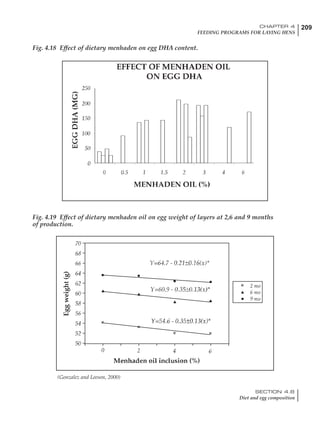
(MJ/kg) 10.67 Threonine 1.96
Calcium 0.20 Arginine 3.60
Av. Phosphorus 0.37
Sodium 0.05 Dig Methionine 0.64
Chloride 0.05 Dig Meth + Cys 1.27
Potassium 2.55 Dig Lysine 2.87
Selenium (ppm) 0.11 Dig Tryptophan 0.53
Fat 0.5 Dig Threonine 1.75
Linoleic acid 0.3 Dig Arginine 3.20
Crude Fiber 3.0
kg/m3 lb/ft3 lb/bushel
640 40 51.5
Bulk Density:
Nutrient Profile: (%)
Formulation Constraints:
QA Schedule:
Bird age Min. Max. Comments
0-4 wk 30% Higher levels may lead to wet litter due to high K intake
4-8 wk 30%
Adult 30%
Moisture CP Fat Ca/P AA’s Other
All deliveries All deliveries 6 mos 12 mos 12 mos Urease or KOH solubility
each 6 mos, AMEn each 12 mos
35CHAPTER 2
INGREDIENT EVALUATION AND DIET FORMULATION
SECTION 2.1
Description of ingredients
10. Soybeans
Other Names: Full-fat soybeans
Nutritional Characteristics:
Soybeans provide an excellent source of
both energy and protein for poultry. As with any
ingredient, their usage rate depends upon
economics, although in the case of soybeans such
economics relate to the relative price of
soybean meal and of supplemental fats. Soybeans
contain about 38% crude protein, and around
20% oil.
Comparable to the manufacture of soybean
meal, soybeans must be heat processed in some
way to destroy the trypsin inhibitors and to
improve overall protein digestibility. Feeding raw
soybeans or improperly processed soybeans
will cause poor growth rate or reduced egg
production and egg size. If processing conditions
are suspect, the birds’ pancreas should be
examined, because if trypsin inhibitors are still
present pancreas size can be expected to increase
by 50-100%. While processed beans should be
periodically tested for trypsin inhibitor or urease
levels, a simple on-going test is to taste the
beans. Under-heated beans have a character-
istic ‘nutty’ taste, while over-heated beans have
a much darker color and a burnt taste. The
problem with overheating is potential destruc-
tion of lysine and other heat-sensitive amino acids.
Heat-treated soybeans can be easily ground
in a hammer mill, even though they are high in
fat, and the ground product is a relatively free-
flowing material. Because of the high oil
content, ground beans should not be stored for
any length of time due to potential for oxidative
rancidity. However, it is important that beans be
well ground because it is necessary to release fat
from the plant cells in order to aid digestion.
Coarsely ground beans have lower fat digestibil-
ity than do more finely ground material. Heating
beans by whatever means usually results in
considerable ‘shrinkage’ which is mainly due to
loss of water. In many situations, shrinkage
will be up to 7%, but of this, less than 1% will
be real loss of dry matter.
Recently there has been growing interest
in processing beans through extruders or
expanders. The heat necessary to destroy trypsin
inhibitors and other hemagglutinins found in raw
beans is dependent upon exposure time, and so
high temperatures for a shorter time period are
as effective as lower temperatures for longer
times. Because both expanders and extruders
are fast throughput, the beans have a relatively
short dwell time in the conditioning chamber.
Consequently, slightly higher temperatures are
necessary, and depending upon design, such
machines are best operated at 140-155ºC.
Again, the effectiveness of expanding and
extrusion can be measured by tests for urease and
available lysine content.
Potential Problems:
Under-heating of soybeans is detected as a
high urease or KOH protein solubility. If broiler
finisher diets contain > 30% soybeans, then
their body fat will become less saturated and more
prone to oxidative rancidity. This latter problem
can be resolved to some extent by using higher
levels of vitamin E (75-100 IU/kg).
SECTION 2.1
Description of ingredients
36 CHAPTER 2
INGREDIENT EVALUATION AND DIET FORMULATION
Dry Matter 90.0 Methionine 0.49
Crude Protein 38.0 Methionine + Cystine 1.12
Metabolizable Energy: Lysine 2.41
(kcal/kg) 3880 Tryptophan 0.49
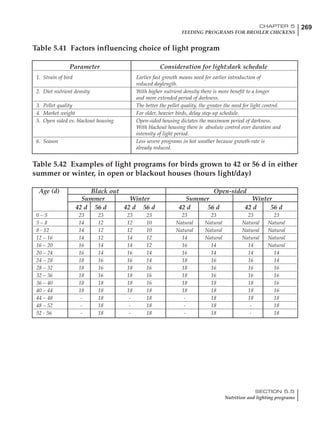
(MJ/kg) 16.23 Threonine 1.53
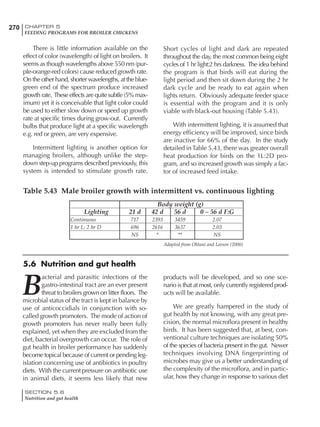
Calcium 0.15 Arginine 2.74
Av. Phosphorus 0.28
Sodium 0.05 Dig Methionine 0.41
Chloride 0.04 Dig Meth + Cys 0.93
Potassium 1.50 Dig Lysine 2.00
Selenium (ppm) 0.10 Dig Tryptophan 0.39
Fat 20.0 Dig Threonine 1.27
Linoleic acid 9.0 Dig Arginine 2.31
Crude Fiber 2.0
Nutrient Profile: (%)
Bulk Density:
Formulation Constraints:
QA Schedule:
kg/m3 lb/ft3 lb/bushel
750 47 60
Bird age Min. Max. Comments
0-4 wk 15 In broiler finisher diets, > 30%
may cause ‘oily’ fat depots.
4-8 wk 20
Adult 30
Moisture CP Fat Ca/P AA’s Other
All deliveries 1 mos 1 mos 6 mos 12 mos Monthly analyses for
urease or KOH solubility
37CHAPTER 2
INGREDIENT EVALUATION AND DIET FORMULATION
SECTION 2.1
Description of ingredients
11. Canola meal
Nutritional Characteristics:
Canola is a widely grown crop in western
Canada and production is increasing in other parts
of the world. Production has been influenced
by the marked increase in the demand for
canola oil as well as the ability of this high
protein oilseed to grow in northern climates
where the short growing season is not suitable
for the production of soybeans.
While canola was derived from varieties of
rapeseed, its composition has been altered
through genetic selection. The level of goitrogens
and erucic acid, two of the more detrimental con-
stituents of the original rapeseed cultivars, have
been markedly reduced. Erucic acid levels are
now negligible while goitrogen levels are down
to less than 20 µg/g and these levels are low
enough to be of little or no problem to poultry.
Varieties containing such levels of toxins are
classified as canola and are often referred to as
‘double zero varieties’.
Canola still has enough goitrogen activity to
result in measurable increases in thyroid weight,
although this does not appear to be a problem
affecting the performance of poultry. The tannin
levels in canola can also be relatively high,
with up to 3% for some cultivars. Again, research
has shown that the canola tannins have little
influence in the utilization of the protein in
diets containing appreciable levels of the meal.
Canola meal also contains significant
quantities (1.5%) of sinapine. While this
compound poses no problem to most classes of
poultry, a significant percent of brown egg layers
produce eggs with a fishy and offensive odour
when fed canola sinapines. One of the end
products of the degradation of sinapine in the
intestinal tract is trimethylamine and it is this com-
pound, which is involved in the production of
fishy- flavored eggs. A small proportion of
today’s brown egg laying birds lack the ability to
produce trimethylamine oxidase which effectively
breaks down the compound and so the intact
trimethylamine is deposited into the egg. Even
1% sinapine in canola can result in off-flavored
eggs. It should be pointed out that brown eggs
produced by broiler breeders, are not affected
by canola sinapines.
While canola meal has been accepted by the
feed industry as a high quality feedstuff for
poultry, there continues to be isolated reports of
increased leg problems with broilers and turkeys,
smaller egg size with layers and in some cases,
reports of increased liver hemorrhages when diets
contain significant amounts of canola meal.
There are several reports which suggest that
increased leg problems resulting from feeding
canola may be due to its having a different
mineral balance than does soybean meal. The
addition of dietary K, Na and in some cases Cl
have, under certain conditions, altered bird
performance. Canola is also high in phytic
acid and so there is speculation that the high level
of this compound may be sequestering zinc
and this affects bone development. The smaller
egg size reported with canola meal diets seems
to be a direct result of lower feed intake. Canola
meal levels should therefore be limited in diets
for very young laying hens, or at least until feed
intake plateaus at acceptable levels.
Within the past few years, there have been
reports suggesting that high levels of sulfur in canola
meal may be responsible for some of the leg
problems and reduced feed intake noted with
canola meal diets. Canola meal contains 1.4% sul-
fur while soybean meal contains around 0.44%.
SECTION 2.1
Description of ingredients
38 CHAPTER 2
INGREDIENT EVALUATION AND DIET FORMULATION
Up to 75% of the sulfur in soybean meal is
contributed by the sulfur amino acids com-
pared to around only 20% for canola meal.
High levels of dietary sulfur have been report-
ed to complex intestinal calcium and lead to
increased calcium excretion.This could explain
the reports suggesting low availability of calci-
um in canola meal, and so possibly contribute
to more leg problems. While lower weight
gain has periodically been reported with canola
diets, it is usually noted that feed:gain ratios are
little affected. This situation suggests that the reduc-
tion in gain was not the result of reduced
nutrient availability but rather a direct effect
on appetite, resulting in reduced feed intake.
Recent work demonstrates quite clearly that a soy-
bean meal diet containing the same level of sul-
fur as that in canola diets results in comparable
weight gain and feed intake in young broilers (Table
2.4). In this study, the unsupplemented canola
diet contained 0.46% sulfur while the soy diet
contained 0.14%. Adding sulfur to the soy-
bean meal diet resulted in a decrease in weight
gain. The level of sulfur in the unsupplemented
canola diet (0.46%) lies part way between the
levels found in the 0.26 and 0.39% sulfur sup-
plemented soybean meal diet. Weight gain for
the unsupplemented canola meal diet was 424
g while the average for the two soybean meal diets
was 426 g. Higher dietary calcium levels par-
tially overcame the growth depressing effect of
high dietary sulfur thus demonstrating the neg-
ative effect of sulfur on calcium retention.
Protein Suppl. S Total S Calcium Weight
source (%) (%) level (%) gain (g)
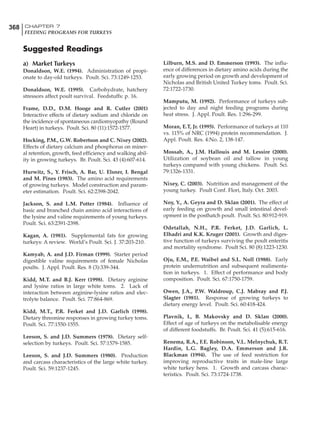
- .46 .37 424
Canola meal .26 .72 .37 371
- .46 1.32 560
.26 .72 1.32 481
- .14 .37 525
.13 .27 .37 519
.26 .40 .37 479
.39 .53 .37 373
Soybean meal - .14 1.32 635
.13 .27 1.32 598
.26 .40 1.32 559
.39 .53 1.32 451
Table 2.4 Interaction of sulfur and calcium in canola and
soybean meal diets
39CHAPTER 2
INGREDIENT EVALUATION AND DIET FORMULATION
SECTION 2.1
Description of ingredients
In view of the reductions in appetite and cal-
cium retention resulting from high dietary sul-
fur levels, these need to be closely monitored if
substantial levels of canola meal are used. High
levels of methionine or sulphate salts, along
with ingredients with significant amounts of
sulfur, such as phosphate supplements, can add
considerable sulfur to a diet. Some sources of
water can also be high in sulfur. Broilers can
tolerate dietary sulfur levels of up to around 0.5%
without any effect on performance while laying
hens can handle even higher levels. There are
reports which suggest that part of the response
to increased levels of dietary sulfur is due to its
influence in dietary acid-base balance. While
Mongin, in his original work, suggested considering
Na, K, and Cl in the dietary acid-base balance
equation, S, being a strong anion, should also be
considered in this equation if > 8% canola
meal is used in poultry diets.
Potential Problems:
Canola meal contains less lysine than does
soybean meal but slightly more sulfur amino acids
per unit of dietary protein. It is also lower in
energy than is soybean meal. Levels of up to 8%
canola meal can be used in laying diets without
any adverse effects on performance although
egg size may be reduced by up to 1 g. Energy
content is the factor that usually limits inclusion
level. Levels of toxic goitrogens should be assayed
periodically, together with tannins. Canola meal
should not be fed to brown egg layers.
Dry Matter 90.0 Methionine 0.69
Crude Protein 37.5 Methionine + Cystine 1.3
Metabolizable Energy: Lysine 2.21
(kcal/kg) 2000 Tryptophan 0.50
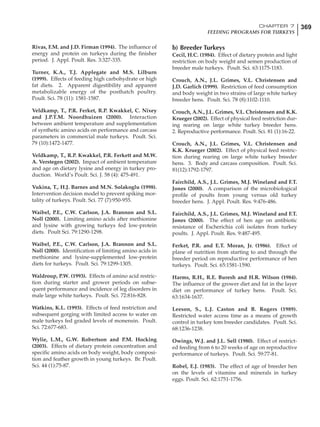
(MJ/kg) 8.37 Threonine 1.72
Calcium 0.65 Arginine 2.18
Av. Phosphorus 0.45
Sodium 0.09 Dig Methionine 0.61
Chloride 0.05 Dig Meth + Cys 1.08
Potassium 1.45 Dig Lysine 1.76
Selenium (ppm) 0.90 Dig Tryptophan 0.38
Fat 1.5 Dig Threonine 1.30
Linoleic acid 0.5 Dig Arginine 1.92
Crude Fiber 12.0
Nutrient Profile: (%)
kg/m3 lb/ft3 lb/bushel
625 39 50
Bulk Density:
SECTION 2.1
Description of ingredients
40 CHAPTER 2
INGREDIENT EVALUATION AND DIET FORMULATION
12. Corn gluten meal
Nutritional Characteristics:
Corn gluten meal contains around 60% CP
and is a by-product of wet milling of corn, most
of which is for manufacture of high-fructose
corn syrup. Being high in protein, it is often com-
pared to animal protein ingredients during for-
mulation. The protein is merely a concentration
of the original corn protein component brought
about by removal of the starch in the endosperm.
There are, in fact, two products often manufactured
during wet milling, the alternate being corn
gluten feed which contains only 20% CP, due to
dilution with various hull material. In certain
regions of the world, the two products are mere-
ly called ‘corn gluten’ and so this must be dif-
ferentiated based on protein content. Corn
gluten meal is very deficient in lysine, although
with appropriate use of synthetic lysine sources,
the product is very attractive where high nutri-
ent density is required. Gluten meal is also
very high in xanthophylls pigments (up to 300
mg/g) and is a very common ingredient where
there is a need to pigment poultry products.
Potential Problems:
Periodically corn gluten feed (20% CP) is inad-
vertently formulated as corn gluten meal (60%
CP). Using much more than 10% corn gluten
meal will produce a visible increase in pigmen-
tation of broilers and egg yolks.
Bird age Min. Max. Comments
0-4 wk 5% Potential problems with tannins,
4-8 wk 8%
low energy and high sulfur.
Adult 8%
Not for brown egg layers.
Formulation Constraints:
QA Schedule:
Moisture CP Fat Ca/P AA’s Other
All deliveries 6 mos 12 mos 12 mos 12 mos Tannins, sulfur and goitrogens
each 6 mos.
41CHAPTER 2
INGREDIENT EVALUATION AND DIET FORMULATION
SECTION 2.1
Description of ingredients
Dry Matter 90.0 Methionine 1.61
Crude Protein 60.0 Methionine + Cystine 2.52
Metabolizable Energy: Lysine 0.90
(kcal/kg) 3750 Tryptophan 0.30
(MJ/kg) 15.70 Threonine 1.70
Calcium 0.10 Arginine 2.20
Av. Phosphorus 0.21
Sodium 0.10 Dig Methionine 1.44
Chloride 0.06 Dig Meth + Cys 2.22
Potassium 0.04 Dig Lysine 0.81
Selenium (ppm) 0.30 Dig Tryptophan 0.21
Fat 2.51 Dig Threonine 1.58
Linoleic acid 1.22 Dig Arginine 2.07
Crude Fiber 2.48
Nutrient Profile: (%)
Bulk Density:
Formulation Constraints:
QA Schedule:
kg/m3 lb/ft3 lb/bushel
578 36 46.1
Bird age Min. Max. Comments
0-4 wk 15% Pigmentations increases with
4-8 wk 20% > 10% inclusion.
8 wk+ 20%
Moisture CP Fat Ca/P AA’s Other
All deliveries 3 mos 6 mos 6 mos 12 mos -
SECTION 2.1
Description of ingredients
42 CHAPTER 2
INGREDIENT EVALUATION AND DIET FORMULATION
13. Cottonseed meal
Nutritional Characteristics:
Cottonseed meal is not usually considered
in diets for poultry, although for obvious economic
reasons it is often used in cottonseed producing
areas. A high fiber content and potential con-
tamination with gossypol are the major causes
for concern. Gossypol is a yellow polyphenolic
pigment found in the cottonseed ‘gland’. In most
meals, the total gossypol content will be around
1%, although of this, only about 0.1% will be
free gossypol. The remaining bound gossypol is
fairly inert, although binding can have occurred
with lysine during processing, making both the
gossypol and the lysine unavailable to the bird.
So-called ‘glandless’ varieties of cottonseed are
virtually free of gossypol.
Birds can tolerate fairly high levels of
gossypol before there are general problems
with performance although at much lower
levels there can be discoloration of the yolk
and albumen in eggs. Characteristically the
gossypol causes a green-brown-black
discoloration in the yolk depending upon
gossypol levels, and the duration of egg storage.
As egg storage time increases, the discoloration
intensifies, especially at cool temperatures (5ºC)
where there is more rapid change in yolk pH.
Gossypol does complex with iron, and this
activity can be used to effectively detoxify the meal.
Adding iron at a 1:1 ratio in relation to free
gossypol greatly increases the dietary inclusion
rate possible in broiler diets and also the level
at which free gossypol becomes a problem with
laying hens. Because most cottonseed samples
contain around 0.1% free gossypol, detoxifica-
tion can be accomplished by adding 0.5 kg
ferrous sulphate/tonne feed. With addition of iron,
broilers can withstand up to 200 ppm free
gossypol, and layers up to 30 ppm free gossypol
without any adverse effects.
If cottonseed meal contains any residual
oil, then cyclopropenoid fatty acids may contribute
to egg discoloration. These fatty acids are
deposited in the vitelline membrane, and alter
its permeability to iron that is normally found only
in the yolk. This leached iron complexes with
conalbumin in the albumen producing a
characteristic pink color. Addition of iron salts
does not prevent this albumen discoloration, and
the only preventative measure is to use cottonseed
meals with very low residual fat content.
Potential Problems:
Yolk discoloration is the main concern, and
so ideally, cottonseed meal should not be used
for laying hens or breeders. The lysine in cotton-
seed is particularly prone to destruction due to
overheating of meals during processing.
43CHAPTER 2
INGREDIENT EVALUATION AND DIET FORMULATION
SECTION 2.1
Description of ingredients
Dry Matter 90 Methionine 0.49
Crude Protein 41.0 Methionine + Cystine 1.11
Metabolizable Energy: Lysine 1.67
(kcal/kg) 2350 Tryptophan 0.50
(MJ/kg) 9.83 Threonine 1.31
Calcium 0.15 Arginine 4.56
Av. Phosphorus 0.45
Sodium 0.05 Dig Methionine 0.35
Chloride 0.03 Dig Meth + Cys 0.75
Potassium 1.10 Dig Lysine 1.18
Selenium (ppm) 0.06 Dig Tryptophan 0.35
Fat 0.50 Dig Threonine 0.90
Linoleic acid 0.21 Dig Arginine 3.68
Crude Fiber 14.50
Nutrient Profile: (%)
Bulk Density:
Formulation Constraints:
QA Schedule:
kg/m3 lb/ft3 lb/bushel
644 40.1 51.3
Bird age Min. Max. Comments
0-4 wk 10% Maximum levels dependent upon levels of free gossypol.
Inadvisable for layers if alternative ingredients available.4-8 wk 15%
8-18 wk 20%
18 wk+ 10%
Moisture CP Fat Ca/P AA’s Other
All deliveries 6 mos 6 mos 12 mos 12 mos Gossypol 2-3 times each year
SECTION 2.1
Description of ingredients
44 CHAPTER 2
INGREDIENT EVALUATION AND DIET FORMULATION
14. Flaxseed
Other Names: Linseed
Nutritional Characteristics:
Flax is grown essentially for its oil content,
although in Europe there is still some production
of special varieties for linen production. Fat-
extracted flax, which is commonly called linseed
meal, has traditionally been used for ruminant
feeds. Over the last few years, there has been
interest in feeding full-fat flaxseed to poultry,
because of its contribution of linolenic acid. Flax
oil contains about 50% linolenic acid (18:3w3)
which is the highest concentration of omega-3
fatty acids within vegetable oils. It has recent-
ly been shown that 18:3w3, and its desaturation
products docosahexaenoic acid and eicos-
apentaenoic acid are important in human health,
and especially for those individuals at risk from
chronic heart disease. Government agencies in
many countries now recognize the importance
of linolenic acid in human health, suggesting the
need to increase average daily intake, and
especially intake in relation to that of linoleic acid.
Feeding flaxseeds to poultry results in direct
incorporation of linolenic acid into poultry
meat and also into eggs. Feeding laying hens 10%
flax results in a 10-fold increase in egg yolk
linolenic acid content and eating two such
modified eggs each day provides adults with most
of their daily recommended allowance of
linolenic acid. For each 1% of flaxseed added
to a layer diet, there will be a +40 mg increase
in total omega-3 fatty acids per egg. Likewise,
in broilers, each 1% flaxseed addition will
increase total omega-3 fats in the carcass by +2%
of total fat. Feeding layers 8% flaxseed will result
in an egg with about 320 mg total omega-3
fatty acids. For broiler chickens, there is no need
to feed flaxseed for the entire grow-out period.
Feeding 10% flaxseed to broilers for only the last
14 d of grow-out, results in significant incorporation
of omega-3 fatty acids in the meat. With cooked
breast + skin there is an increase in omega-3 con-
tent from 150 675 mg/100 g cooked product.
Linolenic acid enriched eggs and poultry meat
are therefore an attractive alternative to con-
sumption of oily fish. Linolenic acid is essentially
responsible for the characteristic smell of ‘fish oils’
and undoubtedly flax oil does have a ‘paint-type’
smell. There is some concern about the taste and
smell of linolenic acid-enriched poultry meat and
this topic needs more careful study with controlled
taste panel work. There is often discussion
about the need to grind flaxseed. The seeds are
very small, and for birds with an ‘immature’
gizzard it seems likely that some seeds will
pass directly through the bird. Flaxseeds are quite
difficult to grind, and are usually mixed 50:50
with ground corn before passing through a
hammer mill. Perhaps the greatest benefit to
grinding is seen with mash diets. Table 2.5
shows digestible amino acid values, determined
with adult roosters for whole and ground flaxseed.
These digestibility values were determined
using the force-feeding method, and so the bird
is fed only the flaxseed, which is a novel
situation to the bird. Over time gizzard
activity may increase and so digestibility of
whole seeds may improve. Using a classicalAMEn
bioassay, we have shown a consistent increase
in AMEn of flaxseed when diets are steam
crumbled (Table 2.6).
45CHAPTER 2
INGREDIENT EVALUATION AND DIET FORMULATION
SECTION 2.1
Description of ingredients
Table 2.5 Amino acid digestibility
of flaxseed (%)
Flaxseed
Whole Ground
Methionine 68 85
Cystine 68 87
Lysine 72 88
Threonine 65 82
Tryptophan 85 95
Arginine 71 92
Isoleucine 66 86
Valine 65 84
Leucine 67 87
Courtesy Novus Int.
Table 2.6 Effect of steam crumbling
on AMEn of flaxseed (kcal/kg)
Bird Type Mash Steam
Crumble
Broiler chicken 3560 4580 +31%
Rooster 3650 4280 +17%
Laying hen 3330 4140 +24%
Adapted from Gonzalez (2000) and Bean (2002)
These assays were conducted at different
times and with different samples of flaxseed. In
another study there was an 18% improvement
in AMEn for layers when flaxseed was extruded.
Conventional pelleting seems sufficient to
weaken the seed structure so as to allow greater
digestibility of amino acids and energy.
With laying hens, there may be transitory
problems with suddenly incorporating 8-10%
flaxseed in the diet, usually manifested as
reduced feed intake and/or wet sticky manure.
These problems can usually be overcome by
gradual introduction of flaxseed, using for ex -
ample, 4% for one week, followed by 6% for
another week and then the final 8-10% inclusion.
It usually takes 15-20 d in order for omega-3
content of eggs to plateau at the desired level of
300 mg/egg. With prolonged feeding there is often
greater incidence of liver hemorrhage in layers,
even though mortality is rarely affected. Such
hemorrhaging occurs even in the presence of
100-250 IU vitamin E/kg diet, which is a
regular addition to flax-based diets. Disruption
to liver function may become problematic if
other stressors occur.
Potential Problems:
Flaxseed should be introduced gradually
when feeding young layers. Weekly increments
using 4-6 and 8-10% over 3 weeks are ideal to pre-
vent feed refusal. Ground flaxseed is prone to oxida-
tive rancidity, and so should be used
within 2-3 weeks of processing.There seem to be
advantages to steam pelleting diets contain-ing
flaxseed. Flaxseed contains a number of
antinutrients including mucilage, trypsin inhibitor,
cyanogenic glycosides and considerable
quantities of phytic acid. The mucilage is main-
ly pectin, found in the seed coat and can be 5-7%
by weight. The mucilage undoubtedly con-
tributes to more viscous excreta, and there is
some evidence that ß-glucanase enzymes may be
of some benefit, especially with young birds.
Flaxseed may contain up to 50% of the level of
trypsin inhibitors found in soybeans, and this is
possibly the basis for response to heat treatment
and steam pelleting of flaxseed. The main glucosides
yield hydrocyanic acid upon hydrolysis, and this
has an adverse effect on many enzyme systems
involved in energy metabolism.
SECTION 2.1
Description of ingredients
46 CHAPTER 2
INGREDIENT EVALUATION AND DIET FORMULATION
Dry Matter 90.0 Methionine 0.41
Crude Protein 22.0 Methionine + Cystine 0.82
Metabolizable Energy: Lysine 0.89
(kcal/kg) 35001
-42002
Tryptophan 0.29
(MJ/kg) 14.64–17.60 Threonine 0.82
Calcium 0.25 Arginine 2.10
Av. Phosphorus 0.17
Sodium 0.08 Dig Methionine 0.281-0.352
Chloride 0.05 Dig Meth + Cys 0.56-0.70
Potassium 1.20 Dig Lysine 0.64-0.78
Selenium (ppm) 0.11 Dig Tryptophan 0.25-0.27
Fat 34.0 Dig Threonine 0.53-0.67
Linoleic acid 5.2 Dig Arginine 1.49-1.93
Crude Fiber 6.0
Nutrient Profile: (%)
Bulk Density:
Formulation Constraints:
1
Mash; 2
Pellets
kg/m3
lb/ft3
lb/bushel
700 43.5 55.7
Bird age Min. Max. Comments
0-4 wk 8
4-8 wk 8
> 8 wk 10
Gradual introduction suggested
to prevent feed refusal.
Moisture CP Fat Ca/P AA’s Other
All deliveries 6 mos 6 mos 12 mos 12 mos Fatty acid profile each 12 mos.
QA Schedule:
47CHAPTER 2
INGREDIENT EVALUATION AND DIET FORMULATION
SECTION 2.1
Description of ingredients
15. Meat meal
Other names: Meat and bone meal
Nutritional Characteristics:
Meat meal is a by-product of beef or swine pro-
cessing, and this can be of variable composition.
For each 1 tonne of meat prepared for human con-
sumption, about 300 kg is discarded as inedible
product, and of this, about 200 kg is rendered into
meat meal. In the past, meat meal referred only
to soft tissue products, while meat and bone
meal also contained variable quantities of bone.
Today, meat meal most commonly refers to ani-
mal by-products with bone where protein level
is around 50% and calcium and phosphorus are
at 8% and 4% respectively. Because the miner-
al comes essentially from bone, the calcium
phosphorus ratio should be around 2:1 and devi-
ations from this usually indicate adulteration
with other mineral sources.
Variation in calcium and phosphorus content
is still problematic, and the potential for over-
feeding phosphorus is a major reason for upper
limits of inclusion level. Meat meals usually
contain about 12% fat and the best quality
meals will be stabilized with antioxidants such
as ethoxyquin. Some of the variability in
composition is now being resolved by so-called
‘blenders’ that source various meat meal
products and mix these to produce more
consistent meat meals.
Meat meals are currently not used in Europe
because of the problems they have had with BSE
(Bovine Spongiform Encephalopathy). It seems
as though conventional rendering treatments
do not inactivate the causative prions. However,
pressure treatment to 30 psi (200 kPa) for about
30 minutes during or after rendering seems to
destroy prions. Parsons and co-workers at the
University of Illinois have shown that such
pressure treatment can reduce lysine digestibility
from 75% to 55% and cystine from 65% down
to 30%. If extreme pressure treatment becomes
standard during rendering of meat meal, it will
obviously be necessary to carefully re-evaluate
nutrient availability.
Recent evidence suggests that the metabolizable
energy content of meat meal, and other animal
protein by-products, is higher than the most
common estimates used in the past. In bioassays,
ME values determined at inclusion levels of 5 –10%
are much higher than those determined at more
classical levels of 40 – 50% inclusion. The reason
for the higher values is unclear, although it may
relate to synergism between protein or fat sources,
and these are maximized at low inclusion levels.
Alternatively, with very high inclusion levels of meat
meal, the high calcium levels involved may
cause problems with fat utilization due to soap
formation, and so energy retention will be reduced.
Another reason for change in energy value, is that
commercial samples of meat meal today contain
less bone than occurred some 20 – 30 years ago.
Dale suggests that the TMEn of meat meal from
beef is around 2,450 kcal/kg while that from
pork is closer to 2,850 kcal/kg.
Another concern with meat meal is microbial
content, and especially the potential for con-
tamination with salmonella. Due to increasing
awareness and concern about microbial quality,
surveys show that the incidence of contamination
has declined, but remains at around 10%. Protein
blendsareathighestrisk,becauseobviouslyasingle
contaminated source can lead to spread of
salmonella in various blended products. One means
of reducing microbial load is to treat freshly
processed meals with organic acids. In many stud-
ies, it is shown that meals are virtually sterile when
SECTION 2.1
Description of ingredients
48 CHAPTER 2
INGREDIENT EVALUATION AND DIET FORMULATION
they emerge from the cooking chambers, and that
problems most often occur with recontamination.
Certainly most feed ingredients contain salmonella,
however, because of the relative proportion of meat
meals used in a diet, the actual chance of
contamination for a single bird may, in fact,
come from corn (Table 2.7).
The relative risk to an individual bird is,
therefore, claimed to be higher from cereals
because, even though they are not usually
contaminated, their much higher inclusion level
results in a greater potential risk. However,
this type of argument is open to the real criticism
that meat meals are much more likely to con-
taminate the feed, trucks, equipment etc., and
that salmonella numbers will likely increase
after feed manufacture. Pelleted and extruded/
expanded diets will have much lower microbial
counts than corresponding mash diets.
Unfortunately, there is variability in nutrient
availability of conventionally rendered meat
meal, where lysine digestibility, for example, can
vary from 70 to 88%. Such variability is not
highly correlated with simple in vitro assays
such as pepsin digestibility and KOH solubility.
Potential problems:
Meat meal should contain no more than
4% phosphorus and 8% calcium, since higher
ash content will reduce its energy value. Nutrient
availability is variable across suppliers, and so
it is important to have adequate quality control
procedures in place, and especially when there
is a change in supplier.
Salmonella
Diet
Relative
Contamination Risk Factor
(%) (%)
Corn 1 60 60
Vegetable proteins 8 30 24
Meat meals 10 5 50
Table 2.7 Relative risk due to salmonella from
various ingredients
49CHAPTER 2
INGREDIENT EVALUATION AND DIET FORMULATION
SECTION 2.1
Description of ingredients
Dry Matter 90.0 Methionine 0.71
Crude Protein 50.0 Methionine + Cystine 1.32
Metabolizable Energy: Lysine 2.68
(kcal/kg) 2450 - 2850 Tryptophan 0.36
(MJ/kg) 10.25 - 11.92 Threonine 1.52
Calcium 8.0 Arginine 3.50
Av. Phosphorus 4.0
Sodium 0.50 Dig Methionine 0.62
Chloride 0.90 Dig Meth + Cys 0.95
Potassium 1.25 Dig Lysine 2.09
Selenium (ppm) 0.4 Dig Tryptophan 0.26
Fat 11.5 Dig Threonine 1.17
Linoleic acid 1.82 Dig Arginine 2.78
Crude Fiber -
Nutrient Profile: (%)
kg/m3 lb/ft3 lb/bushel
394 37 47.4
Bulk Density:
Formulation Constraints:
QA Schedule:
Bird age Min. Max. Comments
0-4 wk 6% Main concern is
4-8 wk 8% level of Ca and
> 8 wk 8%
P, and ash
Moisture CP Fat Ca/P AA’s Other
All deliveries Yearly Fatty acid profile yearly.
Salmonella each 3 months.
SECTION 2.1
Description of ingredients
50 CHAPTER 2
INGREDIENT EVALUATION AND DIET FORMULATION
As for meat meal, poultry by-product meal
is produced essentially from waste generated
during poultry meat processing. Because only
one species is used, PBM should be a more
consistent product than is meat meal, and
certainly calcium and phosphorus levels will be
lower. Variability in composition relates to
whether or not feathers are added during processing
or kept separate to produce feather meal. PBM
and feathers are best treated using different
conditions, because feathers require more
extreme heat in order to hydrolyze the keratin
proteins. PBM with feathers may therefore
mean that either the feather proteins are under-
cooked or that the offal proteins are overcooked.
Overcooking usually results in a much darker
colored product. PBM contains more unsaturated
fats than does meat meal, and so if much more
than 0.5% fat remains in the finished product,
it should be stabilized with an antioxidant.
Because of problems of disposal of spent
layers, there is now some production of ‘spent
hen meal’ which is essentially produced by
rendering the whole body, including feathers. Such
spent hen meal contains around 11% fat and 20%
ash, with 70% crude protein. Methionine,
TSAA and lysine in such samples are around 1.2%,
2.5% and 3.5% respectively, with digestibility
of methionine and lysine at 85%, while cystine
is closer to 60% digestible. As with poultry by-
product meal, the ME of spent hen meal is
influenced by content of ash, fat and protein, with
a mean value around 2,800 kcal/kg.
There is also current interest in ensiling
various poultry carcasses and/or poultry by-
products prior to heat processing. Ensiling
allows for more control over microbial con-
tamination prior to processing, and allows the poten-
tial to better utilize smaller quantities of poultry
carcasses on-farm or from sites more distant to
the PBM processing plant. Ensiling is also being
considered as a means of handling spent layers
prior to production of PBM. Poultry carcasses or
offal do not contain sufficient fermentable car-
bohydrate to allow lactic acid fermentation
which will quickly reduce pH to about 4.2 and
stabilize the product. These lactic acid produc-
ing microbes can therefore be encouraged to pro-
liferate by adding, for example, 10% molasses or
10% dried whey to ground carcasses. These
mixtures quickly stabilize at around pH 4.2 – 4.5,
and can be held for 10 – 15d prior to manufac-
ture of PBM. Carcasses from older birds may require
slightly higher levels of theses carbohydrates, and
because of their inherently high fat content,
may be mixed with products such as soybean meal
in order to improve handling characteristics.
Ensiled whole carcasses, as is now being produced
with spent fowl, may present problems with
availability of feather proteins for reasons outlined
previously in terms of ideal processing conditions
for tissue versus feathers. In the future, this
problem may be resolved by adding feather-
degrading enzymes to the ensiling mixture.
Potential problems:
Nutritive value will be positively correlated
with protein and fat content and negatively
correlated with ash. Cystine content will give
an indication if feathers were included during
processing, which will detract from amino acid
digestibility.
16. Poultry by-product meal
Other Names: Poultry Meal, PBM Nutritional Characteristics:
51CHAPTER 2
INGREDIENT EVALUATION AND DIET FORMULATION
SECTION 2.1
Description of ingredients
Dry Matter 90.0 Methionine 1.3
Crude Protein 60.0 Methionine + Cystine 3.3
Metabolizable Energy: Lysine 3.4
(kcal/kg) 2950 Tryptophan 0.4
(MJ/kg) 12.34 Threonine 2.2
Calcium 3.60 Arginine 3.5
Av. Phosphorus 2.10
Sodium 0.36 Dig Methionine 1.1
Chloride 0.40 Dig Meth + Cys 2.3
Potassium 0.28 Dig Lysine 2.7
Selenium (ppm) 0.90 Dig Tryptophan 0.3
Fat 8.50 Dig Threonine 1.8
Linoleic acid 2.50 Dig Arginine 3.0
Crude Fiber 1.9
Nutrient Profile: (%)
Bulk Density:
kg/m3 lb/ft3 lb/bushel
578 36.0 46.1
FormulationConstraints:
Bird age Min. Max. Comments
0-4 wk 8% No major concerns other
4-8 wk 10% than fat stability
> 8 wk 10%
QA Schedule:
Moisture CP Fat Ca/P AA’s Other
All samples Weekly Weekly Weekly Yearly Digestible amino acids,
including cystine, yearly
SECTION 2.1
Description of ingredients
52 CHAPTER 2
INGREDIENT EVALUATION AND DIET FORMULATION
17. Feather meal
Nutritional Characteristics:
Feather meal can be an excellent source of
crude protein where this is needed to meet
regulatory requirements. However, its use is severe-
ly limited by deficiencies of several amino acids,
including methionine, lysine and histidine.
Feather meal usually contains about 4.5 – 5.0%
cystine, and this should be around 60% digestible.
The energy value of feather meal is quite high,
being around 3300 kcal ME/kg, and Dale and
co-workers at the University of Georgia suggests
TMEn of feather meal is highly correlated with
its fat content (2860 + 77 x % fat, kcal/kg).
Variability in quality is undoubtedly related to
control over processing conditions. Feathers are
partially dried and then steam-treated to induce
hydrolysis, and within reason, the higher the
temperature and/or longer the processing time,
the better the chance of complete hydrolysis.
Obviously extreme processing conditions will cause
destruction of heat-labile amino acids such as
lysine. As a generalization, the lower the pro-
cessing and drying temperatures, the lower the
level of cystine digestibility. Research has shown
processing conditions to result in digestible
cystine levels as low as 45% with low cooking
temperature, to as high as 65% with higher
temperatures for longer durations. Because
feather meal is an important contributor to
TSAA in the diet, the level of digestible cystine
is a critical factor in evaluating nutritive value.
High pressure, unless for a short duration,
seems to reduce amino acid digestibility, and again
this is especially critical for cystine. Under
extreme processing conditions it seems as though
sulfur can be volatilized, likely as hydrogen
sulfide, and so another simple test for protein
quality, is total sulfur content. Sulfur level
should be just over 2%, and any decline is like-
ly a reflection of higher than normal processing
temperature, time and/or pressure, all of which
will adversely affect amino acid digestibility.
Feather meal also contains an amino acid
called lanthionine, which is not normally found
in animal tissue. Total lanthionine levels can there-
fore be used in assaying meat meal products for
potential contamination with feathers. Lanthionine
can occur as a breakdown product of cystine, and
there are some research results which indicate
a very good correlation between high lanthio-
nine levels and poor digestibility of most other
amino acids. In most feather meal samples,
lanthionine levels should be at 20 – 30% of total
cystine levels. A potential problem in using
lanthionine assays in quality control programs,
is that it is readily oxidized by performic acid,
which is a common step used in preparation of
samples for amino acid analysis and particularly
where cystine levels are of interest.
As with other animal proteins, there is current
interest in alternate methods of processing.
Treating feathers with enzyme mixtures that pre-
sumably contain keratinase enzyme together
with NaOH has been shown to improve overall
protein digestibility and bird performance. More
recently, it has been shown that a pre-fermenta-
tion with bacteria such as Bacillus licheniformis
for 5 d at 50ºC, produces a feather lysate that is
comparable in feeding value to soybean meal when
amino acid balance is accounted for.
Potential problems:
Amino acid digestibility, and especially
cystine digestibility is greatly influenced by
processing conditions. Monitoring total sulfur
levels may be a simple method of assessing
consistency of processing conditions.
53CHAPTER 2
INGREDIENT EVALUATION AND DIET FORMULATION
SECTION 2.1
Description of ingredients
Nutrient Profile: (%)
Dry Matter 90.0 Methionine 0.60
Crude Protein 85.0 Methionine + Cystine 6.10
Metabolizable Energy: Lysine 1.72
(kcal/kg) 3000 Tryptophan 0.60
(MJ/kg) 12.55 Threonine 4.51
Calcium 0.20 Arginine 6.42
Av. Phosphorus 0.70
Sodium 0.70 Dig Methionine 0.47
Chloride 0.40 Dig Meth + Cys 2.85
Potassium 0.30 Dig Lysine 1.10
Selenium (ppm) 0.72 Dig Tryptophan 0.41
Fat 2.50 Dig Threonine 3.15
Linoleic acid 0.10 Dig Arginine 5.05
Crude Fiber 1.50
Bulk Density:
kg/m3 lb/ft3 lb/bushel
460 28.7 36.7
Formulation Constraints:
Bird age Min. Max. Comments
0-4 wk 2% Amino acid
4-8 wk 3% digestibility the
> 8 wk 3% main concern
QA Schedule:
Moisture CP Fat Ca/P AA’s Other
All deliveries Weekly Monthly 6 mos 6 mos Total sulfur each 3 months
SECTION 2.1
Description of ingredients
54 CHAPTER 2
INGREDIENT EVALUATION AND DIET FORMULATION
Because of the decline in activities of most
fisheries directed at human consumption, fish meals
are now almost exclusively produced from
smaller oily fish caught specifically for meal
manufacture. Menhaden and anchovy are the
main fish species used for meal manufacture, with
lesser quantities of herring meal produced in
Europe. Fish meal is usually an excellent source
of essential amino acids, while energy level is
largely dependent upon residual oil content.
Because of variable oil and protein content,
expected ME value can be calculated based
on knowledge of their composition in the meal.
ME (kcal/kg) = 3000 ± (Deviation in % fat x
8600) ± (Deviation in % CP x 3900)
Where standard fat content is 2%, and CP is 60%.
Therefore, a 4% fat, 63% CP sample is
expected to have an ME of 3289 kcal/kg, while
a 1% fat, 58% CP sample will have ME closer
to 2836 kcal/kg. The ash content of fishmeal will
be predominantly calcium and phosphorus and
the latter can be around 90% available, as is
phosphorus from any quality animal protein.
All fish meals should be stabilized with
antioxidants. This is especially true for high oil
content samples, but even with only 2%
residual oil, there is good evidence to show
reduced oxidation (in terms of production of
oxidation products and free fatty acids, as well
as reduced heat production) by adding 100
ppm ethoxyquin during manufacture.
Potential problems in feeding fish meal are
taint of both eggs and meat, and gizzard erosion
in young birds. With inadequately heat-treated
fishmeal, especially from fresh water fish, there
is also the potential problem of excessive
thiaminase activity. Depending upon geographical
location, taint in eggs and meat can be detected
by consumers when birds are fed much more than
4 – 5% fish meal. Problems of taint will be
more acute with high fat samples, and of course,
the problems are most acute if fish oil per se is used.
Even at levels as low as 2.5% fish meal, some brown
egg birds produce tainted eggs which may be relat-
ed to the trimethylamine content of fish meal, and
the genetic predisposition of certain birds failing
to produce sufficient trimethylamine oxidase.
Excess trimethylamine is shunted to the egg, pro-
ducing a characteristic fishy taint (see also canola
meal). The trimethylamine content of fish meal
is around 50 – 60 mg/kg, and assuming a 2.5%
inclusion level, and feed intake of such brown egg
layers of 115 g/day, means that the bird is taking
in about 0.2 mg/day. Each affected egg con-
tains around 0.8 mg, and so, it is obvious that the
diet contains sources of trimethylamine other
than fish meal, or that there is microbial synthe-
sis in the intestine.
For young chicks, and especially the broil-
er chicken, a major concern with feeding fish meal,
is gizzard erosion. A proportion of chicks fed
almost any level of fish meal develop gizzard
lesions, although there is a strong dose-response.
Affected birds have signs ranging from small
localized cracks in the gizzard lining, through
to severe erosion and hemorrhage which ultimately
leads to total destruction of the lining. The
thick lining is required for preventing degrading
effects of acid and pepsin produced by the
proventriculus. Because of disrupted protein
18. Fish meal
Other names: Herring meal; White Fish meal; Menhaden meal
Nutritional Characteristics:
55CHAPTER 2
INGREDIENT EVALUATION AND DIET FORMULATION
SECTION 2.1
Description of ingredients
degradation, the affected birds show very slow
growth rate. The condition is most common when
fish meal is included in the diet, although
similar signs are seen with birds fed a high level
of copper (250 ppm) or vitamin K deficient
diets, or simply induced by starvation. Gizzard
erosion was initially thought to be associated with
histamine levels in fish meal. Feeding histamine
to birds simulates the condition, as does feed-
ing a heated semi-purified diet containing his-
tidine. Fish meals contain histamine, and following
microbial degradation during pre-cooking stor-
age, bacteria possessing histidine decarboxy-
lase will convert variable quantities from histi-
dine to histamine. Histamine has the effect of
stimulating excessive acid production by the
proventriculus, and it is this acid environment
that initiates breakdown of the gizzard lining. A
product known as gizzerosine has been
isolated from fish meal, and this has
histamine-type properties in terms of stim-
ulating acid secretion. Gizzerosine is formed by
heating histidine and a protein during manufacture
of fish meal. The most common components are
lysine and histidine. Gizzerosine is almost 10x
as potent as is histamine in stimulating proven-
tricular acid production and some 300x more
potent in causing gizzard erosion. Currently the
only useful screening test is to feed high levels
(25 – 50%) to young chicks and score the degree
of gizzard lesions (see ingredient quality control
Section 2.2 i).
Because the mode of action of gizzerosine
is via acid production and a change in gizzard
pH, there have been attempts at adding buffers
to prevent the problem. For example adding
sodium bicarbonate has been reported to lessen
the severity of gizzard erosion. However,
levels as high as 10 kg/tonne are required to change
gizzard pH by only 0.3 units. Variable levels of
gizzerosine in fish meals likely relate to
pre-processing holding time and storage
temperature, and also to the time and temper-
ature of the cooking and oil extraction procedures.
Potential Problems:
Taint of meat or eggs can occur with much
more than 2% fish meal in the diet. Fish meal
should be stabilized with an antioxidant, and this
factor is critical when residual fat content
exceeds 2%. With young chicks, gizzard erosion
is a consequence of using poorly processed, or
inadequately stored fish meal.
SECTION 2.1
Description of ingredients
56 CHAPTER 2
INGREDIENT EVALUATION AND DIET FORMULATION
Dry Matter 90.0 Methionine 1.82
Crude Protein 60.0 Methionine + Cystine 2.92
Metabolizable Energy: Lysine 5.28
(kcal/kg) 2750 Tryptophan 0.58
(MJ/kg) 11.51 Threonine 3.01
Calcium 6.50 Arginine 4.05
Av. Phosphorus 3.50
Sodium 0.47 Dig Methionine 1.62
Chloride 0.55 Dig Meth + Cys 2.42
Potassium 0.32 Dig Lysine 4.72
Selenium (ppm) 1.85 Dig Tryptophan 0.48
Fat 2.0 Dig Threonine 2.50
Linoleic acid 0.3 Dig Arginine 3.62
Crude Fiber 1.0
Nutrient Profile: (%)
Bulk Density:
kg/m3 lb/ft3 lb/bushel
674 42 53.8
Formulation Constraints:
Bird age Min. Max. Comments
0-4 wk 8% Taint problems likely in most
4-8 wk 10% markets at levels much in excess
> 8 wk 10% of 2%
QA Schedule:
Moisture CP Fat Ca/P AA’s Other
All deliveries Monthly 12 mos Fat oxidation, gizzerosine
each 6 mos.
57CHAPTER 2
INGREDIENT EVALUATION AND DIET FORMULATION
SECTION 2.1
Description of ingredients
19. Fats and oils
Nutritional Characteristics:
Fats provide a concentrated source of energy,
and so relatively small changes in inclusion
levels can have significant effects on diet ME. Most
fats are handled as liquids, and this means
heating of most fats and fat blends that contain
appreciable quantities of saturated fatty acids.
Depending upon the demands for pellet
durability, 3 – 4% is the maximum level of fat that
can be mixed with the other diet ingredients. To
this, up to 2 – 3% can be added as a spray-on
coat to the formed pellet. Alternate technology
of spraying fat onto the hot pellet as it emerges
from the pellet die means that much higher
inclusions are possible since the hot pellet
seems better able to adsorb the fat. Under
these conditions, there is concern for manufacturers
who demand extreme pellet durability, since fines
will already be treated with extra fat, prior to their
recycling through the pellet mill.
All fats and oils must be treated with an
antioxidant which ideally should be added at the
point of manufacture. Fats held in heated tanks
at the mill must be protected from rancidity. The
more unsaturated a fat, the greater the chance
of rancidity. Fats also provide varying quantities
of the essential nutrient linoleic acid. Unless a
diet contains considerable quantities of corn, it
may be deficient in linoleic acid, because all diets
should contain a minimum of 1%. A major prob-
lem facing the industry at the moment is the
increasing use of restaurant grease in feed-grade
fats. These greases are obviously of variable
composition in terms of fatty acid profile and
content of free fatty acids. Also, dependent
upon the degree of heating that they have been
subjected to, these greases can contain significant
quantities of undesirable break-down products.
In order to ensure adequate levels of linole-
ic acid, and to improve palatability and reduce
dustiness of diets, all diets require a minimum
of 1% added fat, regardless of other economic
or nutritional considerations. There is consid-
erable information published on factors that
influence fat digestibility, but in most instances,
this knowledge is not used during formulation.
In large part variability is due to the fact that
digestibility is not a static entity for any fat, but
rather its utilization is variable with such factors
as bird age, fat composition and inclusion level.
Unfortunately, these variables are difficult to
factor into formulation programs. Other concerns
about fats are their potential for rancidity and effect
on carcass composition. Following are descrip-
tions of the major types of fat used in the feed
industry. Table 2.8 summarizes the fatty acid
profile and ME of the most common fat sources
used in poultry nutrition. An attempt has been
made to predict fat ME based on bird age.
19a. Tallow
Tallow has traditionally been the principle fat
source used in poultry nutrition. However, over the
last 10 years, there has been less use of pure tallow
and greater use of blended fats and oils. Tallow is
solid at room temperature and this presents some
problems at the mill, especially when heated
SECTION 2.1
Description of ingredients
58 CHAPTER 2
INGREDIENT EVALUATION AND DIET FORMULATION
Metabolizable
energyFatM.I.U.5
Fattyacidprofile(%)
(kcal/kg)
Ingredient11
22
%%12:014:016:018:016:118:118:218:3
19aTallow740080009824.025.024.00.543.02.00.5
19bPoultryfat820090009821.020.04.05.541.025.01.5
19cFishoil860090009918.021.04.015.017.24.43.03
19dVegetableoil880092009910.513.01.00.531.050.02.0
19eCoconutoil7000800099150.04
20.06.02.50.54.02.10.2
19fPalmoil720080009912.042.43.50.742.18.00.4
19gVegetablesoapstock780081009820.318.03.00.329.046.00.8
19hAnimal-Vegetableblend820086009822.121.015.00.432.026.00.6
19iRestaurantgrease810089009821.018.013.02.542.016.01.0
Table2.8Nutrientcompositionof
fatsandoils
1
MEforyoungbirdsupto3weeksofage;2
MEforbirdsafter3weeksofage;3
Contains25%unsaturatedfattyacids20:4;4
Contains15%saturatedfatty
acids10:0;5
Moisture,impurities,unsaponifiables.
59CHAPTER 2
INGREDIENT EVALUATION AND DIET FORMULATION
SECTION 2.1
Description of ingredients
fats are added to very cold ingredients originating
from unheated outside silos. Being highly
saturated, tallow is not well digested by young
chickens, although there is some evidence of
better utilization by young turkeys. The digestibil-
ity of tallow can be greatly improved by the
addition of bile salts suggesting this to be a
limiting feature of young chicks. However, the
use of such salts is not economical and so
inclusion of pure tallow must be severely
restricted in diets for birds less than 15 – 17 d of age.
19b. Poultry Fat
This fat source is ideal for most types and ages
of poultry in terms of its fatty acid profile. Due
to its digestibility, consistent quality and residual
flavor, it is in high demand by the pet food
industry, and this unfortunately reduces its
supply to the poultry industry.As occurs with poul-
try meal, there is a concern with integrated
poultry operations that fat-soluble contaminants
may be continually cycled (and concentrated)
through the birds. This can obviously be resolved
by breaking the cycle for a 1 or 2 bird cycle.
19c. Fish Oil
There is current interest in the use of fish oils
in diets for humans and animals, since its distinctive
component of long chain fatty acids is thought
beneficial for human health. Feeding moderate
levels of fish oils to broiler chickens has been
shown to increase the eicosapentaenoic acid
content of meat. However, with dietary levels in
excess of 1%, distinct fish type odour is often
present in both meat and eggs, which is due
mainly to the contribution of the omega-3 fatty acids.
19d. Vegetable Oil
A large range of vegetable oils is available as
an energy source, although under most situations,
competition with the human food industry
makes them uneconomic for animal feeds.
Most vegetable oils provide around 8700 kcal
ME/kg and are ideal ingredients for very young
birds. If these oils are attractively priced as
feed ingredients, then the reason(s) for refusal by
the human food industry should be ascertained
e.g. contaminants.
19e. Coconut Oil
Coconut oil is a rather unusual ingredient in
that it is a very saturated oil. Coconut oil is more
saturated than is tallow. It contains 50% of
saturated fatty acids with chain length less than
12:0. In many respects, it is at the opposite end
of the spectrum to fish oil in terms of fatty acid
profile. There has been relatively little work
conducted on the nutritional value of coconut
oil, although due to its saturated fatty acid content
it will be less well digested, especially by young
birds. However recent evidence suggests very
high digestibility by young birds of medium
chain triglycerides, such as C:8 and C:10 as
found in coconut oil. These medium length fatty
acids do not need bile for emulsification or
prior incorporation within a micelle prior to
absorption.
19f. Palm Oil
Palm oil production is now only second to
soybean oil in world production. Palm oil is
produced from the pulpy flesh of the fruit, while
smaller quantities of palm kernel oil are extracted
from the small nuts held within the body of the
fruit. Palm oil is highly saturated, and so will have
limited usefulness for very young birds. Also, soap-
stocks produced from palm oil, because of their
free fatty acid content, will be best suited for older
birds. There is potential for using palm and
coconut oils as blends with more unsaturated oils
and soapstocks, so as to benefit from potential
fatty acid synergism.
SECTION 2.1
Description of ingredients
60 CHAPTER 2
INGREDIENT EVALUATION AND DIET FORMULATION
19g. Soapstock (Acidulated soapstock)
As a by-product of the vegetable oil refining
industry, soapstocks provide a good source of
energy and essential fatty acids. Soapstocks
can be quite high in free fatty acids, and so
stabilization with an antioxidant is essential.
Soapstocks may also be acidulated, and this
may pose problems with corrosion of metallic
equipment. Some impurities may be added to
soapstocks as a means of pollution-free
disposal by refineries, and therefore quality
control becomes more critical with these
products. Moisture level may also be high in some
samples, and this simple test is worthwhile for
economic evaluation.
19h. Animal-Vegetable Blend Fat
Some manufacturers mix animal and vegetable
based fats, to give so-called blended products.
The vegetable source is usually soapstock
material. The blend has the advantage of allowing
for some synergism between saturated fatty
acids of animal origin and unsaturates from the
soapstock. Animal-vegetable blends are there-
fore ideally suited for most classes of poultry
without the adverse problem of unduly increasing
the unsaturates in meat which can lead to increased
rate of oxidative rancidity (reduced shelf life).
19i. Restaurant Grease
An increasing proportion of feed fats is
now derived from cooking fats and oils, and the
generic product is termed restaurant grease. Its
use has increased mainly due to problems of
alternate disposal. Traditionally restaurant
greases were predominately tallow or lard based
products and this posed some problems in
collection and transportation of the solid
material. In recent years, due to consumer
concerns about saturated fats, most major fast food
and restaurant chains have changed to hydro-
genated vegetable cooking fats and oils. The fats
are hydrogenated to give them protection against
high-temperature cooking. Today, restaurant
greases contain higher levels of oleic acid, and
much of this will be trans-oleate. Assuming there
has not been excessive heating, and that the grease
has been cleaned and contains a minimum of
impurities, then the energy value will be
comparable to that of poultry fat. Future use of
non-fat ‘cooking fats’ will lead to considerable
variation in the nutrient profile of these products.
19j. Conjugated Linoleic Acid (CLA)
CLA is an isomer of conventional linoleic acid,
but unlike linoleic, there are numerous health
benefits claimed for CLA. It is claimed to help
control glucose metabolism in diabetic mammals,
and more importantly to prevent and/or control
the growth of certain cancerous tumors. CLA is
normally found in dairy products, represent-
ing around 0.3% of total fat. Turkey meat is also
high in CLA. Feeding CLA to layers results in
bioaccumulation in the egg, much as for any fatty
acid, and so there is potential for producing CLA
enriched designer eggs. It seems as though the
AMEn of CLA is comparable to that of linoleic
acid, suggesting that the two fatty acids are
comparably metabolized.
It is possible that CLA is not elongated as in
linoleic acid during metabolism and so this has
posed questions about adequacy of prostaglandin
synthesis, and hence immune function. There
are some reports of altered lipid metabolism in
embryos and young chicks from eggs hatched from
hens fed 1 g CLA daily. There is some discussion
about whether or not synthetic sources of CLA
actually mimic the beneficial anti-cancerous
properties of ‘natural’ CLA found in dairy
products.
61CHAPTER 2
INGREDIENT EVALUATION AND DIET FORMULATION
SECTION 2.1
Description of ingredients
Important Considerations:
Fats and oils are probably the most problem-
atic of all the ingredients used in poultry feeds.They
require special handling and storage facilities
and are prone to oxidation over time. Their fatty
acid profile, the level of free fatty acids and degree
ofhydrogenationcanallinfluencedigestibility. Unlike
most other ingredients, fat digestion can be age
dependent, since young birds have reduced abil-
ity to digest saturated and hydrogenated fats.
a. Moisture, Impurities, Unsaponifiables
Feed grade fats will always contain some
non-fat material that is generally classified as M.I.U.
(moisture, impurities and unsaponifiables).
Because these impurities provide no energy or
little energy, they act as diluents. A recent
survey indicated M.I.U’s to range from 1 – 9%.
Each 1% MIU means a loss in effective value of
the fat by about $3 - $4/tonne, and more
importantly, energy contribution will be less
than expected. The major contaminants are
moisture and minerals. It seems as though
moisture can be quickly detected by Near Infra
Red Analysis. Moisture and minerals also lead
to increased peroxidation.
b. Rancidity and Oxidation
The feeding value of fats can obviously be
affected by oxidative rancidity that occurs prior
to, or after feed preparation. Rancidity can
influence the organoleptic qualities of fat, as well
as color and ‘texture’ and can cause destruction
of other fat soluble nutrients, such as vitamins,
both in the diet and the bird’s body stores.
Oxidation is essentially a degradation process that
occurs at the double-bond in the glyceride
structure. Because presence of double-bonds infers
unsaturation, then naturally the more unsaturated
a fat, the greater the chance of rancidity. The
initial step is the formation of a fatty free radical
when hydrogen leaves the -methyl carbon in
the unsaturated group of the fat. The resultant
free radical then becomes very susceptible to attack
by atmospheric oxygen (or mineral oxides) to form
unstable peroxide free radicals. These peroxide
free radicals are themselves potent catalysts,
and so the process becomes autocatalytic and
rancidity can develop quickly. Breakdown
products include ketones, aldehydes and short
chain fatty acids which give the fat its characteristic
‘rancid’ odour. Animal fats develop a slight
rancid odour when peroxide levels reach 20
meq/kg while for vegetable oils problems start
at around 80 meq/kg.
Oxidative rancidity leads to a loss in energy
value, together with the potential degradation of
the bird’s lipid stores and reserves of fat-
soluble vitamins. Fortunately we have some
control over these processes through the judicious
use of antioxidants. Most antioxidants essentially
function as free radical acceptors – these
radical-antioxidant complexes are, however,
stable and do not cause autocatalytic reactions.
Their effectiveness, therefore, relies on adequate
dispersion in the fat immediately after process-
ing. As an additional safety factor, most diets will
also contain an antioxidant added via the premix.
The Active Oxygen Method (AOM) is most com-
monly used to indicate potential for rancidity. After
20 h treatment with oxygen, quality fats should
develop no more than 20 meq peroxides/kg.
Time is a very important factor in the AOM
test, because peroxides can break down and
disappear with extended treatment. For this
reason, some labs will provide peroxide values
at 0, 10 and 20 hr. A newer analytical technique
is the Oil Stability Index (OSI). This is similar to
AOM, but instead of measuring initial peroxide
products, measures the accumulation of secondary
breakdown compounds. The assay is highly auto-
mated and records the time necessary to produce
a given quantity of breakdown products such as
short chain volatile fatty acids.
SECTION 2.1
Description of ingredients
62 CHAPTER 2
INGREDIENT EVALUATION AND DIET FORMULATION
c. Fatty Acid Profile
Fat composition will influence overall fat
utilization because different components are
digested with varying efficiency. It is generally
recognized that following digestion, micelle
formation is an important prerequisite to absorp-
tion. Micelles are complexes of bile salts, fatty
acids, some monoglycerides and perhaps
glycerol. The conjugation of bile salts with
fatty acids is an essential prerequisite for
transportation to and absorption through
the microvilli of the small intestine. Polar
unsaturated fatty acids and monoglycerides
readily form this important association. However,
micelles themselves have the ability to
solubilize non-polar compounds such as satu-
rated fatty acids. Fat absorption is, therefore,
dependent upon there being an adequate
supply of bile salts and an appropriate balance
of unsaturates:saturates.
Taking into account the balance of saturated
to unsaturated fatty acids can be used to advan-
tage in designing fat blends. This type of synergistic
effect is best demonstrated using pure fatty acids
(Table 2.9). In this study, the metabolizable
energy of the 50:50 mixture of the unsaturated
oleic acid with the saturated palmitic acid, is 5%
higher than the expected value based on the mean
value of 2710 kcal/kg. We therefore have a boost
of 5% in available energy that likely comes
from greater utilization of the palmitic acid
because of the presence of the unsaturated
oleic acid.
This type of synergism can, however, have a
confounding effect on some research results. If
we want to measure the digestibility of corn, it
is possible to feed just corn for a short period of
time and conduct a balance study. For obvious
reasons, it is impossible to feed only fats, and we
have to conduct studies involving graded fat
additions to a basal diet, with extrapolation of
results to what would happen at the 100%
feeding level. In these studies, we assume the
difference in digestibility between any two diets
is due solely to the fat added to the diet. If, because
of synergism, the added fat improved digestibility
of basal diet components, then this ‘boost’ in
digestibility is attributed to the fat and an erro-
neously high value is projected. However, it can
be argued that this ‘boost’ to fat’s value occurs
normally when fats are added to diets, and that
these higher values more closely reflect the
practical value of fat in a poultry diet. We have
proposed this synergism to account for some of
the so-called ‘extra-caloric’ effect of fat often seen
in reported values, where metabolizable
energy can sometimes be higher than
corresponding gross energy values (which
theoretically cannot occur). Table 2.10 shows
results from this type of study where corn oil was
assayed using different types of basal diet.
Table 2.9 Metabolizable energy of
layer diets containing various fatty
acids
(Atteh and Leeson, 1985)
Determined Expected
ME (kcal/kg)
Oleic 2920
Palmitic 2500
50:50 mixture 2850 (+5%) 2710
63CHAPTER 2
INGREDIENT EVALUATION AND DIET FORMULATION
SECTION 2.1
Description of ingredients
When the basal diet contains saturated fatty
acids, there is an apparent increase in the ME of
corn oil. This effect is possibly due to the unsat-
urates in corn oil aiding in utilization of the basal
diet saturates. However, because of methods of
diet substitution and final ingredient ME
calculation, any such synergism is attributed
to the test ingredient (corn oil).
ME values of fats will therefore vary with
inclusion level, although this effect will be
influenced by degree of fat saturation. A ratio
of 3:1, unsaturates:saturates is a good compro-
mise for optimum fat digestibility for all ages of
bird. However, this ratio may not be the most
economical type of fat to use, because of the
increased cost of unsaturates relative to saturates.
d. Level of Free Fatty Acids and Fatty
Acid Hydrogenation
Concern is often raised about the level of free
fatty acids in a fat, because it is assumed these
are more prone to peroxidation. Acidulated
soapstocks of various vegetable oils contain
the highest levels of free fatty acids, which can
reach 80 – 90% of the lipid material. For young
birds there is an indication that absorption of fatty
acids is highest in birds fed triglycerides rather
than free fatty acids and this may relate to less
efficient micelle formation or simply to less
bile production. Wiseman and Salvadore (1991)
demonstrated this effect in studying the ME
value of tallow, palm oil and soy oil that contained
various levels of free fatty acids (soapstock of the
respective fat). Table 2.11 shows a summary of
these results, indicating energy values for the
respective fats containing the highest and
lowest levels of free fatty acids used.
Table 2.10 Variation in ME value of
corn oil attributed to fatty acid
saturation of the basal diet
Basal diet Corn oil ME
(kcal/kg)
Predominantly unsaturated 8390a
Predominantly saturated 9380b
Corn-soy diet 8510a
Table 2.11 Effect of level of free
fatty acid and bird age on fat ME
value (kcal/kg)
Age
10 d 54 d
Tallow 13% FFA 7460 7940
95% FFA 4920 6830
Palm 6% FFA 6690 7800
92% FFA 3570 6640
Soy 14% FFA 9290 9300
68% FFA 8000 8480
Adapted from Wiseman and Salvador (1991)
These data suggest that free fatty acids are more
problematic when the fat is predominantly
saturated and this is fed to young birds. Contrary
to these results, others have shown comparable
results with broilers grown to market weight
and fed tallows of varying free fatty acid content.
Hydrogenation of fats becomes an issue
with the general use of these fats in restaurants,
and the fact that restaurant grease is now a
common, and sometimes the major compo-
nent of feed-grade fat blends. Hydrogenation
results in a high level of trans oleic acid (40 – 50%)
and such vegetable oils have physical characteristics
similar to those of lard. There seems to be no
problem in utilization of these hydrogenated fats
by poultry with ME values of restaurant greases
being comparable to those of vegetable oils. The
long-term effect of birds eating trans fatty acids
is unknown at this time.
SECTION 2.1
Description of ingredients
64 CHAPTER 2
INGREDIENT EVALUATION AND DIET FORMULATION
e. Bird Age and Bird Type
Young birds are less able to digest saturated
fats, and this concept has been known for some
time. With tallow, for example, palmitic acid
digestibility increases from 50 to 85% through
14 to 56 d of age, which together with corre-
sponding changes for other fatty acids means that
tallow ME will increase by about 10% over this
time period.The reason why young birds are less
able to digest saturated fats is not well understood,
although it may relate to less bile salt production,
less efficient recirculation of bile salt or less
production of fatty acid binding protein.
f. Soap Formation
When fats have been digested, free fatty
acids have the opportunity of reacting with
other nutrients. One such possible association
is with minerals to form soaps that may or may
not be soluble. If insoluble soaps are formed, there
is the possibility that both the fatty acid and the
mineral will be unavailable to the bird. There is
substantial soap formation in the digesta of
broiler chicks and this is most pronounced with
saturated fatty acids, and with increased levels
of diet minerals. Such increased soap production
is associated with reduced bone ash and bone
calcium content of broilers. Soap production seems
to be less of a problem with older birds. This is
of importance to laying hens that are fed high
levels of calcium. In addition to calcium, other
minerals such as magnesium can form soaps with
saturated fatty acids. In older birds and some other
animals, there is an indication that while soaps
form in the upper digestive tract, they are
subsequently solubilized in the lower tract due
to changes in pH. Under these conditions both
the fatty acid and mineral are available to the bird.
Control over digesta pH may, therefore, be an
important parameter for control over soap
formation.
g. Variable ME Values
It seems obvious that the use of a single
value for fat ME during formulation is a com-
promise, considering the foregoing discussion on
factors such as inclusion level, bird age, soap
formation etc. Table 2.8 gives different ME
values for birds younger or older than 21 d, and
this in itself is a compromise. Following is an
attempt to rationalize the major factors affecting
ME of a given fat, although it is realized that such
variables are not easily incorporated within a
formulation matrix (Table 2.12).
Table 2.12 Factors affecting fat ME
values
Relative fat ME
28 d+ 100%
Bird age: 7 - 28 d 95%
1 – 7 d 88%
(esp. for saturates)
0 – 10% 102%
Free fatty 10 – 20% 100%
acids: 20 – 30% 96%
30%+ 92%
(esp. for saturates)
1% 100%
2% 100%
Inclusion level: 3% 98%
4% 96%
5%+ 94%
<1% 100%
Calcium level: >1% 96%
(esp. for birds <56 d
of age)
65CHAPTER 2
INGREDIENT EVALUATION AND DIET FORMULATION
SECTION 2.1
Description of ingredients
h. Trans Fatty Acids
Trans fatty acids are isomers of naturally
occurring cis fatty acids. Trans fatty acids are often
produced by the process of hydrogenation, as
commonly occurs in production of margarine and
other cooking fats. Hydrogenated (stabilized)
soybean oil, which is a common component of
cooking oils, contains around 20% trans fatty acids.
With increasing use of restaurant grease in
animal fats and fat blends, it seems inevitable that
fats used in the feed industry will contain higher
proportions of trans fatty acids than occurred some
20 years ago. It is thought that ‘overused’ frying
oil, that contains trans fatty acids as well as
oxidized and polymerized materials, is harmful
to human health. These trans fatty acids can be
found in human adipose tissue, and have been
associated with immune dysfunction and
unusual lipid metabolism in heart tissue. There
is very little information available on the effect
of trans fatty acids on health of broilers or layers.
OTHER INGREDIENTS
20. Oats
Oats are grown in cooler moist climates
although they are of minor importance on a glob-
al scale, representing only about 1.5% of total
cereal production. Most oats are used for ani-
mal feed, and about 85% of this quantity is
used locally and there is little trade involved. The
hull represents about 20% of the grain by weight,
and so this dictates the high fiber – low energy
characteristics of oats. The amino acid profile
is however quite good, although there is some
variation in protein and amino acid levels due
to varietal and seasonal effects. The best predictor
of the energy value of oats, is simply the crude
fiber content which is negatively correlated
with ME. Oat lipids are predominantly oleic and
linoleic acid, although a relatively high pro-
portion of palmitic acid leads to a ‘harder’ fat being
deposited it the bird’s carcass.
As for other small grains, oats contain an appre-
ciable quantity of ß-glucans, and these cause prob-
lems with digesta and excreta viscosity. Most oats
contain about 3-7% ß-glucans and so with
moderate inclusion levels of oats in a poultry diet
it may be advantageous to use supplemental ß-
glucanase enzyme. There has been some inter-
est in development of so-called naked oats,
which are similar in composition to oat groats.
Naked oats contain up to 17% CP with 0.68%
lysine and 1% methionine plus cystine. The ME
value is around 3200 kcal/kg, making these
oats comparable to wheat in most characteristics.
As with regular oats, ß-glucans can still be
problematic and their adverse effect can be
overcome with use of exogenous enzymes, and
to a lesser extent antibiotics such as neomycin.
Much of the phosphorus in naked oats is as
phytic acid, and so availability is very low.
There have been some reports of reduced
skeletal integrity in birds fed naked oats unless
this reduced phosphorus availability is taken
into account. There are reports of broilers
performing well with diets containing up to
40% naked oats, and with layers, up to 50% has
been used successfully.
21. Rye
Although the nutrient content of rye is essen-
tially similar to that of wheat and corn, its
feeding value for poultry is poor due to the
presence of various antinutritional factors. Rye
contains a water insoluble fraction, which if
extracted, improves its feeding value. Various other
treatments such as water soaking, pelleting,
irradiation and the dietary supplementation of
various antibiotics all help to improve the growth
of chicks fed rye.
SECTION 2.1
Description of ingredients
66 CHAPTER 2
INGREDIENT EVALUATION AND DIET FORMULATION
One of the most noticeable effects of feeding
rye, other than reduced performance is the
production of a very sticky and wet excreta.
The sticky droppings are due to the pectin-like
componentspresentinrye. Structuralarabinoxylans,
present in rye endosperm cell walls, are respon-
sible for creating the viscous digesta. These
viscous products reduce the rate of diffusion of
other solutes in the digesta so affecting nutrient
uptake from the gut. In recent years enzyme
preparations have been developed that markedly
reduce the antinutritional factor and eliminate the
wet-sticky fecal problem with rye based diets.
22. Triticale
Triticale is a synthetic small grain cereal
resulting from the intergeneric cross of wheat and
rye. Its higher yield per acre, as compared to rye
or wheat, make it of agronomic interest in areas
of the world not suitable for corn production.
Numerous cultivars have been developed with
protein contents varying from 11 to 20% and
amino acid balance comparable to wheat and
superior to that of rye. Energy content is also
similar to that of wheat and superior to that of
rye. Like wheat, triticale has a significant
phytase content and so is a better source of
available phosphorus than other cereals such as
corn or milo. There are reports of increased
enhancement of other dietary phosphorus with
triticale supplementation. The starch content of
triticale is as digestible as that of wheat and
presents no wet litter or sticky manure problem.
Where triticale is available, high levels can be used
in poultry diets without any adverse
problems. Similar to wheat and rye it contains
little or no xanthophylls and with fine grinding can
result in beak impaction with young birds. Also
like wheat its feeding value can be increased by
appropriate enzyme supplementation of the diet.
23. Molasses
Molasses is a by-product of the sugar refining
industry, where either sugar beet or sugar cane
are used as raw materials. Because of a high water
content and concomitantly low energy value, it
is only used extensively in poultry diets in areas
close to sugar refineries. The molasses usually
available for animal feeding is so called final or
blackstrap molasses, which is the product
remaining after most of the sugar has been
extracted for human consumption. Depending
upon local conditions, high-test and type A and
B molasses are sometimes available. The
high-test product is basically unrefined cane
or beet juice that has had its sugars inverted to
prevent crystallization. Type A and B molasses
are intermediate to final molasses. As expected,
the energy level of molasses decreases as more
and more sugar is extracted. Molasses is usually
quantitated with a Brix number, measured in
degrees, and these numbers relate very closely
to the sucrose concentration in the product.
Both cane and beet molasses contain about
46 - 48% sugar.
Although molasses contains relatively little
energy and protein, it can be used to advantage to
stimulate appetite and to reduce dustiness of feed.
For example, feed intake is usually increased in birds
such as young Leghorn pullets, if molasses is
poured directly onto feed in the feed trough. It is
doubtful that molasses improves ‘taste’ of feed
under these conditions, rather it presents a novel
feed texture to the bird. A major problem with
molasses is a very high potassium content, at 2.5
– 3.5%, which has a laxative effect on birds.
While most birds perform well on balanced diets
containingupto2%molasses,inclusionlevelsmuch
above 4% will likely result in increased water
intake and increased manure wetness.
67CHAPTER 2
INGREDIENT EVALUATION AND DIET FORMULATION
SECTION 2.1
Description of ingredients
24. Dehydrated Alfalfa
Dehydrated alfalfa meal can be quite high in
protein (18 – 20%) although because the
product is heated during drying, availability of
essential amino acids such as lysine is often 10
to a 20% below expected values. Alfalfa is
very high in fiber content, and is most often added
to poultry diets as a source of xanthophylls for
pigmentation, or as a source of so-called
unidentified growth factors.
Alfalfa products should contain a minimum
of 200,000 IU vitamin A activity per kg, although
in most cases this will only be 70% available. In
order to achieve intense yellow skin color in
broilers or egg yolk color of 10 on the Roche
scale, diets should contain 5% alfalfa as one source
of xanthophylls in the diet. Alfalfa levels much
in excess of 5% have only a moderate effect on
pigmentation and so other natural or synthetic
sources must be used to ensure consistently
high levels of pigmentation. At high levels of
inclusion (20%) problems can arise due to the
saponins and phenolic acids normally present
in alfalfa. If alfalfa contains any appreciable mold
count, then estrogen level can be high. Fresh grass
is thought by some nutritionists to contain an
unidentified growth factor which is of particular
significance to turkeys, although much of this
factor is destroyed by the dehydrating process.
Even so, many nutritionists still insist on adding
1 – 2% dehydrated alfalfa to turkey feeds,
especially pre-starter and starter diets. The
addition of small quantities of alfalfa also impart
a darker color to diets which helps mask any minor
fluctuations in appearance due to regular changes
in formulations. The quality of alfalfa products
has been improved considerably in recent years
due to the use of inert gas storage, pelleting and
addition of antioxidants.
25. Full-fat Canola Seeds
The nutrient profile of canola seed makes it an
ideal ingredient for high nutrient dense diets.
Periodically, grades unfit for oil extraction are
available for animal feeding. Canola seed suffers
from the same problems as described for canola
meal, although obviously most harmful elements
are diluted by the high oil content. Seeds must be
ground adequately to ensure normal digestion, and
this is best accomplished by mixing with ground
corn prior to passing through a hammer mill.
The oil provides considerable energy, and is an excel-
lent source of linoleic acid. The ground seed is not
too oily, and so provides a practical way of adding
considerable quantities of fat to a diet. Due to early
frost damage, some samples of canola contain oil
that is contaminated with chlorophyll – while unac-
ceptabletothehumanfoodindustry, thiscontaminant
doesnotseemtoposeanymajorproblemstopoultry.
26. Groundnut (Peanut) Meal
The peanut is an underground legume, and
because of warm moist conditions in the soil, is
very susceptible to fungal growth with aspergillus
contamination being of most concern. Grown
essentially for their oil, peanuts yield a solvent
extracted meal containing 0.5 – 1% fat with about
47% protein. As with soybeans, peanuts con-
tain a trypsin inhibitor that is destroyed by the
heating imposed during oil extraction. Potential
aflatoxin contamination is the major problem with
groundnut meal. Being a potent carcinogen,
aflatoxin causes rapid destruction of the liver, even
at moderate levels of inclusion. Peanut meal that
is contaminated with aflatoxin can be treated by
ammoniation which seems to remove up to
95% of the toxin. Alternatively, products such
as sodium-calcium aluminosilicates can be
added to the diet containing contaminated
groundnut because these minerals bind with afla-
toxin preventing its absorption.
SECTION 2.1
Description of ingredients
68 CHAPTER 2
INGREDIENT EVALUATION AND DIET FORMULATION
27. Peas
Peas are a medium energy-protein ingredient
that can be used effectively in poultry diets
depending upon local economical conditions.
The major limitation to using peas is low levels
of sulfur amino acids and moderate energy
level. With high-tannin peas, there may be an
advantage to some type of heat treatment,
although such processing is of little value for
regular pea varieties. Protein digestibility is
reduced by about 6% for each 1% increase in
tannin content. Peas do have some of their
carbohydrate as oligosaccharides, and so enzyme
systems being developed to improve the digestibil-
ity of soybean meal may be of use with peas.
Peameal is a very dense material and bulk
density of the final diet should be taken into
consideration for diets containing > 15% peas.
28. Safflower
Safflower is grown mainly for its oil content
which, although variable, can be as high as
40%. The residual meal contains in excess of 20%
fiber and is referred to as undecorticated safflower
meal. It is possible to commercially remove a
large portion of the hull resulting in a meal
containing 42 to 44% protein with a fiber
content of around 14%. This product is referred
to as decorticated meal. Safflower meal is very
deficient in lysine, although with appropriate lysine
supplementation the protein quality of safflower
meal is similar to that of soybean meal. However,
with the high fiber content the available energy
is still relatively low and so its value does not equal
that of soybean meal. Where safflower meal is
available, relatively large quantities can be used
in poultry diets if proper consideration is given
to nutrient availability.
29. Sesame Meal
Sesame meal is very deficient in available
lysine, and this is sometimes used to advantage
in formulating lysine-deficient diets for experi-
mental reasons. Sesame also contains high
levels of phytic acid which can cause problems
with calcium metabolism leading to skeletal
disorders or poor eggshell quality. If diets
contain >10% sesame, then the diet should be
formulated to contain an extra 0.2% calcium.
30. Lupins
Low alkaloid lupins are being increasingly
used as an alternative feedstuff for poultry in
certain areas of the world. These new cultivars have
been reported to contain low levels of the toxic alka-
loids (less than .01%) normally found in wild vari-
eties. Theselowalkaloidlupinseedsareoftenreferred
to as sweet lupins and can vary in seed color.
The high level of fiber in the seeds (up to 25%) results
in low metabolizable energy values compared to
soybean meal. Mature lupin seeds contain little or
no starch, the bulk of their carbohydrate being
oligosaccharides (sugars) and non-starch poly-
saccharides. Many reports suggest that sweet
lupins are comparable to soybeans in terms of pro-
tein quality although they are much lower in
methionine and lysine. Their low oil content (6 to
10%) and absence of antinutritive factors means that
they can be inexpensively processed. Recent
studies have shown that dehulling lupins results in
a marked increase in nutritive value. Also with prop-
er dietary enzyme supplement the feeding value of
raw lupins is improved. Fine grinding also aids
digestibility.
31. Blood Meal
Blood meal is very high in crude protein, and
while it is an excellent source of lysine, it is very
deficient in isoleucine and this imbalance needs
correcting if any substantial quantity is used in
a diet. Blood meal is essentially the solids of the
blood from processing plants, and consists
mainly of hemoglobin, cell membranes, cellu-
lar electrolytes and a small quantity of lipid.
69CHAPTER 2
INGREDIENT EVALUATION AND DIET FORMULATION
SECTION 2.1
Description of ingredients
Historically, the level of blood meal used in
diets has been severely limited, mainly because
of problems of palatability, poor growth rate
and abnormal feathering. All these problems relate
to inherent amino acid balance and also to low
digestibility induced by overheating of the blood
during processing. With less harsh drying
treatments, the amino acids are more stable, and
there are few problems with palatability. If
blood meal is overheated, it has a much
darker color, tending to be black rather than
reddish-brown. The amino acid balance of
blood meal can be ‘improved’ by combining it
with other ingredients. For example, a 50:50
mixture of blood meal and hydrolyzed hair
meal gives a product with a reasonable amino
acid balance, and certainly a balance that is
preferable to either product alone. Such a
mixture may be used in least-cost formulation,
whereas either ingredient is unlikely to be used
independently because of amino acid balance.
32. Sources of Calcium,
Phosphorus and Sodium
Calcium
Constraints are not usually imposed on these
ingredients because there should be fairly
stringent constraints imposed on minimum and
maximum levels of calcium and phosphorus in
a diet. There has been considerable controversy
in the past concerning the relative potency of
limestone vs oyster shell as sources of calcium,
especially for the laying hen. Perhaps of more
importance than the source of calcium, is
particle size. Usually the larger the particle
size, the longer the particle will be retained in
the upper digestive tract. This means that the
larger particles of calcium are released more
slowly, and this may be important for the
continuity of shell formation, especially in the
dark period when birds are reluctant to eat.
Oyster shell is a much more expensive ingredient
than limestone, but it offers the advantage of being
clearly visible in the diet to the egg producer and
so there is less chance of omission during feed
manufacture. Birds also have some opportunity
at diet self-selection if oyster shell is given, and
this may be of importance in maintaining
optimum calcium balance on egg-forming vs non
egg-forming days. There are current limitations
on oystershell dredging in the Chesapeake
region of the U.S.A., due to environmental
issues, and this may add to the discrepency in
price between oystershell and limestone.
Limestone should be in as large a particle size
as can be readily manipulated by the bird’s
beak. For laying hens, this means a fairly coarse
crumble consistency. There has been some
concern in recent years regarding the variabil-
ity in solubility of limestone from various sources.
This can easily be checked by measuring pH
changes when limestone is added to hydro-
chloric acid at initial pH of 4.0. Obviously
100% solubility is desirable, yet ideally this
should be achieved over a prolonged period of
time which hopefully correlates with the slow
release of calcium into the blood stream.
Periodically, dolomitic limestone is offered
to the feed industry. Dolomitic limestone
contains at least 10% magnesium, and this com-
plexes with calcium or competes with
calcium for absorption sites. The consequence of
feeding dolomitic limestone is induced
calcium deficiency, usually manifested by poor skele-
tal growth or egg shell quality. The major user of
dolomitic limestone is the steel industry and so prob-
lems with this ingredient seem to mirror the eco-
nomic malaise in steel production. Dolomitic lime-
stone should never be used in poultry diets.
Phosphorus
A considerable number of inorganic
phosphorus sources are used around the world.
SECTION 2.1
Description of ingredients
70 CHAPTER 2
INGREDIENT EVALUATION AND DIET FORMULATION
Most naturally occurring phosphate sources are
unavailable to the bird unless they are heat-
treated during processing. As with limestone, the
solubility in HCl at pH 4 can be used as a meas-
ure of quality. Insoluble phosphate sources are
unlikely to be available to the bird –
however solubility is not a guarantee of subse-
quent availability. Solubility tests are therefore
only useful in screening out insoluble sources. Tests
for biological availability are much more com-
plex, because they necessarily require a chick bioas-
say where growth and bone ash are measured.
The phosphorus in most phosphate sources
with the exception of soft phosphate, can be
regarded as close to 100% available. Rock
phosphate and Curaco phosphate are the major
exceptions because these sources may only be
60 – 65% available to the bird. Anhydrous
dicalcium phosphate is about 10% less available
than the hydrated form, and this seems to relate
to solubility. In this context, ingredients that
stimulate gastric secretion, and hence HCl
production, seem to result in improved utiliza-
tion of the anhydrous form. Some rock phosphates
contain various contaminants of concern for
poultry. The most common of these is vanadium.
At just 7 – 10 ppm of the diet, vanadium will cause
loss in internal egg quality and hatchability. At
slightly higher levels (15 – 20 ppm), there is a
change in the shell structure where the shell takes
on a somewhat translucent appearance, and
appears more brittle. Rock phosphates can
also contain as much as 1.5% fluorine. Because
fluorine can influence calcium metabolism,
there are often regulations governing the
maximum permissible levels in feed. Only de-
fluorinated rock phosphates are recommended
although it must be remembered that this
product usually contains about 5% sodium.
Most mineral sources are detrimental to the
pelleting process because they create significant
friction at the pellet die. With phosphates,
there is a distinct advantage to using rock
phosphates rather than mono- or dicalcium
phosphate in terms of pelleting efficiency, where
up to +10% throughput is achieved.
Sodium Sources
Most diets will contain some added salt,
usually in the form of sodium chloride. Where
iodine is not added as a separate ingredient, iodized
salt must be used. In most countries the various
salt forms are differentiated by color, with
common salt being a natural white color and
iodized salt being red. Cobalt iodized salt is often
used in diets for swine and ruminants, and this
can be used without any problems for poultry.
This type of salt is usually colored blue. Because
high levels of sodium chloride can lead to
increased water intake, then a substitution of
sodium bicarbonate for a portion of this chloride
salt has been shown to be beneficial. Under these
condition, up to 30% of the supplemental salt
can be substituted with sodium bicarbonate
without loss in performance, and such birds
often produce drier manure. For substitutions of
sodium bicarbonate for sodium chloride above
30%, care must be taken to balance dietary
chloride levels, since under commercial conditions
it is often difficult to add inexpensive sources of
chloride other than salt. Chloride contributed
by ingredients such as choline chloride and
lysine-HCl should be accommodated during
formulation. There is a trade-off when substituting
sodium bicarbonate for sodium chloride under
heat-stress conditions. Birds will drink less
when NaHCO3 is used, and this is the reason
for substitution. However, we really have to
question this scenario, since higher levels of water
intake are correlated with survival under extreme
heat stress conditions. Sources of calcium,
phosphorus and sodium are given inTable 2.13.
71CHAPTER 2
INGREDIENT EVALUATION AND DIET FORMULATION
SECTION 2.1
Description of ingredients
Table 2.13 Calcium, phosphorus and sodium sources
Ingredient % Ca % P
Limestone 38.0 -
Oyster shell 38.0 -
Calcium carbonate 40.0 -
Bone meal 26.0 13.0
Monocalcium phosphate 17.0 25.0
Dicalcium phosphate 21.0 20.0
Tricalcium phosphate 23.0 19.0
Defluorinated rock phosphate 34.0 19.0
Curaco phosphate 35.0 16.0
Phosphoric acid (75%) - 25.0
Ingredient % Na % Cl
Plain salt 39.0 60.0
Iodized salt 39.0 60.0 (I, 70 mg/kg)
Cobalt iodized salt 39.0 60.0 (I, 70 mg/kg; Co, 40 mg/kg)
Sodium bicarbonate 27.0 -
33. Trace Minerals
Trace minerals are available in a variety of
forms, and periodically problems arise due to lack
of knowledge of the composition, and/or stability
of mineral salts. Most research into mineral
availability has been conducted with so-called
reagent-grade forms of minerals, which are very
pure and of known composition and purity.
Unfortunately, the feed industry cannot afford the
luxury of such purity, and so obviously, feed grade
forms are used.
One of the most important factors to
ascertain prior to formulation is the state of
hydration of a mineral. Many mineral forms
contain ‘bound’ water which obviously dilutes
the effective mineral concentration. For
example, hydrated cupric sulphate (white
crystal) contains about 40% copper, whereas the
more common pentahydrate (blue) contains
26% copper. It should also be emphasized
that the various processing conditions used in
manufacturing will likely influence mineral
bioavailability. A combination of these two
factors can mean a substantially lower potency
of trace mineral sources relative to chemical stan-
dard values (Table 2.14). For this reason, feed
manufacturers are encouraged to take great
SECTION 2.1
Description of ingredients
72 CHAPTER 2
INGREDIENT EVALUATION AND DIET FORMULATION
care in ordering trace minerals based on valency,
hydration and purity. All minerals sources
should be analyzed, on an ‘as is’ basis for the major
mineral component.
Because feed manufacturers are often
concerned about ‘space’ in the diet during
formulation, there is a trend towards making
very concentrated mineral and vitamin
premixes. In considering concentration of min-
eral sources, oxides appear attractive, since they
invariably contain the highest mineral concen-
tration. Oxides however, are potent oxidizing
agents, and if stored with premixed vitamins
for any length of time, can cause the destruction
of vitamins that are susceptible to oxidation.
Since oxides are generally less available than other
mineral salts, they should not be used exclusively
in mineral premixes.
Cobalt
The major source of cobalt is cobalt sulphate
or cobalt carbonate. Both products are good
sources of cobalt, with the cobalt as sulphate being
slightly more available than in the carbonate
form. Cobalt oxide has very low availability,
and should not usually be considered during
formulation.
Copper
Copper oxide, sulphate and carbonate are used
by the feed industry. Copper oxide can be of very
low biological availability, especially with poor
quality samples that contain significant amounts
of metallic copper. Good quality copper oxide can
be considered as available as is copper sulphate.
As previously mentioned, the degree of hydration
of copper sulphate must be specified.
Table 2.14 Trace mineral sources
1
Cupric; 2
Ferrous; 3
Ferric
Ingredient
% of
major
mineral
oxide 71.0
Cobalt chloride 24.0
sulphate 21.0
carbonate 46.0
oxide1
79.0
Copper chloride 37.0
sulphate 25.5
carbonate 55.0
oxide2
77.0
Iron chloride3
34.0
sulphate2
32.0
carbonate2
40.0
oxide 56.0
Magnesium
carbonate 30.0
% of
Ingredient major
mineral
oxide 77.0
Manganese
chloride 27.5
sulphate 32.5
carbonate 47.0
oxide 78.0
Zinc
chloride 48.0
sulphate 36.0
carbonate 52.0
Selenium
sodium selenite 46.0
sodium selenate 42.0
Iodine
potassium iodine 77.0
calcium iodate 65.0
73CHAPTER 2
INGREDIENT EVALUATION AND DIET FORMULATION
SECTION 2.1
Description of ingredients
Iron
Ferrous salts should be used in feed manu-
facture. As with copper, the major contaminant
can be the metal itself, and this has a very low
biological availability. Ferrous carbonate and fer-
rous sulphate are the preferred forms of iron.
Ferrous salts are prone to chemical change dur-
ing storage, such that 10 – 20% of ferric salts can
be produced from original ferrous forms after 3
–6 months storage at around 25ºC.
Magnesium
Magnesium carbonate and oxide are both
available in feed grade form. The oxide can take
up both water and carbon dioxide when stored
for any length of time, and such activity obviously
reduces the relative potency of magnesium.
Manganese
The major source of manganese used in the
feed industry is manganese oxide. Sulphate
and carbonate sources both have higher biological
availability, yet these are usually uneconomical
to use. Manganese oxide has a biological
availability of 50 – 70%, yet this can be greatly
influenced by its major contaminant, namely
manganese dioxide. Manganese dioxide is
only 50% as bioavailable as is the oxide, and so
an appreciable content of dioxide can lead to a
marked reduction in effectiveness of manganese
oxide. Oxides should not contain more than 10%
dioxides, and undoubtedly the range of availability
quoted in research findings is usually a
reflection of dioxide contamination.
Zinc
Zinc oxide and zinc sulphate are the most
common forms of zinc used in the feed
industry. Zinc is often used as a catalyst in
various industrial processes, and unfortunately cat-
alysts sometimes find their way into the feed
industry and are of low biological availability.
Zinc sources can be contaminated with
aluminum,leadandcadmium. Ifgoodqualitysources
are considered, then zinc oxide and zinc sulphate
appear to be of comparable biological availability.
Selenium
Selenium is most often added to feeds as
sodium selenite or sodium selenate. The most
common naturally occurring form of selenium
is selenomethionine, and this seems to have a much
lower potency than either of the salt forms.
There seems to be a greater availability of
selenium within low protein diets, although
this may be related to the fact that when birds
are growing at a slower rate, their absolute
selenium requirement is reduced. Selenium
availability, from whatever source, is improved
when diets contain antioxidants.
Selenite is more readily reduced to elemental
selenium, and for this reason selenate is some-
times preferred. Selenium metal is less available
and can form insoluble complexes with other
minerals. Whichever form of selenium is used,
it must be remembered that the final diet inclusions
are extremely low in relation to the other
minerals, and so some degree of premixing is
essential prior to incorporation in diets or premixes.
Iodine
If iodine is added to a mineral premix, rather
than supplied with salt, then potassium iodide
and calcium iodate are the preferred sources.
Potassium iodide is very unstable and deterio-
rates rapidly with moderate exposure to heat, light
and/or moisture. Calcium iodate is the most
common source of supplemental iodine.
Mineral chelates
Chelates are mixtures of mineral elements
bonded to some type of carrier such as an
amino acid or polysaccharide. These carriers,
or ligands, have the ability to bind the metal,
SECTION 2.1
Description of ingredients
74 CHAPTER 2
INGREDIENT EVALUATION AND DIET FORMULATION
usually by covalent bonding through amino
groups or oxygen. The formed chelate is usually
a ring structure with the divalent or multivalent
metal held strongly or weakly through two or more
covalent bonds. Iron in hemoglobin is the
classical example of a chelate. The covalent bond-
ing is such that the chelate has no electrical charge.
Chelated, or complexed minerals are usually
much more expensive than inorganic minerals,
and so one expects improved bird perform-
ance through either enhanced absorption or
better utilization in some way. It is difficult to
rationalize the cost of chelated minerals based
solely on improved absorption in the intestine.
Even a 50% difference in absorption can be most
economically resolved by doubling the level of
inorganic mineral used. However, there are
limits to the level of any one mineral to be
used, because of potential negative effects of
absorption and utilization of other minerals
and other nutrients. The mineral availability from
some inorganic sources can be very low. For exam-
ple, the manganese in some samples of manganese
sulfate has been reported at just 5%, and in
this instance a 20 fold increase in inclusion
level, while correcting the potential manganese
absorption problem, will likely have adverse effects
on utilization of phosphorus, calcium and iron.
Factors affecting the uptake of heme iron are
often used to support the concept of using
chelated minerals. There are a number of other
trace minerals, such as copper, manganese and
phosphorus that can affect absorption of inorganic
iron, while uptake of heme iron will be little
affected. The uptake of chelated minerals is there-
fore expected to be more consistent and less
affected by adverse (or enhanced) environments
in the gut lumen. Bioavailability of minerals from
chelates should also be consistent because of
standardization during manufacture versus less
standard conditions with some supplies of
inorganic salts. There are also claims of chelated
minerals being used more effectively at the
cellular level following absorption. There are few
classical supporting claims for these suppositions,
and so enhanced performance of meat birds and
layers is discussed in terms of stimulation of
various biological processes by the mineral
and/or that the chelated mineral enters certain
pools with greater affinity or efficiency.
Inorganic minerals are likely to contain trace
quantities of heavy metals such as arsenic, lead
and cadmium. Such levels of heavy metals are
not problematic to poultry, although the EEC has
recently imposed limits of these metals in
mineral premixes and complete feeds. While it
is challenging to consistently achieve minimum
levels using conventional mineral salts, most chelat-
ed minerals are very pure and usually contain
no heavy metals.
Ultimately the choice of using inorganic
versus chelated minerals is one of economics,
which obviously relates to cost benefit. Such results
may vary depending upon the levels and
spectrum of trace minerals used and the bioavail-
ability to be expected from inorganic sources that
are available.
34. Synthetic Amino Acids
Synthetic sources of methionine and lysine
are now used routinely in poultry diets and
tryptophan and threonine will likely be used
more frequently as future prices decline. In
most situations, the use of synthetic amino acids
(Table 2.15) is an economic decision, and so their
price tends to shadow that of soybean meal,
which is the major protein (amino acid) source
used world-wide. By the year 2010, lysine use
in North America is estimated to be at 150,000
tonnes while that for methionine will be around
85,000 tonnes, of which the poultry industries use
30 – 65%.
75CHAPTER 2
INGREDIENT EVALUATION AND DIET FORMULATION
SECTION 2.1
Description of ingredients
Lysine is usually produced as the hydrochlo-
ride salt, and consequently, the commercial
products have 79% lysine activity on a weight
basis. Liquid lysine products are now also avail-
able. In North America, lysine tends to be con-
sidered a commodity, and as such its use is
directly related to that of other ingredients. In
general, there is greater L-lysine HCl usage
when soybean meal price increases, or when corn
price declines. In Europe however, because of
inherently higher commodity prices, L-lysine HCl
tends to be used less as a commodity, and more
as a means of improving performance. Care must
be taken therefore, in interpretation of cost
benefit of lysine use in research results reported
from these two regions.
Tryptophan is not usually a limiting amino
acid in most poultry diets, and so the move to
greater synthetic tryptophan use comes from the
swine industry. Tryptophan will become a
limiting nutrient as crude protein levels of diets
are reduced, although currently its efficient use
is somewhat hampered by complexity involved
in diet analysis. Tryptophan levels in ingredients
and feed are much more difficult to assay than
are the other common amino acids, and in
part, this situation leads to variability in research
results aimed at quantitating response to tryptophan.
This amino acid is most likely to be considered
when diets contain appreciable quantities of meat
or poultry by-product meal.
Methionine is available in a number of forms
and also as an analogue. Over the years there has
been considerable research into the potency and
use of these various sources. There are essentially
four different sources of methionine (Table 2.16).
Table 2.15 Synthetic amino acids
Crude
Amino acid Relative protein
activity equivalent
(%)
DL-Methionine 100 59
Methionine hydroxy analogue (liquid) 88 0
L-Lysine 100 120
L-Lysine HCL 79 96
L-Arginine 100 200
L-Arginine HCL 83 166
L-Tryptophan 100 86
L-Threonine 100 74
Glycine 100 117
Glutamic acid 100 117
SECTION 2.1
Description of ingredients
76 CHAPTER 2
INGREDIENT EVALUATION AND DIET FORMULATION
Dow Chemical was the first to produce pow-
dered DL-methionine in commercial quantities
in the 1940’s, while Monsanto introduced the
calcium salt of methionine hydroxy analogue in the
1950’s. Since this time, the market has established
demand for both DL-methionine and the analogue,
in both powdered and liquid forms.
It has been known for some time that most
essential amino acids can be replaced by the
corresponding -keto acid (analogue). With the
exception of lysine and threonine, which are not
involved in transamination processes, it is
therefore possible to replace amino acids with
their keto acid-analogues. Presumably the bird
produces the corresponding amino acid by
transamination involving mainly non-essential
amino acids such as glutamic acid. Such
transamination can occur in various tissues,
and some bacteria in the intestine may also
synthesize amino acids prior to absorption. The
question of relative potency of products such as
liquid MHA (eg. Alimet®) often arises in selec-
tion of methionine sources. Liquid MHA has a
value of 88% methionine based on normal
chemical structure. Availability of this 88%
value has then been shown to vary from 60 –
100%. It seems inconceivable that any nutrient
could have such variable efficacy, and so one must
look at experimental conditions and diet for-
mulation in assessing such results. Potency of
MHA relates to variable uptake in the intes-
tine, degradation in body tissues and/or degree
of elimination by the kidney. Another major vari-
able in response to MHA under commercial
conditions is ingredient methionine levels used
in formulation and diet specifications for methio-
nine and cystine. There are usually logical reasons
why nutritionists use different potency values. The
bottom line is cost per kg of meat/eggs produced,
and the value of products such as MHA quick-
ly establish themselves over time within an
integrated operation. In most situations MHA is
used at 85-88% relative to DL-methionine.
Methionine
DL- Methionine hydroxy
DL- methionine hydroxy analogue-
methionine Na analogue Ca
CH3 CH3 CH3 CH3
S S S S
CH2 CH2 CH2 CH2
CH2 CH2 CH2 CH2
H-C-NH2 H-C-NH2 H-C-OH H-C-OH
COOH COONa+ COOH COOCa+
Powder Liquid Liquid Powder
Table 2.16 Methionine sources
77CHAPTER 2
INGREDIENT EVALUATION AND DIET FORMULATION
SECTION 2.2
Ingredient testing
I
ngredients must be continuously moni-
tored to ensure consistency of nutrient
profile and presence of potential contam-
inants. The number and frequency of assays will
depend upon the class of ingredient, historical
results of analysis and to some extent the season
of the year. Ingredients from new suppliers
should be tested the most rigorously, and
number and frequency of testing reduced only
when consistency of nutrient profile is established.
Examples of the type and frequency of testing are
given previously with the description of all the
major ingredients.
The frequency of sampling will obviously vary
with the significance of a particular ingredient
in the feed. For example, where fish meal is used
extensively, and represents a significant pro-
portion of dietary amino acids, then amino acid
analyses may be done more frequently, and it may
also be advisable to screen more often for
gizzard erosion factors. On the other hand, where
a history of consistent analyses is developed, then
testing can be less frequent.
For assay results to be meaningful, ingredients
must be sampled accurately. For bagged ingre-
dients, at least 4 bags per tonne, to a maximum
of 20 samples per delivery, should be taken, and
then these sub-samples pooled to give one or two
samples that are sent for assay. It is always
advisable to retain a portion of this mixed sample,
especially when assays are conducted by outside
laboratories. For bulk ingredients, there should
be about 10 sub-samples taken from each truck
or rail car load and again this mixed to give a
representative composite for assay.
There are a number of rapid tests available
for evaluating ingredients. In some instances, these
tests are specific to certain ingredients and to spe-
cific nutrients and/or antinutrients within an
ingredient. Alternatively, some tests are more gener-
ic and can be applied across a number of ingre-
dients. The decision to carry out any of these tests
is based on significance of the ingredient in
the diet, and so the relative contribution of con-
stituents under test. Developing historical data
on ingredients is also a useful way of deter-
mining the need and frequency of
various testing procedures. The following tests
or methodologies are assumed to be in addition
to more extensive chemical testing that will
routinely be used for the most important nutrients.
a. Bulk density
Bulk density of individual cereals is correlated
with energy value and protein content. In North
America, the usual measurement is bushel
weight, while the common metric equivalent is
kg/hl. Weight of 100 kernels of cereal is also used
as an indicator of bulk density. Under normal
growing conditions, as bulk density declines, there
is usually a reduction in energy level, mainly
associated with reduction in starch content of the
endosperm. Concurrently protein content often
increases since protein is commonly found in the
outer bran or pericarp layers. Bulk density is also
a useful measure for calculation of needs for
storage space within the mill.
Bulk density will vary with moisture content,
and this should be taken into account during
measurement. Density is easily measured by
weighing the cereal or feed into a container of
known volume. The smaller the container, the
greater the care needed in standardizing the
filling and especially the packing of the
ingredient. Bulk density values are not always
2.2 INGREDIENT TESTING
SECTION 2.2
Ingredient testing
78 CHAPTER 2
INGREDIENT EVALUATION AND DIET FORMULATION
additive and so the density of a mash feed
cannot always be predicted from knowledge of
bulk density of component ingredients. This
situation arises, because of ‘mixing’ of particles
of different size within a feed, so affecting the
empty space common with low bulk density
ingredients such as wheat shorts or alfalfa meal.
b. Proximate analysis
Proximate analysis is still the most widely used
system for monitoring the quality of ingredi-
ents. At a time when we formulate diets based
on digestible or metabolizable nutrients, its
value is often questioned, since proximate com-
ponents are very broad and encompass what can
be both digestible and indigestible components.
However, proximate analysis is quite rapid and
inexpensive, and does give an idea of continu-
ity of composition. Proximate analyses can
also be used to predict the content of nutrients
such as total and digestible amino acids. This type
of information is essentially regression analyses
of simple proximate components versus analytical
values for amino acids.
For proximate analysis an ingredient is
partitioned into six fractions, namely water,
ether extract, crude fiber, nitrogen-free extract,
crude protein and ash. Some of the information
from proximate analyses (usually the protein, ether
extract, fiber and ash values) are shown on
descriptive feed labels, which accompany feed-
stuffs and complete feeds. These values
represent the guarantees of quality used by the
feed manufacturing industry.
Water is usually determined by the loss in weight
that occurs in a sample upon drying to constant
weight in an oven. Although water is considered
a nutrient, it effectively is a diluent for other
nutrients. Increase in moisture, therefore, reduces
the total nutritional value of a feedstuff. Because
water content can vary, ingredients should be com-
pared for their nutrient content on a dry matter basis.
Moisture much in excess of 12 – 13% is cause for
concern regarding potential for mold growth.
Fat is determined by extracting the dry
sample with ether. The weight of the extract is
determined after distilling the ether and weigh-
ing the residue. Although this is the usual
method for determining fat in feeds, ether
extraction does not remove all the fats, especially
phospholipids or fats bound to protein. Often acid
hydrolysis followed by extraction of the hydrolysate
with chloroform:methanol or ether is necessary
to obtain ‘total’ lipid values. Acid hydrolysis also
liberates fat present as soap, and is more likely
to liberate fat from bacterial cell walls.
Crude protein is determined by measuring the
nitrogen content of the feed and multiplying this
by 6.25. This factor is based upon the fact that on
average, a pure protein contains 16% nitrogen.
Thus 100/16 = 6.25. For most ingredients, this
assumption is fairly accurate, and allows us to esti-
mate protein (which is a very complex assay) based
simply on assay for nitrogen, which is quite
straightforward and inexpensive. The nitrogen con-
tent of a feedstuff is determined usually by the
Kjeldahl or heco methods. The Kjeldahl involves
conversion of the nitrogen in feedstuffs to an
ammonium salt by digestion with concentrated
sulfuric acid in the presence of a suitable catalyst.
The ammonia is distilled from the digestion mix-
ture into a collecting vessel after the sample is made
alkaline. The amount of ammonia is determined
by titration with standard acid, and then nitrogen,
and hence crude protein are calculated.
Ashing of an ingredient combusts all organic
constituents, leaving behind only the mineral
elements. Some elements such as selenium
and arsenic form volatile oxides at this temper-
ature. These losses can be avoided if the ash is
made alkaline by addition of known quantities
of calcium oxide prior to ashing.
79CHAPTER 2
INGREDIENT EVALUATION AND DIET FORMULATION
SECTION 2.2
Ingredient testing
Crude fiber refers to the organic residue of
a feed that is insoluble after successive boiling
with H2SO4 and NaOH solutions according to
specified procedures. The determination of
crude fiber is an attempt to separate the more
readily digestible carbohydrates from those less
readily digestible. Boiling with dilute acid and
alkali is an attempt to imitate the process that occurs
in the digestive tract. This procedure is based on
the supposition that carbohydrates, which are
readily dissolved by this procedure, also will be read-
ily digested by animals, and that those not soluble
under these conditions are not readily digested. At
best,thisisanapproximationoftheindigestiblemate-
rial in feedstuffs. Nevertheless, it is used as a gen-
eral indicator in estimating the energy value of feeds.
Feeds high in fiber will be low in ME.
Nitrogen-free extract (NFE) is determined by
subtracting from 100 the sum of the percentages
of ash, crude protein, crude fiber, ether extract
and water. The NFE is considered to be a measure
of the digestible carbohydrates. A criticism of the
proximate analysis system, is that its major
contributor, namely NFE, is calculated by difference,
and not actually determined directly.
Proximate analysis gives some indication
of the nutritive value of an ingredient. For
example, a material very high in crude fiber is
likely to have a low energy value, while feedstuffs
low in crude fiber and high in ether extract are
likely to be of high energy value. The crude pro-
tein content of material is a good indicator of its
potential value as a protein source. Unless the
amino acid composition is known, however, the
actual quality of the protein cannot be determined.
Certain ingredients such as meat meal normally
contain a high quantity of ash. In meat meal and
fish meal, calcium and phosphorus may be
estimated from the ash value since it consists main-
ly of bone ash. Thus a determination of the ash
of these materials may be very useful.
Proximate analyses should perhaps be better
termed ‘approximate analyses’, especially since its
main component, NFE, is determined by
difference. However, it is a useful starting point for
necessity to conduct other more specific analyses.
c. Amino acid analyses
Determination of total amino acids is time
consuming and expensive and so tends not to be
a routine procedure. The most common procedure
today is gas-liquid chromatography, which can
be highly automated to give relatively speedy
analyses. However, the major time factor resides
in preparation of the sample for analysis, since the
component amino acids have to be freed from with-
in protein structures. This pre-analysis procedure
is usually termed hydrolysis, and unfortunately
care must be taken during this process, since two
important amino acids can be destroyed by inap-
propriate processing. Tryptophan is almost com-
pletely destroyed by acid hydrolysis and can only
be determined following alkaline or enzymatic
hydrolysis. The acid buffers used in amino acid
analyses also cause loss of tryptophan. Special pre-
cautions also must be taken against loss of methio-
nine and cystine during hydrolysis. Perfomic
acid oxidation is usually carried out prior to
hydrolysis, such that methionine is converted to
methionine sulfone and cystine to cysteic acid.
Amino acids are then liberated from the proteins
by hydrolysis with HCl. In the case of tryptophan,
further precautions against destruction by acids and
alkalis are essential. Such problems in prepara-
tion of samples are often the reason that tryptophan
is omitted from published data.
For measurement of digestible (available)
amino acids, it is necessary to feed birds and meas-
ure total amino acids in the feed and excreta. The
difference between amino acid input and
output is assumed to be digestible or available
amino acids. The bioassay is most easily achieved
SECTION 2.2
Ingredient testing
80 CHAPTER 2
INGREDIENT EVALUATION AND DIET FORMULATION
by the TME precision force-feeding system,
because the ingredient can be considered alone.
In a classical bioassay, the bird voluntarily eats
feed and only the test ingredient can supply amino
acids.This situation means that semi-purified diets
(containing other basal ingredients such as
sugar, starch, sand and oils) are necessarily
used and the practicality of such diets are often
questioned. Today, virtually all estimates of
amino acid digestion are derived from the force-
feeding method, and values are often termedTAAA
(True Amino Acid Availability).
d. Metabolizable Energy
(AME or TME)
Metabolizable energy is the most costly
nutrient in an ingredient or diet, yet unfortunate-
ly it is the most difficult to measure. As for
digestible amino acids, estimates of AME orTME
require a bioassay involving live animals. The
only lab assay for energy is gross energy and this
is merely a starting point used in AME or TME
determinations. Gross energy is the total heat
evolved when an ingredient or diet is burned in an
atmosphere of oxygen. Wood and corn have
approximately the same gross energy.
In an energy bioassay, birds are fed diets
containing a given quantity of the ingredient, and
feed intake and excreta output measured over a
3–5 d balance period. Gross energy is determined
on feed and dried excreta and calculations made
to determine the metabolizable energy derived from
the ingredient under test. In theTME assay, the bird
is force-fed only the ingredient under test, and so
the estimate of ME is simplified. With all the
laboratory and sample preparation necessary for
the test, it is challenging to generate results
within a 2–3 week period, at a cost approaching
$1,000 USD per sample.
Because of the complexity and cost involved
in measuring AME orTME, various chemical or in
vitro systems have been developed. Essentially these
methods attempt to correlate more easily measurable
components, with available energy. One of the first
such calculations was applied by Carpenter and
Clegg (1956) and their equation is still as good as
anything developed in the last 50 years.
ME (kcal/kg) = 53 + 38(%CP + 2.25 x % fat
+ 1.1 x % starch + % sugar)
This type of prediction equation is accurate to
within ± 200 kcal/kg and so is useful for giving an
estimate ofAME for a novel ingredient. There have
alsobeenMEassaysbasedonenzymedigestion. The
mostsuccessfulusesduodenalfluidtakenfromapig,
and measuring the gross energy of solubilized
components after 1 – 2 hr of incubation. AME has
also been predicted by NIRA (see next section).
e. Near Infra Red Analysis
(NIRA)
NIRA offers the possibility for very rapid
analyses of ingredients and feeds. The technique
has the potential to assay many organic com-
pounds. The system has the capability to measure
metabolizable energy as well as more simple
components such as fat, moisture, protein and
fiber. Analysis relies on measuring how much
light energy is absorbed when the sample is
bombarded with light at very specific wavelengths.
The basis of NIRA is chemometrics, which
is the application of mathematics to analytical
chemistry. The technique is an integration of
spectroscopy, statistics, and computer sciences.
Mathematical models are constructed that relate
chemical composition (active chemical groups)
to energy changes in the near infra red region of
the spectrum which ranges from 700 to 2500 nm
in wavelength. In this region of the spectrum we
81CHAPTER 2
INGREDIENT EVALUATION AND DIET FORMULATION
SECTION 2.2
Ingredient testing
measure mainly vibrations of chemical bonds in
which hydrogen is attached to atoms such as nitro-
gen, oxygen, or carbon. Because most feedstuffs
are opaque, NIRA uses reflectance instead of
transmittance. The reflected light of a sample is
used to indirectly quantify the amount of energy
absorbed in a sample. NIRA measures the
absorption of infra red radiation by various
components, for example, peptide bonds at
specific wavelengths in the near infra red spectrum.
Other components of the sample absorb energy
as well, however, and have the effect of interfer-
ing. This effect is eliminated by mathematical treat-
ment of the spectral data and by multiple linear
regression or other statistical procedures.
Because each molecule usually exists in its low-
est energy state, absorption of energy will raise its
energy state to some degree. Such energy absorp-
tion occurs at a wavelength that is characteristic for
that particular molecule. Energy absorption in the
fundamental infra red region is very strong, but also
very specific for certain molecular groups. For exam-
ple, water has a characteristic absorption at the same
wavelength as does starch. Strong, but specific
fundamental wavelengths, would be difficult to dif-
ferentiate for these two components. This does not
mean to say that infra red analysis does not have
a place in feed analysis. For example, with pure
nutrients (amino acids, vitamins) the use of light
reflectanceinthefundamentalrangemayofferpoten-
tial for very specific analysis of purity. With sam-
ples of mixed composition, whether it be ingredients
or complete feeds, then a more subtle analysis must
beusedtodifferentiateallthevariouschemicalgroup-
ings. In the weaker absorbing NIR range of wave-
lengths, it is secondary absorption wavelengths that
are considered – these are most often referred to
as ‘overtones’. By considering a spectrum of
wavelengths, a characteristic pattern of absorption
energy is given for each major component of the
sample. Chemometrics then involves calculation
of correlation coefficients at each wavelength and
simultaneously selecting both the best fit with the
nutrient under study, and also the best fit at all other
absorptionfrequenciessoastoremoveallinterference
problems with application of a correction factor.
The usefulness of NIRA, therefore depends
entirely on the careful and conscientious calibration
of the equipment. To some extent this exercise
has been simplified through introduction of
so-called scanning machines that cover a wide
band of NIR. Prior to this technology, only fixed
wavelength equipment was available, and so
prior knowledge of likely absorption bands or
tedious testing of numerous wavelengths was
essential in order to develop useful calibrations.
Developing calibrations for components
such as moisture, fat, crude protein and fiber is
a very straightforward procedure. These calibrations
can be combined within a single program such
that from each ingredient scan, these various
analyses are conducted concurrently. For most
commercial machines, ensuring consistent fine-
ness of grind and controlling moisture content
of samples eliminates much of the variation
associated with operating procedure.
Determination of ME with NIRA provides a
considerable challenge. Firstly, there is a need
for an extensive range of diets of determined analy-
sis to be used for calibration. The conventional
bioassay for ME is both time consuming and very
expensive, and these facts have undoubtedly
limited investigation to date. Secondly, ME per
se provides a complex problem for NIRA,
because energy contribution is not confined to
one nutrient but rather is represented by a range
of molecular bondings and configurations.
Usefulness of NIRA to predict ME therefore
depends upon careful bioassay of a range of diets
preselected in terms of anticipated ME, nutrient
SECTION 2.2
Ingredient testing
82 CHAPTER 2
INGREDIENT EVALUATION AND DIET FORMULATION
contribution and ingredient composition. These
latter parameters are of importance if ‘universal’
calibrations are to be developed. Similarly,
great care must be taken in the mathematical
manipulation of spectral coefficients. Over the
last few years Valdes and Leeson (1992, 1994)
have developed a number of such calibrations
for feeds and ingredients. Table 2.17 shows some
of these results for ingredients.
Table 2.17 Prediction of metaboliz-
able energy by NIRA (kcal/kg)
Ingredient Determined NIRA
prediction
Corn 3380 3370
Barley 2720 2670
Wheat 3275 3225
Soybean meal 2340 2320
Bakery meal 2990 3005
Tallow 8690 8680
Poultry fat 9020 8840
Corn oil 9660 9530
Palm oil 7300 7700
Adapted from Valdes and Leeson (1992, 1994)
There is also potential for NIRA to predict
amino acids in ingredients (Table 2.18) as well
as antinutrients such as glucosinolates or trypsin
inhibitors. As with NIRA analyses, the accuracy
Table 2.18 Prediction of amino
acids in fish meal
%Amino Acid
Assay NIRA prediction
Methionine 1.5 1.6 ± 0.06
Cystine 0.6 0.6 ± 0.07
Lysine 3.7 4.0 ± 0.30
Tryptophan 0.6 0.5 ± 0.03
Threonine 2.2 2.3 ± 0.09
Arginine 3.4 3.4 ± 0.09
Valdes and Leeson (unpublished)
f. Urease testing of soybeans and
soybean meal
Levels of the enzyme urease are used as an
indicator of trypsin inhibitor activity. Urease is
much easier to measure than is trypsin inhibitor
and both molecules show similar characteristics
of heat sensitivity. A rapid qualitative screening
test for urease can be carried out using
conversion of urea to ammonia in the presence
of an indicator.
A qualitative test for urease activity can be
carried out using a simple colorimetric assay.
Urea-phenol-red solution is brought to an amber
color by using either 0.1 N HCl or 0.1 N NaOH.
About 25 g of soybean meal is then added to 50
ml of indicator in a petri dish. After 5 minutes,
the sample is viewed for the presence of red
particles. If there are no red particles showing,
the mixture should stand another 30 minutes, and
again if no red color is seen, it suggests overheating
of the meal. If up to 25% of the surface is
covered in red particles, it is an indication of accept-
able urease activity, while 25 – 50% coverage
suggest need for more detailed analysis. Over
50% incidence of red colored particles sug-
gests an under-heated meal.
g. Protein solubility
Plant proteins are normally soluble in weak
alkali solution. However, if these proteins are
heat-treated, as normally occurs during pro-
cessing of many ingredients, the solubility of
protein will decline. Dale and co-workers at
Georgia have developed a fairly rapid test which
seems to give a reasonable estimate of protein
solubility and hence protein quality in soybean
meal. The assay involves adding just 1.5 g of soy-
bean meal to 75 ml of 0.2% potassium hydrox-
of such predictions is greatly influenced by
the time and precision involved in calibration using
samples of known composition.
83CHAPTER 2
INGREDIENT EVALUATION AND DIET FORMULATION
SECTION 2.2
Ingredient testing
ide solution, and stirring for 20 minutes. Soluble
proteins will be in the liquid phase and so all or
a portion of the centrifuged liquid is assayed for
crude protein, and protein content relative to the
original 1.5 g sample calculated accordingly. By
knowing the crude protein content of the orig-
inal sample of soybean meal, percentage solu-
bility can easily be calculated. Typical results,
as shown by Dale and Araba are given in Table
2.19. As heating time is increased, there is a
decrease in protein solubility. Values of75–80%
solubility seem to be ideal, with higher values sug-
gesting under-heating, and lower values over-heat-
ing of the protein. A variation of this test is to assess
protein solubility in water. Sometimes termed
Protein Solubility Index, the results of water sol-
ubility are said to be more highly correlated with
feeding value than are estimates of urease index
or protein solubility in KOH.
h. Protein and amino acid
dye-binding
Proteins will bind with a number of dyes and
so this provides the basis for colorimetric assays.
These dye-binding techniques can be used to
test protein per se or used to test for protein in
various extractions involved in assays of solubility
or digestibility. Dye-binding can therefore
replace the Kjeldahl analysis depending upon
sensitivity needs. The most commonly used
methods are as follows:
Cresol Red J. Amer. Assoc. Anal.
Chem. 43:440
Orange G J. Nutr. 79:239
Coomassie Blue Anal. Biochem. 72:248
Lysine also reacts with certain dyes to give
a colorimetric assay. Carpenter suggested that
if the e-amino group of lysine is free to react
with dye, then the lysine can be considered as
‘available’. The most commonly used dye is Fluoro-
2,4 dinitrobenzene (FDNB), which gives a
yellow/orange color when combined with lysine.
Table 2.19 Protein solubility of
samples of soybean meal heated for
various times
Urease Protein Wt
Heating (ph solubility gain Feed:Gain
time change) (%) (g)
0 (Raw) 2.40 99.2 343d 2.44c
5 min 2.04 87.7 429c 2.29bc
10 min 0.23 79.1 481ab 2.00a
15 min 0 74.9 496a 2.09ab
20 min 0 71.8 500a 2.03a
Dale and Araba (1987)
i. Fish meal gizzard erosion factor
In some countries, fish meal is an econom-
ical feed ingredient to use in poultry diets. As
previously described, some samples of fish meal
will cause severe gizzard erosion in young birds.
Where fish meal is an integral part of a broiler diet,
then it is common to carry out a chick growth
test with each shipment of fish meal. About 50
chicks are fed a broiler starter diet, usually
without any fish meal, for 5 – 7 days. At this time,
the diet is mixed with 40 – 50% of the test fish
meal, and this diet fed for another 7 – 10 days.
Birds are then sacrificed and the gizzard exam-
ined for erosion, often using a subjective scale
as follows:
1. very mild erosion, with good gizzard
color
2. mild erosion, with evidence of
destruction of the lining in some areas
3. erosion in localized areas, with cracks in
the thinner lining
4. severe erosion, cracking, thinning and
discoloration
5. sloughing of the gizzard lining with
hemorrhage
SECTION 2.2
Ingredient testing
84 CHAPTER 2
INGREDIENT EVALUATION AND DIET FORMULATION
Because 40 –50% fish meal is used, some
gizzard erosion is expected with most samples.
Scores of 4 – 5 are often used to reject samples,
although this decision will to some extent
depend upon the level of fish meal to be used
in the commercial diet.
j. Sorghum tannins
Tannins are detrimental to protein utilization,
and so levels should be minimized in poultry diets.
Sorghum is a potential source of tannin, and this
is usually found in the outer seed coat.
Unfortunately, there is not a clear relationship
between seed coat color and tannin content. High
tannin sorghums are usually darker in color,
but some dark colored sorghums are also low in
tannin. The tannins are present in the testa, which
is the layer immediately beneath the outer peri-
carp. One quick test is therefore to cut into the
seed and observe for presence of a pigmented
(tannin) testa. More recently, a bleach test has
been developed which again shows presence,
or not, of a pigmented testa. About 20 g of
sorghum is mixed with 5 g potassium hydroxide
crystals and 75 ml of household bleach. The
mixture is shaken until the KOH dissolves, and
then set aside for 20 minutes. Sorghum grains
are then strained, rinsed with water and placed
on a paper towel. The KOH will remove the outer
pericarp, and expose the testa. High tannin grains
will appear dark brown/black while low tannin
sorghum will be bleached white/yellow.
k. Gossypol in eggs
Feeding gossypol to laying hens can result in
discoloration of both the yolk (green-brown)
and albumen (pink). Gossypol is usually found
in cottonseed meal and, as described previ-
ously for this ingredient, there are ways to
minimize the effects of this compound by diet
modification. However, egg discoloration occurs
periodically, and cottonseed meal or cotton-
seed oil is often suspected. Placing egg yolks in
a petri dish with ammonia quickly causes vary-
ing degrees of brown discoloration depending
upon gossypol content.
l. Fat assays
Fat quality is best assessed by measurement
of moisture, impurities and individual fatty
acids. However, there are a number of less
extensive tests that can be used to give some idea
of fat composition and quality. Fat titre is a
measure of hardness, and simply relates to
melting point. The break-point between tal-
lows and greases is about 40˚C. The higher the
melting point, the more saturated the fat. Titre
should obviously be consistent for an individual
class of fat or fat blend from any one supplier.
Iodine value can also be used as a measure of
hardness. Each double bond (unsaturated) will
take up a molecule of iodine, and so higher val-
ues mean a greater degree of unsaturation,
which in turn should relate to lower titre (Table
2.20). Iodine value is greatly influenced by
levels of palmitic, oleic and linoleic acid in
most fats and oils. Generally, as titre increases
by 10 units over the range of 50 – 100, then
palmitic acid content decreases by about 2%. Also
as a rule of thumb iodine value = 0.9 x % oleic
acid + 1.8% x linoleic acid.
Table 2.20 Iodine value and titre of
common fats
Iodine Value TitreºC
Tallow 45 45
Lard 65 40
Poultry fat 80 35
Vegetable oil 120 15
85CHAPTER 2
INGREDIENT EVALUATION AND DIET FORMULATION
SECTION 2.2
Ingredient testing
A major concern with the quality of fats and
oils, is rancidity or the potential for rancidity.
Rancidity is an irreversible oxidative process, that
is autocatalylic, meaning that breakdown products
fuel further degradation. Rancid fats will be less
palatable, less digestible, and in extreme cases, the
process of oxidative rancidity can continue in
the body of the bird following consumption of these
fats. The Initial PeroxideValue (IPV) is often used
to measure degree of rancidity upon delivery of a
fat. An IPV in excess of 18 – 20 meq is cause for
concern. If a fat is not stabilized with an antiox-
idant, there is potential for subsequent rancidity
during storage. This potential can be measured by
creating extreme conditions for rancidity, name-
ly bubbling pure oxygen through the heated
sample for 24 hr, and re-measuring peroxide
value. As a word of caution, peroxide build-up is
time dependent, since after reaching a peak, there
is a breakdown of peroxides to other indigestible
compounds. Therefore fats that have finished
oxidizing can show a low peroxide value, but have
very poor nutritive value. Such samples are best
detected by their ‘rancid smell’.
m. Hulls in rice by-products
Rice bran, sometimes called rice pollard, is
used extensively in rice growing areas of the world.
The major variable affecting nutritive value, is the
content of hulls, which are essentially indi-
gestible for poultry. A major component of hulls
is lignin, and this reacts with the reagent phloroglu-
cinol to produce a color reaction. The reagent
is produced by combining 1 g of phloroglucinol
with 80 ml 2M HCl and 20 ml ethanol. The rice
by-product is mixed 1:2 with reagent and held
at about 25ºC for 10 minutes. Development of
red color will be directly proportional to hull
content. Actual hull content and a color score-
card are necessary to ‘calibrate’ the assay.
n. Mineral solubility
Neutralizing mineral salts with various acids
can be used to give some idea of mineral avail-
ability, and when an assay is monitored over time
then information on rate of solubility is also
obtained. Hopefully, all mineral sources will be
totally available to the bird, although, at least with
calcium sources, there is concern about solubility.
Slow solubilization is preferable to very rapid
solubilization, because the former more closely
matches the prolonged duration of need for
calcium supply to the shell gland in laying hens.
Limestone solubility can easily be meas-
ured by monitoring pH of the mineral in dilute
acid. After recording the original pH of a 90 ml
aliquot of 0.1 N HCl, 10 g of limestone is grad-
ually added, and without stirring, pH measured
after time intervals of say 10, 20, 30 and 60
minutes. Limestone will result in an increase in
pH, as H+ ions are liberated from solution. A
pH change of +0.1 relates to a 20% solubility,
while changes of 0.2, 0.3, 0.4, 0.5, 0.6, 0.7, 0.8,
0.9 and 1.0 relate to about 37, 50, 60, 70, 75,
80, 84, 87 and 90% solubility respectively. A pH
change of +2.0 means 99% solubility. A high
solubility after 60 minutes is expected from a
quality limestone, whereas the rate of achieving
95 – 99% solubility will give an indication of the
rate of calcium release in the proventriculus.
Particle size and particle porosity are the factors
most likely to affect rate of change of solubility.
Optimum eggshell quality, and perhaps bone devel-
opment in young birds, are dependent upon a
consistent pattern of calcium solubility.
Neutralization of ammonium citrate has
been used to assess solubility of phosphate
sources and also of manganese and zinc salts.
SECTION 2.3
Feed additives
86 CHAPTER 2
INGREDIENT EVALUATION AND DIET FORMULATION
2.3 FEED ADDITIVES
A
number of additives are often used in poul-
try diets and most of these do not con-
tribute any nutrients per se. Most
additives are used to improve physical diet
characteristics, feed acceptability or bird health.
The following discussion is not intended to
emphasize efficacy of the various products but
rather to highlight various implications of their
use in terms of diet formulation, ingredient
compatibility and/or general feeding management.
a. Pellet binders
When pellet quality is of concern, a pellet
durability index is often ascribed to ingredients
and this is considered during formulation. This
index may range from 55 – 60 for corn soy diets
that are notoriously difficult to pellet, to 90 – 95
for wheat-based diets. With corn-based diets, it
is often necessary to use synthetic pellet binders
in order to achieve desirable pellet quality. In most
instances, the need for a good pellet is necessary
to placate the purchaser of the feed, because the
bird per se is often tolerant of a range of quality
in terms of growth rate and feed efficiency. The
turkey poult is perhaps the most sensitive to
pellet or crumble quality, where growth rate
can be markedly influenced by both pellet size
and the proportion of fines. The pelleting process
is discussed in more detail in the following
section on Feed Mixing and Pelleting.
A number of pellet binders are available,
although they are used at considerably different
inclusion levels, and such levels should be
clearly specified for each product. When wheat
or wheat by-products are used at less than 10%
of the diet, then a binder will often be necessary
if high pellet durability is desired. The two
major types of binders have lignosulfonate or
colloidal clays as the base product, with inclu-
sion levels of around 5 – 12 kg/tonne. There have
been reports of colloidal-clay type products
binding some B-vitamins and pigments in the gut,
and so making them unavailable to the bird. The
colloidal-clay products may also aid in reduc-
ing apparent moisture content of the bird’s exc-
reta and more recently, some forms of clay have
been shown to have activity in binding aflatoxin.
The lignosulfonate pellet binders often contain
20 – 30% sugars, and so contribute to diet
energy level. Studies show lignosulfonate
binders to have ME values of 900 – 2200 kcal/kg
depending upon sugar content. Because these
binders are often used at 1 – 1.2% of the diet,
then energy contribution is meaningful at 10 –25
kcal/kg of diet.
b. Anticoccidials
Anticoccidials are used in diets for most
meat birds and young breeding stock that are reared
on litter floors. Over the past 20 years, the so-
called ionophore anticoccidials have predom-
inated and they have proved most efficacious in
controlling clinical signs of coccidiosis. From
a nutritional viewpoint, some care must be
taken in selection of these products as they can
influence metabolism of the bird under certain
situations.
Monensin has been a very successful
anticoccidial, and seems to work well with
both broiler chickens and turkeys. Monensin,
like most ionophores, has an affinity to bind metal
ions, the most important in terms of bird metab-
olism being sodium and potassium. Lasalocid
also binds metals, although its major affinity is
for potassium and secondly, sodium. Most
ionophores also increase the permeability of
membranes to H+
ions, a factor that may be
of significance in acid-base balance. For this
87CHAPTER 2
INGREDIENT EVALUATION AND DIET FORMULATION
SECTION 2.3
Feed additives
reason, there needs to be more work conducted
on ionophores for heat-stressed birds. Ionophores
have been shown to alter mineral availability,
although this should not be of concern under
commercial conditions where most minerals
are present in excess of requirements. Studies
show that the effect of ionophores on mineral
metabolism is not always consistent for various
minerals. For example, monensin may lead to
increased tissue level of certain minerals, while
lasalocid has the opposite effect, yet for another
mineral these effects could be reversed.
Ionophores, and monensin in particular,
seem to have an adverse effect when used in con-
junction with low protein (methionine) diets. When
low protein diets or feed restriction are employed
for birds less than 21 d of age, alternatives to
ionophores should be considered in an attempt
to alleviate potential growth depression, loss of
uniformity and poor feathering. However, with
normal diet protein levels, the ionophores do not
have a measurable effect onTSAA requirement.
Ionophores and monensin in particular do
impart some growth depression in young birds,
although this seems to be completely overcome
with compensatory growth during the with-
drawal or finisher period. For monensin, a 5 – 7 d
withdrawal is optimum for compensatory gain,
assuming that no major coccidiosis challenge will
occur during this time. With minimal challenge,
a non-medicated withdrawal diet is recom-
mended, while in situations of high challenge,
an alternative anticoccidial may be necessary.
There has also been some controversy on the
relationship between wet litter and certain
ionophore products. Lasalocid in particular
has been associated with wet litter, and as such,
recommendations are often given for reducing
diet sodium levels when this anticoccidial is used.
Under such conditions adjustment of chloride
levels is often ignored, and as a consequence
performance is sub-optimal. The relationship
between ionophores and water intake has not been
fully resolved other than the fact that birds fed
monensin do seem to produce drier manure.
Non-ionophore anticoccidials are not used
extensively in chicken broiler production,
although their use is often recommended in
shuttle programs. Nicarbazin is an anticoccidial
that seems to work well in such shuttle programs,
although again there are some potential
problems with this product. Nicarbazin seems
to accentuate the undesirable effects of heat
stress, and if inadvertently added to layer or
breeder diets at normal anticoccidial levels,
can cause loss in reproductive performance.
Nicarbazin fed to brown egg birds turns their
eggshells white within 48 hr although this is
completely reversible when the product is with-
drawn from the feed. Even low levels of
nicarbazin can cause some loss in shell color,
and mottling of egg yolks, and loss in fertility and
hatchability of breeders.
Amprolium is used extensively in diets for
growing breeder pullets, because unlike the
ionophores, it allows some build-up of
immunity.Amprolium induces a thiamin deficiency
in the developing oocysts, and as such, has
been queried with respect to thiamin status of the
bird. In most instances thiamin deficiency will
not occur in birds, although cases have been
reported of combinations of amprolium and
poorly processed fish meal that is high in
thiaminase enzyme, leading to thiamin
deficiency in young birds.
Coccidial vaccines are now commonly used
in breeders, and their use will likely increase for
broilers. There has been some discussion about
diet manipulation so as to improve the immune
SECTION 2.3
Feed additives
88 CHAPTER 2
INGREDIENT EVALUATION AND DIET FORMULATION
response. Oocysts start to cycle when birds are
10 d of age, and if the litter is exceptionally dry
this important cycling is less effective. Under such
extreme conditions, it may be advisable to
temporarily increase diet or water sodium
levels, so as to stimulate water intake.
c. Antibiotics, Growth
Promoters
There has been a gradual reduction in the use
of antibiotics per se, although growth promot-
ing agents are still used extensively in most
regions. The mode of action of growth promoting
agents is comparable to that of antibiotics in terms
of beneficial modification of gut microflora. In
this context, the type of dietary ingredients used
may influence the efficacy of these products
because microbial activity is influenced by
digesta composition. There has been insuffi-
cient work conducted in this area, e.g. the
beneficial effect seen when antibiotics are used
with ingredients such as rye. It is unlikely that
growth promoters result in increased digestibil-
ity of feed, rather improvements in feed efficiency
are a consequence of increased growth rate
and hence reduced days to market. Over the past
few years, there has been criticism about the use
of antibiotics in poultry feeds, especially with
respect to the potential for build-up of microor-
ganisms resistant to a specific antibiotic, and
subsequent transfer of this resistance to known
pathogens. In this context, the use of antibiotics
such as penicillin, that are also used in human-
medicine, come under very close scrutiny.
It is very difficult to grow broilers without the
use of growth promoters, since clostridial organ-
isms often proliferate and clinical necrotic
enteritis develops. While some countries have
a ban on sub-therapeutic growth promoters in
the feed, their use is escalating as water additives.
Without the use of such ‘antibiotics’, there will
undoubtedly be greater risk of bacterial overgrowth
in the bird’s digestive tract and especially when
‘poorly’ digested ingredients are used since
these provide substrates for microbial fermentation
in the lower gut. Such enhanced microbial
growth can have various consequences for the
bird. If the microbes are pathogens, then disease
can occur. With proliferation of non-pathogens
there can still be effective loss of nutrients to
the bird and undoubtedly such conditions
contribute to ‘feed passage’ where feed particles
can be seen in the excreta. Using germ-free
(gnotobiotic) birds, there is invariably a decrease
in diet AMEn, since there is no ‘digestion’ by
microbes.
There will undoubtedly be future interest in
developing nutritional strategies aimed at
reducing our reliance on sub-therapeutic
antimicrobials. In general, such strategies revolve
around limiting the nutrient supply to the intestinal
microbes, altering the lumen environment so as
to hinder microbial growth and/or priming or
improving the bird’s immune response (Table 2.21).
If diets are made more digestible, then
theoretically, there should be fewer substrates
available for microbial growth. The greatest
success in this area will likely occur from
developments in feed processing and greater
application of exogenous feed enzymes. There
seems great potential for modifying gut pH,
either with use of feed or water source acids, or
simply by stimulating gizzard activity. Many
organic acids are bactericidal, and while some
are corrosive, there are few limitations in adding
them to diets in terms of stability of most other
nutrients. While such acids may not have a dra-
matic effect on pH of the small intestine,
products such as lactic acid are bactericidal
over quite a range of pH.
89CHAPTER 2
INGREDIENT EVALUATION AND DIET FORMULATION
SECTION 2.3
Feed additives
89
Laying hens and especially broiler chickens
today have very rudimentary gizzards. With
increased gizzard activity, there will be greater HCl
production from the proventriculus and this is obvi-
ously bactericidal. Stimulating gizzard growth and
activity may, therefore become more important,
and contribute to health management of the
birds There are often reports of higher digestibil-
ity of broiler feeds when particle size of feed is
reduced. However, in most of these trials, the
‘young’ broilers likely have a rudimentary gizzard.
For birds that have previously been fed larger size
particles and/or more fiber, such that gizzard
activity is increased, then there is greater digestibil-
ity of feed with a larger particle size. Gizzard func-
tion is generally a factor of fiber content of the feed,
together with consideration of feed particle size.
As detailed in Table 2.21 another potential
substitute for antibiotics is mannanoligosac-
charides (MOS). Gram-negative bacteria have
mannose specific fimbriae that are used for
attachment to the gut wall. Mannan derivates
from the cell wall of yeast offer the bacterial
fimbriae an alternate binding site, and consequently
are excreted along with the undigested mann-
anoligosaccarhride. Adding 1 – 3 kg of MOS per
tonne feed, depending on bird age, will likely be
part of future strategies for growing birds on
‘antibiotic-free’ diets.
The other issue involving use of antibiotics
and growth promoters in poultry feeds is the
potential for tissue or egg accumulation of these
compounds. Adherence to regulated withdrawal
periods eliminates these problems, as does
scheduling of mixing non-medicated and med-
icated feeds in the mill. Most countries are
now establishing GMP and HACCP programs at
Table 2.21 Nutritional strategies to reduce reliance on sub-therapeutic
growth promoters
Areas of study Examples
1. Limit microbial growth by 1. Use more digestible Corn vs small grains
limiting their nutrient ingredients
supply 2. Feed processing Pelleting, expansion etc.
3. Use of feed enzymes NSP, lipase?
4. Reduce diet nitrogen Increased use synthetic AA’s
2. Limit microbial growth by 1. Feed/water acids Phosphoric, propionic, lactic acids
manipulating digesta pH 2. Stimulate gizzard Feed whole grain or large feed
activity particles.
3. Improve immunity to 1. Vaccines Coccidiosis
infection 2. Prime the immune Fatty acids, Vitamin E
system
4. Interfering with sites of 1. sugars Mannanoligosaccharides
bacterial attachment
SECTION 2.3
Feed additives
90 CHAPTER 2
INGREDIENT EVALUATION AND DIET FORMULATION
feed mills to eliminate any potential for
antibiotic residues in poultry products.
A number of ingredients are still referred to
as having ‘unidentified growth factors’. On
this basis, ingredients such as alfalfa meal,
distiller’s solubles, bakery yeasts and animal
proteins are often added at 1 – 2% of the diet.
Any ‘unexplained’ response to these ingredients
most often relates to their containing trace
levels of vitamin or natural antibiotic residues.
d. Antifungal agents
In many regions of the world, molds and
associated mycotoxins are major problems,
affecting both growth and reproductive
performance. Mycotoxins produced by both
aerobic field molds and anaerobic storage molds
can accumulate, often undetected, in a range of
ingredients. A number of antifungal agents are
available, most of which are based on organic acids.
By altering the pH of the feed, it is hoped to con-
trol mold growth, although it must be remembered
that any mycotoxin already present in feed will
not be destroyed by these antifungal agents.
Apart from their cost, these organic acids can be
problematic in accelerating the corrosion of
metal feeders and mill equipment.
Gentian violet is also used in many countries
as an antifungal agent, and in this context, its effi-
cacy is governed by factors that determine the
efficacy of organic acids (i.e.: time, tempera-
ture, moisture and feed particle size). Gentian vio-
letalsohas some bacteriostatic activity and as such,
is often used to maintain a beneficial gut microflo-
ra, comparable to an antibiotic. In recent years,
there has been some interest in use of alumi-
nosiliacate (zeolites) as an ‘adsorbent’ of aflatoxin,
and also products based on yeast cell walls.
Unfortunately, relatively high levels of alumi-
nosilicates must be used and these provide no
other nutrients and may, in fact, act as chelating
agents for some essential minerals. However,
where aflatoxin contamination is common, then
adding up to 15 kg aluminosilicates per tonne
of feed may be necessary in order to minimize
the effect of this mycotoxin.
In addition to, or as an alternative to using such
antifungal agents, there is a potential for
minimizing mold growth through formulation,
diet preparation and feeding management. There
seems little doubt that the feed surface area is direct-
ly related to potential fungal activity since the greater
the surface area of feed exposed to the atmosphere,
thegreaterthepossibilityoffungalsporecolonization.
This fact is the most likely cause for the increase
in mold growth often seen with feed as it travels
from the mill to the feed trough because particle
size is invariably reduced. Up to a 50% increase
in fines can occur with high-fat pelleted broiler diets
between the time of pelleting and consumption by
the bird. At the same time, there is a 100%
increase in the potential (and most often the
occurrence) of fungal activity. In areas of poten-
tial mycotoxin contamination, there is obviously
anadvantagetomaintainingaslargeapelletorcrum-
ble size as possible. The heat generated during pel-
letinghasbeenshowntosterilizefeedtosomeextent,
because fresh pellets have low fungal counts.
However,pelletingwillnotdestroymycotoxinsalready
formed prior to pelleting, and warm moist pellets
are an ideal medium for fungal growth. Research
has shown increased fungal activity in feed taken
from trough vs tube feeders with the former hav-
ing more feed exposed to the atmosphere.
With toxins such as aflatoxin, there is a
benefit to increasing the protein content of the
diet, and in particular, sulfur amino acids. It is
possible that sulphates may also be beneficial in
91CHAPTER 2
INGREDIENT EVALUATION AND DIET FORMULATION
SECTION 2.3
Feed additives
91
helping to spare sulfur amino acids that are
catabolized during aflatoxicosis. Due to the
specific enzyme system involved with aflatox-
icosis, selenium at up to 0.4 ppm may be
beneficial in overcoming major adverse effects
of this mycotoxin. There have also been reports
of niacin increasing the catabolism of aflatoxin
B1, and so decreasing overall toxicity.
It appears that diet modification and feed
management can be manipulated to minimize
chances of mycotoxicosis. However, such
measures will not likely be 100% effective, and
it should always be remembered that most
fungal growth can be reduced if moisture
content of grains and feeds is kept below 14 – 15%.
e. Probiotics and Prebiotics
Probiotics, unlike antibiotics, imply the use
of live microorganisms rather than specific
products of their metabolism. Not being specific
molecules therefore, they are difficult to
quantitate and even more difficult to describe in
terms of proposed modes of action. Probiotics
can be classified into two major types – viable
microbial cultures and microbial fermentation
products. Most research has centered on
Lactobacilli species, Bacillus subtilis and some
Streptococcus species. Similar to the situation
with antibiotics, the mode of action is still
unclear although the following have been
suggested: a) beneficial change in gut flora with
reduction in population of E. Coli; b) lactate
production with subsequent change in intestinal
pH; c) production of antibiotic-like substances;
d) reduction of toxin release (suppression of
E. coli). With these varied potential routes of
activity, it is perhaps not too surprising that
research results are inconsistent. In most
instances, the feeding of live cultures modifies
the gut microflora of birds usually with increases
in number of Lactobacilli at the expense of
coliforms. A healthy animal has a preponder-
ance of lactic acid producing bacteria, and so
it is only under situations of ‘stress’, when
coliforms often increase in numbers, that probiotics
will be of measurable benefit. In this context there
is interest in the use of live cultures administered
(orally) to day-old poultry as a means of preventing
harmful bacteria such as salmonella from
colonizing the gut.
The term ‘competitive exclusion’ is often
used synonymously with probiotics. It is assumed
that the probiotic will have a competitive advan-
tage over any inherent pathogen, and either
replace it, or prevent its colonization. Bacterial
antagonism may arise due to synthesis of
inhibitors by the probiotic organism. Lactic
acid from Lactobacilli and other species is an
example of such a product. Probiotic organisms
may also stimulate mucosal immunity. While
undefined mixtures of bacteria, usually derived
from cecal contents of healthy adult birds, seem
to be effective probiotics, regulatory agencies are
often concerned about dosing animals with
unknown organisms. Defined synthetic mixtures
of bacteria seem less efficacious at this time,
possibly because we have only scant knowledge
of the normal (beneficial) microbial population
within a healthy bird. However, this approach
to developing a probiotic probably has the best
long-term chance of success. With potential
instability in most feeds for many Lactobacillus
species, there has been recent interest in probiotics
based on Bacillus subtilis species, because they
possess a viable spore that has greater stability
than do most lactic acid producing cultures.
Regardless of somewhat inconclusive results,
it appears that probiotic use is increasing, and
that the animal industry looks to such products
as the substitutes for conventional antibiotics. These
SECTION 2.3
Feed additives
92 CHAPTER 2
INGREDIENT EVALUATION AND DIET FORMULATION
products seem ideal candidates for genetic
manipulation which has been inferred by a
number of researchers in this area. By using
genetic engineering, some researchers suggest
that bacteria can be reformed to carry more
desirable gene characteristics, including the
production of digestive enzymes and antimicrobial
substances.
Prebiotics are aimed at supplying probi-
otics with an advantageous source of nutrients,
implying that their needs are different to those
of the host and/or different to those of potential
pathogens. Certain oligosaccharides, which
resist endogenous enzyme degradation, seem to
promote a more favorable microflora in the
lower small intestine and also the large intestine.
However, certain pathogenic bacteria, such as
Clostridium perfringens are also able to ferment
some of the oligosaccharides. There is some
preliminary work with pigs suggesting synergism
for certain combinations of prebiotics and
probiotics, which is expected if both are efficacious.
f. Yeasts
Yeast, or single-celled fungi, have been used in
animal feed and the human food industry for
many years. Brewer’s yeast was a common feed
ingredient in diets for monogastric animals prior to
the identification of all the B-vitamins. Today,
some nutritionists still incorporate these
inactivated microbes as a source of so-called
‘unidentified growth factor’. More recently there
has been an interest in the use of live yeast
cultures. These cultures most often contain the yeast
themselves and the medium upon which they
have been grown.Yeast cultures are usually derived
from Saccharomyces species, in particular,
Saccharomycescerevisiae. Aswithprobiotics, their
mode of action in enhancing animal perform-
ance is not fully understood. Yeasts may beneficially
alter the inherent gut microflora, possibly through
controlling pH. The presence of living yeast
cells may also act as a reservoir for free oxygen,
which could enhance growth of other anaerobes.
At the present time, there does not seem to be any
move to manipulate yeast for specific purposes
related to animal nutrition. To some extent, this
relates to scant knowledge on mode of action, and
so should more facts be uncovered in this area
so-called ‘designer’ yeast may be considered.
g. Enzymes
Enzymes have been added to poultry diets ever
since workers at Washington State University
showed improvement in digestibility of barley and
rye-based diets when various enzymes were
used. In the 1950’s, corn-soybean diets pre-
dominated, and these were assumed to be
highly digestible and so there was little interest
in feed enzyme application. Over the past few
years, this area of nutrition has gained interest and
activity due to economics of small grain use
and also because of a better understanding of mode
of action and availability of various enzymes.
Enzymes are now being manufactured specifically
for feed use, and can be broadly categorized as
carbohydrases, proteinases and lipases. Increasing
the digestibility of various carbohydrate
fractions of cereals and plant proteins has received
most attention, although there is growing
interest in the potential for improving digesti-
bility of both plant and animal proteins, and of
saturated fatty acids for young birds. Currently,
enzymes are used most commonly to aid
digestion of diets containing wheat, barley and
rye where improvements are seen in dry matter
digestibility and also in consistency of the
excreta. There is also current interest in enzymes
designed specifically to improve soybean meal
digestibility.
93CHAPTER 2
INGREDIENT EVALUATION AND DIET FORMULATION
SECTION 2.3
Feed additives
The term non-starch polysaccharides (NSP)
is now frequently used to describe what in the
past has been referred to as fiber. Birds have a
very limited ability to digest fiber because they
lack the enzymes necessary to cleave these
large and complex molecules. In animals such
as the pig, and in ruminants, it is the resident micro-
bial populations that synthesize cellulase type
enzymes that allow for varying degrees of fiber
digestion. If we can improve digestion of the
complex carbohydrates, we not only increase
potential energy utilization, but also remove
any negative impact that these products may have
on gut lumen activity and excreta consistency.
The NSP content of cereals and other by-
product feeds is usually inversely proportional
to their conventional energy level. These NSP
components are most often associated with the
hull and underlying aleurone layers. In order for
normal endogenous enzymes to contact the
starch endosperm, these outer layers must be
disrupted or chemically degraded. Although many
compounds fit into the category of NSP’s, there
are three main types of importance in poultry
nutrition. These are the ß-glucans in barley, the
arabinoxylans or pentosans in wheat and the raf-
finose group of oligosaccharides in soybeans. Barley
ß-glucans are polymers of glucose while arabi-
noxylans contain long chains, and cross chains
of fructose. The oligosaccharides in soybean are
polymers of sucrose. Most cell wall NSP’s
either exist alone or as structural material often
complexed with protein and lignin. Solubility of
NSP’s usually relates to the degree of binding to
lignin and other insoluble carbohydrates. In water,
most NSP’s produce a very viscous solution, and
this has a predictably negative effect on diges-
ta flow and interaction of all substrates with
their endogenous enzyme systems. Some NSP’s
such as pectins, have a three-dimensional struc-
ture that can chelate certain metal ions. Any
increase in digesta viscosity causes an increase
in thickness of the unstirred water layer adjacent
to the mucosal villi. Consequently, there is
reduced solubilization and uptake of most nutri-
ents. Digesta retention time increases, but
because of the increased viscosity there is less
opportunity for substrates to contact enzymes.
There are also more endogenous secretions and
these contain proportionally more bile acids. In
addition to reduced digestibility, there are also
reports of reduced net energy of diets due to NSP’s.
The reduced NE may be a consequence of
increased energy expended by the digestive
system in simply moving digesta through the sys-
tem. The increased digesta viscosity also influ-
ences the gut microflora and there is an indication
that their overgrowth may, in fact, add to the over-
all deleterious effects. To the poultry producer,
the most notable effect of NSP’s will be wetter,
more sticky and viscous excreta. Table 2.22 details
Ingredient Cellulose Arabinoxylan Pectin ß-glucans
Corn 2.5 5.0 0.1 -
Wheat 2.5 6.0 0.1 1.0
Barley 4.8 7.0 0.2 4.0 – 5.0
Soybean meal 5.01
0.5 12.0 -
1
depending on hull fraction returned
Table 2.22 Non-starch polysaccharides in selected ingredients (%)
SECTION 2.3
Feed additives
94 CHAPTER 2
INGREDIENT EVALUATION AND DIET FORMULATION
levels of NSP’s commonly found in cereals
and soybean meal. Oligosaccharides as found
in soybean meal are perhaps the most complex
structures within the NSP’s and to date have proven
difficult to digest with exogenous enzymes.
Depending upon variety, growing conditions
and oil extraction procedures, soybeans will
contain 4 – 7% of oligosaccharides mainly as
raffinose and stachyose. Because of the absence
of -galactosidase in chickens, these oligosac-
charides remain undigested, and again contribute
to increased digesta viscosity, especially in young
birds. Soybean oligosaccharides can be
extracted using ethanol. Such treatment of soy-
beans is not commercially viable at this time,
although the residual meal has an AMEn value
approaching 3,000 kcal/kg, and the meal seems
an interesting ingredient for very young birds. Since
the oligosaccharides are removed by ethanol, then
there is a corresponding loss of dry matter in the
residual soybean meal.
Addition of feed enzymes could therefore
improve NSP availability, and just as important,
reduce the negative impact that these undi-
gested residues have on digesta viscosity. Normal
digestion requires unimpeded movement of
enzyme, substrate and digestion products
throughout the digesta and especially close to
the absorptive gut wall. As the viscosity of the
digesta increases, the rate of diffusion decreas-
es, and this causes reduced digestibility of all
substrates. The undigested viscous digesta
subsequently translates to very sticky excreta which
causes problems of litter management. Reduction
in digesta viscosity is therefore highly correlated
with efficacy of enzymes that can digest substrates
such as ß-glucans. In oats and barley the bulk
of the NSP’s are ß-glucans, whereas in wheat and
rye, arabinoxylans predominate. Enzymes
tailored for barley therefore contain ß-glucanase
enzymes, while those designed to improve
wheat digestibility should contain cellulase
and arabinoxylanase enzymes.
There is potential for adding lipase enzymes
to feeds or fats, to improve digestibility.
Improvement in digestion of saturated fats for young
birds seems to have the greatest potential.
Although there are no lipase enzymes currently
designed for use in animal feeds, preliminary
studies with enzymes obtained from other
industries suggest that a 7 – 10% improvement
is possible, with a corresponding increase in diet
AME. Since the young chick does not efficiently
re-cycle its bile salts, there have also been
indications that fat digestion can be improved
by adding synthetic bile salts to the feed. Again,
these are not commercially available, but it
does suggest some potential for the development
of emulsifying agents or detergents.
The most widely used feed enzyme is phy-
tase. Phytase cleaves the phytic acid in soybean
meal and cereals, to release phosphorus and
calcium. Phytic acid is a complex structure
that tightly binds phosphorus, and is the main
storage source of phosphorus in plant material
(Fig. 2.1). Few animals possess the phytase
enzyme necessary to cleave the molecule and
so phytic acid is largely undigested. Interest in
the phytase enzyme arose because phosphorus
has become an expensive nutrient, as well as the
fact that undigested phytic acid adds greatly to
manure loading of phosphorus. Phytate also binds
other trace minerals and may conjugate with
proteins and carbohydrates. Digestion of the
molecule therefore can potentially release trace
minerals, amino acids and energy, as well as
calcium and phosphorus.
Phytase enzymes are commonly found in plant
materials, and especially for wheat and wheat
95CHAPTER 2
INGREDIENT EVALUATION AND DIET FORMULATION
SECTION 2.3
Feed additives
by-products the values are quite high. Corn, for
example, contains just 15 FTU/kg while wheat
shorts can contain as much as 10,000 FTU/kg.
However, such endogenous phytase may have
only limited usefulness in the digestive tract, since
most plant phytases are effective only at around
pH 5, whereas exogenous phytases, usually of
microbial origin, seem efficacious from pH 3 to
7. There are variable results reported for efficacy
of phytase in commercial diets. It has been
suggested that diet calcium level is perhaps the
major factor in such variance, since high levels
of calcium seem to reduce the effectiveness of
phytase enzyme. However, if this concept is true,
then one wonders why phytase enzymes seem
so efficacious in layer diets that contain from 4
– 4.5% calcium. If phytase is used in formulation,
there are a number of different approaches to
account for increased phytate availability. Where
few ingredients are used, the available phosphorus
level of these ingredients can be increased
accordingly. Alternatively, the specification for
available phosphorus in the diet can be reduced
or phytase enzyme can be included as an
ingredient with specifications for available
phosphorus and calcium. Each 500 units of
phytase activity are equivalent to about 1 g of
phosphorus as provided by sources such as
di-calcium phosphate. Using 500 FTU of
phytase/kg feed therefore provides the equiva-
lent of 0.1% P.
Phytase also liberates some trace minerals and
so theoretically, supplemental levels can be
reduced. As described previously for calcium,
there is an indication that phytase is more effec-
tive when moderate, rather than high, levels of
supplemental zinc are used. The release of
energy and amino acids by phytase is a more
contentious issue. Some research suggests up to
2% improvement in AMEn and digestible amino
acids, although more conservative estimates
are for 15 kcal ME/kg release of energy, with no
increase in amino acid availability. Some
commercial sources of phytase are sensitive to
heat, and pelleting at 85 – 90ºC can cause
significant loss in phytase. In pelleted feeds, these
sources of phytase are most appropriately used
as post-pelleting additives. Other sources of
phytase seem more heat stable, and can be
added to the mix prior to pelleting.
Figure 2.1 Phytic acid
SECTION 2.3
Feed additives
96 CHAPTER 2
INGREDIENT EVALUATION AND DIET FORMULATION
h. Pigments
The yellow to orange color in avian fatty
tissue is caused by various carotenoid pigments.
These pigments control the color of the egg
yolk, as well as the shanks and beaks of layers,
and also the skin color that may be important in
meat birds. The xanthophylls are the most
important carotenoids in poultry nutrition, and
natural ingredients rich in these compounds
are alfalfa meal, corn gluten meal and marigold
petal (Table 2.23).
Table 2.23 Xanthophyll content of
selected ingredients (mg/kg)
Ingredient Xanthophyll
Corn 20
Wheat 4
Milo 1
Alfalfa meal 175
Corn gluten meal 275
Marigold petal 7,000
Corn contains much more xanthophylls than
do other cereals, although high levels of pig-
mentation can only be achieved from natural
ingredients by including other products such as
alfalfa and corn gluten meal.
The various xanthophylls differ in their effect
on skin and yolk pigmentation. ß-carotene has
little pigmenting value, although pigments such
as zeaxanthin as found in corn, is more easily
deposited, while there is a very high incorporation
rate of synthetic products such as ß-apo-8-
carotenoic ethyl ester. The zeaxanthin in corn
tends to impart the darker orange-red colors, where-
as the luteins, as found in alfalfa, cause a more
yellow color. Pigments are destroyed by oxidation,
and so addition of antioxidants to feed, and
general feed management applied to fat protection
also apply to preservation of pigments. Coccidiosis,
malabsorption and certain mycotoxins will all
reduce pigment absorption. Pigmentation in the
young meat bird is directly proportional to
pigments fed throughout growth. For the laying
hen however, yolk color is a consequence of
pigments consumed in the layer feed, and also
the transfer of pigments accumulated in the
skin and shanks when the bird was immature.
This transfer of pigments to the ovary occurs
regardless of diet pigments, and is responsible
for the ‘bleaching’ effect of the shanks and beak
of yellow-skinned birds over time.
Because many of the naturally carotenoid-
rich ingredients are low in energy, it is difficult
to achieve high levels of pigmentation of meat
birds without using various synthetic sources.
Canthaxanthin, astaxanthin and ß-apo-8-
carotenoic acid (where allowable in poultry
diets) can be used to impart the spectrum from
yellow to orange/red coloration in either skin or
egg yolk. As described more fully in Chapter 4,
there is now interest in enriching eggs with
lutein, since this carotenoid is known to be
important in maintenance of eye health in
humans. Future designer eggs may well contain
concentrated levels of lutein.
i. Flavoring agents
The chicken is not usually considered to
have the ability to select feed based on flavor, or
organoleptics per se. The chicken has only
about 24 taste buds in comparison to 9,000 in
humans and 25,000 in cattle. Relatively few
studies have been conducted with flavoring
agents for poultry, and for this reason, care
must be taken in extrapolating data from other
species. For example, sucrose octa-acetate
solution is reported to be readily accepted by birds,
but universally rejected by humans. There
seems little scope for use of flavoring agents with
broiler chickens and turkeys that already seem
97CHAPTER 2
INGREDIENT EVALUATION AND DIET FORMULATION
SECTION 2.3
Feed additives
to be eating at near physical capacity. However,
there may be some potential with breeders for
identification of agents that are distasteful to birds,
as an aid in limiting their feed intake.
We have studied the effect of feeding
cinnamamide to young broilers, as a means of
regulating feed intake. Cinnamamide is related
to the spice known as cinnamon and is a
naturally occurring product in some weed seeds
that is thought to impart bird resistance
characteristics as do tannins. Table 2.24 shows
the effect of feeding cinnamamide on growth and
feed intake of young broilers. At the highest
inclusion level, cinnamamide reduced voluntary
feed intake by around 50%.
Table 2.24 Effect of cinnamamide
on feed intake and body weight of
young broilers
Body Weight Feed Intake
(gms) 4-12 day
(gms/bird)
Day 4 Day 12
Control 82.2 266.4 257.3
Cinnamamide 81.4 170.8 159.2
(0.2%)
Cinnamamide 82.8 122.7 104.4
(0.42%)
Flavor agents may be beneficial in masking
any unpalatable ingredients, and for maintaining
a constant feed flavor during formulation changes.
Flavors may also be useful tools in masking
any undesirable changes in drinking water dur-
ing medication. It is conceivable that use of a sin-
gle flavor agent in both feed and medicated
water may prevent some of the refusals seen
with medicated water, especially for turkey poults.
j. Worming compounds
Most floor grown birds are exposed to infec-
tion from various species of worms. In many
instances such challenge can be prevented or
minimized with the use of antihelmintic agents.
Products based on piperazine and hygromycin
have been used most commonly over the last 15
– 20 years. Piperazine used in diets for laying
birds has been shown to result in discoloration
of the yolk. When administered at 28 d intervals,
one report indicated about 4% incidence of
discolored yolks which appeared as irregular areas
of olive to brownish discoloration. Such yolk
discoloration is most pronounced in summer
months especially after prolonged storage at
regular egg cooler temperatures. The mottling
of yolks seen with another commercial product
has been compared to the mottling seen with
calcium-deficient birds, suggesting a similar mode
of action. However, we are unaware of any pub-
lished reports relating worming compounds to
calcium deficiency and problems with shell
quality.
k. Ammonia control
Various extracts of the yucca plant are
claimed to reduce ammonia levels in poultry
houses. A soluble component of the yucca
plant seems able to bind ammonia, preventing
its release from manure, which is especially
important in confinement housing systems.
Most poultry will react adversely to 50 ppm
ammonia, and this is in contrast to the level of
20 – 30 ppm which is the usual detection range
for humans. Products such as Deodorase® added
to feed at 100 – 150 g/tonne have been shown
to reduce environmental ammonia levels by
20 – 30%, and this has been associated with
improved growth rate and reduced mortality.
SECTION 2.4
Feed toxins and contaminants
98 CHAPTER 2
INGREDIENT EVALUATION AND DIET FORMULATION
P
roducing poultry feed that is free of
toxins and contaminants is obviously
the goal of all feed mills. However, this
is difficult to achieve because many natural feed
ingredients will contain toxins that are inherent
in the feedstuff or have ‘naturally’ contaminated
the feedstuff prior to feed preparation. Mycotoxins
are perhaps the best example of such ‘natural’
toxins, and together with many plant lectins can
cause poor bird growth and reduced egg production.
In addition to these biological contaminants,
there is also concern about accidental inclusion
of such products as polychlorinated biphenyls,
pesticides, fungicides etc.
a. Mycotoxins
Mycotoxins are now virtually ubiquitous in
poultry diets, and with ever increasing sophis-
tication of testing sensitivity, they are routinely
isolated as contaminants of most grains and
some vegetable protein ingredients. We still do
not know the cause of high levels of mold
growth occurring in pre-harvest grains. Certainly
such aerobic molds are more prevalent in hot
humid conditions, and insect damage to the
standing crop seems to provide a route of entry
for the mold. Unfortunately, visual inspection
of harvested grains can be misleading in regard
to mycotoxin content. Likewise, merely because
grains appear moldy, does not mean to say that
they are contaminated with harmful toxins. In
storage, the major factors affecting mold growth
are again temperature and humidity. The higher
the temperature, the greater the chance of mold
growth. However such mold growth rarely
occurs in grains containing less than 14 – 15%
moisture. Unfortunately, many grain silos are not
waterproof, or grains are not aerated, and so
pockets of moisture can cause microclimates
ideal for mold growth. The following is a review
of the major mycotoxins affecting meat birds and
egg layers.
Aflatoxin - Produced by the Aspergillus flavus mold,
aflatoxin is one of the most potent carcinogens
known. Usually present in cereals in ppb lev-
els, acute toxicity will occur at 1.2 ppm. Aflatoxin
B1 is the most common form of the toxin, the B
designation relating to the fact that the toxin flu-
oresces a blue color when exposed to ultravio-
let light, and so this can be used in the screen-
ing of ingredients. Blue fluorescence occurs with
other components, and so this simple test screens
out negative samples, but needs subsequent
chemical analysis for confirmation. Aflatoxin is
found in most cereals, although corn and milo
are the most common hosts. As with any mold,
Aspergillus growth is greatly reduced when
corn or milo moisture levels are less than 15%.
Aflatoxin is a potent hepatotoxin, and so
varying degrees of liver breakdown occur. As
toxicity develops, normal liver function declines,
and reduced growth rate is quickly followed by
death. Toxicity is enhanced by the presence of
other toxins such as ochratoxin andT2 toxin. The
effects of aflatoxin are also much worse if birds
are infected with aspergillosis. There also seems
to be a nutrient interaction, because toxicity is
more severe when diets are low in either crude
protein or methionine or when the diet contains
marginal levels of riboflavin, folic acid or
vitamin D3. There is no treatment for acute
aflatoxicosis, although because of the liver
disruption, giving higher levels of antioxidants
and/or selenium seems to slow the onset of
symptoms and speed up recovery if aflatoxin is
removed from the diet.
2.4 FEED TOXINS and CONTAMINANTS
99CHAPTER 2
INGREDIENT EVALUATION AND DIET FORMULATION
SECTION 2.4
Feed toxins and contaminants
There are a number of effective preventative
measures, although not all of these are
economical. Treating infected grains with
ammonia, hexane or hydrogen peroxide have all
been shown to reduce aflatoxin levels. Under
commercial conditions adding binding agents to
the feed seems to reduce the adverse effects of
aflatoxin. To date, aluminosilicates, bentonite
clays and yeast cell walls have proven effective.
For example adding 10 – 15 kg/tonne of hydrat-
ed sodium-calcium aluminosilicate has been
shown to drastically reduce mortality in broilers
and turkeys fed diets containing 0.5 – 1.0 ppm
aflatoxin. Such aluminosilicates have limited effects
on other mycotoxins.
Tricothecenes -Three mycotoxins, namelyT2, DAS
(diacetoxyscirpenol) and DON (Deoxynivalenol
or vomitoxin) are included in this group. All of
these mycotoxins are produced by Fusarium
species molds such as Fusarium graminearum and
Fusarium roseum. The tricothecenes affect
protein metabolism and have the characteristic
feature of causing mouth lesions in most animals.
However DON does not seem to be particularly
harmful to poultry. Unlike the situation in pigs
and other mammals, birds can tolerate up to 20
ppm of this mycotoxin. T2 and DAS however are
more toxic, causing problems at 2 – 4 ppm.
The adverse effect of tricothecenes is made even
worse by the presence of aflatoxin or ochratoxin,
and seems to be worse in young broilers fed
ionophore vs non-ionophore anticoccidials.
There are no really effective treatments, and
while the addition of relatively high levels of
antioxidants may slow the disruption of protein
synthesis, they are not effective long-term.
Adsorbents and binding agents are being devel-
oped that specifically bind these toxins.
Ochratoxin - As with other mycotoxins, there are
a number of forms of ochratoxin, although ochra-
toxin A (OA) is by far the most significant for poul-
try. OA is produced by a number of molds,
with Aspergillus and Penicillium species being most
commonly involved. OA is toxic at 2 ppm and
as with tricothecenes, it has an adverse effect on
protein synthesis. However, OA also affects
kidney function and so the classical signs are
swollen kidneys and associated increased water
intake with wet excreta. Secondary visceral
gout, which appears as urate deposits over the vis-
cera, is common with OA toxicity, due
essentially to failure of uric acid clearance by the
kidney tubules. OA toxicity is compounded by
the presence of aflatoxin, DON andT2 toxicosis,
and also made worse by feeding diets high in
vanadium (usually as a contaminant of phosphates
or limestone). There are no effective preventa-
tive measures, although birds sometimes respond
to diet manipulation in the form of increasing crude
protein levels. There are also reports of benefi-
cial response to increasing diet vitamin C levels,
especially in egg layers.
Other mycotoxins - There are a diverse group of
other mycotoxins that periodically cause problems
for poultry. Their occurrence is less
frequent than the major mycotoxins already dis-
cussed, and in some instances exact toxicity lev-
els have not been clearly established.Table 2.25
summarizes these mycotoxins in terms of effect on
poultry and their probable threshold for toxicity.
b. Plant toxins
A number of cereals and vegetable protein
crops contain natural toxins that can affect bird
performance.
Cyanides - While there are a number of poten-
tial feed ingredients that contain natural cyanides,
cassava (manioc), is probably the most common
and contains relatively high levels of this toxin.
SECTION 2.4
Feed toxins and contaminants
100 CHAPTER 2
INGREDIENT EVALUATION AND DIET FORMULATION
Cassava meal is derived from the tuberous root
of the cassava plant. Ingestion of this material
by animals can result in enlarged thyroids, due
to the presence in the meal of cyanogenic glu-
cosides, the main one being linamarin. These
glucosides are concentrated in the peel of the root.
On hydrolysis by the enzyme linamarase, the glu-
cosides produce hydrocyanic acid (HCN), which
is highly toxic. In addition to the enzyme in the
root, glucosidic intestinal enzymes and HCl
can also hydrolyze the glucosides.
Hydrocyanic acid inhibits animal tissue res-
piration by blocking the enzyme cytochrome-oxi-
dase. HCN is detoxified to produce thiocyanate
in the liver which is then excreted via the urine.
This detoxification system utilizes sulfur from
methionine in the conversion of cyanate to
thiocyanate, thus increasing the bird’s require-
ment for this amino acid. Thiocyanate is respon-
sible for the goitrogenic effect of cassava, due to
its effect on iodine uptake and metabolism in the
thyroid, resulting in reduced output of thyroxine,
which regulates tissue oxidative functions.
Cyanate is known to alleviate the toxicity of an
excess of dietary selenium by complexing with
selenium, thus making it less available to the bird.
Linseed meal, which has been known for some
time to alleviate selenium toxicity in animals, has
been shown to contain two cyanogenic gluco-
sides, namely linustatin and neolinustatin. These
compounds are closely related in structure to
linamarin and thus on hydrolysis yield HCN.
The cyanide content of cassava varies with
variety and can range from 75 to 1000 mg/kg of
root. Crushing the root releases the enzyme
linamarase which acts on the glucosides to
Mycotoxin Effect Toxicity Comments
Fumonisin Degeneration of nerve > 80 ppm Diet thiamin levels
cell lipids important
Cyclopiazonic acid Mucosal inflammation 50 – 100 ppm Often present along
with aflatoxin
Oosporin Kidney damage, gout > 200 ppm Most commonly found
in corn
Citrinin Kidney damage > 150 ppm Commonly associated
with ochratoxin
Ergot Tissue necrosis > 0.5% Wheat and rye
Fusarochromanone Tibial > 50 ppm Fusarium species
dyschondroplasia
Moniliformin Acute death > 20 ppm Mechanism unknown
Zearalenone Reproduction, vitamin > 200 ppm Can affect shell quality
D3 metabolism
Table 2.25 Effect of minor mycotoxins on poultry
101CHAPTER 2
INGREDIENT EVALUATION AND DIET FORMULATION
SECTION 2.4
Feed toxins and contaminants
produce volatile HCN which is then eliminated
during drying. Rate of drying in commercial forced
air driers is important as it has been reported that
at 80 to 100ºC, only 10 to 15% of cyanide is
removed compared to 80 to 100% detoxifica-
tion occurring at 47 to 60ºC but with a longer
time. Steam pelleting can also assist in the
volatization of free HCN.
While there are differing reports as to how much
cassava meal can be incorporated into poultry diets
without reducing performance, this will obviously
depend on the concentration of cyanide in the
meal. Cassava meals containing up to 50 mg total
cyanide/kg have been fed successfully up to
50% inclusion in broiler diets.
Glucosinolates –These belong to a group of anti-
nutritive compounds of which over 100 differ-
ent types are known to occur in members of the
Cruciferae family. The genus Brassica is a mem-
ber of this family which includes many impor-
tant feeds and foods such as, rapeseed,
mustard, kale, radish, cabbage, cauliflower,
etc. In individual species, usually around 12 to
20 glucosinolates are found, although most of
these are present in small amounts. Hydrolysis
of these glucosinolates is brought about by the
enzyme myrosinase, which is usually present in
most glucogenic plants. In the intact plant, the
enzyme and its substrate are separated, but
with cellular rupture (grinding, insect damage,
etc.) these components are combined and
hydrolysis can occur.
For many plants including rapeseed,
glucosinolates can be readily divided into three
main groups, based on physiological effects
and hydrolysis products. By far the largest of these
groups are glucosinolates that yield isothio-
cyanates on hydrolysis. These compounds are
volatile and possess a range of antimicrobial,
antifungal and antibacterial properties, and
have a very pungent taste (mustard, horseradish,
etc.). A second, but much smaller group, form
potent anti-thyroid compounds on hydrolysis with
5-vinyloxazolidine-2-thione being the most
common. If present in large amounts these
compounds can impart an intense bitterness.
Glucosinolates in the third group all contain an
indole side chain, and on hydrolysis yield
thiocyanate ions which are anti-thyroid or
goitrogenic. The glucosinolate contents of the
various rapeseed cultivars ranges from a high of
100 to 200 µM/g to less than 30 µM/g, while new
varieties are claimed to be glucosinolate-free.
A significant research program was initiated
in Canada in the early 60’s to develop rapeseed
varieties low in glucosinolates and erucic acid,
a fatty acid known to result in detrimental meta-
bolic problems with certain animals. In 1968,
the first low erucic acid variety was licensed and
shortly thereafter a low glucosinolate variety
appeared. In 1974, the first double low variety,
very low in erucic acid and glucosinolates was
licensed. A number of improved varieties were
developed and in 1979 the name canola was
adopted in Canada to apply to all double low
rapeseed cultivars. For reasons not yet completely
understood, reduction of total glucosinolate
had little effect on the content of the indole group.
Thus, when expressed as a percent of total
glucosinolates, this group increases from around
5 to 40% in the low glucosinolate varieties.
While the feeding value of canola meal has
been markedly increased for poultry, as compared
to the older rapeseed varieties, there are still some
problems encountered. The occurrence of liver
hemorrhages with the feeding of rapeseed meal
is well documented. Unlike the fatty liver hem-
orrhagic syndrome, these hemorrhages are not
associated with increased liver or abdominal fat
SECTION 2.4
Feed toxins and contaminants
102 CHAPTER 2
INGREDIENT EVALUATION AND DIET FORMULATION
contents. Certain strains of laying hens were more
susceptible than others, however, with most
strains it was not uncommon to see signs of the
condition. While liver hemorrhages have been
significantly reduced in laying hens with intro-
duction of canola meal, isolated cases are seen
when feeding 10% or more of this product.
Research to date suggests that this is the result
of intact glucosinolates, rather than any of their
products of hydrolysis. However, it is still
unclear how glucosinolates function in the
etiology of hemorrhagic liver.
An increase in weight of the thyroid still
occurs following feeding of canola meal, although
severity is much reduced from that seen with the
older rapeseed varieties. Thiocyanate is respon-
sible for the goitrogenic effect noted with these
products due to their effect on iodine uptake and
metabolism, and so increase in thyroid size is seen.
Because thiocyanate is the end product of indole
glucosinolate hydrolysis and levels of this
compound are still high in canola, then this
product probably accounts for the enlarged
thyroids still seen with low glucosinolate meals.
Another major problem with the feeding of
rapeseed or canola meal is egg taint which is
experienced in certain flocks of layers, and
especially brown egg layers containing Rhode
Island Red ancestory. This is the result of a single
major autosomal semi-dominant gene being
present which is responsible for the bird lacking
the ability to oxidize trimethylamine (TMA) toTMA
oxide which is the odorless excretory product of
TMA. While the double low varieties of canola
contain very low levels of glucosinolates, there
is still sufficient present, along with the soluble tan-
nins, to impair TMA oxidation and thus tainted
eggs can result. Because brown-egg layers are quite
common in many parts of the world, canola meal,
in such regions is used sparingly for layers.
Nitrates – The nitrate content of cereals and plant
proteins can vary from 1-20 ppm. While having
little affect on the bird per se, reduction to
nitrite, usually by intestinal microbes, can lead
to toxicity. Nitrite is readily absorbed from the
gut and diffuses into red blood cells where it oxi-
dizes the ferrous iron of oxyhemoglobin to the
ferric state, forming methemoglobin, which is
unable to transport oxygen. Because there has
been an interest in the role of dietary nitrite in
the incidence of pulmonary hypertension and spon-
taneous turkey cardiomyopathy. Feeding broil-
ers nitrite up to 1600 ppm had no effect on pul-
monary hypertension. However, turkey poults fed
1200 ppm nitrite had a numerically higher inci-
dence of STC than did controls (20 vs. 5%).
Interestingly, both chicks and poults developed
anemia; poults appeared to be more sensitive to
the adverse effects of nitrite on hemoglobin
content since the minimum dietary level-caus-
ing anemia was 800 ppm in poults and 1200 ppm
in chicks. Decreased perormance was observed
with the highest dietary concentration. The
results of this study indicate that the dietary
levels causing methemoglobinemia, anemia,
and decreased body weight are not likely to be
encountered in cereal grains and legume seeds.
However, nitrate and nitrite may also be present
at significant levels in water sources.
Tannins –These are water soluble polyphenolic
plant metabolites that are known to reduce the
performance of poultry when fed at moderate lev-
els in a diet. Grain sorghum is probably the most
common feedstuff which contains relatively
high levels of tannin. However, faba beans, rape-
seed and canola meal all contain sufficient tan-
nins to affect poultry performance.
The growth depressing effect of tannins is
undoubtedly due to their ability to bind proteins.
Tannic acid is hydrolyzed by the chick to gallic
103CHAPTER 2
INGREDIENT EVALUATION AND DIET FORMULATION
SECTION 2.4
Feed toxins and contaminants
acid, its major hydrolytic product, and to a
lesser extent to the somewhat toxic compounds,
pyroacetol and pyrogallol. A large portion of the
gallic acid is methylated and excreted in the urine
as methyl gallic acid. This pathway offers a
possible explanation as to why additions of
methionine, choline and other methyl donors have
been reported to be beneficial when included
in diets containing tannic acid.
Much of the work on toxicity of tannins has
involved purified tannic acid. Legume and
cereal tannins are of a condensed type while
tannic acid is of a hydrolyzable type. Since there
are conflicting reports on the degree of growth
depression and the role of methionine in alleviating
tannin toxicity, it follows that the predominant
detoxification process may differ between these
two compounds. More recent work suggests that
while gallic acid is the breakdown product of both
condensed tannins and tannic acid, and can be
detoxified by methyl groups, the stability of
condensed tannins is such that this route of
detoxification may be of little importance.
i) Sorghum tannins - The nutritive value of
sorghum is usually considered to be 90 to 95%
that of corn, due in large part, to its tannin content.
There are a number of varieties of sorghum on the
market which are usually classified as bird resist-
ant or non-bird resistant varieties. These have either
a low (less than 0.5%) or high (1.5% or higher)
level of tannins. A number of toxic effects have
been reported with the feeding of high tannin
sorghum. These include depressed growth and
feed utilization, reduced protein digestibility,
lower egg production and leg abnormalities
with broilers.
A number of procedures have been tried in
an attempt to reduce the toxicity of the tannins
in sorghum. These include soaking in water or
alkali solution, which are reported to deactivate
tannins and thus improve the nutritive value of
the cereal. Besides the addition of the methyl
donors which have been reported to improve the
feeding value of high tannin sorghum, products
such as polyvinylpyrrolidone, and calcium
hydroxide, or a slurry of sodium carbonate have
also been reported to give positive responses.
However, several crude enzyme preparations that
have been tried were not effective in enhancing
the feeding value of high tannin sorghum.
Tannins have also been implicated in egg yolk
mottling. Yolk mottling is a condition which
periodically appears in a flock and without a direct
involvement of nicarbazin, gossypol or certain
worming compounds, there is usually no ready
explanation for its appearance. While several
reports have suggested tannic acid and its
derivatives as possible causes, other than the
addition of commercial tannic acid at levels
above 1%, there appears to be no mottling seen
with diets containing up to 2.5% tannins.
There are reports suggesting that tannins
are bound tightly to a fraction of the nitrogen in
sorghum and that this reduces protein digestibil-
ity. However, because the tannins are relatively
insoluble they appear to have little influence in
complexing with protein. In a recent study
with turkeys, a high tannin sorghum variety
when used at 40% in the diet, resulted in
depressed performance to 8 weeks of age.
However, the feeding of a similar level to turkeys
beyond 8 weeks of age had no detrimental
effects. The authors suggest that a more fully
developed digestive system of the older birds may
be able to overcome the anti-nutritional effects
of the tannins.
While dark colored varieties of sorghum
seed usually contain higher levels of tannin
than do lighter colored varieties, seed color, in
general, is a poor indicator of the tannin content
of sorghum.
SECTION 2.4
Feed toxins and contaminants
104 CHAPTER 2
INGREDIENT EVALUATION AND DIET FORMULATION
ii) Faba Bean Tannins - Raw faba beans are
known to result in depressed performance of
poultry while autoclaving results in a significant
improvement in bird performance. Dehulling also
results in improved energy value with this effect
being greater than can be accounted for by
reduction in fiber content. The growth depressing
properties of faba beans are due to two water-
acetone soluble fractions, one containing low weight
polyphenolic compounds, the other containing
condensed tannins, the latter being the major growth
inhibiting substance. These condensed tannins
are similar to those found in sorghum and are
concentrated in the hull fraction.
While proper heat treatment of faba beans
can markedly increase their nutritive value,
there appears to be some detrimental effect on
intestinal villi structure regardless of the degree
of heat treatment or the fraction of seed consumed.
This has led to reports that factors other than those
usually considered, such as protease inhibitors,
phytates and lectins, may be contributing to
the low nutritional value of faba beans. Tannin-
free varieties of faba beans are available that
contain less than 0.1% condensed tannins in their
hulls compared to over 4% in the high tannin
varieties. These lighter colored seeds are of
improved nutritive value. Regardless of tannin
content, appropriate heat treatment improves the
nutritive value of faba beans.
iii) Rapeseed and Canola Tannins - Rapeseed and
canola meal have been reported to contain 2 to
3% tannin, which is concentrated in the hull. These
tannins have been shown to contribute to the egg
taint problem of these meals, when fed to
brown-egg layers, due to their inhibitory effect
on trimethylamine oxidase. The original method
for assaying tannin also included
sinapine. Because the sinapine content of
canola is around 1.5%, a value of 1.5% for
total tannins is more realistic than earlier
reported values of around 3%. With tannins
concentrated in the hull of both rapeseed and
canola, the amount of extractable tannins has been
investigated and appears to range from 0.02 to
2%. The ability of these tannins to inhibit
amylase in-vitro was not detected. Hence, it has
been assumed that the tannins in rapeseed and
canola are bound in such a manner that their
influence on digestibility of other ingredients is
negligible.
Lathyrism -As with many species of animals, poul-
try are susceptible to lathyrism, a metabolic
condition caused by the consumption of legume
seeds of the genus Lathyrus, of which sweet
peas are a member. The seeds are rich in
protein (25 to 27%) and their availability and
relatively low cost in many Asian and mid-
Eastern countries often results in their use in
poultry feeds. The causative agents for lathyrism
are the lathyrogens, of which lathyrogen
beta-aminopropionitrile (BAPN) is the principle
toxin found. However, there are some synthetic
lathyrogens available that have been used in
studying the condition.
Lathyrism manifests itself in two distinctive
forms. Firstly, there is a disorder of the nervous
system leading to a crippling condition and
referred to as neurolathyrism, and secondly a
disorder of the collagen and elastin component
of connective tissue resulting in a skeletal and/or
vascular disease and referred to as osteolathyrism.
Typical symptoms seen with poultry consuming
significant quantities of toxins are depressed
performance, ruffled feathers, enlarged hocks,
curled toes, ataxia, leg paralysis and eventually
mortality.
Most of the poultry research involves specific
synthesized lathyrogens rather than natural seeds.
BAPN has been shown to inhibit cross-linking
105CHAPTER 2
INGREDIENT EVALUATION AND DIET FORMULATION
SECTION 2.4
Feed toxins and contaminants
compounds in elastin and collagen by inhibiting
the enzyme lysyl oxidase, an important component
in the synthesis of these compounds. It has also
been reported to reduce growth rate of chicks, poults
and ducklings and to reduce egg production of
adults of these species. BAPN can result in
defective shell membranes, so ultimately affecting
shell calcification, leading to malformed and
soft-shelled eggs. This effect is similar to that seen
with copper deficiency since the enzyme lysyl
oxidase is a metalloenzyme that requires copper.
Consequently, there are reports of copper
alleviating the symptoms of BAPN toxicity.
While recommended maximum levels of
inclusion of the various lathyrus seeds, to avoid
metabolic problems, varies with the type of
seed and the lathyrogen content of the seed, a
general recommendation would be to keep the
dietary level of BAPN below 50 mg/kg of diet.
While the addition of lathyrogens to a laying diet
results in a decrease in production after 4 to 5
days, hens seem to return to normal production
in 10 to 14 days after receiving a normal diet.
Interestingly there has been some research
interest on the ability of BAPN to tenderize
meat from spent hens. This is obviously related
to its effect in altering collagen cross-linking by
inhibiting the enzyme lysyl oxidase.
Gossypol -The use of cottonseed products in diets
for laying hens has long been a problem for nutri-
tionists as well as producers. As early as 1891
there were reports of mottled egg yolks result-
ing from the feeding of cottonseed meal to lay-
ers. In the early 1930’s gossypol was identified as
the compound involved in discoloration of egg
yolks when hens were fed cotton seed meal. It
soon became evident that there were two
problems that could occur with the feeding of
cottonseed meal to layers: the albumen of
stored eggs developed a pink color and thus the
disorder became known as pink egg white; and
secondly there was brown or olive pigment in
the yolks. This later defect was the result of gossy-
pol from the cottonseed pigment glands interacting
with iron in the egg yolk.
Although pink albumen discoloration is
known to occur spontaneously, it is usually seen
with ingestion of products from plants of the
botanical order, Malvales. Two naturally occurring
cyclic fatty acids have been isolated from plants
known to cause the unusual color. These com-
pounds were called malvalic and sterculic acids.
A color test developed many years ago by
Halpen, can be used to identify cottonseed oil in
vegetable oil mixtures. The test has been shown
to be very specific to cyclopropenoid compounds,
especially malvalic and sterculic fatty acids.
The pink-white albumen condition noted in
stored eggs, which is common with the ingestion
of either malvalic or sterculic fatty acids, results
from a combination of conalbumen and egg
white protein mixing with iron that diffuses from
the yolk. This is due, in part, to changes in
membrane permeability and an increase in yolk
pH. The amount of these compounds fed,
storage conditions and breed of hen, have all been
shown to influence the degree and incidence of
the condition.
Yolk discoloration is also caused by the
ingestion of gossypol and/or malvalic or sterculic
acid. However, there is a difference in incidence
and degree of discoloration and mottling depend-
ing on whether intact gossypol or the fatty acids
are involved. Changes in membrane permeability
and a shift in yolk and albumen pH result in water
and albumen protein migrating to the yolks.
The severity of the condition will depend on the
amount of gossypol ingested and can lead to pasty
custard-like or viscous yolks being observed. These
can be seen at ovulation but the condition can
SECTION 2.4
Feed toxins and contaminants
106 CHAPTER 2
INGREDIENT EVALUATION AND DIET FORMULATION
be accentuated with storage. There are reports
of increased embryo mortality during the first week
of incubation when breeders are fed high levels
of malvalic or sterculic acid, however, the
levels fed must be much higher than those
normally present in laying hen diets.
Although varieties of cottonseed have been
developed that are gossypol free, their low yield
has meant that they are not widely used in
commercial production. Consequently, much
of the cottonseed grown world-wide still contains
appreciable quantities of gossypol. Processing
method can markedly reduce the gossypol
content of the meal to levels less than 0.04% free
gossypol. In addition, soluble iron salts can be
added to diets containing cottonseed meal. The
iron will complex with gossypol reducing its toxic
effects. In a recent report, broilers fed a diet with
up to 30% cottonseed meal, with soluble iron
added (to provide a 2:1 ratio of iron to free
gossypol) resulted in no detrimental effect on weight
gain or liveability.
Alkaloids - Alkaloids are found in a number of
feedstuffs but by far the most important are the
lupine legumes. Seeds of the plant Crotalaria retusa
L., contain up to 4.5% of the pyrolizidine alkaloid
monocrotaline and these can be a problem in
cereal contamination in some areas of Asia and
Australia. The older varieties of lupines were often
referred to as bitter lupines, due to the presence
of significant quantities of quinolizidine alkaloids,
mainly lupanine. These alkaloids affect the
central nervous system causing depressed
laboured breathing, convulsions and death from
respiratory failure. Newer varieties of lupines now
being grown are very low in alkaloids (less than
0.02%) and have been shown to be well toler-
ated by poultry.
One of the most common sources of alkaloids
finding its way into animal feeds is grain con-
taminated with ergot. Samples of ergot can
run as high as 0.4% total alkaloids. Chickens
receiving 1 to 2% of ergot in their diet can
show symptoms ranging from depressed growth
to necrosis of the extremities, staggers, ataxia,
tremors and convulsions.
c. Autointoxication
Autointoxication could be defined as self-
poisoning as it is endogenous in origin and
results from the absorption of waste products of
metabolism or from products of decomposition
in the intestine. High fiber diets fed to young chicks
can cause obstruction of the digestive tract with
subsequent absorption of products of decomposition
or metabolic wastes. Litter consumed by chicks
or over-consumption of green grass or plants
can also lead to gut impaction problems.
The chilling or overheating of chicks can lead
to vent pasting and occlusion resulting in stasis
of the intestine contents with autointoxication
being the end result. Birds suffering from autoin-
toxication are anorexic, and show increased
water consumption, followed by weakness and
prostration. A generalized toxaemia may result
leading to nervous symptoms prior to death.
d. Bacterial toxins
Although losses in birds due to bacterial
toxins are not of great economic importance, they
do occasionally result in heavy losses in a par-
ticular flock. The main organism affecting poul-
try is Clostridium botulinum. No significant
lesions are found in botulism poisoning and a
positive diagnosis is usually based on identification
of the organism and its toxin.
107CHAPTER 2
INGREDIENT EVALUATION AND DIET FORMULATION
SECTION 2.4
Feed toxins and contaminants
Botulism is caused by the toxin produced from
the C. botulinum organism under anaerobic
conditions. C. botulinum is a saprophyte found
in soil and dirt and can also be found in intestinal
contents and feces. The mere presence of the
organism is sufficient to cause disease or to be
of diagnostic significance. Growth of the organ-
ism, in anaerobic conditions, results in the
production of toxins. Botulism can result from
birds eating carcasses of birds which have died
from the disease and also fly larvae from such
carcasses. The toxins present in the meat are
ingested by larva rendering them extremely
poisonous. Symptoms may appear within a
few hours to a day or two after contaminated feed
is eaten. The common symptom noted is paral-
ysis, with the leg and wing muscles first affected.
If the neck muscles are affected the head hangs
limp, hence the name ‘limberneck’ which has
been used to refer to the disease. In mild cases,
leg weakness, ruffled feathers and soft pasty
feces may be noted. The severity of the disease
depends on the amount of toxin consumed.
However, death usually occurs as this toxin is very
potent. Losses in birds are most commonly due
to type A and C toxins. Type A, is common in the
mountainous regions of North and SouthAmerican,
while type C is world-wide in distribution.
For many years, a disease of wild ducks and
other aquatic birds was common in the western
part of North America. It is now known that this
is due to botulism poisoning. Insect larvae in an
aquatic environment may die as the result of
anaerobic conditions caused by decaying vegetation.
Whentheselarvaeareeatenbybirds,botulismorgan-
isms invade tissues and produce toxins. Prevention
relates to proper management procedures that elim-
inate dead and decomposed carcasses around a
poultry house. A good rodent and fly control pro-
gram is also essential as is screening of the build-
ing to eliminate entry of wild birds.
e. Chemotherapeutic drugs
While the use of various pharmaceutical
compounds has contributed significantly to the
development of the modern poultry industry, their
misuse can result in toxicity. Some of the more
common drugs that can result in problems if used
at toxic levels are:
i. Sulfonamides – Toxicity is manifested by signs
of ruffled feathers, paleness, poor growth and
increased blood clotting time. Hemorrhages in
skin and muscle may be noted and necrosis of the
liver, spleen, lungs and kidney are often seen.
ii. Nitrofurans – Toxicity results in depressed
growth and hyperexcitability, where chicks
cheep and dash about. Enteritis and congestion
of the kidneys and lungs, along with body
edema and cardiac degeneration may be noted.
iii. Nicarbazin – Toxicity in chicks results in
birds being listless and showing signs of ataxia,
with incoordination and a stilted gait especial-
ly in hot weather. Fatty degeneration of the liver
may be noted. The most common problem
with nicarbazin is its effect on laying hens.
Brown eggs will be depigmented and yolk mot-
tling may be noted with white and brown eggs.
f. Toxic seeds
Phytotoxins can be considered as any toxic
substance derived from plants including roots,
stems, leaves, flower and seeds. Some plants are
toxic throughout the whole growing season
while others are only toxic during certain stages
of development. The majority of toxic plants are
relatively unpalatable and are usually avoided
by birds. However, with the absence of succulent
feed, range birds will consume sufficient foliage
or seeds to result in poisoning. Some of the more
common poisonous plants are as follows:
SECTION 2.4
Feed toxins and contaminants
108 CHAPTER 2
INGREDIENT EVALUATION AND DIET FORMULATION
i) Black locust (Robinia pseudoacacia) –The toxin
is the glycoside robitin-alectin (hemagglutinin).
It has been reported that the leaves of black locust
are toxic during early July and August in the N.
Hemisphere and cause mortality with chick-
ens if consumed at this period. Symptoms
noted are listlessness, diarrhea, anorexia and paral-
ysis with death occurring within several days.
Hemorrhagic enteritis may also be seen.
ii) Castor bean (Ricinus communis) – Many
legume seeds contain a protein fraction which
is capable of agglutinating red blood cells.
These compounds are referred to as lectins and
they vary widely in their degree of specificity to
types of red blood cells and also their degree of
toxicity. Such legumes must be degraded by heat
treatment in order to detoxify them and so
enhance their nutritive value. Castor bean was
one of the first such legumes to be investigated
and a lectin called ricin was isolated which is
extremely poisonous. However, the steaming of
castor meal for 1 hour will reduce the toxicity
of the meal to 1/2000 of its original level.
Toxicity is seen as progressive paralysis starting
with the legs and progressing to complete
prostration. With the exception of blood-stained
mucus in the droppings, clinical signs are indis-
tinguishable from those of botulism. A pale
swollen mottled liver is often seen with petechial
hemorrhages present on the heart and visceral fat.
iii) Coffee bean seed (Cassia occidentalis;C.obtusi-
folia) – Mechanical harvesting methods have
increased the danger of contamination of corn
and soybeans with coffee bean plants which are
frequently found in relatively large numbers in
the southern USA. At all levels of incorporation
of the anthraquinone lectins from coffee seeds,
egg production and weight gain are reduced.
Platinum colored yolks and profuse diarrhea are
also noted with layers. Birds fed 2 to 4% of the
coffee seeds become ataxic or partially paralysed
before death. Muscle lesions are similar to
those seen with vitamin E deficiency. Death often
occurs due to a hyperkalemic heart failure.
Production will return to normal with the removal
of the contaminated feed.
iv) Corn cockle (Argostemma githago) – Corn
cockle is often harvested with wheat and so
can become incorporated into poultry feeds. The
diet must contain 5% or more of corn cockle to
show toxic symptoms, which are caused by
githagenin, a plant saponin. General weakness,
with decreased respiration and heart rate may be
noted often associated with diarrhea.
Hydropericardium and edema of the intestine can
be seen along with petechial hemorrhages in the
myocardium and congestion and degeneration
of the liver.
v) Coyotillo (Karwinskia humboldtiana) – This
plant is indigenous to southwest Texas and
Mexico. The fruit and seed are toxic to poultry
and 3 to 4 days after ingestion generalized tox-
aemia signs can be noted, followed by paraly-
sis and death.
vi)Cacao(Theobromacacao) –Highlevelsofcacao
bean wastes (in excess of 7% of the diet) are
requiredtoshowtoxicsymptomscausedbythetoxin
theobromine. Such symptoms include nervous and
excitable birds. Birds die in convulsions and
usually are on their back with legs drawn tightly
against their body. The comb is often cyanotic.
vii) Crotalaria seed – A few species are toxic to
poultry the most problematic being C. spectabilis
and C. giant (striata). The toxin is a pyrolizidine
alkaloid, designated, monocrotaline. Crotalaria
is a small black or brownish seed and is a con-
taminant in corn and soybeans in the southeast
USA. One percent in a chick diet can result in
death by 4 weeks of age. Birds become huddled
109CHAPTER 2
INGREDIENT EVALUATION AND DIET FORMULATION
SECTION 2.4
Feed toxins and contaminants
having a pale comb and diarrhea and may
exhibit a duck-like walk. With young birds
abdominal fluid and edema, similar to that seen
with ascites may be noted. With mature birds, there
is a reduced egg production and massive liver hem-
orrhages may be noted. The lesions are similar
to those reported for toxic fat and salt poisoning.
viii) Daubentonia seed (Daubentonia longifolia) –
This seed can be a problem in the southern
USA. As little as 9 seeds can cause death in 24
– 72 hours. The comb can be cyanotic, with the
head hanging to one side. Emaciation and
diarrhea may also be noted. Severe gastroenteritis,
ulceration of the proventriculus and degenera-
tion of the liver are not uncommon.
ix) Glottidium seed (Glottidium vesicarium) –This
seed is often found in the southeastern USA.
Clinical symptoms are a cyanotic comb and
wattles, ruffled feathers, emaciation and
yellow diarrhea. Necrotic enteritis as well as liver
and kidney degeneration are also common
observations.
x) Death camas (Zygadenus) –This is a green range
plant with an alkaloid toxin called nuttallii.
Consumption of 5 to 10 g by a chicken can result
in clinical symptoms in 12 hours that include
incoordination, diarrhea and prostration fol-
lowed by death.
xi) Vetch (Vicia sativa) - Vetch belongs to the
Leguminosae family which is related to the
legumes Lathyrus, Pisum and Ervum. It is com-
mon in the northwest USA and produces a
cyanogenic glucoside called viciana, which is
converted by the enzyme vicianase into hydro-
cyanic acid. Problems comparable to lathyrism
are observed, including excitability, incoordination,
respiratory problems and convulsions.
xii) Milkweed – Two common species are
Asclepias tuberosa and A. incarnata. They con-
tain the bitter glucoside, asclepdin, which is toxic
to birds. Symptoms vary widely depending on
the quantity of material consumed. The first sign
is usually lameness, developing quickly into
complete loss of muscle control. The neck
becomes twisted with the head drawn back. In
some cases symptoms gradually subside. In
fatal cases, symptoms become more progressive
and prostration, coma and death result. No char-
acteristic lesions are seen on necropsy.
xiii) Algae – Certain types of algae, including
Microcystis aeruginosa, which readily grows in
many lakes, can become concentrated by wind
and deposited on shore or in shallow water.
Degradation of this material produces toxins which
have been responsible for losses in wild and
domestic birds. The condition is usually noted
in summer months. Toxicity is proportional to
the amount of toxin consumed. Death can
result in 10 to 45 minutes for mature ducks
and chickens. Clinical symptoms include rest-
lessness, twitching, muscle spasms, convul-
sions and death. These symptoms are
similar to those seen with strychnine poisoning.
SECTION 2.5
Feed manufacture
110 CHAPTER 2
INGREDIENT EVALUATION AND DIET FORMULATION
2.5 FEED MANUFACTURE
I
n the early days of poultry nutrition feeds con-
tained relatively few synthetic ingredients and
the smallest amount of any addition amount-
ed to 0.5% or more. Some natural ingredients, how-
ever,havebeengraduallyreplacedandsupplemented
by extremely small quantities of synthetic and puri-
fied ingredients, especially the vitamins, trace
minerals, pigments and various pharmacological
compounds. Consequently, the proper mixing of
feed requires ever increasing technical knowledge.
Improper mixing can result in variation in the
quality of feed and vitamin or mineral deficiencies
resultinginlackofprotectionagainstdiseaseorchem-
ical or drug toxicity.
a. Vitamin-Mineral Premixes
Micro-ingredients should be properly premixed
before being added to a feed. It is desirable to
have similar physical characteristics among
ingredients to be premixed. The diluent suggested
for use in the vitamin-mineral premixes is ground
yellow corn or wheat middlings, both being of
medium grind for best results. If the
carrier is too coarse, it is not possible to obtain
good distribution of the supplements, while too
fine a carrier leads to dustiness and caking.
For mineral mixes, limestone or kaolin (china clay)
make satisfactory carriers. Where premixes are
being stored for relatively short periods of time,
the vitamin and mineral premix can be combined.
However, where mixes are to be stored for
more than 6 weeks in a warm moist environment,
it may be advisable to make separate vitamin and
mineral mixes. Also, if premixes are to be
shipped long distances and thus subjected to a
great deal of handling, and perhaps high tem-
perature, it is advisable to make separate vitamin
and mineral mixes. This helps to reduce the
physical separation of nutrients and leads to
less vitamin deterioration.
When vitamin-mineral premixes are pre-
pared in quantity ahead of time, they should be
clearly labeled and stored in a cool dry place for
future use. With the addition of an antioxidant and
the margins of safety provided in most
premixes, they can be held for two to three
months under ideal conditions. Rather than sug-
gesting the use of products with specific poten-
cies to supply the vitamins and other nutrients (Table
2.26) the units or weights of the compounds
have been indicated and the decision as to prod-
uct use is left to the individual. Some feed man-
ufacturers are capable of making premixes from
more concentrated vitamin and mineral preparations,
since this usually results in a cost saving com-
pared with the use of more dilute preparations.
The choice of potency of products for use in the
premixes should be governed, to a large extent,
by personnel and the facilities available. Because
vitamin and mineral supplements represent a rel-
atively small part of the total cost of a diet,
margins of safety are being added in most cases.
Lower levels can be used with satisfactory results
under ideal conditions.
The direct addition of vitamin premixes or other
supplements to the feed, at a usage rate less than
1 kg/tonne, is not usually recommended. These
micro-ingredients should be suitably premixed
first, so that at least 1 kg/tonne is added. It is gen-
erally recommended that vitamin-mineral pre-
mixes be added to the mixer after about one-half
of the other ingredients have been included. The
time required for a satisfactory mix is very important
and varies considerably depending upon the
equipment used. Usually 2 – 3 minutes is the opti-
mum for horizontal mixers and up to 5 minutes for
vertical machines although mixing times are being
continuallyreducedwithnewerequipment. Thiscan
vary with the type of mixer and manufacturer’s
specifications should always be followed.
111CHAPTER 2
INGREDIENT EVALUATION AND DIET FORMULATION
SECTION 2.5
Feed manufacture
Table2.26Vitamin-mineralpremixes(withoutcholine)
–allpremixesshouldbemadeupto1–5kgbytheadditionofacarriersuchaswheatmiddlings.
Theamountsshownbelowarethelevelsofnutrientstobeaddedpertonneoffinishedfeed.
CHICKENTURKEYWATERFOWL
VITAMINSStarterGrowerLayingBreederStarterGrowerBreederStarterGrowerBreeder
VitaminA(M.IU)10.08.07.511.010.08.011.010.08.010.0
VitaminD3(M.IU)3.53.33.33.33.53.33.32.52.53.0
VitaminE(T.IU)30.020.050.070.040.030.0100.020.015.040.0
Riboflavin(g)6.05.05.08.06.05.08.05.04.05.5
Thiamin(g)4.04.04.04.04.04.04.04.04.04.0
Pyridoxine(g)3.33.33.35.03.33.35.03.33.33.3
Pantothenicacid(g)15.010.010.015.015.012.015.012.010.010.0
VitaminB12(g).015.012.015.015.015.012.015.015.010.015
Niacin(g)50.030.040.050.050.040.050.050.040.050.0
VitaminK(g)2.02.02.03.02.02.03.01.51.51.5
Folicacid(g)1.01.01.01.01.00.51.01.00.50.5
Biotin1
(g)0.150.100.100.150.20.150.20.10.10.1
MINERALS
Manganese(g)70.070.070.070.070.070.070.070.070.070.0
Zinc(g)60.060.060.060.060.060.060.060.060.060.0
Copper(g)8.08.08.08.08.08.08.08.08.08.0
Selenium(g)0.30.30.30.30.30.30.30.30.30.3
Iron(g)50403040504040403030
AllvitaminpremixesshouldcontainEthoxyquintoprovide125g/tonnefeed.
1Increaseifdietcontains>10%wheat.
SECTION 2.5
Feed manufacture
112 CHAPTER 2
INGREDIENT EVALUATION AND DIET FORMULATION
The segregation of ingredients in a mixed feed
can occur due to improper handling after mixing.
This can be a problem when mash feeds containing
no added fat are blown into bulk bins. However,
care in unloading and a cyclone on top of the
bulk tank will help overcome the problem. This
is usually not a great problem when the feed is
pelleted or crumbled.
b. Vitamin Stability
Naturally occurring vitamin E is quite unstable,
particularly in the presence of fat and trace
minerals, however, vitamin E added as a sup-
plement usually is in a highly stable form (e.g.
gelatin coated beadlet containing an antioxidant).
Vitamin A in fish oil and pro-vitamin A
compounds in yellow corn are easily destroyed
in the typical mixed ration. Most dehydrated green
feeds are now treated with an antioxidant that
helps prevent the destruction of the pro-vitamin
A compounds during storage. Today, most
poultry feeds contain supplementary gelatin-
or starch-coated synthetic vitamin A which is quite
stable. The inclusion of antioxidants in the feed
helps to retain the potency of vitamins A and E
in mixed feed.
Vitamin D3 is the only form of the product
to be used in poultry diets, since birds cannot
metabolize vitamin D2. Vitamin D3 supple-
ments are available in a dry, stabilized form. These
products are reported to be stable when mixed with
minerals. Hy-D®, a commercial form of 24(OH)D3
is also very stable within premixes and mixed feed.
Calcium pantothenate may be destroyed in
the presence of supplements containing acid
ingredients such as niacin, arsenilic acid and 3-nitro.
The calcium chloride complex of calcium
pantothenate is more stable than is conventional
calcium pantothenate under acid conditions.
Recent work has shown that thiamin, folic acid,
pyridoxine and some vitamin K supplements can
be relatively unstable in the presence of trace
mineral supplements. This is especially true
where the minerals are supplied as sulphate
salts, hence special consideration must be given
to the above mentioned vitamins when
premixes contain both vitamins and minerals, and
storage is for 4 – 6 weeks.
Most of the other vitamins are fairly stable.
However, care should be taken in storing vita-
mins to ensure their potency. Always store in a
cool, dry, lightproof space or container. While
vitamin supplements are an extremely important
part of a well balanced diet, animals usually have
sufficient body stores to meet their require-
ments for several days. Modern poultry farms
receive feed deliveries on a weekly or even
more frequent basis. Failure to incorporate the
vitamin premix in a delivery of feed will likely
have little or no effect on the performance of most
classes of poultry, assuming the ‘next delivery’
contains the vitamin supplement. For breeding
birds, this may not be true, especially for
riboflavin, which could well affect hatchability
if hens are fed a deficient diet for 5 to 7 days.
c. Pelleting
The pelleting process usually involves treat-
ing ground feed with steam and then passing the
hot, moist mash through a die under pressure. The
pellets are then cooled quickly and dried by
means of forced air. Sufficient water should be
applied so that all feed is moistened. Pelleting at
too low a temperature, or with too little steam, results
in a ‘shiny pellet’, due to increased friction on the
pellet going through the die. Often such pellets
are only the original mash enclosed in a hard cap-
sule and have not benefited from the ‘cooking’
process brought about by moisture and heat.
113CHAPTER 2
INGREDIENT EVALUATION AND DIET FORMULATION
SECTION 2.5
Feed manufacture
Optimum moisture content of a feed required
for good pelleting will vary with the composi-
tion of the feed, however, a range of 15 to 18%
moisture is usually desirable. Feeds containing
liberal quantities of high fiber ingredients will
require a higher level of moisture while feeds low
in fiber will require less moisture. A good pellet,
when hot, can be reduced to two-thirds of its length
without crumbling. Such feed has been ‘steam-
cooked’ and holds together well. Rations can
be pelleted at any temperature up to 88ºC that
will allow for maximum production per hour
without any major fear of vitamin destruction.
Feed mills sometimes experience difficulty in
obtaining good pellets when manufacturing
corn-soybean diets containing added fat. Products
such as lignosol or bentonite are reasonably
effective as binding agents, however, they a
have little nutritive value, and so one should con-
sider whether the advantage of introducing such
material into pelleted or crumbled diets warrants
the cost. The inclusion of 10 to 15% of wheat,
wheat middlings or to a lesser extent barley will
often give a pellet of satisfactory hardness. When
these ingredients are too expensive, the addition
of about 2% of extra water to the mash will aid
in producing a better pellet. If this procedure is
followed, however, extra drying of the pellets is
required so that mold growth does not occur dur-
ing storage. Work in our laboratory has indicated
that molasses may be used as a pellet binder. In
addition to aiding in pelleting, molasses unlike
other binders, also contributes energy to the
diet and so inclusion levels of 1 to 2% in certain
diets may be beneficial.
In addition to the advantages of less feed
wastage and ease of handling, pelleted diets are
more efficiently utilized by poultry. While some
of this improvement is due to chemical changes
brought about by heat, moisture and pressure,
a significant part of the enhanced efficiency is
due to birds spending less time when eating
pellets resulting in a reduction in maintenance
energy requirements by the bird. This situation
was demonstrated in the classical study by
Jensen et al. (Table 2.27).
Table 2.27 Time spent eating mash
and pelleted diets
Av. time spent Av. feed
AGE eating consumed
(min/12 hr day) (g/bird/12 hr)
Mash Pellets Mash Pellets
Turkeys
(38-45 d) 136 16 62 57
Chickens
(21-28 d) 103 34 38 37
Jensen et al. (1962)
The need for good quality pellets is often
questioned by feed manufacturers since
regrinding of pellets or crumbles and feeding these
to birds has little apparent effect on performance.
There seems little doubt that good quality
crumbles and pellets can be advantageous for
improving the growth rate of turkeys. However,
pellet quality seems of less importance with
broiler chickens, especially where high-energy
diets are considered. More important in the
pelleting process is the treatment of feed with steam
and pressure, although it is realized that in certain
markets it is difficult to sell feed that is not of ‘ideal’
pellet quality.
d. Expanding, extrusion and
thermal cooking
Extrusion has been used for a number of years
to produce dry cereal snack foods and more recent-
ly, various pet foods. Extrusion usually involves
higher temperatures and pressure than does
conventional steam pelleting, and so there is greater
SECTION 2.5
Feed manufacture
114 CHAPTER 2
INGREDIENT EVALUATION AND DIET FORMULATION
potential for starch gelatinization and theoreti-
cally higher digestibility. Extrusion is however
much slower than conventional pelleting, and
initial capital cost is very high.
Thermal cooking offers the most extreme
processing conditions, where high temperatures
can be maintained for very long periods of
time, relative to pelleting, extrusion or expansion.
Thermal cooking will result in the best possible
starch gelatinization etc. and will also give the
best control over microbial content.
While all heat processing conditions are
going to reduce microbial counts in feed there
will be a concomitant loss of heat-sensitive
nutrients such as some vitamins and amino
acids. In this context synthetic amino acids
may be more susceptible to heat processing
than those naturally present in other ingredi-
ents. One recent study suggested some 6% loss
of total methionine in an extruded broiler starter
that contained 0.18% supplemental methionine.
For most vitamins, other than vitamin C and
MSBC, normal pelleting conditions are expect-
ed to result in 8 – 10% loss of potency. Extrusion
however, which usually employs much higher
temperatures, can lead to 10 – 15% loss of most
vitamins. Under any heat treatment conditions
there will always be significant loss ( 50%) of
regular forms of vitamin C, and up to 30 – 50%
loss of MSBC (Table 2.28).
Table 2.28 Effect of steam pelleting, extrusion and expansion on loss of
vitamin potency
Loss of Vitamin Potency (%)
Pelleting Expander Extrusion
VITAMIN (82ºC, 30 sec) (117ºC, 20 sec) (120ºC, 60 sec)
Vitamin A (beadlet) 7 4 12
Vitamin D3 (beadlet) 5 2 8
Vitamin E 5 3 9
MSBC 18 30 50
Thiamin 11 9 21
Folic acid 7 6 14
Vitamin C 45 40 63
Choline chloride 2 1 3
Adapted for Coehlo, (1994)
115CHAPTER 2
INGREDIENT EVALUATION AND DIET FORMULATION
SECTION 2.6
Water
Fig. 2.2 Water consumption of laying hens
in relation to time of oviposition.
(from Mongin and Sauveur, 1974)
2.6 WATER
W
ater, is the most critical nutrient that
we consciously supply to birds, yet
in most instances, it is taken completely
for granted and often receives attention only when
mechanical problems occur. Water is by far the
largest single constituent of the body, and rep-
resents about 70% of total body weight. Of this
body water, about 70% is inside the cells of the
body and 30% is in the fluid surrounding the cells
and in the blood. The water content of the body
is associated with muscle and other proteins.
This means that as a bird ages, and its body fat con-
tent increases, then its body water content
expressed as a percent of body weight will
decrease. The bird obtains its water by drinking,
from the feed and by catabolism of body tissues
which is a normal part of growth and development.
a. Water intake
Water intake of a bird increases with age,
although it decreases per unit of body weight.
Drinking behaviour is closely associated with feed
intake, and so most factors affecting feed intake
will indirectly influence water intake. At
moderate temperatures, birds will consume
almost twice as much water by weight as they
eat as feed. Any nutrients that increase mineral
excretion by the kidney will influence water intake.
For example, salt, or an ingredient high in
sodium, will increase water intake.
Similarly, feeding an ingredient high in
potassium such as molasses or soybean meal, or
calcium/phosphorus sources contaminated with
magnesium, will result in increased water intake.
Such increases in water intake are of no major
concern to the bird itself, but obviously result in
increased water excretion and so wetter manure.
Table 2.29 indicates average water consumption
of various poultry species maintained at 20 or
32ºC. These figures indicate approximate water
usage values and will vary with the stage of
production, health and feed composition. As
a generalization, for any bird up to 8 weeks of
age, an approximation of water needs can be
calculated by multiplying age in days x 6 (e.g.
42 d = 252 ml/d).
In calculating the water needs of egg producing
stock, it should be realized that water intake is
not constant throughout the day, rather it varies
depending upon the stage of egg formation (Fig
2.2). These data clearly show a peak in water con-
sumption immediately following egg laying,
and again, at the time just prior to the end of a
normal light cycle. This means that water needs
must be accommodated during these peak times
(around 10 – 11 a.m. and 6 – 8 p.m.) within a
6 a.m. – 8 p.m. light cycle, because most birds
will be in the same stage of egg formation as direct-
ed by the light program.
SECTION 2.6
Water
116 CHAPTER 2
INGREDIENT EVALUATION AND DIET FORMULATION
Table 2.29 Daily ad-lib water consumption of
poultry (litres per 1,000 birds)
20ºC 32ºC
Leghorn pullet 4 wk 50 75
12 wk 115 180
18 wk 140 200
Laying hen 50% prod. 150 250
90% prod. 180 300
Non-laying hen 120 200
Broiler breeder pullet 4 wk 75 120
12 wk 140 220
18 wk 180 300
Broiler breeder hen 50% prod 180 300
80% prod 210 360
Broiler chicken 1 wk 24 40
3 wk 100 190
6 wk 240 500
9 wk 300 600
Turkey 1 wk 24 50
4 wk 110 200
12 wk 320 600
18 wk 450 850
Turkey breeder hen 500 900
Turkey breeder tom 500 1100
Duck 1 wk 28 50
4 wk 120 230
8 wk 300 600
Duck breeder 240 500
Goose 1 wk 28 50
4 wk 250 450
12 wk 350 600
Goose breeder 350 600
These figures indicate approximate water usage values and will vary with the stage of
production, health and feed consumption.
117CHAPTER 2
INGREDIENT EVALUATION AND DIET FORMULATION
SECTION 2.6
Water
The contribution of feed is not usually
considered in calculating water balance, yet
most feeds will contain around 10% of free
water. Other bound water may become
available during digestion and metabolism,
such that 7 – 8% of total requirements can
originate from the feed.
Water is created in the body as a by-product
of general metabolism. If fats are broken down,
then about 1.2 g of water are produced from each
gram of fat. Likewise protein and carbohydrate
will yield about 0.6 and 0.5 g per gram respec-
tively. Total metabolic water can be more
easily estimated from the bird’s energy intake
because on average 0.14 g of water is produced
for each kcal of energy metabolized. This means
that for a laying hen, consuming 280 kcal
ME/day, about 39 g of metabolic water will be
produced. Feed and metabolic water together
therefore account for about 20% of total water
needs, and so are very important in the calcu-
lation of water balance.
b. Water output
The quantities of water excreted in the feces
and urine are dependent on water intake. Broiler
chickens produce excreta containing about 60
– 70% moisture, while that produced by the
laying hen contains about 80% moisture. For the
laying hen at least, the quantity of water
excreted in the feces is about four times that
excreted as urine. Undoubtedly, this loss is
subject to considerable variation with the amount
and nature of undigested feed.
Evaporation is one of four physical routes by
which poultry can control their body tempera-
ture. Due to its molecular structure and bonding,
water has an unusually high latent heat of
vaporization. Some 0.5 kcals of heat are required
to vaporize one gram of water. Evaporative
heat loss takes place mainly through the
respiratory tract. The fowl has no sweat glands,
consequently evaporation via the skin is
minimal. Evaporation overwhelmingly occurs
via the moist surface layer of the respiratory
tract to the inspired air which is ‘saturated’ with
water vapor at body temperature. Evaporation
rate is therefore proportional to respiratory rate.
Heat loss through evaporation represents only
about 12% of total heat loss in the broiler chicken
housed at 10ºC, but this increases dramatically
through 26 – 35ºC where it may contribute as
much as 50% of total heat loss from the body.
At high temperatures, evaporative water loss will
approximate water intake and so this obviously
imposes major demands on the ventilation systems.
c. Water balance and
dehydration
Under normal physiological conditions for
adult birds, water intake and output are controlled
to maintain a constant level of water in the
body. A positive water balance is found in the
growing bird to accommodate growth. With
drinking water being supplied ad libitum under
most commercial conditions, dehydration due
to lack of drinking water should not occur. The
adverse effects of short term reduced water
intake are often a result of a concomitant
reduction in feed intake.
The turkey poult is most susceptible to dehy-
dration resulting from drinking water deprivation,
and mortality occurs when drinking water is
re-introduced to the poults. Poults 11 days of age,
subjected to a 48-hour period of water deprivation,
showed 83% mortality following reintroduction
of ad libitum cold water, and in most cases
death occurred within 30 minutes. Poults 18 days
of age showed less mortality which was some-
what delayed (2 –34 hours) while older turkeys
subjected to the same conditions showed no
SECTION 2.6
Water
118 CHAPTER 2
INGREDIENT EVALUATION AND DIET FORMULATION
mortality. The exact reason for this mortality is
not fully understood. Poults deprived of water
show reduced body temperature, and when
water is introduced, body temperature continues
to decrease for 30 minutes or so. Poults often
drink large amounts of water following dehydration,
and it has been suggested that the problem
relates to simple water intoxication and associated
dilution of electrolytes in the body. If young poults
are dehydrated for whatever reason, then
administration of electrolytes in the water may
be beneficial. This problem does not seem to occur
with chickens.
d. Drinking water temperature
Water offered to birds is usually at ambient
temperature. This means that for laying birds
housed under controlled environmental condi-
tions, the temperature of drinking water is held
fairly constant, while for broiler chickens, water
temperature decreases with age corresponding
to a reduction in brooding temperature. It is only
for the first few days of a chick’s life that drinking
water temperature is specified, where traditional
management recommendations suggest the use
of ‘warm’ water. However, there is little documented
evidence supporting this recommendation.
Birds drink more water at higher environmental
temperatures, yet the cooling of water may
result in even higher intakes. Table 2.30 outlines
the results of a small scale study conducted
with layers housed at 33ºC.
Table 2.30 Layer performance at 33ºC
with hot vs cold drinking water
Water temperature
33ºC 2ºC
Feed/bird/day (g) 63.8 75.8
Egg production (%) 81.0 93.0
Egg weight (g) 49.0 48.5
When birds received cool water for a 4-week
period, they were able to maintain peak egg pro-
duction, possibly due to higher feed intake.
Under commercial conditions, with long runs of
water pipe, it is obviously very difficult to dupli-
cate these conditions. However, it does show the
importance of trying to keep the water as cool as
possible, and in this regard, the usual practice of
placing water tanks on high towers in direct sun-
light should be seriously questioned.
e. Water restriction
Most birds should have continuous access to
water. Some breeders recommend water restric-
tion of laying hens as a means of preventing wet
manure, especially in hot climates, although
serious consideration should be given to other pre-
ventative measures prior to this last resort.
Production may drop as much as 30% when
hens are deprived of water for 24 hours, and it may
take as long as 25 to 30 days before production
returns to normal. Similar results have been
reported for broilers where decreases in water sup-
ply have resulted in marked depressions in weight
gain. Table 2.31 shows the results of a con-
trolled test where water restriction was imposed
on broilers. There was a marked drop in feed intake-
with the greatest reduction occurring with the first
10% reduction in water intake, causing a 10%
decline in feed intake.
Table 2.31 Effect of water restric-
tion on relative weekly feed con-
sumption of broilers
Age (weeks) Degree of water restriction (%)
0 10 20 30 40 50
2 100 84 84 75 84 71
4 100 99 102 90 85 80
6 100 88 81 78 73 71
8 100 86 83 79 74 67
Total 100 90 87 81 77 73
* All birds receive water ad libitum for first week.
(Data from Kellerup et al. 1971)
119CHAPTER 2
INGREDIENT EVALUATION AND DIET FORMULATION
SECTION 2.6
Water
The effect of an accidental 48-hour cut in
water supply to layers is shown in Fig. 2.3.
Production dropped off very quickly to virtu-
ally 0%, although interestingly a few birds
maintained normal production. Most birds
that resumed production within 28 d achieved
normal output for their age, and there was an
indication of improved shell quality.
For certain classes of stock, intentional water
restriction is used as a management tool. To date,
this is most common with broiler breeders fed
on a skip-a-day program. Water restriction may
occur on both feed-days and off-feed days.
Restriction on off-feed days is done because it
is assumed that birds will over-consume water
on these days due to hunger or boredom.
However, it seems as though breeders do not drink
that much water on an off-feed day (Table 2.32).
All birds drank the same average amount of
water over a 2 day feeding schedule regardless
of water treatment. When birds are given
free-choice water, they obviously over-consume
on a feed-day, but drink little on an off-feed day.
These data suggest the need for water restriction
of skip-a-day fed birds, although special
attention on feed-days rather than off-feed days
will be most advantageous in preventing wet litter.
Table 2.32 Water intake of 13
week-old broiler breeders
(ml/bird/day)
Water restricted
Ad-lib
each only on water
day feed days
Feeding day 175 182 270
Non-feed day 108 109 36
Average 141 145 153
Fig. 2.3 Effect of a 48-hour period of water
deprivation on egg numbers.
f. Water quality
Water quality should be monitored with
assays conducted at least each 6 months.
Chemical contaminants are the most serious
problem affecting water quality. However,
poultry usually adjust to high levels of certain
minerals after a period of time, and so only in a
relatively small number of cases does the
mineral content of water significantly affect the
performance of a flock. There are certain areas
where water salinity is high enough to adversely
affect flock performance. In such cases, it may
be necessary to remove some of the supplemental
salt from the diet. However, this should be
done only after careful consideration to ensure
that there will be a sufficient salt intake because
performance can be severely reduced if salt
intake is too low.
Any bacterial contamination of water is an
indication that surface water is entering the
water supply and steps should be taken to cor-
rect the situation. Alternatively, the water may
be chlorinated to eliminate contamination.
Another problem that can exist with water is a
SECTION 2.6
Water
120 CHAPTER 2
INGREDIENT EVALUATION AND DIET FORMULATION
build-up of nitrates or nitrites. Such contamination
is usually an indication of run-off from animal
wastes or fertilizers leaching into the water
system. Although the standard for human water
supply is 10 to 20 ppm of nitrate nitrogen, higher
levels can usually be tolerated by animals.
Levels beyond 50 ppm need to be present before
water is suspected as a factor in the poor per-
formance of poultry. As nitrites are 10 times more
toxic than nitrates, and because bacteria in the
intestinal tract and in the water supply can
convert nitrates to nitrites, levels of these two
contaminants in the water supply must be kept
to a minimum. Superchlorination of the water
will quickly oxidize nitrites to nitrates thereby
reducing their toxicity. Before initiating a super-
chlorination program, check with a local
pathologist to ensure a proper level of chlorination
in order not to interfere with the performance or
efficiency of vaccines or other drugs.
Table 2.33 Concentration of water
minerals above which problems
may occur with poultry (ppm)
Total soluble salts (hardness) 1500
Chloride 500
Sulphate 1000
Iron 50
Magnesium 200
Potassium 500
Sodium 500
Nitrate 50
Arsenic 0.01
pH 6.0 – 8.5
Table 2.33 outlines standards for drinking water
in terms of mineral levels. Toxicity and loss of
performance will vary dependent upon bird
age and class of stock, but in general these
values can be used as guidelines to indicate the
possibility of toxicity with birds consuming
such water over prolonged periods.
In the last few years, there has been an
interest in the treatment of water for poultry. In
large part, this is carried out in an attempt to
prevent problems of mineral deposits occurring
in pipelines, boilers and automatic waterers,
rather than preventing toxicity problems per
se. Such treatments involves orthophosphates,
which sequester calcium and magnesium, there-
by preventing precipitation in the water supply.
In most situations, these systems will not
unduly alter the water composition in terms of
the bird’s nutritional requirements. As a last resort,
some producers use water softeners, and in
these situations, there is some cause for concern,
regarding the bird’s health. These softeners
contain an active column of resin, that has
the ability to exchange one ion (mineral) for
another. Over time, the resin column becomes
saturated with the absorbed minerals (usually
calcium and magnesium salts) that are extracted
from the water, and so it must be flushed and
re-charged with the donor mineral. In most
softeners, this recharging process involves
sodium from NaCl. This means that sodium is
replacing other minerals in the water, because
sodium salts readily dissolve, and will not leave
mineral scale in the equipment. The amount of
sodium that is pumped into the water supply is
therefore in direct proportion to the hard
minerals extracted from the water. In areas of very
hard water, one can expect higher levels of
sodium in water reaching the birds, and vice-versa
in areas of lower water hardness. Problems in
water sodium will likely occur if softener salt use
exceeds 40 kg/40,000 litres of water.
121CHAPTER 2
INGREDIENT EVALUATION AND DIET FORMULATION
SECTION 2.6
Water
g. General management
considerations with water
Where continuous flow water troughs are used
for caged birds, one must be sure that birds at
the end of the trough obtain sufficient water.
A rise in house temperature will result in
increased water consumption, and unless the water
supply can be adjusted accordingly, shortages
of water may result for the birds at the far end of
the line. It has also been demonstrated that poor-
ly beak-trimmed birds may not be able to drink
sufficient water to sustain maximum production.
When the lower beak of the bird is too long, up
to 20% loss in egg production can occur, com-
pared with properly beak-trimmed birds. When
disease or stress occur, a decrease in water con-
sumption is usually noted a day or two before a
decrease in feed consumption. For this reason,
managers should consider installing water meters
on all water lines to each pen or cage row and
have the attendant keep a daily record of water
consumption. Such records can give early warn-
ing of potential problems with the flock.
122 CHAPTER 2
INGREDIENT EVALUATION AND DIET FORMULATION
Suggested Reading
Angel, R. et al. (2002). Phytic acid chemistry:
Influence on phytin phosphorus availability and
phytase efficacy. J. Appl. Poult. Res. 11:471-480.
Bedford, M.R., (2002). The foundation of conducting
feed enzyme research and the challenges of explain-
ing the results. J. Appl. Poultry Res. 11:464-470.
Coelho, M.B., (1994). Vitamin stability in premixes
and feeds: A practical approach. BASF Technical
Symposium. Indianapolis. May 25. pp 99-126.
Dale, N., (1997). Metabolizable energy of meat and
bone meal. J. Appl. Poultry Res. 6:169-173.
Kersey, J.H. et al., (1997). Nutrient composition of
spent hen meals produced by rendering. J. Appl.
Poultry Res. 6:319-324.
Lane, R.J. and T.L. Cross, (1985). Spread sheet
applications for animal nutrition and feeding.
Reston Publ., Reston, Virginia.
Leeson, S., G. Diaz and J.D. Summers, (1995). In:
Poultry Metabolic Disorders and Mycotoxins. Publ.
University Books, Guelph, Ontario, Canada
Mateos, G.G., R. Lazaro and M.I. Garcia, (2002).
The feasibility of using nutritional modification to
replace drugs in poultry feeds. J. Appl. Poult. Res.
11:437-452.
McDowell, L.R., (1989). In: Vitamins in Animal
Nutrition. Academic Press, N.Y.
Moritz, J.S. and L.D. Latshaw, (2001). Indicators of
nutritional value of hydrolysed feather meal.
Poultry Sci. 80:79-86.
National Academy of Sciences, (1973). In: Effect of
Processing on the Nutritional Value of Feeds. NAS
Washington, D.C.
National Academy of Sciences, (1974). In: Nutrients
and Toxic Substances in Water for Livestock and
Poultry. NAS Washington, D.C.
National Academy of Sciences, (1980). In: Mineral
Tolerances of DomesticAnimals. NAS Washington, D.C.
National Academy of Sciences, (1987). In: Vitamin
Tolerance of Animals. NAS Washington, D.C.
National Academy of Sciences, (1994). In: Nutrient
Requirements of Poultry. 9th Rev. Ed. NAS Washing-
ton, D.C.
Novus, (1994). In: Raw Material Compendium. 2nd
Edition. Publ. Novus Int., Brussels.
Pesti, G.M. and B.R. Mitter, (1993). In: Animal Feed
Formulation. Publ. Van Nostrand Reinhold, N.Y.
Shirley, R.B. and C.M. Parsons, (2000). Effect of pres-
sure processing on amino acid digestibility of meat
and bone meal for poultry. Poult. Sci. 79:1775-1781.
Sibbald, I.R., (1983). The TME system of feed eval-
uation. Agriculture Canada 1983-20E. Animal
Research Centre, Ottawa, Canada.
Sibbald, I.R., (1987). Examination of bioavailable
amino acids in feedstuffs for poultry and pigs. A
review with emphasis on balance experiments. Can.
J. Anim. Sci. 67:221-301.
Valdes, E.V. and S. Leeson, (1992). Near infrared
reflectance analysis as a method to measure metabo-
lizable energy in complete poultry feeds. Poult. Sci.
71:1179-1187.
Wiseman, J., F. Salvador and J. Craigon, (1991).
Prediction of the apparent metabolizable energy con-
tent of fats fed to broiler chickens. Poult. Sci.
70:1527-153.
CHAPTER 2
INGREDIENT EVALUATION AND DIET FORMULATION
FEEDING PROGRAMS
FOR GROWING
EGG-STRAIN PULLETS
123
3
3.1 Diet specifications . . . . . . . . . . . . . . . . . . . . . . . . . . . . . . . . . . . . . . . . . . . . . . . 123
3.2 Strain specific nutrient requirements . . . . . . . . . . . . . . . . . . . . . . . . . . . . . . . . . 129
3.3 Feeding management of growing pullets . . . . . . . . . . . . . . . . . . . . . . . . . . . . . . 137
a. General considerations . . . . . . . . . . . . . . . . . . . . . . . . . . . . . . . . . . . . . . . .137
b. Manipulating nutrient intake . . . . . . . . . . . . . . . . . . . . . . . . . . . . . . . . . . .141
c. Suggested feeding program . . . . . . . . . . . . . . . . . . . . . . . . . . . . . . . . . . . . .143
d. Manipulation of body weight at sexual maturity . . . . . . . . . . . . . . . . . . . .146
e. Nutrient management . . . . . . . . . . . . . . . . . . . . . . . . . . . . . . . . . . . . . . . . .148
f. Prelay nutrition and management . . . . . . . . . . . . . . . . . . . . . . . . . . . . . . . .149
i. considerations for calcium metabolism
ii. prelay body weight and composition
iii. early eggsize
iv. pre-pause
v. urolithiasis
g. Lighting programs . . . . . . . . . . . . . . . . . . . . . . . . . . . . . . . . . . . . . . . . . . . 157
h. Feed restriction . . . . . . . . . . . . . . . . . . . . . . . . . . . . . . . . . . . . . . . . . . . . . . 160
Page
CHAPTER
3.1 Diet specifications
T
able 3.1 shows diet specifications
for Leghorn pullets, while Table 3.2
provides comparable data for brown
egg birds. These nutrient specifications are
intended for guidelines in diet formulation
when general growth and development (as
outlined by the primary breeders) is the goal
of the rearing program. Pullets are grown under
a range of environmental conditions and
housing systems and these can influence
nutrient needs. In most situations, variable
management conditions influence energy
needs, and so it is important to relate all other
nutrients to energy level. In hot climates for
example, the pullet will eat less and so
nutrients, such as amino acids, will have to
be increased accordingly. Pullets grown
on the floor, rather than in cages, will eat more
feed, and so amino acid levels can be
reduced. The diet specifications are based
on using conventional ingredients where
nutrient digestibility is fairly predictable.
When non-standard ingredients are used, it
is essential to formulate to more stringent stan-
dards of digestibility, such as for digestible
amino acids. Tables 3.3 – 3.6 show exam-
ples of diet formulations using corn, wheat
or sorghum with and without meat meal.
SECTION 3.1
Diet specifications
124 CHAPTER 3
FEEDING PROGRAMS FOR GROWING EGG-STRAIN PULLETS
SECTION 3.1
Diet specifications
Starter Grower Developer Pre-lay
Age (weeks) (0 to 6) (6 to 10) (10 to 16) (16 to 18)
Crude Protein (%) 20.0 18.5 16.0 16.0
Metabolizable Energy (kcal/kg) 2900. 2900. 2850. 2850.
Calcium (%) 1.00 0.95 0.92 2.25
Available Phosphorus (%) 0.45 0.42 0.40 0.42
Sodium (%) 0.17 0.17 0.17 0.17
Methionine (%) 0.45 0.42 0.39 0.37
Methionine+cystine (%) 0.78 0.72 0.65 0.64
Lysine (%) 1.10 0.90 0.80 0.77
Threonine (%) 0.72 0.70 0.60 0.58
Tryptophan (%) 0.20 0.18 0.16 0.15
Arginine (%) 1.15 0.95 0.86 0.80
Valine (%) 0.75 0.70 0.65 0.60
Leucine (%) 1.30 1.10 0.92 0.88
Isoleucine (%) 0.70 0.60 0.51 0.48
Histidine (%) 0.35 0.32 0.29 0.26
Phenylalanine (%) 0.65 0.60 0.53 0.49
Vitamins (per kg of diet):
Vitamin A (I.U) 8000
Vitamin D3 (I.U) 2500
Vitamin E (I.U) 50
Vitamin K (I.U) 3
Thiamin (mg) 2
Riboflavin (mg) 5
Pyridoxine (mg) 4
Pantothenic acid (mg) 12
Folic acid (mg) 0.75
Biotin (µg) 100
Niacin (mg) 40
Choline (mg) 500
Vitamin B12 (µg) 12
Trace minerals (per kg of diet):
Manganese (mg) 60
Iron (mg) 30
Copper (mg) 6
Zinc (mg) 60
Iodine (mg) 0.5
Selenium (mg) 0.3
Table 3.1 Diet specifications for leghorn pullets
125CHAPTER 3
FEEDING PROGRAMS FOR GROWING EGG-STRAIN PULLETS
SECTION 3.1
Diet specifications
Starter Grower Developer Prelay
Age (wks) (0 to 5) (5 to 10) (10 to 15/16) (15/16 to 17)
Crude Protein (%) 20.0 18.0 15.5 16.0
Metabolizable Energy (kcal/kg) 2900 2850 2800 2850
Calcium (%) 1.00 0.95 0.90 2.25
Av. Phosphorus (%) 0.45 0.42 0.38 0.42
Sodium (%) 0.17 0.17 0.17 0.17
Methionine (%) 0.45 0.41 0.35 0.34
Methionine+cystine(%) 0.78 0.71 0.63 0.61
Lysine (%) 1.10 0.90 0.75 0.73
Threonine (%) 0.72 0.68 0.60 0.57
Tryptophan (%) 0.20 0.18 0.15 0.15
Arginine (%) 1.15 0.95 0.86 0.80
Valine (%) 0.75 0.70 0.65 0.60
Leucine (%) 1.30 1.10 0.92 0.88
Isoleucine (%) 0.70 0.60 0.51 0.45
Histidine (%) 0.35 0.32 0.27 0.24
Phenylalanine (%) 0.65 0.60 0.50 0.45
Vitamins (per kg of diet):
Vitamin A (I.U) 8000
Vitamin D3 (I.U) 2500
Vitamin E (I.U) 50
Vitamin K (I.U) 3
Thiamin (mg) 2
Riboflavin (mg) 5
Pyridoxine (mg) 4
Pantothenic acid (mg) 12
Folic acid (mg) 0.75
Biotin (µg) 100
Niacin (mg) 40
Choline (mg) 500
Vitamin B12 (µg) 12
Trace minerals (per kg of diet):
Manganese (mg) 60
Iron (mg) 30
Copper (mg) 6
Zinc (mg) 60
Iodine (mg) 0.5
Selenium (mg) 0.3
Table 3.2 Diet specifications for brown egg pullets
126 CHAPTER 3
FEEDING PROGRAMS FOR GROWING EGG-STRAIN PULLETS
SECTION 3.1
Diet specifications
1 2 3 4 5 6
Corn 544 555
Wheat 628 643
Sorghum 578 568
Wheat shorts 100 105 100 100 100 100
Meat meal 50 30 50
Soybean meal 310 258 227 191 27 250
Fat 10 10 10 10 10 10
DL-Methionine* 1.1 1.3 1.5 1.6 1.7 1.6
Salt 3.1 2.8 2.7 2.3 3.4 2.9
Limestone 18 13.2 19.3 16.1 18.5 13.3
Dical Phosphate 12.8 3.7 10.5 5 11.4 3.2
Vit-Min Premix** 1 1 1 1 1 1
Total (kg) 1000 1000 1000 1000 1000 1000
Crude Protein (%) 21.0 21.0 20.6 20.6 20.0 21.0
ME (kcal/kg) 2930 2930 2900 2930 2930 2930
Calcium (%) 1.05 1.05 1.00 1.05 1.05 1.05
Av. Phos. (%) 0.47 0.47 0.45 0.45 0.45 0.47
Sodium (%) 0.18 0.18 0.18 0.18 0.18 0.18
Methionine (%) 0.46 0.47 0.45 0.46 0.45 0.45
Meth + Cys. (%) 0.78 0.78 0.78 0.78 0.81 0.81
Lysine (%) 1.16 1.17 1.10 1.10 1.10 1.20
Threonine (%) 0.89 0.87 0.76 0.74 0.78 0.80
Tryptophan (%) 0.29 0.28 0.31 0.30 0.27 0.27
* or eqivalent MHA
** with choline
Table 3.3 Examples of chick starter diets (kg)
127CHAPTER 3
FEEDING PROGRAMS FOR GROWING EGG-STRAIN PULLETS
SECTION 3.1
Diet specifications
1 2 3 4 5 6
Corn 550 555
Wheat 620 590
Sorghum 568 558
Wheat shorts 150 165 150 160 150 150
Meat meal 50 20 20
Soybean meal 256 200 188 180 238 234
Fat 10 10.5 10 23.5 10 10
DL-Methionine* 1.2 1.3 1.3 1.3 1.7 1.6
Salt 3.3 2.7 2.7 2.5 3.4 3.2
Limestone 17.3 12.5 18 15.6 17.9 15.4
Dical Phosphate 11.2 2 9 6.1 10 6.8
Vit-Min Premix** 1 1 1 1 1 1
Total (kg) 1000 1000 1000 1000 1000 1000
Crude Protein (%) 19.0 19.0 19.4 19.5 18.9 19.5
ME (kcal/kg) 2930 2930 2900 2930 2930 2930
Calcium (%) 0.97 0.97 0.97 0.97 0.97 0.97
Av. Phos. (%) 0.43 0.43 0.42 0.43 0.42 0.43
Sodium (%) 0.18 0.18 0.18 0.18 0.18 0.18
Methionine (%) 0.43 0.45 0.42 0.42 0.42 0.42
Meth + Cys. (%) 0.72 0.72 0.73 0.72 0.75 0.76
Lysine (%) 1.0 1.0 1.0 1.0 1.0 1.1
Threonine (%) 0.8 0.78 0.7 0.7 0.72 0.74
Tryptophan (%) 0.26 0.25 0.29 0.28 0.25 0.26
* or eqivalent MHA
** with choline
Table 3.4 Examples of pullet grower diets
128 CHAPTER 3
FEEDING PROGRAMS FOR GROWING EGG-STRAIN PULLETS
SECTION 3.1
Diet specifications
1 2 3 4 5 6
Corn 534 535
Wheat 648 649
Sorghum 572 580
Wheat shorts 239 240 197 200 205 203
Meat meal 20 20 20
Soybean meal 186 167 114 96 181 161
Fat 10 10 10 10 10 10
DL-Methionine* 1.1 1.2 1.4 1.4 1.3 1.3
Salt 3.3 3.1 2.7 2.4 3.5 3.2
Limestone 16 16.4 17.5 15.4 17 15
Dical Phosphate 9.6 6.3 8.4 4.8 9.2 5.5
Vit-Min Premix** 1 1 1 1 1 1
Total (kg) 1000 1000 1000 1000 1000 1000
Crude Protein (%) 16.5 16.5 16.5 16.5 16.5 16.5
ME (kcal/kg) 2855 2855 2850 2850 2850 2850
Calcium (%) 0.92 0.92 0.92 0.92 0.92 0.92
Av. Phos. (%) 0.39 0.39 0.39 0.39 0.39 0.39
Sodium (%) 0.18 0.18 0.18 0.18 0.18 0.18
Methionine (%) 0.39 0.39 0.38 0.38 0.35 0.35
Meth + Cys. (%) 0.63 0.63 0.63 0.63 0.64 0.64
Lysine (%) 0.82 0.83 0.79 0.79 0.86 0.86
Threonine (%) 0.69 0.68 0.57 0.56 0.62 0.61
Tryptophan (%) 0.22 0.22 0.24 0.24 0.22 0.21
* or eqivalent MHA
** with choline
Table 3.5 Examples of pullet developer diets
129CHAPTER 3
FEEDING PROGRAMS FOR GROWING EGG-STRAIN PULLETS
SECTION 3.2
Strain specific nutrient requirements
T
here are often questions about the need
for strain-specific diets in growing white
or brown egg pullets. Such differences
would most likely be induced by differential growth
rate and/or different mature body weight. As shown
inTable 3.12 there are differences in growth rate
of commercial pullets throughout the 18 week
grow-out period. At 4 weeks of age, there is a
14% difference in body weight between the
lightest and heaviest strain, while at 18 weeks this
difference is 10%. This differential growth rate
is reflected in nutrient needs, where for exam-
ple, amino acid levels in the starter diet are
10-15% higher for this smaller strain.
Starter diets are shown inTable 3.7 where there
is a fairly consistent energy base for all strains,
although the diet for the smallest body weight
strain, namely Lohmann, is much higher in
lysine and threonine. This same trend continues
for the grower diets (Table 3.8). Interestingly, for
the developer diets (Table 3.9), the highest
amino acid needs are for the heaviest pullet
Table 3.6 Examples of prelay diets
1 2 3 4 5 6
Corn 527 481
Wheat 615 629
Sorghum 574 593
Wheat shorts 227 306 180 180 180 180
Meat meal 50 34 60
Soybean meal 168 100 122 90 167 105
Fat 10 10 16.7 11 11 10
DL-Methionine* 1.4 1.6 1.4 1.4 1.6 1.5
Salt 3 2.4 2.5 2 3.2 2.7
Limestone 51.6 46.6 51.5 48.2 51.3 46.8
Dical Phosphate 11 1.4 9.9 3.4 10.9
Vit-Min Premix** 1 1 1 1 1 1
Total (kg) 1000 1000 1000 1000 1000 1000
Crude Protein (%) 16.0 16.0 16.6 17.0 16.0 16.2
ME (kcal/kg) 2850 2850 2850 2850 2850 2900
Calcium (%) 2.25 2.25 2.25 2.25 2.25 2.30
Av Phosphorus (%) 0.42 0.42 0.42 0.42 0.42 0.42
Sodium (%) 0.17 0.17 0.17 0.17 0.17 0.18
Methionine (%) 0.41 0.42 0.38 0.39 0.37 0.37
Meth + Cystine (%) 0.64 0.64 0.64 0.64 0.66 0.65
Lysine (%) 0.78 0.78 0.81 0.84 0.82 0.84
Threonine (%) 0.66 0.63 0.58 0.58 0.60 0.58
Tryptophan (%) 0.22 0.20 0.25 0.24 0.21 0.20
* or eqivalent MHA
** with choline
3.2 Strain specific nutrient requirements
130 CHAPTER 3
FEEDING PROGRAMS FOR GROWING EGG-STRAIN PULLETS
SECTION 3.2
Strain specific nutrient requirements
Shaver Hyline 36 Hyline 98 Lohmann Bovan
Age fed (wks) (0 to 6*) (0 to 6) (0 to 6) (0 to 3) (0 to 6)
Protein (%) 19.5 20 20 21 20
ME (kcal/kg) 2900 2960 2960 2900 2980
Calcium (%) 1.0 1.0 1.0 1.05 1.0
Av. Phosphorus (%) 0.47 0.50 0.5 0.48 0.5
Sodium (%) 0.16 0.19 0.19 0.16 0.18
Linoleic acid (%) 1.2 1.0 1.0 1.4 1.3
Methionine (%) 0.42 0.48 0.48 0.48 0.45
Methionine+cystine (%) 0.73 0.8 0.8 0.83 0.8
Lysine (%) 0.95 1.1 1.1 1.2 1.1
Tryptophan (%) 0.20 0.20 0.20 0.23 0.21
Threonine (%) 0.68 0.75 0.75 0.8 0.75
* Extrapolated from Management Guide Information
Table 3.7 Starter diets for white egg pullets
Table 3.8 Grower diets for white egg pullets
Shaver Hyline 36 Hyline 98 Lohmann Bovan
Age fed (weeks) (6 to 12*) (6 to 8) (6 to 8) (3 to 8) (6 to 10)
Protein (%) 17.5 18 18 19 18
ME (kcal/kg) 2800 3025 2960 2800 2970
Calcium (%) 0.95 1.0 1.0 1.03 1.0
Av Phosphorus (%) 0.47 0.47 0.48 0.46 0.48
Sodium (%) 0.16 0.18 0.18 0.16 0.17
Linoleic acid (%) 1.0 1.0 1.0 1.44 1.3
Methionine (%) 0.38 0.44 0.44 0.39 0.4
Methionine+cystine (%) 0.66 0.73 0.73 0.69 0.72
Lysine (%) 0.86 0.9 0.9 1.03 1.0
Tryptophan (%) 0.18 0.18 0.18 0.22 0.19
Threonine (%) 0.62 0.7 0.7 0.72 0.7
* Extrapolated from Management Guide Information
131CHAPTER 3
FEEDING PROGRAMS FOR GROWING EGG-STRAIN PULLETS
SECTION 3.2
Strain specific nutrient requirements
Shaver Hyline 36 Hyline 98 Lohmann Bovan
Age fed (weeks) (12 to 17) (8 to 15) (8 to 16) (8 to 16) (10 to 15)
Protein (%) 16.5 16.0 16.0 14.9 16.0
ME (kcal/kg) 2750 3075 2940 2800 2960
Calcium (%) 1.15 1.0 1.0 0.92 1.0
Av Phosphorus (%) 0.45 0.45 0.46 0.38 0.45
Sodium (%) 0.16 0.17 0.17 0.16 0.17
Linoleic acid (%) 1.0 1.0 1.0 1.03 1.3
Methionine (%) 0.36 0.39 0.39 0.34 0.36
Methionine+cystine (%) 0.63 0.65 0.65 0.58 0.65
Lysine (%) 0.81 0.75 0.75 0.67 0.88
Tryptophan (%) 0.16 0.16 0.16 0.16 0.17
Threonine (%) 0.58 0.60 0.60 0.51 0.60
Table 3.9 Developer diets for white egg pullets
Table 3.10 Prelay diets for white egg pullets
Hyline 36 Hyline 98 Lohmann Bovan
Age fed (weeks) (15 to 19*) (16 to 18) (16 to 18*) (15 to 17)
Protein (%) 15.5 15.5 18 15
ME (kcal/kg) 3040 2940 2800 2930
Calcium (%) 2.75 2.75 2.05 2.25
Av Phosphorus (%) 0.4 0.45 0.46 0.45
Sodium (%) 0.18 0.18 0.16 0.18
Linoleic acid (%) 1.0 1.0 1.03 1.2
Methionine (%) 0.36 0.36 0.37 0.36
Methionine+cystine (%) 0.60 0.60 0.70 0.63
Lysine (%) 0.75 0.75 0.87 0.8
Tryptophan (%) 0.15 0.15 0.21 0.16
Threonine (%) 0.55 0.55 0.62 0.55
* Extrapolated from Management Guide Information
132 CHAPTER 3
FEEDING PROGRAMS FOR GROWING EGG-STRAIN PULLETS
SECTION 3.2
Strain specific nutrient requirements
Week Shaver Hyline 36 Hyline 98 Lohmann Bovan
1 70 65 65 70 70
2 135 110 110 115 105
3 205 180 180 170 175
4 280 250 260 240 250
5 365 320 350 320 320
6 450 400 450 400 395
7 535 500 550 470 475
8 620 590 650 540 560
9 700 680 750 614 650
10 775 770 850 682 735
11 845 870 930 749 820
12 915 950 1000 816 900
13 975 1030 1070 878 975
14 1035 1100 1130 941 1045
15 1095 1160 1180 998 1110
16 1165 1210 1230 1056 1170
17 1235 1250 1270 1118 1225
18 1300 1280 1320 1181 1270
Shaver1 Hyline 36 Hyline 98 Lohmann Bovan
Starter 1099 1085 1141 350 931
Grower 2072 621 665 1258 1239
Developer 2702 2645 3241 3327 2023
Pre-lay 860 980 1048 924
Layer 448 476
Total (to 18wks) 5873 5659 6027 5983 5593
1
No prelay diet.
(Shaver) while the smaller Lohmann apparent-
ly need much lower amino acid intake. There
is considerable variation in the specifications for
strain-specific prelay diets (Table 3.10).
To some extent, variable diet specifications for
prelay diets relate to age of bird. Prelay diets are
most beneficial in terms of optimizing calcium accre-
tion, and so it is somewhat surprising that there is
a considerable range of calcium (2.05 to 2.75%)
and available phosphorus (0.4 to 0.5%) given for
the various strains. At this time, the Lohmann seems
to have higher amino acid needs. The various strains
of pullets consume anywhere from 5.6 to 6.0 kg
of feed to 18 weeks, and this is somewhat influ-
enced by diet energy level (Table 3.11).
Table 3.11 Feed intake for white egg pullets (grams)
Table 3.12 Body weight of white egg pullets (grams)
133CHAPTER 3
FEEDING PROGRAMS FOR GROWING EGG-STRAIN PULLETS
SECTION 3.2
Strain specific nutrient requirements
Body weight of pullets are shown inTable 3.12.
There are significant differences in vitamin-
mineral premixes suggested for the various
strains of commercial pullets (Table 3.13). In some
instances, the breeding companies do not give
a specification for a certain nutrient, and pre-
sumably this means that the natural ingredi-
ents provide adequate levels for this strain of bird.
For critical nutrients such as vitamin E there are
six-fold differences in suggested specifications.
Comparable diet specifications for brown egg
pullets are shown in Tables 3.14 to 3.20. There
seems to be more consistency in strain specif-
ic specifications for brown egg pullets, although
it should be emphasized that the feeding
schedule in terms of bird age is more variable.
units/kg Shaver Hyline 36,98 Lohmann Bovan
feed
Vitamin A IU 12000 8000 12000 8000
Vitamin D3 IU 2500 3300 2000 2500
Vitamin E IU 30 66 20* 10
Vitamin K IU 3 5.5 3 3
Thiamin mg 2.5 0 1 1
Riboflavin mg 7 4.4 4 5
Pantothenic acid mg 12 5.5 8 7.5
Niacin mg 40 28 30 30
Pyridoxine mg 5 0 3 2
Biotin µg 200 55 50 100
Folic acid mg 1 0.22 1 0.5
Vitamin B12 µg 30 8.8 15 12
Choline mg 1000 275 200* 300
Iron mg 80 33 25 35
Copper mg 10 4.4 5 7
Manganese mg 66 66 100 70
Zinc mg 70 66 60 70
Iodine mg 0.4 0.9 0 1
Selenium mg 0.3 0.3 0.2 0.25
* Extrapolated from Management Guide Information
Table 3.13 Vitamin-mineral premix for white egg pullets
134 CHAPTER 3
FEEDING PROGRAMS FOR GROWING EGG-STRAIN PULLETS
SECTION 3.2
Strain specific nutrient requirements
Shaver ISA Hyline Lohmann Bovan
Age fed (wks) (4 to 10) (5 to 10) (6 to 9) (0 to 8) (6 to 10)
Protein (%) 19.0 20.0 16.0 18.5 18.0
ME (kcal/kg) 2850 2850 2890 2775 2940
Calcium (%) 1.0 1.0 1.0 1.0 1.0
Av Phosphorus (%) 0.42 0.44 0.46 0.45 0.5
Sodium (%) 0.16 0.17 0.18 0.16 0.17
Linoleic acid (%) 1 1.4 1.3
Methionine (%) 0.45 0.47 0.44 0.38 0.4
Methionine+cystine (%) 0.76 0.80 0.70 0.67 0.72
Lysine (%) 0.98 1.03 0.9 1.0 1.0
Tryptophan (%) 0.19 0.2 0.18 0.21 0.19
Threonine (%) 0.66 0.69 0.7 0.7 0.7
Shaver ISA Hyline Bovan
Age fed (weeks) (0 to 4) (0 to 5) (0 to 6) (0 to 6)
Protein (%) 20.5 20.5 19.0 20.0
ME (kcal/kg) 2950 2950 2870 2980
Calcium (%) 1.07 1.07 1.0 1.0
Av Phosphorus (%) 0.48 0.48 0.48 0.5
Sodium (%) 0.16 0.16 0.18 0.18
Linoleic acid (%) 1.0 1.3
Methionine (%) 0.52 0.52 0.48 0.45
Methionine+cystine (%) 0.86 0.86 0.8 0.8
Lysine (%) 1.16 1.16 1.1 1.1
Tryptophan (%) 0.21 0.21 0.2 0.21
Threonine (%) 0.78 0.78 0.75 0.75
Table 3.14 Starter diets for brown egg pullets
Table 3.15 Grower diets for brown egg pullets
135CHAPTER 3
FEEDING PROGRAMS FOR GROWING EGG-STRAIN PULLETS
SECTION 3.2
Strain specific nutrient requirements
Shaver ISA Hyline Lohmann Bovan
Age fed (wks) (16 to 17) (16 to 17*) (16 to 18*) (16 to 18*) (15 to 17)
Protein (%) 17.0 17.0 16.5 17.5 14.8
ME (kcal/kg) 2750 2750 2850 2775 2820
Calcium (%) 2.05 2.05 2.75 2.0 2.25
Av Phosphorus (%) 0.45 0.45 0.44 0.45 0.45
Sodium (%) 0.16 0.16 0.18 0.16 0.18
Linoleic acid (%) 1.0 1.0 1.2
Methionine (%) 0.36 0.36 0.35 0.36 0.35
Methionine+cystine (%) 0.65 0.65 0.60 0.68 0.63
Lysine (%) 0.80 0.80 0.75 0.85 0.80
Tryptophan (%) 0.17 0.17 0.17 0.20 0.16
Threonine (%) 0.54 0.54 0.55 0.60 0.55
* Extrapolated from Management Guide Information
Shaver ISA Hyline Lohmann Bovan
Age fed (wks) (10 to 16) (10 to 16) (9 to 16) (8 to 16) (10 to 15)
Protein (%) 16.0 16.8 15.0 14.5 15.5
ME (kcal/kg) 2750 2750 2830 2775 2840
Calcium (%) 0.95 1.0 1.0 0.9 1.0
Av Phosphorus (%) 0.36 0.38 0.44 0.37 0.45
Sodium (%) 0.16 0.17 0.16 0.16 0.17
Linoleic acid (%) 1.0 1.0 1.2
Methionine (%) 0.33 0.35 0.39 0.33 0.35
Methionine+cystine (%) 0.60 0.63 0.60 0.57 0.63
Lysine (%) 0.74 0.78 0.70 0.65 0.85
Tryptophan (%) 0.16 0.17 0.15 0.16 0.16
Threonine (%) 0.50 0.53 0.60 0.50 0.60
Table 3.16 Developer diets for brown egg pullets
Table 3.17 Prelay diets for brown egg pullets
136 CHAPTER 3
FEEDING PROGRAMS FOR GROWING EGG-STRAIN PULLETS
SECTION 3.2
Strain specific nutrient requirements
All poultry breeding companies recommend
prelay diets for their brown egg pullets, and
while most nutrient specifications are similar, there
are again major differences in recommendations
for calcium. These brown egg pullets weigh from
1475g to 1580g at 18 weeks, and consume any-
where from 6.3 to 6.8 kg feed (Tables 3.18 and
3.19). As for the white egg pullets, the strain spec-
ifications for vitamin-mineral premixes for the brown
pullets show tremendous variation, and again for
some strains, certain nutrients are not deemed essen-
tial within these premixes (Table 3.20).
Table 3.18 Feed intake1
for brown egg pullets (grams)
Shaver ISA Hyline Lohmann Bovan
Starter 600 840 1099 1148
Grower 2100 1694 966 1764 1351
Developer 3000 2758 3346 3577 2170
Pre-lay 588 525 1163 1029 1015
Layer 600 480 539
Total (to 18 wks) 6888 6297 6574 6370 6223
1
Dependent on diet energy level
Table 3.19 Body weight of brown egg pullets (grams)
Week Shaver ISA Hyline Lohmann Bovan
1 60 50 70 75 70*
2 100 100 115 130 110*
3 200 190 190 195 180*
4 300 280 280 275 290
5 380 380 380 367 370
6 480 480 480 475 450
7 570 580 580 580 530
8 650 675 680 680 610
9 760 770 770 780 690
10 850 850 870 875 770
11 940 950 960 960 850
12 1030 1040 1050 1040 935
13 1120 1130 1130 1120 1020
14 1220 1220 1210 1200 1110
15 1320 1300 1290 1265 1200
16 1400 1390 1360 1330 1300
17 1490 1475 1430 1400 1400
18 1580 1560 1500 1475 1500
* Extrapolated from Management Guide Information
137CHAPTER 3
FEEDING PROGRAMS FOR GROWING EGG-STRAIN PULLETS
SECTION 3.3
Feeding management of growing pullets
units/kg Shaver ISA Hyline Lohmann Bovan
feed
Vitamin A IU 13000 13000 8800 12000 8000
Vitamin D3 IU 3000 3000 3300 2000 2500
Vitamin E IU 25 25 66 10-30 10
Vitamin K IU 2 2 5.5 3 3
Thiamin mg 2 2 0 1 1
Riboflavin mg 5 5 4.4 6 5
Pantothenic acid mg 15 15 5.5 8 7.5
Niacin mg 60 60 28 30 30
Pyridoxine mg 5 5 0 3 2
Biotin µg 200 200 55 50 100
Folic acid mg 0.75 0.75 0.22 1.0 0.5
Vitamin B12 µg 20 20 8.8 15.0 12
Choline mg 600 600 275 300 300
Iron mg 60 60 33 25 35
Copper mg 5 5 4.4 5 7
Manganese mg 60 60 66 100 70
Zinc mg 60 60 66 60 70
Iodine mg 1 1 0.9 0.5 1
Selenium mg 0.2 0.2 0.3 0.2 0.25
a) General considerations
D
iet formulation and feeding management
are now critical aspects of growing
pullets to the onset of sexual maturity.
Age at maturity is getting earlier although it is ques-
tionable that this has changed suddenly in just
a few years. In fact, what has been happening
is that age at maturity has slowly been decreas-
ing by almost 1 d per year, and this is especial-
ly true for many strains of brown egg pullets.
Moving birds to laying cages at 19-20 weeks is
no longer feasible and often results in manage-
ment problems. Similarly, first egg appearing at
15-17 weeks means that we must critically
review our rearing programs. The key to successful
nutritional management today is through opti-
mizing (maximizing) body weight of the pullet.
Pullets that are on-target or slightly above target
weight at maturity will inevitably be the best pro-
ducing birds for the shell egg market.
The traditional concern with early maturity
has been too small an egg size. Results from our
early studies indicate the somewhat classical
Table 3.20 Vitamin-mineral premix for brown egg pullets
3.3 Feeding management of growing pullets
138 CHAPTER 3
FEEDING PROGRAMS FOR GROWING EGG-STRAIN PULLETS
SECTION 3.3
Feeding management of growing pullets
effect of early maturity in Leghorns without
regard to body weight (Table 3.21).
There seems little doubt that body weight and
perhaps body composition at this time are the
major factors influencing egg size both at matu-
rity and throughout the remainder of the laying
period. Summers and Leeson (1983) conclud-
ed that body weight is the main factor control-
ling early egg size (Table 3.22).
Table 3.22 Effect of body weight on
egg size
18 wk wt (g) Early egg wt (g)
1100 46.9
1200 48.4
1280 48.8
1380 49.7
Although there is some evidence to indicate
that nutrients such as protein, methionine and linole-
ic acid can influence egg size throughout the lay-
ing cycle, these nutrients have only moderate effects
on early egg size. This is probably related to the
pullet producing at maximum capacity at least up
to the time of peak egg mass.
Although it is fairly well-established that
body weight is an important criterion for adequate
early production, there is still insufficient evidence
regarding optimum body structure and com-
position. Frame size is still discussed, although
standards are now rarely given in the breeder man-
agement guides. It is known that most (90%) of
the frame size is developed early, and so by 12-
16 weeks of age, the so-called ‘size’ of the pul-
let is fixed. While this parameter is useful as anoth-
er monitoring tool, we have had little success in
affecting frame size without also affecting body
weight. It therefore seems very difficult to pro-
duce, by nutritional modification, pullets that are
below target weight, yet above average frame size
and vice versa. Since shank length and ‘frame
size’ are so highly correlated with body weight,
their measurement or monitoring is no longer con-
sidered necessary. However, an exception to this
rule occurs in hot weather conditions where high
temperatures seem to stimulate leg bone growth
independent of body weight. It is not clear
why birds held at higher temperatures have
longer shank bones, although there is a possibility
of altered hormone balance. For example, thy-
roid hormones are known to influence bone devel-
opment through mediation of somatomedins
and it has been shown that even though birds held
at 30 vs. 22ºC have reduced thyroid size, their
circulating T4 levels are increased by 100%.
Another factor that may be of importance is
blood flow to the feet and legs during heat
stress. It is well known that birds divert more blood
to the legs during heat stress as a means of
countercurrent cooling between the arterial
and venous supply. In some types of birds,
heat loss from the legs can be the largest con-
tributor to overall heat loss, and it is interesting
that this has been recorded to occur at 30ºC since
Table 3.21 Pullet maturity and egg characteristics
Age at Lighting Egg production (%) Egg size (% large)
(wk) 18-20 wk Mean 30 wk 63 wk
(to 35 wk)
15 32 92 17 44
18 12 92 21 65
21 0 91 37 69
139CHAPTER 3
FEEDING PROGRAMS FOR GROWING EGG-STRAIN PULLETS
SECTION 3.3
Feeding management of growing pullets
at higher tempertures evaporative losses become
more important. Since the hind limbs are appar-
ently more heavily supplied with blood at 30 vs.
18ºC, and even though nutrient intake is reduced
at higher temperatures, it is conceivable that the
active growth plate receives a greater supply of
nutrients related simply to increased blood flow.
It would be interesting to see if environmental
temperature influences development of other parts
of the skeleton and especially the keel.
While pullets are maturing earlier, there has
been little change in body weight at time of first
egg. As will be discussed in section 3.3g), light-
ing program is the most important stimulus to matu-
rity. Pullets as young as 8 weeks of age will be
influenced by light stimulation, and regardless
of body weight or composition, will produce eggs
earlier than normal. Without any light stimulation,
then a minimum threshold body weight and/or
body composition is most likely the stimulus to
maturity. There may, in fact, be a need for
attainment of a minimum lean body mass prior
to sexual maturation. With most mammals,
attainment of minimum fat reserves are essen-
tial for puberty, and so it seems likely that body
composition is as important as total body mass
in influencing the onset of egg production. In
studies involving a relatively small number of birds,
we have seen no correlation between age at first
egg and either percentage or absolute levels of
body fat. While no clear picture has yet emerged
with respect to body composition and maturi-
ty, it seems likely that birds having some ener-
gy reserve, as they approach peak egg produc-
tion, are less prone to subsequent production
problems. A production curve as shown in
Figure 3.1 is often observed in flocks, related to
inadequate body size or energy reserves at the
time of maturity.
Fig. 3.1 Reduction in egg production after peak, associated with small
appetite and body weight.
140 CHAPTER 3
FEEDING PROGRAMS FOR GROWING EGG-STRAIN PULLETS
SECTION 3.3
Feeding management of growing pullets
When this type of production loss is not due
to an identifiable disease and/or management prob-
lem, then it most likely relates to birds being
deficient in energy. It is perhaps not too surpris-
ing that birds are in such a precarious situation with
respect to energy balance. Dairy cows and sows
invariably lose body weight during peak lactation
in order to meet energy requirements. Perhaps the
most classical case of energy deficiency at this time
is seen with the turkey breeder. Due to a decline
in feed intake from time of first lighting through
to peak egg production, the turkey breeder nec-
essarily loses considerable body mass in an
attempt to maintain energy balance. It is likely
that the same situation applies to Leghorn pullets
and in some cases, to brown egg birds. Obviously,
the effect is most pronounced for underweight flocks
with small appetites where energy intake is min-
imal. In fact, with many flocks exhibiting production
characteristics as shown in Figure 3.1, it is body
weight at housing that deserves immediate inves-
tigation rather than factors occurring at the actu-
al time of the production loss.
The key to optimizing layer performance
would seem to be attainment of body weight goals
at time of maturity. It is likely that body condi-
tion will be a factor of the flock in question, being
influenced by stocking density, environmental
temperature, feather cover, etc. Unfortunately
attainment of desired weight for age is not
always easy to achieve especially where earli-
er maturity is desired or when adverse
environmental conditions prevail. Leeson and
Summers (1981) suggested that energy intake of
the pullet is the limiting factor to growth rate, since
regardless of diet specifications, pullets seem to
consume similar quantities of energy (Table
3.23). In this study, all pullets had a similar body
weight at 15 weeks even though diet specifications
were dramatically variable. As seen inTable 3.23,
birds consumed similar quantitities of energy even
though protein intake varied by 85%. These data
suggest that if protein and amino acid intake are
adequate, additional diet protein does little to
stimulate growth rate.
In other studies, we have reared Leghorn pul-
lets on diets varying in protein or energy, and again,
energy intake seems to be the major factor
influencing body weight (Tables 3.24 and 3.25).
These studies indicate that growth rate is more
highly correlated with energy intake than with
protein intake. This does not mean to say that
protein (amino acid) intake is not important to
the growing pullet. Protein intake is very impor-
tant, but there does not seem to be any measurable
return from feeding more than 800 g of protein
to the pullet through 18 weeks of age. On the
other hand, it seems as though the more ener-
gy consumed by the pullet, the larger the body
weight at maturity. Obviously, there must be a
fine line between maximizing energy intake
and creating an obese pullet.
Table 3.23 Nutrient intake of pullets (8-15 weeks)
Diet energy-protein 15 wk Body wt. Energy intake Protein
(g) (Mcal) intake (g)
2950 kcal – 15% CP 1272 9.77 464c
3100 kcal – 24% CP 1267 9.17 718a
3200 kcal – 20% CP 1291 9.51 597b
141CHAPTER 3
FEEDING PROGRAMS FOR GROWING EGG-STRAIN PULLETS
SECTION 3.3
Feeding management of growing pullets
b) Manipulating nutrient intake
If one calculates expected energy output in terms
of egg mass and increase in body weight, and relates
this to feed intake, then it becomes readily appar-
ent that the Leghorn must consume at least 90
g/bird/day and the brown egg bird close to 100
g/bird/day at peak production. Because feeding
is ad-libitum, management programs must be
geared at stimulating early appetite. The practi-
cal long-term solution is to rear birds with opti-
mum body weight and body reserves at maturity.
This situation has been aggravated in recent
years, with the industry trend of attempting to rear
pullets on minimal quantitites of feed. Unfortunately,
this move has coincided with genetically
smaller body weights and hence smaller appetites,
together with earlier sexual maturity.
In order to maximize nutrient intake, one must
consider relatively high nutrient dense diets,
although these alone do not always ensure opti-
mum growth. Relatively high protein (16-18%
CP) with adequate methionine (2% CP) and
lysine (5% CP) levels together with high energy
levels (2800-3000 kcal/kg) are usually given to
Leghorn pullets, especially in hot weather
situations. However, there is some evidence to
suggest that high energy diets are not always help-
ful under such warm conditions. (Table 3.26)
Leghorn pullets were heavier at 126 d when
fed the high energy diet in the cool environment,
but diet had no effect at 30ºC. As expected, pul-
lets ate less of the high energy diet, and because
Table 3.24 Effect of diet protein level (0-20 wks) on pullet growth and
nutrient intake
Diet Protein Body wt. Energy intake Protein intake
(%) (g) (Mcal) (kg)
15 1445 24.3 1.28d
16 1459 22.9 1.28d
17 1423 22.9 1.37cd
18 1427 22.0 1.39c
19 1444 22.9 1.53b
20 1480 23.0 1.62a
All diets 2850 kcal ME/kg
Table 3.25 Effect of diet energy level (0-20 wks) on pullet growth and
nutrient intake
Diet energy Body wt. Energy intake Protein intake
(kcal ME/kg) (g) (Mcal) (kg)
2650 1320c
20.6c
1.40a
2750 1378bc
21.0bc
1.37a
2850 1422ab
21.8ab
1.37a
2950 1489a
22.1ab
1.35ab
3050 1468a
21.4abc
1.26c
3150 1468a
22.5a
1.29bc
All diets:18% CP, 0.36% methionine a
and 0.9% lysine
142 CHAPTER 3
FEEDING PROGRAMS FOR GROWING EGG-STRAIN PULLETS
SECTION 3.3
Feeding management of growing pullets
all other nutrient levels were fixed, this result-
ed in reduced intake of all nutrients except
energy. Pullets therefore ate less protein and amino
acids when fed 3000 vs. 2500 kcal ME/kg, and
this can be critical where intake per se is less at
30ºC. The pullets fed 3000 kcal/kg are border-
line in intake of balanced protein at 870 g vs. our
requirement for 800 g to this age. High energy
diets may therefore not always be beneficial
under heat stress conditions, and intake of other
nutrients such as protein and amino acids must
be given priority during formulation.The Leghorn
pullet eats for energy requirement, albeit with some
imprecision, and so energy:protein balance is crit-
ical. All too often there is inadequate amino acid
intake when high energy corn-based diets are used,
the result of which is pullets that are both small
and fat at maturity.
One of the most important concepts today
in pullet feeding, is to schedule diets according
to body weight and condition of the flock, rather
than according to age. For example, tradition-
al systems involve feeding starter diets for about
6 weeks followed by grower and then developer
diets. This approach does not take into account
individual flock variation, and this will be inap-
propriate for underweight flocks. It is becom-
ing more difficult to attain early weight for age.
This means that flocks are often underweight rel-
ative to management guide values (Table 3.12)
at 4-6 weeks of age. This situation can arise for
a variety of reasons such as sub-optimal nutri-
tion, heat stress, disease, etc. For such flocks it
is inappropriate to change from starter to grow-
er diet, merely because the flock has reached some
arbitrary age. It is more appropriate to feed the
higher nutrient dense starter until the target
weight is reached. For example, Figure 3.2
shows an underweight flock at 6 weeks. For this
flock to receive a grower at 6 weeks of age will
cause problems because the flock will likely stay
small until maturity, be late maturing, and then
produce a sub-optimal number of eggs that will
also be small. This type of flock can most effec-
tively be ‘corrected’ in growth by prolonged
feeding of the starter diet. In this situation, the
birds reach the low end of the guide weight at
almost 10 weeks of age (Figure 3.2). At this time,
a grower diet could be introduced. Since the flock
is showing a growth spurt, then feeding to
almost 12 weeks could be economical. The flock
is now slightly over-weight and so ideally suit-
ed to realizing maximum genetic potential dur-
ing peak production. Some producers, and
especially contract pullet growers, are sometimes
reluctant to accept this type of program, since they
correctly argue that feeding a high protein starter
diet for 10-12 weeks will be more expensive.
Depending upon local economic conditions,
Table 3.26 Influence of diet energy on growth and nutrient intake of
leghorn pullets maintained at 30 or 18ºC to 18 weeks of age
Body wt 126 d Total feed intake ME intake Protein intake
(g) (kg) (Mcal) (g)
Temperature 18ºC
2500 kcal ME/kg 1398 7.99 20.04 1330
3000 kcal ME/kg 1434 6.98 21.07 1160
Temperature 30ºC
2500 kcal ME/kg 1266 6.05 15.17 1010
3000 kcal ME/kg 1218 5.19 15.69 870
143CHAPTER 3
FEEDING PROGRAMS FOR GROWING EGG-STRAIN PULLETS
SECTION 3.3
Feeding management of growing pullets
feeding an 18% protein starter diet for 12 vs. 6
weeks of age, will cost the equivalent of 2 eggs.
A bird in ideal condition at maturity will produce
far in excess of these 2 eggs relative to a bird that
is underweight at maturity.
c) Suggested feeding program
Diet specification, together with approximate
ages for feeding, are given inTables 3.1 and 3.2
for Leghorns and brown egg birds respectively.
In practice, flocks may not grow according to
expected standards, and for Leghorns at least, they
are more likely to be underweight than on tar-
get. Brown egg strains on the other hand,
because of their inherently higher feed intake,
sometimes achieve weights that are greater than
standard goals. For these reasons, there needs
to be flexibility in time of change from, for
example, starter to grower etc. Table 3.27
shows various scenarios for the feeding sched-
uling of a Leghorn strain to 17 weeks of age.
According to the standard schedule, the starter
and grower are each fed for 6 weeks, followed
by developer. In Scenario #1, the body weight
is below standard at 3 weeks, and pullets are only
400 g at 6 weeks relative to the standard of
450 g at this time. If this flock is changed to the
lower nutrient dense grower diet at 6 weeks, the
birds will not likely achieve target weight at
maturity. For this reason in Scenario #1, the starter
diet is continued until weight-for-age is achieved
at 9 weeks of age. In Scenario #2 there is even
greater cause for concern since the flock suddenly
slows down in growth at 9 weeks of age. This
type of growth depression is seen in situations
of disease challenge, with severe beak trim-
ming or when there is sudden increase in envi-
ronmental temperature. For this flock, it is
essential to re-introduce the higher nutrient
dense starter diet in order to stimulate growth.
In this extreme situation, the grower diet is
introduced at 12 weeks since the pullets seem
to be making acceptable weekly gains in growth.
Fig. 3.2 Pullet growth in relation to feeding program.
144 CHAPTER 3
FEEDING PROGRAMS FOR GROWING EGG-STRAIN PULLETS
SECTION 3.3
Feeding management of growing pullets
However, grower is fed for two weeks longer than
normal, during weeks 13 and 14, to ensure ideal
weight at 17 weeks.
Table 3.28 shows examples for feed sched-
uling of brown egg birds where increased growth
is the problem. In Scenarios 1 and 2, the pul-
lets are overweight at various ages according to
the standard. In Scenario #1, pullets are over-
weight at 5 weeks and so the lower nutrient dense
grower diet is introduced a week early. Likewise
developer diet type is used from 10 rather than
11 weeks. In Scenario #2, pullet growth is
much higher than standard. This growth is tem-
pered somewhat by earlier introduction of grow-
er and developer diets, yet pullets are still over-
weight at 16 weeks. Because such rapid growth
will result in earlier maturity it may be advisable
to light stimulate this flock a week earlier than
scheduled, with appropriate early introduction
of the layer diet.
The examples shown inTable 3.27 andTable
3.28 emphasize the need for flexibility in feed
scheduling. For most flocks, the end goal will
likely be the breeder’s recommended target
weight at 16-18 weeks or whenever light stim-
ulation occurs. In certain situations it may be nec-
essary to manipulate mature body weight accord-
ing to economics of manipulating egg size and
egg grade (see Section d). As a generalization,
the smaller the body weight of the pullet, the small-
er the size of the egg throughout the entire lay-
ing cycle. Conversely, a larger pullet will always
produce a bigger egg and this is little influ-
enced by layer nutrition.
Table 3.27 Feeding scenarios for White pullets according to growth (g)
Standard Scenario #1 Scenario #2
Week(s) Body Feed type Body Feed type Body Feed type
wt. wt. wt.
1 70 Starter 70 Starter 70 Starter
2 135 Starter 130 Starter 135 Starter
3 205 Starter 190 Starter 205 Starter
4 280 Starter 255 Starter 280 Starter
5 365 Starter 320 Starter 365 Starter
6 450 Starter 400 Starter 450 Starter
7 535 Grower 500 Starter* 535 Grower
8 620 Grower 600 Starter* 620 Grower
9 700 Grower 700 Starter* 650 Starter*
10 775 Grower 775 Grower 720 Starter*
11 845 Grower 845 Grower 800 Starter*
12 915 Grower 915 Grower 870 Grower
13 975 Developer 975 Developer 950 Grower*
14 1035 Developer 1035 Developer 1000 Grower*
15 1095 Developer 1095 Developer 1095 Developer
16 1165 Developer 1165 Developer 1165 Developer
17 1235 Developer 1235 Developer 1235 Developer
* different from standard
145CHAPTER 3
FEEDING PROGRAMS FOR GROWING EGG-STRAIN PULLETS
SECTION 3.3
Feeding management of growing pullets
An argument that is often heard about the role
of body weight at maturity, is that it is not in fact,
too important because the pullet will show
catch-up growth prior to first egg. In other
words, if the pullet is small, it will take a few days
longer to mature, and start production at the ‘same
weight’. However, this does not seem to hap-
pen, as small birds at 18 weeks are smaller at time
of laying their first egg (Table 3.29).
For the smaller pullet there is a degree of com-
pensatory growth up to the time of the first egg,
although this is insufficient to allow for total ‘catch-
up’ growth. It is also interesting to note the rela-
tionship between body weight and age at first egg
and also between body weight and size of first
egg. In other studies, we have monitored the
growth of pullets through a production cycle in
relation to 18 week body weight which is the age
of light stimulation. Again, there is a remarkably
Body weight (g) Age at first Weight of
18 wks 1st egg Change egg (d) first egg (g)
1100 1360 +260 153 40.7
1200 1440 +240 150 42.0
1280 1500 +220 149 43.7
1380 1590 +210 148 42.5
Standard Scenario #1 Scenario #2
Week(s) Body Feed type Body Feed type Body Feed type
wt. wt. wt.
1 50 Starter 50 Starter 50 Starter
2 100 Starter 110 Starter 110 Starter
3 190 Starter 200 Starter 210 Starter
4 280 Starter 290 Starter 320 Grower*
5 380 Starter 420 Grower* 460 Grower*
6 480 Grower 510 Grower 550 Grower
7 580 Grower 600 Grower 650 Grower
8 675 Grower 700 Grower 780 Developer*
9 770 Grower 790 Grower 900 Developer*
10 850 Grower 870 Developer* 980 Developer*
11 950 Developer 960 Developer 1050 Developer
12 1040 Developer 1040 Developer 1200 Developer
13 1130 Developer 1130 Developer 1260 Developer
14 1220 Developer 1220 Developer 1320 Developer
15 1300 Developer 1300 Developer 1350 Developer
16 1390 Developer 1390 Developer 1430 Layer*
* different from standard
Table 3.29 Effect of immature body weight on development to sexual maturity
Table 3.28 Feeding scenarios for ISA Brown pullets according to growth (g)
146 CHAPTER 3
FEEDING PROGRAMS FOR GROWING EGG-STRAIN PULLETS
SECTION 3.3
Feeding management of growing pullets
similar pattern of growth for all weight groups
indicating that immature weight seems to ‘set’
the weight of the bird throughout lay (Figure 3.3).
More importantly from a production viewpoint,
is the performance of birds shown in Figure 3.3.
When the lightest weight birds were fed diets of
very high nutrient density (20% CP, 3000 kcal
ME/kg) they failed to match egg production and
egg size of the largest weight pullets that were fed
very low nutrient dense diets (14% CP, 2600 kcal
ME/kg). These results emphasize the impor-
tance of mature body weight in attaining maxi-
mum egg mass output.
The actual body weight achieved will obvi-
ously vary with strain and bird type (Tables
3.12, 3.19). For Leghorns, weight should be around
400-450 g at 6 weeks, 850-1000 g at 12 weeks
and 1200-1300 g at 18 weeks. The brown egg
strains will be 450-480 g at 6 weeks, 1000 g at
12 weeks and 1500-1600 g at 18 weeks. The
brown egg strains will likely mature 7-10 d ear-
lier than the Leghorn strains.
d) Manipulation of body weight
at sexual maturity
In the previous section, the main emphasis
was on attaining the breeder’s recommended
weight at time of sexual maturity. Under certain
conditions, some tempering of mature body
size may be economically advantageous. Because
body size has a dramatic effect on egg size, large
birds at maturity can be expected to produce large
eggs throughout their laying cycle. Depending
upon the pricing of various egg grades, a very large
egg may be uneconomical to produce, and in most
instances tempering of egg size of birds from 40-
65 weeks of age is often difficult to do without
associated loss in egg numbers. Because body
weight controls feed intake and egg size, an eas-
ier way of manipulating life-cycle egg size is
through the manipulation of mature body size.
Fig. 3.3 Effect of immature body weight on subsequent body weight
during lay.
147CHAPTER 3
FEEDING PROGRAMS FOR GROWING EGG-STRAIN PULLETS
SECTION 3.3
Feeding management of growing pullets
If the maximum possible egg size is desired, then
efforts must be made to realize the largest pos-
sible mature weight. However, where a small-
er overall egg size is economical then a small-
er pullet is desirable. Such lightweight pullets
can be obtained by growing pullets more slow-
ly or most easily by light-stimulating pullets at
an earlier age. Figure 3.4 gives a schematic rep-
resentation of the above concept. In this scenario,
birds are on the heavy side of the breeder’s
weight guide, and so if moved at 18 weeks, would
be heavier than the ideal weight and be expect-
ed to produce very large eggs. If this situation
is not economical in the laying house, then
these birds should be moved at the ‘ideal weight’
which in this scenario means moving at 17 rather
than 18 weeks of age. Moving the bird, and
light stimulating at 17 vs. 18 weeks will have no
adverse effect on performance, as light stimulation
is still at the desired body weight standard (that has
been achieved one week earlier than anticipated).
Early maturity is not a problem for flocks that
have ideal body weight and condition. Early matu-
rity and light stimulation will only result in sub-
sequent small egg size and increased incidence
of prolapse if the bird is small at this age. This
concept is preferred over attempts at trying to slow
the bird down during growth in an attempt to delay
maturity (Figure 3.5).
Fig. 3.4 Light stimulation at target weight rather than age.
148 CHAPTER 3
FEEDING PROGRAMS FOR GROWING EGG-STRAIN PULLETS
SECTION 3.3
Feeding management of growing pullets
Such adjustments are invariably brought about
by use of very low nutrient dense diets and/or use
of restricted feeding. Both of these practices have
the desired ‘effect’ of slowing down mean growth,
but at the great cost of loss of pullet uniformity.
e) Nutrient management
Although growing pullets do not produce large
quantities of manure in relation to adult layers,
nutrient loading of manure will likely be a man-
agement consideration. Under average condi-
tions of feeding and management, pullets will retain
about 25% of nitrogen and 20% of phosphorus
consumed. Most of the remaining phosphorus
will be retained in the manure while around 30%
of the excreted nitrogen will be lost as ammo-
nia, either in the pullet house or during storage
prior to land disposal. Based on these values for
nutrient balance, Table 3.30 provides informa-
tion on nutrient flow for pullets through to 18
weeks. On a per pullet basis therefore, each bird
produces about 0.1 kg N and 0.03 kg P in the
manure to 18 weeks of age.
Manure nutrient loading is in direct pro-
portion to corresponding diet nutrient levels. Using
lower protein or lower phosphorus diets will invari-
ably result in less of these elements appearing
in the manure. Attempts at reducing crude
protein levels in pullet diets, as a means of
reducing feed cost and/or manure N loading, often
results in poor growth rate (Table 3.31). Regardless
of constant levels of the most important amino
acids in these diets, pullets responded adverse-
ly to any reduction in crude protein. This data
suggests that pullets have minimal needs for
non-essential amino acids and/or that require-
ments for amino acids such as threonine and
arginine are of more importance than normally
Fig. 3.5 Potentially harmful adjustment to pullet weight.
149CHAPTER 3
FEEDING PROGRAMS FOR GROWING EGG-STRAIN PULLETS
SECTION 3.3
Feeding management of growing pullets
estimated. Regardless of mode of action, it
seems that there is only limited potential to
reduce the crude protein levels in pullet diets as
a means of reducing manure nitrogen loading.
There does seem to be potential for reducing diet
phosphorus levels in pullet diets, to limit manure
loading. Keshavarz (2000) shows acceptable pul-
let growth with diet levels as low as 0.2% in the
starter diet (Table 3.32). There was an indication
of slightly lower egg production to 30 weeks of
age in pullets fed the lowest level of diet P,
although growth characteristics were little affect-
ed. The P loading of manure of 28 kg/1000 agrees
well with the prediction shown inTable 3.30. It
seems as though there is potential for at least 30%
reduction in manure P output of pullets through
diet formulation.
f) Prelay nutrition and
management
i) Considerations for calcium metabolism –
Prelay diets and prelay management are designed
to allow the bird the opportunity to establish ade-
quate medullary bone reserves that are neces-
Table 3.30 Nitrogen and phosphorus balance for 50,000 pullets to 18 weeks
of age
Intake (kg)1
Body retention Excretion Gas Loss Manure
(kg) (kg) (kg) (kg)
Nitrogen 7680 1920 5760 1760 5000
Phosphorus 1950 390 1560 - 1560
1
Assumes 6 kg feed per pullet, averaging 16% CP (2.56% N) and 0.65% total phosphorus
Table 3.31 Body weight of Leghorn and brown egg pullets fed low protein
diets with constant levels of TSAA, lysine and tryptophan
Diet CP (%) Brown bird weight (g) Leghorn weight (g)
Starter1
Grower2
56d 98d 126d 56d 98d 126d
20 16 746a
1327a
1524a
592a
1086a
1291a
18 14 720b
1272b
1471b
576b
1046b
1235b
16 12 706b
1144c
1301c
546c
921c
1085c
14 10 540c
989d
1175d
434d
781d
932d
1
0.66% TSAA: 0.90% lysine; 0.24% tryptophan
2
0.55% TSAA; 0.72% lysine; 0.19% tryptophan
Table 3.32 Effect of dietary phosphorus on pullet development and
phophorus excretion
Diet available P (%) Body weight (g) Feed intake Tibia Manure P
Starter Grower Developer 6 wk 18 wk (kg) ash (kg/1000)
(%)
0.40 0.35 0.30 345 1210 5.94 50.7 28
0.30 0.25 0.20 340 1260 5.98 49.3 24
0.20 0.15 0.10 330 1200 5.85 48.8 18
Adapted form Keshavarz (2000)
150 CHAPTER 3
FEEDING PROGRAMS FOR GROWING EGG-STRAIN PULLETS
SECTION 3.3
Feeding management of growing pullets
sary for calcifying the first egg produced. In prac-
tice, there is considerable variation in formula-
tion and time of using prelay diets, and to some
extent this confusion relates to defining sexual
maturity per se. Historically, prelay diets were
fed from about 2 weeks prior to expected matu-
rity, up to the time of 5% egg production. With
early, rapid and hopefully synchronized matu-
ration with today’s strains, we rarely have the oppor-
tunity to feed for 2 weeks prior to maturity.
Likewise, it is unwise to feed inadequate levels
of calcium when flocks are at 5% production.
One of the major management decisions today
is the actual need for prelay diets, or whether pul-
lets can sustain long-term shell quality when moved
from grower diet directly to a high calcium
layer diet.
The bird’s skeleton contains around 1 g of
medullary calcium that is available for shell cal-
cification on any one day. This calcium is con-
tinually replenished between successive ovula-
tions, and in times of inadequate calcium repletion,
the medullary reserve may be maintained at the
expense of structural cortical bone. Around 60-
70% of the medullary calcium reserves are locat-
ed in the long bones, and so long-term problems
of calcium deficiency can lead to lameness and
cage layer fatigue.
Prelay diets normally contain 2-2.5% calcium,
and when fed over a 10-14 d period provide the
bird with the opportunity to deposit medullary
bone. This bone deposition coincides with fol-
licular maturation and is under the control of both
estrogens and androgens. The latter hormone
seems essential for medullary bone growth,
and its presence is manifested in growth of the
comb and wattles. Consequently, there will
be little medullary deposition, regardless of diet
calcium level, if the birds are not showing comb
and wattle development and this stage of matu-
rity should be the cue for increasing the bird’s
calcium intake.
Because egg production is an ‘all or none’
event, the production of the first egg obviously
places a major strain on the bird’s metabolism
when it has to contend with a sudden 2 g loss
of calcium from the body. Some of this calcium
will come from the medullary bone, and so
the need to establish this bone reserve prior to
first egg. The heaviest pullets in a flock will like-
ly be the first to mature, and so it is these birds
that are most disadvantaged if calcium metab-
olism is inadequate. If these early maturing
pullets receive a 1% calcium grower diet at
the time they are producing their first few eggs,
they will only have a sufficient calcium reserve
to produce 2-3 eggs. At this time, they will like-
ly stop laying, or less frequently continue to
lay and exhibit cage layer fatigue. If these ear-
lier maturing birds stop laying, they do so for 4-
5 days, and then try to start the process again.
The bird goes through very short clutches, when
at this time she is capable of a very prolonged
30 – 40 egg first clutch. Advocates of pro-
longed feeding of grower diets suggest that it makes
the bird more efficient in the utilization or
absorption of calcium, such that when she is even-
tually changed to a layer diet, improved efficiency
continues for some time, with the bird having more
calcium available for shell synthesis. Figure
3.6 indicates that percentage calcium absorption
from the diet does decline with an increased level
of calcium in the diet.
151CHAPTER 3
FEEDING PROGRAMS FOR GROWING EGG-STRAIN PULLETS
SECTION 3.3
Feeding management of growing pullets
However, with 40% retention of 5 g of cal-
cium consumed daily, there will be greater
absolute calcium retention (2 g/d) than the bird
consuming 2.5 g Ca/d and exhibiting 60% effi-
ciency of retention (1.5 g retained/d). There is
also no evidence to support the suggestion of carry
over of this higher efficiency during early egg pro-
duction. If 1% calcium grower diets are used
around the time of maturity, then these diets should
not be used after the appearance of first egg, and
to 0.5% production at the very latest. It must be
remembered that under commercial conditions,
it is very difficult to precisely schedule diet
changes, and so decisions for diet change need
to precede actual time of diet change, such
that production does not reach 5 – 10% before
birds physically receive the calcium enriched diets.
Prelay diets provide more calcium than do
most grower diets, but still not enough Ca for sus-
tained production. Prelay diets should allow the
build up of medullary reserves without adverse-
ly influencing general mineral metabolism.
However, as previously discussed for grower diets,
2 – 2.5% calcium prelay diets are inadequate for
sustained egg production, and should not be fed
beyond 1% egg production. The main disad-
vantage of prelay diets is that they are used for
a short period of time, and many producers do
not want the bother of handling an extra diet at
the layer farm. There is also a reluctance by some
producers with multi-age flocks, at one site, to
use prelay diets where delivery of diets with 2%
calcium to the wrong flock on site can have dis-
astrous effects on production.
Simply in terms of calcium metabolism, the
most effective management program is early
introduction of the layer diet. Such high calci-
um diets allow sustained production of even the
earliest maturing birds. As previously men-
tioned, higher calcium diets fed to immature birds,
Fig. 3.6 Relationship between calcium intake and calcium retention.
152 CHAPTER 3
FEEDING PROGRAMS FOR GROWING EGG-STRAIN PULLETS
SECTION 3.3
Feeding management of growing pullets
lead to reduced percentage retention, although
absolute retention is increased (Table 3.33).
Feeding layer diets containing 3.5% calcium,
prior to first egg, therefore results in a slight
increase in calcium retention of about 0.16 g/d
relative to birds fed 0.9% calcium grower diets
at this time. Over a 10 d period, however, this
increased accumulation is equivalent to the
output in 1 egg. Since there is only about 1 g of
mobile medullary calcium reserve in the mature
bird, then the calcium retention values shown
in Table 3.33 suggest accumulation of some
cortical bone at this time.
Early introduction of layer diets is therefore
an option for optimizing the calcium retention
of the bird. However, there has been some
criticism leveled at this practice. There is the argu-
ment that feeding excess calcium prior to lay
imposes undue stress on the bird’s kidneys,
since this calcium is in excess of her immediate
requirement and must be excreted. In the study
detailed inTable 3.33, there is increased excreta
calcium. However, kidney histology from these
birds throughout early lay revealed no change
due to prelay calcium feeding. Recent evi-
dence suggests that pullets must be fed a layer
diet from as early as 6 – 8 weeks of age before
any adverse effect on kidney structure is seen (see
following section on urolithiasis). It seems like-
ly that the high levels of excreta calcium shown
inTable 3.33 reflect fecal calcium, suggesting that
excess calcium may not even be absorbed into
the body, merely passing through the bird with
the undigested feed. This is perhaps too simplistic
a view, since there is other evidence to suggest
that excess calcium may be absorbed by the imma-
ture bird at this time. Such evidence is seen in
the increased water intake of birds fed layer
diets prior to maturity (Figure 3.7).
Early introduction of a high calcium layer diet
seems to result in increased water intake, and a
resultant increase in excreta moisture.
Unfortunately this increased water intake and wet-
ter manure seems to persist throughout the lay-
ing cycle of the bird, (Table 3.34). These data sug-
gest that birds fed high calcium layer diets
during the prelay period will produce manure that
contains 4 – 5% more moisture than birds fed 1%
calcium grower or 2% calcium prelay diets.
There are reports of this problem being most pro-
nounced under heat stress conditions. A 4-5%
increase in manure moisture may not be prob-
lematic under some conditions, although for those
farms with a chronic history of wet layer manure,
this effect may be enough to tip the balance and
Diet Ca (%) Daily Ca Excreta Ca
retention (g) (% dry matter)
0.9 0.35 1.4
1.5 0.41 3.0
2.0 0.32 5.7
2.5 0.43 5.9
3.0 0.41 7.5
3.5 0.51 7.7
Table 3.33 Effect of % diet calcium fed to birds immediately prior to lay on
calcium retention
153CHAPTER 3
FEEDING PROGRAMS FOR GROWING EGG-STRAIN PULLETS
SECTION 3.3
Feeding management of growing pullets
produce a problem. The current trend of feeding
even higher calcium levels to laying hens may accen-
tuate this problem, and so dictate the need for prelay
diets with more moderate levels of calcium.
In summary, the calcium metabolism of the
earliest maturing birds in a flock should be the
criterion for selection of calcium levels during
the prelay period. Prolonged feeding of low-cal-
cium diets is not recommended. Early introduction
of layer diets is ideal, although where wet
manure may be a problem, a 2% calcium prelay
diet is recommended. There seems to be no prob-
lem with the use of 2% calcium prelay diets, as
long as birds are consuming a high calcium
layer diet no later than at 1% egg production.
ii) Prelay body weight and composition –
Prelay diets are often formulated and used on the
assumption that they will improve body weight
and/or body composition, and so correct problems
arising with the prior growing program. Body weight
Fig. 3.7 Effect of introducing a 4% calcium layer diet at 112 days ( _____ ) and
at 138 ( _ _ _ _ ) on daily water intake.
Prelay diet Ca (%) Bird age (d)
(16 – 19 weeks)1
147 175 196 245
1.0 71.4 78.7 75.3 65.5
2.0 71.6 77.2 73.9 63.9
3.0 72.1 77.7 74.1 63.9
4.0 77.0 80.0 76.0 69.4
1
All birds fed 4.0% Ca after 20 weeks of age
Table 3.34 Effect of prelay calcium level on excreta moisture (%)
154 CHAPTER 3
FEEDING PROGRAMS FOR GROWING EGG-STRAIN PULLETS
SECTION 3.3
Feeding management of growing pullets
and body condition should not really be considered
in isolation, although at this time, we do not have
a good method of readily assessing body con-
dition in the live pullet. For this reason our main
emphasis at this time is directed towards
body weight.
Pullet body weight is the universal criterion
used to assess growing program. Each strain of
bird has a characteristic mature body weight that
must be reached or surpassed for adequate egg
production and egg mass output. In general, prelay
diets should not be used in an attempt to manip-
ulate mature body size. The reason for this is that
for most flocks, it is too late at this stage of
rearing to meaningfully influence body weight.
However, if underweight birds are necessarily
moved to a layer house, then there is perhaps
a need to manipulate body weight prior to
maturity. With black-out housing, this can
some-times be achieved by delaying photo-
stimulation – this option is becoming less use-
ful in that both Leghorns and brown egg strains
are maturing early without any light stimulation.
If prelay diets are used in an attempt to correct
rearing mismanagement, then it seems as though
the bird is most responsive to energy. This fact
fits in with the effect of estrogen on fat metab-
olism, and the significance of fat used for liver
and ovary development at this time. While using
high nutrient density prelay diets may have a minor
effect in manipulating body weight, it must be
remembered that this late growth spurt (if it occurs)
will not be accompanied by any meaningful
change in skeletal growth. This means that in
extreme cases, where birds are very light weight
and of small stature at say, 16 weeks of age, then
the end result of using high nutrient dense
prelay diets may well be pullets of correct body
weight, but of small stature. Pullets with a
short shank length seem more prone to pro-
lapse/pick-out, and so this is another example
of the limitations in the use of high nutrient dense
prelay diets.
While body composition at maturity may
well be as important as body weight at this age,
it is obviously a parameter that is difficult to
quantitate. There is no doubt that energy is like-
ly the limiting nutrient for egg production of all
strains of bird, and at peak egg numbers, feed may
not be the sole source of energy. Labile fat
reserves seem essential to augment feed sources
that are inherently limited by low feed intake. These
labile fat reserves become critical during situations
of heat stress or general hot weather conditions.
Once the bird starts to produce eggs, then its abil-
ity to build fat reserves is greatly limited. Obviously,
if labile fat reserves are to be of significance,
then they must be deposited prior to maturity. As
with most classes of bird, the fat content of the pul-
let can best be manipulated through changing the
energy:protein balance of the diet. If labile fat
reserves are thought necessary, then high energy,
high fat prelay diets should be considered. As pre-
viously stated, this scenario could well be ben-
eficial if peak production is to coincide with
periods of high environmental temperature.
The requirement for a specific body com-
position at the onset of maturity has not been ade-
quately established. With mammals, onset and
function of normal estrus activity is dependent
on attainment of a certain body fat content. In
humans, for example, onset of puberty will not
occur if body fat content is much less than
14%. No such clear cut relationship has emerged
with egg layers. Work conducted with broiler
breeders, in fact, indicates a more definite rela-
tionship between lean body mass and maturity,
rather than fat content and maturity.
iii) Early egg size – Egg size is greatly influ-
enced by the size of the yolk that enters the oviduct.
In large part this is influenced by body weight
155CHAPTER 3
FEEDING PROGRAMS FOR GROWING EGG-STRAIN PULLETS
SECTION 3.3
Feeding management of growing pullets
of the bird and so factors described previously
for mature body weight can also be applied to
concerns with early egg size. There is a gener-
al need for as large an early egg size as is pos-
sible. Most attempts at manipulating early egg
size have met with limited success. Increased
levels of linoleic acid in prelay diets may be of
some use, although levels in excess of the usual
1% found in most diets produce only marginal
effects on early egg size. From a nutritional stand-
point, egg size can best be manipulated with diet
protein, and especially methionine concentra-
tion. It is logical, therefore to consider increas-
ing the methionine levels in prelay diets.
iv) Pre-pause – In some countries, and most notably
Japan, pre-pause feeding programs are used to
maximize early egg size. The idea behind these
programs is to withdraw feed, or feed a very low
nutrient dense diet at the time of sexual matu-
rity. This somewhat unorthodox program is
designed to ‘pause’ the normal maturation pro-
cedure, and at the same time to stimulate greater
egg size when production resumes after about
10-14 days. This type of prelay program is
therefore most beneficial where early small egg
size is economically undesirable.
Pre-pause can be induced by simply with-
drawing feed, usually at around 1% egg pro-
duction. Under these conditions, pullets imme-
diately lose weight, and fail to realize normal
weight-for-age when refed. Egg production
and feed intake normalize after about 4 weeks,
although there is 1-1.5 g increase in egg size.
Figure 3.8 shows the production response of
Leghorn pullets fed only wheat bran from 18 weeks
(or 1% egg production) through to 20 weeks of age.
Fig. 3.8 Early egg production of pullets fed wheat bran at 1% egg production
or at 18 weeks of age.
156 CHAPTER 3
FEEDING PROGRAMS FOR GROWING EGG-STRAIN PULLETS
SECTION 3.3
Feeding management of growing pullets
The most noticeable effects resulting from use
of a pre-pause diet such as wheat bran, are a very
rapid attainment of peak egg production and an
increase in egg size once refeeding commences.
This management system could therefore be
used to better synchronize onset of production
(due to variance in body weight), to improve early
egg size or to delay production for various man-
agement related decisions. The use of such
pre-pause management will undoubtedly be
affected by local economic considerations, and
in particular the price of small vs. medium vs.
large grade eggs.
v) Urolithiasis – Kidney dysfunction often leads
to problems such as urolithiasis that some-times
occurs during the late growing phase of the
pullet or during early egg production. While infec-
tious bronchitis can be a confounding factor,
urolithiasis is most often induced by diet min-
eral imbalance in the late growing period. At post-
mortem, one kidney is often found to be enlarged
and contain mineral deposits known as uroliths.
Some outbreaks are correlated with a large
increase in diet calcium and protein in layer vs.
grower diets, coupled with the stress of physically
moving pullets at this time, and being subject-
ed to a change in the watering system (usually
onto nipples in the laying cages). The uroliths
are most often composed of calcium-sodium-urate.
The occurrence is always more severe when
immature pullets are fed high calcium diets for
an extended period prior to maturity. For exam-
ple, urolithiasis causing 0.5% weekly mortali-
ty often occurs under experimental conditions
when pullets are fed layer diets from 10-12
weeks of age (relative to maturity at 18-19
weeks). However, there is no indication that early
introduction of a layer diet for just 2-3 weeks prior
to maturity is a causative factor.
Because diet electrolytes can influence water
balance and renal function, it is often assumed
that electrolyte excess or deficiency may be
predisposing factors in urolithiasis or gout.
Because salts of uric acid are very insoluble, then
the excretion of precipitated urate salts could serve
as a water conservation mechanism, especial-
ly when cations are excreted during salt loading
or when water is in short supply. When roost-
ers are given saline water (1% NaCl) and fed high
protein diets, uric acid excretion rates are dou-
bled compared to birds offered the high protein
diet along with non-saline drinking water.
Because uric acid colloids are negatively charged,
they attract cations such as Na, and so when these
are in excess, there is an increased excretion via
urates, presumably at the expense of conventional
NH4 compounds. There is some evidence of an
imbalance of Na+K:Cl levels influencing kidney
function. When excess Na+K relative to Cl is fed,
a small percentage of the birds develop urolithi-
asis. It is likely that such birds are excreting a
more alkaline urine, a condition which encour-
ages mineral precipitation and urate formation.
As previously described, Urolithiasis occurs
more frequently in laying hens fed high levels of
calcium well in advance of sexual maturity.
Feeding prelay (2-2.5% Ca) or layer diets con-
taining 4-5% calcium for 2-3 weeks prior to first
egg is usually not problematic, and surprising-
ly, uroliths rarely form in adult male breeders fed
high calcium diets. High levels of crude protein
will increase plasma uric acid levels, and poten-
tially provide conditions conducive to urate
formation.
In humans, urolith formation (gout) can be
controlled by adding urine acidifiers to the diet.
Studies with pullets show similar advantages.
Adding 1% NH4Cl to the diet results in a more
157CHAPTER 3
FEEDING PROGRAMS FOR GROWING EGG-STRAIN PULLETS
SECTION 3.3
Feeding management of growing pullets
acidified urine, and uroliths rarely form under
these conditions. Unfortunately, this treatment
results in increased water intake, and associat-
ed wet manure. One of the potential prob-
lems in using NH4Cl once the birds start laying
is that the metabolic acidosis is detrimental to
eggshell quality especially under conditions of
heat stress. Such treatment also assumes the kid-
ney can clear the increased load of H+, and for
a damaged kidney, this may not always be pos-
sible. As a potential urine acidifier without
such undesirable side effects, several researchers
have studied the role of Alimet® a methionine
analogue. In one study, pullets were fed diets con-
taining 1 or 3% calcium with or without Alimet®
from 5-17 weeks. Birds fed the 3% calcium diet
excreted alkaline urine containing elevated cal-
cium concentrations together with urolith formation
and some kidney damage. Feeding Alimet® acid-
ified the urine, but did not cause a general
metabolic acidosis. Alimet® therefore reduced
kidney damage and urolith formation without caus-
ing acidosis or increased water consumption.
Urine acidification can therefore be used as a pre-
vention or treatment of urolithiasis, and this
can be accommodated without necessarily
inducing a generalized metabolic acidosis.
From a nutritional viewpoint, kidney dysfunction
can be minimized by not oversupplying nutri-
ents such as calcium, crude protein and electrolytes
for too long a period prior to maturity.
g) Lighting programs
Photoperiod has a dramatic influence on the
growth and body composition of the growing pul-
let and so light programs must be taken into
account when developing feeding programs. In
terms of pullet management, day length has two
major effects, namely the development of repro-
ductive organs and secondly a change in feed intake.
It is well known that birds reared on a step-up or
naturally increasing day length will mature ear-
lier than those reared on a constant day length.
Similarly, if birds are subjected to a step-down day
length much after 12 weeks of age, they will
likely exhibit delayed sexual maturity. The longer
the photoperiod, the longer the time that birds have
to eat feed, and so usually this results in heavier
birds. Table 3.35 shows the growth rate and
feed intake of pullets reared on constant day
lengths of 6, 8, 10 or 12 hours to 18 weeks of age.
For Leghorn pullets, each extra hour of day length
during rearing increased body weight by about 20
g and feed intake by 100 g. For brown egg pul-
lets there was a 13 g increase in weight and 70
g increase in feed intake for each hour of extra light.
Table 3.35 Effect of day length during rearing on growth and feed intake of
pullets
Hours of
Leghorn Brown egg
light/d 18 wk Feed 17 wk egg 18 wk Feed 17 wk egg
7d-18 wks
wt (g) intake production wt (g) intake production
(kg) (%) (kg) (%)
6 1328c 6.14 0 1856b 7.53 12
8 1376b 6.00 1.2 1930ab 7.83 12
10 1425a 6.30 2.0 1889ab 7.60 10
12 1455a 6.71 3.4 1953a 8.06 12
158 CHAPTER 3
FEEDING PROGRAMS FOR GROWING EGG-STRAIN PULLETS
SECTION 3.3
Feeding management of growing pullets
Longer photoperiods may be beneficial in hot
weather situations where feed intake of pullets
is often depressed. As the day length for the grow-
ing pullet is increased, there is a reduction in age
at maturity. Research data suggests earlier matu-
rity with constant rearing day lengths up to 16-
18 hours per day, although longer daylengths such
as 20-22 hours per day seem to delay maturity.
Another potential problem with longer day
length during rearing is that it allows less poten-
tial for light stimulation when birds are moved to
laying facilities. However, in equatorial regions
where maximum day length fluctuates between
11-13 hours, many birds are managed without
any light stimulation. In fact, under such hot weath-
er, high light intensity conditions, excessive
stimulation often results in prolapse and blowouts.
In these situations if light stimulation is given, it
should follow rather than lead, the onset of egg
production. It seems that for modern strains of
birds, light stimulation at ‘maturity’ is not always
necessary for adequate layer performance. In a
recent trial, we have shown some advantages to
constant 14 h photoperiods for the entire life of
the bird vs. an 8 h rearing photoperiod followed
by a 14 h layer photoperiod (Table 3.36). Pullets
that were grown on constant 14 h light and not
given any extra day length at maturity produced
fewer eggs mainly due to reduced peak pro-
duction. However, this flatter peak was associ-
ated with a significant increase in egg size and
a significant improvement in shell quality (lower
eggshell deformation). The reason for improved
shell quality is not clear, although we have seen
this with other flocks that fail to show adequate
sustained peaks – maybe giving up a few eggs at
peak is a means of improving shell quality. The
increased egg size for birds on the constant 14
h photoperiod is undoubtedly due to birds being
heavier at maturity, and then eating more feed
throughout the laying period.
When birds are light stimulated prior to first
egg, their age at light stimulation will have an effect
on age at first egg. Our data suggest that after98
d of age, for each 1 d delay in age at light stim-
ulation, first egg will occur about 0.5 d later (Figure
3.9). This means that light stimulating a pullet
at 105 d rather than 125 d, will likely result in
earlier maturity by about 10 days. At this time,
it is important to re-emphasize the previous
discussion concerning adequacy of body weight
and body condition before considering earlier
light stimulation. Another program that can be
used to stimulate growth is ‘step-down’ lighting
(Figure 3.10).
In Figure 3.10, birds are given 23 hr light/d for
the first week and then day length is reduced by
about 1 h each week until 10 h per day is
achieved, at which time it is held constant. When
birds are in open-sided houses, the minimum day
length achieved is dictated by the maximum
natural day length during this time. Birds can then
Photoperiod 336d egg Egg weight Shell deformation
Rearing Laying production (g) (µg)
8h 14h 271a 58.4b
26.5a
14h 14h 256b 60.3a
25.4b
Table 3.36 Effect of rearing daylength on subsequent layer performance
159CHAPTER 3
FEEDING PROGRAMS FOR GROWING EGG-STRAIN PULLETS
SECTION 3.3
Feeding management of growing pullets
Fig. 3.9 Age at light stimulation (8-14 hr) and sexual maturity.
Fig. 3.10 Step-down lighting.
160 CHAPTER 3
FEEDING PROGRAMS FOR GROWING EGG-STRAIN PULLETS
SECTION 3.3
Feeding management of growing pullets
be photostimulated at the normal time. The step-
down program has the advantage of allowing the
pullets to eat feed for considerably more time each
day during their early development. In hot
weather conditions, this long day length means
that birds are able to eat more feed during cool-
er parts of the day. The system should not be con-
fused with historical step-down lighting pro-
grams that continued step-down until 18-20
weeks; these older programs were designed to delay
maturity. For the program in Figure 3.10, matu-
rity will not be affected as long as the step-down
regime is stopped by 10 – 12 weeks of age, i.e.
before the pullet becomes most sensitive to
changes in day length. The step-down lighting pro-
gram is one of the simplest ways of increasing growth
rate in pullets and is practical with both blackout
and open-sided buildings.
Keshavarz (1998) shows increased body weight
of 15 week old pullets grown on a step-down
lightingprogramof23to8hby16weeks(Table3.37).
In this study the step-down photoperiod was con-
tinued through to 16 weeks, and this delayed sex-
ual maturity resulting in a 1 g increase in egg size.
h) Feed restriction
Feed restriction may be necessary for controlling
the weight of brown egg pullets during cooler win-
ter months. The goal of any restriction program
is to ensure optimum weight-for-age at sexual matu-
rity. Because many strains of brown egg birds are
now maturing very early and since their mature
body size has been decreased, the need for
restriction occurs less frequently. A major con-
cern with restriction programs is maintenance of
flock uniformity. With a mild restriction program,
birds can be allowed to ‘run-out’ of feed one day
per week and usually this will do little harm to
uniformity. If it is necessary to impose a greater
degree of feed restriction on a daily basis, then
it is important to ensure rapid and even feed dis-
tribution, as subsequently discussed for broiler
breeders (Chapter 5). Feed restriction should be
relaxed if birds are subjected to any stresses
such as beak trimming, vaccination, general
disease challenges or substantial reduction in envi-
ronmental temperature. An alternative man-
agement procedure for overweight birds is to sched-
ule an earlier light stimulation and move to
layer cages (see Figure 3.4).
Brown egg pullets do seem to consume less
energy and so are smaller when given lower ener-
gy diets. For example providing pullets grow-
er-developer diets at 2750 vs. 3030 kcal ME/kg
resulted in an 8% reduction in energy intake and
4% reduction in body weight. These same diets
fed to Leghorn pullets resulted in just 4% reduc-
tion in energy intake of the lower energy diet with
virtually no change in body weight. Reduced nutri-
ent density should therefore be considered in con-
junction with physical feed restriction, for con-
trolled growth of brown egg pullets.
Table 3.37 Effect of continuous weekly step-down lighting on pullet
development
Rearing Body wt 18 wk Feed intake Age first egg
photoperiod (15 wk) (g) uniformity (%) (0-18 wk) (kg) (d)
8 h 1070a
69 5.98 130
23 to 8 h @ 16 wk1
1120b
78 6.20 140
1
1 hour decrease/wk Adapted from Keshavarz (1998)
161CHAPTER 3
FEEDING PROGRAMS FOR GROWING EGG-STRAIN PULLETS
SECTION 3.3
Feeding management of growing pullets
Suggested Readings
Keshavarz, K. (1998). The effect of light regimen,
floor space and energy and protein levels during the
growing period on body weight and early egg size.
Poult. Sci. 77:1266-1279.
Keshavarz, K. (2000). Re-evaluation of non-phytate
phosphorus requirement of growing pullets with
and without phytase. Poult. Sci. 79:1143-1153.
Leeson, S. and J.D. Summers, (1985). Response of
growing Leghorn pullets to long or increasing pho-
toperiods. Poult. Sci. 64:1617-1622.
Leeson, S. and J.D. Summers, (1989). Performance
of Leghorn pullets and laying hens in relation to
hatching egg size. Can. J. Anim. Sci. 69:449-458.
Leeson, S. and J.D. Summers, (1989). Response of
Leghorn pullets to protein and energy in the diet
when reared in regular or hot-cyclic environments.
Poult Sci. 68:546-557.
Leeson, S., (1986). Nutritional considerations of
poultry during heat stress. World’s Poult. Sci.
42:619-681.
Leeson, S., (1991). Growth and development of
Leghorn pullets subjected to abrupt changes in envi-
ronmental temperature and dietary energy level.
Poult. Sci. 70:1732-1738.
Leeson, S. and L.J. Caston, (1993). Does environmen-
tal temperature influence body weight; shank length
in Leghorn pullets? J. Appl. Poult. Res. 2:253-258.
Leeson, S., J.D. Summers and L.J. Caston, (1993).
Growth response of immature brown egg strain pul-
lets to varying nutrient density and lysine. Poult.
Sci. 72:1349-1358.
Leeson, S., J.D. Summers and L.J. Caston, (1998).
Performance of white and brown egg pullets fed
varying levels of diet protein with constant sulfur
amino acids, lysine and tryptophan. J. Appl. Poult.
Res. 7:287-301.
Leeson, S., J.D. Summers and L.J. Caston, (2000).
Net energy to improve pullet growth with low pro-
tein amino acid fortified diets. J. Appl. Poult. Res.
9:384-392.
Lewis, P.D. and G.C. Perry, (1995). Effect of age at
sexual maturity on body weight gain. Br. Poult. Sci.
36:854-856.
Martin, P.A., G.D. Bradford and R.M. Gous, (1994).
A formula method of determining the dietary amino
acid requirements of laying type pullets during their
growing period. Br. Poult. Sci. 35:709-724.
Patterson, P.H. and E.S. Lorenz, (1997). Nutrients in
manure from commercial White Leghorn pullets. J.
Appl. Poult. Res. 6:247-252.
Summers, J.D. and S. Leeson, (1994). Laying hen
performance as influenced by protein intake to six-
teen weeks of age and body weight at point of lay.
Poult. Sci. 73:495-501.
163
FEEDING PROGRAMS
FOR LAYING HENS
4
4.1 Diet specifications and formulations . . . . . . . . . . . . . . . . . . . . . . . . . . . . . . .164
4.2 Feed and energy intake . . . . . . . . . . . . . . . . . . . . . . . . . . . . . . . . . . . . . . . . .170
4.3 Problems with heat distress . . . . . . . . . . . . . . . . . . . . . . . . . . . . . . . . . . . . . .177
a. Bird’s response to heat stress . . . . . . . . . . . . . . . . . . . . . . . . . . . . . . . . . . .179
b. Maintaining energy balance . . . . . . . . . . . . . . . . . . . . . . . . . . . . . . . . . . .182
c. Protein and amino acids . . . . . . . . . . . . . . . . . . . . . . . . . . . . . . . . . . . . . .184
d. Minerals and vitamins . . . . . . . . . . . . . . . . . . . . . . . . . . . . . . . . . . . . . . . .184
e. Electrolyte balance . . . . . . . . . . . . . . . . . . . . . . . . . . . . . . . . . . . . . . . . . . .185
f. Water . . . . . . . . . . . . . . . . . . . . . . . . . . . . . . . . . . . . . . . . . . . . . . . . . . . . .188
g. Effect of physical diet change . . . . . . . . . . . . . . . . . . . . . . . . . . . . . . . . . .188
h. Summary of nutritional management during heat . . . . . . . . . . . . . . . . . .189
4.4 Phase Feeding . . . . . . . . . . . . . . . . . . . . . . . . . . . . . . . . . . . . . . . . . . . . . . . .190
4.5 Formulation changes and feed texture . . . . . . . . . . . . . . . . . . . . . . . . . . . . .192
4.6 Nutrition and shell quality . . . . . . . . . . . . . . . . . . . . . . . . . . . . . . . . . . . . . .193
4.7 Controlling egg size . . . . . . . . . . . . . . . . . . . . . . . . . . . . . . . . . . . . . . . . . . . .198
4.8 Diet and egg composition . . . . . . . . . . . . . . . . . . . . . . . . . . . . . . . . . . . . . . .203
4.9 Diet involvement with some general management problems . . . . . . . . . . . . .214
4.10 Nutrient management . . . . . . . . . . . . . . . . . . . . . . . . . . . . . . . . . . . . . . . . . .222
Page
CHAPTER
164 CHAPTER 4
FEEDING PROGRAMS FOR LAYING HENS
SECTION 4.1
Diet specifications and formulations
D
iet specifications for laying hens are
shown in Table 4.1, and are catego-
rized according to age and feed intake.
There is no evidence to suggest that the energy level
of diets needs to be changed as the birds progress
through a laying cycle. The layer’s peak energy
needs are most likely met at around 35 weeks of
age, when production and daily egg mass output
are maximized. However, the layer quite precisely
adjusts its intake according to needs for energy and
so variable energy needs are accommodated by
change in feed intake.
Most Leghorn strains will now commence egg
production with feed intakes as low as 80 – 85
g/day, and it is difficult to formulate diets for such
a small appetite. For brown egg strains, initial
feed intake will be around 92 - 95 g/day and so
formulation is more easily accommodated. For
all diets, maintaining the balance of all nutrients
to energy is the most important consideration dur-
ing formulation.
In general terms, diet nutrient concentrations
decrease over time, with the notable excep-
tion of the need for calcium. Thus, diet protein
and amino acids expressed as a percent of the
diet or as a ratio to energy, decline as the bird
progresses through the laying cycle. In order to
sustain shell quality, it is important to increase
diet calcium level, and to concomitantly decrease
diet phosphorus level, as the bird gets older. The
need for less methionine is partially related to the
need for tempering late-cycle increase in egg size,
since this is usually uneconomical regarding egg
pricing and larger eggs have thinner shells.
There is little evidence for change in needs for
vitamins and trace minerals as birds get older, and
so a single premix specification is shown in
Table 4.1. For most of the B-vitamins, it is pos-
sible to phase feed with up to 30% reduction by
the end of the laying cycle.
Examples of layer diets using corn, wheat, or
sorghum as the main energy source and with or
without meat meal, are shown inTables 4.2 – 4.5.
The diets are categorized according to age of bird.
It is difficult to achieve desired energy level in
Phase I diets (Table 4.2) without resorting to inclu-
sion of significant quantities of fat. If fat supply
and quality is questionable, it may be advisable
to reduce the energy level of the diet (and also
all other nutrients in the same ratio), by up to 50
– 70 kcal ME/kg.
4.1 Diet specifications and formulations
165CHAPTER 4
FEEDING PROGRAMS FOR LAYING HENS
SECTION 4.1
Diet specifications and formulations
Approximate age 18-32 wks 32-45 wks 45-60 wks 60-70 wks
Feed intake (g/bird/day) 90 95 95 100 100 105 100 110
Crude Protein (%) 20.0 19.0 19.0 18.0 17.5 16.5 16.0 15.0
Metabolizable Energy (kcal/kg) 2900 2900 2875 2875 2850 2850 2800 2800
Calcium (%) 4.2 4.0 4.4 4.2 4.5 4.3 4.6 4.4
Available Phosphorus (%) 0.50 0.48 0.43 0.4 0.38 0.36 0.33 0.31
Sodium (%) 0.18 0.17 0.17 0.16 0.16 0.15 0.16 0.15
Linoleic acid (%) 1.8 1.7 1.5 1.4 1.3 1.2 1.2 1.1
Methionine (%) 0.45 0.43 0.41 0.39 0.39 0.37 0.34 0.32
Methionine + Cystine (%) 0.75 0.71 0.70 0.67 0.67 0.64 0.6 0.57
Lysine (%) 0.86 0.82 0.80 0.76 0.78 0.74 0.73 0.69
Threonine (%) 0.69 0.66 0.64 0.61 0.60 0.57 0.55 0.52
Tryptophan (%) 0.18 0.17 0.17 0.16 0.16 0.15 0.15 0.14
Arginine (%) 0.88 0.84 0.82 0.78 0.77 0.73 0.74 0.70
Valine (%) 0.77 0.73 0.72 0.68 0.67 0.64 0.63 0.60
Leucine (%) 0.53 0.50 0.48 0.46 0.43 0.41 0.40 0.38
Isoleucine (%) 0.68 0.65 0.63 0.60 0.58 0.55 0.53 0.50
Histidine (%) 0.17 0.16 0.15 0.14 0.13 0.12 0.12 0.11
Phenylalanine (%) 0.52 0.49 0.48 0.46 0.44 0.42 0.41 0.39
Vitamins (per kg of diet):
Vitamin A (I.U) 8000
Vitamin D3 (I.U) 3500
Vitamin E (I.U) 50
Vitamin K (I.U) 3
Thiamin (mg) 2
Riboflavin (mg) 5
Pyridoxine (mg) 3
Pantothenic acid (mg) 10
Folic acid (mg) 1
Biotin (µg) 100
Niacin (mg) 40
Choline (mg) 400
Vitamin B12 (µg) 10
Trace minerals (per kg of diet):
Manganese (mg) 60
Iron (mg) 30
Copper (mg) 5
Zinc (mg) 50
Iodine (mg) 1
Selenium (mg) 0.3
Table 4.1 Diet specifications for layers
1 2 3 4 5 6
Corn 507 554
Wheat 517 619
Sorghum 440 373
Wheat shorts 42 68 184
Meat meal 70 70 70
Soybean meal 327 245 261 171 311 214
Fat 45 31 60 40 60 59
DL-Methionine* 1.2 1.2 1.6 1.5 1.8 1.8
Salt 3.6 2.6 3.0 2.0 3.6 2.6
Limestone 99.5 92.3 100 94 100 93
Dical Phosphate 15.7 2.9 14.4 1.5 14.6 1.6
Vit-Min Premix** 1 1 1 1 1 1
Total (kg) 1000 1000 1000 1000 1000 1000
Crude Protein (%) 20 20 20 20 20 20
ME (kcal/kg) 2900 2900 2900 2900 2900 2900
Calcium (%) 4.2 4.2 4.2 4.2 4.2 4.2
Av Phosphorus (%) 0.5 0.5 0.5 0.5 0.5 0.5
Sodium (%) 0.18 0.18 0.18 0.18 0.18 0.18
Methionine (%) 0.45 0.46 0.45 0.45 0.45 0.45
Meth + Cystine (%) 0.76 0.75 0.77 0.76 0.8 0.78
Lysine (%) 1.14 1.15 1.12 1.05 1.17 1.16
Threonine (%) 0.86 0.83 0.75 0.7 0.78 0.75
Tryptophan (%) 0.28 0.26 0.30 0.28 0.28 0.26
* or eqivalent MHA
** with choline
166 CHAPTER 4
FEEDING PROGRAMS FOR LAYING HENS
SECTION 4.1
Diet specifications and formulations
Table 4.2 Examples of Phase 1 layer diets (18-32 wks)
167CHAPTER 4
FEEDING PROGRAMS FOR LAYING HENS
SECTION 4.1
Diet specifications and formulations
1 2 3 4 5 6
Corn 536 581
Wheat 586 508
Sorghum 419 382
Wheat shorts 8 123 118 200
Meat meal 70 60 65
Soybean meal 301 220 233 156 279 192
Fat 39 24.6 50 50 60 56
DL-Methionine* 0.9 1.1 1.3 1.2 1.5 1.5
Salt 3.3 2.3 2.7 1.8 3.4 2.5
Limestone 106 100 107 99 107 100
Dical Phosphate 12.8 11.0 11.1
Vit-Min Premix** 1 1 1 1 1 1
Total (kg) 1000 1000 1000 1000 1000 1000
Crude Protein (%) 19 19 19 19 19 19
ME (kcal/kg) 2875 2875 2875 2875 2875 2875
Calcium (%) 4.4 4.4 4.4 4.4 4.4 4.4
Av Phosphorus (%) 0.43 0.44 0.43 0.44 0.43 0.44
Sodium (%) 0.17 0.17 0.17 0.17 0.17 0.17
Methionine (%) 0.41 0.42 0.41 0.41 0.41 0.41
Meth + Cystine (%) 0.70 0.70 0.72 0.70 0.74 0.72
Lysine (%) 1.07 1.07 1.04 1.04 1.08 1.09
Threonine (%) 0.82 0.79 0.71 0.67 0.74 0.71
Tryptophan (%) 0.26 0.25 0.28 0.26 0.26 0.25
* or eqivalent MHA
** with choline
Table 4.3 Examples of Phase 2 layer diets (32-45 wks)
1 2 3 4 5 6
Corn 584 626
Wheat 648 571
Sorghum 550 483
Wheat shorts 113 35 143
Meat meal 60 50 55
Soybean meal 261 190 187 115 248 169
Fat 29 14.8 40 40 40.5 40
DL-Methionine* 1 1.2 1.3 1.5 1.5 1.5
Salt 3 2 2.5 1.5 3.2 2.5
Limestone 111 105 111 107 111 105
Dical Phosphate 10 9.2 9.8
Vit-Min Premix** 1 1 1 1 1 1
Total (kg) 1000 1000 1000 1000 1000 1000
Crude Protein (%) 17.5 17.5 17.5 17.5 17.5 17.5
ME (kcal/kg) 2850 2850 2850 2850 2850 2850
Calcium (%) 4.5 4.5 4.5 4.5 4.5 4.5
Av Phosphorus (%) 0.38 0.39 0.38 0.38 0.38 0.38
Sodium (%) 0.16 0.16 0.16 0.16 0.16 0.16
Methionine (%) 0.40 0.42 0.39 0.41 0.39 0.39
Meth + Cystine (%) 0.67 0.67 0.67 0.67 0.70 0.68
Lysine (%) 0.95 0.95 0.92 0.93 0.98 0.98
Threonine (%) 0.76 0.73 0.63 0.60 0.68 0.64
Tryptophan (%) 0.24 0.22 0.26 0.24 0.24 0.22
* or eqivalent MHA
** with choline
168 CHAPTER 4
FEEDING PROGRAMS FOR LAYING HENS
SECTION 4.1
Diet specifications and formulations
Table 4.4 Examples of Phase 3 layer diets (45-60 wks)
169CHAPTER 4
FEEDING PROGRAMS FOR LAYING HENS
SECTION 4.1
Diet specifications and formulations
1 2 3 4 5 6
Corn 638 619
Wheat 570 527
Sorghum 485 467
Wheat shorts 51 126 190 156 200
Meat meal 49 38 42
Soybean meal 221 157 138 90 192 138
Fat 13 9.7 40 40 40 37
DL-Methionine* 0.8 1 1.1 1.2 1.2 1.4
Salt 3 2.3 2.4 1.8 3 2.6
Limestone 115 110 115 111 115 111
Dical Phosphate 8.2 6.5 6.8
Vit-Min Premix** 1 1 1 1 1 1
Total (kg) 1000 1000 1000 1000 1000 1000
Crude Protein (%) 16 16 16 16 16 16
ME (kcal/kg) 2800 2800 2800 2800 2800 2800
Calcium (%) 4.6 4.6 4.6 4.6 4.6 4.6
Av Phosphorus (%) 0.33 0.35 0.35 0.35 0.35 0.35
Sodium (%) 0.16 0.16 0.16 0.16 0.16 0.16
Methionine (%) 0.36 0.37 0.35 0.36 0.34 0.34
Meth + Cystine (%) 0.60 0.60 0.60 0.60 0.62 0.61
Lysine (%) 0.83 0.83 0.80 0.80 0.85 0.85
Threonine (%) 0.70 0.67 0.57 0.55 0.60 0.59
Tryptophan (%) 0.22 0.20 0.24 0.23 0.21 0.20
* or eqivalent MHA
** with choline
Table 4.5 Examples of Phase 4 layer diets (60-70 wks)
170 CHAPTER 4
FEEDING PROGRAMS FOR LAYING HENS
SECTION 4.2
Feed and energy intake
4.2 Feed and energy intake
F
eeding programs for layers cannot be
developed without consideration for the rear-
ing program as discussed in Chapter 3.
Unfortunately, many egg producers purchase point-
of-lay pullets from independent pullet grow-
ers, and here the goals of the two producers are
not always identical. Too often the egg producer
is interested in purchasing mature pullets at the
lowest possible cost per bird regardless of their
condition. For pullet growers to make a profit
they must produce birds at the lowest possible
cost. With feed representing some 60 to 70% of
the cost to produce a pullet, the obvious way for
the pullet grower to reduce costs is to save on
feed cost. While they may be able to save a small
amount of feed by eliminating feed waste or by
ensuring that house temperatures are optimum,
the only way to save a substantial amount of feed
is to place the pullets on a growing program such
that feed consumption is reduced and/or cheap-
er diets are used. Because it is not possible to
enhance the efficiency with which pullets con-
vert feed into body weight gain, the net result is
a smaller bird at time of transfer. If the birds have
been on an increasing light pattern, they might
well be mature, as judged from appearance, at
the onset of production. However, such pullets
must still grow before they reach their opti-
mum weight and condition as a laying hen.
Consequently, the egg producer will have to feed
this pullet in an attempt to bring the body weight
up to normal if a profitable laying flock is to be
obtained. If egg producers attempt to save on feed,
the result will be underweight birds at peak egg
production. This situation leads to smaller eggs,
and often lower than normal peak or birds drop-
ping relatively quickly in production shortly
past peak as discussed in the previous chapter.
It takes a certain amount of feed to produce
a laying hen with optimum body size. If this feed
is not consumed in the growing period, it must
be fed in the laying house. Of course, one
would have to be sure that the pullets are healthy
and are not carrying an excess of body fat.
However, the problem of excess body fat with
today’s modern type, early maturing pullet, does
not usually occur. Egg producers should also find
out as much as possible about the pullets they are
purchasing, such as the type of feeding program
they have been on, the health status of the flock,
and the type of waterers used in rearing. With
this type of information, they should be in a
better position to ensure a profitable laying flock.
It is now common practice to describe feed-
ing programs for layers according to the level of
feed intake. It is well known that under normal
environmental and management conditions,
feed intake will vary with egg production and/or
age of bird, and this must be taken into account
when formulating diets. While layers do adjust
feed intake according to diet energy level, there
is no evidence to suggest that such precision occurs
with other nutrients.
The following daily intakes of nutrients are sug-
gested under ideal management and environmental
conditions (Table 4.6).
171CHAPTER 4
FEEDING PROGRAMS FOR LAYING HENS
SECTION 4.2
Feed and energy intake
Table 4.6 Daily nutrient needs for Leghorn birds.
Table 4.7 Feed intake of Leghorns as influenced by body weight, egg
production, egg weight and environmental temperature1
Body weight Egg production Egg weight Temperature
Body wt Intake Egg production Intake Egg wt Intake ºC Intake
(g) (g/d) (%) (g/d) (g) (g/d) (g/d)
1200 92.7 98 100.5 50 90.8 10 102.2
1250 94.9 94 98.8 55 94.0 15 102.1
1300 97.1 90 97.1 60 97.1 20 97.1
1350 99.3 86 95.4 65 100.3 25 92.1
1400 101.5 82 93.8 70 103.4 30 87.1
23g 1 g 2.4% 1 g 1.6 g 1 g 1ºC 1 g
1 Assumes 1300 g body weight, 90% egg production, 60 g egg weight and 20 C as the standard, with diet at 2850 kcal/kg
At any given time, it is necessary to adjust diet
specifications according to the actual feed intake
of the flock. Within a single strain it is possible
to see a ± 15 g variance in feed intake at any age
related to stage of maturity, egg mass, body
size and most importantly, environmental tem-
perature.
It is possible to predict energy needs, and hence
feed intake, based on knowledge of the major
variables. The equation most commonly used
is described below. Using this equation, Table
4.7 was developed with variable inputs of body
weight, egg production, egg weight and envi-
ronmental temperature. Feed intake was calculated
assuming a diet energy level of 2850 kcal ME/kg.
Energy (kcal ME/bird/day) = [Body weight (kg)] [170 – 2.2 x ºC]
+ [2 x Egg mass/d (g)]
+ [5 x Daily weight gain (g)]
Age (wks)
18 – 32 32 – 45 45 – 60 60 – 70
Protein (g) 20 18.5 17.5 16
Metabolizable energy (kcal) 260 290 285 280
Calcium (g) 4.0 4.2 4.4 4.6
Av. Phosphorus (mg) 550 450 380 330
Methionine (mg) 500 430 390 340
TSAA (mg) 830 740 670 600
Lysine (mg) 950 840 780 730
172 CHAPTER 4
FEEDING PROGRAMS FOR LAYING HENS
SECTION 4.2
Feed and energy intake
For these calculations, one factor at a time was
changed, and the standards for other parameters
are highlighted across the middle ofTable 4.7. For
example, in the case of body weight, the effect
on feed intake was calculated with 50 g incre-
ments of weight from 1200 to 1400 g. For each
of these calculations for body weight, egg pro-
duction was fixed at 90%, egg weight at 60 g and
environmental temperature at 20˚C. Likewise,
when egg production was the variable considered
all other factors remained constant. The summary
data appearing as the last row inTable 4.7 show
the relative change in each input parameter nec-
essary to change feed intake by one gram/bird/day.
Consequently, ± 23 g body weight, ± 2.4% egg
production, ±1.6 g egg weight, and ± 1ºC all change
feed intake by ± 1 g/bird/day. Of these factors envi-
ronmental temperature is usually the most vari-
able on a day-to-day basis, and so, is likely
responsible for most of the variation in feed
intake seen in commercial flocks.
With variable feed intake, it is necessary to
adjust the ratios of nutrients to energy to main-
tain constant intakes of these nutrients. While
it is impractical to consider reformulation based
on day-to-day fluctuation in environmental tem-
perature, trends in feed intake associated with
high vs. low body weight etc. should be accom-
modated in diet formulation.
A knowledge of feed intake, and the factors
that influence it, are therefore essential for any
feed management program. To a degree, the ener-
gy level of the diet will influence feed intake,
although one should not assume the precision
of this mechanism to be perfect. In general, birds
over consume energy with higher energy diets,
and they will have difficulty maintaining normal
energy intake when diets of less than 2500 kcal
ME/kg are offered. In most instances, under- con-
sumption rather than over-consumption is the prob-
lem, and so use of higher energy diets during sit-
uations such as heat stress will help to minimize
energy insufficiency. Table 4.8 shows the
Leghorn bird’s response to variable diet energy.
These Leghorn strain birds performed sur-
prisingly well with the diluted diets, and showed
an amazing ability to adjust feed intake as diet
nutrient density changed, and down to 2600
kcal ME/kg were able to maintain almost constant
energy intake. Only at 2450 kcal/kg, which
represents a 15% dilution of the original diet, were
there indications of failure to consume ade-
quate amounts of energy (or other nutrients?).
Diet Feed intake (g/b/d) Feed (kg) Egg Energy
energy _____________________ ____________ ___________________ intake
(kcal/kg)1
43 51 65 (19 – 67 wk) Number Mass (Mcal/365d)
wks wks wks (kg)
2900 100b 103bc 103b 33.9b 290 17.9a 98.3
2750 100b 103bc 103b 34.3b 294 16.9b 94.7
2600 116a 113a 109ab 37.1a 304 17.9a 96.8
2450 112a 111a 115a 37.1a 302 17.3ab 91.2
1 All other nutrients in same ratio to energy across all diets Adapted from Leeson et al. (2001)
Table 4.8 Layer response to diet dilution (19 - 67 wks age)
173CHAPTER 4
FEEDING PROGRAMS FOR LAYING HENS
SECTION 4.2
Feed and energy intake
These birds were maintained at 20 - 22˚C, and
it is suspected that the layers may have had dif-
ficulty maintaining nutrient intake with the dilut-
ed diets if any heat distress conditions occurred.
The diet specifications listed inTable 4.1 show
values for crude protein. If soybean meal and
corn, wheat or sorghum make up 60 – 70% of
the diet, then protein per se gives an indication
of the likely adequacy of amino acid needs.
Obviously formulation to total and digestible amino
acids is critical in more precisely meeting the bird’s
nutrient needs, yet there is still a need for other
nitrogen containing nutrients that are variably
described as crude protein or non-essential
amino acids. Theoretically, a layer diet has to pro-
vide only the ten essential amino acids and
under ideal conditions, these will be at require-
ment levels. However, when diets are formulated
on this basis, production, and economic returns
are reduced, suggesting the need for a ‘minimal’
level of crude protein. Under commercial con-
ditions, production goals are rarely achieved when
crude protein levels much less than 15% are used
through the layer cycle regardless of the supply
of essential amino acids. Such effects imply a
requirement for nitrogen or non-essential amino
acids and/or that our assessment of essential amino
acid needs are incorrect. As crude protein level
of the diet is reduced, regardless of amino acid
supply, there is also increase in mortality and
reduced feather score (Table 4.9). The feather-
ing of white and especially brown egg birds is
adversely affected by low protein diets (lower score).
There is little doubt that body weight at
maturity is a major factor influencing feed intake
of laying hens. Body weight differences seen at
maturity are maintained throughout lay almost
regardless of nutrient profile of layer diets. It is
therefore difficult to attain satisfactory nutrient
intakes with small birds. Conversely, larger
birds will tend to eat more, and this may become
problematic in terms of the potential for obesi-
ty and/or too large an egg towards end of lay. Phase
feeding of nutrients can overcome some of
these problems, although a more simplistic
long-term solution is control over body weight
at maturity. Under most economic conditions,
‘heavier’ birds at maturity are ultimately most eco-
nomical for table egg production in terms of egg
revenue relative to feed costs.
Table 4.9 Effect of crude protein on mortality and feather score
Feather score
(Scale 0-20)
%CP %Cannibalism White Brown
11.1 17.6 12.4 10.7
12.5 8.3 13.7 11.3
13.8 5.1 13.9 12.8
15.2 2.7 15.0 13.1
16.5 4.2 14.8 14.1
17.9 0.4 14.9 14.6
19.3 2.5 15.9 15.0
Adapted from Ambrosen and Petersen (1997)
174 CHAPTER 4
FEEDING PROGRAMS FOR LAYING HENS
SECTION 4.2
Feed and energy intake
Feed management becomes even more crit-
ical with earlier and higher sustained peak egg
production from today’s strains of bird. Energy
insufficiency during pre-peak production can cause
problems during post-peak production. Egg
production curves that show a 5 – 8% reduction
after peak are characteristic of birds with insuf-
ficient appetite caused by too small a pullet at
maturity (Figure 3.1). The reduction in appetite
is of concern relative to the adequacy of ener-
gy intake. Calculations of energy balance indi-
cate a somewhat precarious balance around
the time of peak egg numbers, emphasizing
the need for stimulating feed intake and the
possibility of providing some labile energy
reserves in the form of carcass energy (fat) stores.
Tables 4.10 and 4.11 show such calculated val-
ues for Leghorn and brown egg strains respec -
tively, and relate these to the required intake of
a standard diet.
The significance of energy intake as the lim-
iting nutrient for egg production with modern strains
of layer is shown in Figure 4.1. There is a dra-
matic response to energy intake from 184 – 312
kcal/bird/day, in the form of egg output. At
very high energy intakes, there is little apparent
response to protein intake over the range of
13 – 21 g/bird/day. Only when energy intake is
limiting is there any measurable increase in
egg numbers in response to increased protein
intake. However, as will be detailed later
(Figure 4.13), the converse applies in terms of
egg size, when the bird shows a dramatic
response to protein intake, and little response to
energy intake.
Table 4.10 Energy balance of leghorn pullets during early egg production
Theoretical Daily Energy Requirement Required intake of
Age (kcal ME per bird) 17% CP, 2850 ME
(wks) Maintenance Growth Eggs Total diet (g/d)
16 133 40 177 62
17 137 40 181 64
18 142 40 186 65
19 150 35 5 190 67
20 154 35 10 199 70
21 154 30 24 208 73
22 154 30 44 228 80
23 154 25 57 242 85
24 154 25 78 257 90
25 155 20 85 260 91
26 155 18 87 262 92
27 158 15 92 265 93
28 158 15 95 268 94
29 160 13 97 270 95
30 161 12 100 273 96
175CHAPTER 4
FEEDING PROGRAMS FOR LAYING HENS
SECTION 4.2
Feed and energy intake
Table 4.11 Energy balance of brown egg pullets during early egg production
Theoretical Daily Energy Requirement Required intake of
Age (kcal ME per bird) 17% CP, 2850 ME
(wks) Maintenance Growth Eggs Total diet (g/d)
16 148 50 2 200 70
17 148 50 8 205 72
18 134 50 30 214 75
19 138 40 50 228 80
20 142 40 60 242 85
21 148 30 70 248 87
22 152 30 80 262 92
23 155 25 95 271 95
24 160 25 96 274 96
25 164 15 97 276 97
26 166 15 98 279 98
27 168 15 99 282 99
28 173 12 100 285 100
29 175 12 101 288 101
30 176 12 102 290 102
Fig. 4.1 Egg production (18-66 weeks) in response to daily intakes of energy
and protein.
An argument against being overly concerned
about uniformity, is that birds will adjust their
intake according to nutrient (energy) needs, and
so early maturing birds will eat more, and late matur-
ing birds less, during the early phases of produc-
tion. However, if birds are given diets formulat-
ed based on feed intake, this can lead to problems,
the most serious of which is overfeeding of the larg-
er early maturing bird. Another confounding
factor is that as birds mature within a flock, the per-
cent production realized on a daily basis does not
reflect the number of birds laying at that time. As
shown in Figure 4.2, the proportion of laying
birds always exceeds the percent production cal-
culated and this difference is most pronounced in
early production. For example, at about 40% pro-
duction, there are, in fact, around 70% of the birds
mature and requiring proportionally more nutri-
ents than suggested by egg production alone.
176 CHAPTER 4
FEEDING PROGRAMS FOR LAYING HENS
SECTION 4.2
Feed and energy intake
Many problems associated with marginal nutri-
ent intake of young layers can most often be over-
come by ensuring optimum body weight and
appetite of young laying pullets. Unfortunately,
mean weight of the flock at this age, is too
often considered independently of flock uniformity.
Pullets may be of ‘mean’ body weight, yet be quite
variable in weight, and often outside the accept-
ed range of 85% of the flock being within ± 10%
of mean weight. The major problem with a
non-uniform flock is variability in age at first egg,
and so variability in feed intake. If diets are tai-
lored to feed intake, then late maturing smaller
birds (with small appetites) will likely be under-
fed. Conversely heavier, early maturing pullets
with increased appetites may be overfed at this
time. The consequence is often a delayed peak,
and reduced overall egg production.
Fig. 4.2 Comparison of number of birds producing eggs and actual egg production
177CHAPTER 4
FEEDING PROGRAMS FOR LAYING HENS
SECTION 4.3
Problems with heat distress
4.3 Problems with heat distress
T
he majority of the world’s laying hens are
kept in areas where heat stress is likely to
be a major management factor at some
stage during the production cycle. The major prob-
lem relates to birds not consuming enough feed
at this time, although there are also some sub-
tle changes in the bird’s metabolism that affect
both production and shell quality. While all types
of poultry thrive in warm environments during
the first few weeks of life, normal growth and
development of older birds is often adversely affect-
ed. Obviously, the bird’s requirements for sup-
plemental heat declines with age, because insu-
lating feathers quickly develop and surface
area, in relation to body size, is reduced. Heat
stress is often used to describe bird status in hot
environments, although it is obvious that more
than just environmental temperature per se is
involved. Because birds must use evaporative
cooling (as panting) in order to lose heat at
high temperatures, humidity of inhaled air
becomes critical. High temperature and humid-
ity combined are much more stressful to birds than
is high temperature alone. Other environmen-
tal factors such as air speed and air movement are
also important. It is also becoming clear that adap-
tation to heat stress can markedly influenced bird
response. For example, laying birds can tolerate
constant environmental temperatures of 35˚C and
perform reasonably well. On the other hand, most
birds are stressed at 35˚C when fluctuating
day/night temperatures are involved. In the fol-
lowing discussion, it is assumed that fluctuating
conditions exist, since these are more common
and certainly more stressful to the bird.
Figure 4.3 shows the bird’s generalized response
to variable temperature and humidity. Regardless
of housing system, environmental conditions of >
32˚C and > 50% RH are likely to cause some degree
of heat distress. Table 4.12 shows typical layer
response to high environmental temperatures.
Table 4.12 Performance of brown egg layers at 18˚C vs. 30˚C
Feed intake Egg production Egg weight Shell (% of egg)
(g/b/d) (%) (g) 40 wk 60 wk
18˚C 131 91.2 60.9 9.5 9.1
30˚C 108 83.6 57.2 9.0 8.6
Adapted from Chen and Balnave (2001)
178 CHAPTER 4
FEEDING PROGRAMS FOR LAYING HENS
SECTION 4.3
Problems with heat distress
The main concern under hot weather con-
ditions is the layer’s ability to consume feed. As
poultry house temperature increases, then less
heat is required to maintain body temperature
and the birds consume less feed. In this situation,
‘environmental’energy is replacing feed energy
and is economical. However, the relationship
between body heat production and house tem-
perature is not linear, since at a certain critical
temperature, the bird’s energy demands are
increased in order to initiate body cooling
mechanisms. The following factors should be con-
Fig. 4.3 Generalized bird response to temperature and humidity.
Fig. 4.4 Environmental temperature and body heat production.
179CHAPTER 4
FEEDING PROGRAMS FOR LAYING HENS
SECTION 4.3
Problems with heat distress
sidered in attempting to accommodate the bird’s
reaction to heat stress:
a) Bird’s response to heat stress –
Figure 4.4 is a schematic representation of
a heat stress effect. Minimal body heat production
(and hence the most efficient situation) is seen
at around 23˚C. Below this temperature, (lower
critical temperature) birds generally have to
generate more body heat in order to keep warm.
However, there is only a narrow range of tem-
perature (19-27˚C) over which heat production
is minimal. Above 27˚C birds start to use more
energy in an attempt to stay cool. For example,
at 27˚C, birds will start to dilate certain blood ves-
sels in order to get more blood to the comb, wat-
tles, feet etc. in an attempt to increase cooling
capacity. More easily observed is the characteristic
panting and wing drooping that occurs at slight-
ly higher temperatures. These activities at high
environmental temperatures mean that the bird
has an increased, rather than decreased, demand
for energy. Unfortunately, the situation is not as
clear cut as depicted in Figure 4.4 and this is like-
ly the reason behind the variability seen in
flock response to various environmental conditions.
Rather than lower and upper critical temperature
being rigidly fixed under all conditions, heat pro-
duction is likely to fluctuate in response to a num-
ber of very practical on-farm conditions.
Variation in response can be caused by such
factors as (a) increased feed intake; (b) degree of
feathering or; (c) increased bird activity. Such
potential variability in bird response should be
taken into account when interpreting the quan-
titative data discussed in Figures 4.5 and 4.6. The
whole picture is further confused by the normal
energy intake pattern of the bird (Figure 4.5). The
upper line of Figure 4.5 represents energy intake
for a 1.5 kg white egg layer. As environmentaltem-
peratureincreases,energyintakedeclines. However,
above 27 – 28˚C the decline becomes quite
dramatic since the bird is changing its metabolic
Fig. 4.5 Environmental temperature and energy balance.
180 CHAPTER 4
FEEDING PROGRAMS FOR LAYING HENS
SECTION 4.3
Problems with heat distress
processes in response to the heat load, and
actions such as panting, etc. adversely influence
the feeding mechanisms in the brain and also reduce
the time available for feeding. The shaded area
between the lines in Figure 4.5 represents the ener-
gy available for production. At around 28˚C the
energy available for production is dramatically
reduced and around 33˚C actually becomes neg-
ative. If energy available for production is plot-
ted against temperature, the energy potential for
egg production is clearly evident (Figure 4.6).
A 60 g egg contains around 80 kcal gross ener-
gy, and this requires around 100 kcal ME of dietary
input, assuming 80% efficiency of utilization of
this ingested energy. If the bird is at 95% pro-
duction, then there is a need for 95 kcal ME/d
to sustain peak egg output. There will also be
need for 15 – 25 kcal ME for daily growth of this
young pullet, for a total need of around 115 kcal
ME/d for productive purposes. At moderate
environmental temperatures, such energy yield
is readily obtained from the feed, since with aver-
age intakes of 270 – 275 kcal ME/bird/day,
there is adequate energy for production and
maintenance. However, as feed intake declines,
available energy will decline. Although main-
tenance energy needs are less at higher tem-
peratures, the non-linear relationship (Figure
4.5) causes problems of energy sufficiency at
around 28˚C (Figure 4.6). Above this tempera-
ture, if production and growth are to be sustained,
the birds will have to use body energy reserves
in order to balance energy demands. There
are obvious limits to such fat reserves, especially
with young pullets, and so it is unlikely that the
pullet can sustain 95% egg production for too
long a period under these conditions.
Fig. 4.6 Environmental temperature and energy balance.
181CHAPTER 4
FEEDING PROGRAMS FOR LAYING HENS
SECTION 4.3
Problems with heat distress
The bird has no option but to reduce egg out-
put in order to sustain energy needs for main-
tenance. Under actual farm conditions, the
temperatures at which critical changes occur (28˚C
and 33˚C in Figure 4.6) will vary, especially
with acclimatization to temperature, but events
will likely be initiated within ± 2˚C of the val-
ues shown in Figure 4.6.
A major factor affecting the bird’s energy intake
in response to environmental temperature is
feather cover, which represents insulating capac-
ity for the bird. Coon and co-workers have
developed equations that take into account
degree of feathering, although this assumes a lin-
ear trend across all temperatures. Figure 4.7 uses
these equations to predict energy intake up to
around 25˚C, at which time it is assumed that a
degree of heat distress will occur and this will
be most prevalent for the well-feathered bird. The
response after 26˚C assumes increased energy
need, as shown in Figure 4.5. The actual situ-
ation may be more complex than this in tropi-
cal regions where birds are held in open-sided
houses and where there is the expectation of cool
nightime temperatures.
Fig. 4.7 ME intake of layers with 60, 75 or 90% feather cover at 10-34˚C
Adapted from (Peguri and Coon, 1995)
182 CHAPTER 4
FEEDING PROGRAMS FOR LAYING HENS
SECTION 4.3
Problems with heat distress
b) Maintaining energy balance –
The key to sustaining production in hot
climates is to maintain a positive energy balance.
i) Changing diet energy level - It is well known
that birds consume less feed as the energy level
of the feed increases. This is because the bird
attempts to maintain a given energy intake each
day. However, the mechanism is by no means
perfect and as energy level is increased, the
actual decline in feed intake is often imper-
fectly regulated, leading to ‘overconsumption’
of energy. As environmental temperature increas-
es, the mechanism seems even less perfect and
so increasing diet energy level is often consid-
ered in an attempt to stimulate energy intake. Payne
(1967) showed this classical effect with brown
egg layers fed 2860 to 3450 kcal ME/kg at 18˚C
or 30˚C (Table 4.13). At 18˚C there is fairly
good adjustment by the bird in that feed intake
is sequentially reduced as energy level increas-
es and energy intake is maintained constant. At
high temperatures, birds adjust feed intake less
perfectly and ‘overconsumption’ of energy
occurs. It is not suggested that these extremes
of diet energy be used commercially, rather
that energy intake will be maximized with as high
a diet energy level as is possible. In order to
increase diet energy level, the use of supplemental
fat should be considered. Dietary fat has the advan-
tage of increasing palatability and also reducing
the amount of heat increment that is produced
during its utilization for production.
ii) Physical stimulation of feeding activity –
Various methods can be used to stimulate feed
intake. Feeding more times each day usually
encourages feeding activity. Feeding at cooler times
of the day, if possible, is also a useful method of
increasing the bird’s nutrient intake. If artificial
lights are used, it may be useful, under extreme
environmental conditions, to consider a so-called
midnight feeding when temperature will hopefully
be lower and birds are more inclined to eat.
When heat stress is extreme, making the diet
more palatable may be advantageous. Such
practices as pouring vegetable oil, molasses, or
even water directly onto the feed in the troughs
will encourage intake. Whenever high levels of
fat are used in a diet, or used as a top dressing as
described here, care must be taken to ensure that
rancidity does not occur. This can best be achiev
-ed by insisting on the incorporation of quality
Table 4.13 Effect of diet energy level on metabolizable energy intake
18˚C 30˚C
Diet energy Feed/day Energy/day Feed/day Energy/day
(kcal ME/kg) (g) (kcal) (g) (kcal)
2860 127 363 107 306
3060 118 360 104 320
3250 112 364 102 330
3450 106 365 101 350
Adapted from Payne (1967)
183CHAPTER 4
FEEDING PROGRAMS FOR LAYING HENS
SECTION 4.3
Problems with heat distress
antioxidants in the feed and that feed not be
allowed to ‘cake’ in tanks, augers or troughs.
Freshness of feed becomes critical under these
conditions.
Diet texture can also be used to advantage.
Crumbles or large particle size mash feed tend to
stimulate intake while a sudden change from
large to small feed particles also has a transitory
effect on stimulating intake. It is interesting to observe
that a sudden change from small to large crumbles
seems to have a negative effect on intake (Table 4.14).
Midnight feeding is often used when birds are
subjected to heat stress conditions. Light for 1
– 2 hrs has at least a transitory effect on increas-
ing feed intake (1 – 3 %) and often has a long-
term effect. With moderately high tempera-
tures it may only be necessary to provide lighting,
while with extreme hot weather it is advisable
to also run the feeder lines during this 1 hour time
period. An interesting observation with midnight
feeding is the bird’s dramatic increase in water
intake (see Figure 4.8). Layers will eat more feed
in hot weather conditions, if the ‘effective tem-
perature’ is reduced. This is sometimes achieved
with evaporative cooling depending upon inher-
ent levels of humidity. A less costly, but very effec-
tive system of stimulating intake, is to increase
air movement. Body temperature of the bird is
close to 41˚C, and the air within the 1-2 mm
boundary layer around the bird will be close to
this temperature. By increasing air speed, the
boundary layer is disrupted, so aiding in cool-
ing the bird. Table 4.15 shows the effect of air
movement on the cooling effect on the bird
and the expected increase in feed intake.
iii) Body fat reserves – Adequacy of pullet
rearing programs become most critical when
birds are to be subjected to hot weather in the
time up to peak egg mass production. As
detailed in Figure 4.6, the layer may well have
to rely on its body energy reserves as a supple-
ment to its diminished energy intake from the
feed. Rearing programs designed to maximize
growth have been discussed previously. The
heavier the bird at maturity, the larger the body
weight throughout lay, and hence the larger
the potential energy reserve and also the
greater the inherent feed intake (Table 4.16)
It is not suggested that extremely fat pullets are
desirable, but it is obvious that birds of opti-
mum weight with a reasonable fat reserve are
best suited to heat stress situations. Pullets
that are subjected to heat stress and have less
‘available’ energy than that required to sustain
production, have no recourse but to reduce
egg mass output in terms of egg weight and/or
egg numbers, since maintenance energy
needs are always a priority.
Table 4.14 Effect of sudden change in feed particle size on feed intake
5-7d following this change
Crumb size
Regular to small Regular to large
Regular (<2.4 mm) (> 2.4 mm)
Feed (g/bird/day) 112b 124a 81c
184 CHAPTER 4
FEEDING PROGRAMS FOR LAYING HENS
SECTION 4.3
Problems with heat distress
c) Protein and amino acids –
It is tempting to increase the crude protein
level of diets during heat stress conditions. This
has been done on the basis of reduced feed intake,
and hence protein levels have been adjusted
upwards in an attempt to maintain intakes of
around 19 g crude protein/bird/day. It is now real-
ized that such adjustments may be harmful.
When any nutrient is metabolized in the body,
the processes are not 100% efficient and so
some heat is produced. Unfortunately, protein
is the most inefficiently utilized nutrient in this
regard and so, proportionately more heat is
evolved during its metabolism compared to
that of fat and carbohydrates. The last thing that
a heat stressed bird needs is additional waste heat
being generated in the body. This extra heat pro-
duction may well overload heat dissipation
mechanisms (panting, blood circulation). We are
therefore faced with a difficult problem of attempt-
ing to maintain ‘protein’ intake in situations of
reduced feed intake, when crude protein per se
may be detrimental. The answer to the problem
is not to increase crude protein, but rather to increase
the levels of essential amino acids. By feeding syn-
thetic amino acids, we can therefore maintain the
intake of these essential nutrients without the
need to catabolize excess crude protein (nitrogen).
General recommendations are, therefore, to
increase the use of synthetic methionine and
lysine and perhaps threonine to maintain daily
intakes of approximately 420, 820 and 660 mg
respectively for birds around peak egg production.
d) Minerals and vitamins –
Calcium level should be adjusted according
to the anticipated reduction in feed intake, so that
birds consume at least 4.2 g per day. Under
extreme conditions, this may be difficult since,
Table 4.15 Cooling effect of air movement (wind chill) and expected
increase in feed intake of layers maintained at 30ºC
Air movement Cooling effect Expected increase in
(meters/second) (˚C) feed intake (g/b/d)
0.5 1 Up to 1 g
0.75 2 1 – 2 g
1.0 3 2 - 3 g
1.25 4 3 - 4 g
1.50 5 4 – 5 g
1.75 6 5 – 6 g
Table 4.16 Leghorn pullet size and energy intake
Body Weight (g) Daily energy consumption
18 wk 24 wk 18-25 wks (kcal)
1100 1400 247
1200 1500 254
1300 1600 263
1400 1700 273
185CHAPTER 4
FEEDING PROGRAMS FOR LAYING HENS
SECTION 4.3
Problems with heat distress
as previously indicated, high energy diets are also
desirable and these are difficult to achieve with
the increased use of limestone or oyster shell. Table
4.17 shows the diet specifications needed to main-
tain intakes of Ca, P, and vitamin D3, all of
which are critical for eggshell quality.
Table 4.17 Diet nutrient levels
needed to maintain constant intake
of these nutrients at varying levels
of feed intake
Feed intake Av P Ca Vit. D3
(g/d) (%) (%) (IU/kg)
80 0.52 5.3 4125
90 0.47 4.7 3660
100 0.42 4.2 3300
110 0.38 3.8 3000
Because it is also necessary to increase the
energy level of the diet when feed intake is
low, then it is counterproductive to add high lev-
els of limestone and phosphates, which effectively
dilute the feed of all nutrients other than Ca and
phosphorus. The problem of potential calcium
deficiency is most often met by top dressing feed
with oystershell or large particle limestone. The
deficit of vitamin D3 is best met with use of D3
supplements in the drinking water rather than for-
mulation of a new premix.
There seems to be some benefit to adding sodi-
um bicarbonate to the diet or drinking water.
However, this must be done with care so as not
to impose too high a load of sodium on the bird,
and so salt levels may have to be altered. This
should be done with great caution, taking into
account sodium intake from the drinking water,
which can be quite high during heat stress con-
ditions. In most situations, there will be no
negative effects from replacing 30% of supple-
mental salt with sodium bicarbonate on a kg for
kg basis. There is also an indication of benefi-
cial effects of increasing the potassium levels in
the diet, although again, this must be accomplished
only after careful calculation, since higher lev-
els can be detrimental to electrolyte balance. While
few reports indicate any improvement in adding
supplemental B vitamins during heat stress,
there are variable reports of the beneficial effects
with the fat soluble vitamins. Although not
always conclusive, increasing the levels of vita-
minsA, D3 and E have all been shown to be advan-
tageous under certain conditions. While vitamin
C (ascorbic acid) is not usually considered in poul-
try diets, there is evidence to support its use
during hot weather conditions. Under most cir-
cumstances, birds are able to synthesize their needs
of vitamin C but under heat stress, such production
may be inadequate and/or impaired. Adding up
to 250 mg vitamin C/kg diet has proven benefi-
cial for layers in terms of maintaining production
when temperatures exceed 28ºC.
e) Electrolyte balance –
As environmental temperature increases,
birds increase their respiration rate in an attempt
to increase evaporative cooling. As birds pant,
they tend to lose proportionally more CO2 and
so changes in acid-base balance can quickly devel-
op. With mild to severe alkalosis, blood pH may
change from 7.2 through 7.5 to 7.7 in extreme
situations. This change in blood pH, together with
loss of bicarbonate ions can influence eggshell
quality and general bird health and metabolism.
Under such heat stress conditions, it is the avail-
ability of bicarbonate per se which seems to be
the major factor influencing eggshell synthesis
and in turn, this is governed by acid-base bal-
ance, kidney function and respiration rate.
Shell formation normally induces a renal
acidosis related to the resorption of filtered
bicarbonate. At the same time, shell secretion
induces a metabolic acidosis because the formation
186 CHAPTER 4
FEEDING PROGRAMS FOR LAYING HENS
SECTION 4.3
Problems with heat distress
of insoluble CaCO3 from HCO3 and Ca2+ involves
the liberation of H- ions. Such H- release would
induce very acidic and physiologically destructive
conditions, and be necessarily balanced by the bicar-
bonate buffer system in the fluid of the uterus. While
a mild metabolic acidosis is therefore normal
during shell synthesis, a more severe situation
leads to reduced shell production because of
intense competition for HCO3 as a buffer rather
than for shell formation. A severe metabolic aci-
dosis can be induced by feeding products such as
NH4Cl, and this results in reduced shell strength.
In this scenario, it is likely that NH4 rather than Cl-
is problematic because formation of urea in the liver
(from NH4) needs to be buffered with HCO3
ions, creating added competition for shell formation.
Conversely, feeding sodium bicarbonate, especially
when Cl- levels are minimized, may well improve
shell thickness. Under commercial conditions, the
need to produce base excess in order to buffer any
diet electrolytes must be avoided. Likewise it is
important that birds not be subjected to severe res-
piratory excess, as occurs at high temperatures,
because this lowers blood bicarbonate levels and
inextremecases,causesametabolicacidosis. Under
practical conditions, replacement of part (30-
35%) of the supplemental dietary NaCl with
NaHCO3 may be beneficial for shell production.
Acclimatization to heat stress is a con-
founding factor because short-term (1-2 d) acute
conditions are more problematic to the bird. For
example, pullets grown to 31 weeks under con-
stant 35 vs 21ºC conditions exhibit little differ-
ence in pattern of electrolytes. If birds are
allowed to acclimatize to high environmental tem-
peratures there is little correlation between plas-
ma electrolytes and shell quality. Temporary acute
heat stress and cyclic temperature conditions are
undoubtedly the most stressful to the bird.
Severe electrolyte imbalance can be prevented
by considering the ratio of cation:anion in diet
formulations. However, it must be accepted that
the diet is only one factor influencing potential
imbalance, and so, general bird management and
welfare also become of prime importance.
Electrolyte balance is usually a consideration of
Na+K-Cl in the diet, and under most dietary sit-
uations, this seems a reasonable simplification.
Electrolyte balance is usually expressed in terms
of mEq of the various electrolytes, and for an indi-
vidual electrolyte this is calculated as Mwt ÷ 1,000.
This unit is used on the basis that most miner-
als are present at a relatively low level in feeds.
As an example calculation, the mEq for a diet con-
taining 0.17% Na, 0.80% K and 0.22% Cl can
be calculated as follows:
Sodium Mwt = 23.0, Eq = 23g/kg, mEq = 23mg/kg
Diet contains 0.17% Na = 1,700 mg/kg = 1700/23 mEq = 73.9 mEq
Potassium Mwt = 39.1, Eq = 39.1g/kg, mEq = 39.1mg/kg
Diet contains 0.80% K = 8,000 mg/kg = 8,000 /39.1 mEq = 204.6 mEq
Chloride Mwt = 35.5, Eq = 35.5g/kg, mEq = 35.5mg/kg
Diet contains 0.22% Cl = 2,200 mg/kg, = 2,200/35.5 mEq = 62.0 mEq
overall diet balance becomes Na + K – Cl = 73.9 + 204.6 – 62.0 = 216.5 mEq.
187CHAPTER 4
FEEDING PROGRAMS FOR LAYING HENS
SECTION 4.3
Problems with heat distress
A balance of around 250 mEq/kg is usual, and
so for this diet, there needs to be either an
increase in Na or K level of the diet, or a
decrease in Cl level.
Under practical conditions, electrolyte bal-
ance seems to be more problematic when chlo-
ride levels are high. On the other hand, use of
NaHCO3 to replace NaCl, as is sometimes rec-
ommended during heat stress, can lead to a
deficiency of chloride. Changes in diet electrolyte
balance most commonly occur when there is a
major change in ingredient usage and espe-
cially when animal protein sources replace soy-
bean meal and vice versa. Table 4.18 outlines
electrolyte balance of some major feed ingredients.
Within the cereals, Na+K-Cl for milo is low,
while wheat is high relative to corn. Major dif-
ferences occur in the protein-rich ingredients, and
relative to soy, all sources are low in electrolyte
balance. As shown in Table 4.18, this situation
develops due to the very high potassium content
of soybean meal. Careful consideration to elec-
trolyte balance must therefore be given when
changes are made in protein sources used in for-
mulation. For example, the overall balance for
a diet containing 60% milo and 25% soy is
210 mEq/kg, while for a diet containing 75% milo
and 10% fish meal, the balance is only 75
mEq/kg. The milo-fish diet would need to be sup-
plemented with NaHCO3.
Assuming that heat stress cannot be tempered
by normal management techniques, then elec-
trolyte manipulation of the diet may be benefi-
cial. However, the technique should be differ-
ent for immature birds compared to egg layers.
With layers, there is a need to maintain the
bicarbonate buffer system as it influences eggshell
quality. As such, diet or water treatment with sodi-
um bicarbonate may be beneficial, again empha-
sizing the necessity to meet minimum chloride
requirements. On the other hand, treatment of
respiratory alkalosis in layers with acidifiers
such as NH4Cl, while relieving respiratory dis-
tress, may well result in reduced shell quality. For
immature pullets, treatment with electrolytes
is often beneficial and there is less need for
caution related to bicarbonate buffering. Up to
0.3% dietary NH4Cl may improve the growth rate
of heat stressed birds, although it is not clear if
any effect is via electrolyte balance/blood pH or
simply via the indirect effect of stimulating
water intake. Under commercial conditions,
adding salt to the drinking water of young birds
has been reported to alleviate bird distress and
to stimulate growth.
Table 4.18 Electrolyte content of feed ingredients
INGREDIENT Na K Cl Na+K-Cl (mEq)
Corn 0.05 0.38 0.04 108
Wheat 0.09 0.52 0.08 150
Milo 0.04 0.34 0.08 82
Soybean meal 0.05 2.61 0.05 675
Canola meal 0.09 1.47 0.05 400
Meat meal 0.55 1.23 0.90 300
Fish meal 0.47 0.72 0.55 230
Cottonseed meal 0.05 1.20 0.03 320
188 CHAPTER 4
FEEDING PROGRAMS FOR LAYING HENS
SECTION 4.3
Problems with heat distress
f) Water –
A nutritional factor often overlooked during
heat stress is the metabolism of water. It is well
known that birds in hot environments drink
more water, yet this has not been capitalized upon
to any degree. Table 4.19 shows the water bal-
ance of layers held at 22˚C or 35˚C.
Table 4.19 Water balance of layers
at 22ºC or 35ºC (ml/bird/day)
22˚C 35˚C
Water intake 210 350
Manure water 85 150
Egg water 50 50
Respiration water 75 150
Layers will drink at least 50% more water at
35 vs. 22˚C. If such adaptation is not seen, then
it likely relates to birds not being able to consume
sufficient quantities of water at times of peak need.
Figure 4.8 shows the daily pattern of water
intake of layers when lights are on from 6:30 a.m.
to 6:30 p.m. There is a doubling of water intake
in the last 3 hours of the day, compared to all pre-
vious times, and so the water system must be able
to accommodate this demand, especially in
hot weather conditions.
Since water intake is often increased at
times when feed intake is decreased, it would be
logical to try and provide limiting nutrients in the
water. However, this concept has met with
only limited success, possibly related to change
in ‘taste’ of the water and/or the nutrients stim-
ulating bacterial growth in the water lines.
However there are always positive results seen
when the drinking water is cooled. Feed intake
can be stimulated as much as 10% by cooling
the water 5 to 8˚C when environmental tem-
perature is around 30 – 32˚C. Although this man-
agement practice is relatively easy to achieve under
experimental conditions, it is a much more
complex engineering problem with large com-
mercial flocks.
g) Effect of physical diet change –
Discussion to date has centered on the
potential of diet manipulation to alleviate heat
stress. However, diet change per se may be detri-
mental under certain conditions. It seems that
when the bird is confronted with an acute heat
stress situation, diet change may impose anoth-
er stress, which merely accentuates any meta-
bolic imbalance. For example, it was recently
reported that a diet change brought about by
adding fat caused an immediate rise in body tem-
perature for up to 4 d which can be disastrous
to the bird and cause death. At the same time,
the diet change had the desirable effect of stim-
ulating energy intake. For this reason, it is sug-
gested that under extreme heat stress condi-
tions of 36 – 40˚C, that no diet change be
implemented, since it could lead to death from
heat prostration.
Fig. 4.8 Daily pattern of relative water intake. Lights on @ 6:30am for 12 hrs/d
189CHAPTER 4
FEEDING PROGRAMS FOR LAYING HENS
SECTION 4.3
Problems with heat distress
@ 21 wks of age @ 33 wks of age
Egg Feed Shell Egg Feed Shell
Diet type prod. intake deformation prod. intake deformation
(%) (g) (µm) (%) (g) (µm)
Pre-test
7 d (18ºC) Control 82 86 21 92 101 24
Stress Control 92 64a
22b
71 50a
35b
3 d (35ºC) High CP 90 36c
24a
56 20b
41ab
High Energy 94 40c
23ab
60 27b
46a
High Density 96 53b
24a
67 28b
37b
Post- Control 84a
76a
26c
77a
84a
30b
stress 4 d High CP 39c
24b
35ab
45b
61bc
41a
(18ºC) High Energy 56b
33b
41a
64a
57c
42a
High Density 69ab
76a
31bc
67a
73ab
29b
a-c
means followed by different letters are significantly different
Table 4.20 Effect of diet change on layer performance during heat stress
Under these conditions, it would be useful
to be able to prejudge the rise in environmen-
tal temperature and make the diet change ear-
lier, when the bird is under ‘moderately’ stress-
ful conditions (28 – 35˚C). However, even with
short-term heat stress situations, it may be inad-
visable to change the diet (Table 4.20).
In these studies, birds were fed a control ration
for 7 d at an environmental temperature of
18˚C. A heat stress of 35˚C was suddenly
imposed, and birds offered the same control diet,
or diets high in energy, protein or all nutrients
(termed high density). Feed intake was depressed
almost immediately in response to heat stress,
although changes in egg production and shell qual-
ity were not seen until after the 3 d stress peri-
od. However, during this post-stress period, birds
showed a dramatic loss in egg numbers and shell
quality. There was no instance of diet change alle-
viating the effects of heat stress, and in most sit-
uations, production deteriorated. Under such con-
ditions of short-term heat stress, it is suggested
that sudden diet change merely imposed an
additional stress and was not beneficial to the bird.
h) Summary of nutritional
management during heat
1. Never place underweight pullets in the laying house.
They will always remain small with low feed
intake and have little body fat reserve to sustain
energy balance through the period of peak egg
mass production.
2. Increase the energy level of the diet with a min-
imum of 2850 kcal ME/kg, ideally by incorporation
of fats or oils. Limit the level of crude fiber.
3. Reduce crude protein (17% CP maximum) while
maintaining daily intakes of methionine (420
mg), lysine (820 mg) and threonine (660 mg).
4. Increase mineral-vitamin premix in accordance with
anticipated change in feed intake. Maintain
daily intakes of calcium (4.2 g) and available phos-
phorus (400 mg).
190 CHAPTER 4
FEEDING PROGRAMS FOR LAYING HENS
SECTION 4.4
Phase Feeding
5. Where shell quality is a problem, consider
the incorporation of sodium bicarbonate. At
this time, monitor total sodium intake, and
ensure adequate chloride levels in the diet.
6. Use supplemental vitamin C at 250 mg /kg.
7. Increase the number of feedings per day
and try to feed at cooler times of the day.
4.4 Phase Feeding
P
hase feeding refers essentially to reduc-
tions in the protein and amino acid level
of the diet as the bird progresses through
a laying cycle. The concept of phase feeding is
based on the fact that as birds get older, their feed
intake increases, while egg mass output decreas-
Fig. 4.9 Bird age: egg production, egg weight and egg mass.
8. Keep drinking water as cool as possible.
9. Use crumbled feed or large particle mash feed
if available.
10. Do not make any diet change when sudden
short-term (3 – 5 d) heat stress occurs.
es. For this reason, it should be economical to
reduce the nutrient concentration of the diet. At
this time, it is pertinent to consider a conventional
egg production curve of a layer, and superimpose
both egg weight and daily egg mass output
(Figure 4.9).
191CHAPTER 4
FEEDING PROGRAMS FOR LAYING HENS
SECTION 4.4
Phase Feeding
If nutrient density is to be reduced, this should
not occur immediately after peak egg numbers,
but rather after peak egg mass has been achieved.
The two reasons for reducing the level of dietary
protein and amino acids during the latter stages
of egg production are first, to reduce feed costs
and second, to reduce egg size. The advantages
of the first point are readily apparent if protein costs
are high, but the advantages of the second point
are not so easily defined and will vary depend-
ing upon the egg pricing. When a producer is being
paid a premium for extra large and jumbo eggs,
there is no advantage to using a phase feeding pro-
gram unless eggshell quality is a problem.
It is difficult to give specific recommendations
regarding any decrease in dietary protein or
amino acid level that can be made to temper egg
size without also decreasing the level of production.
The appropriate reduction in protein level will
depend on the season of the year (effect of tem-
perature on feed consumption, age and production
of the bird, and energy level of the diet). Hence,
it is necessary that every flock be considered on
an individual basis before a decision is made to
reduce the level of dietary protein. As a guide,
it is recommended that protein intake be reduced
from 19 to 18 g/day after the birds have dropped
to 90% production, and to 15-16 g/day after they
have dropped to 80% production. With an
average feed intake of 95 g/day, this would be
equivalent to diets containing 20, 19 and 16%
protein. It must be stressed that these values should
be used only as a guide, and after all other fac-
tors have been properly considered. If a reduc-
tion in the level of protein is made and egg
production drops, then the decrease in nutrient
intake has been too severe and it should be
immediately increased. If, on the other hand, pro-
duction is held constant and egg size is not
reduced, then the decrease in protein or amino
acid intake has not been severe enough and it
can be reduced still further. The amino acid to
be considered in this exercise is methionine, since
this is the amino acid that has the greatest effect
on egg size. As for the situation with protein, too
large a single step reduction in methionine will
likely lead to loss in egg production and possi-
bly an increase in feed intake. A one-time
reduction in diet methionine of 20% has been
reported to reduce egg size by 3% with con-
commitant loss in egg production of 8%.
Phase feeding of phosphorus has also been rec-
ommended as a method of halting the decline in
shell quality invariably seen with older birds.
Using this technique, available phosphorus lev-
els may be reduced from approximately 0.42 –
0.46% at peak production to slightly less than 0.3%
at end of lay. Table 4.21 shows an example of
Table 4.21 Phase feeding of major nutrients after peak egg mass, assuming
constant daily feed intake at 100 g
Bird characteristics Diet levels (%)
Age (wks) Egg production Crude Methionine Calcium Av.
(%) protein phosphorus
<35 93 19.0 0.41 4.2 0.44
45 90 18.0 0.38 4.3 0.41
55 85 17.0 0.36 4.4 0.36
70 80 16.0 0.34 4.5 0.32
192 CHAPTER 4
FEEDING PROGRAMS FOR LAYING HENS
SECTION 4.5
Formulation changes and feed textures
phase feeding of protein, methionine and phos-
phorus, related to controlling egg size, opti-
mizing shell quality and minimizing feed costs.
A major criticism of phase feeding is that birds
do not actually lay ‘percentages’ of an egg. For
example, if a flock of birds is producing at 85%
production does this mean that 100% of the flock
is laying at 85% or is 85% of the flock laying at
100% production. If a bird lays an egg on a spe-
cific day, it can be argued that its production is
100% for that day, and so its nutrient requirements
are the same regardless of the age of bird.
Alternatively, it can be argued that many of the
nutrients in an egg, and especially the yolk,
accumulate over a number of days, and so this
concept of 100% production, regardless of age,
is misleading.
Advocates of phase feeding indicate that
birds can be successfully managed by reducing
protein/amino acid contents of the diet – others
suggest that nutrient specifications are too high
to start with initially, and that phase feeding
merely accomplishes normalization of diet in rela-
tion to requirement. The bottom line is that envi-
ronmental and management conditions vary
from flock to flock, and certainly from season to
season within a flock. For this reason, the basis
of phase feeding must be an accurate assessment
of the nutrient intake relative to requirement for
production, growth and maintenance.
W
ith diets formulated to least cost
ingredient input, it is often necessary
to change ingredient concentrations,
and depending upon economic circumstances,
the computer invariably ‘asks’ for major changes
at certain times. In these situations, nutritionists
are often reluctant to make major ingredient sub-
stitutions in consecutive diets, on the basis that
such change may adversely affect feed intake and
hence product. In a recent study, birds were fed
a range of diets over a 12-month cycle, with the
situation of least cost where major changes in ingre-
dient use occurred in most months. Control birds
were fed least cost formulated diets, although in
this situation major ingredient changes from
month to month were not allowed, rather these
changes occurred more gradually as occurs
commercially. Birds responded reasonably to these
changes and no major adverse effects were
seen. However, a slight improvement in egg pro-
duction and egg size with a conventional least
cost system, where diet changes were tempered
to prevent drastic swings in diet composition, some-
what negated the savings in feed costs seen
with absolute least cost. The economic situation
in terms of egg return minus feed cost was in favor
of conventional least cost, mainly due to a dou-
bling of the mortality rate with the major swings
in diet composition. It seems that while the
absolute least cost diets are initially attractive in
reducing feed cost, they offer little overall eco-
nomic advantage and generally pose an additional
economic risk.
The texture of diets for laying hens is perhaps
subject to more variability than for any other class
of poultry. In some countries, very fine mash-
es are used, whereas crumbles are used in other
areas. There is little doubt that any type of feed
texture can be made to work physically, although
bird response is not always the same. Our
research data suggests that regardless of nutrient
profile, layers prefer large particles of feed.
When layers were offered a crumbled diet, they
show a marked preference for the largest size par-
ticles available. Smaller particles of feed only
4.5 Formulation changes and feed texture
193CHAPTER 4
FEEDING PROGRAMS FOR LAYING HENS
SECTION 4.6
Nutrition and shell quality
start to disappear later within a 24 h period, when
all the large particles have been eaten. In this
study, there was no disappearance of very fine
particles <0.6 mm, although this result may be
confounded with the break down of large parti-
cles. Feed intake increased when birds were sud-
denly presented with feed of small particle size,
and intake temporarily declined when birds
were offered only large size particles. A criticism
of mash diets is that they tend to separate out when
used in long runs of feed trough, and especial-
ly where continous chain feeders are used. From
a survey of commercial flocks in Ontario, we found
comparable physical separation of feed with
both mash and crumbles (Table 4.22).
In this study, feed samples were taken direct-
ly from the feed tank and then at points pro-
gressively further from the initial point of distribution
within the feed trough. Particle and nutrient sep-
aration were seen at all farms (Table 4.22).
With crumbled feed, particle size was dramat-
ically reduced as feed traveled along the trough,
although this was not associated with any major
change in nutrient profile. Higher calcium lev-
els per se in the trough, rather than the tank, relates
to feed samples in the trough including all feed
in front of the bird that included fine particles
beneath the feeder chain. Particle separation was
also seen with the mash feeds, although this was
only during the first 18 m run of the feed trough.
Table 4.22 Particle segregation and calcium analysis of feed collected from
farms using either mash or crumbles (%)
Type of feed Particle At feed Distance along feed trough (m)
size (mm) tank
+18 +36 +72 +108
Crumbles >2.36 46.0 29.8 25.3 20.6 16.0
>1.18 28.8 26.5 25.5 24.7 23.7
>0.85 6.9 9.4 10.1 10.9 11.1
>0.71 3.4 5.5 6.1 6.7 7.1
>0.60 3.2 5.6 6.2 6.7 7.1
<0.60 11.7 23.2 26.8 30.3 33.8
%Calcium 3.5 4.3 4.5 4.7 4.5
Mash >2.36 17.3 10.0 8.3 8.5 10.5
>1.18 22.7 21.1 20.0 19.6 21.0
>0.85 11.9 13.4 13.2 14.5 15.1
>0.71 7.2 8.9 9.0 9.2 9.0
>0.60 7.4 8.6 9.0 9.3 8.2
<0.60 33.5 38.0 40.5 38.9 36.2
%Calcium 4.0 4.9 5.3 5.6 5.0
4.6 Nutrition and shell quality
N
utrition can have a major impact on
eggshell quality, and is often the first
parameter considered when problems
arise. After peak egg production, the layer pro-
duces a fairly consistent quantity of shell mate-
rial for each egg, regardless of its size. As the egg
gets larger, therefore, the shell necessarily gets
thinner, and this becomes more prone to breakage.
194 CHAPTER 4
FEEDING PROGRAMS FOR LAYING HENS
SECTION 4.6
Nutrition and shell quality
Even with ideal conditions,4–5% of eggs leaving
the farm will be graded as ‘cracks’, and together
with cracked and broken eggs on-farm, means that
7–8% of eggshells break for various reasons.
The composition of the shell is very consistent since
the major constituent is calcium carbonate.
When considering eggshell quality, the nutri-
tional factors most often investigated are diet
levels of calcium, phosphorus, and vitamin D3.
Since larger eggs have thinner shells, then levels
of protein, methionine, andTSAA may also come
under scrutiny.
A shell contains around 2 g of calcium the
origin of which is the feed, with a portion of this
cycling through the medullary bone. The most
active period for shell formation usually coincides
with the dark phase of the photoperiod, and so
birds are not eating at this time (Figure 4.10). In
the first 6 hours of the 24 h ovulatory cycle, there
is virtually no shell deposition. This is the time
of albumen and shell membrane secretion, and
the time of redeposition of medullary bone.
From 6 – 12 hr about 400 mg calcium are
deposited, while the most active period is the 12
– 18 hr period when around 800 mg shell cal-
cium accumulates. This is followed by a slow-
er deposition of about 500 mg in the last 6 hr,
for a total of around 1.7 g shell calcium, depend-
ing upon egg size.
During the evening, when shell calcification
is greatest, a portion of the required calcium will
come from the medullary bone reserves. The total
medullary calcium reserves are probably less than
1 g.This reserve normally contributes no more than
0.1 g to a shell containing 2g calcium, yet are
essential for the almost daily shell formation process
of the modern layer. The medullary bone is com-
posed of calcium phosphate, and so the quantity
of calcium liberated for shell synthesis, is asso-
ciated with a similar release of phosphorus.
Fig. 4.10 Shell mineral deposition over a 24h ovulation cycle
195CHAPTER 4
FEEDING PROGRAMS FOR LAYING HENS
SECTION 4.6
Nutrition and shell quality
Since there is little immediate need for this
phosphorus, it is excreted and there is need for
both calcium and phosphorus to replenish this
medullary reserve during periods between suc-
cessive ovulations. Figure 4.11 shows the cal-
cium and phosphorus balance of a bird at
around 35 weeks of age.
Figure 4.11 shows zero net accretion of cal-
cium and phosphorus in medullary bone. It is
likely that the quantity of medullary calcium and
phosphorus reserves are maximum when the bird
is around 30 weeks of age, and a slight negative
balance over time contributes to reduced shell
quality in older birds.
There is often discussion about the physical
form and source of calcium supplied to layers.
Calcium is usually supplied as limestone, or
as oystershell which is much more expensive.
Oystershell and large particle limestone are
expected to be less soluble than is fine particle
limestone, and so remain in the gizzard for
longer and will hopefully be there in the period
of darkness when the bird is not eating. Table 4.23
Table 4.23 Limestone types and solubility
Description Particle Relative1
size (mm) solubility
Fine < 0.2 100
Medium 0.2 – 0.5 85
Coarse 0.6 – 1.2 70
Extra coarse 1.3 – 2.0 55
Large (hen size) 2.0 – 5.0 30
Oystershell 2.0 – 8.0 30
1
Reduced solubility results in longer retention within the digestive tract
gives an example of descriptions used for lime-
stone and associated relative solubility.
Twelve hours after feeding, there will likely
be twice as much calcium in the gizzard from
large vs. fine particle limestone. Oystershell is
expected to have solubility characteristics sim-
ilar to those of large particle limestone. The large
particles are more important for older birds and
seem to help maintain the quantity and activi-
ty of medullary bone. The only problem with large
particle limestone is its abrasive characteristic with
mechanical equipment.
Fig. 4.11 Schematic of daily calcium balance in a laying hen.
196 CHAPTER 4
FEEDING PROGRAMS FOR LAYING HENS
SECTION 4.6
Nutrition and shell quality
Using particulate limestone or oystershell does
allow the bird a degree of nutrient selection. The
peak in calcium requirements coincides with shell
calcification, and this starts each day in the
late afternoon. If given a choice situation, lay-
ers will voluntarily consume more calcium at this
time of day. In fact, a specific appetite for cal-
cium is the likely reason for the late afternoon
peak in feed intake seen when layers do not have
the opportunity at nutrient/ingredient selection.
If birds do not receive adequate quantities of
calcium there will be almost immediate loss in
shell integrity. If the deficit is large, ovulation often
ceases and so there is no excessive bone resorp-
tion. With marginal deficiencies of calcium, ovu-
lation often continues, and so the birds rely
more heavily on bone resorption. Total medullary
bone calcium reserves are limited and so after
production of 3 – 4 eggs on a marginally calci-
um deficient diet, cortical bone may be eroded
with associated loss in locomotion. As calcium
content of the diet decreases, there is a transient
(1 – 2 d) increase in feed intake, followed by a
decline associated with reduced protein and ener-
gy needs for egg synthesis. Calcium deficiency
is exacerbated by high levels of dietary chloride
(0.4 – 0.5%). In such dietary situations, there is
greater benefit to feeding sodium bicarbonate.
If birds are fed a calcium deficient diet, egg
production and eggshell calcium return to nor-
mal in 6 to 8 days after the hens receive a diet
adequate in calcium. After three weeks, the leg
bones will be completely recalcified. The find-
ing that the adrenal gland is enlarged in calci-
um deficiency indicates that this is a stress in the
classical sense.
Calcium is the nutrient most often considered
when shell quality problems occur,although
Fig. 4.12 Decline in shell weight for hens fed a diet devoid of Vitamin D3 supplementation.
197CHAPTER 4
FEEDING PROGRAMS FOR LAYING HENS
SECTION 4.6
Nutrition and shell quality
deficiencies of vitamin D3 and phosphorus can
also result in weaker shells. Vitamin D3 is
required for normal calcium absorption, and if
inadequate levels are fed, induced calcium
deficiency quickly occurs. Results from our
laboratory suggest that diets devoid of synthet-
ic vitamin D3 are quickly diagnosed, because there
is a dramatic loss in shell weight (Figure 4.12).
A more serious situation occurs when a
marginal, rather than absolute deficiency of
vitamin D3 occurs. For example, birds fed a diet
with 500 IU D3/kg showed only an 8% decline
in shell quality, yet this persisted for the entire
laying cycle and would be difficult to detect in
terms of cracked and reject eggs etc. A major prob-
lem with such a marginal deficiency of vitamin
D3 is that this nutrient is very difficult to assay
in complete feeds. It is only at concentrations
normally found in vitamin premixes, that mean-
ingful assays can be carried out, and so if vita-
min D3 problems are suspected, access to the
vitamin premix is usually essential. In addition
to uncomplicated deficiencies of vitamin D3, prob-
lems can arise due to the effect of certain myco-
toxins. Compounds such as zearalenone, that
are produced by Fusarium molds, have been
shown to effectively tie up vitamin D3, resulting
in poor egg shell quality. Under these circum-
stances dosing birds with 300 IU D3 per day, for
three consecutive days, with water soluble D3
may be advantageous.
Vitamin D3 is effectively ‘activated’ by
processes occurring first in the liver and then in
the kidney. This first activation in the liver
yields 25(OH)D3 while the second product is the
result of further hydroxylation to yield
1,25(OH)2D3. This latter compound is a very
potent activator of calcium metabolism, although
is not likely to be available as a feed ingredient.
The first hydroxylation product, 25(OH)D3, is how-
ever, now available to the feed industry, and seems
to promote increased calcium retention in lay-
ers (Table 4.24).
Table 4.24 Effect of Hy-D®
25(OH)D3
on daily calcium rentention
Hy-D®
Calcium
(µg/kg) retained (mg)
0 410
10 450
20 500
40 530
60 540
Adapted from Coelho (2001)
Minimizing phosphorus levels is also advan-
tageous in maintaining shell quality, especially under
heat stress conditions. Because phosphorus is a
very expensive nutrient, high inclusion levels
are not usually encountered, yet limiting these with-
in the range of 0.3% to 0.4%, depending upon flock
conditions, seems ideal in terms of shell quality.
Periodically, unaccountable reductions in shell qual-
ity occur and it is possible that some of these may
be related to nutrition. As an example, vanadi-
um contamination of phosphates causes an
unusual shell structure, and certain weed seeds
such as those of the lathyrus species, cause major
disruptions of the shell gland.
Up to 10% reduction in eggshell thickness
has been reported for layers fed saline drinking
water, and a doubling in incidence of total shell
defects seen with water containing 250 mg
salt/liter. If a laying hen consumes 100 g of feed
and 200 ml of water per day, then water at 250
mg salt/liter provides only 50 mg salt compared
to intake from the feed of around 400 mg salt.
The salt intake from saline water therefore,
seems minimal in relation to total intake, but nev-
ertheless, shell quality problems are reported to
occur under these conditions. It appears that saline
198 CHAPTER 4
FEEDING PROGRAMS FOR LAYING HENS
SECTION 4.7
Controlling egg size
water results in limiting the supply of bicar-
bonate ions to the shell gland, and that this is medi-
ated via reduced activity of carbonic anhydrase
enzyme in the mucosa of the shell gland.
However, it is still unclear why saline water
has this effect, in the presence of overwhelmingly
more salt as provided by the feed. There seems
to be no effective method of correcting this loss
of shell quality in established flocks, although for
new flocks the adverse effect can be minimized
by adding 1 g vitamin C/liter drinking water.
T
he main factor dictating the size of an egg
is the size of yolk released from the
ovary and this in turn is greatly influenced
by body weight of the laying hen. The weight of
the hen at maturity is therefore the major factor
influencing egg size, and so it is expected that
a large bird will produce more large grade eggs
and vice-versa for a small bird. Assuming a given
weight of bird, then nutrition can have some influ-
ence on egg size. Within a flock, birds that eat
the most feed tend to produce the largest egg. For
commercial flocks, where eggs are priced accord-
ing to specific weight classes (grade) there is the
need to maximize egg size as soon as possible.
However, once 80% of eggs are falling into the
largest, most economic weight category there is
often need to temper further increases in egg
weight, so as to sustain good eggshell quality. This
early increase in egg size and late tempering of
egg size can be influenced by nutrition to some
extent. For the rapidly developing egg breakout
market, weight of individual eggs assumes less
importance than overall egg mass output. Apart
from manipulating feed intake, egg size can
sometimes be manipulated by adjusting dietary
levels of energy and/or fat and/or linoleic acid,
or by adjustment to levels of protein and/or
methionine and/orTSSA. Assuming that diet nutri-
ents are tied to energy level, and that the bird can
maintain its energy intake, then energy per se has
little effect on egg size. The effects of protein and
energy on egg size are shown in Figure 4.13 which
depicts the bird’s response to a range of nutrient
intakes. Unlike the situation with egg produc-
tion (Figure 4.1) there is an obvious relationship
between increased egg size and increased pro-
tein intake. At low protein intakes (less than 14
– 15 g/d) there is an indication of reduced egg
size when energy intake is increased.
The response in egg weight to diet protein is
most likely related to intakes of methionine or
TSAA (Table 4.25). Roland et al. (1988) showed
a consistent linear trend for increase in egg
weight of young birds as the level of TSAA was
increased from 0.65 to 0.81%. Analysis of this
data indicates that egg size of young layers
increases by 0.7 g for each 0.05% increase in diet
TSAA. Table 4.26 shows a summary of 6 exper-
iments reported by Waldroup et al. where a
range of methionine levels were tested, at 0.2%
cystine, for various ages of bird. As methionine
level of the diet is increased, there is an almost
linear increase in egg size.
As the bird progresses through a production
cycle, the egg weight response to methionine
changes slightly. In the first period, between 25
– 32 weeks, using 0.38 vs. 0.23% methionine
results in a 5.6% increase in egg size (Table 4.26).
4.7 Controlling egg size
199CHAPTER 4
FEEDING PROGRAMS FOR LAYING HENS
SECTION 4.7
Controlling egg size
Comparable calculations for the other age peri-
ods show 7.3% improvement from 38 – 44
weeks, and 6.7% and 6.0% at 51 – 58 and 64
– 71 weeks respectively. The egg weight response
to methionine therefore, closely follows the nor-
mal daily egg mass output of the laying hen.
Dietary levels of methionine orTSAA’s are most
easily adjusted by use of synthetic methionine.
There has recently been a resurgence in discussion
regarding the efficacy of DL-methionine vs.
methionine hydroxy analogue, and in particu-
lar Alimet®
, as they influence layer perform-
ance and in particular egg weight. When unbi-
ased studies are conducted, and the levels of
methionine are comparable to industry standards,
then DL-methionine is comparable to Alimet®
on an equimolar basis. In terms of egg weight,
Harms and Russell (1994) show similar respons-
es to the two products (Table 4.27).
There has been a suggestion that L-methio-
nine may, in fact, be superior to any other
source. This product is not usually produced com-
mercially, because routine manufacture of
methionine produces a mixture of D- and L-methio-
nine. This is the only amino acid where there is
apparently 100% efficacy of the D-isomer.
However, most research data indiates no difference
in potency of L- vs DL-methionine sources.
Methionine acts as a methyl donor, and so the
efficacy of methionine vs. choline is often discussed.
While choline can spare some methionine in a
diet, it is obvious that there are severe limitations
to this process, and this becomes most obvious
when egg size, rather than simply egg production,
is a major consideration. Data from Parsons
and Leeper (Table 4.28) clearly shows the advan-
tage of using methionine over choline in terms
of egg size, and that this effect becomes most crit-
ical as diet crude protein level is reduced.
Fig. 4.13 Egg weight (18-66 weeks) in response to daily intakes of energy and protein.
200 CHAPTER 4
FEEDING PROGRAMS FOR LAYING HENS
SECTION 4.7
Controlling egg size
Table 4.25 Effect of TSAA on egg weight from young laying hens (g)
Table 4.26 Effect of methionine on egg weight – mean of 6 experiments
Table 4.27 Effect of methionine source on layer performance 1
Bird age Total sulphur amino acids (%)
(wks) 0.65 0.69 0.72 0.76 0.81
25 49.3 49.1 50.2 50.2 51.6
29 53.8 53.5 53.9 54.4 54.7
33 55.3 55.1 56.0 56.0 56.3
Adapted from Roland et al. (1998)
Bird age (wks) % Diet methionine with 0.2% cystine
0.23 0.26 0.29 0.32 0.35 0.38
25 - 32 49.8 51.0 51.9 52.1 52.0 52.6
38 – 44 53.2 55.0 56.4 56.3 56.3 57.1
51 - 58 56.2 57.9 59.6 59.2 59.2 60.0
64 - 71 56.8 59.4 59.5 59.5 59.5 60.2
Adapted from Waldroup et al. (1995)
Diet methionine (%) Egg weight (g)
Exp #1 Exp #2
DL Alimet® DL Alimet®
0.228 (basal) 54.5 54.5 51.5 51.5
0.256 56.2 55.3 53.2 52.7
0.254 56.8 56.8 55.1 56.2
0.311 57.6 57.2 55.9 55.7
0.366 - 378 58.0 57.5 57.0 56.8
1Mean 80% egg production Harms and Russell (1994)
Table 4.28 Egg size with methionine vs. choline (23 – 35 wks)
Diet Supplement Egg production Egg weight
protein (%) (g)
None 82.8 53.2
16% 0.1% methionine 84.0 56.6
0.1% choline 82.4 54.0
None 72.8 52.5
14% 0.1% methionine 84.5 54.9
0.1% choline 78.9 51.9
Adapted from Parsons and Leeper (1984)
201CHAPTER 4
FEEDING PROGRAMS FOR LAYING HENS
SECTION 4.7
Controlling egg size
Bird age Linoleic acid (% of diet)
(wks) 0.79 1.03 2.23 2.73
20 – 24 60.5 61.3 61.4 61.4
25 – 28 60.8 61.7 62.0 62.0
29 – 32 62.8 63.7 63.1 63.4
Adapted from Grobas et al. (1999)
Table 4.29 Effect of linoleic acid on egg weight (g)
Table 4.30 Effect of reducing dietary protein level on egg size of 60wk-old
layers (Av. for 2, 28-day periods)
Dietary Egg Av. feed Egg wt. (g) Daily egg Av. protein
protein level production intake per mass (g) intake per
(%) (%) day (g) day (g)
17 78.8 114 64.8 51.0 19.4
15 77.5 109 64.3 49.7 16.4
13 78.3 107 62.2 49.1 13.9
11 72.7 108 61.7 45.1 11.9
9 54.3 99 58.2 36.1 8.9
All diets 2800 kcal ME/kg
The other nutrient most often considered
when attempting to maximize early egg size is
linoleic acid. In most situations, 1% dietary linole-
ic acid meets the bird’s needs, although for
maximizing egg size, levels as high as 2% are often
used. It is difficult to separate the effect of
linoleic acid versus that of energy, since sup-
plemental fat is usually used in such studies.
Assuming that the bird is consuming adequate
amounts of energy, then the response to extra
dietary linoleic acid is minimal (Table 4.29). In
this study there was no increase in egg size
with levels of linoleic acid greater than 1%,
which is the quantity normally found in a corn
based diet.
As layers get older, then depending on strain
of bird, it is often economical to try and temper
subsequent increases in egg size, in order to help
maintain shell quality. It seems more difficult to
temper egg size than to increase egg size. For
older birds, body weight is still the major factor
influencing egg size, and so it is difficult to
control egg size if birds are overweight. Reducing
the level of linoleic acid has no effect on egg size,
and so the only options are for reducing crude
protein and/or methionine levels in the diet.
Our studies indicate that protein levels around
13% and less are necessary to bring about a mean-
ingful reduction in egg size (Table 4.30). However,
with protein levels much less than this, loss in
egg numbers often occurs.
Methionine levels can also be adjusted in an
attempt to control late cycle egg size. Results of
Peterson show some control of egg size with
reduced methionine levels (Table 4.31). However,
these results are often difficult to achieve under
commercial conditions because reduction in
diet methionine levels often leads to loss in
egg numbers and body weight. Phase feeding
of amino acids must therefore be monitored
202 CHAPTER 4
FEEDING PROGRAMS FOR LAYING HENS
SECTION 4.7
Controlling egg size
very closely, since the bird is very sensitive to ‘defi-
ciencies’ of methionine. Uzu et al., (1993)
using brown egg birds show the sensitivity of
changes in feed intake (Figure 4.14) when birds
were alternated monthly between adequate
(0.33% methionine; 0.6% TSAA) and deficient
diets (0.23% methionine; 0.5% TSAA). Layers
were very sensitive to levels of methionine
and increased their feed intake apparently in an
attempt to maintain methionine intake. Interestingly
this same precise pattern of feed intake was
seen when diets were changed weekly. These
data confirm that it is important not to reduce
methionine levels too much or too quickly,
since any economic saving can be offset by
increase in feed intake. Waldroup et al. (1995)
suggest that for older birds the methionine and
TSAA requirements of layers are greater for egg
numbers than for optimizing egg weight (Table
4.32). These data reinforce the concept that phase
feeding of methionine to control egg size may
have a detrimental effect on egg numbers.
During peak egg mass output (38 – 45 weeks) the
methionine requirement for egg size is greater
than for egg numbers, while the latter require-
ment peaks at 51- 58 weeks of age.
Table 4.31 Methionine and late cycle egg size (g)
Daily methionine Exp. 1 Exp. 2 Exp. 3
intake (mg/d) (38-62 wk) (38 – 70 wk) (78 – 102 wk)
300 60.1a 63.7a 66.3a
285 60.3a 63.1b 65.5b
270 59.1ab 62.0c 64.0c
255 58.5b 62.0c 63.9c
Average egg prod (%) 86 80 75
Adapted from Peterson et al. (1983)
Fig. 4.14 Feed intake of brown- egg layers hens fed adequate on deficient levels of
methionine. (g/b/d)
Adapted from Uzu et al. (1993)
203CHAPTER 4
FEEDING PROGRAMS FOR LAYING HENS
SECTION 4.8
Diet and egg composition
This data suggests that we should be very care-
ful in reducing methionine levels much before
60 weeks of age.
As stated at the outset of this section, mature
body weight is the main determinant of egg size,
and this applies particularly to late-cycle per-
4.8 Diet and egg composition
formance. The best way to control late cycle egg
size is through manipulation of body weight at time
of initial light stimulation. Larger birds at matu-
rity will produce much larger late cycle eggs and
vice versa. There is an obvious balance necessary
between trying to reduce late cycle egg size with-
out unduly reducing egg size in young birds.
Table 4.32 Estimated methionine and methionine + cystine requirements
(mg/day) for egg number, weight and mass.
Table 4.33 Egg components and major nutrients (60 g egg)
Bird age (wks) Egg # Egg weight Egg mass
Methionine 25 – 32 364b
356b
369b
38 – 45 362b
380a
373b
51- 58 384a
364a
402a
64 - 71 374ab
357b
378b
Methionine + 25 – 32 608b
610ab
617b
Cystine 38 – 45 619b
636a
627b
51 – 58 680a
621ab
691a
64 - 71 690a
601b
676a
Adapted from Waldroup et al. (1995)
Yolk Albumen Shell
Wet weight (g) 19.0 35.0 6.0
Dry weight (g) 10.0 4.2 5.9
Protein1
(%) 17.0 11.0 3.0
(g) 3.2 3.9 0.2
Fat (%) 32.0 - -
(g) 6.0 - -
Carbohydrate (%) 1.0 1.0 -
(g) 0.2 0.4 -
Minerals (%) 1.0 0.6 95.0
(g) 0.2 0.2 5.7
1
As is basis
T
ables 4.33 – 4.35 show egg composition
and nutrient content together with an
indication of the contribution of these nutri-
ents to human nutrition.
204 CHAPTER 4
FEEDING PROGRAMS FOR LAYING HENS
SECTION 4.8
Diet and egg composition
Table 4.34 Vitamin and mineral composition of contents from a 60 g egg
Vitamins
A (I.U.) 300
D3 (I.U.) 30
E (I.U.) 2
K (mg) .02
B1 (mg) .06
B2 (mg) .18
B6 (mg) .20
B12 (mg) .001
Pantothenic acid (mg) 1.2
Folacin (mg) .008
Niacin (mg) .06
Choline (mg) 350
Biotin (mg) .01
Minerals (mg)
Calcium 30
Phosphorus 130
Sodium 75
Chloride 100
Potassium 80
Magnesium 7
Manganese 2
Iron 1
Copper 2
Zinc 1
Iodine .02
Selenium .01
205CHAPTER 4
FEEDING PROGRAMS FOR LAYING HENS
SECTION 4.8
Diet and egg composition
Table 4.35 Contribution of eggs to
Human DRI for selected nutrients
Nutrient
Two eggs supply the
following of an adult’s
daily requirement (%)
Protein 20
Energy 8
Calcium 10
Phosphorus 20
Iron 20
Vitamin A 25
Vitamin D3 20
Thiamin 10
Riboflavin 30
Niacin 15
i) Yolk color - In most markets it is important to
control and maintain the color of the yolk. The
yellow/orange color of the yolk is controlled by
the bird’s intake of xanthophyll pigments and in
particular lutein, zeaxanthin and various synthetic
pigments such as canthaxanthin and apoc-
arotenoic esters. As the level of dietary xanthophylls
increases, there is increase in yolk color as
assessed on the Roche Scale of 1 to 15. Figure
4.15 shows the general relationship between xan-
thophyll content of the feed and egg yolk on the
Roche Color Score.
The desired yolk color will vary in different
markets, although a color score of 8 – 9 is com-
mon in many areas. A high degree of pigmen-
tation is a score of 11 – 12 while for some spe-
cialty pasta markets, there may be need to
achieve 14 – 15. The common feed ingredients
high in xanthophylls, are corn and corn gluten
meal as well as dehydrated alfalfa. Table 4.36
shows the expected color score contributed by
the various levels of each of these ingredients.
Fig. 4.15 Roche color scale and dietary xanthophylls
206 CHAPTER 4
FEEDING PROGRAMS FOR LAYING HENS
SECTION 4.8
Diet and egg composition
Table 4.36 Ingredients and yolk
color
Ingredient Inclusion Yolk color
level (%) (Roche scale)
0 2
20 6
Corn 40 8
60 9
Corn 2 6
gluten 6 9
meal 8 14
2 4
Alfalfa 6 7
meal 8 9
Carotenes themselves have little pigment-
ing value for poultry, although the various hydrox-
ylated carotenes are excellent pigments and the
bird preferentially stores these in yolk, body fat,
and its shanks. The red/orange colors can be pro-
duced by adding synthetics such as canthaxan-
thin, although usually this degree of coloring is
unacceptable to most consumers. These pigments
can be used in limited quantities as long as the
diet has a base level of xanthophylls – otherwise
the yolk color tends towards an objectionable red,
rather than acceptable orange color. These red
pigments also produce undesirable color in noo-
dles made from egg yolk, and so care must be taken
in selection of pigmenting agents in eggs destined
for industrial uses. In most markets, it is common
to add 7 – 8 g of supplemental xanthophylls per
tonne of feed. Levels below 5 g/tonne usually result
in too pale a yolk.
There are a number of dietary and man-
agement factors which can reduce the effective
deposition of xanthophylls in the yolk. Ingredients
which are potential oxidizing agents, such as min-
erals and certain fatty acids, have been shown
to reduce pigmentation. High levels of vitamin
A, as sometimes used during water medication
for various stress situations, have been shown to
cause temporary loss in yolk pigmentation.
High environmental temperature, coccidiosis and
aflatoxin contamination of feed are also impli-
cated in production of pale colored yolks.
Natural pigments in cereals tend to decline
with prolonged storage, with up to 50% loss report-
ed at elevated temperatures. Without blending
of corn therefore, a slight natural loss in pigments
is expected to cause subtle loss in yolk color
throughout the year. Yolk color seems to be
enhanced when high levels of vitamin E are
used, and when the diet contains antioxidants.
In addition to pigmenting the yolk for mar-
keting needs, there is growing evidence that
lutein and zeaxanthin may be important nutri-
ents for humans. These pigments concentrate in
the macular region of the eye, and are thought
to help prevent macular degeneration, which
together with cataracts, are the leading causes
of blindness in developed countries. The mac-
ula is found on the back wall of the eye and is
responsible for sharp central vision. The irreversible
and untreatable degeneration of the macula
leads to loss of central vision and eventually total
blindness. Some 20% of North Americans over
the age of 65 have some degree of macular
degeneration. It seems that diets rich in lutein
and zeaxanthin increase the level of these pig-
ments in the macula and acting as antioxidants
and/or filters to damaging blue light, protect
this sensitive area of the inner eye surface.
Current intakes of lutein and xeaxanthin in most
countries are less than 1 mg/d which is much less
than the 5 – 6 mg/d now suggested for prevention
of macular degeneration and also occurrence of
cataracts. It seems possible to further increase
the xanthophyll content of the layers diet, to
produce eggs enriched in this important nutrient.
207CHAPTER 4
FEEDING PROGRAMS FOR LAYING HENS
SECTION 4.8
Diet and egg composition
ii. Egg yolk fatty acids – The fatty acid content
of the yolk is greatly influenced by the fatty
acid profile of the bird’s diet. Since there is now
concern about our consumption of saturated fatty
acids, it seems beneficial to manipulate the
ratio of unsaturates:saturates in the yolk. This is
achieved by including proportionally more
unsaturated fatty acids in the bird’s diet.
Additionally there is the opportunity for feeding
the bird specific polyunsaturates that are now rec-
ommended for improved human health. These
fatty acids are termed omega-3 fatty acids, as
opposed to omega-6 fatty acids which are the most
common unsaturates in ingredients such as
corn oil and soybean oil. The omega-3 fatty acids
of greatest interest are linolenic acid, (18:3n3)
eicosapentaenoic acid (20:5n3) and docosa-
hexaenoic acid (22:6n3), and these are known
to reduce the risk of chronic heart disease.
Individuals suffering from CHD seem to
have lower levels of linolenic acid in their adi-
pose tissue. Linolenic acid is a precursor of
prostaglandin E, which is reported to be a coro-
nary vasodilator, an inhibitor of free fatty acid
release (as occurs during acute CHD) and is one
of the most potent inhibitors of platelet aggregation.
Unfortunately, the diet of most humans is not well
fortified with linolenic acid, which is most com-
monly found in plant tissues. However, the
chicken has the somewhat unique ability to
divert large quantities of linolenic acid into the
egg when its diet contains high levels of this nutri-
ent. This situation is most easily achieved by includ-
ing 8 – 10% flaxseed in the bird’s diet. There seems
to be a linear relationship between flax inclusion
level and egg linolenic acid content. Figure 4.16
was compiled from 6 different research studies
involving linolenic acid enrichment of eggs.
Fig. 4.16 Relationship between dietary flaxseed and egg omega-3 content.
208 CHAPTER 4
FEEDING PROGRAMS FOR LAYING HENS
SECTION 4.8
Diet and egg composition
Table 4.37 Effect of 2% dietary menhaden oil on egg organoleptics
(Subjective score 0-10)
Category Control Menhaden oil
2% 2%Deodorized
Aftertaste 6.3a 7.5ab 8.2b
Off-Flavor 3.9a 6.5b 6.9b
Adapted from Gonzalez and Leeson (2000)
In most markets such designer eggs need to
have a guarantee of 300 mg omega-3 fatty
acids, and so this necessitates around 10% flax
in the birds diet (Figure 4.16). Perhaps the
most important fatty acid for prevention of CHD
in humans is docosahexaenoic acid (DHA).
Flax does not contain very much DHA and egg
DHA level seems to quickly plateau at 70 – 80
mg with 5% flaxseed (Figure 4.17).
A more useful and concentrated source of DHA
is fish oils. With menhaden oil, it is possible to
increase egg DHA up to 200 mg with inclusion
of 2% in the bird’s diet (Figure 4.18). Unlike the
situation with using flaxseed, the inclusion of fish
oil in the bird’s diet will result in a change in taste
of the egg. In a recent study, we fed layers 2%
menhaden oil or 2% deodorized menhaden
oil to study the effect on DHA enrichment.
When these eggs were assessed in taste panels,
there was a distinct negative effect regarding ‘after
taste’ and off-flavors. Deodorizing the oil prior
to use in the layer diet had no beneficial effect
on egg taste (Table 4.37).
Fig. 4.17 Effect of dietary flaxseed on egg DHA
209CHAPTER 4
FEEDING PROGRAMS FOR LAYING HENS
SECTION 4.8
Diet and egg composition
Fig. 4.18 Effect of dietary menhaden on egg DHA content.
Fig. 4.19 Effect of dietary menhaden oil on egg weight of layers at 2,6 and 9 months
of production.
(Gonzalez and Leeson, 2000)
210 CHAPTER 4
FEEDING PROGRAMS FOR LAYING HENS
SECTION 4.8
Diet and egg composition
Regardless of bird age, the inclusion of men-
haden oil also reduced egg size by up to 0.35 g
per 1% fish oil inclusion in the diet (Figure
4.19). The reduction in egg weight may be
related to the decrease in circulating triglycerides,
which is common in birds fed fish oils, so lim-
iting lipids for yolk synthesis.
Table 4.38 summaries the enrichment of
eggs with omega-3 fatty acids and DHA in
response to using flaxseed and fish oil.
Table 4.38 Egg enrichment of fatty
acids
Fatty acid Ingredient Enrichment
Total omega-3 1% Flaxseed 40 mg
DHA 1% Fish oil 50 mg
DHA 1% Flaxseed 8 mg
CLA 1% CLA 50 mg
For total omega-3’s in response to flax and
DHA with fish oil, there is a linear response with-
in the range of ingredient levels likely to be
used in a diet. There is a distinct plateau with
DHA in response to flaxseed, where regardless
of flaxseed levels, egg enrichment does not get
much beyond 70 mg /egg.
Conjugated linoleic acid (CLA) is a posi-
tional isomer of linoleic acid that is claimed to
have potent anticarcinogenic properties. There
are a few natural ingredients rich in CLA, and so
studies to date have used CLA itself as a feed ingre-
dient. Each 1% inclusion of dietary CLA seems
to result in 50 mg deposition of CLA in the egg.
iii) Egg cholesterol – Eggs naturally contain a high
level of cholesterol because of its role in sustaining
the developing embryo. Cholesterol has many
and varied functions in the embryo including its
role as a structural component of cell membranes,
and as a precursor for sex and adrenal hor-
mones, vitamin D, and the bile acids. Young chicks
do not have the enzymes necessary for choles-
terol synthesis, which emphasizes the importance
of cholesterol being deposited in the egg. An egg
contains about 180 mg cholesterol and it seems
very difficult to reduce this without adversely affect-
ing other production parameters.
Factors that influence egg cholesterol con-
tent include the hen’s body weight and her
intake of energy and fat. Diet fat per se does not
seem to be a factor, although in most instances
high fat diets imply that high-energy diets are used.
Restricting the energy intake of laying hens
results in less cholesterol being deposited in
the egg, although this is usually associated with
a reduction in egg production. The influence of
dietary energy and body weight of the hen on egg
cholesterol is mediated through their effects on
yolk size and egg size. Reducing energy intake
in order to achieve a measurable reduction in egg
cholesterol concentration has the disadvantage
of adversely affecting both egg production and
egg weight.
Dietary fiber influences cholesterol metab-
olism by a possible combination of different
processes. These include lowered cholesterol
absorption and resorption, binding with bile
salts in the intestinal tract, shortening the intes-
tinal transit time, and increasing fecal sterol
excretion. Alfalfa is one of the most effective
sources of fiber with minimal detrimental effects
on egg size, egg production, and feed efficien-
cy. Alfalfa seems to efficiently bind bile acids.
Reduction in egg cholesterol achieved by such
dietary manipulations is, however only mar-
ginal, with little evidence to suggest a com-
mercially important change.
211CHAPTER 4
FEEDING PROGRAMS FOR LAYING HENS
SECTION 4.8
Diet and egg composition
There is an indication that very high levels
of dietary copper can reduce egg cholesterol con-
tent. High levels of copper decrease the production
of liver glutathione, which in turn regulates
cholesterol synthesis through stimulation of
methyl glutaryl Co-A. Using up to 250 ppm dietary
copper has been reported to reduce egg cholesterol
by up to 25% (Table 4.39). In this particular study,
egg production was unaffected, although in
more long-term trials, reduced egg output has been
recorded. Of concern today is the bioaccumulation
of copper in the manure, since the vast major-
ity of the dietary copper is not retained (Table 4.39).
One reason for the insensitivity of egg cho-
lesterol to diet manipulation is the basic bio-
chemistry of the lipoproteins within eggs. Egg
cholesterol is determined by the cholesterol
content of individual yolk lipoprotein moieties,
rather than by the bird’s plasma cholesterol
concentration. Given that most cholesterol in
lipoproteins is associated with the surface lay-
ers, reduction in egg cholesterol content can there-
fore occur only when the lipoprotein particle size
is increased. Such a scenario will reduce the con-
tribution of surface cholesterol molecules rela-
tive to total fat. Unfortunately, an increase in
lipoprotein particle size will tend to reduce the
efficiency of the critical transport of bigger sized
‘molecules’ through the follicle wall.
iv) Egg vitamins - Many food items are now
enriched with vitamins and consumers consider
these as healthy products. The egg contains both
fat and water soluble vitamins and there is poten-
tial for enrichment. Currently, most omega-3
enriched eggs also contain additional vitamin E,
ostensibly as a natural antioxidant. It is likely that
the fat soluble vitamins will be the easiest group
to manipulate. The influence of dietary vitamin
intake on vitamin enrichment of the egg is quite
variable among vitamins. Riboflavin level in the
yolk and albumen responds rapidly to manipu-
lating the dietary level of this vitamin. Similarly,
the egg content of vitamin B12 is almost exact-
ly proportional to diet content over one to four
times normal inclusion levels. There does not
seem to be a ceiling on vitamin B12 transfer to
the eggs although a plateau is quickly reached
with riboflavin enrichment. There are some
natural changes in egg vitamin levels related to
age of bird. Riboflavin, pyridoxine and vitamin
B12 levels of eggs decline while biotin level
increases with increasing age of hens. The
decline in egg content of some vitamins with
increasing age is related to a higher rate of pro-
duction, since egg output is not completely
compensated for by increasing dietary intake of
these vitamins. Thiamin content of eggs fromWhite
Leghorn hens was reported to be about 50% greater
than that of eggs laid by Rhode Island Reds or
Barred Plymouth Rocks fed the same diet.
Table 4.39 Effect of dietary copper on egg cholesterol and copper
accumulation in yolk and manure
Diet Cu Egg cholesterol (mg) Yolk Manure copper
ppm 4 wk 8 wk copper (µg) (ppm DM)
6 163a 176a 9.4 36
130 121b 123b 11.9 540
255 114b 116b 13.9 937
Adapted from Pesti and Bakalli (1998)
212 CHAPTER 4
FEEDING PROGRAMS FOR LAYING HENS
SECTION 4.8
Diet and egg composition
Naber (1993) in a review of factors influ-
encing egg vitamin content concluded that feed
vitamin content has the greatest and most wide-
spread influence on egg vitamin content. Using
data from studies that reported diet vitamin level
and feed intake on the one hand, and egg output,
i.e. egg weight and production on the other,
Naber calculated the efficiency of vitamin trans-
fer into eggs as a function of intake (Table 4.40).
The transfer efficiency of vitamin A was very
high (up to 80%), but this dropped markedly
when the dietary level was raised to four times
requirement. This is an indication of the possi-
bility of egg enrichment with vitamin A, even
though this trend declines at high levels of diet
vitamin enrichment. The transfer of dietary
vitamin B12 into eggs was as efficient as for
riboflavin, pantothenic acid and biotin, e.g.
about 50% with dietary levels at one to two times
requirement. Unlike riboflavin, however, this level
of transfer efficiency continued in the case of vita-
min B12 even at very high dietary levels of up to
40 times requirement. Clearly, substantial
enrichment of eggs with vitamin B12 is possible.
All of the research work conducted to date
has studied the potential of enriching single
vitamins in isolation. In a recent study, we
attempted to enrich all vitamins. Considering the
expected transfer efficiency (Table 4.40) a
vitamin premix was formulated that contained
2 – 10 times the regular level of inclusion. After
feeding layers for 60 d, eggs were assayed for all
vitamins (Table 4.41).
The results were somewhat discouraging in
that only for vitamin B12 and vitamin K were we
able to achieve adequate enrichment to supply
100% of DRI. The enrichment for other vitamins
was quite variable, where, for example, with pan-
tothenate there was little response, while for vita-
mins D3 and E there was some 3-fold increase
in egg concentration. It is possible that at the high-
er levels of vitamins used, there is some antag-
onism and/or preferential loading of absorp-
tion mechanisms.
Table 4.40 Classification of vita-
mins by relative transfer efficiency
from diet to egg
Transfer efficiency Vitamin
Very High (60 – 80%) Vitamin A
High (40 – 50%) Riboflavin
Pantothenic acid
Biotin
Vitamin B12
Medium (15 – 25%) Vitamin D3
Vitamin E
Low (5 – 10%) Vitamin K
Thiamin
Folacin
Adapted from Naber (1993)
v. Yolk mottling - Egg yolk mottling continues
to be a problem that appears sporadically in a
number of flocks. Although the condition has
been known for some time, there appears to be
no definite evidence as to its cause or of ways
to alleviate it. Diet has been implicated, but there
is no real evidence that nutrition is a factor
with the majority of mottling problems that
appear. However, it is known that certain feed
additives such as nicarbazin can cause a mot-
tling condition if they are inadvertently added to
a laying diet. Most cases of yolk mottling are report-
ed in the spring of the year and most often ‘dis-
appear’ during the summer or fall. However,
213CHAPTER 4
FEEDING PROGRAMS FOR LAYING HENS
SECTION 4.8
Diet and egg composition
Table 4.41 Vitamin content of eggs from hens fed regular or enriched levels
of vitamins
Table 4.42 Yolk mottling as influenced by temperature
Vitamin Units Regular egg Enriched egg DRI1
% DRI
Biotin µg/kg 16 18 30 60
Folic acid µg/kg 8.7 10 400 3
Niacin mg/kg 0.04 0.08 16 1
Pantothenate mg/kg 0.76 0.77 5 15
Vit A IU/kg 17.7 22.5 270 8
Vit B1 mg/kg 0.048 0.06 1.2 5
Vit B2 mg/kg 0.21 0.25 1.3 19
Vit B6 mg/kg 0.027 0.03 1.3 2
Vit B12 µg/kg 0.872 3.37 2.4 140
Vit D3 µg/kg 0.39 1.1 5 22
Vit E mg/kg 1.3 3.78 15 25
Vit K mg/kg 0.12 0.13 0.12 108
1 Daily recommended intake for adult
Haugh Yolk color Severity of
units index mottling (%)
Fresh eggs 85.4 11.3 7.1
Eggs held 1 week at 12.5˚C 70.8 10.9 45.6
Eggs held 2 weeks at 12.5˚C 66.7 10.9 44.0
Eggs held 1 week at room temperature - - 47.6
Eggs held 2 days at 31.7˚C - - 60.0
whether the season of the year or the type of lay-
ing house management is a factor has not been
proven. Table 4.42 shows the result of a study
in which eggs held for various lengths of time and
under different environmental conditions, were
checked for severity of yolk mottling. It is evi-
dent that the majority of mottling appears dur-
ing storage. Storing, even at ideal temperature
for one week, can result in a marked increase in
the condition. It has been suggested that the mod-
ern strains of birds are more prone to yolk mot-
tling than are traditional strains although research
data does not confirm this assertion.
The vitelline membrane surrounding the
yolk is much weaker when yolks are mottled. With
severe mottling it is very difficult to manually sep-
arate the yolk without breaking the membrane.
It is not known if the change in vitelline mem-
brane integrity is a cause or effect of mottled yolks.
In terms of nutrition, nicarbazin or high gossy-
pol cottonseed are most usually implicated.
vi Albumen quality – The main factor influencing
albumen quality is storage time. Over time, espe-
cially at temperatures > 10˚C, there will be a break-
down of thick albumen, and so loss in egg quality.
214 CHAPTER 4
FEEDING PROGRAMS FOR LAYING HENS
SECTION 4.9
Diet implications with some general management problems
Over the last few years there has been increas-
ing concern about the quality of the thin rather than
thick albumen in fresh eggs. Most measures of
albumen quality, such as Haugh unit, only meas-
ure characteristics of the thick albumen, and so
apparently ‘GradeA’ eggs can have problems with
the thin albumen. In certain birds, we see the area
of thin albumen to be as much as 120 sq. cm., com-
pared to 60 – 70 sq. cm. for a ‘normal’ egg.
These spreading albumens are especially problematic
in the fast-food industry where eggs are pre-
pared on flat-surface grills. We have tested var-
ious levels of protein and amino acids, and fed birds
diets of vastly different acid-base balance, and seen
no effect on this phenomenon. We have select-
ed birds producing normal vs. spreading albumen
and their offspring show similar characteristics. The
current thin albumen problem therefore seems to
be an inherited characteristic.
Magnesium plays a role in stabilization of thick
albumen, and so there have been studies aimed
at improving albumen quality by feeding layers
high levels of this mineral. In one study, feed-
ing 4 – 8,000 ppm Mg on top of a basal level of
1500 ppm did help maintain thick albumen
after egg storage for 20 d at 20˚C. In control eggs,
there was almost 70% liquification of thick
albumen, while in magnesium enriched birds there
was only 25% conversion of thick to thin albu-
men. Unfortunately, high levels of dietary mag-
nesium cause loss in shell quality and so this has
to be considered if magnesium salts are used in
layer diets.
There have been inconsistent reports of
improvement in albumen quality in response to
10 ppm dietary chromium. On the other hand
10 ppm vanadium results in dramatic loss in albu-
men quality. Such levels of vanadium can be con-
tributed by contaminated sources of phosphates.
Interestingly, the negative effect of vanadium is
reported to be corrected by use of 10 ppm
chromium in the diet.
4.9 Diet involvement with some general management problems
i) Hysteria -
A
lthough not widespread in commer-
cial flocks, hysteria can be a very seri-
ous nuisance and economic cost factor
if encountered in a flock. Hysteria is easy to dis-
tinguish from an ordinary flighty flock, as the birds
seem to lose all normal social behaviour and sense
of direction and will mill and fly in every direc-
tion making unusual crying and squawking
sounds. Birds often go into a molt, and then egg
production declines. The condition of hysteria
is more difficult to distinguish from flightiness in
birds that are cage-reared rather than floor-
reared. However, if one studies the flock for a
period of time, differences can be seen.
The exact cause of hysteria is unknown,
and attempts to artificially induce it in flocks have
failed. Many people believe it is related to
nutritional or environmental factors, or to a
combination of both. Hysteria is more often
encountered in birds 12 to 18 weeks of age;
although it is sometimes also seen in older
birds. Overcrowding is thought to be a factor in
triggering the condition. Many drugs, feed sup-
plements and management practices have been
tried in an attempt to cure the condition with lit-
tle or no success. Some people believe that it
is a behavioral problem with the hens reacting
to any noise or stimulus to which they are not
accustomed. Why some flocks react different-
ly to others is not known; however, it is well known
215CHAPTER 4
FEEDING PROGRAMS FOR LAYING HENS
SECTION 4.9
Diet implications with some general management problems
that small differences in various stressors result
in markedly different responses in flocks. A
number of diet modifications have been tried in
an attempt to alleviate hysteria. These include
high levels of methionine (2 kg/tonne), niacin (200
g/tonne supplement) or tryptophan (up to 5
kg/tonne supplement). The latter is thought to
have a sedative-like effect by influencing brain
neuro- transmitters. However, the response
has been variable, and hysteria seems to return
once tryptophan is withdrawn from the diet. In
addition, until the price of tryptophan is reduced
the treatment is prohibitively expensive. There
is anecdotal evidence that adding meat meal or
fish meal to a diet resolves the situation in birds
fed all-vegetable diets.
ii) Prolapse - In the past, prolapse mortality of
2 to 3% per month over several months after hous-
ing pullets was not uncommon. Such losses were
usually the result of a number of factors work-
ing together rather than any single problem.
In most cases, the prolapse was due to picking
rather than any physical stress resulting in ‘clas-
sical prolapse’. Some of the problems that can
lead to pickouts or blowouts are as follows:
- lights too bright (or sunlight streaming into
open-sided buildings)
- temperature too high (poor ventilation)
- improper beak trimming
- pullets carrying excess of body fat
- poor feathering at time of housing
- too early a light stimulation
- too high protein/amino acid level in the diet
causing early large egg size in relation to
body and frame size
The condition is usually more severe with larg-
er cage size groups and is a factor of floor space
per bird rather than bird density. Frequently the
incidence of picking has been shown to be
higher in multiple bird cages where there is in
excess of 460 sq. cm. of space per bird. When
birds are more confined, they do not seem to be
as aggressive. One of the most effective ways of
avoiding a problem is to reduce light intensity.
Where rheostats are available, these should be
adjusted to a sufficiently low level that picking
or cannibalism is kept to a minimum. With bet-
ter control and understanding of light programs
today, prolapse and associated problems are
more likely to occur later in the production
cycle. Mortality of 0.1% per month due to
prolapse is now considered problematic.
While this type of problem is aggravated
by high light intensity as well as high stocking
density and poor beak trimming, it is felt that one
of the main factors triggering the condition is low
body weight. Even if pullets mature at body
weights recommended by the breeder, many of
them are up to 100 g lighter than standard at peak
production. This, we suspect, is because the pul-
let is maturing with a minimum of body reserves.
The bird also has a low feed consumption as it
has been conditioned on a feed intake near to
maintenance just prior to commencement of lay
and so hasn’t been encouraged to develop a large
appetite. The pullet is laying at 92-96% and thus
utilizes her body reserves (fat) in order to main-
tain egg mass production. This smaller body weight
bird is often more nervous and so more prone
to picking. Under these conditions, the nutritional
management program of pullets outlined earli-
er in this chapter should be followed.
Prolapse can sometimes be made worse by
feeding high protein/amino acid diets to small
weight pullets in an attempt to increase early egg
size. Coupled with an aggressive step-up light-
ing program this often leads to more double yolk
eggs and so greater incidence of prolapse and
blowouts. Such pullets are often below standard
weight at 12 – 14 weeks, and so any catch up
216 CHAPTER 4
FEEDING PROGRAMS FOR LAYING HENS
SECTION 4.9
Diet implications with some general management problems
growth is largely as fat, which also accentuates
the problem. Being underweight at 12 – 14 weeks
usually means that they have reduced shank length,
and because the long bones stop growing at this
time, short shanks are often used as a diagnos-
tic tool with prolapse problems in 22 – 34 week
old pullets.
iii) Fatty Liver Syndrome - The liver is the
main site of fat synthesis in the bird, and so a ‘fatty’
liver is quite normal. In fact, a liver devoid of
fat is an indication of a non-laying bird. However,
in some birds, excess fat accumulates in the liver
and this fat can oxidize causing lethal hemorrhages.
Excess fat accumulation can only be caused
by a surfeit of energy relative to needs for pro-
duction and maintenance. Low protein, high-
energy diets, and those in which there is an amino
acid imbalance or deficiency can be major
contributors to a fatty liver condition in layers.
It is known that diets low in lipotrophic factors
such as choline, methionine, and vitamin B12 can
result in fatty infiltration of the liver. However,
these nutrients are seldom directly involved in
most of the fatty liver problems reported from the
field. Excessive feed intake and more specifically
high energy intake is the ultimate cause of the
condition. It is well known that laying hens will
over-consume energy, especially with higher
energy diets and this is particularly true of high
producing hens. Pullets reared on a feeding pro-
gram that tends to develop a large appetite or
encourages ‘over-eating’ (high fiber diets or
skip-a-day feeding), are often more suscepti-
ble to the condition when subsequently offered
a high energy diet on a free-choice basis during
lay. There is some information to suggest that daily
fluctuations in temperature, perhaps affected
by the season of the year, will stimulate hens to
over-consume feed. Hence, it is important to
attempt some type of feed or energy restriction
program if feed intake appears to be excessive.
When fatty liver is a problem, adding a mix-
ture of so-called ‘lipotrophic factors’ to the diet
is often recommended. A typical addition may
involve 60 mg CuSO4; 500 mg choline; 3 µg vita-
min B12 and 500 mg methionine per kg of diet.
It should be emphasized that in many cases, the
addition of these nutrients will not cure the
problem. Increasing the level of dietary protein
by 1 to 2% seems to be one of the most effec-
tive ways of alleviating the condition. However,
such treatments do not work in all cases. Another
treatment that may prove effective is to increase
the supplemental fat content of the diet. This appar-
ently contradictory move is designed to offer the
birds a greater proportion of energy as fat rather
than carbohydrate. The idea behind this diet
manipulation is that by reducing carbohydrate
load there is less stress on the liver to synthesize
new fat required for egg yolk production. By sup-
plying more fat in the diet, the liver merely has
to rearrange the fatty acid profile within fats, rather
than synthesize new fat directly. For this treat-
ment to be effective, the energy level of the
diet should not be increased, the recommendation
merely being substitution of carbohydrate with
fat. This concept may be the reasoning for
apparent effectiveness of some other treatments
for fatty liver syndrome. For example, substitution
of barley or wheat for corn has been suggested
and this usually entails greater use of supplemental
fat with these lower energy ingredients. Similarly,
substitution of soybean meal with canola or
sunflower meals usually means using more sup-
plemental fat if energy level of the diet is to be
maintained.
More recent evidence suggests that mortal-
ity is caused by eventual hemorrhaging of the liver
and that this is accentuated or caused by oxida-
tive rancidity of the accumulated fat. On this basis,
we have seen a response to adding various
antioxidants, such as ethoxyquin and vitamin E.
217CHAPTER 4
FEEDING PROGRAMS FOR LAYING HENS
SECTION 4.9
Diet implications with some general management problems
Adding ethoxyquin at 150 mg/kg diet and extra
vitamin E at 50 – 60 IU/kg has been shown to
reduce the incidence of hemorrhage mortality.
Experience has shown that it is difficult to
increase production in a flock once the condition
is established. Thus, it is important that a prop-
er program be followed to prevent the develop-
ment of fatty livers. In some cases, the cause of
the trouble can be traced back to pullets coming
into the laying house carrying an excess of body
fat. If these birds are then fed a diet in which the
balance of protein and energy is slightly subop-
timal for a particular strain of bird, a buildup of
fat in the liver may occur. In addition, the feed-
ing of crumbles or pellets in the laying house may
aggravate this condition since the hen may over-
consume energy. The results of an experiment study-
ing effects of the level of dietary protein on per-
cent liver fat are shown in Table 4.43.
These older birds were all laying at a reasonable
level and no Fatty Liver Syndrome problems
were reported. As can be noted, all birds had
livers high in fat. This is perfectly normal for a
good laying bird and thus should not be confused
with the Fatty Liver Syndrome where liver hem-
orrhage is the condition that usually kills the hen.
Recent information suggests that a condition
similar to the so-called Fatty Liver Syndrome may
be caused by certain types of molds or mold tox-
ins. Although no definite relationship has been
established to date between molds and fatty
livers, care should be taken to ensure that molds
are not a factor contributing to poor flock per-
formance. Periodically canola meal has been
implicated with the Fatty Liver Syndrome. While
there were earlier reports with some of the high
glucosinolate rapeseed meals triggering such a
condition, there is no evidence to suggest that
canola varieties are a factor in the fatty liver con-
dition. Hemorrhage due to feeding rapeseed is
usually not associated with excess fat infiltration
of the liver.
iv) Cage Layer Fatigue - As its name implies, Cage
Layer Fatigue (CLF) is a syndrome most commonly
associated with laying hens held in cages, and
so its first description in the mid 1950’s coincides
with the introduction of commercial cage sys-
tems. Apart from the cage environment, CLF also
seems to need a high egg output to trigger the
condition, and for this reason it has traditionally
been most obvious in White Leghorns. At
around the time of peak egg output, birds
become lame, and are reluctant to stand in the
cage. Because of the competitive nature of the
cage environment, affected birds usually move
to the back area of the cage, and death can occur
due to dehydration/starvation because of their reluc-
tance to drink or eat.
Table 4.43 Influence of dietary protein on liver fat
Dietary protein level Egg production Feed Liver fat
(%) (HDB) (%) (g/d) (dry weight basis) (%)
13 76.4 108 49.3
15 77.0 107 40.2
17 78.0 107 38.2
218 CHAPTER 4
FEEDING PROGRAMS FOR LAYING HENS
SECTION 4.9
Diet implications with some general management problems
The condition is rarely seen in litter floor man-
aged birds and this leads to the assumption
that exercise may be a factor. In fact, removing
CLF birds from the cage during the early stage
of lameness and placing them on the floor usu-
ally results in complete recovery. However,
this practice is usually not possible in large
commercial operations. In the 1960 – 70’s, up
to 10% mortality was common, although now
the incidence is considered problematic if 0.5%
of the flock is affected. There is no good evidence
to suggest an association of CLF to general bone
breakage in older layers, although the two con-
ditions are often described as part of the same
general syndrome.
If birds are identified early, they appear alert
and are still producing eggs. The bones seem frag-
ile and there may be broken bones. Dead birds
may be dehydrated or emaciated, simply due to
the failure of these birds to eat or drink. The ribs
may show some beading although the most
obvious abnormality is a reduction in the den-
sity of the medullary bone trabeculae. Paralysis
is often due to fractures of the fourth and fifth tho-
racic vertebrae causing compression and degen-
eration of the spinal cord. If birds are examined
immediately after the paralysis is first observed,
there is often a partly shelled egg in the oviduct,
and the ovary contains a rich hierarchy of yolks.
If birds are examined some time after the onset
of paralysis, then the ovary is often regressed, due
to reduced nutrient intake.
CLF is obviously due to an inadequate sup-
ply of calcium available for shell calcification,
and the bird’s plundering of unconventional
areas of its skeleton for such calcium. Because
calcium metabolism is affected by the avail-
ability of other nutrients, the status of phos-
phorus and vitamin D3 in the diet and their
availability are also important. Birds fed diets defi-
cient in calcium, phosphorus or vitamin D3
will show Cage Layer Fatigue assuming there is
a high egg output.
Calcium level in the prelay period is often con-
sidered in preventative measures for CLF. Feeding
low calcium (1%) grower diets for too long a peri-
od or even 2% calcium prelay diets up to 5% egg
production often leads to greater incidence of abnor-
mal bone development. It has been suggested that
the resurgence in cases of CLF in some commercial
flocks may be a result of too early a sexual matu-
rity due to the genetic selection for this trait cou-
pled with early light stimulation. Feeding a layer
diet containing 3.5% Ca vs a grower diet at 1%
Ca as early as 14 weeks of age has proven ben-
eficial in terms of an increase in the ash and
calcium content of the tibiotarsus (Table 4.44).
Table 4.44 Diet calcium and bone characteristics of young layers in response
to prelay diet calcium
Time of change to Tibiotarsus
3.5% Ca (wk) Ash (%) Ca (mg/g)
20 53.5c 182b
18 55.7b 187b
17 59.3a 202a
16 58.9a 199a
15 58.9a 197a
Adapted from Keshavarz (1989)
219CHAPTER 4
FEEDING PROGRAMS FOR LAYING HENS
SECTION 4.9
Diet implications with some general management problems
Feeding a high calcium diet far in advance
of maturity seems unnecessary, and in fact, may
be detrimental in terms of kidney urolithiasis.
Change from a low to a high calcium diet
should coincide with the observation of secondary
sexual characteristics, and especially comb
development, which usually precedes first ovipo-
sition by 14 – 16 d.
We recently observed CLF in a group of
individually caged Leghorns. The birds were 45
weeks of age and all fed the same diet. Within
a 10 d period, 5% of the birds had CLF, and feed
analyses showed adequate levels of calcium
and phosphorus. The only common factor was
an exceptionally high egg output for these affect-
ed birds. All these birds averaged 96% production
from 25 – 45 weeks of age, and all had individual
clutch lengths of 100 eggs. One bird had a clutch
length of 140 eggs (i.e. 100% production). Their
sisters in adjacent cages fed the same diet and
without CLF, had maximum clutch lengths of 42
eggs in this period, and average production
closer to 90%. These data suggest that in cer-
tain situations CLF is correlated with excep-
tionally high egg output.
There have been surprisingly few reports
on the effect of vitamin D3 on CLF in young birds.
It is assumed that D3 deficiency will impair
calcium utilization, although there are no reports
of testing graded levels of this nutrient as a pos-
sible preventative treatment. The other major nutri-
ent concerned with skeletal integrity is phosphorus,
and as expected, phosphorus deficiency can accen-
tuate effects of CLF. While P is not directly
required for shell formation, it is essential for the
replenishment of Ca, as CaPO4, in medullary bone
during periods of active bone calcification.
Without adequate phosphorus in the diet, there
is a failure to replenish the medullary Ca reserves,
and this situation can accelerate or precipitate
the onset of CLF and other skeletal problems. Low
phosphorus intake is sometimes caused by the
trend towards lower levels of diet phosphorus cou-
pled with very low feed intake of pullets through
early egg production. For strains susceptible to
CLF, then at least 0.5% available phosphorus is
recommended in the first layer diet to be fed up
to 28 – 30 weeks of age.
v) Bone breakage in older hens - CLF may
relate to bone breakage in older hens, although
a definitive relationship has never been verified.
It is suspected that like the situation of CLF
with young birds, bone breakage in older birds
results as a consequence of inadequate calcifi-
cation of the skeleton over time, again related
to a high egg output coupled with the restrict-
ed activity within the cage environment. Few live
birds have broken bones in the cage, the major
problem occurring when these birds are removed
from their cages and transported for processing.
Apart from the obvious welfare implications, bro-
ken bones prove problematic during the mechan-
ical deboning of the muscles.
Adding more calcium to the diet of older lay-
ers does not seem to improve bone strength,
although this can lead to excessive eggshell
pimpling. Adding both calcium and phospho-
rus to the diet has given beneficial results in some
instances, although results are quite variable. In
young birds at least, adding 300 ppm fluorine to
the water has improved bone strength, although
there are no reports of such treatment with end
of lay birds. Moving birds from a cage to litter
floor environment seems to be the only treatment
that consistently improves bone strength. This
factor indicates that exercise per se is an impor-
tant factor in bone strength of caged birds, but
does not really provide a practical solution to the
problem at this time.
It is not currently known how to improve the
bone integrity of older high producing hens
220 CHAPTER 4
FEEDING PROGRAMS FOR LAYING HENS
SECTION 4.9
Diet implications with some general management problems
without adversely affecting other traits of economic
significance. For example, it has been shown that
bone breaking strength in older birds can be
increased by feeding high levels of vitamin D3.
Unfortunately, this treatment also results in an
excessive pimpling of the eggshells (as occurs with
extra calcium) and these extra calcium deposits
on the shell surface readily break off causing leak-
age of the egg contents. It may be possible to
improve the skeletal integrity of older birds by
causing cessation of ovulation for some time prior
to slaughter. Presumably, the associated reduc-
tion in the drain of body calcium reserves would
allow re-establishment of skeletal integrity.
Currently such a feeding strategy is uneco-
nomical, although consideration for bird welfare
may provide the impetus for research in this area.
vi) Molting programs - Molting has come under
scrutiny over the last few years, and in some coun-
tries, it is not allowed based on welfare issues.
Undoubtedly, the most efficient way to molt
birds, in terms of time and optimum second cycle
production, is with light, water and feed with-
drawal. It is the extensive period of feed with-
drawal that raises welfare concerns even though
mortality during this period is exceptionally
low. With one molting, it is possible to prolong
the production cycle to 90 weeks (52 + 40
weeks), while with two moltings the cycle can
be 45 + 40 + 35 weeks. The productive life of
the bird can therefore be doubled. When birds
resume their second or third laying cycle,
eggshell quality is almost comparable to that of
20-week-old birds, while even the first eggs
produced will be large grade. Shell quality dete-
riorates more quickly in second and third cycles
and this situation dictates the shorter cycles. The
aim of a molting program is not necessarily to induce
feather loss, but rather to shut down the reproductive
system for a period of time. Generally the longer
the pause in lay, the better the post-molt production.
Egg pricing usually dictates the length of the
molting period. If egg prices are high then a short
molt period may be advantageous, whereas a longer
molt period may ultimately be more economical
when egg prices are low.
Examples of molt induced by feed with-
drawal are shown in Table 4.45. With the type
of programs shown in Table 4.45, one can
expect birds to molt and to decline to near zero
percent egg production. The lowest egg production
will likely occur about 5 – 7 d after initiation of
the program, and maximum feather loss will occur
a week later than this. Programs should be
adjusted depending upon individual flock cir-
cumstances. For example, under very hot
weather conditions it would be inadvisable to with-
draw water for extended periods of time. With
a feed withdrawal program, body weight of the
bird is one of the most important factors. Ideally,
the body weight at the end of the first molt
should be the same as the initial mature weight
when the bird was 18 – 19 weeks of age. This
effectively means that the molting program
has to induce a weight loss equivalent to the
weight gain achieved in the first cycle of lay.
221CHAPTER 4
FEEDING PROGRAMS FOR LAYING HENS
SECTION 4.9
Diet implications with some general management problems
In reality this is difficult to achieve and a +100
g weight for second vs first cycle ‘mature’ weight
is more realistic. Mortality is usually exceptionally
low during the period of feed withdrawal, and
in fact less than in the 4 – 8 week period prior
to the molt. If mortality exceeds 0.1% per
week, then it is cause for concern and perhaps
a need for reintroducing feed. The actual peri-
od of feed withdrawal should be no more than
7 d, and ideally less than this if the desired
weight loss is achieved.
The reduction in day length is a major stim-
ulus to shutting down the ovary. While this is eas-
ily achieved in blackout houses, special condi-
tions must be used with open-sided buildings. In
order for the bird to be subjected to a significant
step-down in daylength, then 5 – 7 d prior to the
start of the molt, birds should be given 23 – 24
hr light each day. This means that with 16 hr nat-
ural light per day, removing the artificial light induces
a significant reduction in day length which will
help to reduce estrogen production.
Alternatives to feed withdrawal for molting
are now being considered due to welfare issues.
These alternative systems involve either high lev-
els of minerals in conjunction with ad-lib feed-
ing or the use of low nutrient dense diets/ingre-
dients that are naturally less palatable.
Considerable work has been conducted using high
levels of dietary zinc, where up to 20,000 ppm
causes a pause in lay, often without a classical
molt, followed by resumption of production
and fairly good second cycle production. Virtually
all of this dietary zinc will appear in the manure,
and so today there are environmental concerns
regarding its disposal. Birds can also be molt-
Table 4.45 Molting with feed withdrawal
White egg Brown egg
1. Light
0 – 1 d None None
1 – 40 d 8 hr or natural1
8 hr or natural1
41d+ Step-up Step-up
2. Water
0 – 1 d None None
1 d+ Ad-lib Ad-lib
3. Feed
0 – 7 d None None
7 – 10 d 20 g cereal/d 25 g cereal/d
10 – 20 d 45 g cereal/d 50 g cereal/d
20 – 35 d Pullet developer Pullet developer
35 d+ Layer II Layer II
4. Body weight (kg)
1st cycle maturity 1.25 1.40
End 1st cycle 1.60 1.75
End 1st molt 1.35 1.50
End of 2nd cycle 1.70 1.85
1 provide 23 – 24 hr light/d for 5 d prior to start of molt
222 CHAPTER 4
FEEDING PROGRAMS FOR LAYING HENS
SECTION 4.10
Nutrient management
ed by feeding diets deficient in sodium or chlo-
ride, although results tend to be quite variable with
this system.
Using low nutrient density diets and ingredients
seems to hold some promise for inducing a
pause in lay. Dale and co-workers at Georgia have
used diets with 50% cottonseed meal fed ad-lib,
and recorded weight loss comparable to a feed
withdrawal program. Birds fed this special diet
lost 20% body weight within 10 d and egg pro-
duction ceased after 5 d. Offering a diet containing
90% grape pomace also seems to work well in
causing a dramatic decline in egg production.
Adding thyroxine to the diet is also a potent
stimulus to shutting down the ovary, although eggs
produced by such birds contain elevated levels
of thyroxine and so could not be marketed.
4.10 Nutrient management
P
oultry manure is a valuble source of
nitrogen, phosphorus and potassium for
crop production. However, with the
scale of layer farms today, the issue is the quan-
tity of these nutrients produced within a small
geographic location. The composition of manure
is directly influenced by layer feed composition,
and so higher levels of nitrogen in feed for
example are expected to result in more nitrogen
in the manure. One approach to reducing the
problem of manure nutrient loading on farmland,
is to reduce the concentration of these nutrients
by altering feed formulation. Since this essentially
entails reduction in feed nitrogen and phospho-
rus there are obviously lower limits for feed for-
mulation such that production is not adversely affect-
ed. As a generalization, about 25% of feed
nitrogen and 75% of feed phosphorus ends up in
the manure. Also, layers will produce about as
much manure (on a wet basis) as the feed eaten
over a given period of time. The actual weight of
manure is obviously greatly influenced by mois-
ture loss both in the layer house and during stor-
age. Table 4.46 shows average compositon of fresh
cage layer manure.
The major issue today is loading of manure
with nitrogen and phosphorus. Of these two nutri-
ents, the level of nitrogen assayed in manure is
the most variable since housing system and
type of manure storage can have a dramatic effect
on nitrogen loss as ammonia (Table 4.47).
Table 4.46 Composition of fresh
cage layer manure
Moisture (%) 70.0
Gross energy (kcal/kg) 250
Crude Protein (%) 8.0
True Protein (%) 3.0
Nitrogen (%) 1.2
Uric acid (%) 1.7
Ash (%) 8.0
Calcium (%) 2.2
Phosphorus (%) 0.6
P205 (%) 1.3
K20 (%) 0.6
Sodium (%) 0.1
Fat (%) 0.5
NSP (%) 10.0
Crude Fiber (%) 4.2
Arginine (%) 0.12
Leucine (%) 0.18
Lysine (%) 0.11
TSAA (%) 0.10
Threonine (%) 0.12
Tryptophan (%) 0.10
223CHAPTER 4
FEEDING PROGRAMS FOR LAYING HENS
SECTION 4.10
Nutrient management
Table 4.47 Nitrogen loss as ammo-
nia for 10,000 layers per year (kg)
Total nitrogen excretion into manure 7200
Average house NH3 loss -660
Average storage NH3 loss -120
Average land NH3 loss -1140
Total nitrogen loss as ammonia -1920
Total nitrogen available for crops 5280
Variable losses:
a) Housing system:
Liquid deep pit 680
High-rise solid 290
Belt, force drying 290
Deep litter 1470
b) Storage system:
Belt drying 410
Lagoon 3870
c) Application system:
Dry 710
Slurry 1740
Adapted from Van Horne et al. (1998)
of essential amino acids. At some point in the
reduction of crude protein, we seem to lose
growth rate or egg production/egg size which sug-
gests that either we have reached the point at which
non-essential amino acids become important, or
that we have inadequately described the bird’s
amino acid needs or that the synthetic amino acids
are not being used with expected efficiency.
Of these factors, the need to more adequately
describe amino acid needs under these specif-
ic formulation procedures is probably most
important. However, we can readily reduce crude
protein supply by 15 – 20% if the use of synthetic
amino acids is economical or if there is a cost
associated with the disposal of manure nutrients.
The expected reduction in nitrogen output relative
to diet crude protein in shown in Figure 4.20. As
previously described, we cannot use extremely low
protein levels without reduction in performance.
For example, in the study in Figure 4.20, reduc-
ing CP from 17 to 13% resulted in a 2 g loss in egg
size. Currently we can probably reduce protein
levels to 14 – 15% for older layers. However, a
5% reduction in crude protein from 19% to 14%
means a reduction in nitrogen output of about 2
tonnes per year for 10,000 layers.
Manure phosphorus levels are more easily
predicted, since there is no subsequent loss
once the manure is produced. As expected,
manure phosphorus level is largely a factor of diet
phosphorus level. Because phosphorus is an
expensive nutrient, it tends not to be overfor-
mulated, however, there is usually some poten-
tial to reduce levels. Most of the manure phos-
phorus is undigested phytate phosphorus from
the major feed ingredients such as corn and soy-
bean meal. The phytate level in corn and soy-
bean is variable and so this results in some
variance in phosphorus in the manure. Table 4.48
shows the range of phosphorus in corn and
soybean samples from Ontario, Canada.
Most of the nitrogen excreted by the bird relates
to undigested material and those amino acids that
are imbalanced with respect to immediate needs
for tissue or egg synthesis. Nitrogen excretion
can, therefore, be dramatically reduced by sup-
plying a balance of amino acids that more
exactly meets the bird’s needs with minimum of
excess, and also by providing these amino acids
in a readily digested form. With methionine, lysine,
and threonine now available at competitive
prices, it is possible to formulate practical diets
that provide a minimum excess of amino acids
and non-protein nitrogen. Unfortunately, we seem
unable to take this approach to its logical con-
clusion and formulate diets with very low lev-
els of crude protein that contain regular levels
224 CHAPTER 4
FEEDING PROGRAMS FOR LAYING HENS
SECTION 4.10
Nutrient management
Table 4.48 Phosphorus content of corn and soybean meal1
Average Lowest 15% Highest 15%
Corn:
Samples tested 198 30 30
Average P (%) 0.31 0.26 0.36
Minimum P (%) 0.24 0.34
Maximum P (%) 0.28 0.40
Soybean meal:
Samples tested 106 16 16
Average P (%) 0.70 0.53 0.88
Minimum P (%) 0.43 0.80
Maximum P (%) 0.59 1.00
1 adjusted from analysis of soybeans assuming 20% fat content Adapted from Leach (2002)
Fig. 4.20 Nitrogen intake and excretion of layers in relation to diet protein level.
225CHAPTER 4
FEEDING PROGRAMS FOR LAYING HENS
SECTION 4.10
Nutrient management
Table 4.49 Hectares of corn land required for manure disposal from
10,000 layers/yr
Diet CP (%) Hectares Diet P (%) Hectares
20 47 0.55 45
19 45 0.50 40
18 44 0.45 36
17 41 0.40 32
16 40 0.35 28
15 37 0.30 23
14 35 0.25 19
A corn-soy diet containing ingredients from
the highest 15% vs lowest 15% grouping of
phosphorus content is expected to increase
manure phosphorus content by 20 – 25%.
Phytase enzyme now allows for significant
reduction in diet phosphorus levels (25 – 30%)
and this relates to a corresponding reduction in
manure phosphorus levels. For more details on
phytase, see Section 2.3 g.
Although there are lower limits to protein and
phosphorus levels in layer diets, phase feeding
programs involving the sequential reductions in
N and P content of layer feed over time will have
a meaningful effect on manure nutrient loading.
Table 4.49 shows the land base required for 10,000
layers per year assuming that the land is used to
grow corn and fertilizer rate is 140 kg N/hectare
and 40 kg P/hectare. As CP level of the diet
decreases from 20 to 14%, the land base required
to adequately use the manure is reduced by 25%.
With phosphorus there is potential reduction of
50% in land based relative to diet P levels used
in formulation.
In the future, we may have to re-evaluate the
levels of trace minerals fed to layers, since
manure concentration of zinc and copper may
come under closer scrutiny regarding soil accu-
mulation.
226 CHAPTER 4
FEEDING PROGRAMS FOR LAYING HENS
Suggested Readings
Atteh, J.O. and S. Leeson (1985). Response of laying
hens to dietary saturated and unsaturated fatty acids
in the presence of varying dietary calcium levels.
Poult. Sci. 64:520-528.
Bean, L.D. and S. Leeson, (2002). Metabolizable
energy of layer diets containing regular or heat-treat-
ed flaxseed. J. Appl. Poult. Res. 11:424-429.
Bean, L.D. and S. Leeson, (2003). Long-term effects
of feeding flaxseed on the performance and egg fatty
acid composition of brown and white hens. Poult.
Sci. 82:388-394.
Calderon, V.M. and L.S. Jensen, (1990). The require-
ment for sulfur amino acid by laying hens as influ-
enced by protein concentration. Poult. Sci. 69:934-
944.
Caston, L.J., E.J. Squires and S. Leeson, (1994). Hen
performance, egg quality and the sensory evaluation
of eggs from SCWL hens fed dietary flax. Can. J.
Anim. Sci. 74:347-353.
Chah, C.C., (1972). A study of the hen’s nutrient
intake as it relates to egg formation. M.Sc. Thesis,
University of Guelph.
Chen, J. and D. Balnave, (2001). The influence of
drinking water containing sodium chloride on per-
formance and eggshell quality of a modern, colored
layer strain. Poult. Sci. 80:91-94.
Clunies, M. and S. Leeson, (1995). Effect of dietary
calcium level on plasma proteins and calcium flux
occurring during a 24h ovulatory cycle. Can. J.
Anim. Sci. 75:539-544.
Faria, D.E., R.H. Harms, and G.B. Russell, (2002).
Threonine requirement of commercial laying hens
fed a corn-soybean meal diet. Poult Sci. 81:809-814.
Gonzalez, R. and S. Leeson, (2001). Alternatives for
enrichment of eggs and chicken meat with omega-3
fatty acids. Can. J. Anim. Sci. 81:295-305.
Gonzalez R. and S. Leeson, (2000). Effect of feeding
hens regular or deodorized menhaden oil on pro-
duction parameters, yolk fatty acid profile and sen-
sory quality of eggs. Poult. Sci. 79:1597-1602.
Harms, R.H. and G.B. Russell, (1994). A compari-
son of the bioavailability of DL-methionine and
MHA for the commercial laying hen. J. Appl. Poult.
Res. 3:1-6.
Harms, R.H. and G.B. Russell, (2000). Evaluation of
the isoleucine requirement of the commercial layer
in a corn-soybean meal diet. Poult. Sci. 79:1154-1157.
Hoffman-La Roche, (1998). Egg yolk pigmentation
with carophyll. 3rd Ed. Publ. F. Hoffmann-La Roche
and Co. Ltd. Publ. 1218. Basle, Switzerland.
Ishibashi, T., Y. Ogawa, T. Itoh, S. Fujimura, K.
Koide, and R. Watanabe, (1998). Threonine require-
ments of laying hens. Poult. Sci. 77:998-1002.
Keshavarz, K., (1989). A balance between osteo-
porosis and nephritis. Egg industry. July p 22-25.
Keshavarz, K., (2003). The effect of different levels
of nonphytate phosphorus with and without phy-
tase on the performance of four strains of laying
hens. Poult. Sci. 82:71-91.
Leach S.D., (2002). Evaluation of and alternative
methods for determination of phytate in Ontario
corn and soybean samples. MSc Thesis, University
of Guelph.
Leeson, S. and J.D. Summers, (1983). Performance
of laying hens allowed self-selection of various
nutrients. Nutr. Rep. Int. 27:837-844.
Leeson, S. and L.J. Caston, (1997). A problem with
characteristics of the thin albumen in laying hens.
Poult. Sci. 76:1332-1336.
Leeson, S., (1993). Potential of modifying poultry
products. J. Appl. Poult. Res. 2:380-385.
Leeson, S., R.J. Julian and J.D. Summers, (1986).
Influence of prelay and early-lay dietary calcium
concentration on performance and bone integrity of
Leghorn pullets. Can. J. Anim. Sci. 66:1087-1096.
Naber, E.C., (1993). Modifying vitamin composition
of eggs: A review. J. Appl. Poult. Res. 2:385-393.
Newman, S. and S. Leeson, (1997). Skeletal integri-
ty in layers at the completion of egg production.
World’s Poult. Sci. J. 53:265-277.
227CHAPTER 4
FEEDING PROGRAMS FOR LAYING HENS
Peganova, S. and K. Eder, (2003). Interactions of var-
ious supplies of isoleucine, valine, leucine and tryp-
tophan on the performance of laying hens. Poult.
Sci. 82:100-105.
Rennie, J.S., R.H. Fleming, H.A. McCormack, C.C.
McCorquodale and C.C. Whitehead, (1997). Studies
on effects of nutritional factors on bone structure and
osteoporosis in laying hens. Br. Poult. Sci. 38 (4):417-
424.
Roland, D.A., (1995). The egg producers guide to
optimum calcium and phosphorus nutrition. Publ.
Mallinckrodt Feed Ing.
Sell, J.L., S.E. Scheideler and B.E. Rahn, (1987).
Influence of different phosphorus phase-feeding
programs and dietary calcium level on performance
and body phosphorus of laying hens. Poult. Sci.
66:1524-1530.
Waldroup, P.W. and H.M. Hellwig, (1995).
Methionine and total sulfur amino acid require-
ments influenced by stage of production. J. Appl.
Poult. Res. 3:1-6.
Zhang, B. and C.N. Coon, (1994). Nutrient model-
ing for laying hens. J. Appl. Poult. Res. 3:416-431.
FEEDING
PROGRAMS FOR
BROILER CHICKENS
229
5
5.1 Diet specifications and feed formulations . . . . . . . . . . . . . . . . . . . . . . . . . . . . . . 230
5.2 Feeding programs . . . . . . . . . . . . . . . . . . . . . . . . . . . . . . . . . . . . . . . . . . . . . . . . 238
a. General considerations . . . . . . . . . . . . . . . . . . . . . . . . . . . . . . . . . . . . . . . . . . 238
b. Prestarters . . . . . . . . . . . . . . . . . . . . . . . . . . . . . . . . . . . . . . . . . . . . . . . . . . . . 244
c. Low nutrient dense diets . . . . . . . . . . . . . . . . . . . . . . . . . . . . . . . . . . . . . . . . . 246
d. Growth restriction . . . . . . . . . . . . . . . . . . . . . . . . . . . . . . . . . . . . . . . . . . . . . 248
e. Heavy broilers/roasters . . . . . . . . . . . . . . . . . . . . . . . . . . . . . . . . . . . . . . . . . . 252
f. Feed withdrawal . . . . . . . . . . . . . . . . . . . . . . . . . . . . . . . . . . . . . . . . . . . . . . . 255
5.3 Assessing growth and efficiency . . . . . . . . . . . . . . . . . . . . . . . . . . . . . . . . . . . . . . 257
a. Broiler growth . . . . . . . . . . . . . . . . . . . . . . . . . . . . . . . . . . . . . . . . . . . . . . . . . 257
b. Feed efficiency . . . . . . . . . . . . . . . . . . . . . . . . . . . . . . . . . . . . . . . . . . . . . . . . 259
5.4 Nutrition and environmental temperature . . . . . . . . . . . . . . . . . . . . . . . . . . . . . . 261
a. Bird response . . . . . . . . . . . . . . . . . . . . . . . . . . . . . . . . . . . . . . . . . . . . . . . . . 261
b. Potential nutritional intervention . . . . . . . . . . . . . . . . . . . . . . . . . . . . . . . . . . 265
5.5 Nutrition and lighting programs . . . . . . . . . . . . . . . . . . . . . . . . . . . . . . . . . . . . . 267
5.6 Nutrition and gut health . . . . . . . . . . . . . . . . . . . . . . . . . . . . . . . . . . . . . . . . . . . 270
5.7 Metabolic disorders . . . . . . . . . . . . . . . . . . . . . . . . . . . . . . . . . . . . . . . . . . . . . . . 273
a. Ascites . . . . . . . . . . . . . . . . . . . . . . . . . . . . . . . . . . . . . . . . . . . . . . . . . . . . . . . 273
b. Sudden death syndrome . . . . . . . . . . . . . . . . . . . . . . . . . . . . . . . . . . . . . . . . . 277
c. Skeletal disorders . . . . . . . . . . . . . . . . . . . . . . . . . . . . . . . . . . . . . . . . . . . . . . 277
d. Spiking mortality . . . . . . . . . . . . . . . . . . . . . . . . . . . . . . . . . . . . . . . . . . . . . . 281
5.8 Carcass composition . . . . . . . . . . . . . . . . . . . . . . . . . . . . . . . . . . . . . . . . . . . . . . 281
5.9 Skin integrity and feather abnormalities . . . . . . . . . . . . . . . . . . . . . . . . . . . . . . . 285
a. Feather development . . . . . . . . . . . . . . . . . . . . . . . . . . . . . . . . . . . . . . . . . . . . 285
b. Skin tearing . . . . . . . . . . . . . . . . . . . . . . . . . . . . . . . . . . . . . . . . . . . . . . . . . . 287
c. Oily bird syndrome (OBS) . . . . . . . . . . . . . . . . . . . . . . . . . . . . . . . . . . . . . . . 288
5.10 Environmental nutrient management . . . . . . . . . . . . . . . . . . . . . . . . . . . . . . . . . 289
Page
CHAPTER
230 CHAPTER 5
FEEDING PROGRAMS FOR BROILER CHICKENS
SECTION 5.1
Diet specifications and feed formulations
G
enetic selection for growth rate con-
tinues to result in some 30-50 g yearly
increase in 42-49 d body weight. There
has also been an obvious improvement in feed
efficiency and reduction in the incidence of
metabolic disorders over the last 5 years, and so
these changes have dictated some changes in feed
formulation and feed scheduling. The modern
broiler chicken is however, able to respond
adequately to diets formulated over a vast range
of nutrient densities. If there is no concern regard-
ing classical measures of feed efficiency, then the
highest nutrient dense diets are not always the
most economical.
To a large extent, the ability of the broiler to
grow well with a range of diet densities relates
to its voracious appetite, and the fact that feed
intake seems to be governed by both physical sati-
ety as well as by cues related to specific nutri-
ents. For example, varying the energy level of
a broiler diet today has much less of an effect on
feed intake, as expected on the basis of appetite
being governed by energy requirement. This appar-
ently subtle change in bird appetite has led to
increased variability in diet type and diet allo-
cation used by commercial broiler growers.
However, as will be discussed later, attempting
to ‘cheapen’ broiler diets through the use of lower
protein/amino acid levels, while not having
major effects on gross performance, leads to sub-
tle changes in carcass composition. Feed pro-
grams may, therefore, vary depending upon the
goals of the producer versus the processor.
Another major change in broiler nutrition that
has occurred over the last 5 years is the realization
that maximizing nutrient intake is not always the
most economical situation, at least for certain times
in the grow-out period. A time of so-called
‘undernutrition’, which slows down early growth
rate appears to result in reduction in the incidence
of metabolic disorders such as Sudden Death
Syndrome and the various skeletal abnormali-
ties. A period of slower initial growth, followed
by ‘compensatory’ growth is almost always
associated with improved feed efficiency, because
less feed is directed towards maintenance. As
increasing numbers of broilers are grown in
hot climates, an understanding of the bird’s
response to temperature, humidity and pho-
toperiod is becoming more important.
Diet specifications are shown in Tables 5.1,
5.2 and 5.3. Table 5.1 shows relatively high nutri-
ent dense diets, whileTable 5.2 indicates an alter-
nate program for low nutrient dense diets. The
choice of such feeding programs is often dictated
by strain of broiler, environmental temperature
and the relative cost of major nutrients such as
energy and protein. Within these feeding pro-
grams a common vitamin-mineral premix is
used, albeit at different levels, according to
bird age. Because birds will eat more of the low
vs. high nutrient dense diets, there is potential
to reduce the premix nutrient levels by up to 10%
forTable 5.2 vs.Table 5.1. When broilers are grown
to very heavy weights (63 d+) then there is an
advantage to using lower nutrient dense diets (Table
5.3). Tables 5.4 – 5.7 show examples of high nutri-
ent dense diets appropriate for the specifications
shown in Table 5.1. There are six variations of
diets for the starter, grower, finisher and withdrawal
periods. The diets differ in the major cereal used
namely corn, sorghum or wheat, and with or with-
out meat meal as another option.
5.1 Diet specifications and feed formulation
231CHAPTER 5
FEEDING PROGRAMS FOR BROILER CHICKENS
SECTION 5.1
Diet specifications and feed formulations
Approximate age 0-18d 19-30d 31-41d 42d+
Starter Grower Finisher Withdrawal
Crude Protein (%) 22 20 18 16
Metabolizable Energy (kcal/kg) 3050 3100 3150 3200
Calcium (%) 0.95 0.92 0.89 0.85
Available Phosphorus (%) 0.45 0.41 0.38 0.36
Sodium (%) 0.22 0.21 0.2 0.2
Methionine (%) 0.5 0.44 0.38 0.36
Methionine + Cystine (%) 0.95 0.88 0.75 0.72
Lysine (%) 1.3 1.15 1.0 0.95
Threonine (%) 0.72 0.62 0.55 0.5
Tryptophan (%) 0.22 0.2 0.18 0.16
Arginine (%) 1.4 1.25 1.1 1.0
Valine (%) 0.85 0.66 0.56 0.5
Leucine (%) 1.4 1.1 0.9 0.8
Isoleucine (%) 0.75 0.65 0.55 0.45
Histidine (%) 0.4 0.32 0.28 0.24
Phenylalanine (%) 0.75 0.68 0.6 0.5
Vitamins (per kg of diet) 100% 80% 70% 50%
Vitamin A (I.U) 8000
Vitamin D3 (I.U) 3500
Vitamin E (I.U) 50
Vitamin K (I.U) 3
Thiamin (mg) 4
Riboflavin (mg) 5
Pyridoxine (mg) 4
Pantothenic acid (mg) 14
Folic acid (mg) 1
Biotin (µg) 100
Niacin (mg) 40
Choline (mg) 400
Vitamin B12 (µg) 12
Trace minerals (per kg of diet) 100% 80% 70% 50%
Manganese (mg) 70
Iron (mg) 20
Copper (mg) 8
Zinc (mg) 70
Iodine (mg) 0.5
Selenium (mg) 0.3
Table 5.1 High nutrient density diet specifications for broilers
232 CHAPTER 5
FEEDING PROGRAMS FOR BROILER CHICKENS
SECTION 5.1
Diet specifications and feed formulations
Approximate age 0-18d 19-30d 31-41d 42d+
Starter Grower Finisher Withdrawal
Crude Protein (%) 21 19 17 15
Metabolizable Energy (kcal/kg) 2850 2900 2950 3000
Calcium (%) 0.95 0.9 0.85 0.8
Available Phosphorus (%) 0.45 0.41 0.36 0.34
Sodium (%) 0.22 0.21 0.19 0.18
Methionine (%) 0.45 0.4 0.35 0.32
Methionine + Cystine (%) 0.9 0.81 0.72 0.7
Lysine (%) 1.2 1.08 0.95 0.92
Threonine (%) 0.68 0.6 0.5 0.45
Tryptophan (%) 0.21 0.19 0.17 0.14
Arginine (%) 1.3 1.15 1.0 0.95
Valine (%) 0.78 0.64 0.52 0.48
Leucine (%) 1.2 0.9 0.8 0.75
Isoleucine (%) 0.68 0.6 0.5 0.42
Histidine (%) 0.37 0.28 0.25 0.21
Phenylalanine (%) 0.7 0.65 0.55 0.46
Vitamins (per kg of diet) 100% 70% 60% 40%
Vitamin A (I.U) 8000
Vitamin D3 (I.U) 3500
Vitamin E (I.U) 50
Vitamin K (I.U) 3
Thiamin (mg) 4
Riboflavin (mg) 5
Pyridoxine (mg) 4
Pantothenic acid (mg) 14
Folic acid (mg) 1
Biotin (µg) 100
Niacin (mg) 40
Choline (mg) 400
Vitamin B12 (µg) 12
Trace minerals (per kg of diet) 100% 70% 60% 40%
Manganese (mg) 70
Iron (mg) 20
Copper (mg) 8
Zinc (mg) 70
Iodine (mg) 0.5
Selenium (mg) 0.3
Table 5.2 Low nutrient density diet specifications for broilers
233CHAPTER 5
FEEDING PROGRAMS FOR BROILER CHICKENS
SECTION 5.1
Diet specifications and feed formulations
Approximate age 0-15d 16-30d 31-45d 46-56d 57d+
Starter Grower #1 Grower #2 Finisher #1 Finisher #2
Crude Protein (%) 20 19 18 16 15
Metabolizable Energy (kcal/kg) 2850 2900 2950 3000 3000
Calcium (%) 0.95 0.9 0.85 0.8 0.75
Available Phosphorus (%) 0.45 0.41 0.36 0.34 0.3
Sodium (%) 0.22 0.21 0.19 0.18 0.18
Methionine (%) 0.42 0.38 0.33 0.30 0.28
Methionine+cystine (%) 0.85 0.76 0.68 0.66 0.64
Lysine (%) 1.13 1.02 0.95 0.92 0.90
Threonine (%) 0.64 0.56 0.47 0.42 0.39
Tryptophan (%) 0.20 0.18 0.16 0.13 0.11
Arginine (%) 1.22 1.08 0.94 0.89 0.85
Valine (%) 0.73 0.60 0.49 0.45 0.42
Leucine (%) 1.13 0.85 0.75 0.71 0.67
Isoleucine (%) 0.64 0.56 0.47 0.39 0.35
Histidine (%) 0.35 0.26 0.24 0.20 0.18
Phenylalanine (%) 0.66 0.61 0.52 0.43 0.39
Vitamins (per kg of diet) 100% 80% 70% 60% 40%
Vitamin A (I.U) 8000
Vitamin D3 (I.U) 3500
Vitamin E (I.U) 50
Vitamin K (I.U) 3
Thiamin (mg) 4
Riboflavin (mg) 5
Pyridoxine (mg) 4
Pantothenic acid (mg) 14
Folic acid (mg) 1
Biotin (µg) 100
Niacin (mg) 40
Choline (mg) 400
Vitamin B12 (µg) 12
Trace minerals (per kg of diet) 100% 80% 70% 60% 40%
Manganese (mg) 70
Iron (mg) 20
Copper (mg) 8
Zinc (mg) 70
Iodine (mg) 0.5
Selenium (mg) 0.3
Table 5.3 Diet specifications for very heavy broilers
234 CHAPTER 5
FEEDING PROGRAMS FOR BROILER CHICKENS
SECTION 5.1
Diet specifications and feed formulations
1 2 3 4 5 6
Corn 533 559
Wheat 568 597
Sorghum 523 542
Wheat shorts 60 60 70 72 68 69
Meat meal 40 50 42
Soybean meal 342 295 334 281 283 230
Fat 28.7 21.0 37.0 33.5 45.3 38.0
DL-Methionine* 2.5 2.6 2.6 2.8 2.8 2.9
L-Lysine 0.8 0.9 0.4 0.3 1.1 1.1
Salt 4.4 3.9 4.6 3.9 3.9 3.3
Limestone 15.8 12.0 16.0 11.2 16.2 12.5
Dical Phosphate 11.8 4.6 11.4 2.3 10.7 3.2
Vit-Min Premix** 1 1 1 1 1 1
Total (kg) 1000 1000 1000 1000 1000 1000
Crude Protein (%) 22 22 22 22 22 22
ME (kcal/kg) 3050 3050 3050 3050 3050 3050
Calcium (%) 0.95 0.95 0.95 0.95 0.95 0.95
Av Phosphorus (%) 0.45 0.45 0.45 0.45 0.45 0.45
Sodium (%) 0.22 0.22 0.22 0.22 0.22 0.22
Methionine (%) 0.61 0.62 0.56 0.57 0.60 0.61
Meth + Cystine (%) 0.95 0.95 0.95 0.95 0.95 0.95
Lysine (%) 1.3 1.3 1.3 1.3 1.3 1.3
Threonine (%) 0.93 0.91 0.86 0.84 0.82 0.80
Tryptophan (%) 0.30 0.30 0.30 0.29 0.32 0.31
Table 5.4 Examples of high nutrient dense broiler starter diets
* or eqivalent MHA
** with choline
235CHAPTER 5
FEEDING PROGRAMS FOR BROILER CHICKENS
SECTION 5.1
Diet specifications and feed formulations
1 2 3 4 5 6
Corn 613 646
Wheat 630 665
Sorghum 573 600
Wheat shorts 31 30 60 64 64 65
Meat meal 50 52 53
Soybean meal 295 237 289 230 223 160
Fat 26 16.4 44 34 49 37.3
DL-Methionine* 2.4 2.5 2.5 2.7 2.7 2.9
L-Lysine 0.8 0.8 0.3 0.2 1.1 1.1
Salt 4.2 3.5 4.2 3.7 3.6 2.8
Limestone 16 11.3 16 11.5 16.4 11.9
Dical Phosphate 10.6 1.5 10 0.9 9.2
Vit-Min Premix** 1.0 1.0 1.0 1.0 1.0 1.0
Total (kg) 1000 1000 1000 1000 1000 1000
Crude Protein (%) 20 20 20 20 20 20
ME (kcal/kg) 3100 3100 3100 3100 3100 3100
Calcium (%) 0.92 0.92 0.92 0.92 0.92 0.92
Av Phosphorus (%) 0.41 0.41 0.41 0.41 0.41 0.41
Sodium (%) 0.21 0.21 0.21 0.21 0.21 0.21
Methionine (%) 0.58 0.59 0.53 0.54 0.57 0.58
Meth + Cystine (%) 0.88 0.88 0.88 0.88 0.88 0.88
Lysine (%) 1.15 1.15 1.15 1.15 1.15 1.15
Threonine (%) 0.85 0.83 0.78 0.76 0.73 0.7
Tryptophan (%) 0.27 0.26 0.27 0.26 0.29 0.28
Table 5. 5 Examples of high nutrient dense broiler grower diets
* or eqivalent MHA
** with choline
236 CHAPTER 5
FEEDING PROGRAMS FOR BROILER CHICKENS
SECTION 5.1
Diet specifications and feed formulations
1 2 3 4 5 6
Corn 693 726
Wheat 714 779
Sorghum 643 676
Wheat shorts 50 50 50 23
Meat meal 50 50 50
Soybean meal 250 192 236 178 161 100
Fat 23.7 13.1 38.5 27.9 43 29.8
DL-Methionine* 1.7 1.8 1.8 2.0 2.0 2.2
L-Lysine 0.8 0.8 0.3 0.2 1.2 1.2
Salt 3.9 3.3 4 3.4 3.2 2.5
Limestone 16 11.3 16.3 11.5 16.5 11.3
Dical Phosphate 9.9 0.7 9.1 8.1
Vit-Min Premix** 1.0 1.0 1.0 1.0 1.0 1.0
Total (kg) 1000 1000 1000 1000 1000 1000
Crude Protein (%) 18 18 18 18 18 18
ME (kcal/kg) 3150 3150 3150 3150 3150 3150
Calcium (%) 0.89 0.89 0.89 0.89 0.89 0.89
Av Phosphorus (%) 0.38 0.38 0.38 0.38 0.38 0.38
Sodium (%) 0.2 0.2 0.2 0.2 0.2 0.2
Methionine (%) 0.48 0.49 0.42 0.43 0.47 0.48
Meth + Cystine (%) 0.75 0.75 0.75 0.75 0.75 0.75
Lysine (%) 1.0 1.0 1.0 1.0 1.0 1.0
Threonine (%) 0.78 0.76 0.69 0.67 0.63 0.78
Tryptophan (%) 0.25 0.23 0.24 0.23 0.27 0.25
Table 5.6 Examples of high nutrient dense broiler finisher diets
* or eqivalent MHA
** with choline
237CHAPTER 5
FEEDING PROGRAMS FOR BROILER CHICKENS
SECTION 5.1
Diet specifications and feed formulations
1 2 3 4 5 6
Corn 745 783
Wheat 772 812
Sorghum 695 728
Wheat shorts 50 50 50 60
Meat meal 60 50 50
Soybean meal 196 127 181 123 100 27
Fat 25 12.6 40.4 30 45 34
DL-Methionine* 2.0 2.2 2.2 2.3 2.4 2.6
L-Lysine 2.2 2.2 1.7 1.6 2.7 2.7
Salt 3.9 3.1 4 3.4 3.1 2.3
Limestone 15.4 8.9 15.7 10.7 16 8.4
Dical Phosphate 9.5 9.0 7.8
Vit-Min Premix** 1.0 1.0 1.0 1.0 1.0 1.0
Total (kg) 1000 1000 1000 1000 1000 1000
Crude Protein (%) 16 16 16 16 16 16
ME (kcal/kg) 3200 3200 3200 3200 3200 3200
Calcium (%) 0.85 0.85 0.85 0.85 0.85 0.85
Av Phosphorus (%) 0.36 0.39 0.36 0.37 0.36 0.38
Sodium (%) 0.20 0.20 0.20 0.20 0.20 0.20
Methionine (%) 0.49 0.50 0.43 0.44 0.48 0.49
Meth + Cystine (%) 0.72 0.72 0.72 0.72 0.72 0.72
Lysine (%) 0.95 0.95 0.95 0.95 0.95 0.95
Threonine (%) 0.69 0.67 0.60 0.58 0.53 0.51
Tryptophan (%) 0.21 0.20 0.21 0.19 0.24 0.22
Table 5.7 Examples of high nutrient dense broiler withdrawal diets
* or eqivalent MHA
** with choline
238 CHAPTER 5
FEEDING PROGRAMS FOR BROILER CHICKENS
SECTION 5.2
Feeding programs
5.2 Feeding programs
a) General considerations
W
hile nutrient requirement values and
diet formulations are fairly standard
worldwide, there is considerable
variation in how such diets are scheduled with-
in a feed program. Feed program is affected by
strain of bird, as well as sex and market age or
market weight. Other variables are environmental
temperature, local disease challenge and whether
the bird is sold live, as an intact eviscerated car-
cass, or is destined for further processing.
Management factors such as stocking density, feed
and water delivery equipment and presence or
not of anticoccidials and growth promoters,
also influence feed scheduling.
The underlying factors to such inputs for
feed scheduling, often relate to their influence
on feed intake. Predicting daily or weekly feed
intake is therefore of great importance in devel-
oping feed programs. Table 5.8 outlines expect-
ed feed intake for male and female broilers to 63
and 56 d respectively. In the first 20 d of growth,
male and female broilers eat almost identical quan-
tities of feed, and growth is therefore compara-
ble. After this time, the increased growth of the
male is a consequence of increased feed intake.
Ten years ago, age in days x 4 gave an estimate
of daily feed intake. Today, this estimate no longer
holds true, since growth rate and feed intake have
increased. For a male broiler chicken, daily feed
intake of starter, grower, finisher and withdrawal
can be estimated by multiplying bird age in
days by 4, 5, 4 and 3.5 respectively.
The major factor influencing choice of feed
scheduling is market age and weight. As a gen-
eralization, the earlier that a bird is marketed, the
more prolonged the use of starter and grower feeds.
For heavier birds, the high nutrient dense starter
and grower feeds are used for shorter periods of
time. Feed schedules for male and female broil-
ers are shown inTables 5.9 and 5.10 respectively
whileTable 5.11 outlines data for mixed-sex birds.
Feed scheduling tends to be on the basis of
feed quantity or according to bird age, and
both of these options are shown in Tables 5.9-
5.11. The withdrawal diet is used for 5-10 d
depending on market age although it must be
emphasized that scheduling of this diet is dic-
tated by the minimum withdrawal time of spe-
cific antibiotics, growth promoters and/or antic-
occidials, etc.
The need for strain-specific diets is often
questioned. Tables 5.12-5.14 outline the nutrient
requirements of the three major commercial
strains currently used worldwide. Since it is pro-
hibitively expensive for breeding companies to con-
duct research on defining needs of all nutrients for
their strains at all ages, then their requirement val-
ues are often based on information collected
from customers worldwide. The published
requirement values (Tables 5.12 – 5.14) are there-
fore considered to be the most appropriate for the
individual strains under most commercial grow-
ing conditions. With this in mind, there are no major
differences in nutrient requirements for any spe-
cific strain. In reality, the nutrient needs and
feeding program for a 42 d vs. 60 d Ross male are
going to be much more different than are require-
ments of a 42 d Ross vs. 42 d Cobb bird.
239CHAPTER 5
FEEDING PROGRAMS FOR BROILER CHICKENS
SECTION 5.2
Feeding programs
Age Male Female Age Male Female
(d) Daily Cum.* Daily Cum. (d) Daily Cum. Daily Cum.
1 13 13 13 13 33 159 2726 136 2555
2 15 28 15 28 34 163 2889 140 2695
3 18 46 18 46 35 167 3056 143 2838
4 21 67 21 67 36 170 3226 147 2981
5 24 91 23 90 37 172 3398 150 3131
6 25 116 25 115 38 174 3572 152 3283
7 27 143 26 141 39 176 3748 153 3436
8 32 175 32 173 40 178 3926 154 3590
9 37 212 37 210 41 180 4106 154 3744
10 42 254 41 251 42 182 4288 154 3898
11 47 301 46 297 43 184 4472 155 4053
12 53 354 52 349 44 185 4657 156 4209
13 59 413 58 407 45 186 4843 156 4365
14 66 479 65 472 46 187 5021 157 4522
15 74 553 70 542 47 188 5209 158 4680
16 80 633 76 618 48 189 5398 159 4839
17 85 718 81 694 49 190 5588 160 4999
18 90 808 86 785 50 191 5779 161 5160
19 95 903 91 876 51 192 5971 161 5321
20 100 1003 96 972 52 193 6164 162 5483
21 105 1108 102 1074 53 194 6358 163 5646
22 110 1218 106 1180 54 195 6553 164 5810
23 115 1333 110 1290 55 196 6749 165 5975
24 120 1453 114 1404 56 197 6946 165 6140
25 125 1578 117 1521 57 198 7144
26 129 1707 120 1641 58 199 7343
27 133 1840 123 1764 59 200 7543
28 137 1977 126 1890 60 201 7744
29 141 2118 130 2020 61 202 7946
30 145 2263 132 2152 62 203 8149
31 149 2412 133 2285 63 204 8353
32 155 2567 134 2419
Table 5.8 Feed intake of male and female broilers (g/bird)
* Cumulative
240 CHAPTER 5
FEEDING PROGRAMS FOR BROILER CHICKENS
SECTION 5.2
Feeding programs
Feedallocation(kg/bird)
AgeBodyF:GStarterGrowerFinisherWithdrawal
TotalFeed
(d)Wt.(g)(kg)(age)(kg)(age)(kg)(age)(kg)(age)(kg)
4224351.740.750-17d2.4518-36d1.0037-42d4.24
4325101.760.700-17d2.7218-37d1.0038-43d4.42
4425851.780.650-16d2.9517-38d1.0039-44d4.60
4526601.800.650-16d2.1317-33d1.0034-39d1.0040-45d4.79
4627351.820.600-16d1.8817-31d1.5032-40d1.0041-46d4.98
4728101.840.600-16d1.6217-30d1.9031-41d1.0541-47d5.17
4828851.860.600-16d1.4117-28d2.3029-42d1.0543-48d5.37
4929601.880.580-15d1.3216-28d2.5629-43d1.1044-49d5.56
5030301.900.560-15d1.5516-29d2.5530-44d1.1045-50d5.76
5131001.920.540-15d1.7016-30d2.6131-45d1.1046-51d5.95
5231701.940.520-15d1.8016-30d2.7331-46d1.1047-52d6.15
5332401.960.500-14d1.9015-31d2.8032-47d1.1548-53d6.35
5433101.980.480-14d1.9515-31d2.9732-48d1.1549-54d6.55
5533802.000.460-14d2.0015-31d3.1532-49d1.1550-55d6.76
5634502.020.440-13d2.1014-32d3.2833-50d1.1551-56d6.97
5735202.030.420-13d2.2014-32d3.3233-51d1.2052-57d7.15
5835902.040.400-13d2.3014-33d3.4434-52d1.2053-58d7.32
5936602.060.400-13d2.4014-34d3.5435-53d1.2054-59d7.54
6037302.080.400-13d2.5014-34d3.6435-54d1.2055-60d7.76
6138002.090.400-13d2.6014-35d3.6536-55d1.3056-61d7.94
6238702.110.400-13d2.7014-35d3.7536-55d1.3056-62d8.14
6339402.120.400-13d2.8014-35d3.8536-55d1.3056-63d8.35
Table 5.9 Feed schedule for male broilers
241CHAPTER 5
FEEDING PROGRAMS FOR BROILER CHICKENS
SECTION 5.2
Feeding programs
Table 5.10 Feed schedule for female broilers
Feedallocation(kg/bird)
AgeBody
F:G
StarterGrowerFinisherWithdrawalTotalFeed
(d)Wt.(g)(kg)(age)(kg)(age)(kg)(age)(kg)(age)(kg)
3516421.730.50-14d1.6615-30d0.6831-35d2.84
3617041.750.50-14d1.7915-31d0.7032-36d2.98
3717651.770.50-14d1.8915-32d0.7333-37d3.12
3818271.790.50-14d2.0215-33d0.7534-38d3.27
3918881.820.480-13d2.2014-34d0.7835-39d3.44
4019491.840.480-13d2.3114-35d0.8036-40d3.59
4120121.860.450-13d2.4714-36d0.8237-41d3.74
4220751.880.450-13d2.6114-37d0.8438-42d3.90
4321351.900.450-13d2.7514-38d0.8639-43d4.06
4421941.920.430-13d2.8814-38d0.9039-44d4.21
4522521.940.430-13d2.4814-36d0.5037-39d0.9540-45d4.37
4623081.960.430-13d2.4414-35d0.7036-40d0.9541-46d4.52
4723631.980.410-13d2.3714-35d0.9036-41d1.0042-47d4.68
4824172.000.410-13d2.3214-34d1.1035-42d1.0043-48d4.83
4924702.020.410-13d2.2814-34d1.3035-43d1.0044-49d4.99
5025222.040.410-12d2.2313-34d1.5035-44d1.0045-50d5.14
5125732.060.400-12d2.1513-33d1.7034-44d1.0045-51d5.30
5226232.080.400-12d2.1113-33d1.9034-45d1.0546-52d5.46
5326722.100.400-12d2.0613-32d2.1033-46d1.0047-53d5.61
5427202.130.400-11d2.0412-32d2.2733-47d1.0548-54d5.81
5527702.160.300-11d2.0212-31d2.5632-48d1.1049-55d5.98
5628202.180.300-11d2.0012-31d2.7432-49d1.1050-56d6.14
242 CHAPTER 5
FEEDING PROGRAMS FOR BROILER CHICKENS
SECTION 5.2
Feeding programs
Feedallocation(kg/bird)
AgeBody
F:G
StarterGrowerFinisherWithdrawalTotal
(d)Wt.(g)(kg)(age)(kg)(age)(kg)(age)(kg)(age)Feed(kg)
4222551.810.600-16d2.5317-36d0.9237-42d4.08
4323231.830.580-15d2.7416-37d0.9338-48d4.25
4423601.850.540-15d2.9216-38d0.9539-44d4.37
4524561.870.540-13d2.3116-34d0.7535-39d0.9840-45d4.59
4625211.890.520-15d2.1616-33d1.1035-40d0.9841-46d4.76
4725861.910.510-15d2.0016-32d1.4033-41d1.0342-47d4.94
4826511.930.510-15d1.8716-31d1.7032-42d1.0343-48d5.12
4927151.950.500-14d1.8015-31d1.9332-43d1.0544-49d5.29
5027761.970.490-14d1.8915-31d2.0332-44d1.0545-50d5.47
5128361.990.470-14d1.9315-31d2.1632-45d1.0846-51d5.64
5228962.010.460-14d1.9615-32d2.3233-46d1.0847-52d5.82
5329562.030.450-13d1.9814-32d2.4533-47d1.1048-53d6.00
5430152.060.440-13d2.0014-32d2.6233-48d1.1349-54d6.21
5530752.080.380-12d2.0113-31d2.8632-49d1.1350-55d6.40
5631352.100.350-12d2.0613-32d3.0133-50d1.1351-56d6.58
Table 5.11 Feed schedule for mixed-sex broilers
243CHAPTER 5
FEEDING PROGRAMS FOR BROILER CHICKENS
SECTION 5.2
Feeding programs
Starter Grower
Hubbard Ross Cobb Hubbard Ross Cobb
ME (kcal/kg) 3000 3040 3023 3080 3140 3166
CP (%) 22.0 22.0 21.5 20.0 20.0 19.5
Ca (%) 0.95 1.0 0.90 0.90 0.90 0.88
Av P (%) 0.44 0.50 0.45 0.40 0.45 0.42
Na (%) 0.19 0.21 0.20 0.19 0.21 0.17
Methionine (%) 0.50 0.53 0.56 0.45 0.46 0.53
Meth + Cys (%) 0.90 0.97 0.98 0.83 0.85 0.96
Lysine (%) 1.25 1.35 1.33 1.15 1.18 1.25
Threonine (%) 0.81 0.87 0.85 0.75 0.70 0.80
Finisher Withdrawal
Hubbard Ross Cobb Hubbard Ross Cobb
ME (kcal/kg) 3150 3200 3202 3160 3220 3202
CP (%) 19.0 18.0 18.0 18.0 17.0 17.0
Ca (%) 0.87 0.85 0.84 0.82 0.76 0.78
Av P (%) 0.37 0.42 0.40 0.34 0.37 0.35
Na (%) 0.19 0.21 0.16 0.19 0.21 0.16
Methionine (%) 0.42 0.43 0.48 0.39 0.42 0.44
Meth + Cys (%) 0.80 0.80 0.88 0.75 0.79 0.88
Lysine (%) 1.05 1.09 1.10 0.93 1.03 1.04
Threonine (%) 0.72 0.72 0.73 0.69 0.70 0.70
Table 5.12 Diet specifications for 2.5 kg broilers
Table 5.13 Diet specifications for 2.5 kg broilers
244 CHAPTER 5
FEEDING PROGRAMS FOR BROILER CHICKENS
SECTION 5.2
Feeding programs
Hubbard Ross Cobb
Vitamin A (I.U) 7000 8270 12000
Vitamin D3 (I.U) 3500 3030 4000
Vitamin E (I.U) 40 50 30
Vitamin K3 (I.U) 2.2 2.2 4.0
Thiamin (mg) 4.0 2.4 4.0
Riboflavin (mg) 6.0 7.7 9.0
Pantothenate acid (mg) 11.0 12.7
Niacin (mg) 45 51.8
Pyridoxine (mg) 3.3 2.4 4.0
Choline (mg) 750 - 400
Folic acid (mg) 1.0 1.1 1.5
Biotin (µg) 100 110 150
Vitamin B12 (µg) 12 15.4 20
Manganese (mg) 66 120 120
Zinc (mg) 50 110 100
Iron (mg) 80 20 40
Copper (mg) 9.0 16 20
Iodine (mg) 1.0 1.25 1.0
Selenium (mg) 0.30 0.30 0.30
Table 5.14 Vitamin-Mineral Premixes (starter or general)
b) Prestarters
It is generally recognized that the neonate chick
does not produce an adult complex of digestive
enzymes, and so digestibility is somewhat
impaired. This situation is further complicated
by the change in nutrient substrate of lipid and
protein in the embryo to quite complex carbo-
hydrates, proteins and lipids in conventional starter
diets. So even though chicks grow quite rapid-
ly in the first few days of life, there is the idea that
this could be further enhanced by use of a
prestarter. Prestarters therefore, either pre-con-
dition the chick such that it can digest complex
substrates and/or provide more (or more high-
ly digestible) substrates until the chick’s enzyme
production has ‘matured’.
The role of the unabsorbed yolk sac in early
life nutrition is open to debate. On an evolutionary
scale the yolk sac likely provides a source of ener-
gy, water and perhaps, most importantly, IgA
maternal antibodies for the young bird. Most altri-
cial birds have virtually no yolk sac, while pre-
cocial birds have considerable yolk reserves at
hatch. The yolk sac in chicks weighs around 8-
10 g depending on the size of the original egg
yolk. It is often stated that the residual yolk will
be used more quickly if the chick is without feed
and water. It seems that yolk utilization is unaf-
fected by presence or not of feed with a linear
decline in yolk weight up to 3 d post-hatch. By
day 3, regardless of feed supply, yolk size is only
around 2-3 g. During this time there is an
245CHAPTER 5
FEEDING PROGRAMS FOR BROILER CHICKENS
SECTION 5.2
Feeding programs
increase in enzyme supply within the intestin-
al lumen. Specific activity of individual enzymes
actually declines over the first week of life,
although this is compensated for by rapid
increase in secretory cell numbers. Early cell dam-
age, especially in the duodenum will greatly
impair digestion.
While corn-soybean meal diets are regard-
ed as ideal for poultry, there is evidence that
digestibility is sub-optimal for the young chick.
Parsons and co-workers show reduced AMEn and
amino acid digestion in chicks less than 7-10 d
of age (Figure 5.1).
Figure 5.1 Age effect on AMEn and lysine
digestion of a corn-soy diet (Batal and
Parsons, 2002)
With some 10% reduction in nutrient diges-
tion compared to expected values, it is obvious
that our conventional starter diets are not ideal
for young chicks.
The idea in formulating prestarter diets is to
correct any such deficiency, and so hopefully
increase early growth rate and/or improve uni-
formity of such early growth. Two types of
prestarter diets are used for broiler chickens. The
first option is to use greater than normal levels
of nutrients while the alternate approach is to use
more highly digestible ingredients. According
to Figure 5.1, if we increase nutrient supply by
10-15%, it should be possible to correct any defi-
ciency in digestibility, and so realize expected
AMEn and amino acid utilization. A potential
problem with this approach is the acceptance that
nutrients will not be optimally digested and
that such undigested nutrients will fuel micro-
bial overgrowth.
An alternate approach is to use more high-
ly digestible ingredients, with little change in level
of nutrients. Such prestarter diets are going to
be very expensive, since alternative ingredi-
ents are invariably more expensive than are
corn and soybean meal. Table 5.15 shows
ingredients that could be considered in formu-
lating specialized prestarter diets.
Using these ingredients, it is possible to
achieve 190-200 g body weight at 7 d, compared
to 150-160 g with conventional corn-soybean
diets. This improved early growth rate contin-
ues during most of the subsequent grow-out
period (Table 5.16).
In this study, male broilers were 34% heav-
ier than standard, when a highly digestible
prestarter was fed for the first 4 d. Because of
the ingredients used in formulation, this prestarter
was twice as expensive as the conventional
corn-soy starter diet. As shown inTable 5.16, the
advantage of using the prestarter diminishes
with age, although birds were still significantly
heavier at 42 d. Interestingly, the highly digestible
prestarter had no effect on uniformity of body
246 CHAPTER 5
FEEDING PROGRAMS FOR BROILER CHICKENS
SECTION 5.2
Feeding programs
Max.
% inclusion
Cereals Rice 40
Corn 30
Glucose (cerelose) 5
Oat groats 5
Proteins Fish meal 5
Fish protein concentrate 5
Blood plasma 10
Casein 8
Soybean meal 20
Alfalfa 4
Fats Vegetable oil 4
Additives Wheat enzyme
Mannanoligosaccharide
Probiotic
Lactic acid
Table 5.15 Potential ingredients for highly digestible prestarter diets
Table 5.16 Effect of using a highly digestible prestarter to 4 d of age, on
growth of male broilers
Age (days)
4d 7 d 21 d 33d 42d
Prestarter (0-4 d) 117 190 820 1900 2670
Conventional 87 150 700 1700 2450
Difference 34% 21% 17% 12% 9%
(Swidersky 2002, unpublished data)
weight at any time during the trial. In this and
other studies, we have seen no advantage to using
so called ‘mini-pellets’ vs. using good quality
fine crumbles.
c) Low nutrient dense diets
By offering low protein, low energy diets (Table
5.2) it is hoped to reduce feed costs. However,
it is obvious that the birds will necessarily con-
sume more of these diets and that birds may also
take longer to reach market weight. These two
factors result in reduced feed efficiency.
Surprisingly, broiler chickens seem to perform quite
reasonably with low nutrient dense diets, and
in certain situations these may prove to be the
most economical program. If diets of low
247CHAPTER 5
FEEDING PROGRAMS FOR BROILER CHICKENS
SECTION 5.2
Feeding programs
energy level are fed, the broiler will eat more feed
(Table 5.17).
In this study, only the energy level was
changed and the broiler adjusted reasonably well
in an attempt to maintain constant energy intake.
Diet energy from 3300 – 2700 kcal ME/kg had
no significant effect on body weight, and this sug-
gests the bird is still eating for its energy need.
Obviously these data on growth rate are con-
founded with the intake of all nutrients other than
energy. For example, birds offered the diet
with 2700 kcal ME/kg increased their protein intake
in an attempt to meet energy needs. Using
these same diets, but controlling feed intake at
a constant level for all birds (Table 5.18) shows
that energy intake per se is a critical factor in affect-
ing growth rate.
With low energy diets, therefore, we can expect
slightly reduced growth rate because ‘normal’
energy intake is rarely achieved and this fact is
the basis for programs aimed at reducing early
growth rate. However, live body weight is often
not the ‘end-point’ of consideration for broiler
production, since carcass weight and carcass com-
position are often important. From the point of
view of the processor or integrator, these cheap-
er diets may be less attractive. Carcass weight
and meat yield are often reduced, and this is asso-
ciated with increased deposition of carcass fat,
especially in the abdominal region. Low protein
diets are therefore less attractive when one con-
siders feed cost/kg edible carcass or feed cost/kg
edible meat. This consideration of carcass com-
position leads to development of diets that max-
imize lean meat yield.
Another concept for feeding broilers is true
low nutrient dense diets, where all nutrient con-
centrations are reduced (in practice energy and
protein/amino acids are most often the only
Table 5.17 Performance of broilers fed diets of variable energy content
Body weight (g) Feed intake (g/bird)
Diet ME
25 d 49 d 0 – 25 d 25 – 49 d 0 – 49 d
(kcal/kg)
3300 1025 2812 1468 3003 4471
3100 1039 2780 1481 3620 5101
2900 977 2740 1497 3709 5206
2700 989 2752 1658 3927 5586
248 CHAPTER 5
FEEDING PROGRAMS FOR BROILER CHICKENS
SECTION 5.2
Feeding programs
Body weight (g)
Feed intake: body
weight gain
Diet ME
25 d 49 d 0 – 49 d
(kcal/kg)
3300 825a 2558ab 1.84c
3100 818a 2599a 1.82c
2900 790b 2439b 1.94b
2700 764b 2303c 2.05a
Table 5.18 Performance of broilers given fixed quantities of feed
Table 5.19 Response of male broiler to low nutrient dense finisher
diets (35 – 49 d)
Diet nutrients Body wt. (g) Feed intake (g) Carcass wt. (g) Breast wt. (g)
ME CP 42 d 49 d 35 – 49 d 49 d 49 d
(kcal/kg) (%)
3210 18.0 2420 2948 2583 2184 418
2890 16.2 2367 2921 2763 2107 404
2570 14.4 2320 2879 2904 2063 400
2250 12.6 2263 2913 3272 2088 402
1925 10.8 2170 2913 3673 2073 390
1605 9.0 2218 2892 4295 2038 378
nutrients changed in such a program). Examples
of such diets are shown in Table 5.2. With this
type of feeding program, one can expect slow-
er growth and inferior feed efficiency, although
this should not be associated with increased fat
deposition. Depending upon local economic con-
ditions and the price of corn and fat, this type of
program can be economical.
The older the broiler chicken, the greater its
ability to adapt to very low nutrient dense diets.
When broilers are offered very low nutrient
dense diets in the finisher period, they adapt quite
well and growth rate is little affected (Table
5.19). In the 42-49 d period broilers adjusted
almost perfectly to the low nutrient dense diets,
and growth rate was maintained by adjustment
to feed intake. With the lowest nutrient dense
diet for example, which is at 50% of the control
level of nutrients, broilers exactly doubled their
feed intake. The reduction in carcass and breast
weight is likely a reflection of reduced intake dur-
ing the 35-42 d period of adjustment. It is not
likely that 50% diet dilution is economical, yet
the data in Table 5.19 indicates that the broiler
is not eating to physical capacity, and given
sufficient time for adjustment, can at least dou-
ble its feed intake. In the 42-49 d period, broil-
ers fed the diet of lowest nutrient density con-
sumed over 300 g feed each day.
d) Growth restriction
Broilers are usually given unlimited
access to high nutrient dense diets, or have
249CHAPTER 5
FEEDING PROGRAMS FOR BROILER CHICKENS
SECTION 5.2
Feeding programs
limited access during brief periods of darkness.
It is generally assumed that the faster the growth
rate, the better the utilization of feed, since
maintenance nutrient needs are minimized
Figures 5.2 and 5.3 indicate the increase in
genetic potential of the male broiler over the last
30 years. It is obvious that there has been
major emphasis placed on early growth rate, since
the modern broiler is now at least 300% heav-
ier at 7 d compared to hatch weight, while 20
years ago. This value was closest to 200%.
However,fastinitialgrowthratecanleadtoman-
agement problems, such as increased incidence of
metabolic disorders. Also, if early growth rate can
be tempered without loss in weight-for-age at 42 –
56 d, then there should be potential for improved
feed efficiency due to reduced maintenance needs.
This concept is often termed compensatory gain.
Figure 5.2 Male Broiler Growth over the last 30 Years
Figure 5.3 Percentage weekly increase in growth of male broilers.
250 CHAPTER 5
FEEDING PROGRAMS FOR BROILER CHICKENS
SECTION 5.2
Feeding programs
If growth rate is to be reduced, then based
on needs to optimize feed usage, nutrient restric-
tion must occur early in the grow out period (Table
5.20). As the bird gets older, a greater propor-
tion of nutrients are used for maintenance and
less is used for growth. Therefore, reducing
nutrient intake in, say the first 7 d, will have lit-
tle effect on feed efficiency, because so little feed
is going towards maintenance (Table 5.20). At
8 weeks of age, a feed restriction program
would be more costly, because with say a 20%
restriction there would likely be no growth,
because 80% of nutrients must go towards
maintenance. Early feed restriction programs there-
fore make sense from an energetic efficiency point
of view, and are the most advantageous in pro-
grams aimed at reducing the incidence of meta-
bolic disorders.
Table 5.20. Proportion of energy for
growth vs. maintenance
benefits of improved feed efficiency are not
realized. This situation often happens when the
period of undernutrition is too prolonged, or the
degree of undernutrition is too severe. A peri-
od of undernutrition can be achieved by phys-
ical feed restriction, diet dilution or by limiting
access time to feed as occurs with some light-
ing programs (see section 5.5).
In early studies, we fed broiler chickens
conventional starter diets to 4 days of age and
then the same diet diluted with up to 55% rice
hulls from 6 – 11 days. After this time, the
conventional starter was reintroduced, followed
by regular grower and finisher diets. Table 5.21
indicates the amazing ability of the broiler
chicken to compensate for this drastic reduction
in nutrient intake from 6 – 11 days of age.
When broilers are fed limited quantities of
feed through to market age, there is a pre-
dictable reduction in growth rate (Table 5.22).
When there is continuous feed restriction, feed
efficiency is compromised, since there is no
potential for compensatory growth. When feed
restriction is applied only during early growth,
then there is potential for compensatory growth
(Table 5.23).
(%) Distribution
Week Maintenance Growth
1 20 80
2 30 70
3 40 60
4 50 50
5 60 40
6 70 30
7 75 25
8 80 20
If birds grow more slowly in the first few weeks
and achieve normal market weight for age,
then the difference in the growth curves should
be proportional to the reduction in mainte-
nance energy needs. Figure 5.4 shows an exam-
ple of compensatory growth in female broilers,
achieved by feed restriction from 4 – 10 d of age.
If regular market weight-for-age is not
achieved due to early life undernutrition, then
Figure 5.4 Compensatory growth curve
exhibited by female broilers.
251CHAPTER 5
FEEDING PROGRAMS FOR BROILER CHICKENS
SECTION 5.2
Feeding programs
Table 5.21 Effect of diet dilution with rice hulls from 6 – 11 days of age, on
compensatory growth of male broiler chickens
Treatment Body weight (g) Feed:gain ME/kg gain
21 d 35 d 42 d 49 d 21 – 35 d 0 – 49 d 0 – 49 d
Control 733 1790 2390 2890 1.84 2.01 6.21
50% dilution 6-11 d 677 1790 2380 2950 1.70 1.93 5.90
Table 5.22 Effect of 5 – 15% feed restriction from 1 – 42 d on broiler growth
Feeding system Body wt. (g) F:G Mortality (%) Carcass wt. (g)
Ad lib 2401a 1.68 5.6b 1849a
5% restriction 2201b 1.76 4.5ab 1716b
10% restriction 2063bc 1.75 3.2ab 1625bc
15% restriction 1997c 1.78 1.1b 1518c
Adapted from Zubair and Leeson (1994)
Adapted from Urdaneta and Leeson (2002)
Table 5.23 Effect of feeding at 90% of ad-lib intake for various times, on
growth and mortality of male broilers
Body wt. (g) F:G Mortality (%)
35 d 49 d (0 – 49 d) Total SDS Ascites
Ad-lib 1744 2967 1.75 11.7 8.3 1.7
5 – 10 d1
1696 2931 1.71 8.3 4.9 1.7
5 – 15 d 1725 2934 1.69 8.3 3.3 1.7
5 – 20 d 1727 2959 1.70 8.3 4.9 1.7
5 – 25 d 1734 2947 1.69 8.3 4.9 1.7
5 – 30 d 1676 2875 1.69 5.1 1.6 0
1
90% of ad-lib
With 10% feed restriction from 5 up to 25 days
of age, there was minimal effect on growth rate,
although feed efficiency was improved. This
improvement in feed utilization is a conse-
quence of reduced mortality and reduced main-
tenance need due to slower initial growth.
When feed restriction occurs in the mid-period
of growth (14 – 28 d) there is little effect on mor-
tality and growth compensation is rarely achieved.
The results of early feed restriction or under-
nutrition on carcass composition are quite vari-
able. The early work of Plavnik and co-workers
suggested that feeding to maintenance energy
needs from 4 – 11 d of age resulted in a marked
reduction in carcass fatness and especially yield
of the abdominal fat pad. The reasoning behind
reduced fatness was limited early growth of
adipose cells. We have not been able to con-
sistently duplicate these results. However, in most
studies, even when body weight compensation
is achieved, there are often subtle reductions in
carcass yield and especially breast meat yield.
252 CHAPTER 5
FEEDING PROGRAMS FOR BROILER CHICKENS
SECTION 5.2
Feeding programs
A consistent result of early undernutrition is
reduction in the incidence of metabolic disor-
ders and especially SDS. Although such conditions
are less problematic than 5 –10 years ago they
often still represent the major cause of mortal-
ity and condemnations, and any reduction in mor-
tality is of economic importance. It seems as
though early undernutrition can be economical
as long as final weight-for-age is not compromised.
A practical problem with diet dilution or feed
restriction, is deciding on levels of anticoccidi-
als and other feed additives. With diet dilution,
birds will eat much more feed. If for example,
feed intake is doubled due to a 50% dilution,
should the level of anticoccidial be reduced
by 50%? With 50% feed restriction on the
other hand, does there need to be an increase
in concentration of these additives? This general
area needs careful consideration, and results may
well vary with the chemical compounds under
consideration due to potential toxicity at criti-
cal levels.
Where broilers are necessarily grown at
high altitude or when birds are exposed to envi-
ronmental temperatures of <15˚C, mortality
due to ascites is inevitable. Although the breed-
ing companies have selected against this condition,
mortality of up to 10% is still common in male
broilers grown under these adverse conditions.
In these situations, mild feed restriction through-
out rearing is often economical, where the 2 –
3 d longer growing period is offset by much lower
mortality. Table 5.24 gives examples of mild and
severe restriction programs for male broilers. Feed
restriction can start as early as 3 – 4 d. Table 5.24
shows cumulative feed intake expected in the first
week together with subsequent intakes each 2
d. The cumulative intake data takes into account
the intake on the odd days not shown.
e) Heavy broilers/roasters
In relation to its mature weight, the broiler
chicken is marketed at a relatively young age. At
49 – 56 d, growth rate of the male bird is still lin-
ear, even though maximum growth rate occurs
at 5 – 6 weeks of age. Modern strains of male
broilers are still able to increase their body
weight by 450-500 g each week through to 11
or 12 weeks of age. The breast yield of these older
birds is maintained, and so very heavy broilers
or roasters find ready niche markets. The major
challenge in growing these heavy birds is pre-
venting high levels of mortality. In a recent
study in which broilers were offered ad-lib feed
to a mature weight of around 8 kg, 70% mortality
occurred in the male birds.
Perhaps the most important consideration in
growing heavy broilers is development of spe-
cialized feed programs that are not merely ‘con-
tinuations’ of conventional 0 - 49 d broiler pro-
grams. Table 5.3 provides examples of diets for
heavy broilers grown to 60 – 70 d of age. There
seems to be no need for high nutrient dense diets
at any time during growout, and even single stage
low-nutrient dense diets give reasonable results
(Table 5.25).
253CHAPTER 5
FEEDING PROGRAMS FOR BROILER CHICKENS
SECTION 5.2
Feeding programs
Age(d)StandardProgram(g/b)SevereRestriction(g/b)MildRestriction(g/b)
DailyCumulativeDailyCumulativeDailyCumulative
8341843117132174
10492744425246258
12583874935155365
14725246146766491
16816806960075636
18918577775085801
2010010538591796988
2210912669811081051193
24118149710613161151416
26124174311215381221658
28132200312317761301913
30139227712920301392187
32147256613722991472476
34154287114625861542781
36159318815128871593098
38163351215531951633422
40167384415935101673754
42171418416238331714094
44173452916441611734439
46176488016744941764790
48180523717648441805147
Table 5.24 Examples of mild and severe feed restriction programs aimed at
reducing incidence of metabolic disorders
254 CHAPTER 5
FEEDING PROGRAMS FOR BROILER CHICKENS
SECTION 5.2
Feeding programs
DietCP:ME(%:kcal/kg)BodywtF:GMortalityProteinEnergyRelativefeed
(g)(%)efficiencyefficiencycost
0-21d21–49d49–70d70d0–70d0–70dkg/kggainMcal/kggain(perkggain)
20:310018:310016:32004193a2.26b19.20.39c7.1ab100
20:310018:290016:28004088ab2.55a16.70.44b7.3ab101
20:310018:290018:29004077ab2.48a16.70.45ab7.2ab97
20:310020:310020:31004046ab2.40ab12.50.48a7.4a105
18:290018:290018:29004260a2.45ab13.30.39c6.9b85
16:280016:280016:28003753b2.45ab10.80.39c6.9b85
Table 5.25 Growth of male broilers to 70 d when fed diets of varying
nutrient density
Leesonetal.2000
255CHAPTER 5
FEEDING PROGRAMS FOR BROILER CHICKENS
SECTION 5.2
Feeding programs
Only with the single diet of 16% CP at 2800
kcal ME/kg fed from 0 – 70 d was there reduced
growth rate. In this study a single diet of 18% CP
and 2800 kcal ME/kg appeared to be the most eco-
nomical. Carcass yield and breast meat yield were
not different for all but the 16% CP diet. As shown
in Table 5.25, mortality declined as nutrient
density declined, yet even with just 16% CP
and 2800 kcal ME/kg there was over 10% mor-
tality to 70 d. Regardless of diet nutrient densi-
ty, we have been unable to reduce mortality
below 10% without recourse to using mash
diets. It seems as though regardless of nutrient
density, the broiler is able to increase its intake
of pelleted feed, and this undoubtedly con-
tributes to high mortality. In order to reduce mor-
tality this voracious appetite has to be controlled,
and this can be achieved quite easily by offering
mash, rather than pelleted diets (Table 5.26).
grow-out. At the same time mortality was
reduced from 20% to 4%, and so feed efficien-
cy was actually superior with the mash diet. With
low nutrient dense diets growth rate is more great-
ly affected by using mash diets, where 70 d
males are some 5 – 6 d behind schedule.
Although there are logistical problems when using
mash diets in mechanized feeders and microbial
control may be more difficult, adapting feed
texture seems to have great potential in growing
very heavy male broilers.
f) Feed withdrawal
The current major concern about feed with-
drawal relates to microbial contamination dur-
ing processing. Regardless of withdrawal time,
the gut will retain some digesta, and this can con-
taminate birds during transportation as well as
the scald water during processing. Also if the intes-
tines are broken during evisceration there is
potential for contamination.
Withdrawing feed 6 – 8 hr prior to catching
seems to be optimum in terms of the bird clear-
ing the upper digestive tract and so reducing the
chance of contamination and for ease of processing
gizzards. The bird will lose weight during feed with-
drawal, and this will average about 10 g/hr
depending on age and liveweight. A significant
portion of this loss will be excreta evacuation by
the birds. The loss in eviscerated carcass weight
is closer to 2 g/hr, with equal losses to breast and
leg/thigh meat. Feed withdrawal does not seem
to have major effects on blood or liver glucose or
glycogen levels, and this may be the reason for there
being fewer post-mortem changes such as PSE as
occurs with pigs and sometimes turkeys.
In addition to the concern about gut fill at pro-
cessing, there is now interest in the pathogen load
of the digestive tract. The ceca have a very
high bacterial load and some of these will be
Table 5.26 Performance of male
broilers to 70 d when fed mash vs.
pellet diets
Feeding high nutrient dense mash vs. pelleted
diets reduced growth rate by about 300 g to 70
d, which represents just 2 – 3 d prolonged
Body Wt. F:G3
Mortality
70 d (g) (%)
High density1
Mash 3850 2.31 4.2
Pellets 4166 2.44 20.0
Low density2
Mash 3571 2.45 5.8
Pellets 4111 2.50 12.5
1 20% CP:3100 Kcal/kg ME, starter (0-21 d);
18% CP:3100 Kcal/kg ME, grower (21-49 d);
16% CP:3200 Kcal/kg ME, finisher (49-70 d).
2 18% CP:2900 Kcal/kg ME (0-70 d)
3 Adjusted for mortality
Adapted from Leeson et al. 2000
256 CHAPTER 5
FEEDING PROGRAMS FOR BROILER CHICKENS
SECTION 5.2
Feeding programs
pathogens of concern regarding food safety. In
a recent study, broilers were held on the litter or
in crates for 24 hr without feed and surprising-
ly there was little change in pH of the cecal con-
tents or the bacterial populations. In fact, there
were few lactic acid producing bacteria, which
is a situation that allows pathogens to flourish.
Excessively long periods of feed withdrawal
seem to actually increase the pathogen load in
the upper digestive tract. With 12 hr+ of feed with-
drawal, there are often high counts of
Campylobacter in the upper digestive tract, and
again this is associated with a reduction in the pres-
ence of lactic acid producing organisms. With
prolonged feed withdrawal, broilers are more like-
ly to eat litter and this seems to be the source of
the pathogens. Because problems are often
correlated with reduced populations of Lactobacilli
type organisms, there is interest in offering birds
lactic acid in the water during feed withdrawal.
Water with 0.5% lactic acid has been shown to
reduce the incidence of Salmonella and
Campylobacter in the upper digestive tract by at
least 80%.
A more serious concern arises if birds are acci-
dentally without feed for 12 hr+ in the 2 - 3 d prior
to feed withdrawal. Broilers again are seen to
eat litter, drink excessive amounts of water and
so produce very wet manure. Both sexes have
been observed to lose up to 100 g body weight
after 18 hr of no feed being available. Coupled
with a potential growth of 70 – 80g in this peri-
od, means that birds are at least 170 g behind
expected standard weight. There is some com-
pensation when feed is reintroduced, with birds
eating up to 300 g in the first 24 hr following refeed-
ing. Depending upon time of feed outage rel-
ative to eventual withdrawal, means the bird can
have excessive quantities of digesta throughout
the intestine.
The other aspect of late cycle broiler nutri-
tion is potential for reducing nutrient levels,
and particularly the inclusion of trace minerals,
vitamins and various feed additives. Broilers seem
most responsive to total withdrawal of vita-
mins, than to removal of trace minerals (Table 5.27).
Table 5.27 Broiler growth and F:G
from 42 – 49 d in response to vitamin
and trace mineral supplementation
Vitamins Minerals Growth
(g) F:G
+ + 564 2.41
+ - 562 2.40
- + 537 2.58
- - 481 2.85
Adapted from Maiarka et al. 2002
Feed efficiency and growth are both com-
promised by total withdrawal of vitamins from the
feed, and this effect is accentuated when trace min-
erals are also removed. There is also concern with
higher mortality when vitamins and minerals are
withdrawn under heat stress conditions (Table 5.28).
Table 5.28 Removal of vitamins and trace minerals from
heat-stressed (24-35˚C) broilers
Vitamins Minerals 35-49 d wt gain (g) F:G Mortality (%)
+ + 1280a 2.66a 9.6
- - 1240b 2.86b 13.2
Adapted from Teeter (1994)
257CHAPTER 5
FEEDING PROGRAMS FOR BROILER CHICKENS
SECTION 5.3
Assessing growth and efficiency
There are inconsistent reports on the effects
of removing anticoccidials and growth promot-
ers during the last 5 – 10 d. This situation prob-
ably relates to health status of individual flocks,
and level of biosecurity etc. Since many ionophore
anticoccidials seem to influence proliferation of
necrotic enteritis, then if growth promoters are not
used in a feeding program, removal of ionophores
for an extended period can compromise bird
health and performance.
5.3 Assessing growth and efficiency
a) Broiler growth
W
ith yearly increases in genetic poten-
tial, standards for growth rate become
quickly dated. Over the past 20
years, there has been at least an annual increase
of 25g in body weight at 42 d of age, and in cer-
tain periods we have seen gains of 30 – 50 g each
year. This growth rate is fueled by feed intake. With
increasing growth rate, there has been ever
increasing efficiency of gain. It seems unlikely that
the bird has increased its ability to digest protein,
amino acids and energy from commonly used ingre-
dients, and so, change in efficiency is simply a con-
sequence of reduced maintenance need. While
there has to be a biological limit to growth rate,
it is likely that management concerns will be
the issue that imposes a lower limit on market age.
For example, there is now concern on the ‘matu-
rity’ of the skeleton of female broilers destined for
the 1.75 kg market, where market age could be
30 d or less within the next 5 – 7 years.
Factors influencing feed intake have the sin-
gle largest effect on growth rate. Birds eat more
in cooler environments and vice-versa, although
this situation is confounded with humidity,
acclimatization and stocking density. As a gen-
eralization, maintenance energy requirement
increases by about 3% for each 1˚C decline in
environmental temperature below 30˚C. If
maintenance represents 60% of total energy
needs, then feed intake is expected to change by
about 2% for each 1˚C change in temperature.
Under commercial conditions stocking density
is going to be one of the major variables affect-
ing growth and feed intake (Table 5.29).
With a higher stocking density, birds eat less
feed, presumably due to greater competition at the
fixed number of feeders. However this slightly
reduced growth is often accepted since there is
greater liveweight production from the broiler house.
It is generally assumed that broilers hatched from
largereggswillgrowmorequicklythanthosehatched
from small eggs. As broiler breeders get older, they
produce larger eggs and so broiler growth is often
correlated with breeder age. In a recent study, we
hatched broilers from breeders at 28, 38, 48 and
58 weeks of age, and grew them under standard
conditions within the same broiler facility.
Interestingly, the growth of female broilers was most
highly correlated with breeder age (Table 5.30).
Table 5.29 Influence of stocking density on broiler performance
Density (birds/m2
) 49 d B.wt. (g) Feed intake (g) kg/m2
10.5 2337b 4973b 23.4a
13.5 2261a 4803a 28.9b
Adapted from Puron et al. (1997)
258 CHAPTER 5
FEEDING PROGRAMS FOR BROILER CHICKENS
SECTION 5.3
Assessing growth and efficiency
There was a significant linear trend over time
and from these data we can predict that both
liveweight and carcass weight will be influenced
by differences in egg weight that result as a con-
sequence of increased breeder age (Table 5.31).
Larger eggs usually have larger yolks, and it
is often suggested that yolk size is the factor
influencing growth as shown inTables 5.30 and
5.31. However, experimental removal of yolk mate-
rial from an incubating egg has little effect on chick
size at hatch. Removal of albumen does however
cause reduction in chick size, and so perhaps it
is the albumen content of large eggs that influences
chick size and subsequent broiler growth.
However, a confounding effect is that yolk size does
influence the size of the residual yolk at hatch, and
this may have some effect on early growth if
chick placement is delayed.
While growth rate is of prime economic
importance, uniformity of growth is becoming of
increasing concern. With mechanized feeding sys-
tems, small birds have difficulty reaching feed and
water as they are raised to best suit the flock
mean growth rate. The current lack of uniformity
however, seems to start as early as the first week
of age. Even in well-managed flocks, there is skewed
distribution of that body weight, with a prepon-
derance of smaller chicks (Figure 5.5).
Table 5.30 Broiler growth characteristics as affected by breeder age
Breeder age (wks)
28 38 48 58
Male broiler:
49 d live wt. (g) 3186 3249 3221 3273
0 – 49 d F:G 1.88 1.80 1.86 1.96
49 d carcass wt. (g) 2498 2562 2610 -
Deboned breast wt. (g) 587 605 607 -
Female broiler:
49 d live wt. (g) 2595 2633 2667 2712
0 – 49 d F:G 2.11 1.95 2.01 2.00
49 d carcass wt. (g) 1972 2028 2118 -
Deboned breast wt. (g) 462 468 492 -
Table 5.31. Change in broiler live weight and carcass weight per
1 g increase in breeder egg weight
Live weight Carcass weight
Male broiler (49 d) + 5 g/g egg wt. +11 g/g egg wt.
Female broiler (49 d) + 8 g/g egg wt. +14 g/g egg wt.
Fig. 5.5 Distribution of chick weight in a
well managed broiler flock.
259CHAPTER 5
FEEDING PROGRAMS FOR BROILER CHICKENS
SECTION 5.3
Assessing growth and efficiency
When specific health problems occur, such
as ‘feed passage’ or ‘stunting-runting syndrome’
then the weight distribution is heavily biased
towards small chicks (Figure 5.6).
There is a suggestion that yield of yolk and
albumen is not highly correlated with egg size.
b) Feed efficiency
A measure of the efficiency of feed utiliza-
tion is obviously of economic importance.
Classical feed efficiency is calculated as feed intake
÷ body weight, while the converse measure of
body weight ÷ feed intake is often used in
Europe. Feed is used by the bird for two basic
reasons, namely for growth and for mainte-
nance. In young birds most feed is used for growth
(80%) and little is used for maintenance (20%)
and so efficiency is very good. Over time effi-
ciency deteriorates because the broiler has an ever-
increasing body mass to maintain. Table 5.32
shows expected changes in classical feed efficiency
related to age of bird.
These data suggest that at around 1.75 kg body
weight, feed conversion will increase by 0.01 units
for each day of growth or that conversion will
increase by 0.013 units for each 100 g increase
in market weight. As the bird gets heavier,
these units of change increase (Table 5.32).
Over the years we have seen a steady decline
in classical feed conversion from around 2.2 in
the early 1960’s to 1.75 today under certain sit-
uations. This continually improving situation is
due to improved genetic potential, and the fact
that more feed is directed towards growth (and
less for maintenance) as days to market decline.
Body weight is a consequence of feed intake,
and so feed intake tends to be the main variable
in assessing feed efficiency. Historically broilers
were grown to 45 ± 3 days and fed diets with ener-
gy levels that were standardized across the indus-
try. Under these conditions, the measure of clas-
sical feed efficiency is useful, and should relate
directly to economics of production. Today, the
Fig. 5.6 Distribution of chick weight in a
floor unit with obvious health problems.
In most flocks today there is a skewed dis-
tribution of 7 d body weight with the unevenness
contributed by 12 – 15% of small chicks. This
type of uneven distribution occurs even with hatch-
es of eggs from individual breeder flocks. This
early loss in uniformity influences subsequent flock
characteristics.
Each 1 g change in 7 d body weight alters
18 d body weight by 3 g (i.e. a chick that is 30
g underweight at 7 d will be 90 g underweight
at 18 d. By 49 d the correlation is 1 g @ 7 d
5 g @ 49 d.
It is well known that chick size is influ-
enced by size of the hatching egg. A range of egg
weights are set, but usually the extremely small
and very large eggs are discarded. The current
variance therefore occurs within the range of set-
table eggs. The effects seen in Figures 5.5 and
5.6 are made worse when broiler flocks are
derived from a number of different age breed-
er flocks. However the problem is not fully
resolved when eggs are graded prior to setting.
260 CHAPTER 5
FEEDING PROGRAMS FOR BROILER CHICKENS
SECTION 5.3
Assessing growth and efficiency
Weight Change in F:G per Daily change in
category 100 g body wt. F:G
1.75 kg 0.013 0.010
2.50 kg 0.015 0.014
3.50 kg 0.017 0.016
Table 5.32 Adjustments to feed efficiency based on body weight or age
Table 5.33 Performance and economic considerations of feeding broilers
diets of varying nutrient density
Mean diet energy1
Relative feed 45 d male body wt
Feed:Gain
Relative feed
(kcal/kg) cost (kg) cost/bird
3000 100 2.7 2.10 100
3100 105 2.7 2.00 99
3200 114 2.7 1.90 102
3300 123 2.7 1.80 105
1 all other nutrients tied to energy
industry grows birds over a vast range of ages/mar-
ket weights, and there is now considerable vari-
ation in diet nutrient density. The fact that a clas-
sical feed efficiency of 1.9 is achieved with a certain
flock, has to be qualified in terms of sex of
bird, market age and diet nutrient density. The
lowest numerical feed efficiency may therefore
not be the most economical (Table 5.33).
As nutrient density increases, feed conversion
predictably declines. However, body weight is
unaffected. Since high nutrient dense diets cost
more, the feed cost per bird will only be reduced
if birds eat correspondingly less feed. In this
example, the most economic situation arises
with mean energy level at 3100 kcal/kg, even though
classical feed efficiency is not optimized. So
called ‘broiler growth models’ today should be able
to identify the most profitable diet, given feed price,
broiler prices, expected performance, etc. The diet
is ultimately least-costed in the traditional way, but
this prior selection is often referred to as ‘maxi-
mum profit formulation”. A more useful meas-
ure of feed utilization is efficiency of energy use.
When efficiency is based on energy, the energy
level of the diet is irrelevant, and so this major vari-
able is resolved. Table 5.34 indicates expected
energy efficiency in male and female broilers.
Table 5.34 Energy efficiency in
broilers
Energy intake
Mcal/kg gain
Market age (d) Male Female
35 - 5.35
42 5.39 5.83
49 5.84 6.28
56 6.30 6.80
63 6.63 -
Assesssment of efficiency can be taken further
than the level of individual bird production to accom-
modate such factors as feed cost, carcass yield and
stocking density. In the future we may even
have to consider manure management in our
assessment of production criteria (Table 5.35)
261CHAPTER 5
FEEDING PROGRAMS FOR BROILER CHICKENS
SECTION 5.4
Nutrition and environmental temperature
Criteria Measurement Comments
Energy efficiency Energy intake: weight gain Energy is the most expensive nutrient, and
so this value is important. To some extent,
values are independent of feed intake.
Feed cost Feed cost: weight gain Takes into account the fact that the most
expensive diet is not always the most profitable.
Carcass yield Energy intake: carcass wt. Takes into account the fact that birds of similar
Energy intake: breast meat weight may not always yield the same amount
Feed cost: carcass wt. of edible carcass.
Feed cost:breast meat
Bird placement Feed cost/kg bird/sq. meter Optimizes the use of the building e.g.: higher
floor space/yr nutrient dense diets give faster growth rate,
Economic return/sq. meter therefore more crops per year.
floor space/yr
Environment Nitrogen excretion/bird Future considerations for environmental
Phosphorus excretion/bird stewardship.
Table 5.35 Future considerations in assessment of efficiency of feed usage in
broiler production
5.4 Nutrition and environmental temperature
a) Bird response
M
ost broiler farms will be subjected to
heat stress conditions for at least part
of the year. The terms heat stress or
heat distress are used to describe the conditions
that affect broilers in hot climates. Because
birds must use evaporative cooling (panting) to
lose heat at high temperatures, humidity of the
air also becomes critical. Consequently, a com-
bination of high temperature and humidity is much
more stressful to birds than are situations of
high temperature coupled with low humidity.
Other environmental factors, such as air speed
and air movement, also become important. It
is also becoming clear that adaptation to heat stress
can markedly influence broiler growth. For
example, broilers can tolerate constant envi-
ronmental temperatures of 38˚C (100˚F) and
perform reasonably well. On the other hand, most
broilers are stressed at 38˚C (100˚F) when fluc-
tuating day/night temperatures exist. In the fol-
lowing discussion, it is assumed that fluctuating
conditions occur, because these are more com-
mon and certainly more stressful to the bird.
A market weight broiler produces about 5 –
10 kcals energy each hour. This heat, which is
generated by normal processes in the body,
must be lost to the environment by convec-
tion, conduction and/or evaporation. The broil-
er will conduct heat from its body to whatever
it touches, assuming that these objects (litter, etc)
are at a lower temperature than is body temperature
(41˚C). The broiler will also convect heat away
from its body, through circulating air, again
262 CHAPTER 5
FEEDING PROGRAMS FOR BROILER CHICKENS
SECTION 5.4
Nutrition and environmental temperature
assuming that the air temperature is less than body
temperature. The balance of heat production and
heat loss is such that body temperature is main-
tained at around 41˚C.
Interestingly, under thermoneutral condi-
tions, body temperature has little influence on
performance. However, as body temperature gets
much above 41.5˚C for broilers under heat dis-
tress, then there is good correlation between rise
in body temperature and decrease in perform-
ance. Much above 42˚C mortality is inevitable.
In order to dissipate more and more heat, evap-
orative cooling has to be increased. Water bal-
ance and evaporative water loss of the broiler under
non-heat stress conditions changes over time.
In the first week of life, about 35% of total water
intake is excreted through evaporative losses.
By seven weeks of age, this amount increases to
70%. This increased emphasis on evaporative water
loss with age is one of the reasons why the older
bird has more problems in balancing its heat
load during heat stress, because evaporative sys-
tems are so heavily relied upon under normal con-
ditions. The bird does not have sweat glands, and
so at high temperatures, evaporative cooling is the
only effective means of greatly increasing heat loss.
As the bird pants under heat stress conditions, water
vapour is lost in the exhaled air with each breath.
Some heat is lost in raising the temperature of
exhaled water vapour, from ambient (drinking water
temperature) to that of body temperature. However,
this heat loss is insignificant in relation to the heat
loss needed to evaporate water. About 0.5 kcals
of energy are lost for each gram of water evapo-
rated during breathing. A market weight broiler
producing 200 kcals heat energy per day needs
almost 400 grams water loss by evaporation.
This is an extreme case, because other heat dis-
sipation mechanisms are also active and the bird
also loses some water via the urine. However, this
simple calculation does emphasize the need for
increased water intake during excessive heat
stress. Unfortunately, the situation is made worse
by the fact that cooling mechanisms, such as
panting, generate significant quantities of body heat.
In fact, it has been calculated that panting intro-
duces an extra 20 – 25% heat load on the bird.
The major heat load in the body arises from
the digestion and metabolism of food. A simple
way of avoiding heat stress, therefore, is to
remove feed. Under less stressful conditions, we
are interested in maintaining growth rate close
to genetic potential, and this means feeding at
close to normal physical intake. However, dif-
ferent nutrients produce different quantities of
heat during metabolism. For example, the
metabolism of fat is most efficient, and metab-
olism of protein is least efficient in this respect.
Unfortunately, the metabolism of all nutrient is
far from being 100% efficient, and so even for
dietary fats, there will be some heat evolved dur-
ing normal metabolism.
This means that diet formulation can be used
to advantage in trying to minimize heat load.
Unfortunately, the major heat load is going to be
a consequence of feed intake per se (Table 5.36).
263CHAPTER 5
FEEDING PROGRAMS FOR BROILER CHICKENS
SECTION 5.4
Nutrition and environmental temperature
Feed/day
0 g 50 g 100 g 150 g
24˚C environment:
Heat production 192 204 212 236
Sensible loss 160 168 180 192
Evaporative loss 44 40 44 48
Balance -12 -4 -12 -4
35˚C environment:
Heat production 196 220 240 248
Sensible loss 88 112 96 132
Evaporative loss 72 88 92 96
Balance 36 20 52 20
Table 5.36 Energy balance of a 2 kg broiler (kcal/bird)
Adapted from Wiernusz and Teeter, (1993)
Table 5.37 Male broiler feed intake at 15-30˚C
Male broiler (g feed/bird/day)
Age (d) 15˚C 20˚C 25˚C 30˚C
14 78 72 65 59
21 120 110 100 90
28 168 154 140 126
35 204 187 170 153
42 240 220 200 180
49 264 242 220 194
At 24˚C, the broiler is in near perfect balance,
with heat production being similar to heat dis-
sipation. At 35˚C, the broiler is in severe pos-
itive energy balance, where heat dissipation can-
not match the heat load generated by feed
metabolism. In this situation, the broiler has to
quickly correct the balance, and the easiest
solution is to reduce heat load by voluntary reduc-
tion in feed intake. Such changes in feed intake
will occur very quickly, certainly within hours,
because the birds must maintain the balance at
close to zero. Table 5.37 shows the expected
feed intake of male broilers housed at varying
environmental temperatures.
Broilers will acclimate to warm conditions
and can perform reasonably well at constant tem-
peratures as high as 36˚C. However, if broilers
are normally held at 25˚C a sudden change in
temperature to 36˚C may prove fatal, and will
certainly influence growth rate. There is some
research to suggest that intentionally subjecting
young broiler chicks to high temperatures
enables them to better withstand subsequent heat
stress conditions when they are older. Such accli-
mated birds seem to show less of an increase in
their core body temperature when later (up to 4
– 6 weeks) exposed to high temperatures. Heat
acclimatized birds do seem to drink more
264 CHAPTER 5
FEEDING PROGRAMS FOR BROILER CHICKENS
SECTION 5.4
Nutrition and environmental temperature
water and eat more feed under heat stress
conditions. Therefore, because acclimatized
birds are prepared to eat more feed, this induces
a greater heat load, so this can counterbalance
the effect of prior acclimatization. For prior
acclimatization to be useful therefore, it seems
necessary to combine this with some degree of
feed restriction if maximum benefits are to be
achieved. It is likely that the confounding effect
of ‘increased’ feed intake by acclimatized birds
is responsible for variation in results of trials and
field studies of early life heat stress acclimatization.
The general growth response of male broil-
ers of 500-2500 g body weight to a range of envi-
ronmental temperatures is eloquently shown
by the data of May et al. (1998).
500 600 700 800 900 1000 1100 1200 1300 1400 1500 1600 1700 1800 1900 2000 2100 2200 2300 2400 2500
Beginning weight, g
Adapted from May et al, 1998
100
95
90
85
80
75
70
65
60
Gain/day,g
23C
25C
27C
29C
31C
Fig. 5.7 Effect of environmental temperature on daily growth of male broilers.
265CHAPTER 5
FEEDING PROGRAMS FOR BROILER CHICKENS
SECTION 5.4
Nutrition and environmental temperature
b) Potential nutritional
intervention
Nutritional intervention to limit the effects of
heat stress include change in levels of nutrients,
change in ingredient composition, time of feed-
ing and in extreme situations, removal of feed.
In terms of nutrients and ingredients, the
level of crude protein should be minimized
and the level of supplemental fat increased to prac-
tical maximums. It is usually not economical to
use constraints for crude protein that increase over-
all diet cost by more than 5 – 8%. In general,
economical reductions in crude protein level are
in the order of 2 – 3% (e.g. 22 20% CP). A
major problem related to metabolism of proteins
is the heat increment related to transamination
(rearrangement), deamination (breakdown), and
excretion of nitrogen as uric acid in the urine.
It follows therefore, that amino acid balance with-
in a diet is as important as the total level of crude
protein. With 4% excess CP in a diet (due to using
poorer quality ingredients, while trying to achieve
the level of limiting amino acids), the bird’s
heat output is increased by 8 – 10%. Protein qual-
ity, therefore, becomes critical in these diets.
Because energy intake is often the limiting
factor to growth during heat stress, it is tempt-
ing to recommend high-energy diets that con-
tain high levels of supplemental fats. Unfortunately,
the broiler is still eating to its energy requirement,
so simply increasing the energy concentration
of a diet does not ensure a major increase in ener-
gy intake. Broilers will tend to eat more ener-
gy with higher energy diets, so it can be useful
to consider such a formulation change although
in itself this change will not correct growth
depression.
Acid:base (electrolyte) balance in the broil-
er is altered at high temperatures because of the
associated effect of increased carbon dioxide loss
due to panting. There has been considerable
research in this area, investigating the potential
of maintaining normal anion:cation balance
during heat-stress. However, the general con-
sensus at this time is that acid:base balance
per se is not a major factor influencing either
growth rate or survival of broilers in heat stress
conditions. This is not to say that adding elec-
trolytes to the feed or water is ineffective, rather,
their mode of action may be other than by alter-
ing or maintaining acid:base balance.
It seems as though the benefit of adding
electrolytes to the feed or water is simply to increase
the bird’s water intake which in turn fuels evap-
orative cooling. Various studies have been con-
ducted in which broilers have been given min-
eral supplements in the water, producing a
range of anion-cation balance. For example, both
(NH4)2SO4 and NaHCO3 are effective water sup-
plements used in trying to combat heat stress, yet
their ion balances are very different. The ben-
eficial effects of these supplements seem more
closely correlated with their effects on water intake.
Adding a mineral salt, such as KCl increas-
es water intake and evaporative heat loss of
the bird. A common treatment and/or preven-
tative measure during heat stress, is to add NaCl
at 0.5% to the birds’ drinking water. For broil-
ers eating 100 g of feed containing 0.2% Na (0.5%
salt) each day, means that birds consume 30%
of their daily Na from feed and 70% of Na
from treated water. The level of water supple-
mentation should therefore, represent a signif-
icant increase in the birds’ Na (or K) intake.
Maintaining or stimulating water intake seems
to be a key factor in maintaining growth rate of
older broilers subjected to hot environments. In
this regard, the use of drinker equipment is a fac-
tor (Table 5.38)
266 CHAPTER 5
FEEDING PROGRAMS FOR BROILER CHICKENS
SECTION 5.4
Nutrition and environmental temperature
Birds were always heaviest when using the open
trough drinkers, and nipple height also influ-
enced growth. At 30˚C, the difference in growth
for birds using open trough vs. nipples is greatly ac-
centuated. The actual reason behind better growth
with open trough drinkers is not fully resolved. It
is likely that birds drink more water, but they also
may immerse their wattles in open trough drinkers
and this aids evaporative cooling. However,
nipple drinkers are often preferred, since litter con-
dition is easier to manage. Nipple height is also
critical for optimum water intake. As a rule-of-
thumb nipple height should be at 10 cm at day
of age, and then increase by 5 cm per week.
In situations when broiler mortality is the main
concern, the best recourse is to remove feed, so
as to reduce heat load on the bird. The time of
peak mortality due to heat stress is usually in late
afternoon, which does not always coincide with
the hottest time of the day. The late afternoon peri-
od does, however, coincide with the time of peak
heat of digestion and metabolism for birds eat-
ing substantial quantities of feed in the early-mid
morning period. Consequently, it is often rec-
ommended to withdraw feed prior to antici-
pated time of peak environmental temperature,
to minimize the heat load of the bird.
A common management scenario is to
remove feed at 10 a.m. and re-feed at 5 p.m. Such
a system assumes having some supplemental lights
so that they can eat at cooler times of the day.
Table 5.39 summarizes recommendations for feed
formulation and feeding management for heat
stressed broilers.
Table 5.38 Broiler growth at 25˚C vs 30˚C using open trough or nipple
drinkers (g/bird)
Water system 25˚C 30˚C
28 d 49 d 28 d 49 d
Open trough 1424a 3275a 1349d 2632d
Low nipple 1411b 3199b 1336e 2395e
Medium nipple 1400b 3164b 1333e 2300f
High nipple 1385c 2995c 1303f 2104g
Adapted from Lott et al. (2001)
267CHAPTER 5
FEEDING PROGRAMS FOR BROILER CHICKENS
SECTION 5.5
Nutrition and lighting programs
Strategy Activity
Feed formulation 1. Reduce crude protein by 2 – 3%.
2. Maintain levels of Meth + Cys, Lysine and Threonine.
3. Increase diet energy by direct substitution of 2% fat for 2% of major cereal.
4. Add 250 mg Vitamin C/kg diet.
5. Use only highly digestible ingredients.
6. Select appropriate anticoccidials.
Feed management 1. Withdraw feed 10 a.m. – 5 p.m.
2. Ensure adequate feeder space and drinkers.
3. Manage nipple height according to bird age.
4. Add 0.5% salt to the drinking water.
5. Keep drinking water as cool as possible.
Bird management 1. Increase air flow at bird level.
2. Maintain litter quality.
3. Use lower stocking density.
4. Do not disturb birds at time of peak heat distress
Table 5.39 Strategies for reducing the impact of heat stress
L
ighting programs are now used routine-
ly in growing broilers, and in some
European countries it is mandatory to give
broilers a period of darkness. An extended
period of darkness each day seems to reduce the
incidence of SDS and leg problems, and in
winter months may help to control ascites in heav-
ier males. The major advantage to these light
programs is a period of rest and/or tempering of
growth rate, which both seem to improve livability.
There may also be some subtle effects of light
that influence the bird’s metabolism. In addi-
tion to influencing sex hormone output in
mature birds, light also affects the pineal gland
at the base of the brain, and this is responsible
for production of another hormone, namely
melatonin. Melatonin is produced during long
periods of darkness, and is the hormone respon-
sible for shutting down the reproductive system
in wild birds during the fall. Broilers subjected
to long periods of darkness will produce more
melatonin, and this is thought to be involved in
some way with the beneficial effects of such light
programs. Adding synthetic melatonin to the diet
of broilers does cause a calming effect, but does
not seem to have any influence on mortality. The
main feature of a lighting program for an imma-
ture bird such as the broiler is simply that during
darkness, birds are more reluctant to eat, and so
this controls growth rate.
If one visits 20 different broiler farms, it is pos-
sible to see 20 different lighting programs.
However, all have the common feature of impos-
ing a long period of darkness that lasts for at least
8 hours. Differences occur in the ages at which
the light restriction is initiated and the pattern of
returning to a longer daylength.
5.5. Nutrition and lighting programs
268 CHAPTER 5
FEEDING PROGRAMS FOR BROILER CHICKENS
SECTION 5.5
Nutrition and lighting programs
Broilers are reluctant to eat in the dark, and
so the major ‘activity’ during darkness is simply
sitting. However, some birds will attempt to eat
and drink at this time and this disturbance can
cause scratching and downgrading of the carcass.
Such problems, which lead to infection, will be
more prevalent with high stocking densities,
and when longer (> 8 hr) periods of darkness are
used after 22 – 25 days of age. The shorter the
period of light the greater the reduction in feed
intake, and so the greater the control over
growth. If birds are kept on constant short days
to 49 d (i.e. no compensatory step-up) then
growth rate will be reduced. On average, for each
1 hour of darkness, broiler growth will be
reduced by 20 g. Therfore, keeping birds on con-
stant 12 hr vs. constant 24 hr from 1 – 49 d, will
reduce growth by about 240 g. However, the
reduced growth will be accompanied by reduced
mortality. In practice, it is more common to step-
up the hours of light after 2 – 3 weeks, and this
allows for growth compensation.
There is little doubt that short-day lighting pro-
grams are most beneficial for male broilers.
They are particularly successful for males grown
to heavier weights and less useful (and perhaps
detrimental) to lightweight females. Table 5.40
shows typical research results for 49 d male
broilers.
While broilers will be smaller during the
period of extended darkness, they are able to com-
pensate by 49 d. Mortality is reduced, and espe-
cially the incidence of leg disorders. Although often
not statistically significant, there is usually a
slight reduction in breast meat yield for broilers
on reduced daylength as shown in Table 5.40.
As previously mentioned, there are many
different light programs, and selection depends on
sex of bird, diet nutrient density, pellet quality, mar-
ket weight and whether or not blackout or open-
sided housing is used. In addition, the extended
period of darkness may be less severe or shortened
somewhat in the summer vs. winter, since hot weath-
er also reduces growth rate, and the two combined
can cause delay in grow-out. Table 5.41 summarizes
the factors influencing choice of light program. Table
5.42 shows examples of lighting programs taking
these factors (Table 5.41) into account.
Light intensity can also influence bird activ-
ity and feed intake. The higher the intensity,
usually the greater the bird activity and so this can
lead to more maintenance costs, and poorer
feed efficiency. Higher body weights and better
feed efficiency have been recorded at 5 vs. 150
lux. Light intensity after brooding should be at 2
– 5 lux, which is the minimal intensity for the stock-
person to adequately inspect birds and equipment.
Table 5.40 Effect of step-down, step-up lighting for male broilers
Treatment
49 d B. wt.
F:G
Mortality Leg problems Breast yield
(kg) (%) (%) (%)
23L:1D 2.86 1.85 8.5 20.0 24.8
Step-down:Step-up 2.82 1.86 3.0 9.5 24.2
Adapted from Renden et al. (1996)
269CHAPTER 5
FEEDING PROGRAMS FOR BROILER CHICKENS
SECTION 5.5
Nutrition and lighting programs
Parameter Consideration for light:dark schedule
1. Strain of bird Earlier fast growth means need for earlier introduction of
reduced daylength.
2. Diet nutrient density With higher nutrient density there is more benefit to a longer
and more extended period of darkness.
3. Pellet quality The better the pellet quality, the greater the need for light control.
4. Market weight For older, heavier birds, delay step-up schedule.
5. Open sided vs. blackout housing Open-sided housing dictates the maximum period of darkness.
With blackout housing there is absolute control over duration and
intensity of light period.
6. Season Less severe programs in hot weather because growth-rate is
already reduced.
Table 5.41 Factors influencing choice of light program
Table 5.42 Examples of light programs for birds grown to 42 or 56 d in either
summer or winter, in open or blackout houses (hours light/day)
Age (d) Black out Open-sided
Summer Winter Summer Winter
42 d 56 d 42 d 56 d 42 d 56 d 42 d 56 d
0 – 5 23 23 23 23 23 23 23 23
5 – 8 14 12 12 10 Natural Natural Natural Natural
8 - 12 14 12 12 10 Natural Natural Natural Natural
12 – 16 14 12 14 12 14 Natural Natural Natural
16 – 20 16 14 14 12 16 14 14 Natural
20 – 24 16 14 16 14 16 14 14 14
24 – 28 18 16 16 14 18 16 16 14
28 – 32 18 16 18 16 18 16 16 16
32 – 36 18 16 18 16 18 16 16 16
36 – 40 18 18 18 16 18 18 18 16
40 – 44 18 18 18 18 18 18 18 16
44 – 48 - 18 - 18 - 18 18 18
48 – 52 - 18 - 18 - 18 - 18
52 - 56 - 18 - 18 - 18 - 18
270 CHAPTER 5
FEEDING PROGRAMS FOR BROILER CHICKENS
SECTION 5.6
Nutrition and gut health
There is little information available on the
effect of color (wavelength) of light on broilers. It
seems as though wavelengths above 550 nm (pur-
ple-orange-red colors) cause reduced growth rate.
On the other hand, shorter wavelengths, at the blue-
green end of the spectrum produce increased
growth rate. These effects are quite subtle (5% max-
imum) yet it is conceivable that light color could
be used to either slow down or speed up growth
rate at specific times during grow-out. Currently
bulbs that produce light at a specific wavelength
e.g. red or green, are very expensive.
Intermittent lighting is another option for
managing broilers, although unlike the step-
down step-up programs described previously, this
system is intended to stimulate growth rate.
Short cycles of light and dark are repeated
throughout the day, the most common being eight
cycles of 1 hr light:2 hrs darkness. The idea behind
the program is that birds will eat during the
light period and then sit down during the 2 hr
dark cycle and be ready to eat again when
lights return. Obviously adequate feeder space
is essential with the program and it is only
viable with black-out housing (Table 5.43).
With intermittent lighting, it is assumed that
energy efficiency will be improved, since birds
are inactive for 66% of the day. In the study
detailed in Table 5.43, there was greater overall
heat production for birds on the 1L:2D pro-
gram, and so increased growth was simply a fac-
tor of increased feed intake.
5.6 Nutrition and gut health
B
acterial and parasitic infections of the
gastro-intestinal tract are an ever present
threat to broilers grown on litter floors. The
microbial status of the tract is kept in balance by
use of anticoccidials in conjunction with so-
called growth promoters. The mode of action of
growth promoters has never really been fully
explained, yet when they are excluded from the
diet, bacterial overgrowth can occur. The role of
gut health in broiler performance has suddenly
become topical because of current or pending leg-
islation concerning use of antibiotics in poultry
diets. With the current pressure on antibiotic use
in animal diets, it seems less likely that new
products will be developed, and so one sce-
nario is that at most, only currently registered prod-
ucts will be available.
We are greatly hampered in the study of
gut health by not knowing, with any great pre-
cision, the normal microflora present in healthy
birds. It has been suggested that, at best, con-
ventional culture techniques are isolating 50%
of the species of bacteria present in the gut. Newer
techniques involving DNA fingerprinting of
microbes may give us a better understanding of
the complexity of the microflora, and in partic-
ular, how they change in response to various diet
Table 5.43 Male broiler growth with intermittent vs. continuous lighting
Body weight (g)
Lighting 21 d 42 d 56 d 0 – 56 d F:G
Continuous 717 2393 3459 2.07
1 hr L: 2 hr D 696 2616 3637 2.03
NS * ** NS
Adapted from Ohtani and Leeson (2000)
271CHAPTER 5
FEEDING PROGRAMS FOR BROILER CHICKENS
SECTION 5.6
Nutrition and gut health
treatments. On the other hand, we are aware
of the major pathogens, and as a starting point
in maintaining gut health, it is more promising
in the short-term to concentrate on their control.
The chick hatches with a gut virtually devoid
of microbes, and so early colonizers tend to pre-
dominate quite quickly. The enzyme system and
absorptive capacity of the newly hatched chick
is also quite immature. As previously described
in section 5.2b, selection of ingredients eaten by
the chick in the first few days of life will undoubt-
edly influence microbial growth and perhaps
microbial species. Any undigested nutrients
will be available to fuel microbial growth in the
lower intestine and ceca – if these happen to
include pathogens, then the chick will be dis-
advantaged. The ‘normal’ gut microflora devel-
ops quite quickly, and so microbial numbers and
species present on the hatching tray, in the
hatchery, during delivery, and the first few days
at the farm will likely dictate early colonization.
While ‘dirty-shelled’ eggs may hatch quite well,
they do provide a major source of microbial col-
onization for the hatchling.
The Nurmi concept of manipulating gut
microbes relies on early introduction of non-path-
ogenic microbes. Ideally, these microbes will help
prevent subsequent pathogenic colonizations.
Today, there is not an ideal culture for such a com-
petitive exclusion product, which is again a
factor of our not knowing the profile of a healthy
microflora. In the past, undefined cultures have
been used with reasonable success, but now reg-
ulatory agencies are insisting on dosing birds only
with accurately defined cultures. It seems that
if competitive exclusion (CE) is to be successful,
cultures must be administered as soon as pos-
sible, and time of placement at the farm may be
too late. However CE is undoubtedly going to
be one of the management tools routinely used
in broiler production.
Rapid early development of the intestinal
epithelium is also another prerequisite for nor-
mal digestion. The villi and microvilli grow
rapidly in the first few days, and any delay in this
process is going to reduce nutrient uptake.
Presence of pathogens, mycotoxins and ani-
mal and plant toxins will all delay microvilli devel-
opment. Selection of highly digestible ingredi-
ents, devoid of natural toxins where possible, is
therefore important for rapid early gut development.
As the epithelium develops within the microvil-
li, where mucus is secreted and this acts as an
important barrier against pathogenic coloniza-
tion and also auto digestion from the bird’s
own digestive enzymes. Some bacteria are
able to colonize because they are able to break-
down this protective mucus layer. Heliobacter
pylori, the bacteria that causes gastric ulcers in
humans, secretes urease enzyme that destroys
the protective mucus coating, thereby making the
stomach wall susceptible to degradation by
hydrochloric acid and pepsin. It would be
interesting to study the gut microflora of birds fed
high urease soybean meal.
In addition to capturing digested nutrients, the
epithelium of the gut also secretes large quanti-
ties of water that aid in digestion. For each
gram of feed ingested, up to 2 ml of water may
be infused into the gut lumen, and this will sub-
sequently be resorbed in the lower intestine. If
the epithelium is damaged by pathogens or tox-
ins, then it can become a net secretor of water,
and this contributes to diarrhea type conditions.
Some strains of E. coli can also secrete toxins that
disrupt water balance and contribute to diarrhea.
Rancid fats also contribute to diarrhea by caus-
ing sub-lethal injury to the microvilli epithelium
Without the use of antibiotic growth promoters,
the incidence of necrotic enteritis and coc-
cidiosis are often the main production con-
cerns. It now seems obvious that one of the major
272 CHAPTER 5
FEEDING PROGRAMS FOR BROILER CHICKENS
SECTION 5.6
Nutrition and gut health
modes of action of growth promoters is control
over necrotic enteritis caused by Clostridium per-
fringens. The association between coccidiosis
and necrotic enteritis may be as simple as coc-
cidial oocysts damaging the gut epithelium and
so allowing for greater adhesion of clostridial bac-
teria. There is no doubt that judicious use of
ionophore anticoccidials or coccidial vaccines
are important in the control of necrotic enteritis.
There has been a significant increase in the
incidence of necrotic enteritis (NE) in Europe fol-
lowing removal of growth promoting antibi-
otics. Unfortunately, broiler diets in Europe
are often based on wheat as the major cereal and
it is well documented that clostridia multiply and
colonize more quickly when the diet contains
much more than 20% wheat. An interesting obser-
vation in Europe is that clostridia are now col-
onizing the upper digestive tract as well as the
normal site of adhesion in the small intestine.
Coupled with increased incidence of NE, so
called ‘dysbacteriosis’ is now common in
European broiler operations, and represents
abnormal microbial overgrowth in the absence
of antibiotic growth promoters. This latter con-
dition does not seem to be related to diet com-
position or ingredient selection. Necrotic enteri-
tis is also more common if the diet contains pectins
contributed, for example, by ingredients such as
rye. While rye is not a common component of
broiler diets, such findings indicate that diges-
ta viscosity, and associated maldigestion, are
ideal for bacterial proliferation. There is a suggestion
that clostridial growth is greatly reduced in diets
containing wheat that is processed through a
roller mill, rather than a conventional hammer mill.
Table 5.44 summarizes suggestions for trying to
minimize the incidence of necrotic enteritis in birds
fed diets devoid of antibiotic growth promoters.
Table 5.44 Actions to reduce the incidence of necrotic enteritis in broilers
Action Effect
1. Minimize feed changes Change in ingredient/nutrient composition is
associated with change in gut microflora
2. Use highly digestible ingredients Undigested nutrients fuel bacterial overgrowth
3. Minimize the use of wheat (< 20% Increased digesta viscosity leads to greater clostridial
ideally) activity. Enzyme addition important
4. Process wheat through a roller mill Change in digesta viscosity?
5. Use only quality fats and oils Rancid fats injure the microvilli
6. Ensure low level of urease/trypsin Urease can destroy protective mucus barrier
inhibitor in soybean meal
7. Use ingredients with minimal levels of Toxins can destroy epithelial cells in the microvilli
mycotoxins, especially up to 28 d of age
8. Use appropriate ionophore anticoccidials Coccidiosis predisposes clostridial growth
or coccidial vaccines
273CHAPTER 5
FEEDING PROGRAMS FOR BROILER CHICKENS
SECTION 5.7
Metabolic disorders
Another approach to maintaining gut health
is microbial reduction in feed and water. There
is no doubt that high temperature pelleting ( 80˚C)
can inactivate pathogens such as salmonella.
However, ‘sterile’ feed is an ideal medium for sub-
sequent bacterial colonization (since there is no
competition for growth) and so a practical prob-
lem is to prevent subsequent recontamination
between the time feed leaves the mill and is deliv-
ered to the feed trough. Organic acids, such as
propionic acid, can help prevent such reconta-
mination, and where allowed by regulatory
agencies, formaldehyde is especially effective
against colonization by salmonella.
Drinking water is another potential route
of bacterial infection. Many farms utilize some
system of water sanitation, such as chlorine at
3 – 4 ppm. While such sanitizers hopefully
ensure a clean water supply at the nipple, they
have no effect on gut health. Of more recent inter-
est is the use of organic acids, such as lactic acid,
as both a sanitizer and to manipulate gut pH.
Adjusting water pH from regular levels of 7.2 –
7.5, down to pH 5 with products such as lactic
acid are claimed to reduce pathogen load in young
broilers. In a recent study, we observed improved
growth with using drinking water at pH 5 vs. pH
7.5. Interestingly, at pH 4, produced by simply
using more organic acid, we observed fila-
mentous yeast growth in the water lines, and this
impacted water intake by clogging nipple
drinkers. Yeast are always present in poultry facil-
ities and thrive in acid environments.
The other alternate dietary intervention for
preventing bacterial overgrowth is use of manan-
oligosaccharides. Many pathogens such as E. coli
attach to the gut epithelium by small appendages
called fimbriae. These fimbriae actually attach
by binding to mannose sugar receptors. If man-
nose sugars are included in the diet, they also attach
to these binding sites and effectively block
attachment by many strains of E. coli and
Salmonella. Commercial products such as
BioMos®, which is derived from the outer cell
wall of Saccharomyces yeast, is often used as
part of an alternative strategy to antibiotics.
Such products seem most efficacious when
used on a step-down program, such as 2 kg, 1
kg and 0.5 kg per tonne in starter, grower and
finisher diets.
5.7 Metabolic disorders
T
here has been a steady decline in the
incidence of classical metabolic disor-
ders as a consequence of genetic selection
for liveability. Metabolic disorders such as ascites,
Sudden Death Syndrome (SDS) and leg disorders
collectively still account for the majority of mor-
tality and morbidity in healthy flocks, although the
total incidence is now closer to 2 – 3 % vs.
4 – 5% just 10 years ago. In male broilers, SDS
will usually be the major cause of mortality start-
ing as early as 10 – 14 d of age. At high eleva-
tions, and/or in cool climates ascites can still be
problematic and often necessitates tempering of
growth rate as a control measure.
a) Ascites
Ascites is characterized by the accumulation
of fluid in the abdomen, and hence the basis for
the common name of ‘water-belly’. Fluid in the
abdomen is, in fact, plasma that has seeped
from the liver, and this occurs as the end result
of a cascade of events ultimately triggered by oxy-
274 CHAPTER 5
FEEDING PROGRAMS FOR BROILER CHICKENS
SECTION 5.7
Metabolic disorders
gen inadequacy within the bird. For various rea-
sons, the need to provide more oxygen to the tis-
sues leads to increased heart stroke volume,
and ultimately to hypertrophy of the right ven-
tricle. Such heart hypertrophy, coupled with mal-
function of the heart valve, leads to increased pres-
sure in the venous supply to the heart and so
pressure builds up in the liver, and there is
often a characteristic fluid leakage.
Because of the relationship with oxygen
demand, ascites is affected and/or precipitated
by such factors as growth rate, altitude (hypox-
ia) and environmental temperature. Of these fac-
tors, hypoxia was the initial trigger some years
ago, since the condition was first seen as a
major problem in birds held at high altitude, where
mortality in male broilers of 20 – 30% was not
uncommon. Today, ascites is seen in fast grow-
ing lines of male broilers fed high nutrient dense
diets at most altitudes and where the environment
is cool/cold at least for part of each day. Mortality
seen with ascites is dictated by the number of ‘stres-
sors’ involved and hence the efficacy of the
cardio-pulmonary system to oxygenate tissues.
Although growth rate per se is the major fac-
tor contributing to oxygen demand, the com-
position of growth is also influential, because oxy-
gen need varies for metabolism of fats vs.
proteins. Oxygen need for nitrogen and protein
metabolism is high in relation to that for fat,
although it must be remembered that the chick-
en carcass actually contains little protein or
nitrogen. The carcass does contain a great deal
of muscle, but 80% of this is water. On the other
hand, adipose tissue contains about 90% fat, and
so its contribution to oxygen demand is pro-
portionally quite high. Excess fatness in birds will
therefore lead to significantly increased oxygen
needs for metabolism. At high altitude, these effects
are magnified due to low oxygen tension in
the air. Interestingly, broilers grow more slow-
ly at high altitude, and comparable slower
growth (4 – 5%) at sea level would virtually elim-
inate the incidence of ascites. Regions of high
altitude invariably have cool night time tem-
peratures (< 15˚C) and no one has really quan-
titated the effects due to altitude per se vs. cool
night temperatures.
Keeping birds ‘warm’ is perhaps the single
most practical way of reducing the incidence of
ascites. As environmental temperature changes,
there is a change in the bird’s oxygen requirement.
If one considers the thermoneutral zone fol-
lowing the brooding to be 24 – 26˚C, then tem-
peratures outside this range cause an increase
in metabolic rate, and so increased need for oxy-
gen. Low environmental temperatures are most
problematic, since they are accompanied by an
increase in feed intake with little reduction in
growth rate. While there is an increased oxygen
demand at high temperatures due to panting etc.,
this is usually accompanied by a reduced growth
rate, and so overall there is reduced oxygen
demand. Under commercial farm conditions,
cold environmental conditions are probably
the major contributing factor to ascites. For
example, at 10 vs. 26˚C, the oxygen demand by
the bird is almost doubled. This dramatic
increase in oxygen need, coupled with the need
to metabolize increased quantities of feed,
invariably leads to ascites.
Manipulation of diet composition and/or
feed allocation system can have a major effect
on the incidence of ascites. In most instances,
such changes to the feeding program influence
ascites via their effect on growth rate. However,
there is also a concern about the levels of nutri-
ents that influence electrolyte and water balance,
the most notable being sodium. Feeding high lev-
els of salt to broilers (> 0.5%) does lead to
increased fluid retention, although ascites invari-
ably occurs with diets containing a vast range of
275CHAPTER 5
FEEDING PROGRAMS FOR BROILER CHICKENS
SECTION 5.7
Metabolic disorders
salt, sodium and chloride concentrations. Apart
from obvious nutrient deficiencies, or excesses
as in the situation with sodium, the major
involvement of the feeding program as it affects
ascites revolves around nutrient density and
feed restriction. Ascites is more common when
high energy diets are used, especially when
these are pelleted. Dale and co-workers grew
birds on high energy diets designed to promote
rapid growth and likely to induce ascites. There
was no correlation between 14 d body weight
and propensity of ascites, although birds fed 3000
3100 kcal ME/kg rather than 2850 2950
kcal ME/kg had twice the incidence of ascites.
When diets of varying nutrient density are used,
there is a clear relationship of energy level and
incidence of ascites (Table 5.45).
Because feeding program, nutrient density and
growth rate are all intimately involved in affect-
ing the severity of ascites, then there is invariably
discussion on the possible advantages of feed
restriction. The goal of such programs is to
reduce the incidence of ascites without adverse-
ly affecting economics of production. It is
expected that nutrient restriction programs will
reduce final weight-for-age to some degree,
and obviously there is a balance between the
degree of feed restriction and commercially
acceptable growth characteristics. Using feed
restriction or restricted access time to feed,
ascites can be virtually eliminated in male broil-
ers (Table 5.46).
Although low energy diets have little appar-
ent effect on growth rate, there is often reduction
in ascites. Using high energy diets with access
at 8 h/d is perhaps the most practical way of con-
trolling ascites in problem situations. As shown
in Table 5.46, elimination of ascites is at the
cost of a 200 g or 2 d delay in growth rate. A 2
– 3 d delay in market age sounds quite a reasonable
trade-off for a major reduction in ascites. However,
careful economic analysis must be carried out to
determine the real cost of such decisions. A one
day delay in market age can be accepted if mor-
tality is reduced by at least 2.5%.
Another factor to consider in diet formula-
tion is the balance and the quality of the protein.
Excess nitrogen must be removed from the body,
and this is an oxygen demanding process. There
is a potential to reduce the oxygen demand
through minimizing crude protein supply while
maintaining essential amino acid levels in a
Table 5.45 Effect of diet nutrient density and composition on incidence of
ascites at 49 d
Diet ME Crude protein Added Fat Ascites mort.
(kcal/kg) (%) (%) (%)
2950 23 0 8.8
2950 23 4 8.7
3100 24 4 15.8
2950 21 0 9.0
2950 21 4 8.5
3100 22 4 12.0
Adapted from Dale and Villacres (1986)
276 CHAPTER 5
FEEDING PROGRAMS FOR BROILER CHICKENS
SECTION 5.7
Metabolic disorders
Diet treatment Weight gain Mortality (%)
(g) Total Ascites
High energy (3000 3300) 2616a
12.8 3.8
Low energy (2900 3100) 2607a
11.3 1.4
High energy (8 h/d) 2422b
8.7 0.6
High energy (90% ad lib) 2452b
9.0 0.2
Table 5.46 Incidence of ascites in male broilers fed restricted quantities of
feed or limited access time to feed
Adapted from Camacho-Fernandez et al. (2002)
diet. If we consider two diets providing the same
level of available amino acids, but with 20 vs.
24% crude protein, then there will be a need for
birds to deaminate an extra 4% CP in the high-
protein diet. If birds consume 130 g feed/d, this
means an extra 5 g/d of protein for catabolism.
Such protein catabolism will likely result in
uric acid and fat synthesis, and these are calculated
to need 2 and 1 litres of oxygen per day respec-
tively. Therefore, catabolism of an extra 5 g crude
protein each day means a 3 litre increase in oxy-
gen demand, which represents about an 8%
increase relative to the bird’s total requirements.
There is an obvious incentive to minimize crude
protein per se, because its catabolism merely
imposes another stress on the oxygen demand
of the bird.There has been recent interest in the
metabolism of two specific amino acids with poten-
tial to influence incidence of ascites. Arginine
is a precursor of nitric oxide, which acts as a potent
vasodilator. Feeding more arginine should
therefore lessen the effects of increased pressure
within the cardiovascular system. Feeding an extra
10 kg arginine/tonne does, in fact, cause a dra-
matic reduction in pulmonary arterial pressure.
Unfortunately synthetic arginine is prohibitive-
ly expensive and no natural ingredients are suf-
ficiently enriched to supply such high levels in
the diet. Groundnut and cottonseed meal are per-
haps the richest sources of arginine, at around
4%. Taurine is an amino acid rarely considered
in poultry nutrition. It is required by cats where
deficiency causes heart defects somewhat sim-
ilar to those seen with ascites. However, adding
taurine to broiler diets has no effect on growth
rate or cardio-pulmoary physiology, and with meat
meal in the diet ‘deficiency’ is unlikely to occur.
If ascites mortality is sufficiently high, the
following diet changes may be considered:
• Low energy feeds throughout the entire life
cycle e.g.:
Starter (2850 kcal ME/kg)
Grower (2950 kcal ME/kg)
Finisher (3100 kcal ME/kg)
• Use mash rather than pelleted feeds.
Do not use too fine a mash diet, since this
encourages feed wastage and causes
dustiness at broiler level.
• Consider skip-a-day feeding from 7 – 20 d
of age. Longer periods of restricted feeding
may be necessary where ascites levels are
very high. Water management becomes
more critical with this system.
277CHAPTER 5
FEEDING PROGRAMS FOR BROILER CHICKENS
SECTION 5.7
Metabolic disorders
• Consider limit-time feeding, such that birds
have access to feed for 8 – 10 hours each
day. Extra care is needed in water manage-
ment so as to prevent wet litter.
• Use no more than 21% crude protein in
starter diets, 19% in grower and 17% in
finisher/withdrawal.
b) Sudden Death Syndrome
Sudden Death Syndrome (SDS) has been
recognized for over 35 years. Also referred to
as Acute Death Syndrome or ‘flip-over’, SDS is
most common in males and especially when
growth rate is maximized. Mortality may start
as early as 10 – 14 d, but most often peaks at
around 3 – 4 weeks of age, with affected birds
invariably being found dead on their back.
Mortality may reach as high as 1 – 1.5% in
mixed sex flocks, and in male flocks the condition
is often the major single cause of mortality,
with death rates as high as 2% being quite
common. The economic loss is therefore sub-
stantial. Confirmation of SDS by necropsy is
difficult as no specific lesions are present. Birds
are generally well-fleshed with partially filled crop
and gizzard. There seems little doubt that any
nutritional or management factors that influ-
ence growth rate will have a corresponding
effect on SDS. Sudden Death Syndrome can vir-
tually be eliminated with diets of low nutrient den-
sity although these may not always be eco-
nomical in terms of general bird performance.
Research data suggests that diets based on pure
glucose as an energy source result in much
higher incidence of SDS compared to birds fed
starch or fat-based diets. It seems likely that some
anomaly in electrolyte balance is involved in SDS
and that there is a genetic predisposition to this
in terms of heart arrhythmia. In part, this is due
to the fact that metabolic changes occur rapid-
ly after death, and hence blood profiles taken from
SDS birds will likely vary depending upon sam-
pling time following mortality. SDS can be
reduced or eliminated by nutritional or man-
agement practices that reduce growth rate.
Obviously, such decisions will have to be based
on local economic considerations. At this time,
there is no indication of a single causative fac-
tor, and diet manipulation other than that relat-
ed to reduced growth rate, is usually ineffective.
c) Skeletal disorders
Most broiler flocks will have a proportion of
birds with atypical gait, although growth rate may
be unaffected. There is now greater incidence
of birds with twisted toes, yet again this is in birds
that achieve standard weight-for-age. Most leg
problems likely have a genetic basis, although
severity of problems can be influenced by nutri-
tional programs. The most common skeletal abnor-
malities seen in broilers are tibial dyschon-
droplasia (TD) and rickets. The fact that leg
problems are more prevalent in broilers (and
turkeys) than in egg-type birds, has led to the spec-
ulation of growth rate and/or body weight as
causative factors. On this basis, one is faced with
numerous reports of general nutritional factors
influencing leg problems. For example, it has been
suggested that energy restriction in the first few
weeks halves the number of leg problems in broil-
ers, while reduced protein intake results in
fewer leg abnormalities. Similarly, restricting access
to feeder space also seems to result in fewer leg
defects. However, most recent evidence suggests
that body weight per se is not a major predisposing
factor to leg problems. From experiments involv-
ing harnessing weights to the backs of broiler chick-
ens and poults it is concluded that severity of leg
abnormality is independent of body weight and
that regular skeletal development is adequate to
support loads far greater than normal body
278 CHAPTER 5
FEEDING PROGRAMS FOR BROILER CHICKENS
SECTION 5.7
Metabolic disorders
weight. There seems to be some disparity
between the effects on skeletal development of
(1) limiting the incidence by reducing the plane
of nutrition and (2) failing to aggravate the prob-
lem by artificially increasing body weight. This
apparent dichotomy suggests that it is the rate of
growth rather than body weight per se that is a
predisposing factor.
In addition to the confounding effect of
genetics on skeletal development, there is also
some effect of steroid hormones. Castrated
turkeys have a higher incidence of leg abnormalities
than do intact toms or those treated with testos-
terone. It is suggested that androgens act to fuse
the epiphyses and shafts of long bones. There
may well be major sex differences in the hormonal
control of skeletal development related to the bal-
ance of androgens:estrogens. However, the
effect of androgens:estrogens per se on skeletal
development in the relatively juvenile broiler of
today is perhaps questionable due to the fact that
little sex differentiation in tibiotarsal length is seen
until after 5 weeks of age.
It is often suggested that use of low protein
diets reduces the incidence of leg disorders
although this is likely a consequence of reduced
growth rate. Diets high in protein can interfere
with folic acid metabolism and in so doing,
increase the incidence of leg problems. However,
in recent studies involving folic acid deficient diets,
we were unable to show an effect with 22 vs. 30%
crude protein diets. In studying factors influencing
skeletal development in broiler breeders and
Leghorns, we have shown that while early skele-
tal development was little influenced by mineral
and vitamin fortification, shank and keel lengths
could be increased by feeding diets of higher pro-
tein content (22 vs. 16% CP). It is also conceivable
that the ratio of amino acids:non-protein nitro-
gen may be of importance in the development
of bone organic matrix. Evidence for this con-
cept comes from experiments involving syn-
thetic amino acids and purified diets. The bird’s
nitrogen requirement for optimum organic
matrix development is often greater than the appar-
ent requirement for growth. The wry neck con-
dition sometimes seen in broiler breeders, and
especially males, may also be related to disrupted
amino acid metabolism. While not directly a skele-
tal abnormality, the condition seems to be relat-
ed to the metabolism of tryptophan or niacin.
During incubation, wry neck arises in the embryo
because of greater muscle pull on one side of the
neck, which together with pressure from the
amnion, causes the ‘apparent’ skeletal deformity.
Certain feed ingredients have been associated
with leg disorders. Much of the early work in this
area centered on brewer’s yeast and its ability to
reduce leg disorders. With current interest in pro-
biotics and other yeast-based additives, this
idea may receive renewed attention. There are
isolated reports of certain samples of soybean meal
contributing toTD in broilers although this may
simply be a factor of acid:base balance of the diet.
It is realized that feedstuffs contaminated with
certain mycotoxins can induce or aggravate
skeletal problems. Grains contaminated with
Fusarium roseum have been shown to causeTD.
Aflatoxin and ochratoxin both decrease bone
strength, and this may be related to vitamin D3
metabolism. Under such field conditions birds
sometimes respond to water soluble D3 admin-
istered via the drinking water, regardless of the
level and source of D3 in the diet. Attempts at
reducing leg problems by minimizing microbial
contamination of the litter have met with a
varying degree of success. Adding sorbic acid
to the diet, or treating litter with potassium sor-
bate improves leg condition only in isolated
trials. A number of fungicides used in grain treat-
ment can also themselves lead to leg problems.
The presence of tetramethylthiuram significantly
279CHAPTER 5
FEEDING PROGRAMS FOR BROILER CHICKENS
SECTION 5.7
Metabolic disorders
increases the incidence of TD, while tetram-
ethylthiuram disulphide causes the ‘classical’ con-
dition of irregular penetration of blood vessels
into the cartilage, which is a precursor to TD.
High chloride levels induceTD, although since
there are no major shifts in plasma ions withTD,
it is concluded that the problem is not simply relat-
ed to defective calcification. The occurrence of
crooked legs seems to be greater when chicks are
fed diets with a narrow range of cations:anions
and the incidence ofTD and bowed legs appears
to increase with increase in anion content of the
diet. There may be a relationship between ion
balance and vitamin D3 metabolism. Increasing
the chloride content of the diet from 10 to 40
mEq/100 g was reported to markedly enhance
cartilage abnormalities when the cation (Na+
, K+
)
content of the diet was low. Thus, with excess
Cl-
, chicks become acidotic, although the con-
dition can be corrected with dietary sodium
and potassium carbonates, suggesting that if
the diet is high in Cl-
, then it must be balanced
with equimolar concentrations of Na+
+ K+
in the
form of readily metabolizable anions. Workers
from France have indicated that liver homogenates
from acidotic chicks lose 50% of their capaci-
ty to synthesize 1,25-cholecalciferol which is the
active D3 metabolite. This possibly infers a
relationship between acid:base balance TD,
and vitamin D3 metabolism.
In certain situations, a deficiency of D3 will
mimic both Ca and P deficiency situations.
While Ca deficient chicks are usually hypocal-
cemic and hyper-phosphatemic, D3 deficiency
invariable results in hypocalcemia and hypo-phos-
phatemia. In the D3 deficient chick a greater rel-
ative P deficiency is caused by parathyroid hor-
mone. In situations of D3 repletion, the skeleton
seems to respond much more slowly than does
the intestine, since the immediate effect of re-feed-
ing D3 is better ‘absorption’ of the diet Ca.
There is also evidence to suggest that D3 is
involved with collagen synthesis, where the
maturation of collagen crosslinks seems D3
dose related. While 1-25 (OH)2D3 is unlikely
to be available to the feed industry, nutritionists
now have the option of using , 25(OH)2 commonly
referred to as Hy-D®. Since the synthesis of,25
(OH)2 normally occurs in the liver, then prod-
ucts such as Hy-D® are going to be most ben-
eficial when liver function is impaired for what-
ever reason.
While deficiencies of most vitamins have been
associated with leg problems, pyridoxine has per-
haps received the most attention. There is over-
whelming evidence to suggest that low levels lead
to skeletal abnormalities and/or that supple-
mentation reduces the incidence. It has been
hypothesized that pyridoxine may exert its ben-
eficial effect via involvement with zinc home-
ostasis and in particular the formation of picol-
inic acid which is involved in intestinal zinc
absorption. There is an apparent synergism
between zinc, B6 and tryptophan involved in the
prevention of leg weakness. The situation with
pyridoxine is further complicated through the effect
of diet protein as previously described with
folic acid. Common to many other diet situations,
pyridoxine deficiency manifests itself through epi-
physeal lesions consisting of uneven invasion of
irregular blood vessels into the maturing growth
plate. Presumably the higher level of diet pro-
tein increases the metabolic requirement for
pyridoxine through such processes as transam-
ination and/or deamination. While deficiencies
of many vitamins can therefore, precipitate leg
problems in broilers, there is also evidence to sug-
gest that certain vitamin excesses may be detri-
mental. Very high levels of vitamin A in the diet
increase the incidence of rickets, while impaired
bone formation has been observed with excess
dietary vitamin E. It must be pointed out how-
ever, that all these reported effects of vitamin excess
280 CHAPTER 5
FEEDING PROGRAMS FOR BROILER CHICKENS
SECTION 5.7
Metabolic disorders
on bone metabolism relate to dietary levels
grossly in excess (5 – 10 times) of normal feed-
ing levels and hence would only be practical-
ly encountered under unusual circumstances.
As with vitamins, deficiencies, or excesses
of a vast range of minerals, can also influence
bone development. The effect of abnormal lev-
els and/or ratios of calcium:phosphorus are
well documented. Confusion sometimes exists
with respect to diagnosis of calcium or phosphorus
deficiencies, and accurate on-farm diagnosis
of phosphorus deficiency vs. calcium excess is
difficult, and immediate recommendations of diet
change can be misleading prior to complete diet
analysis. Identical lesions for the two conditions
are seen suggesting that excess calcium forms insol-
uble Ca3(PO4)2 in the intestine, thereby induc-
ing phosphorus deficiency.Table 5.47 shows nor-
mal levels of minerals in bone ash, and so
values which are much different to these are a
cause for concern.
Table 5.47 Normal mineral content
of bone ash
collagen secretion and this can be restored by
administration of Fe2+ or Fe2+ with Mn2+, but
not by Mn2+
alone. The agent seems to block the
synthesis of hydroxylysine and within this mech-
anism there seems to be a step requiring Fe2+.
Copper metabolism has always been suspect in
studies of leg problems, since there are certain
similarities between the cartilage of copper
deficient birds and those with TD. However,
attempts to correct TD with supplements of Cu
have invariable proved disappointing.
Solubilization studies indicated that dystrophic
cartilage (TD) is not deficient in cross-linked col-
lagen, a situation often seen with classical cop-
per deficiency.
Skeletal disorders are sometimes seen in
the first few days after hatching and so it is pos-
sible that metabolic disorders are initiated dur-
ing incubation. Skeletal mineralization starts at
around the eighth day of incubation, and at
this time the yolk serves as a source of calcium.
Shell calcium is not utilized until about the
12th day of incubation, although during the
course of embryonic development, the embryo
will take up some 120 mg Ca from the shell.
Culturing developing embryos in a medium
deficient in calcium quickly results in gross
skeletal abnormalities. There have been no
reports linking breeder eggshell quality with
bone formation in broiler offspring. Similarly, there
have been relatively few reports of the effect of
breeder nutrition and management on skeletal
development of the embryo. There seems little
doubt that more common leg problems, such as
tibial dyschondroplasia (TD) are inherited to
some degree and hence pedigree has a poten-
tially confounding effect on studies of leg abnor-
malities. TD is related to a major sex linked
gene, the recessive of which is associated with
a higher incidence ofTD.This situation suggests
a large maternal component, and therefore, female
lines would greatly influence the expression.
Calcium 37%
Phosphorus 18%
Magnesium 0.6%
Zinc 200 – 250 ppm
Copper 20 ppm
Manganese 3 – 5 ppm
Iron 400 – 500 ppm
The effect of manganese deficiency on the inci-
dence of perosis is obviously well documented
although some evidence suggests that interac-
tion with iron may be a complicating factor.
Administration of hydralazine, a manganese
sequestering agent, causes leg defects very sim-
ilar to those seen in classical manganese deficiency,
and in fact, successful Mn treatment has been
recorded in these situations. Hydralazine blocks
281CHAPTER 5
FEEDING PROGRAMS FOR BROILER CHICKENS
SECTION 5.8
Carcass composition
d) Spiking mortality
Spiking mortality affects young broiler chicks
between the ages of 7 and 21 days, and is char-
acterized by severe hypoglycemia. All affected
birds exhibit extremely low blood glucose lev-
els, which account for many of the observed signs
of spiking mortality, including huddling and
trembling, blindness, loud chirping, litter eating,
ataxia and rickets. Mortality rates of around 1%
are observed daily for three to five days. Chicks
that survive, experience long-term stunting and
growth reduction. There are now field observations
of an increasing occurrence of spiking mortal-
ity in broilers fed ‘all vegetable diets’. Among
many suspected etiological agents of spiking mor-
tality are viral infections, mycotoxins and feed
anti-nutrients together with poor management
practices, although mycotoxins and anti-nutri-
ents have been dismissed as primary causative
agents. The short time frame and low mortali-
ty rate experienced with spiking mortality might
well be the result of a hormonal or metabolic dis-
order affecting young chicks during the period
of rapid growth.
Field reports suggest that diets containing ‘all-
vegetable’ feed ingredients produce a much
higher incidence of spiking mortality. The linole-
ic acid concentration of these diets in particu-
lar has been directly related to the severity of the
syndrome when it occurs. Calf-milk replacer in
the drinking water is suggested for treatment. This
product is high in casein which itself is a rich source
of the amino acid serine. Blood glucose levels
in birds are influenced by glucagon more so than
by insulin, and serine is a precursor of glucagon
synthesis. It is possible that ‘all-vegetable’ diets
are ‘deficient’ in serine, and that this predisposes
the bird to hypoglycemia. In a recent study, we
observed reduced blood glucose in broilers fed
vegetable diets, and that this could be correct-
ed with milk powder, casein or serine (Table 5.48).
Table 5.48 Blood glucose level in 18
d broilers fed various supplements
to all vegetable diets
Diet Glucose
(mg/dl)
Corn-soy-meat 270ab
All vegetable 243b
All vegetable + serine 275a
All vegetable + casein 273a
All vegetable + milk powder 275a
Adapted from A. Leeson et al.(2002 unpublished observations)
D
uring processing, cut-up and debon-
ing, knowledge of expected yield is
important in efficient scheduling of pro-
duction. Carcass composition is affected by live
bird weight, sex of bird and to some extent the nutri-
ent content of the diets used and the feeding
program. Modern strains of broiler have been devel-
oped for increased breast meat yield, and so
obviously, this component has increased as a
proportion of the carcass. At comparable weights,
male and female birds have similar yields of car-
cass portions, and often the female will yield
the most breast meat. However, since the female
broiler tends to deposit more fat beyond about 2
kg liveweight, the yield of edible meat may be less
than for the male if both are fed the same diet.
5.8 Carcass composition
282 CHAPTER 5
FEEDING PROGRAMS FOR BROILER CHICKENS
SECTION 5.8
Carcass composition
Energy and crude protein are the nutrients that
have the greatest influence on carcass compo-
sition. Diets high in energy produce a fatter car-
cass while high protein diets result in a leaner
bird. The situation is a little more complex
than this, since it is actually the balance of pro-
tein to energy that is important. If the bird con-
sumes excess energy in relation to protein, a fat-
ter bird develops, whereas a leaner bird can be
produced by feeding larger quantities of protein
in relation to energy. Unfortunately, simple
changes such as these are not economical,
since the required degree of leanness in the
carcass often only results from uneconomical-
ly high levels of protein.
When discussing the effect of diet protein or
energy level on carcass composition, it is very
important to appreciate the units of measurement.
Often there is discussion about the effects of diet
on percentage changes in composition, and in
some situations the percentage of a compo-
nent in the carcass changes simply because
there has been a corresponding change in the level
of another component. In fact, the grams of pro-
tein or meat on a carcass are little influenced by
nutrition. Assuming there is no amino acid defi-
ciency, then actual protein (meat) yield is dictated
by genetics. Feeding more protein or more
lysine for example than is required for opti-
mum growth is going to have very minimal
effect on protein deposition. So-called ‘leaner’
carcasses are therefore a consequence of there
being less fat deposited. The fat content of a car-
cass is greatly influenced by nutrition. The
more energy consumed by the bird, the greater
the potential for fat deposition. Over the normal
range of diet energy and protein levels used in
industry, proportions of fat and protein can vary
by about 3 – 4% due to nutrient intake. A 3%
increase in carcass fat will be associated with 3%
decrease in carcass protein, and vice-versa.
Figure 5.8 details the component yield expect-
ed from a 2.5 kg live weight broiler.
Figure 5.8 Carcass components
283CHAPTER 5
FEEDING PROGRAMS FOR BROILER CHICKENS
SECTION 5.8
Carcass composition
The proportional yields are essentially a
factor of body weight, and so there will be
slight changes in major components for lighter
or heavier birds (Tables 5.49, 5.50). The chem-
ical composition of the carcass will also change
over time; with increase in the proportion of fat
and decrease in proportion of protein over time
(Figure 5.9).
Figure 5.9 Chemical composition of the eviscerated carcass of male broilers
Table 5.49 Carcass weight and portions from male broilers
(% carcass weight)
Live wt. Carcass Abdominal Wings Drums Thighs Bone-in De-boned
(g) wt. (g) fat pad breast breast
1224 818 2.5 10.2 14.8 17.6 29.4 18.5
1754 1237 2.6 10.4 13.3 17.0 30.1 19.8
2223 1596 3.0 9.7 13.1 16.5 31.2 20.1
2666 1982 3.3 9.6 13.6 16.3 31.4 20.5
3274 2500 3.5 9.4 13.5 16.0 32.5 21.6
3674 2731 4.2 9.3 16.1 16.0 36.0 23.6
Table 5.50 Carcass weight and portions from female broilers
(% carcass weight)
Live wt. Carcass Abdominal Wings Drums Thighs Bone-in De-boned
(g) wt. (g) fat pad breast breast
1088 720 2.8 10.8 14.4 17.5 29.5 20.4
1582 1160 3.2 10.5 13.8 16.6 29.7 19.5
1910 1376 3.4 10.2 13.6 16.5 31.5 21.5
2382 1753 4.3 9.8 13.2 16.4 32.5 21.7
2730 1996 4.3 9.6 13.0 16.4 34.2 22.6
284 CHAPTER 5
FEEDING PROGRAMS FOR BROILER CHICKENS
SECTION 5.8
Carcass composition
Table 5.51 Effect of feeding tallow, sunflower oil and flax oil from 28 – 48 d
on fatty acid content of female broilers (% of total fat)
There is increasing interest in the manipulation
of carcass fat composition related to human
nutrition. As with eggs, the fatty acid profile of
the diet has a direct influence on the fatty acid
content of the carcass (Table 5.51).
The level of supplemental fat used in this study
was higher than for commercial application,
yet there is an obvious correlation between sat-
uration of dietary fat and that deposited in the
body. In terms of producing niche products for
health conscious consumers, accumulation of total
omega 3 fatty acids, and that of component
linolenic acid, EPA and DHA are of interest. These
long chain omega-3 unsaturates are most eco-
nomically included in the feed as flax and fish
oils (Table 5.52).
Adding flax to the diet results in enrich-
ment of linolenic acid, while fish oil results in
accumulation of EPA and DHA that also contribute
to the omega-3’s. The accumulation of specif-
ic fatty acids in the carcass seems to be a factor
of dietary oil level and also feeding time. In this
study, the supplements were fed only for the last
7 or 14 d of growth. It is obviously not essen-
tial to feed products such as flax or fish oil for
the entire grow-out period, since significant
enhancement occurs from feeding just from 42
– 49 d. The data shown in Table 5.52 relate to
the intact eviscerated carcass. It seems as
though the individual fatty acids accumulate at
different rates in different regions of the carcass,
and so marketing strategy may have to be mod-
ified if portions or deboned meat are produced
from these carcasses (Table 5.53).
Thigh meat yields more omega-3 fatty acids
than does a comparable quantity of breast meat,
which is a factor of the amount of intramuscu-
lar fat in these portions. However, the greatest
effect on fatty acid profile of individual portions,
is presence or not of skin (Table 5.53).
Unlike the situation with eggs, production of
‘designer’ broiler meats enriched in various
fatty acids can be complicated by problems of
off-flavor. With only 0.75% of fish oil in the diet,
panelist are reported to be able to detect more
‘off-flavors’ and rank these meats accordingly. The
marketing of omega-3 broiler meat will require
some entrepreneurial skill in overcoming these
challenges.
Body fat 10% Tallow 10% Sunflower oil 10% Flax oil
C14:0 2.48 0.28 0.31
C16:0 23.10 10.70 10.9
C18:0 8.28 4.12 4.52
C18:1 41.74 19.09 18.97
C18:2 13.60 61.90 17.8
C18:3n3 1.39 0.99 43.0
Adapted from Crespo and Esteve-Garcia (2002)
285CHAPTER 5
FEEDING PROGRAMS FOR BROILER CHICKENS
SECTION 5.9
Skin integrity and feather abnormalities
Flax Fish oil Time Fatty acid (% of fat)
(%) (%) (d) Linolenic EPA DHA Total omega-3
- - 1.3 0 0 1.3
10 7 3.4 0 0.1 3.6
10 14 5.3 0.1 0.1 5.7
- 0.75 7 1.3 0.2 0.1 1.8
- 0.75 14 1.3 0.4 0.3 2.1
10 0.75 7 3.3 0.3 0.2 3.9
10 0.75 14 6.0 0.5 0.3 7.1
- 1.5 7 1.4 0.4 0.3 2.2
- 1.5 14 1.4 0.8 0.5 2.9
10 1.5 7 3.6 0.4 0.3 4.5
10 1.5 14 5.9 0.8 0.5 7.7
Table 5.52 Effect of feeding flaxseed or fish oil for the last 7 or last 14 d on
carcass fat composition in 49 d male broilers
Adapted from Gonzalez and Leeson (2000)
Table 5.53 Total omega-3 content of breast and thigh meat in birds fed flax
or fish oil (mg/100g cooked meat)
Flax Fish oil Time (d) Meat & Skin Meat
% % Breast Thigh Breast Thigh
10 - 14 673 995 143 206
- 0.75 14 380 393 182 98
10 0.75 7 484 708 118 163
10 0.75 14 858 1309 188 312
Adapted from Gonzalez and Leeson (2002)
F
eathers are continuously being shed and
regenerated by the bird, and even during
the juvenile growth of the broiler, it under-
goes 2 – 3 molts. Feathers arise from feather fol-
licles that are arranged in distinct tracts on the skin.
The follicle number is determined by about 14 d
of incubation. The fact that the body is not uni-
formly covered by follicles means that certain areas
of the skin would naturally be featherless.These
areas will only receive a protective covering as
feathers in adjacent areas grow, and overlap to
cover the entire body. The younger the bird, the
greater the area of apparently featherless skin. As
the feathers grow, they conform to the shape of
the bird’s body and may lock together. Abnormal
feather growth is often noticed when feathers are
not contoured close to the body, and birds appear
‘rough’ or with ‘helicopter wing’ etc. Table 5.54
shows the composition of feathers from market
weight broilers.
5.9 Skin integrity and feather abnormalities
a) Feather development
286 CHAPTER 5
FEEDING PROGRAMS FOR BROILER CHICKENS
SECTION 5.9
Skin integrity and feather abnormalities
Table 5.54 Composition of feathers
from 45 d broilers
Figure 5.10 shows feather yield of sexed
broilers, while Figure 5.11 indicates standards
for length of primaries and back feathers.
Feathers are composed mainly of keratin
protein that is formed in the epidermis of the fol-
licle. Virtually all growth occurs in the follicle,
and so abnormalities seen 2 – 5 cm from the fol-
licle will have occurred days or even weeks
previously. The keratin structure is very rich in
cystine, with each molecule containing around
8 half-cystine residues, and this is why methio-
nine/TSAA levels are important for good feath-
er structure. Marginal levels of methionine + cys-
tine will cause abnormal feather growth and/or
reduced feathering, although deficiencies of
other amino acids will also cause feathering
problems. With general amino acid inadequa-
cy, the primary feathers have a characteristic spoon-
like appearance that is caused by retention of an
abnormally long sheath that covers the first
50% of the feather shaft. Deficiencies of many
essential amino acids also cause abnormal curl-
ing of feathers away from the body. Interestingly,
these same characteristics are seen with deficiencies
of some of the B vitamins.
Birds fedT-2 toxin (4 ppm) develop only sparse
feathering, and the feathers that do develop, tend
to protrude from the bird at odd angles, leading
to some areas of the skin begin exposed. With
T-2 toxin, most feathers are affected, unlike the
situation with nutrient deficiencies that most char-
acteristically first affect the primary feathers.
Feather growth is also affected by thyroid func-
tion, and thyroid antagonists will delay normal
feather growth. Poor feathering is sometimes seen
at farms changing from corn to milo-based
diets. While a number of diet situations may be
involved in such a change, it is interesting to note
that milo is very low in iodine content compared
to other cereals.
%
Crude protein 90
Total amino acids 60
Methionine 0.7
Cystine 5.5
Arginine 7.1
Lysine 2.4
Threonine 4.2
Valine 6.5
Magnesium 0.2
Sodium 0.8
Iron 0.06
Copper 12 ppm
Zinc 10 ppm
Selenium 0.7 ppm
Figure 5.10 Feather yield of sexed broilers.
Figure 5.11 Growth of wing and back
feathers in male and female broilers.
Adapted from McDougald and Keshavavz (1984)
287CHAPTER 5
FEEDING PROGRAMS FOR BROILER CHICKENS
SECTION 5.9
Skin integrity and feather abnormalities
Unfortunately, in most field cases of poor feath-
ering, there is no apparent dietary deficiency as
determined by routine analyses or consideration
of formulation consistency/changes. Often
problems are isolated to particular flocks with-
in a site where all flocks receive the same feed.
These factors support the concept of poor feath-
ering being caused by infectious agents (likely
in the feather follicle itself) or factor(s) causing
general malabsorption of nutrients. Because feath-
ers are very fast growing, especially in the first
7 – 14 d of age their development is very sensitive
to general availability of circulating nutrients.
b) Skin tearing
About 5% of downgrades at processing are
due to skin tears. Most tears occur post-mortem,
and so are related to scald water temperature and
pick time. High temperatures with shorter pick
times cause less tears than lower scald tem-
perature with prolonged pick time. However,
regardless of processing conditions, a proportion
of carcasses have torn skin. Skin strength is greater
in males vs. females, and for both sexes, it
increases with age. Most problems are therefore
encountered with carcasses from younger female
birds. There is a genetic component, because dif-
ferent strains show differences in skin tearing, and
in one study it was shown that skin from slow feath-
ering strains was less elastic than that from fast
feathering birds.
Skin strength is highly correlated with its col-
lagen content, and so skin with greater collagen
content is less prone to tearing. Any nutrition-
al factor that influences skin collagen content will
therefore indirectly affect susceptibility to tear-
ing. The amino acid proline is a component of
hydroxyproline which itself is responsible for the
stability and rigidity of collagen. Zinc, copper
and vitamin C all play a role in collagen synthesis
and so deficiencies of any one of these nutrients
results in less skin collagen production. However,
gross deficiencies of these nutrients also cause
poor growth rate, a characteristic that is not
usually seen in situations of excessive skin tear-
ing. Unfortunately, there seems to be little ben-
efit to increasing the dietary levels of these
nutrients, or even increasing the level of proline
in the diet.
A specific dietary situation involves the
anticoccidial, halofuginone. When this product
is fed at normal recommended levels, there is sig-
nificant loss in skin thickness and skin strength,
especially in female birds. In one study, using
halofuginone (at 3 ppm of the diet) resulted in
a 50% reduction in skin collagen content and
50% increase in the incidence of skin tears.
Halofuginone seems to affect skin strength in female
birds, more than it does with males, and because
the female has an inherently weaker skin, this leads
to the greater incidence of tearing. It has been
shown that halofuginone interferes with the
conversion of proline to hydroxyproline in the
skin cells, and that this adverse effect cannot be
corrected by adding more proline to the diet.
When skin tearing is a problem, assuming that
processing conditions have been scrutinized, the
only potential nutritional factors involved are
halofuginone and level of zinc, copper and
vitamin C. Skin tearing is more problematic in
hot weather. This situation leads to recom-
mendations of supplemental vitamin C, although
birds under these conditions almost always
carry more subcutaneous fat. Feeding higher lev-
els of crude protein has also been shown to
increase skin strength although the reason for this
is not clear. More crude protein may provide more
of the non-essential amino acid glycine which
accounts for about 30% of the amino acids in col-
lagen, or alternatively more protein per se may
simply reduce carcass fatness.
288 CHAPTER 5
FEEDING PROGRAMS FOR BROILER CHICKENS
SECTION 5.9
Skin integrity and feather abnormalities
c) Oily bird syndrome (OBS)
As its name implies, birds with OBS have skin
that is oily or greasy to the touch. OBS is
observed most frequently in older broilers and
especially those fed high-energy diets in the
warmer summer months. The problem also
seems to relate to specific processing plants, where
the occurrence is greater with the increased
‘stress’ applied during processing, and espe-
cially plucking. Interestingly, the condition is rarely
seen in hand-plucked birds. The condition is also
associated with increased water retention in
the carcass, especially in regions of the car-
cass where skin ‘elasticity’ had been affected. These
pockets of water are most often seen in female
birds. The problem is most noticeable in pock-
ets of the skin that separate in the back region.
Because the skin seems more prone to tearing,
these pockets rupture and the surrounding skin
becomes noticeable oily.
A general finding in situations of OBS is a
change in the skin ultrastructure, such that
either the layers of skin separate to allow the pock-
ets of oil and/or chilled water to accumulate, or
the skin tears more easily. Apparently, fat satu-
ration is not a factor in OBS, rather there is
some change in the integrity of the various lay-
ers of the skin because the skin from affected car-
casses is easily separated and removed from the
underlying musculature. The five collagenous
layers beneath the epidermis seem less compact
than normal, and the deepest layers contain
the most fat cells.
While there is no real change in total skin thick-
ness with OBS, its breaking strength seems to be
reduced. Although males usually have thinner
skin than do females, it is usually stronger pos-
sibly due to there being less subcutaneous fat.
Males also exhibit more insoluble skin collagen,
and so this may be important in reducing prob-
lems of solubilization and water uptake as often
occurs with OBS carcasses in chill water tanks.
The main collagen layer in birds with OBS
is 30% weaker at normal body temperature
and up to 50% weaker at temperatures used dur-
ing processing. The problem may relate to
impaired collagen crosslinking. In mammals, and
in the formation of eggshell membranes, lysyl oxi-
dase is thought to be the only enzyme involved
in crosslink maturation of collagen and elastin,
converting lysine and hydroxylysine into alde-
hydes. Lysyl oxidase is a copper metalloenzyme
that requires pyridoxal phosphate as a co-factor,
and copper deficiency is known to impair nor-
mal collagen crosslink structure. However, it does
not seem as though copper deficiency is the sim-
ple solution to this problem.
OBS occurs only in broilers grown in warm cli-
mates, and experimentally the syndrome can
only be duplicated by using warm growing con-
ditions. At higher temperatures, birds carry more
subcutaneous carcass fat, and so this may be the
trigger mechanism. Because of the oily nature of
the carcass, various diet ingredients and nutrient
levels have come under investigation. Fat levels
and sources in the diet have come under close scruti-
ny, although there does not seem to be a simple
relationship. Higher levels of fat and/or energy in
relation to the level of protein in the diet have caused
more problems, although research results are
inconsistent. Even though the bird’s skin has an
oily appearance, levels of unsaturated fatty acids
do not correlate with OBS, and in fact, more
problems are seen in birds fed tallow.
289CHAPTER 5
FEEDING PROGRAMS FOR BROILER CHICKENS
SECTION 5.10
Nutrient management
If OBS occurs, then the only immediate
practical solution is to modify the processing con-
ditions, and in particular, scald temperature
and pick time. Because the exact cause of
impaired collagen crosslinking has not been
identified, then other changes to the diet and/or
environment are of questionable value. While
fat levels in the diet do not seem to be a factor,
there is an indication of more problems occur-
ring with saturated fats such as tallow. The diet
should contain adequate levels of copper and not
contain excessive levels of zinc or vitamin A.
5.10 Environmental nutrient management
M
anure composition is now a factor in
diet formulation. With the concen-
tration of broiler production in many
world locations, disposal of manure is now a con-
straint to production. The actual concern today
is disposal of manure in a manner commensu-
rate with environmental regulations. Most broil-
er farms are situated on a minimal land base and
so, meeting environmental regulations now
means transporting manure some distance from
the farm. Where such transportation costs are
prohibitive, then incineration is an option.
The current major concern with litter disposal,
is its content of nitrogen and phosphorus. There
is also awareness of content of other minerals such
as zinc and copper and this is leading to re-eval-
uation of dietary needs for these trace minerals.
Broiler litter is relatively bulky and of low nutri-
ent concentration compared to cage layer manure.
The litter composition is dictated by the amount
added to the broiler facility prior to brooding, and
since there is little change in this quantity over
time, this amount is predictable at time of clean-
out. The most common litter materials used
today are wood shavings, straw and rice hulls. All
of these litter materials contain negligible quan-
tities of nitrogen and phosphorus.
Table 5.55 outlines a series of calculations
based on 10,000 broiler chickens eating 45,000
kg of feed.
290 CHAPTER 5
FEEDING PROGRAMS FOR BROILER CHICKENS
SECTION 5.10
Nutrient management
Dry litter material 2,000 kg
Feed intake 45,000 kg @ 90% DM @ 70% metabolizability
12,000 kg dry matter excreted @ 60% DM
20,000 kg ‘as is’ excreta
22,000 kg ‘as is’ litter
Wood shavings/straw/rice hulls = 17% of DM of litter
Excreta = 83% of DM of litter
Wood shavings, etc. = 6% of ‘as is’ litter
Excreta = 94% of ‘as is’ litter
Litter = 4% N, 3% P2O5, 2% K2O on ‘as is’ basis
20,000 kg @ 4% N = 800 kg N
@ 3% P2O5 = 600 kg P2O5
@ 2% K2O = 400 kg K2O
Table 5.55 Calculations of manure production and composition per 10,000
broilers
Feed intake and metabolizability of feed are
going to be fairly consistent across the broiler indus-
try for a given weight of bird. Consequently, the
dry matter excretion of the flock will be quite pre-
dictable. The major variable will be the dry
matter content of the final litter, and this will direct-
ly influence ‘as is’ concentration of nutrients.The
moisture content of litter will be a factor of
water intake, water holding capacity of the exc-
reta, ventilation rate and humidity of outside
air. In the example shown inTable 5.55, a value
of 60% DM was used in the calculation. This
means the litter has a water content of 40%. The
above variables can combine to produce litter at
25-55% moisture in extreme conditions.
One of the main reasons for ventilation is to
remove moisture from the building. If outside air
is at high humidity, and close to saturation at a
high temperature, there will be minimal moisture
pick-up. If birds have loose and sticky manure,
as occurs with some disease challenges or feed
passage, the water holding capacity of excreta
increases, and regardless of ventilation rate and
humidity, the excreta releases little moisture,
and again, this contributes to wetter litter. Diet
formulation will also influence water intake,
and so litter moisture content. High levels of pro-
tein, sodium and potassium are most often the rea-
sons for increased water intake.
The nitrogen and phosphorus content of
broiler feed has a direct effect on the content of
these nutrients in manure. There is little varia-
tion in nitrogen content of broiler diets fed
worldwide, and relatively little scope for further
291CHAPTER 5
FEEDING PROGRAMS FOR BROILER CHICKENS
SECTION 5.10
Nutrient management
reduction. Each 1% reduction in dietary crude pro-
tein influences litter nitrogen by only about 0.2%.
Considering the size of the broiler industry today,
a 0.2% reduction in manure nitrogen content is of
global significance, yet at the farm level, this
change is of little economic importance. As the pro-
tein content of diets is reduced, there is often loss
in broiler performance, even though levels of
methionine + cystine, lysine, tryptophan and even
threonine are maintained by use of synthetic
amino acids. Because protein and amino acids are
relatively well digested by broilers, then there is min-
imal scope for reducing litter nitrogen content by
diet formulation. There is more scope for reduc-
ing the phosphorus content of broiler litter through
simple reduction in total phosphorus content of the
diet. Depending on bird age only 30 – 60% of diet
phosphorus is digested, and so the vast majority of
ingestedphosphorusisexcretedinthemanure. There
is also more variance in diet phosphorus than for
diet nitrogen, so again there is greater potential for
standardization. The situation with phosphorus is
also helped by the availability of phytase enzymes.
Most phytase enzymes will liberate the equivalent
of 0.1% available phosphorus and so diet formu-
lation can be adjusted accordingly. There is a
direct relationship between dietary available phos-
phorus and excreta phosphorus (Figure 5.12).
There are obviously lower limits to phos-
phorus content of diets, and the requirement for
skeletal integrity is often higher than needs for gen-
eral performance. The lower limits to diet phos-
phorus levels are therefore often dictated by car-
cass processing conditions. There is little doubt
that diet phosphorus needs decline over time
and that very heavy broilers have minimal require-
ments. For broilers much older than 60 d, it
seems as though conventional ingredients, even
of plant origin, can provide adequate phospho-
rus for 10 – 14 d.
When calculating manure phosphorus appli-
cation rates, and the potential for run-off into
streams etc, the situation is clouded by the con-
cept of soluble vs. insoluble P in manure. The
use of phytase does not seem to increase the pro-
portion of soluble phosphorus in manure.
Soluble phosphorus will presumably be available
to plants, while truly insoluble phosphorus will
be unavailable. Manure phosphorus that is
soluble in citric acid is often considered as a meas-
ure of the phosphorus available to plants. If
phosphorus is soluble there is concern that
more will be lost as run-off into streams.
However, the alternate argument is that truly insol-
uble phosphorus will not leach into soil, and so
will always be subject to physical run-off depend-
ing on topography of the land. This issue seems
to be a factor of soil chemistry, topography,
season of manure application to land, and level
and intensity of rainfall. With all of these vari-
ables, it is obvious that unanimous conclusions
about the importance of phosphorus solubility
in manure are not likely in the near term.
Of increasing concern is the level of trace min-
erals in broiler litter, again as it influences soil
accumulation and water leaching. In some
regions of the southern U.S.A. it is no longer pos-
sible to use broiler litter as fertilizer on land used
to grow cotton since the accumulated zinc con-
Figure 5.12 Manure Phosphorus output per
20,000 2.5 kg broilers
292 CHAPTER 5
FEEDING PROGRAMS FOR BROILER CHICKENS
SECTION 5.10
Nutrient management
tent of soil greatly reduces plant growth. Of poten-
tial concern is the accumulation of zinc and cop-
per in soil. Table 5.56 describes average min-
eral content of poultry litter.
The zinc and copper levels in manure are
directly related to diet inclusion levels. Mineral
premixes usually contain around 80 ppm zinc
and 10 ppm copper. The bioavailability of trace
minerals in the major feed ingredients is large-
ly unknown, and in most situations their con-
tribution is ignored. The major ingredients do
however, contain significant quantities of most
trace minerals (Table 5.57).
If copper was 100% bioavailable in corn and
soybean meal, then there would be little advan-
tage to using supplements. The limited data avail-
able on trace mineral availability from work
20 – 40 years old, indicates values of 40 - 70%.
The use of phytase further complicates the issue,
since some of the minerals present in natural ingre-
dients (Table 5.57) will be present within the phy-
tate molecule. When phytase is used, presum-
ably there is greater bioavailability of minerals
such as zinc from corn and soybean meal.
There may be up to a 10% increased bioavail-
ability of zinc as a result of using phytase. It seems
as though it is theoretically possible to greatly
reduce trace mineral supplements in broiler
diets, thereby reducing their accumulation in
manure.
Trace mineral proteinates, although much more
expensive than oxides or sulfates, are of more pre-
dictable bioavailability. In using very low lev-
els of trace minerals under experimental conditions,
we have recently used such mineral proteinates
because of their high and consistent bioavailability.
In this study, birds were fed a conventional
mineral premix using oxides and sulfates. The
supplements were arbitrarily assigned a digestibil-
ity value of 70%, and then this level of ‘digestible
minerals’ provided as mineral proteinates.
Mineral levels were further reduced by using only
80% 20% of these already reduced con-
centrations (Table 5.58).
Table 5.56 Trace mineral content of broiler litter
Table 5.57 Trace mineral content of selected feed ingredients (ppm)
Mineral (ppm)
Zn Cu Fe Mn Mg Al Ca Na
Dry matter 300 500 3000 400 6000 2000 3000 4000
As is (40% DM) 120 200 1200 160 2400 800 1200 1600
Zinc Manganese Iron Copper
Corn 12 10 107 11
Soybean meal 37 19 184 15
Meat meal 97 7 285 12
Wheat shorts 76 104 203 16
293CHAPTER 5
FEEDING PROGRAMS FOR BROILER CHICKENS
SECTION 5.10
Nutrient management
Treatment
0-42 d Mineral output (kg/yr)
Wt gain (g) F:G Zn Mn Fe Cu
Inorganics1
2217 1.75 470 273 535 19
Bioplex2
2351 1.70 318 217 523 17
Bioplex 80% 2239 1.73 294 185 491 18
Bioplex 60% 2285 1.72 309 172 494 16
Bioplex 40% 2185 1.74 299 156 487 16
Bioplex 20% 2291 1.69 292 130 446 15
Table 5.58 Broiler performance and calculated mineral output in manure
from a farm growing 5 crops of 100,000 male broilers annually
1
Zn, 100 ppm; Mn, 90 ppm; Fe, 30 ppm; Cu, 5 ppm
2
Zn, 70 ppm; Mn, 63 ppm; Fe, 18 ppm; Cu, 3 ppm
Using the 20% inclusion of the mineral
proteinate, supplements were Zn, 14 ppm; Mn,
13 ppm; Fe, 3.6 ppm and Cu, 0.6 ppm. Even at
these low levels, broiler performance was unaf-
fected. Based on a 3 d total collection period
of manure at 18 d and at 39 d, it was possible
to predict manure mineral output extrapolated
for the 42 d grow-out period (Table 5.58). There
was a 37% reduction in zinc output and 21%
reduction in copper output in manure. If there
is future legislation concerning trace mineral con-
tent of manure, much as now exists for N and
P in many countries, then it should be possible
to reduce levels by nutritional intervention. If
such legislation occurs, it will be interesting to
see what happens to the current common prac-
tice of using high levels of copper as an anti-
bacterial agent.
294 CHAPTER 5
FEEDING PROGRAMS FOR BROILER CHICKENS
Suggested Readings
Acar, N., P.H. Patterson and G.F. Barbato (2001).
Appetite suppressant activity of supplemental
dietary amino acids and subsequent compensatory
growth of broilers. Poult. Sci. 80(8):1215-1222.
Alleman, F., J. Michel, A.M. Chagneau and B.
Leclerc (2000). The effects of dietary protein inde-
pendent of essential amino acids on growth and
body composition in genetically lean and fat chick-
ens. Br. Poult. Sci. 41:214-218.
Arce, J., M. Berger and C. Coello (1992). Control of
ascites syndrome by feed restriction techniques.
J. Appl. Poult. Res. 1:1-5.
Baker, D.H., A.B. Batal, T.M. Parr, N.R. Augspurger
and C.M. Parsons (2002). Ideal ratio (relative to
lysine) of tryptophan, threonine, isoleucine and
valine for chicks during the second and third weeks
posthatch. Poult. Sci. 81(4):485-494.
Bartov, I. (1987). Effect of early nutrition on fatten-
ing and growth of broiler chicks at 7 weeks of age.
Br. Poult. Sci. 28:507-518.
Bigot, K., S. Mignon-Grasteau, M. Picard, and
S. Tesseraud (2003). Effects of delayed feed intake
on body, intestine, and muscle development in
neonate broilers. Poult. Sci. 82(5):781-788.
Cabel, M.C. and P.W. Waldroup (1990). Effect of dif-
ferent nutrient restriction programs early in life on
broiler performance and abdominal fat content.
Poult. Sci. 69:652-660.
Corzo, A., E.T. Moran Jr., and D. Hoehler (2002).
Lysine need of heavy broiler males applying the
ideal protein concept. Poult. Sci. 81(12):1863-1868.
Dale, N. and A. Villacres (1986). Nutrition influ-
ences ascites in broilers. World Poult. Misset. April
pp 40.
Dale, N. and A. Villacres (1988). Relationship of
two-week body weight to the incidence of ascites in
broilers. Avian Dis. 32:556-560.
Ducuypere, E., J. Buyse and N. Buys (2000). Ascites
in broiler chickens: exogenous and endogenous
structural and functional causal factors. World’s
Poult. Sci. 56 (4):367-377.
Dozier, W.A. III, R.J. Lien, J.B. Hess, S.F. Bilgili,
R.W. Gordon, C.P. Laster and S.L. Vieira (2002)
Effects of early skip-a-day feed removal on broiler
live performance and carcass yield. J. Appl. Poult.
Res. 11(3):297-303.
Eits, R.M., R.P. Kwakkel, M.W.A. Verstegen,
P. Stoutjesdijk and K.D. De Greef (2002). Protein
and lipid deposition rates in male broiler chickens:
Separate responses to amino acids and protein-free
energy. Poult. Sci. 81(4):472-480.
Emmert, J.L. and D.H. Baker (1997). Use of the ideal
protein concept for precision formulation of amino acid
levels in broiler diets. J. Appl. Poult. Res. 6:462-470.
Emmert, J.L., H.M. Edwards III and D. H. Baker
(2000.) Protein and body weight accretion of chicks
on diets with widely varying contents of soybean
meal supplemented or unsupplemented with its lim-
iting amino acids. Br. Poult. Sci. 41:204-213.
Fancher, B.I. and L.S. Jensen (1989). Dietary protein
level and essential amino acid content. Influence
upon female broiler performance during the grower
period. Poult. Sci. 68:897-908.
Gonzalez-Esquera, R. and S. Leeson (2000). Effects
of menhaden oil and flaxseed in broiler diets on sen-
sory quality and lipid composition of poultry meat.
Br. Poult. Sci. 41:481-488.
Granot, I., I. Bartov, I. Plavnik, E. Wax, S. Hurwitz
and M. Pines (1991a). Increased skin tearing in
broilers and reduced collagen synthesis in skin in
vivo and in vitro in response to coccidiostat halofug-
inone. Poult. Sci. 70:1559-1563.
Hinton, A., Jr., R.J. Buhr and K.D. Ingram (2000)
Physical, chemical and microbiological changes in
the crop of broiler chickens subjected to incremental
feed withdrawal. Poult. Sci. 79:212-218.
Howlider, M.A.R. and S.P. Rose (1988). Effect of
growth rate on the meat yields of broilers. Br. Poult.
Sci. 29:873.
Julian, R.J. (1993). Ascites in poultry. Avian Path.
22:419-454.
295CHAPTER 5
FEEDING PROGRAMS FOR BROILER CHICKENS
Kerr, B.J., M.T. Kidd, G.W. McWard, and C.L.
Quarles (1999). Interactive effects of lysine and thre-
onine on live performance and breast yield in male
broilers. J. Appl. Poult. Res. 8:391-399.
Kerr, B.J., M.T. Kidd, K.M. Halpin, G.W. McWard
and C.L. Quarles (1999). Lysine level increases live
performance and breast yield in male broilers.
J. Appl. Poult. Res. 8:381-390.
Kidd, M.T., B.J. Kerr, K.M. Halpin, G.W. McWard,
and C.L. Quarles (1998). Lysine levels in starter and
grower-finisher diets affect broiler performance and
carcass traits. Appl. Poult. Res. 7:351-358.
King, R.D. (2001). Description of growth simulation
model for predicting the effect of diet on broiler com-
position and growth. Poult. Sci. 80:245-253.
Lee, K.H. and S. Leeson (2001). Performance of
broilers fed limited quantities of feed or nutrients
during 7 to 14 days of age. Poult. Sci. 80:446-454.
Leeson, S., L.J. Caston and W. Revington (1998).
Broiler response to friction compacting of feed.
J. Appl. Poult. Res. 7:166-174.
Leeson, S., L.J. Caston and J.D. Summers (1996).
Broiler response to diet energy. Poult. Sci. 75:529-535.
Leeson, S. (1993). Potential of modifying poultry
products. J. Appl. Poult. Res. 2:380-385.
Leeson, S. and J.D. Summers (1988). Some nutri-
tional implications of leg problems with poultry. Br.
Vet. J. 144:81-92.
Leeson, S. and L.J. Caston (1993). Production and
carcass yield of broilers using free-choice cereal feed-
ing. J. Appl. Poult. Res. 2:253-258.
Leeson, S., L. J. Caston, M.M. Kiaei and R. Jones
(2000). Commercial enzymes and their influence on
broilers fed wheat or barley. J. Appl. Poult. Res.
9:241-251.
Leeson, S., L.J. Caston, J.D. Summers and K.H. Lee
(1999). Performance of male broilers to 70 d when
fed diets of varying nutrient density as mash or pel-
lets. J. Appl. Poult. Res. 8:452-464.
Lemme, A., D. Hoehler, J.J. Brennan, P.F. Mannion
(2002). Relative effectiveness of methionine hydrox-
yl analog compared to DL-methionine in broiler
chickens. Poult. Sci. 81(6):838-845.
Leske, K. and C. Coon (2002) The development of
feedstuff retainable phosphorus values for broilers.
Poult. Sci. 81:1681-1693.
Lippens, M., G. Room, G. De Groote and
E. Decuypere (2000). Early and temporary quantita-
tive food restriction of broiler chickens. 1. Effects on
performance characteristics, mortality and meat
quality. Br. Poult. Sci. 41:343-354.
Lott, B.D., J.D. May, J.D. Simmons and S.L. Branton
(2001). The effect of nipple height on broiler per-
formance. Poult. Sci. 80:408-410.
Miles, D.M. and K.R. Sistani (2002). Broiler phos-
phorus intake versus broiler phosphorus output in
the United States: nutrition or soil science? World’s
Poult. Sci. 58(4):493-500.
Namkung, H. and S. Leeson (1999). Effect of phy-
tase enzyme on dietary AMEn and illeal digestibility
of nitrogen and amino acids in broiler chicks. Poult.
Sci. 78:1317-1320.
Ohtani, S. and S. Leeson (2000). The effect of intermit-
tent lighting on metabolizable energy intake and heat
production of male broilers. Poult. Sci. 79:167-171.
Pope, T. and J.L. Emmert (2001). Phase-feeding sup-
ports maximum growth performance of broiler chicks
from 43 to 71 days of age. Poult. Sci. 80:345-352.
Rosa, A.P. G.M. Pesti, H.M. Edwards, Jr. and R.I.
Bakalli (2001). Threonine requirements of different
broiler genotypes. Poult. Sci. 80(12):1710-1717.
Rosa, A.P., G.M. Pesti, H.M. Edwards, Jr., and
R. Bakalli (2001). Tryptophan requirements of dif-
ferent broiler genotypes. Poult. Sci. 80(12):1718-1722.
Si, J., C.A. Fritts, D.J. Burnham and P.W. Waldroup
(2001). Relationship of dietary lysine level to the
concentration of all essential amino acids in broiler
diets. Poult. Sci. 80(10):1472-1479.
296 CHAPTER 5
FEEDING PROGRAMS FOR BROILER CHICKENS
Sklan, D. (2003). Fat and carbohydrate use in
posthatch chicks. Poult. Sci. 82(1):117-122.
Sklan, D. and I. Plavnik (2002). Interactions between
dietary crude protein and essential amino acid intake
on performance in broilers. Br. Poult. Sci. 43(3):442-449.
Summers, J.D., S. Leeson and D. Spratt (1988). Yield
and composition of edible meat from male broilers as
influenced by dietary protein level and amino acid
supplementation. Can. J. Anim. Sci. 68:241-248.
Taylor, N.L., J.K. Northcutt and D.L. Fletcher (2002).
Effect of a short-term feed outage on broiler per-
formance, live shrink, and processing yields. Poult.
Sci. 81(8):1236-1242.
Teeter, R.G. (1994). Broiler nutrition strategy con-
siderations involving vitamin fortification. Proc. BASF
Tech-Symp. Indianapolis. May 25.
Urdaneta-Rincon, M. and S. Leeson (2002).
Quantitative and qualitative feed restriction on
growth characteristics of male broilers. Poult. Sci.
81(5):679-688.
Vieira, S.L. and E.T. Moran Jr. (1999). Effect of egg
origin and chick post-hatch nutrition on broiler live
performance and meat yields. World’s Poult. Sci.
55(2): 125-142.
Xu, Z.R., C.H. Hu, M.S. Xia, X.A. Zhan and M.Q.
Wang (2003). Effects of dietary fructooligosaccha-
ride on digestive enzyme activities, intestinal
microflora and morphology of male broilers. Poult.
Sci. 82:1030-1036
Yan, F., J.H. Kersey, C.A. Fritts and P.W. Waldroup
(2003). Phosphorus requirements of broiler chicks six
to nine weeks of age as influenced by phytase sup-
plementation. Poult. Sci. 82(2):24-300.
Zubair, A.K. and S. Leeson (1994). Effect of varying
period of early nutrient restriction on growth com-
pensation and carcass characteristics of male broil-
ers. Poult. Sci. 73:129-136.
297
T
he continuing increase in genetic
potential of the broiler chicken poses
ever-greater challenges for feeding
and managing breeders. Growth and repro-
ductive characteristics are negatively correlated,
and because of the relative economic signif-
icance of broiler performance within integrated
operations, broiler performance is necessar-
ily of primary importance. As appetite and
weight for age increase in commercial broil-
ers, so nutrient restriction of young breeders
must start at earlier ages and/or be of increas-
ing severity at older ages. The modern breed-
er hen at 22 weeks of age must be compara-
ble in weight to her offspring at 6 weeks of age.
It is, therefore, not too surprising that appetite
control of parent flocks is becoming more chal-
lenging. Like most other classes of poultry, the
absolute requirements of broiler breeders are
influenced by both feeding level and diet
nutrient specifications. However, this dual effect
means that nutrient intake can be controlled
much more closely, and so represents great
potential for matching intake to requirement.
High-yield breeders are often slightly later matur-
ing (7 – 10 d) than are conventional broiler
breeders and have a longer feed clean-up
time. In general, managers should not react
too quickly in changing the feed allocation or
diet as they normally would to circumstances
arising with conventional breeders. High-yield
roosters also pose some interesting new feed
management problems, related to their aggres-
sive behaviour. Tables 6.1 and 6.2 show diet
specifications for growing and adult breeders,
whileTable 6.3 provides examples of corn based
diets. Tables 6.4, 6.5 and 6.6 indicate nutri-
ent specifications for adult birds as detailed
by the primary breeding companies.
Page
FEEDING
PROGRAMS FOR
BROILER BREEDERS
6
CHAPTER
6.1 Diet specifications and feed formulations
6.1 Diet specifications and feed formulations . . . . . . . . . . . . . . . . . . . . . . . . . . . . . . . 297
6.2 Breeder pullet feeding programs . . . . . . . . . . . . . . . . . . . . . . . . . . . . . . . . . . . . . . 303
6.3 Prebreeder nutrition . . . . . . . . . . . . . . . . . . . . . . . . . . . . . . . . . . . . . . . . . . . . . . . 311
6.4 Breeder hen feeding programs . . . . . . . . . . . . . . . . . . . . . . . . . . . . . . . . . . . . . . . . 315
6.5 Factors influencing feed and nutrient intake . . . . . . . . . . . . . . . . . . . . . . . . . . . . 320
6.6 Breeder male feeding programs . . . . . . . . . . . . . . . . . . . . . . . . . . . . . . . . . . . . . . . 334
6.7 Feed efficiency by breeders . . . . . . . . . . . . . . . . . . . . . . . . . . . . . . . . . . . . . . . . . . 337
6.8 Nutrition and hatchability . . . . . . . . . . . . . . . . . . . . . . . . . . . . . . . . . . . . . . . . . . 338
6.9 Caged breeders . . . . . . . . . . . . . . . . . . . . . . . . . . . . . . . . . . . . . . . . . . . . . . . . . . . 342
298 CHAPTER 6
FEEDING PROGRAMS FOR BROILER BREEDERS
SECTION 6.1
Diet specifications and feed formulations
Table 6.1 Diet specifications for broiler breeder pullets
Starter Grower Developer Prebreeder
Age (wks) 0 – 4 4 – 12 12 – 22 20 - 22
Crude Protein (%) 18.5 17.0 16.0 16.0
Metabolizable Energy (kcal/kg) 2850 2850 2850 2850
Calcium (%) 0.95 0.92 0.89 2.25
Available Phosphorus (%) 0.45 0.40 0.38 0.42
Sodium (%) 0.20 0.19 0.17 0.17
Methionine (%) 0.42 0.35 0.32 0.37
Methionine + Cystine (%) 0.80 0.72 0.65 0.64
Lysine (%) 1.00 0.90 0.80 0.77
Threonine (%) 0.72 0.67 0.60 0.58
Tryptophan (%) 0.20 0.18 0.16 0.15
Arginine (%) 1.15 1.00 0.86 0.80
Valine (%) 0.75 0.70 0.65 0.60
Leucine (%) 0.90 0.85 0.92 0.88
Isoleucine (%) 0.70 0.60 0.51 0.48
Histidine (%) 0.20 0.18 0.29 0.26
Phenylalanine (%) 0.65 0.60 0.53 0.49
Vitamins (per kg of diet)
Vitamin A (I.U.) 8000
Vitamin D3 (I.U.) 3000
Vitamin E (I.U.) 50
Vitamin K (I.U.) 3
Thiamin (mg) 2
Riboflavin (mg) 10
Pyridoxine (mg) 4
Pantothenic acid (mg) 12
Folic acid (mg) 0.75
Biotin (ug) 100
Niacin (mg) 40
Choline (mg) 500
Vitamin B12 (µg) 15
Trace minerals (per kg of diet)
Manganese (mg) 60
Iron (mg) 30
Copper (mg) 6
Zinc (mg) 60
Iodine (mg) 0.5
Selenium (mg) 0.3
299CHAPTER 6
FEEDING PROGRAMS FOR BROILER BREEDERS
SECTION 6.1
Diet specifications and feed formulations
Phase 1 Phase 2 Phase 3 Male
Age (wks) 22 – 34 34 – 54 54 – 64 22 - 64
Crude Protein (%) 16.0 15.0 14.0 12.0
Metabolizable Energy (kcal/kg) 2850 2850 2850 2750
Calcium (%) 3.00 3.20 3.40 0.75
Available Phosphorus (%) 0.41 0.38 0.34 0.30
Sodium (%) 0.18 0.18 0.18 0.18
Methionine (%) 0.36 0.32 0.30 0.28
Methionine + Cystine (%) 0.65 0.62 0.59 0.55
Lysine (%) 0.80 0.74 0.68 0.55
Threonine (%) 0.62 0.61 0.57 0.51
Tryptophan (%) 0.18 0.16 0.14 0.13
Arginine (%) 0.90 0.82 0.74 0.65
Valine (%) 0.60 0.55 0.50 0.46
Leucine (%) 0.80 0.74 0.70 0.64
Isoleucine (%) 0.62 0.58 0.52 0.45
Histidine (%) 0.18 0.17 0.16 0.12
Phenylalanine (%) 0.55 0.50 0.45 0.40
Vitamins (per kg of diet)
Vitamin A (I.U.) 8000
Vitamin D3 (I.U.) 3000
Vitamin E (I.U.) 75
Vitamin K (I.U.) 3
Thiamin (mg) 2
Riboflavin (mg) 10
Pyridoxine (mg) 4
Pantothenic acid (mg) 12
Folic acid (mg) 0.75
Biotin (ug) 100
Niacin (mg) 40
Choline (mg) 500
Vitamin B12 (µg) 15
Trace minerals (per kg of diet)
Manganese (mg) 90
Iron (mg) 30
Copper (mg) 12
Zinc (mg) 100
Iodine (mg) 0.5
Selenium (mg) 0.3
Table 6.2 Diet specifications for adult broiler breeders
300 CHAPTER 6
FEEDING PROGRAMS FOR BROILER BREEDERS
SECTION 6.1
Diet specifications and feed formulations
Table 6.3 Example of breeder diets (kg)
Starter Grower Developer Prebreeder Breeder 1 Male
Corn 487 538 539 600 666 455
Wheat shorts 264 250 280 154 45 367
Wheat bran 100
Soybean meal 213 178 148 178 201 52
DL-Methionine* 2.3 1.9 1.6 1.3 1.3 1.7
L-Lysine 0.8 0.9 0.6 0.2
Salt 3.8 3.5 3 3.1 3.4 3.3
Limestone 16.6 17.2 18 51 70.5 17
Dical Phosphate 11.5 9.5 8.8 11.6 11.8 2.8
Vit-Min Premix** 1 1 1 1 1 1
Total (kg) 1000 1000 1000 1000 1000 1000
Crude Protein (%) 18.5 17.0 16.0 16.0 16.0 13.4
ME (kcal/kg) 2850 2893 2895 2850 2850 2750
Calcium (%) 0.95 0.93 0.93 2.25 3.00 0.75
Av Phosphorus (%) 0.45 0.40 0.38 0.42 0.41 0.30
Sodium (%) 0.20 0.19 0.17 0.17 0.18 0.18
Methionine (%) 0.53 0.47 0.42 0.41 0.41 0.38
Meth + Cystine (%) 0.80 0.72 0.65 0.64 0.65 0.55
Lysine (%) 1.00 0.90 0.80 0.78 0.80 0.55
Threonine (%) 0.75 0.70 0.65 0.67 0.69 0.52
Tryptophan (%) 0.25 0.23 0.21 0.22 0.22 0.19
* or equivalent MHA
** with choline
301CHAPTER 6
FEEDING PROGRAMS FOR BROILER BREEDERS
SECTION 6.1
Diet specifications and feed formulations
Hubbard Cobb Ross
Metabolizable energy (kcal/kg) 2865 2860 2860
Crude protein (%) 15.5 16.0 16.0
Calcium (%) 3.2 2.9 3.0
Av. Phosphorus (%) 0.40 0.45 0.40
Sodium (%) 0.17 0.17 0.16
Linoleic acid (%) 1.25 1.5 1.25
Methionine (%) 0.35 0.35 0.35
Meth + cystine (%) 0.58 0.64 0.61
Lysine (%) 0.71 0.78 0.83
Tryptophan (%) 0.17 0.17 0.21
Vitamin A (TIU/kg) 8.8 11.0 5.45
Vitamin D3 (TIU/kg) 3.3 1.75 1.6
Vitamin E (IU/kg) 44 40 45
Vitamin K3 (mg/kg) 3.3 5.0 2.0
Thiamin (mg/kg) 4.4 2.5 3.0
Riboflavin (mg/kg) 8.8 10.0 5.5
Pantothenate (mg/kg) 15.5 20.0 7.0
Niacin (mg/kg) 53 45 18
Pyridoxine (mg/kg) 3.3 5.0 2.0
Choline (mg/kg) 660 186 450
Folic acid (mg/kg) 1.0 1.25 0.90
Biotin (mg/kg) 0.22 0.20 0.20
Vitamin B12 (µg/kg) 11 20 20
Manganese (mg/kg) 80 90 30
Zinc (mg/kg) 80 75 40
Iron (mg/kg) 66 20 30
Copper (mg/kg) 9 3.6 4
Iodine (mg/kg) 1.1 1.5 0.46
Selenium (mg/kg) 0.30 0.13 0.10
Table 6.4 Nutrient specifications for breeder diets1
(Management Guide Data)
1
Phase I, if more than one diet recommended
302 CHAPTER 6
FEEDING PROGRAMS FOR BROILER BREEDERS
SECTION 6.1
Diet specifications and feed formulations
Table 6.5 Breeder diet specifications for amino acids expressed per unit of
protein or per unit of energy
Hubbard Cobb Ross
Methionine
(g/kg CP) 22.5 22.2 21.3
(g/Mcal) 1.26 1.20 1.19
Meth + Cys
(g/kg CP) 37.4 40.0 36.3
(g/Mcal) 2.02 2.20 2.03
Lysine
(g/kg CP) 45.8 48.8 50.0
(g/Mcal) 2.47 2.68 2.80
Tryptophan
(g/kg CP) 10.9 10.6 11.3
(g/Mcal) 0.59 0.58 0.63
Hubbard Cobb Ross
Energy (kcal) 458 469 478
Crude protein (g) 24.8 25.8 26.7
Calcium (g) 5.1 4.7 5.0
Av. Phosphorus (mg) 640 724 668
Methionine (mg) 560 563 567
Meth + cys (mg) 928 1030 967
Lysine (mg) 1136 1256 1336
Feed intake (g) 160 161 161
Body Weight (g) 3100 3130 3150
Table 6.6 Daily intake of selected nutrients for breeders at 28 weeks of age1
1
Calculated from Management Guide Data
303CHAPTER 6
FEEDING PROGRAMS FOR BROILER BREEDERS
SECTION 6.2
Breeder pullet feeding programs
Pullets Roosters
Age B. wt. Feed intake1 Uniformity B. wt. Feed intake1 Uniformity
(wks) (g) (g/d) (%) (g) (g/d) (%)
1 120 25 75 125 27 70
2 230 27 75 280 30 70
3 330 29 75 440 32 70
4 420 31 80 610 34 75
5 510 34 80 720 36 75
6 610 36 80 840 39 75
7 680 40 80 930 42 75
8 760 43 80 1040 46 80
9 860 46 80 1180 50 80
10 960 49 80 1300 53 80
11 1050 53 80 1420 55 80
12 1150 58 80 1550 58 80
13 1250 62 80 1700 63 80
14 1350 66 85 1880 66 82
15 1450 68 85 2060 70 82
16 1550 71 85 2200 76 82
17 1670 76 85 2320 81 85
18 1790 82 85 2450 90 85
19 1900 88 90 2600 95 85
20 2040 94 90 2830 100 85
21 2200 98 90 2970 105 85
22 2320 102 90 3100 110 85
Table 6.7 Standards for pullet and rooster growth and development
1
Mean diet ME 2900 kcal/kg
6.2 Breeder pullet feeding programs
P
ullets and roosters must be managed so
as to achieve the desired uniform weight
at time of photostimulation, which is
usually around 22 – 24 weeks of age. Growth
and uniformity are influenced by feeding program
and to a lesser extent, feed formulation. Within
reason, it is possible to achieve the desired
weight for age when using diets with a vast
range of nutrient specification. Nutrient intake
is largely controlled by the degree of feed restric-
tion. For example, it is theoretically possible to
grow pullets on diets with energy levels rang-
ing from 2600-3100 kcal ME/kg. In practice,
diet energy level is usually within the range of
2750-2950 kcal ME/kg, although for diets nec-
essarily formulated outside of this range, ener-
gy intake can be controlled by adjusting feed
intake. It is usually more difficult to maintain
uniformity with high-energy diets, since this nec-
essarily implies much smaller quantities of
feed being distributed at any one time. General
standards for growth and feed intake are shown
in Table 6.7.
304 CHAPTER 6
FEEDING PROGRAMS FOR BROILER BREEDERS
SECTION 6.2
Breeder pullet feeding programs
Each commercial strain is going to have
characteristic patterns of growth and these can
be used to dictate feeding program.These strains
will have an ‘optimum’ mature weight which is
around 2.2 kg for pullets and 3.1 kg for roosters
at 22 weeks of age. Interestingly as broiler growth
potential has increased continuously over the last
20-30 years, the mature weight of breeders has
changed very little. With the potential to influ-
ence nutrient intake with both diet modification
and degree of feed restriction, it is obvious that
target weights can be achieved by various routes,
and these will influence rearing (feed) costs.
Over the years, both qualitative and quantitative
nutrient restriction programs have been studied.
a) Qualitative feed restriction
Theoretically, it should be possible to con-
trol growth of juvenile breeders by providing either
low nutrient dense diets and/or formulating
diets with marginal deficiencies of certain nutri-
ents. It is impossible to achieve the desired growth
rate of birds simply by feeding low nutrient
dense diets. The bird’s voracious appetite means
that it can growth quite well on diets as low as
2300 - 2400 kcal ME/kg, on an ad-lib basis, and
so diets of less than 2000 kcal ME/kg are prob-
ably required to limit growth. Such diets are very
expensive per unit of energy, are expensive to trans-
port, and result in very wet litter.
Diets that are borderline deficient in protein
and amino acids will limit growth. In most
instances, such programs have failed since not
all birds in a flock have identical nutrient require-
ments. For example, reducing the methionine
content of the diet by 25% may well lead to a
reduction in mean flock weight. Unfortunately,
those birds with a high inherent methionine
requirement will be very light in weight, while
those birds with an inherently low methionine
requirement will be little affected by the diet and
grow at a normal rate. Therefore, while mean
flock weight can often be manipulated with
qualitative feed restriction, uniformity of flock
weight is usually very poor, often reaching 30 –
40% compared to 80% under ideal conditions
(% of birds ± 15% of flock mean weight). For
example, our studies with salt deficient diets indi-
cated that mean flock weight could be quite accu-
rately controlled by regulating the level of salt
added to a corn-soybean meal based diet.
Unfortunately, flock uniformity at 20 weeks
was very low, and consequently many birds
were over- or under-weight in the breeder house
and both egg production and fertility were
impaired. Similar attempts at qualitative feed
restriction have been made with manipulation
of fatty acid and amino acid levels in the diet.
b) Quantitative feed restriction
Some type of physical feed restriction is
universally used to control breeder growth. The
traditional system has been skip-a-day where, as
its name implies, birds are fed only on alternate
days. An example skip-a-day program is shown
in Table 6.8.
305CHAPTER 6
FEEDING PROGRAMS FOR BROILER BREEDERS
SECTION 6.2
Breeder pullet feeding programs
Age Pullets (g) Roosters (g)
(wks)
1 Ad-lib Ad-lib
2 Controlled 25/d Controlled 30/d
3 Controlled 30/d Controlled 40/d
4 70 80
5 80 90
6 90 100
7 100 110
8 105 115
9 110 120
10 115 125
11 120 130
12 125 135
13 130 140
14 135 145
15 140 150
16 145 155
17 155 160
18 165 170
19 175 180
20 185 190
Table 6.8 Skip-a-day feed restriction program for pullets and roosters (diet at
2900 kcal/kg)
The skip-a-day feed intake will obviously
depend upon nutrient density and environ-
mental conditions, yet these values can be used
as guidelines. The concept of feeding to body
weight and the regulation of body weight will be
discussed more fully in a subsequent section. Table
6.8 indicates a restricted feeding program for both
pullets and cockerels to be initiated at 4 weeks
of age. Prior to this, ‘controlled’ feeding should
be practiced so as to acclimatize birds to a lim-
ited feed intake. Controlled feeding should be
adjusted to ensure that birds are cleaning up their
feed on a daily basis within 4 – 6 hours. Because
different strains of birds have different growth char-
acteristics, then initiation of controlled and
restricted feeding must be flexible in order to con-
trol body weight. For strains with inherently fast
early growth rate, restricted feeding on a daily
basis may be necessary as early as 7 – 10 d of age.
For other strains, ad-lib feeding to 3 – 4 weeks is
possible since they have a slow initial growth rate.
With skip-a-day, birds are given these quan-
tities of feed only every other day. The concept
behind this program is that with every other day
feeding, birds are offered a considerable quan-
tity of feed and this is easier to distribute so that
even the smallest most timid bird can get a
chance to eat. The usual alternative to skip-a-
day feeding is feeding restricted quantities every
day. For example, at 11 weeks of age, pullets could
be fed 60 g each day. The problem with every
day feeding is that feed is eaten very quickly and
so all birds within a flock may not get ade-
306 CHAPTER 6
FEEDING PROGRAMS FOR BROILER BREEDERS
SECTION 6.2
Breeder pullet feeding programs
quate feed. With such small quantities of feed,
and using slow-speed feed chains or auger
delivery, it is not unheard of for birds to ‘keep-
up’ with feed delivery close to the feed hoppers,
and reduce effective feeder space. With every-
day feeding, birds may well consume their daily
allocation within 30 minutes, and so adequate
feeder space is essential with this type of program.
However, there is a trend towards every day feed-
ing since it is more efficient and with good
management and supervision, good uniformity
can be achieved. Improved efficiency results from
birds utilizing feed directly each day, rather
than there being the inherent inefficiency of
skip-a-day fed birds having to utilize stored
energy for maintenance on the off-feed day.
Most daily feed allowances are derived by halv-
ing corresponding skip-a-day programs. For
example in Table 6.8, the skip-a-day allowance
for a 9 week pullet is 110 g. If pullets are given
55 g daily, they will gain more weight since they
use this feed more efficiently. In practice, skip-
a-day allowances have to be divided by about
2.2 (rather than 2) in order to achieve the same
growth rate. Table 6.9 shows growth rate of pul-
lets and roosters fed skip-a-day or exactly 50%
of this allowance on a daily basis. Birds fed daily
at 50% of the skip-a-day allowance are consis-
tently 8 – 10% heavier.
Whatever system of feed restriction is used,
the goals are to obtain uniform and even growth
rate through to maturity. Ideally the pullets and
roosters will be close to target weight by 16 – 17
weeks of age, since attempts at major increases
(or decreases) in growth after this time often
compromise body composition, maturity and
subsequent reproductive performance.
Some flocks will invariably get heavier than
the desired standard and their growth rate has
to be tempered more than normal. It is tempt-
ing to drastically reduce the feed intake of such
flocks, so as to quickly correct the excess growth.
Such action is usually accompanied by loss in
uniformity. Overweight flocks must be brought
back to standard more slowly, perhaps over 6 -
8 weeks depending on age. Underweight flocks
are more easy to manage, since it is easy to give
more feed. However, it is again necessary to cor-
rect the flock by a gradual increase in feed
allowance, such that desired body weight is
realized within 3 – 4 weeks. Table 6.10 shows
examples of records from actual breeder flocks
each of about 40,000 pullets, that were over or
underweight at either 6 or 13 weeks of age. Weight
readjustment, achieved by altering feed allowance,
occurred slowly to maintain uniformity within
these flocks.
Table 6.9 Effect of providing equal quantities of feed by skip-a-day or every
day feeding on growth of pullets and roosters
Pullet weight1 (g) 19 wk Rooster weight2(g)
Age (wks) Skip-a-day Every day Diet treatment Skip-a-day Every day
8 530b
790a
2850 ME, 15% CP 2410 2530
11 950b
1010a
2850 ME, 20% CP 2320 2510
14 1190b
1290a
2000 ME, 15% CP 1960 2150
17 1540b
1630a
2000 ME, 20% CP 1920 2040
20 1890b
1980a
1Adapted from Bennett and Leeson (1989); 2Adapted from Vaughters et al. (1987)
307CHAPTER 6
FEEDING PROGRAMS FOR BROILER BREEDERS
SECTION 6.2
Breeder pullet feeding programs
Age(wks)1234567891011121314151617181920
Standardwt.(kg).12.23.33.42.51.61.68.76.86.961.051.151.251.351.451.551.671.791.902.04
Flock#1
Overweightat6wks
.75.81.88.971.061.151.241.341.431.521.611.731.841.952.09
Flock#2
Underweightat6wks
.50.58.69.80.911.021.151.251.351.451.551.671.791.902.04
Flock#3
Overweightat13wks
1.401.491.581.671.791.902.012.14
Flock#4
Underweightat13wks
1.101.221.351.481.621.751.902.04
Table6.10Bodyweightgoalsforpulletsthatbecomeoverweightorunderweightat6or13wksofage
Day
System12345678910
Skip-a-day16001600160016001600
2–1120120012012001201200120
3-110610610601061061060106106
6-19393939393930939393
Table6.11Examplesofalternatefeedprogramstopreventchokingin
15–18weekoldbreederpullets(gfeed/bird/dayequivalentto80g/bird/day)
308 CHAPTER 6
FEEDING PROGRAMS FOR BROILER BREEDERS
SECTION 6.2
Breeder pullet feeding programs
Choking and death can sometimes occur with
breeders at 14 – 18 weeks when fed skip-a-day.
Assuming that there is adequate feeder space, then
this program can only be resolved by changing
the program so as to give smaller quantities of
feed at any one time. Example programs are shown
inTable 6.11, where the standard is ‘equivalency’
of 80 g/bird/day. Changing to one of these pro-
grams also helps in the transition from skip-a-day
to daily feeding as adults.
Whatever system is used, there needs to be
flexibility related to status of the flock as affect-
ed by various management decisions. Certain
vaccinations and the physical movement of
birds can cause a 1– 2 day delay in growth rate.
These periods of known stress should be coun-
teracted by extra feeding. For example, if skip-
a-day fed birds are scheduled to be moved on
day 6 as shown inTable 6.11 (non feed day), then
birds should be given feed this day regardless of
the preplanned schedule.
Coccidiosis is an ever present problem when
rearing breeder pullets on litter. Because antic-
occidials are not usually allowed in adult breed-
er diets, the bird must develop immunity during
rearing. Such immunity does not develop with
anticoccidials commonly used for commercial
broilers, and in particular the ionophores. This
means that if ionophores are used during rear-
ing of breeder pullets, they will most likely pre-
vent clinical coccidiosis, but these birds may devel-
op clinical symptoms as soon as they are
transferred to the breeder house. If an anticoc-
cidial is used during rearing, then products
such as amprolium are more advantageous.
Compounds like amprolium usually prevent
acute clinical symptoms, while at the same
time, allowing some build-up of immunity. In
certain countries, depending upon feed regulations,
amprolium can be used throughout the life-
cycle of the bird. An alternate approach, and one
that requires superior management skills, is to
use non-medicated feed during rearing, and to
treat birds as soon as clinical symptoms occur.
Since treatment must be immediate, only water-
dispensable products, such as amprolium, are rec-
ommended. It is now more common to vacci-
nate chicks with attenuated live vaccines. Chicks
are sprayed at the hatchery and immunity should
develop during early rearing.
c) Specific programs for roosters
Roosters can be grown with the hens or
grown separately, but in both situations they will
almost exclusively be fed starter and grower
diets designed for the female birds. This poses
no major problem, because there are no large
differences in nutrient requirements of the sexes
up to the time of maturity. Where males and
females are grown together, the onset of restric-
tion programs and general feed allocation sys-
tems are usually dictated by progress in hen weight
and condition. Male growth and condition
cannot be controlled as well under these situa-
tions, and this has to be an accepted consequence
of this management decision.
Growing roosters separately provides the
best opportunity to dictate and control their
development. As with commercial broilers,
the male breeders will respond more to high pro-
tein starter diets or to more prolonged feeding
of these diets. The opposite situation also
applies, in that male breeder chicks will be
more adversely affected by low protein or low
amino acid starter diets. For example, under ideal
conditions, a well-balanced 16% CP diet can be
used as a starter for female chicks and this
results in slower early growth rate with the
added advantage of delay in introducing restrict-
ed feeding. Male chicks can also be grown on
309CHAPTER 6
FEEDING PROGRAMS FOR BROILER BREEDERS
SECTION 6.2
Breeder pullet feeding programs
such diets, although it is not usually recom-
mended, because there will be poorer early
feathering and perhaps more uneven growth rate.
These problems resolve themselves over time, but
as a general rule it is better to start male breed-
er chicks on at least a 17 – 18% CP diet. The male
breeder chick is also more sensitive to the effects
of low protein diets that contain anticoccidials,
such as monensin. Again, poor feathering will
result if starter diets contain much less than
18% CP. Poor early feathering has no long
lasting effect on subsequent breeder performance,
although the chicks obviously look different
and they may suffer more from early cold stress.
As for the hens, it is usual to start feed restric-
tion of rooster chicks at around 3 weeks of age.
Starting at 3 weeks of age, groups of 10 chicks can
be weighed together to give an idea of body weight
and controlled feeding started. Starting at 4
weeks of age, sample birds should be weighed
individually, just as occurs with the hens, and mean
weight and uniformity plotted to give a visual image
of flock progress. Ideally, feed allocation will be
increased on a weekly basis, although this should
be dictated by the weekly body weight meas-
urements. Changes in environmental tempera-
ture or unprogrammed changes in diet energy (due
to ingredient variability, etc.) will affect nutrient
needs, feed intake and/or growth rate. Usually
the body weight and uniformity of the birds rep-
resents their true feed needs at that time and so
there needs to be flexibility in feed allocation to
account for these variables.
Skip-a-day feeding is usually the preferred sys-
tem up to time of transfer to the breeder house.
However in some situations, choking can occur
with males after 14 – 16 weeks of age, and this
is caused by rapid and excessive feed intake on
feeding days. Such choking causes 0.5% mor-
tality per day in extreme situations, but can
sometimes be resolved by ensuring that water is
available for at least 1 hour prior to feeding. Where
this technique fails to correct the problem, it may
be necessary to change to a 5:2 or even a 6:1 feed-
ing program as previously described for females.
These programs provide the same amount of feed
on a weekly basis, but this is given as smaller quan-
tities, more often. There seems to be less gorging
when birds eat smaller quantities of feed more often.
A potential problem with changing to 5:2 or 6:1
feeding programs is loss of uniformity, because daily
feeding time will be very short. If males are
grown separately from females, then this unifor-
mity problem can sometimes be resolved by
changing to a lower nutrient density diet, and giv-
ing proportionally more feed so as to maintain nor-
mal nutrient intake (however under these condi-
tions, daily feed intake will still be less than with
skip-a-day feeding). Whatever feeding system is
used, it is essential to provide adequate feeder space
such that all birds can eat at one time.
d) Water management
Some type of water restriction program is also
important for juvenile breeders. With feed
restriction, birds can consume their feed in 30
minutes to 2 hours depending upon the system
and age of bird. Given the opportunity, these birds
will consume excessive quantities of water sim-
ply out of boredom or to satisfy physical hunger.
Certainly birds given free access to water seem
to have wetter litter, and there is no doubt that
a water restriction program is necessary in order
to maintain good litter quality and help prevent
build-up of intestinal parasites and maintain
foot pad condition. Various water restriction pro-
grams are used and there are no universal guide-
lines that should be adhered to. Pullets devel-
op normally when given as little as half hour access
to water each day, although longer periods than
this are usually recommended. It seems advis-
able to give birds one half to 1 hour access to water
prior to feed delivery, especially with skip-a-day
310 CHAPTER 6
FEEDING PROGRAMS FOR BROILER BREEDERS
SECTION 6.2
Breeder pullet feeding programs
feeding. The reason for this is prevention of sud-
den-death type syndrome that occurs with a
small proportion of birds that invariably have gross-
ly distended crops full of dry feed. The exact cause
of death is unknown although it is possible that
the sudden intake of a large volume of dry feed
acts as a ‘sponge’ to normal body fluids and so
upsets the bird’s water/electrolyte balance.
Giving birds access to water prior to feed deliv-
ery often seems to resolve this problem. Table
6.12 provides general recommendations for
water access. These values should be considered
as guidelines only, and during periods of heat stress
or during disease conditions and around the time
of moving etc., time allocations should be
increased. With skip-a-day feeding, it is usual
to more severely limit water access on off-feed
days based on the assumption that birds tend to
drink most water on this day (due to boredom
or need to meet physical intake satiety) since they
are without feed. However, our studies suggest
that breeder pullets drink most water on feed days,
and seem generally uninterested in water on off-
feed days (Table 6.13).
Table 6.12 Suggested water access time for juvenile breeders
Feed Day Off-feed Day
am pm am pm
Skip-a-day feeding 2-3 hr, starting 1 hr prior to feeding 1 hr 1 hr 1 hr
Every day feeding 2 hr, starting 1 hr prior to feeding 1 hr - -
Table 6.13 Total water usage of 13-week old skip-a-day or daily fed birds
with free or restricted access to water (ml/bird/day)
Adapted from Bennett (1989)
Skip-a-day fed birds Daily fed birds
Water Water Free access Free access
restricted each restricted on to water to water
day feed days
Feed day 192 196 273 205
Off-feed day 122 122 37 217
Mean intake 157 161 155 211
Water:feed 2.38 2.44 2.35 3.20
311CHAPTER 6
FEEDING PROGRAMS FOR BROILER BREEDERS
SECTION 6.3
Prebreeder nutrition
When birds are daily fed, there is a fairly con-
sistent pattern of water intake. With skip-a-
day feeding and free access to water, pullets sur-
prisingly consume very little water on an off-feed
day – for these birds, the largest water intake occurs
on the feed day. If this data can be substantiat-
ed under field conditions, it suggests that the major
emphasis on water restriction of skip-a-day fed
birds should occur on the feed day rather than
the off-feed day. These results are perhaps not
too surprising in view of the well established rela-
tionship between the intakes of water and feed.
It also appears as though daily feeding stimulates
overall water usage and increases the water:feed
ratio. As previously discussed, the major factor
influencing water needs, is environmental tem-
perature. At higher temperatures, birds need more
water to enhance evaporative cooling. Water
restriction programs must therefore be flexible
as environmental temperatures change (Table 6.14).
in order to establish the bird’s calcium reserves
necessary for rapid and sudden onset of eggshell
production. The same situation can be applied
to heavy breeders today, because with flocks of
uniform body weight and with good light man-
agement, synchronization of maturity leads to rapid
increase in egg numbers up to peak production.
However, most often prebreeder diets are used
in an attempt to ‘condition’ or correct growth and/or
body composition problems that have arisen dur-
ing the 14 – 18 week growing period. In these
situations managers are perhaps ill-informed
of the expectations that result from merely
changing diet specifications at this time.
Although there is no specific prebreeder
‘period’, most breeder managers consider the 21
– 24 week period to be the major transition
Age (wks) 20ºC 35ºC
4 70 145
6 105 175
8 115 192
10 130 220
12 145 240
14 160 270
16 175 290
18 190 320
20 205 345
Table 6.14 Daily water consump-
tion of pullets on skip-a-day feed-
ing (litres/1000 pullets)
T
here is considerable variation in application
and use of prebreeder diets. While most
primary breeding companies show spec-
ifications for prebreeder diets, there are signif-
icant numbers of birds that are changed direct-
ly from grower diet to breeder diet. Choice of
prebreeder diet and its application must be tai-
lored to individual farm circumstances.
Using a prebreeder diet assumes that the bird’s
nutrient needs are different at 21 – 24 weeks of
age, which is the most common time for feed-
ing such diets. However, apart from consider-
ations for calcium metabolism, it can be argued
that any change in the bird’s requirements can
be accommodated by adjusting the level of
feed intake. With commercial egg layers, ‘pre-
lay’ diets usually involve a change in calcium level,
6.3 Prebreeder nutrition
312 CHAPTER 6
FEEDING PROGRAMS FOR BROILER BREEDERS
SECTION 6.3
Prebreeder nutrition
time for sexual development of the bird. During
this time (3 weeks) the pullet is expected to
increase in weight by about 450 g. This is
somewhat more than the growth expectation of
around 400 g for the previous 4 weeks (17 – 21
weeks) but comparable to the 450 g for the 4 weeks
from 24-28 weeks of age. It is expected that a
significant proportion of this growth will be as
ovary and oviduct, which are developing in
response to light stimulation. However, there is
little evidence to suggest that high nutrient
dense diets and/or feed allocation have any
meaningful effect on ovary or oviduct development.
Studies suggest that the protein requirement of
the breeder at this critical time is only around 10
g/bird/day, which is much less than is provided
by most prebreeder diets. There is some evidence
to suggest that excess protein fed during the late
growing/prebreeder period causes an increase
in plasma uric acid levels and especially 2 – 3
hours after feeding. Plasma uric acid levels in
such birds are similar to those of birds showing
articular gout, and so there is concern about excess
protein contributing to the potential for leg
problems in these young breeders.
A practical complication of this sexual devel-
opment, is that it invariably coincides with
moving the pullets from grower to breeder facil-
ities. During transportation over long distances
or during heat stress, etc., birds can lose up to
100 g of body weight at this critical time. If weight
loss does occur during transportation, then pul-
lets should be given an extra feeding. For exam-
ple, pullets should be moved on an ‘off-feed’ day,
but they should nevertheless be fed that day in
the breeder house after all birds are housed. Weight
loss cannot be allowed at this critical time, and
so the question to be answered is – do pre-
breeder diets help in this physical move, as
well as prime the bird for sexual maturity?
Development of the ovary and oviduct requires
both protein/amino acids and energy (fat accre-
tion). Nutrients of interest, therefore, are protein
and energy, together with an increase in calcium
for early deposition of medullary bone. It has never
been clearly established that such nutrients need
to come from a specially fortified diet versus sim-
ply increasing the feed allowance of the grow-
er diet or breeder diet that is introduced prior to
maturity. Following are factors to consider in feed-
ing the bird in the prebreeder transition period,
and the need or not for specialized diets.
a) Calcium metabolism
Prebreeder diets can be used to pre-condi-
tion the pullet for impending eggshell produc-
tion. The very first egg represents a 1.5 – 2.0 g
loss in calcium from the body, the source of which
is both feed and medullary bone reserve. Breeder
hens today are capable of a sustained long
clutch length which is necessary to achieve
potential peak production at 85 – 87%. Calcium
metabolism is, therefore, very important for the
breeder. With Leghorn hens the consequence
of inadequate early calcium balance is cage
layer fatigue. Breeders do not show such signs,
because they naturally have more exercise, and
also have a readily available alternate source of
diet calcium in the form of their flockmates’ eggs.
Hens have an innate ability to seek diet calcium
in any source and so improperly fed breeders will
eat litter and eggshells in an attempt to bal-
ance their diet. However, inadequate calcium
in the diet does lead to disruption of ovula-
tion, and so these birds stop laying until their mea-
ger calcium reserves are replenished. In a
breeder flock, it is the larger bodied, early
maturing pullets that are disadvantaged in this
manner. Commercially, three different approach-
es are used in prebreeder calcium nutrition.
313CHAPTER 6
FEEDING PROGRAMS FOR BROILER BREEDERS
SECTION 6.3
Prebreeder nutrition
Firstly, is the use of grower diets that contain
just 0.9 - 1.0% calcium being fed up to 5% egg
production. This is the system that was used many
years ago. At 5% egg production, 100% of the
flock is not producing at 5% egg production –
rather closer to 5% of the early maturing heav-
ier pullets are producing at almost 100% pro-
duction. Pullets can produce just 2 – 3 eggs with
a diet containing 1% calcium. After this time they
will eat litter and/or eggs as previously described,
or more commonly, they simply shut down the
ovary. With this approach, the flock may in fact
be at 10 – 15% production before the breeder
diet is introduced, since no farm system allows
for instantaneous change in feed supply because
feed tanks are hopefully never completely empty.
While delayed introduction of the breeder diet
may therefore disadvantage early maturing birds,
there is one specific situation where this approach
seems beneficial. Certain strains, sometimes exhib-
it high mortality, reaching 1% weekly from 25
– 30 weeks of age. The condition is referred to
as calcium tetany or SDS and seems to reflect the
consequences of hypocalcemia, being somewhat
similar to milk fever in dairy cows. It is most com-
mon in non-uniform flocks when either breed-
er or moderately high calcium prebreeder diets
are fed for 4 – 6 weeks prior to maturity. The con-
dition can usually be prevented by using a low
calcium (max 1%) grower diet to 1% egg pro-
duction. When calcium tetany occurs, the
severity can be minimized by feeding large par-
ticle limestone at 3 g/b/d for three consecutive
days, ideally in the late afternoon.
The second alternative for calcium feeding
at this time involves the classical prebreeder diet
containing around 1.5% calcium, which is real-
ly a compromise situation. It allows for greater
medullary bone reserves to develop, without hav-
ing to resort to the 3.0% calcium as used in a
breeder diet. However 1.5% calcium is still inad-
equate for sustained eggshell production – with
this diet the breeder can produce 4 – 6 eggs before
the ovulation pattern is affected. If a prebreed-
er diet is used therefore, and a moderate calci-
um level is part of this program, then the diet must
be replaced by the breeder diet no later than at
5% production.
The third option is perhaps the most simple
solution, and involves changing from grower to
breeder at first egg (10 days before 1% pro-
duction). Having the breeder diet in place
before maturity, ensures that even the earliest matur-
ing birds have adequate calcium for sustained
early egg production. Proponents of prebreed-
er diets suggest that breeder diets introduced early
provide too much calcium and that this contributes
to kidney disorders, because the extra ingested
calcium must be excreted in the urine. There is
an indication that feeding adult breeder diets for
10 – 12 weeks prior to maturity can adversely
affect kidney function, especially if birds are also
challenged with infectious bronchitis. However
feeding ‘extra’ calcium for two to three weeks
prior to maturity has no such effect. It is also inter-
esting to realize that most roosters today are fed
high calcium breeder diets, which provide 4 –
6 times their calcium needs, yet kidney dysfunction
is quite rare in these birds. Early introduction of
the breeder diet is not recommended when
farms have a history of high mortality due to cal-
cium tetany.
b) Considerations of body
weight and stature
Body weight and body condition of the bird
around the time of maturity, are perhaps the most
important criteria that will ultimately influence
breeder performance. These parameters should
314 CHAPTER 6
FEEDING PROGRAMS FOR BROILER BREEDERS
SECTION 6.3
Prebreeder nutrition
not be considered in isolation, although at this
time we do not have a good method of readily
assessing body condition. Each strain of bird has
a characteristic mature body weight that must be
reached or surpassed for adequate egg pro-
duction and egg mass output. In general, pre-
breeder diets should not be used in an attempt
to manipulate mature body size. The reason for
this is that with most flocks it is too late at this
stage of rearing (21 – 24 weeks) to meaningful-
ly influence body weight. However, if birds are
underweight when placed in the breeder house,
then there is perhaps a need to manipulate body
weight prior to maturity. Under controlled envi-
ronmental conditions, this can some- times be
achieved by delaying photostimulation. If pre-
breeder diets are used in an attempt to correct
rearing mismanagement it seems as though the
bird is most responsive to energy. This fact fits
in with the effect of estrogen on fat metabolism,
and the significance of fat for liver and ovary devel-
opment at this time. While higher nutrient den-
sity prebreeder diets may be useful in manipu-
lating body weight, it must be remembered that
any late growth spurt (if it occurs) will not be accom-
panied by any meaningful change in skeletal
growth. This means that in extreme cases, where
birds are very small in weight and stature at 18
– 20 weeks of age, the end result of using high
nutrient dense prebreeder diets may well be
development of pullets with correct body weight,
but of small stature. These short shank length breed-
ers seem more prone to prolapse/pick-out, and
so this is another example of the limitations in the
use of high density prebreeder diets.
Use of high nutrient dense prebreeder diets
to manipulate late growth of broiler breeder
pullets does, however, seem somewhat redun-
dant. The reason for this is that with restricted feed-
ing programs, it is more logical to increase feed
allowance than to add the complexity of intro-
ducing another diet. The only potential problem
with this approach is that in extreme cases, feed
intake is increased to a level that is in excess of
the initial allowance of the breeder diet at start
of lay. This can be a potential problem because
breeders should not be subjected to a step down
in feed allocation prior to peak production.
c) Considerations of body
composition
While body composition at maturity may
well be as important as body weight at this age,
it is obviously a parameter that is difficult to meas-
ure. There is little doubt that energy is likely the
limiting nutrient for egg production, and that at peak
production, feed may not be the sole source of such
energy. Labile fat reserves at this time are, there-
fore, essential to augment feed sources. These labile
fat reserves become critical during situations of heat
stress or general hot weather conditions. Once the
bird starts to produce eggs, then its ability to
deposit fat reserves is greatly limited. If labile fat
reserves are to be of significance, then they must
be deposited prior to maturity. There is obvious-
ly a fine balance between ensuring adequate
labile fat depots vs. inducing obesity and associ-
ated loss of egg production.
d) Considerations for subsequent
egg weight and hatchability
Egg size is influenced by the size of the
yolk that enters the oviduct. In large part yolk
size is influenced by body weight of the bird, and
so factors described previously for body weight
can also be applied to concerns with egg size.
There is a general need for as large an early egg
315CHAPTER 6
FEEDING PROGRAMS FOR BROILER BREEDERS
SECTION 6.4
Breeder hen feeding programs
size as possible. Increased levels of linoleic acid
in prebreeder diets may be of some use, although
levels in excess of the regular 1% found in most
diets produce only marginal effects on early
egg size. From a nutritional standpoint, egg size
can best be manipulated with diet protein and
especially methionine concentration. It is log-
ical, therefore, to consider increasing the methio-
nine levels in prebreeder diets. For these diets,
DL-methionine and Alimet® are comparable
and both promote maximum early egg size.
Early egg size can also be increased by more rapid
increase in feed allocation. However such
practice is often associated with more double
yolked eggs and erratic ovulation resulting in yolks
falling into the body cavity.
Eggs from young breeders have lower than
ideal hatchability and to some extent this relates
to egg composition. The reason for this early hatch
problem is not fully resolved, but most likely relates
in some way to maturity and development of
embryonic membranes and their effect on trans-
fer of nutrients from the yolk to the embryo. There
may also be a problem of inadequate transfer of
vitamins into the egg although simply increas-
ing vitamin levels in prebreeder diets does not
seem to resolve this problem. For a number of
critical B vitamins, their concentration in successive
eggs does not plateau until after 7 – 10 eggs have
been laid. The effect of prebreeder nutrition on
these factors warrants further study, but at this time
these problems cannot be resolved by simply over-
fortifying prebreeder diets with vitamins, certain
fatty acids or amino acids.
Prebreeder diets can successfully be used as
part of a feeding program aimed at maximizing
production potential in young breeders. However
any desired increase in nutrient intake prior to
maturity can most easily be achieved by simply
increasing the feed allowance of either grower
or adult breeder diet at this time. If prebreed-
er diets are used, then 21 – 24 weeks seems the
most ideal time, assuming 1% production will
occur at around 24 weeks of age.
6.4 Breeder hen feeding programs
A
dult breeders must be continued on
some type of restricted feeding pro-
gram. After 22 weeks of age, regardless
of rearing program, all birds should be fed on a
daily basis. General goals for male and female
breeders are shown in Table 6.15.
Data from flocks around the world, housed
under various conditions and fed varying types
of diet indicate that better performance is invari-
ably achieved when body weight gain is optimum
through the late rearing-prebreeder early-breed-
er transition period. The key nutrient under
these conditions is most likely energy, because
as with the Leghorn pullet, the broiler breeder
is in a somewhat delicate balance regarding
energy input and energy expenditure. There is
considerable variation in suggested energy
requirements for the breeder at this time of
early egg production. In fact, reported values vary
from 400 – 500 kcal/bird/day.
In attempting to rationalize this obvious
range of recommendations, energy require-
ments were calculated for a commercial strain
of broiler breeder (Table 6.16). In these calcul-
316 CHAPTER 6
FEEDING PROGRAMS FOR BROILER BREEDERS
SECTION 6.4
Breeder hen feeding programs
Body weight Feed intake1
Egg Hatchability Cumulative
(g) (g/b/d) Production
Age
% % Hatching Saleable
(wks) eggs chicks
22 2320 3100 110 120 - - - -
24 2550 3270 125 123 5 - - -
26 2800 3500 135 125 35 80 2 1.6
28 3100 3650 145 128 75 84 10 8.4
30 3250 3820 150 130 85 88 20 17.2
32 3300 4000 150 130 85 90 32 28.0
34 3350 4100 150 132 84 92 42 37.2
36 3400 4200 148 132 82 92 55 49.2
40 3450 4250 146 132 78 90 75 67.2
44 3500 4300 144 134 74 88 95 84.8
48 3550 4350 142 134 70 86 115 102.0
52 3600 4400 140 134 66 85 130 114.8
56 3650 4450 139 136 62 84 145 125.5
60 3700 4500 138 136 58 82 160 137.8
64 3750 4550 137 136 55 80 174 144.0
Table 6.15 Guidelines for mature breeders
1
Diet ME 2850 kcal/kg
Table 6.16 Comparison of calculated energy requirement and feed
allowance for the breeder pullets. (Units are kcal ME equivalents)
Age Body wt. Total maintenance Growth Eggs Total daily Highest feed
(wks) (kg) (kcal) (kcal) (kcal) energy req. allowance (kcal)
(kcal)
20 2.07 235 85 - 320 250
21 2.17 245 85 - 330 315
22 2.27 255 105 - 360 330
23 2.39 260 105 - 365 350
24 2.67 290 110 10 410 380
25 2.80 300 90 20 410 420
26 2.91 305 75 40 420 440
27 3.00 310 50 60 420 470
28 3.06 315 30 80 425 480
317CHAPTER 6
FEEDING PROGRAMS FOR BROILER BREEDERS
SECTION 6.4
Breeder hen feeding programs
ations, values for maintenance energy require-
ments were extrapolated from our work with breed-
ers. A subsequent factor of 0.82 was used in con-
version to ME. An arbitrary 35% activity
allowance was included, while growth was
assumed to require 5.8 kcal ME/g (50:50, fat:mus-
cle). As shown inTable 6.16 there is concern over
the calculated energy requirement in relation to
feed allowance, even at the highest feeding
level recommended by the management guide.
These results suggest that the breeder is in a very
precarious situation with regard to energy bal-
ance at the critical time of sexual maturity.
This problem of energy availability may well
be confounded by the nutritionist’s overesti-
mation of that portion of diet energy available
to the broiler breeder. Most energy levels of diets
and/or ingredients, when assayed, are derived using
Leghorn type birds. Work at Guelph indicates
that broiler breeders are less able to metabolize
diet energy, than are Leghorn birds (Table 6.17).
Regardless of diet specifications, it would appear
that broiler breeders metabolize about 2.5%
less energy from feeds than do Leghorns. This
relates to some 70 kcal/kg for most breeder
diets. Deficiencies of energy around the time of
peak egg production will likely reduce egg pro-
duction at this time, or as often happens in
commercial situations, production will decline
some 2 – 3 weeks after peak, when a characteristic
‘dip’ in production is seen. It is concluded that
optimum breeder performance will occur when
the bird is in positive energy balance, and suf-
ficient energy is available for production.
With energy intakes of 325, 385, or 450
kcal ME/bird/day, Spratt (1987) observed the
following partitioning of diet energy intake dur-
ing a 24 – 40 week laying period (Table 6.18).
It is interesting to observe that even with rel-
atively low energy intakes birds still produce a
reasonable number of eggs and still accrue
body mass. In fact, proportional partitioning of
‘retained’ energy into growth or eggs was little
affected by energy intake. It is tempting to
speculate that energy intake is the controlling fac-
tor of egg production of breeders. If this is cor-
rect, then it is suggested that the following
model applies for the response of the breeder to
energy intake (Figure 6.1).
Fig. 6.1 Schematic representation of adult breeder’s response to diet energy intake.
318 CHAPTER 6
FEEDING PROGRAMS FOR BROILER BREEDERS
SECTION 6.4
Breeder hen feeding programs
Table 6.18 Energy partitioning of broiler breeders (24 – 40 wks)
Daily energy intake (kcal/bird)
High Medium Low
Input as: Feed (kcal) 60,000 51,000 42,000
Output as: Body fat (kcal) 21,300 14,700 12,100
Body protein (kcal) 0 1,900 2,400
Eggs (kcal) 11,000 10,000 8,000
% ME into growth 36 32 33
% ME into eggs 18 20 19
Table 6.17 Diet ME determined with Leghorn and broiler breeder pullets
Diet ME (kcal/kg)
Diet type Leghorn Broiler breeder
20% CP, 2756 ME 2805 2736 -2.5%
14% CP, 2756 ME 2847 2806 -1.5%
16% CP, 2878 ME 2976 2906 -2.4%
15% CP, 2574 ME 2685 2622 -2.4%
Spratt and Leeson, 1987
In this scenario, egg production is maximized
at a point where some body protein and body fat
deposition occurs, i.e. as previously suggested, it
is essential that the breeder hen continues to
gain weight throughout the laying cycle. Figure
6.1 indicates a fine balance between optimum egg
output and development of obesity. As will be dis-
cussed later, this balance can best be achieved by
monitoring feed allocation according to egg pro-
duction, egg size, body weight and feed clean-up
time. If these calculations of energy metabolism
are correct, then it is obvious that energy intake
and energy balance are critical to breeders that
are expected to consistently peak at 82 – 85% egg
production. This concept reinforces the statement
made earlier regarding optimum body weight
and optimum body condition of birds at start of
lay. The fact that birds seem to do better when they
are slightly heavy at maturity is likely a factor of
such increased body mass acting as a source of
additional energy in order to meet the bird’s
requirements at this time. It is undoubtedly true
that any flock that does not gain some weight each
week through peak production will give inferior
egg production and hatchability.
Because energy intake is the major factor con-
trolling egg production, then it is critical that feed
intake be adjusted according to energy density
of the diet (Table 6.19).
319CHAPTER 6
FEEDING PROGRAMS FOR BROILER BREEDERS
SECTION 6.4
Breeder hen feeding programs
Daily energy Diet ME (kcal/kg)
need (kcal) 2600 2700 2800 2900 3000
300 115 111 107 103 100
320 123 119 114 110 107
340 130 126 121 117 113
360 138 133 129 124 120
380 146 141 136 131 127
400 153 148 143 138 133
420 162 156 150 145 140
440 169 163 157 152 147
460 177 170 164 159 153
480 185 178 171 166 160
500 192 185 179 172 166
520 200 193 186 179 172
Table 6.19 Adjusting feed intake according to diet energy level at 22ºC,
g/bird/day
Fig. 6.2 Egg Production of Broiler Breeder Hens
From 25 to 60 Weeks of Age. (From Lopez and Leeson, 1993)
Fig. 6.3 Body Weight of Broiler Breeder Hens
From 18 to 60 Weeks of Age. (From Lopez and Leeson, 1993)
320 CHAPTER 6
FEEDING PROGRAMS FOR BROILER BREEDERS
SECTION 6.5
Factors influencing feed and nutrient intake
Protein and amino acid needs of the breed-
er hen have not been clearly established. In gen-
eral, most breeder flocks will be over-fed rather
than under-fed crude protein because it is difficult
to justify much more than 23 – 25 g protein per
day. With a feed intake of 150 g daily, this
means a protein need of only 15%. We have car-
ried out studies involving very low protein diets
where levels of methionine + cystine and lysine
were kept constant (Figure 6.2). Diets were
formulated at 0.82% lysine and 0.59% methio-
nine + cystine in 10, 12, 14 or 16% CP diets. All
diets contained the same level of energy and all
other nutrients, and quantities fed daily were as
suggested by the primary breeder. All roosters
were separate fed a 12% CP male diet. Breeders
fed 10% CP performed remarkably well, and
although they did not have the highest peak, their
better persistency meant no difference in over-
all egg production (Figure 6.2).
One of the most surprising results from the
study, was better fertility with the lower protein
diets. For example, overall fertility to 64 weeks
for birds fed 10 vs. 16% CP was 95.4 vs. 90.6%.
The reason for better fertility is thought to be due
simply to the fact that these birds gained less weight
(Figure 6.3), because there is a negative corre-
lation between obesity and fertility.
These data suggests that protein/amino acid
intake of the breeder hen is related to weight gain,
and that excessive weight gain occurring after peak
egg production is not merely a factor of energy
balance. The results from this study were there-
fore somewhat unexpected, because birds fed the
lowest level of protein produced the most chicks.
Although we are not advocating 10% CP diets
for breeder hens, these data shows that we
could consider lower, rather than higher levels
of protein, assuming that adequate amino acid
balance is maintained.
a) Egg production
A
n egg contains around 100 kcal of gross
energy, and so it takes some 120 kcal
ME/d for egg synthesis. The yolk devel-
ops over a number of days, and so it is important
to initiate feed increases prior to realizing actu-
al production numbers. This concept is often
referred to as lead feeding, and implies that the
predetermined peak feed allowance will actually
occur at some time prior to peak egg numbers.
The suggestion is that peak feed be given at
anywhere from 30 – 60% egg production. If flocks
are very uniform in weight, it is possible to peak
feed at 30 – 40%. However, with poorer uniformity
(<80% @ ± 15%) then peak allowance should not
be given until 60% egg production, or even
later. Lead feeding programs are also influ-
enced by management skills. Where there is good
management with precise and even feed distri-
bution, then peak feed can occur earlier.
The feed allowance for hens up to 26–28 weeks
may need to be slightly higher than theoretical
needs, since it is common for males to feed
from the hen feeding lines. After 28 weeks, the
head size of the males usually excludes them from
the female feeder lines, and so after this time, feed
allocation tends to be more precise.
High and sustained peak egg production
can only be achieved with uniform breeder
flocks fed to meet their nutritional requirements.
6.5 Factors influencing feed and nutrient intake
321CHAPTER 6
FEEDING PROGRAMS FOR BROILER BREEDERS
SECTION 6.5
Factors influencing feed and nutrient intake
With 85 – 88% peaks now possible, it is obvi-
ous that we have to carefully plan and execute
a feeding program tailored to meet the breeder’s
nutrient needs. Underfeeding results in peaks
lasting only 3 – 4 weeks, and these are usually
associated with the classical sign of loss or
stall-out in body weight for 1 – 2 weeks. On the
other hand overfeeding, especially with energy,
will result in excessive weight gain, and while
peak production may be little affected, there will
be precipitous loss in egg production through 34
– 64 weeks of age. The basis of feed allocation
at this critical time is obviously to allow genet-
ic potential for increases in both egg numbers and
egg size, and also to allow for modest weekly gains
in body weight. Managers should consider
‘challenge feeding’ as part of their feed man-
agement system at this critical time.
Challenge feeding involves giving the hens
extra feed on 2 or 3 days each week, based on
need, without changing the base feed quantity
scheduled for the flock. For example, a flock may
receive 150 g/bird/day at peak, with an additional
‘challenge’ of 5 g/bird/day given three days
each week. The challenge feed is therefore,
equivalent to 3 x 5 g ÷ 7d = 2 g/bird/day. In real-
ity birds receive the equivalent of 150 g + 2 g =
152 g/bird/day. The immediate question is why
bother with this more complicated system,
rather than just give the flock a base feed
allowance of 152 g/bird/day? The advantages of
challenge feeding, rather than simply increasing
the base allocation are:
• on days of challenge feeding, feeding time
will increase, and this helps to improve over-
all flock uniformity.
• it is easier to make adjustments to nutrient
intake based on day-to-day change in
needs as may occur with changes in envi-
ronmental temperature.
• birds become accustomed to change in feed
allocation, which will be important once
feed withdrawal is practiced after peak.
• ease of tailoring nutrient needs to indi-
vidual flocks. For example, a base feed allo-
cation of 150 g /bird/day may be stan-
dardized across all flocks, with individual
flock needs at peak being tailored with
the quantity and/or frequency of chal-
lenge, depending on actual production, envi-
ronmental temperature, etc.
The actual quantity and timing of challenge
feeds must be flexible if they are to be used effi-
ciently. In practice, the challenge should not rep-
resent more than 5% of total feed intake, and most
often the quantity will be 1 – 3%. On the other
hand, the quantity of the challenge should be large
enough to meaningfully contribute to the factors
listed previously. For this reason, there needs to
be a balance between the quantity of feed
given, and the frequency of this feeding. For exam-
ple, a daily challenge of 2 g/bird/day will be much
less effective than 5 g/bird/day given 3 times each
week. In both instances birds are receiving
14-15 g/week as a challenge, but in the later exam-
ple the challenge quantity is more meaningful
and we are more likely to see a bird response in
terms of egg output.
Challenge feeding should start when birds are
at 60 – 70% production, and should be dis-
continued when egg production falls below
80%. For most flocks, therefore, we can expect
to practice challenge feeding from about 29
through 40 weeks of age. The idea of challenge
feeding is to more closely tailor feed allocation
to breeder hen needs, and so there should be no
standardized system. Managers must be given
flexibility to alter challenge feeding based on fluc-
tuating needs. In most instances, the challenge
322 CHAPTER 6
FEEDING PROGRAMS FOR BROILER BREEDERS
SECTION 6.5
Factors influencing feed and nutrient intake
will be used to lead birds into a sustained peak.
Because the concept of challenge feeding is to
more closely tailor feed allocation to needs,
then it is usual practice to alter the quantity
and/or duration of challenge as birds progress
through peak egg production. Maximum chal-
lenge feeding should coincide with peak egg out-
put, with lesser quantities given prior to, and after
actual peak. On this basis we recommend
challenge feeding to be reduced (but not dis-
continued) once birds are 2% below peak egg
production. Following are three examples of chal-
lenge feeding tailored to three different flock sit-
uations (Tables 6.20 – 6.22).
In Table 6.20, because birds are uniform in
both weight and maturity and a good quality diet
is used, and there is no major temperature stress,
the challenge is quite mild. For this flock, a heav-
ier challenge may result in excess weight gain.
This type of mild challenge is most frequently used
where feed quality is ideal, and there is minimal
disease and mycotoxin exposure.
InTable 6.21, there needs to be more challenge
feed, because nighttime temperature is quite low
and there is a problem with maturity related
to poorer uniformity. On average, this flock may
gain a little more weight than example birds in
Table 6.20 Breeders fed a high nutrient dense feed with good ingredient quality
control. Expected high-low temperatures of 31ºC – 24ºC. Good flock uniformi-
ty at 20 weeks of age and previous flocks show consistent peaks of 85 – 87%
Table 6.21 Breeders fed a high nutrient dense feed with good ingredient qual-
ity control. Expected high-low temperatures of 28ºC – 14ºC. Poor to average
flock uniformity and previous flocks show variable peaks at 81 – 87%
Egg production Base feed Challenge feed
35% 150 g None
60% 150 g 5 g/d, 2x/wk
80% 150 g 8 g/d, 2x/wk
-2% from peak 150 g 5 g/d, 2x wk
79% 150 g None
<79% Reduce None
Egg production Base feed Challenge feed
35% 155 g None
60% 155 g 6 g/d, 3x/wk
80% 155 g 8 g/d, 3x/wk
-2% from peak 155 g 6 g/d, 3x/wk
79% 155 g None
<79% Reduce None
323CHAPTER 6
FEEDING PROGRAMS FOR BROILER BREEDERS
SECTION 6.5
Factors influencing feed and nutrient intake
Table 6.22 Low nutrient dense feed used with poor ingredient quality control,
and so feed composition may be variable. Expected high-low temperatures,
28ºC – 20ºC. Average to good flock uniformity at 20 weeks of age, and past
flocks show variable peaks at 80 – 86%
Egg production Base feed Challenge feed
40% 165 g None
65% 165 g 8 g/d, 3x/wk
80% 165 g 10 g/d, 3x/wk
-2% from peak 165 g 8 g/d, 3x/wk
79% 165 g None
<79% Reduce None
Table 6.20 and this will have to be accommo-
dated with a more vigorous post-peak feed
withdrawal program.
InTable 6.22, base feed allowance is increased
because a low nutrient dense feed is used and
challenge is fairly aggressive again due to con-
cern over feed quality and poor uniformity. In
the examples shown in Tables 6.20 – 6.22, it is
assumed that managers will continue to main-
tain breeder body weight through peak, and
make necessary adjustments to the challenge if
over- or under-weight conditions are seen.
Challenge feeding can also be used post-peak
if there are precipitous declines in egg produc-
tion related to minor disease challenge or man-
agement or environmental stress. Under these
conditions, challenges of 6 g/bird/day for two con-
secutive days are recommended. If no immediate
response is seen in egg production, then the chal-
lenge should be discontinued. If egg production
returns to normal, then the challenge should grad-
ually be reduced over the next 2 – 3 days.
Challenge feeding allows tailoring of feed allo-
cation to suit individual flock needs. Managers
should be flexible in actual allocations, although
maximum challenge feed allocation needs to coin-
cide with peak egg production. Breeder hens will
respond to a carefully planned challenge program,
with sustained peak production and better post-
peak persistency. On the other hand, the chal-
lenge should not usually represent more than 5%
of total feed intake, because excessive chal-
lenge will invariably result in obesity and relat-
ed loss in post-peak performance. In general, when
birds are subjected to such stresses as variable
feed quality, mycotoxin challenge and/or fluc-
tuating or extreme environmental temperature,
then a high base feed allowance, coupled with
aggressive feed challenge, is recommended.
On the other hand, lower feed inputs are pos-
sible where consistent quality high-energy feeds
are used, and where there is good environ-
mental control.
Once birds have peaked in egg production,
it is necessary to reduce feed intake. There is often
confusion and concern as to how much and how
quickly feed should be removed, and this is
somewhat surprising, since the same basic rules
used pre-peak also apply at this time. This
means that birds should be fed according to egg
production, body weight and clean-up time.
After peak production, feed clean-up time often
starts to increase, and this is an indication of birds
324 CHAPTER 6
FEEDING PROGRAMS FOR BROILER BREEDERS
SECTION 6.5
Factors influencing feed and nutrient intake
being overfed. The main problem we are trying
to prevent at this time is obesity. If feed is not
withdrawn after peak, then because egg production
is declining, proportionally more feed will be used
for growth. After peak therefore, body weight
becomes perhaps the most important parame-
ter used in manipulating feed allocation. It is still
important for birds to gain some weight, since
loss of weight is indicative of too severe a reduc-
tion in feed allowance.
Feed allocation and withdrawal for breeder
hens has to be based on needs. The hen needs
nutrients for four major reasons, namely for
growth, egg production, maintaining normal
body functions and for daily activity. Each of these
needs varies with the age of hen and environmental
temperature, and also each need varies with respect
to the type of nutrients utilized. Growth, egg pro-
duction and maintenance all require protein
and energy, while activity is only really demand-
ing on energy needs. Actual estimates for these
nutrient needs are shown in Table 6.23.
The maintenance need is perhaps surprisingly
by far the largest single factor affecting energy
requirements of the breeder. Secondly, it is
egg production and lastly, growth and activity.
In terms of protein needs, egg production and main-
tenance are the only two meaningful factors.
However, as the bird gets older, the actual nutri-
ent needs and the distribution of these needs
change (Table 6.23). At 55, rather than 32
weeks of age, therefore, the bird needs less
energy and protein for eggs, because egg pro-
duction has declined (even though egg size has
increased) but she needs more of these nutrients
for maintenance because over the 23 week
period the bird has grown and so needs more feed
to maintain herself. At 55 weeks, if all goes well,
we have significantly reduced growth rate, and
so both protein and energy needs for growth are
greatly reduced. The reduction in nutrient needs
for lower egg production and less growth out-
weighs the needs for more maintenance, and the
bottom line is overall reduction in daily need of
the hen for both energy (460 vs 510 kcal) and
protein (19 vs 21 g).
Reduced nutrient needs can be achieved
by either simply reducing feed intake or main-
taining feed intake constant but changing the ener-
gy and protein levels of the diet. In practice, reduc-
ing feed intake after peak production is by far the
easiest and most foolproof method of reducing
the bird’s nutrient intake. Changing to a lower-
energy, lower-protein diet means a change of for-
mulation, which itself can be stressful to the bird.
On multi-age farms, it is also more hazardous to
have multiple diets being delivered to the farm
which can get placed in the wrong feed tank.
The consequences of not reducing nutrient
intake of the breeder hen after peak should be
fairly obvious. The bird will not lay more eggs
or become more active as a result of supplying
more protein or energy than is required.
Oversupply of these nutrients goes directly to
increased growth which itself quickly causes
increased maintenance requirement. This extra
growth will be as fat, and muscle (protein)
growth. Obesity quickly leads to reduced egg
production, diverting even more nutrients into
growth (fat). This vicious circle is often respon-
sible for the very sudden drop in egg production
seen with flocks that are overfed after peak egg
production.
The final questions of course, are how much
and how often do we reduce feed allocation after
peak production? Regardless of how high a peak
production is actually realized, we should not
start to reduce feed while birds are at 80% pro-
duction.The main reason for this is that peak egg
325CHAPTER 6
FEEDING PROGRAMS FOR BROILER BREEDERS
SECTION 6.5
Factors influencing feed and nutrient intake
numbers do not usually coincide with peak nutri-
ent needs for eggs because egg size is increas-
ing through this period. In most flocks, peak nutri-
ent needs for eggs (production X egg weight) will
have been reached by the time birds have
declined to 79 – 80% production, at about 39
– 40 weeks of age. At this stage of production,
we can start to gradually reduce feed intake, and
in general, the quantity of feed to be removed
will depend on peak feed allowance. If birds were
peaked on 165 g/bird/day then we likely need
to remove more feed than for a flock peaked on
150 g/bird/day. Also, if temperature/seasonal
changes are anticipated, then this should be
factored into feed allocation. Impending warmer
weather means we can take more feed away, while
if cooler temperatures are anticipated, we may
need to take very little feed away (because
maintenance needs will naturally increase).
Assuming that we have peaked a flock at 155
g/bird/day, and anticipate no major change in envi-
ronmental temperature, then a feed reduction pro-
gram, as shown in Table 6.24 is suggested.
With such a slow and steady removal in
feed, it should be possible to prevent obesity in
hens, while at the same time allowing ade-
quate energy and protein for the inevitable slow
decline in egg numbers. The reduction in feed
intake is necessarily slow and involves small steps
because as shown in Table 6.23, the actual
nutrients going into eggs are quite a small pro-
portion of the hen’s total needs. Responding to
a 5% decline in egg production, therefore,
requires very small changes to the feed scale.
Some producers consider a 1 – 2 g/bird/day
reduction in feed intake hardly worth bothering
about, and either make no adjustment, or few
much larger reductions. Sudden large reductions
4 g/bird/day can often be very stressful and result
in sudden drops in egg production. Making no
adjustments and continuing near peak allocation
to 64 weeks, will be uneconomical in terms of
birds becoming overweight with associated loss
of egg production. In the example shown inTable
6.24, a bird fed according to this suggested
schedule will eat about 22.8 kg to 65 weeks.
Feeding 155 g through to 65 weeks, with no feed
withdrawal, will result in an extra 1.5 kg feed
intake. This quantity of extra feed will likely result
in an additional 0.2 – 0.3 kg body weight gain,
most of which will be fat.
Table 6.23 Protein and energy requirements of breeder hens at 32 and 55
weeks of age at 24ºC
32 weeks of age 55 weeks of age
Nutrient need Energy (kcal) Protein (g) Energy (kcal) Protein (g)
Growth 40 1 5 None
Egg production 80 10 60 8
Maintenance 310 10 350 11
Activity 40 None 25 None
Total 470 21 440 19
326 CHAPTER 6
FEEDING PROGRAMS FOR BROILER BREEDERS
SECTION 6.5
Factors influencing feed and nutrient intake
Egg production (%) Approx. age (wks) Daily feed intake (g/day)
80 39 155
79 40 154
78 41 154
77 42 152
76 43 151
74 45 150
70 50 148
65 55 146
60 60 144
55 65 142
Table 6.24 Feed allocation program for heavy breeders after peak production
b) Body weight
Maintenance represents the major need for
energy and hence feed by the breeder and so
knowledge of body weight is important in allo-
cating feed. All too often, the monitoring of body
weight stops when birds are transferred to the
breeder house and so birds are fed solely accord-
ing to egg production. The importance of body
weight and body reserves of breeders through peak
production has already been emphasized and this
means continual monitoring of body weight. It
is essential that birds continually gain some
weight through peak production. Loss of weight
or stall-out in weight usually implies that birds
are not getting enough nutrients, and that loss in
egg production will occur within 7 – 10 d. In
this context, monitoring of body weight will
give an earlier indication of impending problems.
From 20 – 32 weeks of age, pullets should ide-
ally be weighed weekly.
Feeding to body weight assumes that birds are
at ideal weight around 22 weeks of age ( 2.2 kg).
If birds are over or underweight, then adjustments
to intake must be made. If birds are under
weight, then they should obviously be given
more feed than the standard recommended
allowance in an attempt to stimulate growth.
Overweight birds should also be given more
feed (Table 6.25). This apparent dichotomy of ideas
is based on the fact that heavier birds have a larg-
er maintenance requirement and so need more
feed to meet their overall energy (nutrient)
requirement. This is a difficult concept for farm
managers to accept since they are afraid of over
weight birds getting even heavier. There is obvi-
ously a fine line between over feeding and feed-
ing to requirement for this overweight bird, but
as previously discussed, the ideal 20 week-old
pullet is slightly overweight in comparison to most
primary breeder guidelines. Under ideal conditions,
pullets will not lose weight after 20 weeks of age,
rather they show continued small increments of
weight gain each week and hopefully are around
3.5 kg at the end of their laying cycle.
327CHAPTER 6
FEEDING PROGRAMS FOR BROILER BREEDERS
SECTION 6.5
Factors influencing feed and nutrient intake
c) Feed clean-up time
Feed clean-up time should be used as an indi-
cation of adequacy of feed allocation. Major
changes in clean-up time are an indication of over-
or under-feeding and as such, are an early warn-
ing of subsequent changes in body weight and
egg production. As a routine management pro-
cedure, the time taken to clean-up most of the
feed allocation should be recorded each day to
the nearest 30 minutes. If clean-up time varies
by more than 60 minutes on a daily basis, then
bird weight should be measured immediately.
However, major changes in feed allocation
should not be made solely on the basis of feed
clean-up time, rather these values should be used
as a guide to investigate feed needs through more
precise monitoring parameters. Feed clean-
up time with high-yield strains of breeder hens
is often greater (+ 1 hr) compared to the more
traditional strains and merely reflects a less
aggressive feeding behaviour.
Clean-up time for feed can vary considerably
from flock to flock for no apparent reason. For
example, one flock may take 4 hours to clean-
up feed, whereas a sister flock of the same age
etc. can take 2 hours. For this reason absolute
time taken to clean-up feed cannot be used as
a management guide – the only useful param-
eter is change in clean-up time. Sudden changes
in clean-up time often precede changes in body
weight by 2 – 3 d, and changes in egg produc-
tion by 10 – 12 d.
d) Morning vs. afternoon feeding
Choice of feeding time of adult breeders
can influence the production of settable eggs,
eggshell quality, fertility and hatch of fertiles. In
most instances, these factors are a consequence
of feeding activity displacing other important daily
routines, such as nesting and mating. Breeder
hens consume their feed in 2 – 6 hours each day.
This large variation in feed clean-up time relates
to diet energy level, feed texture and perhaps most
importantly, environmental temperature. In hot
climates breeders often take much longer to
eat feed, and this is especially true of high-
yield strains. Most managers consider this
extended feeding time to be advantageous,
because it ensures more even allocation of feed
across the flock where even the most timid
birds have time to eat.
If breeders are fed early in the morning,
then the most intense feeding activity will be over
by 9 a.m. Again, this is ideal in terms of reduc-
ing heat load in the early afternoon period. This
timing is also ideal in terms of differentiating the
main feeding time from nesting activity.
Depending upon when lights are switched on
in the morning, most eggs are laid in the 9 a.m. –
12 noon period. Feeding at say 8 a.m., would there-
fore, induce birds to feed at a time when they are
usually in the nests. In fact, eggs dropped in the
area of the feeder are a very good indication of late-
morning feeding. Obviously some of these eggs
will get broken or become too dirty for setting.
A few years ago there was interest in feed-
ing breeders in the late afternoon. The main advan-
tage is claimed to be an improvement in eggshell
Table 6.25 Example of energy
allowance for breeders (kcal
ME/day)
Age Underweight Ideal Overweight
(wks) Weight
18 230 240 250
20 270 250 280
22 310 295 325
24 345 345 380
26 430 430 470
328 CHAPTER 6
FEEDING PROGRAMS FOR BROILER BREEDERS
SECTION 6.5
Factors influencing feed and nutrient intake
thickness, and in fact in many field trials this is
found to be true. Improved shell thickness is like-
ly a consequence of the bird eating calcium at
a time when shell calcification is starting (for the
next day’s egg) and also the bird having more feed
with calcium in its crop when lights are switched
off. If eggshell quality is a problem, then after-
noon feeding seems a viable option. Alternatively,
birds could be given a ‘scratch’ feed of large par-
ticle limestone or oystershell in the late afternoon.
However late afternoon feeding has a num-
ber of potential disadvantages. Firstly, there is
increase in shell thickness. This should not be
a problem as long as incubation setter conditions
are adjusted so as to maintain normal moisture
loss. In most situations this means reduction in
setter humidity to accomodate less moisture
loss through a thicker shell.
A greater concern with later afternoon feed-
ing is potential loss of mating activity, and
increase in incidence of body-checked eggs.
Mating activity is usually greatest in late after-
noon. If hens are more interested in feeding at
this time, then there can be reduced mating
activity and also more aggression between
males. Body-checked eggs are characterized by
a distinct band of thickened shell around the mid-
dle of the egg (sometimes called belted eggs). This
defect is caused by the eggshell breaking during
its early manufacture in the bird’s uterus. The bird
repairs the crack, but does so imperfectly. Such
eggs have reduced gas and moisture-transfer
characteristics and usually fail to hatch. The most
common cause of body-checked eggs is sudden
activity, movement, stress, etc. on the bird. This
extra activity takes place when feed is given in
late afternoon, and so there will likely be fewer
settable eggs produced.
e) Environmental temperature
Environmental temperature is the major on-
farm factor influencing feed intake and energy
needs. Table 6.26 indicates partitioning of ener-
gy requirements at various environmental tem-
peratures.
Table 6.26 Peak feed needs of
breeder hens at various environ-
mental temperatures (g)
Feed need 18ºC 24ºC 34ºC
Growth 10 10 10
Maintenance 140 125 110 (130)
Eggs 30 30 30
TOTAL 180 165 150 (170)
As temperature increases, so feed need is
reduced. In this example, two values are shown
for maintenance feed need at 34ºC. The value in
brackets (130 g) represents feed need when the
bird is under stress and panting etc., where she
needs energy to drive the cooling mechanisms in
the body. In this situation, total feed need
becomes 170 g, which is actually greater than sug-
gested at 24ºC. It is often difficult to get breed-
ers to eat more feed under heat stress condi-
tions, yet this increased energy intake is critical
if egg production is to be maintained. Table
6.27 shows model predicted energy needs of
breeders maintained at temperatures of from
14ºC to 35ºC.
Depending upon acclimatization, birds will
die when temperatures reach 40ºC, while few birds
can survive for very long at temperatures below
–10ºC. At –2ºC, the comb and wattles will
freeze. In most commercial houses today there
is concern with bird comfort in the range of 0ºC
329CHAPTER 6
FEEDING PROGRAMS FOR BROILER BREEDERS
SECTION 6.5
Factors influencing feed and nutrient intake
to 38ºC depending upon the degree of envi-
ronmental control. Breeder performance will be
optimized at around 22 – 24ºC and apart from
changes in egg production, there is an incentive
in optimizing feed efficiency by maintaining
this ideal temperature. While most discussion
on environmental control of breeders focuses on
temperature, it must be remembered that the pre-
vailing relative humidity is often the factor caus-
ing distress to the bird. Conditions of high tem-
perature and low humidity (e.g. 32ºC, 40% RH)
are quite well tolerated by the bird, while high
temperature and high humidity (e.g. 32ºC, 90%
RH) are problematic.
In discussion of the effect of environmental
temperature on breeder performance, there is
some debate about how temperature is actually
defined. Measuring house temperature at first
glance seems to be a straightforward task.
Thermometers or temperature probes can be posi-
tioned at bird height and records collected
daily. However, there is usually considerable
fluctuation in temperature throughout the day.
For example breeders can be subjected to a day-
time high of 26ºC and a nighttime low of just 8ºC.
How do we reconcile this temperature fluctua-
tion in trying to calculate maintenance energy
and feed needs of the breeder? The traditional
approach has been to simply take an average of
all readings or the average of the high and low
daily temperatures e.g. (26º + 8º)/2 = 17ºC.
However breeders do not behave in a similar man-
ner during the day compared with nighttime dark-
ness. During the day, most breeders are rarely
in contact with other birds and so the air around
them is at a temperature very similar to that record-
ed on the thermometer.
When lights are switched off however, birds
invariably sit down, and are usually huddled
close to their flockmates. Sitting, rather than stand-
ing, will reduce heat loss of the bird, while hud-
dling as a group has a great insulating effect. This
behavioural change in the bird has the effect of
lessening the impact of the cooler night temperature.
Simply averaging high and low temperatures, in
order to calculate feed need, may therefore be inac-
curate. We therefore need a system that reduces
the relative significance of the night temperatures,
and so propose the following solution:
Table 6.27 Model predicted energy needs of breeder hens as affected by
environmental temperature (kcal/day)
Age B. wt (g) Egg mass Temperature
(wks) (g/d) 14ºC 18ºC 24ºC 29ºC 35ºC
22 2320 - 284 256 229 201 175
24 2450 3.5 300 272 254 215 187
26 2565 18.0 350 320 290 260 235
28 2665 44.3 439 409 379 348 320
30 2758 53.7 475 444 413 382 352
40 3100 53.6 490 456 423 390 357
50 3310 48.0 482 445 411 376 341
60 3425 41.0 464 428 393 357 322
70 3500 34.0 445 410 373 337 302
Adapted from Waldroup et al. 1976
330 CHAPTER 6
FEEDING PROGRAMS FOR BROILER BREEDERS
SECTION 6.5
Factors influencing feed and nutrient intake
Effective temperature =[ (daytime high temper-
ature x 2) + (nighttime low temperature)]/3
For the above example, the calculation becomes:
[(26 x 2) + 8]/3 = 20ºC
The ‘effective’ temperature becomes 20ºC
rather than 17ºC as calculated by the tradition-
al method. The nighttime low of 8ºC is given less
emphasis because birds get an insulative effect
from sitting and huddling. These birds therefore
need less ‘extra’ heat in order to keep warm than
is predicted from simple thermometer meas-
urements. Table 6.28 shows calculations using
this same formula, at various day and night
temperatures. If we assume that 26ºC is an ideal
temperature for breeders then we can calculate
the extra feed needed for maintenance as effec-
tive temperature declines. If a diet provides 2850
kcal ME/kg, a 3 kg breeder will need an extra 1.5
g feed for each 1ºC decline in effective house tem-
perature. Table 6.28 shows such calculated
extra feed needed by breeders kept at various day
and night conditions relative to breeders kept in
an ideal environment of constant 26ºC.
The deleterious influence of a cold night
temperature is therefore not as significant as a
comparable cold temperature during daytime.
With a daytime temperature of 24ºC as an
example, we only have to feed an extra 12 g daily
in order to counteract a chilly night temperature
of 6ºC. Failure to make such an adjustment long
term will mean that the hen will either lose
weight and/or reduce egg output in an attempt
to conserve energy.
Another question often asked is how often
should feed intake be adjusted in order to accom-
modate fluctuating environmental temperatures?
Weather predictions can be notoriously inaccu-
rate, and so day-to-day adjustments seem unwise,
as well as being impractical for the farm staff. The
bird does have a quickly usable store of energy
Table 6.28 Effect of temperature on increased feed allowance relative to 26ºC
standard (gram/hen/day)1
Daytime Nighttime temperature (ºC)
temperature
26 24 22 20 18 16 14 12 10 8 6 4 2 0 -2
(ºC)
26 0 1 2 3 4 5 6 7 8 9 10 11 12 13 14
24 4 5 6 7 8 9 10 11 12 13 14 15 16
22 7 8 9 10 11 12 13 14 15 16 17 18
20 10 11 12 13 14 15 16 17 18 19 20
18 13 14 15 16 17 18 19 20 21 22
16 16 17 18 19 20 21 22 23 24
14 19 20 21 22 23 24 25 26
12 22 23 24 25 26 27 28
10 25 26 27 28 29 30
8 28 29 30 31 32
6 30 31 32 33
1
Feed @ 2850 kcal ME/kg
331CHAPTER 6
FEEDING PROGRAMS FOR BROILER BREEDERS
SECTION 6.5
Factors influencing feed and nutrient intake
in the form of body fat, and so, in the short
term, it can use this as a supplement to feed if
environmental temperature declines on a daily
basis. However, there are limits to the bird’s abil-
ity to mobilize large quantities of body fat over
a prolonged period of time, the consequence of
which is usually loss in egg production. Such
loss in egg output may simply be a response relat-
ed to energy conservation, although it may also
be a consequence of change in hormone balance
of the bird. The latter effect is likely to have more
serious long-term consequences to egg pro-
duction. As a generalization, it is estimated
that the bird can use its body fat reserves to accom-
modate the equivalent of a 6º – 8ºC drop in tem-
perature over 4 – 5 consecutive days. Decreases
in house temperature that are greater than this,
or that occur for a longer period of time should
be accommodated by appropriate increases in
feed allowance. Feed changes in response to cool-
er temperatures should therefore be accom-
modated at least on a weekly basis.
Heat distress is a major challenge for breed-
er managers. It is usually unwise to change diet
specifications in response to short-term changes
(4 – 7 d) in the environment, yet ‘summer’ diets
are advantageous in many regions. Diets for hot
weather conditions are usually higher in ener-
gy (2950 kcal ME/kg minimum) and contain
minimal crude protein (<15.5%) with normal lev-
els of essential amino acids. There are advan-
tages to using at least 4% added fat together with
250 mg/kg of vitamin C. Water intake should be
encouraged, by adjusting diet salt levels to a max-
imum commensurate with maintaining litter
quality and egg cleanliness. Table 6.29 indicates
water balance of breeders at 22 vs. 35ºC where
there is almost a doubling of water intake, due
to increased evaporative losses.
Table 6.29 Water balance in breed-
ers at 22 vs. 35ºC (ml)
22ºC 35ºC
Water intake 300 500
Excreta loss 120 200
Egg water 55 55
Respiratory loss 125 245
Birds do not sweat and so this important cool-
ing mechanism is unavailable to them. As an alter-
native, birds lose heat by evaporation through pant-
ing and loss of moisture in respired air. Evaporation
is a very efficient means of heat-loss. For each
1 g of water vaporized, about 600 calories of ener-
gy are utilized. Much above 28ºC, evaporation
becomes the most important route of heat loss
for the bird. Unfortunately many conditions of
heat stress also involve high humidity, and this
situation adds increased difficulties on the bird
for dissipating heat. A practical solution is to
disrupt the boundary layer of air immediately sur-
rounding the bird, with increased air move-
ment through mechanical systems such as cir-
culating fans. Table 6.30 indicates the cooling
effect of increased air speed for breeders main-
tained at 29ºC.
Another system used for reducing the heat load
is evaporative cooling. If air is passed over a fine
stream of water, then it heats and evaporates some
of the water, which takes substantial quantities
of heat from the air. The system obviously
works best in conditions of moderate humidity
because the air must pick up moisture, and so
at the extreme of 100% humidity in outside
air, evaporative cooling is not very effective.
With incoming air at 20% RH, a 15º – 20ºC reduc-
tion in temperature by evaporative cooling is the-
oretically possible. At more normal levels of 60
332 CHAPTER 6
FEEDING PROGRAMS FOR BROILER BREEDERS
SECTION 6.5
Factors influencing feed and nutrient intake
– 70% RH, an 8º – 10ºC cooling effect is possible,
while at > 75% RH, the cooling potential is about
5ºC. Each 1ºC of cooling is associated with about
a 5% increase in RH.
drinking water – 300 IU/bird twice per week is
recommended. While feed is usually the only
source of calcium and phosphorus considered
in meeting the breeder’s needs, it is known that
birds eat litter which contains these nutrients. Such
litter eating has been suggested as the reason for
improved shell quality of floor vs. caged birds under
experimental conditions. Controlled studies
have shown that breeders eating 20 g litter/day,
consume an extra 7% calcium and 12% available
phosphorus. Unfortunately shell quality is influ-
enced not only by levels of calcium in the diet,
but also feeding time and also particle size.
Most of the shell material is formed in the daily
period of darkness, when the hen is not eating.
During this time of rapid shell accretion, the bird
relies on the stores of medullary bone for almost
50% of the calcium used to make a shell.
Between successive calcifications, this bone
must be replenished, in the form of calcium phos-
phate. One reason for decline in shell quality
over time is gradual loss in efficiency of this dep-
osition and withdrawal of medullary bone.
Although the medullary bone reserve is essen-
tial to shell formation regardless of diet, its role
is somewhat reduced if the bird has some cal-
cium being absorbed from the digestive tract at
night. This situation leads to the idea of afternoon
feeding of calcium, to provide a calcium source
in the digestive tract that can slowly be released
at night, and so aid shell formation. At the end
of the day, the breeder will ideally have a few grams
of calcium in the digestive tract, that can slow-
ly be digested and absorbed, and then directed
to the shell gland. Farmer et al. (1983) determined
the quantity of calcium remaining in various regions
of the digestive tract following a 7 a.m. feeding
of a diet providing 4.27 g calcium/day (Table 6.31).
Table 6.30 Cooling effect of air
movement for breeders at 29ºC
Air speed
Cooling effect (ºC)
(meters/min)
15 0.5
30 1.0
45 2.0
60 3.0
75 4.0
90 5.0
105 6.0
f) Eggshell quality
As egg output increases, especially from 28
– 38 weeks of age, there is added pressure on shell
synthesis. Consequently, maintenance of shell
quality is an emerging issue in breeder nutrition.
Poor shell quality means potential loss of settable
eggs and reduced hatch of fertiles due to change
in moisture loss from the thinner shelled eggs.
Nutritionally, the major nutrients of concern
are calcium, available phosphorus, and vitamin
D3. There may be an advantage to phase feed-
ing both calcium and phosphorus, and provid-
ing extra vitamin D3 as a water supplement.
Calcium level can be increased over time by adding
an extra 5 kg/tonne limestone to the diet at 45
and 55 weeks of age. At the same time available
phosphorus levels can be reduced by at least
0.05%. If shell quality is problematic, breeders
sometimes respond to vitamin D3 given in the
333CHAPTER 6
FEEDING PROGRAMS FOR BROILER BREEDERS
SECTION 6.5
Factors influencing feed and nutrient intake
Time Crop Gizzard
Small intestine
Upper Lower
11 a.m. 1.64 0.53 0.22 0.32
7 p.m. 1.36 0.11 0.07 0.14
11 p.m. 0.86 0.21 0.03 0.07
3 a.m. 0.24 0.20 0.09 0.09
7 a.m. 0.01 0.18 0.09 0.17
Table 6.31 Calcium remaining in various regions of the digestive tract
following 7 a.m. feeding of a diet providing 4.27 g calcium/day (g)
Adapted from Farmer et al. (1983)
With lights out at 11 p.m. the breeders had
little calcium remaining in the digestive tract
overnight. Time of feeding calcium, therefore,
seems important. Because most breeders are fed
early in the morning and with clean up time of
only 2 – 3 hours, then there is little potential for
calcium reserves remaining in the gut in the
evening. When breeders are given experimen-
tal diets containing just 0.4% calcium, they are
found to be able to maintain shell quality only
when an extra 3 g calcium is force fed at around
4 p.m. Such force feeding at 8 a.m. resulted in
very poor shell quality.
Feeding calcium in the late afternoon there-
fore seems ideal if shell quality is problematic.
This can best be done by simply broadcasting oys-
tershell or large particle limestone directly onto
the litter at around 4 p.m. The feeding activity
associated with this technique also helps in
bringing hens down from the slats, onto the lit-
ter, which usually means greater mating activ-
ity at this time. This technique raises another con-
cern about calcium source, namely particle
size. Usually, the larger the particle size, the slow-
er the rate of digestion, and so the more prolonged
the metering out of calcium for shell forma-
tion. The reason for poor shell quality follow-
ing force feeding 3 g of calcium at 8 a.m., as
described previously, relates to the fact that the
bird cannot utilize this sudden influx of calcium,
and has no reserve other than the medullary bone.
Large particle limestone and oystershell are
usually digested more slowly, and this is the rea-
son suggested for better shell quality with these
products. Ideally a mixture of fine and coarse
particles should be used because this gives both
rapid and slow metering of calcium for metabolic
needs. The disadvantage of both oystershell
and large particle limestone is that they are
very abrasive to mechanical equipment. Table
6.32 summarizes diet specifications aimed to opti-
mizing shell quality.
334 CHAPTER 6
FEEDING PROGRAMS FOR BROILER BREEDERS
SECTION 6.6
Breeder male feeding programs
Breeder age
25 wks 45 wks 55 wks
Calcium (%) 3.1 3.3 3.5
Available phosphorus (%) 0.40 0.36 0.32
Crude protein (%) 15.5 14.5 14.0
Methionine (%) 0.35 0.32 0.30
Water supplement
Vitamin D3 - 300 IU/bird/2 consecutive days per week
Vitamin C - 20 mg/bird/2 consecutive days per week
Table 6.32 Diet specification aimed at optimizing shell quality
M
ale condition is obviously critical
for optimum yield of fertile eggs. If
a breeder hen produces an egg, then
infertility is usually due to simple absence of sperm
in the oviduct, and this in itself is directly relat-
ed to mating frequency and/or mating success.
In many situations, therefore, loss of fertility is
caused by incorrect body condition of hens
and/or roosters, such that mating activity is
reduced. For hens, this is usually due to overfeeding
and obesity, and in roosters is caused by both over-
and under-feeding. Just as great care is taken to
meet the hen’s nutrient requirements with con-
tinual adjustments to diet or feed allocation, so
we have to carefully monitor the male’s condi-
tion and environment and to feed accordingly.
In many respects, it is easy to predict the male’s
nutrient requirements, because we do not have
the complication of egg production as occurs with
the hen. The feeding program therefore has to meet
just two basic needs namely, growth and main-
tenance of body functions. The major criteria of
our male feeding programs, therefore, are mon-
itoring body weight and body condition and
controlling frame size and uniformity.
The period during early maturity is probably
the most critical in the adult life of the breeder
male. Up to about 30 weeks of age, the breed-
er male is still expected to grow quite fast. For
example a weight gain of around 1.4 kg is
expected between 10 and 20 weeks of age,
and this is only slightly reduced to around 1.2
kg weight gain between 20 and 30 weeks. It is
therefore, very important to maintain this growth
potential through to 30 weeks, and so continued
monitoring of body weight is critical.
The major complication of feeding the breed-
er male at this time relates to the separate male-
female feeding systems now commonly used.
Grills on the female feeders are usually around
43 mm in width. Unfortunately 19 – 21 week
old male breeders, when first moved to the
breeder facilities, will have head width slightly
less than this. The males will therefore, eat
from the female feeders while they still have small-
er head size. Individual males will grow at dif-
ferent rates, and their head width will reach >
43 mm, on average around 26 – 28 weeks.
The larger birds usually have larger heads, and
6.6 Breeder male feeding programs
335CHAPTER 6
FEEDING PROGRAMS FOR BROILER BREEDERS
SECTION 6.6
Breeder male feeding programs
so there is a self-limiting system that evolves with
exclusion over time of males from the female lines.
However, we are faced with the problem of
trying to estimate the males’ feed and nutrient
intake. One answer to this problem has been the
use of so-called ‘nose-bars’ which are plastic rods
inserted through the nostrils of the bird. This ‘nose-
bar’ effectively excludes the male from the
female line almost immediately, and so males will
only take feed from their own feed line. The effec-
tiveness of nose-bars has been reported as quite
variable, and like many situations with broiler
breeders, there undoubtedly needs to be a
desire by the flock supervisors to make the sys-
tem work. Another potential solution to the prob-
lem of male access to the hen feeders, is to
delay placement of the males in the breeder house
until 22 – 23 weeks, when the male’s head
width will naturally be wider. This management
decision should not affect fertility, because eggs
are rarely saved for hatching until 27 – 28 weeks
of age, and by this time there will be normal male
activity in the breeder house. If males are held
in the growing facilities until 22 – 23 weeks, it
is important to still light stimulate them accord-
ing to the hen lighting schedule. This will
ensure that roosters are as mature as the hens when
introduced at this later date.
Leaving males un-dubbed also helps in earlier
exclusion of males from the female line. Sometimes
this causes problems of roosters getting their combs
caught in mechanical equipment, and here just dub-
bing the back 20% of the comb seems beneficial,
without really affecting the ‘size’ of the comb.
Consideration of comb size raises another impor-
tant consideration of feeder design. Much empha-
sis has been placed on grill width ( 43 mm)
although too often grills provide too much height,
such that roosters will force their way into the
hen feeders. If roosters are not dubbed, then grill
height should be no more than 70 mm, and ide-
ally closer to 65 mm. If roosters are dubbed, then
grill height should be no more than 60 mm.
The other major variable affecting breeder male
feed intake, is environmental temperature.
Because maintenance plays such a major role in
nutrient needs, environmental temperature can great-
ly influence the amount of energy needed to
maintain body temperature. Birds will need
more energy in cooler environments, and less ener-
gy under warmer conditions. Unfortunately, it is
difficult to differentiate energy from the other
nutrients in a diet, and so meeting fluctuating ener-
gy needs can only be accommodated (practically)
by varying overall feed intake.
Table 6.33 gives examples of feed intake for
breeder males, with emphasis on the critical
period up to 36 weeks of age. Because in most
cases males will have some access to the female
feeders, we have emphasized this system inTable
6.33 and shown suggested intakes under various
environmental conditions. Table 6.33 also shows
suggested feed intake for males excluded from
female feeders, using techniques such as nose bars.
Under comparable environmental conditions,
these birds should be given more feed, because
this allocation is their only source of feed.
When roosters have access to hen feeders, we
have a major feeding management decision to make
at around 28 – 30 weeks of age. At this time, almost
all roosters will be unable to get into the hen
feeder, and so they are suddenly faced with a poten-
tial major reduction in feed intake. At this time,
the roosters can start to lose weight and/or start to
become very aggressive. One management deci-
sion, as shown inTable 6.33, is to increase the roos-
ter feed at this time, and then more gradually
wean them off of this extra allowance over the next
few weeks. Roosters that previously had access
to the hen feeder line are given more feed, espe-
cially from 30 – 36 weeks, compared to those
336 CHAPTER 6
FEEDING PROGRAMS FOR BROILER BREEDERS
SECTION 6.6
Breeder male feeding programs
Assuming males have access to hen feeders until
approximately 28 weeks of age
Age (wks) > 35ºC 20 – 28ºC kcal ME/day2 < 15ºC
20 108 110 (115)1 319 120
22 110 115 (118) 334 125
24 112 118 (120) 342 130
26 120 125 (130) 363 135
28 124 130 (135) 377 140
30 130 135 (135) 392 150
32 135 140 (130) 406 155
34 130 135 (130) 392 152
36 125 130 (128) 377 148
40 125 128 (128) 370 145
50 120 126 (126) 365 140
60 120 126 (126) 365 140
Table 6.33 Examples of feeding schedules for male breeders consuming
a diet of around 2900 kcal ME/kg (grams/bird/day)
1( ) assuming males totally excluded from hen feeders
2 20 - 28˚C
birds with nose-bars etc. By 40 weeks of age,
all roosters should be fed about the same amount
of feed, regardless of whether or not they previously
had access to the hen feeders.
After 36 weeks of age, obesity is an ever-pres-
ent problem with male birds. The critical nutri-
ents at this time are again energy and pro-
tein/amino acids. After 35 weeks of age, the rooster
needs only the equivalent of around 10% crude
protein, albeit well balanced in important amino
acids. Energy needs are shown in Table 6.33
although sample weighing of birds will quick-
ly tell if the allocation is correct. If roosters become
excessively overweight/obese there should be an
attempt at reducing their nutrient intake. If
roosters are 200 – 400 g overweight, then body
weight control can be achieved by reducing daily
feed allowance by 5 g/bird/day each week until
desired weight and condition are achieved. If
roosters are >500 g overweight, it may be essen-
tial to use a low-nutrient dense feed (see next sec-
tion) as well as reducing allocation over time. The
reason for using a low-nutrient dense feed is to
maintain weight uniformity because propor-
tionally more feed can be given daily (albeit at
reducing quantities weekly). Any manager fac-
ing these problems should seriously evaluate the
feeding management strategy of birds in the
critical 19 – 30 week period.
Male and female breeders will usually be fed
the same diets up to maturity. In the breeder facil-
ities, there is the choice of using the breeder hen
diet for all birds, or a separate diet specifically
formulated for males. Such male diets will usu-
ally be much lower in crude protein, amino
acids and calcium compared to the breeder
hen diet. The advantage of a separate male
diet is that it more closely meets the male’s
nutrient requirements and allows for a slightly
more generous feeding allowance. The protein
and amino acid needs of the mature male are very
low, being in the range of 10% CP. Such low pro-
337CHAPTER 6
FEEDING PROGRAMS FOR BROILER BREEDERS
SECTION 6.7
Feed efficiency by breeders
tein diets are often difficult and expensive to for-
mulate, but body weight control, and subsequent
fertility, will usually be improved. A practical com-
promise formulation is around 12% crude pro-
tein or to use a 14 – 15% pullet grower diet. When
low protein diets are used, it must be remembered
that protein quality is still very important. For these
low protein diets, methionine should be main-
tained at 2% of the protein, and lysine at around
5% of protein. Using a lower energy level,
such as 2650 kcalME/kg, together with the
lower protein, means that we can give males more
feed, which will prolong feeding time and help
maintain body weight uniformity. The calcium
present in the hen breeder diet is also excessively
high for the male. Because it is not producing
eggshells, the male needs only 0.7 – 0.8% cal-
cium in the diet. This extra calcium intake may
pose additional stress on the kidney, although under
most farm conditions, the roosters can handle this
extra calcium load. However, when combined
with other stressors to the kidney, such as high
protein, or high mineral intakes, or mycotoxins
such as ochratoxin, there can be problems with
the general metabolism of the bird’s kidney.
An example of a male diet is shown inTable 6.34.
M
ost producers in the poultry meat
business could give a close approx-
imation of feed efficiency in broilers,
but few managers or technicians have compa-
rable values at their fingertips for breeder per-
formance. To some extent this is a fault of
breeding companies because virtually no man-
agement guides contain this important information.
Table 6.35 shows the feed efficiency data for
breeders calculated in terms of feed or nutrients
per hatching egg or per chick. Data is shown to
64 weeks of age, which is the most common age
for flock depletion. Values are also shown for
breeder hens alone or hens with 8% males.
For hens alone to 64 weeks of age, feed usage
is calculated at 300 g during the breeder phase
or 370 g including both grower and breeder phas-
es, for each chick produced. Comparable num-
bers per hatching egg are 260 and 320 g. There
is considerable variation in the level of dietary
energy fed to breeders worldwide, and so per-
haps a more accurate assessment of feed efficiency,
for comparative purposes, is feed energy usage
per egg or per chick. To 64 weeks of age, total
energy intake, including the carrying cost of
6.7 Feed efficiency by breeders
Metabolizable energy (kcal/kg) 2650 - 2750
Crude protein (%) 10.0 – 12.0
Calcium (%) 0.75
Available Phosphorus (%) 0.30
Sodium (%) 0.18
Methionine (%) 0.28
Methionine + Cystine (%) 0.44
Lysine (%) 0.55
Tryptophan (%) 0.13
Mineral-Vitamin Premix As per breeder hens
Table 6.34 Male breeder diet specifications
338 CHAPTER 6
FEEDING PROGRAMS FOR BROILER BREEDERS
SECTION 6.8
Nutrition and hatchability
the males is 980 and 1130 kcal ME per hatch-
ing egg and chick respectively. As a simple
rule of thumb therefore, we expect an energy cost
of about 1000 kcal ME per hatching egg or
chick. Because there are two values used in cal-
culation of any measure of efficiency, the bot-
tom line can be improved by maximizing one value
and/or minimizing the other. This means that in
theory, efficiency can be improved by increas-
ing egg and chick output and/or by reducing feed
intake. Unfortunately these two factors cannot
be changed that easily. It is difficult to increase
egg output per se because hopefully this is
already being maximized with the standard on-
farm management practices. Likewise, we can-
not simply reduce feed intake by an arbitrary
amount without expecting some loss in per-
formance. However, there may be some poten-
tial for fine-tuning these parameters.
Females only Females + 8% males
0 – 64 wks 24 – 64 wks 0 – 64 wks 24 – 64 wks
Per hatching egg:
Feed (g) 320 260 345 280
Energy (kcal) 915 750 980 800
Protein (g) 50 40 53 43
Per chick:
Feed (g) 370 300 400 320
Energy (kcal) 1050 860 1130 920
Protein (g) 60 50 62 50
Table 6.35 Feed efficiency of breeders
6.8 Nutrition and hatchability
S
uccessful hatching of an egg depends
upon a fertile egg having adequate nutri-
ents and environmental conditions, such
that the embryo can develop into a viable chick.
From a nutritional point-of-view, hatchability can
be influenced by fertility of both male and
female breeders, the nutrients deposited in the
egg for the embryo, and certain physical egg char-
acteristics that can affect gas and water exchange
during incubation. Traditionally, vitamin status
of breeders is often considered the major nutri-
tional factor influencing hatchability, although
we now know that imbalance or excess of a num-
ber of nutrients can affect embryo viability. In
the following discussion, it is assumed that
incubation conditions are ideal, and also that eggs
are stored and transported under ideal envi-
ronmental and sanitary conditions.
a) Fertility
There is surprisingly little information available
on the effect of nutrition on fertility, and especially
for the hen. With hens it is assumed that if a bird
is capable of producing eggs, and if viable sperm
are available, fertility will occur. Nutritional
effects on female fertility are, therefore, assumed
to be quite minor in relation to nutritional effects
on egg formation per se. While this is true for nutri-
ents such as vitamins and minerals, it may not be
true for nutrients affecting general body size and
body composition, such as diet protein and diet
energy. Protein level of the diet of breeder hens
can have a significant effect on fertility (Table 6.36).
339CHAPTER 6
FEEDING PROGRAMS FOR BROILER BREEDERS
SECTION 6.8
Nutrition and hatchability
In these diets, methionine and lysine levels
were kept constant, as was energy level, and only
diet crude protein was varied. All roosters were
fed a separate male diet at 12% CP, and so the
data shown inTable 6.36 is a true female effect.
Lopez and Leeson (1995) concluded that this
apparent crude protein effect was simply due to
body weight, because hens on the lower protein
diets were smaller throughout the experiment.
Birds fed 10% CP were some 500 g smaller
than birds fed 16% CP at 64 weeks, even though
feed and energy intakes were similar for all
treatment groups. Limiting excess body weight
after peak production is, therefore, important in
maintaining greater mating activity of these
smaller more active birds. In this respect, over-
feeding both protein and energy is expected to
reduce fertility, simply by making birds obese,
and so less willing to mate with the roosters.
This same concept also applies to roosters,
where overfeeding of protein and/or energy is like-
ly to result in reduced fertility. Overfeeding of
male Leghorn breeders results in a dramatic
decline in total sperm production with associ-
ated increase in production of dead spermato-
zoa. The introduction of separate male feeding
systems has also resulted in better fertility, sim-
ply because of better control over feed intake of
the rooster. However, even with separate male
feeding, it seems advantageous to use low pro-
tein diets (McDaniel, 1986, Figure 6.4).
Table 6.36 Diet protein and female
fertility to 64 weeks of age
Diet protein (%) Fertility (%)
16 91.6b
14 93.3a
12 95.1a
10 95.4a
Males
Hatch
Sperm
Testes
producing
of set
penetration
wt.
semen (%) day 2
kcal 38 42 46
(%) (#) (g)
ME/d wk wk wk
290 100 55 36 61 20 9
330 100 73 64 66 100 12
370 100 100 82 65 160 26
Feeding inadequate amounts of energy also
has a deleterious effect on semen production by
older males (Table 6.37).Table 6.37 Adult male performance
in relation to energy intake
Adapted from Bramwell et al. (1996)
Fig. 6.4 Diet protein level and percentage
of roosters producing semen (from
McDaniel, 1986).
340 CHAPTER 6
FEEDING PROGRAMS FOR BROILER BREEDERS
SECTION 6.8
Nutrition and hatchability
b) Hatchability
Nutritional effects on hatchability of fertile
eggs are not easily quantified, apart from the effect
of gross deficiencies of vitamins and some other
nutrients. Table 6.38 provides a summary of com-
mon embryo deficiency symptoms for selected
vitamins and minerals. It should be emphasized
that classical deficiency symptoms of individual
vitamins are rarely seen. More often, multiple
vitamin deficiencies occur when vitamin premixes
are inadvertently omitted from the diet, or more
commonly, deficiencies are induced by some other
nutrient or toxin. These latter effects are obvi-
ously difficult to diagnose, since diet analysis reveals
a correct vitamin level, even though a defi-
ciency of that vitamin is evident.
In situations of complex vitamin deficiency,
caused for example by accidentally failing to add
the vitamin premix, then riboflavin deficiency is
often the first to appear. This has the most dra-
matic effect on breeders, with hatchability reach-
ing very low levels in 3 – 4 weeks (Table 6.39).
In this study hens were fed corn-soy diets where
the premix was formulated without individual vita-
mins as detailed. For some vitamins, therefore,
corn and soybean meal will provide some base
level of vitamins and this may be the reason for
differential results within the diets. As already indi-
cated, the response to riboflavin is most severe,
with hatchability down to zero in seven weeks.
After 15 weeks of deficient diets, we reintroduced
a regular fortified diet, and as shown inTable 6.39,
for all treatments hatchability returned to normal
within 4 weeks. Hatchability problems related
to vitamin deficiencies therefore seem reversible
once adequate diets are fed, and there seems to
be no longlasting effect.
A practical problem with on-farm nutri-
tional deficiencies is that hatchability declines
are not seen until three weeks after deficient diets
are consumed. For this reason, weekly checks
on embryo survival will give a much quicker indi-
cation of potential problems. There is an excel-
lent correlation between feeding vitamin defi-
cient diets, and incidence of mid (7 – 14 d) embryo
mortality. Using regular diets, 7 – 14 d embryo
mortality is very rare being in the order of 0.1%.
However, as vitamin deficiencies progress, there
is a dramatic increase in mid-term embryo mor-
tality and so this can be used as a diagnostic tool
in troubleshooting problems with hatchability.
Observations on malformations and malpositioned
embryos indicate no clear trend, inferring lim-
itations of these parameters as diagnostic indi-
cators of practical-type vitamin deficiencies in
breeder diets.
Vitamin deficiencies, of course, should not
occur under commercial conditions because
all requirement needs should be met with syn-
thetic sources in the premix. In fact, breeder diets
often contain the highest levels of supplemen-
tal vitamins of any class of poultry, and this is some
times questioned as being too costly. In feeding
breeders we not only want to prevent signs of defi-
ciency as detailed previously, but also to ensure
optimum production and hatchability. The
superior performance of breeders that we rou-
tinely see today, with peaks of 85 – 88% will only
be achieved by feeding relatively high levels
341CHAPTER 6
FEEDING PROGRAMS FOR BROILER BREEDERS
SECTION 6.8
Nutrition and hatchability
Nutrient Deficiency symptoms
Vitamin A Early embryo mortality (48 hours) with failure to develop circulatory system.
Vitamin D3 Depending on reserves in dams, stunted chicks and soft bones. Usually associated with shell
defects and hence changes in porosity of the shell.
Vitamin E Usually see early embryo mortality at 1 – 3 d.
Encephalomalacia may be seen in the embryo and exudative diathesis is common.
Riboflavin Excessive embryo mortality 9 – 14 or 17 - 21 days. Embryos show edema and clubbed down.
Chicks may show a curling of the toes.
Pantothenic acid Subcutaneous hemorrhages in unhatched embryos.
Biotin Reduced hatch without reduced egg production. Peak in embryo mortality during first week
and last 3 days of incubation. May see skeletal deformities and crooked beaks.
Vitamin B12 Embryo mortality around 8 – 14 days, with possibly edema, curled toes and shortening of the beak.
Thiamin There are two stages of embryo mortality – one very early and the other at 19 – 21 d. Many
dead chicks appear on the trays although there are few, if any, deformed chicks. Mortality can
be high for 10 – 14 days for those chickens that do hatch. Injecting the chicks with thiamin
results in an almost instantaneous recovery. Certain types of disinfectants, anticoccidials and
poor quality fish meal have been implicated in thiamin deficiencies. There is also recent evidence to
suggest that thiamin requirements are increased in the presence of some Fusarium molds.
Calcium and phosphorus As maternal deficiency progresses, embryo mortality shifts from later to earlier stages of
incubation. Shortened and thickened legs are seen with shortened lower mandible, bulging
forehead, edema of neck and protruding abdomen. Shell quality is usually affected.
Zinc Numerous skeletal deficiencies, and feather down may appear to be ‘tufted’.
Manganese Late embryo mortality (18 – 21 days). Embryos show shortened wings and legs with abnormal
head and beak shape. Edema is common and feather down is usually abnormal.
Table 6.38 Common embryo deficiency symptoms for vitamins and minerals
Vitamin omitted from control diet
Week None
Biotin B12 E Folacin Niacin Pantothenate Riboflavin
on diet (control)
1 95 86 97 97 97 96 94 95
3 97 83 95 84 89 87 81 55
5 98 63* 84 67 30* 61* 74* 19*
7 92 54* 61* 62* 19* 69 26* 1*
13 88 52 27* 95 38* 50 54 0*
15** 90 96 21* 75 70 38* 56 0*
17 95 90 50 58* 85 61 40* 57*
19 97 99 99 92 99 98 97 96
Table 6.39 Hatchability of eggs produced by caged breeders fed corn-
soybean diets devoid of supplemental vitamins (% fertile eggs)
* Significantly different from control (P < 0.05).
** Vitamins reintroduced.
342 CHAPTER 6
FEEDING PROGRAMS FOR BROILER BREEDERS
SECTION 6.9
Caged breeders
of vitamins as part of a balanced nutritional
program.
One reason for higher vitamin fortifications
relative to standards, such as NRC (1994), is the
loss in potency of vitamins that can occur
between feed manufacture and consumption by
the bird. Different vitamins are susceptible to var-
ious stresses to varying degrees, but as a gen-
eralization it can be stated that the major caus-
es of loss of vitamin potency are storage time,
storage temperature, and storage humidity of the
premix before mixing, and of the feed after
mixing. Another major loss of vitamins occurs
if they are premixed with minerals and stored for
3-4 months prior to incorporation in feed. Also,
conditions within the premix and feed can
cause loss of potency. For example, some vita-
mins are acidic whereas others break down
under acidic conditions. Finally, to really cause
problems to vitamin stability, we sometimes
pellet feed, and here the temperature and humid-
ity can cause vitamin breakdown. Most com-
panies consider high levels of vitamin fortifica-
tion to be essential and economical for optimum
hatchability and early broiler performance. In
most locations, vitamins E, A, biotin and riboflavin
are the most expensive vitamins within a premix,
representing 60 – 70% of total cost.
6.9 Caged breeders
T
he dwarf bird seems an ideal candidate
for cage management although there
are serious problems seen when regular
size breeders are caged for any length of time.
Commercial trials with regular breeders, involv-
ing artificial insemination, have generally proven
unsuccessful due to lack of uniformity and foot
pad lesions. Both of these problems seem to relate
to feeding management, and the propensity of
the regular sized breeder to become overweight.
Few mechanical systems are able to accurate-
ly dispense feed to each cage, and so over/under-
nutrition becomes a problem. Our experiences
with field trials indicate that most often, in a cage
containing three breeder hens, while ‘average
weight’ may be ideal, there will often be three
distinct sized birds which is likely related to aggres-
sion and dominance behavior within the group.
Feed allocation is also difficult to regulate as
mortality progresses, since for most systems, it
means physically moving birds so as to maintain
a constant number per cage. Footpad lesions often
develop after 35 weeks of age, especially with
overweight birds. Until a simplified and accu-
rate feed allocation system is developed for
cage systems, it is doubtful that they can be made
to operate economically under commercial
conditions. We have experienced similar prob-
lems with a new colony cage system involving
twenty breeder hens and two roosters per cage.
Again foot pad lesions become problematic
after peak egg production.
343CHAPTER 6
FEEDING PROGRAMS FOR BROILER BREEDERS
Attia, Y.A., W.H. Burke, K.A. Yamani and L.S.
Jensen (1995). Daily energy allotments and per-
formance of broiler breeders. 1. Males. Poult. Sci.
74:247-260.
Attia, Y.A., W.H. Burke, K.A. Yamani and L.S.
Jensen (1995). Daily energy allotments and per-
formance of broiler breeders. 2. Females. Poult. Sci.
74:261-270.
Bartov, I. (1994). Attempts to achieve low-weight
broiler breeder hens by severe growth depression
during various periods up to 6 weeks of age and
food allocation below the recommendations there-
after. Br. Poult. Sci. 35:573-584.
Bennett, C.D. and S. Leeson (1989). Water usage of
broiler breeders. Poult. Sci. 68:617-621.
Bennett, C.D., S. Leeson and H.S. Bayley (1990).
Heat production of skip-a-day and daily fed broiler
breeder pullets. Can. J. Anim. Sci. 70:667-671.
Bowmaker, J.E. and R.M. Gous (1989).
Quantification of reproductive changes and nutrient
requirements of broiler breeder pullets at sexual
maturity. Br. Poult. Sci. 30:663-675.
Brake, J., J.D. Garlich and E.D. Peebles (1985).
Effect of protein and energy intake by broiler breed-
ers during the prebreeder transition period on sub-
sequent reproductive performance. Poult. Sci.
64:2335-2340.
Cave, N.A.G. (1984). Effect of a high-protein diet fed
prior to the onset of lay on performance of broiler
breeder pullets. Poult. Sci. 63:1823-1827.
Fancher, B.I. (1993). Developing feeding programs
for broiler breeder nutrition. Poult. Digest. P. 18.
Fontana, E.A., W.D. Weaver and H.P. VanKrey (1990).
Effects of various feeding regimens on reproduction
in broiler breeder males. Poult. Sci. 69:209-216.
Harms, R.H. (1992). A determination of the order of
limitation of amino acids in a broiler breeder diet.
J. Appl. Poult. Res. 1:410-414.
Harms, R.H. and G.B. Russell (1995). A re-evalua-
tion of the protein and lysine requirement for broiler
breeder hens. Poult. Sci. 74:581-585.
Hocking, P.M. (1993). Optimum size of feeder grids
in relation to the welfare of broiler breeder females
fed on a separate sex basis. Br. Poult. Sci. 34:849-855
Hocking, P.M. (1994). Effects of body weight at pho-
tostimulation and subsequent food intake on ovari-
an function at first egg in broiler breeder females. Br.
Poult. Sci. 35:819-820.
Hocking, P.M., D. Waddington, M.A. Walker and
A.B. Gilbert (1989). Control of the development of the
ovarian hierarchy in broiler breeder pullets by food
restriction during rearing. Br. Poult. Sci. 30:161-174.
Leeson, S., B.S. Reinhart and J.D. Summers (1979).
Response of White Leghorn and Rhode Island Red
breeder hens to dietary deficiencies of synthetic vita-
mins. 1. Egg production, hatchability and chick
growth. Can. J. Anim. Sci. 59:561-567.
Lopez, G. and S. Leeson (1994). Nutrition and broil-
er breeder performance. A review with emphasis on
response to diet protein. J. Appl. Poult. Res. 3:303-312.
Lopez, G. and S. Leeson (1995). Response of broiler
breeders to low-protein diets. 1. Adult breeder per-
formance. Poult. Sci. 74:685-695.
Lopez, G. and S. Leeson (1995). Response of broiler
breeders to low-protein diets. 2. Offspring perform-
ance. Poult. Sci. 74:696-701.
Reis, L.H. (1995). Extra dietary calcium supplement
and broiler breeders. Appl. Poult. Res. 4:276-282.
Samara, M.H. (1996). Interaction of feeding time and
temperature and their relationship to performance of
the broiler breeder hen. Poult. Sci. 75:34-41.
Spratt, R.S. and S. Leeson (1987). Broiler breeder
performance in response to diet protein and energy.
Poult. Sci. 66:683-693.
Selected Readings
345
SECTION 7.1
Commercial turkeys
345
7.1 Commercial turkeys . . . . . . . . . . . . . . . . . . . . . . . . . . . . . . . . . . . . . . . . . . . . . 345
7.2 Turkey breeder feeding programs . . . . . . . . . . . . . . . . . . . . . . . . . . . . . . . . . . . 359
a. Hens . . . . . . . . . . . . . . . . . . . . . . . . . . . . . . . . . . . . . . . . . . . . . . . . . . . . . . . 362
b. Toms . . . . . . . . . . . . . . . . . . . . . . . . . . . . . . . . . . . . . . . . . . . . . . . . . . . . . . 365
c. Model predicted nutrient needs . . . . . . . . . . . . . . . . . . . . . . . . . . . . . . . . . . 366
G
enetic potential for growth rate of
turkeys continues to increase, and
standardsformaleturkeysarenowclose
to 1 kg per week of age at marketing weights
of 18 – 20 kg. Unlike most other meat birds,
there are distinct differences in the market
weights of males and females and so it is
accepted that the sexes must be grown sepa-
rately. Male turkeys are now commonly
grown to 18 – 24 weeks of age, and females
to 15 – 16 weeks of age. A proportion of females
will be sold as whole carcasses, while males
are usually further processed in some way. A
growing concern with these large turkeys is
integrity and quality of the breast meat, since
PSE (pale soft exudative) meat, as sometimes
occurs in pigs, is now raised as an issue dur-
ing processing. There has been no major
change in carcass fat:protein over the last few
years, and so meat quality is the main concern
regarding carcass quality. Other carcass
defects, such as breast buttons and other skin
abnormalities are often a factor of management
rather than genetics or nutrition per se.
There still needs to be some flexibility in
developing feeding programs for turkeys.
The diet specifications shown inTable 7.1 are
generalguidelinesthatcanbeusedforbothmale
andfemaleturkeys.Dependingonthemarketing
age of hens, the diets will perhaps be scheduled
a little more quickly and/or the last diet used
is a compromise between the Developer #2 and
Finisher as shown inTable 7.1. The turkey will
grow quite well on a range of diet nutrient den-
sities, although grow-out time will increase and
classicalfeedutilizationwilldecrease,withlower
nutrient dense diets. Poorer performance than
expected with some high energy diets is often
a consequence of not adjusting amino acid lev-
elstoaccountforreducedfeedintake. Examples
of diets based on corn and soybean meal are
shown inTable 7.2 and growth standards are
shown inTable 7.3.
Breast muscle deposition is now maxi-
mized at around 18 weeks of age in large toms,
with deposition of about 65 g/d. Deposition
of leg and thigh muscle on the other hand
plateaus early, at around 14 weeks of age when
there is a maximum daily deposition of
about 45 g. Nutrient specifications from the
commercial breeding companies are detailed
in Tables 7.4 and 7.5.
Page
7.1 Commercial turkeys
FEEDING PROGRAMS
FOR TURKEYS
7
CHAPTER
346 CHAPTER 7
FEEDING PROGRAMS FOR TURKEYS
SECTION 7.1
Commercial turkeys
Starter Grow 1 Grow 2 Dev 1 Dev 2 Finisher
Age (wks) 0 – 4 5 – 8 9 – 11 12 - 14 15 - 16 17+
Crude Protein (%) 28.0 26.0 23.0 21.0 18.0 16.0
Metabolizable Energy (kcal/kg) 2850 2900 3050 3200 3250 3325
Calcium (%) 1.40 1.25 1.15 1.05 0.95 0.85
Available Phosphorus (%) 0.75 0.70 0.65 0.60 0.55 0.48
Sodium (%) 0.17 0.17 0.17 0.17 0.17 0.17
Methionine (%) 0.62 0.56 0.52 0.48 0.42 0.35
Methionine + Cystine (%) 1.05 0.93 0.84 0.75 0.68 0.58
Lysine (%) 1.70 1.60 1.45 1.30 1.12 1.00
Threonine (%) 0.90 0.87 0.82 0.76 0.68 0.61
Tryptophan (%) 0.28 0.26 0.23 0.21 0.19 0.16
Arginine (%) 1.75 1.65 1.55 1.40 1.20 1.10
Valine (%) 1.20 1.10 1.00 0.90 0.78 0.65
Leucine (%) 1.90 1.80 1.65 1.50 1.25 1.10
Isoleucine (%) 1.10 1.00 0.94 0.82 0.72 0.65
Histidine (%) 0.60 0.55 0.50 0.44 0.35 0.30
Phenylalanine (%) 1.00 0.90 0.82 0.73 0.63 0.55
Vitamins (per kg of diet) 100% 100% 90% 80% 70% 60%
Vitamin A (I.U.) 10,000
Vitamin D3 (I.U.) 3,500
Vitamin E (I.U.) 100
Vitamin K (I.U.) 3
Thiamin (mg) 3
Riboflavin (mg) 10
Pyridoxine (mg) 6
Pantothenic acid (mg) 18
Folic acid (mg) 2
Biotin (µg) 250
Niacin (mg) 60
Choline (mg) 800
Vitamin B12 (µg) 20
Trace minerals (per kg of diet)
Manganese (mg) 80
Iron (mg) 30
Copper (mg) 10
Zinc (mg) 80
Iodine (mg) 0.5
Selenium (mg) 0.3
Table 7.1 Diet specifications for growing turkeys
347CHAPTER 7
FEEDING PROGRAMS FOR TURKEYS
SECTION 7.1
Commercial turkeys
Starter Grow 1 Grow 2 Dev 1 Dev 2 Finisher
Corn 473 535 535 605 680 690
Soybean meal 350 350 349 266 195 180
Corn gluten meal 80 26
Meat meal 60 60 60 60 60 60
AV Fat 31 46 44 55
DL-Methionine* 1.2 1.2 1.3 1.3 1.1 0.5
L-Lysine 2.5 1.6 0.2 1.4 1.9 0.9
Salt 2.3 2.3 2.4 2.4 2.4 2.4
Limestone 15.0 10.3 9.4 7.9 6.6 6.0
Dical Phosphate 15.0 12.6 10.7 9.0 8.0 4.2
Vit-Min Premix** 1.0 1.0 1.0 1.0 1.0 1.0
Total (kg) 1000 1000 1000 1000 1000 1000
Crude Protein (%) 28.7 26.0 24.2 21.0 18.2 17.5
ME (kcal/kg) 2890 2900 3050 3200 3250 3325
Calcium (%) 1.50 1.25 1.15 1.05 0.95 0.85
Av Phosphorus (%) 0.75 0.70 0.65 0.60 0.55 0.48
Sodium (%) 0.17 0.17 0.17 0.17 0.17 0.17
Methionine (%) 0.62 0.56 0.52 0.48 0.42 0.35
Meth + Cys. (%) 1.05 0.95 0.89 0.75 0.68 0.60
Lysine (%) 1.70 1.60 1.45 1.30 1.10 1.00
Threonine (%) 1.10 1.06 1.00 0.87 0.76 0.74
Tryptophan (%) 0.35 0.34 0.33 0.28 0.23 0.22
Table 7.2 Examples of turkey diets (kg)
* or equivalent MHA
** with choline
Table 7.3 Performance standards for commercial turkeys
Weight Age F:G ADG
Male 15 kg 18 wk 2.60 110 – 130 g1
Female 7.5 kg 14 wk 2.25 77 – 90 g
1Higher value denotes European standards
using higher nutrient dense diets.
348 CHAPTER 7
FEEDING PROGRAMS FOR TURKEYS
SECTION 7.1
Commercial turkeys
Starter (0-4 wks) Finisher (16 – 20 wks)
BUT Hybrid Nicholas BUT Hybrid Nicholas
ME (kcal/kg) 2900 2850 2910 3300 3520 3420
CP (%) - 27.5 25 – 27.0 - 16.0 14 – 17.0
Ca (%) 1.40 1.40 1.45 1.07 0.90 0.85
Av P (%) 0.78 0.75 0.74 0.62 0.45 0.38
Na (%) 0.16 0.17 0.17 0.18 0.18 0.18
Methionine (%) 0.70 0.69 0.58 0.49 0.36 0.34
Meth + Cys (%) 1.25 1.17 1.02 0.88 0.65 0.56
Lysine (%) 1.92 1.80 1.70 1.04 0.80 0.80
Threonine (%) 1.22 - 1.04 0.66 - 0.53
Nutrient /kg BUT Hybrid Nicholas
Vitamin A IU 15,000 10,000 14,000
Vitamin D3 IU 5,000 5,000 5,000
Vitamin E IU 50 100 50
Vitamin K mg 5 4 4
Folic acid mg 3 2.5 4
Niacin mg 75 100 55
Pantothenic acid mg 25 25 28
Riboflavin mg 8 15 10
Thiamin mg 5 4.5 4
Pyridoxine mg 7 5 6
Biotin µg 300 300 200
Choline mg 400 1,200 1,600
Vitamin B12 µg 20 40 20
Copper mg 20 15 25
Zinc mg 100 160 100
Iron mg 50 80 45
Manganese mg 120 160 120
Selenium mg 0.2 0.3 0.4
Iodine mg 2 3 3
Table 7.4 Strain comparison for commercial heavy male turkeys
Table 7.5 Vitamin and trace mineral needs of commercial turkeys (0-4 weeks)
349CHAPTER 7
FEEDING PROGRAMS FOR TURKEYS
SECTION 7.1
Commercial turkeys
a) Starter diets and poult
viability
Feeder management and feed texture are just
as important as feed formulation in influencing
early poult growth. Poults are much more
reluctant to eat mash rather than crumbled
feed, and this phenomenon is most evident in the
7 – 14 d growth period (Table 7.6).
Quality crumbles and then quality pellets are
important to ensure optimum feed intake. During
the first week, poults should not have to move
too far to find feed and water. It is good man-
agement practice to ‘overfill’ feeders at this
time, to ensure easy access to feed, even though
this creates some feed wastage.
There has always been higher mortality in the
first week in turkeys compared to chickens.
Mortality of 1 – 2% in the first 7 d is still com-
mon, and in part, this may relate to feeding
program. As its name implies ‘starve-out’ is
caused by failure of poults to eat and/or drink,
even though feed is apparently readily accessi-
ble. For whatever reasons, metabolic conditions
cause lethargy in some poults and they seem reluc-
tant to feed and drink. The situation may be com-
pounded by hatchery conditions such as beak
trimming, vaccinating, detoeing and desnood-
ing of male poults.
Intentionally depriving poults of feed for 48
hr on average has little effect on 7 – 10 d body
weight or intestinal morphology at this time.
Certainly 3 – 4 d body weight and intestinal growth
are affected by such starvation, although com-
pensatory growth seems to occur if conditions
are ideal for such growth. Under commercial con-
ditions where multiple stressors are possible, then
it may take longer than 7 – 10 d for growth com-
pensation to occur.
The poult is hatched with very low available
energy reserves, and glycogen is most likely
synthesized by gluconeogenesis from protein.
Attempts at improving glycogen/energy reserves
in the poult have generally had little beneficial
effect. In the past, poults have been given glu-
cose solutions prior to transport from the hatch-
ery. Recent data suggests that while this may have
very short-term benefits (2 – 3 hrs maximum) the
glucose uptake likely suppresses key enzymes,
so suppressing glycogen synthesis, and this can
be detrimental to subsequent longer-term health
status. Injecting alanine, a non-essential amino
acid, has been shown to elevate blood glucose
levels without the concomitant reduction in
glycogen reserves. However, the long-term ben-
efits with alanine injection are difficult to quan-
titate, even in terms of 7 d mortality. Propionate
is also a precursor of glucose, and has been fed
to young poults. However propionate is also an
anorexic agent, and so this is counterproductive
to ensuring long-term benefits for the poult.
Table 7.6 Effect of feed texture on growth rate of poults (g)
Poult age (d) Mash Quality crumbles Difference (%)
7 117 140 20
14 250 320 28
21 450 600 30
28 780 1020 30
Adapted from Nixey (2003)
350 CHAPTER 7
FEEDING PROGRAMS FOR TURKEYS
SECTION 7.1
Commercial turkeys
49 d digestibility
Bird type Nitrogen (%) Fat (%) AMEn (kcal/kg)
Non-infected 64.6a 85.9a 3470a
Infected – large wt. 59.1b 80.8ab 3270b
Infected – medium wt. 61.4ab 78.5b 3190b
Infected – small wt. 58.4b 78.3b 3180b
Table 7.7 Nutrient digestion of 49 d old turkeys previously infected with
PEMS at 5 d of age
There has also been concern about the vita-
min E status of the young poult. Vitamin E lev-
els in the liver and serum of poults reach alarm-
ingly low levels 2 – 3 weeks after hatch. For
example, while poults may show 80 µg vitamin
E/g liver at hatch, the normal levels at 21 d are
closer to 0.5 µg/g. Sell and co-workers at Iowa
State have investigated this problem, and while
significant treatment differences are sometimes
seen, normal blood and liver values are still in
the order of magnitude as described previous-
ly. For example, feeding the medium chain
fatty acids as found in coconut oil, rather than
tallows or even sucrose, does seem to change vita-
min E status, yet after 21 d, liver levels are still
less than 1 µg/g tissue. It therefore seems very
difficult to stop this ‘natural’ decline in vitamin
E status, and obviously, the poults’ immune sta-
tus is being questioned relative to these changes.
Because vitamin E plays a number of roles in the
body, it is possible that fat levels and fat oxida-
tion may influence general health status of the
young poult. However adding extra antioxidants
has not generally been beneficial. Likewise
adding bile salts to the diet does little to improve
vitamin E status of the poult, and so absorption
per se is not thought to be a limiting factor.
There are a number of health issues that
influence early poult development, and per-
haps the formulation of starter diets. Poult
enteritis and mortality syndrome (PEMS) has
been a serious problem in isolated regions of the
world. The condition is likely caused or accen-
tuated by the presence of viruses, and poults can
be artificially infected by dosing with intestin-
al contents from other infected birds. While high
mortality is sometimes experienced, there is a sec-
ondary problem of stunting, where affected
birds do not show compensatory growth. Recent
data suggests that turkeys that recover from
PEMS have impaired digestion/absorption of
most nutrients (Table 7.7). At 49 d, turkeys
were selected as large, medium or small depend-
ing on their recovery characteristics from PEMS
infection at 5 d. Regardless of turkey size,
there was a general trend for reduced nutrient
digestion, suggesting that early PEMS infection
has a long lasting detrimental effect on intestinal
morphology.
There is some controversy regarding the use
of fat in diets for young poults. High fat diets
have been advocated to ease the shift towards
glycolysis after hatching and there is the suggestion
that this situation improves early growth rate.
Advocates of high fat starter diets indicate that
diet energy levels should not be increased, and
that fat merely replaces carbohydrate as a source
of energy.
Adapted from Odetallah et al. (2001)
351CHAPTER 7
FEEDING PROGRAMS FOR TURKEYS
SECTION 7.1
Commercial turkeys
Variable results to such formulations may be
related to saturation characteristics of the fat being
used. The young poult seems somewhat better
than the chick in digesting saturated fatty acids,
yet when these predominate, overall digestibil-
ity is quite low (Table 7.8).
The saturates C16:0 and C18:0 are fairly well
digested when in the presence of a large quanti-
ty of unsaturates as occurs in soybean oil. This syn-
ergism likely relates to ease of micelle forma-
tion, which is a necessary prerequisite of transport
from the lumen to the brush border of the epithe-
lium, digestion and subsequent absorption. When
there are minimal unsaturates available for micelle
formation, then digestion of saturates is exceptionally
low, not getting much over 50% by 21 d of age.
Since medium chain unsaturates such as C8:0 and
C12:0 in ingredients like coconut oil, do not nec-
essarily need prerequisite micelle formation or action
of bile salts then they are better absorbed by
young birds (Table 7.9).
The digestion of medium chain fatty acids is
exceptionally high, even for very young poults,
and so these provide a viable alternative to
other, possibly more expensive, vegetable oils
containing unsaturates. There is also some
research suggesting that three week old turkeys
metabolize corn with about 10% less efficien-
cy compared to 17 week old birds.
So-called Field Rickets continues to be an on-
going problem at certain farms. Since some farms
seem to have greater occurrence than do others,
there has always been suspicion of an infectious
agent. However, when homogenates from the
digesta of affected poults are fed to normal
birds, there is no effect on poult liveability or skele-
tal development. Obviously, dietary levels of cal-
cium, phosphorus and vitamin D3 come under
close scrutiny, but rickets does not seem to be
a simple deficiency of any one of these nutrients.
There are reports of prevention from using
25(OH)D3 rather than vitamin D3, while other
Table 7.8 Digestibility of C16:0 and C18:0 fatty acids within soybean oil
and tallow (%)
C16:0 C18:0
Soybean oil Tallow Soybean oil Tallow
Poult 7d 96 65 51 50
21d 99 59 51 36
Chick 7d 81 35 73 6
21d 94 54 88 31
Adapted from Mossab et al. (2000)
Table 7.9 Fat digestion by young poults
Lipid digestibility (%)
Diet 3-5d 6-8d 9-11d
1. Corn-soy 74b 76b 78b
2. 1 + 10% AV-fat 69c 72b 71c
3. 1 + 10% MCT1 90a 92a 90a
1
Predominantly C8:0
Adapted from Turner et al. (1999)
352 CHAPTER 7
FEEDING PROGRAMS FOR TURKEYS
SECTION 7.1
Commercial turkeys
workers claim the condition is caused by an as
yet unidentified antinutrient.
Formulating high protein/amino acid starter
diets using only vegetable proteins presents
some unique challenges. When animal proteins
are excluded from the diet, the most common
change in formulation is to use more soybean meal.
In order to achieve 28 – 29% CP and associat-
ed levels of amino acids, then it is necessary to
use around 50% soybean meal in these all-
vegetable diets. When meat meal is available,
the level of soybean is closer to 35% of the diet.
While 50% soybean ensures that amino acid needs
can be met, this high level of inclusion does pose
problems with elevated levels of potassium and
oligosaccharides. Because soybean meal is a low
energy ingredient, a high inclusion level also poses
problems of ‘space’ within the formulation.
The levels of threonine and arginine in the diet
also need more careful scrutiny. There is little
that can be done to resolve the problem of
indigestible oligosaccharides, since as yet, there
are not any really effective exogenous enzymes
that can be used to aid digestion of these com-
plex carbohydrates. High levels of potassium lead
to wetter litter and more problems with footpad
lesions. It is possible to maintain electrolyte bal-
ance by using less salt, more sodium bicarbon-
ate and in extreme cases, by adding ammonium
chloride to the diet. Maintaining electrolyte bal-
ance by these means may be most beneficial when
round heart disease (spontaneous cardiomy-
opathy) is problematic since occurrence can
be limited by maintaining MEq at 230 vs. 250-
320 as often occurs in high soybean meal
prestarters.
With the high levels of lysine needed in
prestarter/starter diets, there is often concern about
the need for arginine. The usual recommenda-
tion is to have arginine at 110% of lysine, and
so when lysine is at 1.7%, arginine needs are close
to 2% of the diet. This level of arginine may be
difficult to achieve with higher levels of animal
protein, and under these situations, arginine at
102% of lysine is more economical.
b) Heavy turkey programs
With continued improvement in genetic
potential of large strain turkeys, there is the
possibility to continually extend market weight.
Most large white male strains today are capable
of sustained high ADG through to 23 – 24 kg
liveweight. At this end of the spectrum, nutri-
tional programs aimed at sustaining skeletal
integrity and manipulating the balance of car-
cass fat:protein become more critical. As a
generalization, the young turkey is most respon-
sive to amino acids, while economic growth of
the larger bird is more related to energy intake.
There have been major changes over time in the
type or genetics of turkeys available for production.
Today, such differences are less evident as all breed-
ing companies strive to aim for larger birds
grown to older market ages. This later maturing
type of turkey, which has been very common in
Europe for many years, is now becoming the stan-
dard ‘type’ worldwide, and so today, there is less
emphasis on ‘strain-specific’ feeding programs.
In diets composed essentially of corn and soy-
bean meal, methionine and/or TSSA are likely
to be the limiting amino acid. Requirement for
methionine will obviously vary with energy
level of the diet, although it is possible to make
general recommendations of around 2.4, 2.1 and
1.7 mg methionine per kcal ME for starter,
grower/developer and finisher diets respective-
ly. With later maturing turkey strains that are now
used almost exclusively, higher levels of lysine
353CHAPTER 7
FEEDING PROGRAMS FOR TURKEYS
SECTION 7.1
Commercial turkeys
seem beneficial. Lysine levels are therefore
around 6.5, 5.5 and 3.5 mg/kcal ME for starter,
grower and finisher diets respectively. Most
nutritionists consider the turkey to be very
responsive to lysine levels, although as a percentage
of crude protein, the levels used in practice are
little different than for other meat birds.There is
some evidence to suggest that toms and hens are
not too responsive to higher levels of lysine
assuming a balanced protein is being used.
Traditionally, the concept of optimum ener-
gy:protein has been considered for most class-
es of turkeys. Recent evidence suggests that this
concept is no longer applicable, or at least not
always economically viable. Sell and co-work-
ers in an extensive series of studies, working with
growing tom turkeys from 9 – 20 weeks of age,
concluded that increasing CP or ME improved
weight gain and feed:gain, but that the CP effect
was independent of ME. It is perhaps pertinent
that the energy response in this work in fact relates
to added fat. Increasing the energy concentra-
tion of the diet reduced the quantity of protein
consumed per kg of body weight gain, although
it had no effect on ME consumed per kg of
gain. Increasing the protein content of the diet
reduced protein efficiency in relation to gain,
although efficiency for ME was improved.
Interestingly, these changes in diet specification
had little effect on carcass composition. These
workers conclude that optimum CP:ME as a
constraint in formulation may be inappropriate,
and that it may be better to consider inde-
pendent effects for both protein and energy.
In meeting the nutrient requirements of
turkeys, changes in diet specification with age
are obviously a compromise in attempting to
accommodate reduced requirements of older birds.
With an 18 – 24 week growing period, the
potential for diet change is much greater although
they must obviously be balanced against prac-
tical considerations of feed manufacture and on-
farm handling of many feeds. Many research stud-
ies in fact suggest that the number of diet
changes, from as little as 2, up to 10, over an 18
week period have little effect on turkey per-
formance. With fewer diet changes, there has
to be more ‘over formulation’ to ensure that birds
are not faced with deficient diets at the beginning
period of feeding any one diet. Changing diet each
3 – 4 weeks seems to be a practical compromise.
Fewer diet changes do pose problems in adjust-
ing diet texture. While young poults require qual-
ity crumbles, the transition through to larger
pellets is critical over the first 8 weeks of growth,
and can only really be achieved with at least two
changes in feed texture. Too large a pellet intro-
duced too early invariably results in reduced
feed intake and increased feed wastage.
Utilization of fats in diets for turkeys has always
been a controversial topic and certainly one that
has received considerable attention in recent years.
In many instances, research protocols fail to
differentiate between the effects of fat and ener-
gy. Considering the dominant role that energy
plays in controlling growth, it is perhaps not too
surprising that turkeys respond to supplemental
dietary fat. At fixed energy levels, there is often
improvement in feed:gain with added fat and this
effect increases with increase in age of the bird.
From 0 – 12 weeks, F:G is improved by about 1.5%
for each 1% added fat. From 12 – 20 weeks, a
corresponding value of 3.5% is seen. It is often
noted that if fat is removed from the diet of
older birds, then any improvements to that time
are often lost. These data suggest little return in
use of fat for young birds, and that economic
response is maximized after 8 weeks of age. The
age response is likely a reflection of improved
digestibility of more saturated fatty acids coupled
with the improved efficiency associated with direct
354 CHAPTER 7
FEEDING PROGRAMS FOR TURKEYS
SECTION 7.1
Commercial turkeys
deposition of absorbed fats into body fat depots.
The turkey’s response to energy is to some
extent influenced by environmental temperature.
Maximum weight gain for market weight
birds is achieved at 10 – 16˚C. At 27˚C and 35˚C,
gain is reduced by about 6% and 12% respectively
although feed:gain is improved by 1.2% for each
+1˚C up to 27˚C. It is generally recognized that
amino acid levels in the diet should increase as
temperature increases, because feed intake will
decline. There are also advantages to increasing
the fat and perhaps the energy content of diets for
turkeys older than 12 weeks of age and necessarily
maintained at >22˚C.As genetic potential increas-
es, so the upper critical temperature for opti-
mum growth rate will likely decline. In their pub-
lication, British United Turkeys predict that the
maximum environmental temperature required for
realizing maximum growth rate is declining by 2
– 3˚C each 10 years and for large toms now
stands at close to just 10˚C. It seems that market
weight declines by about 100 g for each 1˚C
increase in environmental temperature above
this 10˚C ideal. However, this increased growth
is achieved by stimulation of feed intake and so
feed efficiency will deteriorate at lower temper-
atures (Table 7.10).
25ºC 15ºC
134 d B.wt.(kg) 17.72 18.83
Feed intake 43.64 49.05
F:G 2.41 2.53
Breast (% carcass) 31.9 33.3
Table 7.10 Performance of male
turkeys grown at 15 or 25ºC
Adapted from Veldkamp et al. (2000)
In this study, growth rate and breast meat yield
could not be sustained when birds at 25˚C were
fed diets supplemented with additional methio-
nine, lysine and threonine.
The large turkey would seem to be an ideal
candidate for compensatory gain and in fact, the
early work on such feed programs was demon-
strated with turkeys. However, modern strains
of turkeys do not seem to perform adequately on
such diets, and growth compensation is rarely
achieved. It seems as though slow initial growth
brought about by using low nutrient dense
starter diets compromises the bird to such an extent
that 18-week weight is 5 – 7% below standard.
With lower protein starter diets, there is a sug-
gestion that amino acid levels other than methio-
nine and lysine should be more closely studied.
With starter protein levels as low as 22% CP, thre-
onine and valine levels may be equally as
important as lysine, and interaction among
branched-chain amino acids may be problem-
atic. For example, high levels of leucine seem
to cause growth depression in low protein starter
diets, and this effect is only partly alleviated by
additions of valine. Such data suggest caution
in the use of high leucine ingredients such as corn
gluten or blood meal in compensatory growth
type feeding programs. More recent studies
on compensatory gain have generally failed to
show any distinct advantage in terms of overall
feed usage or cost/kg gain, and in fact complete
growth compensation to a specific age is some-
times not realized. For example, feeding low pro-
tein starter diets for just the first 3 weeks, followed
by normal diets, has been shown detrimental to
18-week body weight. It seems as though the
later maturing strains common today are not ideal
candidates for compensatory growth. Their
genetically inherent slower initial growth, in
355CHAPTER 7
FEEDING PROGRAMS FOR TURKEYS
SECTION 7.1
Commercial turkeys
effect, parallels the concept of compensatory
growth and it appears that these birds are unable
to fully recover from a period of early under-
nutrition. For market ages of 16 – 20 weeks, com-
pensatory growth therefore has limited application.
The concept will likely be re-visited as market
weights increase further.
There have been numerous research projects
looking at low crude protein, amino acid forti-
fied diets, ostensibly as a means of reducing feed
cost or in order to reduce manure nitrogen con-
tent. When diets are formulated to 80% of
normal levels of crude protein, then body weight
can often be normalized by supplementing with
methionine, lysine and threonine. However, in
most of these studies, even though growth may
be normal, there is often loss in breast meat yield.
With low protein diets there is usually loss in feath-
er cover. The length of tail feathers is often
used as an indicator of feather development, and
it seems that there is a linear relationship
between this characteristic and diet protein/amino
acids. It seems that tail feather length decreas-
es by about 2 mm/1% CP by 6 weeks of age. This
is equivalent to about 2% loss in tail feather length
per 1% CP. However, since such diets often impair
growth rate per se, it is not clear if this delayed
feathering is merely a correlate of reduced
growth. Of the amino acids tested to date feath-
er development seems most responsive to
methionine.
Two reoccurring problems in the industry are
so-called flushing syndrome, which appears as
diarrhea, and turkey knockdown, which dis-
ables older turkeys. Both problems may have a
nutritional component, although it is obvious that
other, yet unknown factors, are also involved. As
its name implies, flushing syndrome is charac-
terized by wet, runny excreta that is seen in com-
mercial flocks from 6 – 14 weeks of age, although
most commonly during 8 – 12 weeks. Because
this timing coincides with removal of anticoc-
cidials from the diet, there has been speculation
about associated changes in intestinal microflo-
ra. The wet litter increases the potential for leg
disorders and breast blemishes. Wetter excre-
ta can be caused by high levels of minerals
and especially salt and also by excess protein which
both relate to increased water consumption.
However, the flushing syndrome is associated with
a ‘sticky’ type of excreta, whereas extra salt
and protein usually cause watery and urate-
dense excreta respectively.
Surprisingly, diet fiber level and source have
little effect on cecal and excreta appearance. The
occurrence of flushing at 8 – 12 weeks coincides
with increase in fat content of the diet and so var-
ious levels and sources of fat, and also fats with
various degrees of rancidity have been tested, again
without any consistent effect. The only diet
nutrient that consistently affects the degree and
consistency of cecal excreta, is copper. Adding
500 g copper sulphate/tonne feed results in
greater cecal evacuation and the cecal excreta
are of much greater viscosity. Cecal excreta con-
tains as much as 14,000 ppm copper. Certainly
not all turkeys are fed additional copper sulphate,
although it does appear to contribute to abnor-
mal excreta consistency. Other attempts at diet
modifications used to treat or prevent flushing
syndrome have generally met with little success.
There are some reports of benefit to adding 2 kg
betain/1000 litres of drinking water.
Turkey knockdown also occurs at around 10
– 14 weeks of age where affected birds are
unable to stand or walk. The condition resem-
bles ionophore toxicity, but this has largely
been ruled out as a single causative factor.
356 CHAPTER 7
FEEDING PROGRAMS FOR TURKEYS
SECTION 7.1
Commercial turkeys
Knockdown is most severe when there is a
repetitive on-off lighting program and turkeys are
seen to ‘gorge’ feed when lights are turned on
after a prolonged period of darkness. This lat-
ter situation is especially relevant when turkeys
have limited access to water. Because of the impli-
cations of high feed intake over a short period
of time, associated high intakes of ionophores
have been suspected. However, under con-
trolled studies when turkeys are encouraged to
gorge on feed containing even 140 ppm mon-
ensin, no knockdown was observed.
With large turkeys there is now concern
about quality of breast muscle. A condition com-
parable to Pale Soft Exudative (PSE) meat seen
in some pigs, now appears in breast meat of large
turkey males. In pigs, PSE is known to be an inher-
ited trait. The changes to the breast meat are obvi-
ous with visual examination, and there are dis-
tinct microscopic alterations to breast muscle
morphology. The condition becomes most
problematic during further processing and slic-
ing of breast meat. There does not seem to be
a direct effect of nutrition. PSE is only seen in
conjunction with fast growth rate, and the con-
dition can be eliminated by slowing down
growth by various means. PSE is not likely a fac-
tor of size of individual muscle fibers, because
when restricted fed birds eventually catch up in
weight, their fiber size is similar, yet PSE is rare.
Muscle creatine kinase, which is an indicator of
muscle ‘damage’ is greatly increased with con-
ventional ad–lib feeding and in birds of similar
weight, is always higher in ad-lib vs. restricted
fed birds. In the swine breeding industry, the reac-
tion of the pig to the anesthetic halothane was
used as a screening test. This test does not
seem to work with turkeys. The swine industry
now uses a genetic marker test to screen carri-
ers of the gene.
c) Broiler turkeys
There has been a decline in production of broil-
er turkeys, essentially due to competition with
large roaster chickens. None of the commercial
breeders now have a strain specifically designed
for this market.
Feeding programs for small females essentially
entail quicker scheduling of diets with earlier moves
to higher energy diets. It is very difficult to
obtain sufficient fat depots on males for this 6 –
6.5 kg broiler category and so they are rarely used
for this purpose. Turkey hens will be around 5
kg at 10 weeks and 6.5 kg at 12 weeks with feed
conversion at 1.8 – 2.0. The male of these
strains is commonly taken to 10 –12 kg liveweight,
again for the whole bird market. A feeding
program for turkey hens to 12 weeks of age
with 6.5 kg liveweight, is shown in Table 7.11.
357CHAPTER 7
FEEDING PROGRAMS FOR TURKEYS
SECTION 7.1
Commercial turkeys
d) Carcass composition
With an increased proportion of large turkey
carcasses being cut-up or further processed,
there is a continued demand for information on
carcass yield and composition of turkeys. Due
to dramatic changes in weight-for-age of the turkey,
information regarding carcass composition for
specific ages of bird becomes virtually redundant
overnight. For this reason, we have presented
the following carcass data based on expected
changes related to age of turkey hens and toms
(Table 7.12). In order to use this information, the
coefficients for a particular parameter are mul-
tiplied by ‘age-in-days’ and ‘(age-in-days)2’.
eg: % total viscera for a 100 d tom is
calculated as
17.87 – (0.158 x 100) + (0.00054 x 1002)
= 17.87 – 15.8 + 5.4
= 7.47%
Similarly, Table 7.13 gives expected changes
in cut-up yields for toms and hens.
Table 7.11 Diet specifications for broiler turkey hens
Starter Grower I Grower II Developer Finisher
0 - 4 wk 5 – 6 wk 7 – 8 wk 9 – 10 wk 11 – 12 wk
CP (%) 29.0 26.5 24.0 21.0 19.0
ME (kcal/kg) 2850 2975 3075 3200 3300
Ca (%) 1.4 1.3 1.2 1.1 1.0
Av P (%) 0.80 0.75 0.65 0.55 0.50
Na (%) 0.17 0.18 0.18 0.19 0.19
Methionine (%) 0.65 0.62 0.58 0.52 0.45
Meth + Cys (%) 1.20 1.10 1.00 0.92 0.85
Lysine (%) 1.80 1.70 1.60 1.45 1.25
Threonine (%) 1.20 1.10 1.00 0.90 0.80
358 CHAPTER 7
FEEDING PROGRAMS FOR TURKEYS
SECTION 7.1
Commercial turkeys
Constant ± Age ± Age2 Coefficient
Age Age2
As % of body weight:
Total viscera 17.870 - .158 + .000544 ** **
18.696 - .180 + .000772 ** **
Liver 2.792 - .0204 + .0000673 ** **
3.023 - .0247 + .0000824 ** **
Heart .798 - .00653 + .0000267 ** **
.766 - .00681 + .0000284 ** **
Alimentary tract 14.168 - .129 + .000400 ** **
14.924 - .152 + .000548 ** **
Gizzard + proventriculus 5.089 - .0284 + .0000258 ** NS
5.455 - .0458 + .000134 ** **
Carcass fat (g) 62.990 - 5.309 + .0929 ** **
-55.970 + .749 + .0596 NS **
Carcass CP (g) -103.10 + 8.738 + .0357 ** **
-122.46 + 10.704 - .00863 ** NS
Viscera fat (g) 3.516 - .421 + .0173 NS **
-26.375 + .737 + .0182 NS **
Viscera CP (g) -32.15 + 3.478 - .00524 ** **
-21.23 + 2.806 - .00733 ** **
Total body fat (g) 66.506 - 5.729 + .110 ** **
-82.344 + 1.486 + .0778 NS **
Total body CP (g) -135.269 + 12.216 + .0305 ** **
-143.692 + 13.510 - .0160 ** NS
Total body fat (%) 5.708 - .0565 + .000698 ** **
4.704 + .00588 + .000724 NS **
Total body CP (%) 15.438 + .102 - .000545 ** **
15.250 + .0996 - .00577 ** **
Table 7.12 Relationships between turkey age (days) and body weight and
organ proportions. For each parameter, the first line represents toms, the
second line hens
359CHAPTER 7
FEEDING PROGRAMS FOR TURKEYS
SECTION 7.2
Turkey breeder feeding programs
Constant ± Age ± Age2 Coefficient
significance
Age Age2
% Neck 9.126 - .0267 + .000121 ** *
9.141 - .0199 + .0000192 * NS
% Drumsticks 14.498 + .00183 - .000115 * NS
14.158 - .0108 - .0000366 NS NS
% Thighs 16.013 - .0194 + .000104 NS NS
16.471 - .0287 + .000183 ** **
% Wings 14.852 + .0458 - .000493 ** **
16.067 + .00711 - .000285 ** NS
% Back 18.398 - .113 + .000468 ** **
19.203 - .131 + .000652 ** **
% Breast 26.653 + .1233 - .000167 ** NS
26.525 + .172 - .000502 ** **
% Yield 58.260 + .352 - .00123 ** **
55.932 + .426 - .00170 ** **
Table 7.13 Relationships between turkey age (days) and body weight and
carcass proportions. For each parameter, the first line represents toms, the
second line hens.
Nutrition and feeding management play a sig-
nificant role in attempting to meet the proces-
sor’s demand for leaner turkey carcasses/meat.
While previous discussion has detailed the
importance of energy and protein, rather than ener-
gy:protein in terms of conventional growth
parameters, one must be aware of the importance
of this balance in finisher diets as it influences
carcass fat deposition. There seems little doubt
that the turkey responds in a classical manner in
this respect, in that wider energy:protein will lead
to increased carcass fat and vice versa. In
reducing the ratio of energy:protein, one obvi-
ously has the option of increasing protein/amino
acids in relation to energy, or reducing energy
while maintaining normal protein levels. For broil-
er turkey hens, widening the ratio of energy:pro-
tein ensures early deposition of subcutaneous fat,
and hence higher grade.
W
ith increased genetic potential for
growth rate of hens, as well as tom
breeders, it is often necessary to prac-
tice some degree of nutrient restriction during the
growing period. It is difficult to control body weight
through use of very low nutrient dense diets, and
so feed restriction is becoming a viable alterna-
tive. Diet specifications for juvenile breeders are
shown inTable 7.14, and for adult breeders inTable
7.15. Examples of corn-soybean adult breeder
diets are detailed inTable 7.16. For the larger strains,
the hens will weigh around 12.0 – 13.0 kg at 30
weeks and eat 50 – 55 kg feed. Toms will like-
ly be close to 23 kg at 30 weeks, and eat 100 kg
in this growing period.
7.2 Turkey breeder feeding programs
360 CHAPTER 7
FEEDING PROGRAMS FOR TURKEYS
SECTION 7.2
Turkey breeder feeding programs
Starter Grower 1 Grower 2 Develop Holding
Age (wks) - Hens 0 – 3 4 – 7 8 – 11 12 – 14 15 - lighting
- Toms 0 –4 5 – 8 9 – 12 13 – 17 18 - 30
Crude Protein (%) 26.0 23.0 21.0 16.0 12.0
Metabolizable Energy (kcal/kg) 2750 2800 2850 2850 2800
Calcium (%) 1.40 1.30 1.10 1.00 0.90
Av. Phosphorus (%) 0.80 0.70 0.60 0.50 0.45
Sodium (%) 0.17 0.17 0.17 0.17 0.17
Methionine (%) 0.65 0.60 0.46 0.35 0.30
Methionine + Cystine (%) 1.15 1.00 0.85 0.64 0.58
Lysine (%) 1.70 1.55 1.25 0.95 0.60
Threonine (%) 1.10 0.95 0.75 0.55 0.48
Tryptophan (%) 0.28 0.24 0.20 0.16 0.14
Vitamins (per kg of diet) 100% 100% 90% 80% 80%
Vitamin A (I.U.) 10,000
Vitamin D3 (I.U.) 3,500
Vitamin E (I.U.) 100
Vitamin K (I.U.) 3
Thiamin (mg) 3
Riboflavin (mg) 10
Pyridoxine (mg) 6
Pantothenic acid (mg) 18
Folic acid (mg) 2
Biotin (µg) 250
Niacin (mg) 60
Choline (mg) 800
Vitamin B12 (µg) 20
Trace minerals (per kg of diet)
Manganese (mg) 80
Iron (mg) 30
Copper (mg) 10
Zinc (mg) 80
Iodine (mg) 0.5
Selenium (mg) 0.3
Table 7.14 Diet specifications for juvenile turkey breeders
361CHAPTER 7
FEEDING PROGRAMS FOR TURKEYS
SECTION 7.2
Turkey breeder feeding programs
Breeder 1 Breeder 2 Tom diet
Crude Protein (%) 16.0 14.0 13.0
Metabolizable Energy (kcal/kg) 2950 2900 2850
Calcium (%) 2.60 2.80 0.85
Av. Phosphorus (%) 0.40 0.35 0.25
Sodium (%) 0.17 0.17 0.17
Methionine (%) 0.34 0.30 0.28
Methionine + Cystine (%) 0.58 0.50 0.42
Lysine (%) 0.80 0.72 0.60
Threonine (%) 0.60 0.50 0.45
Tryptophan (%) 0.18 0.16 0.15
Arginine (%) 0.90 0.70 0.60
Valine (%) 0.64 0.55 0.50
Leucine (%) 1.05 0.85 0.75
Isoleucine (%) 0.65 0.55 0.50
Histidine (%) 0.30 0.25 0.22
Phenylalanine (%) 0.60 0.45 0.42
Vitamins (per kg of diet)
Vitamin A (I.U.) 9,000
Vitamin D3 (I.U.) 3,500
Vitamin E (I.U.) 100
Vitamin K (I.U.) 4
Thiamin (mg) 3
Riboflavin (mg) 8
Pyridoxine (mg) 5
Pantothenic acid (mg) 18
Folic acid (mg) 1
Biotin (µg) 300
Niacin (mg) 70
Choline (mg) 900
Vitamin B12 (µg) 16
Trace minerals (per kg of diet)
Manganese (mg) 80
Iron (mg) 40
Copper (mg) 12
Zinc (mg) 80
Iodine (mg) 0.45
Selenium (mg) 0.3
Table 7.15 Diet specifications for turkey breeders
362 CHAPTER 7
FEEDING PROGRAMS FOR TURKEYS
SECTION 7.2
Turkey breeder feeding programs
Breeder 1 Breeder 2 Tom diet
Corn 700 755 560
Soybean meal 211 160 61
Wheat shorts 350
AV Fat 12.5
DL-Methionine* 0.5 0.4 0.6
L-Lysine 0.8 1.0
Salt 3.2 3.2 3.0
Limestone 60.1 70.0 21.0
Dical Phosphate 11.7 9.6 2.4
Vit-Min Premix** 1.0 1.0 1.0
Total (kg) 1000 1000 1000
Crude Protein (%) 16.0 14.0 13.0
ME (kcal/kg) 2950 2900 2890
Calcium (%) 2.60 2.88 0.90
Av Phosphorus (%) 0.40 0.35 0.25
Sodium (%) 0.17 0.17 0.17
Methionine (%) 0.34 0.30 0.28
Meth + Cystine (%) 0.58 0.50 0.46
Lysine (%) 0.80 0.72 0.60
Threonine (%) 0.70 0.62 0.52
Tryptophan (%) 0.22 0.18 0.17
Table 7.16 Examples of turkey breeder diets (kg)
* or equivalent MHA
** with choline
a) Hens
As with any female bird, body weight and con-
dition at maturity seem to be the key to successful
reproductive performance. For most strains of
Large White hens, it is no longer possible to use
commercial-type meat bird rearing programs,
because birds become overweight within the first
4 – 6 weeks of growth. The type of program as
shown inTable 7.14 is commonly used for most
strains of turkey hens. If slower early growth rate
is required, then it is tempting to start birds on
lower-nutrient dense grower diets. This concept
has been used successfully with broiler breed-
er pullets. However, for the young breeder poult,
we are faced with large changes in specification
of many nutrients in grower, compared to starter
diets. This is most critical with levels of calcium
and phosphorus and so a common consequence
of starting poults on grower diets, is the occur-
rence of rickets. If slower early growth is required
in breeder hens, then it is necessary to formulate
specialised low protein/energy diets.
There are conflicting reports of the benefits
to accrue from restricted feeding of juvenile
breeder hens. Reducing body weight by up to 40%
at 16 – 18 weeks of age is often claimed to result
363CHAPTER 7
FEEDING PROGRAMS FOR TURKEYS
SECTION 7.2
Turkey breeder feeding programs
in more settable eggs. This situation assumes that
hens are allowed to compensate in the 18 – 30
week period and attain 12.0 – 13 kg weight at
this age. If hens are underweight at 30 weeks
of age, there is invariably poorer adult per-
formance. One major variable seems to be the
season in open-sided houses, since restricted feed-
ing is most beneficial for breeders maturing in
the warmer summer months.
The key to successful rearing of the breed-
er hen lies in monitoring of body weight, and
scheduling diets according to weight-for-age, sim-
ilar to the concept previously described for
Leghorn pullets. Depending upon individual flock
circumstances, managers should be flexible in
diet selection within a program (Table 7.14). For
example, if hens do not gain weight for two weeks,
then it may be necessary to feed a higher pro-
tein diet until desired weight-for-age is achieved.
Due to its large body size, the breeder hen has
a very large maintenance energy requirement.
It is for this reason that the bird is greatly influ-
enced by changing environmental conditions.
For example, a small Leghorn bird is expected
to be slightly smaller when grown in hot vs. cool
environments. However, the same environ-
ment for the turkey breeder hen can mean the
difference between the need to restrict feed vs.
the need to stimulate growth. Managers should
be acutely aware of this effect and be prepared
for flexibility in feeding programs with changing
environmental conditions.
If hens are to start producing eggs at around
32 – 33 weeks of age, then it seems necessary to
induce a partial molt at 20 – 22 weeks of age, and
to light stimulate all birds around 30 weeks of age.
Such a molt is best achieved with a sudden
reduction in day length from 14 – 16 hours down
to 6 – 8 hours for a 10 – 11 week period. During
this molt, hens should ideally lose all primary wing
feathers, although in practice, the 10th
primary is
often carried over. During this period of molt, hens
will invariably eat some of the dropped feathers,
especially if straw is not used as litter. This
behavior seems normal, and is not indicative of
a sulfur-amino acid deficiency. Obviously, birds
should be fed insoluble grit at this time.
The use of a pre-breeder diet is open to
some debate. High nutrient dense pre-breeder
diets are often used on the assumption that
they will advantageously pre-condition the bird
immediately prior to lay. This may be true if birds
are underweight at this age, due to poor rearing
management. However, for birds of ideal weight
and condition, there seems no advantage to
using pre-breeder diets. With other classes of stock,
pre-breeder diets are often used in an attempt to
stimulate medullary bone development as a
pre-requisite to shell calcification. However, in
relation to shell output, the turkey consumes sig-
nificant quantities of calcium from breeder
diets, and so there is likely less emphasis on
medullary bone calcium. The turkey hen does
however exhibit an unusual pattern of feed
intake in relation to egg production (Figure 7.1).
364 CHAPTER 7
FEEDING PROGRAMS FOR TURKEYS
SECTION 7.2
Turkey breeder feeding programs
Fig. 7.1 Feed intake pattern of adult breeder turkey hens.
Fig. 7.2 Dry egg biotin content (Robel, 1983).
365CHAPTER 7
FEEDING PROGRAMS FOR TURKEYS
SECTION 7.2
Turkey breeder feeding programs
As the hen increases her egg production up
to peak, she consumes a diminishing quantity of
feed. In extreme cases, she may reduce feed intake
from a peak of 300 g/d down to close to 200 g/d.
At the same time, she is obviously increasing egg
mass output, and so she will be in negative
energy balance in terms of feed input:egg out-
put. Such imbalance is obviously accommodated
for by loss in body weight (Figure 7.1). The abil-
ity to lose up to 1 kg of body weight seems crit-
ical for optimum egg output, and this emphasizes
the reasoning behind the importance of body
weight and condition of the hen at 30 weeks of
age. Unless nutritionists are aware of this inher-
ent problem in breeder hens, and of the impor-
tance of tailoring diets according to mature
weight, then variable responses to diets can be
recorded. The positive response of turkey hens
to added fat in the diet agrees with the general
assumption of energy insufficiency at this time.
In addition to egg production, the feeding pro-
gram must also accommodate optimum hatch-
ability and poult quality. So-called ‘first-AI’
syndrome is common with the first few hatch-
es from young flocks, where hatchability is sub-
optimal, and poult quality quite variable. Some
tenuous relationships between this condition and
nutrition of the breeder have been developed,
although the condition invariably persists regard-
less of feeding program. The condition seems much
worse with underweight birds, where presum-
ably nutrient supply is limited. Under such
conditions, vitamin supply is often questioned,
although response to extra vitamins in the diet
or water seems quite variable. There is some log-
ical basis for extra vitamin supplementation at
this time, because the content of some vita-
mins in the egg, such as biotin, seem suboptimal
for the first few eggs produced by the turkey hen
(Figure 7.2, Robel, 1983). Such changes in egg
vitamin content may, however, be independent
of nutritional status of the bird. Robel (1983) con-
cludes that vitamin levels in the diet may be inad-
equate to sustain the original nutrient levels in
eggs of turkey hens over the reproduction sea-
son, and that such inadequate levels may be
causative in seasonal declines in hatchability.
A considerable number of turkey hens are
being force-molted and used for a second cycle.
An example of a molting program is given inTable
4.45. Guidelines to be followed during such a
program are similar to those involved in rearing
young hens, since body weight and condition at
the start of the second cycle are again important.
As shown in Figure 7.1, the hen regains weight
after peak production, such that at the end of the
first cycle she may be 0.75 – 1 kg heavier than
her 30-week body weight. Ideally, the molting
program will ensure that this weight is lost, so
that the second cycle starts with a body weight
once more at around 11-12 kg. In practice,
hens are often heavier than this weight.
b) Toms
Considering the genetic potential of the
male breeder turkey, it is obvious that some
form of restricted feeding is essential. Such
restriction results in smaller toms that are easi-
er to handle in stud pens as well as birds of supe-
rior reproductive capacity. Restricted feeding pro-
grams usually involve diets of relatively low
nutrient content (Table 7.14).
Seasonal decline in semen quality and quan-
tity experienced with breeder toms can often be
largely prevented through restricted feeding
during rearing. Such males are easier to handle,
and up to a 50% reduction in feed intake
can be achieved. Hulet and Brody (1986) also
366 CHAPTER 7
FEEDING PROGRAMS FOR TURKEYS
SECTION 7.2
Turkey breeder feeding programs
observed that toms were easier to handle following
restriction to achieve 80 or 60% of the body weight
of control-fed birds. These reductions in body
weight were achieved with approximately 30 and
50% levels of feed restriction. These authors
recorded no loss in reproductive performance.
Studies have been conducted with young grow-
ing tom breeder candidates in which protein lev-
els have varied significantly. As expected, the
lower the protein content, the smaller the bird,
yet effects are not pronounced until diets of
less than 12 – 13% CP are used after 10 weeks
of age. Most turkey multipliers carry out quite
severe selection at 16 – 17 weeks of age, at which
time only 50 – 60% of toms may be considered
as potential breeder candidates. Such selection
is based on body weight, leg condition and
general conformation. A criticism of using too
severe a feed restriction program prior to this time
is that there can be no selection against those birds
exhibiting adverse characteristics associated
with fast growth – the assumption being that their
offspring may also show such characteristics. It
is obviously more difficult to control growth
after 17 weeks of age if high nutrient dense
diets are used prior to this time in an attempt to
simulate commercial growing conditions. Lower-
protein diets used during rearing of toms also delays
the onset of semen production, and this should
be taken into account in placement time of
toms and hens.
A problem sometimes encountered with
breeder toms, is production of so-called yellow
semen. Such semen is of inferior quality, and an
incidence of up to 15% has been recorded in com-
mercial flocks. There is some evidence linking
a higher incidence with those toms fed low
protein, low energy diets although the rela-
tionship is far from clear. When a high incidence
of yellow semen occurs other environmental fac-
tors should also be investigated.
In those situations where physical daily feed
restriction is not possible, then slowing growth
through use of low nutrient dense diets after selec-
tion must be considered. It seems that 8 – 10%
CP diets, of adequate amino acid balance, are
suitable, although such specifications are often
difficult to achieve in many geographical loca-
tions. Such low protein diets are most easily
achieved with corn, and it is likely that this is the
basis for recommending high energy levels
(3000 kcal ME/kg) for such diets. While low pro-
tein-high energy diets may temper growth of toms
in warm climates, these birds often overconsume
energy in more temperate environments. Under
these latter conditions, lower energy (2800 kcal
ME/kg) levels are recommended.
In the stud pens, physical feed restriction is
again an ideal management practice where
most Large White strains will consume about 400
– 450 g each day. However, body weight mon-
itoring must continue throughout this period, since
it seems advantageous that the breeder tom
gain weight, albeit very little (150 g/wk after 40
wks age). This can best be achieved by very small,
but gradual increases in feed allowance each week.
c) Model predicted nutrient
needs
An alternative system for defining nutrient
requirements of breeders is to make predictions
based on simple assumptions of need according
to known inputs. For both breeder hens and toms
body weight and growth are by far the largest input,
and for the hen there is need to account for
nutrients required for egg production.
367CHAPTER 7
FEEDING PROGRAMS FOR TURKEYS
SECTION 7.2
Turkey breeder feeding programs
In the following calculations, maintenance
nutrient requirements were taken from data
presented by Moran et al. (1983) and for the hen
estimates of egg size, egg production and egg com-
position are used to calculate corresponding pro-
duction requirements. Predictions for major
nutrient needs of hens are shown in Table 7.17
and for toms inTable 7.18. Hens were assumed
to have a body weight of 12.5 kg and be at 60%
production with a 100 g egg. Tom needs were
calculated based on body weight of 24 kg.
Data in Tables 7.17 and 7.18 show two
major discrepancies between predicted levels and
those provided by a typical commercial diet. For
both hens and toms we seem to be overestimating
needs for crude protein and greatly underestimating
requirement for the amino acid cystine. The sit-
uation with cystine is of greatest concern, and
the model prediction estimates are high because
of the extensive need for maintenance related to
feather regeneration. If these values are correct,
then the only practical way of meeting such a
requirement is to include feather meal in the diet
and/or to use more synthetic methionine.
Table 7.17 Predicted daily nutrient requirements of turkey breeder hens
Nutrient Prediction
Diet specifications @
Typical diet
250 g daily feed intake
ME 850 kcal/d 3400 kcal/kg 2970 kcal/kg
CP 24.9g 10.0% 17.0%
Arginine 1.9g 0.76% 0.95%
Isoleucine 1.5g 0.60% 0.75%
Lysine 1.3g 0.52% 0.85%
Methionine 0.5g 0.20% 0.42%
Cystine 1.3g 0.52% 0.24%
Meth + Cyst 1.8g 0.72% 0.66%
Threonine 1.2g 0.48% 0.55%
Tryptophan 0.3g 0.12% 0.14%
Table 7.18 Predicted daily nutrient requirements of turkey breeder toms
Nutrient Prediction
Diet specifications @
Typical diet
450 g daily feed intake
ME 1150 kcal/d 2550 kcal/kg 2750 kcal/kg
CP 36.2g 8.00% 12.0%
Arginine 2.8g 0.62% 0.61%
Isoleucine 2.2g 0.69% 0.53%
Lysine 1.7g 0.38% 0.60%
Methionine 0.5g 0.11% 0.20%
Cystine 2.2g 0.49% 0.18%
Meth + Cyst 2.7g 0.60% 0.38%
Threonine 1.7g 0.38% 0.42%
Tryptophan 0.3g 0.07% 0.11%
368 CHAPTER 7
FEEDING PROGRAMS FOR TURKEYS
Suggested Readings
a) Market Turkeys
Donaldson, W.E. (1994). Administration of propi-
onate to day-old turkeys. Poult. Sci. 73:1249-1253.
Donaldson, W.E. (1995). Carbohydrate, hatchery
stressors affect poult survival. Feedstuffs: p. 16.
Frame, D.D., D.M. Hooge and R. Cutler (2001)
Interactive effects of dietary sodium and chloride on
the incidence of spontaneous cardiomyopathy (Round
Heart) in turkeys. Poult. Sci. 80 (11):1572-1577.
Hocking, P.M., G.W. Robertson and C. Nixey (2002).
Effects of dietary calcium and phosphorus on miner-
al retention, growth, feed efficiency and walking abil-
ity in growing turkeys. Br. Poult. Sci. 43 (4):607-614.
Hurwitz, S., Y. Frisch, A. Bar, U. Elsner, I. Bengal
and M. Pines (1983). The amino acid requirements
of growing turkeys. Model construction and param-
eter estimation. Poult. Sci. 62:2398-2042.
Jackson, S. and L.M. Potter (1984). Influence of
basic and branched chain amino acid interactions of
the lysine and valine requirements of young turkeys.
Poult. Sci. 63:2391-2398.
Kagan, A. (1981). Supplemental fats for growing
turkeys: A review. World’s Poult. Sci. J. 37:203-210.
Kamyab, A. and J.D. Firman (1999). Starter period
digestible valine requirements of female Nicholas
poults. J. Appl. Poult. Res. 8 (3):339-344.
Kidd, M.T. and B.J. Kerr (1998). Dietary arginine
and lysine ratios in large white toms. 2. Lack of
interaction between arginine-lysine ratios and elec-
trolyte balance. Poult. Sci. 77:864-869.
Kidd, M.T., P.R. Ferket and J.D. Garlich (1998).
Dietary threonine responses in growing turkey toms.
Poult. Sci. 77:1550-1555.
Leeson, S. and J.D. Summers (1978). Dietary self-
selection by turkeys. Poult. Sci. 57:1579-1585.
Leeson, S. and J.D. Summers (1980). Production
and carcass characteristics of the large white turkey.
Poult. Sci. 59:1237-1245.
Lilburn, M.S. and D. Emmerson (1993). The influ-
ence of differences in dietary amino acids during the
early growing period on growth and development of
Nicholas and British United Turkey toms. Poult. Sci.
72:1722-1730.
Mamputu, M. (1992). Performance of turkeys sub-
jected to day and night feeding programs during
heat stress. J. Appl. Poult. Res. 1:296-299.
Moran, E.T, Jr. (1995). Performance of turkeys at 110
vs. 115% of NRC (1994) protein recommendation. J.
Appl. Poult. Res. 4:No. 2, 138-147.
Mossab, A., J.M. Hallouis and M. Lessire (2000).
Utilization of soybean oil and tallow in young
turkeys compared with young chickens. Poult. Sci.
79:1326-1331.
Nixey, C. (2003). Nutrition and management of the
young turkey. Poult Conf. Flori, Italy. Oct. 2003.
Noy, Y., A. Geyra and D. Sklan (2001). The effect of
early feeding on growth and small intestinal devel-
opment in the posthatch poult. Poult. Sci. 80:912-919.
Odetallah, N.H., P.R. Ferket, J.D. Garlich, L.
Elhadri and K.K. Kruger (2001). Growth and diges-
tive function of turkeys surviving the poult enteritis
and mortality syndrome. Poult Sci. 80 (8):1223-1230.
Oju, E.M., P.E. Waibel and S.L. Noll (1988). Early
protein undernutrition and subsequent realimenta-
tion in turkeys. 1. Effect of performance and body
composition. Poult. Sci. 67:1750-1759.
Owen, J.A., P.W. Waldroup, C.J. Mabray and P.J.
Slagter (1981). Response of growing turkeys to
dietary energy level. Poult. Sci. 60:418-424.
Plavnik, I., B. Makovsky and D. Sklan (2000).
Effect of age of turkeys on the metabolisable energy
of different foodstuffs. Br. Poult. Sci. 41 (5):615-616.
Renema, R.A., F.E. Robinson, V.L. Melnychuk, R.T.
Hardin, L.G. Bagley, D.A. Emmerson and J.R.
Blackman (1994). The use of feed restriction for
improving reproductive traits in male-line large
white turkey hens. 1. Growth and carcass charac-
teristics. Poult. Sci. 73:1724-1738.
369CHAPTER 7
FEEDING PROGRAMS FOR TURKEYS
Rivas, F.M. and J.D. Firman (1994). The influence of
energy and protein on turkeys during the finisher
period. J. Appl. Poult. Res. 3:327-335.
Turner, K.A., T.J. Applegate and M.S. Lilburn
(1999). Effects of feeding high carbohydrate or high
fat diets. 2. Apparent digestibility and apparent
metabolizable energy of the posthatch poultry.
Poult. Sci. 78 (11): 1581-1587.
Veldkamp, T., P.R. Ferket, R.P. Kwakkel, C. Nixey
and J.P.T.M. Noordhuizen (2000). Interaction
between ambient temperature and supplementation
of synthetic amino acids on performance and carcass
parameters in commercial male turkeys. Poult. Sci.
79 (10):1472-1477.
Veldkamp, T., R.P. Kwakkel, P.R. Ferkett and M.W.
A. Verstegen (2002). Impact of ambient temperature
and age on dietary lysine and energy in turkey pro-
duction. World’s Poult. Sci. J. 58 (4): 475-491.
Vukina, T., H.J. Barnes and M.N. Solakoglu (1998).
Intervention decision model to prevent spiking mor-
tality of turkeys. Poult. Sci. 77 (7):950-955.
Waibel, P.E., C.W. Carlson, J.A. Brannon and S.L.
Noll (2000). Limiting amino acids after methionine
and lysine with growing turkeys fed low-protein
diets. Poult Sci. 79:1290-1298.
Waibel, P.E., C.W. Carlson, J.A. Brannon and S.L.
Noll (2000). Identification of limiting amino acids in
methionine and lysine-supplemented low-protein
diets for turkeys. Poult. Sci. 79:1299-1305.
Waldroup, P.W. (1993). Effects of amino acid restric-
tion during starter and grower periods on subse-
quent performance and incidence of leg disorders in
male large white turkeys. Poult. Sci. 72:816-828.
Watkins, K.L. (1993). Effects of feed restriction and
subsequent gorging with limited access to water on
male turkeys fed graded levels of monensin. Poult.
Sci. 72:677-683.
Wylie, L.M., G.W. Robertson and P.M. Hocking
(2003). Effects of dietary protein concentration and
specific amino acids on body weight, body composi-
tion and feather growth in young turkeys. Br. Poult.
Sci. 44 (1):75-87.
b) Breeder Turkeys
Cecil, H.C. (1984). Effect of dietary protein and light
restriction on body weight and semen production of
breeder male turkeys. Poult. Sci. 63:1175-1183.
Crouch, A.N., J.L. Grimes, V.L. Christensen and
J.D. Garlich (1999). Restriction of feed consumption
and body weight in two strains of large white turkey
breeder hens. Poult. Sci. 78 (8):1102-1110.
Crouch, A.N., J.L. Grimes, V.L. Christensen and K.K.
Krueger (2002). Effect of physical feed restriction dur-
ing rearing on large white turkey breeder hens.
2. Reproductive performance. Poult. Sci. 81 (1):16-22.
Crouch, A.N., J.L. Grimes, V.L. Christensen and
K.K. Krueger (2002). Effect of physical feed restric-
tion during rearing on large white turkey breeder
hens. 3. Body and carcass composition. Poult. Sci.
81(12):1792-1797.
Fairchild, A.S., J.L. Grimes, M.J. Wineland and F.T.
Jones (2000). A comparison of the microbiological
profile of poults from young versus old turkey
breeder hens. J. Appl. Poult. Res. 9:476-486.
Fairchild, A.S., J.L. Grimes, M.J. Wineland and F.T.
Jones (2000). The effect of hen age on antibiotic
resistance of Escherichia coli isolates from turkey
poults. J. Appl. Poult. Res. 9:487-495.
Ferket, P.R. and E.T. Moran, Jr. (1986). Effect of
plane of nutrition from starting to and through the
breeder period on reproductive performance of hen
turkeys. Poult. Sci. 65:1581-1590.
Harms, R.H., R.E. Buresh and H.R. Wilson (1984).
The influence of the grower diet and fat in the layer
diet on performance of turkey hens. Poult. Sci.
63:1634-1637.
Leeson, S., L.J. Caston and B. Rogers (1989).
Restricted water access time as a means of growth
control in turkey tom breeder candidates. Poult. Sci.
68:1236-1238.
Owings, W.J. and J.L. Sell (1980). Effect of restrict-
ed feeding from 6 to 20 weeks of age on reproductive
performance of turkeys. Poult. Sci. 59:77-81.
Robel, E.J. (1983). The effect of age of breeder hen
on the levels of vitamins and minerals in turkey
eggs. Poult. Sci. 62:1751-1756.
371
SECTION 8.1
Ducks
FEEDING PROGRAMS
FOR DUCKS & GEESE
8.1 Ducks . . . . . . . . . . . . . . . . . . . . . . . . . . . . . . . . . . . . . . . . . . . . . . . . . . . . . . . . . . 371
8.2 Geese . . . . . . . . . . . . . . . . . . . . . . . . . . . . . . . . . . . . . . . . . . . . . . . . . . . . . . . . . . 378
T
he waterfowl industry has been rel-
atively static in terms of overall pro-
duction and marketing opportuni-
ties. There are now very few internationally
recognized commercial breeders and so
this leads to more standardization of per-
formance. Asia, and particularly China,
continue to be major producers of both
meat and eggs, while eastern Europe is a major
center of goose meat production. Interestingly
the growth potential of Pekin type duck
strains continues to still outperform that of
modern broiler chickens.
Growth rate of meat ducks continues to
improve on an annual basis, with males
being around 3.2 kg at 42 d. Nutritional pro-
grams are aimed at finding a balance between
expression of this growth rate vs. control of
carcass fatness. Diet specifications for both
commercial and breeder ducks are shown in
Table 8.1, while examples of corn-soybean
diets are shown in Table 8.2.
In formulating diets for meat ducks, care
must be taken in adjusting the balance of pro-
tein:energy to try and minimize carcass fat dep-
osition. The duck seems to respond in a sim-
ilar way to protein:energy as previously
described for the broiler chicken and turkey,
such that higher protein diets in relation to ener-
gy generally result in less carcass fat. The duck
seems to be able to digest fiber slightly better
than does the chicken, and as such, metabi-
lizable energy values for ducks may be 5 – 6%
greater than corresponding values for chick-
ens – such differences should be considered
in setting energy specifications of diets.
Methionine and lysine are likely to be the
most limiting amino acids in diets for ducks,
and the normal base level of 2 and 5% of crude
protein respectively seem applicable to the
duck. Growth characteristics of Pekin ducks
are shown in Table 8.3.
In developing feeding programs for ducks,
carcass composition must be taken into
account, especially for late-grower and fin-
isher diets. Table 8.4 outlines the yield and
commercial portions of Pekin ducks, while
Table 8.5 details the fat and protein deposi-
tion in the carcass at 49 d of age. At 49 d of
age, abdominal fat represents only some
2% of body weight, which is comparable to
that found in chickens – this data confirms
that the major problem with fat in the
body of the duck is subcutaneous fat depots.
Page
8.1 Ducks
8
CHAPTER
372 CHAPTER 8
FEEDING PROGRAMS FOR DUCKS & GEESE
SECTION 8.1
Ducks
Starter Grower/Finisher Holding Breeder
Age (wks) (0 to 3) (4 to 7) (8 – lighting) (Adult)
Crude Protein (%) 22 18 14 16
Metabolizable Energy (kcal/kg) 2950 3100 2750 2850
Calcium (%) 0.85 0.75 0.75 3.0
Available Phosphorus (%) 0.40 0.38 0.35 0.38
Sodium (%) 0.17 0.17 0.16 0.16
Methionine (%) 0.48 0.38 0.3 0.40
Methionine + Cystine (%) 0.85 0.66 0.58 0.68
Lysine (%) 1.15 0.90 0.70 0.80
Threonine (%) 0.78 0.55 0.48 0.58
Tryptophan (%) 0.22 0.18 0.14 0.16
Vitamins (per kg of diet): 100% 90% 80% 100%
Vitamin A (I.U) 6000
Vitamin D3 (I.U) 2500
Vitamin E (I.U) 40
Vitamin K (I.U) 2
Thiamin (mg) 1
Riboflavin (mg) 6
Pyridoxine (mg) 3
Pantothenic acid (mg) 5
Folic acid (mg) 1
Biotin (µg) 100
Niacin (mg) 40
Choline (mg) 200
Vitamin B12 (µg) 10
Trace minerals (per kg of diet):
Manganese (mg) 50
Iron (mg) 40
Copper (mg) 8
Zinc (mg) 60
Iodine (mg) 0.4
Selenium (mg) 0.3
Table 8.1 Diet specifications for commercial and breeder ducks
373CHAPTER 8
FEEDING PROGRAMS FOR DUCKS & GEESE
SECTION 8.1
Ducks
Grow/
Starter
Finish
Holding Breeder
Corn 560 741 304 662
Soybean meal 275 184 200
Wheat Shorts 100 8.7 647 51
Meat meal 50 55 30
DL-Methionine* 1.6 0.9 1.9 1.6
L-Lysine 1.9
Salt 2.4 2.4 2.1 2.8
Limestone 10.0 7.0 12.1 71.4
Dical Phosphate 10.2
Vit-Min Premix** 1.0 1.0 1.0 1.0
Total (kg) 1000 1000 1000 1000
Crude Protein (%) 22.0 18.0 14.0 16.0
ME (kcal/kg) 2950 3100 2750 2850
Calcium (%) 0.87 0.75 0.75 3.00
Av Phosphorus (%) 0.41 0.39 0.35 0.38
Sodium (%) 0.17 0.17 0.16 0.16
Methionine (%) 0.52 0.40 0.40 0.44
Methionine + Cystine (%) 0.85 0.66 0.58 0.68
Lysine (%) 1.23 0.94 0.70 0.80
Threonine (%) 0.91 0.76 0.50 0.69
Tryptophan (%) 0.29 0.23 0.18 0.22
Table 8.2 Diets for commercial and breeder ducks (kg)
* or equivalent MHA
** with choline
Table 8.3 Growth rate, feed efficiency and feed consumption of
Pekin ducks
Average weight (g) Feed intake:body weight gain
Weeks
1 500 490 1.2 1.2
2 1200 1140 1.6 1.6
3 1620 1570 1.7 1.8
4 2300 2100 1.8 2.0
5 2800 2600 1.9 2.1
6 3200 3100 2.0 2.2
7 3600 3400 2.2 2.3
374 CHAPTER 8
FEEDING PROGRAMS FOR DUCKS & GEESE
SECTION 8.1
Ducks
Table 8.4 Yield and commercial cuts of Pekin ducks
35 d 42 d 49 d
Eviscerated carcass (g) 1950 1850 2300 2150 2600 2350
Carcass yield (%) 70.5 72.0 73.0 74.0 75.0 76.0
% Thighs 14.0 12.4 13.7 13.0 12.2 11.2
% Drumsticks 13.7 13.5 12.5 12.2 10.6 10.3
% Wings 12.1 12.4 12.3 11.8 11.5 11.6
% Breast 17.0 18.9 20.5 21.7 25.7 26.5
Table 8.5 Carcass composition of male Pekin ducks
35 d 42 d 49 d
Carcass fat (g) 480.3 632.1 785.0
Carcass CP (g) 100.3 66.4 72.8
Offal fat (g) 90.5 140.6 160.0
Offal CP (g) 98.2 94.5 106.5
Total body fat (g) 570.9 772.8 945.0
Total body CP (g) 343.3 394.7 459.0
Total body fat (%) 24.4 28.7 35.0
Total body CP (%) 14.8 14.6 17.0
Carcass fat as % body fat 84.2 81.8 83.0
Carcass CP as % body CP 71.3 76.0 76.7
The nutrient needs of the growing duck may
vary depending upon consideration for weight gain,
feed efficiency or carcass yield (Table 8.6).
If fast growth rate is desired, then there
seems to be a distinct advantage to feeding
good quality pellets. Ducks do not perform
adequately on mash diets, a factor likely relat-
ed to their inability to efficiently pick-up feed,
and to do so without causing major feed wastage.
The trend towards higher energy diets over the
last few years, through use of dietary fat and high-
er levels of corn, leads to more problems in cre-
ating quality pelleted feed. Studies with ‘wet’ mash
diets suggest improvements of liveweight and feed
efficiency of around 5%. However these advan-
tages are somewhat offset by the ‘dirty’ condi-
tion of the ducks, especially around the vent area.
High energy diets are often blamed for the
high levels of fat seen in the carcass. However,
the duck seems to eat to its energy requirement
over quite a wide range of diet energy levels, and
so it is not so obvious that high diet energy lev-
els will lead to increased energy intake. In
most instances, such high energy diets are not
adjusted for crude protein content, and it is the
balance of protein to energy that is most often
the culprit that leads to increase in carcass fat-
ness observed with high energy diets. There is
reason to believe that the net energy of fat is
increased when considerable portions of fat
are being deposited in the carcass, and this
375CHAPTER 8
FEEDING PROGRAMS FOR DUCKS & GEESE
SECTION 8.1
Ducks
Table 8.6 Estimated amino acid needs of Pekin ducks (% of diet)
situation does detract from the use of high
energy diets. Due to the duck’s apparent supe-
rior utilization of crude fiber, and the duck’s abil-
ity to adjust feed intake to diet energy concentration,
there seem to be advantages to using diets of medi-
um-low energy concentration. In addition to
tempering diet energy concentration as a means
of controlling carcass fat content, there have
also been reports of restricted feeding regimes, espe-
cially in the late-grower and finishing periods. Feed
restriction per se does not seem to be as useful for
controlling carcass fat as does attention to pro-
tein:energy in the diet, although a combination
of the two systems may be feasible. As with any
restricted feeding program, growth rate will be
reduced, therefore producers must realize high-
er monetary returns from such leaner carcasses.
Discussion on the nutrition of ducks invari-
ably includes their need for water. Water intake
values are shown inTable 2.29. Ducks do have
relatively high water requirements, and this is like-
ly associated with the increased rate of pas-
sage of digesta. Reducing access time to water
as a means of controlling litter moisture most often
results in reduced feed intake and reduced
growth rate, although two 4-hour periods of
water access seems to be a compromise situa-
tion. Contrary to popular belief, there is no need
to provide water such that ducks can either
swim or immerse their heads, and so bell-type
or even nipple drinkers are acceptable.
While most discussion to date has centered
on the Pekin-type strains of meat bird, there is grow-
ing interest in the production of Muscovy ducks.
This genetically distinct strain is most easily
identified by the large sexual dimorphism in
body weight (Table 8.7) with the male being at
least 50% heavier at a slightly later marketing age.
Muscovy ducklings seem to have a slightly lower
protein requirement of around 21 and 19% CP
respectively in starter diets for males and females.
Requirements seem to decline to 14 – 17% CP
in finisher diets for both sexes, although females
are usually marketed some 2 – 3 weeks earlier
than males in order to limit carcass fat deposition.
The Muscovy may be an ideal candidate for pro-
grams involving compensatory growth.
Mule ducks have gained in popularity over
the last few years, being a hybrid cross between
Pekin and Muscovy. The main advantage of the
sterile hybrid is that the males and females are
of comparable weight, so removing the main obsta-
cle associated with marketing of smaller Muscovy
females.Typical growth rates of such hybrids are
shown in Table 8.8.
0 – 21 d 21 – 49 d
Parameter Lysine TSAA Threonine Lysine TSAA Threonine
Body weight 1.16 0.76 >0.99 0.83 0.73 0.62
Feed efficiency 1.03 >0.87 0.98 0.73 >0.84 0.62
Breast yield - - - 0.90 0.77 0.66
Feed cost/kg gain 0.94 0.87 0.82 0.74 >0.84 0.69
Gross margin >1.21 >0.87 >0.99 0.87 >0.84 0.69
Adapted from Lemme (2003)
376 CHAPTER 8
FEEDING PROGRAMS FOR DUCKS & GEESE
SECTION 8.1
Ducks
Table 8.7 Performance of Muscovy ducks
Age Body weight (g)
Feed intake:body
(wks)
weight gain
1 160 150 1.10 1.10
2 500 450 1.20 1.20
3 1000 900 1.40 1.42
4 1600 1300 1.60 1.75
5 2250 1800 1.80 1.90
6 2800 2100 1.95 2.05
7 3500 2350 2.10 2.15
8 4000 2500 2.20 2.30
9 4500 2700 2.32 2.50
10 4800 2900 2.40 2.62
11 5100 - 2.45 -
12 5400 - 2.60 -
Table 8.8 Growth and feed efficiency of hybrid Mule ducks
Age Body weight (kg) Feed efficiency
(weeks)
3 1.0 0.9 1.32 1.54
4 1.6 1.4 1.41 1.63
5 2.2 1.9 1.54 1.75
6 2.8 2.5 1.63 1.84
7 3.4 3.0 1.71 1.90
8 3.9 3.5 1.82 2.00
9 4.2 3.8 1.91 2.14
10 4.6 4.1 2.04 2.26
All ducks are very susceptible to mycotox-
ins, and in particular aflatoxin. Levels as low as
30 – 40 ppb have been shown to impair protein
utilization, while levels of 60 – 80 ppb can
cause a dramatic loss in growth rate. With low
protein diets, the symptoms are greatly accen-
tuated, and onset occurs more quickly. Heavy
metal toxicity has also been studied extensive-
ly with ducks, although much of this research seems
directed at application of natural contamination
in wild species. Most species of ducks seem very
susceptible to such heavy metals as cadmium,
lead and arsenic, although toxic levels should
not normally be encountered in uncontami-
nated commercial feeds. There are few research
reports detailing the nutrient requirements of egg-
type duck strains such as the Khaki Campbell and
Indian Runner. In fact, a review of the literature
suggests that strains such as the Khaki Campbell
can be offered diets comparable to brown egg
strain chickens and that feeding management is
also similar.
377CHAPTER 8
FEEDING PROGRAMS FOR DUCKS & GEESE
SECTION 8.1
Ducks
There seems to be an advantage to feed
restriction in growing breeder candidates. Most
breeding stock is selected from within com-
mercial flocks at normal market age, and so
there is a great challenge to ‘hold’ birds up to time
of sexual maturity. Low nutrient dense holding
diets (Table 8.1) fed on a restricted basis accord-
ing to desired body weight seem to be the only
practical method of both delaying sexual matu-
rity and controlling mature body size. Without
such control, egg production is often very poor,
and fertility of males may be virtually non-exis-
tent. Under such conditions, breeder candi-
dates should be fed according to body weight as
was previously described for broiler breeder
stock (Table 8.9).
Restricted feeding of juvenile breeders from
3 – 20 weeks results in greater numbers of set-
table eggs and some 10% improvement in fertility.
As occurs with turkeys, ducklings from young breed-
ers do not grow as well as do those from older
birds, and this situation cannot be resolved by sup-
plements to breeder diets (Table 8.1). Heavy breed-
er strains can also successfully be molted as
discussed previously for chickens and turkeys. Table
4.45 gives a general outline of a molting program.
As with other species the initial requirement is for
loss of 25 – 30% of body weight, and this is
achieved by feed withdrawal and reduction in day
length. The body reserves of the breeder, and her
ovary and oviduct are then re-established through
gradual return to ad-lib intake of a breeder diet
over a 5 – 6 week period.
Table 8.9 Effect of restricted feeding of juvenile breeders on the perform-
ance of breeders from 20 – 60 weeks of age
Feeding system to 20 weeks of age
Ad-lib 75% ad-lib 50% ad-lib
Feed intake (kg) 3 – 8 wk 7.4 5.6 3.7
8 – 20 wk 17.3 13.0 8.7
Body wt (kg) 8 wk 3.1 2.8 2.1
20 wk 4.0 3.4 2.5
60 wk 4.3 4.1 3.8
Eggs 20 – 60 wk 163 180 187
Fertility (%) 20 – 60 wk 83 92 92
Adapted from Olver (1995)
378 CHAPTER 8
FEEDING PROGRAMS FOR DUCKS & GEESE
SECTION 8.2
Geese
8.2 Geese
W
hile geese can exhibit the most rapid
growth rate of all domesticated poul-
try species, a major limitation of
expanded commercial production is undoubtedly
carcass quality. As for most waterfowl species,
the goose has a propensity to deposit fat in the
body, and it is evident that a large proportion of
this very rapid growth appears as skin, feathers
and body fat. When economically feasible,
such concerns must be accommodated in the devel-
opment of feeding programs. Diet specifications
for commercial meat-type geese and breeders are
shown inTable 8.10 while corresponding diet exam-
ples are shown in Table 8.11.
As most production systems for geese involve
some time spent on pasture, then the actual
choice of feeding program must accommodate
the availability and quality of pasture. Regardless
of rearing system, early growth rate is best opti-
mized through use of pelleted starter diets for 3
– 4 weeks during which time goslings are usu-
ally confined. Subsequent grower and finisher
diets can be fed as sole dietary sources, and it
is under such conditions that optimum growth
rate is often achieved. Differences in perform-
ance of Chinese x Embden geese related to
rearing system is shown in Table 8.12
Growth rate and feed intake data for sexed
Pilgrim geese reared under confinement are
shown in Table 8.13. While confinement rear-
ing, involving the sole use of complete diets, may
result in the most rapid growth, extensive systems
may be more economical. Alternate systems often
involve a period on pasture and/or supplemen-
tal grain feeding. Because geese have vora-
cious appetites, they are able to consume large
quantities of forage, and in eating such large quan-
tities their nutrient intake from this poorer qual-
ity feed is maintained at near normal levels.
Nutrient intake under such conditions will obvi-
ously depend upon both quantity and quality of
pasture, and in the latter context pasture man-
agement, as it relates to ruminant animals, can
be applied. Geese seem to accept a range of qual-
ity roughages, including clovers, mixed grasses,
cereals and corn-silage.
Depending upon the time of year, it is often
difficult to get adequate finish on ‘younger’
birds on pasture. Full-feeding of finisher diets
for the last 10 d is often necessary to provide ade-
quate feathering with a minimum of pin-feath-
ers. When weaning geese from, or to pasture sys-
tems, the allocation of complete feed should not
change abruptly, rather the transition should
occur over a 2 – 3 d period. For geese on pas-
ture, or for birds supplemented with whole
grains, insoluble grit should be offered at about
1 kg/100 geese/wk.
379CHAPTER 8
FEEDING PROGRAMS FOR DUCKS & GEESE
SECTION 8.2
Geese
Table 8.10 Diet specifications for commercial and breeder geese
Starter Grower/Finisher Holding Breeder
Age (weeks) (0 - 3) (4 - market) (7 – lighting) (Adult)
Crude Protein (%) 21 17 14 15
Metabolizable Energy (kcal/kg) 2850 2950 2600 2750
Calcium (%) 0.85 0.75 0.75 2.8
Available Phosphorus (%) 0.4 0.38 0.35 0.38
Sodium (%) 0.17 0.17 0.16 0.16
Methionine (%) 0.48 0.40 0.25 0.38
Methionine + Cystine (%) 0.85 0.66 0.48 0.64
Lysine (%) 1.05 0.90 0.60 0.66
Threonine (%) 0.72 0.62 0.48 0.52
Tryptophan (%) 0.21 0.18 0.14 0.16
Vitamins (per kg of diet): 100% 80% 70% 100%
Vitamin A (I.U) 7,000
Vitamin D3 (I.U) 2,500
Vitamin E (I.U) 40
Vitamin K (I.U) 2
Thiamin (mg) 1
Riboflavin (mg) 6
Pyridoxine (mg) 3
Pantothenic acid (mg) 5
Folic acid (mg) 1
Biotin (µg) 100
Niacin (mg) 40
Choline (mg) 200
Vitamin B12 (µg) 10
Trace minerals (per kg of diet):
Manganese (mg) 50
Iron (mg) 40
Copper (mg) 8
Zinc (mg) 60
Iodine (mg) 0.4
Selenium (mg) 0.3
380 CHAPTER 8
FEEDING PROGRAMS FOR DUCKS & GEESE
SECTION 8.2
Geese
Table 8.11 Diets for commercial and breeder
Starter Grow/Finish Holding Breeder
Corn 504 613 514
Soybean meal 315 198 25 137
Wheat shorts 150 150 500 267
Barley 450
Meat meal 15
DL-Methionine* 1.7 1.0 0.6 1.8
L-Lysine 0.5
Salt 3.3 3.1 2.9 2.9
Limestone 16.4 12.7 15.0 67.0
Dical Phosphate 8.6 6.2 5.0 9.3
Vit-Min Premix** 1.0 1.0 1.0 1.0
Total (kg) 1000 1000 1000 1000
Crude Protein (%) 21.7 17.7 14.0 15.0
ME (kcal/kg) 2870 2970 2600 2750
Calcium (%) 0.90 0.80 0.80 2.80
Av Phosphorus (%) 0.40 0.38 0.35 0.38
Sodium (%) 0.18 0.18 0.16 0.16
Methionine (%) 0.51 0.40 0.27 0.43
Meth + Cystine (%) 0.85 0.66 0.48 0.64
Lysine (%) 1.20 0.90 0.60 0.70
Threonine (%) 0.90 0.74 0.49 0.61
Tryptophan (%) 0.30 0.24 0.21 0.20
* or equivalent MHA
** with choline
Table 8.12 Growth rate and feed consumption of White Chinese x Embden
geese (mixed sex)
Confinement reared Range reared (excludes pasture)
Cumulative feed Cumulative feed Feed intake:
Age Average
consumption
Feed intake: Average
consumption body wt.
(wks) wt. (kg)
(kg)
body wt. gain wt. (kg)
(kg) gain
3 1.68 2.6 1.55 1.59 2.6 1.66
6 4.20 8.4 2.00 3.80 6.0 1.60
9 5.74 17.1 2.99 4.98 9.6 1.93
12 6.71 23.8 3.56 5.80 16.2 2.75
14 7.10 28.6 4.03 5.95 18.6 3.14
381CHAPTER 8
FEEDING PROGRAMS FOR DUCKS & GEESE
SECTION 8.2
Geese
Table 8.13 Growth rate and feed consumption of Pilgrim geese
Average Cumulative Feed intake:
Age
weight(kg) feed(kg) body wt. gain
(wks)
2 0.70 0.70 0.88 0.88 1.26 1.26
4 2.20 2.10 3.20 3.40 1.45 1.61
6 3.60 3.00 6.70 7.00 1.86 2.33
8 4.70 3.90 11.70 11.60 2.48 2.97
10 5.00 4.50 15.10 15.00 3.02 3.33
12 6.10 5.10 20.00 18.50 3.27 3.63
14 6.45 5.40 25.00 23.00 3.87 4.26
Table 8.14 Effect of diet protein and amino acid levels on performance
of Embden geese
Diet crude Body wt. (kg) Carcass fat
protein
Methionine Lysine
21 d 63 d (% DM)
(%)
(%) (%)
22 0.36 1.25 1.76 1.68 4.8 4.3 49 54
20 0.34 1.10 1.80 1.63 5.0 4.4 50 53
18 0.31 0.96 1.75 1.64 4.9 4.4 49 50
16 0.29 0.81 1.60 1.55 4.7 4.4 51 53
382 CHAPTER 8
FEEDING PROGRAMS FOR DUCKS & GEESE
SECTION 8.2
Geese
The energy level of all diets should be con-
sidered in relation to the propensity for carcass
fat deposition. It appears as though growth
rate, and hence carcass fat content, are more sen-
sitive to diet energy concentration than to inputs
of protein and/or amino acids (Table 8.14).
In this study, Embden geese fed single diet pro-
grams varying in protein content from 22 –
16% exhibited comparable body weights and car-
cass composition at 9 weeks of age. Even when
all diets were supplemented with additional
methionine and lysine, there was no response
in these performance characteristics. Failure to
show a response to amino acid supplementation
beyond 3 weeks of age suggests that with a
16% protein, corn-soybean meal diet the lysine
requirement for maximizing subsequent gain is
no higher than 0.8%. In this study, calculation
of the ratio of protein consumed to protein
appearing as edible carcass protein gave values
ranging from 5 to 9% for the various diets,
which is markedly lower than the values of
around 15 and 21% reported for the chicken broil-
er and turkey, respectively. While feed wastage
was relatively high in this study (Table 8.14), it
would be expected to account for only a rela-
tively small portion of the difference in protein
utilization. Thus, while geese may be very fast
growing animals, they appear to be extremely
inefficient in converting dietary protein to edi-
ble carcass protein. However, it is obvious that
in this particular study, as well as many other
reports, the level of dietary protein fed was in excess
of that required for optimum gain.
Geese seem to derive about the same amount
of energy as do chickens from most feedstuffs. Their
ability to perform adequately on high fiber diets
is therefore a factor of increased feed intake,
rather than improved digestibility. Geese are
quite sensitive to a number of mycotoxins as
previously described for ducks, and are also
greatly influenced by anti-nutrients such as the trypsin
inhibitor found in raw soybeans. This increased
susceptibility to anti-nutrients is manifested as
decreased feed efficiency rather than any direct
effect on feed intake. In situations of reduced per-
formance, such as occurs with raw soybeans, poor
feathering is often an early indicator of potential
problems. As with most species of waterfowl, stage
and degree of feathering can have economic
significance in terms of yield of feathers and/or inci-
dence of pinfeathers. Most data suggest that
geese are able to perform most economically
on low energy, high fiber diets. This scenario usu-
ally implies access to pasture and/or whole grain
as well as complete feeds. The capacity of the goose
to consume large quantities of dry matter enables
it to meet its nutrient requirements from a diet very
high in fiber. The goose might provide an inter-
esting alternative to ruminant animals in utilizing
high fibrous forages.
Because geese produce relatively few eggs, their
nutrient requirements for egg production are not
greatly increased over maintenance – or at least
not increased for any sustained period. In order
to control body weight, breeder candidates should
be offered holding diets soon after selection,
and this feed offered on a restricted basis up to time
of maturity. Specialized breeder diets can be intro-
duced 2 – 3 weeks prior to anticipated first egg,
or alternatively the birds fed increasing quantities
of the holding diet together with 3 – 4 g calcium/d
as large particle limestone or oyster shell. If
breeders are retained for subsequent breeding sea-
sons, then holding diets and/or grains with min-
erals and vitamins should be allocated according
to maintenance of body weight.
383CHAPTER 8
FEEDING PROGRAMS FOR DUCKS & GEESE
Selected References
a) Ducks
Adams, R.L., P.Y. Hester and W.J. Stadelman (1983).
The effect of dietary lysine levels on performance
and meat yields of White Pekin ducks. Poult. Sci.
62:616-620.
Bons, A., R. Timmler and H. Jeroch (2002). Lysine
requirement of growing male Pekin ducks. Br. Poult.
Sci. 43 (5):677-686.
Braun, C.M., S. Neuman, P.Y. Hester and M.A.
Latour. (2002). Breeder age alters offspring per-
formance in the Pekin duck. J. Appl. Poult. Res. 11:
(3):270-274.
Elkin, R.G. (1986). Methionine requirement of male
White Pekin ducklings. Poult. Sci. 65:1771-1776.
Elkin, R.G. (1987). A review of duck nutrition
research. World Poult. Sci. 43:84-106.
Farhat, A., L. Normand, E.R. Chavez and S.P.
Touchburn (2001). Comparison of growth perform-
ance, carcass yield and composition, and fatty acid
profiles of Pekin and Muscovy ducklings fed diets
based on food wastes. Can. J. Anim. Sci. 81:107-114.
Farrell, D.J. (1995). Table egg laying ducks:
Nutritional requirements and current husbandry
systems in Asia. Poultry and Avian Biology Reviews
6 (1):55-69.
Farrell, D.J. and P. Stapleton (1985). Duck produc-
tion-science and world practice. Publ. Univ. of New
England, Armidale, Australia.
Jeschke, N. and P.E. Nelson (1987). Toxicity to duck-
lings of Fusarium moniliforme isolated from corn
intended for use in poultry feed. Poult. Sci. 66:1619-1623.
Leeson, S., J.D. Summers and J. Proulx (1982).
Production and carcass characteristics of the duck.
Poult. Sci. 61:2456-2464.
Lemme, A. (2003). Reassessing amino acid levels for
Pekin ducks. Poult Int. April 2003 p. 18.
Olver, M.D. (1995). Effect of restricted feeding dur-
ing the rearing period a ‘forced moult’ at 40 weeks of
production on productivity of Pekin breeder ducks
Br. Poult. Sci. 36:737-746.
Plavnik, I. (1988). Protein requirements of Muscovy
male ducklings. Nut. Rep. Int. 39:13-17.
Stadelman, W.J. and C.F. Meinart (1977). Some fac-
tors affecting meat yield from young ducks. Poult.
Sci. 56:1145-1147.
Wilson, B.J. (1975). The performance of male duck-
lings given starter diets with different concentrations
of energy and protein. Br. Poult. Sci. 16:617-625.
Yalda, A.Y. and J.M. Forbes (1995). Effect of wet
feeding on the growth of ducks. Br. Poult. Sci.
36:878-879.
b) Geese
Hollister, A.G., H.S. Nakaue and G.H. Arscott
(1984). Studies with confinement reared goslings. 1.
Effects of feeding high levels of dehydrated alfalfa
and Kentucky Bluegrass to growing goslings. Poult.
Sci. 63:532-537.
Nitsan, Z. and I. Nir (1977). A comparative study of
the nutritional and physiological significance of raw
and heated soya beans in chicken and goslings. Br. J.
Nutr. 37:81-87.
Serafin, J.A. (1981). Studies on the riboflavin, pan-
tothenate, nicotinic acid and choline requirements of
growing Embden geese. Poult. Sci. 60:1910-1915.
Storey, M.L. and N.K. Allen (1982). Apparent and
true metabolizable energy of feedstuffs of mature non-
laying female Embden geese. Poult. Sci. 61:739-745.
Summers, J.D., G. Hurnik and S. Leeson (1987).
Carcass composition and protein utilization of
Embden geese fed varying levels of dietary protein
supplemented with lysine and methionine. Can. J.
Anim. Sci. 67:159-164..
Veltmann, J.R. and J.S. Sharlin (1981). Influence of
water deprivation on water consumption, growth
and carcass characteristics of ducks. Poult. Sci.
60:637-642.
Vernam, J. (1995). Assessing the mule duck as a
meat producer. World. Poult. Sci. 11: No. 5, p. 44.
385
SECTION 9.1
Game birds
9.1 Game birds
Pheasants, Quail, Guinea fowl . . . . . . . . . . . . . . . . . . . . . . . . . . . . . . . . . . . . . . . . 385
9.2 Ratites . . . . . . . . . . . . . . . . . . . . . . . . . . . . . . . . . . . . . . . . . . . . . . . . . . . . . . . . . . . . . . 389
9.3 Pet birds and pigeons . . . . . . . . . . . . . . . . . . . . . . . . . . . . . . . . . . . . . . . . . . . . . . . . . . 392
Page
9.1 Game birds
W
hile there is some recent infor-
mation on nutrient requirements of
quail and pheasants, there is still
a tendency to rely on trends occurring in
turkey nutrition. A challenge in designing
diets for game birds is varying market needs and
especiallycommercialmeatproductionvs.grow-
ing birds for hunting preserves or release.
Birds grown for release generally do not need
to grow at maximum rate and in many instances
thisis,infact,adetrimenttoflyingability. Nutrient
requirements and examples of diets shown in
Tables 9.1 and 9.2 relate only to commercial
meat production. For release programs, then
some type of low nutrient dense holding diet
is usually fed for example after 7 – 9 weeks of
age with pheasants.
Pheasants – Table 9.1 outlines starter,
grower, holding and breeder diet specifications
for pheasants. The pheasant starter diet should
be fed to 4 weeks of age, followed by the first
grower diet to market age or until they are select-
ed for breeding. Diets shown inTable 9.2 are
complete diets and need not be supple-
mented with grain. However, the feeding of
5 to 10% cracked grain can be utilized after
12 weeks of age for birds that are to be
released for hunting. The grain portion should
be switched to whole grain at 16 weeks of age
at which time one half of the feed allotment
can be grain. Such a feeding program results
in a stronger, hardier bird and one that is
more able to forage for itself when released.
The pheasant breeder diet should be fed
to the birds starting at least 2 weeks before
eggs are expected. Again, this is a complete
diet and no supplements should be added to
it. Table 9.3 indicates weight gain and feed
intake data for male and female pheasants to
18 weeks of age.
Quail – Quail diet specifications are
shown inTable 9.4. The quail starter diet should
be fed as a complete feed up to 6 weeks of age.
At this time, the birds should be placed on the
grower diet either until they are marketed as
meat or until one week before table or hatch-
ing eggs are expected from the females. As
mentioned above, a small percentage of
scratch grain may be employed. Table 9.5 shows
body weight and feed intake data for both male
and female quail to 10 weeks of age.
FEEDING PROGRAMS
FOR GAME BIRDS,
RATITES AND PET BIRDS
9
CHAPTER
386 CHAPTER 9
FEEDING PROGRAMS FOR GAME BIRDS, RATITES AND PET BIRDS
SECTION 9.1
Game birds
Table 9.1 Diet specifications for commercial and breeder pheasants
Starter Grow/Finisher Holding Breeder
Age (wks) 0 to 4 4 to market 12 – lighting Adult
Crude Protein (%) 27 21 15 16
Metabolizable Energy (kcal/kg) 2950 2950 2750 2800
Calcium (%) 1.30 1.10 0.85 2.60
Available Phosphorus (%) 0.60 0.48 0.42 0.42
Sodium (%) 0.18 0.18 0.18 0.18
Methionine (%) 0.60 0.46 0.35 0.42
Methionine + Cystine (%) 1.10 0.82 0.64 0.64
Lysine (%) 1.50 1.10 0.78 0.75
Threonine (%) 1.10 0.86 0.65 0.65
Tryptophan (%) 0.26 0.23 0.20 0.20
Vitamins (per kg of diet): 100% 80% 70% 100%
Vitamin A (I.U) 7000
Vitamin D3 (I.U) 2500
Vitamin E (I.U) 40
Vitamin K (I.U) 2
Thiamin (mg) 1
Riboflavin (mg) 6
Pyridoxine (mg) 3
Pantothenic acid (mg) 5
Folic acid (mg) 1
Biotin (µg) 100
Niacin (mg) 40
Choline (mg) 200
Vitamin B12 (µg) 10
Trace minerals (per kg of diet):
Manganese (mg) 70
Iron (mg) 40
Copper (mg) 10
Zinc (mg) 80
Iodine (mg) 0.4
Selenium (mg) 0.3
387CHAPTER 9
FEEDING PROGRAMS FOR GAME BIRDS, RATITES AND PET BIRDS
SECTION 9.1
Game birds
Table 9.2 Diets for commercial and breeder pheasants (kg)
Starter Grow/Finish Holding Breeder
Corn 480 580 300 566
Soybean meal 418 247 14 177
Wheat shorts 96 615 180
Barley
Meat meal 55 55 55
Av Fat 17
DL-Methionine* 2.6 1.7 2.1 1.5
L-Lysine 1.3
Salt 2.7 2.6 2.3 3.3
Limestone 15.5 13.6 9.3 60.0
Dical Phosphate 8.2 3.1 11.2
Vit-Min Premix** 1.0 1.0 1.0 1.0
Total (kg) 1000 1000 1000 1000
Crude Protein (%) 27.0 21.0 15.5 16.0
ME (kcal/kg) 2950 2950 2750 2800
Calcium (%) 1.30 1.10 0.85 2.60
Av Phosphorus (%) 0.60 0.48 0.45 0.42
Sodium (%) 0.18 0.18 0.18 0.18
Methionine (%) 0.69 0.51 0.44 0.42
Meth + Cystine (%) 1.10 0.82 0.64 0.65
Lysine (%) 1.60 1.16 0.78 0.79
Threonine (%) 1.10 0.87 0.55 0.67
Tryptophan (%) 0.37 0.28 0.19 0.22
* or equivalent MHA
** with choline
Table 9.3 Growth rate, feed consumption and feed efficiency of ring-necked
pheasants
Cumulative feed
Average weight (g)
consumption (g)
Feed efficiency
Age (wks) Male Female Male Female Male Female
2 85 85 144 144 1.71 1.71
4 220 200 430 416 1.98 2.07
6 380 350 866 794 2.23 2.28
8 620 520 1496 1352 2.43 2.61
10 830 660 2161 1915 2.61 2.88
12 1050 820 3136 2747 2.97 3.33
14 1300 960 4092 3640 3.15 3.78
16 1475 1025 5163 4709 3.51 4.59
18 1530 1080 6338 5827 4.14 5.40
388 CHAPTER 9
FEEDING PROGRAMS FOR GAME BIRDS, RATITES AND PET BIRDS
SECTION 9.1
Game birds
Quail will likely be mature at around 7 – 8
weeks of age when body weight is around 150 -
160 g. Over a 15 week laying cycle, the breed-
ers will produce about 80 eggs with hatch of those
set around 80%.
Guinea Fowl –Although guinea fowl production
has increased in North America over the last 10
– 15 years, the industry is still quite small com-
pared to some parts of Europe and especially France.
Diet specifications for growing and breeding
guinea fowl are shown in Table 9.4. The starter
diet is used to 4 weeks of age, followed by grow-
er to market age of around 12 – 15 weeks depend-
ing upon needs of various weight categories.
Growth rate and expected feed intake of male and
female guineas are shown in Table 9.6.
Breedingfemalesareswitchedtotheguineabreed-
ing diet shown inTable 9.4 approximately 2 weeks
before eggs are expected. This is a complete diet
and no grain or grit supplements need to be fed.
Table 9.4 Diet specifications for quail and guinea fowl
Quail Guinea Fowl
Starter Grower Breeder Starter Grower Breeder
Crude Protein (%) 28 17 18 26 18 16
Metabolizable Energy (kcal/kg) 2900 2900 2950 2900 2950 2900
Calcium (%) 1.3 1.1 3.1 1.2 0.95 3.0
Av Phosphorus (%) 0.60 0.48 0.45 0.5 0.42 0.40
Sodium (%) 0.18 0.18 0.18 0.18 0.18 0.18
Methionine (%) 0.60 0.51 0.52 0.55 0.48 0.41
Methionine + Cystine (%) 1.10 0.80 0.82 0.92 0.82 0.75
Lysine (%) 1.30 0.90 0.85 1.20 0.95 0.80
Threonine (%) 1.10 0.85 0.78 1.00 0.85 0.71
Tryptophan (%) 0.24 0.22 0.22 0.22 0.21 0.18
Vitamins and trace minerals as per Table 9.1
Table 9.5 Mean body weight and feed intake of male and female Japanese
quail to 10 weeks of age
Male Female
Age Body Cumulative Body wt. Cumulative
(wks) wt. (g) feed intake(g) (g) feed intake (g)
2 40 50 40 50
4 90 180 100 190
6 120 300 130 330
8 130 350 160 450
10 140 400 170 510
389CHAPTER 9
FEEDING PROGRAMS FOR GAME BIRDS, RATITES AND PET BIRDS
SECTION 9.2
Ratites
Table 9.6 Growth rate and feed intake of guinea fowl
Body weight (g) Feed intake (g/d)
Age (wks)
1 70 90 13 18
2 140 175 23 27
3 250 270 36 39
4 400 400 50 50
6 750 700 58 56
8 1200 1000 65 60
10 1420 1300 75 70
12 1650 1550 75 70
16 1900 1800 75 70
O
strich and emu are the species most
commonly farmed for meat, skin, feath-
ers and other products such as preen gland
oil. Traditionally South Africa has dominated
world production of ostrich products, although in
the mid 1980’s there was great interest in ostrich
farming in Europe and North America.
Overproduction and limited market opportunities
have now resulted in considerable reduction in
ratite farming in these newer regions.
Ostriches are by far the largest birds of this
group with adults reaching in excess of 150 kg.
Hens can produce 20 to 40 eggs per year, each
averaging around 1.25 kg.
Emus are about half the size of ostriches
and while they produce a similar number of eggs
as do ostriches, they are only about half the size.
Emus are more docile than the ostrich and so eas-
ier to handle in confinement housing.
The large intestine of the ostrich is approx-
imately 3 times the size of the small intestine, with
food transit time of about 40 hours. The ostrich’s
digestive system is therefore adapted to handle
large quantities of roughage material allowing it
to obtain a significant portion of its energy from
hind gut fermentation. The emu’s digestive sys-
tem, unlike that of the ostrich, is more like that
of poultry, with rate of food passage being
around 5 to 6 hours. Despite the apparent lim-
itation in fermentation sites, there are reports sug-
gesting that emus can digest more fibrous mate-
rial than do other types of commercial poultry.
Ostriches do not have a crop, and any feed
storage occurs in an elongated proventriculus,
which becomes prone to impaction with long stem
fibrous ingredients. Diet specifications for
ostriches are shown in Table 9.7.
Ostrich diets usually contain 6 to 15% fiber,
depending on the age of the bird, while diets sim-
ilarly vary in protein from 23 to 15%. It has been
reported that the ostrich will metabolize 30 to 40%
more energy from a diet than will poultry. This
could account for some of the obesity problems
seen in breeders fed ‘poultry diets’. Metabolizable
energy values for selected ingredients are shown
in Table 9.8, confirming that ostriches have
greater ability to digest high fiber ingredients.
9.2 Ratites
390 CHAPTER 9
FEEDING PROGRAMS FOR GAME BIRDS, RATITES AND PET BIRDS
SECTION 9.2
Ratites
Table 9.7 Diet specifications for ostriches
Starter (0 – 8 wks) Breeder1
Crude Protein (%) 18.0 15.0
Metabolizable Energy (kcal/kg) 2750 2650
Methionine (%) 0.36 0.30
Methionine + Cystine (%) 0.70 0.62
Lysine (%) 0.90 0.72
Calcium (%) 1.40 1.80
Av Phosphorus (%) 0.70 0.45
Sodium (%) 0.18 0.17
1 Plus free choice forage – actual energy level therefore reduced to
equivalent of around 2300 kcal/kg
Table 9.8 TMEn of selected ingredients for mature ostrich and cockerels
(kcal/kg)
Ostrich Cockerel
Wheat bran 2844 2040
Common reed 2070 666
Lupins 3490 2240
Soybean meal 3210 2160
Sunflower meal 2600 2120
Fish meal 3620 3330
Adapted from Cilliers et al. (1999)
Table 9.9 Growth rate and feed intake of ostriches fed commercial diets
Age Body wt. Feed intake
(wks) (kg) (g/d)
6 5.8 350
10 15.5 550
18 38.0 1300
26 55.0 2000
34 75.0 2500
42 90.0 2200
52 100.0 2000
391CHAPTER 9
FEEDING PROGRAMS FOR GAME BIRDS, RATITES AND PET BIRDS
SECTION 9.2
Ratites
Both the ostrich and the emu are prone to leg
problems as well as apparent vitamin E and
selenium deficiencies. Consequently, mineral
fortification should be closely monitored, espe-
cially if forage or dehydrated alfalfa makes up a
significant proportion of their diet.Vitamin E for-
tification of up to 80 IU/kg of diet is usually rec-
ommended, while selenium supplementation must
remain within approved levels. At one week of
age, ostrich chicks should weigh around 1 kg and
by 4 weeks of age be close to 3 kg in weight. Table
9.9 details subsequent growth rate and feed
intake.
After 4 to 6 weeks of age, liberal quantities
of green forage can be offered to the birds either
as a supplement or from pasture grazing. At 6
months of age, dietary protein level can be
reduced to 13 to 15% with energy level remain-
ing at 2700 – 2800 kcal ME/kg. Since ostrich-
es make relatively good use of high fibrous
feedstuffs, their diets can contain up to 20% fiber.
Thus, liberal quantities of forage or alfalfa hay can
be fed along with the prepared diet. Emus can-
not handle as much fiber as do ostriches, and so
their fiber intake should not make up more
than 10 to 15% of their diet. Because of this high
fiber intake, it is common practice to supply grit
to the birds at least once a week.
Young ostrich and emu chicks have the ten-
dency to search for and pick up any appropriate
size material in their surroundings and so litter eat-
ing can be a problem in commercial units. To avoid
this occurrence, chicks can be started on some type
of rough paper or burlap. However, care must be
taken to avoid anything with a smooth surface
because ratite chicks are prone to leg problems.
During the first week, the young chicks have a rel-
atively slow rate of growth and growth rate is not
constant as occurs with other meat birds. Growth
in the first 7 – 10 d is quite slow and then this peri-
od is followed by maximum growth rate up to about
6 months of age. Subsequent slower growth
continues up to maturity at around 30 months of
age. Ostrich chicks suffer from leg problems
similar to those seen with broiler chicks, although
due to the relative size of the leg bones, such dis-
orders are more easily noticed. Supplemental cal-
cium feeding, as calcium borogluconate solution,
seems useful for severely affected individuals, sug-
gesting perhaps that attention should be given to
calcium levels in the diet, and especially calcium
availability of forages.
There is relatively little information available
on carcass composition of ratites. Table 9.10 shows
some carcass and body composition data of
ostriches killed at 100 kg live weight.
Table 9.10 Carcass composition of 100 kg ostrich
% Yield of live weight
Feathers 1.8
Blood 3.0
Hide 7.0
Feet 2.5
Carcass 60.0
Heart 1.0
Liver 1.5
Abdominal fat 4.0
Viscera 8.5
392 CHAPTER 9
FEEDING PROGRAMS FOR GAME BIRDS, RATITES AND PET BIRDS
SECTION 9.3
Pet birds and pigeons
During the breeding season, the females
markedly reduce their feed intake somewhat like
a turkey breeder. Thus, it is important that they
be in good condition carrying sufficient nutrient
reserves, so that quality eggs are produced,
leading to potentially healthy offspring. Table 9.11
shows gross composition of eggs from ostrich-
es and emus.
Table 9.11 Ratite egg components
M
ost pet birds are fed diets based on
whole seeds rather than complete
feeds as pellets. Feeding birds along
the guidelines outlined inTable 9.12 would seem
more logical from a nutritional viewpoint, although
nutrition per se does not always seem to be the
major factor involved in diet selection by owners.
Use of complete pelleted feeds has been met
with resistance by owners, and not all species of
bird readily accept conventional pellets. However,
by using extruded pellets and incorporation of
color/taste/smell additives both the owner and bird
can be coaxed into using such complete feeds. There
is increased demand for hand-reared birds due to
better behavioral disposition and the potential for
a ban in trade in exotic species. Consequently there
is increased demand for information on diets for
hand feeding of newly hatched birds. While
many such hatchlings are fed on baby food/peanut
butter mixes, a gruel formulated to the specifications
shown in Table 9.12, and composed of more
conventional ingredients, should prove more
economical for large-scale operations. However,
due to the monetary value of many of these pet
birds, economics of nutrition is not always a
major factor, especially when one considers the
actual feed intake of these very small birds.
9.3 Pet birds and pigeons
Weight (g) Albumen (%) Yolk (%) Shell (%)
Ostrich 1200 54 32 14
Emu 600 53 34 13
Table 9.12 Diet specifications for pet birds
Budgie Parrots Hand
Young Adult Young Adult feeding
Crude Protein (%) 23.0 15.0 21.0 14.0 26.0
Metabolizable Energy (kcal/kg) 3000 2900 2900 2800 3200
Crude fat (%) 5.0 5.0 5.0 4.0 10.0
Crude fiber (%) 3.0 3.0 4.0 3.0 3.0
Calcium (%) 1.2 1.0 1.0 0.9 1.4
Av Phosphorus (%) 0.45 0.45 0.45 0.4 0.7
Sodium (%) 0.17 0.17 0.16 0.14 0.18
Methionine (%) 0.50 0.30 0.43 0.25 0.60
Methionine + Cystine (%) 0.92 0.61 1.00 0.52 1.20
Lysine (%) 1.30 0.75 1.20 0.68 1.40
Mineral-vitamin premix as per turkey with 200 mg/kg Vit. C
393CHAPTER 9
FEEDING PROGRAMS FOR GAME BIRDS, RATITES AND PET BIRDS
SECTION 9.3
Pet birds and pigeons
For adults and young birds, that are self-
feeding, then conventional ingredients as detailed
in Chapter 2 can be considered. Fruit flavors may
be an advantage with some of the more exotic
species. Feed wastage can be a major problem
with many pet birds, especially when pelleted
feeds are first introduced to birds that are more
accustomed to whole grain diets. Under these
conditions, feed wastage can approach 10x
that of the actual feed intake. Due to the diffi-
culty of measuring feed wastage, and the obvi-
ous problem of equating feed intake with feed
disappearance from the feeder, monitoring of body
weight becomes the most rigorous criterion to
be used in assessing any new feeding program.
Regardless of the feeding program used, behav-
ioral problems are often reduced if birds have
access to other appropriate nutrient sources
such as cuttle fish bones and/or fresh fruit etc.
Pigeon meat is often derived from squab, which
is the name given to young pigeons that have been
fed directly by the parents. Under the action of
prolactin hormone, adult pigeons produce a
secretion from the crop that is regurgitated and
used by the hatchling pigeon. Pigeons are born
blind and with few feathers, and rely soley on
this crop milk for nourishment. The milk is
around 25% solids, composed almost entirely
of protein (18%) and lipid (7%). This very rich
source of nutrients results in very rapid growth
rate, measured at 4 times the rate of young
‘broilers’. The squab will be around 500 g live
weight at 28 d. There is an indication that crop
milk production is reduced by feeding much less
than an 18% CP diet to the adults. There are also
reports of increased crop milk production following
supplementation of their drinking water with L-
carnitine. No one has yet been able to successfully
grow squabs on a synthetic crop milk.
Adult pigeons are often fed mixtures of whole
or cracked grains and protein feeds. The whole
seeds are metabolized quite efficiently (Table 9.13).
Table 9.13 AMEn of various ingre-
dients fed as whole seeds to adult
pigeons
AMEn (kcal/kg)
Corn 3530
Barley 2950
Sorghum 3315
Peas 3350
Sunflower 5300
Adapted from Hullar et al. (1989)
The adult pigeons need a diet providing
around 18% CP and 2900-3000 kcal ME/kg
while producing crop milk; 16% CP and 2800
kcal ME/kg during other times of the breeding sea-
son and 12 – 14% CP and 2600 kcal/kg as a hold-
ing diet between breeding seasons.
394 CHAPTER 9
FEEDING PROGRAMS FOR GAME BIRDS, RATITES AND PET BIRDS
Chah, J.C. (1982). Scientific formulation of diets for
captive birds. In Proc. 2nd Dr. Scholl Conference on
Nutrition of Captive Wild Animals. Lincoln Park
Zoo, Chicago, Illinois.
Cilliers, S.C., F. Sales, F.P. Hayes, A. Chwalibog and
F.F. Du Preez (1999). Comparison of metabolisable
energy values of different foodstuffs determined in
ostriches and poultry. Br. Poult. Sci. 40:491-500.
Cooper, R.G. (2000). Management of ostrich
(Struthio camelus) chicks. World’s Poult. Sci. 56
(1):33-44.
Earle, K.E. and N.G. Clarke (1991). The nutrition of
the budgerigar. J. Nutr. 121:S186-192
Flegal, C.J. (1993). Diets for growing and breeding
ostrich. Proc. Multi-state Big Bird Conf., April 24-25.
Gandini, G.C. M., R.E. J. Burroughs and H. Ebedes
(1986). Preliminary investigation into the nutrition
of ostrich chicks under intensive conditions. J. South
African Vet. Sci., March 1986 pp 39-42.
Hullar, I., I. Meleg, S. Fekete and R. Romvari (1999).
Studies on the energy content of pigeon feeds. I.
Determination of digestibility and metabolizable
energy content. Poult. Sci. 78(12):1757-1762
Muirhead, S. (1995). Ratite gastrointestinal physiol-
ogy, nutrition principles explored. Feedstuffs, Oct.
2., pp 12.
Roudybush, T. (1986). The nutrition of altricial
birds. In Proc. 6-7th Dr. Scholl Conference on
Nutrition of Captive Wild Animals. Lincoln Park
Zoo, Chicago, Illinois.
Sales, J. and G.P. J. Janssens (2003). Nutrition of the
domestic pigeon (Columba livia domestica).
World’s Poult. Sci. J. 59(2):221-232.
Sales, J. and J.J. Du Preez (1997). Protein and ener-
gy requirements of the Pearl Grey guinea fowl.
World’s Poult. Sci. J. 53:381-385.
Tables, A.E.C. (1987). Nutrient requirement tables
for various game bird species. A.E.C. Rhone-
Poulenc. Paris, France.
Van Niekerk, B. (1995). The science and practice of
ostrich nutrition. Proc. AFMA Forum, June 1995,
Sun City, South Africa.
Vohra, P. (1992). Information on ostrich nutritional
needs still limited. Feedstuffs, July 13, p. 16.
Selected References
395APPENDIX
Appendix Table 1
Basic nutrient composition
Appendix1.Basicnutrientcomposition
Ingredient
CrudeDigestibleMetabolizableCrudefatCrudefiber
Calcium(%)
AvailableLinoleicacid
protein(%)protein(%)energy(kcal/kg)(%)(%)phosphorus(%)(%)
YellowCorn8.57.833003.82.50.010.131.9
Wheat13.011.631501.52.70.050.200.5
Oats12.09.927564.012.00.100.201.5
Barley11.59.327802.17.50.100.200.8
Milo9.07.932502.52.70.050.141.0
Rye12.58.427341.72.40.050.180.4
Triticale15.413.231101.04.50.050.190.4
Rice(rough)7.35.526801.710.00.040.130.6
Wheatbran15.811.715804.810.40.100.651.7
Wheatshorts15.114.322004.05.00.070.301.6
Wheatscreenings#115.011.730004.13.00.050.200.7
Ricebran13.07.719005.012.00.060.803.4
Ricepolishings11.08.5275015.02.50.060.186.2
Bakeryby-product10.59.835009.52.50.050.133.0
Molasses(cane)3.02.11962--0.500.03-
Dehydratedalfalfameal17.09.516472.026.01.400.100.3
Canolameal37.534.020001.512.00.650.450.5
Full-fatcanolaseed22.019.7462040.06.00.380.278.0
Soybeanmeal(48%)48.044.025500.53.00.200.330.4
Full-fatsoybeans38.033.4388020.02.00.150.370.3
Cornglutenmeal60.054.437502.512.480.100.289.0
Cornglutenfeed22.014.318302.510.00.400.211.22
Cottonseedmeal41.033.223500.514.50.150.401.0
Peanutmeal47.035.722051.013.00.200.450.21
Peas23.520.725501.35.50.100.300.3
Safflowermeal42.032.916301.114.50.370.200.9
Sesamemeal44.030.619845.05.00.200.630.5
Sunflowermeal46.835.622052.911.00.300.752.0
Lupins34.529.830006.316.00.200.501.8
Flax22.018.1350034.06.00.250.203.0
MeatMeal50.045.0250011.52.58.000.175.2
Fishmeal(60%)60.055.427502.01.06.504.001.82
Poultryby-productmeal60.052.529508.51.93.603.500.3
Bloodmeal80.071.226901.01.00.282.102.5
Feathermeal85.075.730002.51.50.200.280.1
DriedWhey13.012.419180.5-0.800.700.1
396 APPENDIX
Appendix Table 2
Total amino acid composition
Appendix2.Totalaminoacidcompostion
Ingredient
MethiCystineLysineHistTryptThreArgIsoLeuPhenylVal
-onine%(%)-idine-ophan-onine-inine-leucine-cine-alanine-ine
%%%%%%%%%
YellowCorn0.20.110.20.20.10.410.40.51.00.50.4
Wheat0.20.210.490.20.210.420.70.30.90.60.5
Oats0.20.20.40.20.20.40.70.50.90.60.6
Barley0.210.210.390.30.190.40.50.50.80.60.6
Milo0.120.170.310.30.090.320.40.51.50.50.5
Rye0.20.20.50.30.10.40.50.50.70.60.6
Triticale0.20.20.40.30.10.30.80.51.00.70.7
Rice(rough)0.120.110.220.20.110.340.60.30.70.30.5
Wheatbran0.10.10.60.30.30.41.00.60.90.50.7
Wheatshorts0.210.190.610.20.210.50.90.71.00.60.7
Wheatscreenings#10.210.210.530.20.20.420.60.30.90.50.5
Ricebran0.290.110.510.30.180.380.50.40.80.40.6
Ricepolishings0.210.290.500.20.120.320.60.30.70.40.7
Bakeryby-product0.210.190.290.30.130.30.50.40.80.60.5
Molasses(cane)-----------
Dehydratedalfalfameal0.30.41.80.40.40.50.70.71.30.80.9
Canolameal0.690.612.211.10.51.722.21.42.71.51.9
Full-fatcanolaseed0.50.41.30.60.31.01.30.81.60.91.1
Soybeanmeal(48%)0.720.793.221.30.711.963.62.63.72.52.5
Full-fatsoybeans0.490.632.410.90.491.532.72.02.81.91.9
Cornglutenmeal1.610.910.901.40.31.72.22.48.13.22.6
Cornglutenfeed0.40.50.60.70.20.91.00.62.40.71.0
Cottonseedmeal0.490.621.671.00.51.314.61.32.42.21.9
Peanutmeal0.40.71.61.20.51.54.92.03.02.72.8
Peas0.30.21.60.70.20.91.41.11.81.91.3
Safflowermeal0.40.71.30.40.30.62.90.61.21.21.1
Sesamemeal1.50.61.41.20.81.75.12.33.22.32.5
Sunflowermeal0.80.71.61.00.91.63.31.82.41.92.2
Lupins0.30.61.70.90.41.24.51.42.41.31.4
Flax0.410.410.890.40.290.822.11.01.31.01.1
MeatMeal0.710.612.680.70.361.523.01.33.31.62.4
Fishmeal(60%)1.821.15.281.60.583.014.04.15.02.73.6
Poultryby-productmeal1.32.03.41.00.42.23.52.14.51.83.0
Bloodmeal1.01.46.94.21.13.73.51.010.06.07.0
Feathermeal0.65.51.720.50.64.516.44.36.54.37.4
DriedWhey0.20.31.10.20.20.80.40.91.40.40.7
397APPENDIX
Appendix Table 3
Available amino acid composition
Appendix3.Availableaminoacidcompostion
Ingredient
MethiCystineLysineHistTryptThreArgIsoLeuPhenylVal
-onine%(%)-idine-ophan-onine-inine-leucine-cine-alanine-ine
%%%%%%%%%
Yellowcorn0.180.090.160.180.070.330.350.440.80.420.33
Wheat0.160.170.400.180.170.320.560.260.810.540.42
Oats0.180.180.370.180.180.340.640.450.810.550.50
Barley0.160.160.310.260.150.290.410.410.730.530.48
Milo0.090.150.230.260.060.240.280.421.300.400.40
Rice(rough)0.090.060.170.170.110.270.500.260.560.280.41
Wheatbran0.080.070.420.240.240.280.790.480.720.410.55
Wheatshorts0.160.140.480.160.150.410.710.560.840.490.57
Ricebran0.150.070.390.240.130.280.400.310.540.300.46
Ricepolishings0.160.080.410.180.080.250.480.270.570.310.52
Bakeryby-product0.180.160.190.240.080.210.400.320.710.510.40
Dehydratedalfalfameal0.210.161.000.290.280.350.560.511.000.550.70
Canolameal0.610.471.760.930.381.301.921.042.401.301.55
Full-fatcanolaseed0.400.261.000.480.240.810.980.621.280.720.81
Soybeanmeal(48%)0.640.632.871.070.531.753.202.303.202.102.20
Full-fatsoybeans0.410.522.000.740.391.272.311.722.201.701.70
Cornglutenmeal1.440.780.811.140.211.582.072.307.903.102.40
Cornglutenfeed0.330.350.420.560.140.650.870.482.120.630.83
Cottonseedmeal0.350.401.180.690.350.903.680.951.722.001.70
Peanutmeal0.330.551.280.960.381.204.001.802.702.302.40
Sesamemeal1.300.541.301.000.601.434.602.002.802.102.30
Sunflowermeal0.720.551.300.800.651.202.641.281.901.551.75
Lupins0.270.541.400.810.261.004.101.202.201.101.20
Flax0.330.300.720.320.260.651.760.721.100.760.95
Meatmeal0.620.332.090.560.261.172.781.002.601.301.90
Fishmeal(60%)1.620.804.721.400.482.503.623.704.502.303.20
Poultryby-productmeal1.11.202.700.800.31.83.001.703.801.402.40
Bloodmeal0.901.105.903.400.802.802.900.788.905.306.10
Feathermeal0.472.381.100.350.413.155.053.605.003.506.10
398 APPENDIX
Appendix Table 4
Mineral composition
Appendix4.Mineralcomposition
Ingredients
ChlorideMagnesiumSodiumPotassiumIronManganeseCopperZincSelenium
(%)(%)(%)(%)(%)(mg/kg)(mg/kg)(mg/kg)(mg/kg)
YellowCorn0.050.150.050.380.0143290.04
Wheat0.080.160.090.520.01487400.50
Oats0.100.170.060.370.01385310.30
Barley0.180.120.080.480.01167400.30
Milo0.070.170.050.320.01149260.04
Rye0.370.120.020.260.01667300.45
Triticale0.410.150.040.410.01516350.43
Rice(rough)0.280.140.030.340.01153100.17
Wheatbran0.300.150.061.240.0211512890.95
Wheatshorts0.100.260.070.840.011049990.80
Wheatscreenings#10.050.150.080.550.01487400.57
Ricebran0.170.850.101.300.0242514300.19
Ricepolishings0.170.650.101.170.023108300.17
Bakeryby-product0.480.200.530.620.02307410.30
Molasses(cane)0.650.400.303.500.025020350.08
Dehydratedalfalfameal0.450.340.162.400.03509410.06
Canolameal0.050.510.091.450.02617440.90
Full-fatcanolaseed0.030.310.010.810.02356260.52
Soybeanmeal(44%)0.050.250.052.610.023235540.12
Soybeanmeal(48%)0.050.270.052.550.012736520.11
Full-fatsoybeans0.040.210.051.500.012027410.10
Cornglutenmeal0.060.050.100.040.04728660.30
Cornglutenfeed0.200.290.950.600.05547450.17
Cottonseedmeal0.030.390.051.100.011816400.06
Peanutmeal0.550.040.071.100.03296800.12
Peas0.060.120.031.100.011816200.05
Safflowermeal0.030.270.100.690.03249800.13
Sesamemeal0.050.500.041.200.04484270.06
Sunflowermeal0.030.750.021.000.101531000.25
Lupins0.010.130.101.000.01704300.18
Flax0.050.300.081.200.027417910.11
Meatmeal0.901.000.501.250.04188980.40
Fishmeal(60%)0.550.210.470.320.062581191.85
Poultryby-productmeal0.400.180.360.280.05206790.90
Bloodmeal0.260.140.330.210.0368800.60
Feathermeal0.400.200.700.300.05151270.72
DriedWhey0.070.130.430.190.024431050.06
A
Aflatoxin 98
Air movement, chilling 184
Alfalfa 67
Alimet“ 76
Alimet“, egg size 198, 200
Alkaloids 106
Alkalosis 185
Alkalosis, shell strength 186
Amino acid:
analyses 79
breeders 302
ducks 375
dye-binding 83
geese 375
layers 184
synthetics 74
Antibiotics 88, 271
Anticoccidials 86
Antifungals 90
Antioxidant 206
Arginine 75
Ascites: 251, 253
broiler 273
feed restriction 276
Assay:
crude protein 78
fat 78
gizzard erosion 83
gossypol 84
metabolizable energy 80
rice-hull 85
tannin 84
Autointoxication 106
B
Bacterial toxins 106
Bakery meal 28
Barley 21
Beak trimming 215
Bioplex“ minerals 293
Biotin, eggs, turkey breeder 364
Blood glucose 281
Blood meal 68
Body fat, layer 183
Body weight, layer 170
Bone:
ash 280
breakage, layers 219
medullary 194
Botulism 107
Breeder:
ducks 377
geese 382
Broiler:
ascites 273
breed specifications 301
carcass composition 281
chick weight 259
diet dilution 251
diet energy 247, 248
efficiency 260
energy balance 263
environment temperature: 261
electrolytes 265
feed change 265
protein 265
feathering 285
feed:
allocation 240-242
efficiency 259
intake 239
intake, temperature 263
withdrawal 255
feeding programs 238
growth:
30 yr pattern 249
breeder age 258
efficiency 257
egg weight 258
restriction 248, 251
temperature 264
water system 266
gut health 270
heavy birds 233
high nutrient density 231
lighting 267, 269
low nutrient density 232, 246
INDEX
maintenance needs 250
mash diets 255
minerals 244, 256
necrotic enteritis 272
nutrient management 289
nutrition 230
prestarter 244
SDS 276
skeletal disorders 277
skin integrity 285
spiking mortality 281
stock density 257
strain specific diets 243
vitamin needs 244
vitamins 244, 256
Broiler breeder: 297
cage systems 340
calcium metabolism 312
challenge feeding 321
choking 309
coccidiosis 308
diet ME 318
egg production 320
egg weight 314
eggshell quality 332
energy balance 316, 318, 329
environmental temperature 330
feed:
clean-up time 327
efficiency 337
grills 335
program 305, 315, 336
reduction 326
restriction 304
fertility 338
growth standard 303
hatchability 314, 338, 340
prebreeder 311
protein needs 319
rooster feeding 308, 334
semen production 339
sperm penetration 339
temperature 328
uniformity 304
vitamin deficiency 340
water management 309, 331
weight adjustment 307
wind chill 332
Bulk density 77
C
Cage layer fatigue 217
Cage systems, breeder 340
Calcium: 69
balance 152
balance, breeders 333
balance, layer 195
balance, pullet 152
bone composition 218
breeders 312
eggshell 193
layers 184
manure moisture 153
metabolism, breeder 312
prelay 149
retention 151
solubility 85
water intake 153
Canola:
meal 37
seed 67
tannins 104
Carcass composition:
broilers 281
chemical composition 283
components 282
ducks 374
fat profile 284
flaxseed 285
turkey 357
weights 283
Cardiomyopathy, turkey 352
Carotenoids 206
Challenge feeding, breeders 321
Chelates, mineral 73
Choking, breeders 309
Cholesterol, copper, yolk 211
Cholesterol, egg 210
Cinnamamide 97
Cobalt 72
Coccidiosis, breeders 308
Coccidiostats 86
Coconut oil 59
Collagen 288
Compensatory growth 250
Competitive exclusion 91, 271
Conjugated linoleic acid 60
Copper: 72
turkey 355
yolk cholesterol 211
Corn: 11
gluten meal 40
phosphorus 224
Cottonseed 105
Cottonseed meal 42
Crotalaria 108
Crude protein assay 78
Cyanides 99
Cyclopropenoid fatty acids 105
D
Dehydration 117
DHA – carcass 284
DHA – egg composition 208
Diet:
dilution, broiler 251
energy, broilers 247, 248
layer 164
prelay 129
pullet 126
pheasant 386
turkey breeder 360
turkey 346
Digestion, lysine, bird age 245
Ducks: 371
amino acid needs 375
breeder 377
carcass composition 374
diet specifications 372
growth rate 373
E
Egg:
cholesterol 210
composition 203
composition, DHA 208
deposition, lutein 206
minerals 204
omega-3 207, 210
production, breeder 320
production, curve 176
production, energy response 175
size: 198
manipulation 154
maturity 138
methionine 198, 200
taint 37, 102
vitamins 204, 212, 213
weight, breeder 314
Egg, yolk colour 205
Eggshell:
calcium 193
quality: 193
breeder 332
vitamin D3 196
Electrolyte: 265
balance 156, 185
feed ingredients 187
Energy:
balance, breeders 316, 318, 329
balance, temperature 263
broilers, diet 247, 248
efficiency 260
intake prediction 171
response, egg production 175
Enzymes – additives 92
Enzymes – NSP 93
EPA – carcass 284
Ergot 100
Expanders 113
Extrusion 113
F
Fat: 57
assay 78
digestion – turkey 351
hydrogenation 63
iodine titre 84
oxidation 61
poultry 59
quality 84
variable AME 64
Fatty acid profiles 58, 62
Fatty Liver Syndrome (FLS) 216
Feather cover – layers 181
Feather meal 52
Feathering, broiler 285
Feathering, keratin 286
Feed
allocation, broiler 240-242
broiler breeder 305, 336
challenge, breeder 321
clean-up time 327
efficiency, broiler breeder 337
efficiency, broiler 259
grills, broiler breeder 335
ingredients, electrolytes 187
intake:
broiler 239
layer 171, 172
methionine deficiency 202
turkey breeder 364
manufacture 110
production 7
programs, breeder 315
reduction, breeder 326
restriction:
ascites 276
broiler breeder 304
pullets 160
texture 183, 192
texture, turkeys 349
withdrawal, broiler 255
Feeding programs, broiler 238
Fertility, broiler breeder 338
Fish meal 54
Fish oils 59, 208
Flavouring agents 96
Flax 207
Flaxseed 44
Flaxseed, carcass composition 285
FLS (Fatty Liver Syndrome) 216
Flushing Syndrome, turkey 355
Free choice feeding 17
G
Game birds 385
Geese: 378
amino acid needs 375
breeder 382
diet specifications 379
growth rate 380
Gizzard erosion 57
Gizzard erosion, assay 83
Glucosinolates 101
Glycine 75
Gossypol 42, 105
Gossypol, assay 84
Groundnut 67
Growth promoters 88
Growth rate:
ducks 373
geese 380
ratites 390
Growth restriction, broiler 248, 251
Growth, compensatory 250
Growth, standard, turkey 347
Guinea fowl 388
Gut health – broiler 270
H
Halofuginone 287
Hatchability 314, 338, 340
Heat distress, layers 177, 189
Heat stress 261
Heat stress, strategies 267
Humidity 178
Hy-D“ 197, 279
Hysteria, layers 214
I
Iodine 73
Iodine, titre, fat 84
Ionophores 87
Iron 73
K
Keratin 286
Knockdown, turkey 355
L
Lactobacilli 91
Lathyrism 104
Layer:
amino acids 184
body fat 183
body weight 170
bone breakage 219
calcium 184
calcium, balance 195
cannibalism, protein 173
diets 164
energy balance 174, 179
feather cover 181
feathering, protein 173
feed intake 171, 172
feeding activity 182
heat distress 177, 189
hysteria 214
low energy diet 172
molting 220
nutrient needs 171, 182
phosphorus 185
protein 184
vitamin D3 185
water balance 188
Lectins 32
Lighting:
broilers 267, 269
maturity 159
mortality, broiler 268
pullets 147, 157
step down 159
Limestone 69
Limestone, solubility 195
Linoleic acid, conjugated 60
Linoleic acid, egg size 201
Linolenic acid 44
Lipase 94
Liver fat, layer 217
Low energy layer diets 172
Lupins 68
Lutein, egg deposition 206
Lysine digestion, bird age 245
Lysine 75
M
Magnesium 73, 214
Maintenance needs, broiler 250
Management, manure 148
Manganese 73, 280
Mannanoligosaccharides 89
Manure:
Composition: 222
broilers 289
minerals 293
disposal 225
management 148
moisture, calcium 153
nitrogen losses 223
Mash diets, broilers 255
Maturity, egg size 138
ME ingredients, ratites 390
Meal:
bakery 28
blood 68
canola 37
corn gluten 40
cottonseed 42
feather 52
fish 54
meat 47
poultry by-product 50
soybean 31
Medullary bone 194
Metabolizable energy, assay 80
Methionine: 75, 191
deficiency, feed intake 202
egg size 198, 200
needs, layers 203
Milo 19
Mineral:
Bioplex“ 293
broilers 244, 256
eggs 204
requirements, turkeys 348
Model prediction, turkey breeder 365
Molasses 66, 182
Mold inhibitors 90
Molting, layers 220
Molting, schedule, turkey breeder 365
Monensin 86
Mortality, broiler lighting 268
Mycotoxins 98
N
Near Infra Red Analysis (NIRA) 80
Necrotic enteritis, broiler 272
Nicarbazin 107, 212
Nitrofurans 107
NSP enzymes 93
Nutrient management 148, 222, 290
O
Oats 65
Ochratoxin 99
Odour control 97
Odour, yucca 97
Oil: 57
coconut 59
fish 59, 208, 284
palm 59
vegetable 59
Oily Bird Syndrome (OBS) 288
Oligosaccharides 33
Omega-3, carcass 284
Omega-3, eggs 207, 210
Ostrich 389
Ostrich, carcass composition 391
Oxidation – fat 61
Oystershell 69
P
Palm oil 59
Particle size 13
Peas 68
Pellet binders 86
Pelleting 112
PEMS, turkey 350
Pet birds 392
Phase feeding 190
Pheasant 385
Pheasant, diet specification 386
Phosphorus: 69
corn, soybeans 224
layers 185
manure 291
Phytase 94
Pigeon 392
Pigments 96
Poult Early Mortality Syndrome 350
Poult, viability, turkey 349
Poultry by-product meal 50
Poultry fat 59
Prebiotics 91
Prelay diets 129
Prelay, nutrition, pullets 149
Premixes 110
Prepause nutrition 155
Prestarter diets, broiler 244
Probiotics 91
Production:
egg, curve 176
egg, energy response 175
feed 7
world 4, 6
Prolapse 215
Protein:
dye-binding 83
layer 184
layer, feathering 173
solubility 32, 35, 82
Proximate analysis 78
Pullet:
body weight 132, 136, 145
calcium balance 152
diets 126
feed:
intake 136
management 137
restriction 160
feeding examples 144
growth, temperature 142
lighting 147, 157
maturity 138
nutrient intake 141
prelay, body weight 153
prelay, nutrition 149
programs 123
requirements 124, 125
strain requirements 129
vitamins 133, 137
water intake 153
Q
Quail 385
Quail, Japanese 388
R
Rancidity 61
Ratites: 389
diet specifications 390
growth rate 390
ME ingredients 390
Restaurant grease 60
Rice: 23
bran 30
by-products 29
hull assay 85
Roasters 252, 254
Rooster feeding 334
Rooster, feeder 308, 334
Rye 65
S
Safflower 68
Salmonella 48
Salt 71
SDS 251, 253
Selenium 73
Semen, production, breeder 339
Serine 281
Sesame 68
Shell quality 193
Shell strength, alkalosis 186
Sinapine 37
Skeletal disorders: 277
broilers 277
tibia 277, 280
vitamin D3 279
Skin integrity:
broiler 285, 287
collagen 287
halofuginone 287
Soap formation 64
Soapstock 60
Sodium 69
Sodium, bicarbonate 71, 187
Sorghum tannins 103
Soybean 35
Soybean, meal 31
Soybean, phosphorus 224
Sperm penetration, breeder 339
Spiking mortality 281
Strain comparison, turkey 348
Sudden Death Syndrome 251, 253, 276
Sulfonamides 107
Sulfur-canola 37
T
Tallow 57
Tannin 102
Tannin, assay 84
Temperature:
breeder 328
broiler growth 264
energy balance 263
environment, broiler 261
feed intake, breeder 330
feed intake, broiler 263
pullet growth 142
turkey 354
Thermal cooking 113
Threonine 75
Tibial dyschondroplasia 277, 280
Toxic seeds 107
Toxin, T2 286
Toxins, bacterial 106
Trace minerals 71
Trans fatty acids 65
Tricothecenes 99
Triticale 66
Trypsin inhibitor 32, 45
Tryptophan, hysteria 215
Tryptophan 75
Turkey breeder: 359
Biotin, eggs 364
diet specifications 360
feed intake 364
model prediction 366
molting schedule 363, 365
Turkey 345
broiler 356
carcass composition 357
cardiomyopathy 352
copper 355
diet specifications 346
fat digestion 351
feed texture 349
Flushing Syndrome 355
growth standard 347
heavy 352
knockdown 355
mineral requirements 348
PEMS 350
poult viability 349
strain comparison 348
temperature 354
vitamin requirements 348
U
Uniformity, breeders 304
Urease 32
Urease, testing 82
Urolithiasis 156
V
Vanadium 214
Vegetable oil 59
Vitamin:
broilers 244, 256
deficiency, breeder 340
eggs 204, 212, 213
premixes 110
requirements, turkeys 348
stability 112, 114
Vitamin A 279
Vitamin C 185, 287
Vitamin D3: 278
CLF 219
eggshell quality 196
layers 185
Vitamin E 216
W
Water: 115, 188
balance: 117
layers 188
breeder 309, 331
consumption 116
intake, calcium effect 153
pH 273
pullet, intake 153
quality 119
restriction 118
system, broiler growth 266
temperature 118
Weight adjustment, breeder 307
Weight, pullet prelay 153
Wheat: 15
bran 25
by-products 25
screenings 26
shorts 25
Wind chill, breeders 332
World production 4, 6
Worming compounds 97
X
Xanthophyll: 96
yolk colour 205
Y
Yeasts 92
Yolk mottling 212
Yolk sac 244
Yucca, odour 97
Z
Zearalenone 100
Zinc 73, 279
Zinc, molting 221

Commercial poultry nutritio

  • 2.
    COMMERCIAL POULTRY NUTRITION THIRDEDITION by STEVEN LEESON, Ph.D. Professor of Animal Nutrition and JOHN D. SUMMERS, Ph.D. Professor Emeritus Department of Animal and Poultry Science University of Guelph Guelph, Ontario, Canada PUBLISHED BY UNIVERSITY BOOKS P. O. Box 1326 Guelph, Ontario, Canada N1H 6N8 Nottingham University Press Manor Farm, Church Lane, Thrumpton, Nottingham, NG11 0AX, England
  • 3.
    Commercial Poultry Nutrition,Third Edition University Books P.O. Box 1326 Guelph, Ontario ©2005 University Books All rights reserved. No part of this publication may be reproducd, stored in a retrieval system, or transmitted in any form by electronic, mechanical, photocopying or photographing or otherwise, without the prior written permission of the publisher. Canadian cataloguing in publication data 1. Poultry - Feeding and Nutrition 2. Birds 3. Nutrition I Leeson, Steven, 1948, II Summers, John D. 1929. ISBN 0-9695600-5-2 Digitally reprinted in 2008 from: All rights reserved. No part of this publication may be reproduced in any material form (including photocopying or storing in any medium by electronic means and whether or not transiently or incidentally to some other use of this publication) without the written permission of the copyright holder except in accordance with the provisions of the Copyright, Designs and Patents Act 1988. Applications for the copyright holder’s written permission to reproduce any part of this publication should be addressed to the publishers. British Library Cataloguing in Publication Data Commercial Poultry Nutrition, Third Edition I. Leeson, S., Summers, J.D. ISBN 978-1-904761-78-5 Disclaimer Every reasonable effort has been made to ensure that the material in this book is true, correct, complete and appropriate at the time of writing. Nevertheless, the publishers and authors do not accept responsibility for any omission or error, or for any injury, damage, loss or financial consequences arising from the use of the book.
  • 4.
    PREFACE The first editionof this book was published in 1991, while the second edition followed in 1997. It has been an interesting exercise to follow the development of poultry production over this time, and to encapsulate ideas of associated changes in nutrition and feeding management. For example, in 1991, the emphasis in broiler nutrition was on maximizing growth rate, together with the new approach of considering breast meat yield. In 1997, the concept of compensatory growth was emphasized, as a necessary management tool to control metabolic disorders. In the intervening eight years, poultry geneticists have obviously reduced the incidence of these disorders, and so we are once again considering rapid growth throughout the entire grow-out period. It is such evolving circumstances within the industry that dictate the need for periodic reappraisal of our feeding programs. We have changed the layout of the book to accommodate a two-column presentation of material. In response to reader requests, we have also included commercial data on the nutrient requirements of layers, broilers and turkeys. This data is taken from Management Guides available in early 2004. We realize that such information changes as bird genetics change. The reader should always source the latest information available on a specific breed, from the breeding company, and use this information, rather than that presented in this book as the most accurate assessment of nutrients for a specific strain. Many of the ideas in this book are based on work carried out in the Department of Animal and Poultry Science at the University of Guelph. In this regard, we are indebted to the many sponsors of our research program, and in particular, the on-going support of the Ontario Ministry of Agriculture and Food, Guelph, Ontario. Once again, we are indebted to the corporate sponsors of this book. Their names appear in the front covers, while their company logos are displayed on the back cover. Their generous support allows us to subsidize the cost of this book, and in so doing, hopefully allows us to reach a wider audience. Special thanks to Laurie Parr for her conscientious effort in typing the original version of the book, and to Ford Papple of Papple Graphics for his assistance and ideas with the layout and design. Thanks to Linda Caston for again proof reading numerous versions of the book, and her attention to detail is much appreciated. Also thanks to Greg Hargreave, Baiada Poultry for agreeing to proof read the final version. Greg’s constant reminder of the importance of brown-egg layers is much appreciated. Steven Leeson and John Summers Guelph, 2005 PREFACE The first edition of this book was published in 1991, while the second edition followed in 1997. It has been an interesting exercise to follow the development of poultry production over this time, and to encapsulate ideas of associated changes in nutrition and feeding management. For example, in 1991, the emphasis in broiler nutrition was on maximizing growth rate, together with the new approach of considering breast meat yield. In 1997, the concept of compensatory growth was emphasized, as a necessary management tool to control metabolic disorders. In the intervening eight years, poultry geneticists have obviously reduced the incidence of these disorders, and so we are once again considering rapid growth throughout the entire grow-out period. It is such evolving circumstances within the industry that dictate the need for periodic reappraisal of our feeding programs. We have changed the layout of the book to accommodate a two-column presentation of material. In response to reader requests, we have also included commercial data on the nutrient requirements of layers, broilers and turkeys. This data is taken from Management Guides available in early 2004. We realize that such information changes as bird genetics change. The reader should always source the latest information available on a specific breed, from the breeding company, and use this information, rather than that presented in this book as the most accurate assessment of nutrients for a specific strain. Many of the ideas in this book are based on work carried out in the Department of Animal and Poultry Science at the University of Guelph. In this regard, we are indebted to the many sponsors of our research program, and in particular, the on-going support of the Ontario Ministry of Agriculture and Food, Guelph, Ontario. Once again, we are indebted to the corporate sponsors of this book. Their names appear in the front covers, while their company logos are displayed on the back cover. Their generous support allows us to subsidize the cost of this book, and in so doing, hopefully allows us to reach a wider audience. Special thanks to Laurie Parr for her conscientious effort in typing the original version of the book, and to Ford Papple of Papple Graphics for his assistance and ideas with the layout and design. Thanks to Linda Caston for again proof reading numerous versions of the book, and her attention to detail is much appreciated. Also thanks to Greg Hargreave, Baiada Poultry for agreeing to proof read the final version. Greg’s constant reminder of the importance of brown-egg layers is much appreciated. Steven Leeson and John Summers Guelph, 2005
  • 5.
    SPONSORS We are indebtedto the following companies for their financial support which allowed us to subsidize the cost of this publication. ADM Animal Health Nutrition 4666 Faries Pkwy. Decatur IL 62526 U.S.A. Alltech Inc. 3031 Catnip Hill Pike Nicholasville, KY 40356 U.S.A. Danisco Animal Nutrition 411 E. Gano St. Louis MO 63147 U.S.A. DSM Nutrition Products Inc. 45 Waterview Blvd Pursippany NJ 07054-1298 U.S.A. Hyline International P.O. Box 65190 West Des Moines, IA 50265 U.S.A. Novus International Inc. 530 Maryville Centre Dr. St. Louis, MO 63141 U.S.A. Provimi Holding B.V. Veerlaan 17-23 NL-3072 AN Rotterdam THE NETHERLANDS Vetech Laboratories Inc. 131 Malcolm Road Guelph, Ontario N1K 1A8 CANADA The publishers of the original version of this book are indebted to the following companies for their financial support which allowed them to subsidize the cost of the original publication.
  • 7.
    TABLE OF CONTENTS CHAPTER1 GLOBAL POULTRY PRODUCTION CHAPTER 2 INGREDIENT EVALUATION AND DIET FORMULATION CHAPTER 3 FEEDING PROGRAMS FOR GROWING EGG-STRAIN PULLETS CHAPTER 4 FEEDING PROGRAMS FOR LAYING HENS CHAPTER 5 FEEDING PROGRAMS FOR BROILER CHICKENS CHAPTER 6 FEEDING PROGRAMS FOR BROILER BREEDERS CHAPTER 7 FEEDING PROGRAMS FOR TURKEYS CHAPTER 8 FEEDING PROGRAMS FOR DUCKS AND GEESE CHAPTER 9 FEEDING PROGRAMS FOR GAME BIRDS, RATITES AND PET BIRDS APPENDIX - INGREDIENT COMPOSITION DATA INDEX
  • 8.
    1 SECTION 1.1 World AnimalProduction GLOBAL POULTRY PRODUCTION 1 1.1 World animal production . . . . . . . . . . . . . . . . . . . . . . . . . . . . . . . . . . . . . . . . . . . 1 1.2 Poultry meat production . . . . . . . . . . . . . . . . . . . . . . . . . . . . . . . . . . . . . . . . . . . 3 1.3 Egg production . . . . . . . . . . . . . . . . . . . . . . . . . . . . . . . . . . . . . . . . . . . . . . . . . . . 4 1.4 Future considerations for poultry production . . . . . . . . . . . . . . . . . . . . . . . . . . . 5 1.5 Global feed production . . . . . . . . . . . . . . . . . . . . . . . . . . . . . . . . . . . . . . . . . . . . 7 P roduction of most farm animal species has increased over the last 10 years, and predictions are for this trend to continue in the near future. Poultry has seen the greatest increase in production and again, this trend will likely continue. Both poultry meat and eggs are well positioned to meet demands for increased supply from our growing world population. Prediction of world populations is always subject to adjustment, but it seems as though we will have around 7 billion people to feed by 2008. However, an obvious trend occurring is that this population is quickly aging and also living in urban settings of ever increasing size. Today almost 2% of the world’s pop- ulation live in the 10 largest cities in the world, and by 2008, we will likely have 20 cities with populations in excess of 10 million people. These large urban populations obviously rely almost 100% on food supply from rural areas. Traditionally such rural food supply has been grown adjacent to the urban pop- ulations, but this situation is becoming increasingly more difficult as these urban populations reach 10-15 million. National and international movement of feed and food will become critical to feeding these large expanding populations. The population in the developed world is predicted to change little in the next 10 years, and so virtually all growth will be in developing countries, and especially in Africa and Asia. With its unpre- dictable weather patterns, Africa has always had difficulty feeding its growing population, and with increased urbanization, this situa- tion will only deteriorate. In all countries, there is an aging of the population, and it is predicted that the proportion of people 60 years of age, will double in the next 30 years. The purchasing power of many such individuals may not be adequate to sustain their usual diet supply. Up to now, and in the near future, we have been able to meet increased demands for food through a combination of increased supply coupled with improved production effi- ciency. Such improvements in efficiency of production will allow us to gradually upgrade the general nutritional status of the world population as a whole and it is evident that Page CHAPTER 1.1 World Animal Production
  • 9.
    2 CHAPTER 1 GLOBALPOULTRY PRODUCTION SECTION 1.1 World Animal Production the poultry industry is playing a major role in this important development. In the past, we have had to face criticism of the energy used in animal production and especially from the point of view of the inefficiency of consuming animal vs. veg- etable protein. Of the total energy used by most developed countries, less than 4% is used for food production. During this food production, by far the greatest quantities of energy are used during processing and household preparation to meet the stringent demands of the consumer. Consequently, of the 4% of energy used by the agrifood business, only 18% (or 0.7% of total energy needs) is actu- ally used in primary animal production. Increased human consumption of vegetable proteins as an alternative to meat and eggs has failed to mate- rialize, essentially due to excessive energy use nec- essary during manufacture, which is the same crit- icism originally aimed at animal production. The production of synthetic meat analogues is thus very energy intensive, and their limited impact over the last decade attests to problems with economic viability and/or consumer acceptance. With the economy of many third world countries improving, there appears to be increased demand for animal products and especially poultry meat and eggs. In developed countries, the current concerns regarding meat and eggs are not lack of supply, but rather wholesomeness and food safety. The concern about genetic modification of plants and animals quickly evolved in Europe, such that currently their use is not allowed in food production. Many plant species such as corn and soybean meal are now routinely genetically modified and used as ingredients in diets for poultry and other animals in many countries. Concern about using animal proteins in diets for farm animals also arose in Europe following the outbreak of BSE in the mid 1990’s. Europeans are still uncertain about the health status of their ruminant animals, and the ban on using products such as meat meal continues. While it is possible to formulate diets without meat meals, it is more expensive, and does add a major financial burden on most animal industries since they have to find alternative means of disposal of waste by-products. It is impossible to produce meat or eggs that are guaranteed to be free of pathogens. A non-tolerance scenario for organisms such as salmonella is untenable, and any such regulations are unrealistic. Certainly there will be increased emphasis on pathogen reduction, and both the poultry meat and egg industries have made significant progress with programs such as HACCP at processing plants, feed mills and poultry farms. Feed is one potential route of entry for pathogens into meat and eggs, and so for- mulation will have to be modified, or alternate additives used, to try to reduce pathogen load of feed to acceptable levels of tolerance. Feed processing is now viewed with an aim to pathogen control, in addition to concerns about feed intake and bird growth. There will undoubt- edly be reduced emphasis on antibiotic growth promoters as are now commonly used in broiler and turkey production and this situation adds even more demand on feed pathogen control programs. On a more positive note, the production of so-called designer foods continues to increase; with the best example being omega-3 enriched eggs. It is simple to modify the fat-soluble nutrient profile of meat and eggs, and so there will be an increased demand, within niche markets, for food products modified in relation to improved human nutrition.
  • 10.
    3CHAPTER 1 GLOBAL POULTRYPRODUCTION SECTION 1.2 Poultry meat production T he broiler chicken industry has shown unparalleled growth over the last 30 years, although there are now signs of a maturing market in many countries. The industry is relatively easy to establish and while there are regional differences, production systems in most countries are modeled in a similar manner. Because of the increased growth poten- tial in modern strains of broiler, it is now realized that some degree of environmental control is essential. Such systems can be full environ- mental control through to curtain sided houses in tropical countries. Even with the latter, cheaper type housing, it seems essential to ensure adequate air movement and so tunnel ventilation has become popular over the last 10 years. Optimum growth rate cannot be achieved much beyond the range of 15-30ºC and so the ventilation systems are designed to hopefully maintain the birds’ environment within this temperature range. Chicken is usually the least expensive meat in most countries and consequently it is first or second for per capita consumption. This com- petitive situation has occurred due to continued improvements in efficiency of production that often necessitate acceptance of new ideas and inno- vations by poultry producers and agribusiness. On the other hand, production systems for com- peting meat products have shown little change over the last two decades. Interestingly, the swine industry is now starting to use ‘poultry’ models in production systems. Much of the success of the chicken meat industry relates to development of new consumer products, largely because of continued advances in further processing. The most successful single product is undoubtedly the ‘chicken nugget’, now featured by most fast food and retail outlets. Over the last 10 years, some 30,000 non-chicken fast-food outlets in North America have added chicken products to their menu, and during special advertising campaigns, chicken products can be the leading sales item over such conventional products as hamburgers. So- called ‘fast-food’ stores are increasing in number in Europe, in Asia and in South America, and this will likely lead to increased demand for chicken. In addition to developing new uses for conventional parts of the chicken and turkey carcass, the industry has also been successful in developing technology to use its own ‘by- products’ and then finding markets for these (or vice versa). The demand for chicken wings and chicken feet together with mechanically deboned meat exemplify these types of products. In addition to increasing overall poultry meat consumption, these products also lead to improved overall efficiency of production and help maintain the economic advantage seen with poultry meat. Poultry meat is also ideally suited in terms of meeting demands for leaner meat by health conscious consumers. There has been consid- erable publicity over the last few years con- cerning the relative fat content of various meats, yet the fact remains that when comparisons are conducted on comparable products, poultry meat is the leanest product. Comparison of a highly trimmed steak or pork chop vs. a whole broiler carcass certainly reduces the advantage usually seen with poultry. However, the valid comparison is trimmed steak vs. poultry breast fillet, in which case the poultry product is by far the leanest. Broiler chicken and especially turkey are therefore ideal products for segments of the food industry wishing to provide low-fat meals. Poultry meat also has the almost unique advantage of not being discriminated against due to religious or cultural beliefs, making poultry prod- ucts popular with airlines, hotels, institutions, etc. 1.2 Poultry Meat Production
  • 11.
    4 CHAPTER 1 GLOBALPOULTRY PRODUCTION SECTION 1.3 Egg production The poultry meat industry has come under recent scrutiny regarding the use of growth promoters in the feed. When these are removed from diets, broilers most frequently develop necrotic enteritis and coccidiosis, and so their main mode of action seems to be control over clostridial infection. When growth promoters are not used in the feed, then alternate strategies such as competitive exclusion, water acidification, man- Table 1.1 Poultry meat production (million tonnes) 1993 2005 World 48 80 North America 15 25 S. America 6 12 Europe 10 13 Asia 14 22 Table 1.2 Broiler meat production (million tonnes) 1993 2005 World 41 68 North America 13 21 S. America 5.5 11.5 Europe 9 10.5 Asia 12 20 Table 1.3 Turkey meat production (million tonnes) 1993 2005 World 4 5.5 North America 2 3 S. America 0.1 0.3 Europe 1.5 1.8 Asia 0.1 0.2 Table 1.4 Egg production (million tonnes) 1993 2005 World 38 57 North America 6 8 S. America 2.5 3.4 Europe 10 10 Asia 18 32 1.3 Egg Production T he egg industry is enjoying increased production as consumers become more educated about the nutritive value of eggs and as more eggs are processed. The mis- information from the 1980’s regarding the relationship between cholesterol intake and blood cholesterol levels has been superceded by pertinent information detailing the relevant contribution of various dietary nutrients to serum nan-oligossaccharides and pro- and prebiotics are often considered. Ironically, while growth promoters are often banned as feed additives, an alternative strategy is to use them as water medication. Table 1.1 shows total poultry meat production worldwide, and in major producing areas, whileTables 1.2 and 1.3 show the break- down for broiler and turkey meat production. cholesterol in humans. Eggs are relatively inex- pensive per unit of protein and energy contained in yolk and albumen, and so egg consumption continues to increase in developing countries. The egg industry produces either brown- or white-shelled eggs. While white eggs predom- inate in North America, consumers in many
  • 12.
    5CHAPTER 1 GLOBAL POULTRYPRODUCTION SECTION 1.4 Future considerations for poultry production 5 countries demand a brown egg. Unfortunately, such demand is based on the naive view that brown-shelled eggs are more nutritious or whole- some. In developing countries, this myth is compounded with the demand for a highly pigmented yolk, and both of those factors add to the cost of production. North America has also seen great success in production of designer eggs, since some 5% of shell eggs are now enriched with nutrients such as omega-3 fatty acids and vitamin E. This profitable segment of the egg industry has not merely displaced demand for normal eggs, but rather has created a genuine increased demand for eggs and egg products. In North America, the most dynamic segment of the egg industry relates to processing and further processing of eggs, paralleling the success seen in the poultry meat industry. By 2008, it is estimated that at least 50% of eggs in North America will be processed in some way or expressed in an alternate way, only 50% of eggs will be marketed in the shell. Expansion of egg processing is raising new challenges to pro- duction, where for instance egg mass is much more important than egg size per se, and where shell quality is of lesser importance. It is likely that the white-egg strains will be developed for the processing industry, while brown-shelled strains will be selected for characteristics important for the shell egg market. Disposal of the end-of- lay bird is becoming more difficult in many regions and so it seems important to develop new food products from this potentially valuable resource. Converting spent fowl into animal feed ingredients and especially for layer feed seems a very shortsighted approach in terms of consumer perception. Table 1.4 shows global and region- al egg production. 1.4 Future Considerations for Poultry Nutrition O ver the last 20 years, developments in poultry nutrition have paralleled, or made possible, increased productivity of the various poultry industries. As production conditions and goals have changed, we have been able to revise our estimates of nutrient require- ments. Greater variation in production goals has imposed some degree of complication to feeding programs, because ‘global’ recom- mendations are now often not applicable. The future emphasis in poultry nutrition must be the development of life-cycle feeding programs for various classes of birds, rather than consid- eration of individual diets in isolation. Unfortunately, there is still a dearth of research information that views recommendations within the context of an overall program. With the sophistication we have today in our production systems, birds seldom fully recover from inappropriate nutrient intake at any time in their production cycle. Because feed still represents 60 – 70% of the cost of production of most poultry products, there is a continual need to evaluate new or different sources of ingredients and to continu- ally re-examine the more common ingredients. A yearly review of the published research data indicates that ingredient evaluation occupies the major portion of practical poultry nutrition research, and feed manufacturers should be aware of the potential of such new ingredients. Often, so-called new ingredients are not new in the sense of being novel to poultry feeding per se, rather they have not been as seriously con- sidered in a particular geographical location. A
  • 13.
    6 CHAPTER 1 GLOBALPOULTRY PRODUCTION SECTION 1.4 Future considerations for poultry production Table 1.5 Bird numbers (millions) 1993 2006 BROILERS World 30,700 46,000 North America 8,500 13,000 South America 3,700 7,500 Europe 6,600 6,600 Asia 9,700 18,000 TURKEYS World 580 700 North America 300 320 South America 20 40 Europe 230 280 Asia 25 30 LAYERS World 3,800 5,500 North America 480 600 South America 300 350 Europe 770 750 Asia 1,850 3,500 good example is the consideration of wheat as an ingredient in many areas of North America, whereas wheat has been a standard in other countries for 20-30 years. Under such conditions, feed manufacturers are encouraged to take a more global perspective on ingredient evaluation, because, for example, if wheat can be used successfully in Europe with strain A of broiler, in all likelihood it will be appropriate in another country assuming comparable conditions. Nutritionists must now have first-hand knowledge of production techniques to ensure that all conditions are comparable, as failure to do so is undoubtedly the reason for problems that periodically occur with such ‘new’ ingredients. In this context, justification of ingredient max/min constraints used during formulation is becoming more critical. As previously mentioned, the goals in many production situations vary commensurate with consumer demand for end products and/or manipulation of bird manage- ment. As such, nutritionists are now faced with an array of alternate programs dependent upon such specific, and often specialized, needs. The best example of this trend is nutritional mod- ification aimed at manipulating meat or egg composition. Changing the proportion of energy:protein or amino acids or limiting feed intake during specific grow-out periods is known to influence fat deposition in the carcass. Likewise, choice of ingredients may well influence egg com- position in relation to needs to improve human health. It is likely that nutritionists will be faced with increasing pressure from their customers, in terms of diets and programs aimed at meet- ing such market niches. In these situations, knowledge of ingredient profile and compatibility within a diet and feeding program become even more critical. A more holistic approach in the devel- opment of feeding programs will allow the poul- try industry to pursue its goals of increased pro- duction, improved efficiency and increased specialization. It is hoped that the material provided in the following chapters will give the reader a background in developing such programs. Table 1.5 shows the expected num- ber of birds that we will likely have to feed by 2006.
  • 14.
    7CHAPTER 1 GLOBAL POULTRYPRODUCTION SECTION 1.5 Global feed production 7 T he poultry industry accounts for 20–40% of animal feed use in most countries, and this proportion is invariably increas- ing over time. Table 1.6 shows estimates of feed production for broilers, turkeys, layers and associated breeders. As a generalization, the numbers shown inTable 1.6 can be multiplied by 0.6 for an estimate of cereal needs and by 0.3 for needs of ingredients such as soybean meal. The feed industry will undoubtedly become more regulated and become part of any tracking initiatives introduced for eggs or meat. Regulation concerning the use and reconciliation for most drugs is now mandatory in many countries, through such programs as HACCP. Undoubtedly the cost of such extra regulation and control will be passed on to the poultry industry and eventually to the consumer. 1.5 Global Feed Production Table 1.6 2006 Feed production (million tonnes) Broiler Turkey Total Broiler Turkey Pullet Layer Breeder Breeder Poultry World 184 15 28 2.8 30 192 452 North America 52 4.2 7.9 0.8 8.4 54 127 South America 30 2.4 4.6 0.5 4.9 31 73 Europe 26 2.1 4.0 0.4 4.3 28 65 Asia 72 5.9 11.0 1.0 11.7 75 177
  • 16.
    8 9 INGREDIENT EVALUATION AND DIET FORMULATION 2 2.1Description of Ingredients . . . . . . . . . . . . . . . . . . . . . . . . . . . . . . . . . . . . . . . . . . . . . 11 1. Corn . . . . . . . . . . . . . . . . . . . . . . . . . . . . . . . . . . . . . . . . . . . . . . . . . . . . . . . . . . . . . . 11 2. Wheat . . . . . . . . . . . . . . . . . . . . . . . . . . . . . . . . . . . . . . . . . . . . . . . . . . . . . . . . . . . . . 15 3. Milo . . . . . . . . . . . . . . . . . . . . . . . . . . . . . . . . . . . . . . . . . . . . . . . . . . . . . . . . . . . . . . 19 4. Barley . . . . . . . . . . . . . . . . . . . . . . . . . . . . . . . . . . . . . . . . . . . . . . . . . . . . . . . . . . . . . 21 5. Rice . . . . . . . . . . . . . . . . . . . . . . . . . . . . . . . . . . . . . . . . . . . . . . . . . . . . . . . . . . . . . . 23 6. Wheat by-products . . . . . . . . . . . . . . . . . . . . . . . . . . . . . . . . . . . . . . . . . . . . . . . . . . . 25 7. Bakery meal . . . . . . . . . . . . . . . . . . . . . . . . . . . . . . . . . . . . . . . . . . . . . . . . . . . . . . . . 28 8. Rice by-products . . . . . . . . . . . . . . . . . . . . . . . . . . . . . . . . . . . . . . . . . . . . . . . . . . . . 29 9. Soybean meal . . . . . . . . . . . . . . . . . . . . . . . . . . . . . . . . . . . . . . . . . . . . . . . . . . . . . . . 31 10. Soybeans . . . . . . . . . . . . . . . . . . . . . . . . . . . . . . . . . . . . . . . . . . . . . . . . . . . . . . . . . . 35 11. Canola meal . . . . . . . . . . . . . . . . . . . . . . . . . . . . . . . . . . . . . . . . . . . . . . . . . . . . . . . . 37 12. Corn gluten meal . . . . . . . . . . . . . . . . . . . . . . . . . . . . . . . . . . . . . . . . . . . . . . . . . . . . 40 13. Cottonseed meal . . . . . . . . . . . . . . . . . . . . . . . . . . . . . . . . . . . . . . . . . . . . . . . . . . . . 42 14. Flaxseed . . . . . . . . . . . . . . . . . . . . . . . . . . . . . . . . . . . . . . . . . . . . . . . . . . . . . . . . . . . 44 15. Meat meal . . . . . . . . . . . . . . . . . . . . . . . . . . . . . . . . . . . . . . . . . . . . . . . . . . . . . . . . . 47 16. Poultry by-product meal . . . . . . . . . . . . . . . . . . . . . . . . . . . . . . . . . . . . . . . . . . . . . . 50 17. Feather meal . . . . . . . . . . . . . . . . . . . . . . . . . . . . . . . . . . . . . . . . . . . . . . . . . . . . . . . 52 18. Fish meal . . . . . . . . . . . . . . . . . . . . . . . . . . . . . . . . . . . . . . . . . . . . . . . . . . . . . . . . . . 54 19. Fats and oils . . . . . . . . . . . . . . . . . . . . . . . . . . . . . . . . . . . . . . . . . . . . . . . . . . . . . . . 57 OTHER INGREDIENTS 20. Oats . . . . . . . . . . . . . . . . . . . . . . . . . . . . . . . . . . . . . . . . . . . . . . . . . . . . . . . . . . . . . . 65 21. Rye . . . . . . . . . . . . . . . . . . . . . . . . . . . . . . . . . . . . . . . . . . . . . . . . . . . . . . . . . . . . . . . 65 22. Triticale . . . . . . . . . . . . . . . . . . . . . . . . . . . . . . . . . . . . . . . . . . . . . . . . . . . . . . . . . . . 66 23. Molasses . . . . . . . . . . . . . . . . . . . . . . . . . . . . . . . . . . . . . . . . . . . . . . . . . . . . . . . . . . . 66 24. Dehydrated alfalfa . . . . . . . . . . . . . . . . . . . . . . . . . . . . . . . . . . . . . . . . . . . . . . . . . . . 67 25. Full-fat canola seeds . . . . . . . . . . . . . . . . . . . . . . . . . . . . . . . . . . . . . . . . . . . . . . . . . 67 26. Groundnut (peanut) meal . . . . . . . . . . . . . . . . . . . . . . . . . . . . . . . . . . . . . . . . . . . . . 67 27. Peas . . . . . . . . . . . . . . . . . . . . . . . . . . . . . . . . . . . . . . . . . . . . . . . . . . . . . . . . . . . . . . 68 28. Safflower . . . . . . . . . . . . . . . . . . . . . . . . . . . . . . . . . . . . . . . . . . . . . . . . . . . . . . . . . . 68 29. Sesame meal . . . . . . . . . . . . . . . . . . . . . . . . . . . . . . . . . . . . . . . . . . . . . . . . . . . . . . . . 68 30. Lupins . . . . . . . . . . . . . . . . . . . . . . . . . . . . . . . . . . . . . . . . . . . . . . . . . . . . . . . . . . . . 68 31. Blood meal . . . . . . . . . . . . . . . . . . . . . . . . . . . . . . . . . . . . . . . . . . . . . . . . . . . . . . . . . 68 32. Sources of calcium, phosphorus and sodium . . . . . . . . . . . . . . . . . . . . . . . . . . . . . . . 69 33. Trace minerals . . . . . . . . . . . . . . . . . . . . . . . . . . . . . . . . . . . . . . . . . . . . . . . . . . . . . . 71 34. Synthetic amino acids . . . . . . . . . . . . . . . . . . . . . . . . . . . . . . . . . . . . . . . . . . . . . . . . 74 Page CHAPTER
  • 17.
    10 CHAPTER 2 INGREDIENTEVALUATION AND DIET FORMULATION 2.2 Ingredient testing . . . . . . . . . . . . . . . . . . . . . . . . . . . . . . . . . . . . . . . . . . . . . . . . . . . . . . 77 a. Bulk density . . . . . . . . . . . . . . . . . . . . . . . . . . . . . . . . . . . . . . . . . . . . . . . . . . . . . . . . 77 b. Proximate analysis . . . . . . . . . . . . . . . . . . . . . . . . . . . . . . . . . . . . . . . . . . . . . . . . . . . 78 c. Amino acid analysis . . . . . . . . . . . . . . . . . . . . . . . . . . . . . . . . . . . . . . . . . . . . . . . . . 79 d. Metabolizable energy (AME or TME) . . . . . . . . . . . . . . . . . . . . . . . . . . . . . . . . . . . . 80 e. Near infra-red analysis (NIRA) . . . . . . . . . . . . . . . . . . . . . . . . . . . . . . . . . . . . . . . . . 80 f. Urease testing of soybeans and soybean meal . . . . . . . . . . . . . . . . . . . . . . . . . . . . . . 82 g. Protein solubility . . . . . . . . . . . . . . . . . . . . . . . . . . . . . . . . . . . . . . . . . . . . . . . . . . . . 82 h. Protein and amino acid dye-binding . . . . . . . . . . . . . . . . . . . . . . . . . . . . . . . . . . . . . 83 i. Fish meal gizzard erosion factor . . . . . . . . . . . . . . . . . . . . . . . . . . . . . . . . . . . . . . . . 83 j. Sorghum tannins . . . . . . . . . . . . . . . . . . . . . . . . . . . . . . . . . . . . . . . . . . . . . . . . . . . . 84 k. Gossypol in eggs . . . . . . . . . . . . . . . . . . . . . . . . . . . . . . . . . . . . . . . . . . . . . . . . . . . . 84 l. Fat assays . . . . . . . . . . . . . . . . . . . . . . . . . . . . . . . . . . . . . . . . . . . . . . . . . . . . . . . . . . 84 m. Hulls in rice by-products . . . . . . . . . . . . . . . . . . . . . . . . . . . . . . . . . . . . . . . . . . . . . . 85 n. Mineral solubility . . . . . . . . . . . . . . . . . . . . . . . . . . . . . . . . . . . . . . . . . . . . . . . . . . . 85 2.3 Feed additives . . . . . . . . . . . . . . . . . . . . . . . . . . . . . . . . . . . . . . . . . . . . . . . . . . . . . . . . 86 a. Pellet binders . . . . . . . . . . . . . . . . . . . . . . . . . . . . . . . . . . . . . . . . . . . . . . . . . . . . . . . 86 b. Anticoccidials . . . . . . . . . . . . . . . . . . . . . . . . . . . . . . . . . . . . . . . . . . . . . . . . . . . . . . . 86 c. Antibiotics, growth promoters . . . . . . . . . . . . . . . . . . . . . . . . . . . . . . . . . . . . . . . . . . 88 d. Antifungal agents . . . . . . . . . . . . . . . . . . . . . . . . . . . . . . . . . . . . . . . . . . . . . . . . . . . . 90 e. Probiotics and prebiotics . . . . . . . . . . . . . . . . . . . . . . . . . . . . . . . . . . . . . . . . . . . . . . 91 f. Yeast . . . . . . . . . . . . . . . . . . . . . . . . . . . . . . . . . . . . . . . . . . . . . . . . . . . . . . . . . . . . . . 92 g. Enzymes . . . . . . . . . . . . . . . . . . . . . . . . . . . . . . . . . . . . . . . . . . . . . . . . . . . . . . . . . . . 92 h. Pigments . . . . . . . . . . . . . . . . . . . . . . . . . . . . . . . . . . . . . . . . . . . . . . . . . . . . . . . . . . . 96 i. Flavoring agents . . . . . . . . . . . . . . . . . . . . . . . . . . . . . . . . . . . . . . . . . . . . . . . . . . . . 96 j. Worming compounds . . . . . . . . . . . . . . . . . . . . . . . . . . . . . . . . . . . . . . . . . . . . . . . . . 97 k. Odor control . . . . . . . . . . . . . . . . . . . . . . . . . . . . . . . . . . . . . . . . . . . . . . . . . . . . . . . 97 2.4 Feed toxins and contaminants . . . . . . . . . . . . . . . . . . . . . . . . . . . . . . . . . . . . . . . . . . 98 a. Mycotoxins . . . . . . . . . . . . . . . . . . . . . . . . . . . . . . . . . . . . . . . . . . . . . . . . . . . . . . . . 98 b. Plant toxins . . . . . . . . . . . . . . . . . . . . . . . . . . . . . . . . . . . . . . . . . . . . . . . . . . . . . . . . 99 c. Autointoxication . . . . . . . . . . . . . . . . . . . . . . . . . . . . . . . . . . . . . . . . . . . . . . . . . . . 106 d. Bacterial toxins . . . . . . . . . . . . . . . . . . . . . . . . . . . . . . . . . . . . . . . . . . . . . . . . . . . . 106 e. Chemotherapeutic drugs . . . . . . . . . . . . . . . . . . . . . . . . . . . . . . . . . . . . . . . . . . . . . 107 f. Toxic seeds . . . . . . . . . . . . . . . . . . . . . . . . . . . . . . . . . . . . . . . . . . . . . . . . . . . . . . . . 107
  • 18.
    11CHAPTER 2 INGREDIENT EVALUATIONAND DIET FORMULATION SECTION 2.1 Description of ingredients 11CHAPTER 2 INGREDIENT EVALUATION AND DIET FORMULATION 2.5 Feed manufacture . . . . . . . . . . . . . . . . . . . . . . . . . . . . . . . . . . . . . . . . . . . . . . . . . . . . 110 a. Vitamin-mineral premixes . . . . . . . . . . . . . . . . . . . . . . . . . . . . . . . . . . . . . . . . . . . . 110 b. Vitamin stability . . . . . . . . . . . . . . . . . . . . . . . . . . . . . . . . . . . . . . . . . . . . . . . . . . . . 112 c. Pelleting . . . . . . . . . . . . . . . . . . . . . . . . . . . . . . . . . . . . . . . . . . . . . . . . . . . . . . . . . . 112 d. Expanding, extrusion and thermal cooking . . . . . . . . . . . . . . . . . . . . . . . . . . . . . . . 113 2.6 Water . . . . . . . . . . . . . . . . . . . . . . . . . . . . . . . . . . . . . . . . . . . . . . . . . . . . . . . . . . . . . . . . 115 a. Water intake . . . . . . . . . . . . . . . . . . . . . . . . . . . . . . . . . . . . . . . . . . . . . . . . . . . . . . . 115 b. Water output . . . . . . . . . . . . . . . . . . . . . . . . . . . . . . . . . . . . . . . . . . . . . . . . . . . . . . 117 c. Water balance and dehydration . . . . . . . . . . . . . . . . . . . . . . . . . . . . . . . . . . . . . . . 117 d. Drinking water temperature . . . . . . . . . . . . . . . . . . . . . . . . . . . . . . . . . . . . . . . . . . . 118 e. Water restriction . . . . . . . . . . . . . . . . . . . . . . . . . . . . . . . . . . . . . . . . . . . . . . . . . . . . 118 f. Water quality . . . . . . . . . . . . . . . . . . . . . . . . . . . . . . . . . . . . . . . . . . . . . . . . . . . . . . 119 g. General management considerations with water . . . . . . . . . . . . . . . . . . . . . . . . . . . 121 C orn has become the standard against which other cereals, cereal by-prod- ucts and other energy-yielding ingre- dients are compared. In most poultry diets, corn will be the major contributor of metab- olizable energy. World production is around 600 m tonnes of which 240 m tonnes are pro- duced by the U.S.A. Although China is the world’s second largest producer at around 100 m tonnes, Brazil at 40 m tonnes, is the sec- ond largest world exporter. The feed indus- try usually uses the equivalent of U.S.A. grade #2. As grade number increases, bulk density declines and there are greater per- missible levels of damaged kernels and for- eign matter allowed in the sample. Corn grade #2 should contain no more than 5% damaged kernels and 3% foreign material. While damaged kernels are unlikely to affect its ener- gy value, foreign material is likely to reduce its energy value and hence monetary value. Broken kernels are also potential sites for mold infestation. The energy value of corn is contributed by the starchy endosperm, which is composed mainly of amylopectin, and the germ, which contains most of the oil. Most corn samples contain 3 – 4% oil, although newer varieties are now available which contain up to 6 – 8% oil, and so contribute proportionally more energy. These high-oil corn varieties also contain 2 – 3% more protein, and pro- portionally more essential amino acids. The protein in corn is mainly as prolamin (zein) and as such, its amino acid profile is not ideal for poultry. This balance of amino acids, and their availability, must be seriously consid- ered when low protein diets are formulated, because under these conditions the corn prolamin can contribute up to 50 – 60% of the diet protein. Corn is also quite high in 2.1 Description of Ingredients 1. Corn Other Names: Maize Nutritional Characteristics:
  • 19.
    SECTION 2.1 Description ofingredients 12 CHAPTER 2 INGREDIENT EVALUATION AND DIET FORMULATION the yellow/orange pigments, usually containing around 5 ppm xanthophylls and 0.5 ppm carotenes. These pigments ensure that corn-fed birds will have a high degree of pigments in their body fat and in egg yolks. While #2 grade is the standard for animal feeds, lower grades are often available due to adverse growing, harvesting or storage conditions. Dependent upon the reason for lower grade, the feeding value of corn usually declines with increase in grade number. Table 2.1 shows the metabolizable energy value of corn necessarily harvested at various stages of maturity due to adverse late-season growing conditions. Corn Moisture at 100 kernel wt at AMEn (kcal/kg) at description harvest (%) 10% moisture (g) 85% dry matter Very immature 53 17 3014 Immature 45 22 3102 Immature 39 24 3155 Mature 31 26 3313 The energy value of corn declines by 10 – 15 kcal/kg for each 1 lb reduction in bushel weight below the standard of 56 lb/bushel. However, these lower bushel weight samples show no consistent pattern with protein or levels of most amino acids, although there is an indication of loss of methionine content with the immature samples. Another potential problem with handling immature, high-moisture corn is that the drying conditions must necessarily be harsher, or more prolonged in order to reduce moisture level to an acceptable 15%. Excessive or prolonged heating causes caramelization of corn which then has a characteristic smell and appearance, and there is concern that lysine will be less available because of Maillard Reaction with available carbohydrates. As detailed in subsequent ingredients there is processing of corn that yields products such as gluten meal and corn oil. However, in North America well over 95% of corn is used for animal feeds. There is some debate regarding the ideal size of ground corn particles for various classes of poultry. Within reason, the finer the grind, the better the pellet quality, while in mash diets, too fine a grind can lead to partial feed refusal. Table 2.2 indicates guidelines for expected distribution of particle sizes of corn ground to be ‘fine’ vs. ‘coarse’. There seems to be some benefits in terms of AMEn of using a finer grind for birds up to 3 weeks of age, while a coarse grind is better for birds >21 d of age. Depending upon the growing season and storage conditions, molds and associated myco- toxins can be a problem. Aflatoxin contamination is common with insect damaged corn grown in hot humid areas, and there is little that can be done to rectify the horrendous consequences of high levels of this mycotoxin. There is an indication of aluminosilicates partially alleviating the effects of more moderate levels of aflatoxin. If aflatoxin is even suspected as being a prob- lem, corn samples should be screened prior to Table 2.1 Corn maturity and energy value
  • 20.
    13CHAPTER 2 INGREDIENT EVALUATIONAND DIET FORMULATION SECTION 2.1 Description of ingredients 13 blending and mixing. Zearalenone is another mycotoxin that periodically occurs in corn. Because the toxin ties up vitamin D3, skeletal and eggshell problems can occur. With moderate levels of contamination, water-soluble D3 via the drinking water has proven beneficial. Mold growth can be a serious problem in corn that is transported for any length of time. Damaged kernels and foreign material are going to reduce the economic value of corn. However, Dale and co-workers at Georgia suggest the energy value of these contaminants is little different from whole corn. Broken kernels were just 200 kcal/kg lower than the AMEn of corn, while foreign material tested 600 kcal/kg lower than corn. Therefore having #4 grade corn with 10% damaged kernels and 5% foreign materi- al vs 5% and 3% respectively for #2 grade, relates to a reduction of just 25 kcal/kg for this #4 vs #2 grade corn. If corn is to be fed in mash diets, then there seems to be an advantage to grind to as uniform a particle size as possible, (0.7 – 0.9 mm). This size is often referred to as ‘medium’ grind. Birds fed fine or coarse-ground corn seem to exhibit lower digestibility values. Corn presents some problems to the manufacture of pelleted diets, and often good pellet durability in diets containing 30% corn can only be obtained by inclusion of pellet-binders. With corn shipped at 16% moisture and sub- jected to 25ºC during shipping, mold growth often occurs. One solution to the problem is to add organic acids to the corn during loading for shipments. However, it must be remembered that while organic acids will kill molds, and prevent re-infestation, they have no effect on any mycotoxins already produced. Particle size Grind (microns) Fine Coarse <150 5 <1 300 11 2 450 16 3 600 17 3 850 22 4 1000 16 4 1500 10 5 2000 1 10 2500 <1 24 >3000 <1 44 Table 2.2 Particle size distribution of corn (%)
  • 21.
    SECTION 2.1 Description ofingredients 14 CHAPTER 2 INGREDIENT EVALUATION AND DIET FORMULATION Dry Matter 85.0 Methionine 0.20 Crude Protein 8.5 Methionine + Cystine 0.31 Metabolizable Energy: Lysine 0.20 (kcal/kg) 3330 Tryptophan 0.10 (MJ/kg) 13.80 Threonine 0.41 Calcium 0.01 Arginine 0.39 Av. Phosphorus 0.13 Sodium 0.05 Dig Methionine 0.18 Chloride 0.05 Dig Meth + Cys 0.27 Potassium 0.38 Dig Lysine 0.16 Selenium (ppm) 0.04 Dig Tryptophan 0.07 Fat 3.8 Dig Threonine 0.33 Linoleic acid 1.9 Dig Arginine 0.35 Crude Fiber 2.5 Nutrient Profile: (%) Bulk Density: Formulation Constraints: kg/m3 lb/ft3 lb/bushel Whole kernels #2 696 42.2 54 #4 632 38.3 49 Ground corn 642 40.0 51 Corn screenings 475 30.1 39 Bird age Min. Max. Comments 0-4 wk - 60% Usually no problems with upper limits. From 0-7d, birds may not digest as well as adult birds. 4-18 wk - 70% Adult layer - 70% Higher levels cause more problems with pellet durability. Moisture CP Fat Ca/P AA’s Other All deliveries Wkly 6 mos 12 mos 12 mos Molds – mycotoxins, AME,12 mos1 1 Assay to be conducted within 30 d of yearly harvest. QA Schedule:
  • 22.
    15CHAPTER 2 INGREDIENT EVALUATIONAND DIET FORMULATION SECTION 2.1 Description of ingredients 2. Wheat Nutritional Characteristics: Wheat is commonly used in many coun- tries as the major energy source in poultry diets. There is often confusion regarding the exact type of wheat being used, because wheats are described in a number of different ways. Traditionally wheats were described as being win- ter or spring varieties and these were usually grown in different regions because of prevailing cli- mate and soil conditions. Wheats are sometimes also referred to as white or red, depending upon seed coat color, and finally there is the classifi- cation of hard vs soft. In the past, most winter wheats were white and soft, while spring wheats were hard and red. In terms of feeding value, the main criterion is whether wheat is soft or hard, because this will have an effect on composition, and especially on protein. Because of developments in plant breeding, the seed color and time of plant- ing can now be more variable. Hard wheats have a greater proportion of protein associated with the starch and so contain more protein that is also high- er in lysine. The proteins in hard wheat are useful in bread making, while the soft wheats are more useful in manufacture of cookies and cakes. Durum wheat used in manufacture of pasta is a very hard wheat. The physical hardness of these wheats is due to the strong binding between starch and the more abundant protein. Varietal differences based on ‘hard’ vs ‘soft’ varieties seem to have inconsistent effects on AME and amino acid digestibility. A more consistent varietal effect is seen when genes from rye are translocated into wheat ostensibly to improve baking characteristics. These translocated wheat varieties (often termed 1B → 1R) have 10% lower amino acid digestibility and in the case of lysine, the differences may be as much as 18% in favor of the non-translocated varieties. As with corn, the grading system for wheat relates to bulk density and the proportion of broken grains and foreign material. For #2 grade there is a maximum allowable inclusion of 5% foreign material and broken kernels. Feed grade wheat can have over 20% broken ker- nels and foreign material. The composition of wheat is usually more variable than that of other cereals. Even within the hard wheats, protein level can vary from 10 to 18%, and this may relate to varietal differences and variance in growing conditions. Most hard wheats will not have to be dried after harvest, although drying conditions and moisture content of wheat at harvest appear to have little effect on feeding value. Environmental temperature during growing seems to have a major effect on wheat nitrogen content, and although high temperature can result in 100% increase in nitrogen level, the relative proportion of both lysine and starch tend to be decreased. Depending upon the growing region, frost damaged or sprouted wheat is sometimes avail- able to the feed industry. Frost damage effectively stops starch synthesis, and so kernels are small and shrunken. While 100 kernel weight should be around 27 g, with severe frost damage, this can be reduced to 14 – 16 g. As expected, the metabolizable energy level of this damaged wheat is reduced and under these conditions, there is a very good correlation between bulk density and metabolizable energy. For non-frosted wheat, however, there does not seem to be the same rela- tionship between energy level and density. Wheat will sometimes sprout in the field. Sprouted wheat would probably be rejected
  • 23.
    SECTION 2.1 Description ofingredients 16 CHAPTER 2 INGREDIENT EVALUATION AND DIET FORMULATION 16 simply based on appearance, although research data suggests that metabolizable energy level is only reduced by 3 - 5%. There are no problems in feeding sprouted wheat, as long as it has been dried to 14% moisture, and can be economical if discounted accordingly. Wheat con- taminated with ‘rust’ however seems to more seriously affect feeding value, and metabolizable energy value can be reduced by up to 25%. While wheats are much higher in protein content compared to corn, and provide only slightly less energy, there are some potential problems from feeding much more than 30% in a diet, especially for young birds. Wheat contains about 5 – 8% of pentosans, which can cause problems with digesta viscosity, leading to reduced overall diet digestibility and also wet manure. The major pentosan components are arabinoxylans, which are linked to other cell wall constituents, and these are able to adsorb up to 10 times their weight in water. Unfortunately, birds do not produce adequate quantities of xylanase enzymes, and so these polymers increase the viscosity of the digesta. The 10 - 15% reduction in ME of wheats seen with most young birds (<10 d age) likely relates to their inability to handle these pentosans. Variability in pentosan content of wheats per se likely accounts for most of the variability of results seen in wheat feeding studies, together with our inability to predict feeding value based on simple proximate analyses. These adverse effects on digesta viscosity seem to decrease with increased storage time for wheats. Problems with digesta viscosity can be controlled to some extent by limiting the quantity of wheat used, especially for young birds, and/or by using exogenous xylanase enzymes (see Section 2.3 g). Wheats also contain -amylase inhibitors. Although these inhibitors have not been fully identified, they are thought to be albumin proteins found predominantly in the endosperm. These inhibitors can apparently be destroyed by the relatively mild temperatures employed during pelleting. Compared to corn, wheat is also very low in levels of available biotin. Whereas it is sometimes difficult to induce signs of biotin deficiency in birds fed corn diets devoid of synthetic biotin, problems soon develop if wheat is the major cereal. While newly hatched chicks have liver biotin levels of around 3,000 ng/g, this number declines to 600 ng/g within 14 d in the wheat fed bird. Adding just 50 µg biotin/kg diet almost doubles the liver biotin reserve, while adding 300 µg/kg brings levels back to that seen in the day-old chick. There is also concern that wheat causes a higher incidence of necrotic enteritis in broiler chicks. It seems as though wheat provides a more suitable medium for the pro- liferation of certain pathogenic bacteria. The problem is most severe when wheat is finely ground, and incidence of necrotic enteritis can be tempered by grinding wheat through a roller mill rather than a hammer mill. Fine grinding of wheat can also cause beak impaction in young birds. The proteins in wheat tend to be ‘sticky’, and so adhere to the beak and mouth lining of the bird. Severe beak impaction tends to reduce feeding activity, increase feed deposited in open bell drinkers, and provides a medium in the mouth region that is ideal for bacterial and fungal growth. These problems can be resolved by coarse grinding of wheat. Using wheat in diets for meat birds does however improve pellet durability. The same proteins that enhance the baking characteristics of hard wheats, also help to bind ingredients during pelleting. Adding 25% wheat to a diet has the same effect as including a pellet binder in diets that are difficult to pellet.
  • 24.
    17CHAPTER 2 INGREDIENT EVALUATIONAND DIET FORMULATION SECTION 2.1 Description of ingredients 17 INGREDIENT EVALUATION AND DIET FORMULATION One advantage of wheat, is that it can be fed as whole grain to birds after 10 – 14 d of age. Offering whole wheat and a balancer feed with adequate minerals and vitamins provides a very economical way for farmers to utilize home-grown wheat. In recent studies we offered broilers a conventional three diet program, or after 7 d of age, a choice between whole wheat and crumbled broiler starter through to 49 d. From 7 – 21 d, male broilers voluntarily consumed about 15% of their ration as wheat, while from 21 – 35 d and 35 – 49 d this increased to 34% and 41% respectively. Table 2.3 shows performance data of these birds. Body weight was only slightly depressed, although carcass weight was significantly reduced and breast yield was reduced by about 10%. The free-choice wheat system did however show a saving of 10% in feed cost per kg liveweight gain although feed cost per kg of breast meat was not different. Another advantage claimed for feeding whole wheat to broilers is greater control over coccidiosis. Whole wheat feeding stimulates gizzard and gastric motility and the enhanced activity within this acidic environment is thought to reduce oocyte viability. Potential Problems: Wheats contain variable quantities of xylan, which is poorly digested and results in wet viscous excreta together with poor digestibility. As detailed in section 2.3g, this problem can be overcome by using synthetic xylanase enzymes. Feeding much more than 30% wheat can lead to beak/mouth impaction that can reduce feed- ing activity. Such material building-up in the mouth can be a site for mold and mycotoxin develop- ment. This problem can be resolved by grinding wheat more coarsely. With wheat as the major cereal, there is need for greater levels of sup- plemental biotin, since biotin availability in wheat has been reported to be as low as 0 – 15%. Diet Body Wt Feed:Gain Protein Energy Carcass Wt 49d (g) Intake Intake (g) (g/kg Bwt) (kcal/kg Bwt) Control 3030 1.93 370 6044 2230b Free-choice wheat 2920 1.99 364 6106 2135a Table 2.3 Broiler performance with free-choice wheat Adapted from Leeson and Caston, 1993
  • 25.
    SECTION 2.1 Description ofingredients 18 CHAPTER 2 INGREDIENT EVALUATION AND DIET FORMULATION Dry Matter 87.0 Methionine 0.20 Crude Protein 12 - 15 Methionine + Cystine 0.41 Metabolizable Energy: Lysine 0.49 (kcal/kg) 3150 Tryptophan 0.21 (MJ/kg) 13.18 Threonine 0.42 Calcium 0.05 Arginine 0.72 Av. Phosphorus 0.20 Sodium 0.09 Dig Methionine 0.16 Chloride 0.08 Dig Meth + Cys 0.33 Potassium 0.52 Dig Lysine 0.40 Selenium (ppm) 0.50 Dig Tryptophan 0.17 Fat 1.5 Dig Threonine 0.32 Linoleic acid 0.50 Dig Arginine 0.56 Crude Fiber 2.70 Nutrient Profile: (%) kg/m3 lb/ft3 lb/bushel Whole kernels #2 738 46 57 Feed grade 645 41 50 Ground wheat 530 33 42 Bulk Density: Bird age Min. Max. Comments 0-4 wk 15% 20 (40)1 % Minimum constraint used if improved pellet quality desired. 4-18 wk 15% 25 (50)% Adult layer 15% 25 (60)% Maximum value in parenthesis if a synthetic xylanase used. Formulation Constraints: 1 Higher inclusion level with enzymes. Moisture CP Fat Ca/P AA’s Other All deliveries Wkly 6 mos 12 mos 12 mos Xylan, AME each 12 mos1 QA Schedule: 1 Assay to be conducted within 30 d of yearly harvest.
  • 26.
    19CHAPTER 2 INGREDIENT EVALUATIONAND DIET FORMULATION SECTION 2.1 Description of ingredients 3. Milo Other Names: sorghum, kaffir corn Nutritional Characteristics: In many characteristics, milo is almost com- parable to corn in feeding value. There seem to be more varietal differences with sorghum, although on average, its energy value will be slight- ly less than that of corn. For those not wanting any marked degree of pigmentation of eggs or skin, milo offers the best high energy alternative to corn. The feeding value of milo is essentially 95 – 96% that of corn, although in many markets it is priced at less than this. The starch in milo is intimately associated with the protein, and this leads to slightly reduced digestibility, especially in the absence of any heat processing. The major concern with milo, is the content of tannins, which are a group of polyphenols having the property of combining with various proteins. Birds fed tannins therefore exhibit reduced growth rate and in some instances increased incidence and severity of skeletal disorders. Hydrolyzable tannins are charac- terized by having a gallic acid unit combined by ester linkages to a central glucose moiety. Condensed tannins on the other hand are based on flavan-3-ols (catechin). Because tannins in milo are essentially condensed tannins, studies involving tannic acid (hydrolyzable) as a source of tannin may be of questionable value. The tan- nins are located in the outer seed coat and the underlying testa layer. Generally, the darker the seed coat, the higher the tannin content, although the tannins in the testa layer may be more indica- tive of general tannin content in the milo. So-called bird resistant milos are usually very high in tannin, and are characterized by a darker seed coat color. These higher levels of tannin can result in up to 10% reduction of dry matter and amino acid digestibility. There is a good correlation between tannin content and AMEn, and as a generalization the following formula can be used: AMEn = 3900 – 500 (% tannin), kcal/kg. Tannins are most detrimental when fed to young birds, and especially when protein content of the diet is marginal. For example, it is usually recommended that milo with more than 1% tannin not be used for turkeys under 8 weeks of age. The relationship between tannins and diet protein or amino acids is not clear. Certainly feed- ing more protein or higher levels of certain amino acids seems to temper any growth retardation. The fact that methionine supplementation can over- come detrimental effects of tannins on growth rate, without alleviating problems with digestibility, sug- gests that birds can compensate for inferior digestibility by increasing their feed intake. Tannins also seem to increase the incidence of leg problems, especially in broiler chickens. The exact mechanism is unknown, although because bone mineral content is little affected, it is assumed to relate to derangement in the development of the organic matrix, especially in the region of the growth plate. There seems no advantage to increasing sup- plemental levels of any minerals or vitamins when high-tannin milos are necessarily used.
  • 27.
    SECTION 2.1 Description ofingredients 20 CHAPTER 2 INGREDIENT EVALUATION AND DIET FORMULATION Various mechanisms have been tried to reduce the level or effect of tannins in milo. Unfortunately, most of these processes involve wet chemical treatment, which although quite simple, are expensive when re-drying of the milo is considered. Water treatment (25% with propionic acid for 10 d) has been shown to improve protein and energy availability by up to 10%. Alkali treatment seems the most effective means of reducing tannin levels, and products such as potassium and sodium hydroxide have both been used. Adding non-ionic polymers, such as polyethylene glycol also seems to be beneficial, while the problem of impaired bone development can be partially corrected by adding up to 0.8% available phosphorus to the diet of young birds. Potential Problems: The major potential problem is tannin con- tent and so this antinutrient should be assayed routinely. As described in section 2.2 j, seed coat color of milo can be used to give an indication of tannin content. Dry Matter 85.0 Methionine 0.12 Crude Protein 9.0 Methionine + Cystine 0.29 Metabolizable Energy: Lysine 0.31 (kcal/kg) 3250 Tryptophan 0.09 (MJ/kg) 13.60 Threonine 0.32 Calcium 0.05 Arginine 0.40 Av. Phosphorus 0.14 Sodium 0.05 Dig Methionine 0.09 Chloride 0.07 Dig Meth + Cys 0.24 Potassium 0.32 Dig Lysine 0.23 Selenium (ppm) 0.04 Dig Tryptophan 0.06 Fat 2.50 Dig Threonine 0.24 Linoleic acid 1.00 Dig Arginine 0.28 Crude Fiber 2.70 Nutrient Profile: (%) kg/m3 lb/ft3 lb/bushel Whole seed 560 35.0 44.8 Ground seed 545 34.0 43.5 Bulk Density:
  • 28.
    21CHAPTER 2 INGREDIENT EVALUATIONAND DIET FORMULATION SECTION 2.1 Description of ingredients 4. Barley Nutritional Characteristics: Barley is a cereal with medium content of both energy and protein, and while it can be used in poultry feeds, most is used in swine diets. Young birds are less able to digest barley, although this may be a consequence of ß-glucan content, and so this effect may relate to variety and growing conditions. The protein content of barley is usually around 11 – 12%, although much higher levels to 14 – 16% are sometimes encoun- tered. These high-protein varieties are often little changed in content of essential amino acids. The lysine content of barley, within the range of 10 – 14% CP, is described by the equa- tion 0.13 +0.024 x %CP. The metabolizable ener- gy level of barley is correlated with bulk densi- ty, and there is a strong negative correlation with fiber. Barley contains moderate levels of trypsin inhibitor, whose mode of action relates to seques- tering of arginine, although by far the major problem with barley is content of ß-glucan. Most varieties of barley will contain 4 – 7% ß- glucan, although with dry growing conditions that involve rapid maturation and early harvest, the content can increase to 12 – 15%. As previously described for wheat, the main problem of these ß-glucans is the bird’s inability to digest the structure, resulting in the formation of a more viscous digesta. This increased viscosity slows the rate of mixing with digestive enzymes and also adversely affects the transport of digest- ed nutrients to the absorptive mucosal surface. The rate of diffusion to the intestinal microvilli is a function of the thickness of the unstirred bound- ary layer, and this increases with increased digesta viscosity. Motility of the digesta will also indirectly affect the thickness of the unstirred boundary layer, which will also affect rate of absorp- tion of all nutrients. The adverse effect of ß-glucan is most pronounced with nutrients such as fats and fat-soluble compounds. Adding synthetic ß-glucanase enzymes to diets containing more than 15 – 20% barley seems to resolve many of Bird age Min. Max. Comments 0-4 wk - 40% Maximum inclusion level necessarily reduced with 4-18 wk - 50% high tannin samples, especially for young birds (20% max). Adult layer - 40% Formulation Constraints: Moisture CP Fat Ca/P AA’s Other Tannin, AME – each 12 mos or more All deliveries Wkly 6 mos 12 mos 12 mos often if seed color variable. AME after harvest. QA Schedule:
  • 29.
    SECTION 2.1 Description ofingredients 22 CHAPTER 2 INGREDIENT EVALUATION AND DIET FORMULATION these problems, the usual outward sign of which is wet litter. Unfortunately, the description of exogenous enzymes is not standardized, as neither is the standard for units of efficacy, and so it is often difficult to compare products on the basis of the concentration of specific enzymes. Early studies show that any product should provide at least 120 units ß-glucanase/kg diet. Enzymes seem to be less efficacious as the birds get older. Our studies show slight improve- ment in energy value of high ß-glucan barley when enzymes are used in diets for adult birds, and that some enzymes actually cause reduction in energy value when used with low ß-glucan barley. With this low ß-glucan barley, the addition of ß-glucanase enzymes actually caused birds to be in severe negative nitrogen balance for the 3 d duration of the balance study. For younger birds however, the efficacy of ß-glucanase enzymes is well established and many nutritionists consider barley plus enzymes as being equiva- lent in feeding value to wheat. These values can be used as a basis for economic evaluation of enzymes. While ß-glucans are most often regarded as being problematic to birds, there seems to be one advantage to their inclusion in the diet. Feeding ß-glucans reduces blood cholesterol in birds, and this likely positive effect is reversed by use of synthetic ß-glucanases. The mode of action of ß-glucans may well be simply via sequestering of fats and bile acids in the digesta. Barley can be used in choice-feeding studies, as previously described for wheat. Due to the physical structure of the kernel however, with its sharp spinets, birds are often reluctant to consume whole barley grain. Turkeys at least seem to readily eat whole barley in a choice-feeding situation after 50 d of age. Potential Problems: The moderate level of energy usually limits the inclusion of barley in most poultry diets. Additionally, the level of ß-glucan can be problematic in terms of poor performance and wet litter/manure. Synthetic enzymes can be used to overcome most of the problems. Dry Matter 85.0 Methionine 0.21 Crude Protein 11.5 Methionine + Cystine 0.42 Metabolizable Energy: Lysine 0.39 (kcal/kg) 2780 Tryptophan 0.19 (MJ/kg) 11.63 Threonine 0.40 Calcium 0.10 Arginine 0.51 Av. Phosphorus 0.20 Dig Methionine 0.16 Sodium 0.08 Dig Meth + Cys 0.32 Chloride 0.18 Dig Lysine 0.31 Potassium 0.48 Dig Tryptophan 0.15 Selenium (ppm) 0.30 Dig Threonine 0.29 Fat 2.10 Dig Arginine 0.41 Linoleic acid 0.80 Crude Fiber 7.50 Nutrient Profile: (%)
  • 30.
    23CHAPTER 2 INGREDIENT EVALUATIONAND DIET FORMULATION SECTION 2.1 Description of ingredients 5. Rice Nutritional Characteristics: Almost without exception, rice is grown for human consumption, although periodically in rice growing areas, samples unfit for human consumption, or damaged samples are available for animal feeding. Rice is a relatively poor qual- ity ingredient for poultry, containing only 7 – 8 % CP and providing just 2600 – 2700 kcal ME/kg. Rice does contain high levels of trypsin inhibitor that will be destroyed at normal pelleting temperatures. As detailed in the next section on cereal by-products, rice bran and rice polishings are more commonly used in poultry feeds than is rice grain itself. Potential Problems: Because most feed sources will have been graded as unfit for human consumption, then the reason for rejection should be ascertained. Mold growth and mycotoxin (aflatoxin) contamination are often the basis for such grading. kg/m3 lb/ft3 lb/bushel Whole barley 674 42 53.8 Ground barley 417 26 33.3 Bird age Min. Max. Comments 0-4 wk - 10 (30)%1 ß-glucan content usually 4-18 wk - 15 (40)% dictates maximum inclusion level Adult layer - 15 (30)% Bulk Density: Formulation Constraints: 1 with ß-glucanase enzyme Moisture CP Fat Ca/P AA’s Other All deliveries Wkly 6 mos 12 mos 12 mos AMEn1 12 mos; ß-glucan, bulk density-monthly since correlates with AME QA Schedule: 1 within 30 d of yearly harvest.
  • 31.
    SECTION 2.1 Description ofingredients 24 CHAPTER 2 INGREDIENT EVALUATION AND DIET FORMULATION Dry Matter 85.0 Methionine 0.12 Crude Protein 7.3 Methionine + Cystine 0.23 Metabolizable Energy: Lysine 0.22 (kcal/kg) 2680 Tryptophan 0.11 (MJ/kg) 11.21 Threonine 0.34 Calcium 0.04 Arginine 0.62 Av. Phosphorus 0.13 Sodium 0.03 Dig Methionine 0.09 Chloride 0.28 Dig Meth + Cys 0.15 Potassium 0.34 Dig Lysine 0.17 Selenium (ppm) 0.17 Dig Tryptophan 0.07 Fat 1.70 Dig Threonine 0.27 Linoleic acid 0.60 Dig Arginine 0.50 Crude Fiber 10.00 Nutrient Profile: (%) kg/m3 lb/ft3 lb/bushel Whole kernels 722 45 57.6 Ground rice 626 39 49.9 Bulk Density: Formulation Constraints: QA Schedule: Bird age Min. Max. Comments 0-4 wk - 15% Maximum constraints due to low energy. 4-18 wk - 25% Adult layer - 20% Moisture CP Fat Ca/P AA’s Other All deliveries 1 mos 1 mos 12 mos 12 mos AME1 1 within 30 d of yearly harvest.
  • 32.
    25CHAPTER 2 INGREDIENT EVALUATIONAND DIET FORMULATION SECTION 2.1 Description of ingredients During the processes of cleaning wheat and subsequent manufacture of flour, up to 40% by weight is classified as by-product material. There is considerable variation in the classification and description of these by-products, and great care must be taken when formulating with wheat by-products in different countries. Traditionally there were three major by-products, namely wheat bran, wheat shorts and wheat mid- dlings. Bran is the outer husk, and so is very high in fiber and rarely used in poultry diets. Unfortunately, in many countries the term wheat bran is used to describe wheat middlings. A check on crude fiber level of wheat by-products is necessary to ensure correct terminology. The finer material removed during bran extraction, was tra- ditionally termed wheat shorts. As wheat is ground through a series of grinders of decreas- ing size, middlings are produced, most of which is extracted as flour. Wheat middlings are the major by-product from the final extraction of flour. In the U.S.A., the term red-dog was sometimes used to describe the very fine material extract- ed from ‘red’ wheats, and was similar to shorts. Today most by-products are combined at the flour mills, and commonly called wheat shorts. The only other by-product produced in reasonable quantity is wheat screenings, which as its name implies, is material removed during initial clean- ing and separation. If screenings are composed mainly of broken wheat kernels, then their nutri- tive value is little different to wheat. Wheat by-products such as shorts can contain very high levels of ‘natural’ phytase enzyme. When more than 15% shorts are used in a diet this endogenous enzyme can be greater than levels of commercial phytase added to the diet, and so influence assay results. While endogenous phytase levels are high, it is questionable if this enzyme is beneficial to the bird at the pH of the proventriculus or small intestine. Wheat shorts: Shorts are the major by-prod- uct of flour manufacture and since they are usu- ally a composite of various fractions, nutrient pro- file can be variable. The major difference will be in the quantity of bran included in the mate- rial, and so this directly influences its energy value. If wheat shorts contain much more than 5% crude fiber, it is an indication of a greater proportion of bran-type residues. Dale (1996) suggests that the metabolizable energy value of wheat by- product is directly proportional to its fiber content, and that ME can be described as: 3182 – 161 x % crude fiber (kcal/kg) With an average fiber value of 5%, ME is around 2370 kcal/kg. However, it is common to see a range of 3 to 10% CF depending upon flour manufacturing procedures, which equates to a range of ME values of from 1570 to 2700 kcal/kg. Measuring crude fiber level of wheat by-products is obviously important in quality assurance programs. As described previously with wheat, most by-products will contain xylan, 6. Wheat by-products Other Names: wheat shorts, wheat middlings, wheat bran, wheat millrun, wheat screenings Nutritional Characteristics:
  • 33.
    SECTION 2.1 Description ofingredients 26 CHAPTER 2 INGREDIENT EVALUATION AND DIET FORMULATION and so xylanase enzyme is advisable if inclusion levels are >15% for young birds or > 30% for birds after 4 weeks of age. Wheat bran:The main characteristics are high fiber, low bulk density and low metabolizable energy. Bran is however, quite high in protein, and amino acid profile is comparable to that seen in whole wheat. Bran has been claimed to have a growth promoting effect for birds which is not directly related to any contribution of fiber to the diet. Such growth promotion is possibly derived from modification of the gut microflora. The energy value of bran may be improved by up to 10% by simple steam pelleting, while the avail- ability of phosphorus is increased by up to 20% under similar conditions. Bran would only be considered where limits to growth rate are required, and where physical feed intake is not a problem. High bran diets promote excessive manure wetness, and transportation costs of bran diets are increased in proportion to the reduced bulk density of the diet. Wheat screenings: Wheat screenings are a by-product of the cleaning and grading of wheat that itself is usually destined for human consumption. The product is therefore available in most countries that have significant wheat production. In addition to broken and cracked wheat kernels, screenings will also contain wild oats and buckwheat as well as weed seeds and other contaminants. The higher grades (#1 or #2) contain significant proportions of wheat, and so their nutrient profile is very similar to that of wheat. The weed seeds, depending upon variety, may be of some nutritional value. Since certain weed seeds produce a feed-refusal type reaction in layers, only the highest grades should be considered for high producing stock. The weed seeds can pose problems to arable farms that use manure from birds fed coarsely ground diets containing screenings, since some of the weed seeds can pass undamaged through the digestive tract. The level of screenings used in finisher diets of meat birds should also be severely limited, since breakage of the gut dur- ing processing leads to fine particles of black weed seeds adhering to the fat pads of the bird – such birds are easily recognized and often condemned due to fecal contamination. Number 1 and 2 grade screenings can be used up to 40% of the diet for broilers and layers. Potential Problems: The fiber content will directly influence energy value. With wheat screenings there will likely be some weed seeds present, and these may cause feed refusal.
  • 34.
    27CHAPTER 2 INGREDIENT EVALUATIONAND DIET FORMULATION SECTION 2.1 Description of ingredients Shorts Screening Bran Shorts Screenings Bran Dry Matter 90 90 90 Methionine 0.21 0.21 0.10 Crude Protein 15 15 16 Meth + Cyst 0.40 0.42 0.20 Metabolizable Energy: Lysine 0.61 0.53 0.60 (kcal/kg) 2200 3000 1580 Tryptophan 0.21 0.20 0.31 (MJ/kg) 9.20 12.55 6.61 Threonine 0.50 0.42 0.34 Calcium 0.07 0.05 0.10 Arginine 0.80 0.60 0.85 Av. Phosphorus 0.30 0.20 0.65 Sodium 0.07 0.08 0.06 Dig Methionine 0.16 0.15 0.08 Chloride 0.10 0.05 0.20 Dig Meth + Cys 0.30 0.32 0.15 Potassium 0.84 0.55 1.20 Dig Lysine 0.48 0.39 0.42 Selenium (ppm) 0.80 0.57 0.92 Dig Tryptophan 0.15 0.15 0.24 Fat 4.0 4.1 4.5 Dig Threonine 0.41 0.31 0.28 Linoleic acid 1.6 0.7 1.7 Dig Arginine 0.71 0.52 0.79 Crude Fiber 5.0 3.0 12.0 kg/m3 lb/ft3 lb/bushel Wheat bran 193 12 15.4 Wheat shorts 480 30 38.4 Wheat screenings 740 46 58.9 Bird age Min. Max. Comments Shorts, and 0-4 wk 10% 20%Minimum if pellet durability an issue Screenings 4-18 wk 30% Adult layer 30% Bran 4 wk+ 10% Energy will be the limiting factor Moisture CP Fat Ca/P AA’s Other All deliveries Wkly 6 mos 12 mos 12 mos Crude fiber on all deliveries. AMEn yearly Nutrient Profile: (%) Bulk Density: Formulation Constraints: QA Schedule:
  • 35.
    SECTION 2.1 Description ofingredients 28 CHAPTER 2 INGREDIENT EVALUATION AND DIET FORMULATION Bakery meal is a by-product from a range of food processing industries. In order to ensure con- sistent composition, individual products must be blended or the supplier large enough to provide adequate quantities from a single manufactur- ing process. The most common by-products come from bread and pasta manufacture, as well as cook- ies and snack foods. By-products from snack foods can be quite high in salt and fat. Bakery meal is often derived from pre-cooked products and so digestibility is often higher than for the orig- inal starch components. Fillers are sometimes used to improve flow characteristics of high-fat bakery meals. The most- common fillers are soybean hulls and limestone which influence nutritive value accordingly. The metabolizable energy value of bakery meal can be described as: 4000–(100x%fiber+25x%ash)kcal/kg with 4% fiber and 3% ash, ME becomes 3525 kcal/kg Potential Problems: Quality control programs must ensure consistent levels of sodium, fiber and ash. Dry Matter 90.0 Methionine 0.21 Crude Protein 10.5 Methionine + Cystine 0.40 Metabolizable Energy: Lysine 0.29 (kcal/kg) 3500 Tryptophan 0.13 (MJ/kg) 14.6 Threonine 0.30 Calcium 0.05 Arginine 0.50 Av. Phosphorus 0.13 Sodium 0.50 Dig Methionine 0.18 Chloride 0.48 Dig Meth + Cys 0.34 Potassium 0.62 Dig Lysine 0.19 Selenium (ppm) 0.30 Dig Tryptophan 0.08 Fat 9.5 Dig Threonine 0.21 Linoleic acid 3.0 Dig Arginine 0.40 Crude Fiber 2.5 Nutrient Profile: (%) Bulk Density: kg/m3 lb/ft3 lb/bushel 353 22.0 28.0 7. Bakery meal Other Names: Cookie meal, bread meal Nutritional Characteristics:
  • 36.
    29CHAPTER 2 INGREDIENT EVALUATIONAND DIET FORMULATION SECTION 2.1 Description of ingredients Rice by-products are the result of dehulling and cleaning of brown rice, necessary for the pro- duction of white rice as a human food. Rice by- products are one of the most common cereal by- products available to the feed industry, with world production estimated at around 45 m tonnes. The by-product of preparing white rice, yields a product called rice bran, which itself is composed of about 30% by weight of rice pol- ishings and 70% true bran. In some regions, the two products are separated, being termed pol- ishings and bran. Alternatively, the mixture is some- times called rice bran, whereas in other areas the mixture may be called rice pollards. The polishings are very high in fat content and low in fiber while the true bran is low in fat and high in fiber. The proportions of polishings and true bran in a mixed product will therefore have a major effect on its nutritive value. In the following discussion, rice bran refers to the mixture of polishings and bran. The composition of any sample of mixed rice bran can be calculated based on levels of fat vs fiber. Because of a high oil content (6 – 10%) rice bran is very susceptible to oxidative rancidity. Raw bran held at moderate temperatures for 10 – 12 weeks can be expected to contain 75 – 80% of its fat as free fatty acids, which are themselves more prone to rancidity. Rice bran should be stabilized with products such as ethoxyquin. Higher levels of ethoxyquin give greater protection against rancidity although economical levels appear to be around 250 ppm. Rice bran can also be stabilized by heat treatment. Extrusion at 130ºC greatly reduces chances of rancidity, and of the development of free fatty acids. When high levels of raw rice bran are used ( 40%) there is often growth depression and reduc- tion in feed efficiency, likely associated with the presence of trypsin inhibitor and high levels of phytic acid. The trypsin inhibitor, which seems to be a relatively low molecular weight structure, is destroyed by moist heat, although phytic acid is immune to this process. The phosphorus content of rice bran is assumed to be only 10% Bird age Min. Max. Comments 0-4 wk 10% Concern over sodium content 4-18 wk 15% Adult layer 15% Moisture CP Fat Ca/P AA’s Other All deliveries 1 mos 1 mos 6 mos 12 mos Na content of all samples if snack foods part of bakery meal Formulation Constraints: QA Schedule: 8. Rice by-products Other Names: Rice bran, rice polishings, rice pollards Nutritional Characteristics:
  • 37.
    SECTION 2.1 Description ofingredients 30 CHAPTER 2 INGREDIENT EVALUATION AND DIET FORMULATION available for very young birds. However, phos- phorus availability may increase with age, and if this happens, it could create an imbalance of calcium:phosphorus. This latter effect is suggested as the reason for improved growth response in older birds fed rice bran when extra calcium is added to the diet. Phytase enzyme can be used to advantage in diets containing > 15% rice bran. Because of the potential for high fiber con tent, use of rice bran may be improved with addition of exogenous arabinoxylanase enzymes. Potential Problems: Rice bran should be stabilized with an antioxidant if storage at the mill is to be longer than a few weeks. Heating is advisable if young birds (< 3 weeks) are fed > 10% rice bran, to limit adverse effects of trypsin inhibitor. Bran Polishing Bran Polishing Dry Matter 90.0 90.0 Methionine 0.29 0.21 Crude Protein 13.0 11.0 Methionine + Cystine 0.30 0.52 Metabolizable Energy: Lysine 0.51 0.50 (kcal/kg) 1900 2750 Tryptophan 0.18 0.12 (MJ/kg) 7.95 11.52 Threonine 0.38 0.32 Calcium 0.06 0.06 Arginine 0.52 0.61 Av. Phosphorus 0.80 0.18 Sodium 0.10 0.10 Dig Methionine 0.15 0.16 Chloride 0.17 0.17 Dig Meth + Cys 0.22 0.24 Potassium 1.30 1.17 Dig Lysine 0.39 0.41 Selenium (ppm) 0.19 0.17 Dig Tryptophan 0.13 0.08 Fat 5.0 15.0 Dig Threonine 0.28 0.25 Linoleic acid 3.4 6.2 Dig Arginine 0.40 0.48 Crude Fiber 12.0 2.5 kg/m3 lb/ft3 lb/bushel Rice bran 417 26 33 Rice polishings 480 30 38 Bird age Min. Max. Comments 0-4 wk 10% Fat rancidity the major concern 4-8 wk 20% High phytate content Adult 25% Nutrient Profile: (%) Bulk Density: Formulation Constraints:
  • 38.
    31CHAPTER 2 INGREDIENT EVALUATIONAND DIET FORMULATION SECTION 2.1 Description of ingredients Soybean meal has become the worldwide standard against which other protein sources are compared. Its amino acid profile is excellent for most types of poultry, and when combined with corn or sorghum, methionine is usually the only limiting amino acid. The protein level in soybean meal can be variable, and this may be a reflection of seed variety and/or processing conditions involved in fat extraction. Traditionally the higher protein meals are produced from de-hulled beans, whereas the lower protein (44% CP) meals invariably contain the seed hulls, and are high- er in fiber and lower in metabolizable energy. There is some variation in seed type used and this can affect protein and fat content, which are negatively correlated. Whereas fat content of the seed is dictated early in seed development, protein is deposited through to the end of maturity, and therefore growing and harvesting conditions tend to have more of an effect on protein content of the seed. For soybean processors, about 65% of the value of soybeans is attributed to their protein content, and 35% to the oil. In recent years, there have been a number of ‘new’ varieties introduced, and some of these are produced by genetic engineering. At this time (2004) there are no new GMO products modified in terms of enhanced nutrient profile or reduced anti-nutritional content. Current GMO soybeans are modified for agronomic reasons, and there is no indication that they have different feeding value. In the future, there seems great potential for reduction in con- tent of anti-nutrients within GMO soybeans. Soybeans have to be heat-treated in order to inactivate various anti-nutrients. During processing, soybeans are dehulled (about 4% by weight) and then cracked prior to conditioning at 70ºC. The hot cracked beans are then flaked to about 0.25 mm thickness to enhance oil extraction by a sol- vent, which is usually hexane. Hexane must be removed from the meal because it is a highly combustible material and a potent carcinogen. Problems occurring during processing that result in residual hexane in the meal are usually noticed by severe and sudden liver failure in birds. Soybean meals tend to be very dusty, and in mash diets, soy is responsible for some of the dust found in controlled environment poultry houses. Soybean meal is also notorious for its poor flow characteristics and for bridging in storage bins. Addition of products such as bentonite clays, even at levels as low as 2.5 kg/tonne, can greatly improve the flow characteristics of soybean meal. Moisture CP Fat Ca/P AA’s Other All deliveries monthly All deliveries 6 mos 12 mos Fiber for all deliveries QA Schedule: 9. Soybean meal Other Names: High protein SBM Nutritional Characteristics:
  • 39.
    SECTION 2.1 Description ofingredients 32 CHAPTER 2 INGREDIENT EVALUATION AND DIET FORMULATION Soybeans contain a number of natural toxins for poultry, the most problematic being trypsin inhibitor. As with most types of beans, the trypsin inhibitors will disrupt protein digestion, and their presence is characterized by compensatory hypertrophy of the pancreas. Apart from reduced growth rate and egg production, presence of inhibitors is therefore diagnosed by a 50-100% increase in size of the pancreas. Fortunately, the heat treatment employed during processing is usually adequate to destroy trypsin inhibitors and other less important toxins such as hemaglutinins (lectins). In developing countries, trypsin inhibitor levels are sometimes controlled by fermentation or germinating beans, where after 48 hrs of treatment, protein digestibility is almost equivalent to that seen in conventionally heated beans. Trypsin inhibitor levels are usually ‘assayed’ indirectly by measuring urease activity in processed soybean meal. Urease is of little consequence to the bird, although the heat- sensitivity characteristics of urease are similar to those of trypsin inhibitors, and urease levels are much easier to measure. Residual urease in soybean meal has therefore become the standard in quality control programs. Urease is assessed in terms of change in pH during the assay, where acceptance values range between 0.05 and 0.15. Higher values mean there is still residual urease (trypsin inhibitor) and so the test is useful to indicate undercooked meal. However, while low values mean that the proteases have been destroyed, there is no indication of potential overcooking, which can destroy lysine and reduce ME value. For this reason other tests are sometimes used. A fairly easy test to accom- plish is protein solubility in potassium hydroxide. Dale and co-workers at the University of Georgia have shown a good correlation between the amount of protein soluble in 2% KOH, and chick growth, determined in a bioassay. Heating tends to make the protein less soluble, and so high values suggest undercooking, while low values mean overcooking. Values of 85% solubility indicate under-processing and 70% mean the sample has been over-processed. The assay is influenced by particle size of soybean meal and time of reaction, and so these must be standardized within a laboratory. As soybean meal is heated, its color changes and again this can be used in quality control programs. Simply measuring color in a Hunterlab Color Spectrophotometer can indicate degree of cooking. Degrees of ‘lightness’, ‘redness’ and ‘yellowness’ can be measured since these change with cooking temperature and time. Again it is important to control particle size during this assay. Discussion about soybean meal quality invariably involves the significance of trypsin inhibitor relative to other antinutrients. It is often claimed that only about 50% of the growth depression resulting from consumption of under- heated soybean meal is due to active trypsin inhibitor. The other antinutrients of importance are isoflavones, lectins and oligosaccharides. Lectins are antinutritional glycoproteins that bind to the intestinal epithelium resulting in impaired brush border function. Such ‘thickening’ of the epithelium results in reduced efficiency of absorption. There are strains of soybeans that contain no lectins, and so studying their feed- ing value provides some information on impor- tance or not of lectins. Feeding uncooked lectin-free soybean meal produces greater broiler growth than does feeding regular uncooked soybean. However, the growth is still less than using trypsin inhibitor-free soybeans. These data support the concept that lectins are much less important than are trypsin inhibitors in assessing nutritive value of soybean meal.
  • 40.
    33CHAPTER 2 INGREDIENT EVALUATIONAND DIET FORMULATION SECTION 2.1 Description of ingredients While undercooking of soybean meal is the most common result of incorrect processing, over- heating sometimes occurs. It seems as though lysine availability is most affected by over- cooking of soybeans, since addition of other amino acids rarely corrects growth depression seen in birds fed such meals. When soybeans are over- cooked, KOH protein solubility declines. Using data from Dale and co-workers, it seems as though problems of using overheated soybean meal can be resolved by adding 0.5 kg L-Lysine HCl/tonne feed for each 10% reduction in protein solubility below a value of 70%. Over the last few years there has been growing concern about some of the less digestible carbohydrates in soybean meal. The -galacto- side family of oligosaccharides cause a reduc- tion in metabolizable energy with reduced fiber digestion and quicker digesta transit time. Birds do not have an -1:6 galactosidase enzyme in the intestinal mucosa. Apart from reduced digestibil- ity, there is concern about the consistency of excreta and its involvement in foot- pad lesions in both young turkeys and broiler breeders. Soybean meal usually contains about 6% sucrose, 1% raffinose and 5% stachyose, all of which are poorly digested by the bird. Adding raffinose and stachyose to isolated soybean protein to mimic levels seen in soybean meal, causes a significant reduction in metabolizable energy. These problems limit the diet inclusion level of soybean meal, especially in turkey prestarters. The solution to the problem relates to change in soybean processing conditions or use of exogenous feed enzymes. Extracting soybeans with ethanol, rather than hexane, removes most of the oligosaccharides. The metabolizable energy value of soybean meal extracted from low oligosaccharide varieties of soybeans is increased by about 200 kcal/kg. There are now some galactosidase enzyme products available which are designed specifically to aid digestion of vegetable proteins and presumably these help in digestion of products such as raffinose and stachyose. Potential Problems: In most feeding situations, the main concern is usually processing conditions and knowl- edge of urease index or protein solubility. Soybean meal is also very high in potassium. In regions where animal proteins are not used, then necessarily high levels of soybean meal can lead to enteritis, wet litter, and food pad lesions.
  • 41.
    SECTION 2.1 Description ofingredients 34 CHAPTER 2 INGREDIENT EVALUATION AND DIET FORMULATION Dry Matter 90.0 Methionine 0.72 Crude Protein 48.0 Methionine + Cystine 1.51 Metabolizable Energy: Lysine 3.22 (kcal/kg) 2550 Tryptophan 0.71 (MJ/kg) 10.67 Threonine 1.96 Calcium 0.20 Arginine 3.60 Av. Phosphorus 0.37 Sodium 0.05 Dig Methionine 0.64 Chloride 0.05 Dig Meth + Cys 1.27 Potassium 2.55 Dig Lysine 2.87 Selenium (ppm) 0.11 Dig Tryptophan 0.53 Fat 0.5 Dig Threonine 1.75 Linoleic acid 0.3 Dig Arginine 3.20 Crude Fiber 3.0 kg/m3 lb/ft3 lb/bushel 640 40 51.5 Bulk Density: Nutrient Profile: (%) Formulation Constraints: QA Schedule: Bird age Min. Max. Comments 0-4 wk 30% Higher levels may lead to wet litter due to high K intake 4-8 wk 30% Adult 30% Moisture CP Fat Ca/P AA’s Other All deliveries All deliveries 6 mos 12 mos 12 mos Urease or KOH solubility each 6 mos, AMEn each 12 mos
  • 42.
    35CHAPTER 2 INGREDIENT EVALUATIONAND DIET FORMULATION SECTION 2.1 Description of ingredients 10. Soybeans Other Names: Full-fat soybeans Nutritional Characteristics: Soybeans provide an excellent source of both energy and protein for poultry. As with any ingredient, their usage rate depends upon economics, although in the case of soybeans such economics relate to the relative price of soybean meal and of supplemental fats. Soybeans contain about 38% crude protein, and around 20% oil. Comparable to the manufacture of soybean meal, soybeans must be heat processed in some way to destroy the trypsin inhibitors and to improve overall protein digestibility. Feeding raw soybeans or improperly processed soybeans will cause poor growth rate or reduced egg production and egg size. If processing conditions are suspect, the birds’ pancreas should be examined, because if trypsin inhibitors are still present pancreas size can be expected to increase by 50-100%. While processed beans should be periodically tested for trypsin inhibitor or urease levels, a simple on-going test is to taste the beans. Under-heated beans have a character- istic ‘nutty’ taste, while over-heated beans have a much darker color and a burnt taste. The problem with overheating is potential destruc- tion of lysine and other heat-sensitive amino acids. Heat-treated soybeans can be easily ground in a hammer mill, even though they are high in fat, and the ground product is a relatively free- flowing material. Because of the high oil content, ground beans should not be stored for any length of time due to potential for oxidative rancidity. However, it is important that beans be well ground because it is necessary to release fat from the plant cells in order to aid digestion. Coarsely ground beans have lower fat digestibil- ity than do more finely ground material. Heating beans by whatever means usually results in considerable ‘shrinkage’ which is mainly due to loss of water. In many situations, shrinkage will be up to 7%, but of this, less than 1% will be real loss of dry matter. Recently there has been growing interest in processing beans through extruders or expanders. The heat necessary to destroy trypsin inhibitors and other hemagglutinins found in raw beans is dependent upon exposure time, and so high temperatures for a shorter time period are as effective as lower temperatures for longer times. Because both expanders and extruders are fast throughput, the beans have a relatively short dwell time in the conditioning chamber. Consequently, slightly higher temperatures are necessary, and depending upon design, such machines are best operated at 140-155ºC. Again, the effectiveness of expanding and extrusion can be measured by tests for urease and available lysine content. Potential Problems: Under-heating of soybeans is detected as a high urease or KOH protein solubility. If broiler finisher diets contain > 30% soybeans, then their body fat will become less saturated and more prone to oxidative rancidity. This latter problem can be resolved to some extent by using higher levels of vitamin E (75-100 IU/kg).
  • 43.
    SECTION 2.1 Description ofingredients 36 CHAPTER 2 INGREDIENT EVALUATION AND DIET FORMULATION Dry Matter 90.0 Methionine 0.49 Crude Protein 38.0 Methionine + Cystine 1.12 Metabolizable Energy: Lysine 2.41 (kcal/kg) 3880 Tryptophan 0.49 (MJ/kg) 16.23 Threonine 1.53 Calcium 0.15 Arginine 2.74 Av. Phosphorus 0.28 Sodium 0.05 Dig Methionine 0.41 Chloride 0.04 Dig Meth + Cys 0.93 Potassium 1.50 Dig Lysine 2.00 Selenium (ppm) 0.10 Dig Tryptophan 0.39 Fat 20.0 Dig Threonine 1.27 Linoleic acid 9.0 Dig Arginine 2.31 Crude Fiber 2.0 Nutrient Profile: (%) Bulk Density: Formulation Constraints: QA Schedule: kg/m3 lb/ft3 lb/bushel 750 47 60 Bird age Min. Max. Comments 0-4 wk 15 In broiler finisher diets, > 30% may cause ‘oily’ fat depots. 4-8 wk 20 Adult 30 Moisture CP Fat Ca/P AA’s Other All deliveries 1 mos 1 mos 6 mos 12 mos Monthly analyses for urease or KOH solubility
  • 44.
    37CHAPTER 2 INGREDIENT EVALUATIONAND DIET FORMULATION SECTION 2.1 Description of ingredients 11. Canola meal Nutritional Characteristics: Canola is a widely grown crop in western Canada and production is increasing in other parts of the world. Production has been influenced by the marked increase in the demand for canola oil as well as the ability of this high protein oilseed to grow in northern climates where the short growing season is not suitable for the production of soybeans. While canola was derived from varieties of rapeseed, its composition has been altered through genetic selection. The level of goitrogens and erucic acid, two of the more detrimental con- stituents of the original rapeseed cultivars, have been markedly reduced. Erucic acid levels are now negligible while goitrogen levels are down to less than 20 µg/g and these levels are low enough to be of little or no problem to poultry. Varieties containing such levels of toxins are classified as canola and are often referred to as ‘double zero varieties’. Canola still has enough goitrogen activity to result in measurable increases in thyroid weight, although this does not appear to be a problem affecting the performance of poultry. The tannin levels in canola can also be relatively high, with up to 3% for some cultivars. Again, research has shown that the canola tannins have little influence in the utilization of the protein in diets containing appreciable levels of the meal. Canola meal also contains significant quantities (1.5%) of sinapine. While this compound poses no problem to most classes of poultry, a significant percent of brown egg layers produce eggs with a fishy and offensive odour when fed canola sinapines. One of the end products of the degradation of sinapine in the intestinal tract is trimethylamine and it is this com- pound, which is involved in the production of fishy- flavored eggs. A small proportion of today’s brown egg laying birds lack the ability to produce trimethylamine oxidase which effectively breaks down the compound and so the intact trimethylamine is deposited into the egg. Even 1% sinapine in canola can result in off-flavored eggs. It should be pointed out that brown eggs produced by broiler breeders, are not affected by canola sinapines. While canola meal has been accepted by the feed industry as a high quality feedstuff for poultry, there continues to be isolated reports of increased leg problems with broilers and turkeys, smaller egg size with layers and in some cases, reports of increased liver hemorrhages when diets contain significant amounts of canola meal. There are several reports which suggest that increased leg problems resulting from feeding canola may be due to its having a different mineral balance than does soybean meal. The addition of dietary K, Na and in some cases Cl have, under certain conditions, altered bird performance. Canola is also high in phytic acid and so there is speculation that the high level of this compound may be sequestering zinc and this affects bone development. The smaller egg size reported with canola meal diets seems to be a direct result of lower feed intake. Canola meal levels should therefore be limited in diets for very young laying hens, or at least until feed intake plateaus at acceptable levels. Within the past few years, there have been reports suggesting that high levels of sulfur in canola meal may be responsible for some of the leg problems and reduced feed intake noted with canola meal diets. Canola meal contains 1.4% sul- fur while soybean meal contains around 0.44%.
  • 45.
    SECTION 2.1 Description ofingredients 38 CHAPTER 2 INGREDIENT EVALUATION AND DIET FORMULATION Up to 75% of the sulfur in soybean meal is contributed by the sulfur amino acids com- pared to around only 20% for canola meal. High levels of dietary sulfur have been report- ed to complex intestinal calcium and lead to increased calcium excretion.This could explain the reports suggesting low availability of calci- um in canola meal, and so possibly contribute to more leg problems. While lower weight gain has periodically been reported with canola diets, it is usually noted that feed:gain ratios are little affected. This situation suggests that the reduc- tion in gain was not the result of reduced nutrient availability but rather a direct effect on appetite, resulting in reduced feed intake. Recent work demonstrates quite clearly that a soy- bean meal diet containing the same level of sul- fur as that in canola diets results in comparable weight gain and feed intake in young broilers (Table 2.4). In this study, the unsupplemented canola diet contained 0.46% sulfur while the soy diet contained 0.14%. Adding sulfur to the soy- bean meal diet resulted in a decrease in weight gain. The level of sulfur in the unsupplemented canola diet (0.46%) lies part way between the levels found in the 0.26 and 0.39% sulfur sup- plemented soybean meal diet. Weight gain for the unsupplemented canola meal diet was 424 g while the average for the two soybean meal diets was 426 g. Higher dietary calcium levels par- tially overcame the growth depressing effect of high dietary sulfur thus demonstrating the neg- ative effect of sulfur on calcium retention. Protein Suppl. S Total S Calcium Weight source (%) (%) level (%) gain (g) - .46 .37 424 Canola meal .26 .72 .37 371 - .46 1.32 560 .26 .72 1.32 481 - .14 .37 525 .13 .27 .37 519 .26 .40 .37 479 .39 .53 .37 373 Soybean meal - .14 1.32 635 .13 .27 1.32 598 .26 .40 1.32 559 .39 .53 1.32 451 Table 2.4 Interaction of sulfur and calcium in canola and soybean meal diets
  • 46.
    39CHAPTER 2 INGREDIENT EVALUATIONAND DIET FORMULATION SECTION 2.1 Description of ingredients In view of the reductions in appetite and cal- cium retention resulting from high dietary sul- fur levels, these need to be closely monitored if substantial levels of canola meal are used. High levels of methionine or sulphate salts, along with ingredients with significant amounts of sulfur, such as phosphate supplements, can add considerable sulfur to a diet. Some sources of water can also be high in sulfur. Broilers can tolerate dietary sulfur levels of up to around 0.5% without any effect on performance while laying hens can handle even higher levels. There are reports which suggest that part of the response to increased levels of dietary sulfur is due to its influence in dietary acid-base balance. While Mongin, in his original work, suggested considering Na, K, and Cl in the dietary acid-base balance equation, S, being a strong anion, should also be considered in this equation if > 8% canola meal is used in poultry diets. Potential Problems: Canola meal contains less lysine than does soybean meal but slightly more sulfur amino acids per unit of dietary protein. It is also lower in energy than is soybean meal. Levels of up to 8% canola meal can be used in laying diets without any adverse effects on performance although egg size may be reduced by up to 1 g. Energy content is the factor that usually limits inclusion level. Levels of toxic goitrogens should be assayed periodically, together with tannins. Canola meal should not be fed to brown egg layers. Dry Matter 90.0 Methionine 0.69 Crude Protein 37.5 Methionine + Cystine 1.3 Metabolizable Energy: Lysine 2.21 (kcal/kg) 2000 Tryptophan 0.50 (MJ/kg) 8.37 Threonine 1.72 Calcium 0.65 Arginine 2.18 Av. Phosphorus 0.45 Sodium 0.09 Dig Methionine 0.61 Chloride 0.05 Dig Meth + Cys 1.08 Potassium 1.45 Dig Lysine 1.76 Selenium (ppm) 0.90 Dig Tryptophan 0.38 Fat 1.5 Dig Threonine 1.30 Linoleic acid 0.5 Dig Arginine 1.92 Crude Fiber 12.0 Nutrient Profile: (%) kg/m3 lb/ft3 lb/bushel 625 39 50 Bulk Density:
  • 47.
    SECTION 2.1 Description ofingredients 40 CHAPTER 2 INGREDIENT EVALUATION AND DIET FORMULATION 12. Corn gluten meal Nutritional Characteristics: Corn gluten meal contains around 60% CP and is a by-product of wet milling of corn, most of which is for manufacture of high-fructose corn syrup. Being high in protein, it is often com- pared to animal protein ingredients during for- mulation. The protein is merely a concentration of the original corn protein component brought about by removal of the starch in the endosperm. There are, in fact, two products often manufactured during wet milling, the alternate being corn gluten feed which contains only 20% CP, due to dilution with various hull material. In certain regions of the world, the two products are mere- ly called ‘corn gluten’ and so this must be dif- ferentiated based on protein content. Corn gluten meal is very deficient in lysine, although with appropriate use of synthetic lysine sources, the product is very attractive where high nutri- ent density is required. Gluten meal is also very high in xanthophylls pigments (up to 300 mg/g) and is a very common ingredient where there is a need to pigment poultry products. Potential Problems: Periodically corn gluten feed (20% CP) is inad- vertently formulated as corn gluten meal (60% CP). Using much more than 10% corn gluten meal will produce a visible increase in pigmen- tation of broilers and egg yolks. Bird age Min. Max. Comments 0-4 wk 5% Potential problems with tannins, 4-8 wk 8% low energy and high sulfur. Adult 8% Not for brown egg layers. Formulation Constraints: QA Schedule: Moisture CP Fat Ca/P AA’s Other All deliveries 6 mos 12 mos 12 mos 12 mos Tannins, sulfur and goitrogens each 6 mos.
  • 48.
    41CHAPTER 2 INGREDIENT EVALUATIONAND DIET FORMULATION SECTION 2.1 Description of ingredients Dry Matter 90.0 Methionine 1.61 Crude Protein 60.0 Methionine + Cystine 2.52 Metabolizable Energy: Lysine 0.90 (kcal/kg) 3750 Tryptophan 0.30 (MJ/kg) 15.70 Threonine 1.70 Calcium 0.10 Arginine 2.20 Av. Phosphorus 0.21 Sodium 0.10 Dig Methionine 1.44 Chloride 0.06 Dig Meth + Cys 2.22 Potassium 0.04 Dig Lysine 0.81 Selenium (ppm) 0.30 Dig Tryptophan 0.21 Fat 2.51 Dig Threonine 1.58 Linoleic acid 1.22 Dig Arginine 2.07 Crude Fiber 2.48 Nutrient Profile: (%) Bulk Density: Formulation Constraints: QA Schedule: kg/m3 lb/ft3 lb/bushel 578 36 46.1 Bird age Min. Max. Comments 0-4 wk 15% Pigmentations increases with 4-8 wk 20% > 10% inclusion. 8 wk+ 20% Moisture CP Fat Ca/P AA’s Other All deliveries 3 mos 6 mos 6 mos 12 mos -
  • 49.
    SECTION 2.1 Description ofingredients 42 CHAPTER 2 INGREDIENT EVALUATION AND DIET FORMULATION 13. Cottonseed meal Nutritional Characteristics: Cottonseed meal is not usually considered in diets for poultry, although for obvious economic reasons it is often used in cottonseed producing areas. A high fiber content and potential con- tamination with gossypol are the major causes for concern. Gossypol is a yellow polyphenolic pigment found in the cottonseed ‘gland’. In most meals, the total gossypol content will be around 1%, although of this, only about 0.1% will be free gossypol. The remaining bound gossypol is fairly inert, although binding can have occurred with lysine during processing, making both the gossypol and the lysine unavailable to the bird. So-called ‘glandless’ varieties of cottonseed are virtually free of gossypol. Birds can tolerate fairly high levels of gossypol before there are general problems with performance although at much lower levels there can be discoloration of the yolk and albumen in eggs. Characteristically the gossypol causes a green-brown-black discoloration in the yolk depending upon gossypol levels, and the duration of egg storage. As egg storage time increases, the discoloration intensifies, especially at cool temperatures (5ºC) where there is more rapid change in yolk pH. Gossypol does complex with iron, and this activity can be used to effectively detoxify the meal. Adding iron at a 1:1 ratio in relation to free gossypol greatly increases the dietary inclusion rate possible in broiler diets and also the level at which free gossypol becomes a problem with laying hens. Because most cottonseed samples contain around 0.1% free gossypol, detoxifica- tion can be accomplished by adding 0.5 kg ferrous sulphate/tonne feed. With addition of iron, broilers can withstand up to 200 ppm free gossypol, and layers up to 30 ppm free gossypol without any adverse effects. If cottonseed meal contains any residual oil, then cyclopropenoid fatty acids may contribute to egg discoloration. These fatty acids are deposited in the vitelline membrane, and alter its permeability to iron that is normally found only in the yolk. This leached iron complexes with conalbumin in the albumen producing a characteristic pink color. Addition of iron salts does not prevent this albumen discoloration, and the only preventative measure is to use cottonseed meals with very low residual fat content. Potential Problems: Yolk discoloration is the main concern, and so ideally, cottonseed meal should not be used for laying hens or breeders. The lysine in cotton- seed is particularly prone to destruction due to overheating of meals during processing.
  • 50.
    43CHAPTER 2 INGREDIENT EVALUATIONAND DIET FORMULATION SECTION 2.1 Description of ingredients Dry Matter 90 Methionine 0.49 Crude Protein 41.0 Methionine + Cystine 1.11 Metabolizable Energy: Lysine 1.67 (kcal/kg) 2350 Tryptophan 0.50 (MJ/kg) 9.83 Threonine 1.31 Calcium 0.15 Arginine 4.56 Av. Phosphorus 0.45 Sodium 0.05 Dig Methionine 0.35 Chloride 0.03 Dig Meth + Cys 0.75 Potassium 1.10 Dig Lysine 1.18 Selenium (ppm) 0.06 Dig Tryptophan 0.35 Fat 0.50 Dig Threonine 0.90 Linoleic acid 0.21 Dig Arginine 3.68 Crude Fiber 14.50 Nutrient Profile: (%) Bulk Density: Formulation Constraints: QA Schedule: kg/m3 lb/ft3 lb/bushel 644 40.1 51.3 Bird age Min. Max. Comments 0-4 wk 10% Maximum levels dependent upon levels of free gossypol. Inadvisable for layers if alternative ingredients available.4-8 wk 15% 8-18 wk 20% 18 wk+ 10% Moisture CP Fat Ca/P AA’s Other All deliveries 6 mos 6 mos 12 mos 12 mos Gossypol 2-3 times each year
  • 51.
    SECTION 2.1 Description ofingredients 44 CHAPTER 2 INGREDIENT EVALUATION AND DIET FORMULATION 14. Flaxseed Other Names: Linseed Nutritional Characteristics: Flax is grown essentially for its oil content, although in Europe there is still some production of special varieties for linen production. Fat- extracted flax, which is commonly called linseed meal, has traditionally been used for ruminant feeds. Over the last few years, there has been interest in feeding full-fat flaxseed to poultry, because of its contribution of linolenic acid. Flax oil contains about 50% linolenic acid (18:3w3) which is the highest concentration of omega-3 fatty acids within vegetable oils. It has recent- ly been shown that 18:3w3, and its desaturation products docosahexaenoic acid and eicos- apentaenoic acid are important in human health, and especially for those individuals at risk from chronic heart disease. Government agencies in many countries now recognize the importance of linolenic acid in human health, suggesting the need to increase average daily intake, and especially intake in relation to that of linoleic acid. Feeding flaxseeds to poultry results in direct incorporation of linolenic acid into poultry meat and also into eggs. Feeding laying hens 10% flax results in a 10-fold increase in egg yolk linolenic acid content and eating two such modified eggs each day provides adults with most of their daily recommended allowance of linolenic acid. For each 1% of flaxseed added to a layer diet, there will be a +40 mg increase in total omega-3 fatty acids per egg. Likewise, in broilers, each 1% flaxseed addition will increase total omega-3 fats in the carcass by +2% of total fat. Feeding layers 8% flaxseed will result in an egg with about 320 mg total omega-3 fatty acids. For broiler chickens, there is no need to feed flaxseed for the entire grow-out period. Feeding 10% flaxseed to broilers for only the last 14 d of grow-out, results in significant incorporation of omega-3 fatty acids in the meat. With cooked breast + skin there is an increase in omega-3 con- tent from 150 675 mg/100 g cooked product. Linolenic acid enriched eggs and poultry meat are therefore an attractive alternative to con- sumption of oily fish. Linolenic acid is essentially responsible for the characteristic smell of ‘fish oils’ and undoubtedly flax oil does have a ‘paint-type’ smell. There is some concern about the taste and smell of linolenic acid-enriched poultry meat and this topic needs more careful study with controlled taste panel work. There is often discussion about the need to grind flaxseed. The seeds are very small, and for birds with an ‘immature’ gizzard it seems likely that some seeds will pass directly through the bird. Flaxseeds are quite difficult to grind, and are usually mixed 50:50 with ground corn before passing through a hammer mill. Perhaps the greatest benefit to grinding is seen with mash diets. Table 2.5 shows digestible amino acid values, determined with adult roosters for whole and ground flaxseed. These digestibility values were determined using the force-feeding method, and so the bird is fed only the flaxseed, which is a novel situation to the bird. Over time gizzard activity may increase and so digestibility of whole seeds may improve. Using a classicalAMEn bioassay, we have shown a consistent increase in AMEn of flaxseed when diets are steam crumbled (Table 2.6).
  • 52.
    45CHAPTER 2 INGREDIENT EVALUATIONAND DIET FORMULATION SECTION 2.1 Description of ingredients Table 2.5 Amino acid digestibility of flaxseed (%) Flaxseed Whole Ground Methionine 68 85 Cystine 68 87 Lysine 72 88 Threonine 65 82 Tryptophan 85 95 Arginine 71 92 Isoleucine 66 86 Valine 65 84 Leucine 67 87 Courtesy Novus Int. Table 2.6 Effect of steam crumbling on AMEn of flaxseed (kcal/kg) Bird Type Mash Steam Crumble Broiler chicken 3560 4580 +31% Rooster 3650 4280 +17% Laying hen 3330 4140 +24% Adapted from Gonzalez (2000) and Bean (2002) These assays were conducted at different times and with different samples of flaxseed. In another study there was an 18% improvement in AMEn for layers when flaxseed was extruded. Conventional pelleting seems sufficient to weaken the seed structure so as to allow greater digestibility of amino acids and energy. With laying hens, there may be transitory problems with suddenly incorporating 8-10% flaxseed in the diet, usually manifested as reduced feed intake and/or wet sticky manure. These problems can usually be overcome by gradual introduction of flaxseed, using for ex - ample, 4% for one week, followed by 6% for another week and then the final 8-10% inclusion. It usually takes 15-20 d in order for omega-3 content of eggs to plateau at the desired level of 300 mg/egg. With prolonged feeding there is often greater incidence of liver hemorrhage in layers, even though mortality is rarely affected. Such hemorrhaging occurs even in the presence of 100-250 IU vitamin E/kg diet, which is a regular addition to flax-based diets. Disruption to liver function may become problematic if other stressors occur. Potential Problems: Flaxseed should be introduced gradually when feeding young layers. Weekly increments using 4-6 and 8-10% over 3 weeks are ideal to pre- vent feed refusal. Ground flaxseed is prone to oxida- tive rancidity, and so should be used within 2-3 weeks of processing.There seem to be advantages to steam pelleting diets contain-ing flaxseed. Flaxseed contains a number of antinutrients including mucilage, trypsin inhibitor, cyanogenic glycosides and considerable quantities of phytic acid. The mucilage is main- ly pectin, found in the seed coat and can be 5-7% by weight. The mucilage undoubtedly con- tributes to more viscous excreta, and there is some evidence that ß-glucanase enzymes may be of some benefit, especially with young birds. Flaxseed may contain up to 50% of the level of trypsin inhibitors found in soybeans, and this is possibly the basis for response to heat treatment and steam pelleting of flaxseed. The main glucosides yield hydrocyanic acid upon hydrolysis, and this has an adverse effect on many enzyme systems involved in energy metabolism.
  • 53.
    SECTION 2.1 Description ofingredients 46 CHAPTER 2 INGREDIENT EVALUATION AND DIET FORMULATION Dry Matter 90.0 Methionine 0.41 Crude Protein 22.0 Methionine + Cystine 0.82 Metabolizable Energy: Lysine 0.89 (kcal/kg) 35001 -42002 Tryptophan 0.29 (MJ/kg) 14.64–17.60 Threonine 0.82 Calcium 0.25 Arginine 2.10 Av. Phosphorus 0.17 Sodium 0.08 Dig Methionine 0.281-0.352 Chloride 0.05 Dig Meth + Cys 0.56-0.70 Potassium 1.20 Dig Lysine 0.64-0.78 Selenium (ppm) 0.11 Dig Tryptophan 0.25-0.27 Fat 34.0 Dig Threonine 0.53-0.67 Linoleic acid 5.2 Dig Arginine 1.49-1.93 Crude Fiber 6.0 Nutrient Profile: (%) Bulk Density: Formulation Constraints: 1 Mash; 2 Pellets kg/m3 lb/ft3 lb/bushel 700 43.5 55.7 Bird age Min. Max. Comments 0-4 wk 8 4-8 wk 8 > 8 wk 10 Gradual introduction suggested to prevent feed refusal. Moisture CP Fat Ca/P AA’s Other All deliveries 6 mos 6 mos 12 mos 12 mos Fatty acid profile each 12 mos. QA Schedule:
  • 54.
    47CHAPTER 2 INGREDIENT EVALUATIONAND DIET FORMULATION SECTION 2.1 Description of ingredients 15. Meat meal Other names: Meat and bone meal Nutritional Characteristics: Meat meal is a by-product of beef or swine pro- cessing, and this can be of variable composition. For each 1 tonne of meat prepared for human con- sumption, about 300 kg is discarded as inedible product, and of this, about 200 kg is rendered into meat meal. In the past, meat meal referred only to soft tissue products, while meat and bone meal also contained variable quantities of bone. Today, meat meal most commonly refers to ani- mal by-products with bone where protein level is around 50% and calcium and phosphorus are at 8% and 4% respectively. Because the miner- al comes essentially from bone, the calcium phosphorus ratio should be around 2:1 and devi- ations from this usually indicate adulteration with other mineral sources. Variation in calcium and phosphorus content is still problematic, and the potential for over- feeding phosphorus is a major reason for upper limits of inclusion level. Meat meals usually contain about 12% fat and the best quality meals will be stabilized with antioxidants such as ethoxyquin. Some of the variability in composition is now being resolved by so-called ‘blenders’ that source various meat meal products and mix these to produce more consistent meat meals. Meat meals are currently not used in Europe because of the problems they have had with BSE (Bovine Spongiform Encephalopathy). It seems as though conventional rendering treatments do not inactivate the causative prions. However, pressure treatment to 30 psi (200 kPa) for about 30 minutes during or after rendering seems to destroy prions. Parsons and co-workers at the University of Illinois have shown that such pressure treatment can reduce lysine digestibility from 75% to 55% and cystine from 65% down to 30%. If extreme pressure treatment becomes standard during rendering of meat meal, it will obviously be necessary to carefully re-evaluate nutrient availability. Recent evidence suggests that the metabolizable energy content of meat meal, and other animal protein by-products, is higher than the most common estimates used in the past. In bioassays, ME values determined at inclusion levels of 5 –10% are much higher than those determined at more classical levels of 40 – 50% inclusion. The reason for the higher values is unclear, although it may relate to synergism between protein or fat sources, and these are maximized at low inclusion levels. Alternatively, with very high inclusion levels of meat meal, the high calcium levels involved may cause problems with fat utilization due to soap formation, and so energy retention will be reduced. Another reason for change in energy value, is that commercial samples of meat meal today contain less bone than occurred some 20 – 30 years ago. Dale suggests that the TMEn of meat meal from beef is around 2,450 kcal/kg while that from pork is closer to 2,850 kcal/kg. Another concern with meat meal is microbial content, and especially the potential for con- tamination with salmonella. Due to increasing awareness and concern about microbial quality, surveys show that the incidence of contamination has declined, but remains at around 10%. Protein blendsareathighestrisk,becauseobviouslyasingle contaminated source can lead to spread of salmonella in various blended products. One means of reducing microbial load is to treat freshly processed meals with organic acids. In many stud- ies, it is shown that meals are virtually sterile when
  • 55.
    SECTION 2.1 Description ofingredients 48 CHAPTER 2 INGREDIENT EVALUATION AND DIET FORMULATION they emerge from the cooking chambers, and that problems most often occur with recontamination. Certainly most feed ingredients contain salmonella, however, because of the relative proportion of meat meals used in a diet, the actual chance of contamination for a single bird may, in fact, come from corn (Table 2.7). The relative risk to an individual bird is, therefore, claimed to be higher from cereals because, even though they are not usually contaminated, their much higher inclusion level results in a greater potential risk. However, this type of argument is open to the real criticism that meat meals are much more likely to con- taminate the feed, trucks, equipment etc., and that salmonella numbers will likely increase after feed manufacture. Pelleted and extruded/ expanded diets will have much lower microbial counts than corresponding mash diets. Unfortunately, there is variability in nutrient availability of conventionally rendered meat meal, where lysine digestibility, for example, can vary from 70 to 88%. Such variability is not highly correlated with simple in vitro assays such as pepsin digestibility and KOH solubility. Potential problems: Meat meal should contain no more than 4% phosphorus and 8% calcium, since higher ash content will reduce its energy value. Nutrient availability is variable across suppliers, and so it is important to have adequate quality control procedures in place, and especially when there is a change in supplier. Salmonella Diet Relative Contamination Risk Factor (%) (%) Corn 1 60 60 Vegetable proteins 8 30 24 Meat meals 10 5 50 Table 2.7 Relative risk due to salmonella from various ingredients
  • 56.
    49CHAPTER 2 INGREDIENT EVALUATIONAND DIET FORMULATION SECTION 2.1 Description of ingredients Dry Matter 90.0 Methionine 0.71 Crude Protein 50.0 Methionine + Cystine 1.32 Metabolizable Energy: Lysine 2.68 (kcal/kg) 2450 - 2850 Tryptophan 0.36 (MJ/kg) 10.25 - 11.92 Threonine 1.52 Calcium 8.0 Arginine 3.50 Av. Phosphorus 4.0 Sodium 0.50 Dig Methionine 0.62 Chloride 0.90 Dig Meth + Cys 0.95 Potassium 1.25 Dig Lysine 2.09 Selenium (ppm) 0.4 Dig Tryptophan 0.26 Fat 11.5 Dig Threonine 1.17 Linoleic acid 1.82 Dig Arginine 2.78 Crude Fiber - Nutrient Profile: (%) kg/m3 lb/ft3 lb/bushel 394 37 47.4 Bulk Density: Formulation Constraints: QA Schedule: Bird age Min. Max. Comments 0-4 wk 6% Main concern is 4-8 wk 8% level of Ca and > 8 wk 8% P, and ash Moisture CP Fat Ca/P AA’s Other All deliveries Yearly Fatty acid profile yearly. Salmonella each 3 months.
  • 57.
    SECTION 2.1 Description ofingredients 50 CHAPTER 2 INGREDIENT EVALUATION AND DIET FORMULATION As for meat meal, poultry by-product meal is produced essentially from waste generated during poultry meat processing. Because only one species is used, PBM should be a more consistent product than is meat meal, and certainly calcium and phosphorus levels will be lower. Variability in composition relates to whether or not feathers are added during processing or kept separate to produce feather meal. PBM and feathers are best treated using different conditions, because feathers require more extreme heat in order to hydrolyze the keratin proteins. PBM with feathers may therefore mean that either the feather proteins are under- cooked or that the offal proteins are overcooked. Overcooking usually results in a much darker colored product. PBM contains more unsaturated fats than does meat meal, and so if much more than 0.5% fat remains in the finished product, it should be stabilized with an antioxidant. Because of problems of disposal of spent layers, there is now some production of ‘spent hen meal’ which is essentially produced by rendering the whole body, including feathers. Such spent hen meal contains around 11% fat and 20% ash, with 70% crude protein. Methionine, TSAA and lysine in such samples are around 1.2%, 2.5% and 3.5% respectively, with digestibility of methionine and lysine at 85%, while cystine is closer to 60% digestible. As with poultry by- product meal, the ME of spent hen meal is influenced by content of ash, fat and protein, with a mean value around 2,800 kcal/kg. There is also current interest in ensiling various poultry carcasses and/or poultry by- products prior to heat processing. Ensiling allows for more control over microbial con- tamination prior to processing, and allows the poten- tial to better utilize smaller quantities of poultry carcasses on-farm or from sites more distant to the PBM processing plant. Ensiling is also being considered as a means of handling spent layers prior to production of PBM. Poultry carcasses or offal do not contain sufficient fermentable car- bohydrate to allow lactic acid fermentation which will quickly reduce pH to about 4.2 and stabilize the product. These lactic acid produc- ing microbes can therefore be encouraged to pro- liferate by adding, for example, 10% molasses or 10% dried whey to ground carcasses. These mixtures quickly stabilize at around pH 4.2 – 4.5, and can be held for 10 – 15d prior to manufac- ture of PBM. Carcasses from older birds may require slightly higher levels of theses carbohydrates, and because of their inherently high fat content, may be mixed with products such as soybean meal in order to improve handling characteristics. Ensiled whole carcasses, as is now being produced with spent fowl, may present problems with availability of feather proteins for reasons outlined previously in terms of ideal processing conditions for tissue versus feathers. In the future, this problem may be resolved by adding feather- degrading enzymes to the ensiling mixture. Potential problems: Nutritive value will be positively correlated with protein and fat content and negatively correlated with ash. Cystine content will give an indication if feathers were included during processing, which will detract from amino acid digestibility. 16. Poultry by-product meal Other Names: Poultry Meal, PBM Nutritional Characteristics:
  • 58.
    51CHAPTER 2 INGREDIENT EVALUATIONAND DIET FORMULATION SECTION 2.1 Description of ingredients Dry Matter 90.0 Methionine 1.3 Crude Protein 60.0 Methionine + Cystine 3.3 Metabolizable Energy: Lysine 3.4 (kcal/kg) 2950 Tryptophan 0.4 (MJ/kg) 12.34 Threonine 2.2 Calcium 3.60 Arginine 3.5 Av. Phosphorus 2.10 Sodium 0.36 Dig Methionine 1.1 Chloride 0.40 Dig Meth + Cys 2.3 Potassium 0.28 Dig Lysine 2.7 Selenium (ppm) 0.90 Dig Tryptophan 0.3 Fat 8.50 Dig Threonine 1.8 Linoleic acid 2.50 Dig Arginine 3.0 Crude Fiber 1.9 Nutrient Profile: (%) Bulk Density: kg/m3 lb/ft3 lb/bushel 578 36.0 46.1 FormulationConstraints: Bird age Min. Max. Comments 0-4 wk 8% No major concerns other 4-8 wk 10% than fat stability > 8 wk 10% QA Schedule: Moisture CP Fat Ca/P AA’s Other All samples Weekly Weekly Weekly Yearly Digestible amino acids, including cystine, yearly
  • 59.
    SECTION 2.1 Description ofingredients 52 CHAPTER 2 INGREDIENT EVALUATION AND DIET FORMULATION 17. Feather meal Nutritional Characteristics: Feather meal can be an excellent source of crude protein where this is needed to meet regulatory requirements. However, its use is severe- ly limited by deficiencies of several amino acids, including methionine, lysine and histidine. Feather meal usually contains about 4.5 – 5.0% cystine, and this should be around 60% digestible. The energy value of feather meal is quite high, being around 3300 kcal ME/kg, and Dale and co-workers at the University of Georgia suggests TMEn of feather meal is highly correlated with its fat content (2860 + 77 x % fat, kcal/kg). Variability in quality is undoubtedly related to control over processing conditions. Feathers are partially dried and then steam-treated to induce hydrolysis, and within reason, the higher the temperature and/or longer the processing time, the better the chance of complete hydrolysis. Obviously extreme processing conditions will cause destruction of heat-labile amino acids such as lysine. As a generalization, the lower the pro- cessing and drying temperatures, the lower the level of cystine digestibility. Research has shown processing conditions to result in digestible cystine levels as low as 45% with low cooking temperature, to as high as 65% with higher temperatures for longer durations. Because feather meal is an important contributor to TSAA in the diet, the level of digestible cystine is a critical factor in evaluating nutritive value. High pressure, unless for a short duration, seems to reduce amino acid digestibility, and again this is especially critical for cystine. Under extreme processing conditions it seems as though sulfur can be volatilized, likely as hydrogen sulfide, and so another simple test for protein quality, is total sulfur content. Sulfur level should be just over 2%, and any decline is like- ly a reflection of higher than normal processing temperature, time and/or pressure, all of which will adversely affect amino acid digestibility. Feather meal also contains an amino acid called lanthionine, which is not normally found in animal tissue. Total lanthionine levels can there- fore be used in assaying meat meal products for potential contamination with feathers. Lanthionine can occur as a breakdown product of cystine, and there are some research results which indicate a very good correlation between high lanthio- nine levels and poor digestibility of most other amino acids. In most feather meal samples, lanthionine levels should be at 20 – 30% of total cystine levels. A potential problem in using lanthionine assays in quality control programs, is that it is readily oxidized by performic acid, which is a common step used in preparation of samples for amino acid analysis and particularly where cystine levels are of interest. As with other animal proteins, there is current interest in alternate methods of processing. Treating feathers with enzyme mixtures that pre- sumably contain keratinase enzyme together with NaOH has been shown to improve overall protein digestibility and bird performance. More recently, it has been shown that a pre-fermenta- tion with bacteria such as Bacillus licheniformis for 5 d at 50ºC, produces a feather lysate that is comparable in feeding value to soybean meal when amino acid balance is accounted for. Potential problems: Amino acid digestibility, and especially cystine digestibility is greatly influenced by processing conditions. Monitoring total sulfur levels may be a simple method of assessing consistency of processing conditions.
  • 60.
    53CHAPTER 2 INGREDIENT EVALUATIONAND DIET FORMULATION SECTION 2.1 Description of ingredients Nutrient Profile: (%) Dry Matter 90.0 Methionine 0.60 Crude Protein 85.0 Methionine + Cystine 6.10 Metabolizable Energy: Lysine 1.72 (kcal/kg) 3000 Tryptophan 0.60 (MJ/kg) 12.55 Threonine 4.51 Calcium 0.20 Arginine 6.42 Av. Phosphorus 0.70 Sodium 0.70 Dig Methionine 0.47 Chloride 0.40 Dig Meth + Cys 2.85 Potassium 0.30 Dig Lysine 1.10 Selenium (ppm) 0.72 Dig Tryptophan 0.41 Fat 2.50 Dig Threonine 3.15 Linoleic acid 0.10 Dig Arginine 5.05 Crude Fiber 1.50 Bulk Density: kg/m3 lb/ft3 lb/bushel 460 28.7 36.7 Formulation Constraints: Bird age Min. Max. Comments 0-4 wk 2% Amino acid 4-8 wk 3% digestibility the > 8 wk 3% main concern QA Schedule: Moisture CP Fat Ca/P AA’s Other All deliveries Weekly Monthly 6 mos 6 mos Total sulfur each 3 months
  • 61.
    SECTION 2.1 Description ofingredients 54 CHAPTER 2 INGREDIENT EVALUATION AND DIET FORMULATION Because of the decline in activities of most fisheries directed at human consumption, fish meals are now almost exclusively produced from smaller oily fish caught specifically for meal manufacture. Menhaden and anchovy are the main fish species used for meal manufacture, with lesser quantities of herring meal produced in Europe. Fish meal is usually an excellent source of essential amino acids, while energy level is largely dependent upon residual oil content. Because of variable oil and protein content, expected ME value can be calculated based on knowledge of their composition in the meal. ME (kcal/kg) = 3000 ± (Deviation in % fat x 8600) ± (Deviation in % CP x 3900) Where standard fat content is 2%, and CP is 60%. Therefore, a 4% fat, 63% CP sample is expected to have an ME of 3289 kcal/kg, while a 1% fat, 58% CP sample will have ME closer to 2836 kcal/kg. The ash content of fishmeal will be predominantly calcium and phosphorus and the latter can be around 90% available, as is phosphorus from any quality animal protein. All fish meals should be stabilized with antioxidants. This is especially true for high oil content samples, but even with only 2% residual oil, there is good evidence to show reduced oxidation (in terms of production of oxidation products and free fatty acids, as well as reduced heat production) by adding 100 ppm ethoxyquin during manufacture. Potential problems in feeding fish meal are taint of both eggs and meat, and gizzard erosion in young birds. With inadequately heat-treated fishmeal, especially from fresh water fish, there is also the potential problem of excessive thiaminase activity. Depending upon geographical location, taint in eggs and meat can be detected by consumers when birds are fed much more than 4 – 5% fish meal. Problems of taint will be more acute with high fat samples, and of course, the problems are most acute if fish oil per se is used. Even at levels as low as 2.5% fish meal, some brown egg birds produce tainted eggs which may be relat- ed to the trimethylamine content of fish meal, and the genetic predisposition of certain birds failing to produce sufficient trimethylamine oxidase. Excess trimethylamine is shunted to the egg, pro- ducing a characteristic fishy taint (see also canola meal). The trimethylamine content of fish meal is around 50 – 60 mg/kg, and assuming a 2.5% inclusion level, and feed intake of such brown egg layers of 115 g/day, means that the bird is taking in about 0.2 mg/day. Each affected egg con- tains around 0.8 mg, and so, it is obvious that the diet contains sources of trimethylamine other than fish meal, or that there is microbial synthe- sis in the intestine. For young chicks, and especially the broil- er chicken, a major concern with feeding fish meal, is gizzard erosion. A proportion of chicks fed almost any level of fish meal develop gizzard lesions, although there is a strong dose-response. Affected birds have signs ranging from small localized cracks in the gizzard lining, through to severe erosion and hemorrhage which ultimately leads to total destruction of the lining. The thick lining is required for preventing degrading effects of acid and pepsin produced by the proventriculus. Because of disrupted protein 18. Fish meal Other names: Herring meal; White Fish meal; Menhaden meal Nutritional Characteristics:
  • 62.
    55CHAPTER 2 INGREDIENT EVALUATIONAND DIET FORMULATION SECTION 2.1 Description of ingredients degradation, the affected birds show very slow growth rate. The condition is most common when fish meal is included in the diet, although similar signs are seen with birds fed a high level of copper (250 ppm) or vitamin K deficient diets, or simply induced by starvation. Gizzard erosion was initially thought to be associated with histamine levels in fish meal. Feeding histamine to birds simulates the condition, as does feed- ing a heated semi-purified diet containing his- tidine. Fish meals contain histamine, and following microbial degradation during pre-cooking stor- age, bacteria possessing histidine decarboxy- lase will convert variable quantities from histi- dine to histamine. Histamine has the effect of stimulating excessive acid production by the proventriculus, and it is this acid environment that initiates breakdown of the gizzard lining. A product known as gizzerosine has been isolated from fish meal, and this has histamine-type properties in terms of stim- ulating acid secretion. Gizzerosine is formed by heating histidine and a protein during manufacture of fish meal. The most common components are lysine and histidine. Gizzerosine is almost 10x as potent as is histamine in stimulating proven- tricular acid production and some 300x more potent in causing gizzard erosion. Currently the only useful screening test is to feed high levels (25 – 50%) to young chicks and score the degree of gizzard lesions (see ingredient quality control Section 2.2 i). Because the mode of action of gizzerosine is via acid production and a change in gizzard pH, there have been attempts at adding buffers to prevent the problem. For example adding sodium bicarbonate has been reported to lessen the severity of gizzard erosion. However, levels as high as 10 kg/tonne are required to change gizzard pH by only 0.3 units. Variable levels of gizzerosine in fish meals likely relate to pre-processing holding time and storage temperature, and also to the time and temper- ature of the cooking and oil extraction procedures. Potential Problems: Taint of meat or eggs can occur with much more than 2% fish meal in the diet. Fish meal should be stabilized with an antioxidant, and this factor is critical when residual fat content exceeds 2%. With young chicks, gizzard erosion is a consequence of using poorly processed, or inadequately stored fish meal.
  • 63.
    SECTION 2.1 Description ofingredients 56 CHAPTER 2 INGREDIENT EVALUATION AND DIET FORMULATION Dry Matter 90.0 Methionine 1.82 Crude Protein 60.0 Methionine + Cystine 2.92 Metabolizable Energy: Lysine 5.28 (kcal/kg) 2750 Tryptophan 0.58 (MJ/kg) 11.51 Threonine 3.01 Calcium 6.50 Arginine 4.05 Av. Phosphorus 3.50 Sodium 0.47 Dig Methionine 1.62 Chloride 0.55 Dig Meth + Cys 2.42 Potassium 0.32 Dig Lysine 4.72 Selenium (ppm) 1.85 Dig Tryptophan 0.48 Fat 2.0 Dig Threonine 2.50 Linoleic acid 0.3 Dig Arginine 3.62 Crude Fiber 1.0 Nutrient Profile: (%) Bulk Density: kg/m3 lb/ft3 lb/bushel 674 42 53.8 Formulation Constraints: Bird age Min. Max. Comments 0-4 wk 8% Taint problems likely in most 4-8 wk 10% markets at levels much in excess > 8 wk 10% of 2% QA Schedule: Moisture CP Fat Ca/P AA’s Other All deliveries Monthly 12 mos Fat oxidation, gizzerosine each 6 mos.
  • 64.
    57CHAPTER 2 INGREDIENT EVALUATIONAND DIET FORMULATION SECTION 2.1 Description of ingredients 19. Fats and oils Nutritional Characteristics: Fats provide a concentrated source of energy, and so relatively small changes in inclusion levels can have significant effects on diet ME. Most fats are handled as liquids, and this means heating of most fats and fat blends that contain appreciable quantities of saturated fatty acids. Depending upon the demands for pellet durability, 3 – 4% is the maximum level of fat that can be mixed with the other diet ingredients. To this, up to 2 – 3% can be added as a spray-on coat to the formed pellet. Alternate technology of spraying fat onto the hot pellet as it emerges from the pellet die means that much higher inclusions are possible since the hot pellet seems better able to adsorb the fat. Under these conditions, there is concern for manufacturers who demand extreme pellet durability, since fines will already be treated with extra fat, prior to their recycling through the pellet mill. All fats and oils must be treated with an antioxidant which ideally should be added at the point of manufacture. Fats held in heated tanks at the mill must be protected from rancidity. The more unsaturated a fat, the greater the chance of rancidity. Fats also provide varying quantities of the essential nutrient linoleic acid. Unless a diet contains considerable quantities of corn, it may be deficient in linoleic acid, because all diets should contain a minimum of 1%. A major prob- lem facing the industry at the moment is the increasing use of restaurant grease in feed-grade fats. These greases are obviously of variable composition in terms of fatty acid profile and content of free fatty acids. Also, dependent upon the degree of heating that they have been subjected to, these greases can contain significant quantities of undesirable break-down products. In order to ensure adequate levels of linole- ic acid, and to improve palatability and reduce dustiness of diets, all diets require a minimum of 1% added fat, regardless of other economic or nutritional considerations. There is consid- erable information published on factors that influence fat digestibility, but in most instances, this knowledge is not used during formulation. In large part variability is due to the fact that digestibility is not a static entity for any fat, but rather its utilization is variable with such factors as bird age, fat composition and inclusion level. Unfortunately, these variables are difficult to factor into formulation programs. Other concerns about fats are their potential for rancidity and effect on carcass composition. Following are descrip- tions of the major types of fat used in the feed industry. Table 2.8 summarizes the fatty acid profile and ME of the most common fat sources used in poultry nutrition. An attempt has been made to predict fat ME based on bird age. 19a. Tallow Tallow has traditionally been the principle fat source used in poultry nutrition. However, over the last 10 years, there has been less use of pure tallow and greater use of blended fats and oils. Tallow is solid at room temperature and this presents some problems at the mill, especially when heated
  • 65.
    SECTION 2.1 Description ofingredients 58 CHAPTER 2 INGREDIENT EVALUATION AND DIET FORMULATION Metabolizable energyFatM.I.U.5 Fattyacidprofile(%) (kcal/kg) Ingredient11 22 %%12:014:016:018:016:118:118:218:3 19aTallow740080009824.025.024.00.543.02.00.5 19bPoultryfat820090009821.020.04.05.541.025.01.5 19cFishoil860090009918.021.04.015.017.24.43.03 19dVegetableoil880092009910.513.01.00.531.050.02.0 19eCoconutoil7000800099150.04 20.06.02.50.54.02.10.2 19fPalmoil720080009912.042.43.50.742.18.00.4 19gVegetablesoapstock780081009820.318.03.00.329.046.00.8 19hAnimal-Vegetableblend820086009822.121.015.00.432.026.00.6 19iRestaurantgrease810089009821.018.013.02.542.016.01.0 Table2.8Nutrientcompositionof fatsandoils 1 MEforyoungbirdsupto3weeksofage;2 MEforbirdsafter3weeksofage;3 Contains25%unsaturatedfattyacids20:4;4 Contains15%saturatedfatty acids10:0;5 Moisture,impurities,unsaponifiables.
  • 66.
    59CHAPTER 2 INGREDIENT EVALUATIONAND DIET FORMULATION SECTION 2.1 Description of ingredients fats are added to very cold ingredients originating from unheated outside silos. Being highly saturated, tallow is not well digested by young chickens, although there is some evidence of better utilization by young turkeys. The digestibil- ity of tallow can be greatly improved by the addition of bile salts suggesting this to be a limiting feature of young chicks. However, the use of such salts is not economical and so inclusion of pure tallow must be severely restricted in diets for birds less than 15 – 17 d of age. 19b. Poultry Fat This fat source is ideal for most types and ages of poultry in terms of its fatty acid profile. Due to its digestibility, consistent quality and residual flavor, it is in high demand by the pet food industry, and this unfortunately reduces its supply to the poultry industry.As occurs with poul- try meal, there is a concern with integrated poultry operations that fat-soluble contaminants may be continually cycled (and concentrated) through the birds. This can obviously be resolved by breaking the cycle for a 1 or 2 bird cycle. 19c. Fish Oil There is current interest in the use of fish oils in diets for humans and animals, since its distinctive component of long chain fatty acids is thought beneficial for human health. Feeding moderate levels of fish oils to broiler chickens has been shown to increase the eicosapentaenoic acid content of meat. However, with dietary levels in excess of 1%, distinct fish type odour is often present in both meat and eggs, which is due mainly to the contribution of the omega-3 fatty acids. 19d. Vegetable Oil A large range of vegetable oils is available as an energy source, although under most situations, competition with the human food industry makes them uneconomic for animal feeds. Most vegetable oils provide around 8700 kcal ME/kg and are ideal ingredients for very young birds. If these oils are attractively priced as feed ingredients, then the reason(s) for refusal by the human food industry should be ascertained e.g. contaminants. 19e. Coconut Oil Coconut oil is a rather unusual ingredient in that it is a very saturated oil. Coconut oil is more saturated than is tallow. It contains 50% of saturated fatty acids with chain length less than 12:0. In many respects, it is at the opposite end of the spectrum to fish oil in terms of fatty acid profile. There has been relatively little work conducted on the nutritional value of coconut oil, although due to its saturated fatty acid content it will be less well digested, especially by young birds. However recent evidence suggests very high digestibility by young birds of medium chain triglycerides, such as C:8 and C:10 as found in coconut oil. These medium length fatty acids do not need bile for emulsification or prior incorporation within a micelle prior to absorption. 19f. Palm Oil Palm oil production is now only second to soybean oil in world production. Palm oil is produced from the pulpy flesh of the fruit, while smaller quantities of palm kernel oil are extracted from the small nuts held within the body of the fruit. Palm oil is highly saturated, and so will have limited usefulness for very young birds. Also, soap- stocks produced from palm oil, because of their free fatty acid content, will be best suited for older birds. There is potential for using palm and coconut oils as blends with more unsaturated oils and soapstocks, so as to benefit from potential fatty acid synergism.
  • 67.
    SECTION 2.1 Description ofingredients 60 CHAPTER 2 INGREDIENT EVALUATION AND DIET FORMULATION 19g. Soapstock (Acidulated soapstock) As a by-product of the vegetable oil refining industry, soapstocks provide a good source of energy and essential fatty acids. Soapstocks can be quite high in free fatty acids, and so stabilization with an antioxidant is essential. Soapstocks may also be acidulated, and this may pose problems with corrosion of metallic equipment. Some impurities may be added to soapstocks as a means of pollution-free disposal by refineries, and therefore quality control becomes more critical with these products. Moisture level may also be high in some samples, and this simple test is worthwhile for economic evaluation. 19h. Animal-Vegetable Blend Fat Some manufacturers mix animal and vegetable based fats, to give so-called blended products. The vegetable source is usually soapstock material. The blend has the advantage of allowing for some synergism between saturated fatty acids of animal origin and unsaturates from the soapstock. Animal-vegetable blends are there- fore ideally suited for most classes of poultry without the adverse problem of unduly increasing the unsaturates in meat which can lead to increased rate of oxidative rancidity (reduced shelf life). 19i. Restaurant Grease An increasing proportion of feed fats is now derived from cooking fats and oils, and the generic product is termed restaurant grease. Its use has increased mainly due to problems of alternate disposal. Traditionally restaurant greases were predominately tallow or lard based products and this posed some problems in collection and transportation of the solid material. In recent years, due to consumer concerns about saturated fats, most major fast food and restaurant chains have changed to hydro- genated vegetable cooking fats and oils. The fats are hydrogenated to give them protection against high-temperature cooking. Today, restaurant greases contain higher levels of oleic acid, and much of this will be trans-oleate. Assuming there has not been excessive heating, and that the grease has been cleaned and contains a minimum of impurities, then the energy value will be comparable to that of poultry fat. Future use of non-fat ‘cooking fats’ will lead to considerable variation in the nutrient profile of these products. 19j. Conjugated Linoleic Acid (CLA) CLA is an isomer of conventional linoleic acid, but unlike linoleic, there are numerous health benefits claimed for CLA. It is claimed to help control glucose metabolism in diabetic mammals, and more importantly to prevent and/or control the growth of certain cancerous tumors. CLA is normally found in dairy products, represent- ing around 0.3% of total fat. Turkey meat is also high in CLA. Feeding CLA to layers results in bioaccumulation in the egg, much as for any fatty acid, and so there is potential for producing CLA enriched designer eggs. It seems as though the AMEn of CLA is comparable to that of linoleic acid, suggesting that the two fatty acids are comparably metabolized. It is possible that CLA is not elongated as in linoleic acid during metabolism and so this has posed questions about adequacy of prostaglandin synthesis, and hence immune function. There are some reports of altered lipid metabolism in embryos and young chicks from eggs hatched from hens fed 1 g CLA daily. There is some discussion about whether or not synthetic sources of CLA actually mimic the beneficial anti-cancerous properties of ‘natural’ CLA found in dairy products.
  • 68.
    61CHAPTER 2 INGREDIENT EVALUATIONAND DIET FORMULATION SECTION 2.1 Description of ingredients Important Considerations: Fats and oils are probably the most problem- atic of all the ingredients used in poultry feeds.They require special handling and storage facilities and are prone to oxidation over time. Their fatty acid profile, the level of free fatty acids and degree ofhydrogenationcanallinfluencedigestibility. Unlike most other ingredients, fat digestion can be age dependent, since young birds have reduced abil- ity to digest saturated and hydrogenated fats. a. Moisture, Impurities, Unsaponifiables Feed grade fats will always contain some non-fat material that is generally classified as M.I.U. (moisture, impurities and unsaponifiables). Because these impurities provide no energy or little energy, they act as diluents. A recent survey indicated M.I.U’s to range from 1 – 9%. Each 1% MIU means a loss in effective value of the fat by about $3 - $4/tonne, and more importantly, energy contribution will be less than expected. The major contaminants are moisture and minerals. It seems as though moisture can be quickly detected by Near Infra Red Analysis. Moisture and minerals also lead to increased peroxidation. b. Rancidity and Oxidation The feeding value of fats can obviously be affected by oxidative rancidity that occurs prior to, or after feed preparation. Rancidity can influence the organoleptic qualities of fat, as well as color and ‘texture’ and can cause destruction of other fat soluble nutrients, such as vitamins, both in the diet and the bird’s body stores. Oxidation is essentially a degradation process that occurs at the double-bond in the glyceride structure. Because presence of double-bonds infers unsaturation, then naturally the more unsaturated a fat, the greater the chance of rancidity. The initial step is the formation of a fatty free radical when hydrogen leaves the -methyl carbon in the unsaturated group of the fat. The resultant free radical then becomes very susceptible to attack by atmospheric oxygen (or mineral oxides) to form unstable peroxide free radicals. These peroxide free radicals are themselves potent catalysts, and so the process becomes autocatalytic and rancidity can develop quickly. Breakdown products include ketones, aldehydes and short chain fatty acids which give the fat its characteristic ‘rancid’ odour. Animal fats develop a slight rancid odour when peroxide levels reach 20 meq/kg while for vegetable oils problems start at around 80 meq/kg. Oxidative rancidity leads to a loss in energy value, together with the potential degradation of the bird’s lipid stores and reserves of fat- soluble vitamins. Fortunately we have some control over these processes through the judicious use of antioxidants. Most antioxidants essentially function as free radical acceptors – these radical-antioxidant complexes are, however, stable and do not cause autocatalytic reactions. Their effectiveness, therefore, relies on adequate dispersion in the fat immediately after process- ing. As an additional safety factor, most diets will also contain an antioxidant added via the premix. The Active Oxygen Method (AOM) is most com- monly used to indicate potential for rancidity. After 20 h treatment with oxygen, quality fats should develop no more than 20 meq peroxides/kg. Time is a very important factor in the AOM test, because peroxides can break down and disappear with extended treatment. For this reason, some labs will provide peroxide values at 0, 10 and 20 hr. A newer analytical technique is the Oil Stability Index (OSI). This is similar to AOM, but instead of measuring initial peroxide products, measures the accumulation of secondary breakdown compounds. The assay is highly auto- mated and records the time necessary to produce a given quantity of breakdown products such as short chain volatile fatty acids.
  • 69.
    SECTION 2.1 Description ofingredients 62 CHAPTER 2 INGREDIENT EVALUATION AND DIET FORMULATION c. Fatty Acid Profile Fat composition will influence overall fat utilization because different components are digested with varying efficiency. It is generally recognized that following digestion, micelle formation is an important prerequisite to absorp- tion. Micelles are complexes of bile salts, fatty acids, some monoglycerides and perhaps glycerol. The conjugation of bile salts with fatty acids is an essential prerequisite for transportation to and absorption through the microvilli of the small intestine. Polar unsaturated fatty acids and monoglycerides readily form this important association. However, micelles themselves have the ability to solubilize non-polar compounds such as satu- rated fatty acids. Fat absorption is, therefore, dependent upon there being an adequate supply of bile salts and an appropriate balance of unsaturates:saturates. Taking into account the balance of saturated to unsaturated fatty acids can be used to advan- tage in designing fat blends. This type of synergistic effect is best demonstrated using pure fatty acids (Table 2.9). In this study, the metabolizable energy of the 50:50 mixture of the unsaturated oleic acid with the saturated palmitic acid, is 5% higher than the expected value based on the mean value of 2710 kcal/kg. We therefore have a boost of 5% in available energy that likely comes from greater utilization of the palmitic acid because of the presence of the unsaturated oleic acid. This type of synergism can, however, have a confounding effect on some research results. If we want to measure the digestibility of corn, it is possible to feed just corn for a short period of time and conduct a balance study. For obvious reasons, it is impossible to feed only fats, and we have to conduct studies involving graded fat additions to a basal diet, with extrapolation of results to what would happen at the 100% feeding level. In these studies, we assume the difference in digestibility between any two diets is due solely to the fat added to the diet. If, because of synergism, the added fat improved digestibility of basal diet components, then this ‘boost’ in digestibility is attributed to the fat and an erro- neously high value is projected. However, it can be argued that this ‘boost’ to fat’s value occurs normally when fats are added to diets, and that these higher values more closely reflect the practical value of fat in a poultry diet. We have proposed this synergism to account for some of the so-called ‘extra-caloric’ effect of fat often seen in reported values, where metabolizable energy can sometimes be higher than corresponding gross energy values (which theoretically cannot occur). Table 2.10 shows results from this type of study where corn oil was assayed using different types of basal diet. Table 2.9 Metabolizable energy of layer diets containing various fatty acids (Atteh and Leeson, 1985) Determined Expected ME (kcal/kg) Oleic 2920 Palmitic 2500 50:50 mixture 2850 (+5%) 2710
  • 70.
    63CHAPTER 2 INGREDIENT EVALUATIONAND DIET FORMULATION SECTION 2.1 Description of ingredients When the basal diet contains saturated fatty acids, there is an apparent increase in the ME of corn oil. This effect is possibly due to the unsat- urates in corn oil aiding in utilization of the basal diet saturates. However, because of methods of diet substitution and final ingredient ME calculation, any such synergism is attributed to the test ingredient (corn oil). ME values of fats will therefore vary with inclusion level, although this effect will be influenced by degree of fat saturation. A ratio of 3:1, unsaturates:saturates is a good compro- mise for optimum fat digestibility for all ages of bird. However, this ratio may not be the most economical type of fat to use, because of the increased cost of unsaturates relative to saturates. d. Level of Free Fatty Acids and Fatty Acid Hydrogenation Concern is often raised about the level of free fatty acids in a fat, because it is assumed these are more prone to peroxidation. Acidulated soapstocks of various vegetable oils contain the highest levels of free fatty acids, which can reach 80 – 90% of the lipid material. For young birds there is an indication that absorption of fatty acids is highest in birds fed triglycerides rather than free fatty acids and this may relate to less efficient micelle formation or simply to less bile production. Wiseman and Salvadore (1991) demonstrated this effect in studying the ME value of tallow, palm oil and soy oil that contained various levels of free fatty acids (soapstock of the respective fat). Table 2.11 shows a summary of these results, indicating energy values for the respective fats containing the highest and lowest levels of free fatty acids used. Table 2.10 Variation in ME value of corn oil attributed to fatty acid saturation of the basal diet Basal diet Corn oil ME (kcal/kg) Predominantly unsaturated 8390a Predominantly saturated 9380b Corn-soy diet 8510a Table 2.11 Effect of level of free fatty acid and bird age on fat ME value (kcal/kg) Age 10 d 54 d Tallow 13% FFA 7460 7940 95% FFA 4920 6830 Palm 6% FFA 6690 7800 92% FFA 3570 6640 Soy 14% FFA 9290 9300 68% FFA 8000 8480 Adapted from Wiseman and Salvador (1991) These data suggest that free fatty acids are more problematic when the fat is predominantly saturated and this is fed to young birds. Contrary to these results, others have shown comparable results with broilers grown to market weight and fed tallows of varying free fatty acid content. Hydrogenation of fats becomes an issue with the general use of these fats in restaurants, and the fact that restaurant grease is now a common, and sometimes the major compo- nent of feed-grade fat blends. Hydrogenation results in a high level of trans oleic acid (40 – 50%) and such vegetable oils have physical characteristics similar to those of lard. There seems to be no problem in utilization of these hydrogenated fats by poultry with ME values of restaurant greases being comparable to those of vegetable oils. The long-term effect of birds eating trans fatty acids is unknown at this time.
  • 71.
    SECTION 2.1 Description ofingredients 64 CHAPTER 2 INGREDIENT EVALUATION AND DIET FORMULATION e. Bird Age and Bird Type Young birds are less able to digest saturated fats, and this concept has been known for some time. With tallow, for example, palmitic acid digestibility increases from 50 to 85% through 14 to 56 d of age, which together with corre- sponding changes for other fatty acids means that tallow ME will increase by about 10% over this time period.The reason why young birds are less able to digest saturated fats is not well understood, although it may relate to less bile salt production, less efficient recirculation of bile salt or less production of fatty acid binding protein. f. Soap Formation When fats have been digested, free fatty acids have the opportunity of reacting with other nutrients. One such possible association is with minerals to form soaps that may or may not be soluble. If insoluble soaps are formed, there is the possibility that both the fatty acid and the mineral will be unavailable to the bird. There is substantial soap formation in the digesta of broiler chicks and this is most pronounced with saturated fatty acids, and with increased levels of diet minerals. Such increased soap production is associated with reduced bone ash and bone calcium content of broilers. Soap production seems to be less of a problem with older birds. This is of importance to laying hens that are fed high levels of calcium. In addition to calcium, other minerals such as magnesium can form soaps with saturated fatty acids. In older birds and some other animals, there is an indication that while soaps form in the upper digestive tract, they are subsequently solubilized in the lower tract due to changes in pH. Under these conditions both the fatty acid and mineral are available to the bird. Control over digesta pH may, therefore, be an important parameter for control over soap formation. g. Variable ME Values It seems obvious that the use of a single value for fat ME during formulation is a com- promise, considering the foregoing discussion on factors such as inclusion level, bird age, soap formation etc. Table 2.8 gives different ME values for birds younger or older than 21 d, and this in itself is a compromise. Following is an attempt to rationalize the major factors affecting ME of a given fat, although it is realized that such variables are not easily incorporated within a formulation matrix (Table 2.12). Table 2.12 Factors affecting fat ME values Relative fat ME 28 d+ 100% Bird age: 7 - 28 d 95% 1 – 7 d 88% (esp. for saturates) 0 – 10% 102% Free fatty 10 – 20% 100% acids: 20 – 30% 96% 30%+ 92% (esp. for saturates) 1% 100% 2% 100% Inclusion level: 3% 98% 4% 96% 5%+ 94% <1% 100% Calcium level: >1% 96% (esp. for birds <56 d of age)
  • 72.
    65CHAPTER 2 INGREDIENT EVALUATIONAND DIET FORMULATION SECTION 2.1 Description of ingredients h. Trans Fatty Acids Trans fatty acids are isomers of naturally occurring cis fatty acids. Trans fatty acids are often produced by the process of hydrogenation, as commonly occurs in production of margarine and other cooking fats. Hydrogenated (stabilized) soybean oil, which is a common component of cooking oils, contains around 20% trans fatty acids. With increasing use of restaurant grease in animal fats and fat blends, it seems inevitable that fats used in the feed industry will contain higher proportions of trans fatty acids than occurred some 20 years ago. It is thought that ‘overused’ frying oil, that contains trans fatty acids as well as oxidized and polymerized materials, is harmful to human health. These trans fatty acids can be found in human adipose tissue, and have been associated with immune dysfunction and unusual lipid metabolism in heart tissue. There is very little information available on the effect of trans fatty acids on health of broilers or layers. OTHER INGREDIENTS 20. Oats Oats are grown in cooler moist climates although they are of minor importance on a glob- al scale, representing only about 1.5% of total cereal production. Most oats are used for ani- mal feed, and about 85% of this quantity is used locally and there is little trade involved. The hull represents about 20% of the grain by weight, and so this dictates the high fiber – low energy characteristics of oats. The amino acid profile is however quite good, although there is some variation in protein and amino acid levels due to varietal and seasonal effects. The best predictor of the energy value of oats, is simply the crude fiber content which is negatively correlated with ME. Oat lipids are predominantly oleic and linoleic acid, although a relatively high pro- portion of palmitic acid leads to a ‘harder’ fat being deposited it the bird’s carcass. As for other small grains, oats contain an appre- ciable quantity of ß-glucans, and these cause prob- lems with digesta and excreta viscosity. Most oats contain about 3-7% ß-glucans and so with moderate inclusion levels of oats in a poultry diet it may be advantageous to use supplemental ß- glucanase enzyme. There has been some inter- est in development of so-called naked oats, which are similar in composition to oat groats. Naked oats contain up to 17% CP with 0.68% lysine and 1% methionine plus cystine. The ME value is around 3200 kcal/kg, making these oats comparable to wheat in most characteristics. As with regular oats, ß-glucans can still be problematic and their adverse effect can be overcome with use of exogenous enzymes, and to a lesser extent antibiotics such as neomycin. Much of the phosphorus in naked oats is as phytic acid, and so availability is very low. There have been some reports of reduced skeletal integrity in birds fed naked oats unless this reduced phosphorus availability is taken into account. There are reports of broilers performing well with diets containing up to 40% naked oats, and with layers, up to 50% has been used successfully. 21. Rye Although the nutrient content of rye is essen- tially similar to that of wheat and corn, its feeding value for poultry is poor due to the presence of various antinutritional factors. Rye contains a water insoluble fraction, which if extracted, improves its feeding value. Various other treatments such as water soaking, pelleting, irradiation and the dietary supplementation of various antibiotics all help to improve the growth of chicks fed rye.
  • 73.
    SECTION 2.1 Description ofingredients 66 CHAPTER 2 INGREDIENT EVALUATION AND DIET FORMULATION One of the most noticeable effects of feeding rye, other than reduced performance is the production of a very sticky and wet excreta. The sticky droppings are due to the pectin-like componentspresentinrye. Structuralarabinoxylans, present in rye endosperm cell walls, are respon- sible for creating the viscous digesta. These viscous products reduce the rate of diffusion of other solutes in the digesta so affecting nutrient uptake from the gut. In recent years enzyme preparations have been developed that markedly reduce the antinutritional factor and eliminate the wet-sticky fecal problem with rye based diets. 22. Triticale Triticale is a synthetic small grain cereal resulting from the intergeneric cross of wheat and rye. Its higher yield per acre, as compared to rye or wheat, make it of agronomic interest in areas of the world not suitable for corn production. Numerous cultivars have been developed with protein contents varying from 11 to 20% and amino acid balance comparable to wheat and superior to that of rye. Energy content is also similar to that of wheat and superior to that of rye. Like wheat, triticale has a significant phytase content and so is a better source of available phosphorus than other cereals such as corn or milo. There are reports of increased enhancement of other dietary phosphorus with triticale supplementation. The starch content of triticale is as digestible as that of wheat and presents no wet litter or sticky manure problem. Where triticale is available, high levels can be used in poultry diets without any adverse problems. Similar to wheat and rye it contains little or no xanthophylls and with fine grinding can result in beak impaction with young birds. Also like wheat its feeding value can be increased by appropriate enzyme supplementation of the diet. 23. Molasses Molasses is a by-product of the sugar refining industry, where either sugar beet or sugar cane are used as raw materials. Because of a high water content and concomitantly low energy value, it is only used extensively in poultry diets in areas close to sugar refineries. The molasses usually available for animal feeding is so called final or blackstrap molasses, which is the product remaining after most of the sugar has been extracted for human consumption. Depending upon local conditions, high-test and type A and B molasses are sometimes available. The high-test product is basically unrefined cane or beet juice that has had its sugars inverted to prevent crystallization. Type A and B molasses are intermediate to final molasses. As expected, the energy level of molasses decreases as more and more sugar is extracted. Molasses is usually quantitated with a Brix number, measured in degrees, and these numbers relate very closely to the sucrose concentration in the product. Both cane and beet molasses contain about 46 - 48% sugar. Although molasses contains relatively little energy and protein, it can be used to advantage to stimulate appetite and to reduce dustiness of feed. For example, feed intake is usually increased in birds such as young Leghorn pullets, if molasses is poured directly onto feed in the feed trough. It is doubtful that molasses improves ‘taste’ of feed under these conditions, rather it presents a novel feed texture to the bird. A major problem with molasses is a very high potassium content, at 2.5 – 3.5%, which has a laxative effect on birds. While most birds perform well on balanced diets containingupto2%molasses,inclusionlevelsmuch above 4% will likely result in increased water intake and increased manure wetness.
  • 74.
    67CHAPTER 2 INGREDIENT EVALUATIONAND DIET FORMULATION SECTION 2.1 Description of ingredients 24. Dehydrated Alfalfa Dehydrated alfalfa meal can be quite high in protein (18 – 20%) although because the product is heated during drying, availability of essential amino acids such as lysine is often 10 to a 20% below expected values. Alfalfa is very high in fiber content, and is most often added to poultry diets as a source of xanthophylls for pigmentation, or as a source of so-called unidentified growth factors. Alfalfa products should contain a minimum of 200,000 IU vitamin A activity per kg, although in most cases this will only be 70% available. In order to achieve intense yellow skin color in broilers or egg yolk color of 10 on the Roche scale, diets should contain 5% alfalfa as one source of xanthophylls in the diet. Alfalfa levels much in excess of 5% have only a moderate effect on pigmentation and so other natural or synthetic sources must be used to ensure consistently high levels of pigmentation. At high levels of inclusion (20%) problems can arise due to the saponins and phenolic acids normally present in alfalfa. If alfalfa contains any appreciable mold count, then estrogen level can be high. Fresh grass is thought by some nutritionists to contain an unidentified growth factor which is of particular significance to turkeys, although much of this factor is destroyed by the dehydrating process. Even so, many nutritionists still insist on adding 1 – 2% dehydrated alfalfa to turkey feeds, especially pre-starter and starter diets. The addition of small quantities of alfalfa also impart a darker color to diets which helps mask any minor fluctuations in appearance due to regular changes in formulations. The quality of alfalfa products has been improved considerably in recent years due to the use of inert gas storage, pelleting and addition of antioxidants. 25. Full-fat Canola Seeds The nutrient profile of canola seed makes it an ideal ingredient for high nutrient dense diets. Periodically, grades unfit for oil extraction are available for animal feeding. Canola seed suffers from the same problems as described for canola meal, although obviously most harmful elements are diluted by the high oil content. Seeds must be ground adequately to ensure normal digestion, and this is best accomplished by mixing with ground corn prior to passing through a hammer mill. The oil provides considerable energy, and is an excel- lent source of linoleic acid. The ground seed is not too oily, and so provides a practical way of adding considerable quantities of fat to a diet. Due to early frost damage, some samples of canola contain oil that is contaminated with chlorophyll – while unac- ceptabletothehumanfoodindustry, thiscontaminant doesnotseemtoposeanymajorproblemstopoultry. 26. Groundnut (Peanut) Meal The peanut is an underground legume, and because of warm moist conditions in the soil, is very susceptible to fungal growth with aspergillus contamination being of most concern. Grown essentially for their oil, peanuts yield a solvent extracted meal containing 0.5 – 1% fat with about 47% protein. As with soybeans, peanuts con- tain a trypsin inhibitor that is destroyed by the heating imposed during oil extraction. Potential aflatoxin contamination is the major problem with groundnut meal. Being a potent carcinogen, aflatoxin causes rapid destruction of the liver, even at moderate levels of inclusion. Peanut meal that is contaminated with aflatoxin can be treated by ammoniation which seems to remove up to 95% of the toxin. Alternatively, products such as sodium-calcium aluminosilicates can be added to the diet containing contaminated groundnut because these minerals bind with afla- toxin preventing its absorption.
  • 75.
    SECTION 2.1 Description ofingredients 68 CHAPTER 2 INGREDIENT EVALUATION AND DIET FORMULATION 27. Peas Peas are a medium energy-protein ingredient that can be used effectively in poultry diets depending upon local economical conditions. The major limitation to using peas is low levels of sulfur amino acids and moderate energy level. With high-tannin peas, there may be an advantage to some type of heat treatment, although such processing is of little value for regular pea varieties. Protein digestibility is reduced by about 6% for each 1% increase in tannin content. Peas do have some of their carbohydrate as oligosaccharides, and so enzyme systems being developed to improve the digestibil- ity of soybean meal may be of use with peas. Peameal is a very dense material and bulk density of the final diet should be taken into consideration for diets containing > 15% peas. 28. Safflower Safflower is grown mainly for its oil content which, although variable, can be as high as 40%. The residual meal contains in excess of 20% fiber and is referred to as undecorticated safflower meal. It is possible to commercially remove a large portion of the hull resulting in a meal containing 42 to 44% protein with a fiber content of around 14%. This product is referred to as decorticated meal. Safflower meal is very deficient in lysine, although with appropriate lysine supplementation the protein quality of safflower meal is similar to that of soybean meal. However, with the high fiber content the available energy is still relatively low and so its value does not equal that of soybean meal. Where safflower meal is available, relatively large quantities can be used in poultry diets if proper consideration is given to nutrient availability. 29. Sesame Meal Sesame meal is very deficient in available lysine, and this is sometimes used to advantage in formulating lysine-deficient diets for experi- mental reasons. Sesame also contains high levels of phytic acid which can cause problems with calcium metabolism leading to skeletal disorders or poor eggshell quality. If diets contain >10% sesame, then the diet should be formulated to contain an extra 0.2% calcium. 30. Lupins Low alkaloid lupins are being increasingly used as an alternative feedstuff for poultry in certain areas of the world. These new cultivars have been reported to contain low levels of the toxic alka- loids (less than .01%) normally found in wild vari- eties. Theselowalkaloidlupinseedsareoftenreferred to as sweet lupins and can vary in seed color. The high level of fiber in the seeds (up to 25%) results in low metabolizable energy values compared to soybean meal. Mature lupin seeds contain little or no starch, the bulk of their carbohydrate being oligosaccharides (sugars) and non-starch poly- saccharides. Many reports suggest that sweet lupins are comparable to soybeans in terms of pro- tein quality although they are much lower in methionine and lysine. Their low oil content (6 to 10%) and absence of antinutritive factors means that they can be inexpensively processed. Recent studies have shown that dehulling lupins results in a marked increase in nutritive value. Also with prop- er dietary enzyme supplement the feeding value of raw lupins is improved. Fine grinding also aids digestibility. 31. Blood Meal Blood meal is very high in crude protein, and while it is an excellent source of lysine, it is very deficient in isoleucine and this imbalance needs correcting if any substantial quantity is used in a diet. Blood meal is essentially the solids of the blood from processing plants, and consists mainly of hemoglobin, cell membranes, cellu- lar electrolytes and a small quantity of lipid.
  • 76.
    69CHAPTER 2 INGREDIENT EVALUATIONAND DIET FORMULATION SECTION 2.1 Description of ingredients Historically, the level of blood meal used in diets has been severely limited, mainly because of problems of palatability, poor growth rate and abnormal feathering. All these problems relate to inherent amino acid balance and also to low digestibility induced by overheating of the blood during processing. With less harsh drying treatments, the amino acids are more stable, and there are few problems with palatability. If blood meal is overheated, it has a much darker color, tending to be black rather than reddish-brown. The amino acid balance of blood meal can be ‘improved’ by combining it with other ingredients. For example, a 50:50 mixture of blood meal and hydrolyzed hair meal gives a product with a reasonable amino acid balance, and certainly a balance that is preferable to either product alone. Such a mixture may be used in least-cost formulation, whereas either ingredient is unlikely to be used independently because of amino acid balance. 32. Sources of Calcium, Phosphorus and Sodium Calcium Constraints are not usually imposed on these ingredients because there should be fairly stringent constraints imposed on minimum and maximum levels of calcium and phosphorus in a diet. There has been considerable controversy in the past concerning the relative potency of limestone vs oyster shell as sources of calcium, especially for the laying hen. Perhaps of more importance than the source of calcium, is particle size. Usually the larger the particle size, the longer the particle will be retained in the upper digestive tract. This means that the larger particles of calcium are released more slowly, and this may be important for the continuity of shell formation, especially in the dark period when birds are reluctant to eat. Oyster shell is a much more expensive ingredient than limestone, but it offers the advantage of being clearly visible in the diet to the egg producer and so there is less chance of omission during feed manufacture. Birds also have some opportunity at diet self-selection if oyster shell is given, and this may be of importance in maintaining optimum calcium balance on egg-forming vs non egg-forming days. There are current limitations on oystershell dredging in the Chesapeake region of the U.S.A., due to environmental issues, and this may add to the discrepency in price between oystershell and limestone. Limestone should be in as large a particle size as can be readily manipulated by the bird’s beak. For laying hens, this means a fairly coarse crumble consistency. There has been some concern in recent years regarding the variabil- ity in solubility of limestone from various sources. This can easily be checked by measuring pH changes when limestone is added to hydro- chloric acid at initial pH of 4.0. Obviously 100% solubility is desirable, yet ideally this should be achieved over a prolonged period of time which hopefully correlates with the slow release of calcium into the blood stream. Periodically, dolomitic limestone is offered to the feed industry. Dolomitic limestone contains at least 10% magnesium, and this com- plexes with calcium or competes with calcium for absorption sites. The consequence of feeding dolomitic limestone is induced calcium deficiency, usually manifested by poor skele- tal growth or egg shell quality. The major user of dolomitic limestone is the steel industry and so prob- lems with this ingredient seem to mirror the eco- nomic malaise in steel production. Dolomitic lime- stone should never be used in poultry diets. Phosphorus A considerable number of inorganic phosphorus sources are used around the world.
  • 77.
    SECTION 2.1 Description ofingredients 70 CHAPTER 2 INGREDIENT EVALUATION AND DIET FORMULATION Most naturally occurring phosphate sources are unavailable to the bird unless they are heat- treated during processing. As with limestone, the solubility in HCl at pH 4 can be used as a meas- ure of quality. Insoluble phosphate sources are unlikely to be available to the bird – however solubility is not a guarantee of subse- quent availability. Solubility tests are therefore only useful in screening out insoluble sources. Tests for biological availability are much more com- plex, because they necessarily require a chick bioas- say where growth and bone ash are measured. The phosphorus in most phosphate sources with the exception of soft phosphate, can be regarded as close to 100% available. Rock phosphate and Curaco phosphate are the major exceptions because these sources may only be 60 – 65% available to the bird. Anhydrous dicalcium phosphate is about 10% less available than the hydrated form, and this seems to relate to solubility. In this context, ingredients that stimulate gastric secretion, and hence HCl production, seem to result in improved utiliza- tion of the anhydrous form. Some rock phosphates contain various contaminants of concern for poultry. The most common of these is vanadium. At just 7 – 10 ppm of the diet, vanadium will cause loss in internal egg quality and hatchability. At slightly higher levels (15 – 20 ppm), there is a change in the shell structure where the shell takes on a somewhat translucent appearance, and appears more brittle. Rock phosphates can also contain as much as 1.5% fluorine. Because fluorine can influence calcium metabolism, there are often regulations governing the maximum permissible levels in feed. Only de- fluorinated rock phosphates are recommended although it must be remembered that this product usually contains about 5% sodium. Most mineral sources are detrimental to the pelleting process because they create significant friction at the pellet die. With phosphates, there is a distinct advantage to using rock phosphates rather than mono- or dicalcium phosphate in terms of pelleting efficiency, where up to +10% throughput is achieved. Sodium Sources Most diets will contain some added salt, usually in the form of sodium chloride. Where iodine is not added as a separate ingredient, iodized salt must be used. In most countries the various salt forms are differentiated by color, with common salt being a natural white color and iodized salt being red. Cobalt iodized salt is often used in diets for swine and ruminants, and this can be used without any problems for poultry. This type of salt is usually colored blue. Because high levels of sodium chloride can lead to increased water intake, then a substitution of sodium bicarbonate for a portion of this chloride salt has been shown to be beneficial. Under these condition, up to 30% of the supplemental salt can be substituted with sodium bicarbonate without loss in performance, and such birds often produce drier manure. For substitutions of sodium bicarbonate for sodium chloride above 30%, care must be taken to balance dietary chloride levels, since under commercial conditions it is often difficult to add inexpensive sources of chloride other than salt. Chloride contributed by ingredients such as choline chloride and lysine-HCl should be accommodated during formulation. There is a trade-off when substituting sodium bicarbonate for sodium chloride under heat-stress conditions. Birds will drink less when NaHCO3 is used, and this is the reason for substitution. However, we really have to question this scenario, since higher levels of water intake are correlated with survival under extreme heat stress conditions. Sources of calcium, phosphorus and sodium are given inTable 2.13.
  • 78.
    71CHAPTER 2 INGREDIENT EVALUATIONAND DIET FORMULATION SECTION 2.1 Description of ingredients Table 2.13 Calcium, phosphorus and sodium sources Ingredient % Ca % P Limestone 38.0 - Oyster shell 38.0 - Calcium carbonate 40.0 - Bone meal 26.0 13.0 Monocalcium phosphate 17.0 25.0 Dicalcium phosphate 21.0 20.0 Tricalcium phosphate 23.0 19.0 Defluorinated rock phosphate 34.0 19.0 Curaco phosphate 35.0 16.0 Phosphoric acid (75%) - 25.0 Ingredient % Na % Cl Plain salt 39.0 60.0 Iodized salt 39.0 60.0 (I, 70 mg/kg) Cobalt iodized salt 39.0 60.0 (I, 70 mg/kg; Co, 40 mg/kg) Sodium bicarbonate 27.0 - 33. Trace Minerals Trace minerals are available in a variety of forms, and periodically problems arise due to lack of knowledge of the composition, and/or stability of mineral salts. Most research into mineral availability has been conducted with so-called reagent-grade forms of minerals, which are very pure and of known composition and purity. Unfortunately, the feed industry cannot afford the luxury of such purity, and so obviously, feed grade forms are used. One of the most important factors to ascertain prior to formulation is the state of hydration of a mineral. Many mineral forms contain ‘bound’ water which obviously dilutes the effective mineral concentration. For example, hydrated cupric sulphate (white crystal) contains about 40% copper, whereas the more common pentahydrate (blue) contains 26% copper. It should also be emphasized that the various processing conditions used in manufacturing will likely influence mineral bioavailability. A combination of these two factors can mean a substantially lower potency of trace mineral sources relative to chemical stan- dard values (Table 2.14). For this reason, feed manufacturers are encouraged to take great
  • 79.
    SECTION 2.1 Description ofingredients 72 CHAPTER 2 INGREDIENT EVALUATION AND DIET FORMULATION care in ordering trace minerals based on valency, hydration and purity. All minerals sources should be analyzed, on an ‘as is’ basis for the major mineral component. Because feed manufacturers are often concerned about ‘space’ in the diet during formulation, there is a trend towards making very concentrated mineral and vitamin premixes. In considering concentration of min- eral sources, oxides appear attractive, since they invariably contain the highest mineral concen- tration. Oxides however, are potent oxidizing agents, and if stored with premixed vitamins for any length of time, can cause the destruction of vitamins that are susceptible to oxidation. Since oxides are generally less available than other mineral salts, they should not be used exclusively in mineral premixes. Cobalt The major source of cobalt is cobalt sulphate or cobalt carbonate. Both products are good sources of cobalt, with the cobalt as sulphate being slightly more available than in the carbonate form. Cobalt oxide has very low availability, and should not usually be considered during formulation. Copper Copper oxide, sulphate and carbonate are used by the feed industry. Copper oxide can be of very low biological availability, especially with poor quality samples that contain significant amounts of metallic copper. Good quality copper oxide can be considered as available as is copper sulphate. As previously mentioned, the degree of hydration of copper sulphate must be specified. Table 2.14 Trace mineral sources 1 Cupric; 2 Ferrous; 3 Ferric Ingredient % of major mineral oxide 71.0 Cobalt chloride 24.0 sulphate 21.0 carbonate 46.0 oxide1 79.0 Copper chloride 37.0 sulphate 25.5 carbonate 55.0 oxide2 77.0 Iron chloride3 34.0 sulphate2 32.0 carbonate2 40.0 oxide 56.0 Magnesium carbonate 30.0 % of Ingredient major mineral oxide 77.0 Manganese chloride 27.5 sulphate 32.5 carbonate 47.0 oxide 78.0 Zinc chloride 48.0 sulphate 36.0 carbonate 52.0 Selenium sodium selenite 46.0 sodium selenate 42.0 Iodine potassium iodine 77.0 calcium iodate 65.0
  • 80.
    73CHAPTER 2 INGREDIENT EVALUATIONAND DIET FORMULATION SECTION 2.1 Description of ingredients Iron Ferrous salts should be used in feed manu- facture. As with copper, the major contaminant can be the metal itself, and this has a very low biological availability. Ferrous carbonate and fer- rous sulphate are the preferred forms of iron. Ferrous salts are prone to chemical change dur- ing storage, such that 10 – 20% of ferric salts can be produced from original ferrous forms after 3 –6 months storage at around 25ºC. Magnesium Magnesium carbonate and oxide are both available in feed grade form. The oxide can take up both water and carbon dioxide when stored for any length of time, and such activity obviously reduces the relative potency of magnesium. Manganese The major source of manganese used in the feed industry is manganese oxide. Sulphate and carbonate sources both have higher biological availability, yet these are usually uneconomical to use. Manganese oxide has a biological availability of 50 – 70%, yet this can be greatly influenced by its major contaminant, namely manganese dioxide. Manganese dioxide is only 50% as bioavailable as is the oxide, and so an appreciable content of dioxide can lead to a marked reduction in effectiveness of manganese oxide. Oxides should not contain more than 10% dioxides, and undoubtedly the range of availability quoted in research findings is usually a reflection of dioxide contamination. Zinc Zinc oxide and zinc sulphate are the most common forms of zinc used in the feed industry. Zinc is often used as a catalyst in various industrial processes, and unfortunately cat- alysts sometimes find their way into the feed industry and are of low biological availability. Zinc sources can be contaminated with aluminum,leadandcadmium. Ifgoodqualitysources are considered, then zinc oxide and zinc sulphate appear to be of comparable biological availability. Selenium Selenium is most often added to feeds as sodium selenite or sodium selenate. The most common naturally occurring form of selenium is selenomethionine, and this seems to have a much lower potency than either of the salt forms. There seems to be a greater availability of selenium within low protein diets, although this may be related to the fact that when birds are growing at a slower rate, their absolute selenium requirement is reduced. Selenium availability, from whatever source, is improved when diets contain antioxidants. Selenite is more readily reduced to elemental selenium, and for this reason selenate is some- times preferred. Selenium metal is less available and can form insoluble complexes with other minerals. Whichever form of selenium is used, it must be remembered that the final diet inclusions are extremely low in relation to the other minerals, and so some degree of premixing is essential prior to incorporation in diets or premixes. Iodine If iodine is added to a mineral premix, rather than supplied with salt, then potassium iodide and calcium iodate are the preferred sources. Potassium iodide is very unstable and deterio- rates rapidly with moderate exposure to heat, light and/or moisture. Calcium iodate is the most common source of supplemental iodine. Mineral chelates Chelates are mixtures of mineral elements bonded to some type of carrier such as an amino acid or polysaccharide. These carriers, or ligands, have the ability to bind the metal,
  • 81.
    SECTION 2.1 Description ofingredients 74 CHAPTER 2 INGREDIENT EVALUATION AND DIET FORMULATION usually by covalent bonding through amino groups or oxygen. The formed chelate is usually a ring structure with the divalent or multivalent metal held strongly or weakly through two or more covalent bonds. Iron in hemoglobin is the classical example of a chelate. The covalent bond- ing is such that the chelate has no electrical charge. Chelated, or complexed minerals are usually much more expensive than inorganic minerals, and so one expects improved bird perform- ance through either enhanced absorption or better utilization in some way. It is difficult to rationalize the cost of chelated minerals based solely on improved absorption in the intestine. Even a 50% difference in absorption can be most economically resolved by doubling the level of inorganic mineral used. However, there are limits to the level of any one mineral to be used, because of potential negative effects of absorption and utilization of other minerals and other nutrients. The mineral availability from some inorganic sources can be very low. For exam- ple, the manganese in some samples of manganese sulfate has been reported at just 5%, and in this instance a 20 fold increase in inclusion level, while correcting the potential manganese absorption problem, will likely have adverse effects on utilization of phosphorus, calcium and iron. Factors affecting the uptake of heme iron are often used to support the concept of using chelated minerals. There are a number of other trace minerals, such as copper, manganese and phosphorus that can affect absorption of inorganic iron, while uptake of heme iron will be little affected. The uptake of chelated minerals is there- fore expected to be more consistent and less affected by adverse (or enhanced) environments in the gut lumen. Bioavailability of minerals from chelates should also be consistent because of standardization during manufacture versus less standard conditions with some supplies of inorganic salts. There are also claims of chelated minerals being used more effectively at the cellular level following absorption. There are few classical supporting claims for these suppositions, and so enhanced performance of meat birds and layers is discussed in terms of stimulation of various biological processes by the mineral and/or that the chelated mineral enters certain pools with greater affinity or efficiency. Inorganic minerals are likely to contain trace quantities of heavy metals such as arsenic, lead and cadmium. Such levels of heavy metals are not problematic to poultry, although the EEC has recently imposed limits of these metals in mineral premixes and complete feeds. While it is challenging to consistently achieve minimum levels using conventional mineral salts, most chelat- ed minerals are very pure and usually contain no heavy metals. Ultimately the choice of using inorganic versus chelated minerals is one of economics, which obviously relates to cost benefit. Such results may vary depending upon the levels and spectrum of trace minerals used and the bioavail- ability to be expected from inorganic sources that are available. 34. Synthetic Amino Acids Synthetic sources of methionine and lysine are now used routinely in poultry diets and tryptophan and threonine will likely be used more frequently as future prices decline. In most situations, the use of synthetic amino acids (Table 2.15) is an economic decision, and so their price tends to shadow that of soybean meal, which is the major protein (amino acid) source used world-wide. By the year 2010, lysine use in North America is estimated to be at 150,000 tonnes while that for methionine will be around 85,000 tonnes, of which the poultry industries use 30 – 65%.
  • 82.
    75CHAPTER 2 INGREDIENT EVALUATIONAND DIET FORMULATION SECTION 2.1 Description of ingredients Lysine is usually produced as the hydrochlo- ride salt, and consequently, the commercial products have 79% lysine activity on a weight basis. Liquid lysine products are now also avail- able. In North America, lysine tends to be con- sidered a commodity, and as such its use is directly related to that of other ingredients. In general, there is greater L-lysine HCl usage when soybean meal price increases, or when corn price declines. In Europe however, because of inherently higher commodity prices, L-lysine HCl tends to be used less as a commodity, and more as a means of improving performance. Care must be taken therefore, in interpretation of cost benefit of lysine use in research results reported from these two regions. Tryptophan is not usually a limiting amino acid in most poultry diets, and so the move to greater synthetic tryptophan use comes from the swine industry. Tryptophan will become a limiting nutrient as crude protein levels of diets are reduced, although currently its efficient use is somewhat hampered by complexity involved in diet analysis. Tryptophan levels in ingredients and feed are much more difficult to assay than are the other common amino acids, and in part, this situation leads to variability in research results aimed at quantitating response to tryptophan. This amino acid is most likely to be considered when diets contain appreciable quantities of meat or poultry by-product meal. Methionine is available in a number of forms and also as an analogue. Over the years there has been considerable research into the potency and use of these various sources. There are essentially four different sources of methionine (Table 2.16). Table 2.15 Synthetic amino acids Crude Amino acid Relative protein activity equivalent (%) DL-Methionine 100 59 Methionine hydroxy analogue (liquid) 88 0 L-Lysine 100 120 L-Lysine HCL 79 96 L-Arginine 100 200 L-Arginine HCL 83 166 L-Tryptophan 100 86 L-Threonine 100 74 Glycine 100 117 Glutamic acid 100 117
  • 83.
    SECTION 2.1 Description ofingredients 76 CHAPTER 2 INGREDIENT EVALUATION AND DIET FORMULATION Dow Chemical was the first to produce pow- dered DL-methionine in commercial quantities in the 1940’s, while Monsanto introduced the calcium salt of methionine hydroxy analogue in the 1950’s. Since this time, the market has established demand for both DL-methionine and the analogue, in both powdered and liquid forms. It has been known for some time that most essential amino acids can be replaced by the corresponding -keto acid (analogue). With the exception of lysine and threonine, which are not involved in transamination processes, it is therefore possible to replace amino acids with their keto acid-analogues. Presumably the bird produces the corresponding amino acid by transamination involving mainly non-essential amino acids such as glutamic acid. Such transamination can occur in various tissues, and some bacteria in the intestine may also synthesize amino acids prior to absorption. The question of relative potency of products such as liquid MHA (eg. Alimet®) often arises in selec- tion of methionine sources. Liquid MHA has a value of 88% methionine based on normal chemical structure. Availability of this 88% value has then been shown to vary from 60 – 100%. It seems inconceivable that any nutrient could have such variable efficacy, and so one must look at experimental conditions and diet for- mulation in assessing such results. Potency of MHA relates to variable uptake in the intes- tine, degradation in body tissues and/or degree of elimination by the kidney. Another major vari- able in response to MHA under commercial conditions is ingredient methionine levels used in formulation and diet specifications for methio- nine and cystine. There are usually logical reasons why nutritionists use different potency values. The bottom line is cost per kg of meat/eggs produced, and the value of products such as MHA quick- ly establish themselves over time within an integrated operation. In most situations MHA is used at 85-88% relative to DL-methionine. Methionine DL- Methionine hydroxy DL- methionine hydroxy analogue- methionine Na analogue Ca CH3 CH3 CH3 CH3 S S S S CH2 CH2 CH2 CH2 CH2 CH2 CH2 CH2 H-C-NH2 H-C-NH2 H-C-OH H-C-OH COOH COONa+ COOH COOCa+ Powder Liquid Liquid Powder Table 2.16 Methionine sources
  • 84.
    77CHAPTER 2 INGREDIENT EVALUATIONAND DIET FORMULATION SECTION 2.2 Ingredient testing I ngredients must be continuously moni- tored to ensure consistency of nutrient profile and presence of potential contam- inants. The number and frequency of assays will depend upon the class of ingredient, historical results of analysis and to some extent the season of the year. Ingredients from new suppliers should be tested the most rigorously, and number and frequency of testing reduced only when consistency of nutrient profile is established. Examples of the type and frequency of testing are given previously with the description of all the major ingredients. The frequency of sampling will obviously vary with the significance of a particular ingredient in the feed. For example, where fish meal is used extensively, and represents a significant pro- portion of dietary amino acids, then amino acid analyses may be done more frequently, and it may also be advisable to screen more often for gizzard erosion factors. On the other hand, where a history of consistent analyses is developed, then testing can be less frequent. For assay results to be meaningful, ingredients must be sampled accurately. For bagged ingre- dients, at least 4 bags per tonne, to a maximum of 20 samples per delivery, should be taken, and then these sub-samples pooled to give one or two samples that are sent for assay. It is always advisable to retain a portion of this mixed sample, especially when assays are conducted by outside laboratories. For bulk ingredients, there should be about 10 sub-samples taken from each truck or rail car load and again this mixed to give a representative composite for assay. There are a number of rapid tests available for evaluating ingredients. In some instances, these tests are specific to certain ingredients and to spe- cific nutrients and/or antinutrients within an ingredient. Alternatively, some tests are more gener- ic and can be applied across a number of ingre- dients. The decision to carry out any of these tests is based on significance of the ingredient in the diet, and so the relative contribution of con- stituents under test. Developing historical data on ingredients is also a useful way of deter- mining the need and frequency of various testing procedures. The following tests or methodologies are assumed to be in addition to more extensive chemical testing that will routinely be used for the most important nutrients. a. Bulk density Bulk density of individual cereals is correlated with energy value and protein content. In North America, the usual measurement is bushel weight, while the common metric equivalent is kg/hl. Weight of 100 kernels of cereal is also used as an indicator of bulk density. Under normal growing conditions, as bulk density declines, there is usually a reduction in energy level, mainly associated with reduction in starch content of the endosperm. Concurrently protein content often increases since protein is commonly found in the outer bran or pericarp layers. Bulk density is also a useful measure for calculation of needs for storage space within the mill. Bulk density will vary with moisture content, and this should be taken into account during measurement. Density is easily measured by weighing the cereal or feed into a container of known volume. The smaller the container, the greater the care needed in standardizing the filling and especially the packing of the ingredient. Bulk density values are not always 2.2 INGREDIENT TESTING
  • 85.
    SECTION 2.2 Ingredient testing 78CHAPTER 2 INGREDIENT EVALUATION AND DIET FORMULATION additive and so the density of a mash feed cannot always be predicted from knowledge of bulk density of component ingredients. This situation arises, because of ‘mixing’ of particles of different size within a feed, so affecting the empty space common with low bulk density ingredients such as wheat shorts or alfalfa meal. b. Proximate analysis Proximate analysis is still the most widely used system for monitoring the quality of ingredi- ents. At a time when we formulate diets based on digestible or metabolizable nutrients, its value is often questioned, since proximate com- ponents are very broad and encompass what can be both digestible and indigestible components. However, proximate analysis is quite rapid and inexpensive, and does give an idea of continu- ity of composition. Proximate analyses can also be used to predict the content of nutrients such as total and digestible amino acids. This type of information is essentially regression analyses of simple proximate components versus analytical values for amino acids. For proximate analysis an ingredient is partitioned into six fractions, namely water, ether extract, crude fiber, nitrogen-free extract, crude protein and ash. Some of the information from proximate analyses (usually the protein, ether extract, fiber and ash values) are shown on descriptive feed labels, which accompany feed- stuffs and complete feeds. These values represent the guarantees of quality used by the feed manufacturing industry. Water is usually determined by the loss in weight that occurs in a sample upon drying to constant weight in an oven. Although water is considered a nutrient, it effectively is a diluent for other nutrients. Increase in moisture, therefore, reduces the total nutritional value of a feedstuff. Because water content can vary, ingredients should be com- pared for their nutrient content on a dry matter basis. Moisture much in excess of 12 – 13% is cause for concern regarding potential for mold growth. Fat is determined by extracting the dry sample with ether. The weight of the extract is determined after distilling the ether and weigh- ing the residue. Although this is the usual method for determining fat in feeds, ether extraction does not remove all the fats, especially phospholipids or fats bound to protein. Often acid hydrolysis followed by extraction of the hydrolysate with chloroform:methanol or ether is necessary to obtain ‘total’ lipid values. Acid hydrolysis also liberates fat present as soap, and is more likely to liberate fat from bacterial cell walls. Crude protein is determined by measuring the nitrogen content of the feed and multiplying this by 6.25. This factor is based upon the fact that on average, a pure protein contains 16% nitrogen. Thus 100/16 = 6.25. For most ingredients, this assumption is fairly accurate, and allows us to esti- mate protein (which is a very complex assay) based simply on assay for nitrogen, which is quite straightforward and inexpensive. The nitrogen con- tent of a feedstuff is determined usually by the Kjeldahl or heco methods. The Kjeldahl involves conversion of the nitrogen in feedstuffs to an ammonium salt by digestion with concentrated sulfuric acid in the presence of a suitable catalyst. The ammonia is distilled from the digestion mix- ture into a collecting vessel after the sample is made alkaline. The amount of ammonia is determined by titration with standard acid, and then nitrogen, and hence crude protein are calculated. Ashing of an ingredient combusts all organic constituents, leaving behind only the mineral elements. Some elements such as selenium and arsenic form volatile oxides at this temper- ature. These losses can be avoided if the ash is made alkaline by addition of known quantities of calcium oxide prior to ashing.
  • 86.
    79CHAPTER 2 INGREDIENT EVALUATIONAND DIET FORMULATION SECTION 2.2 Ingredient testing Crude fiber refers to the organic residue of a feed that is insoluble after successive boiling with H2SO4 and NaOH solutions according to specified procedures. The determination of crude fiber is an attempt to separate the more readily digestible carbohydrates from those less readily digestible. Boiling with dilute acid and alkali is an attempt to imitate the process that occurs in the digestive tract. This procedure is based on the supposition that carbohydrates, which are readily dissolved by this procedure, also will be read- ily digested by animals, and that those not soluble under these conditions are not readily digested. At best,thisisanapproximationoftheindigestiblemate- rial in feedstuffs. Nevertheless, it is used as a gen- eral indicator in estimating the energy value of feeds. Feeds high in fiber will be low in ME. Nitrogen-free extract (NFE) is determined by subtracting from 100 the sum of the percentages of ash, crude protein, crude fiber, ether extract and water. The NFE is considered to be a measure of the digestible carbohydrates. A criticism of the proximate analysis system, is that its major contributor, namely NFE, is calculated by difference, and not actually determined directly. Proximate analysis gives some indication of the nutritive value of an ingredient. For example, a material very high in crude fiber is likely to have a low energy value, while feedstuffs low in crude fiber and high in ether extract are likely to be of high energy value. The crude pro- tein content of material is a good indicator of its potential value as a protein source. Unless the amino acid composition is known, however, the actual quality of the protein cannot be determined. Certain ingredients such as meat meal normally contain a high quantity of ash. In meat meal and fish meal, calcium and phosphorus may be estimated from the ash value since it consists main- ly of bone ash. Thus a determination of the ash of these materials may be very useful. Proximate analyses should perhaps be better termed ‘approximate analyses’, especially since its main component, NFE, is determined by difference. However, it is a useful starting point for necessity to conduct other more specific analyses. c. Amino acid analyses Determination of total amino acids is time consuming and expensive and so tends not to be a routine procedure. The most common procedure today is gas-liquid chromatography, which can be highly automated to give relatively speedy analyses. However, the major time factor resides in preparation of the sample for analysis, since the component amino acids have to be freed from with- in protein structures. This pre-analysis procedure is usually termed hydrolysis, and unfortunately care must be taken during this process, since two important amino acids can be destroyed by inap- propriate processing. Tryptophan is almost com- pletely destroyed by acid hydrolysis and can only be determined following alkaline or enzymatic hydrolysis. The acid buffers used in amino acid analyses also cause loss of tryptophan. Special pre- cautions also must be taken against loss of methio- nine and cystine during hydrolysis. Perfomic acid oxidation is usually carried out prior to hydrolysis, such that methionine is converted to methionine sulfone and cystine to cysteic acid. Amino acids are then liberated from the proteins by hydrolysis with HCl. In the case of tryptophan, further precautions against destruction by acids and alkalis are essential. Such problems in prepara- tion of samples are often the reason that tryptophan is omitted from published data. For measurement of digestible (available) amino acids, it is necessary to feed birds and meas- ure total amino acids in the feed and excreta. The difference between amino acid input and output is assumed to be digestible or available amino acids. The bioassay is most easily achieved
  • 87.
    SECTION 2.2 Ingredient testing 80CHAPTER 2 INGREDIENT EVALUATION AND DIET FORMULATION by the TME precision force-feeding system, because the ingredient can be considered alone. In a classical bioassay, the bird voluntarily eats feed and only the test ingredient can supply amino acids.This situation means that semi-purified diets (containing other basal ingredients such as sugar, starch, sand and oils) are necessarily used and the practicality of such diets are often questioned. Today, virtually all estimates of amino acid digestion are derived from the force- feeding method, and values are often termedTAAA (True Amino Acid Availability). d. Metabolizable Energy (AME or TME) Metabolizable energy is the most costly nutrient in an ingredient or diet, yet unfortunate- ly it is the most difficult to measure. As for digestible amino acids, estimates of AME orTME require a bioassay involving live animals. The only lab assay for energy is gross energy and this is merely a starting point used in AME or TME determinations. Gross energy is the total heat evolved when an ingredient or diet is burned in an atmosphere of oxygen. Wood and corn have approximately the same gross energy. In an energy bioassay, birds are fed diets containing a given quantity of the ingredient, and feed intake and excreta output measured over a 3–5 d balance period. Gross energy is determined on feed and dried excreta and calculations made to determine the metabolizable energy derived from the ingredient under test. In theTME assay, the bird is force-fed only the ingredient under test, and so the estimate of ME is simplified. With all the laboratory and sample preparation necessary for the test, it is challenging to generate results within a 2–3 week period, at a cost approaching $1,000 USD per sample. Because of the complexity and cost involved in measuring AME orTME, various chemical or in vitro systems have been developed. Essentially these methods attempt to correlate more easily measurable components, with available energy. One of the first such calculations was applied by Carpenter and Clegg (1956) and their equation is still as good as anything developed in the last 50 years. ME (kcal/kg) = 53 + 38(%CP + 2.25 x % fat + 1.1 x % starch + % sugar) This type of prediction equation is accurate to within ± 200 kcal/kg and so is useful for giving an estimate ofAME for a novel ingredient. There have alsobeenMEassaysbasedonenzymedigestion. The mostsuccessfulusesduodenalfluidtakenfromapig, and measuring the gross energy of solubilized components after 1 – 2 hr of incubation. AME has also been predicted by NIRA (see next section). e. Near Infra Red Analysis (NIRA) NIRA offers the possibility for very rapid analyses of ingredients and feeds. The technique has the potential to assay many organic com- pounds. The system has the capability to measure metabolizable energy as well as more simple components such as fat, moisture, protein and fiber. Analysis relies on measuring how much light energy is absorbed when the sample is bombarded with light at very specific wavelengths. The basis of NIRA is chemometrics, which is the application of mathematics to analytical chemistry. The technique is an integration of spectroscopy, statistics, and computer sciences. Mathematical models are constructed that relate chemical composition (active chemical groups) to energy changes in the near infra red region of the spectrum which ranges from 700 to 2500 nm in wavelength. In this region of the spectrum we
  • 88.
    81CHAPTER 2 INGREDIENT EVALUATIONAND DIET FORMULATION SECTION 2.2 Ingredient testing measure mainly vibrations of chemical bonds in which hydrogen is attached to atoms such as nitro- gen, oxygen, or carbon. Because most feedstuffs are opaque, NIRA uses reflectance instead of transmittance. The reflected light of a sample is used to indirectly quantify the amount of energy absorbed in a sample. NIRA measures the absorption of infra red radiation by various components, for example, peptide bonds at specific wavelengths in the near infra red spectrum. Other components of the sample absorb energy as well, however, and have the effect of interfer- ing. This effect is eliminated by mathematical treat- ment of the spectral data and by multiple linear regression or other statistical procedures. Because each molecule usually exists in its low- est energy state, absorption of energy will raise its energy state to some degree. Such energy absorp- tion occurs at a wavelength that is characteristic for that particular molecule. Energy absorption in the fundamental infra red region is very strong, but also very specific for certain molecular groups. For exam- ple, water has a characteristic absorption at the same wavelength as does starch. Strong, but specific fundamental wavelengths, would be difficult to dif- ferentiate for these two components. This does not mean to say that infra red analysis does not have a place in feed analysis. For example, with pure nutrients (amino acids, vitamins) the use of light reflectanceinthefundamentalrangemayofferpoten- tial for very specific analysis of purity. With sam- ples of mixed composition, whether it be ingredients or complete feeds, then a more subtle analysis must beusedtodifferentiateallthevariouschemicalgroup- ings. In the weaker absorbing NIR range of wave- lengths, it is secondary absorption wavelengths that are considered – these are most often referred to as ‘overtones’. By considering a spectrum of wavelengths, a characteristic pattern of absorption energy is given for each major component of the sample. Chemometrics then involves calculation of correlation coefficients at each wavelength and simultaneously selecting both the best fit with the nutrient under study, and also the best fit at all other absorptionfrequenciessoastoremoveallinterference problems with application of a correction factor. The usefulness of NIRA, therefore depends entirely on the careful and conscientious calibration of the equipment. To some extent this exercise has been simplified through introduction of so-called scanning machines that cover a wide band of NIR. Prior to this technology, only fixed wavelength equipment was available, and so prior knowledge of likely absorption bands or tedious testing of numerous wavelengths was essential in order to develop useful calibrations. Developing calibrations for components such as moisture, fat, crude protein and fiber is a very straightforward procedure. These calibrations can be combined within a single program such that from each ingredient scan, these various analyses are conducted concurrently. For most commercial machines, ensuring consistent fine- ness of grind and controlling moisture content of samples eliminates much of the variation associated with operating procedure. Determination of ME with NIRA provides a considerable challenge. Firstly, there is a need for an extensive range of diets of determined analy- sis to be used for calibration. The conventional bioassay for ME is both time consuming and very expensive, and these facts have undoubtedly limited investigation to date. Secondly, ME per se provides a complex problem for NIRA, because energy contribution is not confined to one nutrient but rather is represented by a range of molecular bondings and configurations. Usefulness of NIRA to predict ME therefore depends upon careful bioassay of a range of diets preselected in terms of anticipated ME, nutrient
  • 89.
    SECTION 2.2 Ingredient testing 82CHAPTER 2 INGREDIENT EVALUATION AND DIET FORMULATION contribution and ingredient composition. These latter parameters are of importance if ‘universal’ calibrations are to be developed. Similarly, great care must be taken in the mathematical manipulation of spectral coefficients. Over the last few years Valdes and Leeson (1992, 1994) have developed a number of such calibrations for feeds and ingredients. Table 2.17 shows some of these results for ingredients. Table 2.17 Prediction of metaboliz- able energy by NIRA (kcal/kg) Ingredient Determined NIRA prediction Corn 3380 3370 Barley 2720 2670 Wheat 3275 3225 Soybean meal 2340 2320 Bakery meal 2990 3005 Tallow 8690 8680 Poultry fat 9020 8840 Corn oil 9660 9530 Palm oil 7300 7700 Adapted from Valdes and Leeson (1992, 1994) There is also potential for NIRA to predict amino acids in ingredients (Table 2.18) as well as antinutrients such as glucosinolates or trypsin inhibitors. As with NIRA analyses, the accuracy Table 2.18 Prediction of amino acids in fish meal %Amino Acid Assay NIRA prediction Methionine 1.5 1.6 ± 0.06 Cystine 0.6 0.6 ± 0.07 Lysine 3.7 4.0 ± 0.30 Tryptophan 0.6 0.5 ± 0.03 Threonine 2.2 2.3 ± 0.09 Arginine 3.4 3.4 ± 0.09 Valdes and Leeson (unpublished) f. Urease testing of soybeans and soybean meal Levels of the enzyme urease are used as an indicator of trypsin inhibitor activity. Urease is much easier to measure than is trypsin inhibitor and both molecules show similar characteristics of heat sensitivity. A rapid qualitative screening test for urease can be carried out using conversion of urea to ammonia in the presence of an indicator. A qualitative test for urease activity can be carried out using a simple colorimetric assay. Urea-phenol-red solution is brought to an amber color by using either 0.1 N HCl or 0.1 N NaOH. About 25 g of soybean meal is then added to 50 ml of indicator in a petri dish. After 5 minutes, the sample is viewed for the presence of red particles. If there are no red particles showing, the mixture should stand another 30 minutes, and again if no red color is seen, it suggests overheating of the meal. If up to 25% of the surface is covered in red particles, it is an indication of accept- able urease activity, while 25 – 50% coverage suggest need for more detailed analysis. Over 50% incidence of red colored particles sug- gests an under-heated meal. g. Protein solubility Plant proteins are normally soluble in weak alkali solution. However, if these proteins are heat-treated, as normally occurs during pro- cessing of many ingredients, the solubility of protein will decline. Dale and co-workers at Georgia have developed a fairly rapid test which seems to give a reasonable estimate of protein solubility and hence protein quality in soybean meal. The assay involves adding just 1.5 g of soy- bean meal to 75 ml of 0.2% potassium hydrox- of such predictions is greatly influenced by the time and precision involved in calibration using samples of known composition.
  • 90.
    83CHAPTER 2 INGREDIENT EVALUATIONAND DIET FORMULATION SECTION 2.2 Ingredient testing ide solution, and stirring for 20 minutes. Soluble proteins will be in the liquid phase and so all or a portion of the centrifuged liquid is assayed for crude protein, and protein content relative to the original 1.5 g sample calculated accordingly. By knowing the crude protein content of the orig- inal sample of soybean meal, percentage solu- bility can easily be calculated. Typical results, as shown by Dale and Araba are given in Table 2.19. As heating time is increased, there is a decrease in protein solubility. Values of75–80% solubility seem to be ideal, with higher values sug- gesting under-heating, and lower values over-heat- ing of the protein. A variation of this test is to assess protein solubility in water. Sometimes termed Protein Solubility Index, the results of water sol- ubility are said to be more highly correlated with feeding value than are estimates of urease index or protein solubility in KOH. h. Protein and amino acid dye-binding Proteins will bind with a number of dyes and so this provides the basis for colorimetric assays. These dye-binding techniques can be used to test protein per se or used to test for protein in various extractions involved in assays of solubility or digestibility. Dye-binding can therefore replace the Kjeldahl analysis depending upon sensitivity needs. The most commonly used methods are as follows: Cresol Red J. Amer. Assoc. Anal. Chem. 43:440 Orange G J. Nutr. 79:239 Coomassie Blue Anal. Biochem. 72:248 Lysine also reacts with certain dyes to give a colorimetric assay. Carpenter suggested that if the e-amino group of lysine is free to react with dye, then the lysine can be considered as ‘available’. The most commonly used dye is Fluoro- 2,4 dinitrobenzene (FDNB), which gives a yellow/orange color when combined with lysine. Table 2.19 Protein solubility of samples of soybean meal heated for various times Urease Protein Wt Heating (ph solubility gain Feed:Gain time change) (%) (g) 0 (Raw) 2.40 99.2 343d 2.44c 5 min 2.04 87.7 429c 2.29bc 10 min 0.23 79.1 481ab 2.00a 15 min 0 74.9 496a 2.09ab 20 min 0 71.8 500a 2.03a Dale and Araba (1987) i. Fish meal gizzard erosion factor In some countries, fish meal is an econom- ical feed ingredient to use in poultry diets. As previously described, some samples of fish meal will cause severe gizzard erosion in young birds. Where fish meal is an integral part of a broiler diet, then it is common to carry out a chick growth test with each shipment of fish meal. About 50 chicks are fed a broiler starter diet, usually without any fish meal, for 5 – 7 days. At this time, the diet is mixed with 40 – 50% of the test fish meal, and this diet fed for another 7 – 10 days. Birds are then sacrificed and the gizzard exam- ined for erosion, often using a subjective scale as follows: 1. very mild erosion, with good gizzard color 2. mild erosion, with evidence of destruction of the lining in some areas 3. erosion in localized areas, with cracks in the thinner lining 4. severe erosion, cracking, thinning and discoloration 5. sloughing of the gizzard lining with hemorrhage
  • 91.
    SECTION 2.2 Ingredient testing 84CHAPTER 2 INGREDIENT EVALUATION AND DIET FORMULATION Because 40 –50% fish meal is used, some gizzard erosion is expected with most samples. Scores of 4 – 5 are often used to reject samples, although this decision will to some extent depend upon the level of fish meal to be used in the commercial diet. j. Sorghum tannins Tannins are detrimental to protein utilization, and so levels should be minimized in poultry diets. Sorghum is a potential source of tannin, and this is usually found in the outer seed coat. Unfortunately, there is not a clear relationship between seed coat color and tannin content. High tannin sorghums are usually darker in color, but some dark colored sorghums are also low in tannin. The tannins are present in the testa, which is the layer immediately beneath the outer peri- carp. One quick test is therefore to cut into the seed and observe for presence of a pigmented (tannin) testa. More recently, a bleach test has been developed which again shows presence, or not, of a pigmented testa. About 20 g of sorghum is mixed with 5 g potassium hydroxide crystals and 75 ml of household bleach. The mixture is shaken until the KOH dissolves, and then set aside for 20 minutes. Sorghum grains are then strained, rinsed with water and placed on a paper towel. The KOH will remove the outer pericarp, and expose the testa. High tannin grains will appear dark brown/black while low tannin sorghum will be bleached white/yellow. k. Gossypol in eggs Feeding gossypol to laying hens can result in discoloration of both the yolk (green-brown) and albumen (pink). Gossypol is usually found in cottonseed meal and, as described previ- ously for this ingredient, there are ways to minimize the effects of this compound by diet modification. However, egg discoloration occurs periodically, and cottonseed meal or cotton- seed oil is often suspected. Placing egg yolks in a petri dish with ammonia quickly causes vary- ing degrees of brown discoloration depending upon gossypol content. l. Fat assays Fat quality is best assessed by measurement of moisture, impurities and individual fatty acids. However, there are a number of less extensive tests that can be used to give some idea of fat composition and quality. Fat titre is a measure of hardness, and simply relates to melting point. The break-point between tal- lows and greases is about 40˚C. The higher the melting point, the more saturated the fat. Titre should obviously be consistent for an individual class of fat or fat blend from any one supplier. Iodine value can also be used as a measure of hardness. Each double bond (unsaturated) will take up a molecule of iodine, and so higher val- ues mean a greater degree of unsaturation, which in turn should relate to lower titre (Table 2.20). Iodine value is greatly influenced by levels of palmitic, oleic and linoleic acid in most fats and oils. Generally, as titre increases by 10 units over the range of 50 – 100, then palmitic acid content decreases by about 2%. Also as a rule of thumb iodine value = 0.9 x % oleic acid + 1.8% x linoleic acid. Table 2.20 Iodine value and titre of common fats Iodine Value TitreºC Tallow 45 45 Lard 65 40 Poultry fat 80 35 Vegetable oil 120 15
  • 92.
    85CHAPTER 2 INGREDIENT EVALUATIONAND DIET FORMULATION SECTION 2.2 Ingredient testing A major concern with the quality of fats and oils, is rancidity or the potential for rancidity. Rancidity is an irreversible oxidative process, that is autocatalylic, meaning that breakdown products fuel further degradation. Rancid fats will be less palatable, less digestible, and in extreme cases, the process of oxidative rancidity can continue in the body of the bird following consumption of these fats. The Initial PeroxideValue (IPV) is often used to measure degree of rancidity upon delivery of a fat. An IPV in excess of 18 – 20 meq is cause for concern. If a fat is not stabilized with an antiox- idant, there is potential for subsequent rancidity during storage. This potential can be measured by creating extreme conditions for rancidity, name- ly bubbling pure oxygen through the heated sample for 24 hr, and re-measuring peroxide value. As a word of caution, peroxide build-up is time dependent, since after reaching a peak, there is a breakdown of peroxides to other indigestible compounds. Therefore fats that have finished oxidizing can show a low peroxide value, but have very poor nutritive value. Such samples are best detected by their ‘rancid smell’. m. Hulls in rice by-products Rice bran, sometimes called rice pollard, is used extensively in rice growing areas of the world. The major variable affecting nutritive value, is the content of hulls, which are essentially indi- gestible for poultry. A major component of hulls is lignin, and this reacts with the reagent phloroglu- cinol to produce a color reaction. The reagent is produced by combining 1 g of phloroglucinol with 80 ml 2M HCl and 20 ml ethanol. The rice by-product is mixed 1:2 with reagent and held at about 25ºC for 10 minutes. Development of red color will be directly proportional to hull content. Actual hull content and a color score- card are necessary to ‘calibrate’ the assay. n. Mineral solubility Neutralizing mineral salts with various acids can be used to give some idea of mineral avail- ability, and when an assay is monitored over time then information on rate of solubility is also obtained. Hopefully, all mineral sources will be totally available to the bird, although, at least with calcium sources, there is concern about solubility. Slow solubilization is preferable to very rapid solubilization, because the former more closely matches the prolonged duration of need for calcium supply to the shell gland in laying hens. Limestone solubility can easily be meas- ured by monitoring pH of the mineral in dilute acid. After recording the original pH of a 90 ml aliquot of 0.1 N HCl, 10 g of limestone is grad- ually added, and without stirring, pH measured after time intervals of say 10, 20, 30 and 60 minutes. Limestone will result in an increase in pH, as H+ ions are liberated from solution. A pH change of +0.1 relates to a 20% solubility, while changes of 0.2, 0.3, 0.4, 0.5, 0.6, 0.7, 0.8, 0.9 and 1.0 relate to about 37, 50, 60, 70, 75, 80, 84, 87 and 90% solubility respectively. A pH change of +2.0 means 99% solubility. A high solubility after 60 minutes is expected from a quality limestone, whereas the rate of achieving 95 – 99% solubility will give an indication of the rate of calcium release in the proventriculus. Particle size and particle porosity are the factors most likely to affect rate of change of solubility. Optimum eggshell quality, and perhaps bone devel- opment in young birds, are dependent upon a consistent pattern of calcium solubility. Neutralization of ammonium citrate has been used to assess solubility of phosphate sources and also of manganese and zinc salts.
  • 93.
    SECTION 2.3 Feed additives 86CHAPTER 2 INGREDIENT EVALUATION AND DIET FORMULATION 2.3 FEED ADDITIVES A number of additives are often used in poul- try diets and most of these do not con- tribute any nutrients per se. Most additives are used to improve physical diet characteristics, feed acceptability or bird health. The following discussion is not intended to emphasize efficacy of the various products but rather to highlight various implications of their use in terms of diet formulation, ingredient compatibility and/or general feeding management. a. Pellet binders When pellet quality is of concern, a pellet durability index is often ascribed to ingredients and this is considered during formulation. This index may range from 55 – 60 for corn soy diets that are notoriously difficult to pellet, to 90 – 95 for wheat-based diets. With corn-based diets, it is often necessary to use synthetic pellet binders in order to achieve desirable pellet quality. In most instances, the need for a good pellet is necessary to placate the purchaser of the feed, because the bird per se is often tolerant of a range of quality in terms of growth rate and feed efficiency. The turkey poult is perhaps the most sensitive to pellet or crumble quality, where growth rate can be markedly influenced by both pellet size and the proportion of fines. The pelleting process is discussed in more detail in the following section on Feed Mixing and Pelleting. A number of pellet binders are available, although they are used at considerably different inclusion levels, and such levels should be clearly specified for each product. When wheat or wheat by-products are used at less than 10% of the diet, then a binder will often be necessary if high pellet durability is desired. The two major types of binders have lignosulfonate or colloidal clays as the base product, with inclu- sion levels of around 5 – 12 kg/tonne. There have been reports of colloidal-clay type products binding some B-vitamins and pigments in the gut, and so making them unavailable to the bird. The colloidal-clay products may also aid in reduc- ing apparent moisture content of the bird’s exc- reta and more recently, some forms of clay have been shown to have activity in binding aflatoxin. The lignosulfonate pellet binders often contain 20 – 30% sugars, and so contribute to diet energy level. Studies show lignosulfonate binders to have ME values of 900 – 2200 kcal/kg depending upon sugar content. Because these binders are often used at 1 – 1.2% of the diet, then energy contribution is meaningful at 10 –25 kcal/kg of diet. b. Anticoccidials Anticoccidials are used in diets for most meat birds and young breeding stock that are reared on litter floors. Over the past 20 years, the so- called ionophore anticoccidials have predom- inated and they have proved most efficacious in controlling clinical signs of coccidiosis. From a nutritional viewpoint, some care must be taken in selection of these products as they can influence metabolism of the bird under certain situations. Monensin has been a very successful anticoccidial, and seems to work well with both broiler chickens and turkeys. Monensin, like most ionophores, has an affinity to bind metal ions, the most important in terms of bird metab- olism being sodium and potassium. Lasalocid also binds metals, although its major affinity is for potassium and secondly, sodium. Most ionophores also increase the permeability of membranes to H+ ions, a factor that may be of significance in acid-base balance. For this
  • 94.
    87CHAPTER 2 INGREDIENT EVALUATIONAND DIET FORMULATION SECTION 2.3 Feed additives reason, there needs to be more work conducted on ionophores for heat-stressed birds. Ionophores have been shown to alter mineral availability, although this should not be of concern under commercial conditions where most minerals are present in excess of requirements. Studies show that the effect of ionophores on mineral metabolism is not always consistent for various minerals. For example, monensin may lead to increased tissue level of certain minerals, while lasalocid has the opposite effect, yet for another mineral these effects could be reversed. Ionophores, and monensin in particular, seem to have an adverse effect when used in con- junction with low protein (methionine) diets. When low protein diets or feed restriction are employed for birds less than 21 d of age, alternatives to ionophores should be considered in an attempt to alleviate potential growth depression, loss of uniformity and poor feathering. However, with normal diet protein levels, the ionophores do not have a measurable effect onTSAA requirement. Ionophores and monensin in particular do impart some growth depression in young birds, although this seems to be completely overcome with compensatory growth during the with- drawal or finisher period. For monensin, a 5 – 7 d withdrawal is optimum for compensatory gain, assuming that no major coccidiosis challenge will occur during this time. With minimal challenge, a non-medicated withdrawal diet is recom- mended, while in situations of high challenge, an alternative anticoccidial may be necessary. There has also been some controversy on the relationship between wet litter and certain ionophore products. Lasalocid in particular has been associated with wet litter, and as such, recommendations are often given for reducing diet sodium levels when this anticoccidial is used. Under such conditions adjustment of chloride levels is often ignored, and as a consequence performance is sub-optimal. The relationship between ionophores and water intake has not been fully resolved other than the fact that birds fed monensin do seem to produce drier manure. Non-ionophore anticoccidials are not used extensively in chicken broiler production, although their use is often recommended in shuttle programs. Nicarbazin is an anticoccidial that seems to work well in such shuttle programs, although again there are some potential problems with this product. Nicarbazin seems to accentuate the undesirable effects of heat stress, and if inadvertently added to layer or breeder diets at normal anticoccidial levels, can cause loss in reproductive performance. Nicarbazin fed to brown egg birds turns their eggshells white within 48 hr although this is completely reversible when the product is with- drawn from the feed. Even low levels of nicarbazin can cause some loss in shell color, and mottling of egg yolks, and loss in fertility and hatchability of breeders. Amprolium is used extensively in diets for growing breeder pullets, because unlike the ionophores, it allows some build-up of immunity.Amprolium induces a thiamin deficiency in the developing oocysts, and as such, has been queried with respect to thiamin status of the bird. In most instances thiamin deficiency will not occur in birds, although cases have been reported of combinations of amprolium and poorly processed fish meal that is high in thiaminase enzyme, leading to thiamin deficiency in young birds. Coccidial vaccines are now commonly used in breeders, and their use will likely increase for broilers. There has been some discussion about diet manipulation so as to improve the immune
  • 95.
    SECTION 2.3 Feed additives 88CHAPTER 2 INGREDIENT EVALUATION AND DIET FORMULATION response. Oocysts start to cycle when birds are 10 d of age, and if the litter is exceptionally dry this important cycling is less effective. Under such extreme conditions, it may be advisable to temporarily increase diet or water sodium levels, so as to stimulate water intake. c. Antibiotics, Growth Promoters There has been a gradual reduction in the use of antibiotics per se, although growth promot- ing agents are still used extensively in most regions. The mode of action of growth promoting agents is comparable to that of antibiotics in terms of beneficial modification of gut microflora. In this context, the type of dietary ingredients used may influence the efficacy of these products because microbial activity is influenced by digesta composition. There has been insuffi- cient work conducted in this area, e.g. the beneficial effect seen when antibiotics are used with ingredients such as rye. It is unlikely that growth promoters result in increased digestibil- ity of feed, rather improvements in feed efficiency are a consequence of increased growth rate and hence reduced days to market. Over the past few years, there has been criticism about the use of antibiotics in poultry feeds, especially with respect to the potential for build-up of microor- ganisms resistant to a specific antibiotic, and subsequent transfer of this resistance to known pathogens. In this context, the use of antibiotics such as penicillin, that are also used in human- medicine, come under very close scrutiny. It is very difficult to grow broilers without the use of growth promoters, since clostridial organ- isms often proliferate and clinical necrotic enteritis develops. While some countries have a ban on sub-therapeutic growth promoters in the feed, their use is escalating as water additives. Without the use of such ‘antibiotics’, there will undoubtedly be greater risk of bacterial overgrowth in the bird’s digestive tract and especially when ‘poorly’ digested ingredients are used since these provide substrates for microbial fermentation in the lower gut. Such enhanced microbial growth can have various consequences for the bird. If the microbes are pathogens, then disease can occur. With proliferation of non-pathogens there can still be effective loss of nutrients to the bird and undoubtedly such conditions contribute to ‘feed passage’ where feed particles can be seen in the excreta. Using germ-free (gnotobiotic) birds, there is invariably a decrease in diet AMEn, since there is no ‘digestion’ by microbes. There will undoubtedly be future interest in developing nutritional strategies aimed at reducing our reliance on sub-therapeutic antimicrobials. In general, such strategies revolve around limiting the nutrient supply to the intestinal microbes, altering the lumen environment so as to hinder microbial growth and/or priming or improving the bird’s immune response (Table 2.21). If diets are made more digestible, then theoretically, there should be fewer substrates available for microbial growth. The greatest success in this area will likely occur from developments in feed processing and greater application of exogenous feed enzymes. There seems great potential for modifying gut pH, either with use of feed or water source acids, or simply by stimulating gizzard activity. Many organic acids are bactericidal, and while some are corrosive, there are few limitations in adding them to diets in terms of stability of most other nutrients. While such acids may not have a dra- matic effect on pH of the small intestine, products such as lactic acid are bactericidal over quite a range of pH.
  • 96.
    89CHAPTER 2 INGREDIENT EVALUATIONAND DIET FORMULATION SECTION 2.3 Feed additives 89 Laying hens and especially broiler chickens today have very rudimentary gizzards. With increased gizzard activity, there will be greater HCl production from the proventriculus and this is obvi- ously bactericidal. Stimulating gizzard growth and activity may, therefore become more important, and contribute to health management of the birds There are often reports of higher digestibil- ity of broiler feeds when particle size of feed is reduced. However, in most of these trials, the ‘young’ broilers likely have a rudimentary gizzard. For birds that have previously been fed larger size particles and/or more fiber, such that gizzard activity is increased, then there is greater digestibil- ity of feed with a larger particle size. Gizzard func- tion is generally a factor of fiber content of the feed, together with consideration of feed particle size. As detailed in Table 2.21 another potential substitute for antibiotics is mannanoligosac- charides (MOS). Gram-negative bacteria have mannose specific fimbriae that are used for attachment to the gut wall. Mannan derivates from the cell wall of yeast offer the bacterial fimbriae an alternate binding site, and consequently are excreted along with the undigested mann- anoligosaccarhride. Adding 1 – 3 kg of MOS per tonne feed, depending on bird age, will likely be part of future strategies for growing birds on ‘antibiotic-free’ diets. The other issue involving use of antibiotics and growth promoters in poultry feeds is the potential for tissue or egg accumulation of these compounds. Adherence to regulated withdrawal periods eliminates these problems, as does scheduling of mixing non-medicated and med- icated feeds in the mill. Most countries are now establishing GMP and HACCP programs at Table 2.21 Nutritional strategies to reduce reliance on sub-therapeutic growth promoters Areas of study Examples 1. Limit microbial growth by 1. Use more digestible Corn vs small grains limiting their nutrient ingredients supply 2. Feed processing Pelleting, expansion etc. 3. Use of feed enzymes NSP, lipase? 4. Reduce diet nitrogen Increased use synthetic AA’s 2. Limit microbial growth by 1. Feed/water acids Phosphoric, propionic, lactic acids manipulating digesta pH 2. Stimulate gizzard Feed whole grain or large feed activity particles. 3. Improve immunity to 1. Vaccines Coccidiosis infection 2. Prime the immune Fatty acids, Vitamin E system 4. Interfering with sites of 1. sugars Mannanoligosaccharides bacterial attachment
  • 97.
    SECTION 2.3 Feed additives 90CHAPTER 2 INGREDIENT EVALUATION AND DIET FORMULATION feed mills to eliminate any potential for antibiotic residues in poultry products. A number of ingredients are still referred to as having ‘unidentified growth factors’. On this basis, ingredients such as alfalfa meal, distiller’s solubles, bakery yeasts and animal proteins are often added at 1 – 2% of the diet. Any ‘unexplained’ response to these ingredients most often relates to their containing trace levels of vitamin or natural antibiotic residues. d. Antifungal agents In many regions of the world, molds and associated mycotoxins are major problems, affecting both growth and reproductive performance. Mycotoxins produced by both aerobic field molds and anaerobic storage molds can accumulate, often undetected, in a range of ingredients. A number of antifungal agents are available, most of which are based on organic acids. By altering the pH of the feed, it is hoped to con- trol mold growth, although it must be remembered that any mycotoxin already present in feed will not be destroyed by these antifungal agents. Apart from their cost, these organic acids can be problematic in accelerating the corrosion of metal feeders and mill equipment. Gentian violet is also used in many countries as an antifungal agent, and in this context, its effi- cacy is governed by factors that determine the efficacy of organic acids (i.e.: time, tempera- ture, moisture and feed particle size). Gentian vio- letalsohas some bacteriostatic activity and as such, is often used to maintain a beneficial gut microflo- ra, comparable to an antibiotic. In recent years, there has been some interest in use of alumi- nosiliacate (zeolites) as an ‘adsorbent’ of aflatoxin, and also products based on yeast cell walls. Unfortunately, relatively high levels of alumi- nosilicates must be used and these provide no other nutrients and may, in fact, act as chelating agents for some essential minerals. However, where aflatoxin contamination is common, then adding up to 15 kg aluminosilicates per tonne of feed may be necessary in order to minimize the effect of this mycotoxin. In addition to, or as an alternative to using such antifungal agents, there is a potential for minimizing mold growth through formulation, diet preparation and feeding management. There seems little doubt that the feed surface area is direct- ly related to potential fungal activity since the greater the surface area of feed exposed to the atmosphere, thegreaterthepossibilityoffungalsporecolonization. This fact is the most likely cause for the increase in mold growth often seen with feed as it travels from the mill to the feed trough because particle size is invariably reduced. Up to a 50% increase in fines can occur with high-fat pelleted broiler diets between the time of pelleting and consumption by the bird. At the same time, there is a 100% increase in the potential (and most often the occurrence) of fungal activity. In areas of poten- tial mycotoxin contamination, there is obviously anadvantagetomaintainingaslargeapelletorcrum- ble size as possible. The heat generated during pel- letinghasbeenshowntosterilizefeedtosomeextent, because fresh pellets have low fungal counts. However,pelletingwillnotdestroymycotoxinsalready formed prior to pelleting, and warm moist pellets are an ideal medium for fungal growth. Research has shown increased fungal activity in feed taken from trough vs tube feeders with the former hav- ing more feed exposed to the atmosphere. With toxins such as aflatoxin, there is a benefit to increasing the protein content of the diet, and in particular, sulfur amino acids. It is possible that sulphates may also be beneficial in
  • 98.
    91CHAPTER 2 INGREDIENT EVALUATIONAND DIET FORMULATION SECTION 2.3 Feed additives 91 helping to spare sulfur amino acids that are catabolized during aflatoxicosis. Due to the specific enzyme system involved with aflatox- icosis, selenium at up to 0.4 ppm may be beneficial in overcoming major adverse effects of this mycotoxin. There have also been reports of niacin increasing the catabolism of aflatoxin B1, and so decreasing overall toxicity. It appears that diet modification and feed management can be manipulated to minimize chances of mycotoxicosis. However, such measures will not likely be 100% effective, and it should always be remembered that most fungal growth can be reduced if moisture content of grains and feeds is kept below 14 – 15%. e. Probiotics and Prebiotics Probiotics, unlike antibiotics, imply the use of live microorganisms rather than specific products of their metabolism. Not being specific molecules therefore, they are difficult to quantitate and even more difficult to describe in terms of proposed modes of action. Probiotics can be classified into two major types – viable microbial cultures and microbial fermentation products. Most research has centered on Lactobacilli species, Bacillus subtilis and some Streptococcus species. Similar to the situation with antibiotics, the mode of action is still unclear although the following have been suggested: a) beneficial change in gut flora with reduction in population of E. Coli; b) lactate production with subsequent change in intestinal pH; c) production of antibiotic-like substances; d) reduction of toxin release (suppression of E. coli). With these varied potential routes of activity, it is perhaps not too surprising that research results are inconsistent. In most instances, the feeding of live cultures modifies the gut microflora of birds usually with increases in number of Lactobacilli at the expense of coliforms. A healthy animal has a preponder- ance of lactic acid producing bacteria, and so it is only under situations of ‘stress’, when coliforms often increase in numbers, that probiotics will be of measurable benefit. In this context there is interest in the use of live cultures administered (orally) to day-old poultry as a means of preventing harmful bacteria such as salmonella from colonizing the gut. The term ‘competitive exclusion’ is often used synonymously with probiotics. It is assumed that the probiotic will have a competitive advan- tage over any inherent pathogen, and either replace it, or prevent its colonization. Bacterial antagonism may arise due to synthesis of inhibitors by the probiotic organism. Lactic acid from Lactobacilli and other species is an example of such a product. Probiotic organisms may also stimulate mucosal immunity. While undefined mixtures of bacteria, usually derived from cecal contents of healthy adult birds, seem to be effective probiotics, regulatory agencies are often concerned about dosing animals with unknown organisms. Defined synthetic mixtures of bacteria seem less efficacious at this time, possibly because we have only scant knowledge of the normal (beneficial) microbial population within a healthy bird. However, this approach to developing a probiotic probably has the best long-term chance of success. With potential instability in most feeds for many Lactobacillus species, there has been recent interest in probiotics based on Bacillus subtilis species, because they possess a viable spore that has greater stability than do most lactic acid producing cultures. Regardless of somewhat inconclusive results, it appears that probiotic use is increasing, and that the animal industry looks to such products as the substitutes for conventional antibiotics. These
  • 99.
    SECTION 2.3 Feed additives 92CHAPTER 2 INGREDIENT EVALUATION AND DIET FORMULATION products seem ideal candidates for genetic manipulation which has been inferred by a number of researchers in this area. By using genetic engineering, some researchers suggest that bacteria can be reformed to carry more desirable gene characteristics, including the production of digestive enzymes and antimicrobial substances. Prebiotics are aimed at supplying probi- otics with an advantageous source of nutrients, implying that their needs are different to those of the host and/or different to those of potential pathogens. Certain oligosaccharides, which resist endogenous enzyme degradation, seem to promote a more favorable microflora in the lower small intestine and also the large intestine. However, certain pathogenic bacteria, such as Clostridium perfringens are also able to ferment some of the oligosaccharides. There is some preliminary work with pigs suggesting synergism for certain combinations of prebiotics and probiotics, which is expected if both are efficacious. f. Yeasts Yeast, or single-celled fungi, have been used in animal feed and the human food industry for many years. Brewer’s yeast was a common feed ingredient in diets for monogastric animals prior to the identification of all the B-vitamins. Today, some nutritionists still incorporate these inactivated microbes as a source of so-called ‘unidentified growth factor’. More recently there has been an interest in the use of live yeast cultures. These cultures most often contain the yeast themselves and the medium upon which they have been grown.Yeast cultures are usually derived from Saccharomyces species, in particular, Saccharomycescerevisiae. Aswithprobiotics, their mode of action in enhancing animal perform- ance is not fully understood. Yeasts may beneficially alter the inherent gut microflora, possibly through controlling pH. The presence of living yeast cells may also act as a reservoir for free oxygen, which could enhance growth of other anaerobes. At the present time, there does not seem to be any move to manipulate yeast for specific purposes related to animal nutrition. To some extent, this relates to scant knowledge on mode of action, and so should more facts be uncovered in this area so-called ‘designer’ yeast may be considered. g. Enzymes Enzymes have been added to poultry diets ever since workers at Washington State University showed improvement in digestibility of barley and rye-based diets when various enzymes were used. In the 1950’s, corn-soybean diets pre- dominated, and these were assumed to be highly digestible and so there was little interest in feed enzyme application. Over the past few years, this area of nutrition has gained interest and activity due to economics of small grain use and also because of a better understanding of mode of action and availability of various enzymes. Enzymes are now being manufactured specifically for feed use, and can be broadly categorized as carbohydrases, proteinases and lipases. Increasing the digestibility of various carbohydrate fractions of cereals and plant proteins has received most attention, although there is growing interest in the potential for improving digesti- bility of both plant and animal proteins, and of saturated fatty acids for young birds. Currently, enzymes are used most commonly to aid digestion of diets containing wheat, barley and rye where improvements are seen in dry matter digestibility and also in consistency of the excreta. There is also current interest in enzymes designed specifically to improve soybean meal digestibility.
  • 100.
    93CHAPTER 2 INGREDIENT EVALUATIONAND DIET FORMULATION SECTION 2.3 Feed additives The term non-starch polysaccharides (NSP) is now frequently used to describe what in the past has been referred to as fiber. Birds have a very limited ability to digest fiber because they lack the enzymes necessary to cleave these large and complex molecules. In animals such as the pig, and in ruminants, it is the resident micro- bial populations that synthesize cellulase type enzymes that allow for varying degrees of fiber digestion. If we can improve digestion of the complex carbohydrates, we not only increase potential energy utilization, but also remove any negative impact that these products may have on gut lumen activity and excreta consistency. The NSP content of cereals and other by- product feeds is usually inversely proportional to their conventional energy level. These NSP components are most often associated with the hull and underlying aleurone layers. In order for normal endogenous enzymes to contact the starch endosperm, these outer layers must be disrupted or chemically degraded. Although many compounds fit into the category of NSP’s, there are three main types of importance in poultry nutrition. These are the ß-glucans in barley, the arabinoxylans or pentosans in wheat and the raf- finose group of oligosaccharides in soybeans. Barley ß-glucans are polymers of glucose while arabi- noxylans contain long chains, and cross chains of fructose. The oligosaccharides in soybean are polymers of sucrose. Most cell wall NSP’s either exist alone or as structural material often complexed with protein and lignin. Solubility of NSP’s usually relates to the degree of binding to lignin and other insoluble carbohydrates. In water, most NSP’s produce a very viscous solution, and this has a predictably negative effect on diges- ta flow and interaction of all substrates with their endogenous enzyme systems. Some NSP’s such as pectins, have a three-dimensional struc- ture that can chelate certain metal ions. Any increase in digesta viscosity causes an increase in thickness of the unstirred water layer adjacent to the mucosal villi. Consequently, there is reduced solubilization and uptake of most nutri- ents. Digesta retention time increases, but because of the increased viscosity there is less opportunity for substrates to contact enzymes. There are also more endogenous secretions and these contain proportionally more bile acids. In addition to reduced digestibility, there are also reports of reduced net energy of diets due to NSP’s. The reduced NE may be a consequence of increased energy expended by the digestive system in simply moving digesta through the sys- tem. The increased digesta viscosity also influ- ences the gut microflora and there is an indication that their overgrowth may, in fact, add to the over- all deleterious effects. To the poultry producer, the most notable effect of NSP’s will be wetter, more sticky and viscous excreta. Table 2.22 details Ingredient Cellulose Arabinoxylan Pectin ß-glucans Corn 2.5 5.0 0.1 - Wheat 2.5 6.0 0.1 1.0 Barley 4.8 7.0 0.2 4.0 – 5.0 Soybean meal 5.01 0.5 12.0 - 1 depending on hull fraction returned Table 2.22 Non-starch polysaccharides in selected ingredients (%)
  • 101.
    SECTION 2.3 Feed additives 94CHAPTER 2 INGREDIENT EVALUATION AND DIET FORMULATION levels of NSP’s commonly found in cereals and soybean meal. Oligosaccharides as found in soybean meal are perhaps the most complex structures within the NSP’s and to date have proven difficult to digest with exogenous enzymes. Depending upon variety, growing conditions and oil extraction procedures, soybeans will contain 4 – 7% of oligosaccharides mainly as raffinose and stachyose. Because of the absence of -galactosidase in chickens, these oligosac- charides remain undigested, and again contribute to increased digesta viscosity, especially in young birds. Soybean oligosaccharides can be extracted using ethanol. Such treatment of soy- beans is not commercially viable at this time, although the residual meal has an AMEn value approaching 3,000 kcal/kg, and the meal seems an interesting ingredient for very young birds. Since the oligosaccharides are removed by ethanol, then there is a corresponding loss of dry matter in the residual soybean meal. Addition of feed enzymes could therefore improve NSP availability, and just as important, reduce the negative impact that these undi- gested residues have on digesta viscosity. Normal digestion requires unimpeded movement of enzyme, substrate and digestion products throughout the digesta and especially close to the absorptive gut wall. As the viscosity of the digesta increases, the rate of diffusion decreas- es, and this causes reduced digestibility of all substrates. The undigested viscous digesta subsequently translates to very sticky excreta which causes problems of litter management. Reduction in digesta viscosity is therefore highly correlated with efficacy of enzymes that can digest substrates such as ß-glucans. In oats and barley the bulk of the NSP’s are ß-glucans, whereas in wheat and rye, arabinoxylans predominate. Enzymes tailored for barley therefore contain ß-glucanase enzymes, while those designed to improve wheat digestibility should contain cellulase and arabinoxylanase enzymes. There is potential for adding lipase enzymes to feeds or fats, to improve digestibility. Improvement in digestion of saturated fats for young birds seems to have the greatest potential. Although there are no lipase enzymes currently designed for use in animal feeds, preliminary studies with enzymes obtained from other industries suggest that a 7 – 10% improvement is possible, with a corresponding increase in diet AME. Since the young chick does not efficiently re-cycle its bile salts, there have also been indications that fat digestion can be improved by adding synthetic bile salts to the feed. Again, these are not commercially available, but it does suggest some potential for the development of emulsifying agents or detergents. The most widely used feed enzyme is phy- tase. Phytase cleaves the phytic acid in soybean meal and cereals, to release phosphorus and calcium. Phytic acid is a complex structure that tightly binds phosphorus, and is the main storage source of phosphorus in plant material (Fig. 2.1). Few animals possess the phytase enzyme necessary to cleave the molecule and so phytic acid is largely undigested. Interest in the phytase enzyme arose because phosphorus has become an expensive nutrient, as well as the fact that undigested phytic acid adds greatly to manure loading of phosphorus. Phytate also binds other trace minerals and may conjugate with proteins and carbohydrates. Digestion of the molecule therefore can potentially release trace minerals, amino acids and energy, as well as calcium and phosphorus. Phytase enzymes are commonly found in plant materials, and especially for wheat and wheat
  • 102.
    95CHAPTER 2 INGREDIENT EVALUATIONAND DIET FORMULATION SECTION 2.3 Feed additives by-products the values are quite high. Corn, for example, contains just 15 FTU/kg while wheat shorts can contain as much as 10,000 FTU/kg. However, such endogenous phytase may have only limited usefulness in the digestive tract, since most plant phytases are effective only at around pH 5, whereas exogenous phytases, usually of microbial origin, seem efficacious from pH 3 to 7. There are variable results reported for efficacy of phytase in commercial diets. It has been suggested that diet calcium level is perhaps the major factor in such variance, since high levels of calcium seem to reduce the effectiveness of phytase enzyme. However, if this concept is true, then one wonders why phytase enzymes seem so efficacious in layer diets that contain from 4 – 4.5% calcium. If phytase is used in formulation, there are a number of different approaches to account for increased phytate availability. Where few ingredients are used, the available phosphorus level of these ingredients can be increased accordingly. Alternatively, the specification for available phosphorus in the diet can be reduced or phytase enzyme can be included as an ingredient with specifications for available phosphorus and calcium. Each 500 units of phytase activity are equivalent to about 1 g of phosphorus as provided by sources such as di-calcium phosphate. Using 500 FTU of phytase/kg feed therefore provides the equiva- lent of 0.1% P. Phytase also liberates some trace minerals and so theoretically, supplemental levels can be reduced. As described previously for calcium, there is an indication that phytase is more effec- tive when moderate, rather than high, levels of supplemental zinc are used. The release of energy and amino acids by phytase is a more contentious issue. Some research suggests up to 2% improvement in AMEn and digestible amino acids, although more conservative estimates are for 15 kcal ME/kg release of energy, with no increase in amino acid availability. Some commercial sources of phytase are sensitive to heat, and pelleting at 85 – 90ºC can cause significant loss in phytase. In pelleted feeds, these sources of phytase are most appropriately used as post-pelleting additives. Other sources of phytase seem more heat stable, and can be added to the mix prior to pelleting. Figure 2.1 Phytic acid
  • 103.
    SECTION 2.3 Feed additives 96CHAPTER 2 INGREDIENT EVALUATION AND DIET FORMULATION h. Pigments The yellow to orange color in avian fatty tissue is caused by various carotenoid pigments. These pigments control the color of the egg yolk, as well as the shanks and beaks of layers, and also the skin color that may be important in meat birds. The xanthophylls are the most important carotenoids in poultry nutrition, and natural ingredients rich in these compounds are alfalfa meal, corn gluten meal and marigold petal (Table 2.23). Table 2.23 Xanthophyll content of selected ingredients (mg/kg) Ingredient Xanthophyll Corn 20 Wheat 4 Milo 1 Alfalfa meal 175 Corn gluten meal 275 Marigold petal 7,000 Corn contains much more xanthophylls than do other cereals, although high levels of pig- mentation can only be achieved from natural ingredients by including other products such as alfalfa and corn gluten meal. The various xanthophylls differ in their effect on skin and yolk pigmentation. ß-carotene has little pigmenting value, although pigments such as zeaxanthin as found in corn, is more easily deposited, while there is a very high incorporation rate of synthetic products such as ß-apo-8- carotenoic ethyl ester. The zeaxanthin in corn tends to impart the darker orange-red colors, where- as the luteins, as found in alfalfa, cause a more yellow color. Pigments are destroyed by oxidation, and so addition of antioxidants to feed, and general feed management applied to fat protection also apply to preservation of pigments. Coccidiosis, malabsorption and certain mycotoxins will all reduce pigment absorption. Pigmentation in the young meat bird is directly proportional to pigments fed throughout growth. For the laying hen however, yolk color is a consequence of pigments consumed in the layer feed, and also the transfer of pigments accumulated in the skin and shanks when the bird was immature. This transfer of pigments to the ovary occurs regardless of diet pigments, and is responsible for the ‘bleaching’ effect of the shanks and beak of yellow-skinned birds over time. Because many of the naturally carotenoid- rich ingredients are low in energy, it is difficult to achieve high levels of pigmentation of meat birds without using various synthetic sources. Canthaxanthin, astaxanthin and ß-apo-8- carotenoic acid (where allowable in poultry diets) can be used to impart the spectrum from yellow to orange/red coloration in either skin or egg yolk. As described more fully in Chapter 4, there is now interest in enriching eggs with lutein, since this carotenoid is known to be important in maintenance of eye health in humans. Future designer eggs may well contain concentrated levels of lutein. i. Flavoring agents The chicken is not usually considered to have the ability to select feed based on flavor, or organoleptics per se. The chicken has only about 24 taste buds in comparison to 9,000 in humans and 25,000 in cattle. Relatively few studies have been conducted with flavoring agents for poultry, and for this reason, care must be taken in extrapolating data from other species. For example, sucrose octa-acetate solution is reported to be readily accepted by birds, but universally rejected by humans. There seems little scope for use of flavoring agents with broiler chickens and turkeys that already seem
  • 104.
    97CHAPTER 2 INGREDIENT EVALUATIONAND DIET FORMULATION SECTION 2.3 Feed additives to be eating at near physical capacity. However, there may be some potential with breeders for identification of agents that are distasteful to birds, as an aid in limiting their feed intake. We have studied the effect of feeding cinnamamide to young broilers, as a means of regulating feed intake. Cinnamamide is related to the spice known as cinnamon and is a naturally occurring product in some weed seeds that is thought to impart bird resistance characteristics as do tannins. Table 2.24 shows the effect of feeding cinnamamide on growth and feed intake of young broilers. At the highest inclusion level, cinnamamide reduced voluntary feed intake by around 50%. Table 2.24 Effect of cinnamamide on feed intake and body weight of young broilers Body Weight Feed Intake (gms) 4-12 day (gms/bird) Day 4 Day 12 Control 82.2 266.4 257.3 Cinnamamide 81.4 170.8 159.2 (0.2%) Cinnamamide 82.8 122.7 104.4 (0.42%) Flavor agents may be beneficial in masking any unpalatable ingredients, and for maintaining a constant feed flavor during formulation changes. Flavors may also be useful tools in masking any undesirable changes in drinking water dur- ing medication. It is conceivable that use of a sin- gle flavor agent in both feed and medicated water may prevent some of the refusals seen with medicated water, especially for turkey poults. j. Worming compounds Most floor grown birds are exposed to infec- tion from various species of worms. In many instances such challenge can be prevented or minimized with the use of antihelmintic agents. Products based on piperazine and hygromycin have been used most commonly over the last 15 – 20 years. Piperazine used in diets for laying birds has been shown to result in discoloration of the yolk. When administered at 28 d intervals, one report indicated about 4% incidence of discolored yolks which appeared as irregular areas of olive to brownish discoloration. Such yolk discoloration is most pronounced in summer months especially after prolonged storage at regular egg cooler temperatures. The mottling of yolks seen with another commercial product has been compared to the mottling seen with calcium-deficient birds, suggesting a similar mode of action. However, we are unaware of any pub- lished reports relating worming compounds to calcium deficiency and problems with shell quality. k. Ammonia control Various extracts of the yucca plant are claimed to reduce ammonia levels in poultry houses. A soluble component of the yucca plant seems able to bind ammonia, preventing its release from manure, which is especially important in confinement housing systems. Most poultry will react adversely to 50 ppm ammonia, and this is in contrast to the level of 20 – 30 ppm which is the usual detection range for humans. Products such as Deodorase® added to feed at 100 – 150 g/tonne have been shown to reduce environmental ammonia levels by 20 – 30%, and this has been associated with improved growth rate and reduced mortality.
  • 105.
    SECTION 2.4 Feed toxinsand contaminants 98 CHAPTER 2 INGREDIENT EVALUATION AND DIET FORMULATION P roducing poultry feed that is free of toxins and contaminants is obviously the goal of all feed mills. However, this is difficult to achieve because many natural feed ingredients will contain toxins that are inherent in the feedstuff or have ‘naturally’ contaminated the feedstuff prior to feed preparation. Mycotoxins are perhaps the best example of such ‘natural’ toxins, and together with many plant lectins can cause poor bird growth and reduced egg production. In addition to these biological contaminants, there is also concern about accidental inclusion of such products as polychlorinated biphenyls, pesticides, fungicides etc. a. Mycotoxins Mycotoxins are now virtually ubiquitous in poultry diets, and with ever increasing sophis- tication of testing sensitivity, they are routinely isolated as contaminants of most grains and some vegetable protein ingredients. We still do not know the cause of high levels of mold growth occurring in pre-harvest grains. Certainly such aerobic molds are more prevalent in hot humid conditions, and insect damage to the standing crop seems to provide a route of entry for the mold. Unfortunately, visual inspection of harvested grains can be misleading in regard to mycotoxin content. Likewise, merely because grains appear moldy, does not mean to say that they are contaminated with harmful toxins. In storage, the major factors affecting mold growth are again temperature and humidity. The higher the temperature, the greater the chance of mold growth. However such mold growth rarely occurs in grains containing less than 14 – 15% moisture. Unfortunately, many grain silos are not waterproof, or grains are not aerated, and so pockets of moisture can cause microclimates ideal for mold growth. The following is a review of the major mycotoxins affecting meat birds and egg layers. Aflatoxin - Produced by the Aspergillus flavus mold, aflatoxin is one of the most potent carcinogens known. Usually present in cereals in ppb lev- els, acute toxicity will occur at 1.2 ppm. Aflatoxin B1 is the most common form of the toxin, the B designation relating to the fact that the toxin flu- oresces a blue color when exposed to ultravio- let light, and so this can be used in the screen- ing of ingredients. Blue fluorescence occurs with other components, and so this simple test screens out negative samples, but needs subsequent chemical analysis for confirmation. Aflatoxin is found in most cereals, although corn and milo are the most common hosts. As with any mold, Aspergillus growth is greatly reduced when corn or milo moisture levels are less than 15%. Aflatoxin is a potent hepatotoxin, and so varying degrees of liver breakdown occur. As toxicity develops, normal liver function declines, and reduced growth rate is quickly followed by death. Toxicity is enhanced by the presence of other toxins such as ochratoxin andT2 toxin. The effects of aflatoxin are also much worse if birds are infected with aspergillosis. There also seems to be a nutrient interaction, because toxicity is more severe when diets are low in either crude protein or methionine or when the diet contains marginal levels of riboflavin, folic acid or vitamin D3. There is no treatment for acute aflatoxicosis, although because of the liver disruption, giving higher levels of antioxidants and/or selenium seems to slow the onset of symptoms and speed up recovery if aflatoxin is removed from the diet. 2.4 FEED TOXINS and CONTAMINANTS
  • 106.
    99CHAPTER 2 INGREDIENT EVALUATIONAND DIET FORMULATION SECTION 2.4 Feed toxins and contaminants There are a number of effective preventative measures, although not all of these are economical. Treating infected grains with ammonia, hexane or hydrogen peroxide have all been shown to reduce aflatoxin levels. Under commercial conditions adding binding agents to the feed seems to reduce the adverse effects of aflatoxin. To date, aluminosilicates, bentonite clays and yeast cell walls have proven effective. For example adding 10 – 15 kg/tonne of hydrat- ed sodium-calcium aluminosilicate has been shown to drastically reduce mortality in broilers and turkeys fed diets containing 0.5 – 1.0 ppm aflatoxin. Such aluminosilicates have limited effects on other mycotoxins. Tricothecenes -Three mycotoxins, namelyT2, DAS (diacetoxyscirpenol) and DON (Deoxynivalenol or vomitoxin) are included in this group. All of these mycotoxins are produced by Fusarium species molds such as Fusarium graminearum and Fusarium roseum. The tricothecenes affect protein metabolism and have the characteristic feature of causing mouth lesions in most animals. However DON does not seem to be particularly harmful to poultry. Unlike the situation in pigs and other mammals, birds can tolerate up to 20 ppm of this mycotoxin. T2 and DAS however are more toxic, causing problems at 2 – 4 ppm. The adverse effect of tricothecenes is made even worse by the presence of aflatoxin or ochratoxin, and seems to be worse in young broilers fed ionophore vs non-ionophore anticoccidials. There are no really effective treatments, and while the addition of relatively high levels of antioxidants may slow the disruption of protein synthesis, they are not effective long-term. Adsorbents and binding agents are being devel- oped that specifically bind these toxins. Ochratoxin - As with other mycotoxins, there are a number of forms of ochratoxin, although ochra- toxin A (OA) is by far the most significant for poul- try. OA is produced by a number of molds, with Aspergillus and Penicillium species being most commonly involved. OA is toxic at 2 ppm and as with tricothecenes, it has an adverse effect on protein synthesis. However, OA also affects kidney function and so the classical signs are swollen kidneys and associated increased water intake with wet excreta. Secondary visceral gout, which appears as urate deposits over the vis- cera, is common with OA toxicity, due essentially to failure of uric acid clearance by the kidney tubules. OA toxicity is compounded by the presence of aflatoxin, DON andT2 toxicosis, and also made worse by feeding diets high in vanadium (usually as a contaminant of phosphates or limestone). There are no effective preventa- tive measures, although birds sometimes respond to diet manipulation in the form of increasing crude protein levels. There are also reports of benefi- cial response to increasing diet vitamin C levels, especially in egg layers. Other mycotoxins - There are a diverse group of other mycotoxins that periodically cause problems for poultry. Their occurrence is less frequent than the major mycotoxins already dis- cussed, and in some instances exact toxicity lev- els have not been clearly established.Table 2.25 summarizes these mycotoxins in terms of effect on poultry and their probable threshold for toxicity. b. Plant toxins A number of cereals and vegetable protein crops contain natural toxins that can affect bird performance. Cyanides - While there are a number of poten- tial feed ingredients that contain natural cyanides, cassava (manioc), is probably the most common and contains relatively high levels of this toxin.
  • 107.
    SECTION 2.4 Feed toxinsand contaminants 100 CHAPTER 2 INGREDIENT EVALUATION AND DIET FORMULATION Cassava meal is derived from the tuberous root of the cassava plant. Ingestion of this material by animals can result in enlarged thyroids, due to the presence in the meal of cyanogenic glu- cosides, the main one being linamarin. These glucosides are concentrated in the peel of the root. On hydrolysis by the enzyme linamarase, the glu- cosides produce hydrocyanic acid (HCN), which is highly toxic. In addition to the enzyme in the root, glucosidic intestinal enzymes and HCl can also hydrolyze the glucosides. Hydrocyanic acid inhibits animal tissue res- piration by blocking the enzyme cytochrome-oxi- dase. HCN is detoxified to produce thiocyanate in the liver which is then excreted via the urine. This detoxification system utilizes sulfur from methionine in the conversion of cyanate to thiocyanate, thus increasing the bird’s require- ment for this amino acid. Thiocyanate is respon- sible for the goitrogenic effect of cassava, due to its effect on iodine uptake and metabolism in the thyroid, resulting in reduced output of thyroxine, which regulates tissue oxidative functions. Cyanate is known to alleviate the toxicity of an excess of dietary selenium by complexing with selenium, thus making it less available to the bird. Linseed meal, which has been known for some time to alleviate selenium toxicity in animals, has been shown to contain two cyanogenic gluco- sides, namely linustatin and neolinustatin. These compounds are closely related in structure to linamarin and thus on hydrolysis yield HCN. The cyanide content of cassava varies with variety and can range from 75 to 1000 mg/kg of root. Crushing the root releases the enzyme linamarase which acts on the glucosides to Mycotoxin Effect Toxicity Comments Fumonisin Degeneration of nerve > 80 ppm Diet thiamin levels cell lipids important Cyclopiazonic acid Mucosal inflammation 50 – 100 ppm Often present along with aflatoxin Oosporin Kidney damage, gout > 200 ppm Most commonly found in corn Citrinin Kidney damage > 150 ppm Commonly associated with ochratoxin Ergot Tissue necrosis > 0.5% Wheat and rye Fusarochromanone Tibial > 50 ppm Fusarium species dyschondroplasia Moniliformin Acute death > 20 ppm Mechanism unknown Zearalenone Reproduction, vitamin > 200 ppm Can affect shell quality D3 metabolism Table 2.25 Effect of minor mycotoxins on poultry
  • 108.
    101CHAPTER 2 INGREDIENT EVALUATIONAND DIET FORMULATION SECTION 2.4 Feed toxins and contaminants produce volatile HCN which is then eliminated during drying. Rate of drying in commercial forced air driers is important as it has been reported that at 80 to 100ºC, only 10 to 15% of cyanide is removed compared to 80 to 100% detoxifica- tion occurring at 47 to 60ºC but with a longer time. Steam pelleting can also assist in the volatization of free HCN. While there are differing reports as to how much cassava meal can be incorporated into poultry diets without reducing performance, this will obviously depend on the concentration of cyanide in the meal. Cassava meals containing up to 50 mg total cyanide/kg have been fed successfully up to 50% inclusion in broiler diets. Glucosinolates –These belong to a group of anti- nutritive compounds of which over 100 differ- ent types are known to occur in members of the Cruciferae family. The genus Brassica is a mem- ber of this family which includes many impor- tant feeds and foods such as, rapeseed, mustard, kale, radish, cabbage, cauliflower, etc. In individual species, usually around 12 to 20 glucosinolates are found, although most of these are present in small amounts. Hydrolysis of these glucosinolates is brought about by the enzyme myrosinase, which is usually present in most glucogenic plants. In the intact plant, the enzyme and its substrate are separated, but with cellular rupture (grinding, insect damage, etc.) these components are combined and hydrolysis can occur. For many plants including rapeseed, glucosinolates can be readily divided into three main groups, based on physiological effects and hydrolysis products. By far the largest of these groups are glucosinolates that yield isothio- cyanates on hydrolysis. These compounds are volatile and possess a range of antimicrobial, antifungal and antibacterial properties, and have a very pungent taste (mustard, horseradish, etc.). A second, but much smaller group, form potent anti-thyroid compounds on hydrolysis with 5-vinyloxazolidine-2-thione being the most common. If present in large amounts these compounds can impart an intense bitterness. Glucosinolates in the third group all contain an indole side chain, and on hydrolysis yield thiocyanate ions which are anti-thyroid or goitrogenic. The glucosinolate contents of the various rapeseed cultivars ranges from a high of 100 to 200 µM/g to less than 30 µM/g, while new varieties are claimed to be glucosinolate-free. A significant research program was initiated in Canada in the early 60’s to develop rapeseed varieties low in glucosinolates and erucic acid, a fatty acid known to result in detrimental meta- bolic problems with certain animals. In 1968, the first low erucic acid variety was licensed and shortly thereafter a low glucosinolate variety appeared. In 1974, the first double low variety, very low in erucic acid and glucosinolates was licensed. A number of improved varieties were developed and in 1979 the name canola was adopted in Canada to apply to all double low rapeseed cultivars. For reasons not yet completely understood, reduction of total glucosinolate had little effect on the content of the indole group. Thus, when expressed as a percent of total glucosinolates, this group increases from around 5 to 40% in the low glucosinolate varieties. While the feeding value of canola meal has been markedly increased for poultry, as compared to the older rapeseed varieties, there are still some problems encountered. The occurrence of liver hemorrhages with the feeding of rapeseed meal is well documented. Unlike the fatty liver hem- orrhagic syndrome, these hemorrhages are not associated with increased liver or abdominal fat
  • 109.
    SECTION 2.4 Feed toxinsand contaminants 102 CHAPTER 2 INGREDIENT EVALUATION AND DIET FORMULATION contents. Certain strains of laying hens were more susceptible than others, however, with most strains it was not uncommon to see signs of the condition. While liver hemorrhages have been significantly reduced in laying hens with intro- duction of canola meal, isolated cases are seen when feeding 10% or more of this product. Research to date suggests that this is the result of intact glucosinolates, rather than any of their products of hydrolysis. However, it is still unclear how glucosinolates function in the etiology of hemorrhagic liver. An increase in weight of the thyroid still occurs following feeding of canola meal, although severity is much reduced from that seen with the older rapeseed varieties. Thiocyanate is respon- sible for the goitrogenic effect noted with these products due to their effect on iodine uptake and metabolism, and so increase in thyroid size is seen. Because thiocyanate is the end product of indole glucosinolate hydrolysis and levels of this compound are still high in canola, then this product probably accounts for the enlarged thyroids still seen with low glucosinolate meals. Another major problem with the feeding of rapeseed or canola meal is egg taint which is experienced in certain flocks of layers, and especially brown egg layers containing Rhode Island Red ancestory. This is the result of a single major autosomal semi-dominant gene being present which is responsible for the bird lacking the ability to oxidize trimethylamine (TMA) toTMA oxide which is the odorless excretory product of TMA. While the double low varieties of canola contain very low levels of glucosinolates, there is still sufficient present, along with the soluble tan- nins, to impair TMA oxidation and thus tainted eggs can result. Because brown-egg layers are quite common in many parts of the world, canola meal, in such regions is used sparingly for layers. Nitrates – The nitrate content of cereals and plant proteins can vary from 1-20 ppm. While having little affect on the bird per se, reduction to nitrite, usually by intestinal microbes, can lead to toxicity. Nitrite is readily absorbed from the gut and diffuses into red blood cells where it oxi- dizes the ferrous iron of oxyhemoglobin to the ferric state, forming methemoglobin, which is unable to transport oxygen. Because there has been an interest in the role of dietary nitrite in the incidence of pulmonary hypertension and spon- taneous turkey cardiomyopathy. Feeding broil- ers nitrite up to 1600 ppm had no effect on pul- monary hypertension. However, turkey poults fed 1200 ppm nitrite had a numerically higher inci- dence of STC than did controls (20 vs. 5%). Interestingly, both chicks and poults developed anemia; poults appeared to be more sensitive to the adverse effects of nitrite on hemoglobin content since the minimum dietary level-caus- ing anemia was 800 ppm in poults and 1200 ppm in chicks. Decreased perormance was observed with the highest dietary concentration. The results of this study indicate that the dietary levels causing methemoglobinemia, anemia, and decreased body weight are not likely to be encountered in cereal grains and legume seeds. However, nitrate and nitrite may also be present at significant levels in water sources. Tannins –These are water soluble polyphenolic plant metabolites that are known to reduce the performance of poultry when fed at moderate lev- els in a diet. Grain sorghum is probably the most common feedstuff which contains relatively high levels of tannin. However, faba beans, rape- seed and canola meal all contain sufficient tan- nins to affect poultry performance. The growth depressing effect of tannins is undoubtedly due to their ability to bind proteins. Tannic acid is hydrolyzed by the chick to gallic
  • 110.
    103CHAPTER 2 INGREDIENT EVALUATIONAND DIET FORMULATION SECTION 2.4 Feed toxins and contaminants acid, its major hydrolytic product, and to a lesser extent to the somewhat toxic compounds, pyroacetol and pyrogallol. A large portion of the gallic acid is methylated and excreted in the urine as methyl gallic acid. This pathway offers a possible explanation as to why additions of methionine, choline and other methyl donors have been reported to be beneficial when included in diets containing tannic acid. Much of the work on toxicity of tannins has involved purified tannic acid. Legume and cereal tannins are of a condensed type while tannic acid is of a hydrolyzable type. Since there are conflicting reports on the degree of growth depression and the role of methionine in alleviating tannin toxicity, it follows that the predominant detoxification process may differ between these two compounds. More recent work suggests that while gallic acid is the breakdown product of both condensed tannins and tannic acid, and can be detoxified by methyl groups, the stability of condensed tannins is such that this route of detoxification may be of little importance. i) Sorghum tannins - The nutritive value of sorghum is usually considered to be 90 to 95% that of corn, due in large part, to its tannin content. There are a number of varieties of sorghum on the market which are usually classified as bird resist- ant or non-bird resistant varieties. These have either a low (less than 0.5%) or high (1.5% or higher) level of tannins. A number of toxic effects have been reported with the feeding of high tannin sorghum. These include depressed growth and feed utilization, reduced protein digestibility, lower egg production and leg abnormalities with broilers. A number of procedures have been tried in an attempt to reduce the toxicity of the tannins in sorghum. These include soaking in water or alkali solution, which are reported to deactivate tannins and thus improve the nutritive value of the cereal. Besides the addition of the methyl donors which have been reported to improve the feeding value of high tannin sorghum, products such as polyvinylpyrrolidone, and calcium hydroxide, or a slurry of sodium carbonate have also been reported to give positive responses. However, several crude enzyme preparations that have been tried were not effective in enhancing the feeding value of high tannin sorghum. Tannins have also been implicated in egg yolk mottling. Yolk mottling is a condition which periodically appears in a flock and without a direct involvement of nicarbazin, gossypol or certain worming compounds, there is usually no ready explanation for its appearance. While several reports have suggested tannic acid and its derivatives as possible causes, other than the addition of commercial tannic acid at levels above 1%, there appears to be no mottling seen with diets containing up to 2.5% tannins. There are reports suggesting that tannins are bound tightly to a fraction of the nitrogen in sorghum and that this reduces protein digestibil- ity. However, because the tannins are relatively insoluble they appear to have little influence in complexing with protein. In a recent study with turkeys, a high tannin sorghum variety when used at 40% in the diet, resulted in depressed performance to 8 weeks of age. However, the feeding of a similar level to turkeys beyond 8 weeks of age had no detrimental effects. The authors suggest that a more fully developed digestive system of the older birds may be able to overcome the anti-nutritional effects of the tannins. While dark colored varieties of sorghum seed usually contain higher levels of tannin than do lighter colored varieties, seed color, in general, is a poor indicator of the tannin content of sorghum.
  • 111.
    SECTION 2.4 Feed toxinsand contaminants 104 CHAPTER 2 INGREDIENT EVALUATION AND DIET FORMULATION ii) Faba Bean Tannins - Raw faba beans are known to result in depressed performance of poultry while autoclaving results in a significant improvement in bird performance. Dehulling also results in improved energy value with this effect being greater than can be accounted for by reduction in fiber content. The growth depressing properties of faba beans are due to two water- acetone soluble fractions, one containing low weight polyphenolic compounds, the other containing condensed tannins, the latter being the major growth inhibiting substance. These condensed tannins are similar to those found in sorghum and are concentrated in the hull fraction. While proper heat treatment of faba beans can markedly increase their nutritive value, there appears to be some detrimental effect on intestinal villi structure regardless of the degree of heat treatment or the fraction of seed consumed. This has led to reports that factors other than those usually considered, such as protease inhibitors, phytates and lectins, may be contributing to the low nutritional value of faba beans. Tannin- free varieties of faba beans are available that contain less than 0.1% condensed tannins in their hulls compared to over 4% in the high tannin varieties. These lighter colored seeds are of improved nutritive value. Regardless of tannin content, appropriate heat treatment improves the nutritive value of faba beans. iii) Rapeseed and Canola Tannins - Rapeseed and canola meal have been reported to contain 2 to 3% tannin, which is concentrated in the hull. These tannins have been shown to contribute to the egg taint problem of these meals, when fed to brown-egg layers, due to their inhibitory effect on trimethylamine oxidase. The original method for assaying tannin also included sinapine. Because the sinapine content of canola is around 1.5%, a value of 1.5% for total tannins is more realistic than earlier reported values of around 3%. With tannins concentrated in the hull of both rapeseed and canola, the amount of extractable tannins has been investigated and appears to range from 0.02 to 2%. The ability of these tannins to inhibit amylase in-vitro was not detected. Hence, it has been assumed that the tannins in rapeseed and canola are bound in such a manner that their influence on digestibility of other ingredients is negligible. Lathyrism -As with many species of animals, poul- try are susceptible to lathyrism, a metabolic condition caused by the consumption of legume seeds of the genus Lathyrus, of which sweet peas are a member. The seeds are rich in protein (25 to 27%) and their availability and relatively low cost in many Asian and mid- Eastern countries often results in their use in poultry feeds. The causative agents for lathyrism are the lathyrogens, of which lathyrogen beta-aminopropionitrile (BAPN) is the principle toxin found. However, there are some synthetic lathyrogens available that have been used in studying the condition. Lathyrism manifests itself in two distinctive forms. Firstly, there is a disorder of the nervous system leading to a crippling condition and referred to as neurolathyrism, and secondly a disorder of the collagen and elastin component of connective tissue resulting in a skeletal and/or vascular disease and referred to as osteolathyrism. Typical symptoms seen with poultry consuming significant quantities of toxins are depressed performance, ruffled feathers, enlarged hocks, curled toes, ataxia, leg paralysis and eventually mortality. Most of the poultry research involves specific synthesized lathyrogens rather than natural seeds. BAPN has been shown to inhibit cross-linking
  • 112.
    105CHAPTER 2 INGREDIENT EVALUATIONAND DIET FORMULATION SECTION 2.4 Feed toxins and contaminants compounds in elastin and collagen by inhibiting the enzyme lysyl oxidase, an important component in the synthesis of these compounds. It has also been reported to reduce growth rate of chicks, poults and ducklings and to reduce egg production of adults of these species. BAPN can result in defective shell membranes, so ultimately affecting shell calcification, leading to malformed and soft-shelled eggs. This effect is similar to that seen with copper deficiency since the enzyme lysyl oxidase is a metalloenzyme that requires copper. Consequently, there are reports of copper alleviating the symptoms of BAPN toxicity. While recommended maximum levels of inclusion of the various lathyrus seeds, to avoid metabolic problems, varies with the type of seed and the lathyrogen content of the seed, a general recommendation would be to keep the dietary level of BAPN below 50 mg/kg of diet. While the addition of lathyrogens to a laying diet results in a decrease in production after 4 to 5 days, hens seem to return to normal production in 10 to 14 days after receiving a normal diet. Interestingly there has been some research interest on the ability of BAPN to tenderize meat from spent hens. This is obviously related to its effect in altering collagen cross-linking by inhibiting the enzyme lysyl oxidase. Gossypol -The use of cottonseed products in diets for laying hens has long been a problem for nutri- tionists as well as producers. As early as 1891 there were reports of mottled egg yolks result- ing from the feeding of cottonseed meal to lay- ers. In the early 1930’s gossypol was identified as the compound involved in discoloration of egg yolks when hens were fed cotton seed meal. It soon became evident that there were two problems that could occur with the feeding of cottonseed meal to layers: the albumen of stored eggs developed a pink color and thus the disorder became known as pink egg white; and secondly there was brown or olive pigment in the yolks. This later defect was the result of gossy- pol from the cottonseed pigment glands interacting with iron in the egg yolk. Although pink albumen discoloration is known to occur spontaneously, it is usually seen with ingestion of products from plants of the botanical order, Malvales. Two naturally occurring cyclic fatty acids have been isolated from plants known to cause the unusual color. These com- pounds were called malvalic and sterculic acids. A color test developed many years ago by Halpen, can be used to identify cottonseed oil in vegetable oil mixtures. The test has been shown to be very specific to cyclopropenoid compounds, especially malvalic and sterculic fatty acids. The pink-white albumen condition noted in stored eggs, which is common with the ingestion of either malvalic or sterculic fatty acids, results from a combination of conalbumen and egg white protein mixing with iron that diffuses from the yolk. This is due, in part, to changes in membrane permeability and an increase in yolk pH. The amount of these compounds fed, storage conditions and breed of hen, have all been shown to influence the degree and incidence of the condition. Yolk discoloration is also caused by the ingestion of gossypol and/or malvalic or sterculic acid. However, there is a difference in incidence and degree of discoloration and mottling depend- ing on whether intact gossypol or the fatty acids are involved. Changes in membrane permeability and a shift in yolk and albumen pH result in water and albumen protein migrating to the yolks. The severity of the condition will depend on the amount of gossypol ingested and can lead to pasty custard-like or viscous yolks being observed. These can be seen at ovulation but the condition can
  • 113.
    SECTION 2.4 Feed toxinsand contaminants 106 CHAPTER 2 INGREDIENT EVALUATION AND DIET FORMULATION be accentuated with storage. There are reports of increased embryo mortality during the first week of incubation when breeders are fed high levels of malvalic or sterculic acid, however, the levels fed must be much higher than those normally present in laying hen diets. Although varieties of cottonseed have been developed that are gossypol free, their low yield has meant that they are not widely used in commercial production. Consequently, much of the cottonseed grown world-wide still contains appreciable quantities of gossypol. Processing method can markedly reduce the gossypol content of the meal to levels less than 0.04% free gossypol. In addition, soluble iron salts can be added to diets containing cottonseed meal. The iron will complex with gossypol reducing its toxic effects. In a recent report, broilers fed a diet with up to 30% cottonseed meal, with soluble iron added (to provide a 2:1 ratio of iron to free gossypol) resulted in no detrimental effect on weight gain or liveability. Alkaloids - Alkaloids are found in a number of feedstuffs but by far the most important are the lupine legumes. Seeds of the plant Crotalaria retusa L., contain up to 4.5% of the pyrolizidine alkaloid monocrotaline and these can be a problem in cereal contamination in some areas of Asia and Australia. The older varieties of lupines were often referred to as bitter lupines, due to the presence of significant quantities of quinolizidine alkaloids, mainly lupanine. These alkaloids affect the central nervous system causing depressed laboured breathing, convulsions and death from respiratory failure. Newer varieties of lupines now being grown are very low in alkaloids (less than 0.02%) and have been shown to be well toler- ated by poultry. One of the most common sources of alkaloids finding its way into animal feeds is grain con- taminated with ergot. Samples of ergot can run as high as 0.4% total alkaloids. Chickens receiving 1 to 2% of ergot in their diet can show symptoms ranging from depressed growth to necrosis of the extremities, staggers, ataxia, tremors and convulsions. c. Autointoxication Autointoxication could be defined as self- poisoning as it is endogenous in origin and results from the absorption of waste products of metabolism or from products of decomposition in the intestine. High fiber diets fed to young chicks can cause obstruction of the digestive tract with subsequent absorption of products of decomposition or metabolic wastes. Litter consumed by chicks or over-consumption of green grass or plants can also lead to gut impaction problems. The chilling or overheating of chicks can lead to vent pasting and occlusion resulting in stasis of the intestine contents with autointoxication being the end result. Birds suffering from autoin- toxication are anorexic, and show increased water consumption, followed by weakness and prostration. A generalized toxaemia may result leading to nervous symptoms prior to death. d. Bacterial toxins Although losses in birds due to bacterial toxins are not of great economic importance, they do occasionally result in heavy losses in a par- ticular flock. The main organism affecting poul- try is Clostridium botulinum. No significant lesions are found in botulism poisoning and a positive diagnosis is usually based on identification of the organism and its toxin.
  • 114.
    107CHAPTER 2 INGREDIENT EVALUATIONAND DIET FORMULATION SECTION 2.4 Feed toxins and contaminants Botulism is caused by the toxin produced from the C. botulinum organism under anaerobic conditions. C. botulinum is a saprophyte found in soil and dirt and can also be found in intestinal contents and feces. The mere presence of the organism is sufficient to cause disease or to be of diagnostic significance. Growth of the organ- ism, in anaerobic conditions, results in the production of toxins. Botulism can result from birds eating carcasses of birds which have died from the disease and also fly larvae from such carcasses. The toxins present in the meat are ingested by larva rendering them extremely poisonous. Symptoms may appear within a few hours to a day or two after contaminated feed is eaten. The common symptom noted is paral- ysis, with the leg and wing muscles first affected. If the neck muscles are affected the head hangs limp, hence the name ‘limberneck’ which has been used to refer to the disease. In mild cases, leg weakness, ruffled feathers and soft pasty feces may be noted. The severity of the disease depends on the amount of toxin consumed. However, death usually occurs as this toxin is very potent. Losses in birds are most commonly due to type A and C toxins. Type A, is common in the mountainous regions of North and SouthAmerican, while type C is world-wide in distribution. For many years, a disease of wild ducks and other aquatic birds was common in the western part of North America. It is now known that this is due to botulism poisoning. Insect larvae in an aquatic environment may die as the result of anaerobic conditions caused by decaying vegetation. Whentheselarvaeareeatenbybirds,botulismorgan- isms invade tissues and produce toxins. Prevention relates to proper management procedures that elim- inate dead and decomposed carcasses around a poultry house. A good rodent and fly control pro- gram is also essential as is screening of the build- ing to eliminate entry of wild birds. e. Chemotherapeutic drugs While the use of various pharmaceutical compounds has contributed significantly to the development of the modern poultry industry, their misuse can result in toxicity. Some of the more common drugs that can result in problems if used at toxic levels are: i. Sulfonamides – Toxicity is manifested by signs of ruffled feathers, paleness, poor growth and increased blood clotting time. Hemorrhages in skin and muscle may be noted and necrosis of the liver, spleen, lungs and kidney are often seen. ii. Nitrofurans – Toxicity results in depressed growth and hyperexcitability, where chicks cheep and dash about. Enteritis and congestion of the kidneys and lungs, along with body edema and cardiac degeneration may be noted. iii. Nicarbazin – Toxicity in chicks results in birds being listless and showing signs of ataxia, with incoordination and a stilted gait especial- ly in hot weather. Fatty degeneration of the liver may be noted. The most common problem with nicarbazin is its effect on laying hens. Brown eggs will be depigmented and yolk mot- tling may be noted with white and brown eggs. f. Toxic seeds Phytotoxins can be considered as any toxic substance derived from plants including roots, stems, leaves, flower and seeds. Some plants are toxic throughout the whole growing season while others are only toxic during certain stages of development. The majority of toxic plants are relatively unpalatable and are usually avoided by birds. However, with the absence of succulent feed, range birds will consume sufficient foliage or seeds to result in poisoning. Some of the more common poisonous plants are as follows:
  • 115.
    SECTION 2.4 Feed toxinsand contaminants 108 CHAPTER 2 INGREDIENT EVALUATION AND DIET FORMULATION i) Black locust (Robinia pseudoacacia) –The toxin is the glycoside robitin-alectin (hemagglutinin). It has been reported that the leaves of black locust are toxic during early July and August in the N. Hemisphere and cause mortality with chick- ens if consumed at this period. Symptoms noted are listlessness, diarrhea, anorexia and paral- ysis with death occurring within several days. Hemorrhagic enteritis may also be seen. ii) Castor bean (Ricinus communis) – Many legume seeds contain a protein fraction which is capable of agglutinating red blood cells. These compounds are referred to as lectins and they vary widely in their degree of specificity to types of red blood cells and also their degree of toxicity. Such legumes must be degraded by heat treatment in order to detoxify them and so enhance their nutritive value. Castor bean was one of the first such legumes to be investigated and a lectin called ricin was isolated which is extremely poisonous. However, the steaming of castor meal for 1 hour will reduce the toxicity of the meal to 1/2000 of its original level. Toxicity is seen as progressive paralysis starting with the legs and progressing to complete prostration. With the exception of blood-stained mucus in the droppings, clinical signs are indis- tinguishable from those of botulism. A pale swollen mottled liver is often seen with petechial hemorrhages present on the heart and visceral fat. iii) Coffee bean seed (Cassia occidentalis;C.obtusi- folia) – Mechanical harvesting methods have increased the danger of contamination of corn and soybeans with coffee bean plants which are frequently found in relatively large numbers in the southern USA. At all levels of incorporation of the anthraquinone lectins from coffee seeds, egg production and weight gain are reduced. Platinum colored yolks and profuse diarrhea are also noted with layers. Birds fed 2 to 4% of the coffee seeds become ataxic or partially paralysed before death. Muscle lesions are similar to those seen with vitamin E deficiency. Death often occurs due to a hyperkalemic heart failure. Production will return to normal with the removal of the contaminated feed. iv) Corn cockle (Argostemma githago) – Corn cockle is often harvested with wheat and so can become incorporated into poultry feeds. The diet must contain 5% or more of corn cockle to show toxic symptoms, which are caused by githagenin, a plant saponin. General weakness, with decreased respiration and heart rate may be noted often associated with diarrhea. Hydropericardium and edema of the intestine can be seen along with petechial hemorrhages in the myocardium and congestion and degeneration of the liver. v) Coyotillo (Karwinskia humboldtiana) – This plant is indigenous to southwest Texas and Mexico. The fruit and seed are toxic to poultry and 3 to 4 days after ingestion generalized tox- aemia signs can be noted, followed by paraly- sis and death. vi)Cacao(Theobromacacao) –Highlevelsofcacao bean wastes (in excess of 7% of the diet) are requiredtoshowtoxicsymptomscausedbythetoxin theobromine. Such symptoms include nervous and excitable birds. Birds die in convulsions and usually are on their back with legs drawn tightly against their body. The comb is often cyanotic. vii) Crotalaria seed – A few species are toxic to poultry the most problematic being C. spectabilis and C. giant (striata). The toxin is a pyrolizidine alkaloid, designated, monocrotaline. Crotalaria is a small black or brownish seed and is a con- taminant in corn and soybeans in the southeast USA. One percent in a chick diet can result in death by 4 weeks of age. Birds become huddled
  • 116.
    109CHAPTER 2 INGREDIENT EVALUATIONAND DIET FORMULATION SECTION 2.4 Feed toxins and contaminants having a pale comb and diarrhea and may exhibit a duck-like walk. With young birds abdominal fluid and edema, similar to that seen with ascites may be noted. With mature birds, there is a reduced egg production and massive liver hem- orrhages may be noted. The lesions are similar to those reported for toxic fat and salt poisoning. viii) Daubentonia seed (Daubentonia longifolia) – This seed can be a problem in the southern USA. As little as 9 seeds can cause death in 24 – 72 hours. The comb can be cyanotic, with the head hanging to one side. Emaciation and diarrhea may also be noted. Severe gastroenteritis, ulceration of the proventriculus and degenera- tion of the liver are not uncommon. ix) Glottidium seed (Glottidium vesicarium) –This seed is often found in the southeastern USA. Clinical symptoms are a cyanotic comb and wattles, ruffled feathers, emaciation and yellow diarrhea. Necrotic enteritis as well as liver and kidney degeneration are also common observations. x) Death camas (Zygadenus) –This is a green range plant with an alkaloid toxin called nuttallii. Consumption of 5 to 10 g by a chicken can result in clinical symptoms in 12 hours that include incoordination, diarrhea and prostration fol- lowed by death. xi) Vetch (Vicia sativa) - Vetch belongs to the Leguminosae family which is related to the legumes Lathyrus, Pisum and Ervum. It is com- mon in the northwest USA and produces a cyanogenic glucoside called viciana, which is converted by the enzyme vicianase into hydro- cyanic acid. Problems comparable to lathyrism are observed, including excitability, incoordination, respiratory problems and convulsions. xii) Milkweed – Two common species are Asclepias tuberosa and A. incarnata. They con- tain the bitter glucoside, asclepdin, which is toxic to birds. Symptoms vary widely depending on the quantity of material consumed. The first sign is usually lameness, developing quickly into complete loss of muscle control. The neck becomes twisted with the head drawn back. In some cases symptoms gradually subside. In fatal cases, symptoms become more progressive and prostration, coma and death result. No char- acteristic lesions are seen on necropsy. xiii) Algae – Certain types of algae, including Microcystis aeruginosa, which readily grows in many lakes, can become concentrated by wind and deposited on shore or in shallow water. Degradation of this material produces toxins which have been responsible for losses in wild and domestic birds. The condition is usually noted in summer months. Toxicity is proportional to the amount of toxin consumed. Death can result in 10 to 45 minutes for mature ducks and chickens. Clinical symptoms include rest- lessness, twitching, muscle spasms, convul- sions and death. These symptoms are similar to those seen with strychnine poisoning.
  • 117.
    SECTION 2.5 Feed manufacture 110CHAPTER 2 INGREDIENT EVALUATION AND DIET FORMULATION 2.5 FEED MANUFACTURE I n the early days of poultry nutrition feeds con- tained relatively few synthetic ingredients and the smallest amount of any addition amount- ed to 0.5% or more. Some natural ingredients, how- ever,havebeengraduallyreplacedandsupplemented by extremely small quantities of synthetic and puri- fied ingredients, especially the vitamins, trace minerals, pigments and various pharmacological compounds. Consequently, the proper mixing of feed requires ever increasing technical knowledge. Improper mixing can result in variation in the quality of feed and vitamin or mineral deficiencies resultinginlackofprotectionagainstdiseaseorchem- ical or drug toxicity. a. Vitamin-Mineral Premixes Micro-ingredients should be properly premixed before being added to a feed. It is desirable to have similar physical characteristics among ingredients to be premixed. The diluent suggested for use in the vitamin-mineral premixes is ground yellow corn or wheat middlings, both being of medium grind for best results. If the carrier is too coarse, it is not possible to obtain good distribution of the supplements, while too fine a carrier leads to dustiness and caking. For mineral mixes, limestone or kaolin (china clay) make satisfactory carriers. Where premixes are being stored for relatively short periods of time, the vitamin and mineral premix can be combined. However, where mixes are to be stored for more than 6 weeks in a warm moist environment, it may be advisable to make separate vitamin and mineral mixes. Also, if premixes are to be shipped long distances and thus subjected to a great deal of handling, and perhaps high tem- perature, it is advisable to make separate vitamin and mineral mixes. This helps to reduce the physical separation of nutrients and leads to less vitamin deterioration. When vitamin-mineral premixes are pre- pared in quantity ahead of time, they should be clearly labeled and stored in a cool dry place for future use. With the addition of an antioxidant and the margins of safety provided in most premixes, they can be held for two to three months under ideal conditions. Rather than sug- gesting the use of products with specific poten- cies to supply the vitamins and other nutrients (Table 2.26) the units or weights of the compounds have been indicated and the decision as to prod- uct use is left to the individual. Some feed man- ufacturers are capable of making premixes from more concentrated vitamin and mineral preparations, since this usually results in a cost saving com- pared with the use of more dilute preparations. The choice of potency of products for use in the premixes should be governed, to a large extent, by personnel and the facilities available. Because vitamin and mineral supplements represent a rel- atively small part of the total cost of a diet, margins of safety are being added in most cases. Lower levels can be used with satisfactory results under ideal conditions. The direct addition of vitamin premixes or other supplements to the feed, at a usage rate less than 1 kg/tonne, is not usually recommended. These micro-ingredients should be suitably premixed first, so that at least 1 kg/tonne is added. It is gen- erally recommended that vitamin-mineral pre- mixes be added to the mixer after about one-half of the other ingredients have been included. The time required for a satisfactory mix is very important and varies considerably depending upon the equipment used. Usually 2 – 3 minutes is the opti- mum for horizontal mixers and up to 5 minutes for vertical machines although mixing times are being continuallyreducedwithnewerequipment. Thiscan vary with the type of mixer and manufacturer’s specifications should always be followed.
  • 118.
    111CHAPTER 2 INGREDIENT EVALUATIONAND DIET FORMULATION SECTION 2.5 Feed manufacture Table2.26Vitamin-mineralpremixes(withoutcholine) –allpremixesshouldbemadeupto1–5kgbytheadditionofacarriersuchaswheatmiddlings. Theamountsshownbelowarethelevelsofnutrientstobeaddedpertonneoffinishedfeed. CHICKENTURKEYWATERFOWL VITAMINSStarterGrowerLayingBreederStarterGrowerBreederStarterGrowerBreeder VitaminA(M.IU)10.08.07.511.010.08.011.010.08.010.0 VitaminD3(M.IU)3.53.33.33.33.53.33.32.52.53.0 VitaminE(T.IU)30.020.050.070.040.030.0100.020.015.040.0 Riboflavin(g)6.05.05.08.06.05.08.05.04.05.5 Thiamin(g)4.04.04.04.04.04.04.04.04.04.0 Pyridoxine(g)3.33.33.35.03.33.35.03.33.33.3 Pantothenicacid(g)15.010.010.015.015.012.015.012.010.010.0 VitaminB12(g).015.012.015.015.015.012.015.015.010.015 Niacin(g)50.030.040.050.050.040.050.050.040.050.0 VitaminK(g)2.02.02.03.02.02.03.01.51.51.5 Folicacid(g)1.01.01.01.01.00.51.01.00.50.5 Biotin1 (g)0.150.100.100.150.20.150.20.10.10.1 MINERALS Manganese(g)70.070.070.070.070.070.070.070.070.070.0 Zinc(g)60.060.060.060.060.060.060.060.060.060.0 Copper(g)8.08.08.08.08.08.08.08.08.08.0 Selenium(g)0.30.30.30.30.30.30.30.30.30.3 Iron(g)50403040504040403030 AllvitaminpremixesshouldcontainEthoxyquintoprovide125g/tonnefeed. 1Increaseifdietcontains>10%wheat.
  • 119.
    SECTION 2.5 Feed manufacture 112CHAPTER 2 INGREDIENT EVALUATION AND DIET FORMULATION The segregation of ingredients in a mixed feed can occur due to improper handling after mixing. This can be a problem when mash feeds containing no added fat are blown into bulk bins. However, care in unloading and a cyclone on top of the bulk tank will help overcome the problem. This is usually not a great problem when the feed is pelleted or crumbled. b. Vitamin Stability Naturally occurring vitamin E is quite unstable, particularly in the presence of fat and trace minerals, however, vitamin E added as a sup- plement usually is in a highly stable form (e.g. gelatin coated beadlet containing an antioxidant). Vitamin A in fish oil and pro-vitamin A compounds in yellow corn are easily destroyed in the typical mixed ration. Most dehydrated green feeds are now treated with an antioxidant that helps prevent the destruction of the pro-vitamin A compounds during storage. Today, most poultry feeds contain supplementary gelatin- or starch-coated synthetic vitamin A which is quite stable. The inclusion of antioxidants in the feed helps to retain the potency of vitamins A and E in mixed feed. Vitamin D3 is the only form of the product to be used in poultry diets, since birds cannot metabolize vitamin D2. Vitamin D3 supple- ments are available in a dry, stabilized form. These products are reported to be stable when mixed with minerals. Hy-D®, a commercial form of 24(OH)D3 is also very stable within premixes and mixed feed. Calcium pantothenate may be destroyed in the presence of supplements containing acid ingredients such as niacin, arsenilic acid and 3-nitro. The calcium chloride complex of calcium pantothenate is more stable than is conventional calcium pantothenate under acid conditions. Recent work has shown that thiamin, folic acid, pyridoxine and some vitamin K supplements can be relatively unstable in the presence of trace mineral supplements. This is especially true where the minerals are supplied as sulphate salts, hence special consideration must be given to the above mentioned vitamins when premixes contain both vitamins and minerals, and storage is for 4 – 6 weeks. Most of the other vitamins are fairly stable. However, care should be taken in storing vita- mins to ensure their potency. Always store in a cool, dry, lightproof space or container. While vitamin supplements are an extremely important part of a well balanced diet, animals usually have sufficient body stores to meet their require- ments for several days. Modern poultry farms receive feed deliveries on a weekly or even more frequent basis. Failure to incorporate the vitamin premix in a delivery of feed will likely have little or no effect on the performance of most classes of poultry, assuming the ‘next delivery’ contains the vitamin supplement. For breeding birds, this may not be true, especially for riboflavin, which could well affect hatchability if hens are fed a deficient diet for 5 to 7 days. c. Pelleting The pelleting process usually involves treat- ing ground feed with steam and then passing the hot, moist mash through a die under pressure. The pellets are then cooled quickly and dried by means of forced air. Sufficient water should be applied so that all feed is moistened. Pelleting at too low a temperature, or with too little steam, results in a ‘shiny pellet’, due to increased friction on the pellet going through the die. Often such pellets are only the original mash enclosed in a hard cap- sule and have not benefited from the ‘cooking’ process brought about by moisture and heat.
  • 120.
    113CHAPTER 2 INGREDIENT EVALUATIONAND DIET FORMULATION SECTION 2.5 Feed manufacture Optimum moisture content of a feed required for good pelleting will vary with the composi- tion of the feed, however, a range of 15 to 18% moisture is usually desirable. Feeds containing liberal quantities of high fiber ingredients will require a higher level of moisture while feeds low in fiber will require less moisture. A good pellet, when hot, can be reduced to two-thirds of its length without crumbling. Such feed has been ‘steam- cooked’ and holds together well. Rations can be pelleted at any temperature up to 88ºC that will allow for maximum production per hour without any major fear of vitamin destruction. Feed mills sometimes experience difficulty in obtaining good pellets when manufacturing corn-soybean diets containing added fat. Products such as lignosol or bentonite are reasonably effective as binding agents, however, they a have little nutritive value, and so one should con- sider whether the advantage of introducing such material into pelleted or crumbled diets warrants the cost. The inclusion of 10 to 15% of wheat, wheat middlings or to a lesser extent barley will often give a pellet of satisfactory hardness. When these ingredients are too expensive, the addition of about 2% of extra water to the mash will aid in producing a better pellet. If this procedure is followed, however, extra drying of the pellets is required so that mold growth does not occur dur- ing storage. Work in our laboratory has indicated that molasses may be used as a pellet binder. In addition to aiding in pelleting, molasses unlike other binders, also contributes energy to the diet and so inclusion levels of 1 to 2% in certain diets may be beneficial. In addition to the advantages of less feed wastage and ease of handling, pelleted diets are more efficiently utilized by poultry. While some of this improvement is due to chemical changes brought about by heat, moisture and pressure, a significant part of the enhanced efficiency is due to birds spending less time when eating pellets resulting in a reduction in maintenance energy requirements by the bird. This situation was demonstrated in the classical study by Jensen et al. (Table 2.27). Table 2.27 Time spent eating mash and pelleted diets Av. time spent Av. feed AGE eating consumed (min/12 hr day) (g/bird/12 hr) Mash Pellets Mash Pellets Turkeys (38-45 d) 136 16 62 57 Chickens (21-28 d) 103 34 38 37 Jensen et al. (1962) The need for good quality pellets is often questioned by feed manufacturers since regrinding of pellets or crumbles and feeding these to birds has little apparent effect on performance. There seems little doubt that good quality crumbles and pellets can be advantageous for improving the growth rate of turkeys. However, pellet quality seems of less importance with broiler chickens, especially where high-energy diets are considered. More important in the pelleting process is the treatment of feed with steam and pressure, although it is realized that in certain markets it is difficult to sell feed that is not of ‘ideal’ pellet quality. d. Expanding, extrusion and thermal cooking Extrusion has been used for a number of years to produce dry cereal snack foods and more recent- ly, various pet foods. Extrusion usually involves higher temperatures and pressure than does conventional steam pelleting, and so there is greater
  • 121.
    SECTION 2.5 Feed manufacture 114CHAPTER 2 INGREDIENT EVALUATION AND DIET FORMULATION potential for starch gelatinization and theoreti- cally higher digestibility. Extrusion is however much slower than conventional pelleting, and initial capital cost is very high. Thermal cooking offers the most extreme processing conditions, where high temperatures can be maintained for very long periods of time, relative to pelleting, extrusion or expansion. Thermal cooking will result in the best possible starch gelatinization etc. and will also give the best control over microbial content. While all heat processing conditions are going to reduce microbial counts in feed there will be a concomitant loss of heat-sensitive nutrients such as some vitamins and amino acids. In this context synthetic amino acids may be more susceptible to heat processing than those naturally present in other ingredi- ents. One recent study suggested some 6% loss of total methionine in an extruded broiler starter that contained 0.18% supplemental methionine. For most vitamins, other than vitamin C and MSBC, normal pelleting conditions are expect- ed to result in 8 – 10% loss of potency. Extrusion however, which usually employs much higher temperatures, can lead to 10 – 15% loss of most vitamins. Under any heat treatment conditions there will always be significant loss ( 50%) of regular forms of vitamin C, and up to 30 – 50% loss of MSBC (Table 2.28). Table 2.28 Effect of steam pelleting, extrusion and expansion on loss of vitamin potency Loss of Vitamin Potency (%) Pelleting Expander Extrusion VITAMIN (82ºC, 30 sec) (117ºC, 20 sec) (120ºC, 60 sec) Vitamin A (beadlet) 7 4 12 Vitamin D3 (beadlet) 5 2 8 Vitamin E 5 3 9 MSBC 18 30 50 Thiamin 11 9 21 Folic acid 7 6 14 Vitamin C 45 40 63 Choline chloride 2 1 3 Adapted for Coehlo, (1994)
  • 122.
    115CHAPTER 2 INGREDIENT EVALUATIONAND DIET FORMULATION SECTION 2.6 Water Fig. 2.2 Water consumption of laying hens in relation to time of oviposition. (from Mongin and Sauveur, 1974) 2.6 WATER W ater, is the most critical nutrient that we consciously supply to birds, yet in most instances, it is taken completely for granted and often receives attention only when mechanical problems occur. Water is by far the largest single constituent of the body, and rep- resents about 70% of total body weight. Of this body water, about 70% is inside the cells of the body and 30% is in the fluid surrounding the cells and in the blood. The water content of the body is associated with muscle and other proteins. This means that as a bird ages, and its body fat con- tent increases, then its body water content expressed as a percent of body weight will decrease. The bird obtains its water by drinking, from the feed and by catabolism of body tissues which is a normal part of growth and development. a. Water intake Water intake of a bird increases with age, although it decreases per unit of body weight. Drinking behaviour is closely associated with feed intake, and so most factors affecting feed intake will indirectly influence water intake. At moderate temperatures, birds will consume almost twice as much water by weight as they eat as feed. Any nutrients that increase mineral excretion by the kidney will influence water intake. For example, salt, or an ingredient high in sodium, will increase water intake. Similarly, feeding an ingredient high in potassium such as molasses or soybean meal, or calcium/phosphorus sources contaminated with magnesium, will result in increased water intake. Such increases in water intake are of no major concern to the bird itself, but obviously result in increased water excretion and so wetter manure. Table 2.29 indicates average water consumption of various poultry species maintained at 20 or 32ºC. These figures indicate approximate water usage values and will vary with the stage of production, health and feed composition. As a generalization, for any bird up to 8 weeks of age, an approximation of water needs can be calculated by multiplying age in days x 6 (e.g. 42 d = 252 ml/d). In calculating the water needs of egg producing stock, it should be realized that water intake is not constant throughout the day, rather it varies depending upon the stage of egg formation (Fig 2.2). These data clearly show a peak in water con- sumption immediately following egg laying, and again, at the time just prior to the end of a normal light cycle. This means that water needs must be accommodated during these peak times (around 10 – 11 a.m. and 6 – 8 p.m.) within a 6 a.m. – 8 p.m. light cycle, because most birds will be in the same stage of egg formation as direct- ed by the light program.
  • 123.
    SECTION 2.6 Water 116 CHAPTER2 INGREDIENT EVALUATION AND DIET FORMULATION Table 2.29 Daily ad-lib water consumption of poultry (litres per 1,000 birds) 20ºC 32ºC Leghorn pullet 4 wk 50 75 12 wk 115 180 18 wk 140 200 Laying hen 50% prod. 150 250 90% prod. 180 300 Non-laying hen 120 200 Broiler breeder pullet 4 wk 75 120 12 wk 140 220 18 wk 180 300 Broiler breeder hen 50% prod 180 300 80% prod 210 360 Broiler chicken 1 wk 24 40 3 wk 100 190 6 wk 240 500 9 wk 300 600 Turkey 1 wk 24 50 4 wk 110 200 12 wk 320 600 18 wk 450 850 Turkey breeder hen 500 900 Turkey breeder tom 500 1100 Duck 1 wk 28 50 4 wk 120 230 8 wk 300 600 Duck breeder 240 500 Goose 1 wk 28 50 4 wk 250 450 12 wk 350 600 Goose breeder 350 600 These figures indicate approximate water usage values and will vary with the stage of production, health and feed consumption.
  • 124.
    117CHAPTER 2 INGREDIENT EVALUATIONAND DIET FORMULATION SECTION 2.6 Water The contribution of feed is not usually considered in calculating water balance, yet most feeds will contain around 10% of free water. Other bound water may become available during digestion and metabolism, such that 7 – 8% of total requirements can originate from the feed. Water is created in the body as a by-product of general metabolism. If fats are broken down, then about 1.2 g of water are produced from each gram of fat. Likewise protein and carbohydrate will yield about 0.6 and 0.5 g per gram respec- tively. Total metabolic water can be more easily estimated from the bird’s energy intake because on average 0.14 g of water is produced for each kcal of energy metabolized. This means that for a laying hen, consuming 280 kcal ME/day, about 39 g of metabolic water will be produced. Feed and metabolic water together therefore account for about 20% of total water needs, and so are very important in the calcu- lation of water balance. b. Water output The quantities of water excreted in the feces and urine are dependent on water intake. Broiler chickens produce excreta containing about 60 – 70% moisture, while that produced by the laying hen contains about 80% moisture. For the laying hen at least, the quantity of water excreted in the feces is about four times that excreted as urine. Undoubtedly, this loss is subject to considerable variation with the amount and nature of undigested feed. Evaporation is one of four physical routes by which poultry can control their body tempera- ture. Due to its molecular structure and bonding, water has an unusually high latent heat of vaporization. Some 0.5 kcals of heat are required to vaporize one gram of water. Evaporative heat loss takes place mainly through the respiratory tract. The fowl has no sweat glands, consequently evaporation via the skin is minimal. Evaporation overwhelmingly occurs via the moist surface layer of the respiratory tract to the inspired air which is ‘saturated’ with water vapor at body temperature. Evaporation rate is therefore proportional to respiratory rate. Heat loss through evaporation represents only about 12% of total heat loss in the broiler chicken housed at 10ºC, but this increases dramatically through 26 – 35ºC where it may contribute as much as 50% of total heat loss from the body. At high temperatures, evaporative water loss will approximate water intake and so this obviously imposes major demands on the ventilation systems. c. Water balance and dehydration Under normal physiological conditions for adult birds, water intake and output are controlled to maintain a constant level of water in the body. A positive water balance is found in the growing bird to accommodate growth. With drinking water being supplied ad libitum under most commercial conditions, dehydration due to lack of drinking water should not occur. The adverse effects of short term reduced water intake are often a result of a concomitant reduction in feed intake. The turkey poult is most susceptible to dehy- dration resulting from drinking water deprivation, and mortality occurs when drinking water is re-introduced to the poults. Poults 11 days of age, subjected to a 48-hour period of water deprivation, showed 83% mortality following reintroduction of ad libitum cold water, and in most cases death occurred within 30 minutes. Poults 18 days of age showed less mortality which was some- what delayed (2 –34 hours) while older turkeys subjected to the same conditions showed no
  • 125.
    SECTION 2.6 Water 118 CHAPTER2 INGREDIENT EVALUATION AND DIET FORMULATION mortality. The exact reason for this mortality is not fully understood. Poults deprived of water show reduced body temperature, and when water is introduced, body temperature continues to decrease for 30 minutes or so. Poults often drink large amounts of water following dehydration, and it has been suggested that the problem relates to simple water intoxication and associated dilution of electrolytes in the body. If young poults are dehydrated for whatever reason, then administration of electrolytes in the water may be beneficial. This problem does not seem to occur with chickens. d. Drinking water temperature Water offered to birds is usually at ambient temperature. This means that for laying birds housed under controlled environmental condi- tions, the temperature of drinking water is held fairly constant, while for broiler chickens, water temperature decreases with age corresponding to a reduction in brooding temperature. It is only for the first few days of a chick’s life that drinking water temperature is specified, where traditional management recommendations suggest the use of ‘warm’ water. However, there is little documented evidence supporting this recommendation. Birds drink more water at higher environmental temperatures, yet the cooling of water may result in even higher intakes. Table 2.30 outlines the results of a small scale study conducted with layers housed at 33ºC. Table 2.30 Layer performance at 33ºC with hot vs cold drinking water Water temperature 33ºC 2ºC Feed/bird/day (g) 63.8 75.8 Egg production (%) 81.0 93.0 Egg weight (g) 49.0 48.5 When birds received cool water for a 4-week period, they were able to maintain peak egg pro- duction, possibly due to higher feed intake. Under commercial conditions, with long runs of water pipe, it is obviously very difficult to dupli- cate these conditions. However, it does show the importance of trying to keep the water as cool as possible, and in this regard, the usual practice of placing water tanks on high towers in direct sun- light should be seriously questioned. e. Water restriction Most birds should have continuous access to water. Some breeders recommend water restric- tion of laying hens as a means of preventing wet manure, especially in hot climates, although serious consideration should be given to other pre- ventative measures prior to this last resort. Production may drop as much as 30% when hens are deprived of water for 24 hours, and it may take as long as 25 to 30 days before production returns to normal. Similar results have been reported for broilers where decreases in water sup- ply have resulted in marked depressions in weight gain. Table 2.31 shows the results of a con- trolled test where water restriction was imposed on broilers. There was a marked drop in feed intake- with the greatest reduction occurring with the first 10% reduction in water intake, causing a 10% decline in feed intake. Table 2.31 Effect of water restric- tion on relative weekly feed con- sumption of broilers Age (weeks) Degree of water restriction (%) 0 10 20 30 40 50 2 100 84 84 75 84 71 4 100 99 102 90 85 80 6 100 88 81 78 73 71 8 100 86 83 79 74 67 Total 100 90 87 81 77 73 * All birds receive water ad libitum for first week. (Data from Kellerup et al. 1971)
  • 126.
    119CHAPTER 2 INGREDIENT EVALUATIONAND DIET FORMULATION SECTION 2.6 Water The effect of an accidental 48-hour cut in water supply to layers is shown in Fig. 2.3. Production dropped off very quickly to virtu- ally 0%, although interestingly a few birds maintained normal production. Most birds that resumed production within 28 d achieved normal output for their age, and there was an indication of improved shell quality. For certain classes of stock, intentional water restriction is used as a management tool. To date, this is most common with broiler breeders fed on a skip-a-day program. Water restriction may occur on both feed-days and off-feed days. Restriction on off-feed days is done because it is assumed that birds will over-consume water on these days due to hunger or boredom. However, it seems as though breeders do not drink that much water on an off-feed day (Table 2.32). All birds drank the same average amount of water over a 2 day feeding schedule regardless of water treatment. When birds are given free-choice water, they obviously over-consume on a feed-day, but drink little on an off-feed day. These data suggest the need for water restriction of skip-a-day fed birds, although special attention on feed-days rather than off-feed days will be most advantageous in preventing wet litter. Table 2.32 Water intake of 13 week-old broiler breeders (ml/bird/day) Water restricted Ad-lib each only on water day feed days Feeding day 175 182 270 Non-feed day 108 109 36 Average 141 145 153 Fig. 2.3 Effect of a 48-hour period of water deprivation on egg numbers. f. Water quality Water quality should be monitored with assays conducted at least each 6 months. Chemical contaminants are the most serious problem affecting water quality. However, poultry usually adjust to high levels of certain minerals after a period of time, and so only in a relatively small number of cases does the mineral content of water significantly affect the performance of a flock. There are certain areas where water salinity is high enough to adversely affect flock performance. In such cases, it may be necessary to remove some of the supplemental salt from the diet. However, this should be done only after careful consideration to ensure that there will be a sufficient salt intake because performance can be severely reduced if salt intake is too low. Any bacterial contamination of water is an indication that surface water is entering the water supply and steps should be taken to cor- rect the situation. Alternatively, the water may be chlorinated to eliminate contamination. Another problem that can exist with water is a
  • 127.
    SECTION 2.6 Water 120 CHAPTER2 INGREDIENT EVALUATION AND DIET FORMULATION build-up of nitrates or nitrites. Such contamination is usually an indication of run-off from animal wastes or fertilizers leaching into the water system. Although the standard for human water supply is 10 to 20 ppm of nitrate nitrogen, higher levels can usually be tolerated by animals. Levels beyond 50 ppm need to be present before water is suspected as a factor in the poor per- formance of poultry. As nitrites are 10 times more toxic than nitrates, and because bacteria in the intestinal tract and in the water supply can convert nitrates to nitrites, levels of these two contaminants in the water supply must be kept to a minimum. Superchlorination of the water will quickly oxidize nitrites to nitrates thereby reducing their toxicity. Before initiating a super- chlorination program, check with a local pathologist to ensure a proper level of chlorination in order not to interfere with the performance or efficiency of vaccines or other drugs. Table 2.33 Concentration of water minerals above which problems may occur with poultry (ppm) Total soluble salts (hardness) 1500 Chloride 500 Sulphate 1000 Iron 50 Magnesium 200 Potassium 500 Sodium 500 Nitrate 50 Arsenic 0.01 pH 6.0 – 8.5 Table 2.33 outlines standards for drinking water in terms of mineral levels. Toxicity and loss of performance will vary dependent upon bird age and class of stock, but in general these values can be used as guidelines to indicate the possibility of toxicity with birds consuming such water over prolonged periods. In the last few years, there has been an interest in the treatment of water for poultry. In large part, this is carried out in an attempt to prevent problems of mineral deposits occurring in pipelines, boilers and automatic waterers, rather than preventing toxicity problems per se. Such treatments involves orthophosphates, which sequester calcium and magnesium, there- by preventing precipitation in the water supply. In most situations, these systems will not unduly alter the water composition in terms of the bird’s nutritional requirements. As a last resort, some producers use water softeners, and in these situations, there is some cause for concern, regarding the bird’s health. These softeners contain an active column of resin, that has the ability to exchange one ion (mineral) for another. Over time, the resin column becomes saturated with the absorbed minerals (usually calcium and magnesium salts) that are extracted from the water, and so it must be flushed and re-charged with the donor mineral. In most softeners, this recharging process involves sodium from NaCl. This means that sodium is replacing other minerals in the water, because sodium salts readily dissolve, and will not leave mineral scale in the equipment. The amount of sodium that is pumped into the water supply is therefore in direct proportion to the hard minerals extracted from the water. In areas of very hard water, one can expect higher levels of sodium in water reaching the birds, and vice-versa in areas of lower water hardness. Problems in water sodium will likely occur if softener salt use exceeds 40 kg/40,000 litres of water.
  • 128.
    121CHAPTER 2 INGREDIENT EVALUATIONAND DIET FORMULATION SECTION 2.6 Water g. General management considerations with water Where continuous flow water troughs are used for caged birds, one must be sure that birds at the end of the trough obtain sufficient water. A rise in house temperature will result in increased water consumption, and unless the water supply can be adjusted accordingly, shortages of water may result for the birds at the far end of the line. It has also been demonstrated that poor- ly beak-trimmed birds may not be able to drink sufficient water to sustain maximum production. When the lower beak of the bird is too long, up to 20% loss in egg production can occur, com- pared with properly beak-trimmed birds. When disease or stress occur, a decrease in water con- sumption is usually noted a day or two before a decrease in feed consumption. For this reason, managers should consider installing water meters on all water lines to each pen or cage row and have the attendant keep a daily record of water consumption. Such records can give early warn- ing of potential problems with the flock.
  • 129.
    122 CHAPTER 2 INGREDIENTEVALUATION AND DIET FORMULATION Suggested Reading Angel, R. et al. (2002). Phytic acid chemistry: Influence on phytin phosphorus availability and phytase efficacy. J. Appl. Poult. Res. 11:471-480. Bedford, M.R., (2002). The foundation of conducting feed enzyme research and the challenges of explain- ing the results. J. Appl. Poultry Res. 11:464-470. Coelho, M.B., (1994). Vitamin stability in premixes and feeds: A practical approach. BASF Technical Symposium. Indianapolis. May 25. pp 99-126. Dale, N., (1997). Metabolizable energy of meat and bone meal. J. Appl. Poultry Res. 6:169-173. Kersey, J.H. et al., (1997). Nutrient composition of spent hen meals produced by rendering. J. Appl. Poultry Res. 6:319-324. Lane, R.J. and T.L. Cross, (1985). Spread sheet applications for animal nutrition and feeding. Reston Publ., Reston, Virginia. Leeson, S., G. Diaz and J.D. Summers, (1995). In: Poultry Metabolic Disorders and Mycotoxins. Publ. University Books, Guelph, Ontario, Canada Mateos, G.G., R. Lazaro and M.I. Garcia, (2002). The feasibility of using nutritional modification to replace drugs in poultry feeds. J. Appl. Poult. Res. 11:437-452. McDowell, L.R., (1989). In: Vitamins in Animal Nutrition. Academic Press, N.Y. Moritz, J.S. and L.D. Latshaw, (2001). Indicators of nutritional value of hydrolysed feather meal. Poultry Sci. 80:79-86. National Academy of Sciences, (1973). In: Effect of Processing on the Nutritional Value of Feeds. NAS Washington, D.C. National Academy of Sciences, (1974). In: Nutrients and Toxic Substances in Water for Livestock and Poultry. NAS Washington, D.C. National Academy of Sciences, (1980). In: Mineral Tolerances of DomesticAnimals. NAS Washington, D.C. National Academy of Sciences, (1987). In: Vitamin Tolerance of Animals. NAS Washington, D.C. National Academy of Sciences, (1994). In: Nutrient Requirements of Poultry. 9th Rev. Ed. NAS Washing- ton, D.C. Novus, (1994). In: Raw Material Compendium. 2nd Edition. Publ. Novus Int., Brussels. Pesti, G.M. and B.R. Mitter, (1993). In: Animal Feed Formulation. Publ. Van Nostrand Reinhold, N.Y. Shirley, R.B. and C.M. Parsons, (2000). Effect of pres- sure processing on amino acid digestibility of meat and bone meal for poultry. Poult. Sci. 79:1775-1781. Sibbald, I.R., (1983). The TME system of feed eval- uation. Agriculture Canada 1983-20E. Animal Research Centre, Ottawa, Canada. Sibbald, I.R., (1987). Examination of bioavailable amino acids in feedstuffs for poultry and pigs. A review with emphasis on balance experiments. Can. J. Anim. Sci. 67:221-301. Valdes, E.V. and S. Leeson, (1992). Near infrared reflectance analysis as a method to measure metabo- lizable energy in complete poultry feeds. Poult. Sci. 71:1179-1187. Wiseman, J., F. Salvador and J. Craigon, (1991). Prediction of the apparent metabolizable energy con- tent of fats fed to broiler chickens. Poult. Sci. 70:1527-153. CHAPTER 2 INGREDIENT EVALUATION AND DIET FORMULATION
  • 130.
    FEEDING PROGRAMS FOR GROWING EGG-STRAINPULLETS 123 3 3.1 Diet specifications . . . . . . . . . . . . . . . . . . . . . . . . . . . . . . . . . . . . . . . . . . . . . . . 123 3.2 Strain specific nutrient requirements . . . . . . . . . . . . . . . . . . . . . . . . . . . . . . . . . 129 3.3 Feeding management of growing pullets . . . . . . . . . . . . . . . . . . . . . . . . . . . . . . 137 a. General considerations . . . . . . . . . . . . . . . . . . . . . . . . . . . . . . . . . . . . . . . .137 b. Manipulating nutrient intake . . . . . . . . . . . . . . . . . . . . . . . . . . . . . . . . . . .141 c. Suggested feeding program . . . . . . . . . . . . . . . . . . . . . . . . . . . . . . . . . . . . .143 d. Manipulation of body weight at sexual maturity . . . . . . . . . . . . . . . . . . . .146 e. Nutrient management . . . . . . . . . . . . . . . . . . . . . . . . . . . . . . . . . . . . . . . . .148 f. Prelay nutrition and management . . . . . . . . . . . . . . . . . . . . . . . . . . . . . . . .149 i. considerations for calcium metabolism ii. prelay body weight and composition iii. early eggsize iv. pre-pause v. urolithiasis g. Lighting programs . . . . . . . . . . . . . . . . . . . . . . . . . . . . . . . . . . . . . . . . . . . 157 h. Feed restriction . . . . . . . . . . . . . . . . . . . . . . . . . . . . . . . . . . . . . . . . . . . . . . 160 Page CHAPTER 3.1 Diet specifications T able 3.1 shows diet specifications for Leghorn pullets, while Table 3.2 provides comparable data for brown egg birds. These nutrient specifications are intended for guidelines in diet formulation when general growth and development (as outlined by the primary breeders) is the goal of the rearing program. Pullets are grown under a range of environmental conditions and housing systems and these can influence nutrient needs. In most situations, variable management conditions influence energy needs, and so it is important to relate all other nutrients to energy level. In hot climates for example, the pullet will eat less and so nutrients, such as amino acids, will have to be increased accordingly. Pullets grown on the floor, rather than in cages, will eat more feed, and so amino acid levels can be reduced. The diet specifications are based on using conventional ingredients where nutrient digestibility is fairly predictable. When non-standard ingredients are used, it is essential to formulate to more stringent stan- dards of digestibility, such as for digestible amino acids. Tables 3.3 – 3.6 show exam- ples of diet formulations using corn, wheat or sorghum with and without meat meal. SECTION 3.1 Diet specifications
  • 131.
    124 CHAPTER 3 FEEDINGPROGRAMS FOR GROWING EGG-STRAIN PULLETS SECTION 3.1 Diet specifications Starter Grower Developer Pre-lay Age (weeks) (0 to 6) (6 to 10) (10 to 16) (16 to 18) Crude Protein (%) 20.0 18.5 16.0 16.0 Metabolizable Energy (kcal/kg) 2900. 2900. 2850. 2850. Calcium (%) 1.00 0.95 0.92 2.25 Available Phosphorus (%) 0.45 0.42 0.40 0.42 Sodium (%) 0.17 0.17 0.17 0.17 Methionine (%) 0.45 0.42 0.39 0.37 Methionine+cystine (%) 0.78 0.72 0.65 0.64 Lysine (%) 1.10 0.90 0.80 0.77 Threonine (%) 0.72 0.70 0.60 0.58 Tryptophan (%) 0.20 0.18 0.16 0.15 Arginine (%) 1.15 0.95 0.86 0.80 Valine (%) 0.75 0.70 0.65 0.60 Leucine (%) 1.30 1.10 0.92 0.88 Isoleucine (%) 0.70 0.60 0.51 0.48 Histidine (%) 0.35 0.32 0.29 0.26 Phenylalanine (%) 0.65 0.60 0.53 0.49 Vitamins (per kg of diet): Vitamin A (I.U) 8000 Vitamin D3 (I.U) 2500 Vitamin E (I.U) 50 Vitamin K (I.U) 3 Thiamin (mg) 2 Riboflavin (mg) 5 Pyridoxine (mg) 4 Pantothenic acid (mg) 12 Folic acid (mg) 0.75 Biotin (µg) 100 Niacin (mg) 40 Choline (mg) 500 Vitamin B12 (µg) 12 Trace minerals (per kg of diet): Manganese (mg) 60 Iron (mg) 30 Copper (mg) 6 Zinc (mg) 60 Iodine (mg) 0.5 Selenium (mg) 0.3 Table 3.1 Diet specifications for leghorn pullets
  • 132.
    125CHAPTER 3 FEEDING PROGRAMSFOR GROWING EGG-STRAIN PULLETS SECTION 3.1 Diet specifications Starter Grower Developer Prelay Age (wks) (0 to 5) (5 to 10) (10 to 15/16) (15/16 to 17) Crude Protein (%) 20.0 18.0 15.5 16.0 Metabolizable Energy (kcal/kg) 2900 2850 2800 2850 Calcium (%) 1.00 0.95 0.90 2.25 Av. Phosphorus (%) 0.45 0.42 0.38 0.42 Sodium (%) 0.17 0.17 0.17 0.17 Methionine (%) 0.45 0.41 0.35 0.34 Methionine+cystine(%) 0.78 0.71 0.63 0.61 Lysine (%) 1.10 0.90 0.75 0.73 Threonine (%) 0.72 0.68 0.60 0.57 Tryptophan (%) 0.20 0.18 0.15 0.15 Arginine (%) 1.15 0.95 0.86 0.80 Valine (%) 0.75 0.70 0.65 0.60 Leucine (%) 1.30 1.10 0.92 0.88 Isoleucine (%) 0.70 0.60 0.51 0.45 Histidine (%) 0.35 0.32 0.27 0.24 Phenylalanine (%) 0.65 0.60 0.50 0.45 Vitamins (per kg of diet): Vitamin A (I.U) 8000 Vitamin D3 (I.U) 2500 Vitamin E (I.U) 50 Vitamin K (I.U) 3 Thiamin (mg) 2 Riboflavin (mg) 5 Pyridoxine (mg) 4 Pantothenic acid (mg) 12 Folic acid (mg) 0.75 Biotin (µg) 100 Niacin (mg) 40 Choline (mg) 500 Vitamin B12 (µg) 12 Trace minerals (per kg of diet): Manganese (mg) 60 Iron (mg) 30 Copper (mg) 6 Zinc (mg) 60 Iodine (mg) 0.5 Selenium (mg) 0.3 Table 3.2 Diet specifications for brown egg pullets
  • 133.
    126 CHAPTER 3 FEEDINGPROGRAMS FOR GROWING EGG-STRAIN PULLETS SECTION 3.1 Diet specifications 1 2 3 4 5 6 Corn 544 555 Wheat 628 643 Sorghum 578 568 Wheat shorts 100 105 100 100 100 100 Meat meal 50 30 50 Soybean meal 310 258 227 191 27 250 Fat 10 10 10 10 10 10 DL-Methionine* 1.1 1.3 1.5 1.6 1.7 1.6 Salt 3.1 2.8 2.7 2.3 3.4 2.9 Limestone 18 13.2 19.3 16.1 18.5 13.3 Dical Phosphate 12.8 3.7 10.5 5 11.4 3.2 Vit-Min Premix** 1 1 1 1 1 1 Total (kg) 1000 1000 1000 1000 1000 1000 Crude Protein (%) 21.0 21.0 20.6 20.6 20.0 21.0 ME (kcal/kg) 2930 2930 2900 2930 2930 2930 Calcium (%) 1.05 1.05 1.00 1.05 1.05 1.05 Av. Phos. (%) 0.47 0.47 0.45 0.45 0.45 0.47 Sodium (%) 0.18 0.18 0.18 0.18 0.18 0.18 Methionine (%) 0.46 0.47 0.45 0.46 0.45 0.45 Meth + Cys. (%) 0.78 0.78 0.78 0.78 0.81 0.81 Lysine (%) 1.16 1.17 1.10 1.10 1.10 1.20 Threonine (%) 0.89 0.87 0.76 0.74 0.78 0.80 Tryptophan (%) 0.29 0.28 0.31 0.30 0.27 0.27 * or eqivalent MHA ** with choline Table 3.3 Examples of chick starter diets (kg)
  • 134.
    127CHAPTER 3 FEEDING PROGRAMSFOR GROWING EGG-STRAIN PULLETS SECTION 3.1 Diet specifications 1 2 3 4 5 6 Corn 550 555 Wheat 620 590 Sorghum 568 558 Wheat shorts 150 165 150 160 150 150 Meat meal 50 20 20 Soybean meal 256 200 188 180 238 234 Fat 10 10.5 10 23.5 10 10 DL-Methionine* 1.2 1.3 1.3 1.3 1.7 1.6 Salt 3.3 2.7 2.7 2.5 3.4 3.2 Limestone 17.3 12.5 18 15.6 17.9 15.4 Dical Phosphate 11.2 2 9 6.1 10 6.8 Vit-Min Premix** 1 1 1 1 1 1 Total (kg) 1000 1000 1000 1000 1000 1000 Crude Protein (%) 19.0 19.0 19.4 19.5 18.9 19.5 ME (kcal/kg) 2930 2930 2900 2930 2930 2930 Calcium (%) 0.97 0.97 0.97 0.97 0.97 0.97 Av. Phos. (%) 0.43 0.43 0.42 0.43 0.42 0.43 Sodium (%) 0.18 0.18 0.18 0.18 0.18 0.18 Methionine (%) 0.43 0.45 0.42 0.42 0.42 0.42 Meth + Cys. (%) 0.72 0.72 0.73 0.72 0.75 0.76 Lysine (%) 1.0 1.0 1.0 1.0 1.0 1.1 Threonine (%) 0.8 0.78 0.7 0.7 0.72 0.74 Tryptophan (%) 0.26 0.25 0.29 0.28 0.25 0.26 * or eqivalent MHA ** with choline Table 3.4 Examples of pullet grower diets
  • 135.
    128 CHAPTER 3 FEEDINGPROGRAMS FOR GROWING EGG-STRAIN PULLETS SECTION 3.1 Diet specifications 1 2 3 4 5 6 Corn 534 535 Wheat 648 649 Sorghum 572 580 Wheat shorts 239 240 197 200 205 203 Meat meal 20 20 20 Soybean meal 186 167 114 96 181 161 Fat 10 10 10 10 10 10 DL-Methionine* 1.1 1.2 1.4 1.4 1.3 1.3 Salt 3.3 3.1 2.7 2.4 3.5 3.2 Limestone 16 16.4 17.5 15.4 17 15 Dical Phosphate 9.6 6.3 8.4 4.8 9.2 5.5 Vit-Min Premix** 1 1 1 1 1 1 Total (kg) 1000 1000 1000 1000 1000 1000 Crude Protein (%) 16.5 16.5 16.5 16.5 16.5 16.5 ME (kcal/kg) 2855 2855 2850 2850 2850 2850 Calcium (%) 0.92 0.92 0.92 0.92 0.92 0.92 Av. Phos. (%) 0.39 0.39 0.39 0.39 0.39 0.39 Sodium (%) 0.18 0.18 0.18 0.18 0.18 0.18 Methionine (%) 0.39 0.39 0.38 0.38 0.35 0.35 Meth + Cys. (%) 0.63 0.63 0.63 0.63 0.64 0.64 Lysine (%) 0.82 0.83 0.79 0.79 0.86 0.86 Threonine (%) 0.69 0.68 0.57 0.56 0.62 0.61 Tryptophan (%) 0.22 0.22 0.24 0.24 0.22 0.21 * or eqivalent MHA ** with choline Table 3.5 Examples of pullet developer diets
  • 136.
    129CHAPTER 3 FEEDING PROGRAMSFOR GROWING EGG-STRAIN PULLETS SECTION 3.2 Strain specific nutrient requirements T here are often questions about the need for strain-specific diets in growing white or brown egg pullets. Such differences would most likely be induced by differential growth rate and/or different mature body weight. As shown inTable 3.12 there are differences in growth rate of commercial pullets throughout the 18 week grow-out period. At 4 weeks of age, there is a 14% difference in body weight between the lightest and heaviest strain, while at 18 weeks this difference is 10%. This differential growth rate is reflected in nutrient needs, where for exam- ple, amino acid levels in the starter diet are 10-15% higher for this smaller strain. Starter diets are shown inTable 3.7 where there is a fairly consistent energy base for all strains, although the diet for the smallest body weight strain, namely Lohmann, is much higher in lysine and threonine. This same trend continues for the grower diets (Table 3.8). Interestingly, for the developer diets (Table 3.9), the highest amino acid needs are for the heaviest pullet Table 3.6 Examples of prelay diets 1 2 3 4 5 6 Corn 527 481 Wheat 615 629 Sorghum 574 593 Wheat shorts 227 306 180 180 180 180 Meat meal 50 34 60 Soybean meal 168 100 122 90 167 105 Fat 10 10 16.7 11 11 10 DL-Methionine* 1.4 1.6 1.4 1.4 1.6 1.5 Salt 3 2.4 2.5 2 3.2 2.7 Limestone 51.6 46.6 51.5 48.2 51.3 46.8 Dical Phosphate 11 1.4 9.9 3.4 10.9 Vit-Min Premix** 1 1 1 1 1 1 Total (kg) 1000 1000 1000 1000 1000 1000 Crude Protein (%) 16.0 16.0 16.6 17.0 16.0 16.2 ME (kcal/kg) 2850 2850 2850 2850 2850 2900 Calcium (%) 2.25 2.25 2.25 2.25 2.25 2.30 Av Phosphorus (%) 0.42 0.42 0.42 0.42 0.42 0.42 Sodium (%) 0.17 0.17 0.17 0.17 0.17 0.18 Methionine (%) 0.41 0.42 0.38 0.39 0.37 0.37 Meth + Cystine (%) 0.64 0.64 0.64 0.64 0.66 0.65 Lysine (%) 0.78 0.78 0.81 0.84 0.82 0.84 Threonine (%) 0.66 0.63 0.58 0.58 0.60 0.58 Tryptophan (%) 0.22 0.20 0.25 0.24 0.21 0.20 * or eqivalent MHA ** with choline 3.2 Strain specific nutrient requirements
  • 137.
    130 CHAPTER 3 FEEDINGPROGRAMS FOR GROWING EGG-STRAIN PULLETS SECTION 3.2 Strain specific nutrient requirements Shaver Hyline 36 Hyline 98 Lohmann Bovan Age fed (wks) (0 to 6*) (0 to 6) (0 to 6) (0 to 3) (0 to 6) Protein (%) 19.5 20 20 21 20 ME (kcal/kg) 2900 2960 2960 2900 2980 Calcium (%) 1.0 1.0 1.0 1.05 1.0 Av. Phosphorus (%) 0.47 0.50 0.5 0.48 0.5 Sodium (%) 0.16 0.19 0.19 0.16 0.18 Linoleic acid (%) 1.2 1.0 1.0 1.4 1.3 Methionine (%) 0.42 0.48 0.48 0.48 0.45 Methionine+cystine (%) 0.73 0.8 0.8 0.83 0.8 Lysine (%) 0.95 1.1 1.1 1.2 1.1 Tryptophan (%) 0.20 0.20 0.20 0.23 0.21 Threonine (%) 0.68 0.75 0.75 0.8 0.75 * Extrapolated from Management Guide Information Table 3.7 Starter diets for white egg pullets Table 3.8 Grower diets for white egg pullets Shaver Hyline 36 Hyline 98 Lohmann Bovan Age fed (weeks) (6 to 12*) (6 to 8) (6 to 8) (3 to 8) (6 to 10) Protein (%) 17.5 18 18 19 18 ME (kcal/kg) 2800 3025 2960 2800 2970 Calcium (%) 0.95 1.0 1.0 1.03 1.0 Av Phosphorus (%) 0.47 0.47 0.48 0.46 0.48 Sodium (%) 0.16 0.18 0.18 0.16 0.17 Linoleic acid (%) 1.0 1.0 1.0 1.44 1.3 Methionine (%) 0.38 0.44 0.44 0.39 0.4 Methionine+cystine (%) 0.66 0.73 0.73 0.69 0.72 Lysine (%) 0.86 0.9 0.9 1.03 1.0 Tryptophan (%) 0.18 0.18 0.18 0.22 0.19 Threonine (%) 0.62 0.7 0.7 0.72 0.7 * Extrapolated from Management Guide Information
  • 138.
    131CHAPTER 3 FEEDING PROGRAMSFOR GROWING EGG-STRAIN PULLETS SECTION 3.2 Strain specific nutrient requirements Shaver Hyline 36 Hyline 98 Lohmann Bovan Age fed (weeks) (12 to 17) (8 to 15) (8 to 16) (8 to 16) (10 to 15) Protein (%) 16.5 16.0 16.0 14.9 16.0 ME (kcal/kg) 2750 3075 2940 2800 2960 Calcium (%) 1.15 1.0 1.0 0.92 1.0 Av Phosphorus (%) 0.45 0.45 0.46 0.38 0.45 Sodium (%) 0.16 0.17 0.17 0.16 0.17 Linoleic acid (%) 1.0 1.0 1.0 1.03 1.3 Methionine (%) 0.36 0.39 0.39 0.34 0.36 Methionine+cystine (%) 0.63 0.65 0.65 0.58 0.65 Lysine (%) 0.81 0.75 0.75 0.67 0.88 Tryptophan (%) 0.16 0.16 0.16 0.16 0.17 Threonine (%) 0.58 0.60 0.60 0.51 0.60 Table 3.9 Developer diets for white egg pullets Table 3.10 Prelay diets for white egg pullets Hyline 36 Hyline 98 Lohmann Bovan Age fed (weeks) (15 to 19*) (16 to 18) (16 to 18*) (15 to 17) Protein (%) 15.5 15.5 18 15 ME (kcal/kg) 3040 2940 2800 2930 Calcium (%) 2.75 2.75 2.05 2.25 Av Phosphorus (%) 0.4 0.45 0.46 0.45 Sodium (%) 0.18 0.18 0.16 0.18 Linoleic acid (%) 1.0 1.0 1.03 1.2 Methionine (%) 0.36 0.36 0.37 0.36 Methionine+cystine (%) 0.60 0.60 0.70 0.63 Lysine (%) 0.75 0.75 0.87 0.8 Tryptophan (%) 0.15 0.15 0.21 0.16 Threonine (%) 0.55 0.55 0.62 0.55 * Extrapolated from Management Guide Information
  • 139.
    132 CHAPTER 3 FEEDINGPROGRAMS FOR GROWING EGG-STRAIN PULLETS SECTION 3.2 Strain specific nutrient requirements Week Shaver Hyline 36 Hyline 98 Lohmann Bovan 1 70 65 65 70 70 2 135 110 110 115 105 3 205 180 180 170 175 4 280 250 260 240 250 5 365 320 350 320 320 6 450 400 450 400 395 7 535 500 550 470 475 8 620 590 650 540 560 9 700 680 750 614 650 10 775 770 850 682 735 11 845 870 930 749 820 12 915 950 1000 816 900 13 975 1030 1070 878 975 14 1035 1100 1130 941 1045 15 1095 1160 1180 998 1110 16 1165 1210 1230 1056 1170 17 1235 1250 1270 1118 1225 18 1300 1280 1320 1181 1270 Shaver1 Hyline 36 Hyline 98 Lohmann Bovan Starter 1099 1085 1141 350 931 Grower 2072 621 665 1258 1239 Developer 2702 2645 3241 3327 2023 Pre-lay 860 980 1048 924 Layer 448 476 Total (to 18wks) 5873 5659 6027 5983 5593 1 No prelay diet. (Shaver) while the smaller Lohmann apparent- ly need much lower amino acid intake. There is considerable variation in the specifications for strain-specific prelay diets (Table 3.10). To some extent, variable diet specifications for prelay diets relate to age of bird. Prelay diets are most beneficial in terms of optimizing calcium accre- tion, and so it is somewhat surprising that there is a considerable range of calcium (2.05 to 2.75%) and available phosphorus (0.4 to 0.5%) given for the various strains. At this time, the Lohmann seems to have higher amino acid needs. The various strains of pullets consume anywhere from 5.6 to 6.0 kg of feed to 18 weeks, and this is somewhat influ- enced by diet energy level (Table 3.11). Table 3.11 Feed intake for white egg pullets (grams) Table 3.12 Body weight of white egg pullets (grams)
  • 140.
    133CHAPTER 3 FEEDING PROGRAMSFOR GROWING EGG-STRAIN PULLETS SECTION 3.2 Strain specific nutrient requirements Body weight of pullets are shown inTable 3.12. There are significant differences in vitamin- mineral premixes suggested for the various strains of commercial pullets (Table 3.13). In some instances, the breeding companies do not give a specification for a certain nutrient, and pre- sumably this means that the natural ingredi- ents provide adequate levels for this strain of bird. For critical nutrients such as vitamin E there are six-fold differences in suggested specifications. Comparable diet specifications for brown egg pullets are shown in Tables 3.14 to 3.20. There seems to be more consistency in strain specif- ic specifications for brown egg pullets, although it should be emphasized that the feeding schedule in terms of bird age is more variable. units/kg Shaver Hyline 36,98 Lohmann Bovan feed Vitamin A IU 12000 8000 12000 8000 Vitamin D3 IU 2500 3300 2000 2500 Vitamin E IU 30 66 20* 10 Vitamin K IU 3 5.5 3 3 Thiamin mg 2.5 0 1 1 Riboflavin mg 7 4.4 4 5 Pantothenic acid mg 12 5.5 8 7.5 Niacin mg 40 28 30 30 Pyridoxine mg 5 0 3 2 Biotin µg 200 55 50 100 Folic acid mg 1 0.22 1 0.5 Vitamin B12 µg 30 8.8 15 12 Choline mg 1000 275 200* 300 Iron mg 80 33 25 35 Copper mg 10 4.4 5 7 Manganese mg 66 66 100 70 Zinc mg 70 66 60 70 Iodine mg 0.4 0.9 0 1 Selenium mg 0.3 0.3 0.2 0.25 * Extrapolated from Management Guide Information Table 3.13 Vitamin-mineral premix for white egg pullets
  • 141.
    134 CHAPTER 3 FEEDINGPROGRAMS FOR GROWING EGG-STRAIN PULLETS SECTION 3.2 Strain specific nutrient requirements Shaver ISA Hyline Lohmann Bovan Age fed (wks) (4 to 10) (5 to 10) (6 to 9) (0 to 8) (6 to 10) Protein (%) 19.0 20.0 16.0 18.5 18.0 ME (kcal/kg) 2850 2850 2890 2775 2940 Calcium (%) 1.0 1.0 1.0 1.0 1.0 Av Phosphorus (%) 0.42 0.44 0.46 0.45 0.5 Sodium (%) 0.16 0.17 0.18 0.16 0.17 Linoleic acid (%) 1 1.4 1.3 Methionine (%) 0.45 0.47 0.44 0.38 0.4 Methionine+cystine (%) 0.76 0.80 0.70 0.67 0.72 Lysine (%) 0.98 1.03 0.9 1.0 1.0 Tryptophan (%) 0.19 0.2 0.18 0.21 0.19 Threonine (%) 0.66 0.69 0.7 0.7 0.7 Shaver ISA Hyline Bovan Age fed (weeks) (0 to 4) (0 to 5) (0 to 6) (0 to 6) Protein (%) 20.5 20.5 19.0 20.0 ME (kcal/kg) 2950 2950 2870 2980 Calcium (%) 1.07 1.07 1.0 1.0 Av Phosphorus (%) 0.48 0.48 0.48 0.5 Sodium (%) 0.16 0.16 0.18 0.18 Linoleic acid (%) 1.0 1.3 Methionine (%) 0.52 0.52 0.48 0.45 Methionine+cystine (%) 0.86 0.86 0.8 0.8 Lysine (%) 1.16 1.16 1.1 1.1 Tryptophan (%) 0.21 0.21 0.2 0.21 Threonine (%) 0.78 0.78 0.75 0.75 Table 3.14 Starter diets for brown egg pullets Table 3.15 Grower diets for brown egg pullets
  • 142.
    135CHAPTER 3 FEEDING PROGRAMSFOR GROWING EGG-STRAIN PULLETS SECTION 3.2 Strain specific nutrient requirements Shaver ISA Hyline Lohmann Bovan Age fed (wks) (16 to 17) (16 to 17*) (16 to 18*) (16 to 18*) (15 to 17) Protein (%) 17.0 17.0 16.5 17.5 14.8 ME (kcal/kg) 2750 2750 2850 2775 2820 Calcium (%) 2.05 2.05 2.75 2.0 2.25 Av Phosphorus (%) 0.45 0.45 0.44 0.45 0.45 Sodium (%) 0.16 0.16 0.18 0.16 0.18 Linoleic acid (%) 1.0 1.0 1.2 Methionine (%) 0.36 0.36 0.35 0.36 0.35 Methionine+cystine (%) 0.65 0.65 0.60 0.68 0.63 Lysine (%) 0.80 0.80 0.75 0.85 0.80 Tryptophan (%) 0.17 0.17 0.17 0.20 0.16 Threonine (%) 0.54 0.54 0.55 0.60 0.55 * Extrapolated from Management Guide Information Shaver ISA Hyline Lohmann Bovan Age fed (wks) (10 to 16) (10 to 16) (9 to 16) (8 to 16) (10 to 15) Protein (%) 16.0 16.8 15.0 14.5 15.5 ME (kcal/kg) 2750 2750 2830 2775 2840 Calcium (%) 0.95 1.0 1.0 0.9 1.0 Av Phosphorus (%) 0.36 0.38 0.44 0.37 0.45 Sodium (%) 0.16 0.17 0.16 0.16 0.17 Linoleic acid (%) 1.0 1.0 1.2 Methionine (%) 0.33 0.35 0.39 0.33 0.35 Methionine+cystine (%) 0.60 0.63 0.60 0.57 0.63 Lysine (%) 0.74 0.78 0.70 0.65 0.85 Tryptophan (%) 0.16 0.17 0.15 0.16 0.16 Threonine (%) 0.50 0.53 0.60 0.50 0.60 Table 3.16 Developer diets for brown egg pullets Table 3.17 Prelay diets for brown egg pullets
  • 143.
    136 CHAPTER 3 FEEDINGPROGRAMS FOR GROWING EGG-STRAIN PULLETS SECTION 3.2 Strain specific nutrient requirements All poultry breeding companies recommend prelay diets for their brown egg pullets, and while most nutrient specifications are similar, there are again major differences in recommendations for calcium. These brown egg pullets weigh from 1475g to 1580g at 18 weeks, and consume any- where from 6.3 to 6.8 kg feed (Tables 3.18 and 3.19). As for the white egg pullets, the strain spec- ifications for vitamin-mineral premixes for the brown pullets show tremendous variation, and again for some strains, certain nutrients are not deemed essen- tial within these premixes (Table 3.20). Table 3.18 Feed intake1 for brown egg pullets (grams) Shaver ISA Hyline Lohmann Bovan Starter 600 840 1099 1148 Grower 2100 1694 966 1764 1351 Developer 3000 2758 3346 3577 2170 Pre-lay 588 525 1163 1029 1015 Layer 600 480 539 Total (to 18 wks) 6888 6297 6574 6370 6223 1 Dependent on diet energy level Table 3.19 Body weight of brown egg pullets (grams) Week Shaver ISA Hyline Lohmann Bovan 1 60 50 70 75 70* 2 100 100 115 130 110* 3 200 190 190 195 180* 4 300 280 280 275 290 5 380 380 380 367 370 6 480 480 480 475 450 7 570 580 580 580 530 8 650 675 680 680 610 9 760 770 770 780 690 10 850 850 870 875 770 11 940 950 960 960 850 12 1030 1040 1050 1040 935 13 1120 1130 1130 1120 1020 14 1220 1220 1210 1200 1110 15 1320 1300 1290 1265 1200 16 1400 1390 1360 1330 1300 17 1490 1475 1430 1400 1400 18 1580 1560 1500 1475 1500 * Extrapolated from Management Guide Information
  • 144.
    137CHAPTER 3 FEEDING PROGRAMSFOR GROWING EGG-STRAIN PULLETS SECTION 3.3 Feeding management of growing pullets units/kg Shaver ISA Hyline Lohmann Bovan feed Vitamin A IU 13000 13000 8800 12000 8000 Vitamin D3 IU 3000 3000 3300 2000 2500 Vitamin E IU 25 25 66 10-30 10 Vitamin K IU 2 2 5.5 3 3 Thiamin mg 2 2 0 1 1 Riboflavin mg 5 5 4.4 6 5 Pantothenic acid mg 15 15 5.5 8 7.5 Niacin mg 60 60 28 30 30 Pyridoxine mg 5 5 0 3 2 Biotin µg 200 200 55 50 100 Folic acid mg 0.75 0.75 0.22 1.0 0.5 Vitamin B12 µg 20 20 8.8 15.0 12 Choline mg 600 600 275 300 300 Iron mg 60 60 33 25 35 Copper mg 5 5 4.4 5 7 Manganese mg 60 60 66 100 70 Zinc mg 60 60 66 60 70 Iodine mg 1 1 0.9 0.5 1 Selenium mg 0.2 0.2 0.3 0.2 0.25 a) General considerations D iet formulation and feeding management are now critical aspects of growing pullets to the onset of sexual maturity. Age at maturity is getting earlier although it is ques- tionable that this has changed suddenly in just a few years. In fact, what has been happening is that age at maturity has slowly been decreas- ing by almost 1 d per year, and this is especial- ly true for many strains of brown egg pullets. Moving birds to laying cages at 19-20 weeks is no longer feasible and often results in manage- ment problems. Similarly, first egg appearing at 15-17 weeks means that we must critically review our rearing programs. The key to successful nutritional management today is through opti- mizing (maximizing) body weight of the pullet. Pullets that are on-target or slightly above target weight at maturity will inevitably be the best pro- ducing birds for the shell egg market. The traditional concern with early maturity has been too small an egg size. Results from our early studies indicate the somewhat classical Table 3.20 Vitamin-mineral premix for brown egg pullets 3.3 Feeding management of growing pullets
  • 145.
    138 CHAPTER 3 FEEDINGPROGRAMS FOR GROWING EGG-STRAIN PULLETS SECTION 3.3 Feeding management of growing pullets effect of early maturity in Leghorns without regard to body weight (Table 3.21). There seems little doubt that body weight and perhaps body composition at this time are the major factors influencing egg size both at matu- rity and throughout the remainder of the laying period. Summers and Leeson (1983) conclud- ed that body weight is the main factor control- ling early egg size (Table 3.22). Table 3.22 Effect of body weight on egg size 18 wk wt (g) Early egg wt (g) 1100 46.9 1200 48.4 1280 48.8 1380 49.7 Although there is some evidence to indicate that nutrients such as protein, methionine and linole- ic acid can influence egg size throughout the lay- ing cycle, these nutrients have only moderate effects on early egg size. This is probably related to the pullet producing at maximum capacity at least up to the time of peak egg mass. Although it is fairly well-established that body weight is an important criterion for adequate early production, there is still insufficient evidence regarding optimum body structure and com- position. Frame size is still discussed, although standards are now rarely given in the breeder man- agement guides. It is known that most (90%) of the frame size is developed early, and so by 12- 16 weeks of age, the so-called ‘size’ of the pul- let is fixed. While this parameter is useful as anoth- er monitoring tool, we have had little success in affecting frame size without also affecting body weight. It therefore seems very difficult to pro- duce, by nutritional modification, pullets that are below target weight, yet above average frame size and vice versa. Since shank length and ‘frame size’ are so highly correlated with body weight, their measurement or monitoring is no longer con- sidered necessary. However, an exception to this rule occurs in hot weather conditions where high temperatures seem to stimulate leg bone growth independent of body weight. It is not clear why birds held at higher temperatures have longer shank bones, although there is a possibility of altered hormone balance. For example, thy- roid hormones are known to influence bone devel- opment through mediation of somatomedins and it has been shown that even though birds held at 30 vs. 22ºC have reduced thyroid size, their circulating T4 levels are increased by 100%. Another factor that may be of importance is blood flow to the feet and legs during heat stress. It is well known that birds divert more blood to the legs during heat stress as a means of countercurrent cooling between the arterial and venous supply. In some types of birds, heat loss from the legs can be the largest con- tributor to overall heat loss, and it is interesting that this has been recorded to occur at 30ºC since Table 3.21 Pullet maturity and egg characteristics Age at Lighting Egg production (%) Egg size (% large) (wk) 18-20 wk Mean 30 wk 63 wk (to 35 wk) 15 32 92 17 44 18 12 92 21 65 21 0 91 37 69
  • 146.
    139CHAPTER 3 FEEDING PROGRAMSFOR GROWING EGG-STRAIN PULLETS SECTION 3.3 Feeding management of growing pullets at higher tempertures evaporative losses become more important. Since the hind limbs are appar- ently more heavily supplied with blood at 30 vs. 18ºC, and even though nutrient intake is reduced at higher temperatures, it is conceivable that the active growth plate receives a greater supply of nutrients related simply to increased blood flow. It would be interesting to see if environmental temperature influences development of other parts of the skeleton and especially the keel. While pullets are maturing earlier, there has been little change in body weight at time of first egg. As will be discussed in section 3.3g), light- ing program is the most important stimulus to matu- rity. Pullets as young as 8 weeks of age will be influenced by light stimulation, and regardless of body weight or composition, will produce eggs earlier than normal. Without any light stimulation, then a minimum threshold body weight and/or body composition is most likely the stimulus to maturity. There may, in fact, be a need for attainment of a minimum lean body mass prior to sexual maturation. With most mammals, attainment of minimum fat reserves are essen- tial for puberty, and so it seems likely that body composition is as important as total body mass in influencing the onset of egg production. In studies involving a relatively small number of birds, we have seen no correlation between age at first egg and either percentage or absolute levels of body fat. While no clear picture has yet emerged with respect to body composition and maturi- ty, it seems likely that birds having some ener- gy reserve, as they approach peak egg produc- tion, are less prone to subsequent production problems. A production curve as shown in Figure 3.1 is often observed in flocks, related to inadequate body size or energy reserves at the time of maturity. Fig. 3.1 Reduction in egg production after peak, associated with small appetite and body weight.
  • 147.
    140 CHAPTER 3 FEEDINGPROGRAMS FOR GROWING EGG-STRAIN PULLETS SECTION 3.3 Feeding management of growing pullets When this type of production loss is not due to an identifiable disease and/or management prob- lem, then it most likely relates to birds being deficient in energy. It is perhaps not too surpris- ing that birds are in such a precarious situation with respect to energy balance. Dairy cows and sows invariably lose body weight during peak lactation in order to meet energy requirements. Perhaps the most classical case of energy deficiency at this time is seen with the turkey breeder. Due to a decline in feed intake from time of first lighting through to peak egg production, the turkey breeder nec- essarily loses considerable body mass in an attempt to maintain energy balance. It is likely that the same situation applies to Leghorn pullets and in some cases, to brown egg birds. Obviously, the effect is most pronounced for underweight flocks with small appetites where energy intake is min- imal. In fact, with many flocks exhibiting production characteristics as shown in Figure 3.1, it is body weight at housing that deserves immediate inves- tigation rather than factors occurring at the actu- al time of the production loss. The key to optimizing layer performance would seem to be attainment of body weight goals at time of maturity. It is likely that body condi- tion will be a factor of the flock in question, being influenced by stocking density, environmental temperature, feather cover, etc. Unfortunately attainment of desired weight for age is not always easy to achieve especially where earli- er maturity is desired or when adverse environmental conditions prevail. Leeson and Summers (1981) suggested that energy intake of the pullet is the limiting factor to growth rate, since regardless of diet specifications, pullets seem to consume similar quantities of energy (Table 3.23). In this study, all pullets had a similar body weight at 15 weeks even though diet specifications were dramatically variable. As seen inTable 3.23, birds consumed similar quantitities of energy even though protein intake varied by 85%. These data suggest that if protein and amino acid intake are adequate, additional diet protein does little to stimulate growth rate. In other studies, we have reared Leghorn pul- lets on diets varying in protein or energy, and again, energy intake seems to be the major factor influencing body weight (Tables 3.24 and 3.25). These studies indicate that growth rate is more highly correlated with energy intake than with protein intake. This does not mean to say that protein (amino acid) intake is not important to the growing pullet. Protein intake is very impor- tant, but there does not seem to be any measurable return from feeding more than 800 g of protein to the pullet through 18 weeks of age. On the other hand, it seems as though the more ener- gy consumed by the pullet, the larger the body weight at maturity. Obviously, there must be a fine line between maximizing energy intake and creating an obese pullet. Table 3.23 Nutrient intake of pullets (8-15 weeks) Diet energy-protein 15 wk Body wt. Energy intake Protein (g) (Mcal) intake (g) 2950 kcal – 15% CP 1272 9.77 464c 3100 kcal – 24% CP 1267 9.17 718a 3200 kcal – 20% CP 1291 9.51 597b
  • 148.
    141CHAPTER 3 FEEDING PROGRAMSFOR GROWING EGG-STRAIN PULLETS SECTION 3.3 Feeding management of growing pullets b) Manipulating nutrient intake If one calculates expected energy output in terms of egg mass and increase in body weight, and relates this to feed intake, then it becomes readily appar- ent that the Leghorn must consume at least 90 g/bird/day and the brown egg bird close to 100 g/bird/day at peak production. Because feeding is ad-libitum, management programs must be geared at stimulating early appetite. The practi- cal long-term solution is to rear birds with opti- mum body weight and body reserves at maturity. This situation has been aggravated in recent years, with the industry trend of attempting to rear pullets on minimal quantitites of feed. Unfortunately, this move has coincided with genetically smaller body weights and hence smaller appetites, together with earlier sexual maturity. In order to maximize nutrient intake, one must consider relatively high nutrient dense diets, although these alone do not always ensure opti- mum growth. Relatively high protein (16-18% CP) with adequate methionine (2% CP) and lysine (5% CP) levels together with high energy levels (2800-3000 kcal/kg) are usually given to Leghorn pullets, especially in hot weather situations. However, there is some evidence to suggest that high energy diets are not always help- ful under such warm conditions. (Table 3.26) Leghorn pullets were heavier at 126 d when fed the high energy diet in the cool environment, but diet had no effect at 30ºC. As expected, pul- lets ate less of the high energy diet, and because Table 3.24 Effect of diet protein level (0-20 wks) on pullet growth and nutrient intake Diet Protein Body wt. Energy intake Protein intake (%) (g) (Mcal) (kg) 15 1445 24.3 1.28d 16 1459 22.9 1.28d 17 1423 22.9 1.37cd 18 1427 22.0 1.39c 19 1444 22.9 1.53b 20 1480 23.0 1.62a All diets 2850 kcal ME/kg Table 3.25 Effect of diet energy level (0-20 wks) on pullet growth and nutrient intake Diet energy Body wt. Energy intake Protein intake (kcal ME/kg) (g) (Mcal) (kg) 2650 1320c 20.6c 1.40a 2750 1378bc 21.0bc 1.37a 2850 1422ab 21.8ab 1.37a 2950 1489a 22.1ab 1.35ab 3050 1468a 21.4abc 1.26c 3150 1468a 22.5a 1.29bc All diets:18% CP, 0.36% methionine a and 0.9% lysine
  • 149.
    142 CHAPTER 3 FEEDINGPROGRAMS FOR GROWING EGG-STRAIN PULLETS SECTION 3.3 Feeding management of growing pullets all other nutrient levels were fixed, this result- ed in reduced intake of all nutrients except energy. Pullets therefore ate less protein and amino acids when fed 3000 vs. 2500 kcal ME/kg, and this can be critical where intake per se is less at 30ºC. The pullets fed 3000 kcal/kg are border- line in intake of balanced protein at 870 g vs. our requirement for 800 g to this age. High energy diets may therefore not always be beneficial under heat stress conditions, and intake of other nutrients such as protein and amino acids must be given priority during formulation.The Leghorn pullet eats for energy requirement, albeit with some imprecision, and so energy:protein balance is crit- ical. All too often there is inadequate amino acid intake when high energy corn-based diets are used, the result of which is pullets that are both small and fat at maturity. One of the most important concepts today in pullet feeding, is to schedule diets according to body weight and condition of the flock, rather than according to age. For example, tradition- al systems involve feeding starter diets for about 6 weeks followed by grower and then developer diets. This approach does not take into account individual flock variation, and this will be inap- propriate for underweight flocks. It is becom- ing more difficult to attain early weight for age. This means that flocks are often underweight rel- ative to management guide values (Table 3.12) at 4-6 weeks of age. This situation can arise for a variety of reasons such as sub-optimal nutri- tion, heat stress, disease, etc. For such flocks it is inappropriate to change from starter to grow- er diet, merely because the flock has reached some arbitrary age. It is more appropriate to feed the higher nutrient dense starter until the target weight is reached. For example, Figure 3.2 shows an underweight flock at 6 weeks. For this flock to receive a grower at 6 weeks of age will cause problems because the flock will likely stay small until maturity, be late maturing, and then produce a sub-optimal number of eggs that will also be small. This type of flock can most effec- tively be ‘corrected’ in growth by prolonged feeding of the starter diet. In this situation, the birds reach the low end of the guide weight at almost 10 weeks of age (Figure 3.2). At this time, a grower diet could be introduced. Since the flock is showing a growth spurt, then feeding to almost 12 weeks could be economical. The flock is now slightly over-weight and so ideally suit- ed to realizing maximum genetic potential dur- ing peak production. Some producers, and especially contract pullet growers, are sometimes reluctant to accept this type of program, since they correctly argue that feeding a high protein starter diet for 10-12 weeks will be more expensive. Depending upon local economic conditions, Table 3.26 Influence of diet energy on growth and nutrient intake of leghorn pullets maintained at 30 or 18ºC to 18 weeks of age Body wt 126 d Total feed intake ME intake Protein intake (g) (kg) (Mcal) (g) Temperature 18ºC 2500 kcal ME/kg 1398 7.99 20.04 1330 3000 kcal ME/kg 1434 6.98 21.07 1160 Temperature 30ºC 2500 kcal ME/kg 1266 6.05 15.17 1010 3000 kcal ME/kg 1218 5.19 15.69 870
  • 150.
    143CHAPTER 3 FEEDING PROGRAMSFOR GROWING EGG-STRAIN PULLETS SECTION 3.3 Feeding management of growing pullets feeding an 18% protein starter diet for 12 vs. 6 weeks of age, will cost the equivalent of 2 eggs. A bird in ideal condition at maturity will produce far in excess of these 2 eggs relative to a bird that is underweight at maturity. c) Suggested feeding program Diet specification, together with approximate ages for feeding, are given inTables 3.1 and 3.2 for Leghorns and brown egg birds respectively. In practice, flocks may not grow according to expected standards, and for Leghorns at least, they are more likely to be underweight than on tar- get. Brown egg strains on the other hand, because of their inherently higher feed intake, sometimes achieve weights that are greater than standard goals. For these reasons, there needs to be flexibility in time of change from, for example, starter to grower etc. Table 3.27 shows various scenarios for the feeding sched- uling of a Leghorn strain to 17 weeks of age. According to the standard schedule, the starter and grower are each fed for 6 weeks, followed by developer. In Scenario #1, the body weight is below standard at 3 weeks, and pullets are only 400 g at 6 weeks relative to the standard of 450 g at this time. If this flock is changed to the lower nutrient dense grower diet at 6 weeks, the birds will not likely achieve target weight at maturity. For this reason in Scenario #1, the starter diet is continued until weight-for-age is achieved at 9 weeks of age. In Scenario #2 there is even greater cause for concern since the flock suddenly slows down in growth at 9 weeks of age. This type of growth depression is seen in situations of disease challenge, with severe beak trim- ming or when there is sudden increase in envi- ronmental temperature. For this flock, it is essential to re-introduce the higher nutrient dense starter diet in order to stimulate growth. In this extreme situation, the grower diet is introduced at 12 weeks since the pullets seem to be making acceptable weekly gains in growth. Fig. 3.2 Pullet growth in relation to feeding program.
  • 151.
    144 CHAPTER 3 FEEDINGPROGRAMS FOR GROWING EGG-STRAIN PULLETS SECTION 3.3 Feeding management of growing pullets However, grower is fed for two weeks longer than normal, during weeks 13 and 14, to ensure ideal weight at 17 weeks. Table 3.28 shows examples for feed sched- uling of brown egg birds where increased growth is the problem. In Scenarios 1 and 2, the pul- lets are overweight at various ages according to the standard. In Scenario #1, pullets are over- weight at 5 weeks and so the lower nutrient dense grower diet is introduced a week early. Likewise developer diet type is used from 10 rather than 11 weeks. In Scenario #2, pullet growth is much higher than standard. This growth is tem- pered somewhat by earlier introduction of grow- er and developer diets, yet pullets are still over- weight at 16 weeks. Because such rapid growth will result in earlier maturity it may be advisable to light stimulate this flock a week earlier than scheduled, with appropriate early introduction of the layer diet. The examples shown inTable 3.27 andTable 3.28 emphasize the need for flexibility in feed scheduling. For most flocks, the end goal will likely be the breeder’s recommended target weight at 16-18 weeks or whenever light stim- ulation occurs. In certain situations it may be nec- essary to manipulate mature body weight accord- ing to economics of manipulating egg size and egg grade (see Section d). As a generalization, the smaller the body weight of the pullet, the small- er the size of the egg throughout the entire lay- ing cycle. Conversely, a larger pullet will always produce a bigger egg and this is little influ- enced by layer nutrition. Table 3.27 Feeding scenarios for White pullets according to growth (g) Standard Scenario #1 Scenario #2 Week(s) Body Feed type Body Feed type Body Feed type wt. wt. wt. 1 70 Starter 70 Starter 70 Starter 2 135 Starter 130 Starter 135 Starter 3 205 Starter 190 Starter 205 Starter 4 280 Starter 255 Starter 280 Starter 5 365 Starter 320 Starter 365 Starter 6 450 Starter 400 Starter 450 Starter 7 535 Grower 500 Starter* 535 Grower 8 620 Grower 600 Starter* 620 Grower 9 700 Grower 700 Starter* 650 Starter* 10 775 Grower 775 Grower 720 Starter* 11 845 Grower 845 Grower 800 Starter* 12 915 Grower 915 Grower 870 Grower 13 975 Developer 975 Developer 950 Grower* 14 1035 Developer 1035 Developer 1000 Grower* 15 1095 Developer 1095 Developer 1095 Developer 16 1165 Developer 1165 Developer 1165 Developer 17 1235 Developer 1235 Developer 1235 Developer * different from standard
  • 152.
    145CHAPTER 3 FEEDING PROGRAMSFOR GROWING EGG-STRAIN PULLETS SECTION 3.3 Feeding management of growing pullets An argument that is often heard about the role of body weight at maturity, is that it is not in fact, too important because the pullet will show catch-up growth prior to first egg. In other words, if the pullet is small, it will take a few days longer to mature, and start production at the ‘same weight’. However, this does not seem to hap- pen, as small birds at 18 weeks are smaller at time of laying their first egg (Table 3.29). For the smaller pullet there is a degree of com- pensatory growth up to the time of the first egg, although this is insufficient to allow for total ‘catch- up’ growth. It is also interesting to note the rela- tionship between body weight and age at first egg and also between body weight and size of first egg. In other studies, we have monitored the growth of pullets through a production cycle in relation to 18 week body weight which is the age of light stimulation. Again, there is a remarkably Body weight (g) Age at first Weight of 18 wks 1st egg Change egg (d) first egg (g) 1100 1360 +260 153 40.7 1200 1440 +240 150 42.0 1280 1500 +220 149 43.7 1380 1590 +210 148 42.5 Standard Scenario #1 Scenario #2 Week(s) Body Feed type Body Feed type Body Feed type wt. wt. wt. 1 50 Starter 50 Starter 50 Starter 2 100 Starter 110 Starter 110 Starter 3 190 Starter 200 Starter 210 Starter 4 280 Starter 290 Starter 320 Grower* 5 380 Starter 420 Grower* 460 Grower* 6 480 Grower 510 Grower 550 Grower 7 580 Grower 600 Grower 650 Grower 8 675 Grower 700 Grower 780 Developer* 9 770 Grower 790 Grower 900 Developer* 10 850 Grower 870 Developer* 980 Developer* 11 950 Developer 960 Developer 1050 Developer 12 1040 Developer 1040 Developer 1200 Developer 13 1130 Developer 1130 Developer 1260 Developer 14 1220 Developer 1220 Developer 1320 Developer 15 1300 Developer 1300 Developer 1350 Developer 16 1390 Developer 1390 Developer 1430 Layer* * different from standard Table 3.29 Effect of immature body weight on development to sexual maturity Table 3.28 Feeding scenarios for ISA Brown pullets according to growth (g)
  • 153.
    146 CHAPTER 3 FEEDINGPROGRAMS FOR GROWING EGG-STRAIN PULLETS SECTION 3.3 Feeding management of growing pullets similar pattern of growth for all weight groups indicating that immature weight seems to ‘set’ the weight of the bird throughout lay (Figure 3.3). More importantly from a production viewpoint, is the performance of birds shown in Figure 3.3. When the lightest weight birds were fed diets of very high nutrient density (20% CP, 3000 kcal ME/kg) they failed to match egg production and egg size of the largest weight pullets that were fed very low nutrient dense diets (14% CP, 2600 kcal ME/kg). These results emphasize the impor- tance of mature body weight in attaining maxi- mum egg mass output. The actual body weight achieved will obvi- ously vary with strain and bird type (Tables 3.12, 3.19). For Leghorns, weight should be around 400-450 g at 6 weeks, 850-1000 g at 12 weeks and 1200-1300 g at 18 weeks. The brown egg strains will be 450-480 g at 6 weeks, 1000 g at 12 weeks and 1500-1600 g at 18 weeks. The brown egg strains will likely mature 7-10 d ear- lier than the Leghorn strains. d) Manipulation of body weight at sexual maturity In the previous section, the main emphasis was on attaining the breeder’s recommended weight at time of sexual maturity. Under certain conditions, some tempering of mature body size may be economically advantageous. Because body size has a dramatic effect on egg size, large birds at maturity can be expected to produce large eggs throughout their laying cycle. Depending upon the pricing of various egg grades, a very large egg may be uneconomical to produce, and in most instances tempering of egg size of birds from 40- 65 weeks of age is often difficult to do without associated loss in egg numbers. Because body weight controls feed intake and egg size, an eas- ier way of manipulating life-cycle egg size is through the manipulation of mature body size. Fig. 3.3 Effect of immature body weight on subsequent body weight during lay.
  • 154.
    147CHAPTER 3 FEEDING PROGRAMSFOR GROWING EGG-STRAIN PULLETS SECTION 3.3 Feeding management of growing pullets If the maximum possible egg size is desired, then efforts must be made to realize the largest pos- sible mature weight. However, where a small- er overall egg size is economical then a small- er pullet is desirable. Such lightweight pullets can be obtained by growing pullets more slow- ly or most easily by light-stimulating pullets at an earlier age. Figure 3.4 gives a schematic rep- resentation of the above concept. In this scenario, birds are on the heavy side of the breeder’s weight guide, and so if moved at 18 weeks, would be heavier than the ideal weight and be expect- ed to produce very large eggs. If this situation is not economical in the laying house, then these birds should be moved at the ‘ideal weight’ which in this scenario means moving at 17 rather than 18 weeks of age. Moving the bird, and light stimulating at 17 vs. 18 weeks will have no adverse effect on performance, as light stimulation is still at the desired body weight standard (that has been achieved one week earlier than anticipated). Early maturity is not a problem for flocks that have ideal body weight and condition. Early matu- rity and light stimulation will only result in sub- sequent small egg size and increased incidence of prolapse if the bird is small at this age. This concept is preferred over attempts at trying to slow the bird down during growth in an attempt to delay maturity (Figure 3.5). Fig. 3.4 Light stimulation at target weight rather than age.
  • 155.
    148 CHAPTER 3 FEEDINGPROGRAMS FOR GROWING EGG-STRAIN PULLETS SECTION 3.3 Feeding management of growing pullets Such adjustments are invariably brought about by use of very low nutrient dense diets and/or use of restricted feeding. Both of these practices have the desired ‘effect’ of slowing down mean growth, but at the great cost of loss of pullet uniformity. e) Nutrient management Although growing pullets do not produce large quantities of manure in relation to adult layers, nutrient loading of manure will likely be a man- agement consideration. Under average condi- tions of feeding and management, pullets will retain about 25% of nitrogen and 20% of phosphorus consumed. Most of the remaining phosphorus will be retained in the manure while around 30% of the excreted nitrogen will be lost as ammo- nia, either in the pullet house or during storage prior to land disposal. Based on these values for nutrient balance, Table 3.30 provides informa- tion on nutrient flow for pullets through to 18 weeks. On a per pullet basis therefore, each bird produces about 0.1 kg N and 0.03 kg P in the manure to 18 weeks of age. Manure nutrient loading is in direct pro- portion to corresponding diet nutrient levels. Using lower protein or lower phosphorus diets will invari- ably result in less of these elements appearing in the manure. Attempts at reducing crude protein levels in pullet diets, as a means of reducing feed cost and/or manure N loading, often results in poor growth rate (Table 3.31). Regardless of constant levels of the most important amino acids in these diets, pullets responded adverse- ly to any reduction in crude protein. This data suggests that pullets have minimal needs for non-essential amino acids and/or that require- ments for amino acids such as threonine and arginine are of more importance than normally Fig. 3.5 Potentially harmful adjustment to pullet weight.
  • 156.
    149CHAPTER 3 FEEDING PROGRAMSFOR GROWING EGG-STRAIN PULLETS SECTION 3.3 Feeding management of growing pullets estimated. Regardless of mode of action, it seems that there is only limited potential to reduce the crude protein levels in pullet diets as a means of reducing manure nitrogen loading. There does seem to be potential for reducing diet phosphorus levels in pullet diets, to limit manure loading. Keshavarz (2000) shows acceptable pul- let growth with diet levels as low as 0.2% in the starter diet (Table 3.32). There was an indication of slightly lower egg production to 30 weeks of age in pullets fed the lowest level of diet P, although growth characteristics were little affect- ed. The P loading of manure of 28 kg/1000 agrees well with the prediction shown inTable 3.30. It seems as though there is potential for at least 30% reduction in manure P output of pullets through diet formulation. f) Prelay nutrition and management i) Considerations for calcium metabolism – Prelay diets and prelay management are designed to allow the bird the opportunity to establish ade- quate medullary bone reserves that are neces- Table 3.30 Nitrogen and phosphorus balance for 50,000 pullets to 18 weeks of age Intake (kg)1 Body retention Excretion Gas Loss Manure (kg) (kg) (kg) (kg) Nitrogen 7680 1920 5760 1760 5000 Phosphorus 1950 390 1560 - 1560 1 Assumes 6 kg feed per pullet, averaging 16% CP (2.56% N) and 0.65% total phosphorus Table 3.31 Body weight of Leghorn and brown egg pullets fed low protein diets with constant levels of TSAA, lysine and tryptophan Diet CP (%) Brown bird weight (g) Leghorn weight (g) Starter1 Grower2 56d 98d 126d 56d 98d 126d 20 16 746a 1327a 1524a 592a 1086a 1291a 18 14 720b 1272b 1471b 576b 1046b 1235b 16 12 706b 1144c 1301c 546c 921c 1085c 14 10 540c 989d 1175d 434d 781d 932d 1 0.66% TSAA: 0.90% lysine; 0.24% tryptophan 2 0.55% TSAA; 0.72% lysine; 0.19% tryptophan Table 3.32 Effect of dietary phosphorus on pullet development and phophorus excretion Diet available P (%) Body weight (g) Feed intake Tibia Manure P Starter Grower Developer 6 wk 18 wk (kg) ash (kg/1000) (%) 0.40 0.35 0.30 345 1210 5.94 50.7 28 0.30 0.25 0.20 340 1260 5.98 49.3 24 0.20 0.15 0.10 330 1200 5.85 48.8 18 Adapted form Keshavarz (2000)
  • 157.
    150 CHAPTER 3 FEEDINGPROGRAMS FOR GROWING EGG-STRAIN PULLETS SECTION 3.3 Feeding management of growing pullets sary for calcifying the first egg produced. In prac- tice, there is considerable variation in formula- tion and time of using prelay diets, and to some extent this confusion relates to defining sexual maturity per se. Historically, prelay diets were fed from about 2 weeks prior to expected matu- rity, up to the time of 5% egg production. With early, rapid and hopefully synchronized matu- ration with today’s strains, we rarely have the oppor- tunity to feed for 2 weeks prior to maturity. Likewise, it is unwise to feed inadequate levels of calcium when flocks are at 5% production. One of the major management decisions today is the actual need for prelay diets, or whether pul- lets can sustain long-term shell quality when moved from grower diet directly to a high calcium layer diet. The bird’s skeleton contains around 1 g of medullary calcium that is available for shell cal- cification on any one day. This calcium is con- tinually replenished between successive ovula- tions, and in times of inadequate calcium repletion, the medullary reserve may be maintained at the expense of structural cortical bone. Around 60- 70% of the medullary calcium reserves are locat- ed in the long bones, and so long-term problems of calcium deficiency can lead to lameness and cage layer fatigue. Prelay diets normally contain 2-2.5% calcium, and when fed over a 10-14 d period provide the bird with the opportunity to deposit medullary bone. This bone deposition coincides with fol- licular maturation and is under the control of both estrogens and androgens. The latter hormone seems essential for medullary bone growth, and its presence is manifested in growth of the comb and wattles. Consequently, there will be little medullary deposition, regardless of diet calcium level, if the birds are not showing comb and wattle development and this stage of matu- rity should be the cue for increasing the bird’s calcium intake. Because egg production is an ‘all or none’ event, the production of the first egg obviously places a major strain on the bird’s metabolism when it has to contend with a sudden 2 g loss of calcium from the body. Some of this calcium will come from the medullary bone, and so the need to establish this bone reserve prior to first egg. The heaviest pullets in a flock will like- ly be the first to mature, and so it is these birds that are most disadvantaged if calcium metab- olism is inadequate. If these early maturing pullets receive a 1% calcium grower diet at the time they are producing their first few eggs, they will only have a sufficient calcium reserve to produce 2-3 eggs. At this time, they will like- ly stop laying, or less frequently continue to lay and exhibit cage layer fatigue. If these ear- lier maturing birds stop laying, they do so for 4- 5 days, and then try to start the process again. The bird goes through very short clutches, when at this time she is capable of a very prolonged 30 – 40 egg first clutch. Advocates of pro- longed feeding of grower diets suggest that it makes the bird more efficient in the utilization or absorption of calcium, such that when she is even- tually changed to a layer diet, improved efficiency continues for some time, with the bird having more calcium available for shell synthesis. Figure 3.6 indicates that percentage calcium absorption from the diet does decline with an increased level of calcium in the diet.
  • 158.
    151CHAPTER 3 FEEDING PROGRAMSFOR GROWING EGG-STRAIN PULLETS SECTION 3.3 Feeding management of growing pullets However, with 40% retention of 5 g of cal- cium consumed daily, there will be greater absolute calcium retention (2 g/d) than the bird consuming 2.5 g Ca/d and exhibiting 60% effi- ciency of retention (1.5 g retained/d). There is also no evidence to support the suggestion of carry over of this higher efficiency during early egg pro- duction. If 1% calcium grower diets are used around the time of maturity, then these diets should not be used after the appearance of first egg, and to 0.5% production at the very latest. It must be remembered that under commercial conditions, it is very difficult to precisely schedule diet changes, and so decisions for diet change need to precede actual time of diet change, such that production does not reach 5 – 10% before birds physically receive the calcium enriched diets. Prelay diets provide more calcium than do most grower diets, but still not enough Ca for sus- tained production. Prelay diets should allow the build up of medullary reserves without adverse- ly influencing general mineral metabolism. However, as previously discussed for grower diets, 2 – 2.5% calcium prelay diets are inadequate for sustained egg production, and should not be fed beyond 1% egg production. The main disad- vantage of prelay diets is that they are used for a short period of time, and many producers do not want the bother of handling an extra diet at the layer farm. There is also a reluctance by some producers with multi-age flocks, at one site, to use prelay diets where delivery of diets with 2% calcium to the wrong flock on site can have dis- astrous effects on production. Simply in terms of calcium metabolism, the most effective management program is early introduction of the layer diet. Such high calci- um diets allow sustained production of even the earliest maturing birds. As previously men- tioned, higher calcium diets fed to immature birds, Fig. 3.6 Relationship between calcium intake and calcium retention.
  • 159.
    152 CHAPTER 3 FEEDINGPROGRAMS FOR GROWING EGG-STRAIN PULLETS SECTION 3.3 Feeding management of growing pullets lead to reduced percentage retention, although absolute retention is increased (Table 3.33). Feeding layer diets containing 3.5% calcium, prior to first egg, therefore results in a slight increase in calcium retention of about 0.16 g/d relative to birds fed 0.9% calcium grower diets at this time. Over a 10 d period, however, this increased accumulation is equivalent to the output in 1 egg. Since there is only about 1 g of mobile medullary calcium reserve in the mature bird, then the calcium retention values shown in Table 3.33 suggest accumulation of some cortical bone at this time. Early introduction of layer diets is therefore an option for optimizing the calcium retention of the bird. However, there has been some criticism leveled at this practice. There is the argu- ment that feeding excess calcium prior to lay imposes undue stress on the bird’s kidneys, since this calcium is in excess of her immediate requirement and must be excreted. In the study detailed inTable 3.33, there is increased excreta calcium. However, kidney histology from these birds throughout early lay revealed no change due to prelay calcium feeding. Recent evi- dence suggests that pullets must be fed a layer diet from as early as 6 – 8 weeks of age before any adverse effect on kidney structure is seen (see following section on urolithiasis). It seems like- ly that the high levels of excreta calcium shown inTable 3.33 reflect fecal calcium, suggesting that excess calcium may not even be absorbed into the body, merely passing through the bird with the undigested feed. This is perhaps too simplistic a view, since there is other evidence to suggest that excess calcium may be absorbed by the imma- ture bird at this time. Such evidence is seen in the increased water intake of birds fed layer diets prior to maturity (Figure 3.7). Early introduction of a high calcium layer diet seems to result in increased water intake, and a resultant increase in excreta moisture. Unfortunately this increased water intake and wet- ter manure seems to persist throughout the lay- ing cycle of the bird, (Table 3.34). These data sug- gest that birds fed high calcium layer diets during the prelay period will produce manure that contains 4 – 5% more moisture than birds fed 1% calcium grower or 2% calcium prelay diets. There are reports of this problem being most pro- nounced under heat stress conditions. A 4-5% increase in manure moisture may not be prob- lematic under some conditions, although for those farms with a chronic history of wet layer manure, this effect may be enough to tip the balance and Diet Ca (%) Daily Ca Excreta Ca retention (g) (% dry matter) 0.9 0.35 1.4 1.5 0.41 3.0 2.0 0.32 5.7 2.5 0.43 5.9 3.0 0.41 7.5 3.5 0.51 7.7 Table 3.33 Effect of % diet calcium fed to birds immediately prior to lay on calcium retention
  • 160.
    153CHAPTER 3 FEEDING PROGRAMSFOR GROWING EGG-STRAIN PULLETS SECTION 3.3 Feeding management of growing pullets produce a problem. The current trend of feeding even higher calcium levels to laying hens may accen- tuate this problem, and so dictate the need for prelay diets with more moderate levels of calcium. In summary, the calcium metabolism of the earliest maturing birds in a flock should be the criterion for selection of calcium levels during the prelay period. Prolonged feeding of low-cal- cium diets is not recommended. Early introduction of layer diets is ideal, although where wet manure may be a problem, a 2% calcium prelay diet is recommended. There seems to be no prob- lem with the use of 2% calcium prelay diets, as long as birds are consuming a high calcium layer diet no later than at 1% egg production. ii) Prelay body weight and composition – Prelay diets are often formulated and used on the assumption that they will improve body weight and/or body composition, and so correct problems arising with the prior growing program. Body weight Fig. 3.7 Effect of introducing a 4% calcium layer diet at 112 days ( _____ ) and at 138 ( _ _ _ _ ) on daily water intake. Prelay diet Ca (%) Bird age (d) (16 – 19 weeks)1 147 175 196 245 1.0 71.4 78.7 75.3 65.5 2.0 71.6 77.2 73.9 63.9 3.0 72.1 77.7 74.1 63.9 4.0 77.0 80.0 76.0 69.4 1 All birds fed 4.0% Ca after 20 weeks of age Table 3.34 Effect of prelay calcium level on excreta moisture (%)
  • 161.
    154 CHAPTER 3 FEEDINGPROGRAMS FOR GROWING EGG-STRAIN PULLETS SECTION 3.3 Feeding management of growing pullets and body condition should not really be considered in isolation, although at this time, we do not have a good method of readily assessing body con- dition in the live pullet. For this reason our main emphasis at this time is directed towards body weight. Pullet body weight is the universal criterion used to assess growing program. Each strain of bird has a characteristic mature body weight that must be reached or surpassed for adequate egg production and egg mass output. In general, prelay diets should not be used in an attempt to manip- ulate mature body size. The reason for this is that for most flocks, it is too late at this stage of rearing to meaningfully influence body weight. However, if underweight birds are necessarily moved to a layer house, then there is perhaps a need to manipulate body weight prior to maturity. With black-out housing, this can some-times be achieved by delaying photo- stimulation – this option is becoming less use- ful in that both Leghorns and brown egg strains are maturing early without any light stimulation. If prelay diets are used in an attempt to correct rearing mismanagement, then it seems as though the bird is most responsive to energy. This fact fits in with the effect of estrogen on fat metab- olism, and the significance of fat used for liver and ovary development at this time. While using high nutrient density prelay diets may have a minor effect in manipulating body weight, it must be remembered that this late growth spurt (if it occurs) will not be accompanied by any meaningful change in skeletal growth. This means that in extreme cases, where birds are very light weight and of small stature at say, 16 weeks of age, then the end result of using high nutrient dense prelay diets may well be pullets of correct body weight, but of small stature. Pullets with a short shank length seem more prone to pro- lapse/pick-out, and so this is another example of the limitations in the use of high nutrient dense prelay diets. While body composition at maturity may well be as important as body weight at this age, it is obviously a parameter that is difficult to quantitate. There is no doubt that energy is like- ly the limiting nutrient for egg production of all strains of bird, and at peak egg numbers, feed may not be the sole source of energy. Labile fat reserves seem essential to augment feed sources that are inherently limited by low feed intake. These labile fat reserves become critical during situations of heat stress or general hot weather conditions. Once the bird starts to produce eggs, then its abil- ity to build fat reserves is greatly limited. Obviously, if labile fat reserves are to be of significance, then they must be deposited prior to maturity. As with most classes of bird, the fat content of the pul- let can best be manipulated through changing the energy:protein balance of the diet. If labile fat reserves are thought necessary, then high energy, high fat prelay diets should be considered. As pre- viously stated, this scenario could well be ben- eficial if peak production is to coincide with periods of high environmental temperature. The requirement for a specific body com- position at the onset of maturity has not been ade- quately established. With mammals, onset and function of normal estrus activity is dependent on attainment of a certain body fat content. In humans, for example, onset of puberty will not occur if body fat content is much less than 14%. No such clear cut relationship has emerged with egg layers. Work conducted with broiler breeders, in fact, indicates a more definite rela- tionship between lean body mass and maturity, rather than fat content and maturity. iii) Early egg size – Egg size is greatly influ- enced by the size of the yolk that enters the oviduct. In large part this is influenced by body weight
  • 162.
    155CHAPTER 3 FEEDING PROGRAMSFOR GROWING EGG-STRAIN PULLETS SECTION 3.3 Feeding management of growing pullets of the bird and so factors described previously for mature body weight can also be applied to concerns with early egg size. There is a gener- al need for as large an early egg size as is pos- sible. Most attempts at manipulating early egg size have met with limited success. Increased levels of linoleic acid in prelay diets may be of some use, although levels in excess of the usual 1% found in most diets produce only marginal effects on early egg size. From a nutritional stand- point, egg size can best be manipulated with diet protein, and especially methionine concentra- tion. It is logical, therefore to consider increas- ing the methionine levels in prelay diets. iv) Pre-pause – In some countries, and most notably Japan, pre-pause feeding programs are used to maximize early egg size. The idea behind these programs is to withdraw feed, or feed a very low nutrient dense diet at the time of sexual matu- rity. This somewhat unorthodox program is designed to ‘pause’ the normal maturation pro- cedure, and at the same time to stimulate greater egg size when production resumes after about 10-14 days. This type of prelay program is therefore most beneficial where early small egg size is economically undesirable. Pre-pause can be induced by simply with- drawing feed, usually at around 1% egg pro- duction. Under these conditions, pullets imme- diately lose weight, and fail to realize normal weight-for-age when refed. Egg production and feed intake normalize after about 4 weeks, although there is 1-1.5 g increase in egg size. Figure 3.8 shows the production response of Leghorn pullets fed only wheat bran from 18 weeks (or 1% egg production) through to 20 weeks of age. Fig. 3.8 Early egg production of pullets fed wheat bran at 1% egg production or at 18 weeks of age.
  • 163.
    156 CHAPTER 3 FEEDINGPROGRAMS FOR GROWING EGG-STRAIN PULLETS SECTION 3.3 Feeding management of growing pullets The most noticeable effects resulting from use of a pre-pause diet such as wheat bran, are a very rapid attainment of peak egg production and an increase in egg size once refeeding commences. This management system could therefore be used to better synchronize onset of production (due to variance in body weight), to improve early egg size or to delay production for various man- agement related decisions. The use of such pre-pause management will undoubtedly be affected by local economic considerations, and in particular the price of small vs. medium vs. large grade eggs. v) Urolithiasis – Kidney dysfunction often leads to problems such as urolithiasis that some-times occurs during the late growing phase of the pullet or during early egg production. While infec- tious bronchitis can be a confounding factor, urolithiasis is most often induced by diet min- eral imbalance in the late growing period. At post- mortem, one kidney is often found to be enlarged and contain mineral deposits known as uroliths. Some outbreaks are correlated with a large increase in diet calcium and protein in layer vs. grower diets, coupled with the stress of physically moving pullets at this time, and being subject- ed to a change in the watering system (usually onto nipples in the laying cages). The uroliths are most often composed of calcium-sodium-urate. The occurrence is always more severe when immature pullets are fed high calcium diets for an extended period prior to maturity. For exam- ple, urolithiasis causing 0.5% weekly mortali- ty often occurs under experimental conditions when pullets are fed layer diets from 10-12 weeks of age (relative to maturity at 18-19 weeks). However, there is no indication that early introduction of a layer diet for just 2-3 weeks prior to maturity is a causative factor. Because diet electrolytes can influence water balance and renal function, it is often assumed that electrolyte excess or deficiency may be predisposing factors in urolithiasis or gout. Because salts of uric acid are very insoluble, then the excretion of precipitated urate salts could serve as a water conservation mechanism, especial- ly when cations are excreted during salt loading or when water is in short supply. When roost- ers are given saline water (1% NaCl) and fed high protein diets, uric acid excretion rates are dou- bled compared to birds offered the high protein diet along with non-saline drinking water. Because uric acid colloids are negatively charged, they attract cations such as Na, and so when these are in excess, there is an increased excretion via urates, presumably at the expense of conventional NH4 compounds. There is some evidence of an imbalance of Na+K:Cl levels influencing kidney function. When excess Na+K relative to Cl is fed, a small percentage of the birds develop urolithi- asis. It is likely that such birds are excreting a more alkaline urine, a condition which encour- ages mineral precipitation and urate formation. As previously described, Urolithiasis occurs more frequently in laying hens fed high levels of calcium well in advance of sexual maturity. Feeding prelay (2-2.5% Ca) or layer diets con- taining 4-5% calcium for 2-3 weeks prior to first egg is usually not problematic, and surprising- ly, uroliths rarely form in adult male breeders fed high calcium diets. High levels of crude protein will increase plasma uric acid levels, and poten- tially provide conditions conducive to urate formation. In humans, urolith formation (gout) can be controlled by adding urine acidifiers to the diet. Studies with pullets show similar advantages. Adding 1% NH4Cl to the diet results in a more
  • 164.
    157CHAPTER 3 FEEDING PROGRAMSFOR GROWING EGG-STRAIN PULLETS SECTION 3.3 Feeding management of growing pullets acidified urine, and uroliths rarely form under these conditions. Unfortunately, this treatment results in increased water intake, and associat- ed wet manure. One of the potential prob- lems in using NH4Cl once the birds start laying is that the metabolic acidosis is detrimental to eggshell quality especially under conditions of heat stress. Such treatment also assumes the kid- ney can clear the increased load of H+, and for a damaged kidney, this may not always be pos- sible. As a potential urine acidifier without such undesirable side effects, several researchers have studied the role of Alimet® a methionine analogue. In one study, pullets were fed diets con- taining 1 or 3% calcium with or without Alimet® from 5-17 weeks. Birds fed the 3% calcium diet excreted alkaline urine containing elevated cal- cium concentrations together with urolith formation and some kidney damage. Feeding Alimet® acid- ified the urine, but did not cause a general metabolic acidosis. Alimet® therefore reduced kidney damage and urolith formation without caus- ing acidosis or increased water consumption. Urine acidification can therefore be used as a pre- vention or treatment of urolithiasis, and this can be accommodated without necessarily inducing a generalized metabolic acidosis. From a nutritional viewpoint, kidney dysfunction can be minimized by not oversupplying nutri- ents such as calcium, crude protein and electrolytes for too long a period prior to maturity. g) Lighting programs Photoperiod has a dramatic influence on the growth and body composition of the growing pul- let and so light programs must be taken into account when developing feeding programs. In terms of pullet management, day length has two major effects, namely the development of repro- ductive organs and secondly a change in feed intake. It is well known that birds reared on a step-up or naturally increasing day length will mature ear- lier than those reared on a constant day length. Similarly, if birds are subjected to a step-down day length much after 12 weeks of age, they will likely exhibit delayed sexual maturity. The longer the photoperiod, the longer the time that birds have to eat feed, and so usually this results in heavier birds. Table 3.35 shows the growth rate and feed intake of pullets reared on constant day lengths of 6, 8, 10 or 12 hours to 18 weeks of age. For Leghorn pullets, each extra hour of day length during rearing increased body weight by about 20 g and feed intake by 100 g. For brown egg pul- lets there was a 13 g increase in weight and 70 g increase in feed intake for each hour of extra light. Table 3.35 Effect of day length during rearing on growth and feed intake of pullets Hours of Leghorn Brown egg light/d 18 wk Feed 17 wk egg 18 wk Feed 17 wk egg 7d-18 wks wt (g) intake production wt (g) intake production (kg) (%) (kg) (%) 6 1328c 6.14 0 1856b 7.53 12 8 1376b 6.00 1.2 1930ab 7.83 12 10 1425a 6.30 2.0 1889ab 7.60 10 12 1455a 6.71 3.4 1953a 8.06 12
  • 165.
    158 CHAPTER 3 FEEDINGPROGRAMS FOR GROWING EGG-STRAIN PULLETS SECTION 3.3 Feeding management of growing pullets Longer photoperiods may be beneficial in hot weather situations where feed intake of pullets is often depressed. As the day length for the grow- ing pullet is increased, there is a reduction in age at maturity. Research data suggests earlier matu- rity with constant rearing day lengths up to 16- 18 hours per day, although longer daylengths such as 20-22 hours per day seem to delay maturity. Another potential problem with longer day length during rearing is that it allows less poten- tial for light stimulation when birds are moved to laying facilities. However, in equatorial regions where maximum day length fluctuates between 11-13 hours, many birds are managed without any light stimulation. In fact, under such hot weath- er, high light intensity conditions, excessive stimulation often results in prolapse and blowouts. In these situations if light stimulation is given, it should follow rather than lead, the onset of egg production. It seems that for modern strains of birds, light stimulation at ‘maturity’ is not always necessary for adequate layer performance. In a recent trial, we have shown some advantages to constant 14 h photoperiods for the entire life of the bird vs. an 8 h rearing photoperiod followed by a 14 h layer photoperiod (Table 3.36). Pullets that were grown on constant 14 h light and not given any extra day length at maturity produced fewer eggs mainly due to reduced peak pro- duction. However, this flatter peak was associ- ated with a significant increase in egg size and a significant improvement in shell quality (lower eggshell deformation). The reason for improved shell quality is not clear, although we have seen this with other flocks that fail to show adequate sustained peaks – maybe giving up a few eggs at peak is a means of improving shell quality. The increased egg size for birds on the constant 14 h photoperiod is undoubtedly due to birds being heavier at maturity, and then eating more feed throughout the laying period. When birds are light stimulated prior to first egg, their age at light stimulation will have an effect on age at first egg. Our data suggest that after98 d of age, for each 1 d delay in age at light stim- ulation, first egg will occur about 0.5 d later (Figure 3.9). This means that light stimulating a pullet at 105 d rather than 125 d, will likely result in earlier maturity by about 10 days. At this time, it is important to re-emphasize the previous discussion concerning adequacy of body weight and body condition before considering earlier light stimulation. Another program that can be used to stimulate growth is ‘step-down’ lighting (Figure 3.10). In Figure 3.10, birds are given 23 hr light/d for the first week and then day length is reduced by about 1 h each week until 10 h per day is achieved, at which time it is held constant. When birds are in open-sided houses, the minimum day length achieved is dictated by the maximum natural day length during this time. Birds can then Photoperiod 336d egg Egg weight Shell deformation Rearing Laying production (g) (µg) 8h 14h 271a 58.4b 26.5a 14h 14h 256b 60.3a 25.4b Table 3.36 Effect of rearing daylength on subsequent layer performance
  • 166.
    159CHAPTER 3 FEEDING PROGRAMSFOR GROWING EGG-STRAIN PULLETS SECTION 3.3 Feeding management of growing pullets Fig. 3.9 Age at light stimulation (8-14 hr) and sexual maturity. Fig. 3.10 Step-down lighting.
  • 167.
    160 CHAPTER 3 FEEDINGPROGRAMS FOR GROWING EGG-STRAIN PULLETS SECTION 3.3 Feeding management of growing pullets be photostimulated at the normal time. The step- down program has the advantage of allowing the pullets to eat feed for considerably more time each day during their early development. In hot weather conditions, this long day length means that birds are able to eat more feed during cool- er parts of the day. The system should not be con- fused with historical step-down lighting pro- grams that continued step-down until 18-20 weeks; these older programs were designed to delay maturity. For the program in Figure 3.10, matu- rity will not be affected as long as the step-down regime is stopped by 10 – 12 weeks of age, i.e. before the pullet becomes most sensitive to changes in day length. The step-down lighting pro- gram is one of the simplest ways of increasing growth rate in pullets and is practical with both blackout and open-sided buildings. Keshavarz (1998) shows increased body weight of 15 week old pullets grown on a step-down lightingprogramof23to8hby16weeks(Table3.37). In this study the step-down photoperiod was con- tinued through to 16 weeks, and this delayed sex- ual maturity resulting in a 1 g increase in egg size. h) Feed restriction Feed restriction may be necessary for controlling the weight of brown egg pullets during cooler win- ter months. The goal of any restriction program is to ensure optimum weight-for-age at sexual matu- rity. Because many strains of brown egg birds are now maturing very early and since their mature body size has been decreased, the need for restriction occurs less frequently. A major con- cern with restriction programs is maintenance of flock uniformity. With a mild restriction program, birds can be allowed to ‘run-out’ of feed one day per week and usually this will do little harm to uniformity. If it is necessary to impose a greater degree of feed restriction on a daily basis, then it is important to ensure rapid and even feed dis- tribution, as subsequently discussed for broiler breeders (Chapter 5). Feed restriction should be relaxed if birds are subjected to any stresses such as beak trimming, vaccination, general disease challenges or substantial reduction in envi- ronmental temperature. An alternative man- agement procedure for overweight birds is to sched- ule an earlier light stimulation and move to layer cages (see Figure 3.4). Brown egg pullets do seem to consume less energy and so are smaller when given lower ener- gy diets. For example providing pullets grow- er-developer diets at 2750 vs. 3030 kcal ME/kg resulted in an 8% reduction in energy intake and 4% reduction in body weight. These same diets fed to Leghorn pullets resulted in just 4% reduc- tion in energy intake of the lower energy diet with virtually no change in body weight. Reduced nutri- ent density should therefore be considered in con- junction with physical feed restriction, for con- trolled growth of brown egg pullets. Table 3.37 Effect of continuous weekly step-down lighting on pullet development Rearing Body wt 18 wk Feed intake Age first egg photoperiod (15 wk) (g) uniformity (%) (0-18 wk) (kg) (d) 8 h 1070a 69 5.98 130 23 to 8 h @ 16 wk1 1120b 78 6.20 140 1 1 hour decrease/wk Adapted from Keshavarz (1998)
  • 168.
    161CHAPTER 3 FEEDING PROGRAMSFOR GROWING EGG-STRAIN PULLETS SECTION 3.3 Feeding management of growing pullets Suggested Readings Keshavarz, K. (1998). The effect of light regimen, floor space and energy and protein levels during the growing period on body weight and early egg size. Poult. Sci. 77:1266-1279. Keshavarz, K. (2000). Re-evaluation of non-phytate phosphorus requirement of growing pullets with and without phytase. Poult. Sci. 79:1143-1153. Leeson, S. and J.D. Summers, (1985). Response of growing Leghorn pullets to long or increasing pho- toperiods. Poult. Sci. 64:1617-1622. Leeson, S. and J.D. Summers, (1989). Performance of Leghorn pullets and laying hens in relation to hatching egg size. Can. J. Anim. Sci. 69:449-458. Leeson, S. and J.D. Summers, (1989). Response of Leghorn pullets to protein and energy in the diet when reared in regular or hot-cyclic environments. Poult Sci. 68:546-557. Leeson, S., (1986). Nutritional considerations of poultry during heat stress. World’s Poult. Sci. 42:619-681. Leeson, S., (1991). Growth and development of Leghorn pullets subjected to abrupt changes in envi- ronmental temperature and dietary energy level. Poult. Sci. 70:1732-1738. Leeson, S. and L.J. Caston, (1993). Does environmen- tal temperature influence body weight; shank length in Leghorn pullets? J. Appl. Poult. Res. 2:253-258. Leeson, S., J.D. Summers and L.J. Caston, (1993). Growth response of immature brown egg strain pul- lets to varying nutrient density and lysine. Poult. Sci. 72:1349-1358. Leeson, S., J.D. Summers and L.J. Caston, (1998). Performance of white and brown egg pullets fed varying levels of diet protein with constant sulfur amino acids, lysine and tryptophan. J. Appl. Poult. Res. 7:287-301. Leeson, S., J.D. Summers and L.J. Caston, (2000). Net energy to improve pullet growth with low pro- tein amino acid fortified diets. J. Appl. Poult. Res. 9:384-392. Lewis, P.D. and G.C. Perry, (1995). Effect of age at sexual maturity on body weight gain. Br. Poult. Sci. 36:854-856. Martin, P.A., G.D. Bradford and R.M. Gous, (1994). A formula method of determining the dietary amino acid requirements of laying type pullets during their growing period. Br. Poult. Sci. 35:709-724. Patterson, P.H. and E.S. Lorenz, (1997). Nutrients in manure from commercial White Leghorn pullets. J. Appl. Poult. Res. 6:247-252. Summers, J.D. and S. Leeson, (1994). Laying hen performance as influenced by protein intake to six- teen weeks of age and body weight at point of lay. Poult. Sci. 73:495-501.
  • 170.
    163 FEEDING PROGRAMS FOR LAYINGHENS 4 4.1 Diet specifications and formulations . . . . . . . . . . . . . . . . . . . . . . . . . . . . . . .164 4.2 Feed and energy intake . . . . . . . . . . . . . . . . . . . . . . . . . . . . . . . . . . . . . . . . .170 4.3 Problems with heat distress . . . . . . . . . . . . . . . . . . . . . . . . . . . . . . . . . . . . . .177 a. Bird’s response to heat stress . . . . . . . . . . . . . . . . . . . . . . . . . . . . . . . . . . .179 b. Maintaining energy balance . . . . . . . . . . . . . . . . . . . . . . . . . . . . . . . . . . .182 c. Protein and amino acids . . . . . . . . . . . . . . . . . . . . . . . . . . . . . . . . . . . . . .184 d. Minerals and vitamins . . . . . . . . . . . . . . . . . . . . . . . . . . . . . . . . . . . . . . . .184 e. Electrolyte balance . . . . . . . . . . . . . . . . . . . . . . . . . . . . . . . . . . . . . . . . . . .185 f. Water . . . . . . . . . . . . . . . . . . . . . . . . . . . . . . . . . . . . . . . . . . . . . . . . . . . . .188 g. Effect of physical diet change . . . . . . . . . . . . . . . . . . . . . . . . . . . . . . . . . .188 h. Summary of nutritional management during heat . . . . . . . . . . . . . . . . . .189 4.4 Phase Feeding . . . . . . . . . . . . . . . . . . . . . . . . . . . . . . . . . . . . . . . . . . . . . . . .190 4.5 Formulation changes and feed texture . . . . . . . . . . . . . . . . . . . . . . . . . . . . .192 4.6 Nutrition and shell quality . . . . . . . . . . . . . . . . . . . . . . . . . . . . . . . . . . . . . .193 4.7 Controlling egg size . . . . . . . . . . . . . . . . . . . . . . . . . . . . . . . . . . . . . . . . . . . .198 4.8 Diet and egg composition . . . . . . . . . . . . . . . . . . . . . . . . . . . . . . . . . . . . . . .203 4.9 Diet involvement with some general management problems . . . . . . . . . . . . .214 4.10 Nutrient management . . . . . . . . . . . . . . . . . . . . . . . . . . . . . . . . . . . . . . . . . .222 Page CHAPTER
  • 171.
    164 CHAPTER 4 FEEDINGPROGRAMS FOR LAYING HENS SECTION 4.1 Diet specifications and formulations D iet specifications for laying hens are shown in Table 4.1, and are catego- rized according to age and feed intake. There is no evidence to suggest that the energy level of diets needs to be changed as the birds progress through a laying cycle. The layer’s peak energy needs are most likely met at around 35 weeks of age, when production and daily egg mass output are maximized. However, the layer quite precisely adjusts its intake according to needs for energy and so variable energy needs are accommodated by change in feed intake. Most Leghorn strains will now commence egg production with feed intakes as low as 80 – 85 g/day, and it is difficult to formulate diets for such a small appetite. For brown egg strains, initial feed intake will be around 92 - 95 g/day and so formulation is more easily accommodated. For all diets, maintaining the balance of all nutrients to energy is the most important consideration dur- ing formulation. In general terms, diet nutrient concentrations decrease over time, with the notable excep- tion of the need for calcium. Thus, diet protein and amino acids expressed as a percent of the diet or as a ratio to energy, decline as the bird progresses through the laying cycle. In order to sustain shell quality, it is important to increase diet calcium level, and to concomitantly decrease diet phosphorus level, as the bird gets older. The need for less methionine is partially related to the need for tempering late-cycle increase in egg size, since this is usually uneconomical regarding egg pricing and larger eggs have thinner shells. There is little evidence for change in needs for vitamins and trace minerals as birds get older, and so a single premix specification is shown in Table 4.1. For most of the B-vitamins, it is pos- sible to phase feed with up to 30% reduction by the end of the laying cycle. Examples of layer diets using corn, wheat, or sorghum as the main energy source and with or without meat meal, are shown inTables 4.2 – 4.5. The diets are categorized according to age of bird. It is difficult to achieve desired energy level in Phase I diets (Table 4.2) without resorting to inclu- sion of significant quantities of fat. If fat supply and quality is questionable, it may be advisable to reduce the energy level of the diet (and also all other nutrients in the same ratio), by up to 50 – 70 kcal ME/kg. 4.1 Diet specifications and formulations
  • 172.
    165CHAPTER 4 FEEDING PROGRAMSFOR LAYING HENS SECTION 4.1 Diet specifications and formulations Approximate age 18-32 wks 32-45 wks 45-60 wks 60-70 wks Feed intake (g/bird/day) 90 95 95 100 100 105 100 110 Crude Protein (%) 20.0 19.0 19.0 18.0 17.5 16.5 16.0 15.0 Metabolizable Energy (kcal/kg) 2900 2900 2875 2875 2850 2850 2800 2800 Calcium (%) 4.2 4.0 4.4 4.2 4.5 4.3 4.6 4.4 Available Phosphorus (%) 0.50 0.48 0.43 0.4 0.38 0.36 0.33 0.31 Sodium (%) 0.18 0.17 0.17 0.16 0.16 0.15 0.16 0.15 Linoleic acid (%) 1.8 1.7 1.5 1.4 1.3 1.2 1.2 1.1 Methionine (%) 0.45 0.43 0.41 0.39 0.39 0.37 0.34 0.32 Methionine + Cystine (%) 0.75 0.71 0.70 0.67 0.67 0.64 0.6 0.57 Lysine (%) 0.86 0.82 0.80 0.76 0.78 0.74 0.73 0.69 Threonine (%) 0.69 0.66 0.64 0.61 0.60 0.57 0.55 0.52 Tryptophan (%) 0.18 0.17 0.17 0.16 0.16 0.15 0.15 0.14 Arginine (%) 0.88 0.84 0.82 0.78 0.77 0.73 0.74 0.70 Valine (%) 0.77 0.73 0.72 0.68 0.67 0.64 0.63 0.60 Leucine (%) 0.53 0.50 0.48 0.46 0.43 0.41 0.40 0.38 Isoleucine (%) 0.68 0.65 0.63 0.60 0.58 0.55 0.53 0.50 Histidine (%) 0.17 0.16 0.15 0.14 0.13 0.12 0.12 0.11 Phenylalanine (%) 0.52 0.49 0.48 0.46 0.44 0.42 0.41 0.39 Vitamins (per kg of diet): Vitamin A (I.U) 8000 Vitamin D3 (I.U) 3500 Vitamin E (I.U) 50 Vitamin K (I.U) 3 Thiamin (mg) 2 Riboflavin (mg) 5 Pyridoxine (mg) 3 Pantothenic acid (mg) 10 Folic acid (mg) 1 Biotin (µg) 100 Niacin (mg) 40 Choline (mg) 400 Vitamin B12 (µg) 10 Trace minerals (per kg of diet): Manganese (mg) 60 Iron (mg) 30 Copper (mg) 5 Zinc (mg) 50 Iodine (mg) 1 Selenium (mg) 0.3 Table 4.1 Diet specifications for layers
  • 173.
    1 2 34 5 6 Corn 507 554 Wheat 517 619 Sorghum 440 373 Wheat shorts 42 68 184 Meat meal 70 70 70 Soybean meal 327 245 261 171 311 214 Fat 45 31 60 40 60 59 DL-Methionine* 1.2 1.2 1.6 1.5 1.8 1.8 Salt 3.6 2.6 3.0 2.0 3.6 2.6 Limestone 99.5 92.3 100 94 100 93 Dical Phosphate 15.7 2.9 14.4 1.5 14.6 1.6 Vit-Min Premix** 1 1 1 1 1 1 Total (kg) 1000 1000 1000 1000 1000 1000 Crude Protein (%) 20 20 20 20 20 20 ME (kcal/kg) 2900 2900 2900 2900 2900 2900 Calcium (%) 4.2 4.2 4.2 4.2 4.2 4.2 Av Phosphorus (%) 0.5 0.5 0.5 0.5 0.5 0.5 Sodium (%) 0.18 0.18 0.18 0.18 0.18 0.18 Methionine (%) 0.45 0.46 0.45 0.45 0.45 0.45 Meth + Cystine (%) 0.76 0.75 0.77 0.76 0.8 0.78 Lysine (%) 1.14 1.15 1.12 1.05 1.17 1.16 Threonine (%) 0.86 0.83 0.75 0.7 0.78 0.75 Tryptophan (%) 0.28 0.26 0.30 0.28 0.28 0.26 * or eqivalent MHA ** with choline 166 CHAPTER 4 FEEDING PROGRAMS FOR LAYING HENS SECTION 4.1 Diet specifications and formulations Table 4.2 Examples of Phase 1 layer diets (18-32 wks)
  • 174.
    167CHAPTER 4 FEEDING PROGRAMSFOR LAYING HENS SECTION 4.1 Diet specifications and formulations 1 2 3 4 5 6 Corn 536 581 Wheat 586 508 Sorghum 419 382 Wheat shorts 8 123 118 200 Meat meal 70 60 65 Soybean meal 301 220 233 156 279 192 Fat 39 24.6 50 50 60 56 DL-Methionine* 0.9 1.1 1.3 1.2 1.5 1.5 Salt 3.3 2.3 2.7 1.8 3.4 2.5 Limestone 106 100 107 99 107 100 Dical Phosphate 12.8 11.0 11.1 Vit-Min Premix** 1 1 1 1 1 1 Total (kg) 1000 1000 1000 1000 1000 1000 Crude Protein (%) 19 19 19 19 19 19 ME (kcal/kg) 2875 2875 2875 2875 2875 2875 Calcium (%) 4.4 4.4 4.4 4.4 4.4 4.4 Av Phosphorus (%) 0.43 0.44 0.43 0.44 0.43 0.44 Sodium (%) 0.17 0.17 0.17 0.17 0.17 0.17 Methionine (%) 0.41 0.42 0.41 0.41 0.41 0.41 Meth + Cystine (%) 0.70 0.70 0.72 0.70 0.74 0.72 Lysine (%) 1.07 1.07 1.04 1.04 1.08 1.09 Threonine (%) 0.82 0.79 0.71 0.67 0.74 0.71 Tryptophan (%) 0.26 0.25 0.28 0.26 0.26 0.25 * or eqivalent MHA ** with choline Table 4.3 Examples of Phase 2 layer diets (32-45 wks)
  • 175.
    1 2 34 5 6 Corn 584 626 Wheat 648 571 Sorghum 550 483 Wheat shorts 113 35 143 Meat meal 60 50 55 Soybean meal 261 190 187 115 248 169 Fat 29 14.8 40 40 40.5 40 DL-Methionine* 1 1.2 1.3 1.5 1.5 1.5 Salt 3 2 2.5 1.5 3.2 2.5 Limestone 111 105 111 107 111 105 Dical Phosphate 10 9.2 9.8 Vit-Min Premix** 1 1 1 1 1 1 Total (kg) 1000 1000 1000 1000 1000 1000 Crude Protein (%) 17.5 17.5 17.5 17.5 17.5 17.5 ME (kcal/kg) 2850 2850 2850 2850 2850 2850 Calcium (%) 4.5 4.5 4.5 4.5 4.5 4.5 Av Phosphorus (%) 0.38 0.39 0.38 0.38 0.38 0.38 Sodium (%) 0.16 0.16 0.16 0.16 0.16 0.16 Methionine (%) 0.40 0.42 0.39 0.41 0.39 0.39 Meth + Cystine (%) 0.67 0.67 0.67 0.67 0.70 0.68 Lysine (%) 0.95 0.95 0.92 0.93 0.98 0.98 Threonine (%) 0.76 0.73 0.63 0.60 0.68 0.64 Tryptophan (%) 0.24 0.22 0.26 0.24 0.24 0.22 * or eqivalent MHA ** with choline 168 CHAPTER 4 FEEDING PROGRAMS FOR LAYING HENS SECTION 4.1 Diet specifications and formulations Table 4.4 Examples of Phase 3 layer diets (45-60 wks)
  • 176.
    169CHAPTER 4 FEEDING PROGRAMSFOR LAYING HENS SECTION 4.1 Diet specifications and formulations 1 2 3 4 5 6 Corn 638 619 Wheat 570 527 Sorghum 485 467 Wheat shorts 51 126 190 156 200 Meat meal 49 38 42 Soybean meal 221 157 138 90 192 138 Fat 13 9.7 40 40 40 37 DL-Methionine* 0.8 1 1.1 1.2 1.2 1.4 Salt 3 2.3 2.4 1.8 3 2.6 Limestone 115 110 115 111 115 111 Dical Phosphate 8.2 6.5 6.8 Vit-Min Premix** 1 1 1 1 1 1 Total (kg) 1000 1000 1000 1000 1000 1000 Crude Protein (%) 16 16 16 16 16 16 ME (kcal/kg) 2800 2800 2800 2800 2800 2800 Calcium (%) 4.6 4.6 4.6 4.6 4.6 4.6 Av Phosphorus (%) 0.33 0.35 0.35 0.35 0.35 0.35 Sodium (%) 0.16 0.16 0.16 0.16 0.16 0.16 Methionine (%) 0.36 0.37 0.35 0.36 0.34 0.34 Meth + Cystine (%) 0.60 0.60 0.60 0.60 0.62 0.61 Lysine (%) 0.83 0.83 0.80 0.80 0.85 0.85 Threonine (%) 0.70 0.67 0.57 0.55 0.60 0.59 Tryptophan (%) 0.22 0.20 0.24 0.23 0.21 0.20 * or eqivalent MHA ** with choline Table 4.5 Examples of Phase 4 layer diets (60-70 wks)
  • 177.
    170 CHAPTER 4 FEEDINGPROGRAMS FOR LAYING HENS SECTION 4.2 Feed and energy intake 4.2 Feed and energy intake F eeding programs for layers cannot be developed without consideration for the rear- ing program as discussed in Chapter 3. Unfortunately, many egg producers purchase point- of-lay pullets from independent pullet grow- ers, and here the goals of the two producers are not always identical. Too often the egg producer is interested in purchasing mature pullets at the lowest possible cost per bird regardless of their condition. For pullet growers to make a profit they must produce birds at the lowest possible cost. With feed representing some 60 to 70% of the cost to produce a pullet, the obvious way for the pullet grower to reduce costs is to save on feed cost. While they may be able to save a small amount of feed by eliminating feed waste or by ensuring that house temperatures are optimum, the only way to save a substantial amount of feed is to place the pullets on a growing program such that feed consumption is reduced and/or cheap- er diets are used. Because it is not possible to enhance the efficiency with which pullets con- vert feed into body weight gain, the net result is a smaller bird at time of transfer. If the birds have been on an increasing light pattern, they might well be mature, as judged from appearance, at the onset of production. However, such pullets must still grow before they reach their opti- mum weight and condition as a laying hen. Consequently, the egg producer will have to feed this pullet in an attempt to bring the body weight up to normal if a profitable laying flock is to be obtained. If egg producers attempt to save on feed, the result will be underweight birds at peak egg production. This situation leads to smaller eggs, and often lower than normal peak or birds drop- ping relatively quickly in production shortly past peak as discussed in the previous chapter. It takes a certain amount of feed to produce a laying hen with optimum body size. If this feed is not consumed in the growing period, it must be fed in the laying house. Of course, one would have to be sure that the pullets are healthy and are not carrying an excess of body fat. However, the problem of excess body fat with today’s modern type, early maturing pullet, does not usually occur. Egg producers should also find out as much as possible about the pullets they are purchasing, such as the type of feeding program they have been on, the health status of the flock, and the type of waterers used in rearing. With this type of information, they should be in a better position to ensure a profitable laying flock. It is now common practice to describe feed- ing programs for layers according to the level of feed intake. It is well known that under normal environmental and management conditions, feed intake will vary with egg production and/or age of bird, and this must be taken into account when formulating diets. While layers do adjust feed intake according to diet energy level, there is no evidence to suggest that such precision occurs with other nutrients. The following daily intakes of nutrients are sug- gested under ideal management and environmental conditions (Table 4.6).
  • 178.
    171CHAPTER 4 FEEDING PROGRAMSFOR LAYING HENS SECTION 4.2 Feed and energy intake Table 4.6 Daily nutrient needs for Leghorn birds. Table 4.7 Feed intake of Leghorns as influenced by body weight, egg production, egg weight and environmental temperature1 Body weight Egg production Egg weight Temperature Body wt Intake Egg production Intake Egg wt Intake ºC Intake (g) (g/d) (%) (g/d) (g) (g/d) (g/d) 1200 92.7 98 100.5 50 90.8 10 102.2 1250 94.9 94 98.8 55 94.0 15 102.1 1300 97.1 90 97.1 60 97.1 20 97.1 1350 99.3 86 95.4 65 100.3 25 92.1 1400 101.5 82 93.8 70 103.4 30 87.1 23g 1 g 2.4% 1 g 1.6 g 1 g 1ºC 1 g 1 Assumes 1300 g body weight, 90% egg production, 60 g egg weight and 20 C as the standard, with diet at 2850 kcal/kg At any given time, it is necessary to adjust diet specifications according to the actual feed intake of the flock. Within a single strain it is possible to see a ± 15 g variance in feed intake at any age related to stage of maturity, egg mass, body size and most importantly, environmental tem- perature. It is possible to predict energy needs, and hence feed intake, based on knowledge of the major variables. The equation most commonly used is described below. Using this equation, Table 4.7 was developed with variable inputs of body weight, egg production, egg weight and envi- ronmental temperature. Feed intake was calculated assuming a diet energy level of 2850 kcal ME/kg. Energy (kcal ME/bird/day) = [Body weight (kg)] [170 – 2.2 x ºC] + [2 x Egg mass/d (g)] + [5 x Daily weight gain (g)] Age (wks) 18 – 32 32 – 45 45 – 60 60 – 70 Protein (g) 20 18.5 17.5 16 Metabolizable energy (kcal) 260 290 285 280 Calcium (g) 4.0 4.2 4.4 4.6 Av. Phosphorus (mg) 550 450 380 330 Methionine (mg) 500 430 390 340 TSAA (mg) 830 740 670 600 Lysine (mg) 950 840 780 730
  • 179.
    172 CHAPTER 4 FEEDINGPROGRAMS FOR LAYING HENS SECTION 4.2 Feed and energy intake For these calculations, one factor at a time was changed, and the standards for other parameters are highlighted across the middle ofTable 4.7. For example, in the case of body weight, the effect on feed intake was calculated with 50 g incre- ments of weight from 1200 to 1400 g. For each of these calculations for body weight, egg pro- duction was fixed at 90%, egg weight at 60 g and environmental temperature at 20˚C. Likewise, when egg production was the variable considered all other factors remained constant. The summary data appearing as the last row inTable 4.7 show the relative change in each input parameter nec- essary to change feed intake by one gram/bird/day. Consequently, ± 23 g body weight, ± 2.4% egg production, ±1.6 g egg weight, and ± 1ºC all change feed intake by ± 1 g/bird/day. Of these factors envi- ronmental temperature is usually the most vari- able on a day-to-day basis, and so, is likely responsible for most of the variation in feed intake seen in commercial flocks. With variable feed intake, it is necessary to adjust the ratios of nutrients to energy to main- tain constant intakes of these nutrients. While it is impractical to consider reformulation based on day-to-day fluctuation in environmental tem- perature, trends in feed intake associated with high vs. low body weight etc. should be accom- modated in diet formulation. A knowledge of feed intake, and the factors that influence it, are therefore essential for any feed management program. To a degree, the ener- gy level of the diet will influence feed intake, although one should not assume the precision of this mechanism to be perfect. In general, birds over consume energy with higher energy diets, and they will have difficulty maintaining normal energy intake when diets of less than 2500 kcal ME/kg are offered. In most instances, under- con- sumption rather than over-consumption is the prob- lem, and so use of higher energy diets during sit- uations such as heat stress will help to minimize energy insufficiency. Table 4.8 shows the Leghorn bird’s response to variable diet energy. These Leghorn strain birds performed sur- prisingly well with the diluted diets, and showed an amazing ability to adjust feed intake as diet nutrient density changed, and down to 2600 kcal ME/kg were able to maintain almost constant energy intake. Only at 2450 kcal/kg, which represents a 15% dilution of the original diet, were there indications of failure to consume ade- quate amounts of energy (or other nutrients?). Diet Feed intake (g/b/d) Feed (kg) Egg Energy energy _____________________ ____________ ___________________ intake (kcal/kg)1 43 51 65 (19 – 67 wk) Number Mass (Mcal/365d) wks wks wks (kg) 2900 100b 103bc 103b 33.9b 290 17.9a 98.3 2750 100b 103bc 103b 34.3b 294 16.9b 94.7 2600 116a 113a 109ab 37.1a 304 17.9a 96.8 2450 112a 111a 115a 37.1a 302 17.3ab 91.2 1 All other nutrients in same ratio to energy across all diets Adapted from Leeson et al. (2001) Table 4.8 Layer response to diet dilution (19 - 67 wks age)
  • 180.
    173CHAPTER 4 FEEDING PROGRAMSFOR LAYING HENS SECTION 4.2 Feed and energy intake These birds were maintained at 20 - 22˚C, and it is suspected that the layers may have had dif- ficulty maintaining nutrient intake with the dilut- ed diets if any heat distress conditions occurred. The diet specifications listed inTable 4.1 show values for crude protein. If soybean meal and corn, wheat or sorghum make up 60 – 70% of the diet, then protein per se gives an indication of the likely adequacy of amino acid needs. Obviously formulation to total and digestible amino acids is critical in more precisely meeting the bird’s nutrient needs, yet there is still a need for other nitrogen containing nutrients that are variably described as crude protein or non-essential amino acids. Theoretically, a layer diet has to pro- vide only the ten essential amino acids and under ideal conditions, these will be at require- ment levels. However, when diets are formulated on this basis, production, and economic returns are reduced, suggesting the need for a ‘minimal’ level of crude protein. Under commercial con- ditions, production goals are rarely achieved when crude protein levels much less than 15% are used through the layer cycle regardless of the supply of essential amino acids. Such effects imply a requirement for nitrogen or non-essential amino acids and/or that our assessment of essential amino acid needs are incorrect. As crude protein level of the diet is reduced, regardless of amino acid supply, there is also increase in mortality and reduced feather score (Table 4.9). The feather- ing of white and especially brown egg birds is adversely affected by low protein diets (lower score). There is little doubt that body weight at maturity is a major factor influencing feed intake of laying hens. Body weight differences seen at maturity are maintained throughout lay almost regardless of nutrient profile of layer diets. It is therefore difficult to attain satisfactory nutrient intakes with small birds. Conversely, larger birds will tend to eat more, and this may become problematic in terms of the potential for obesi- ty and/or too large an egg towards end of lay. Phase feeding of nutrients can overcome some of these problems, although a more simplistic long-term solution is control over body weight at maturity. Under most economic conditions, ‘heavier’ birds at maturity are ultimately most eco- nomical for table egg production in terms of egg revenue relative to feed costs. Table 4.9 Effect of crude protein on mortality and feather score Feather score (Scale 0-20) %CP %Cannibalism White Brown 11.1 17.6 12.4 10.7 12.5 8.3 13.7 11.3 13.8 5.1 13.9 12.8 15.2 2.7 15.0 13.1 16.5 4.2 14.8 14.1 17.9 0.4 14.9 14.6 19.3 2.5 15.9 15.0 Adapted from Ambrosen and Petersen (1997)
  • 181.
    174 CHAPTER 4 FEEDINGPROGRAMS FOR LAYING HENS SECTION 4.2 Feed and energy intake Feed management becomes even more crit- ical with earlier and higher sustained peak egg production from today’s strains of bird. Energy insufficiency during pre-peak production can cause problems during post-peak production. Egg production curves that show a 5 – 8% reduction after peak are characteristic of birds with insuf- ficient appetite caused by too small a pullet at maturity (Figure 3.1). The reduction in appetite is of concern relative to the adequacy of ener- gy intake. Calculations of energy balance indi- cate a somewhat precarious balance around the time of peak egg numbers, emphasizing the need for stimulating feed intake and the possibility of providing some labile energy reserves in the form of carcass energy (fat) stores. Tables 4.10 and 4.11 show such calculated val- ues for Leghorn and brown egg strains respec - tively, and relate these to the required intake of a standard diet. The significance of energy intake as the lim- iting nutrient for egg production with modern strains of layer is shown in Figure 4.1. There is a dra- matic response to energy intake from 184 – 312 kcal/bird/day, in the form of egg output. At very high energy intakes, there is little apparent response to protein intake over the range of 13 – 21 g/bird/day. Only when energy intake is limiting is there any measurable increase in egg numbers in response to increased protein intake. However, as will be detailed later (Figure 4.13), the converse applies in terms of egg size, when the bird shows a dramatic response to protein intake, and little response to energy intake. Table 4.10 Energy balance of leghorn pullets during early egg production Theoretical Daily Energy Requirement Required intake of Age (kcal ME per bird) 17% CP, 2850 ME (wks) Maintenance Growth Eggs Total diet (g/d) 16 133 40 177 62 17 137 40 181 64 18 142 40 186 65 19 150 35 5 190 67 20 154 35 10 199 70 21 154 30 24 208 73 22 154 30 44 228 80 23 154 25 57 242 85 24 154 25 78 257 90 25 155 20 85 260 91 26 155 18 87 262 92 27 158 15 92 265 93 28 158 15 95 268 94 29 160 13 97 270 95 30 161 12 100 273 96
  • 182.
    175CHAPTER 4 FEEDING PROGRAMSFOR LAYING HENS SECTION 4.2 Feed and energy intake Table 4.11 Energy balance of brown egg pullets during early egg production Theoretical Daily Energy Requirement Required intake of Age (kcal ME per bird) 17% CP, 2850 ME (wks) Maintenance Growth Eggs Total diet (g/d) 16 148 50 2 200 70 17 148 50 8 205 72 18 134 50 30 214 75 19 138 40 50 228 80 20 142 40 60 242 85 21 148 30 70 248 87 22 152 30 80 262 92 23 155 25 95 271 95 24 160 25 96 274 96 25 164 15 97 276 97 26 166 15 98 279 98 27 168 15 99 282 99 28 173 12 100 285 100 29 175 12 101 288 101 30 176 12 102 290 102 Fig. 4.1 Egg production (18-66 weeks) in response to daily intakes of energy and protein.
  • 183.
    An argument againstbeing overly concerned about uniformity, is that birds will adjust their intake according to nutrient (energy) needs, and so early maturing birds will eat more, and late matur- ing birds less, during the early phases of produc- tion. However, if birds are given diets formulat- ed based on feed intake, this can lead to problems, the most serious of which is overfeeding of the larg- er early maturing bird. Another confounding factor is that as birds mature within a flock, the per- cent production realized on a daily basis does not reflect the number of birds laying at that time. As shown in Figure 4.2, the proportion of laying birds always exceeds the percent production cal- culated and this difference is most pronounced in early production. For example, at about 40% pro- duction, there are, in fact, around 70% of the birds mature and requiring proportionally more nutri- ents than suggested by egg production alone. 176 CHAPTER 4 FEEDING PROGRAMS FOR LAYING HENS SECTION 4.2 Feed and energy intake Many problems associated with marginal nutri- ent intake of young layers can most often be over- come by ensuring optimum body weight and appetite of young laying pullets. Unfortunately, mean weight of the flock at this age, is too often considered independently of flock uniformity. Pullets may be of ‘mean’ body weight, yet be quite variable in weight, and often outside the accept- ed range of 85% of the flock being within ± 10% of mean weight. The major problem with a non-uniform flock is variability in age at first egg, and so variability in feed intake. If diets are tai- lored to feed intake, then late maturing smaller birds (with small appetites) will likely be under- fed. Conversely heavier, early maturing pullets with increased appetites may be overfed at this time. The consequence is often a delayed peak, and reduced overall egg production. Fig. 4.2 Comparison of number of birds producing eggs and actual egg production
  • 184.
    177CHAPTER 4 FEEDING PROGRAMSFOR LAYING HENS SECTION 4.3 Problems with heat distress 4.3 Problems with heat distress T he majority of the world’s laying hens are kept in areas where heat stress is likely to be a major management factor at some stage during the production cycle. The major prob- lem relates to birds not consuming enough feed at this time, although there are also some sub- tle changes in the bird’s metabolism that affect both production and shell quality. While all types of poultry thrive in warm environments during the first few weeks of life, normal growth and development of older birds is often adversely affect- ed. Obviously, the bird’s requirements for sup- plemental heat declines with age, because insu- lating feathers quickly develop and surface area, in relation to body size, is reduced. Heat stress is often used to describe bird status in hot environments, although it is obvious that more than just environmental temperature per se is involved. Because birds must use evaporative cooling (as panting) in order to lose heat at high temperatures, humidity of inhaled air becomes critical. High temperature and humid- ity combined are much more stressful to birds than is high temperature alone. Other environmen- tal factors such as air speed and air movement are also important. It is also becoming clear that adap- tation to heat stress can markedly influenced bird response. For example, laying birds can tolerate constant environmental temperatures of 35˚C and perform reasonably well. On the other hand, most birds are stressed at 35˚C when fluctuating day/night temperatures are involved. In the fol- lowing discussion, it is assumed that fluctuating conditions exist, since these are more common and certainly more stressful to the bird. Figure 4.3 shows the bird’s generalized response to variable temperature and humidity. Regardless of housing system, environmental conditions of > 32˚C and > 50% RH are likely to cause some degree of heat distress. Table 4.12 shows typical layer response to high environmental temperatures. Table 4.12 Performance of brown egg layers at 18˚C vs. 30˚C Feed intake Egg production Egg weight Shell (% of egg) (g/b/d) (%) (g) 40 wk 60 wk 18˚C 131 91.2 60.9 9.5 9.1 30˚C 108 83.6 57.2 9.0 8.6 Adapted from Chen and Balnave (2001)
  • 185.
    178 CHAPTER 4 FEEDINGPROGRAMS FOR LAYING HENS SECTION 4.3 Problems with heat distress The main concern under hot weather con- ditions is the layer’s ability to consume feed. As poultry house temperature increases, then less heat is required to maintain body temperature and the birds consume less feed. In this situation, ‘environmental’energy is replacing feed energy and is economical. However, the relationship between body heat production and house tem- perature is not linear, since at a certain critical temperature, the bird’s energy demands are increased in order to initiate body cooling mechanisms. The following factors should be con- Fig. 4.3 Generalized bird response to temperature and humidity. Fig. 4.4 Environmental temperature and body heat production.
  • 186.
    179CHAPTER 4 FEEDING PROGRAMSFOR LAYING HENS SECTION 4.3 Problems with heat distress sidered in attempting to accommodate the bird’s reaction to heat stress: a) Bird’s response to heat stress – Figure 4.4 is a schematic representation of a heat stress effect. Minimal body heat production (and hence the most efficient situation) is seen at around 23˚C. Below this temperature, (lower critical temperature) birds generally have to generate more body heat in order to keep warm. However, there is only a narrow range of tem- perature (19-27˚C) over which heat production is minimal. Above 27˚C birds start to use more energy in an attempt to stay cool. For example, at 27˚C, birds will start to dilate certain blood ves- sels in order to get more blood to the comb, wat- tles, feet etc. in an attempt to increase cooling capacity. More easily observed is the characteristic panting and wing drooping that occurs at slight- ly higher temperatures. These activities at high environmental temperatures mean that the bird has an increased, rather than decreased, demand for energy. Unfortunately, the situation is not as clear cut as depicted in Figure 4.4 and this is like- ly the reason behind the variability seen in flock response to various environmental conditions. Rather than lower and upper critical temperature being rigidly fixed under all conditions, heat pro- duction is likely to fluctuate in response to a num- ber of very practical on-farm conditions. Variation in response can be caused by such factors as (a) increased feed intake; (b) degree of feathering or; (c) increased bird activity. Such potential variability in bird response should be taken into account when interpreting the quan- titative data discussed in Figures 4.5 and 4.6. The whole picture is further confused by the normal energy intake pattern of the bird (Figure 4.5). The upper line of Figure 4.5 represents energy intake for a 1.5 kg white egg layer. As environmentaltem- peratureincreases,energyintakedeclines. However, above 27 – 28˚C the decline becomes quite dramatic since the bird is changing its metabolic Fig. 4.5 Environmental temperature and energy balance.
  • 187.
    180 CHAPTER 4 FEEDINGPROGRAMS FOR LAYING HENS SECTION 4.3 Problems with heat distress processes in response to the heat load, and actions such as panting, etc. adversely influence the feeding mechanisms in the brain and also reduce the time available for feeding. The shaded area between the lines in Figure 4.5 represents the ener- gy available for production. At around 28˚C the energy available for production is dramatically reduced and around 33˚C actually becomes neg- ative. If energy available for production is plot- ted against temperature, the energy potential for egg production is clearly evident (Figure 4.6). A 60 g egg contains around 80 kcal gross ener- gy, and this requires around 100 kcal ME of dietary input, assuming 80% efficiency of utilization of this ingested energy. If the bird is at 95% pro- duction, then there is a need for 95 kcal ME/d to sustain peak egg output. There will also be need for 15 – 25 kcal ME for daily growth of this young pullet, for a total need of around 115 kcal ME/d for productive purposes. At moderate environmental temperatures, such energy yield is readily obtained from the feed, since with aver- age intakes of 270 – 275 kcal ME/bird/day, there is adequate energy for production and maintenance. However, as feed intake declines, available energy will decline. Although main- tenance energy needs are less at higher tem- peratures, the non-linear relationship (Figure 4.5) causes problems of energy sufficiency at around 28˚C (Figure 4.6). Above this tempera- ture, if production and growth are to be sustained, the birds will have to use body energy reserves in order to balance energy demands. There are obvious limits to such fat reserves, especially with young pullets, and so it is unlikely that the pullet can sustain 95% egg production for too long a period under these conditions. Fig. 4.6 Environmental temperature and energy balance.
  • 188.
    181CHAPTER 4 FEEDING PROGRAMSFOR LAYING HENS SECTION 4.3 Problems with heat distress The bird has no option but to reduce egg out- put in order to sustain energy needs for main- tenance. Under actual farm conditions, the temperatures at which critical changes occur (28˚C and 33˚C in Figure 4.6) will vary, especially with acclimatization to temperature, but events will likely be initiated within ± 2˚C of the val- ues shown in Figure 4.6. A major factor affecting the bird’s energy intake in response to environmental temperature is feather cover, which represents insulating capac- ity for the bird. Coon and co-workers have developed equations that take into account degree of feathering, although this assumes a lin- ear trend across all temperatures. Figure 4.7 uses these equations to predict energy intake up to around 25˚C, at which time it is assumed that a degree of heat distress will occur and this will be most prevalent for the well-feathered bird. The response after 26˚C assumes increased energy need, as shown in Figure 4.5. The actual situ- ation may be more complex than this in tropi- cal regions where birds are held in open-sided houses and where there is the expectation of cool nightime temperatures. Fig. 4.7 ME intake of layers with 60, 75 or 90% feather cover at 10-34˚C Adapted from (Peguri and Coon, 1995)
  • 189.
    182 CHAPTER 4 FEEDINGPROGRAMS FOR LAYING HENS SECTION 4.3 Problems with heat distress b) Maintaining energy balance – The key to sustaining production in hot climates is to maintain a positive energy balance. i) Changing diet energy level - It is well known that birds consume less feed as the energy level of the feed increases. This is because the bird attempts to maintain a given energy intake each day. However, the mechanism is by no means perfect and as energy level is increased, the actual decline in feed intake is often imper- fectly regulated, leading to ‘overconsumption’ of energy. As environmental temperature increas- es, the mechanism seems even less perfect and so increasing diet energy level is often consid- ered in an attempt to stimulate energy intake. Payne (1967) showed this classical effect with brown egg layers fed 2860 to 3450 kcal ME/kg at 18˚C or 30˚C (Table 4.13). At 18˚C there is fairly good adjustment by the bird in that feed intake is sequentially reduced as energy level increas- es and energy intake is maintained constant. At high temperatures, birds adjust feed intake less perfectly and ‘overconsumption’ of energy occurs. It is not suggested that these extremes of diet energy be used commercially, rather that energy intake will be maximized with as high a diet energy level as is possible. In order to increase diet energy level, the use of supplemental fat should be considered. Dietary fat has the advan- tage of increasing palatability and also reducing the amount of heat increment that is produced during its utilization for production. ii) Physical stimulation of feeding activity – Various methods can be used to stimulate feed intake. Feeding more times each day usually encourages feeding activity. Feeding at cooler times of the day, if possible, is also a useful method of increasing the bird’s nutrient intake. If artificial lights are used, it may be useful, under extreme environmental conditions, to consider a so-called midnight feeding when temperature will hopefully be lower and birds are more inclined to eat. When heat stress is extreme, making the diet more palatable may be advantageous. Such practices as pouring vegetable oil, molasses, or even water directly onto the feed in the troughs will encourage intake. Whenever high levels of fat are used in a diet, or used as a top dressing as described here, care must be taken to ensure that rancidity does not occur. This can best be achiev -ed by insisting on the incorporation of quality Table 4.13 Effect of diet energy level on metabolizable energy intake 18˚C 30˚C Diet energy Feed/day Energy/day Feed/day Energy/day (kcal ME/kg) (g) (kcal) (g) (kcal) 2860 127 363 107 306 3060 118 360 104 320 3250 112 364 102 330 3450 106 365 101 350 Adapted from Payne (1967)
  • 190.
    183CHAPTER 4 FEEDING PROGRAMSFOR LAYING HENS SECTION 4.3 Problems with heat distress antioxidants in the feed and that feed not be allowed to ‘cake’ in tanks, augers or troughs. Freshness of feed becomes critical under these conditions. Diet texture can also be used to advantage. Crumbles or large particle size mash feed tend to stimulate intake while a sudden change from large to small feed particles also has a transitory effect on stimulating intake. It is interesting to observe that a sudden change from small to large crumbles seems to have a negative effect on intake (Table 4.14). Midnight feeding is often used when birds are subjected to heat stress conditions. Light for 1 – 2 hrs has at least a transitory effect on increas- ing feed intake (1 – 3 %) and often has a long- term effect. With moderately high tempera- tures it may only be necessary to provide lighting, while with extreme hot weather it is advisable to also run the feeder lines during this 1 hour time period. An interesting observation with midnight feeding is the bird’s dramatic increase in water intake (see Figure 4.8). Layers will eat more feed in hot weather conditions, if the ‘effective tem- perature’ is reduced. This is sometimes achieved with evaporative cooling depending upon inher- ent levels of humidity. A less costly, but very effec- tive system of stimulating intake, is to increase air movement. Body temperature of the bird is close to 41˚C, and the air within the 1-2 mm boundary layer around the bird will be close to this temperature. By increasing air speed, the boundary layer is disrupted, so aiding in cool- ing the bird. Table 4.15 shows the effect of air movement on the cooling effect on the bird and the expected increase in feed intake. iii) Body fat reserves – Adequacy of pullet rearing programs become most critical when birds are to be subjected to hot weather in the time up to peak egg mass production. As detailed in Figure 4.6, the layer may well have to rely on its body energy reserves as a supple- ment to its diminished energy intake from the feed. Rearing programs designed to maximize growth have been discussed previously. The heavier the bird at maturity, the larger the body weight throughout lay, and hence the larger the potential energy reserve and also the greater the inherent feed intake (Table 4.16) It is not suggested that extremely fat pullets are desirable, but it is obvious that birds of opti- mum weight with a reasonable fat reserve are best suited to heat stress situations. Pullets that are subjected to heat stress and have less ‘available’ energy than that required to sustain production, have no recourse but to reduce egg mass output in terms of egg weight and/or egg numbers, since maintenance energy needs are always a priority. Table 4.14 Effect of sudden change in feed particle size on feed intake 5-7d following this change Crumb size Regular to small Regular to large Regular (<2.4 mm) (> 2.4 mm) Feed (g/bird/day) 112b 124a 81c
  • 191.
    184 CHAPTER 4 FEEDINGPROGRAMS FOR LAYING HENS SECTION 4.3 Problems with heat distress c) Protein and amino acids – It is tempting to increase the crude protein level of diets during heat stress conditions. This has been done on the basis of reduced feed intake, and hence protein levels have been adjusted upwards in an attempt to maintain intakes of around 19 g crude protein/bird/day. It is now real- ized that such adjustments may be harmful. When any nutrient is metabolized in the body, the processes are not 100% efficient and so some heat is produced. Unfortunately, protein is the most inefficiently utilized nutrient in this regard and so, proportionately more heat is evolved during its metabolism compared to that of fat and carbohydrates. The last thing that a heat stressed bird needs is additional waste heat being generated in the body. This extra heat pro- duction may well overload heat dissipation mechanisms (panting, blood circulation). We are therefore faced with a difficult problem of attempt- ing to maintain ‘protein’ intake in situations of reduced feed intake, when crude protein per se may be detrimental. The answer to the problem is not to increase crude protein, but rather to increase the levels of essential amino acids. By feeding syn- thetic amino acids, we can therefore maintain the intake of these essential nutrients without the need to catabolize excess crude protein (nitrogen). General recommendations are, therefore, to increase the use of synthetic methionine and lysine and perhaps threonine to maintain daily intakes of approximately 420, 820 and 660 mg respectively for birds around peak egg production. d) Minerals and vitamins – Calcium level should be adjusted according to the anticipated reduction in feed intake, so that birds consume at least 4.2 g per day. Under extreme conditions, this may be difficult since, Table 4.15 Cooling effect of air movement (wind chill) and expected increase in feed intake of layers maintained at 30ºC Air movement Cooling effect Expected increase in (meters/second) (˚C) feed intake (g/b/d) 0.5 1 Up to 1 g 0.75 2 1 – 2 g 1.0 3 2 - 3 g 1.25 4 3 - 4 g 1.50 5 4 – 5 g 1.75 6 5 – 6 g Table 4.16 Leghorn pullet size and energy intake Body Weight (g) Daily energy consumption 18 wk 24 wk 18-25 wks (kcal) 1100 1400 247 1200 1500 254 1300 1600 263 1400 1700 273
  • 192.
    185CHAPTER 4 FEEDING PROGRAMSFOR LAYING HENS SECTION 4.3 Problems with heat distress as previously indicated, high energy diets are also desirable and these are difficult to achieve with the increased use of limestone or oyster shell. Table 4.17 shows the diet specifications needed to main- tain intakes of Ca, P, and vitamin D3, all of which are critical for eggshell quality. Table 4.17 Diet nutrient levels needed to maintain constant intake of these nutrients at varying levels of feed intake Feed intake Av P Ca Vit. D3 (g/d) (%) (%) (IU/kg) 80 0.52 5.3 4125 90 0.47 4.7 3660 100 0.42 4.2 3300 110 0.38 3.8 3000 Because it is also necessary to increase the energy level of the diet when feed intake is low, then it is counterproductive to add high lev- els of limestone and phosphates, which effectively dilute the feed of all nutrients other than Ca and phosphorus. The problem of potential calcium deficiency is most often met by top dressing feed with oystershell or large particle limestone. The deficit of vitamin D3 is best met with use of D3 supplements in the drinking water rather than for- mulation of a new premix. There seems to be some benefit to adding sodi- um bicarbonate to the diet or drinking water. However, this must be done with care so as not to impose too high a load of sodium on the bird, and so salt levels may have to be altered. This should be done with great caution, taking into account sodium intake from the drinking water, which can be quite high during heat stress con- ditions. In most situations, there will be no negative effects from replacing 30% of supple- mental salt with sodium bicarbonate on a kg for kg basis. There is also an indication of benefi- cial effects of increasing the potassium levels in the diet, although again, this must be accomplished only after careful calculation, since higher lev- els can be detrimental to electrolyte balance. While few reports indicate any improvement in adding supplemental B vitamins during heat stress, there are variable reports of the beneficial effects with the fat soluble vitamins. Although not always conclusive, increasing the levels of vita- minsA, D3 and E have all been shown to be advan- tageous under certain conditions. While vitamin C (ascorbic acid) is not usually considered in poul- try diets, there is evidence to support its use during hot weather conditions. Under most cir- cumstances, birds are able to synthesize their needs of vitamin C but under heat stress, such production may be inadequate and/or impaired. Adding up to 250 mg vitamin C/kg diet has proven benefi- cial for layers in terms of maintaining production when temperatures exceed 28ºC. e) Electrolyte balance – As environmental temperature increases, birds increase their respiration rate in an attempt to increase evaporative cooling. As birds pant, they tend to lose proportionally more CO2 and so changes in acid-base balance can quickly devel- op. With mild to severe alkalosis, blood pH may change from 7.2 through 7.5 to 7.7 in extreme situations. This change in blood pH, together with loss of bicarbonate ions can influence eggshell quality and general bird health and metabolism. Under such heat stress conditions, it is the avail- ability of bicarbonate per se which seems to be the major factor influencing eggshell synthesis and in turn, this is governed by acid-base bal- ance, kidney function and respiration rate. Shell formation normally induces a renal acidosis related to the resorption of filtered bicarbonate. At the same time, shell secretion induces a metabolic acidosis because the formation
  • 193.
    186 CHAPTER 4 FEEDINGPROGRAMS FOR LAYING HENS SECTION 4.3 Problems with heat distress of insoluble CaCO3 from HCO3 and Ca2+ involves the liberation of H- ions. Such H- release would induce very acidic and physiologically destructive conditions, and be necessarily balanced by the bicar- bonate buffer system in the fluid of the uterus. While a mild metabolic acidosis is therefore normal during shell synthesis, a more severe situation leads to reduced shell production because of intense competition for HCO3 as a buffer rather than for shell formation. A severe metabolic aci- dosis can be induced by feeding products such as NH4Cl, and this results in reduced shell strength. In this scenario, it is likely that NH4 rather than Cl- is problematic because formation of urea in the liver (from NH4) needs to be buffered with HCO3 ions, creating added competition for shell formation. Conversely, feeding sodium bicarbonate, especially when Cl- levels are minimized, may well improve shell thickness. Under commercial conditions, the need to produce base excess in order to buffer any diet electrolytes must be avoided. Likewise it is important that birds not be subjected to severe res- piratory excess, as occurs at high temperatures, because this lowers blood bicarbonate levels and inextremecases,causesametabolicacidosis. Under practical conditions, replacement of part (30- 35%) of the supplemental dietary NaCl with NaHCO3 may be beneficial for shell production. Acclimatization to heat stress is a con- founding factor because short-term (1-2 d) acute conditions are more problematic to the bird. For example, pullets grown to 31 weeks under con- stant 35 vs 21ºC conditions exhibit little differ- ence in pattern of electrolytes. If birds are allowed to acclimatize to high environmental tem- peratures there is little correlation between plas- ma electrolytes and shell quality. Temporary acute heat stress and cyclic temperature conditions are undoubtedly the most stressful to the bird. Severe electrolyte imbalance can be prevented by considering the ratio of cation:anion in diet formulations. However, it must be accepted that the diet is only one factor influencing potential imbalance, and so, general bird management and welfare also become of prime importance. Electrolyte balance is usually a consideration of Na+K-Cl in the diet, and under most dietary sit- uations, this seems a reasonable simplification. Electrolyte balance is usually expressed in terms of mEq of the various electrolytes, and for an indi- vidual electrolyte this is calculated as Mwt ÷ 1,000. This unit is used on the basis that most miner- als are present at a relatively low level in feeds. As an example calculation, the mEq for a diet con- taining 0.17% Na, 0.80% K and 0.22% Cl can be calculated as follows: Sodium Mwt = 23.0, Eq = 23g/kg, mEq = 23mg/kg Diet contains 0.17% Na = 1,700 mg/kg = 1700/23 mEq = 73.9 mEq Potassium Mwt = 39.1, Eq = 39.1g/kg, mEq = 39.1mg/kg Diet contains 0.80% K = 8,000 mg/kg = 8,000 /39.1 mEq = 204.6 mEq Chloride Mwt = 35.5, Eq = 35.5g/kg, mEq = 35.5mg/kg Diet contains 0.22% Cl = 2,200 mg/kg, = 2,200/35.5 mEq = 62.0 mEq overall diet balance becomes Na + K – Cl = 73.9 + 204.6 – 62.0 = 216.5 mEq.
  • 194.
    187CHAPTER 4 FEEDING PROGRAMSFOR LAYING HENS SECTION 4.3 Problems with heat distress A balance of around 250 mEq/kg is usual, and so for this diet, there needs to be either an increase in Na or K level of the diet, or a decrease in Cl level. Under practical conditions, electrolyte bal- ance seems to be more problematic when chlo- ride levels are high. On the other hand, use of NaHCO3 to replace NaCl, as is sometimes rec- ommended during heat stress, can lead to a deficiency of chloride. Changes in diet electrolyte balance most commonly occur when there is a major change in ingredient usage and espe- cially when animal protein sources replace soy- bean meal and vice versa. Table 4.18 outlines electrolyte balance of some major feed ingredients. Within the cereals, Na+K-Cl for milo is low, while wheat is high relative to corn. Major dif- ferences occur in the protein-rich ingredients, and relative to soy, all sources are low in electrolyte balance. As shown in Table 4.18, this situation develops due to the very high potassium content of soybean meal. Careful consideration to elec- trolyte balance must therefore be given when changes are made in protein sources used in for- mulation. For example, the overall balance for a diet containing 60% milo and 25% soy is 210 mEq/kg, while for a diet containing 75% milo and 10% fish meal, the balance is only 75 mEq/kg. The milo-fish diet would need to be sup- plemented with NaHCO3. Assuming that heat stress cannot be tempered by normal management techniques, then elec- trolyte manipulation of the diet may be benefi- cial. However, the technique should be differ- ent for immature birds compared to egg layers. With layers, there is a need to maintain the bicarbonate buffer system as it influences eggshell quality. As such, diet or water treatment with sodi- um bicarbonate may be beneficial, again empha- sizing the necessity to meet minimum chloride requirements. On the other hand, treatment of respiratory alkalosis in layers with acidifiers such as NH4Cl, while relieving respiratory dis- tress, may well result in reduced shell quality. For immature pullets, treatment with electrolytes is often beneficial and there is less need for caution related to bicarbonate buffering. Up to 0.3% dietary NH4Cl may improve the growth rate of heat stressed birds, although it is not clear if any effect is via electrolyte balance/blood pH or simply via the indirect effect of stimulating water intake. Under commercial conditions, adding salt to the drinking water of young birds has been reported to alleviate bird distress and to stimulate growth. Table 4.18 Electrolyte content of feed ingredients INGREDIENT Na K Cl Na+K-Cl (mEq) Corn 0.05 0.38 0.04 108 Wheat 0.09 0.52 0.08 150 Milo 0.04 0.34 0.08 82 Soybean meal 0.05 2.61 0.05 675 Canola meal 0.09 1.47 0.05 400 Meat meal 0.55 1.23 0.90 300 Fish meal 0.47 0.72 0.55 230 Cottonseed meal 0.05 1.20 0.03 320
  • 195.
    188 CHAPTER 4 FEEDINGPROGRAMS FOR LAYING HENS SECTION 4.3 Problems with heat distress f) Water – A nutritional factor often overlooked during heat stress is the metabolism of water. It is well known that birds in hot environments drink more water, yet this has not been capitalized upon to any degree. Table 4.19 shows the water bal- ance of layers held at 22˚C or 35˚C. Table 4.19 Water balance of layers at 22ºC or 35ºC (ml/bird/day) 22˚C 35˚C Water intake 210 350 Manure water 85 150 Egg water 50 50 Respiration water 75 150 Layers will drink at least 50% more water at 35 vs. 22˚C. If such adaptation is not seen, then it likely relates to birds not being able to consume sufficient quantities of water at times of peak need. Figure 4.8 shows the daily pattern of water intake of layers when lights are on from 6:30 a.m. to 6:30 p.m. There is a doubling of water intake in the last 3 hours of the day, compared to all pre- vious times, and so the water system must be able to accommodate this demand, especially in hot weather conditions. Since water intake is often increased at times when feed intake is decreased, it would be logical to try and provide limiting nutrients in the water. However, this concept has met with only limited success, possibly related to change in ‘taste’ of the water and/or the nutrients stim- ulating bacterial growth in the water lines. However there are always positive results seen when the drinking water is cooled. Feed intake can be stimulated as much as 10% by cooling the water 5 to 8˚C when environmental tem- perature is around 30 – 32˚C. Although this man- agement practice is relatively easy to achieve under experimental conditions, it is a much more complex engineering problem with large com- mercial flocks. g) Effect of physical diet change – Discussion to date has centered on the potential of diet manipulation to alleviate heat stress. However, diet change per se may be detri- mental under certain conditions. It seems that when the bird is confronted with an acute heat stress situation, diet change may impose anoth- er stress, which merely accentuates any meta- bolic imbalance. For example, it was recently reported that a diet change brought about by adding fat caused an immediate rise in body tem- perature for up to 4 d which can be disastrous to the bird and cause death. At the same time, the diet change had the desirable effect of stim- ulating energy intake. For this reason, it is sug- gested that under extreme heat stress condi- tions of 36 – 40˚C, that no diet change be implemented, since it could lead to death from heat prostration. Fig. 4.8 Daily pattern of relative water intake. Lights on @ 6:30am for 12 hrs/d
  • 196.
    189CHAPTER 4 FEEDING PROGRAMSFOR LAYING HENS SECTION 4.3 Problems with heat distress @ 21 wks of age @ 33 wks of age Egg Feed Shell Egg Feed Shell Diet type prod. intake deformation prod. intake deformation (%) (g) (µm) (%) (g) (µm) Pre-test 7 d (18ºC) Control 82 86 21 92 101 24 Stress Control 92 64a 22b 71 50a 35b 3 d (35ºC) High CP 90 36c 24a 56 20b 41ab High Energy 94 40c 23ab 60 27b 46a High Density 96 53b 24a 67 28b 37b Post- Control 84a 76a 26c 77a 84a 30b stress 4 d High CP 39c 24b 35ab 45b 61bc 41a (18ºC) High Energy 56b 33b 41a 64a 57c 42a High Density 69ab 76a 31bc 67a 73ab 29b a-c means followed by different letters are significantly different Table 4.20 Effect of diet change on layer performance during heat stress Under these conditions, it would be useful to be able to prejudge the rise in environmen- tal temperature and make the diet change ear- lier, when the bird is under ‘moderately’ stress- ful conditions (28 – 35˚C). However, even with short-term heat stress situations, it may be inad- visable to change the diet (Table 4.20). In these studies, birds were fed a control ration for 7 d at an environmental temperature of 18˚C. A heat stress of 35˚C was suddenly imposed, and birds offered the same control diet, or diets high in energy, protein or all nutrients (termed high density). Feed intake was depressed almost immediately in response to heat stress, although changes in egg production and shell qual- ity were not seen until after the 3 d stress peri- od. However, during this post-stress period, birds showed a dramatic loss in egg numbers and shell quality. There was no instance of diet change alle- viating the effects of heat stress, and in most sit- uations, production deteriorated. Under such con- ditions of short-term heat stress, it is suggested that sudden diet change merely imposed an additional stress and was not beneficial to the bird. h) Summary of nutritional management during heat 1. Never place underweight pullets in the laying house. They will always remain small with low feed intake and have little body fat reserve to sustain energy balance through the period of peak egg mass production. 2. Increase the energy level of the diet with a min- imum of 2850 kcal ME/kg, ideally by incorporation of fats or oils. Limit the level of crude fiber. 3. Reduce crude protein (17% CP maximum) while maintaining daily intakes of methionine (420 mg), lysine (820 mg) and threonine (660 mg). 4. Increase mineral-vitamin premix in accordance with anticipated change in feed intake. Maintain daily intakes of calcium (4.2 g) and available phos- phorus (400 mg).
  • 197.
    190 CHAPTER 4 FEEDINGPROGRAMS FOR LAYING HENS SECTION 4.4 Phase Feeding 5. Where shell quality is a problem, consider the incorporation of sodium bicarbonate. At this time, monitor total sodium intake, and ensure adequate chloride levels in the diet. 6. Use supplemental vitamin C at 250 mg /kg. 7. Increase the number of feedings per day and try to feed at cooler times of the day. 4.4 Phase Feeding P hase feeding refers essentially to reduc- tions in the protein and amino acid level of the diet as the bird progresses through a laying cycle. The concept of phase feeding is based on the fact that as birds get older, their feed intake increases, while egg mass output decreas- Fig. 4.9 Bird age: egg production, egg weight and egg mass. 8. Keep drinking water as cool as possible. 9. Use crumbled feed or large particle mash feed if available. 10. Do not make any diet change when sudden short-term (3 – 5 d) heat stress occurs. es. For this reason, it should be economical to reduce the nutrient concentration of the diet. At this time, it is pertinent to consider a conventional egg production curve of a layer, and superimpose both egg weight and daily egg mass output (Figure 4.9).
  • 198.
    191CHAPTER 4 FEEDING PROGRAMSFOR LAYING HENS SECTION 4.4 Phase Feeding If nutrient density is to be reduced, this should not occur immediately after peak egg numbers, but rather after peak egg mass has been achieved. The two reasons for reducing the level of dietary protein and amino acids during the latter stages of egg production are first, to reduce feed costs and second, to reduce egg size. The advantages of the first point are readily apparent if protein costs are high, but the advantages of the second point are not so easily defined and will vary depend- ing upon the egg pricing. When a producer is being paid a premium for extra large and jumbo eggs, there is no advantage to using a phase feeding pro- gram unless eggshell quality is a problem. It is difficult to give specific recommendations regarding any decrease in dietary protein or amino acid level that can be made to temper egg size without also decreasing the level of production. The appropriate reduction in protein level will depend on the season of the year (effect of tem- perature on feed consumption, age and production of the bird, and energy level of the diet). Hence, it is necessary that every flock be considered on an individual basis before a decision is made to reduce the level of dietary protein. As a guide, it is recommended that protein intake be reduced from 19 to 18 g/day after the birds have dropped to 90% production, and to 15-16 g/day after they have dropped to 80% production. With an average feed intake of 95 g/day, this would be equivalent to diets containing 20, 19 and 16% protein. It must be stressed that these values should be used only as a guide, and after all other fac- tors have been properly considered. If a reduc- tion in the level of protein is made and egg production drops, then the decrease in nutrient intake has been too severe and it should be immediately increased. If, on the other hand, pro- duction is held constant and egg size is not reduced, then the decrease in protein or amino acid intake has not been severe enough and it can be reduced still further. The amino acid to be considered in this exercise is methionine, since this is the amino acid that has the greatest effect on egg size. As for the situation with protein, too large a single step reduction in methionine will likely lead to loss in egg production and possi- bly an increase in feed intake. A one-time reduction in diet methionine of 20% has been reported to reduce egg size by 3% with con- commitant loss in egg production of 8%. Phase feeding of phosphorus has also been rec- ommended as a method of halting the decline in shell quality invariably seen with older birds. Using this technique, available phosphorus lev- els may be reduced from approximately 0.42 – 0.46% at peak production to slightly less than 0.3% at end of lay. Table 4.21 shows an example of Table 4.21 Phase feeding of major nutrients after peak egg mass, assuming constant daily feed intake at 100 g Bird characteristics Diet levels (%) Age (wks) Egg production Crude Methionine Calcium Av. (%) protein phosphorus <35 93 19.0 0.41 4.2 0.44 45 90 18.0 0.38 4.3 0.41 55 85 17.0 0.36 4.4 0.36 70 80 16.0 0.34 4.5 0.32
  • 199.
    192 CHAPTER 4 FEEDINGPROGRAMS FOR LAYING HENS SECTION 4.5 Formulation changes and feed textures phase feeding of protein, methionine and phos- phorus, related to controlling egg size, opti- mizing shell quality and minimizing feed costs. A major criticism of phase feeding is that birds do not actually lay ‘percentages’ of an egg. For example, if a flock of birds is producing at 85% production does this mean that 100% of the flock is laying at 85% or is 85% of the flock laying at 100% production. If a bird lays an egg on a spe- cific day, it can be argued that its production is 100% for that day, and so its nutrient requirements are the same regardless of the age of bird. Alternatively, it can be argued that many of the nutrients in an egg, and especially the yolk, accumulate over a number of days, and so this concept of 100% production, regardless of age, is misleading. Advocates of phase feeding indicate that birds can be successfully managed by reducing protein/amino acid contents of the diet – others suggest that nutrient specifications are too high to start with initially, and that phase feeding merely accomplishes normalization of diet in rela- tion to requirement. The bottom line is that envi- ronmental and management conditions vary from flock to flock, and certainly from season to season within a flock. For this reason, the basis of phase feeding must be an accurate assessment of the nutrient intake relative to requirement for production, growth and maintenance. W ith diets formulated to least cost ingredient input, it is often necessary to change ingredient concentrations, and depending upon economic circumstances, the computer invariably ‘asks’ for major changes at certain times. In these situations, nutritionists are often reluctant to make major ingredient sub- stitutions in consecutive diets, on the basis that such change may adversely affect feed intake and hence product. In a recent study, birds were fed a range of diets over a 12-month cycle, with the situation of least cost where major changes in ingre- dient use occurred in most months. Control birds were fed least cost formulated diets, although in this situation major ingredient changes from month to month were not allowed, rather these changes occurred more gradually as occurs commercially. Birds responded reasonably to these changes and no major adverse effects were seen. However, a slight improvement in egg pro- duction and egg size with a conventional least cost system, where diet changes were tempered to prevent drastic swings in diet composition, some- what negated the savings in feed costs seen with absolute least cost. The economic situation in terms of egg return minus feed cost was in favor of conventional least cost, mainly due to a dou- bling of the mortality rate with the major swings in diet composition. It seems that while the absolute least cost diets are initially attractive in reducing feed cost, they offer little overall eco- nomic advantage and generally pose an additional economic risk. The texture of diets for laying hens is perhaps subject to more variability than for any other class of poultry. In some countries, very fine mash- es are used, whereas crumbles are used in other areas. There is little doubt that any type of feed texture can be made to work physically, although bird response is not always the same. Our research data suggests that regardless of nutrient profile, layers prefer large particles of feed. When layers were offered a crumbled diet, they show a marked preference for the largest size par- ticles available. Smaller particles of feed only 4.5 Formulation changes and feed texture
  • 200.
    193CHAPTER 4 FEEDING PROGRAMSFOR LAYING HENS SECTION 4.6 Nutrition and shell quality start to disappear later within a 24 h period, when all the large particles have been eaten. In this study, there was no disappearance of very fine particles <0.6 mm, although this result may be confounded with the break down of large parti- cles. Feed intake increased when birds were sud- denly presented with feed of small particle size, and intake temporarily declined when birds were offered only large size particles. A criticism of mash diets is that they tend to separate out when used in long runs of feed trough, and especial- ly where continous chain feeders are used. From a survey of commercial flocks in Ontario, we found comparable physical separation of feed with both mash and crumbles (Table 4.22). In this study, feed samples were taken direct- ly from the feed tank and then at points pro- gressively further from the initial point of distribution within the feed trough. Particle and nutrient sep- aration were seen at all farms (Table 4.22). With crumbled feed, particle size was dramat- ically reduced as feed traveled along the trough, although this was not associated with any major change in nutrient profile. Higher calcium lev- els per se in the trough, rather than the tank, relates to feed samples in the trough including all feed in front of the bird that included fine particles beneath the feeder chain. Particle separation was also seen with the mash feeds, although this was only during the first 18 m run of the feed trough. Table 4.22 Particle segregation and calcium analysis of feed collected from farms using either mash or crumbles (%) Type of feed Particle At feed Distance along feed trough (m) size (mm) tank +18 +36 +72 +108 Crumbles >2.36 46.0 29.8 25.3 20.6 16.0 >1.18 28.8 26.5 25.5 24.7 23.7 >0.85 6.9 9.4 10.1 10.9 11.1 >0.71 3.4 5.5 6.1 6.7 7.1 >0.60 3.2 5.6 6.2 6.7 7.1 <0.60 11.7 23.2 26.8 30.3 33.8 %Calcium 3.5 4.3 4.5 4.7 4.5 Mash >2.36 17.3 10.0 8.3 8.5 10.5 >1.18 22.7 21.1 20.0 19.6 21.0 >0.85 11.9 13.4 13.2 14.5 15.1 >0.71 7.2 8.9 9.0 9.2 9.0 >0.60 7.4 8.6 9.0 9.3 8.2 <0.60 33.5 38.0 40.5 38.9 36.2 %Calcium 4.0 4.9 5.3 5.6 5.0 4.6 Nutrition and shell quality N utrition can have a major impact on eggshell quality, and is often the first parameter considered when problems arise. After peak egg production, the layer pro- duces a fairly consistent quantity of shell mate- rial for each egg, regardless of its size. As the egg gets larger, therefore, the shell necessarily gets thinner, and this becomes more prone to breakage.
  • 201.
    194 CHAPTER 4 FEEDINGPROGRAMS FOR LAYING HENS SECTION 4.6 Nutrition and shell quality Even with ideal conditions,4–5% of eggs leaving the farm will be graded as ‘cracks’, and together with cracked and broken eggs on-farm, means that 7–8% of eggshells break for various reasons. The composition of the shell is very consistent since the major constituent is calcium carbonate. When considering eggshell quality, the nutri- tional factors most often investigated are diet levels of calcium, phosphorus, and vitamin D3. Since larger eggs have thinner shells, then levels of protein, methionine, andTSAA may also come under scrutiny. A shell contains around 2 g of calcium the origin of which is the feed, with a portion of this cycling through the medullary bone. The most active period for shell formation usually coincides with the dark phase of the photoperiod, and so birds are not eating at this time (Figure 4.10). In the first 6 hours of the 24 h ovulatory cycle, there is virtually no shell deposition. This is the time of albumen and shell membrane secretion, and the time of redeposition of medullary bone. From 6 – 12 hr about 400 mg calcium are deposited, while the most active period is the 12 – 18 hr period when around 800 mg shell cal- cium accumulates. This is followed by a slow- er deposition of about 500 mg in the last 6 hr, for a total of around 1.7 g shell calcium, depend- ing upon egg size. During the evening, when shell calcification is greatest, a portion of the required calcium will come from the medullary bone reserves. The total medullary calcium reserves are probably less than 1 g.This reserve normally contributes no more than 0.1 g to a shell containing 2g calcium, yet are essential for the almost daily shell formation process of the modern layer. The medullary bone is com- posed of calcium phosphate, and so the quantity of calcium liberated for shell synthesis, is asso- ciated with a similar release of phosphorus. Fig. 4.10 Shell mineral deposition over a 24h ovulation cycle
  • 202.
    195CHAPTER 4 FEEDING PROGRAMSFOR LAYING HENS SECTION 4.6 Nutrition and shell quality Since there is little immediate need for this phosphorus, it is excreted and there is need for both calcium and phosphorus to replenish this medullary reserve during periods between suc- cessive ovulations. Figure 4.11 shows the cal- cium and phosphorus balance of a bird at around 35 weeks of age. Figure 4.11 shows zero net accretion of cal- cium and phosphorus in medullary bone. It is likely that the quantity of medullary calcium and phosphorus reserves are maximum when the bird is around 30 weeks of age, and a slight negative balance over time contributes to reduced shell quality in older birds. There is often discussion about the physical form and source of calcium supplied to layers. Calcium is usually supplied as limestone, or as oystershell which is much more expensive. Oystershell and large particle limestone are expected to be less soluble than is fine particle limestone, and so remain in the gizzard for longer and will hopefully be there in the period of darkness when the bird is not eating. Table 4.23 Table 4.23 Limestone types and solubility Description Particle Relative1 size (mm) solubility Fine < 0.2 100 Medium 0.2 – 0.5 85 Coarse 0.6 – 1.2 70 Extra coarse 1.3 – 2.0 55 Large (hen size) 2.0 – 5.0 30 Oystershell 2.0 – 8.0 30 1 Reduced solubility results in longer retention within the digestive tract gives an example of descriptions used for lime- stone and associated relative solubility. Twelve hours after feeding, there will likely be twice as much calcium in the gizzard from large vs. fine particle limestone. Oystershell is expected to have solubility characteristics sim- ilar to those of large particle limestone. The large particles are more important for older birds and seem to help maintain the quantity and activi- ty of medullary bone. The only problem with large particle limestone is its abrasive characteristic with mechanical equipment. Fig. 4.11 Schematic of daily calcium balance in a laying hen.
  • 203.
    196 CHAPTER 4 FEEDINGPROGRAMS FOR LAYING HENS SECTION 4.6 Nutrition and shell quality Using particulate limestone or oystershell does allow the bird a degree of nutrient selection. The peak in calcium requirements coincides with shell calcification, and this starts each day in the late afternoon. If given a choice situation, lay- ers will voluntarily consume more calcium at this time of day. In fact, a specific appetite for cal- cium is the likely reason for the late afternoon peak in feed intake seen when layers do not have the opportunity at nutrient/ingredient selection. If birds do not receive adequate quantities of calcium there will be almost immediate loss in shell integrity. If the deficit is large, ovulation often ceases and so there is no excessive bone resorp- tion. With marginal deficiencies of calcium, ovu- lation often continues, and so the birds rely more heavily on bone resorption. Total medullary bone calcium reserves are limited and so after production of 3 – 4 eggs on a marginally calci- um deficient diet, cortical bone may be eroded with associated loss in locomotion. As calcium content of the diet decreases, there is a transient (1 – 2 d) increase in feed intake, followed by a decline associated with reduced protein and ener- gy needs for egg synthesis. Calcium deficiency is exacerbated by high levels of dietary chloride (0.4 – 0.5%). In such dietary situations, there is greater benefit to feeding sodium bicarbonate. If birds are fed a calcium deficient diet, egg production and eggshell calcium return to nor- mal in 6 to 8 days after the hens receive a diet adequate in calcium. After three weeks, the leg bones will be completely recalcified. The find- ing that the adrenal gland is enlarged in calci- um deficiency indicates that this is a stress in the classical sense. Calcium is the nutrient most often considered when shell quality problems occur,although Fig. 4.12 Decline in shell weight for hens fed a diet devoid of Vitamin D3 supplementation.
  • 204.
    197CHAPTER 4 FEEDING PROGRAMSFOR LAYING HENS SECTION 4.6 Nutrition and shell quality deficiencies of vitamin D3 and phosphorus can also result in weaker shells. Vitamin D3 is required for normal calcium absorption, and if inadequate levels are fed, induced calcium deficiency quickly occurs. Results from our laboratory suggest that diets devoid of synthet- ic vitamin D3 are quickly diagnosed, because there is a dramatic loss in shell weight (Figure 4.12). A more serious situation occurs when a marginal, rather than absolute deficiency of vitamin D3 occurs. For example, birds fed a diet with 500 IU D3/kg showed only an 8% decline in shell quality, yet this persisted for the entire laying cycle and would be difficult to detect in terms of cracked and reject eggs etc. A major prob- lem with such a marginal deficiency of vitamin D3 is that this nutrient is very difficult to assay in complete feeds. It is only at concentrations normally found in vitamin premixes, that mean- ingful assays can be carried out, and so if vita- min D3 problems are suspected, access to the vitamin premix is usually essential. In addition to uncomplicated deficiencies of vitamin D3, prob- lems can arise due to the effect of certain myco- toxins. Compounds such as zearalenone, that are produced by Fusarium molds, have been shown to effectively tie up vitamin D3, resulting in poor egg shell quality. Under these circum- stances dosing birds with 300 IU D3 per day, for three consecutive days, with water soluble D3 may be advantageous. Vitamin D3 is effectively ‘activated’ by processes occurring first in the liver and then in the kidney. This first activation in the liver yields 25(OH)D3 while the second product is the result of further hydroxylation to yield 1,25(OH)2D3. This latter compound is a very potent activator of calcium metabolism, although is not likely to be available as a feed ingredient. The first hydroxylation product, 25(OH)D3, is how- ever, now available to the feed industry, and seems to promote increased calcium retention in lay- ers (Table 4.24). Table 4.24 Effect of Hy-D® 25(OH)D3 on daily calcium rentention Hy-D® Calcium (µg/kg) retained (mg) 0 410 10 450 20 500 40 530 60 540 Adapted from Coelho (2001) Minimizing phosphorus levels is also advan- tageous in maintaining shell quality, especially under heat stress conditions. Because phosphorus is a very expensive nutrient, high inclusion levels are not usually encountered, yet limiting these with- in the range of 0.3% to 0.4%, depending upon flock conditions, seems ideal in terms of shell quality. Periodically, unaccountable reductions in shell qual- ity occur and it is possible that some of these may be related to nutrition. As an example, vanadi- um contamination of phosphates causes an unusual shell structure, and certain weed seeds such as those of the lathyrus species, cause major disruptions of the shell gland. Up to 10% reduction in eggshell thickness has been reported for layers fed saline drinking water, and a doubling in incidence of total shell defects seen with water containing 250 mg salt/liter. If a laying hen consumes 100 g of feed and 200 ml of water per day, then water at 250 mg salt/liter provides only 50 mg salt compared to intake from the feed of around 400 mg salt. The salt intake from saline water therefore, seems minimal in relation to total intake, but nev- ertheless, shell quality problems are reported to occur under these conditions. It appears that saline
  • 205.
    198 CHAPTER 4 FEEDINGPROGRAMS FOR LAYING HENS SECTION 4.7 Controlling egg size water results in limiting the supply of bicar- bonate ions to the shell gland, and that this is medi- ated via reduced activity of carbonic anhydrase enzyme in the mucosa of the shell gland. However, it is still unclear why saline water has this effect, in the presence of overwhelmingly more salt as provided by the feed. There seems to be no effective method of correcting this loss of shell quality in established flocks, although for new flocks the adverse effect can be minimized by adding 1 g vitamin C/liter drinking water. T he main factor dictating the size of an egg is the size of yolk released from the ovary and this in turn is greatly influenced by body weight of the laying hen. The weight of the hen at maturity is therefore the major factor influencing egg size, and so it is expected that a large bird will produce more large grade eggs and vice-versa for a small bird. Assuming a given weight of bird, then nutrition can have some influ- ence on egg size. Within a flock, birds that eat the most feed tend to produce the largest egg. For commercial flocks, where eggs are priced accord- ing to specific weight classes (grade) there is the need to maximize egg size as soon as possible. However, once 80% of eggs are falling into the largest, most economic weight category there is often need to temper further increases in egg weight, so as to sustain good eggshell quality. This early increase in egg size and late tempering of egg size can be influenced by nutrition to some extent. For the rapidly developing egg breakout market, weight of individual eggs assumes less importance than overall egg mass output. Apart from manipulating feed intake, egg size can sometimes be manipulated by adjusting dietary levels of energy and/or fat and/or linoleic acid, or by adjustment to levels of protein and/or methionine and/orTSSA. Assuming that diet nutri- ents are tied to energy level, and that the bird can maintain its energy intake, then energy per se has little effect on egg size. The effects of protein and energy on egg size are shown in Figure 4.13 which depicts the bird’s response to a range of nutrient intakes. Unlike the situation with egg produc- tion (Figure 4.1) there is an obvious relationship between increased egg size and increased pro- tein intake. At low protein intakes (less than 14 – 15 g/d) there is an indication of reduced egg size when energy intake is increased. The response in egg weight to diet protein is most likely related to intakes of methionine or TSAA (Table 4.25). Roland et al. (1988) showed a consistent linear trend for increase in egg weight of young birds as the level of TSAA was increased from 0.65 to 0.81%. Analysis of this data indicates that egg size of young layers increases by 0.7 g for each 0.05% increase in diet TSAA. Table 4.26 shows a summary of 6 exper- iments reported by Waldroup et al. where a range of methionine levels were tested, at 0.2% cystine, for various ages of bird. As methionine level of the diet is increased, there is an almost linear increase in egg size. As the bird progresses through a production cycle, the egg weight response to methionine changes slightly. In the first period, between 25 – 32 weeks, using 0.38 vs. 0.23% methionine results in a 5.6% increase in egg size (Table 4.26). 4.7 Controlling egg size
  • 206.
    199CHAPTER 4 FEEDING PROGRAMSFOR LAYING HENS SECTION 4.7 Controlling egg size Comparable calculations for the other age peri- ods show 7.3% improvement from 38 – 44 weeks, and 6.7% and 6.0% at 51 – 58 and 64 – 71 weeks respectively. The egg weight response to methionine therefore, closely follows the nor- mal daily egg mass output of the laying hen. Dietary levels of methionine orTSAA’s are most easily adjusted by use of synthetic methionine. There has recently been a resurgence in discussion regarding the efficacy of DL-methionine vs. methionine hydroxy analogue, and in particu- lar Alimet® , as they influence layer perform- ance and in particular egg weight. When unbi- ased studies are conducted, and the levels of methionine are comparable to industry standards, then DL-methionine is comparable to Alimet® on an equimolar basis. In terms of egg weight, Harms and Russell (1994) show similar respons- es to the two products (Table 4.27). There has been a suggestion that L-methio- nine may, in fact, be superior to any other source. This product is not usually produced com- mercially, because routine manufacture of methionine produces a mixture of D- and L-methio- nine. This is the only amino acid where there is apparently 100% efficacy of the D-isomer. However, most research data indiates no difference in potency of L- vs DL-methionine sources. Methionine acts as a methyl donor, and so the efficacy of methionine vs. choline is often discussed. While choline can spare some methionine in a diet, it is obvious that there are severe limitations to this process, and this becomes most obvious when egg size, rather than simply egg production, is a major consideration. Data from Parsons and Leeper (Table 4.28) clearly shows the advan- tage of using methionine over choline in terms of egg size, and that this effect becomes most crit- ical as diet crude protein level is reduced. Fig. 4.13 Egg weight (18-66 weeks) in response to daily intakes of energy and protein.
  • 207.
    200 CHAPTER 4 FEEDINGPROGRAMS FOR LAYING HENS SECTION 4.7 Controlling egg size Table 4.25 Effect of TSAA on egg weight from young laying hens (g) Table 4.26 Effect of methionine on egg weight – mean of 6 experiments Table 4.27 Effect of methionine source on layer performance 1 Bird age Total sulphur amino acids (%) (wks) 0.65 0.69 0.72 0.76 0.81 25 49.3 49.1 50.2 50.2 51.6 29 53.8 53.5 53.9 54.4 54.7 33 55.3 55.1 56.0 56.0 56.3 Adapted from Roland et al. (1998) Bird age (wks) % Diet methionine with 0.2% cystine 0.23 0.26 0.29 0.32 0.35 0.38 25 - 32 49.8 51.0 51.9 52.1 52.0 52.6 38 – 44 53.2 55.0 56.4 56.3 56.3 57.1 51 - 58 56.2 57.9 59.6 59.2 59.2 60.0 64 - 71 56.8 59.4 59.5 59.5 59.5 60.2 Adapted from Waldroup et al. (1995) Diet methionine (%) Egg weight (g) Exp #1 Exp #2 DL Alimet® DL Alimet® 0.228 (basal) 54.5 54.5 51.5 51.5 0.256 56.2 55.3 53.2 52.7 0.254 56.8 56.8 55.1 56.2 0.311 57.6 57.2 55.9 55.7 0.366 - 378 58.0 57.5 57.0 56.8 1Mean 80% egg production Harms and Russell (1994) Table 4.28 Egg size with methionine vs. choline (23 – 35 wks) Diet Supplement Egg production Egg weight protein (%) (g) None 82.8 53.2 16% 0.1% methionine 84.0 56.6 0.1% choline 82.4 54.0 None 72.8 52.5 14% 0.1% methionine 84.5 54.9 0.1% choline 78.9 51.9 Adapted from Parsons and Leeper (1984)
  • 208.
    201CHAPTER 4 FEEDING PROGRAMSFOR LAYING HENS SECTION 4.7 Controlling egg size Bird age Linoleic acid (% of diet) (wks) 0.79 1.03 2.23 2.73 20 – 24 60.5 61.3 61.4 61.4 25 – 28 60.8 61.7 62.0 62.0 29 – 32 62.8 63.7 63.1 63.4 Adapted from Grobas et al. (1999) Table 4.29 Effect of linoleic acid on egg weight (g) Table 4.30 Effect of reducing dietary protein level on egg size of 60wk-old layers (Av. for 2, 28-day periods) Dietary Egg Av. feed Egg wt. (g) Daily egg Av. protein protein level production intake per mass (g) intake per (%) (%) day (g) day (g) 17 78.8 114 64.8 51.0 19.4 15 77.5 109 64.3 49.7 16.4 13 78.3 107 62.2 49.1 13.9 11 72.7 108 61.7 45.1 11.9 9 54.3 99 58.2 36.1 8.9 All diets 2800 kcal ME/kg The other nutrient most often considered when attempting to maximize early egg size is linoleic acid. In most situations, 1% dietary linole- ic acid meets the bird’s needs, although for maximizing egg size, levels as high as 2% are often used. It is difficult to separate the effect of linoleic acid versus that of energy, since sup- plemental fat is usually used in such studies. Assuming that the bird is consuming adequate amounts of energy, then the response to extra dietary linoleic acid is minimal (Table 4.29). In this study there was no increase in egg size with levels of linoleic acid greater than 1%, which is the quantity normally found in a corn based diet. As layers get older, then depending on strain of bird, it is often economical to try and temper subsequent increases in egg size, in order to help maintain shell quality. It seems more difficult to temper egg size than to increase egg size. For older birds, body weight is still the major factor influencing egg size, and so it is difficult to control egg size if birds are overweight. Reducing the level of linoleic acid has no effect on egg size, and so the only options are for reducing crude protein and/or methionine levels in the diet. Our studies indicate that protein levels around 13% and less are necessary to bring about a mean- ingful reduction in egg size (Table 4.30). However, with protein levels much less than this, loss in egg numbers often occurs. Methionine levels can also be adjusted in an attempt to control late cycle egg size. Results of Peterson show some control of egg size with reduced methionine levels (Table 4.31). However, these results are often difficult to achieve under commercial conditions because reduction in diet methionine levels often leads to loss in egg numbers and body weight. Phase feeding of amino acids must therefore be monitored
  • 209.
    202 CHAPTER 4 FEEDINGPROGRAMS FOR LAYING HENS SECTION 4.7 Controlling egg size very closely, since the bird is very sensitive to ‘defi- ciencies’ of methionine. Uzu et al., (1993) using brown egg birds show the sensitivity of changes in feed intake (Figure 4.14) when birds were alternated monthly between adequate (0.33% methionine; 0.6% TSAA) and deficient diets (0.23% methionine; 0.5% TSAA). Layers were very sensitive to levels of methionine and increased their feed intake apparently in an attempt to maintain methionine intake. Interestingly this same precise pattern of feed intake was seen when diets were changed weekly. These data confirm that it is important not to reduce methionine levels too much or too quickly, since any economic saving can be offset by increase in feed intake. Waldroup et al. (1995) suggest that for older birds the methionine and TSAA requirements of layers are greater for egg numbers than for optimizing egg weight (Table 4.32). These data reinforce the concept that phase feeding of methionine to control egg size may have a detrimental effect on egg numbers. During peak egg mass output (38 – 45 weeks) the methionine requirement for egg size is greater than for egg numbers, while the latter require- ment peaks at 51- 58 weeks of age. Table 4.31 Methionine and late cycle egg size (g) Daily methionine Exp. 1 Exp. 2 Exp. 3 intake (mg/d) (38-62 wk) (38 – 70 wk) (78 – 102 wk) 300 60.1a 63.7a 66.3a 285 60.3a 63.1b 65.5b 270 59.1ab 62.0c 64.0c 255 58.5b 62.0c 63.9c Average egg prod (%) 86 80 75 Adapted from Peterson et al. (1983) Fig. 4.14 Feed intake of brown- egg layers hens fed adequate on deficient levels of methionine. (g/b/d) Adapted from Uzu et al. (1993)
  • 210.
    203CHAPTER 4 FEEDING PROGRAMSFOR LAYING HENS SECTION 4.8 Diet and egg composition This data suggests that we should be very care- ful in reducing methionine levels much before 60 weeks of age. As stated at the outset of this section, mature body weight is the main determinant of egg size, and this applies particularly to late-cycle per- 4.8 Diet and egg composition formance. The best way to control late cycle egg size is through manipulation of body weight at time of initial light stimulation. Larger birds at matu- rity will produce much larger late cycle eggs and vice versa. There is an obvious balance necessary between trying to reduce late cycle egg size with- out unduly reducing egg size in young birds. Table 4.32 Estimated methionine and methionine + cystine requirements (mg/day) for egg number, weight and mass. Table 4.33 Egg components and major nutrients (60 g egg) Bird age (wks) Egg # Egg weight Egg mass Methionine 25 – 32 364b 356b 369b 38 – 45 362b 380a 373b 51- 58 384a 364a 402a 64 - 71 374ab 357b 378b Methionine + 25 – 32 608b 610ab 617b Cystine 38 – 45 619b 636a 627b 51 – 58 680a 621ab 691a 64 - 71 690a 601b 676a Adapted from Waldroup et al. (1995) Yolk Albumen Shell Wet weight (g) 19.0 35.0 6.0 Dry weight (g) 10.0 4.2 5.9 Protein1 (%) 17.0 11.0 3.0 (g) 3.2 3.9 0.2 Fat (%) 32.0 - - (g) 6.0 - - Carbohydrate (%) 1.0 1.0 - (g) 0.2 0.4 - Minerals (%) 1.0 0.6 95.0 (g) 0.2 0.2 5.7 1 As is basis T ables 4.33 – 4.35 show egg composition and nutrient content together with an indication of the contribution of these nutri- ents to human nutrition.
  • 211.
    204 CHAPTER 4 FEEDINGPROGRAMS FOR LAYING HENS SECTION 4.8 Diet and egg composition Table 4.34 Vitamin and mineral composition of contents from a 60 g egg Vitamins A (I.U.) 300 D3 (I.U.) 30 E (I.U.) 2 K (mg) .02 B1 (mg) .06 B2 (mg) .18 B6 (mg) .20 B12 (mg) .001 Pantothenic acid (mg) 1.2 Folacin (mg) .008 Niacin (mg) .06 Choline (mg) 350 Biotin (mg) .01 Minerals (mg) Calcium 30 Phosphorus 130 Sodium 75 Chloride 100 Potassium 80 Magnesium 7 Manganese 2 Iron 1 Copper 2 Zinc 1 Iodine .02 Selenium .01
  • 212.
    205CHAPTER 4 FEEDING PROGRAMSFOR LAYING HENS SECTION 4.8 Diet and egg composition Table 4.35 Contribution of eggs to Human DRI for selected nutrients Nutrient Two eggs supply the following of an adult’s daily requirement (%) Protein 20 Energy 8 Calcium 10 Phosphorus 20 Iron 20 Vitamin A 25 Vitamin D3 20 Thiamin 10 Riboflavin 30 Niacin 15 i) Yolk color - In most markets it is important to control and maintain the color of the yolk. The yellow/orange color of the yolk is controlled by the bird’s intake of xanthophyll pigments and in particular lutein, zeaxanthin and various synthetic pigments such as canthaxanthin and apoc- arotenoic esters. As the level of dietary xanthophylls increases, there is increase in yolk color as assessed on the Roche Scale of 1 to 15. Figure 4.15 shows the general relationship between xan- thophyll content of the feed and egg yolk on the Roche Color Score. The desired yolk color will vary in different markets, although a color score of 8 – 9 is com- mon in many areas. A high degree of pigmen- tation is a score of 11 – 12 while for some spe- cialty pasta markets, there may be need to achieve 14 – 15. The common feed ingredients high in xanthophylls, are corn and corn gluten meal as well as dehydrated alfalfa. Table 4.36 shows the expected color score contributed by the various levels of each of these ingredients. Fig. 4.15 Roche color scale and dietary xanthophylls
  • 213.
    206 CHAPTER 4 FEEDINGPROGRAMS FOR LAYING HENS SECTION 4.8 Diet and egg composition Table 4.36 Ingredients and yolk color Ingredient Inclusion Yolk color level (%) (Roche scale) 0 2 20 6 Corn 40 8 60 9 Corn 2 6 gluten 6 9 meal 8 14 2 4 Alfalfa 6 7 meal 8 9 Carotenes themselves have little pigment- ing value for poultry, although the various hydrox- ylated carotenes are excellent pigments and the bird preferentially stores these in yolk, body fat, and its shanks. The red/orange colors can be pro- duced by adding synthetics such as canthaxan- thin, although usually this degree of coloring is unacceptable to most consumers. These pigments can be used in limited quantities as long as the diet has a base level of xanthophylls – otherwise the yolk color tends towards an objectionable red, rather than acceptable orange color. These red pigments also produce undesirable color in noo- dles made from egg yolk, and so care must be taken in selection of pigmenting agents in eggs destined for industrial uses. In most markets, it is common to add 7 – 8 g of supplemental xanthophylls per tonne of feed. Levels below 5 g/tonne usually result in too pale a yolk. There are a number of dietary and man- agement factors which can reduce the effective deposition of xanthophylls in the yolk. Ingredients which are potential oxidizing agents, such as min- erals and certain fatty acids, have been shown to reduce pigmentation. High levels of vitamin A, as sometimes used during water medication for various stress situations, have been shown to cause temporary loss in yolk pigmentation. High environmental temperature, coccidiosis and aflatoxin contamination of feed are also impli- cated in production of pale colored yolks. Natural pigments in cereals tend to decline with prolonged storage, with up to 50% loss report- ed at elevated temperatures. Without blending of corn therefore, a slight natural loss in pigments is expected to cause subtle loss in yolk color throughout the year. Yolk color seems to be enhanced when high levels of vitamin E are used, and when the diet contains antioxidants. In addition to pigmenting the yolk for mar- keting needs, there is growing evidence that lutein and zeaxanthin may be important nutri- ents for humans. These pigments concentrate in the macular region of the eye, and are thought to help prevent macular degeneration, which together with cataracts, are the leading causes of blindness in developed countries. The mac- ula is found on the back wall of the eye and is responsible for sharp central vision. The irreversible and untreatable degeneration of the macula leads to loss of central vision and eventually total blindness. Some 20% of North Americans over the age of 65 have some degree of macular degeneration. It seems that diets rich in lutein and zeaxanthin increase the level of these pig- ments in the macula and acting as antioxidants and/or filters to damaging blue light, protect this sensitive area of the inner eye surface. Current intakes of lutein and xeaxanthin in most countries are less than 1 mg/d which is much less than the 5 – 6 mg/d now suggested for prevention of macular degeneration and also occurrence of cataracts. It seems possible to further increase the xanthophyll content of the layers diet, to produce eggs enriched in this important nutrient.
  • 214.
    207CHAPTER 4 FEEDING PROGRAMSFOR LAYING HENS SECTION 4.8 Diet and egg composition ii. Egg yolk fatty acids – The fatty acid content of the yolk is greatly influenced by the fatty acid profile of the bird’s diet. Since there is now concern about our consumption of saturated fatty acids, it seems beneficial to manipulate the ratio of unsaturates:saturates in the yolk. This is achieved by including proportionally more unsaturated fatty acids in the bird’s diet. Additionally there is the opportunity for feeding the bird specific polyunsaturates that are now rec- ommended for improved human health. These fatty acids are termed omega-3 fatty acids, as opposed to omega-6 fatty acids which are the most common unsaturates in ingredients such as corn oil and soybean oil. The omega-3 fatty acids of greatest interest are linolenic acid, (18:3n3) eicosapentaenoic acid (20:5n3) and docosa- hexaenoic acid (22:6n3), and these are known to reduce the risk of chronic heart disease. Individuals suffering from CHD seem to have lower levels of linolenic acid in their adi- pose tissue. Linolenic acid is a precursor of prostaglandin E, which is reported to be a coro- nary vasodilator, an inhibitor of free fatty acid release (as occurs during acute CHD) and is one of the most potent inhibitors of platelet aggregation. Unfortunately, the diet of most humans is not well fortified with linolenic acid, which is most com- monly found in plant tissues. However, the chicken has the somewhat unique ability to divert large quantities of linolenic acid into the egg when its diet contains high levels of this nutri- ent. This situation is most easily achieved by includ- ing 8 – 10% flaxseed in the bird’s diet. There seems to be a linear relationship between flax inclusion level and egg linolenic acid content. Figure 4.16 was compiled from 6 different research studies involving linolenic acid enrichment of eggs. Fig. 4.16 Relationship between dietary flaxseed and egg omega-3 content.
  • 215.
    208 CHAPTER 4 FEEDINGPROGRAMS FOR LAYING HENS SECTION 4.8 Diet and egg composition Table 4.37 Effect of 2% dietary menhaden oil on egg organoleptics (Subjective score 0-10) Category Control Menhaden oil 2% 2%Deodorized Aftertaste 6.3a 7.5ab 8.2b Off-Flavor 3.9a 6.5b 6.9b Adapted from Gonzalez and Leeson (2000) In most markets such designer eggs need to have a guarantee of 300 mg omega-3 fatty acids, and so this necessitates around 10% flax in the birds diet (Figure 4.16). Perhaps the most important fatty acid for prevention of CHD in humans is docosahexaenoic acid (DHA). Flax does not contain very much DHA and egg DHA level seems to quickly plateau at 70 – 80 mg with 5% flaxseed (Figure 4.17). A more useful and concentrated source of DHA is fish oils. With menhaden oil, it is possible to increase egg DHA up to 200 mg with inclusion of 2% in the bird’s diet (Figure 4.18). Unlike the situation with using flaxseed, the inclusion of fish oil in the bird’s diet will result in a change in taste of the egg. In a recent study, we fed layers 2% menhaden oil or 2% deodorized menhaden oil to study the effect on DHA enrichment. When these eggs were assessed in taste panels, there was a distinct negative effect regarding ‘after taste’ and off-flavors. Deodorizing the oil prior to use in the layer diet had no beneficial effect on egg taste (Table 4.37). Fig. 4.17 Effect of dietary flaxseed on egg DHA
  • 216.
    209CHAPTER 4 FEEDING PROGRAMSFOR LAYING HENS SECTION 4.8 Diet and egg composition Fig. 4.18 Effect of dietary menhaden on egg DHA content. Fig. 4.19 Effect of dietary menhaden oil on egg weight of layers at 2,6 and 9 months of production. (Gonzalez and Leeson, 2000)
  • 217.
    210 CHAPTER 4 FEEDINGPROGRAMS FOR LAYING HENS SECTION 4.8 Diet and egg composition Regardless of bird age, the inclusion of men- haden oil also reduced egg size by up to 0.35 g per 1% fish oil inclusion in the diet (Figure 4.19). The reduction in egg weight may be related to the decrease in circulating triglycerides, which is common in birds fed fish oils, so lim- iting lipids for yolk synthesis. Table 4.38 summaries the enrichment of eggs with omega-3 fatty acids and DHA in response to using flaxseed and fish oil. Table 4.38 Egg enrichment of fatty acids Fatty acid Ingredient Enrichment Total omega-3 1% Flaxseed 40 mg DHA 1% Fish oil 50 mg DHA 1% Flaxseed 8 mg CLA 1% CLA 50 mg For total omega-3’s in response to flax and DHA with fish oil, there is a linear response with- in the range of ingredient levels likely to be used in a diet. There is a distinct plateau with DHA in response to flaxseed, where regardless of flaxseed levels, egg enrichment does not get much beyond 70 mg /egg. Conjugated linoleic acid (CLA) is a posi- tional isomer of linoleic acid that is claimed to have potent anticarcinogenic properties. There are a few natural ingredients rich in CLA, and so studies to date have used CLA itself as a feed ingre- dient. Each 1% inclusion of dietary CLA seems to result in 50 mg deposition of CLA in the egg. iii) Egg cholesterol – Eggs naturally contain a high level of cholesterol because of its role in sustaining the developing embryo. Cholesterol has many and varied functions in the embryo including its role as a structural component of cell membranes, and as a precursor for sex and adrenal hor- mones, vitamin D, and the bile acids. Young chicks do not have the enzymes necessary for choles- terol synthesis, which emphasizes the importance of cholesterol being deposited in the egg. An egg contains about 180 mg cholesterol and it seems very difficult to reduce this without adversely affect- ing other production parameters. Factors that influence egg cholesterol con- tent include the hen’s body weight and her intake of energy and fat. Diet fat per se does not seem to be a factor, although in most instances high fat diets imply that high-energy diets are used. Restricting the energy intake of laying hens results in less cholesterol being deposited in the egg, although this is usually associated with a reduction in egg production. The influence of dietary energy and body weight of the hen on egg cholesterol is mediated through their effects on yolk size and egg size. Reducing energy intake in order to achieve a measurable reduction in egg cholesterol concentration has the disadvantage of adversely affecting both egg production and egg weight. Dietary fiber influences cholesterol metab- olism by a possible combination of different processes. These include lowered cholesterol absorption and resorption, binding with bile salts in the intestinal tract, shortening the intes- tinal transit time, and increasing fecal sterol excretion. Alfalfa is one of the most effective sources of fiber with minimal detrimental effects on egg size, egg production, and feed efficien- cy. Alfalfa seems to efficiently bind bile acids. Reduction in egg cholesterol achieved by such dietary manipulations is, however only mar- ginal, with little evidence to suggest a com- mercially important change.
  • 218.
    211CHAPTER 4 FEEDING PROGRAMSFOR LAYING HENS SECTION 4.8 Diet and egg composition There is an indication that very high levels of dietary copper can reduce egg cholesterol con- tent. High levels of copper decrease the production of liver glutathione, which in turn regulates cholesterol synthesis through stimulation of methyl glutaryl Co-A. Using up to 250 ppm dietary copper has been reported to reduce egg cholesterol by up to 25% (Table 4.39). In this particular study, egg production was unaffected, although in more long-term trials, reduced egg output has been recorded. Of concern today is the bioaccumulation of copper in the manure, since the vast major- ity of the dietary copper is not retained (Table 4.39). One reason for the insensitivity of egg cho- lesterol to diet manipulation is the basic bio- chemistry of the lipoproteins within eggs. Egg cholesterol is determined by the cholesterol content of individual yolk lipoprotein moieties, rather than by the bird’s plasma cholesterol concentration. Given that most cholesterol in lipoproteins is associated with the surface lay- ers, reduction in egg cholesterol content can there- fore occur only when the lipoprotein particle size is increased. Such a scenario will reduce the con- tribution of surface cholesterol molecules rela- tive to total fat. Unfortunately, an increase in lipoprotein particle size will tend to reduce the efficiency of the critical transport of bigger sized ‘molecules’ through the follicle wall. iv) Egg vitamins - Many food items are now enriched with vitamins and consumers consider these as healthy products. The egg contains both fat and water soluble vitamins and there is poten- tial for enrichment. Currently, most omega-3 enriched eggs also contain additional vitamin E, ostensibly as a natural antioxidant. It is likely that the fat soluble vitamins will be the easiest group to manipulate. The influence of dietary vitamin intake on vitamin enrichment of the egg is quite variable among vitamins. Riboflavin level in the yolk and albumen responds rapidly to manipu- lating the dietary level of this vitamin. Similarly, the egg content of vitamin B12 is almost exact- ly proportional to diet content over one to four times normal inclusion levels. There does not seem to be a ceiling on vitamin B12 transfer to the eggs although a plateau is quickly reached with riboflavin enrichment. There are some natural changes in egg vitamin levels related to age of bird. Riboflavin, pyridoxine and vitamin B12 levels of eggs decline while biotin level increases with increasing age of hens. The decline in egg content of some vitamins with increasing age is related to a higher rate of pro- duction, since egg output is not completely compensated for by increasing dietary intake of these vitamins. Thiamin content of eggs fromWhite Leghorn hens was reported to be about 50% greater than that of eggs laid by Rhode Island Reds or Barred Plymouth Rocks fed the same diet. Table 4.39 Effect of dietary copper on egg cholesterol and copper accumulation in yolk and manure Diet Cu Egg cholesterol (mg) Yolk Manure copper ppm 4 wk 8 wk copper (µg) (ppm DM) 6 163a 176a 9.4 36 130 121b 123b 11.9 540 255 114b 116b 13.9 937 Adapted from Pesti and Bakalli (1998)
  • 219.
    212 CHAPTER 4 FEEDINGPROGRAMS FOR LAYING HENS SECTION 4.8 Diet and egg composition Naber (1993) in a review of factors influ- encing egg vitamin content concluded that feed vitamin content has the greatest and most wide- spread influence on egg vitamin content. Using data from studies that reported diet vitamin level and feed intake on the one hand, and egg output, i.e. egg weight and production on the other, Naber calculated the efficiency of vitamin trans- fer into eggs as a function of intake (Table 4.40). The transfer efficiency of vitamin A was very high (up to 80%), but this dropped markedly when the dietary level was raised to four times requirement. This is an indication of the possi- bility of egg enrichment with vitamin A, even though this trend declines at high levels of diet vitamin enrichment. The transfer of dietary vitamin B12 into eggs was as efficient as for riboflavin, pantothenic acid and biotin, e.g. about 50% with dietary levels at one to two times requirement. Unlike riboflavin, however, this level of transfer efficiency continued in the case of vita- min B12 even at very high dietary levels of up to 40 times requirement. Clearly, substantial enrichment of eggs with vitamin B12 is possible. All of the research work conducted to date has studied the potential of enriching single vitamins in isolation. In a recent study, we attempted to enrich all vitamins. Considering the expected transfer efficiency (Table 4.40) a vitamin premix was formulated that contained 2 – 10 times the regular level of inclusion. After feeding layers for 60 d, eggs were assayed for all vitamins (Table 4.41). The results were somewhat discouraging in that only for vitamin B12 and vitamin K were we able to achieve adequate enrichment to supply 100% of DRI. The enrichment for other vitamins was quite variable, where, for example, with pan- tothenate there was little response, while for vita- mins D3 and E there was some 3-fold increase in egg concentration. It is possible that at the high- er levels of vitamins used, there is some antag- onism and/or preferential loading of absorp- tion mechanisms. Table 4.40 Classification of vita- mins by relative transfer efficiency from diet to egg Transfer efficiency Vitamin Very High (60 – 80%) Vitamin A High (40 – 50%) Riboflavin Pantothenic acid Biotin Vitamin B12 Medium (15 – 25%) Vitamin D3 Vitamin E Low (5 – 10%) Vitamin K Thiamin Folacin Adapted from Naber (1993) v. Yolk mottling - Egg yolk mottling continues to be a problem that appears sporadically in a number of flocks. Although the condition has been known for some time, there appears to be no definite evidence as to its cause or of ways to alleviate it. Diet has been implicated, but there is no real evidence that nutrition is a factor with the majority of mottling problems that appear. However, it is known that certain feed additives such as nicarbazin can cause a mot- tling condition if they are inadvertently added to a laying diet. Most cases of yolk mottling are report- ed in the spring of the year and most often ‘dis- appear’ during the summer or fall. However,
  • 220.
    213CHAPTER 4 FEEDING PROGRAMSFOR LAYING HENS SECTION 4.8 Diet and egg composition Table 4.41 Vitamin content of eggs from hens fed regular or enriched levels of vitamins Table 4.42 Yolk mottling as influenced by temperature Vitamin Units Regular egg Enriched egg DRI1 % DRI Biotin µg/kg 16 18 30 60 Folic acid µg/kg 8.7 10 400 3 Niacin mg/kg 0.04 0.08 16 1 Pantothenate mg/kg 0.76 0.77 5 15 Vit A IU/kg 17.7 22.5 270 8 Vit B1 mg/kg 0.048 0.06 1.2 5 Vit B2 mg/kg 0.21 0.25 1.3 19 Vit B6 mg/kg 0.027 0.03 1.3 2 Vit B12 µg/kg 0.872 3.37 2.4 140 Vit D3 µg/kg 0.39 1.1 5 22 Vit E mg/kg 1.3 3.78 15 25 Vit K mg/kg 0.12 0.13 0.12 108 1 Daily recommended intake for adult Haugh Yolk color Severity of units index mottling (%) Fresh eggs 85.4 11.3 7.1 Eggs held 1 week at 12.5˚C 70.8 10.9 45.6 Eggs held 2 weeks at 12.5˚C 66.7 10.9 44.0 Eggs held 1 week at room temperature - - 47.6 Eggs held 2 days at 31.7˚C - - 60.0 whether the season of the year or the type of lay- ing house management is a factor has not been proven. Table 4.42 shows the result of a study in which eggs held for various lengths of time and under different environmental conditions, were checked for severity of yolk mottling. It is evi- dent that the majority of mottling appears dur- ing storage. Storing, even at ideal temperature for one week, can result in a marked increase in the condition. It has been suggested that the mod- ern strains of birds are more prone to yolk mot- tling than are traditional strains although research data does not confirm this assertion. The vitelline membrane surrounding the yolk is much weaker when yolks are mottled. With severe mottling it is very difficult to manually sep- arate the yolk without breaking the membrane. It is not known if the change in vitelline mem- brane integrity is a cause or effect of mottled yolks. In terms of nutrition, nicarbazin or high gossy- pol cottonseed are most usually implicated. vi Albumen quality – The main factor influencing albumen quality is storage time. Over time, espe- cially at temperatures > 10˚C, there will be a break- down of thick albumen, and so loss in egg quality.
  • 221.
    214 CHAPTER 4 FEEDINGPROGRAMS FOR LAYING HENS SECTION 4.9 Diet implications with some general management problems Over the last few years there has been increas- ing concern about the quality of the thin rather than thick albumen in fresh eggs. Most measures of albumen quality, such as Haugh unit, only meas- ure characteristics of the thick albumen, and so apparently ‘GradeA’ eggs can have problems with the thin albumen. In certain birds, we see the area of thin albumen to be as much as 120 sq. cm., com- pared to 60 – 70 sq. cm. for a ‘normal’ egg. These spreading albumens are especially problematic in the fast-food industry where eggs are pre- pared on flat-surface grills. We have tested var- ious levels of protein and amino acids, and fed birds diets of vastly different acid-base balance, and seen no effect on this phenomenon. We have select- ed birds producing normal vs. spreading albumen and their offspring show similar characteristics. The current thin albumen problem therefore seems to be an inherited characteristic. Magnesium plays a role in stabilization of thick albumen, and so there have been studies aimed at improving albumen quality by feeding layers high levels of this mineral. In one study, feed- ing 4 – 8,000 ppm Mg on top of a basal level of 1500 ppm did help maintain thick albumen after egg storage for 20 d at 20˚C. In control eggs, there was almost 70% liquification of thick albumen, while in magnesium enriched birds there was only 25% conversion of thick to thin albu- men. Unfortunately, high levels of dietary mag- nesium cause loss in shell quality and so this has to be considered if magnesium salts are used in layer diets. There have been inconsistent reports of improvement in albumen quality in response to 10 ppm dietary chromium. On the other hand 10 ppm vanadium results in dramatic loss in albu- men quality. Such levels of vanadium can be con- tributed by contaminated sources of phosphates. Interestingly, the negative effect of vanadium is reported to be corrected by use of 10 ppm chromium in the diet. 4.9 Diet involvement with some general management problems i) Hysteria - A lthough not widespread in commer- cial flocks, hysteria can be a very seri- ous nuisance and economic cost factor if encountered in a flock. Hysteria is easy to dis- tinguish from an ordinary flighty flock, as the birds seem to lose all normal social behaviour and sense of direction and will mill and fly in every direc- tion making unusual crying and squawking sounds. Birds often go into a molt, and then egg production declines. The condition of hysteria is more difficult to distinguish from flightiness in birds that are cage-reared rather than floor- reared. However, if one studies the flock for a period of time, differences can be seen. The exact cause of hysteria is unknown, and attempts to artificially induce it in flocks have failed. Many people believe it is related to nutritional or environmental factors, or to a combination of both. Hysteria is more often encountered in birds 12 to 18 weeks of age; although it is sometimes also seen in older birds. Overcrowding is thought to be a factor in triggering the condition. Many drugs, feed sup- plements and management practices have been tried in an attempt to cure the condition with lit- tle or no success. Some people believe that it is a behavioral problem with the hens reacting to any noise or stimulus to which they are not accustomed. Why some flocks react different- ly to others is not known; however, it is well known
  • 222.
    215CHAPTER 4 FEEDING PROGRAMSFOR LAYING HENS SECTION 4.9 Diet implications with some general management problems that small differences in various stressors result in markedly different responses in flocks. A number of diet modifications have been tried in an attempt to alleviate hysteria. These include high levels of methionine (2 kg/tonne), niacin (200 g/tonne supplement) or tryptophan (up to 5 kg/tonne supplement). The latter is thought to have a sedative-like effect by influencing brain neuro- transmitters. However, the response has been variable, and hysteria seems to return once tryptophan is withdrawn from the diet. In addition, until the price of tryptophan is reduced the treatment is prohibitively expensive. There is anecdotal evidence that adding meat meal or fish meal to a diet resolves the situation in birds fed all-vegetable diets. ii) Prolapse - In the past, prolapse mortality of 2 to 3% per month over several months after hous- ing pullets was not uncommon. Such losses were usually the result of a number of factors work- ing together rather than any single problem. In most cases, the prolapse was due to picking rather than any physical stress resulting in ‘clas- sical prolapse’. Some of the problems that can lead to pickouts or blowouts are as follows: - lights too bright (or sunlight streaming into open-sided buildings) - temperature too high (poor ventilation) - improper beak trimming - pullets carrying excess of body fat - poor feathering at time of housing - too early a light stimulation - too high protein/amino acid level in the diet causing early large egg size in relation to body and frame size The condition is usually more severe with larg- er cage size groups and is a factor of floor space per bird rather than bird density. Frequently the incidence of picking has been shown to be higher in multiple bird cages where there is in excess of 460 sq. cm. of space per bird. When birds are more confined, they do not seem to be as aggressive. One of the most effective ways of avoiding a problem is to reduce light intensity. Where rheostats are available, these should be adjusted to a sufficiently low level that picking or cannibalism is kept to a minimum. With bet- ter control and understanding of light programs today, prolapse and associated problems are more likely to occur later in the production cycle. Mortality of 0.1% per month due to prolapse is now considered problematic. While this type of problem is aggravated by high light intensity as well as high stocking density and poor beak trimming, it is felt that one of the main factors triggering the condition is low body weight. Even if pullets mature at body weights recommended by the breeder, many of them are up to 100 g lighter than standard at peak production. This, we suspect, is because the pul- let is maturing with a minimum of body reserves. The bird also has a low feed consumption as it has been conditioned on a feed intake near to maintenance just prior to commencement of lay and so hasn’t been encouraged to develop a large appetite. The pullet is laying at 92-96% and thus utilizes her body reserves (fat) in order to main- tain egg mass production. This smaller body weight bird is often more nervous and so more prone to picking. Under these conditions, the nutritional management program of pullets outlined earli- er in this chapter should be followed. Prolapse can sometimes be made worse by feeding high protein/amino acid diets to small weight pullets in an attempt to increase early egg size. Coupled with an aggressive step-up light- ing program this often leads to more double yolk eggs and so greater incidence of prolapse and blowouts. Such pullets are often below standard weight at 12 – 14 weeks, and so any catch up
  • 223.
    216 CHAPTER 4 FEEDINGPROGRAMS FOR LAYING HENS SECTION 4.9 Diet implications with some general management problems growth is largely as fat, which also accentuates the problem. Being underweight at 12 – 14 weeks usually means that they have reduced shank length, and because the long bones stop growing at this time, short shanks are often used as a diagnos- tic tool with prolapse problems in 22 – 34 week old pullets. iii) Fatty Liver Syndrome - The liver is the main site of fat synthesis in the bird, and so a ‘fatty’ liver is quite normal. In fact, a liver devoid of fat is an indication of a non-laying bird. However, in some birds, excess fat accumulates in the liver and this fat can oxidize causing lethal hemorrhages. Excess fat accumulation can only be caused by a surfeit of energy relative to needs for pro- duction and maintenance. Low protein, high- energy diets, and those in which there is an amino acid imbalance or deficiency can be major contributors to a fatty liver condition in layers. It is known that diets low in lipotrophic factors such as choline, methionine, and vitamin B12 can result in fatty infiltration of the liver. However, these nutrients are seldom directly involved in most of the fatty liver problems reported from the field. Excessive feed intake and more specifically high energy intake is the ultimate cause of the condition. It is well known that laying hens will over-consume energy, especially with higher energy diets and this is particularly true of high producing hens. Pullets reared on a feeding pro- gram that tends to develop a large appetite or encourages ‘over-eating’ (high fiber diets or skip-a-day feeding), are often more suscepti- ble to the condition when subsequently offered a high energy diet on a free-choice basis during lay. There is some information to suggest that daily fluctuations in temperature, perhaps affected by the season of the year, will stimulate hens to over-consume feed. Hence, it is important to attempt some type of feed or energy restriction program if feed intake appears to be excessive. When fatty liver is a problem, adding a mix- ture of so-called ‘lipotrophic factors’ to the diet is often recommended. A typical addition may involve 60 mg CuSO4; 500 mg choline; 3 µg vita- min B12 and 500 mg methionine per kg of diet. It should be emphasized that in many cases, the addition of these nutrients will not cure the problem. Increasing the level of dietary protein by 1 to 2% seems to be one of the most effec- tive ways of alleviating the condition. However, such treatments do not work in all cases. Another treatment that may prove effective is to increase the supplemental fat content of the diet. This appar- ently contradictory move is designed to offer the birds a greater proportion of energy as fat rather than carbohydrate. The idea behind this diet manipulation is that by reducing carbohydrate load there is less stress on the liver to synthesize new fat required for egg yolk production. By sup- plying more fat in the diet, the liver merely has to rearrange the fatty acid profile within fats, rather than synthesize new fat directly. For this treat- ment to be effective, the energy level of the diet should not be increased, the recommendation merely being substitution of carbohydrate with fat. This concept may be the reasoning for apparent effectiveness of some other treatments for fatty liver syndrome. For example, substitution of barley or wheat for corn has been suggested and this usually entails greater use of supplemental fat with these lower energy ingredients. Similarly, substitution of soybean meal with canola or sunflower meals usually means using more sup- plemental fat if energy level of the diet is to be maintained. More recent evidence suggests that mortal- ity is caused by eventual hemorrhaging of the liver and that this is accentuated or caused by oxida- tive rancidity of the accumulated fat. On this basis, we have seen a response to adding various antioxidants, such as ethoxyquin and vitamin E.
  • 224.
    217CHAPTER 4 FEEDING PROGRAMSFOR LAYING HENS SECTION 4.9 Diet implications with some general management problems Adding ethoxyquin at 150 mg/kg diet and extra vitamin E at 50 – 60 IU/kg has been shown to reduce the incidence of hemorrhage mortality. Experience has shown that it is difficult to increase production in a flock once the condition is established. Thus, it is important that a prop- er program be followed to prevent the develop- ment of fatty livers. In some cases, the cause of the trouble can be traced back to pullets coming into the laying house carrying an excess of body fat. If these birds are then fed a diet in which the balance of protein and energy is slightly subop- timal for a particular strain of bird, a buildup of fat in the liver may occur. In addition, the feed- ing of crumbles or pellets in the laying house may aggravate this condition since the hen may over- consume energy. The results of an experiment study- ing effects of the level of dietary protein on per- cent liver fat are shown in Table 4.43. These older birds were all laying at a reasonable level and no Fatty Liver Syndrome problems were reported. As can be noted, all birds had livers high in fat. This is perfectly normal for a good laying bird and thus should not be confused with the Fatty Liver Syndrome where liver hem- orrhage is the condition that usually kills the hen. Recent information suggests that a condition similar to the so-called Fatty Liver Syndrome may be caused by certain types of molds or mold tox- ins. Although no definite relationship has been established to date between molds and fatty livers, care should be taken to ensure that molds are not a factor contributing to poor flock per- formance. Periodically canola meal has been implicated with the Fatty Liver Syndrome. While there were earlier reports with some of the high glucosinolate rapeseed meals triggering such a condition, there is no evidence to suggest that canola varieties are a factor in the fatty liver con- dition. Hemorrhage due to feeding rapeseed is usually not associated with excess fat infiltration of the liver. iv) Cage Layer Fatigue - As its name implies, Cage Layer Fatigue (CLF) is a syndrome most commonly associated with laying hens held in cages, and so its first description in the mid 1950’s coincides with the introduction of commercial cage sys- tems. Apart from the cage environment, CLF also seems to need a high egg output to trigger the condition, and for this reason it has traditionally been most obvious in White Leghorns. At around the time of peak egg output, birds become lame, and are reluctant to stand in the cage. Because of the competitive nature of the cage environment, affected birds usually move to the back area of the cage, and death can occur due to dehydration/starvation because of their reluc- tance to drink or eat. Table 4.43 Influence of dietary protein on liver fat Dietary protein level Egg production Feed Liver fat (%) (HDB) (%) (g/d) (dry weight basis) (%) 13 76.4 108 49.3 15 77.0 107 40.2 17 78.0 107 38.2
  • 225.
    218 CHAPTER 4 FEEDINGPROGRAMS FOR LAYING HENS SECTION 4.9 Diet implications with some general management problems The condition is rarely seen in litter floor man- aged birds and this leads to the assumption that exercise may be a factor. In fact, removing CLF birds from the cage during the early stage of lameness and placing them on the floor usu- ally results in complete recovery. However, this practice is usually not possible in large commercial operations. In the 1960 – 70’s, up to 10% mortality was common, although now the incidence is considered problematic if 0.5% of the flock is affected. There is no good evidence to suggest an association of CLF to general bone breakage in older layers, although the two con- ditions are often described as part of the same general syndrome. If birds are identified early, they appear alert and are still producing eggs. The bones seem frag- ile and there may be broken bones. Dead birds may be dehydrated or emaciated, simply due to the failure of these birds to eat or drink. The ribs may show some beading although the most obvious abnormality is a reduction in the den- sity of the medullary bone trabeculae. Paralysis is often due to fractures of the fourth and fifth tho- racic vertebrae causing compression and degen- eration of the spinal cord. If birds are examined immediately after the paralysis is first observed, there is often a partly shelled egg in the oviduct, and the ovary contains a rich hierarchy of yolks. If birds are examined some time after the onset of paralysis, then the ovary is often regressed, due to reduced nutrient intake. CLF is obviously due to an inadequate sup- ply of calcium available for shell calcification, and the bird’s plundering of unconventional areas of its skeleton for such calcium. Because calcium metabolism is affected by the avail- ability of other nutrients, the status of phos- phorus and vitamin D3 in the diet and their availability are also important. Birds fed diets defi- cient in calcium, phosphorus or vitamin D3 will show Cage Layer Fatigue assuming there is a high egg output. Calcium level in the prelay period is often con- sidered in preventative measures for CLF. Feeding low calcium (1%) grower diets for too long a peri- od or even 2% calcium prelay diets up to 5% egg production often leads to greater incidence of abnor- mal bone development. It has been suggested that the resurgence in cases of CLF in some commercial flocks may be a result of too early a sexual matu- rity due to the genetic selection for this trait cou- pled with early light stimulation. Feeding a layer diet containing 3.5% Ca vs a grower diet at 1% Ca as early as 14 weeks of age has proven ben- eficial in terms of an increase in the ash and calcium content of the tibiotarsus (Table 4.44). Table 4.44 Diet calcium and bone characteristics of young layers in response to prelay diet calcium Time of change to Tibiotarsus 3.5% Ca (wk) Ash (%) Ca (mg/g) 20 53.5c 182b 18 55.7b 187b 17 59.3a 202a 16 58.9a 199a 15 58.9a 197a Adapted from Keshavarz (1989)
  • 226.
    219CHAPTER 4 FEEDING PROGRAMSFOR LAYING HENS SECTION 4.9 Diet implications with some general management problems Feeding a high calcium diet far in advance of maturity seems unnecessary, and in fact, may be detrimental in terms of kidney urolithiasis. Change from a low to a high calcium diet should coincide with the observation of secondary sexual characteristics, and especially comb development, which usually precedes first ovipo- sition by 14 – 16 d. We recently observed CLF in a group of individually caged Leghorns. The birds were 45 weeks of age and all fed the same diet. Within a 10 d period, 5% of the birds had CLF, and feed analyses showed adequate levels of calcium and phosphorus. The only common factor was an exceptionally high egg output for these affect- ed birds. All these birds averaged 96% production from 25 – 45 weeks of age, and all had individual clutch lengths of 100 eggs. One bird had a clutch length of 140 eggs (i.e. 100% production). Their sisters in adjacent cages fed the same diet and without CLF, had maximum clutch lengths of 42 eggs in this period, and average production closer to 90%. These data suggest that in cer- tain situations CLF is correlated with excep- tionally high egg output. There have been surprisingly few reports on the effect of vitamin D3 on CLF in young birds. It is assumed that D3 deficiency will impair calcium utilization, although there are no reports of testing graded levels of this nutrient as a pos- sible preventative treatment. The other major nutri- ent concerned with skeletal integrity is phosphorus, and as expected, phosphorus deficiency can accen- tuate effects of CLF. While P is not directly required for shell formation, it is essential for the replenishment of Ca, as CaPO4, in medullary bone during periods of active bone calcification. Without adequate phosphorus in the diet, there is a failure to replenish the medullary Ca reserves, and this situation can accelerate or precipitate the onset of CLF and other skeletal problems. Low phosphorus intake is sometimes caused by the trend towards lower levels of diet phosphorus cou- pled with very low feed intake of pullets through early egg production. For strains susceptible to CLF, then at least 0.5% available phosphorus is recommended in the first layer diet to be fed up to 28 – 30 weeks of age. v) Bone breakage in older hens - CLF may relate to bone breakage in older hens, although a definitive relationship has never been verified. It is suspected that like the situation of CLF with young birds, bone breakage in older birds results as a consequence of inadequate calcifi- cation of the skeleton over time, again related to a high egg output coupled with the restrict- ed activity within the cage environment. Few live birds have broken bones in the cage, the major problem occurring when these birds are removed from their cages and transported for processing. Apart from the obvious welfare implications, bro- ken bones prove problematic during the mechan- ical deboning of the muscles. Adding more calcium to the diet of older lay- ers does not seem to improve bone strength, although this can lead to excessive eggshell pimpling. Adding both calcium and phospho- rus to the diet has given beneficial results in some instances, although results are quite variable. In young birds at least, adding 300 ppm fluorine to the water has improved bone strength, although there are no reports of such treatment with end of lay birds. Moving birds from a cage to litter floor environment seems to be the only treatment that consistently improves bone strength. This factor indicates that exercise per se is an impor- tant factor in bone strength of caged birds, but does not really provide a practical solution to the problem at this time. It is not currently known how to improve the bone integrity of older high producing hens
  • 227.
    220 CHAPTER 4 FEEDINGPROGRAMS FOR LAYING HENS SECTION 4.9 Diet implications with some general management problems without adversely affecting other traits of economic significance. For example, it has been shown that bone breaking strength in older birds can be increased by feeding high levels of vitamin D3. Unfortunately, this treatment also results in an excessive pimpling of the eggshells (as occurs with extra calcium) and these extra calcium deposits on the shell surface readily break off causing leak- age of the egg contents. It may be possible to improve the skeletal integrity of older birds by causing cessation of ovulation for some time prior to slaughter. Presumably, the associated reduc- tion in the drain of body calcium reserves would allow re-establishment of skeletal integrity. Currently such a feeding strategy is uneco- nomical, although consideration for bird welfare may provide the impetus for research in this area. vi) Molting programs - Molting has come under scrutiny over the last few years, and in some coun- tries, it is not allowed based on welfare issues. Undoubtedly, the most efficient way to molt birds, in terms of time and optimum second cycle production, is with light, water and feed with- drawal. It is the extensive period of feed with- drawal that raises welfare concerns even though mortality during this period is exceptionally low. With one molting, it is possible to prolong the production cycle to 90 weeks (52 + 40 weeks), while with two moltings the cycle can be 45 + 40 + 35 weeks. The productive life of the bird can therefore be doubled. When birds resume their second or third laying cycle, eggshell quality is almost comparable to that of 20-week-old birds, while even the first eggs produced will be large grade. Shell quality dete- riorates more quickly in second and third cycles and this situation dictates the shorter cycles. The aim of a molting program is not necessarily to induce feather loss, but rather to shut down the reproductive system for a period of time. Generally the longer the pause in lay, the better the post-molt production. Egg pricing usually dictates the length of the molting period. If egg prices are high then a short molt period may be advantageous, whereas a longer molt period may ultimately be more economical when egg prices are low. Examples of molt induced by feed with- drawal are shown in Table 4.45. With the type of programs shown in Table 4.45, one can expect birds to molt and to decline to near zero percent egg production. The lowest egg production will likely occur about 5 – 7 d after initiation of the program, and maximum feather loss will occur a week later than this. Programs should be adjusted depending upon individual flock cir- cumstances. For example, under very hot weather conditions it would be inadvisable to with- draw water for extended periods of time. With a feed withdrawal program, body weight of the bird is one of the most important factors. Ideally, the body weight at the end of the first molt should be the same as the initial mature weight when the bird was 18 – 19 weeks of age. This effectively means that the molting program has to induce a weight loss equivalent to the weight gain achieved in the first cycle of lay.
  • 228.
    221CHAPTER 4 FEEDING PROGRAMSFOR LAYING HENS SECTION 4.9 Diet implications with some general management problems In reality this is difficult to achieve and a +100 g weight for second vs first cycle ‘mature’ weight is more realistic. Mortality is usually exceptionally low during the period of feed withdrawal, and in fact less than in the 4 – 8 week period prior to the molt. If mortality exceeds 0.1% per week, then it is cause for concern and perhaps a need for reintroducing feed. The actual peri- od of feed withdrawal should be no more than 7 d, and ideally less than this if the desired weight loss is achieved. The reduction in day length is a major stim- ulus to shutting down the ovary. While this is eas- ily achieved in blackout houses, special condi- tions must be used with open-sided buildings. In order for the bird to be subjected to a significant step-down in daylength, then 5 – 7 d prior to the start of the molt, birds should be given 23 – 24 hr light each day. This means that with 16 hr nat- ural light per day, removing the artificial light induces a significant reduction in day length which will help to reduce estrogen production. Alternatives to feed withdrawal for molting are now being considered due to welfare issues. These alternative systems involve either high lev- els of minerals in conjunction with ad-lib feed- ing or the use of low nutrient dense diets/ingre- dients that are naturally less palatable. Considerable work has been conducted using high levels of dietary zinc, where up to 20,000 ppm causes a pause in lay, often without a classical molt, followed by resumption of production and fairly good second cycle production. Virtually all of this dietary zinc will appear in the manure, and so today there are environmental concerns regarding its disposal. Birds can also be molt- Table 4.45 Molting with feed withdrawal White egg Brown egg 1. Light 0 – 1 d None None 1 – 40 d 8 hr or natural1 8 hr or natural1 41d+ Step-up Step-up 2. Water 0 – 1 d None None 1 d+ Ad-lib Ad-lib 3. Feed 0 – 7 d None None 7 – 10 d 20 g cereal/d 25 g cereal/d 10 – 20 d 45 g cereal/d 50 g cereal/d 20 – 35 d Pullet developer Pullet developer 35 d+ Layer II Layer II 4. Body weight (kg) 1st cycle maturity 1.25 1.40 End 1st cycle 1.60 1.75 End 1st molt 1.35 1.50 End of 2nd cycle 1.70 1.85 1 provide 23 – 24 hr light/d for 5 d prior to start of molt
  • 229.
    222 CHAPTER 4 FEEDINGPROGRAMS FOR LAYING HENS SECTION 4.10 Nutrient management ed by feeding diets deficient in sodium or chlo- ride, although results tend to be quite variable with this system. Using low nutrient density diets and ingredients seems to hold some promise for inducing a pause in lay. Dale and co-workers at Georgia have used diets with 50% cottonseed meal fed ad-lib, and recorded weight loss comparable to a feed withdrawal program. Birds fed this special diet lost 20% body weight within 10 d and egg pro- duction ceased after 5 d. Offering a diet containing 90% grape pomace also seems to work well in causing a dramatic decline in egg production. Adding thyroxine to the diet is also a potent stimulus to shutting down the ovary, although eggs produced by such birds contain elevated levels of thyroxine and so could not be marketed. 4.10 Nutrient management P oultry manure is a valuble source of nitrogen, phosphorus and potassium for crop production. However, with the scale of layer farms today, the issue is the quan- tity of these nutrients produced within a small geographic location. The composition of manure is directly influenced by layer feed composition, and so higher levels of nitrogen in feed for example are expected to result in more nitrogen in the manure. One approach to reducing the problem of manure nutrient loading on farmland, is to reduce the concentration of these nutrients by altering feed formulation. Since this essentially entails reduction in feed nitrogen and phospho- rus there are obviously lower limits for feed for- mulation such that production is not adversely affect- ed. As a generalization, about 25% of feed nitrogen and 75% of feed phosphorus ends up in the manure. Also, layers will produce about as much manure (on a wet basis) as the feed eaten over a given period of time. The actual weight of manure is obviously greatly influenced by mois- ture loss both in the layer house and during stor- age. Table 4.46 shows average compositon of fresh cage layer manure. The major issue today is loading of manure with nitrogen and phosphorus. Of these two nutri- ents, the level of nitrogen assayed in manure is the most variable since housing system and type of manure storage can have a dramatic effect on nitrogen loss as ammonia (Table 4.47). Table 4.46 Composition of fresh cage layer manure Moisture (%) 70.0 Gross energy (kcal/kg) 250 Crude Protein (%) 8.0 True Protein (%) 3.0 Nitrogen (%) 1.2 Uric acid (%) 1.7 Ash (%) 8.0 Calcium (%) 2.2 Phosphorus (%) 0.6 P205 (%) 1.3 K20 (%) 0.6 Sodium (%) 0.1 Fat (%) 0.5 NSP (%) 10.0 Crude Fiber (%) 4.2 Arginine (%) 0.12 Leucine (%) 0.18 Lysine (%) 0.11 TSAA (%) 0.10 Threonine (%) 0.12 Tryptophan (%) 0.10
  • 230.
    223CHAPTER 4 FEEDING PROGRAMSFOR LAYING HENS SECTION 4.10 Nutrient management Table 4.47 Nitrogen loss as ammo- nia for 10,000 layers per year (kg) Total nitrogen excretion into manure 7200 Average house NH3 loss -660 Average storage NH3 loss -120 Average land NH3 loss -1140 Total nitrogen loss as ammonia -1920 Total nitrogen available for crops 5280 Variable losses: a) Housing system: Liquid deep pit 680 High-rise solid 290 Belt, force drying 290 Deep litter 1470 b) Storage system: Belt drying 410 Lagoon 3870 c) Application system: Dry 710 Slurry 1740 Adapted from Van Horne et al. (1998) of essential amino acids. At some point in the reduction of crude protein, we seem to lose growth rate or egg production/egg size which sug- gests that either we have reached the point at which non-essential amino acids become important, or that we have inadequately described the bird’s amino acid needs or that the synthetic amino acids are not being used with expected efficiency. Of these factors, the need to more adequately describe amino acid needs under these specif- ic formulation procedures is probably most important. However, we can readily reduce crude protein supply by 15 – 20% if the use of synthetic amino acids is economical or if there is a cost associated with the disposal of manure nutrients. The expected reduction in nitrogen output relative to diet crude protein in shown in Figure 4.20. As previously described, we cannot use extremely low protein levels without reduction in performance. For example, in the study in Figure 4.20, reduc- ing CP from 17 to 13% resulted in a 2 g loss in egg size. Currently we can probably reduce protein levels to 14 – 15% for older layers. However, a 5% reduction in crude protein from 19% to 14% means a reduction in nitrogen output of about 2 tonnes per year for 10,000 layers. Manure phosphorus levels are more easily predicted, since there is no subsequent loss once the manure is produced. As expected, manure phosphorus level is largely a factor of diet phosphorus level. Because phosphorus is an expensive nutrient, it tends not to be overfor- mulated, however, there is usually some poten- tial to reduce levels. Most of the manure phos- phorus is undigested phytate phosphorus from the major feed ingredients such as corn and soy- bean meal. The phytate level in corn and soy- bean is variable and so this results in some variance in phosphorus in the manure. Table 4.48 shows the range of phosphorus in corn and soybean samples from Ontario, Canada. Most of the nitrogen excreted by the bird relates to undigested material and those amino acids that are imbalanced with respect to immediate needs for tissue or egg synthesis. Nitrogen excretion can, therefore, be dramatically reduced by sup- plying a balance of amino acids that more exactly meets the bird’s needs with minimum of excess, and also by providing these amino acids in a readily digested form. With methionine, lysine, and threonine now available at competitive prices, it is possible to formulate practical diets that provide a minimum excess of amino acids and non-protein nitrogen. Unfortunately, we seem unable to take this approach to its logical con- clusion and formulate diets with very low lev- els of crude protein that contain regular levels
  • 231.
    224 CHAPTER 4 FEEDINGPROGRAMS FOR LAYING HENS SECTION 4.10 Nutrient management Table 4.48 Phosphorus content of corn and soybean meal1 Average Lowest 15% Highest 15% Corn: Samples tested 198 30 30 Average P (%) 0.31 0.26 0.36 Minimum P (%) 0.24 0.34 Maximum P (%) 0.28 0.40 Soybean meal: Samples tested 106 16 16 Average P (%) 0.70 0.53 0.88 Minimum P (%) 0.43 0.80 Maximum P (%) 0.59 1.00 1 adjusted from analysis of soybeans assuming 20% fat content Adapted from Leach (2002) Fig. 4.20 Nitrogen intake and excretion of layers in relation to diet protein level.
  • 232.
    225CHAPTER 4 FEEDING PROGRAMSFOR LAYING HENS SECTION 4.10 Nutrient management Table 4.49 Hectares of corn land required for manure disposal from 10,000 layers/yr Diet CP (%) Hectares Diet P (%) Hectares 20 47 0.55 45 19 45 0.50 40 18 44 0.45 36 17 41 0.40 32 16 40 0.35 28 15 37 0.30 23 14 35 0.25 19 A corn-soy diet containing ingredients from the highest 15% vs lowest 15% grouping of phosphorus content is expected to increase manure phosphorus content by 20 – 25%. Phytase enzyme now allows for significant reduction in diet phosphorus levels (25 – 30%) and this relates to a corresponding reduction in manure phosphorus levels. For more details on phytase, see Section 2.3 g. Although there are lower limits to protein and phosphorus levels in layer diets, phase feeding programs involving the sequential reductions in N and P content of layer feed over time will have a meaningful effect on manure nutrient loading. Table 4.49 shows the land base required for 10,000 layers per year assuming that the land is used to grow corn and fertilizer rate is 140 kg N/hectare and 40 kg P/hectare. As CP level of the diet decreases from 20 to 14%, the land base required to adequately use the manure is reduced by 25%. With phosphorus there is potential reduction of 50% in land based relative to diet P levels used in formulation. In the future, we may have to re-evaluate the levels of trace minerals fed to layers, since manure concentration of zinc and copper may come under closer scrutiny regarding soil accu- mulation.
  • 233.
    226 CHAPTER 4 FEEDINGPROGRAMS FOR LAYING HENS Suggested Readings Atteh, J.O. and S. Leeson (1985). Response of laying hens to dietary saturated and unsaturated fatty acids in the presence of varying dietary calcium levels. Poult. Sci. 64:520-528. Bean, L.D. and S. Leeson, (2002). Metabolizable energy of layer diets containing regular or heat-treat- ed flaxseed. J. Appl. Poult. Res. 11:424-429. Bean, L.D. and S. Leeson, (2003). Long-term effects of feeding flaxseed on the performance and egg fatty acid composition of brown and white hens. Poult. Sci. 82:388-394. Calderon, V.M. and L.S. Jensen, (1990). The require- ment for sulfur amino acid by laying hens as influ- enced by protein concentration. Poult. Sci. 69:934- 944. Caston, L.J., E.J. Squires and S. Leeson, (1994). Hen performance, egg quality and the sensory evaluation of eggs from SCWL hens fed dietary flax. Can. J. Anim. Sci. 74:347-353. Chah, C.C., (1972). A study of the hen’s nutrient intake as it relates to egg formation. M.Sc. Thesis, University of Guelph. Chen, J. and D. Balnave, (2001). The influence of drinking water containing sodium chloride on per- formance and eggshell quality of a modern, colored layer strain. Poult. Sci. 80:91-94. Clunies, M. and S. Leeson, (1995). Effect of dietary calcium level on plasma proteins and calcium flux occurring during a 24h ovulatory cycle. Can. J. Anim. Sci. 75:539-544. Faria, D.E., R.H. Harms, and G.B. Russell, (2002). Threonine requirement of commercial laying hens fed a corn-soybean meal diet. Poult Sci. 81:809-814. Gonzalez, R. and S. Leeson, (2001). Alternatives for enrichment of eggs and chicken meat with omega-3 fatty acids. Can. J. Anim. Sci. 81:295-305. Gonzalez R. and S. Leeson, (2000). Effect of feeding hens regular or deodorized menhaden oil on pro- duction parameters, yolk fatty acid profile and sen- sory quality of eggs. Poult. Sci. 79:1597-1602. Harms, R.H. and G.B. Russell, (1994). A compari- son of the bioavailability of DL-methionine and MHA for the commercial laying hen. J. Appl. Poult. Res. 3:1-6. Harms, R.H. and G.B. Russell, (2000). Evaluation of the isoleucine requirement of the commercial layer in a corn-soybean meal diet. Poult. Sci. 79:1154-1157. Hoffman-La Roche, (1998). Egg yolk pigmentation with carophyll. 3rd Ed. Publ. F. Hoffmann-La Roche and Co. Ltd. Publ. 1218. Basle, Switzerland. Ishibashi, T., Y. Ogawa, T. Itoh, S. Fujimura, K. Koide, and R. Watanabe, (1998). Threonine require- ments of laying hens. Poult. Sci. 77:998-1002. Keshavarz, K., (1989). A balance between osteo- porosis and nephritis. Egg industry. July p 22-25. Keshavarz, K., (2003). The effect of different levels of nonphytate phosphorus with and without phy- tase on the performance of four strains of laying hens. Poult. Sci. 82:71-91. Leach S.D., (2002). Evaluation of and alternative methods for determination of phytate in Ontario corn and soybean samples. MSc Thesis, University of Guelph. Leeson, S. and J.D. Summers, (1983). Performance of laying hens allowed self-selection of various nutrients. Nutr. Rep. Int. 27:837-844. Leeson, S. and L.J. Caston, (1997). A problem with characteristics of the thin albumen in laying hens. Poult. Sci. 76:1332-1336. Leeson, S., (1993). Potential of modifying poultry products. J. Appl. Poult. Res. 2:380-385. Leeson, S., R.J. Julian and J.D. Summers, (1986). Influence of prelay and early-lay dietary calcium concentration on performance and bone integrity of Leghorn pullets. Can. J. Anim. Sci. 66:1087-1096. Naber, E.C., (1993). Modifying vitamin composition of eggs: A review. J. Appl. Poult. Res. 2:385-393. Newman, S. and S. Leeson, (1997). Skeletal integri- ty in layers at the completion of egg production. World’s Poult. Sci. J. 53:265-277.
  • 234.
    227CHAPTER 4 FEEDING PROGRAMSFOR LAYING HENS Peganova, S. and K. Eder, (2003). Interactions of var- ious supplies of isoleucine, valine, leucine and tryp- tophan on the performance of laying hens. Poult. Sci. 82:100-105. Rennie, J.S., R.H. Fleming, H.A. McCormack, C.C. McCorquodale and C.C. Whitehead, (1997). Studies on effects of nutritional factors on bone structure and osteoporosis in laying hens. Br. Poult. Sci. 38 (4):417- 424. Roland, D.A., (1995). The egg producers guide to optimum calcium and phosphorus nutrition. Publ. Mallinckrodt Feed Ing. Sell, J.L., S.E. Scheideler and B.E. Rahn, (1987). Influence of different phosphorus phase-feeding programs and dietary calcium level on performance and body phosphorus of laying hens. Poult. Sci. 66:1524-1530. Waldroup, P.W. and H.M. Hellwig, (1995). Methionine and total sulfur amino acid require- ments influenced by stage of production. J. Appl. Poult. Res. 3:1-6. Zhang, B. and C.N. Coon, (1994). Nutrient model- ing for laying hens. J. Appl. Poult. Res. 3:416-431.
  • 236.
    FEEDING PROGRAMS FOR BROILER CHICKENS 229 5 5.1Diet specifications and feed formulations . . . . . . . . . . . . . . . . . . . . . . . . . . . . . . 230 5.2 Feeding programs . . . . . . . . . . . . . . . . . . . . . . . . . . . . . . . . . . . . . . . . . . . . . . . . 238 a. General considerations . . . . . . . . . . . . . . . . . . . . . . . . . . . . . . . . . . . . . . . . . . 238 b. Prestarters . . . . . . . . . . . . . . . . . . . . . . . . . . . . . . . . . . . . . . . . . . . . . . . . . . . . 244 c. Low nutrient dense diets . . . . . . . . . . . . . . . . . . . . . . . . . . . . . . . . . . . . . . . . . 246 d. Growth restriction . . . . . . . . . . . . . . . . . . . . . . . . . . . . . . . . . . . . . . . . . . . . . 248 e. Heavy broilers/roasters . . . . . . . . . . . . . . . . . . . . . . . . . . . . . . . . . . . . . . . . . . 252 f. Feed withdrawal . . . . . . . . . . . . . . . . . . . . . . . . . . . . . . . . . . . . . . . . . . . . . . . 255 5.3 Assessing growth and efficiency . . . . . . . . . . . . . . . . . . . . . . . . . . . . . . . . . . . . . . 257 a. Broiler growth . . . . . . . . . . . . . . . . . . . . . . . . . . . . . . . . . . . . . . . . . . . . . . . . . 257 b. Feed efficiency . . . . . . . . . . . . . . . . . . . . . . . . . . . . . . . . . . . . . . . . . . . . . . . . 259 5.4 Nutrition and environmental temperature . . . . . . . . . . . . . . . . . . . . . . . . . . . . . . 261 a. Bird response . . . . . . . . . . . . . . . . . . . . . . . . . . . . . . . . . . . . . . . . . . . . . . . . . 261 b. Potential nutritional intervention . . . . . . . . . . . . . . . . . . . . . . . . . . . . . . . . . . 265 5.5 Nutrition and lighting programs . . . . . . . . . . . . . . . . . . . . . . . . . . . . . . . . . . . . . 267 5.6 Nutrition and gut health . . . . . . . . . . . . . . . . . . . . . . . . . . . . . . . . . . . . . . . . . . . 270 5.7 Metabolic disorders . . . . . . . . . . . . . . . . . . . . . . . . . . . . . . . . . . . . . . . . . . . . . . . 273 a. Ascites . . . . . . . . . . . . . . . . . . . . . . . . . . . . . . . . . . . . . . . . . . . . . . . . . . . . . . . 273 b. Sudden death syndrome . . . . . . . . . . . . . . . . . . . . . . . . . . . . . . . . . . . . . . . . . 277 c. Skeletal disorders . . . . . . . . . . . . . . . . . . . . . . . . . . . . . . . . . . . . . . . . . . . . . . 277 d. Spiking mortality . . . . . . . . . . . . . . . . . . . . . . . . . . . . . . . . . . . . . . . . . . . . . . 281 5.8 Carcass composition . . . . . . . . . . . . . . . . . . . . . . . . . . . . . . . . . . . . . . . . . . . . . . 281 5.9 Skin integrity and feather abnormalities . . . . . . . . . . . . . . . . . . . . . . . . . . . . . . . 285 a. Feather development . . . . . . . . . . . . . . . . . . . . . . . . . . . . . . . . . . . . . . . . . . . . 285 b. Skin tearing . . . . . . . . . . . . . . . . . . . . . . . . . . . . . . . . . . . . . . . . . . . . . . . . . . 287 c. Oily bird syndrome (OBS) . . . . . . . . . . . . . . . . . . . . . . . . . . . . . . . . . . . . . . . 288 5.10 Environmental nutrient management . . . . . . . . . . . . . . . . . . . . . . . . . . . . . . . . . 289 Page CHAPTER
  • 237.
    230 CHAPTER 5 FEEDINGPROGRAMS FOR BROILER CHICKENS SECTION 5.1 Diet specifications and feed formulations G enetic selection for growth rate con- tinues to result in some 30-50 g yearly increase in 42-49 d body weight. There has also been an obvious improvement in feed efficiency and reduction in the incidence of metabolic disorders over the last 5 years, and so these changes have dictated some changes in feed formulation and feed scheduling. The modern broiler chicken is however, able to respond adequately to diets formulated over a vast range of nutrient densities. If there is no concern regard- ing classical measures of feed efficiency, then the highest nutrient dense diets are not always the most economical. To a large extent, the ability of the broiler to grow well with a range of diet densities relates to its voracious appetite, and the fact that feed intake seems to be governed by both physical sati- ety as well as by cues related to specific nutri- ents. For example, varying the energy level of a broiler diet today has much less of an effect on feed intake, as expected on the basis of appetite being governed by energy requirement. This appar- ently subtle change in bird appetite has led to increased variability in diet type and diet allo- cation used by commercial broiler growers. However, as will be discussed later, attempting to ‘cheapen’ broiler diets through the use of lower protein/amino acid levels, while not having major effects on gross performance, leads to sub- tle changes in carcass composition. Feed pro- grams may, therefore, vary depending upon the goals of the producer versus the processor. Another major change in broiler nutrition that has occurred over the last 5 years is the realization that maximizing nutrient intake is not always the most economical situation, at least for certain times in the grow-out period. A time of so-called ‘undernutrition’, which slows down early growth rate appears to result in reduction in the incidence of metabolic disorders such as Sudden Death Syndrome and the various skeletal abnormali- ties. A period of slower initial growth, followed by ‘compensatory’ growth is almost always associated with improved feed efficiency, because less feed is directed towards maintenance. As increasing numbers of broilers are grown in hot climates, an understanding of the bird’s response to temperature, humidity and pho- toperiod is becoming more important. Diet specifications are shown in Tables 5.1, 5.2 and 5.3. Table 5.1 shows relatively high nutri- ent dense diets, whileTable 5.2 indicates an alter- nate program for low nutrient dense diets. The choice of such feeding programs is often dictated by strain of broiler, environmental temperature and the relative cost of major nutrients such as energy and protein. Within these feeding pro- grams a common vitamin-mineral premix is used, albeit at different levels, according to bird age. Because birds will eat more of the low vs. high nutrient dense diets, there is potential to reduce the premix nutrient levels by up to 10% forTable 5.2 vs.Table 5.1. When broilers are grown to very heavy weights (63 d+) then there is an advantage to using lower nutrient dense diets (Table 5.3). Tables 5.4 – 5.7 show examples of high nutri- ent dense diets appropriate for the specifications shown in Table 5.1. There are six variations of diets for the starter, grower, finisher and withdrawal periods. The diets differ in the major cereal used namely corn, sorghum or wheat, and with or with- out meat meal as another option. 5.1 Diet specifications and feed formulation
  • 238.
    231CHAPTER 5 FEEDING PROGRAMSFOR BROILER CHICKENS SECTION 5.1 Diet specifications and feed formulations Approximate age 0-18d 19-30d 31-41d 42d+ Starter Grower Finisher Withdrawal Crude Protein (%) 22 20 18 16 Metabolizable Energy (kcal/kg) 3050 3100 3150 3200 Calcium (%) 0.95 0.92 0.89 0.85 Available Phosphorus (%) 0.45 0.41 0.38 0.36 Sodium (%) 0.22 0.21 0.2 0.2 Methionine (%) 0.5 0.44 0.38 0.36 Methionine + Cystine (%) 0.95 0.88 0.75 0.72 Lysine (%) 1.3 1.15 1.0 0.95 Threonine (%) 0.72 0.62 0.55 0.5 Tryptophan (%) 0.22 0.2 0.18 0.16 Arginine (%) 1.4 1.25 1.1 1.0 Valine (%) 0.85 0.66 0.56 0.5 Leucine (%) 1.4 1.1 0.9 0.8 Isoleucine (%) 0.75 0.65 0.55 0.45 Histidine (%) 0.4 0.32 0.28 0.24 Phenylalanine (%) 0.75 0.68 0.6 0.5 Vitamins (per kg of diet) 100% 80% 70% 50% Vitamin A (I.U) 8000 Vitamin D3 (I.U) 3500 Vitamin E (I.U) 50 Vitamin K (I.U) 3 Thiamin (mg) 4 Riboflavin (mg) 5 Pyridoxine (mg) 4 Pantothenic acid (mg) 14 Folic acid (mg) 1 Biotin (µg) 100 Niacin (mg) 40 Choline (mg) 400 Vitamin B12 (µg) 12 Trace minerals (per kg of diet) 100% 80% 70% 50% Manganese (mg) 70 Iron (mg) 20 Copper (mg) 8 Zinc (mg) 70 Iodine (mg) 0.5 Selenium (mg) 0.3 Table 5.1 High nutrient density diet specifications for broilers
  • 239.
    232 CHAPTER 5 FEEDINGPROGRAMS FOR BROILER CHICKENS SECTION 5.1 Diet specifications and feed formulations Approximate age 0-18d 19-30d 31-41d 42d+ Starter Grower Finisher Withdrawal Crude Protein (%) 21 19 17 15 Metabolizable Energy (kcal/kg) 2850 2900 2950 3000 Calcium (%) 0.95 0.9 0.85 0.8 Available Phosphorus (%) 0.45 0.41 0.36 0.34 Sodium (%) 0.22 0.21 0.19 0.18 Methionine (%) 0.45 0.4 0.35 0.32 Methionine + Cystine (%) 0.9 0.81 0.72 0.7 Lysine (%) 1.2 1.08 0.95 0.92 Threonine (%) 0.68 0.6 0.5 0.45 Tryptophan (%) 0.21 0.19 0.17 0.14 Arginine (%) 1.3 1.15 1.0 0.95 Valine (%) 0.78 0.64 0.52 0.48 Leucine (%) 1.2 0.9 0.8 0.75 Isoleucine (%) 0.68 0.6 0.5 0.42 Histidine (%) 0.37 0.28 0.25 0.21 Phenylalanine (%) 0.7 0.65 0.55 0.46 Vitamins (per kg of diet) 100% 70% 60% 40% Vitamin A (I.U) 8000 Vitamin D3 (I.U) 3500 Vitamin E (I.U) 50 Vitamin K (I.U) 3 Thiamin (mg) 4 Riboflavin (mg) 5 Pyridoxine (mg) 4 Pantothenic acid (mg) 14 Folic acid (mg) 1 Biotin (µg) 100 Niacin (mg) 40 Choline (mg) 400 Vitamin B12 (µg) 12 Trace minerals (per kg of diet) 100% 70% 60% 40% Manganese (mg) 70 Iron (mg) 20 Copper (mg) 8 Zinc (mg) 70 Iodine (mg) 0.5 Selenium (mg) 0.3 Table 5.2 Low nutrient density diet specifications for broilers
  • 240.
    233CHAPTER 5 FEEDING PROGRAMSFOR BROILER CHICKENS SECTION 5.1 Diet specifications and feed formulations Approximate age 0-15d 16-30d 31-45d 46-56d 57d+ Starter Grower #1 Grower #2 Finisher #1 Finisher #2 Crude Protein (%) 20 19 18 16 15 Metabolizable Energy (kcal/kg) 2850 2900 2950 3000 3000 Calcium (%) 0.95 0.9 0.85 0.8 0.75 Available Phosphorus (%) 0.45 0.41 0.36 0.34 0.3 Sodium (%) 0.22 0.21 0.19 0.18 0.18 Methionine (%) 0.42 0.38 0.33 0.30 0.28 Methionine+cystine (%) 0.85 0.76 0.68 0.66 0.64 Lysine (%) 1.13 1.02 0.95 0.92 0.90 Threonine (%) 0.64 0.56 0.47 0.42 0.39 Tryptophan (%) 0.20 0.18 0.16 0.13 0.11 Arginine (%) 1.22 1.08 0.94 0.89 0.85 Valine (%) 0.73 0.60 0.49 0.45 0.42 Leucine (%) 1.13 0.85 0.75 0.71 0.67 Isoleucine (%) 0.64 0.56 0.47 0.39 0.35 Histidine (%) 0.35 0.26 0.24 0.20 0.18 Phenylalanine (%) 0.66 0.61 0.52 0.43 0.39 Vitamins (per kg of diet) 100% 80% 70% 60% 40% Vitamin A (I.U) 8000 Vitamin D3 (I.U) 3500 Vitamin E (I.U) 50 Vitamin K (I.U) 3 Thiamin (mg) 4 Riboflavin (mg) 5 Pyridoxine (mg) 4 Pantothenic acid (mg) 14 Folic acid (mg) 1 Biotin (µg) 100 Niacin (mg) 40 Choline (mg) 400 Vitamin B12 (µg) 12 Trace minerals (per kg of diet) 100% 80% 70% 60% 40% Manganese (mg) 70 Iron (mg) 20 Copper (mg) 8 Zinc (mg) 70 Iodine (mg) 0.5 Selenium (mg) 0.3 Table 5.3 Diet specifications for very heavy broilers
  • 241.
    234 CHAPTER 5 FEEDINGPROGRAMS FOR BROILER CHICKENS SECTION 5.1 Diet specifications and feed formulations 1 2 3 4 5 6 Corn 533 559 Wheat 568 597 Sorghum 523 542 Wheat shorts 60 60 70 72 68 69 Meat meal 40 50 42 Soybean meal 342 295 334 281 283 230 Fat 28.7 21.0 37.0 33.5 45.3 38.0 DL-Methionine* 2.5 2.6 2.6 2.8 2.8 2.9 L-Lysine 0.8 0.9 0.4 0.3 1.1 1.1 Salt 4.4 3.9 4.6 3.9 3.9 3.3 Limestone 15.8 12.0 16.0 11.2 16.2 12.5 Dical Phosphate 11.8 4.6 11.4 2.3 10.7 3.2 Vit-Min Premix** 1 1 1 1 1 1 Total (kg) 1000 1000 1000 1000 1000 1000 Crude Protein (%) 22 22 22 22 22 22 ME (kcal/kg) 3050 3050 3050 3050 3050 3050 Calcium (%) 0.95 0.95 0.95 0.95 0.95 0.95 Av Phosphorus (%) 0.45 0.45 0.45 0.45 0.45 0.45 Sodium (%) 0.22 0.22 0.22 0.22 0.22 0.22 Methionine (%) 0.61 0.62 0.56 0.57 0.60 0.61 Meth + Cystine (%) 0.95 0.95 0.95 0.95 0.95 0.95 Lysine (%) 1.3 1.3 1.3 1.3 1.3 1.3 Threonine (%) 0.93 0.91 0.86 0.84 0.82 0.80 Tryptophan (%) 0.30 0.30 0.30 0.29 0.32 0.31 Table 5.4 Examples of high nutrient dense broiler starter diets * or eqivalent MHA ** with choline
  • 242.
    235CHAPTER 5 FEEDING PROGRAMSFOR BROILER CHICKENS SECTION 5.1 Diet specifications and feed formulations 1 2 3 4 5 6 Corn 613 646 Wheat 630 665 Sorghum 573 600 Wheat shorts 31 30 60 64 64 65 Meat meal 50 52 53 Soybean meal 295 237 289 230 223 160 Fat 26 16.4 44 34 49 37.3 DL-Methionine* 2.4 2.5 2.5 2.7 2.7 2.9 L-Lysine 0.8 0.8 0.3 0.2 1.1 1.1 Salt 4.2 3.5 4.2 3.7 3.6 2.8 Limestone 16 11.3 16 11.5 16.4 11.9 Dical Phosphate 10.6 1.5 10 0.9 9.2 Vit-Min Premix** 1.0 1.0 1.0 1.0 1.0 1.0 Total (kg) 1000 1000 1000 1000 1000 1000 Crude Protein (%) 20 20 20 20 20 20 ME (kcal/kg) 3100 3100 3100 3100 3100 3100 Calcium (%) 0.92 0.92 0.92 0.92 0.92 0.92 Av Phosphorus (%) 0.41 0.41 0.41 0.41 0.41 0.41 Sodium (%) 0.21 0.21 0.21 0.21 0.21 0.21 Methionine (%) 0.58 0.59 0.53 0.54 0.57 0.58 Meth + Cystine (%) 0.88 0.88 0.88 0.88 0.88 0.88 Lysine (%) 1.15 1.15 1.15 1.15 1.15 1.15 Threonine (%) 0.85 0.83 0.78 0.76 0.73 0.7 Tryptophan (%) 0.27 0.26 0.27 0.26 0.29 0.28 Table 5. 5 Examples of high nutrient dense broiler grower diets * or eqivalent MHA ** with choline
  • 243.
    236 CHAPTER 5 FEEDINGPROGRAMS FOR BROILER CHICKENS SECTION 5.1 Diet specifications and feed formulations 1 2 3 4 5 6 Corn 693 726 Wheat 714 779 Sorghum 643 676 Wheat shorts 50 50 50 23 Meat meal 50 50 50 Soybean meal 250 192 236 178 161 100 Fat 23.7 13.1 38.5 27.9 43 29.8 DL-Methionine* 1.7 1.8 1.8 2.0 2.0 2.2 L-Lysine 0.8 0.8 0.3 0.2 1.2 1.2 Salt 3.9 3.3 4 3.4 3.2 2.5 Limestone 16 11.3 16.3 11.5 16.5 11.3 Dical Phosphate 9.9 0.7 9.1 8.1 Vit-Min Premix** 1.0 1.0 1.0 1.0 1.0 1.0 Total (kg) 1000 1000 1000 1000 1000 1000 Crude Protein (%) 18 18 18 18 18 18 ME (kcal/kg) 3150 3150 3150 3150 3150 3150 Calcium (%) 0.89 0.89 0.89 0.89 0.89 0.89 Av Phosphorus (%) 0.38 0.38 0.38 0.38 0.38 0.38 Sodium (%) 0.2 0.2 0.2 0.2 0.2 0.2 Methionine (%) 0.48 0.49 0.42 0.43 0.47 0.48 Meth + Cystine (%) 0.75 0.75 0.75 0.75 0.75 0.75 Lysine (%) 1.0 1.0 1.0 1.0 1.0 1.0 Threonine (%) 0.78 0.76 0.69 0.67 0.63 0.78 Tryptophan (%) 0.25 0.23 0.24 0.23 0.27 0.25 Table 5.6 Examples of high nutrient dense broiler finisher diets * or eqivalent MHA ** with choline
  • 244.
    237CHAPTER 5 FEEDING PROGRAMSFOR BROILER CHICKENS SECTION 5.1 Diet specifications and feed formulations 1 2 3 4 5 6 Corn 745 783 Wheat 772 812 Sorghum 695 728 Wheat shorts 50 50 50 60 Meat meal 60 50 50 Soybean meal 196 127 181 123 100 27 Fat 25 12.6 40.4 30 45 34 DL-Methionine* 2.0 2.2 2.2 2.3 2.4 2.6 L-Lysine 2.2 2.2 1.7 1.6 2.7 2.7 Salt 3.9 3.1 4 3.4 3.1 2.3 Limestone 15.4 8.9 15.7 10.7 16 8.4 Dical Phosphate 9.5 9.0 7.8 Vit-Min Premix** 1.0 1.0 1.0 1.0 1.0 1.0 Total (kg) 1000 1000 1000 1000 1000 1000 Crude Protein (%) 16 16 16 16 16 16 ME (kcal/kg) 3200 3200 3200 3200 3200 3200 Calcium (%) 0.85 0.85 0.85 0.85 0.85 0.85 Av Phosphorus (%) 0.36 0.39 0.36 0.37 0.36 0.38 Sodium (%) 0.20 0.20 0.20 0.20 0.20 0.20 Methionine (%) 0.49 0.50 0.43 0.44 0.48 0.49 Meth + Cystine (%) 0.72 0.72 0.72 0.72 0.72 0.72 Lysine (%) 0.95 0.95 0.95 0.95 0.95 0.95 Threonine (%) 0.69 0.67 0.60 0.58 0.53 0.51 Tryptophan (%) 0.21 0.20 0.21 0.19 0.24 0.22 Table 5.7 Examples of high nutrient dense broiler withdrawal diets * or eqivalent MHA ** with choline
  • 245.
    238 CHAPTER 5 FEEDINGPROGRAMS FOR BROILER CHICKENS SECTION 5.2 Feeding programs 5.2 Feeding programs a) General considerations W hile nutrient requirement values and diet formulations are fairly standard worldwide, there is considerable variation in how such diets are scheduled with- in a feed program. Feed program is affected by strain of bird, as well as sex and market age or market weight. Other variables are environmental temperature, local disease challenge and whether the bird is sold live, as an intact eviscerated car- cass, or is destined for further processing. Management factors such as stocking density, feed and water delivery equipment and presence or not of anticoccidials and growth promoters, also influence feed scheduling. The underlying factors to such inputs for feed scheduling, often relate to their influence on feed intake. Predicting daily or weekly feed intake is therefore of great importance in devel- oping feed programs. Table 5.8 outlines expect- ed feed intake for male and female broilers to 63 and 56 d respectively. In the first 20 d of growth, male and female broilers eat almost identical quan- tities of feed, and growth is therefore compara- ble. After this time, the increased growth of the male is a consequence of increased feed intake. Ten years ago, age in days x 4 gave an estimate of daily feed intake. Today, this estimate no longer holds true, since growth rate and feed intake have increased. For a male broiler chicken, daily feed intake of starter, grower, finisher and withdrawal can be estimated by multiplying bird age in days by 4, 5, 4 and 3.5 respectively. The major factor influencing choice of feed scheduling is market age and weight. As a gen- eralization, the earlier that a bird is marketed, the more prolonged the use of starter and grower feeds. For heavier birds, the high nutrient dense starter and grower feeds are used for shorter periods of time. Feed schedules for male and female broil- ers are shown inTables 5.9 and 5.10 respectively whileTable 5.11 outlines data for mixed-sex birds. Feed scheduling tends to be on the basis of feed quantity or according to bird age, and both of these options are shown in Tables 5.9- 5.11. The withdrawal diet is used for 5-10 d depending on market age although it must be emphasized that scheduling of this diet is dic- tated by the minimum withdrawal time of spe- cific antibiotics, growth promoters and/or antic- occidials, etc. The need for strain-specific diets is often questioned. Tables 5.12-5.14 outline the nutrient requirements of the three major commercial strains currently used worldwide. Since it is pro- hibitively expensive for breeding companies to con- duct research on defining needs of all nutrients for their strains at all ages, then their requirement val- ues are often based on information collected from customers worldwide. The published requirement values (Tables 5.12 – 5.14) are there- fore considered to be the most appropriate for the individual strains under most commercial grow- ing conditions. With this in mind, there are no major differences in nutrient requirements for any spe- cific strain. In reality, the nutrient needs and feeding program for a 42 d vs. 60 d Ross male are going to be much more different than are require- ments of a 42 d Ross vs. 42 d Cobb bird.
  • 246.
    239CHAPTER 5 FEEDING PROGRAMSFOR BROILER CHICKENS SECTION 5.2 Feeding programs Age Male Female Age Male Female (d) Daily Cum.* Daily Cum. (d) Daily Cum. Daily Cum. 1 13 13 13 13 33 159 2726 136 2555 2 15 28 15 28 34 163 2889 140 2695 3 18 46 18 46 35 167 3056 143 2838 4 21 67 21 67 36 170 3226 147 2981 5 24 91 23 90 37 172 3398 150 3131 6 25 116 25 115 38 174 3572 152 3283 7 27 143 26 141 39 176 3748 153 3436 8 32 175 32 173 40 178 3926 154 3590 9 37 212 37 210 41 180 4106 154 3744 10 42 254 41 251 42 182 4288 154 3898 11 47 301 46 297 43 184 4472 155 4053 12 53 354 52 349 44 185 4657 156 4209 13 59 413 58 407 45 186 4843 156 4365 14 66 479 65 472 46 187 5021 157 4522 15 74 553 70 542 47 188 5209 158 4680 16 80 633 76 618 48 189 5398 159 4839 17 85 718 81 694 49 190 5588 160 4999 18 90 808 86 785 50 191 5779 161 5160 19 95 903 91 876 51 192 5971 161 5321 20 100 1003 96 972 52 193 6164 162 5483 21 105 1108 102 1074 53 194 6358 163 5646 22 110 1218 106 1180 54 195 6553 164 5810 23 115 1333 110 1290 55 196 6749 165 5975 24 120 1453 114 1404 56 197 6946 165 6140 25 125 1578 117 1521 57 198 7144 26 129 1707 120 1641 58 199 7343 27 133 1840 123 1764 59 200 7543 28 137 1977 126 1890 60 201 7744 29 141 2118 130 2020 61 202 7946 30 145 2263 132 2152 62 203 8149 31 149 2412 133 2285 63 204 8353 32 155 2567 134 2419 Table 5.8 Feed intake of male and female broilers (g/bird) * Cumulative
  • 247.
    240 CHAPTER 5 FEEDINGPROGRAMS FOR BROILER CHICKENS SECTION 5.2 Feeding programs Feedallocation(kg/bird) AgeBodyF:GStarterGrowerFinisherWithdrawal TotalFeed (d)Wt.(g)(kg)(age)(kg)(age)(kg)(age)(kg)(age)(kg) 4224351.740.750-17d2.4518-36d1.0037-42d4.24 4325101.760.700-17d2.7218-37d1.0038-43d4.42 4425851.780.650-16d2.9517-38d1.0039-44d4.60 4526601.800.650-16d2.1317-33d1.0034-39d1.0040-45d4.79 4627351.820.600-16d1.8817-31d1.5032-40d1.0041-46d4.98 4728101.840.600-16d1.6217-30d1.9031-41d1.0541-47d5.17 4828851.860.600-16d1.4117-28d2.3029-42d1.0543-48d5.37 4929601.880.580-15d1.3216-28d2.5629-43d1.1044-49d5.56 5030301.900.560-15d1.5516-29d2.5530-44d1.1045-50d5.76 5131001.920.540-15d1.7016-30d2.6131-45d1.1046-51d5.95 5231701.940.520-15d1.8016-30d2.7331-46d1.1047-52d6.15 5332401.960.500-14d1.9015-31d2.8032-47d1.1548-53d6.35 5433101.980.480-14d1.9515-31d2.9732-48d1.1549-54d6.55 5533802.000.460-14d2.0015-31d3.1532-49d1.1550-55d6.76 5634502.020.440-13d2.1014-32d3.2833-50d1.1551-56d6.97 5735202.030.420-13d2.2014-32d3.3233-51d1.2052-57d7.15 5835902.040.400-13d2.3014-33d3.4434-52d1.2053-58d7.32 5936602.060.400-13d2.4014-34d3.5435-53d1.2054-59d7.54 6037302.080.400-13d2.5014-34d3.6435-54d1.2055-60d7.76 6138002.090.400-13d2.6014-35d3.6536-55d1.3056-61d7.94 6238702.110.400-13d2.7014-35d3.7536-55d1.3056-62d8.14 6339402.120.400-13d2.8014-35d3.8536-55d1.3056-63d8.35 Table 5.9 Feed schedule for male broilers
  • 248.
    241CHAPTER 5 FEEDING PROGRAMSFOR BROILER CHICKENS SECTION 5.2 Feeding programs Table 5.10 Feed schedule for female broilers Feedallocation(kg/bird) AgeBody F:G StarterGrowerFinisherWithdrawalTotalFeed (d)Wt.(g)(kg)(age)(kg)(age)(kg)(age)(kg)(age)(kg) 3516421.730.50-14d1.6615-30d0.6831-35d2.84 3617041.750.50-14d1.7915-31d0.7032-36d2.98 3717651.770.50-14d1.8915-32d0.7333-37d3.12 3818271.790.50-14d2.0215-33d0.7534-38d3.27 3918881.820.480-13d2.2014-34d0.7835-39d3.44 4019491.840.480-13d2.3114-35d0.8036-40d3.59 4120121.860.450-13d2.4714-36d0.8237-41d3.74 4220751.880.450-13d2.6114-37d0.8438-42d3.90 4321351.900.450-13d2.7514-38d0.8639-43d4.06 4421941.920.430-13d2.8814-38d0.9039-44d4.21 4522521.940.430-13d2.4814-36d0.5037-39d0.9540-45d4.37 4623081.960.430-13d2.4414-35d0.7036-40d0.9541-46d4.52 4723631.980.410-13d2.3714-35d0.9036-41d1.0042-47d4.68 4824172.000.410-13d2.3214-34d1.1035-42d1.0043-48d4.83 4924702.020.410-13d2.2814-34d1.3035-43d1.0044-49d4.99 5025222.040.410-12d2.2313-34d1.5035-44d1.0045-50d5.14 5125732.060.400-12d2.1513-33d1.7034-44d1.0045-51d5.30 5226232.080.400-12d2.1113-33d1.9034-45d1.0546-52d5.46 5326722.100.400-12d2.0613-32d2.1033-46d1.0047-53d5.61 5427202.130.400-11d2.0412-32d2.2733-47d1.0548-54d5.81 5527702.160.300-11d2.0212-31d2.5632-48d1.1049-55d5.98 5628202.180.300-11d2.0012-31d2.7432-49d1.1050-56d6.14
  • 249.
    242 CHAPTER 5 FEEDINGPROGRAMS FOR BROILER CHICKENS SECTION 5.2 Feeding programs Feedallocation(kg/bird) AgeBody F:G StarterGrowerFinisherWithdrawalTotal (d)Wt.(g)(kg)(age)(kg)(age)(kg)(age)(kg)(age)Feed(kg) 4222551.810.600-16d2.5317-36d0.9237-42d4.08 4323231.830.580-15d2.7416-37d0.9338-48d4.25 4423601.850.540-15d2.9216-38d0.9539-44d4.37 4524561.870.540-13d2.3116-34d0.7535-39d0.9840-45d4.59 4625211.890.520-15d2.1616-33d1.1035-40d0.9841-46d4.76 4725861.910.510-15d2.0016-32d1.4033-41d1.0342-47d4.94 4826511.930.510-15d1.8716-31d1.7032-42d1.0343-48d5.12 4927151.950.500-14d1.8015-31d1.9332-43d1.0544-49d5.29 5027761.970.490-14d1.8915-31d2.0332-44d1.0545-50d5.47 5128361.990.470-14d1.9315-31d2.1632-45d1.0846-51d5.64 5228962.010.460-14d1.9615-32d2.3233-46d1.0847-52d5.82 5329562.030.450-13d1.9814-32d2.4533-47d1.1048-53d6.00 5430152.060.440-13d2.0014-32d2.6233-48d1.1349-54d6.21 5530752.080.380-12d2.0113-31d2.8632-49d1.1350-55d6.40 5631352.100.350-12d2.0613-32d3.0133-50d1.1351-56d6.58 Table 5.11 Feed schedule for mixed-sex broilers
  • 250.
    243CHAPTER 5 FEEDING PROGRAMSFOR BROILER CHICKENS SECTION 5.2 Feeding programs Starter Grower Hubbard Ross Cobb Hubbard Ross Cobb ME (kcal/kg) 3000 3040 3023 3080 3140 3166 CP (%) 22.0 22.0 21.5 20.0 20.0 19.5 Ca (%) 0.95 1.0 0.90 0.90 0.90 0.88 Av P (%) 0.44 0.50 0.45 0.40 0.45 0.42 Na (%) 0.19 0.21 0.20 0.19 0.21 0.17 Methionine (%) 0.50 0.53 0.56 0.45 0.46 0.53 Meth + Cys (%) 0.90 0.97 0.98 0.83 0.85 0.96 Lysine (%) 1.25 1.35 1.33 1.15 1.18 1.25 Threonine (%) 0.81 0.87 0.85 0.75 0.70 0.80 Finisher Withdrawal Hubbard Ross Cobb Hubbard Ross Cobb ME (kcal/kg) 3150 3200 3202 3160 3220 3202 CP (%) 19.0 18.0 18.0 18.0 17.0 17.0 Ca (%) 0.87 0.85 0.84 0.82 0.76 0.78 Av P (%) 0.37 0.42 0.40 0.34 0.37 0.35 Na (%) 0.19 0.21 0.16 0.19 0.21 0.16 Methionine (%) 0.42 0.43 0.48 0.39 0.42 0.44 Meth + Cys (%) 0.80 0.80 0.88 0.75 0.79 0.88 Lysine (%) 1.05 1.09 1.10 0.93 1.03 1.04 Threonine (%) 0.72 0.72 0.73 0.69 0.70 0.70 Table 5.12 Diet specifications for 2.5 kg broilers Table 5.13 Diet specifications for 2.5 kg broilers
  • 251.
    244 CHAPTER 5 FEEDINGPROGRAMS FOR BROILER CHICKENS SECTION 5.2 Feeding programs Hubbard Ross Cobb Vitamin A (I.U) 7000 8270 12000 Vitamin D3 (I.U) 3500 3030 4000 Vitamin E (I.U) 40 50 30 Vitamin K3 (I.U) 2.2 2.2 4.0 Thiamin (mg) 4.0 2.4 4.0 Riboflavin (mg) 6.0 7.7 9.0 Pantothenate acid (mg) 11.0 12.7 Niacin (mg) 45 51.8 Pyridoxine (mg) 3.3 2.4 4.0 Choline (mg) 750 - 400 Folic acid (mg) 1.0 1.1 1.5 Biotin (µg) 100 110 150 Vitamin B12 (µg) 12 15.4 20 Manganese (mg) 66 120 120 Zinc (mg) 50 110 100 Iron (mg) 80 20 40 Copper (mg) 9.0 16 20 Iodine (mg) 1.0 1.25 1.0 Selenium (mg) 0.30 0.30 0.30 Table 5.14 Vitamin-Mineral Premixes (starter or general) b) Prestarters It is generally recognized that the neonate chick does not produce an adult complex of digestive enzymes, and so digestibility is somewhat impaired. This situation is further complicated by the change in nutrient substrate of lipid and protein in the embryo to quite complex carbo- hydrates, proteins and lipids in conventional starter diets. So even though chicks grow quite rapid- ly in the first few days of life, there is the idea that this could be further enhanced by use of a prestarter. Prestarters therefore, either pre-con- dition the chick such that it can digest complex substrates and/or provide more (or more high- ly digestible) substrates until the chick’s enzyme production has ‘matured’. The role of the unabsorbed yolk sac in early life nutrition is open to debate. On an evolutionary scale the yolk sac likely provides a source of ener- gy, water and perhaps, most importantly, IgA maternal antibodies for the young bird. Most altri- cial birds have virtually no yolk sac, while pre- cocial birds have considerable yolk reserves at hatch. The yolk sac in chicks weighs around 8- 10 g depending on the size of the original egg yolk. It is often stated that the residual yolk will be used more quickly if the chick is without feed and water. It seems that yolk utilization is unaf- fected by presence or not of feed with a linear decline in yolk weight up to 3 d post-hatch. By day 3, regardless of feed supply, yolk size is only around 2-3 g. During this time there is an
  • 252.
    245CHAPTER 5 FEEDING PROGRAMSFOR BROILER CHICKENS SECTION 5.2 Feeding programs increase in enzyme supply within the intestin- al lumen. Specific activity of individual enzymes actually declines over the first week of life, although this is compensated for by rapid increase in secretory cell numbers. Early cell dam- age, especially in the duodenum will greatly impair digestion. While corn-soybean meal diets are regard- ed as ideal for poultry, there is evidence that digestibility is sub-optimal for the young chick. Parsons and co-workers show reduced AMEn and amino acid digestion in chicks less than 7-10 d of age (Figure 5.1). Figure 5.1 Age effect on AMEn and lysine digestion of a corn-soy diet (Batal and Parsons, 2002) With some 10% reduction in nutrient diges- tion compared to expected values, it is obvious that our conventional starter diets are not ideal for young chicks. The idea in formulating prestarter diets is to correct any such deficiency, and so hopefully increase early growth rate and/or improve uni- formity of such early growth. Two types of prestarter diets are used for broiler chickens. The first option is to use greater than normal levels of nutrients while the alternate approach is to use more highly digestible ingredients. According to Figure 5.1, if we increase nutrient supply by 10-15%, it should be possible to correct any defi- ciency in digestibility, and so realize expected AMEn and amino acid utilization. A potential problem with this approach is the acceptance that nutrients will not be optimally digested and that such undigested nutrients will fuel micro- bial overgrowth. An alternate approach is to use more high- ly digestible ingredients, with little change in level of nutrients. Such prestarter diets are going to be very expensive, since alternative ingredi- ents are invariably more expensive than are corn and soybean meal. Table 5.15 shows ingredients that could be considered in formu- lating specialized prestarter diets. Using these ingredients, it is possible to achieve 190-200 g body weight at 7 d, compared to 150-160 g with conventional corn-soybean diets. This improved early growth rate contin- ues during most of the subsequent grow-out period (Table 5.16). In this study, male broilers were 34% heav- ier than standard, when a highly digestible prestarter was fed for the first 4 d. Because of the ingredients used in formulation, this prestarter was twice as expensive as the conventional corn-soy starter diet. As shown inTable 5.16, the advantage of using the prestarter diminishes with age, although birds were still significantly heavier at 42 d. Interestingly, the highly digestible prestarter had no effect on uniformity of body
  • 253.
    246 CHAPTER 5 FEEDINGPROGRAMS FOR BROILER CHICKENS SECTION 5.2 Feeding programs Max. % inclusion Cereals Rice 40 Corn 30 Glucose (cerelose) 5 Oat groats 5 Proteins Fish meal 5 Fish protein concentrate 5 Blood plasma 10 Casein 8 Soybean meal 20 Alfalfa 4 Fats Vegetable oil 4 Additives Wheat enzyme Mannanoligosaccharide Probiotic Lactic acid Table 5.15 Potential ingredients for highly digestible prestarter diets Table 5.16 Effect of using a highly digestible prestarter to 4 d of age, on growth of male broilers Age (days) 4d 7 d 21 d 33d 42d Prestarter (0-4 d) 117 190 820 1900 2670 Conventional 87 150 700 1700 2450 Difference 34% 21% 17% 12% 9% (Swidersky 2002, unpublished data) weight at any time during the trial. In this and other studies, we have seen no advantage to using so called ‘mini-pellets’ vs. using good quality fine crumbles. c) Low nutrient dense diets By offering low protein, low energy diets (Table 5.2) it is hoped to reduce feed costs. However, it is obvious that the birds will necessarily con- sume more of these diets and that birds may also take longer to reach market weight. These two factors result in reduced feed efficiency. Surprisingly, broiler chickens seem to perform quite reasonably with low nutrient dense diets, and in certain situations these may prove to be the most economical program. If diets of low
  • 254.
    247CHAPTER 5 FEEDING PROGRAMSFOR BROILER CHICKENS SECTION 5.2 Feeding programs energy level are fed, the broiler will eat more feed (Table 5.17). In this study, only the energy level was changed and the broiler adjusted reasonably well in an attempt to maintain constant energy intake. Diet energy from 3300 – 2700 kcal ME/kg had no significant effect on body weight, and this sug- gests the bird is still eating for its energy need. Obviously these data on growth rate are con- founded with the intake of all nutrients other than energy. For example, birds offered the diet with 2700 kcal ME/kg increased their protein intake in an attempt to meet energy needs. Using these same diets, but controlling feed intake at a constant level for all birds (Table 5.18) shows that energy intake per se is a critical factor in affect- ing growth rate. With low energy diets, therefore, we can expect slightly reduced growth rate because ‘normal’ energy intake is rarely achieved and this fact is the basis for programs aimed at reducing early growth rate. However, live body weight is often not the ‘end-point’ of consideration for broiler production, since carcass weight and carcass com- position are often important. From the point of view of the processor or integrator, these cheap- er diets may be less attractive. Carcass weight and meat yield are often reduced, and this is asso- ciated with increased deposition of carcass fat, especially in the abdominal region. Low protein diets are therefore less attractive when one con- siders feed cost/kg edible carcass or feed cost/kg edible meat. This consideration of carcass com- position leads to development of diets that max- imize lean meat yield. Another concept for feeding broilers is true low nutrient dense diets, where all nutrient con- centrations are reduced (in practice energy and protein/amino acids are most often the only Table 5.17 Performance of broilers fed diets of variable energy content Body weight (g) Feed intake (g/bird) Diet ME 25 d 49 d 0 – 25 d 25 – 49 d 0 – 49 d (kcal/kg) 3300 1025 2812 1468 3003 4471 3100 1039 2780 1481 3620 5101 2900 977 2740 1497 3709 5206 2700 989 2752 1658 3927 5586
  • 255.
    248 CHAPTER 5 FEEDINGPROGRAMS FOR BROILER CHICKENS SECTION 5.2 Feeding programs Body weight (g) Feed intake: body weight gain Diet ME 25 d 49 d 0 – 49 d (kcal/kg) 3300 825a 2558ab 1.84c 3100 818a 2599a 1.82c 2900 790b 2439b 1.94b 2700 764b 2303c 2.05a Table 5.18 Performance of broilers given fixed quantities of feed Table 5.19 Response of male broiler to low nutrient dense finisher diets (35 – 49 d) Diet nutrients Body wt. (g) Feed intake (g) Carcass wt. (g) Breast wt. (g) ME CP 42 d 49 d 35 – 49 d 49 d 49 d (kcal/kg) (%) 3210 18.0 2420 2948 2583 2184 418 2890 16.2 2367 2921 2763 2107 404 2570 14.4 2320 2879 2904 2063 400 2250 12.6 2263 2913 3272 2088 402 1925 10.8 2170 2913 3673 2073 390 1605 9.0 2218 2892 4295 2038 378 nutrients changed in such a program). Examples of such diets are shown in Table 5.2. With this type of feeding program, one can expect slow- er growth and inferior feed efficiency, although this should not be associated with increased fat deposition. Depending upon local economic con- ditions and the price of corn and fat, this type of program can be economical. The older the broiler chicken, the greater its ability to adapt to very low nutrient dense diets. When broilers are offered very low nutrient dense diets in the finisher period, they adapt quite well and growth rate is little affected (Table 5.19). In the 42-49 d period broilers adjusted almost perfectly to the low nutrient dense diets, and growth rate was maintained by adjustment to feed intake. With the lowest nutrient dense diet for example, which is at 50% of the control level of nutrients, broilers exactly doubled their feed intake. The reduction in carcass and breast weight is likely a reflection of reduced intake dur- ing the 35-42 d period of adjustment. It is not likely that 50% diet dilution is economical, yet the data in Table 5.19 indicates that the broiler is not eating to physical capacity, and given sufficient time for adjustment, can at least dou- ble its feed intake. In the 42-49 d period, broil- ers fed the diet of lowest nutrient density con- sumed over 300 g feed each day. d) Growth restriction Broilers are usually given unlimited access to high nutrient dense diets, or have
  • 256.
    249CHAPTER 5 FEEDING PROGRAMSFOR BROILER CHICKENS SECTION 5.2 Feeding programs limited access during brief periods of darkness. It is generally assumed that the faster the growth rate, the better the utilization of feed, since maintenance nutrient needs are minimized Figures 5.2 and 5.3 indicate the increase in genetic potential of the male broiler over the last 30 years. It is obvious that there has been major emphasis placed on early growth rate, since the modern broiler is now at least 300% heav- ier at 7 d compared to hatch weight, while 20 years ago. This value was closest to 200%. However,fastinitialgrowthratecanleadtoman- agement problems, such as increased incidence of metabolic disorders. Also, if early growth rate can be tempered without loss in weight-for-age at 42 – 56 d, then there should be potential for improved feed efficiency due to reduced maintenance needs. This concept is often termed compensatory gain. Figure 5.2 Male Broiler Growth over the last 30 Years Figure 5.3 Percentage weekly increase in growth of male broilers.
  • 257.
    250 CHAPTER 5 FEEDINGPROGRAMS FOR BROILER CHICKENS SECTION 5.2 Feeding programs If growth rate is to be reduced, then based on needs to optimize feed usage, nutrient restric- tion must occur early in the grow out period (Table 5.20). As the bird gets older, a greater propor- tion of nutrients are used for maintenance and less is used for growth. Therefore, reducing nutrient intake in, say the first 7 d, will have lit- tle effect on feed efficiency, because so little feed is going towards maintenance (Table 5.20). At 8 weeks of age, a feed restriction program would be more costly, because with say a 20% restriction there would likely be no growth, because 80% of nutrients must go towards maintenance. Early feed restriction programs there- fore make sense from an energetic efficiency point of view, and are the most advantageous in pro- grams aimed at reducing the incidence of meta- bolic disorders. Table 5.20. Proportion of energy for growth vs. maintenance benefits of improved feed efficiency are not realized. This situation often happens when the period of undernutrition is too prolonged, or the degree of undernutrition is too severe. A peri- od of undernutrition can be achieved by phys- ical feed restriction, diet dilution or by limiting access time to feed as occurs with some light- ing programs (see section 5.5). In early studies, we fed broiler chickens conventional starter diets to 4 days of age and then the same diet diluted with up to 55% rice hulls from 6 – 11 days. After this time, the conventional starter was reintroduced, followed by regular grower and finisher diets. Table 5.21 indicates the amazing ability of the broiler chicken to compensate for this drastic reduction in nutrient intake from 6 – 11 days of age. When broilers are fed limited quantities of feed through to market age, there is a pre- dictable reduction in growth rate (Table 5.22). When there is continuous feed restriction, feed efficiency is compromised, since there is no potential for compensatory growth. When feed restriction is applied only during early growth, then there is potential for compensatory growth (Table 5.23). (%) Distribution Week Maintenance Growth 1 20 80 2 30 70 3 40 60 4 50 50 5 60 40 6 70 30 7 75 25 8 80 20 If birds grow more slowly in the first few weeks and achieve normal market weight for age, then the difference in the growth curves should be proportional to the reduction in mainte- nance energy needs. Figure 5.4 shows an exam- ple of compensatory growth in female broilers, achieved by feed restriction from 4 – 10 d of age. If regular market weight-for-age is not achieved due to early life undernutrition, then Figure 5.4 Compensatory growth curve exhibited by female broilers.
  • 258.
    251CHAPTER 5 FEEDING PROGRAMSFOR BROILER CHICKENS SECTION 5.2 Feeding programs Table 5.21 Effect of diet dilution with rice hulls from 6 – 11 days of age, on compensatory growth of male broiler chickens Treatment Body weight (g) Feed:gain ME/kg gain 21 d 35 d 42 d 49 d 21 – 35 d 0 – 49 d 0 – 49 d Control 733 1790 2390 2890 1.84 2.01 6.21 50% dilution 6-11 d 677 1790 2380 2950 1.70 1.93 5.90 Table 5.22 Effect of 5 – 15% feed restriction from 1 – 42 d on broiler growth Feeding system Body wt. (g) F:G Mortality (%) Carcass wt. (g) Ad lib 2401a 1.68 5.6b 1849a 5% restriction 2201b 1.76 4.5ab 1716b 10% restriction 2063bc 1.75 3.2ab 1625bc 15% restriction 1997c 1.78 1.1b 1518c Adapted from Zubair and Leeson (1994) Adapted from Urdaneta and Leeson (2002) Table 5.23 Effect of feeding at 90% of ad-lib intake for various times, on growth and mortality of male broilers Body wt. (g) F:G Mortality (%) 35 d 49 d (0 – 49 d) Total SDS Ascites Ad-lib 1744 2967 1.75 11.7 8.3 1.7 5 – 10 d1 1696 2931 1.71 8.3 4.9 1.7 5 – 15 d 1725 2934 1.69 8.3 3.3 1.7 5 – 20 d 1727 2959 1.70 8.3 4.9 1.7 5 – 25 d 1734 2947 1.69 8.3 4.9 1.7 5 – 30 d 1676 2875 1.69 5.1 1.6 0 1 90% of ad-lib With 10% feed restriction from 5 up to 25 days of age, there was minimal effect on growth rate, although feed efficiency was improved. This improvement in feed utilization is a conse- quence of reduced mortality and reduced main- tenance need due to slower initial growth. When feed restriction occurs in the mid-period of growth (14 – 28 d) there is little effect on mor- tality and growth compensation is rarely achieved. The results of early feed restriction or under- nutrition on carcass composition are quite vari- able. The early work of Plavnik and co-workers suggested that feeding to maintenance energy needs from 4 – 11 d of age resulted in a marked reduction in carcass fatness and especially yield of the abdominal fat pad. The reasoning behind reduced fatness was limited early growth of adipose cells. We have not been able to con- sistently duplicate these results. However, in most studies, even when body weight compensation is achieved, there are often subtle reductions in carcass yield and especially breast meat yield.
  • 259.
    252 CHAPTER 5 FEEDINGPROGRAMS FOR BROILER CHICKENS SECTION 5.2 Feeding programs A consistent result of early undernutrition is reduction in the incidence of metabolic disor- ders and especially SDS. Although such conditions are less problematic than 5 –10 years ago they often still represent the major cause of mortal- ity and condemnations, and any reduction in mor- tality is of economic importance. It seems as though early undernutrition can be economical as long as final weight-for-age is not compromised. A practical problem with diet dilution or feed restriction, is deciding on levels of anticoccidi- als and other feed additives. With diet dilution, birds will eat much more feed. If for example, feed intake is doubled due to a 50% dilution, should the level of anticoccidial be reduced by 50%? With 50% feed restriction on the other hand, does there need to be an increase in concentration of these additives? This general area needs careful consideration, and results may well vary with the chemical compounds under consideration due to potential toxicity at criti- cal levels. Where broilers are necessarily grown at high altitude or when birds are exposed to envi- ronmental temperatures of <15˚C, mortality due to ascites is inevitable. Although the breed- ing companies have selected against this condition, mortality of up to 10% is still common in male broilers grown under these adverse conditions. In these situations, mild feed restriction through- out rearing is often economical, where the 2 – 3 d longer growing period is offset by much lower mortality. Table 5.24 gives examples of mild and severe restriction programs for male broilers. Feed restriction can start as early as 3 – 4 d. Table 5.24 shows cumulative feed intake expected in the first week together with subsequent intakes each 2 d. The cumulative intake data takes into account the intake on the odd days not shown. e) Heavy broilers/roasters In relation to its mature weight, the broiler chicken is marketed at a relatively young age. At 49 – 56 d, growth rate of the male bird is still lin- ear, even though maximum growth rate occurs at 5 – 6 weeks of age. Modern strains of male broilers are still able to increase their body weight by 450-500 g each week through to 11 or 12 weeks of age. The breast yield of these older birds is maintained, and so very heavy broilers or roasters find ready niche markets. The major challenge in growing these heavy birds is pre- venting high levels of mortality. In a recent study in which broilers were offered ad-lib feed to a mature weight of around 8 kg, 70% mortality occurred in the male birds. Perhaps the most important consideration in growing heavy broilers is development of spe- cialized feed programs that are not merely ‘con- tinuations’ of conventional 0 - 49 d broiler pro- grams. Table 5.3 provides examples of diets for heavy broilers grown to 60 – 70 d of age. There seems to be no need for high nutrient dense diets at any time during growout, and even single stage low-nutrient dense diets give reasonable results (Table 5.25).
  • 260.
    253CHAPTER 5 FEEDING PROGRAMSFOR BROILER CHICKENS SECTION 5.2 Feeding programs Age(d)StandardProgram(g/b)SevereRestriction(g/b)MildRestriction(g/b) DailyCumulativeDailyCumulativeDailyCumulative 8341843117132174 10492744425246258 12583874935155365 14725246146766491 16816806960075636 18918577775085801 2010010538591796988 2210912669811081051193 24118149710613161151416 26124174311215381221658 28132200312317761301913 30139227712920301392187 32147256613722991472476 34154287114625861542781 36159318815128871593098 38163351215531951633422 40167384415935101673754 42171418416238331714094 44173452916441611734439 46176488016744941764790 48180523717648441805147 Table 5.24 Examples of mild and severe feed restriction programs aimed at reducing incidence of metabolic disorders
  • 261.
    254 CHAPTER 5 FEEDINGPROGRAMS FOR BROILER CHICKENS SECTION 5.2 Feeding programs DietCP:ME(%:kcal/kg)BodywtF:GMortalityProteinEnergyRelativefeed (g)(%)efficiencyefficiencycost 0-21d21–49d49–70d70d0–70d0–70dkg/kggainMcal/kggain(perkggain) 20:310018:310016:32004193a2.26b19.20.39c7.1ab100 20:310018:290016:28004088ab2.55a16.70.44b7.3ab101 20:310018:290018:29004077ab2.48a16.70.45ab7.2ab97 20:310020:310020:31004046ab2.40ab12.50.48a7.4a105 18:290018:290018:29004260a2.45ab13.30.39c6.9b85 16:280016:280016:28003753b2.45ab10.80.39c6.9b85 Table 5.25 Growth of male broilers to 70 d when fed diets of varying nutrient density Leesonetal.2000
  • 262.
    255CHAPTER 5 FEEDING PROGRAMSFOR BROILER CHICKENS SECTION 5.2 Feeding programs Only with the single diet of 16% CP at 2800 kcal ME/kg fed from 0 – 70 d was there reduced growth rate. In this study a single diet of 18% CP and 2800 kcal ME/kg appeared to be the most eco- nomical. Carcass yield and breast meat yield were not different for all but the 16% CP diet. As shown in Table 5.25, mortality declined as nutrient density declined, yet even with just 16% CP and 2800 kcal ME/kg there was over 10% mor- tality to 70 d. Regardless of diet nutrient densi- ty, we have been unable to reduce mortality below 10% without recourse to using mash diets. It seems as though regardless of nutrient density, the broiler is able to increase its intake of pelleted feed, and this undoubtedly con- tributes to high mortality. In order to reduce mor- tality this voracious appetite has to be controlled, and this can be achieved quite easily by offering mash, rather than pelleted diets (Table 5.26). grow-out. At the same time mortality was reduced from 20% to 4%, and so feed efficien- cy was actually superior with the mash diet. With low nutrient dense diets growth rate is more great- ly affected by using mash diets, where 70 d males are some 5 – 6 d behind schedule. Although there are logistical problems when using mash diets in mechanized feeders and microbial control may be more difficult, adapting feed texture seems to have great potential in growing very heavy male broilers. f) Feed withdrawal The current major concern about feed with- drawal relates to microbial contamination dur- ing processing. Regardless of withdrawal time, the gut will retain some digesta, and this can con- taminate birds during transportation as well as the scald water during processing. Also if the intes- tines are broken during evisceration there is potential for contamination. Withdrawing feed 6 – 8 hr prior to catching seems to be optimum in terms of the bird clear- ing the upper digestive tract and so reducing the chance of contamination and for ease of processing gizzards. The bird will lose weight during feed with- drawal, and this will average about 10 g/hr depending on age and liveweight. A significant portion of this loss will be excreta evacuation by the birds. The loss in eviscerated carcass weight is closer to 2 g/hr, with equal losses to breast and leg/thigh meat. Feed withdrawal does not seem to have major effects on blood or liver glucose or glycogen levels, and this may be the reason for there being fewer post-mortem changes such as PSE as occurs with pigs and sometimes turkeys. In addition to the concern about gut fill at pro- cessing, there is now interest in the pathogen load of the digestive tract. The ceca have a very high bacterial load and some of these will be Table 5.26 Performance of male broilers to 70 d when fed mash vs. pellet diets Feeding high nutrient dense mash vs. pelleted diets reduced growth rate by about 300 g to 70 d, which represents just 2 – 3 d prolonged Body Wt. F:G3 Mortality 70 d (g) (%) High density1 Mash 3850 2.31 4.2 Pellets 4166 2.44 20.0 Low density2 Mash 3571 2.45 5.8 Pellets 4111 2.50 12.5 1 20% CP:3100 Kcal/kg ME, starter (0-21 d); 18% CP:3100 Kcal/kg ME, grower (21-49 d); 16% CP:3200 Kcal/kg ME, finisher (49-70 d). 2 18% CP:2900 Kcal/kg ME (0-70 d) 3 Adjusted for mortality Adapted from Leeson et al. 2000
  • 263.
    256 CHAPTER 5 FEEDINGPROGRAMS FOR BROILER CHICKENS SECTION 5.2 Feeding programs pathogens of concern regarding food safety. In a recent study, broilers were held on the litter or in crates for 24 hr without feed and surprising- ly there was little change in pH of the cecal con- tents or the bacterial populations. In fact, there were few lactic acid producing bacteria, which is a situation that allows pathogens to flourish. Excessively long periods of feed withdrawal seem to actually increase the pathogen load in the upper digestive tract. With 12 hr+ of feed with- drawal, there are often high counts of Campylobacter in the upper digestive tract, and again this is associated with a reduction in the pres- ence of lactic acid producing organisms. With prolonged feed withdrawal, broilers are more like- ly to eat litter and this seems to be the source of the pathogens. Because problems are often correlated with reduced populations of Lactobacilli type organisms, there is interest in offering birds lactic acid in the water during feed withdrawal. Water with 0.5% lactic acid has been shown to reduce the incidence of Salmonella and Campylobacter in the upper digestive tract by at least 80%. A more serious concern arises if birds are acci- dentally without feed for 12 hr+ in the 2 - 3 d prior to feed withdrawal. Broilers again are seen to eat litter, drink excessive amounts of water and so produce very wet manure. Both sexes have been observed to lose up to 100 g body weight after 18 hr of no feed being available. Coupled with a potential growth of 70 – 80g in this peri- od, means that birds are at least 170 g behind expected standard weight. There is some com- pensation when feed is reintroduced, with birds eating up to 300 g in the first 24 hr following refeed- ing. Depending upon time of feed outage rel- ative to eventual withdrawal, means the bird can have excessive quantities of digesta throughout the intestine. The other aspect of late cycle broiler nutri- tion is potential for reducing nutrient levels, and particularly the inclusion of trace minerals, vitamins and various feed additives. Broilers seem most responsive to total withdrawal of vita- mins, than to removal of trace minerals (Table 5.27). Table 5.27 Broiler growth and F:G from 42 – 49 d in response to vitamin and trace mineral supplementation Vitamins Minerals Growth (g) F:G + + 564 2.41 + - 562 2.40 - + 537 2.58 - - 481 2.85 Adapted from Maiarka et al. 2002 Feed efficiency and growth are both com- promised by total withdrawal of vitamins from the feed, and this effect is accentuated when trace min- erals are also removed. There is also concern with higher mortality when vitamins and minerals are withdrawn under heat stress conditions (Table 5.28). Table 5.28 Removal of vitamins and trace minerals from heat-stressed (24-35˚C) broilers Vitamins Minerals 35-49 d wt gain (g) F:G Mortality (%) + + 1280a 2.66a 9.6 - - 1240b 2.86b 13.2 Adapted from Teeter (1994)
  • 264.
    257CHAPTER 5 FEEDING PROGRAMSFOR BROILER CHICKENS SECTION 5.3 Assessing growth and efficiency There are inconsistent reports on the effects of removing anticoccidials and growth promot- ers during the last 5 – 10 d. This situation prob- ably relates to health status of individual flocks, and level of biosecurity etc. Since many ionophore anticoccidials seem to influence proliferation of necrotic enteritis, then if growth promoters are not used in a feeding program, removal of ionophores for an extended period can compromise bird health and performance. 5.3 Assessing growth and efficiency a) Broiler growth W ith yearly increases in genetic poten- tial, standards for growth rate become quickly dated. Over the past 20 years, there has been at least an annual increase of 25g in body weight at 42 d of age, and in cer- tain periods we have seen gains of 30 – 50 g each year. This growth rate is fueled by feed intake. With increasing growth rate, there has been ever increasing efficiency of gain. It seems unlikely that the bird has increased its ability to digest protein, amino acids and energy from commonly used ingre- dients, and so, change in efficiency is simply a con- sequence of reduced maintenance need. While there has to be a biological limit to growth rate, it is likely that management concerns will be the issue that imposes a lower limit on market age. For example, there is now concern on the ‘matu- rity’ of the skeleton of female broilers destined for the 1.75 kg market, where market age could be 30 d or less within the next 5 – 7 years. Factors influencing feed intake have the sin- gle largest effect on growth rate. Birds eat more in cooler environments and vice-versa, although this situation is confounded with humidity, acclimatization and stocking density. As a gen- eralization, maintenance energy requirement increases by about 3% for each 1˚C decline in environmental temperature below 30˚C. If maintenance represents 60% of total energy needs, then feed intake is expected to change by about 2% for each 1˚C change in temperature. Under commercial conditions stocking density is going to be one of the major variables affect- ing growth and feed intake (Table 5.29). With a higher stocking density, birds eat less feed, presumably due to greater competition at the fixed number of feeders. However this slightly reduced growth is often accepted since there is greater liveweight production from the broiler house. It is generally assumed that broilers hatched from largereggswillgrowmorequicklythanthosehatched from small eggs. As broiler breeders get older, they produce larger eggs and so broiler growth is often correlated with breeder age. In a recent study, we hatched broilers from breeders at 28, 38, 48 and 58 weeks of age, and grew them under standard conditions within the same broiler facility. Interestingly, the growth of female broilers was most highly correlated with breeder age (Table 5.30). Table 5.29 Influence of stocking density on broiler performance Density (birds/m2 ) 49 d B.wt. (g) Feed intake (g) kg/m2 10.5 2337b 4973b 23.4a 13.5 2261a 4803a 28.9b Adapted from Puron et al. (1997)
  • 265.
    258 CHAPTER 5 FEEDINGPROGRAMS FOR BROILER CHICKENS SECTION 5.3 Assessing growth and efficiency There was a significant linear trend over time and from these data we can predict that both liveweight and carcass weight will be influenced by differences in egg weight that result as a con- sequence of increased breeder age (Table 5.31). Larger eggs usually have larger yolks, and it is often suggested that yolk size is the factor influencing growth as shown inTables 5.30 and 5.31. However, experimental removal of yolk mate- rial from an incubating egg has little effect on chick size at hatch. Removal of albumen does however cause reduction in chick size, and so perhaps it is the albumen content of large eggs that influences chick size and subsequent broiler growth. However, a confounding effect is that yolk size does influence the size of the residual yolk at hatch, and this may have some effect on early growth if chick placement is delayed. While growth rate is of prime economic importance, uniformity of growth is becoming of increasing concern. With mechanized feeding sys- tems, small birds have difficulty reaching feed and water as they are raised to best suit the flock mean growth rate. The current lack of uniformity however, seems to start as early as the first week of age. Even in well-managed flocks, there is skewed distribution of that body weight, with a prepon- derance of smaller chicks (Figure 5.5). Table 5.30 Broiler growth characteristics as affected by breeder age Breeder age (wks) 28 38 48 58 Male broiler: 49 d live wt. (g) 3186 3249 3221 3273 0 – 49 d F:G 1.88 1.80 1.86 1.96 49 d carcass wt. (g) 2498 2562 2610 - Deboned breast wt. (g) 587 605 607 - Female broiler: 49 d live wt. (g) 2595 2633 2667 2712 0 – 49 d F:G 2.11 1.95 2.01 2.00 49 d carcass wt. (g) 1972 2028 2118 - Deboned breast wt. (g) 462 468 492 - Table 5.31. Change in broiler live weight and carcass weight per 1 g increase in breeder egg weight Live weight Carcass weight Male broiler (49 d) + 5 g/g egg wt. +11 g/g egg wt. Female broiler (49 d) + 8 g/g egg wt. +14 g/g egg wt. Fig. 5.5 Distribution of chick weight in a well managed broiler flock.
  • 266.
    259CHAPTER 5 FEEDING PROGRAMSFOR BROILER CHICKENS SECTION 5.3 Assessing growth and efficiency When specific health problems occur, such as ‘feed passage’ or ‘stunting-runting syndrome’ then the weight distribution is heavily biased towards small chicks (Figure 5.6). There is a suggestion that yield of yolk and albumen is not highly correlated with egg size. b) Feed efficiency A measure of the efficiency of feed utiliza- tion is obviously of economic importance. Classical feed efficiency is calculated as feed intake ÷ body weight, while the converse measure of body weight ÷ feed intake is often used in Europe. Feed is used by the bird for two basic reasons, namely for growth and for mainte- nance. In young birds most feed is used for growth (80%) and little is used for maintenance (20%) and so efficiency is very good. Over time effi- ciency deteriorates because the broiler has an ever- increasing body mass to maintain. Table 5.32 shows expected changes in classical feed efficiency related to age of bird. These data suggest that at around 1.75 kg body weight, feed conversion will increase by 0.01 units for each day of growth or that conversion will increase by 0.013 units for each 100 g increase in market weight. As the bird gets heavier, these units of change increase (Table 5.32). Over the years we have seen a steady decline in classical feed conversion from around 2.2 in the early 1960’s to 1.75 today under certain sit- uations. This continually improving situation is due to improved genetic potential, and the fact that more feed is directed towards growth (and less for maintenance) as days to market decline. Body weight is a consequence of feed intake, and so feed intake tends to be the main variable in assessing feed efficiency. Historically broilers were grown to 45 ± 3 days and fed diets with ener- gy levels that were standardized across the indus- try. Under these conditions, the measure of clas- sical feed efficiency is useful, and should relate directly to economics of production. Today, the Fig. 5.6 Distribution of chick weight in a floor unit with obvious health problems. In most flocks today there is a skewed dis- tribution of 7 d body weight with the unevenness contributed by 12 – 15% of small chicks. This type of uneven distribution occurs even with hatch- es of eggs from individual breeder flocks. This early loss in uniformity influences subsequent flock characteristics. Each 1 g change in 7 d body weight alters 18 d body weight by 3 g (i.e. a chick that is 30 g underweight at 7 d will be 90 g underweight at 18 d. By 49 d the correlation is 1 g @ 7 d 5 g @ 49 d. It is well known that chick size is influ- enced by size of the hatching egg. A range of egg weights are set, but usually the extremely small and very large eggs are discarded. The current variance therefore occurs within the range of set- table eggs. The effects seen in Figures 5.5 and 5.6 are made worse when broiler flocks are derived from a number of different age breed- er flocks. However the problem is not fully resolved when eggs are graded prior to setting.
  • 267.
    260 CHAPTER 5 FEEDINGPROGRAMS FOR BROILER CHICKENS SECTION 5.3 Assessing growth and efficiency Weight Change in F:G per Daily change in category 100 g body wt. F:G 1.75 kg 0.013 0.010 2.50 kg 0.015 0.014 3.50 kg 0.017 0.016 Table 5.32 Adjustments to feed efficiency based on body weight or age Table 5.33 Performance and economic considerations of feeding broilers diets of varying nutrient density Mean diet energy1 Relative feed 45 d male body wt Feed:Gain Relative feed (kcal/kg) cost (kg) cost/bird 3000 100 2.7 2.10 100 3100 105 2.7 2.00 99 3200 114 2.7 1.90 102 3300 123 2.7 1.80 105 1 all other nutrients tied to energy industry grows birds over a vast range of ages/mar- ket weights, and there is now considerable vari- ation in diet nutrient density. The fact that a clas- sical feed efficiency of 1.9 is achieved with a certain flock, has to be qualified in terms of sex of bird, market age and diet nutrient density. The lowest numerical feed efficiency may therefore not be the most economical (Table 5.33). As nutrient density increases, feed conversion predictably declines. However, body weight is unaffected. Since high nutrient dense diets cost more, the feed cost per bird will only be reduced if birds eat correspondingly less feed. In this example, the most economic situation arises with mean energy level at 3100 kcal/kg, even though classical feed efficiency is not optimized. So called ‘broiler growth models’ today should be able to identify the most profitable diet, given feed price, broiler prices, expected performance, etc. The diet is ultimately least-costed in the traditional way, but this prior selection is often referred to as ‘maxi- mum profit formulation”. A more useful meas- ure of feed utilization is efficiency of energy use. When efficiency is based on energy, the energy level of the diet is irrelevant, and so this major vari- able is resolved. Table 5.34 indicates expected energy efficiency in male and female broilers. Table 5.34 Energy efficiency in broilers Energy intake Mcal/kg gain Market age (d) Male Female 35 - 5.35 42 5.39 5.83 49 5.84 6.28 56 6.30 6.80 63 6.63 - Assesssment of efficiency can be taken further than the level of individual bird production to accom- modate such factors as feed cost, carcass yield and stocking density. In the future we may even have to consider manure management in our assessment of production criteria (Table 5.35)
  • 268.
    261CHAPTER 5 FEEDING PROGRAMSFOR BROILER CHICKENS SECTION 5.4 Nutrition and environmental temperature Criteria Measurement Comments Energy efficiency Energy intake: weight gain Energy is the most expensive nutrient, and so this value is important. To some extent, values are independent of feed intake. Feed cost Feed cost: weight gain Takes into account the fact that the most expensive diet is not always the most profitable. Carcass yield Energy intake: carcass wt. Takes into account the fact that birds of similar Energy intake: breast meat weight may not always yield the same amount Feed cost: carcass wt. of edible carcass. Feed cost:breast meat Bird placement Feed cost/kg bird/sq. meter Optimizes the use of the building e.g.: higher floor space/yr nutrient dense diets give faster growth rate, Economic return/sq. meter therefore more crops per year. floor space/yr Environment Nitrogen excretion/bird Future considerations for environmental Phosphorus excretion/bird stewardship. Table 5.35 Future considerations in assessment of efficiency of feed usage in broiler production 5.4 Nutrition and environmental temperature a) Bird response M ost broiler farms will be subjected to heat stress conditions for at least part of the year. The terms heat stress or heat distress are used to describe the conditions that affect broilers in hot climates. Because birds must use evaporative cooling (panting) to lose heat at high temperatures, humidity of the air also becomes critical. Consequently, a com- bination of high temperature and humidity is much more stressful to birds than are situations of high temperature coupled with low humidity. Other environmental factors, such as air speed and air movement, also become important. It is also becoming clear that adaptation to heat stress can markedly influence broiler growth. For example, broilers can tolerate constant envi- ronmental temperatures of 38˚C (100˚F) and perform reasonably well. On the other hand, most broilers are stressed at 38˚C (100˚F) when fluc- tuating day/night temperatures exist. In the fol- lowing discussion, it is assumed that fluctuating conditions occur, because these are more com- mon and certainly more stressful to the bird. A market weight broiler produces about 5 – 10 kcals energy each hour. This heat, which is generated by normal processes in the body, must be lost to the environment by convec- tion, conduction and/or evaporation. The broil- er will conduct heat from its body to whatever it touches, assuming that these objects (litter, etc) are at a lower temperature than is body temperature (41˚C). The broiler will also convect heat away from its body, through circulating air, again
  • 269.
    262 CHAPTER 5 FEEDINGPROGRAMS FOR BROILER CHICKENS SECTION 5.4 Nutrition and environmental temperature assuming that the air temperature is less than body temperature. The balance of heat production and heat loss is such that body temperature is main- tained at around 41˚C. Interestingly, under thermoneutral condi- tions, body temperature has little influence on performance. However, as body temperature gets much above 41.5˚C for broilers under heat dis- tress, then there is good correlation between rise in body temperature and decrease in perform- ance. Much above 42˚C mortality is inevitable. In order to dissipate more and more heat, evap- orative cooling has to be increased. Water bal- ance and evaporative water loss of the broiler under non-heat stress conditions changes over time. In the first week of life, about 35% of total water intake is excreted through evaporative losses. By seven weeks of age, this amount increases to 70%. This increased emphasis on evaporative water loss with age is one of the reasons why the older bird has more problems in balancing its heat load during heat stress, because evaporative sys- tems are so heavily relied upon under normal con- ditions. The bird does not have sweat glands, and so at high temperatures, evaporative cooling is the only effective means of greatly increasing heat loss. As the bird pants under heat stress conditions, water vapour is lost in the exhaled air with each breath. Some heat is lost in raising the temperature of exhaled water vapour, from ambient (drinking water temperature) to that of body temperature. However, this heat loss is insignificant in relation to the heat loss needed to evaporate water. About 0.5 kcals of energy are lost for each gram of water evapo- rated during breathing. A market weight broiler producing 200 kcals heat energy per day needs almost 400 grams water loss by evaporation. This is an extreme case, because other heat dis- sipation mechanisms are also active and the bird also loses some water via the urine. However, this simple calculation does emphasize the need for increased water intake during excessive heat stress. Unfortunately, the situation is made worse by the fact that cooling mechanisms, such as panting, generate significant quantities of body heat. In fact, it has been calculated that panting intro- duces an extra 20 – 25% heat load on the bird. The major heat load in the body arises from the digestion and metabolism of food. A simple way of avoiding heat stress, therefore, is to remove feed. Under less stressful conditions, we are interested in maintaining growth rate close to genetic potential, and this means feeding at close to normal physical intake. However, dif- ferent nutrients produce different quantities of heat during metabolism. For example, the metabolism of fat is most efficient, and metab- olism of protein is least efficient in this respect. Unfortunately, the metabolism of all nutrient is far from being 100% efficient, and so even for dietary fats, there will be some heat evolved dur- ing normal metabolism. This means that diet formulation can be used to advantage in trying to minimize heat load. Unfortunately, the major heat load is going to be a consequence of feed intake per se (Table 5.36).
  • 270.
    263CHAPTER 5 FEEDING PROGRAMSFOR BROILER CHICKENS SECTION 5.4 Nutrition and environmental temperature Feed/day 0 g 50 g 100 g 150 g 24˚C environment: Heat production 192 204 212 236 Sensible loss 160 168 180 192 Evaporative loss 44 40 44 48 Balance -12 -4 -12 -4 35˚C environment: Heat production 196 220 240 248 Sensible loss 88 112 96 132 Evaporative loss 72 88 92 96 Balance 36 20 52 20 Table 5.36 Energy balance of a 2 kg broiler (kcal/bird) Adapted from Wiernusz and Teeter, (1993) Table 5.37 Male broiler feed intake at 15-30˚C Male broiler (g feed/bird/day) Age (d) 15˚C 20˚C 25˚C 30˚C 14 78 72 65 59 21 120 110 100 90 28 168 154 140 126 35 204 187 170 153 42 240 220 200 180 49 264 242 220 194 At 24˚C, the broiler is in near perfect balance, with heat production being similar to heat dis- sipation. At 35˚C, the broiler is in severe pos- itive energy balance, where heat dissipation can- not match the heat load generated by feed metabolism. In this situation, the broiler has to quickly correct the balance, and the easiest solution is to reduce heat load by voluntary reduc- tion in feed intake. Such changes in feed intake will occur very quickly, certainly within hours, because the birds must maintain the balance at close to zero. Table 5.37 shows the expected feed intake of male broilers housed at varying environmental temperatures. Broilers will acclimate to warm conditions and can perform reasonably well at constant tem- peratures as high as 36˚C. However, if broilers are normally held at 25˚C a sudden change in temperature to 36˚C may prove fatal, and will certainly influence growth rate. There is some research to suggest that intentionally subjecting young broiler chicks to high temperatures enables them to better withstand subsequent heat stress conditions when they are older. Such accli- mated birds seem to show less of an increase in their core body temperature when later (up to 4 – 6 weeks) exposed to high temperatures. Heat acclimatized birds do seem to drink more
  • 271.
    264 CHAPTER 5 FEEDINGPROGRAMS FOR BROILER CHICKENS SECTION 5.4 Nutrition and environmental temperature water and eat more feed under heat stress conditions. Therefore, because acclimatized birds are prepared to eat more feed, this induces a greater heat load, so this can counterbalance the effect of prior acclimatization. For prior acclimatization to be useful therefore, it seems necessary to combine this with some degree of feed restriction if maximum benefits are to be achieved. It is likely that the confounding effect of ‘increased’ feed intake by acclimatized birds is responsible for variation in results of trials and field studies of early life heat stress acclimatization. The general growth response of male broil- ers of 500-2500 g body weight to a range of envi- ronmental temperatures is eloquently shown by the data of May et al. (1998). 500 600 700 800 900 1000 1100 1200 1300 1400 1500 1600 1700 1800 1900 2000 2100 2200 2300 2400 2500 Beginning weight, g Adapted from May et al, 1998 100 95 90 85 80 75 70 65 60 Gain/day,g 23C 25C 27C 29C 31C Fig. 5.7 Effect of environmental temperature on daily growth of male broilers.
  • 272.
    265CHAPTER 5 FEEDING PROGRAMSFOR BROILER CHICKENS SECTION 5.4 Nutrition and environmental temperature b) Potential nutritional intervention Nutritional intervention to limit the effects of heat stress include change in levels of nutrients, change in ingredient composition, time of feed- ing and in extreme situations, removal of feed. In terms of nutrients and ingredients, the level of crude protein should be minimized and the level of supplemental fat increased to prac- tical maximums. It is usually not economical to use constraints for crude protein that increase over- all diet cost by more than 5 – 8%. In general, economical reductions in crude protein level are in the order of 2 – 3% (e.g. 22 20% CP). A major problem related to metabolism of proteins is the heat increment related to transamination (rearrangement), deamination (breakdown), and excretion of nitrogen as uric acid in the urine. It follows therefore, that amino acid balance with- in a diet is as important as the total level of crude protein. With 4% excess CP in a diet (due to using poorer quality ingredients, while trying to achieve the level of limiting amino acids), the bird’s heat output is increased by 8 – 10%. Protein qual- ity, therefore, becomes critical in these diets. Because energy intake is often the limiting factor to growth during heat stress, it is tempt- ing to recommend high-energy diets that con- tain high levels of supplemental fats. Unfortunately, the broiler is still eating to its energy requirement, so simply increasing the energy concentration of a diet does not ensure a major increase in ener- gy intake. Broilers will tend to eat more ener- gy with higher energy diets, so it can be useful to consider such a formulation change although in itself this change will not correct growth depression. Acid:base (electrolyte) balance in the broil- er is altered at high temperatures because of the associated effect of increased carbon dioxide loss due to panting. There has been considerable research in this area, investigating the potential of maintaining normal anion:cation balance during heat-stress. However, the general con- sensus at this time is that acid:base balance per se is not a major factor influencing either growth rate or survival of broilers in heat stress conditions. This is not to say that adding elec- trolytes to the feed or water is ineffective, rather, their mode of action may be other than by alter- ing or maintaining acid:base balance. It seems as though the benefit of adding electrolytes to the feed or water is simply to increase the bird’s water intake which in turn fuels evap- orative cooling. Various studies have been con- ducted in which broilers have been given min- eral supplements in the water, producing a range of anion-cation balance. For example, both (NH4)2SO4 and NaHCO3 are effective water sup- plements used in trying to combat heat stress, yet their ion balances are very different. The ben- eficial effects of these supplements seem more closely correlated with their effects on water intake. Adding a mineral salt, such as KCl increas- es water intake and evaporative heat loss of the bird. A common treatment and/or preven- tative measure during heat stress, is to add NaCl at 0.5% to the birds’ drinking water. For broil- ers eating 100 g of feed containing 0.2% Na (0.5% salt) each day, means that birds consume 30% of their daily Na from feed and 70% of Na from treated water. The level of water supple- mentation should therefore, represent a signif- icant increase in the birds’ Na (or K) intake. Maintaining or stimulating water intake seems to be a key factor in maintaining growth rate of older broilers subjected to hot environments. In this regard, the use of drinker equipment is a fac- tor (Table 5.38)
  • 273.
    266 CHAPTER 5 FEEDINGPROGRAMS FOR BROILER CHICKENS SECTION 5.4 Nutrition and environmental temperature Birds were always heaviest when using the open trough drinkers, and nipple height also influ- enced growth. At 30˚C, the difference in growth for birds using open trough vs. nipples is greatly ac- centuated. The actual reason behind better growth with open trough drinkers is not fully resolved. It is likely that birds drink more water, but they also may immerse their wattles in open trough drinkers and this aids evaporative cooling. However, nipple drinkers are often preferred, since litter con- dition is easier to manage. Nipple height is also critical for optimum water intake. As a rule-of- thumb nipple height should be at 10 cm at day of age, and then increase by 5 cm per week. In situations when broiler mortality is the main concern, the best recourse is to remove feed, so as to reduce heat load on the bird. The time of peak mortality due to heat stress is usually in late afternoon, which does not always coincide with the hottest time of the day. The late afternoon peri- od does, however, coincide with the time of peak heat of digestion and metabolism for birds eat- ing substantial quantities of feed in the early-mid morning period. Consequently, it is often rec- ommended to withdraw feed prior to antici- pated time of peak environmental temperature, to minimize the heat load of the bird. A common management scenario is to remove feed at 10 a.m. and re-feed at 5 p.m. Such a system assumes having some supplemental lights so that they can eat at cooler times of the day. Table 5.39 summarizes recommendations for feed formulation and feeding management for heat stressed broilers. Table 5.38 Broiler growth at 25˚C vs 30˚C using open trough or nipple drinkers (g/bird) Water system 25˚C 30˚C 28 d 49 d 28 d 49 d Open trough 1424a 3275a 1349d 2632d Low nipple 1411b 3199b 1336e 2395e Medium nipple 1400b 3164b 1333e 2300f High nipple 1385c 2995c 1303f 2104g Adapted from Lott et al. (2001)
  • 274.
    267CHAPTER 5 FEEDING PROGRAMSFOR BROILER CHICKENS SECTION 5.5 Nutrition and lighting programs Strategy Activity Feed formulation 1. Reduce crude protein by 2 – 3%. 2. Maintain levels of Meth + Cys, Lysine and Threonine. 3. Increase diet energy by direct substitution of 2% fat for 2% of major cereal. 4. Add 250 mg Vitamin C/kg diet. 5. Use only highly digestible ingredients. 6. Select appropriate anticoccidials. Feed management 1. Withdraw feed 10 a.m. – 5 p.m. 2. Ensure adequate feeder space and drinkers. 3. Manage nipple height according to bird age. 4. Add 0.5% salt to the drinking water. 5. Keep drinking water as cool as possible. Bird management 1. Increase air flow at bird level. 2. Maintain litter quality. 3. Use lower stocking density. 4. Do not disturb birds at time of peak heat distress Table 5.39 Strategies for reducing the impact of heat stress L ighting programs are now used routine- ly in growing broilers, and in some European countries it is mandatory to give broilers a period of darkness. An extended period of darkness each day seems to reduce the incidence of SDS and leg problems, and in winter months may help to control ascites in heav- ier males. The major advantage to these light programs is a period of rest and/or tempering of growth rate, which both seem to improve livability. There may also be some subtle effects of light that influence the bird’s metabolism. In addi- tion to influencing sex hormone output in mature birds, light also affects the pineal gland at the base of the brain, and this is responsible for production of another hormone, namely melatonin. Melatonin is produced during long periods of darkness, and is the hormone respon- sible for shutting down the reproductive system in wild birds during the fall. Broilers subjected to long periods of darkness will produce more melatonin, and this is thought to be involved in some way with the beneficial effects of such light programs. Adding synthetic melatonin to the diet of broilers does cause a calming effect, but does not seem to have any influence on mortality. The main feature of a lighting program for an imma- ture bird such as the broiler is simply that during darkness, birds are more reluctant to eat, and so this controls growth rate. If one visits 20 different broiler farms, it is pos- sible to see 20 different lighting programs. However, all have the common feature of impos- ing a long period of darkness that lasts for at least 8 hours. Differences occur in the ages at which the light restriction is initiated and the pattern of returning to a longer daylength. 5.5. Nutrition and lighting programs
  • 275.
    268 CHAPTER 5 FEEDINGPROGRAMS FOR BROILER CHICKENS SECTION 5.5 Nutrition and lighting programs Broilers are reluctant to eat in the dark, and so the major ‘activity’ during darkness is simply sitting. However, some birds will attempt to eat and drink at this time and this disturbance can cause scratching and downgrading of the carcass. Such problems, which lead to infection, will be more prevalent with high stocking densities, and when longer (> 8 hr) periods of darkness are used after 22 – 25 days of age. The shorter the period of light the greater the reduction in feed intake, and so the greater the control over growth. If birds are kept on constant short days to 49 d (i.e. no compensatory step-up) then growth rate will be reduced. On average, for each 1 hour of darkness, broiler growth will be reduced by 20 g. Therfore, keeping birds on con- stant 12 hr vs. constant 24 hr from 1 – 49 d, will reduce growth by about 240 g. However, the reduced growth will be accompanied by reduced mortality. In practice, it is more common to step- up the hours of light after 2 – 3 weeks, and this allows for growth compensation. There is little doubt that short-day lighting pro- grams are most beneficial for male broilers. They are particularly successful for males grown to heavier weights and less useful (and perhaps detrimental) to lightweight females. Table 5.40 shows typical research results for 49 d male broilers. While broilers will be smaller during the period of extended darkness, they are able to com- pensate by 49 d. Mortality is reduced, and espe- cially the incidence of leg disorders. Although often not statistically significant, there is usually a slight reduction in breast meat yield for broilers on reduced daylength as shown in Table 5.40. As previously mentioned, there are many different light programs, and selection depends on sex of bird, diet nutrient density, pellet quality, mar- ket weight and whether or not blackout or open- sided housing is used. In addition, the extended period of darkness may be less severe or shortened somewhat in the summer vs. winter, since hot weath- er also reduces growth rate, and the two combined can cause delay in grow-out. Table 5.41 summarizes the factors influencing choice of light program. Table 5.42 shows examples of lighting programs taking these factors (Table 5.41) into account. Light intensity can also influence bird activ- ity and feed intake. The higher the intensity, usually the greater the bird activity and so this can lead to more maintenance costs, and poorer feed efficiency. Higher body weights and better feed efficiency have been recorded at 5 vs. 150 lux. Light intensity after brooding should be at 2 – 5 lux, which is the minimal intensity for the stock- person to adequately inspect birds and equipment. Table 5.40 Effect of step-down, step-up lighting for male broilers Treatment 49 d B. wt. F:G Mortality Leg problems Breast yield (kg) (%) (%) (%) 23L:1D 2.86 1.85 8.5 20.0 24.8 Step-down:Step-up 2.82 1.86 3.0 9.5 24.2 Adapted from Renden et al. (1996)
  • 276.
    269CHAPTER 5 FEEDING PROGRAMSFOR BROILER CHICKENS SECTION 5.5 Nutrition and lighting programs Parameter Consideration for light:dark schedule 1. Strain of bird Earlier fast growth means need for earlier introduction of reduced daylength. 2. Diet nutrient density With higher nutrient density there is more benefit to a longer and more extended period of darkness. 3. Pellet quality The better the pellet quality, the greater the need for light control. 4. Market weight For older, heavier birds, delay step-up schedule. 5. Open sided vs. blackout housing Open-sided housing dictates the maximum period of darkness. With blackout housing there is absolute control over duration and intensity of light period. 6. Season Less severe programs in hot weather because growth-rate is already reduced. Table 5.41 Factors influencing choice of light program Table 5.42 Examples of light programs for birds grown to 42 or 56 d in either summer or winter, in open or blackout houses (hours light/day) Age (d) Black out Open-sided Summer Winter Summer Winter 42 d 56 d 42 d 56 d 42 d 56 d 42 d 56 d 0 – 5 23 23 23 23 23 23 23 23 5 – 8 14 12 12 10 Natural Natural Natural Natural 8 - 12 14 12 12 10 Natural Natural Natural Natural 12 – 16 14 12 14 12 14 Natural Natural Natural 16 – 20 16 14 14 12 16 14 14 Natural 20 – 24 16 14 16 14 16 14 14 14 24 – 28 18 16 16 14 18 16 16 14 28 – 32 18 16 18 16 18 16 16 16 32 – 36 18 16 18 16 18 16 16 16 36 – 40 18 18 18 16 18 18 18 16 40 – 44 18 18 18 18 18 18 18 16 44 – 48 - 18 - 18 - 18 18 18 48 – 52 - 18 - 18 - 18 - 18 52 - 56 - 18 - 18 - 18 - 18
  • 277.
    270 CHAPTER 5 FEEDINGPROGRAMS FOR BROILER CHICKENS SECTION 5.6 Nutrition and gut health There is little information available on the effect of color (wavelength) of light on broilers. It seems as though wavelengths above 550 nm (pur- ple-orange-red colors) cause reduced growth rate. On the other hand, shorter wavelengths, at the blue- green end of the spectrum produce increased growth rate. These effects are quite subtle (5% max- imum) yet it is conceivable that light color could be used to either slow down or speed up growth rate at specific times during grow-out. Currently bulbs that produce light at a specific wavelength e.g. red or green, are very expensive. Intermittent lighting is another option for managing broilers, although unlike the step- down step-up programs described previously, this system is intended to stimulate growth rate. Short cycles of light and dark are repeated throughout the day, the most common being eight cycles of 1 hr light:2 hrs darkness. The idea behind the program is that birds will eat during the light period and then sit down during the 2 hr dark cycle and be ready to eat again when lights return. Obviously adequate feeder space is essential with the program and it is only viable with black-out housing (Table 5.43). With intermittent lighting, it is assumed that energy efficiency will be improved, since birds are inactive for 66% of the day. In the study detailed in Table 5.43, there was greater overall heat production for birds on the 1L:2D pro- gram, and so increased growth was simply a fac- tor of increased feed intake. 5.6 Nutrition and gut health B acterial and parasitic infections of the gastro-intestinal tract are an ever present threat to broilers grown on litter floors. The microbial status of the tract is kept in balance by use of anticoccidials in conjunction with so- called growth promoters. The mode of action of growth promoters has never really been fully explained, yet when they are excluded from the diet, bacterial overgrowth can occur. The role of gut health in broiler performance has suddenly become topical because of current or pending leg- islation concerning use of antibiotics in poultry diets. With the current pressure on antibiotic use in animal diets, it seems less likely that new products will be developed, and so one sce- nario is that at most, only currently registered prod- ucts will be available. We are greatly hampered in the study of gut health by not knowing, with any great pre- cision, the normal microflora present in healthy birds. It has been suggested that, at best, con- ventional culture techniques are isolating 50% of the species of bacteria present in the gut. Newer techniques involving DNA fingerprinting of microbes may give us a better understanding of the complexity of the microflora, and in partic- ular, how they change in response to various diet Table 5.43 Male broiler growth with intermittent vs. continuous lighting Body weight (g) Lighting 21 d 42 d 56 d 0 – 56 d F:G Continuous 717 2393 3459 2.07 1 hr L: 2 hr D 696 2616 3637 2.03 NS * ** NS Adapted from Ohtani and Leeson (2000)
  • 278.
    271CHAPTER 5 FEEDING PROGRAMSFOR BROILER CHICKENS SECTION 5.6 Nutrition and gut health treatments. On the other hand, we are aware of the major pathogens, and as a starting point in maintaining gut health, it is more promising in the short-term to concentrate on their control. The chick hatches with a gut virtually devoid of microbes, and so early colonizers tend to pre- dominate quite quickly. The enzyme system and absorptive capacity of the newly hatched chick is also quite immature. As previously described in section 5.2b, selection of ingredients eaten by the chick in the first few days of life will undoubt- edly influence microbial growth and perhaps microbial species. Any undigested nutrients will be available to fuel microbial growth in the lower intestine and ceca – if these happen to include pathogens, then the chick will be dis- advantaged. The ‘normal’ gut microflora devel- ops quite quickly, and so microbial numbers and species present on the hatching tray, in the hatchery, during delivery, and the first few days at the farm will likely dictate early colonization. While ‘dirty-shelled’ eggs may hatch quite well, they do provide a major source of microbial col- onization for the hatchling. The Nurmi concept of manipulating gut microbes relies on early introduction of non-path- ogenic microbes. Ideally, these microbes will help prevent subsequent pathogenic colonizations. Today, there is not an ideal culture for such a com- petitive exclusion product, which is again a factor of our not knowing the profile of a healthy microflora. In the past, undefined cultures have been used with reasonable success, but now reg- ulatory agencies are insisting on dosing birds only with accurately defined cultures. It seems that if competitive exclusion (CE) is to be successful, cultures must be administered as soon as pos- sible, and time of placement at the farm may be too late. However CE is undoubtedly going to be one of the management tools routinely used in broiler production. Rapid early development of the intestinal epithelium is also another prerequisite for nor- mal digestion. The villi and microvilli grow rapidly in the first few days, and any delay in this process is going to reduce nutrient uptake. Presence of pathogens, mycotoxins and ani- mal and plant toxins will all delay microvilli devel- opment. Selection of highly digestible ingredi- ents, devoid of natural toxins where possible, is therefore important for rapid early gut development. As the epithelium develops within the microvil- li, where mucus is secreted and this acts as an important barrier against pathogenic coloniza- tion and also auto digestion from the bird’s own digestive enzymes. Some bacteria are able to colonize because they are able to break- down this protective mucus layer. Heliobacter pylori, the bacteria that causes gastric ulcers in humans, secretes urease enzyme that destroys the protective mucus coating, thereby making the stomach wall susceptible to degradation by hydrochloric acid and pepsin. It would be interesting to study the gut microflora of birds fed high urease soybean meal. In addition to capturing digested nutrients, the epithelium of the gut also secretes large quanti- ties of water that aid in digestion. For each gram of feed ingested, up to 2 ml of water may be infused into the gut lumen, and this will sub- sequently be resorbed in the lower intestine. If the epithelium is damaged by pathogens or tox- ins, then it can become a net secretor of water, and this contributes to diarrhea type conditions. Some strains of E. coli can also secrete toxins that disrupt water balance and contribute to diarrhea. Rancid fats also contribute to diarrhea by caus- ing sub-lethal injury to the microvilli epithelium Without the use of antibiotic growth promoters, the incidence of necrotic enteritis and coc- cidiosis are often the main production con- cerns. It now seems obvious that one of the major
  • 279.
    272 CHAPTER 5 FEEDINGPROGRAMS FOR BROILER CHICKENS SECTION 5.6 Nutrition and gut health modes of action of growth promoters is control over necrotic enteritis caused by Clostridium per- fringens. The association between coccidiosis and necrotic enteritis may be as simple as coc- cidial oocysts damaging the gut epithelium and so allowing for greater adhesion of clostridial bac- teria. There is no doubt that judicious use of ionophore anticoccidials or coccidial vaccines are important in the control of necrotic enteritis. There has been a significant increase in the incidence of necrotic enteritis (NE) in Europe fol- lowing removal of growth promoting antibi- otics. Unfortunately, broiler diets in Europe are often based on wheat as the major cereal and it is well documented that clostridia multiply and colonize more quickly when the diet contains much more than 20% wheat. An interesting obser- vation in Europe is that clostridia are now col- onizing the upper digestive tract as well as the normal site of adhesion in the small intestine. Coupled with increased incidence of NE, so called ‘dysbacteriosis’ is now common in European broiler operations, and represents abnormal microbial overgrowth in the absence of antibiotic growth promoters. This latter con- dition does not seem to be related to diet com- position or ingredient selection. Necrotic enteri- tis is also more common if the diet contains pectins contributed, for example, by ingredients such as rye. While rye is not a common component of broiler diets, such findings indicate that diges- ta viscosity, and associated maldigestion, are ideal for bacterial proliferation. There is a suggestion that clostridial growth is greatly reduced in diets containing wheat that is processed through a roller mill, rather than a conventional hammer mill. Table 5.44 summarizes suggestions for trying to minimize the incidence of necrotic enteritis in birds fed diets devoid of antibiotic growth promoters. Table 5.44 Actions to reduce the incidence of necrotic enteritis in broilers Action Effect 1. Minimize feed changes Change in ingredient/nutrient composition is associated with change in gut microflora 2. Use highly digestible ingredients Undigested nutrients fuel bacterial overgrowth 3. Minimize the use of wheat (< 20% Increased digesta viscosity leads to greater clostridial ideally) activity. Enzyme addition important 4. Process wheat through a roller mill Change in digesta viscosity? 5. Use only quality fats and oils Rancid fats injure the microvilli 6. Ensure low level of urease/trypsin Urease can destroy protective mucus barrier inhibitor in soybean meal 7. Use ingredients with minimal levels of Toxins can destroy epithelial cells in the microvilli mycotoxins, especially up to 28 d of age 8. Use appropriate ionophore anticoccidials Coccidiosis predisposes clostridial growth or coccidial vaccines
  • 280.
    273CHAPTER 5 FEEDING PROGRAMSFOR BROILER CHICKENS SECTION 5.7 Metabolic disorders Another approach to maintaining gut health is microbial reduction in feed and water. There is no doubt that high temperature pelleting ( 80˚C) can inactivate pathogens such as salmonella. However, ‘sterile’ feed is an ideal medium for sub- sequent bacterial colonization (since there is no competition for growth) and so a practical prob- lem is to prevent subsequent recontamination between the time feed leaves the mill and is deliv- ered to the feed trough. Organic acids, such as propionic acid, can help prevent such reconta- mination, and where allowed by regulatory agencies, formaldehyde is especially effective against colonization by salmonella. Drinking water is another potential route of bacterial infection. Many farms utilize some system of water sanitation, such as chlorine at 3 – 4 ppm. While such sanitizers hopefully ensure a clean water supply at the nipple, they have no effect on gut health. Of more recent inter- est is the use of organic acids, such as lactic acid, as both a sanitizer and to manipulate gut pH. Adjusting water pH from regular levels of 7.2 – 7.5, down to pH 5 with products such as lactic acid are claimed to reduce pathogen load in young broilers. In a recent study, we observed improved growth with using drinking water at pH 5 vs. pH 7.5. Interestingly, at pH 4, produced by simply using more organic acid, we observed fila- mentous yeast growth in the water lines, and this impacted water intake by clogging nipple drinkers. Yeast are always present in poultry facil- ities and thrive in acid environments. The other alternate dietary intervention for preventing bacterial overgrowth is use of manan- oligosaccharides. Many pathogens such as E. coli attach to the gut epithelium by small appendages called fimbriae. These fimbriae actually attach by binding to mannose sugar receptors. If man- nose sugars are included in the diet, they also attach to these binding sites and effectively block attachment by many strains of E. coli and Salmonella. Commercial products such as BioMos®, which is derived from the outer cell wall of Saccharomyces yeast, is often used as part of an alternative strategy to antibiotics. Such products seem most efficacious when used on a step-down program, such as 2 kg, 1 kg and 0.5 kg per tonne in starter, grower and finisher diets. 5.7 Metabolic disorders T here has been a steady decline in the incidence of classical metabolic disor- ders as a consequence of genetic selection for liveability. Metabolic disorders such as ascites, Sudden Death Syndrome (SDS) and leg disorders collectively still account for the majority of mor- tality and morbidity in healthy flocks, although the total incidence is now closer to 2 – 3 % vs. 4 – 5% just 10 years ago. In male broilers, SDS will usually be the major cause of mortality start- ing as early as 10 – 14 d of age. At high eleva- tions, and/or in cool climates ascites can still be problematic and often necessitates tempering of growth rate as a control measure. a) Ascites Ascites is characterized by the accumulation of fluid in the abdomen, and hence the basis for the common name of ‘water-belly’. Fluid in the abdomen is, in fact, plasma that has seeped from the liver, and this occurs as the end result of a cascade of events ultimately triggered by oxy-
  • 281.
    274 CHAPTER 5 FEEDINGPROGRAMS FOR BROILER CHICKENS SECTION 5.7 Metabolic disorders gen inadequacy within the bird. For various rea- sons, the need to provide more oxygen to the tis- sues leads to increased heart stroke volume, and ultimately to hypertrophy of the right ven- tricle. Such heart hypertrophy, coupled with mal- function of the heart valve, leads to increased pres- sure in the venous supply to the heart and so pressure builds up in the liver, and there is often a characteristic fluid leakage. Because of the relationship with oxygen demand, ascites is affected and/or precipitated by such factors as growth rate, altitude (hypox- ia) and environmental temperature. Of these fac- tors, hypoxia was the initial trigger some years ago, since the condition was first seen as a major problem in birds held at high altitude, where mortality in male broilers of 20 – 30% was not uncommon. Today, ascites is seen in fast grow- ing lines of male broilers fed high nutrient dense diets at most altitudes and where the environment is cool/cold at least for part of each day. Mortality seen with ascites is dictated by the number of ‘stres- sors’ involved and hence the efficacy of the cardio-pulmonary system to oxygenate tissues. Although growth rate per se is the major fac- tor contributing to oxygen demand, the com- position of growth is also influential, because oxy- gen need varies for metabolism of fats vs. proteins. Oxygen need for nitrogen and protein metabolism is high in relation to that for fat, although it must be remembered that the chick- en carcass actually contains little protein or nitrogen. The carcass does contain a great deal of muscle, but 80% of this is water. On the other hand, adipose tissue contains about 90% fat, and so its contribution to oxygen demand is pro- portionally quite high. Excess fatness in birds will therefore lead to significantly increased oxygen needs for metabolism. At high altitude, these effects are magnified due to low oxygen tension in the air. Interestingly, broilers grow more slow- ly at high altitude, and comparable slower growth (4 – 5%) at sea level would virtually elim- inate the incidence of ascites. Regions of high altitude invariably have cool night time tem- peratures (< 15˚C) and no one has really quan- titated the effects due to altitude per se vs. cool night temperatures. Keeping birds ‘warm’ is perhaps the single most practical way of reducing the incidence of ascites. As environmental temperature changes, there is a change in the bird’s oxygen requirement. If one considers the thermoneutral zone fol- lowing the brooding to be 24 – 26˚C, then tem- peratures outside this range cause an increase in metabolic rate, and so increased need for oxy- gen. Low environmental temperatures are most problematic, since they are accompanied by an increase in feed intake with little reduction in growth rate. While there is an increased oxygen demand at high temperatures due to panting etc., this is usually accompanied by a reduced growth rate, and so overall there is reduced oxygen demand. Under commercial farm conditions, cold environmental conditions are probably the major contributing factor to ascites. For example, at 10 vs. 26˚C, the oxygen demand by the bird is almost doubled. This dramatic increase in oxygen need, coupled with the need to metabolize increased quantities of feed, invariably leads to ascites. Manipulation of diet composition and/or feed allocation system can have a major effect on the incidence of ascites. In most instances, such changes to the feeding program influence ascites via their effect on growth rate. However, there is also a concern about the levels of nutri- ents that influence electrolyte and water balance, the most notable being sodium. Feeding high lev- els of salt to broilers (> 0.5%) does lead to increased fluid retention, although ascites invari- ably occurs with diets containing a vast range of
  • 282.
    275CHAPTER 5 FEEDING PROGRAMSFOR BROILER CHICKENS SECTION 5.7 Metabolic disorders salt, sodium and chloride concentrations. Apart from obvious nutrient deficiencies, or excesses as in the situation with sodium, the major involvement of the feeding program as it affects ascites revolves around nutrient density and feed restriction. Ascites is more common when high energy diets are used, especially when these are pelleted. Dale and co-workers grew birds on high energy diets designed to promote rapid growth and likely to induce ascites. There was no correlation between 14 d body weight and propensity of ascites, although birds fed 3000 3100 kcal ME/kg rather than 2850 2950 kcal ME/kg had twice the incidence of ascites. When diets of varying nutrient density are used, there is a clear relationship of energy level and incidence of ascites (Table 5.45). Because feeding program, nutrient density and growth rate are all intimately involved in affect- ing the severity of ascites, then there is invariably discussion on the possible advantages of feed restriction. The goal of such programs is to reduce the incidence of ascites without adverse- ly affecting economics of production. It is expected that nutrient restriction programs will reduce final weight-for-age to some degree, and obviously there is a balance between the degree of feed restriction and commercially acceptable growth characteristics. Using feed restriction or restricted access time to feed, ascites can be virtually eliminated in male broil- ers (Table 5.46). Although low energy diets have little appar- ent effect on growth rate, there is often reduction in ascites. Using high energy diets with access at 8 h/d is perhaps the most practical way of con- trolling ascites in problem situations. As shown in Table 5.46, elimination of ascites is at the cost of a 200 g or 2 d delay in growth rate. A 2 – 3 d delay in market age sounds quite a reasonable trade-off for a major reduction in ascites. However, careful economic analysis must be carried out to determine the real cost of such decisions. A one day delay in market age can be accepted if mor- tality is reduced by at least 2.5%. Another factor to consider in diet formula- tion is the balance and the quality of the protein. Excess nitrogen must be removed from the body, and this is an oxygen demanding process. There is a potential to reduce the oxygen demand through minimizing crude protein supply while maintaining essential amino acid levels in a Table 5.45 Effect of diet nutrient density and composition on incidence of ascites at 49 d Diet ME Crude protein Added Fat Ascites mort. (kcal/kg) (%) (%) (%) 2950 23 0 8.8 2950 23 4 8.7 3100 24 4 15.8 2950 21 0 9.0 2950 21 4 8.5 3100 22 4 12.0 Adapted from Dale and Villacres (1986)
  • 283.
    276 CHAPTER 5 FEEDINGPROGRAMS FOR BROILER CHICKENS SECTION 5.7 Metabolic disorders Diet treatment Weight gain Mortality (%) (g) Total Ascites High energy (3000 3300) 2616a 12.8 3.8 Low energy (2900 3100) 2607a 11.3 1.4 High energy (8 h/d) 2422b 8.7 0.6 High energy (90% ad lib) 2452b 9.0 0.2 Table 5.46 Incidence of ascites in male broilers fed restricted quantities of feed or limited access time to feed Adapted from Camacho-Fernandez et al. (2002) diet. If we consider two diets providing the same level of available amino acids, but with 20 vs. 24% crude protein, then there will be a need for birds to deaminate an extra 4% CP in the high- protein diet. If birds consume 130 g feed/d, this means an extra 5 g/d of protein for catabolism. Such protein catabolism will likely result in uric acid and fat synthesis, and these are calculated to need 2 and 1 litres of oxygen per day respec- tively. Therefore, catabolism of an extra 5 g crude protein each day means a 3 litre increase in oxy- gen demand, which represents about an 8% increase relative to the bird’s total requirements. There is an obvious incentive to minimize crude protein per se, because its catabolism merely imposes another stress on the oxygen demand of the bird.There has been recent interest in the metabolism of two specific amino acids with poten- tial to influence incidence of ascites. Arginine is a precursor of nitric oxide, which acts as a potent vasodilator. Feeding more arginine should therefore lessen the effects of increased pressure within the cardiovascular system. Feeding an extra 10 kg arginine/tonne does, in fact, cause a dra- matic reduction in pulmonary arterial pressure. Unfortunately synthetic arginine is prohibitive- ly expensive and no natural ingredients are suf- ficiently enriched to supply such high levels in the diet. Groundnut and cottonseed meal are per- haps the richest sources of arginine, at around 4%. Taurine is an amino acid rarely considered in poultry nutrition. It is required by cats where deficiency causes heart defects somewhat sim- ilar to those seen with ascites. However, adding taurine to broiler diets has no effect on growth rate or cardio-pulmoary physiology, and with meat meal in the diet ‘deficiency’ is unlikely to occur. If ascites mortality is sufficiently high, the following diet changes may be considered: • Low energy feeds throughout the entire life cycle e.g.: Starter (2850 kcal ME/kg) Grower (2950 kcal ME/kg) Finisher (3100 kcal ME/kg) • Use mash rather than pelleted feeds. Do not use too fine a mash diet, since this encourages feed wastage and causes dustiness at broiler level. • Consider skip-a-day feeding from 7 – 20 d of age. Longer periods of restricted feeding may be necessary where ascites levels are very high. Water management becomes more critical with this system.
  • 284.
    277CHAPTER 5 FEEDING PROGRAMSFOR BROILER CHICKENS SECTION 5.7 Metabolic disorders • Consider limit-time feeding, such that birds have access to feed for 8 – 10 hours each day. Extra care is needed in water manage- ment so as to prevent wet litter. • Use no more than 21% crude protein in starter diets, 19% in grower and 17% in finisher/withdrawal. b) Sudden Death Syndrome Sudden Death Syndrome (SDS) has been recognized for over 35 years. Also referred to as Acute Death Syndrome or ‘flip-over’, SDS is most common in males and especially when growth rate is maximized. Mortality may start as early as 10 – 14 d, but most often peaks at around 3 – 4 weeks of age, with affected birds invariably being found dead on their back. Mortality may reach as high as 1 – 1.5% in mixed sex flocks, and in male flocks the condition is often the major single cause of mortality, with death rates as high as 2% being quite common. The economic loss is therefore sub- stantial. Confirmation of SDS by necropsy is difficult as no specific lesions are present. Birds are generally well-fleshed with partially filled crop and gizzard. There seems little doubt that any nutritional or management factors that influ- ence growth rate will have a corresponding effect on SDS. Sudden Death Syndrome can vir- tually be eliminated with diets of low nutrient den- sity although these may not always be eco- nomical in terms of general bird performance. Research data suggests that diets based on pure glucose as an energy source result in much higher incidence of SDS compared to birds fed starch or fat-based diets. It seems likely that some anomaly in electrolyte balance is involved in SDS and that there is a genetic predisposition to this in terms of heart arrhythmia. In part, this is due to the fact that metabolic changes occur rapid- ly after death, and hence blood profiles taken from SDS birds will likely vary depending upon sam- pling time following mortality. SDS can be reduced or eliminated by nutritional or man- agement practices that reduce growth rate. Obviously, such decisions will have to be based on local economic considerations. At this time, there is no indication of a single causative fac- tor, and diet manipulation other than that relat- ed to reduced growth rate, is usually ineffective. c) Skeletal disorders Most broiler flocks will have a proportion of birds with atypical gait, although growth rate may be unaffected. There is now greater incidence of birds with twisted toes, yet again this is in birds that achieve standard weight-for-age. Most leg problems likely have a genetic basis, although severity of problems can be influenced by nutri- tional programs. The most common skeletal abnor- malities seen in broilers are tibial dyschon- droplasia (TD) and rickets. The fact that leg problems are more prevalent in broilers (and turkeys) than in egg-type birds, has led to the spec- ulation of growth rate and/or body weight as causative factors. On this basis, one is faced with numerous reports of general nutritional factors influencing leg problems. For example, it has been suggested that energy restriction in the first few weeks halves the number of leg problems in broil- ers, while reduced protein intake results in fewer leg abnormalities. Similarly, restricting access to feeder space also seems to result in fewer leg defects. However, most recent evidence suggests that body weight per se is not a major predisposing factor to leg problems. From experiments involv- ing harnessing weights to the backs of broiler chick- ens and poults it is concluded that severity of leg abnormality is independent of body weight and that regular skeletal development is adequate to support loads far greater than normal body
  • 285.
    278 CHAPTER 5 FEEDINGPROGRAMS FOR BROILER CHICKENS SECTION 5.7 Metabolic disorders weight. There seems to be some disparity between the effects on skeletal development of (1) limiting the incidence by reducing the plane of nutrition and (2) failing to aggravate the prob- lem by artificially increasing body weight. This apparent dichotomy suggests that it is the rate of growth rather than body weight per se that is a predisposing factor. In addition to the confounding effect of genetics on skeletal development, there is also some effect of steroid hormones. Castrated turkeys have a higher incidence of leg abnormalities than do intact toms or those treated with testos- terone. It is suggested that androgens act to fuse the epiphyses and shafts of long bones. There may well be major sex differences in the hormonal control of skeletal development related to the bal- ance of androgens:estrogens. However, the effect of androgens:estrogens per se on skeletal development in the relatively juvenile broiler of today is perhaps questionable due to the fact that little sex differentiation in tibiotarsal length is seen until after 5 weeks of age. It is often suggested that use of low protein diets reduces the incidence of leg disorders although this is likely a consequence of reduced growth rate. Diets high in protein can interfere with folic acid metabolism and in so doing, increase the incidence of leg problems. However, in recent studies involving folic acid deficient diets, we were unable to show an effect with 22 vs. 30% crude protein diets. In studying factors influencing skeletal development in broiler breeders and Leghorns, we have shown that while early skele- tal development was little influenced by mineral and vitamin fortification, shank and keel lengths could be increased by feeding diets of higher pro- tein content (22 vs. 16% CP). It is also conceivable that the ratio of amino acids:non-protein nitro- gen may be of importance in the development of bone organic matrix. Evidence for this con- cept comes from experiments involving syn- thetic amino acids and purified diets. The bird’s nitrogen requirement for optimum organic matrix development is often greater than the appar- ent requirement for growth. The wry neck con- dition sometimes seen in broiler breeders, and especially males, may also be related to disrupted amino acid metabolism. While not directly a skele- tal abnormality, the condition seems to be relat- ed to the metabolism of tryptophan or niacin. During incubation, wry neck arises in the embryo because of greater muscle pull on one side of the neck, which together with pressure from the amnion, causes the ‘apparent’ skeletal deformity. Certain feed ingredients have been associated with leg disorders. Much of the early work in this area centered on brewer’s yeast and its ability to reduce leg disorders. With current interest in pro- biotics and other yeast-based additives, this idea may receive renewed attention. There are isolated reports of certain samples of soybean meal contributing toTD in broilers although this may simply be a factor of acid:base balance of the diet. It is realized that feedstuffs contaminated with certain mycotoxins can induce or aggravate skeletal problems. Grains contaminated with Fusarium roseum have been shown to causeTD. Aflatoxin and ochratoxin both decrease bone strength, and this may be related to vitamin D3 metabolism. Under such field conditions birds sometimes respond to water soluble D3 admin- istered via the drinking water, regardless of the level and source of D3 in the diet. Attempts at reducing leg problems by minimizing microbial contamination of the litter have met with a varying degree of success. Adding sorbic acid to the diet, or treating litter with potassium sor- bate improves leg condition only in isolated trials. A number of fungicides used in grain treat- ment can also themselves lead to leg problems. The presence of tetramethylthiuram significantly
  • 286.
    279CHAPTER 5 FEEDING PROGRAMSFOR BROILER CHICKENS SECTION 5.7 Metabolic disorders increases the incidence of TD, while tetram- ethylthiuram disulphide causes the ‘classical’ con- dition of irregular penetration of blood vessels into the cartilage, which is a precursor to TD. High chloride levels induceTD, although since there are no major shifts in plasma ions withTD, it is concluded that the problem is not simply relat- ed to defective calcification. The occurrence of crooked legs seems to be greater when chicks are fed diets with a narrow range of cations:anions and the incidence ofTD and bowed legs appears to increase with increase in anion content of the diet. There may be a relationship between ion balance and vitamin D3 metabolism. Increasing the chloride content of the diet from 10 to 40 mEq/100 g was reported to markedly enhance cartilage abnormalities when the cation (Na+ , K+ ) content of the diet was low. Thus, with excess Cl- , chicks become acidotic, although the con- dition can be corrected with dietary sodium and potassium carbonates, suggesting that if the diet is high in Cl- , then it must be balanced with equimolar concentrations of Na+ + K+ in the form of readily metabolizable anions. Workers from France have indicated that liver homogenates from acidotic chicks lose 50% of their capaci- ty to synthesize 1,25-cholecalciferol which is the active D3 metabolite. This possibly infers a relationship between acid:base balance TD, and vitamin D3 metabolism. In certain situations, a deficiency of D3 will mimic both Ca and P deficiency situations. While Ca deficient chicks are usually hypocal- cemic and hyper-phosphatemic, D3 deficiency invariable results in hypocalcemia and hypo-phos- phatemia. In the D3 deficient chick a greater rel- ative P deficiency is caused by parathyroid hor- mone. In situations of D3 repletion, the skeleton seems to respond much more slowly than does the intestine, since the immediate effect of re-feed- ing D3 is better ‘absorption’ of the diet Ca. There is also evidence to suggest that D3 is involved with collagen synthesis, where the maturation of collagen crosslinks seems D3 dose related. While 1-25 (OH)2D3 is unlikely to be available to the feed industry, nutritionists now have the option of using , 25(OH)2 commonly referred to as Hy-D®. Since the synthesis of,25 (OH)2 normally occurs in the liver, then prod- ucts such as Hy-D® are going to be most ben- eficial when liver function is impaired for what- ever reason. While deficiencies of most vitamins have been associated with leg problems, pyridoxine has per- haps received the most attention. There is over- whelming evidence to suggest that low levels lead to skeletal abnormalities and/or that supple- mentation reduces the incidence. It has been hypothesized that pyridoxine may exert its ben- eficial effect via involvement with zinc home- ostasis and in particular the formation of picol- inic acid which is involved in intestinal zinc absorption. There is an apparent synergism between zinc, B6 and tryptophan involved in the prevention of leg weakness. The situation with pyridoxine is further complicated through the effect of diet protein as previously described with folic acid. Common to many other diet situations, pyridoxine deficiency manifests itself through epi- physeal lesions consisting of uneven invasion of irregular blood vessels into the maturing growth plate. Presumably the higher level of diet pro- tein increases the metabolic requirement for pyridoxine through such processes as transam- ination and/or deamination. While deficiencies of many vitamins can therefore, precipitate leg problems in broilers, there is also evidence to sug- gest that certain vitamin excesses may be detri- mental. Very high levels of vitamin A in the diet increase the incidence of rickets, while impaired bone formation has been observed with excess dietary vitamin E. It must be pointed out how- ever, that all these reported effects of vitamin excess
  • 287.
    280 CHAPTER 5 FEEDINGPROGRAMS FOR BROILER CHICKENS SECTION 5.7 Metabolic disorders on bone metabolism relate to dietary levels grossly in excess (5 – 10 times) of normal feed- ing levels and hence would only be practical- ly encountered under unusual circumstances. As with vitamins, deficiencies, or excesses of a vast range of minerals, can also influence bone development. The effect of abnormal lev- els and/or ratios of calcium:phosphorus are well documented. Confusion sometimes exists with respect to diagnosis of calcium or phosphorus deficiencies, and accurate on-farm diagnosis of phosphorus deficiency vs. calcium excess is difficult, and immediate recommendations of diet change can be misleading prior to complete diet analysis. Identical lesions for the two conditions are seen suggesting that excess calcium forms insol- uble Ca3(PO4)2 in the intestine, thereby induc- ing phosphorus deficiency.Table 5.47 shows nor- mal levels of minerals in bone ash, and so values which are much different to these are a cause for concern. Table 5.47 Normal mineral content of bone ash collagen secretion and this can be restored by administration of Fe2+ or Fe2+ with Mn2+, but not by Mn2+ alone. The agent seems to block the synthesis of hydroxylysine and within this mech- anism there seems to be a step requiring Fe2+. Copper metabolism has always been suspect in studies of leg problems, since there are certain similarities between the cartilage of copper deficient birds and those with TD. However, attempts to correct TD with supplements of Cu have invariable proved disappointing. Solubilization studies indicated that dystrophic cartilage (TD) is not deficient in cross-linked col- lagen, a situation often seen with classical cop- per deficiency. Skeletal disorders are sometimes seen in the first few days after hatching and so it is pos- sible that metabolic disorders are initiated dur- ing incubation. Skeletal mineralization starts at around the eighth day of incubation, and at this time the yolk serves as a source of calcium. Shell calcium is not utilized until about the 12th day of incubation, although during the course of embryonic development, the embryo will take up some 120 mg Ca from the shell. Culturing developing embryos in a medium deficient in calcium quickly results in gross skeletal abnormalities. There have been no reports linking breeder eggshell quality with bone formation in broiler offspring. Similarly, there have been relatively few reports of the effect of breeder nutrition and management on skeletal development of the embryo. There seems little doubt that more common leg problems, such as tibial dyschondroplasia (TD) are inherited to some degree and hence pedigree has a poten- tially confounding effect on studies of leg abnor- malities. TD is related to a major sex linked gene, the recessive of which is associated with a higher incidence ofTD.This situation suggests a large maternal component, and therefore, female lines would greatly influence the expression. Calcium 37% Phosphorus 18% Magnesium 0.6% Zinc 200 – 250 ppm Copper 20 ppm Manganese 3 – 5 ppm Iron 400 – 500 ppm The effect of manganese deficiency on the inci- dence of perosis is obviously well documented although some evidence suggests that interac- tion with iron may be a complicating factor. Administration of hydralazine, a manganese sequestering agent, causes leg defects very sim- ilar to those seen in classical manganese deficiency, and in fact, successful Mn treatment has been recorded in these situations. Hydralazine blocks
  • 288.
    281CHAPTER 5 FEEDING PROGRAMSFOR BROILER CHICKENS SECTION 5.8 Carcass composition d) Spiking mortality Spiking mortality affects young broiler chicks between the ages of 7 and 21 days, and is char- acterized by severe hypoglycemia. All affected birds exhibit extremely low blood glucose lev- els, which account for many of the observed signs of spiking mortality, including huddling and trembling, blindness, loud chirping, litter eating, ataxia and rickets. Mortality rates of around 1% are observed daily for three to five days. Chicks that survive, experience long-term stunting and growth reduction. There are now field observations of an increasing occurrence of spiking mortal- ity in broilers fed ‘all vegetable diets’. Among many suspected etiological agents of spiking mor- tality are viral infections, mycotoxins and feed anti-nutrients together with poor management practices, although mycotoxins and anti-nutri- ents have been dismissed as primary causative agents. The short time frame and low mortali- ty rate experienced with spiking mortality might well be the result of a hormonal or metabolic dis- order affecting young chicks during the period of rapid growth. Field reports suggest that diets containing ‘all- vegetable’ feed ingredients produce a much higher incidence of spiking mortality. The linole- ic acid concentration of these diets in particu- lar has been directly related to the severity of the syndrome when it occurs. Calf-milk replacer in the drinking water is suggested for treatment. This product is high in casein which itself is a rich source of the amino acid serine. Blood glucose levels in birds are influenced by glucagon more so than by insulin, and serine is a precursor of glucagon synthesis. It is possible that ‘all-vegetable’ diets are ‘deficient’ in serine, and that this predisposes the bird to hypoglycemia. In a recent study, we observed reduced blood glucose in broilers fed vegetable diets, and that this could be correct- ed with milk powder, casein or serine (Table 5.48). Table 5.48 Blood glucose level in 18 d broilers fed various supplements to all vegetable diets Diet Glucose (mg/dl) Corn-soy-meat 270ab All vegetable 243b All vegetable + serine 275a All vegetable + casein 273a All vegetable + milk powder 275a Adapted from A. Leeson et al.(2002 unpublished observations) D uring processing, cut-up and debon- ing, knowledge of expected yield is important in efficient scheduling of pro- duction. Carcass composition is affected by live bird weight, sex of bird and to some extent the nutri- ent content of the diets used and the feeding program. Modern strains of broiler have been devel- oped for increased breast meat yield, and so obviously, this component has increased as a proportion of the carcass. At comparable weights, male and female birds have similar yields of car- cass portions, and often the female will yield the most breast meat. However, since the female broiler tends to deposit more fat beyond about 2 kg liveweight, the yield of edible meat may be less than for the male if both are fed the same diet. 5.8 Carcass composition
  • 289.
    282 CHAPTER 5 FEEDINGPROGRAMS FOR BROILER CHICKENS SECTION 5.8 Carcass composition Energy and crude protein are the nutrients that have the greatest influence on carcass compo- sition. Diets high in energy produce a fatter car- cass while high protein diets result in a leaner bird. The situation is a little more complex than this, since it is actually the balance of pro- tein to energy that is important. If the bird con- sumes excess energy in relation to protein, a fat- ter bird develops, whereas a leaner bird can be produced by feeding larger quantities of protein in relation to energy. Unfortunately, simple changes such as these are not economical, since the required degree of leanness in the carcass often only results from uneconomical- ly high levels of protein. When discussing the effect of diet protein or energy level on carcass composition, it is very important to appreciate the units of measurement. Often there is discussion about the effects of diet on percentage changes in composition, and in some situations the percentage of a compo- nent in the carcass changes simply because there has been a corresponding change in the level of another component. In fact, the grams of pro- tein or meat on a carcass are little influenced by nutrition. Assuming there is no amino acid defi- ciency, then actual protein (meat) yield is dictated by genetics. Feeding more protein or more lysine for example than is required for opti- mum growth is going to have very minimal effect on protein deposition. So-called ‘leaner’ carcasses are therefore a consequence of there being less fat deposited. The fat content of a car- cass is greatly influenced by nutrition. The more energy consumed by the bird, the greater the potential for fat deposition. Over the normal range of diet energy and protein levels used in industry, proportions of fat and protein can vary by about 3 – 4% due to nutrient intake. A 3% increase in carcass fat will be associated with 3% decrease in carcass protein, and vice-versa. Figure 5.8 details the component yield expect- ed from a 2.5 kg live weight broiler. Figure 5.8 Carcass components
  • 290.
    283CHAPTER 5 FEEDING PROGRAMSFOR BROILER CHICKENS SECTION 5.8 Carcass composition The proportional yields are essentially a factor of body weight, and so there will be slight changes in major components for lighter or heavier birds (Tables 5.49, 5.50). The chem- ical composition of the carcass will also change over time; with increase in the proportion of fat and decrease in proportion of protein over time (Figure 5.9). Figure 5.9 Chemical composition of the eviscerated carcass of male broilers Table 5.49 Carcass weight and portions from male broilers (% carcass weight) Live wt. Carcass Abdominal Wings Drums Thighs Bone-in De-boned (g) wt. (g) fat pad breast breast 1224 818 2.5 10.2 14.8 17.6 29.4 18.5 1754 1237 2.6 10.4 13.3 17.0 30.1 19.8 2223 1596 3.0 9.7 13.1 16.5 31.2 20.1 2666 1982 3.3 9.6 13.6 16.3 31.4 20.5 3274 2500 3.5 9.4 13.5 16.0 32.5 21.6 3674 2731 4.2 9.3 16.1 16.0 36.0 23.6 Table 5.50 Carcass weight and portions from female broilers (% carcass weight) Live wt. Carcass Abdominal Wings Drums Thighs Bone-in De-boned (g) wt. (g) fat pad breast breast 1088 720 2.8 10.8 14.4 17.5 29.5 20.4 1582 1160 3.2 10.5 13.8 16.6 29.7 19.5 1910 1376 3.4 10.2 13.6 16.5 31.5 21.5 2382 1753 4.3 9.8 13.2 16.4 32.5 21.7 2730 1996 4.3 9.6 13.0 16.4 34.2 22.6
  • 291.
    284 CHAPTER 5 FEEDINGPROGRAMS FOR BROILER CHICKENS SECTION 5.8 Carcass composition Table 5.51 Effect of feeding tallow, sunflower oil and flax oil from 28 – 48 d on fatty acid content of female broilers (% of total fat) There is increasing interest in the manipulation of carcass fat composition related to human nutrition. As with eggs, the fatty acid profile of the diet has a direct influence on the fatty acid content of the carcass (Table 5.51). The level of supplemental fat used in this study was higher than for commercial application, yet there is an obvious correlation between sat- uration of dietary fat and that deposited in the body. In terms of producing niche products for health conscious consumers, accumulation of total omega 3 fatty acids, and that of component linolenic acid, EPA and DHA are of interest. These long chain omega-3 unsaturates are most eco- nomically included in the feed as flax and fish oils (Table 5.52). Adding flax to the diet results in enrich- ment of linolenic acid, while fish oil results in accumulation of EPA and DHA that also contribute to the omega-3’s. The accumulation of specif- ic fatty acids in the carcass seems to be a factor of dietary oil level and also feeding time. In this study, the supplements were fed only for the last 7 or 14 d of growth. It is obviously not essen- tial to feed products such as flax or fish oil for the entire grow-out period, since significant enhancement occurs from feeding just from 42 – 49 d. The data shown in Table 5.52 relate to the intact eviscerated carcass. It seems as though the individual fatty acids accumulate at different rates in different regions of the carcass, and so marketing strategy may have to be mod- ified if portions or deboned meat are produced from these carcasses (Table 5.53). Thigh meat yields more omega-3 fatty acids than does a comparable quantity of breast meat, which is a factor of the amount of intramuscu- lar fat in these portions. However, the greatest effect on fatty acid profile of individual portions, is presence or not of skin (Table 5.53). Unlike the situation with eggs, production of ‘designer’ broiler meats enriched in various fatty acids can be complicated by problems of off-flavor. With only 0.75% of fish oil in the diet, panelist are reported to be able to detect more ‘off-flavors’ and rank these meats accordingly. The marketing of omega-3 broiler meat will require some entrepreneurial skill in overcoming these challenges. Body fat 10% Tallow 10% Sunflower oil 10% Flax oil C14:0 2.48 0.28 0.31 C16:0 23.10 10.70 10.9 C18:0 8.28 4.12 4.52 C18:1 41.74 19.09 18.97 C18:2 13.60 61.90 17.8 C18:3n3 1.39 0.99 43.0 Adapted from Crespo and Esteve-Garcia (2002)
  • 292.
    285CHAPTER 5 FEEDING PROGRAMSFOR BROILER CHICKENS SECTION 5.9 Skin integrity and feather abnormalities Flax Fish oil Time Fatty acid (% of fat) (%) (%) (d) Linolenic EPA DHA Total omega-3 - - 1.3 0 0 1.3 10 7 3.4 0 0.1 3.6 10 14 5.3 0.1 0.1 5.7 - 0.75 7 1.3 0.2 0.1 1.8 - 0.75 14 1.3 0.4 0.3 2.1 10 0.75 7 3.3 0.3 0.2 3.9 10 0.75 14 6.0 0.5 0.3 7.1 - 1.5 7 1.4 0.4 0.3 2.2 - 1.5 14 1.4 0.8 0.5 2.9 10 1.5 7 3.6 0.4 0.3 4.5 10 1.5 14 5.9 0.8 0.5 7.7 Table 5.52 Effect of feeding flaxseed or fish oil for the last 7 or last 14 d on carcass fat composition in 49 d male broilers Adapted from Gonzalez and Leeson (2000) Table 5.53 Total omega-3 content of breast and thigh meat in birds fed flax or fish oil (mg/100g cooked meat) Flax Fish oil Time (d) Meat & Skin Meat % % Breast Thigh Breast Thigh 10 - 14 673 995 143 206 - 0.75 14 380 393 182 98 10 0.75 7 484 708 118 163 10 0.75 14 858 1309 188 312 Adapted from Gonzalez and Leeson (2002) F eathers are continuously being shed and regenerated by the bird, and even during the juvenile growth of the broiler, it under- goes 2 – 3 molts. Feathers arise from feather fol- licles that are arranged in distinct tracts on the skin. The follicle number is determined by about 14 d of incubation. The fact that the body is not uni- formly covered by follicles means that certain areas of the skin would naturally be featherless.These areas will only receive a protective covering as feathers in adjacent areas grow, and overlap to cover the entire body. The younger the bird, the greater the area of apparently featherless skin. As the feathers grow, they conform to the shape of the bird’s body and may lock together. Abnormal feather growth is often noticed when feathers are not contoured close to the body, and birds appear ‘rough’ or with ‘helicopter wing’ etc. Table 5.54 shows the composition of feathers from market weight broilers. 5.9 Skin integrity and feather abnormalities a) Feather development
  • 293.
    286 CHAPTER 5 FEEDINGPROGRAMS FOR BROILER CHICKENS SECTION 5.9 Skin integrity and feather abnormalities Table 5.54 Composition of feathers from 45 d broilers Figure 5.10 shows feather yield of sexed broilers, while Figure 5.11 indicates standards for length of primaries and back feathers. Feathers are composed mainly of keratin protein that is formed in the epidermis of the fol- licle. Virtually all growth occurs in the follicle, and so abnormalities seen 2 – 5 cm from the fol- licle will have occurred days or even weeks previously. The keratin structure is very rich in cystine, with each molecule containing around 8 half-cystine residues, and this is why methio- nine/TSAA levels are important for good feath- er structure. Marginal levels of methionine + cys- tine will cause abnormal feather growth and/or reduced feathering, although deficiencies of other amino acids will also cause feathering problems. With general amino acid inadequa- cy, the primary feathers have a characteristic spoon- like appearance that is caused by retention of an abnormally long sheath that covers the first 50% of the feather shaft. Deficiencies of many essential amino acids also cause abnormal curl- ing of feathers away from the body. Interestingly, these same characteristics are seen with deficiencies of some of the B vitamins. Birds fedT-2 toxin (4 ppm) develop only sparse feathering, and the feathers that do develop, tend to protrude from the bird at odd angles, leading to some areas of the skin begin exposed. With T-2 toxin, most feathers are affected, unlike the situation with nutrient deficiencies that most char- acteristically first affect the primary feathers. Feather growth is also affected by thyroid func- tion, and thyroid antagonists will delay normal feather growth. Poor feathering is sometimes seen at farms changing from corn to milo-based diets. While a number of diet situations may be involved in such a change, it is interesting to note that milo is very low in iodine content compared to other cereals. % Crude protein 90 Total amino acids 60 Methionine 0.7 Cystine 5.5 Arginine 7.1 Lysine 2.4 Threonine 4.2 Valine 6.5 Magnesium 0.2 Sodium 0.8 Iron 0.06 Copper 12 ppm Zinc 10 ppm Selenium 0.7 ppm Figure 5.10 Feather yield of sexed broilers. Figure 5.11 Growth of wing and back feathers in male and female broilers. Adapted from McDougald and Keshavavz (1984)
  • 294.
    287CHAPTER 5 FEEDING PROGRAMSFOR BROILER CHICKENS SECTION 5.9 Skin integrity and feather abnormalities Unfortunately, in most field cases of poor feath- ering, there is no apparent dietary deficiency as determined by routine analyses or consideration of formulation consistency/changes. Often problems are isolated to particular flocks with- in a site where all flocks receive the same feed. These factors support the concept of poor feath- ering being caused by infectious agents (likely in the feather follicle itself) or factor(s) causing general malabsorption of nutrients. Because feath- ers are very fast growing, especially in the first 7 – 14 d of age their development is very sensitive to general availability of circulating nutrients. b) Skin tearing About 5% of downgrades at processing are due to skin tears. Most tears occur post-mortem, and so are related to scald water temperature and pick time. High temperatures with shorter pick times cause less tears than lower scald tem- perature with prolonged pick time. However, regardless of processing conditions, a proportion of carcasses have torn skin. Skin strength is greater in males vs. females, and for both sexes, it increases with age. Most problems are therefore encountered with carcasses from younger female birds. There is a genetic component, because dif- ferent strains show differences in skin tearing, and in one study it was shown that skin from slow feath- ering strains was less elastic than that from fast feathering birds. Skin strength is highly correlated with its col- lagen content, and so skin with greater collagen content is less prone to tearing. Any nutrition- al factor that influences skin collagen content will therefore indirectly affect susceptibility to tear- ing. The amino acid proline is a component of hydroxyproline which itself is responsible for the stability and rigidity of collagen. Zinc, copper and vitamin C all play a role in collagen synthesis and so deficiencies of any one of these nutrients results in less skin collagen production. However, gross deficiencies of these nutrients also cause poor growth rate, a characteristic that is not usually seen in situations of excessive skin tear- ing. Unfortunately, there seems to be little ben- efit to increasing the dietary levels of these nutrients, or even increasing the level of proline in the diet. A specific dietary situation involves the anticoccidial, halofuginone. When this product is fed at normal recommended levels, there is sig- nificant loss in skin thickness and skin strength, especially in female birds. In one study, using halofuginone (at 3 ppm of the diet) resulted in a 50% reduction in skin collagen content and 50% increase in the incidence of skin tears. Halofuginone seems to affect skin strength in female birds, more than it does with males, and because the female has an inherently weaker skin, this leads to the greater incidence of tearing. It has been shown that halofuginone interferes with the conversion of proline to hydroxyproline in the skin cells, and that this adverse effect cannot be corrected by adding more proline to the diet. When skin tearing is a problem, assuming that processing conditions have been scrutinized, the only potential nutritional factors involved are halofuginone and level of zinc, copper and vitamin C. Skin tearing is more problematic in hot weather. This situation leads to recom- mendations of supplemental vitamin C, although birds under these conditions almost always carry more subcutaneous fat. Feeding higher lev- els of crude protein has also been shown to increase skin strength although the reason for this is not clear. More crude protein may provide more of the non-essential amino acid glycine which accounts for about 30% of the amino acids in col- lagen, or alternatively more protein per se may simply reduce carcass fatness.
  • 295.
    288 CHAPTER 5 FEEDINGPROGRAMS FOR BROILER CHICKENS SECTION 5.9 Skin integrity and feather abnormalities c) Oily bird syndrome (OBS) As its name implies, birds with OBS have skin that is oily or greasy to the touch. OBS is observed most frequently in older broilers and especially those fed high-energy diets in the warmer summer months. The problem also seems to relate to specific processing plants, where the occurrence is greater with the increased ‘stress’ applied during processing, and espe- cially plucking. Interestingly, the condition is rarely seen in hand-plucked birds. The condition is also associated with increased water retention in the carcass, especially in regions of the car- cass where skin ‘elasticity’ had been affected. These pockets of water are most often seen in female birds. The problem is most noticeable in pock- ets of the skin that separate in the back region. Because the skin seems more prone to tearing, these pockets rupture and the surrounding skin becomes noticeable oily. A general finding in situations of OBS is a change in the skin ultrastructure, such that either the layers of skin separate to allow the pock- ets of oil and/or chilled water to accumulate, or the skin tears more easily. Apparently, fat satu- ration is not a factor in OBS, rather there is some change in the integrity of the various lay- ers of the skin because the skin from affected car- casses is easily separated and removed from the underlying musculature. The five collagenous layers beneath the epidermis seem less compact than normal, and the deepest layers contain the most fat cells. While there is no real change in total skin thick- ness with OBS, its breaking strength seems to be reduced. Although males usually have thinner skin than do females, it is usually stronger pos- sibly due to there being less subcutaneous fat. Males also exhibit more insoluble skin collagen, and so this may be important in reducing prob- lems of solubilization and water uptake as often occurs with OBS carcasses in chill water tanks. The main collagen layer in birds with OBS is 30% weaker at normal body temperature and up to 50% weaker at temperatures used dur- ing processing. The problem may relate to impaired collagen crosslinking. In mammals, and in the formation of eggshell membranes, lysyl oxi- dase is thought to be the only enzyme involved in crosslink maturation of collagen and elastin, converting lysine and hydroxylysine into alde- hydes. Lysyl oxidase is a copper metalloenzyme that requires pyridoxal phosphate as a co-factor, and copper deficiency is known to impair nor- mal collagen crosslink structure. However, it does not seem as though copper deficiency is the sim- ple solution to this problem. OBS occurs only in broilers grown in warm cli- mates, and experimentally the syndrome can only be duplicated by using warm growing con- ditions. At higher temperatures, birds carry more subcutaneous carcass fat, and so this may be the trigger mechanism. Because of the oily nature of the carcass, various diet ingredients and nutrient levels have come under investigation. Fat levels and sources in the diet have come under close scruti- ny, although there does not seem to be a simple relationship. Higher levels of fat and/or energy in relation to the level of protein in the diet have caused more problems, although research results are inconsistent. Even though the bird’s skin has an oily appearance, levels of unsaturated fatty acids do not correlate with OBS, and in fact, more problems are seen in birds fed tallow.
  • 296.
    289CHAPTER 5 FEEDING PROGRAMSFOR BROILER CHICKENS SECTION 5.10 Nutrient management If OBS occurs, then the only immediate practical solution is to modify the processing con- ditions, and in particular, scald temperature and pick time. Because the exact cause of impaired collagen crosslinking has not been identified, then other changes to the diet and/or environment are of questionable value. While fat levels in the diet do not seem to be a factor, there is an indication of more problems occur- ring with saturated fats such as tallow. The diet should contain adequate levels of copper and not contain excessive levels of zinc or vitamin A. 5.10 Environmental nutrient management M anure composition is now a factor in diet formulation. With the concen- tration of broiler production in many world locations, disposal of manure is now a con- straint to production. The actual concern today is disposal of manure in a manner commensu- rate with environmental regulations. Most broil- er farms are situated on a minimal land base and so, meeting environmental regulations now means transporting manure some distance from the farm. Where such transportation costs are prohibitive, then incineration is an option. The current major concern with litter disposal, is its content of nitrogen and phosphorus. There is also awareness of content of other minerals such as zinc and copper and this is leading to re-eval- uation of dietary needs for these trace minerals. Broiler litter is relatively bulky and of low nutri- ent concentration compared to cage layer manure. The litter composition is dictated by the amount added to the broiler facility prior to brooding, and since there is little change in this quantity over time, this amount is predictable at time of clean- out. The most common litter materials used today are wood shavings, straw and rice hulls. All of these litter materials contain negligible quan- tities of nitrogen and phosphorus. Table 5.55 outlines a series of calculations based on 10,000 broiler chickens eating 45,000 kg of feed.
  • 297.
    290 CHAPTER 5 FEEDINGPROGRAMS FOR BROILER CHICKENS SECTION 5.10 Nutrient management Dry litter material 2,000 kg Feed intake 45,000 kg @ 90% DM @ 70% metabolizability 12,000 kg dry matter excreted @ 60% DM 20,000 kg ‘as is’ excreta 22,000 kg ‘as is’ litter Wood shavings/straw/rice hulls = 17% of DM of litter Excreta = 83% of DM of litter Wood shavings, etc. = 6% of ‘as is’ litter Excreta = 94% of ‘as is’ litter Litter = 4% N, 3% P2O5, 2% K2O on ‘as is’ basis 20,000 kg @ 4% N = 800 kg N @ 3% P2O5 = 600 kg P2O5 @ 2% K2O = 400 kg K2O Table 5.55 Calculations of manure production and composition per 10,000 broilers Feed intake and metabolizability of feed are going to be fairly consistent across the broiler indus- try for a given weight of bird. Consequently, the dry matter excretion of the flock will be quite pre- dictable. The major variable will be the dry matter content of the final litter, and this will direct- ly influence ‘as is’ concentration of nutrients.The moisture content of litter will be a factor of water intake, water holding capacity of the exc- reta, ventilation rate and humidity of outside air. In the example shown inTable 5.55, a value of 60% DM was used in the calculation. This means the litter has a water content of 40%. The above variables can combine to produce litter at 25-55% moisture in extreme conditions. One of the main reasons for ventilation is to remove moisture from the building. If outside air is at high humidity, and close to saturation at a high temperature, there will be minimal moisture pick-up. If birds have loose and sticky manure, as occurs with some disease challenges or feed passage, the water holding capacity of excreta increases, and regardless of ventilation rate and humidity, the excreta releases little moisture, and again, this contributes to wetter litter. Diet formulation will also influence water intake, and so litter moisture content. High levels of pro- tein, sodium and potassium are most often the rea- sons for increased water intake. The nitrogen and phosphorus content of broiler feed has a direct effect on the content of these nutrients in manure. There is little varia- tion in nitrogen content of broiler diets fed worldwide, and relatively little scope for further
  • 298.
    291CHAPTER 5 FEEDING PROGRAMSFOR BROILER CHICKENS SECTION 5.10 Nutrient management reduction. Each 1% reduction in dietary crude pro- tein influences litter nitrogen by only about 0.2%. Considering the size of the broiler industry today, a 0.2% reduction in manure nitrogen content is of global significance, yet at the farm level, this change is of little economic importance. As the pro- tein content of diets is reduced, there is often loss in broiler performance, even though levels of methionine + cystine, lysine, tryptophan and even threonine are maintained by use of synthetic amino acids. Because protein and amino acids are relatively well digested by broilers, then there is min- imal scope for reducing litter nitrogen content by diet formulation. There is more scope for reduc- ing the phosphorus content of broiler litter through simple reduction in total phosphorus content of the diet. Depending on bird age only 30 – 60% of diet phosphorus is digested, and so the vast majority of ingestedphosphorusisexcretedinthemanure. There is also more variance in diet phosphorus than for diet nitrogen, so again there is greater potential for standardization. The situation with phosphorus is also helped by the availability of phytase enzymes. Most phytase enzymes will liberate the equivalent of 0.1% available phosphorus and so diet formu- lation can be adjusted accordingly. There is a direct relationship between dietary available phos- phorus and excreta phosphorus (Figure 5.12). There are obviously lower limits to phos- phorus content of diets, and the requirement for skeletal integrity is often higher than needs for gen- eral performance. The lower limits to diet phos- phorus levels are therefore often dictated by car- cass processing conditions. There is little doubt that diet phosphorus needs decline over time and that very heavy broilers have minimal require- ments. For broilers much older than 60 d, it seems as though conventional ingredients, even of plant origin, can provide adequate phospho- rus for 10 – 14 d. When calculating manure phosphorus appli- cation rates, and the potential for run-off into streams etc, the situation is clouded by the con- cept of soluble vs. insoluble P in manure. The use of phytase does not seem to increase the pro- portion of soluble phosphorus in manure. Soluble phosphorus will presumably be available to plants, while truly insoluble phosphorus will be unavailable. Manure phosphorus that is soluble in citric acid is often considered as a meas- ure of the phosphorus available to plants. If phosphorus is soluble there is concern that more will be lost as run-off into streams. However, the alternate argument is that truly insol- uble phosphorus will not leach into soil, and so will always be subject to physical run-off depend- ing on topography of the land. This issue seems to be a factor of soil chemistry, topography, season of manure application to land, and level and intensity of rainfall. With all of these vari- ables, it is obvious that unanimous conclusions about the importance of phosphorus solubility in manure are not likely in the near term. Of increasing concern is the level of trace min- erals in broiler litter, again as it influences soil accumulation and water leaching. In some regions of the southern U.S.A. it is no longer pos- sible to use broiler litter as fertilizer on land used to grow cotton since the accumulated zinc con- Figure 5.12 Manure Phosphorus output per 20,000 2.5 kg broilers
  • 299.
    292 CHAPTER 5 FEEDINGPROGRAMS FOR BROILER CHICKENS SECTION 5.10 Nutrient management tent of soil greatly reduces plant growth. Of poten- tial concern is the accumulation of zinc and cop- per in soil. Table 5.56 describes average min- eral content of poultry litter. The zinc and copper levels in manure are directly related to diet inclusion levels. Mineral premixes usually contain around 80 ppm zinc and 10 ppm copper. The bioavailability of trace minerals in the major feed ingredients is large- ly unknown, and in most situations their con- tribution is ignored. The major ingredients do however, contain significant quantities of most trace minerals (Table 5.57). If copper was 100% bioavailable in corn and soybean meal, then there would be little advan- tage to using supplements. The limited data avail- able on trace mineral availability from work 20 – 40 years old, indicates values of 40 - 70%. The use of phytase further complicates the issue, since some of the minerals present in natural ingre- dients (Table 5.57) will be present within the phy- tate molecule. When phytase is used, presum- ably there is greater bioavailability of minerals such as zinc from corn and soybean meal. There may be up to a 10% increased bioavail- ability of zinc as a result of using phytase. It seems as though it is theoretically possible to greatly reduce trace mineral supplements in broiler diets, thereby reducing their accumulation in manure. Trace mineral proteinates, although much more expensive than oxides or sulfates, are of more pre- dictable bioavailability. In using very low lev- els of trace minerals under experimental conditions, we have recently used such mineral proteinates because of their high and consistent bioavailability. In this study, birds were fed a conventional mineral premix using oxides and sulfates. The supplements were arbitrarily assigned a digestibil- ity value of 70%, and then this level of ‘digestible minerals’ provided as mineral proteinates. Mineral levels were further reduced by using only 80% 20% of these already reduced con- centrations (Table 5.58). Table 5.56 Trace mineral content of broiler litter Table 5.57 Trace mineral content of selected feed ingredients (ppm) Mineral (ppm) Zn Cu Fe Mn Mg Al Ca Na Dry matter 300 500 3000 400 6000 2000 3000 4000 As is (40% DM) 120 200 1200 160 2400 800 1200 1600 Zinc Manganese Iron Copper Corn 12 10 107 11 Soybean meal 37 19 184 15 Meat meal 97 7 285 12 Wheat shorts 76 104 203 16
  • 300.
    293CHAPTER 5 FEEDING PROGRAMSFOR BROILER CHICKENS SECTION 5.10 Nutrient management Treatment 0-42 d Mineral output (kg/yr) Wt gain (g) F:G Zn Mn Fe Cu Inorganics1 2217 1.75 470 273 535 19 Bioplex2 2351 1.70 318 217 523 17 Bioplex 80% 2239 1.73 294 185 491 18 Bioplex 60% 2285 1.72 309 172 494 16 Bioplex 40% 2185 1.74 299 156 487 16 Bioplex 20% 2291 1.69 292 130 446 15 Table 5.58 Broiler performance and calculated mineral output in manure from a farm growing 5 crops of 100,000 male broilers annually 1 Zn, 100 ppm; Mn, 90 ppm; Fe, 30 ppm; Cu, 5 ppm 2 Zn, 70 ppm; Mn, 63 ppm; Fe, 18 ppm; Cu, 3 ppm Using the 20% inclusion of the mineral proteinate, supplements were Zn, 14 ppm; Mn, 13 ppm; Fe, 3.6 ppm and Cu, 0.6 ppm. Even at these low levels, broiler performance was unaf- fected. Based on a 3 d total collection period of manure at 18 d and at 39 d, it was possible to predict manure mineral output extrapolated for the 42 d grow-out period (Table 5.58). There was a 37% reduction in zinc output and 21% reduction in copper output in manure. If there is future legislation concerning trace mineral con- tent of manure, much as now exists for N and P in many countries, then it should be possible to reduce levels by nutritional intervention. If such legislation occurs, it will be interesting to see what happens to the current common prac- tice of using high levels of copper as an anti- bacterial agent.
  • 301.
    294 CHAPTER 5 FEEDINGPROGRAMS FOR BROILER CHICKENS Suggested Readings Acar, N., P.H. Patterson and G.F. Barbato (2001). Appetite suppressant activity of supplemental dietary amino acids and subsequent compensatory growth of broilers. Poult. Sci. 80(8):1215-1222. Alleman, F., J. Michel, A.M. Chagneau and B. Leclerc (2000). The effects of dietary protein inde- pendent of essential amino acids on growth and body composition in genetically lean and fat chick- ens. Br. Poult. Sci. 41:214-218. Arce, J., M. Berger and C. Coello (1992). Control of ascites syndrome by feed restriction techniques. J. Appl. Poult. Res. 1:1-5. Baker, D.H., A.B. Batal, T.M. Parr, N.R. Augspurger and C.M. Parsons (2002). Ideal ratio (relative to lysine) of tryptophan, threonine, isoleucine and valine for chicks during the second and third weeks posthatch. Poult. Sci. 81(4):485-494. Bartov, I. (1987). Effect of early nutrition on fatten- ing and growth of broiler chicks at 7 weeks of age. Br. Poult. Sci. 28:507-518. Bigot, K., S. Mignon-Grasteau, M. Picard, and S. Tesseraud (2003). Effects of delayed feed intake on body, intestine, and muscle development in neonate broilers. Poult. Sci. 82(5):781-788. Cabel, M.C. and P.W. Waldroup (1990). Effect of dif- ferent nutrient restriction programs early in life on broiler performance and abdominal fat content. Poult. Sci. 69:652-660. Corzo, A., E.T. Moran Jr., and D. Hoehler (2002). Lysine need of heavy broiler males applying the ideal protein concept. Poult. Sci. 81(12):1863-1868. Dale, N. and A. Villacres (1986). Nutrition influ- ences ascites in broilers. World Poult. Misset. April pp 40. Dale, N. and A. Villacres (1988). Relationship of two-week body weight to the incidence of ascites in broilers. Avian Dis. 32:556-560. Ducuypere, E., J. Buyse and N. Buys (2000). Ascites in broiler chickens: exogenous and endogenous structural and functional causal factors. World’s Poult. Sci. 56 (4):367-377. Dozier, W.A. III, R.J. Lien, J.B. Hess, S.F. Bilgili, R.W. Gordon, C.P. Laster and S.L. Vieira (2002) Effects of early skip-a-day feed removal on broiler live performance and carcass yield. J. Appl. Poult. Res. 11(3):297-303. Eits, R.M., R.P. Kwakkel, M.W.A. Verstegen, P. Stoutjesdijk and K.D. De Greef (2002). Protein and lipid deposition rates in male broiler chickens: Separate responses to amino acids and protein-free energy. Poult. Sci. 81(4):472-480. Emmert, J.L. and D.H. Baker (1997). Use of the ideal protein concept for precision formulation of amino acid levels in broiler diets. J. Appl. Poult. Res. 6:462-470. Emmert, J.L., H.M. Edwards III and D. H. Baker (2000.) Protein and body weight accretion of chicks on diets with widely varying contents of soybean meal supplemented or unsupplemented with its lim- iting amino acids. Br. Poult. Sci. 41:204-213. Fancher, B.I. and L.S. Jensen (1989). Dietary protein level and essential amino acid content. Influence upon female broiler performance during the grower period. Poult. Sci. 68:897-908. Gonzalez-Esquera, R. and S. Leeson (2000). Effects of menhaden oil and flaxseed in broiler diets on sen- sory quality and lipid composition of poultry meat. Br. Poult. Sci. 41:481-488. Granot, I., I. Bartov, I. Plavnik, E. Wax, S. Hurwitz and M. Pines (1991a). Increased skin tearing in broilers and reduced collagen synthesis in skin in vivo and in vitro in response to coccidiostat halofug- inone. Poult. Sci. 70:1559-1563. Hinton, A., Jr., R.J. Buhr and K.D. Ingram (2000) Physical, chemical and microbiological changes in the crop of broiler chickens subjected to incremental feed withdrawal. Poult. Sci. 79:212-218. Howlider, M.A.R. and S.P. Rose (1988). Effect of growth rate on the meat yields of broilers. Br. Poult. Sci. 29:873. Julian, R.J. (1993). Ascites in poultry. Avian Path. 22:419-454.
  • 302.
    295CHAPTER 5 FEEDING PROGRAMSFOR BROILER CHICKENS Kerr, B.J., M.T. Kidd, G.W. McWard, and C.L. Quarles (1999). Interactive effects of lysine and thre- onine on live performance and breast yield in male broilers. J. Appl. Poult. Res. 8:391-399. Kerr, B.J., M.T. Kidd, K.M. Halpin, G.W. McWard and C.L. Quarles (1999). Lysine level increases live performance and breast yield in male broilers. J. Appl. Poult. Res. 8:381-390. Kidd, M.T., B.J. Kerr, K.M. Halpin, G.W. McWard, and C.L. Quarles (1998). Lysine levels in starter and grower-finisher diets affect broiler performance and carcass traits. Appl. Poult. Res. 7:351-358. King, R.D. (2001). Description of growth simulation model for predicting the effect of diet on broiler com- position and growth. Poult. Sci. 80:245-253. Lee, K.H. and S. Leeson (2001). Performance of broilers fed limited quantities of feed or nutrients during 7 to 14 days of age. Poult. Sci. 80:446-454. Leeson, S., L.J. Caston and W. Revington (1998). Broiler response to friction compacting of feed. J. Appl. Poult. Res. 7:166-174. Leeson, S., L.J. Caston and J.D. Summers (1996). Broiler response to diet energy. Poult. Sci. 75:529-535. Leeson, S. (1993). Potential of modifying poultry products. J. Appl. Poult. Res. 2:380-385. Leeson, S. and J.D. Summers (1988). Some nutri- tional implications of leg problems with poultry. Br. Vet. J. 144:81-92. Leeson, S. and L.J. Caston (1993). Production and carcass yield of broilers using free-choice cereal feed- ing. J. Appl. Poult. Res. 2:253-258. Leeson, S., L. J. Caston, M.M. Kiaei and R. Jones (2000). Commercial enzymes and their influence on broilers fed wheat or barley. J. Appl. Poult. Res. 9:241-251. Leeson, S., L.J. Caston, J.D. Summers and K.H. Lee (1999). Performance of male broilers to 70 d when fed diets of varying nutrient density as mash or pel- lets. J. Appl. Poult. Res. 8:452-464. Lemme, A., D. Hoehler, J.J. Brennan, P.F. Mannion (2002). Relative effectiveness of methionine hydrox- yl analog compared to DL-methionine in broiler chickens. Poult. Sci. 81(6):838-845. Leske, K. and C. Coon (2002) The development of feedstuff retainable phosphorus values for broilers. Poult. Sci. 81:1681-1693. Lippens, M., G. Room, G. De Groote and E. Decuypere (2000). Early and temporary quantita- tive food restriction of broiler chickens. 1. Effects on performance characteristics, mortality and meat quality. Br. Poult. Sci. 41:343-354. Lott, B.D., J.D. May, J.D. Simmons and S.L. Branton (2001). The effect of nipple height on broiler per- formance. Poult. Sci. 80:408-410. Miles, D.M. and K.R. Sistani (2002). Broiler phos- phorus intake versus broiler phosphorus output in the United States: nutrition or soil science? World’s Poult. Sci. 58(4):493-500. Namkung, H. and S. Leeson (1999). Effect of phy- tase enzyme on dietary AMEn and illeal digestibility of nitrogen and amino acids in broiler chicks. Poult. Sci. 78:1317-1320. Ohtani, S. and S. Leeson (2000). The effect of intermit- tent lighting on metabolizable energy intake and heat production of male broilers. Poult. Sci. 79:167-171. Pope, T. and J.L. Emmert (2001). Phase-feeding sup- ports maximum growth performance of broiler chicks from 43 to 71 days of age. Poult. Sci. 80:345-352. Rosa, A.P. G.M. Pesti, H.M. Edwards, Jr. and R.I. Bakalli (2001). Threonine requirements of different broiler genotypes. Poult. Sci. 80(12):1710-1717. Rosa, A.P., G.M. Pesti, H.M. Edwards, Jr., and R. Bakalli (2001). Tryptophan requirements of dif- ferent broiler genotypes. Poult. Sci. 80(12):1718-1722. Si, J., C.A. Fritts, D.J. Burnham and P.W. Waldroup (2001). Relationship of dietary lysine level to the concentration of all essential amino acids in broiler diets. Poult. Sci. 80(10):1472-1479.
  • 303.
    296 CHAPTER 5 FEEDINGPROGRAMS FOR BROILER CHICKENS Sklan, D. (2003). Fat and carbohydrate use in posthatch chicks. Poult. Sci. 82(1):117-122. Sklan, D. and I. Plavnik (2002). Interactions between dietary crude protein and essential amino acid intake on performance in broilers. Br. Poult. Sci. 43(3):442-449. Summers, J.D., S. Leeson and D. Spratt (1988). Yield and composition of edible meat from male broilers as influenced by dietary protein level and amino acid supplementation. Can. J. Anim. Sci. 68:241-248. Taylor, N.L., J.K. Northcutt and D.L. Fletcher (2002). Effect of a short-term feed outage on broiler per- formance, live shrink, and processing yields. Poult. Sci. 81(8):1236-1242. Teeter, R.G. (1994). Broiler nutrition strategy con- siderations involving vitamin fortification. Proc. BASF Tech-Symp. Indianapolis. May 25. Urdaneta-Rincon, M. and S. Leeson (2002). Quantitative and qualitative feed restriction on growth characteristics of male broilers. Poult. Sci. 81(5):679-688. Vieira, S.L. and E.T. Moran Jr. (1999). Effect of egg origin and chick post-hatch nutrition on broiler live performance and meat yields. World’s Poult. Sci. 55(2): 125-142. Xu, Z.R., C.H. Hu, M.S. Xia, X.A. Zhan and M.Q. Wang (2003). Effects of dietary fructooligosaccha- ride on digestive enzyme activities, intestinal microflora and morphology of male broilers. Poult. Sci. 82:1030-1036 Yan, F., J.H. Kersey, C.A. Fritts and P.W. Waldroup (2003). Phosphorus requirements of broiler chicks six to nine weeks of age as influenced by phytase sup- plementation. Poult. Sci. 82(2):24-300. Zubair, A.K. and S. Leeson (1994). Effect of varying period of early nutrient restriction on growth com- pensation and carcass characteristics of male broil- ers. Poult. Sci. 73:129-136.
  • 304.
    297 T he continuing increasein genetic potential of the broiler chicken poses ever-greater challenges for feeding and managing breeders. Growth and repro- ductive characteristics are negatively correlated, and because of the relative economic signif- icance of broiler performance within integrated operations, broiler performance is necessar- ily of primary importance. As appetite and weight for age increase in commercial broil- ers, so nutrient restriction of young breeders must start at earlier ages and/or be of increas- ing severity at older ages. The modern breed- er hen at 22 weeks of age must be compara- ble in weight to her offspring at 6 weeks of age. It is, therefore, not too surprising that appetite control of parent flocks is becoming more chal- lenging. Like most other classes of poultry, the absolute requirements of broiler breeders are influenced by both feeding level and diet nutrient specifications. However, this dual effect means that nutrient intake can be controlled much more closely, and so represents great potential for matching intake to requirement. High-yield breeders are often slightly later matur- ing (7 – 10 d) than are conventional broiler breeders and have a longer feed clean-up time. In general, managers should not react too quickly in changing the feed allocation or diet as they normally would to circumstances arising with conventional breeders. High-yield roosters also pose some interesting new feed management problems, related to their aggres- sive behaviour. Tables 6.1 and 6.2 show diet specifications for growing and adult breeders, whileTable 6.3 provides examples of corn based diets. Tables 6.4, 6.5 and 6.6 indicate nutri- ent specifications for adult birds as detailed by the primary breeding companies. Page FEEDING PROGRAMS FOR BROILER BREEDERS 6 CHAPTER 6.1 Diet specifications and feed formulations 6.1 Diet specifications and feed formulations . . . . . . . . . . . . . . . . . . . . . . . . . . . . . . . 297 6.2 Breeder pullet feeding programs . . . . . . . . . . . . . . . . . . . . . . . . . . . . . . . . . . . . . . 303 6.3 Prebreeder nutrition . . . . . . . . . . . . . . . . . . . . . . . . . . . . . . . . . . . . . . . . . . . . . . . 311 6.4 Breeder hen feeding programs . . . . . . . . . . . . . . . . . . . . . . . . . . . . . . . . . . . . . . . . 315 6.5 Factors influencing feed and nutrient intake . . . . . . . . . . . . . . . . . . . . . . . . . . . . 320 6.6 Breeder male feeding programs . . . . . . . . . . . . . . . . . . . . . . . . . . . . . . . . . . . . . . . 334 6.7 Feed efficiency by breeders . . . . . . . . . . . . . . . . . . . . . . . . . . . . . . . . . . . . . . . . . . 337 6.8 Nutrition and hatchability . . . . . . . . . . . . . . . . . . . . . . . . . . . . . . . . . . . . . . . . . . 338 6.9 Caged breeders . . . . . . . . . . . . . . . . . . . . . . . . . . . . . . . . . . . . . . . . . . . . . . . . . . . 342
  • 305.
    298 CHAPTER 6 FEEDINGPROGRAMS FOR BROILER BREEDERS SECTION 6.1 Diet specifications and feed formulations Table 6.1 Diet specifications for broiler breeder pullets Starter Grower Developer Prebreeder Age (wks) 0 – 4 4 – 12 12 – 22 20 - 22 Crude Protein (%) 18.5 17.0 16.0 16.0 Metabolizable Energy (kcal/kg) 2850 2850 2850 2850 Calcium (%) 0.95 0.92 0.89 2.25 Available Phosphorus (%) 0.45 0.40 0.38 0.42 Sodium (%) 0.20 0.19 0.17 0.17 Methionine (%) 0.42 0.35 0.32 0.37 Methionine + Cystine (%) 0.80 0.72 0.65 0.64 Lysine (%) 1.00 0.90 0.80 0.77 Threonine (%) 0.72 0.67 0.60 0.58 Tryptophan (%) 0.20 0.18 0.16 0.15 Arginine (%) 1.15 1.00 0.86 0.80 Valine (%) 0.75 0.70 0.65 0.60 Leucine (%) 0.90 0.85 0.92 0.88 Isoleucine (%) 0.70 0.60 0.51 0.48 Histidine (%) 0.20 0.18 0.29 0.26 Phenylalanine (%) 0.65 0.60 0.53 0.49 Vitamins (per kg of diet) Vitamin A (I.U.) 8000 Vitamin D3 (I.U.) 3000 Vitamin E (I.U.) 50 Vitamin K (I.U.) 3 Thiamin (mg) 2 Riboflavin (mg) 10 Pyridoxine (mg) 4 Pantothenic acid (mg) 12 Folic acid (mg) 0.75 Biotin (ug) 100 Niacin (mg) 40 Choline (mg) 500 Vitamin B12 (µg) 15 Trace minerals (per kg of diet) Manganese (mg) 60 Iron (mg) 30 Copper (mg) 6 Zinc (mg) 60 Iodine (mg) 0.5 Selenium (mg) 0.3
  • 306.
    299CHAPTER 6 FEEDING PROGRAMSFOR BROILER BREEDERS SECTION 6.1 Diet specifications and feed formulations Phase 1 Phase 2 Phase 3 Male Age (wks) 22 – 34 34 – 54 54 – 64 22 - 64 Crude Protein (%) 16.0 15.0 14.0 12.0 Metabolizable Energy (kcal/kg) 2850 2850 2850 2750 Calcium (%) 3.00 3.20 3.40 0.75 Available Phosphorus (%) 0.41 0.38 0.34 0.30 Sodium (%) 0.18 0.18 0.18 0.18 Methionine (%) 0.36 0.32 0.30 0.28 Methionine + Cystine (%) 0.65 0.62 0.59 0.55 Lysine (%) 0.80 0.74 0.68 0.55 Threonine (%) 0.62 0.61 0.57 0.51 Tryptophan (%) 0.18 0.16 0.14 0.13 Arginine (%) 0.90 0.82 0.74 0.65 Valine (%) 0.60 0.55 0.50 0.46 Leucine (%) 0.80 0.74 0.70 0.64 Isoleucine (%) 0.62 0.58 0.52 0.45 Histidine (%) 0.18 0.17 0.16 0.12 Phenylalanine (%) 0.55 0.50 0.45 0.40 Vitamins (per kg of diet) Vitamin A (I.U.) 8000 Vitamin D3 (I.U.) 3000 Vitamin E (I.U.) 75 Vitamin K (I.U.) 3 Thiamin (mg) 2 Riboflavin (mg) 10 Pyridoxine (mg) 4 Pantothenic acid (mg) 12 Folic acid (mg) 0.75 Biotin (ug) 100 Niacin (mg) 40 Choline (mg) 500 Vitamin B12 (µg) 15 Trace minerals (per kg of diet) Manganese (mg) 90 Iron (mg) 30 Copper (mg) 12 Zinc (mg) 100 Iodine (mg) 0.5 Selenium (mg) 0.3 Table 6.2 Diet specifications for adult broiler breeders
  • 307.
    300 CHAPTER 6 FEEDINGPROGRAMS FOR BROILER BREEDERS SECTION 6.1 Diet specifications and feed formulations Table 6.3 Example of breeder diets (kg) Starter Grower Developer Prebreeder Breeder 1 Male Corn 487 538 539 600 666 455 Wheat shorts 264 250 280 154 45 367 Wheat bran 100 Soybean meal 213 178 148 178 201 52 DL-Methionine* 2.3 1.9 1.6 1.3 1.3 1.7 L-Lysine 0.8 0.9 0.6 0.2 Salt 3.8 3.5 3 3.1 3.4 3.3 Limestone 16.6 17.2 18 51 70.5 17 Dical Phosphate 11.5 9.5 8.8 11.6 11.8 2.8 Vit-Min Premix** 1 1 1 1 1 1 Total (kg) 1000 1000 1000 1000 1000 1000 Crude Protein (%) 18.5 17.0 16.0 16.0 16.0 13.4 ME (kcal/kg) 2850 2893 2895 2850 2850 2750 Calcium (%) 0.95 0.93 0.93 2.25 3.00 0.75 Av Phosphorus (%) 0.45 0.40 0.38 0.42 0.41 0.30 Sodium (%) 0.20 0.19 0.17 0.17 0.18 0.18 Methionine (%) 0.53 0.47 0.42 0.41 0.41 0.38 Meth + Cystine (%) 0.80 0.72 0.65 0.64 0.65 0.55 Lysine (%) 1.00 0.90 0.80 0.78 0.80 0.55 Threonine (%) 0.75 0.70 0.65 0.67 0.69 0.52 Tryptophan (%) 0.25 0.23 0.21 0.22 0.22 0.19 * or equivalent MHA ** with choline
  • 308.
    301CHAPTER 6 FEEDING PROGRAMSFOR BROILER BREEDERS SECTION 6.1 Diet specifications and feed formulations Hubbard Cobb Ross Metabolizable energy (kcal/kg) 2865 2860 2860 Crude protein (%) 15.5 16.0 16.0 Calcium (%) 3.2 2.9 3.0 Av. Phosphorus (%) 0.40 0.45 0.40 Sodium (%) 0.17 0.17 0.16 Linoleic acid (%) 1.25 1.5 1.25 Methionine (%) 0.35 0.35 0.35 Meth + cystine (%) 0.58 0.64 0.61 Lysine (%) 0.71 0.78 0.83 Tryptophan (%) 0.17 0.17 0.21 Vitamin A (TIU/kg) 8.8 11.0 5.45 Vitamin D3 (TIU/kg) 3.3 1.75 1.6 Vitamin E (IU/kg) 44 40 45 Vitamin K3 (mg/kg) 3.3 5.0 2.0 Thiamin (mg/kg) 4.4 2.5 3.0 Riboflavin (mg/kg) 8.8 10.0 5.5 Pantothenate (mg/kg) 15.5 20.0 7.0 Niacin (mg/kg) 53 45 18 Pyridoxine (mg/kg) 3.3 5.0 2.0 Choline (mg/kg) 660 186 450 Folic acid (mg/kg) 1.0 1.25 0.90 Biotin (mg/kg) 0.22 0.20 0.20 Vitamin B12 (µg/kg) 11 20 20 Manganese (mg/kg) 80 90 30 Zinc (mg/kg) 80 75 40 Iron (mg/kg) 66 20 30 Copper (mg/kg) 9 3.6 4 Iodine (mg/kg) 1.1 1.5 0.46 Selenium (mg/kg) 0.30 0.13 0.10 Table 6.4 Nutrient specifications for breeder diets1 (Management Guide Data) 1 Phase I, if more than one diet recommended
  • 309.
    302 CHAPTER 6 FEEDINGPROGRAMS FOR BROILER BREEDERS SECTION 6.1 Diet specifications and feed formulations Table 6.5 Breeder diet specifications for amino acids expressed per unit of protein or per unit of energy Hubbard Cobb Ross Methionine (g/kg CP) 22.5 22.2 21.3 (g/Mcal) 1.26 1.20 1.19 Meth + Cys (g/kg CP) 37.4 40.0 36.3 (g/Mcal) 2.02 2.20 2.03 Lysine (g/kg CP) 45.8 48.8 50.0 (g/Mcal) 2.47 2.68 2.80 Tryptophan (g/kg CP) 10.9 10.6 11.3 (g/Mcal) 0.59 0.58 0.63 Hubbard Cobb Ross Energy (kcal) 458 469 478 Crude protein (g) 24.8 25.8 26.7 Calcium (g) 5.1 4.7 5.0 Av. Phosphorus (mg) 640 724 668 Methionine (mg) 560 563 567 Meth + cys (mg) 928 1030 967 Lysine (mg) 1136 1256 1336 Feed intake (g) 160 161 161 Body Weight (g) 3100 3130 3150 Table 6.6 Daily intake of selected nutrients for breeders at 28 weeks of age1 1 Calculated from Management Guide Data
  • 310.
    303CHAPTER 6 FEEDING PROGRAMSFOR BROILER BREEDERS SECTION 6.2 Breeder pullet feeding programs Pullets Roosters Age B. wt. Feed intake1 Uniformity B. wt. Feed intake1 Uniformity (wks) (g) (g/d) (%) (g) (g/d) (%) 1 120 25 75 125 27 70 2 230 27 75 280 30 70 3 330 29 75 440 32 70 4 420 31 80 610 34 75 5 510 34 80 720 36 75 6 610 36 80 840 39 75 7 680 40 80 930 42 75 8 760 43 80 1040 46 80 9 860 46 80 1180 50 80 10 960 49 80 1300 53 80 11 1050 53 80 1420 55 80 12 1150 58 80 1550 58 80 13 1250 62 80 1700 63 80 14 1350 66 85 1880 66 82 15 1450 68 85 2060 70 82 16 1550 71 85 2200 76 82 17 1670 76 85 2320 81 85 18 1790 82 85 2450 90 85 19 1900 88 90 2600 95 85 20 2040 94 90 2830 100 85 21 2200 98 90 2970 105 85 22 2320 102 90 3100 110 85 Table 6.7 Standards for pullet and rooster growth and development 1 Mean diet ME 2900 kcal/kg 6.2 Breeder pullet feeding programs P ullets and roosters must be managed so as to achieve the desired uniform weight at time of photostimulation, which is usually around 22 – 24 weeks of age. Growth and uniformity are influenced by feeding program and to a lesser extent, feed formulation. Within reason, it is possible to achieve the desired weight for age when using diets with a vast range of nutrient specification. Nutrient intake is largely controlled by the degree of feed restric- tion. For example, it is theoretically possible to grow pullets on diets with energy levels rang- ing from 2600-3100 kcal ME/kg. In practice, diet energy level is usually within the range of 2750-2950 kcal ME/kg, although for diets nec- essarily formulated outside of this range, ener- gy intake can be controlled by adjusting feed intake. It is usually more difficult to maintain uniformity with high-energy diets, since this nec- essarily implies much smaller quantities of feed being distributed at any one time. General standards for growth and feed intake are shown in Table 6.7.
  • 311.
    304 CHAPTER 6 FEEDINGPROGRAMS FOR BROILER BREEDERS SECTION 6.2 Breeder pullet feeding programs Each commercial strain is going to have characteristic patterns of growth and these can be used to dictate feeding program.These strains will have an ‘optimum’ mature weight which is around 2.2 kg for pullets and 3.1 kg for roosters at 22 weeks of age. Interestingly as broiler growth potential has increased continuously over the last 20-30 years, the mature weight of breeders has changed very little. With the potential to influ- ence nutrient intake with both diet modification and degree of feed restriction, it is obvious that target weights can be achieved by various routes, and these will influence rearing (feed) costs. Over the years, both qualitative and quantitative nutrient restriction programs have been studied. a) Qualitative feed restriction Theoretically, it should be possible to con- trol growth of juvenile breeders by providing either low nutrient dense diets and/or formulating diets with marginal deficiencies of certain nutri- ents. It is impossible to achieve the desired growth rate of birds simply by feeding low nutrient dense diets. The bird’s voracious appetite means that it can growth quite well on diets as low as 2300 - 2400 kcal ME/kg, on an ad-lib basis, and so diets of less than 2000 kcal ME/kg are prob- ably required to limit growth. Such diets are very expensive per unit of energy, are expensive to trans- port, and result in very wet litter. Diets that are borderline deficient in protein and amino acids will limit growth. In most instances, such programs have failed since not all birds in a flock have identical nutrient require- ments. For example, reducing the methionine content of the diet by 25% may well lead to a reduction in mean flock weight. Unfortunately, those birds with a high inherent methionine requirement will be very light in weight, while those birds with an inherently low methionine requirement will be little affected by the diet and grow at a normal rate. Therefore, while mean flock weight can often be manipulated with qualitative feed restriction, uniformity of flock weight is usually very poor, often reaching 30 – 40% compared to 80% under ideal conditions (% of birds ± 15% of flock mean weight). For example, our studies with salt deficient diets indi- cated that mean flock weight could be quite accu- rately controlled by regulating the level of salt added to a corn-soybean meal based diet. Unfortunately, flock uniformity at 20 weeks was very low, and consequently many birds were over- or under-weight in the breeder house and both egg production and fertility were impaired. Similar attempts at qualitative feed restriction have been made with manipulation of fatty acid and amino acid levels in the diet. b) Quantitative feed restriction Some type of physical feed restriction is universally used to control breeder growth. The traditional system has been skip-a-day where, as its name implies, birds are fed only on alternate days. An example skip-a-day program is shown in Table 6.8.
  • 312.
    305CHAPTER 6 FEEDING PROGRAMSFOR BROILER BREEDERS SECTION 6.2 Breeder pullet feeding programs Age Pullets (g) Roosters (g) (wks) 1 Ad-lib Ad-lib 2 Controlled 25/d Controlled 30/d 3 Controlled 30/d Controlled 40/d 4 70 80 5 80 90 6 90 100 7 100 110 8 105 115 9 110 120 10 115 125 11 120 130 12 125 135 13 130 140 14 135 145 15 140 150 16 145 155 17 155 160 18 165 170 19 175 180 20 185 190 Table 6.8 Skip-a-day feed restriction program for pullets and roosters (diet at 2900 kcal/kg) The skip-a-day feed intake will obviously depend upon nutrient density and environ- mental conditions, yet these values can be used as guidelines. The concept of feeding to body weight and the regulation of body weight will be discussed more fully in a subsequent section. Table 6.8 indicates a restricted feeding program for both pullets and cockerels to be initiated at 4 weeks of age. Prior to this, ‘controlled’ feeding should be practiced so as to acclimatize birds to a lim- ited feed intake. Controlled feeding should be adjusted to ensure that birds are cleaning up their feed on a daily basis within 4 – 6 hours. Because different strains of birds have different growth char- acteristics, then initiation of controlled and restricted feeding must be flexible in order to con- trol body weight. For strains with inherently fast early growth rate, restricted feeding on a daily basis may be necessary as early as 7 – 10 d of age. For other strains, ad-lib feeding to 3 – 4 weeks is possible since they have a slow initial growth rate. With skip-a-day, birds are given these quan- tities of feed only every other day. The concept behind this program is that with every other day feeding, birds are offered a considerable quan- tity of feed and this is easier to distribute so that even the smallest most timid bird can get a chance to eat. The usual alternative to skip-a- day feeding is feeding restricted quantities every day. For example, at 11 weeks of age, pullets could be fed 60 g each day. The problem with every day feeding is that feed is eaten very quickly and so all birds within a flock may not get ade-
  • 313.
    306 CHAPTER 6 FEEDINGPROGRAMS FOR BROILER BREEDERS SECTION 6.2 Breeder pullet feeding programs quate feed. With such small quantities of feed, and using slow-speed feed chains or auger delivery, it is not unheard of for birds to ‘keep- up’ with feed delivery close to the feed hoppers, and reduce effective feeder space. With every- day feeding, birds may well consume their daily allocation within 30 minutes, and so adequate feeder space is essential with this type of program. However, there is a trend towards every day feed- ing since it is more efficient and with good management and supervision, good uniformity can be achieved. Improved efficiency results from birds utilizing feed directly each day, rather than there being the inherent inefficiency of skip-a-day fed birds having to utilize stored energy for maintenance on the off-feed day. Most daily feed allowances are derived by halv- ing corresponding skip-a-day programs. For example in Table 6.8, the skip-a-day allowance for a 9 week pullet is 110 g. If pullets are given 55 g daily, they will gain more weight since they use this feed more efficiently. In practice, skip- a-day allowances have to be divided by about 2.2 (rather than 2) in order to achieve the same growth rate. Table 6.9 shows growth rate of pul- lets and roosters fed skip-a-day or exactly 50% of this allowance on a daily basis. Birds fed daily at 50% of the skip-a-day allowance are consis- tently 8 – 10% heavier. Whatever system of feed restriction is used, the goals are to obtain uniform and even growth rate through to maturity. Ideally the pullets and roosters will be close to target weight by 16 – 17 weeks of age, since attempts at major increases (or decreases) in growth after this time often compromise body composition, maturity and subsequent reproductive performance. Some flocks will invariably get heavier than the desired standard and their growth rate has to be tempered more than normal. It is tempt- ing to drastically reduce the feed intake of such flocks, so as to quickly correct the excess growth. Such action is usually accompanied by loss in uniformity. Overweight flocks must be brought back to standard more slowly, perhaps over 6 - 8 weeks depending on age. Underweight flocks are more easy to manage, since it is easy to give more feed. However, it is again necessary to cor- rect the flock by a gradual increase in feed allowance, such that desired body weight is realized within 3 – 4 weeks. Table 6.10 shows examples of records from actual breeder flocks each of about 40,000 pullets, that were over or underweight at either 6 or 13 weeks of age. Weight readjustment, achieved by altering feed allowance, occurred slowly to maintain uniformity within these flocks. Table 6.9 Effect of providing equal quantities of feed by skip-a-day or every day feeding on growth of pullets and roosters Pullet weight1 (g) 19 wk Rooster weight2(g) Age (wks) Skip-a-day Every day Diet treatment Skip-a-day Every day 8 530b 790a 2850 ME, 15% CP 2410 2530 11 950b 1010a 2850 ME, 20% CP 2320 2510 14 1190b 1290a 2000 ME, 15% CP 1960 2150 17 1540b 1630a 2000 ME, 20% CP 1920 2040 20 1890b 1980a 1Adapted from Bennett and Leeson (1989); 2Adapted from Vaughters et al. (1987)
  • 314.
    307CHAPTER 6 FEEDING PROGRAMSFOR BROILER BREEDERS SECTION 6.2 Breeder pullet feeding programs Age(wks)1234567891011121314151617181920 Standardwt.(kg).12.23.33.42.51.61.68.76.86.961.051.151.251.351.451.551.671.791.902.04 Flock#1 Overweightat6wks .75.81.88.971.061.151.241.341.431.521.611.731.841.952.09 Flock#2 Underweightat6wks .50.58.69.80.911.021.151.251.351.451.551.671.791.902.04 Flock#3 Overweightat13wks 1.401.491.581.671.791.902.012.14 Flock#4 Underweightat13wks 1.101.221.351.481.621.751.902.04 Table6.10Bodyweightgoalsforpulletsthatbecomeoverweightorunderweightat6or13wksofage Day System12345678910 Skip-a-day16001600160016001600 2–1120120012012001201200120 3-110610610601061061060106106 6-19393939393930939393 Table6.11Examplesofalternatefeedprogramstopreventchokingin 15–18weekoldbreederpullets(gfeed/bird/dayequivalentto80g/bird/day)
  • 315.
    308 CHAPTER 6 FEEDINGPROGRAMS FOR BROILER BREEDERS SECTION 6.2 Breeder pullet feeding programs Choking and death can sometimes occur with breeders at 14 – 18 weeks when fed skip-a-day. Assuming that there is adequate feeder space, then this program can only be resolved by changing the program so as to give smaller quantities of feed at any one time. Example programs are shown inTable 6.11, where the standard is ‘equivalency’ of 80 g/bird/day. Changing to one of these pro- grams also helps in the transition from skip-a-day to daily feeding as adults. Whatever system is used, there needs to be flexibility related to status of the flock as affect- ed by various management decisions. Certain vaccinations and the physical movement of birds can cause a 1– 2 day delay in growth rate. These periods of known stress should be coun- teracted by extra feeding. For example, if skip- a-day fed birds are scheduled to be moved on day 6 as shown inTable 6.11 (non feed day), then birds should be given feed this day regardless of the preplanned schedule. Coccidiosis is an ever present problem when rearing breeder pullets on litter. Because antic- occidials are not usually allowed in adult breed- er diets, the bird must develop immunity during rearing. Such immunity does not develop with anticoccidials commonly used for commercial broilers, and in particular the ionophores. This means that if ionophores are used during rear- ing of breeder pullets, they will most likely pre- vent clinical coccidiosis, but these birds may devel- op clinical symptoms as soon as they are transferred to the breeder house. If an anticoc- cidial is used during rearing, then products such as amprolium are more advantageous. Compounds like amprolium usually prevent acute clinical symptoms, while at the same time, allowing some build-up of immunity. In certain countries, depending upon feed regulations, amprolium can be used throughout the life- cycle of the bird. An alternate approach, and one that requires superior management skills, is to use non-medicated feed during rearing, and to treat birds as soon as clinical symptoms occur. Since treatment must be immediate, only water- dispensable products, such as amprolium, are rec- ommended. It is now more common to vacci- nate chicks with attenuated live vaccines. Chicks are sprayed at the hatchery and immunity should develop during early rearing. c) Specific programs for roosters Roosters can be grown with the hens or grown separately, but in both situations they will almost exclusively be fed starter and grower diets designed for the female birds. This poses no major problem, because there are no large differences in nutrient requirements of the sexes up to the time of maturity. Where males and females are grown together, the onset of restric- tion programs and general feed allocation sys- tems are usually dictated by progress in hen weight and condition. Male growth and condition cannot be controlled as well under these situa- tions, and this has to be an accepted consequence of this management decision. Growing roosters separately provides the best opportunity to dictate and control their development. As with commercial broilers, the male breeders will respond more to high pro- tein starter diets or to more prolonged feeding of these diets. The opposite situation also applies, in that male breeder chicks will be more adversely affected by low protein or low amino acid starter diets. For example, under ideal conditions, a well-balanced 16% CP diet can be used as a starter for female chicks and this results in slower early growth rate with the added advantage of delay in introducing restrict- ed feeding. Male chicks can also be grown on
  • 316.
    309CHAPTER 6 FEEDING PROGRAMSFOR BROILER BREEDERS SECTION 6.2 Breeder pullet feeding programs such diets, although it is not usually recom- mended, because there will be poorer early feathering and perhaps more uneven growth rate. These problems resolve themselves over time, but as a general rule it is better to start male breed- er chicks on at least a 17 – 18% CP diet. The male breeder chick is also more sensitive to the effects of low protein diets that contain anticoccidials, such as monensin. Again, poor feathering will result if starter diets contain much less than 18% CP. Poor early feathering has no long lasting effect on subsequent breeder performance, although the chicks obviously look different and they may suffer more from early cold stress. As for the hens, it is usual to start feed restric- tion of rooster chicks at around 3 weeks of age. Starting at 3 weeks of age, groups of 10 chicks can be weighed together to give an idea of body weight and controlled feeding started. Starting at 4 weeks of age, sample birds should be weighed individually, just as occurs with the hens, and mean weight and uniformity plotted to give a visual image of flock progress. Ideally, feed allocation will be increased on a weekly basis, although this should be dictated by the weekly body weight meas- urements. Changes in environmental tempera- ture or unprogrammed changes in diet energy (due to ingredient variability, etc.) will affect nutrient needs, feed intake and/or growth rate. Usually the body weight and uniformity of the birds rep- resents their true feed needs at that time and so there needs to be flexibility in feed allocation to account for these variables. Skip-a-day feeding is usually the preferred sys- tem up to time of transfer to the breeder house. However in some situations, choking can occur with males after 14 – 16 weeks of age, and this is caused by rapid and excessive feed intake on feeding days. Such choking causes 0.5% mor- tality per day in extreme situations, but can sometimes be resolved by ensuring that water is available for at least 1 hour prior to feeding. Where this technique fails to correct the problem, it may be necessary to change to a 5:2 or even a 6:1 feed- ing program as previously described for females. These programs provide the same amount of feed on a weekly basis, but this is given as smaller quan- tities, more often. There seems to be less gorging when birds eat smaller quantities of feed more often. A potential problem with changing to 5:2 or 6:1 feeding programs is loss of uniformity, because daily feeding time will be very short. If males are grown separately from females, then this unifor- mity problem can sometimes be resolved by changing to a lower nutrient density diet, and giv- ing proportionally more feed so as to maintain nor- mal nutrient intake (however under these condi- tions, daily feed intake will still be less than with skip-a-day feeding). Whatever feeding system is used, it is essential to provide adequate feeder space such that all birds can eat at one time. d) Water management Some type of water restriction program is also important for juvenile breeders. With feed restriction, birds can consume their feed in 30 minutes to 2 hours depending upon the system and age of bird. Given the opportunity, these birds will consume excessive quantities of water sim- ply out of boredom or to satisfy physical hunger. Certainly birds given free access to water seem to have wetter litter, and there is no doubt that a water restriction program is necessary in order to maintain good litter quality and help prevent build-up of intestinal parasites and maintain foot pad condition. Various water restriction pro- grams are used and there are no universal guide- lines that should be adhered to. Pullets devel- op normally when given as little as half hour access to water each day, although longer periods than this are usually recommended. It seems advis- able to give birds one half to 1 hour access to water prior to feed delivery, especially with skip-a-day
  • 317.
    310 CHAPTER 6 FEEDINGPROGRAMS FOR BROILER BREEDERS SECTION 6.2 Breeder pullet feeding programs feeding. The reason for this is prevention of sud- den-death type syndrome that occurs with a small proportion of birds that invariably have gross- ly distended crops full of dry feed. The exact cause of death is unknown although it is possible that the sudden intake of a large volume of dry feed acts as a ‘sponge’ to normal body fluids and so upsets the bird’s water/electrolyte balance. Giving birds access to water prior to feed deliv- ery often seems to resolve this problem. Table 6.12 provides general recommendations for water access. These values should be considered as guidelines only, and during periods of heat stress or during disease conditions and around the time of moving etc., time allocations should be increased. With skip-a-day feeding, it is usual to more severely limit water access on off-feed days based on the assumption that birds tend to drink most water on this day (due to boredom or need to meet physical intake satiety) since they are without feed. However, our studies suggest that breeder pullets drink most water on feed days, and seem generally uninterested in water on off- feed days (Table 6.13). Table 6.12 Suggested water access time for juvenile breeders Feed Day Off-feed Day am pm am pm Skip-a-day feeding 2-3 hr, starting 1 hr prior to feeding 1 hr 1 hr 1 hr Every day feeding 2 hr, starting 1 hr prior to feeding 1 hr - - Table 6.13 Total water usage of 13-week old skip-a-day or daily fed birds with free or restricted access to water (ml/bird/day) Adapted from Bennett (1989) Skip-a-day fed birds Daily fed birds Water Water Free access Free access restricted each restricted on to water to water day feed days Feed day 192 196 273 205 Off-feed day 122 122 37 217 Mean intake 157 161 155 211 Water:feed 2.38 2.44 2.35 3.20
  • 318.
    311CHAPTER 6 FEEDING PROGRAMSFOR BROILER BREEDERS SECTION 6.3 Prebreeder nutrition When birds are daily fed, there is a fairly con- sistent pattern of water intake. With skip-a- day feeding and free access to water, pullets sur- prisingly consume very little water on an off-feed day – for these birds, the largest water intake occurs on the feed day. If this data can be substantiat- ed under field conditions, it suggests that the major emphasis on water restriction of skip-a-day fed birds should occur on the feed day rather than the off-feed day. These results are perhaps not too surprising in view of the well established rela- tionship between the intakes of water and feed. It also appears as though daily feeding stimulates overall water usage and increases the water:feed ratio. As previously discussed, the major factor influencing water needs, is environmental tem- perature. At higher temperatures, birds need more water to enhance evaporative cooling. Water restriction programs must therefore be flexible as environmental temperatures change (Table 6.14). in order to establish the bird’s calcium reserves necessary for rapid and sudden onset of eggshell production. The same situation can be applied to heavy breeders today, because with flocks of uniform body weight and with good light man- agement, synchronization of maturity leads to rapid increase in egg numbers up to peak production. However, most often prebreeder diets are used in an attempt to ‘condition’ or correct growth and/or body composition problems that have arisen dur- ing the 14 – 18 week growing period. In these situations managers are perhaps ill-informed of the expectations that result from merely changing diet specifications at this time. Although there is no specific prebreeder ‘period’, most breeder managers consider the 21 – 24 week period to be the major transition Age (wks) 20ºC 35ºC 4 70 145 6 105 175 8 115 192 10 130 220 12 145 240 14 160 270 16 175 290 18 190 320 20 205 345 Table 6.14 Daily water consump- tion of pullets on skip-a-day feed- ing (litres/1000 pullets) T here is considerable variation in application and use of prebreeder diets. While most primary breeding companies show spec- ifications for prebreeder diets, there are signif- icant numbers of birds that are changed direct- ly from grower diet to breeder diet. Choice of prebreeder diet and its application must be tai- lored to individual farm circumstances. Using a prebreeder diet assumes that the bird’s nutrient needs are different at 21 – 24 weeks of age, which is the most common time for feed- ing such diets. However, apart from consider- ations for calcium metabolism, it can be argued that any change in the bird’s requirements can be accommodated by adjusting the level of feed intake. With commercial egg layers, ‘pre- lay’ diets usually involve a change in calcium level, 6.3 Prebreeder nutrition
  • 319.
    312 CHAPTER 6 FEEDINGPROGRAMS FOR BROILER BREEDERS SECTION 6.3 Prebreeder nutrition time for sexual development of the bird. During this time (3 weeks) the pullet is expected to increase in weight by about 450 g. This is somewhat more than the growth expectation of around 400 g for the previous 4 weeks (17 – 21 weeks) but comparable to the 450 g for the 4 weeks from 24-28 weeks of age. It is expected that a significant proportion of this growth will be as ovary and oviduct, which are developing in response to light stimulation. However, there is little evidence to suggest that high nutrient dense diets and/or feed allocation have any meaningful effect on ovary or oviduct development. Studies suggest that the protein requirement of the breeder at this critical time is only around 10 g/bird/day, which is much less than is provided by most prebreeder diets. There is some evidence to suggest that excess protein fed during the late growing/prebreeder period causes an increase in plasma uric acid levels and especially 2 – 3 hours after feeding. Plasma uric acid levels in such birds are similar to those of birds showing articular gout, and so there is concern about excess protein contributing to the potential for leg problems in these young breeders. A practical complication of this sexual devel- opment, is that it invariably coincides with moving the pullets from grower to breeder facil- ities. During transportation over long distances or during heat stress, etc., birds can lose up to 100 g of body weight at this critical time. If weight loss does occur during transportation, then pul- lets should be given an extra feeding. For exam- ple, pullets should be moved on an ‘off-feed’ day, but they should nevertheless be fed that day in the breeder house after all birds are housed. Weight loss cannot be allowed at this critical time, and so the question to be answered is – do pre- breeder diets help in this physical move, as well as prime the bird for sexual maturity? Development of the ovary and oviduct requires both protein/amino acids and energy (fat accre- tion). Nutrients of interest, therefore, are protein and energy, together with an increase in calcium for early deposition of medullary bone. It has never been clearly established that such nutrients need to come from a specially fortified diet versus sim- ply increasing the feed allowance of the grow- er diet or breeder diet that is introduced prior to maturity. Following are factors to consider in feed- ing the bird in the prebreeder transition period, and the need or not for specialized diets. a) Calcium metabolism Prebreeder diets can be used to pre-condi- tion the pullet for impending eggshell produc- tion. The very first egg represents a 1.5 – 2.0 g loss in calcium from the body, the source of which is both feed and medullary bone reserve. Breeder hens today are capable of a sustained long clutch length which is necessary to achieve potential peak production at 85 – 87%. Calcium metabolism is, therefore, very important for the breeder. With Leghorn hens the consequence of inadequate early calcium balance is cage layer fatigue. Breeders do not show such signs, because they naturally have more exercise, and also have a readily available alternate source of diet calcium in the form of their flockmates’ eggs. Hens have an innate ability to seek diet calcium in any source and so improperly fed breeders will eat litter and eggshells in an attempt to bal- ance their diet. However, inadequate calcium in the diet does lead to disruption of ovula- tion, and so these birds stop laying until their mea- ger calcium reserves are replenished. In a breeder flock, it is the larger bodied, early maturing pullets that are disadvantaged in this manner. Commercially, three different approach- es are used in prebreeder calcium nutrition.
  • 320.
    313CHAPTER 6 FEEDING PROGRAMSFOR BROILER BREEDERS SECTION 6.3 Prebreeder nutrition Firstly, is the use of grower diets that contain just 0.9 - 1.0% calcium being fed up to 5% egg production. This is the system that was used many years ago. At 5% egg production, 100% of the flock is not producing at 5% egg production – rather closer to 5% of the early maturing heav- ier pullets are producing at almost 100% pro- duction. Pullets can produce just 2 – 3 eggs with a diet containing 1% calcium. After this time they will eat litter and/or eggs as previously described, or more commonly, they simply shut down the ovary. With this approach, the flock may in fact be at 10 – 15% production before the breeder diet is introduced, since no farm system allows for instantaneous change in feed supply because feed tanks are hopefully never completely empty. While delayed introduction of the breeder diet may therefore disadvantage early maturing birds, there is one specific situation where this approach seems beneficial. Certain strains, sometimes exhib- it high mortality, reaching 1% weekly from 25 – 30 weeks of age. The condition is referred to as calcium tetany or SDS and seems to reflect the consequences of hypocalcemia, being somewhat similar to milk fever in dairy cows. It is most com- mon in non-uniform flocks when either breed- er or moderately high calcium prebreeder diets are fed for 4 – 6 weeks prior to maturity. The con- dition can usually be prevented by using a low calcium (max 1%) grower diet to 1% egg pro- duction. When calcium tetany occurs, the severity can be minimized by feeding large par- ticle limestone at 3 g/b/d for three consecutive days, ideally in the late afternoon. The second alternative for calcium feeding at this time involves the classical prebreeder diet containing around 1.5% calcium, which is real- ly a compromise situation. It allows for greater medullary bone reserves to develop, without hav- ing to resort to the 3.0% calcium as used in a breeder diet. However 1.5% calcium is still inad- equate for sustained eggshell production – with this diet the breeder can produce 4 – 6 eggs before the ovulation pattern is affected. If a prebreed- er diet is used therefore, and a moderate calci- um level is part of this program, then the diet must be replaced by the breeder diet no later than at 5% production. The third option is perhaps the most simple solution, and involves changing from grower to breeder at first egg (10 days before 1% pro- duction). Having the breeder diet in place before maturity, ensures that even the earliest matur- ing birds have adequate calcium for sustained early egg production. Proponents of prebreed- er diets suggest that breeder diets introduced early provide too much calcium and that this contributes to kidney disorders, because the extra ingested calcium must be excreted in the urine. There is an indication that feeding adult breeder diets for 10 – 12 weeks prior to maturity can adversely affect kidney function, especially if birds are also challenged with infectious bronchitis. However feeding ‘extra’ calcium for two to three weeks prior to maturity has no such effect. It is also inter- esting to realize that most roosters today are fed high calcium breeder diets, which provide 4 – 6 times their calcium needs, yet kidney dysfunction is quite rare in these birds. Early introduction of the breeder diet is not recommended when farms have a history of high mortality due to cal- cium tetany. b) Considerations of body weight and stature Body weight and body condition of the bird around the time of maturity, are perhaps the most important criteria that will ultimately influence breeder performance. These parameters should
  • 321.
    314 CHAPTER 6 FEEDINGPROGRAMS FOR BROILER BREEDERS SECTION 6.3 Prebreeder nutrition not be considered in isolation, although at this time we do not have a good method of readily assessing body condition. Each strain of bird has a characteristic mature body weight that must be reached or surpassed for adequate egg pro- duction and egg mass output. In general, pre- breeder diets should not be used in an attempt to manipulate mature body size. The reason for this is that with most flocks it is too late at this stage of rearing (21 – 24 weeks) to meaningful- ly influence body weight. However, if birds are underweight when placed in the breeder house, then there is perhaps a need to manipulate body weight prior to maturity. Under controlled envi- ronmental conditions, this can some- times be achieved by delaying photostimulation. If pre- breeder diets are used in an attempt to correct rearing mismanagement it seems as though the bird is most responsive to energy. This fact fits in with the effect of estrogen on fat metabolism, and the significance of fat for liver and ovary devel- opment at this time. While higher nutrient den- sity prebreeder diets may be useful in manipu- lating body weight, it must be remembered that any late growth spurt (if it occurs) will not be accom- panied by any meaningful change in skeletal growth. This means that in extreme cases, where birds are very small in weight and stature at 18 – 20 weeks of age, the end result of using high nutrient dense prebreeder diets may well be development of pullets with correct body weight, but of small stature. These short shank length breed- ers seem more prone to prolapse/pick-out, and so this is another example of the limitations in the use of high density prebreeder diets. Use of high nutrient dense prebreeder diets to manipulate late growth of broiler breeder pullets does, however, seem somewhat redun- dant. The reason for this is that with restricted feed- ing programs, it is more logical to increase feed allowance than to add the complexity of intro- ducing another diet. The only potential problem with this approach is that in extreme cases, feed intake is increased to a level that is in excess of the initial allowance of the breeder diet at start of lay. This can be a potential problem because breeders should not be subjected to a step down in feed allocation prior to peak production. c) Considerations of body composition While body composition at maturity may well be as important as body weight at this age, it is obviously a parameter that is difficult to meas- ure. There is little doubt that energy is likely the limiting nutrient for egg production, and that at peak production, feed may not be the sole source of such energy. Labile fat reserves at this time are, there- fore, essential to augment feed sources. These labile fat reserves become critical during situations of heat stress or general hot weather conditions. Once the bird starts to produce eggs, then its ability to deposit fat reserves is greatly limited. If labile fat reserves are to be of significance, then they must be deposited prior to maturity. There is obvious- ly a fine balance between ensuring adequate labile fat depots vs. inducing obesity and associ- ated loss of egg production. d) Considerations for subsequent egg weight and hatchability Egg size is influenced by the size of the yolk that enters the oviduct. In large part yolk size is influenced by body weight of the bird, and so factors described previously for body weight can also be applied to concerns with egg size. There is a general need for as large an early egg
  • 322.
    315CHAPTER 6 FEEDING PROGRAMSFOR BROILER BREEDERS SECTION 6.4 Breeder hen feeding programs size as possible. Increased levels of linoleic acid in prebreeder diets may be of some use, although levels in excess of the regular 1% found in most diets produce only marginal effects on early egg size. From a nutritional standpoint, egg size can best be manipulated with diet protein and especially methionine concentration. It is log- ical, therefore, to consider increasing the methio- nine levels in prebreeder diets. For these diets, DL-methionine and Alimet® are comparable and both promote maximum early egg size. Early egg size can also be increased by more rapid increase in feed allocation. However such practice is often associated with more double yolked eggs and erratic ovulation resulting in yolks falling into the body cavity. Eggs from young breeders have lower than ideal hatchability and to some extent this relates to egg composition. The reason for this early hatch problem is not fully resolved, but most likely relates in some way to maturity and development of embryonic membranes and their effect on trans- fer of nutrients from the yolk to the embryo. There may also be a problem of inadequate transfer of vitamins into the egg although simply increas- ing vitamin levels in prebreeder diets does not seem to resolve this problem. For a number of critical B vitamins, their concentration in successive eggs does not plateau until after 7 – 10 eggs have been laid. The effect of prebreeder nutrition on these factors warrants further study, but at this time these problems cannot be resolved by simply over- fortifying prebreeder diets with vitamins, certain fatty acids or amino acids. Prebreeder diets can successfully be used as part of a feeding program aimed at maximizing production potential in young breeders. However any desired increase in nutrient intake prior to maturity can most easily be achieved by simply increasing the feed allowance of either grower or adult breeder diet at this time. If prebreed- er diets are used, then 21 – 24 weeks seems the most ideal time, assuming 1% production will occur at around 24 weeks of age. 6.4 Breeder hen feeding programs A dult breeders must be continued on some type of restricted feeding pro- gram. After 22 weeks of age, regardless of rearing program, all birds should be fed on a daily basis. General goals for male and female breeders are shown in Table 6.15. Data from flocks around the world, housed under various conditions and fed varying types of diet indicate that better performance is invari- ably achieved when body weight gain is optimum through the late rearing-prebreeder early-breed- er transition period. The key nutrient under these conditions is most likely energy, because as with the Leghorn pullet, the broiler breeder is in a somewhat delicate balance regarding energy input and energy expenditure. There is considerable variation in suggested energy requirements for the breeder at this time of early egg production. In fact, reported values vary from 400 – 500 kcal/bird/day. In attempting to rationalize this obvious range of recommendations, energy require- ments were calculated for a commercial strain of broiler breeder (Table 6.16). In these calcul-
  • 323.
    316 CHAPTER 6 FEEDINGPROGRAMS FOR BROILER BREEDERS SECTION 6.4 Breeder hen feeding programs Body weight Feed intake1 Egg Hatchability Cumulative (g) (g/b/d) Production Age % % Hatching Saleable (wks) eggs chicks 22 2320 3100 110 120 - - - - 24 2550 3270 125 123 5 - - - 26 2800 3500 135 125 35 80 2 1.6 28 3100 3650 145 128 75 84 10 8.4 30 3250 3820 150 130 85 88 20 17.2 32 3300 4000 150 130 85 90 32 28.0 34 3350 4100 150 132 84 92 42 37.2 36 3400 4200 148 132 82 92 55 49.2 40 3450 4250 146 132 78 90 75 67.2 44 3500 4300 144 134 74 88 95 84.8 48 3550 4350 142 134 70 86 115 102.0 52 3600 4400 140 134 66 85 130 114.8 56 3650 4450 139 136 62 84 145 125.5 60 3700 4500 138 136 58 82 160 137.8 64 3750 4550 137 136 55 80 174 144.0 Table 6.15 Guidelines for mature breeders 1 Diet ME 2850 kcal/kg Table 6.16 Comparison of calculated energy requirement and feed allowance for the breeder pullets. (Units are kcal ME equivalents) Age Body wt. Total maintenance Growth Eggs Total daily Highest feed (wks) (kg) (kcal) (kcal) (kcal) energy req. allowance (kcal) (kcal) 20 2.07 235 85 - 320 250 21 2.17 245 85 - 330 315 22 2.27 255 105 - 360 330 23 2.39 260 105 - 365 350 24 2.67 290 110 10 410 380 25 2.80 300 90 20 410 420 26 2.91 305 75 40 420 440 27 3.00 310 50 60 420 470 28 3.06 315 30 80 425 480
  • 324.
    317CHAPTER 6 FEEDING PROGRAMSFOR BROILER BREEDERS SECTION 6.4 Breeder hen feeding programs ations, values for maintenance energy require- ments were extrapolated from our work with breed- ers. A subsequent factor of 0.82 was used in con- version to ME. An arbitrary 35% activity allowance was included, while growth was assumed to require 5.8 kcal ME/g (50:50, fat:mus- cle). As shown inTable 6.16 there is concern over the calculated energy requirement in relation to feed allowance, even at the highest feeding level recommended by the management guide. These results suggest that the breeder is in a very precarious situation with regard to energy bal- ance at the critical time of sexual maturity. This problem of energy availability may well be confounded by the nutritionist’s overesti- mation of that portion of diet energy available to the broiler breeder. Most energy levels of diets and/or ingredients, when assayed, are derived using Leghorn type birds. Work at Guelph indicates that broiler breeders are less able to metabolize diet energy, than are Leghorn birds (Table 6.17). Regardless of diet specifications, it would appear that broiler breeders metabolize about 2.5% less energy from feeds than do Leghorns. This relates to some 70 kcal/kg for most breeder diets. Deficiencies of energy around the time of peak egg production will likely reduce egg pro- duction at this time, or as often happens in commercial situations, production will decline some 2 – 3 weeks after peak, when a characteristic ‘dip’ in production is seen. It is concluded that optimum breeder performance will occur when the bird is in positive energy balance, and suf- ficient energy is available for production. With energy intakes of 325, 385, or 450 kcal ME/bird/day, Spratt (1987) observed the following partitioning of diet energy intake dur- ing a 24 – 40 week laying period (Table 6.18). It is interesting to observe that even with rel- atively low energy intakes birds still produce a reasonable number of eggs and still accrue body mass. In fact, proportional partitioning of ‘retained’ energy into growth or eggs was little affected by energy intake. It is tempting to speculate that energy intake is the controlling fac- tor of egg production of breeders. If this is cor- rect, then it is suggested that the following model applies for the response of the breeder to energy intake (Figure 6.1). Fig. 6.1 Schematic representation of adult breeder’s response to diet energy intake.
  • 325.
    318 CHAPTER 6 FEEDINGPROGRAMS FOR BROILER BREEDERS SECTION 6.4 Breeder hen feeding programs Table 6.18 Energy partitioning of broiler breeders (24 – 40 wks) Daily energy intake (kcal/bird) High Medium Low Input as: Feed (kcal) 60,000 51,000 42,000 Output as: Body fat (kcal) 21,300 14,700 12,100 Body protein (kcal) 0 1,900 2,400 Eggs (kcal) 11,000 10,000 8,000 % ME into growth 36 32 33 % ME into eggs 18 20 19 Table 6.17 Diet ME determined with Leghorn and broiler breeder pullets Diet ME (kcal/kg) Diet type Leghorn Broiler breeder 20% CP, 2756 ME 2805 2736 -2.5% 14% CP, 2756 ME 2847 2806 -1.5% 16% CP, 2878 ME 2976 2906 -2.4% 15% CP, 2574 ME 2685 2622 -2.4% Spratt and Leeson, 1987 In this scenario, egg production is maximized at a point where some body protein and body fat deposition occurs, i.e. as previously suggested, it is essential that the breeder hen continues to gain weight throughout the laying cycle. Figure 6.1 indicates a fine balance between optimum egg output and development of obesity. As will be dis- cussed later, this balance can best be achieved by monitoring feed allocation according to egg pro- duction, egg size, body weight and feed clean-up time. If these calculations of energy metabolism are correct, then it is obvious that energy intake and energy balance are critical to breeders that are expected to consistently peak at 82 – 85% egg production. This concept reinforces the statement made earlier regarding optimum body weight and optimum body condition of birds at start of lay. The fact that birds seem to do better when they are slightly heavy at maturity is likely a factor of such increased body mass acting as a source of additional energy in order to meet the bird’s requirements at this time. It is undoubtedly true that any flock that does not gain some weight each week through peak production will give inferior egg production and hatchability. Because energy intake is the major factor con- trolling egg production, then it is critical that feed intake be adjusted according to energy density of the diet (Table 6.19).
  • 326.
    319CHAPTER 6 FEEDING PROGRAMSFOR BROILER BREEDERS SECTION 6.4 Breeder hen feeding programs Daily energy Diet ME (kcal/kg) need (kcal) 2600 2700 2800 2900 3000 300 115 111 107 103 100 320 123 119 114 110 107 340 130 126 121 117 113 360 138 133 129 124 120 380 146 141 136 131 127 400 153 148 143 138 133 420 162 156 150 145 140 440 169 163 157 152 147 460 177 170 164 159 153 480 185 178 171 166 160 500 192 185 179 172 166 520 200 193 186 179 172 Table 6.19 Adjusting feed intake according to diet energy level at 22ºC, g/bird/day Fig. 6.2 Egg Production of Broiler Breeder Hens From 25 to 60 Weeks of Age. (From Lopez and Leeson, 1993) Fig. 6.3 Body Weight of Broiler Breeder Hens From 18 to 60 Weeks of Age. (From Lopez and Leeson, 1993)
  • 327.
    320 CHAPTER 6 FEEDINGPROGRAMS FOR BROILER BREEDERS SECTION 6.5 Factors influencing feed and nutrient intake Protein and amino acid needs of the breed- er hen have not been clearly established. In gen- eral, most breeder flocks will be over-fed rather than under-fed crude protein because it is difficult to justify much more than 23 – 25 g protein per day. With a feed intake of 150 g daily, this means a protein need of only 15%. We have car- ried out studies involving very low protein diets where levels of methionine + cystine and lysine were kept constant (Figure 6.2). Diets were formulated at 0.82% lysine and 0.59% methio- nine + cystine in 10, 12, 14 or 16% CP diets. All diets contained the same level of energy and all other nutrients, and quantities fed daily were as suggested by the primary breeder. All roosters were separate fed a 12% CP male diet. Breeders fed 10% CP performed remarkably well, and although they did not have the highest peak, their better persistency meant no difference in over- all egg production (Figure 6.2). One of the most surprising results from the study, was better fertility with the lower protein diets. For example, overall fertility to 64 weeks for birds fed 10 vs. 16% CP was 95.4 vs. 90.6%. The reason for better fertility is thought to be due simply to the fact that these birds gained less weight (Figure 6.3), because there is a negative corre- lation between obesity and fertility. These data suggests that protein/amino acid intake of the breeder hen is related to weight gain, and that excessive weight gain occurring after peak egg production is not merely a factor of energy balance. The results from this study were there- fore somewhat unexpected, because birds fed the lowest level of protein produced the most chicks. Although we are not advocating 10% CP diets for breeder hens, these data shows that we could consider lower, rather than higher levels of protein, assuming that adequate amino acid balance is maintained. a) Egg production A n egg contains around 100 kcal of gross energy, and so it takes some 120 kcal ME/d for egg synthesis. The yolk devel- ops over a number of days, and so it is important to initiate feed increases prior to realizing actu- al production numbers. This concept is often referred to as lead feeding, and implies that the predetermined peak feed allowance will actually occur at some time prior to peak egg numbers. The suggestion is that peak feed be given at anywhere from 30 – 60% egg production. If flocks are very uniform in weight, it is possible to peak feed at 30 – 40%. However, with poorer uniformity (<80% @ ± 15%) then peak allowance should not be given until 60% egg production, or even later. Lead feeding programs are also influ- enced by management skills. Where there is good management with precise and even feed distri- bution, then peak feed can occur earlier. The feed allowance for hens up to 26–28 weeks may need to be slightly higher than theoretical needs, since it is common for males to feed from the hen feeding lines. After 28 weeks, the head size of the males usually excludes them from the female feeder lines, and so after this time, feed allocation tends to be more precise. High and sustained peak egg production can only be achieved with uniform breeder flocks fed to meet their nutritional requirements. 6.5 Factors influencing feed and nutrient intake
  • 328.
    321CHAPTER 6 FEEDING PROGRAMSFOR BROILER BREEDERS SECTION 6.5 Factors influencing feed and nutrient intake With 85 – 88% peaks now possible, it is obvi- ous that we have to carefully plan and execute a feeding program tailored to meet the breeder’s nutrient needs. Underfeeding results in peaks lasting only 3 – 4 weeks, and these are usually associated with the classical sign of loss or stall-out in body weight for 1 – 2 weeks. On the other hand overfeeding, especially with energy, will result in excessive weight gain, and while peak production may be little affected, there will be precipitous loss in egg production through 34 – 64 weeks of age. The basis of feed allocation at this critical time is obviously to allow genet- ic potential for increases in both egg numbers and egg size, and also to allow for modest weekly gains in body weight. Managers should consider ‘challenge feeding’ as part of their feed man- agement system at this critical time. Challenge feeding involves giving the hens extra feed on 2 or 3 days each week, based on need, without changing the base feed quantity scheduled for the flock. For example, a flock may receive 150 g/bird/day at peak, with an additional ‘challenge’ of 5 g/bird/day given three days each week. The challenge feed is therefore, equivalent to 3 x 5 g ÷ 7d = 2 g/bird/day. In real- ity birds receive the equivalent of 150 g + 2 g = 152 g/bird/day. The immediate question is why bother with this more complicated system, rather than just give the flock a base feed allowance of 152 g/bird/day? The advantages of challenge feeding, rather than simply increasing the base allocation are: • on days of challenge feeding, feeding time will increase, and this helps to improve over- all flock uniformity. • it is easier to make adjustments to nutrient intake based on day-to-day change in needs as may occur with changes in envi- ronmental temperature. • birds become accustomed to change in feed allocation, which will be important once feed withdrawal is practiced after peak. • ease of tailoring nutrient needs to indi- vidual flocks. For example, a base feed allo- cation of 150 g /bird/day may be stan- dardized across all flocks, with individual flock needs at peak being tailored with the quantity and/or frequency of chal- lenge, depending on actual production, envi- ronmental temperature, etc. The actual quantity and timing of challenge feeds must be flexible if they are to be used effi- ciently. In practice, the challenge should not rep- resent more than 5% of total feed intake, and most often the quantity will be 1 – 3%. On the other hand, the quantity of the challenge should be large enough to meaningfully contribute to the factors listed previously. For this reason, there needs to be a balance between the quantity of feed given, and the frequency of this feeding. For exam- ple, a daily challenge of 2 g/bird/day will be much less effective than 5 g/bird/day given 3 times each week. In both instances birds are receiving 14-15 g/week as a challenge, but in the later exam- ple the challenge quantity is more meaningful and we are more likely to see a bird response in terms of egg output. Challenge feeding should start when birds are at 60 – 70% production, and should be dis- continued when egg production falls below 80%. For most flocks, therefore, we can expect to practice challenge feeding from about 29 through 40 weeks of age. The idea of challenge feeding is to more closely tailor feed allocation to breeder hen needs, and so there should be no standardized system. Managers must be given flexibility to alter challenge feeding based on fluc- tuating needs. In most instances, the challenge
  • 329.
    322 CHAPTER 6 FEEDINGPROGRAMS FOR BROILER BREEDERS SECTION 6.5 Factors influencing feed and nutrient intake will be used to lead birds into a sustained peak. Because the concept of challenge feeding is to more closely tailor feed allocation to needs, then it is usual practice to alter the quantity and/or duration of challenge as birds progress through peak egg production. Maximum chal- lenge feeding should coincide with peak egg out- put, with lesser quantities given prior to, and after actual peak. On this basis we recommend challenge feeding to be reduced (but not dis- continued) once birds are 2% below peak egg production. Following are three examples of chal- lenge feeding tailored to three different flock sit- uations (Tables 6.20 – 6.22). In Table 6.20, because birds are uniform in both weight and maturity and a good quality diet is used, and there is no major temperature stress, the challenge is quite mild. For this flock, a heav- ier challenge may result in excess weight gain. This type of mild challenge is most frequently used where feed quality is ideal, and there is minimal disease and mycotoxin exposure. InTable 6.21, there needs to be more challenge feed, because nighttime temperature is quite low and there is a problem with maturity related to poorer uniformity. On average, this flock may gain a little more weight than example birds in Table 6.20 Breeders fed a high nutrient dense feed with good ingredient quality control. Expected high-low temperatures of 31ºC – 24ºC. Good flock uniformi- ty at 20 weeks of age and previous flocks show consistent peaks of 85 – 87% Table 6.21 Breeders fed a high nutrient dense feed with good ingredient qual- ity control. Expected high-low temperatures of 28ºC – 14ºC. Poor to average flock uniformity and previous flocks show variable peaks at 81 – 87% Egg production Base feed Challenge feed 35% 150 g None 60% 150 g 5 g/d, 2x/wk 80% 150 g 8 g/d, 2x/wk -2% from peak 150 g 5 g/d, 2x wk 79% 150 g None <79% Reduce None Egg production Base feed Challenge feed 35% 155 g None 60% 155 g 6 g/d, 3x/wk 80% 155 g 8 g/d, 3x/wk -2% from peak 155 g 6 g/d, 3x/wk 79% 155 g None <79% Reduce None
  • 330.
    323CHAPTER 6 FEEDING PROGRAMSFOR BROILER BREEDERS SECTION 6.5 Factors influencing feed and nutrient intake Table 6.22 Low nutrient dense feed used with poor ingredient quality control, and so feed composition may be variable. Expected high-low temperatures, 28ºC – 20ºC. Average to good flock uniformity at 20 weeks of age, and past flocks show variable peaks at 80 – 86% Egg production Base feed Challenge feed 40% 165 g None 65% 165 g 8 g/d, 3x/wk 80% 165 g 10 g/d, 3x/wk -2% from peak 165 g 8 g/d, 3x/wk 79% 165 g None <79% Reduce None Table 6.20 and this will have to be accommo- dated with a more vigorous post-peak feed withdrawal program. InTable 6.22, base feed allowance is increased because a low nutrient dense feed is used and challenge is fairly aggressive again due to con- cern over feed quality and poor uniformity. In the examples shown in Tables 6.20 – 6.22, it is assumed that managers will continue to main- tain breeder body weight through peak, and make necessary adjustments to the challenge if over- or under-weight conditions are seen. Challenge feeding can also be used post-peak if there are precipitous declines in egg produc- tion related to minor disease challenge or man- agement or environmental stress. Under these conditions, challenges of 6 g/bird/day for two con- secutive days are recommended. If no immediate response is seen in egg production, then the chal- lenge should be discontinued. If egg production returns to normal, then the challenge should grad- ually be reduced over the next 2 – 3 days. Challenge feeding allows tailoring of feed allo- cation to suit individual flock needs. Managers should be flexible in actual allocations, although maximum challenge feed allocation needs to coin- cide with peak egg production. Breeder hens will respond to a carefully planned challenge program, with sustained peak production and better post- peak persistency. On the other hand, the chal- lenge should not usually represent more than 5% of total feed intake, because excessive chal- lenge will invariably result in obesity and relat- ed loss in post-peak performance. In general, when birds are subjected to such stresses as variable feed quality, mycotoxin challenge and/or fluc- tuating or extreme environmental temperature, then a high base feed allowance, coupled with aggressive feed challenge, is recommended. On the other hand, lower feed inputs are pos- sible where consistent quality high-energy feeds are used, and where there is good environ- mental control. Once birds have peaked in egg production, it is necessary to reduce feed intake. There is often confusion and concern as to how much and how quickly feed should be removed, and this is somewhat surprising, since the same basic rules used pre-peak also apply at this time. This means that birds should be fed according to egg production, body weight and clean-up time. After peak production, feed clean-up time often starts to increase, and this is an indication of birds
  • 331.
    324 CHAPTER 6 FEEDINGPROGRAMS FOR BROILER BREEDERS SECTION 6.5 Factors influencing feed and nutrient intake being overfed. The main problem we are trying to prevent at this time is obesity. If feed is not withdrawn after peak, then because egg production is declining, proportionally more feed will be used for growth. After peak therefore, body weight becomes perhaps the most important parame- ter used in manipulating feed allocation. It is still important for birds to gain some weight, since loss of weight is indicative of too severe a reduc- tion in feed allowance. Feed allocation and withdrawal for breeder hens has to be based on needs. The hen needs nutrients for four major reasons, namely for growth, egg production, maintaining normal body functions and for daily activity. Each of these needs varies with the age of hen and environmental temperature, and also each need varies with respect to the type of nutrients utilized. Growth, egg pro- duction and maintenance all require protein and energy, while activity is only really demand- ing on energy needs. Actual estimates for these nutrient needs are shown in Table 6.23. The maintenance need is perhaps surprisingly by far the largest single factor affecting energy requirements of the breeder. Secondly, it is egg production and lastly, growth and activity. In terms of protein needs, egg production and main- tenance are the only two meaningful factors. However, as the bird gets older, the actual nutri- ent needs and the distribution of these needs change (Table 6.23). At 55, rather than 32 weeks of age, therefore, the bird needs less energy and protein for eggs, because egg pro- duction has declined (even though egg size has increased) but she needs more of these nutrients for maintenance because over the 23 week period the bird has grown and so needs more feed to maintain herself. At 55 weeks, if all goes well, we have significantly reduced growth rate, and so both protein and energy needs for growth are greatly reduced. The reduction in nutrient needs for lower egg production and less growth out- weighs the needs for more maintenance, and the bottom line is overall reduction in daily need of the hen for both energy (460 vs 510 kcal) and protein (19 vs 21 g). Reduced nutrient needs can be achieved by either simply reducing feed intake or main- taining feed intake constant but changing the ener- gy and protein levels of the diet. In practice, reduc- ing feed intake after peak production is by far the easiest and most foolproof method of reducing the bird’s nutrient intake. Changing to a lower- energy, lower-protein diet means a change of for- mulation, which itself can be stressful to the bird. On multi-age farms, it is also more hazardous to have multiple diets being delivered to the farm which can get placed in the wrong feed tank. The consequences of not reducing nutrient intake of the breeder hen after peak should be fairly obvious. The bird will not lay more eggs or become more active as a result of supplying more protein or energy than is required. Oversupply of these nutrients goes directly to increased growth which itself quickly causes increased maintenance requirement. This extra growth will be as fat, and muscle (protein) growth. Obesity quickly leads to reduced egg production, diverting even more nutrients into growth (fat). This vicious circle is often respon- sible for the very sudden drop in egg production seen with flocks that are overfed after peak egg production. The final questions of course, are how much and how often do we reduce feed allocation after peak production? Regardless of how high a peak production is actually realized, we should not start to reduce feed while birds are at 80% pro- duction.The main reason for this is that peak egg
  • 332.
    325CHAPTER 6 FEEDING PROGRAMSFOR BROILER BREEDERS SECTION 6.5 Factors influencing feed and nutrient intake numbers do not usually coincide with peak nutri- ent needs for eggs because egg size is increas- ing through this period. In most flocks, peak nutri- ent needs for eggs (production X egg weight) will have been reached by the time birds have declined to 79 – 80% production, at about 39 – 40 weeks of age. At this stage of production, we can start to gradually reduce feed intake, and in general, the quantity of feed to be removed will depend on peak feed allowance. If birds were peaked on 165 g/bird/day then we likely need to remove more feed than for a flock peaked on 150 g/bird/day. Also, if temperature/seasonal changes are anticipated, then this should be factored into feed allocation. Impending warmer weather means we can take more feed away, while if cooler temperatures are anticipated, we may need to take very little feed away (because maintenance needs will naturally increase). Assuming that we have peaked a flock at 155 g/bird/day, and anticipate no major change in envi- ronmental temperature, then a feed reduction pro- gram, as shown in Table 6.24 is suggested. With such a slow and steady removal in feed, it should be possible to prevent obesity in hens, while at the same time allowing ade- quate energy and protein for the inevitable slow decline in egg numbers. The reduction in feed intake is necessarily slow and involves small steps because as shown in Table 6.23, the actual nutrients going into eggs are quite a small pro- portion of the hen’s total needs. Responding to a 5% decline in egg production, therefore, requires very small changes to the feed scale. Some producers consider a 1 – 2 g/bird/day reduction in feed intake hardly worth bothering about, and either make no adjustment, or few much larger reductions. Sudden large reductions 4 g/bird/day can often be very stressful and result in sudden drops in egg production. Making no adjustments and continuing near peak allocation to 64 weeks, will be uneconomical in terms of birds becoming overweight with associated loss of egg production. In the example shown inTable 6.24, a bird fed according to this suggested schedule will eat about 22.8 kg to 65 weeks. Feeding 155 g through to 65 weeks, with no feed withdrawal, will result in an extra 1.5 kg feed intake. This quantity of extra feed will likely result in an additional 0.2 – 0.3 kg body weight gain, most of which will be fat. Table 6.23 Protein and energy requirements of breeder hens at 32 and 55 weeks of age at 24ºC 32 weeks of age 55 weeks of age Nutrient need Energy (kcal) Protein (g) Energy (kcal) Protein (g) Growth 40 1 5 None Egg production 80 10 60 8 Maintenance 310 10 350 11 Activity 40 None 25 None Total 470 21 440 19
  • 333.
    326 CHAPTER 6 FEEDINGPROGRAMS FOR BROILER BREEDERS SECTION 6.5 Factors influencing feed and nutrient intake Egg production (%) Approx. age (wks) Daily feed intake (g/day) 80 39 155 79 40 154 78 41 154 77 42 152 76 43 151 74 45 150 70 50 148 65 55 146 60 60 144 55 65 142 Table 6.24 Feed allocation program for heavy breeders after peak production b) Body weight Maintenance represents the major need for energy and hence feed by the breeder and so knowledge of body weight is important in allo- cating feed. All too often, the monitoring of body weight stops when birds are transferred to the breeder house and so birds are fed solely accord- ing to egg production. The importance of body weight and body reserves of breeders through peak production has already been emphasized and this means continual monitoring of body weight. It is essential that birds continually gain some weight through peak production. Loss of weight or stall-out in weight usually implies that birds are not getting enough nutrients, and that loss in egg production will occur within 7 – 10 d. In this context, monitoring of body weight will give an earlier indication of impending problems. From 20 – 32 weeks of age, pullets should ide- ally be weighed weekly. Feeding to body weight assumes that birds are at ideal weight around 22 weeks of age ( 2.2 kg). If birds are over or underweight, then adjustments to intake must be made. If birds are under weight, then they should obviously be given more feed than the standard recommended allowance in an attempt to stimulate growth. Overweight birds should also be given more feed (Table 6.25). This apparent dichotomy of ideas is based on the fact that heavier birds have a larg- er maintenance requirement and so need more feed to meet their overall energy (nutrient) requirement. This is a difficult concept for farm managers to accept since they are afraid of over weight birds getting even heavier. There is obvi- ously a fine line between over feeding and feed- ing to requirement for this overweight bird, but as previously discussed, the ideal 20 week-old pullet is slightly overweight in comparison to most primary breeder guidelines. Under ideal conditions, pullets will not lose weight after 20 weeks of age, rather they show continued small increments of weight gain each week and hopefully are around 3.5 kg at the end of their laying cycle.
  • 334.
    327CHAPTER 6 FEEDING PROGRAMSFOR BROILER BREEDERS SECTION 6.5 Factors influencing feed and nutrient intake c) Feed clean-up time Feed clean-up time should be used as an indi- cation of adequacy of feed allocation. Major changes in clean-up time are an indication of over- or under-feeding and as such, are an early warn- ing of subsequent changes in body weight and egg production. As a routine management pro- cedure, the time taken to clean-up most of the feed allocation should be recorded each day to the nearest 30 minutes. If clean-up time varies by more than 60 minutes on a daily basis, then bird weight should be measured immediately. However, major changes in feed allocation should not be made solely on the basis of feed clean-up time, rather these values should be used as a guide to investigate feed needs through more precise monitoring parameters. Feed clean- up time with high-yield strains of breeder hens is often greater (+ 1 hr) compared to the more traditional strains and merely reflects a less aggressive feeding behaviour. Clean-up time for feed can vary considerably from flock to flock for no apparent reason. For example, one flock may take 4 hours to clean- up feed, whereas a sister flock of the same age etc. can take 2 hours. For this reason absolute time taken to clean-up feed cannot be used as a management guide – the only useful param- eter is change in clean-up time. Sudden changes in clean-up time often precede changes in body weight by 2 – 3 d, and changes in egg produc- tion by 10 – 12 d. d) Morning vs. afternoon feeding Choice of feeding time of adult breeders can influence the production of settable eggs, eggshell quality, fertility and hatch of fertiles. In most instances, these factors are a consequence of feeding activity displacing other important daily routines, such as nesting and mating. Breeder hens consume their feed in 2 – 6 hours each day. This large variation in feed clean-up time relates to diet energy level, feed texture and perhaps most importantly, environmental temperature. In hot climates breeders often take much longer to eat feed, and this is especially true of high- yield strains. Most managers consider this extended feeding time to be advantageous, because it ensures more even allocation of feed across the flock where even the most timid birds have time to eat. If breeders are fed early in the morning, then the most intense feeding activity will be over by 9 a.m. Again, this is ideal in terms of reduc- ing heat load in the early afternoon period. This timing is also ideal in terms of differentiating the main feeding time from nesting activity. Depending upon when lights are switched on in the morning, most eggs are laid in the 9 a.m. – 12 noon period. Feeding at say 8 a.m., would there- fore, induce birds to feed at a time when they are usually in the nests. In fact, eggs dropped in the area of the feeder are a very good indication of late- morning feeding. Obviously some of these eggs will get broken or become too dirty for setting. A few years ago there was interest in feed- ing breeders in the late afternoon. The main advan- tage is claimed to be an improvement in eggshell Table 6.25 Example of energy allowance for breeders (kcal ME/day) Age Underweight Ideal Overweight (wks) Weight 18 230 240 250 20 270 250 280 22 310 295 325 24 345 345 380 26 430 430 470
  • 335.
    328 CHAPTER 6 FEEDINGPROGRAMS FOR BROILER BREEDERS SECTION 6.5 Factors influencing feed and nutrient intake thickness, and in fact in many field trials this is found to be true. Improved shell thickness is like- ly a consequence of the bird eating calcium at a time when shell calcification is starting (for the next day’s egg) and also the bird having more feed with calcium in its crop when lights are switched off. If eggshell quality is a problem, then after- noon feeding seems a viable option. Alternatively, birds could be given a ‘scratch’ feed of large par- ticle limestone or oystershell in the late afternoon. However late afternoon feeding has a num- ber of potential disadvantages. Firstly, there is increase in shell thickness. This should not be a problem as long as incubation setter conditions are adjusted so as to maintain normal moisture loss. In most situations this means reduction in setter humidity to accomodate less moisture loss through a thicker shell. A greater concern with later afternoon feed- ing is potential loss of mating activity, and increase in incidence of body-checked eggs. Mating activity is usually greatest in late after- noon. If hens are more interested in feeding at this time, then there can be reduced mating activity and also more aggression between males. Body-checked eggs are characterized by a distinct band of thickened shell around the mid- dle of the egg (sometimes called belted eggs). This defect is caused by the eggshell breaking during its early manufacture in the bird’s uterus. The bird repairs the crack, but does so imperfectly. Such eggs have reduced gas and moisture-transfer characteristics and usually fail to hatch. The most common cause of body-checked eggs is sudden activity, movement, stress, etc. on the bird. This extra activity takes place when feed is given in late afternoon, and so there will likely be fewer settable eggs produced. e) Environmental temperature Environmental temperature is the major on- farm factor influencing feed intake and energy needs. Table 6.26 indicates partitioning of ener- gy requirements at various environmental tem- peratures. Table 6.26 Peak feed needs of breeder hens at various environ- mental temperatures (g) Feed need 18ºC 24ºC 34ºC Growth 10 10 10 Maintenance 140 125 110 (130) Eggs 30 30 30 TOTAL 180 165 150 (170) As temperature increases, so feed need is reduced. In this example, two values are shown for maintenance feed need at 34ºC. The value in brackets (130 g) represents feed need when the bird is under stress and panting etc., where she needs energy to drive the cooling mechanisms in the body. In this situation, total feed need becomes 170 g, which is actually greater than sug- gested at 24ºC. It is often difficult to get breed- ers to eat more feed under heat stress condi- tions, yet this increased energy intake is critical if egg production is to be maintained. Table 6.27 shows model predicted energy needs of breeders maintained at temperatures of from 14ºC to 35ºC. Depending upon acclimatization, birds will die when temperatures reach 40ºC, while few birds can survive for very long at temperatures below –10ºC. At –2ºC, the comb and wattles will freeze. In most commercial houses today there is concern with bird comfort in the range of 0ºC
  • 336.
    329CHAPTER 6 FEEDING PROGRAMSFOR BROILER BREEDERS SECTION 6.5 Factors influencing feed and nutrient intake to 38ºC depending upon the degree of envi- ronmental control. Breeder performance will be optimized at around 22 – 24ºC and apart from changes in egg production, there is an incentive in optimizing feed efficiency by maintaining this ideal temperature. While most discussion on environmental control of breeders focuses on temperature, it must be remembered that the pre- vailing relative humidity is often the factor caus- ing distress to the bird. Conditions of high tem- perature and low humidity (e.g. 32ºC, 40% RH) are quite well tolerated by the bird, while high temperature and high humidity (e.g. 32ºC, 90% RH) are problematic. In discussion of the effect of environmental temperature on breeder performance, there is some debate about how temperature is actually defined. Measuring house temperature at first glance seems to be a straightforward task. Thermometers or temperature probes can be posi- tioned at bird height and records collected daily. However, there is usually considerable fluctuation in temperature throughout the day. For example breeders can be subjected to a day- time high of 26ºC and a nighttime low of just 8ºC. How do we reconcile this temperature fluctua- tion in trying to calculate maintenance energy and feed needs of the breeder? The traditional approach has been to simply take an average of all readings or the average of the high and low daily temperatures e.g. (26º + 8º)/2 = 17ºC. However breeders do not behave in a similar man- ner during the day compared with nighttime dark- ness. During the day, most breeders are rarely in contact with other birds and so the air around them is at a temperature very similar to that record- ed on the thermometer. When lights are switched off however, birds invariably sit down, and are usually huddled close to their flockmates. Sitting, rather than stand- ing, will reduce heat loss of the bird, while hud- dling as a group has a great insulating effect. This behavioural change in the bird has the effect of lessening the impact of the cooler night temperature. Simply averaging high and low temperatures, in order to calculate feed need, may therefore be inac- curate. We therefore need a system that reduces the relative significance of the night temperatures, and so propose the following solution: Table 6.27 Model predicted energy needs of breeder hens as affected by environmental temperature (kcal/day) Age B. wt (g) Egg mass Temperature (wks) (g/d) 14ºC 18ºC 24ºC 29ºC 35ºC 22 2320 - 284 256 229 201 175 24 2450 3.5 300 272 254 215 187 26 2565 18.0 350 320 290 260 235 28 2665 44.3 439 409 379 348 320 30 2758 53.7 475 444 413 382 352 40 3100 53.6 490 456 423 390 357 50 3310 48.0 482 445 411 376 341 60 3425 41.0 464 428 393 357 322 70 3500 34.0 445 410 373 337 302 Adapted from Waldroup et al. 1976
  • 337.
    330 CHAPTER 6 FEEDINGPROGRAMS FOR BROILER BREEDERS SECTION 6.5 Factors influencing feed and nutrient intake Effective temperature =[ (daytime high temper- ature x 2) + (nighttime low temperature)]/3 For the above example, the calculation becomes: [(26 x 2) + 8]/3 = 20ºC The ‘effective’ temperature becomes 20ºC rather than 17ºC as calculated by the tradition- al method. The nighttime low of 8ºC is given less emphasis because birds get an insulative effect from sitting and huddling. These birds therefore need less ‘extra’ heat in order to keep warm than is predicted from simple thermometer meas- urements. Table 6.28 shows calculations using this same formula, at various day and night temperatures. If we assume that 26ºC is an ideal temperature for breeders then we can calculate the extra feed needed for maintenance as effec- tive temperature declines. If a diet provides 2850 kcal ME/kg, a 3 kg breeder will need an extra 1.5 g feed for each 1ºC decline in effective house tem- perature. Table 6.28 shows such calculated extra feed needed by breeders kept at various day and night conditions relative to breeders kept in an ideal environment of constant 26ºC. The deleterious influence of a cold night temperature is therefore not as significant as a comparable cold temperature during daytime. With a daytime temperature of 24ºC as an example, we only have to feed an extra 12 g daily in order to counteract a chilly night temperature of 6ºC. Failure to make such an adjustment long term will mean that the hen will either lose weight and/or reduce egg output in an attempt to conserve energy. Another question often asked is how often should feed intake be adjusted in order to accom- modate fluctuating environmental temperatures? Weather predictions can be notoriously inaccu- rate, and so day-to-day adjustments seem unwise, as well as being impractical for the farm staff. The bird does have a quickly usable store of energy Table 6.28 Effect of temperature on increased feed allowance relative to 26ºC standard (gram/hen/day)1 Daytime Nighttime temperature (ºC) temperature 26 24 22 20 18 16 14 12 10 8 6 4 2 0 -2 (ºC) 26 0 1 2 3 4 5 6 7 8 9 10 11 12 13 14 24 4 5 6 7 8 9 10 11 12 13 14 15 16 22 7 8 9 10 11 12 13 14 15 16 17 18 20 10 11 12 13 14 15 16 17 18 19 20 18 13 14 15 16 17 18 19 20 21 22 16 16 17 18 19 20 21 22 23 24 14 19 20 21 22 23 24 25 26 12 22 23 24 25 26 27 28 10 25 26 27 28 29 30 8 28 29 30 31 32 6 30 31 32 33 1 Feed @ 2850 kcal ME/kg
  • 338.
    331CHAPTER 6 FEEDING PROGRAMSFOR BROILER BREEDERS SECTION 6.5 Factors influencing feed and nutrient intake in the form of body fat, and so, in the short term, it can use this as a supplement to feed if environmental temperature declines on a daily basis. However, there are limits to the bird’s abil- ity to mobilize large quantities of body fat over a prolonged period of time, the consequence of which is usually loss in egg production. Such loss in egg output may simply be a response relat- ed to energy conservation, although it may also be a consequence of change in hormone balance of the bird. The latter effect is likely to have more serious long-term consequences to egg pro- duction. As a generalization, it is estimated that the bird can use its body fat reserves to accom- modate the equivalent of a 6º – 8ºC drop in tem- perature over 4 – 5 consecutive days. Decreases in house temperature that are greater than this, or that occur for a longer period of time should be accommodated by appropriate increases in feed allowance. Feed changes in response to cool- er temperatures should therefore be accom- modated at least on a weekly basis. Heat distress is a major challenge for breed- er managers. It is usually unwise to change diet specifications in response to short-term changes (4 – 7 d) in the environment, yet ‘summer’ diets are advantageous in many regions. Diets for hot weather conditions are usually higher in ener- gy (2950 kcal ME/kg minimum) and contain minimal crude protein (<15.5%) with normal lev- els of essential amino acids. There are advan- tages to using at least 4% added fat together with 250 mg/kg of vitamin C. Water intake should be encouraged, by adjusting diet salt levels to a max- imum commensurate with maintaining litter quality and egg cleanliness. Table 6.29 indicates water balance of breeders at 22 vs. 35ºC where there is almost a doubling of water intake, due to increased evaporative losses. Table 6.29 Water balance in breed- ers at 22 vs. 35ºC (ml) 22ºC 35ºC Water intake 300 500 Excreta loss 120 200 Egg water 55 55 Respiratory loss 125 245 Birds do not sweat and so this important cool- ing mechanism is unavailable to them. As an alter- native, birds lose heat by evaporation through pant- ing and loss of moisture in respired air. Evaporation is a very efficient means of heat-loss. For each 1 g of water vaporized, about 600 calories of ener- gy are utilized. Much above 28ºC, evaporation becomes the most important route of heat loss for the bird. Unfortunately many conditions of heat stress also involve high humidity, and this situation adds increased difficulties on the bird for dissipating heat. A practical solution is to disrupt the boundary layer of air immediately sur- rounding the bird, with increased air move- ment through mechanical systems such as cir- culating fans. Table 6.30 indicates the cooling effect of increased air speed for breeders main- tained at 29ºC. Another system used for reducing the heat load is evaporative cooling. If air is passed over a fine stream of water, then it heats and evaporates some of the water, which takes substantial quantities of heat from the air. The system obviously works best in conditions of moderate humidity because the air must pick up moisture, and so at the extreme of 100% humidity in outside air, evaporative cooling is not very effective. With incoming air at 20% RH, a 15º – 20ºC reduc- tion in temperature by evaporative cooling is the- oretically possible. At more normal levels of 60
  • 339.
    332 CHAPTER 6 FEEDINGPROGRAMS FOR BROILER BREEDERS SECTION 6.5 Factors influencing feed and nutrient intake – 70% RH, an 8º – 10ºC cooling effect is possible, while at > 75% RH, the cooling potential is about 5ºC. Each 1ºC of cooling is associated with about a 5% increase in RH. drinking water – 300 IU/bird twice per week is recommended. While feed is usually the only source of calcium and phosphorus considered in meeting the breeder’s needs, it is known that birds eat litter which contains these nutrients. Such litter eating has been suggested as the reason for improved shell quality of floor vs. caged birds under experimental conditions. Controlled studies have shown that breeders eating 20 g litter/day, consume an extra 7% calcium and 12% available phosphorus. Unfortunately shell quality is influ- enced not only by levels of calcium in the diet, but also feeding time and also particle size. Most of the shell material is formed in the daily period of darkness, when the hen is not eating. During this time of rapid shell accretion, the bird relies on the stores of medullary bone for almost 50% of the calcium used to make a shell. Between successive calcifications, this bone must be replenished, in the form of calcium phos- phate. One reason for decline in shell quality over time is gradual loss in efficiency of this dep- osition and withdrawal of medullary bone. Although the medullary bone reserve is essen- tial to shell formation regardless of diet, its role is somewhat reduced if the bird has some cal- cium being absorbed from the digestive tract at night. This situation leads to the idea of afternoon feeding of calcium, to provide a calcium source in the digestive tract that can slowly be released at night, and so aid shell formation. At the end of the day, the breeder will ideally have a few grams of calcium in the digestive tract, that can slow- ly be digested and absorbed, and then directed to the shell gland. Farmer et al. (1983) determined the quantity of calcium remaining in various regions of the digestive tract following a 7 a.m. feeding of a diet providing 4.27 g calcium/day (Table 6.31). Table 6.30 Cooling effect of air movement for breeders at 29ºC Air speed Cooling effect (ºC) (meters/min) 15 0.5 30 1.0 45 2.0 60 3.0 75 4.0 90 5.0 105 6.0 f) Eggshell quality As egg output increases, especially from 28 – 38 weeks of age, there is added pressure on shell synthesis. Consequently, maintenance of shell quality is an emerging issue in breeder nutrition. Poor shell quality means potential loss of settable eggs and reduced hatch of fertiles due to change in moisture loss from the thinner shelled eggs. Nutritionally, the major nutrients of concern are calcium, available phosphorus, and vitamin D3. There may be an advantage to phase feed- ing both calcium and phosphorus, and provid- ing extra vitamin D3 as a water supplement. Calcium level can be increased over time by adding an extra 5 kg/tonne limestone to the diet at 45 and 55 weeks of age. At the same time available phosphorus levels can be reduced by at least 0.05%. If shell quality is problematic, breeders sometimes respond to vitamin D3 given in the
  • 340.
    333CHAPTER 6 FEEDING PROGRAMSFOR BROILER BREEDERS SECTION 6.5 Factors influencing feed and nutrient intake Time Crop Gizzard Small intestine Upper Lower 11 a.m. 1.64 0.53 0.22 0.32 7 p.m. 1.36 0.11 0.07 0.14 11 p.m. 0.86 0.21 0.03 0.07 3 a.m. 0.24 0.20 0.09 0.09 7 a.m. 0.01 0.18 0.09 0.17 Table 6.31 Calcium remaining in various regions of the digestive tract following 7 a.m. feeding of a diet providing 4.27 g calcium/day (g) Adapted from Farmer et al. (1983) With lights out at 11 p.m. the breeders had little calcium remaining in the digestive tract overnight. Time of feeding calcium, therefore, seems important. Because most breeders are fed early in the morning and with clean up time of only 2 – 3 hours, then there is little potential for calcium reserves remaining in the gut in the evening. When breeders are given experimen- tal diets containing just 0.4% calcium, they are found to be able to maintain shell quality only when an extra 3 g calcium is force fed at around 4 p.m. Such force feeding at 8 a.m. resulted in very poor shell quality. Feeding calcium in the late afternoon there- fore seems ideal if shell quality is problematic. This can best be done by simply broadcasting oys- tershell or large particle limestone directly onto the litter at around 4 p.m. The feeding activity associated with this technique also helps in bringing hens down from the slats, onto the lit- ter, which usually means greater mating activ- ity at this time. This technique raises another con- cern about calcium source, namely particle size. Usually, the larger the particle size, the slow- er the rate of digestion, and so the more prolonged the metering out of calcium for shell forma- tion. The reason for poor shell quality follow- ing force feeding 3 g of calcium at 8 a.m., as described previously, relates to the fact that the bird cannot utilize this sudden influx of calcium, and has no reserve other than the medullary bone. Large particle limestone and oystershell are usually digested more slowly, and this is the rea- son suggested for better shell quality with these products. Ideally a mixture of fine and coarse particles should be used because this gives both rapid and slow metering of calcium for metabolic needs. The disadvantage of both oystershell and large particle limestone is that they are very abrasive to mechanical equipment. Table 6.32 summarizes diet specifications aimed to opti- mizing shell quality.
  • 341.
    334 CHAPTER 6 FEEDINGPROGRAMS FOR BROILER BREEDERS SECTION 6.6 Breeder male feeding programs Breeder age 25 wks 45 wks 55 wks Calcium (%) 3.1 3.3 3.5 Available phosphorus (%) 0.40 0.36 0.32 Crude protein (%) 15.5 14.5 14.0 Methionine (%) 0.35 0.32 0.30 Water supplement Vitamin D3 - 300 IU/bird/2 consecutive days per week Vitamin C - 20 mg/bird/2 consecutive days per week Table 6.32 Diet specification aimed at optimizing shell quality M ale condition is obviously critical for optimum yield of fertile eggs. If a breeder hen produces an egg, then infertility is usually due to simple absence of sperm in the oviduct, and this in itself is directly relat- ed to mating frequency and/or mating success. In many situations, therefore, loss of fertility is caused by incorrect body condition of hens and/or roosters, such that mating activity is reduced. For hens, this is usually due to overfeeding and obesity, and in roosters is caused by both over- and under-feeding. Just as great care is taken to meet the hen’s nutrient requirements with con- tinual adjustments to diet or feed allocation, so we have to carefully monitor the male’s condi- tion and environment and to feed accordingly. In many respects, it is easy to predict the male’s nutrient requirements, because we do not have the complication of egg production as occurs with the hen. The feeding program therefore has to meet just two basic needs namely, growth and main- tenance of body functions. The major criteria of our male feeding programs, therefore, are mon- itoring body weight and body condition and controlling frame size and uniformity. The period during early maturity is probably the most critical in the adult life of the breeder male. Up to about 30 weeks of age, the breed- er male is still expected to grow quite fast. For example a weight gain of around 1.4 kg is expected between 10 and 20 weeks of age, and this is only slightly reduced to around 1.2 kg weight gain between 20 and 30 weeks. It is therefore, very important to maintain this growth potential through to 30 weeks, and so continued monitoring of body weight is critical. The major complication of feeding the breed- er male at this time relates to the separate male- female feeding systems now commonly used. Grills on the female feeders are usually around 43 mm in width. Unfortunately 19 – 21 week old male breeders, when first moved to the breeder facilities, will have head width slightly less than this. The males will therefore, eat from the female feeders while they still have small- er head size. Individual males will grow at dif- ferent rates, and their head width will reach > 43 mm, on average around 26 – 28 weeks. The larger birds usually have larger heads, and 6.6 Breeder male feeding programs
  • 342.
    335CHAPTER 6 FEEDING PROGRAMSFOR BROILER BREEDERS SECTION 6.6 Breeder male feeding programs so there is a self-limiting system that evolves with exclusion over time of males from the female lines. However, we are faced with the problem of trying to estimate the males’ feed and nutrient intake. One answer to this problem has been the use of so-called ‘nose-bars’ which are plastic rods inserted through the nostrils of the bird. This ‘nose- bar’ effectively excludes the male from the female line almost immediately, and so males will only take feed from their own feed line. The effec- tiveness of nose-bars has been reported as quite variable, and like many situations with broiler breeders, there undoubtedly needs to be a desire by the flock supervisors to make the sys- tem work. Another potential solution to the prob- lem of male access to the hen feeders, is to delay placement of the males in the breeder house until 22 – 23 weeks, when the male’s head width will naturally be wider. This management decision should not affect fertility, because eggs are rarely saved for hatching until 27 – 28 weeks of age, and by this time there will be normal male activity in the breeder house. If males are held in the growing facilities until 22 – 23 weeks, it is important to still light stimulate them accord- ing to the hen lighting schedule. This will ensure that roosters are as mature as the hens when introduced at this later date. Leaving males un-dubbed also helps in earlier exclusion of males from the female line. Sometimes this causes problems of roosters getting their combs caught in mechanical equipment, and here just dub- bing the back 20% of the comb seems beneficial, without really affecting the ‘size’ of the comb. Consideration of comb size raises another impor- tant consideration of feeder design. Much empha- sis has been placed on grill width ( 43 mm) although too often grills provide too much height, such that roosters will force their way into the hen feeders. If roosters are not dubbed, then grill height should be no more than 70 mm, and ide- ally closer to 65 mm. If roosters are dubbed, then grill height should be no more than 60 mm. The other major variable affecting breeder male feed intake, is environmental temperature. Because maintenance plays such a major role in nutrient needs, environmental temperature can great- ly influence the amount of energy needed to maintain body temperature. Birds will need more energy in cooler environments, and less ener- gy under warmer conditions. Unfortunately, it is difficult to differentiate energy from the other nutrients in a diet, and so meeting fluctuating ener- gy needs can only be accommodated (practically) by varying overall feed intake. Table 6.33 gives examples of feed intake for breeder males, with emphasis on the critical period up to 36 weeks of age. Because in most cases males will have some access to the female feeders, we have emphasized this system inTable 6.33 and shown suggested intakes under various environmental conditions. Table 6.33 also shows suggested feed intake for males excluded from female feeders, using techniques such as nose bars. Under comparable environmental conditions, these birds should be given more feed, because this allocation is their only source of feed. When roosters have access to hen feeders, we have a major feeding management decision to make at around 28 – 30 weeks of age. At this time, almost all roosters will be unable to get into the hen feeder, and so they are suddenly faced with a poten- tial major reduction in feed intake. At this time, the roosters can start to lose weight and/or start to become very aggressive. One management deci- sion, as shown inTable 6.33, is to increase the roos- ter feed at this time, and then more gradually wean them off of this extra allowance over the next few weeks. Roosters that previously had access to the hen feeder line are given more feed, espe- cially from 30 – 36 weeks, compared to those
  • 343.
    336 CHAPTER 6 FEEDINGPROGRAMS FOR BROILER BREEDERS SECTION 6.6 Breeder male feeding programs Assuming males have access to hen feeders until approximately 28 weeks of age Age (wks) > 35ºC 20 – 28ºC kcal ME/day2 < 15ºC 20 108 110 (115)1 319 120 22 110 115 (118) 334 125 24 112 118 (120) 342 130 26 120 125 (130) 363 135 28 124 130 (135) 377 140 30 130 135 (135) 392 150 32 135 140 (130) 406 155 34 130 135 (130) 392 152 36 125 130 (128) 377 148 40 125 128 (128) 370 145 50 120 126 (126) 365 140 60 120 126 (126) 365 140 Table 6.33 Examples of feeding schedules for male breeders consuming a diet of around 2900 kcal ME/kg (grams/bird/day) 1( ) assuming males totally excluded from hen feeders 2 20 - 28˚C birds with nose-bars etc. By 40 weeks of age, all roosters should be fed about the same amount of feed, regardless of whether or not they previously had access to the hen feeders. After 36 weeks of age, obesity is an ever-pres- ent problem with male birds. The critical nutri- ents at this time are again energy and pro- tein/amino acids. After 35 weeks of age, the rooster needs only the equivalent of around 10% crude protein, albeit well balanced in important amino acids. Energy needs are shown in Table 6.33 although sample weighing of birds will quick- ly tell if the allocation is correct. If roosters become excessively overweight/obese there should be an attempt at reducing their nutrient intake. If roosters are 200 – 400 g overweight, then body weight control can be achieved by reducing daily feed allowance by 5 g/bird/day each week until desired weight and condition are achieved. If roosters are >500 g overweight, it may be essen- tial to use a low-nutrient dense feed (see next sec- tion) as well as reducing allocation over time. The reason for using a low-nutrient dense feed is to maintain weight uniformity because propor- tionally more feed can be given daily (albeit at reducing quantities weekly). Any manager fac- ing these problems should seriously evaluate the feeding management strategy of birds in the critical 19 – 30 week period. Male and female breeders will usually be fed the same diets up to maturity. In the breeder facil- ities, there is the choice of using the breeder hen diet for all birds, or a separate diet specifically formulated for males. Such male diets will usu- ally be much lower in crude protein, amino acids and calcium compared to the breeder hen diet. The advantage of a separate male diet is that it more closely meets the male’s nutrient requirements and allows for a slightly more generous feeding allowance. The protein and amino acid needs of the mature male are very low, being in the range of 10% CP. Such low pro-
  • 344.
    337CHAPTER 6 FEEDING PROGRAMSFOR BROILER BREEDERS SECTION 6.7 Feed efficiency by breeders tein diets are often difficult and expensive to for- mulate, but body weight control, and subsequent fertility, will usually be improved. A practical com- promise formulation is around 12% crude pro- tein or to use a 14 – 15% pullet grower diet. When low protein diets are used, it must be remembered that protein quality is still very important. For these low protein diets, methionine should be main- tained at 2% of the protein, and lysine at around 5% of protein. Using a lower energy level, such as 2650 kcalME/kg, together with the lower protein, means that we can give males more feed, which will prolong feeding time and help maintain body weight uniformity. The calcium present in the hen breeder diet is also excessively high for the male. Because it is not producing eggshells, the male needs only 0.7 – 0.8% cal- cium in the diet. This extra calcium intake may pose additional stress on the kidney, although under most farm conditions, the roosters can handle this extra calcium load. However, when combined with other stressors to the kidney, such as high protein, or high mineral intakes, or mycotoxins such as ochratoxin, there can be problems with the general metabolism of the bird’s kidney. An example of a male diet is shown inTable 6.34. M ost producers in the poultry meat business could give a close approx- imation of feed efficiency in broilers, but few managers or technicians have compa- rable values at their fingertips for breeder per- formance. To some extent this is a fault of breeding companies because virtually no man- agement guides contain this important information. Table 6.35 shows the feed efficiency data for breeders calculated in terms of feed or nutrients per hatching egg or per chick. Data is shown to 64 weeks of age, which is the most common age for flock depletion. Values are also shown for breeder hens alone or hens with 8% males. For hens alone to 64 weeks of age, feed usage is calculated at 300 g during the breeder phase or 370 g including both grower and breeder phas- es, for each chick produced. Comparable num- bers per hatching egg are 260 and 320 g. There is considerable variation in the level of dietary energy fed to breeders worldwide, and so per- haps a more accurate assessment of feed efficiency, for comparative purposes, is feed energy usage per egg or per chick. To 64 weeks of age, total energy intake, including the carrying cost of 6.7 Feed efficiency by breeders Metabolizable energy (kcal/kg) 2650 - 2750 Crude protein (%) 10.0 – 12.0 Calcium (%) 0.75 Available Phosphorus (%) 0.30 Sodium (%) 0.18 Methionine (%) 0.28 Methionine + Cystine (%) 0.44 Lysine (%) 0.55 Tryptophan (%) 0.13 Mineral-Vitamin Premix As per breeder hens Table 6.34 Male breeder diet specifications
  • 345.
    338 CHAPTER 6 FEEDINGPROGRAMS FOR BROILER BREEDERS SECTION 6.8 Nutrition and hatchability the males is 980 and 1130 kcal ME per hatch- ing egg and chick respectively. As a simple rule of thumb therefore, we expect an energy cost of about 1000 kcal ME per hatching egg or chick. Because there are two values used in cal- culation of any measure of efficiency, the bot- tom line can be improved by maximizing one value and/or minimizing the other. This means that in theory, efficiency can be improved by increas- ing egg and chick output and/or by reducing feed intake. Unfortunately these two factors cannot be changed that easily. It is difficult to increase egg output per se because hopefully this is already being maximized with the standard on- farm management practices. Likewise, we can- not simply reduce feed intake by an arbitrary amount without expecting some loss in per- formance. However, there may be some poten- tial for fine-tuning these parameters. Females only Females + 8% males 0 – 64 wks 24 – 64 wks 0 – 64 wks 24 – 64 wks Per hatching egg: Feed (g) 320 260 345 280 Energy (kcal) 915 750 980 800 Protein (g) 50 40 53 43 Per chick: Feed (g) 370 300 400 320 Energy (kcal) 1050 860 1130 920 Protein (g) 60 50 62 50 Table 6.35 Feed efficiency of breeders 6.8 Nutrition and hatchability S uccessful hatching of an egg depends upon a fertile egg having adequate nutri- ents and environmental conditions, such that the embryo can develop into a viable chick. From a nutritional point-of-view, hatchability can be influenced by fertility of both male and female breeders, the nutrients deposited in the egg for the embryo, and certain physical egg char- acteristics that can affect gas and water exchange during incubation. Traditionally, vitamin status of breeders is often considered the major nutri- tional factor influencing hatchability, although we now know that imbalance or excess of a num- ber of nutrients can affect embryo viability. In the following discussion, it is assumed that incubation conditions are ideal, and also that eggs are stored and transported under ideal envi- ronmental and sanitary conditions. a) Fertility There is surprisingly little information available on the effect of nutrition on fertility, and especially for the hen. With hens it is assumed that if a bird is capable of producing eggs, and if viable sperm are available, fertility will occur. Nutritional effects on female fertility are, therefore, assumed to be quite minor in relation to nutritional effects on egg formation per se. While this is true for nutri- ents such as vitamins and minerals, it may not be true for nutrients affecting general body size and body composition, such as diet protein and diet energy. Protein level of the diet of breeder hens can have a significant effect on fertility (Table 6.36).
  • 346.
    339CHAPTER 6 FEEDING PROGRAMSFOR BROILER BREEDERS SECTION 6.8 Nutrition and hatchability In these diets, methionine and lysine levels were kept constant, as was energy level, and only diet crude protein was varied. All roosters were fed a separate male diet at 12% CP, and so the data shown inTable 6.36 is a true female effect. Lopez and Leeson (1995) concluded that this apparent crude protein effect was simply due to body weight, because hens on the lower protein diets were smaller throughout the experiment. Birds fed 10% CP were some 500 g smaller than birds fed 16% CP at 64 weeks, even though feed and energy intakes were similar for all treatment groups. Limiting excess body weight after peak production is, therefore, important in maintaining greater mating activity of these smaller more active birds. In this respect, over- feeding both protein and energy is expected to reduce fertility, simply by making birds obese, and so less willing to mate with the roosters. This same concept also applies to roosters, where overfeeding of protein and/or energy is like- ly to result in reduced fertility. Overfeeding of male Leghorn breeders results in a dramatic decline in total sperm production with associ- ated increase in production of dead spermato- zoa. The introduction of separate male feeding systems has also resulted in better fertility, sim- ply because of better control over feed intake of the rooster. However, even with separate male feeding, it seems advantageous to use low pro- tein diets (McDaniel, 1986, Figure 6.4). Table 6.36 Diet protein and female fertility to 64 weeks of age Diet protein (%) Fertility (%) 16 91.6b 14 93.3a 12 95.1a 10 95.4a Males Hatch Sperm Testes producing of set penetration wt. semen (%) day 2 kcal 38 42 46 (%) (#) (g) ME/d wk wk wk 290 100 55 36 61 20 9 330 100 73 64 66 100 12 370 100 100 82 65 160 26 Feeding inadequate amounts of energy also has a deleterious effect on semen production by older males (Table 6.37).Table 6.37 Adult male performance in relation to energy intake Adapted from Bramwell et al. (1996) Fig. 6.4 Diet protein level and percentage of roosters producing semen (from McDaniel, 1986).
  • 347.
    340 CHAPTER 6 FEEDINGPROGRAMS FOR BROILER BREEDERS SECTION 6.8 Nutrition and hatchability b) Hatchability Nutritional effects on hatchability of fertile eggs are not easily quantified, apart from the effect of gross deficiencies of vitamins and some other nutrients. Table 6.38 provides a summary of com- mon embryo deficiency symptoms for selected vitamins and minerals. It should be emphasized that classical deficiency symptoms of individual vitamins are rarely seen. More often, multiple vitamin deficiencies occur when vitamin premixes are inadvertently omitted from the diet, or more commonly, deficiencies are induced by some other nutrient or toxin. These latter effects are obvi- ously difficult to diagnose, since diet analysis reveals a correct vitamin level, even though a defi- ciency of that vitamin is evident. In situations of complex vitamin deficiency, caused for example by accidentally failing to add the vitamin premix, then riboflavin deficiency is often the first to appear. This has the most dra- matic effect on breeders, with hatchability reach- ing very low levels in 3 – 4 weeks (Table 6.39). In this study hens were fed corn-soy diets where the premix was formulated without individual vita- mins as detailed. For some vitamins, therefore, corn and soybean meal will provide some base level of vitamins and this may be the reason for differential results within the diets. As already indi- cated, the response to riboflavin is most severe, with hatchability down to zero in seven weeks. After 15 weeks of deficient diets, we reintroduced a regular fortified diet, and as shown inTable 6.39, for all treatments hatchability returned to normal within 4 weeks. Hatchability problems related to vitamin deficiencies therefore seem reversible once adequate diets are fed, and there seems to be no longlasting effect. A practical problem with on-farm nutri- tional deficiencies is that hatchability declines are not seen until three weeks after deficient diets are consumed. For this reason, weekly checks on embryo survival will give a much quicker indi- cation of potential problems. There is an excel- lent correlation between feeding vitamin defi- cient diets, and incidence of mid (7 – 14 d) embryo mortality. Using regular diets, 7 – 14 d embryo mortality is very rare being in the order of 0.1%. However, as vitamin deficiencies progress, there is a dramatic increase in mid-term embryo mor- tality and so this can be used as a diagnostic tool in troubleshooting problems with hatchability. Observations on malformations and malpositioned embryos indicate no clear trend, inferring lim- itations of these parameters as diagnostic indi- cators of practical-type vitamin deficiencies in breeder diets. Vitamin deficiencies, of course, should not occur under commercial conditions because all requirement needs should be met with syn- thetic sources in the premix. In fact, breeder diets often contain the highest levels of supplemen- tal vitamins of any class of poultry, and this is some times questioned as being too costly. In feeding breeders we not only want to prevent signs of defi- ciency as detailed previously, but also to ensure optimum production and hatchability. The superior performance of breeders that we rou- tinely see today, with peaks of 85 – 88% will only be achieved by feeding relatively high levels
  • 348.
    341CHAPTER 6 FEEDING PROGRAMSFOR BROILER BREEDERS SECTION 6.8 Nutrition and hatchability Nutrient Deficiency symptoms Vitamin A Early embryo mortality (48 hours) with failure to develop circulatory system. Vitamin D3 Depending on reserves in dams, stunted chicks and soft bones. Usually associated with shell defects and hence changes in porosity of the shell. Vitamin E Usually see early embryo mortality at 1 – 3 d. Encephalomalacia may be seen in the embryo and exudative diathesis is common. Riboflavin Excessive embryo mortality 9 – 14 or 17 - 21 days. Embryos show edema and clubbed down. Chicks may show a curling of the toes. Pantothenic acid Subcutaneous hemorrhages in unhatched embryos. Biotin Reduced hatch without reduced egg production. Peak in embryo mortality during first week and last 3 days of incubation. May see skeletal deformities and crooked beaks. Vitamin B12 Embryo mortality around 8 – 14 days, with possibly edema, curled toes and shortening of the beak. Thiamin There are two stages of embryo mortality – one very early and the other at 19 – 21 d. Many dead chicks appear on the trays although there are few, if any, deformed chicks. Mortality can be high for 10 – 14 days for those chickens that do hatch. Injecting the chicks with thiamin results in an almost instantaneous recovery. Certain types of disinfectants, anticoccidials and poor quality fish meal have been implicated in thiamin deficiencies. There is also recent evidence to suggest that thiamin requirements are increased in the presence of some Fusarium molds. Calcium and phosphorus As maternal deficiency progresses, embryo mortality shifts from later to earlier stages of incubation. Shortened and thickened legs are seen with shortened lower mandible, bulging forehead, edema of neck and protruding abdomen. Shell quality is usually affected. Zinc Numerous skeletal deficiencies, and feather down may appear to be ‘tufted’. Manganese Late embryo mortality (18 – 21 days). Embryos show shortened wings and legs with abnormal head and beak shape. Edema is common and feather down is usually abnormal. Table 6.38 Common embryo deficiency symptoms for vitamins and minerals Vitamin omitted from control diet Week None Biotin B12 E Folacin Niacin Pantothenate Riboflavin on diet (control) 1 95 86 97 97 97 96 94 95 3 97 83 95 84 89 87 81 55 5 98 63* 84 67 30* 61* 74* 19* 7 92 54* 61* 62* 19* 69 26* 1* 13 88 52 27* 95 38* 50 54 0* 15** 90 96 21* 75 70 38* 56 0* 17 95 90 50 58* 85 61 40* 57* 19 97 99 99 92 99 98 97 96 Table 6.39 Hatchability of eggs produced by caged breeders fed corn- soybean diets devoid of supplemental vitamins (% fertile eggs) * Significantly different from control (P < 0.05). ** Vitamins reintroduced.
  • 349.
    342 CHAPTER 6 FEEDINGPROGRAMS FOR BROILER BREEDERS SECTION 6.9 Caged breeders of vitamins as part of a balanced nutritional program. One reason for higher vitamin fortifications relative to standards, such as NRC (1994), is the loss in potency of vitamins that can occur between feed manufacture and consumption by the bird. Different vitamins are susceptible to var- ious stresses to varying degrees, but as a gen- eralization it can be stated that the major caus- es of loss of vitamin potency are storage time, storage temperature, and storage humidity of the premix before mixing, and of the feed after mixing. Another major loss of vitamins occurs if they are premixed with minerals and stored for 3-4 months prior to incorporation in feed. Also, conditions within the premix and feed can cause loss of potency. For example, some vita- mins are acidic whereas others break down under acidic conditions. Finally, to really cause problems to vitamin stability, we sometimes pellet feed, and here the temperature and humid- ity can cause vitamin breakdown. Most com- panies consider high levels of vitamin fortifica- tion to be essential and economical for optimum hatchability and early broiler performance. In most locations, vitamins E, A, biotin and riboflavin are the most expensive vitamins within a premix, representing 60 – 70% of total cost. 6.9 Caged breeders T he dwarf bird seems an ideal candidate for cage management although there are serious problems seen when regular size breeders are caged for any length of time. Commercial trials with regular breeders, involv- ing artificial insemination, have generally proven unsuccessful due to lack of uniformity and foot pad lesions. Both of these problems seem to relate to feeding management, and the propensity of the regular sized breeder to become overweight. Few mechanical systems are able to accurate- ly dispense feed to each cage, and so over/under- nutrition becomes a problem. Our experiences with field trials indicate that most often, in a cage containing three breeder hens, while ‘average weight’ may be ideal, there will often be three distinct sized birds which is likely related to aggres- sion and dominance behavior within the group. Feed allocation is also difficult to regulate as mortality progresses, since for most systems, it means physically moving birds so as to maintain a constant number per cage. Footpad lesions often develop after 35 weeks of age, especially with overweight birds. Until a simplified and accu- rate feed allocation system is developed for cage systems, it is doubtful that they can be made to operate economically under commercial conditions. We have experienced similar prob- lems with a new colony cage system involving twenty breeder hens and two roosters per cage. Again foot pad lesions become problematic after peak egg production.
  • 350.
    343CHAPTER 6 FEEDING PROGRAMSFOR BROILER BREEDERS Attia, Y.A., W.H. Burke, K.A. Yamani and L.S. Jensen (1995). Daily energy allotments and per- formance of broiler breeders. 1. Males. Poult. Sci. 74:247-260. Attia, Y.A., W.H. Burke, K.A. Yamani and L.S. Jensen (1995). Daily energy allotments and per- formance of broiler breeders. 2. Females. Poult. Sci. 74:261-270. Bartov, I. (1994). Attempts to achieve low-weight broiler breeder hens by severe growth depression during various periods up to 6 weeks of age and food allocation below the recommendations there- after. Br. Poult. Sci. 35:573-584. Bennett, C.D. and S. Leeson (1989). Water usage of broiler breeders. Poult. Sci. 68:617-621. Bennett, C.D., S. Leeson and H.S. Bayley (1990). Heat production of skip-a-day and daily fed broiler breeder pullets. Can. J. Anim. Sci. 70:667-671. Bowmaker, J.E. and R.M. Gous (1989). Quantification of reproductive changes and nutrient requirements of broiler breeder pullets at sexual maturity. Br. Poult. Sci. 30:663-675. Brake, J., J.D. Garlich and E.D. Peebles (1985). Effect of protein and energy intake by broiler breed- ers during the prebreeder transition period on sub- sequent reproductive performance. Poult. Sci. 64:2335-2340. Cave, N.A.G. (1984). Effect of a high-protein diet fed prior to the onset of lay on performance of broiler breeder pullets. Poult. Sci. 63:1823-1827. Fancher, B.I. (1993). Developing feeding programs for broiler breeder nutrition. Poult. Digest. P. 18. Fontana, E.A., W.D. Weaver and H.P. VanKrey (1990). Effects of various feeding regimens on reproduction in broiler breeder males. Poult. Sci. 69:209-216. Harms, R.H. (1992). A determination of the order of limitation of amino acids in a broiler breeder diet. J. Appl. Poult. Res. 1:410-414. Harms, R.H. and G.B. Russell (1995). A re-evalua- tion of the protein and lysine requirement for broiler breeder hens. Poult. Sci. 74:581-585. Hocking, P.M. (1993). Optimum size of feeder grids in relation to the welfare of broiler breeder females fed on a separate sex basis. Br. Poult. Sci. 34:849-855 Hocking, P.M. (1994). Effects of body weight at pho- tostimulation and subsequent food intake on ovari- an function at first egg in broiler breeder females. Br. Poult. Sci. 35:819-820. Hocking, P.M., D. Waddington, M.A. Walker and A.B. Gilbert (1989). Control of the development of the ovarian hierarchy in broiler breeder pullets by food restriction during rearing. Br. Poult. Sci. 30:161-174. Leeson, S., B.S. Reinhart and J.D. Summers (1979). Response of White Leghorn and Rhode Island Red breeder hens to dietary deficiencies of synthetic vita- mins. 1. Egg production, hatchability and chick growth. Can. J. Anim. Sci. 59:561-567. Lopez, G. and S. Leeson (1994). Nutrition and broil- er breeder performance. A review with emphasis on response to diet protein. J. Appl. Poult. Res. 3:303-312. Lopez, G. and S. Leeson (1995). Response of broiler breeders to low-protein diets. 1. Adult breeder per- formance. Poult. Sci. 74:685-695. Lopez, G. and S. Leeson (1995). Response of broiler breeders to low-protein diets. 2. Offspring perform- ance. Poult. Sci. 74:696-701. Reis, L.H. (1995). Extra dietary calcium supplement and broiler breeders. Appl. Poult. Res. 4:276-282. Samara, M.H. (1996). Interaction of feeding time and temperature and their relationship to performance of the broiler breeder hen. Poult. Sci. 75:34-41. Spratt, R.S. and S. Leeson (1987). Broiler breeder performance in response to diet protein and energy. Poult. Sci. 66:683-693. Selected Readings
  • 352.
    345 SECTION 7.1 Commercial turkeys 345 7.1Commercial turkeys . . . . . . . . . . . . . . . . . . . . . . . . . . . . . . . . . . . . . . . . . . . . . 345 7.2 Turkey breeder feeding programs . . . . . . . . . . . . . . . . . . . . . . . . . . . . . . . . . . . 359 a. Hens . . . . . . . . . . . . . . . . . . . . . . . . . . . . . . . . . . . . . . . . . . . . . . . . . . . . . . . 362 b. Toms . . . . . . . . . . . . . . . . . . . . . . . . . . . . . . . . . . . . . . . . . . . . . . . . . . . . . . 365 c. Model predicted nutrient needs . . . . . . . . . . . . . . . . . . . . . . . . . . . . . . . . . . 366 G enetic potential for growth rate of turkeys continues to increase, and standardsformaleturkeysarenowclose to 1 kg per week of age at marketing weights of 18 – 20 kg. Unlike most other meat birds, there are distinct differences in the market weights of males and females and so it is accepted that the sexes must be grown sepa- rately. Male turkeys are now commonly grown to 18 – 24 weeks of age, and females to 15 – 16 weeks of age. A proportion of females will be sold as whole carcasses, while males are usually further processed in some way. A growing concern with these large turkeys is integrity and quality of the breast meat, since PSE (pale soft exudative) meat, as sometimes occurs in pigs, is now raised as an issue dur- ing processing. There has been no major change in carcass fat:protein over the last few years, and so meat quality is the main concern regarding carcass quality. Other carcass defects, such as breast buttons and other skin abnormalities are often a factor of management rather than genetics or nutrition per se. There still needs to be some flexibility in developing feeding programs for turkeys. The diet specifications shown inTable 7.1 are generalguidelinesthatcanbeusedforbothmale andfemaleturkeys.Dependingonthemarketing age of hens, the diets will perhaps be scheduled a little more quickly and/or the last diet used is a compromise between the Developer #2 and Finisher as shown inTable 7.1. The turkey will grow quite well on a range of diet nutrient den- sities, although grow-out time will increase and classicalfeedutilizationwilldecrease,withlower nutrient dense diets. Poorer performance than expected with some high energy diets is often a consequence of not adjusting amino acid lev- elstoaccountforreducedfeedintake. Examples of diets based on corn and soybean meal are shown inTable 7.2 and growth standards are shown inTable 7.3. Breast muscle deposition is now maxi- mized at around 18 weeks of age in large toms, with deposition of about 65 g/d. Deposition of leg and thigh muscle on the other hand plateaus early, at around 14 weeks of age when there is a maximum daily deposition of about 45 g. Nutrient specifications from the commercial breeding companies are detailed in Tables 7.4 and 7.5. Page 7.1 Commercial turkeys FEEDING PROGRAMS FOR TURKEYS 7 CHAPTER
  • 353.
    346 CHAPTER 7 FEEDINGPROGRAMS FOR TURKEYS SECTION 7.1 Commercial turkeys Starter Grow 1 Grow 2 Dev 1 Dev 2 Finisher Age (wks) 0 – 4 5 – 8 9 – 11 12 - 14 15 - 16 17+ Crude Protein (%) 28.0 26.0 23.0 21.0 18.0 16.0 Metabolizable Energy (kcal/kg) 2850 2900 3050 3200 3250 3325 Calcium (%) 1.40 1.25 1.15 1.05 0.95 0.85 Available Phosphorus (%) 0.75 0.70 0.65 0.60 0.55 0.48 Sodium (%) 0.17 0.17 0.17 0.17 0.17 0.17 Methionine (%) 0.62 0.56 0.52 0.48 0.42 0.35 Methionine + Cystine (%) 1.05 0.93 0.84 0.75 0.68 0.58 Lysine (%) 1.70 1.60 1.45 1.30 1.12 1.00 Threonine (%) 0.90 0.87 0.82 0.76 0.68 0.61 Tryptophan (%) 0.28 0.26 0.23 0.21 0.19 0.16 Arginine (%) 1.75 1.65 1.55 1.40 1.20 1.10 Valine (%) 1.20 1.10 1.00 0.90 0.78 0.65 Leucine (%) 1.90 1.80 1.65 1.50 1.25 1.10 Isoleucine (%) 1.10 1.00 0.94 0.82 0.72 0.65 Histidine (%) 0.60 0.55 0.50 0.44 0.35 0.30 Phenylalanine (%) 1.00 0.90 0.82 0.73 0.63 0.55 Vitamins (per kg of diet) 100% 100% 90% 80% 70% 60% Vitamin A (I.U.) 10,000 Vitamin D3 (I.U.) 3,500 Vitamin E (I.U.) 100 Vitamin K (I.U.) 3 Thiamin (mg) 3 Riboflavin (mg) 10 Pyridoxine (mg) 6 Pantothenic acid (mg) 18 Folic acid (mg) 2 Biotin (µg) 250 Niacin (mg) 60 Choline (mg) 800 Vitamin B12 (µg) 20 Trace minerals (per kg of diet) Manganese (mg) 80 Iron (mg) 30 Copper (mg) 10 Zinc (mg) 80 Iodine (mg) 0.5 Selenium (mg) 0.3 Table 7.1 Diet specifications for growing turkeys
  • 354.
    347CHAPTER 7 FEEDING PROGRAMSFOR TURKEYS SECTION 7.1 Commercial turkeys Starter Grow 1 Grow 2 Dev 1 Dev 2 Finisher Corn 473 535 535 605 680 690 Soybean meal 350 350 349 266 195 180 Corn gluten meal 80 26 Meat meal 60 60 60 60 60 60 AV Fat 31 46 44 55 DL-Methionine* 1.2 1.2 1.3 1.3 1.1 0.5 L-Lysine 2.5 1.6 0.2 1.4 1.9 0.9 Salt 2.3 2.3 2.4 2.4 2.4 2.4 Limestone 15.0 10.3 9.4 7.9 6.6 6.0 Dical Phosphate 15.0 12.6 10.7 9.0 8.0 4.2 Vit-Min Premix** 1.0 1.0 1.0 1.0 1.0 1.0 Total (kg) 1000 1000 1000 1000 1000 1000 Crude Protein (%) 28.7 26.0 24.2 21.0 18.2 17.5 ME (kcal/kg) 2890 2900 3050 3200 3250 3325 Calcium (%) 1.50 1.25 1.15 1.05 0.95 0.85 Av Phosphorus (%) 0.75 0.70 0.65 0.60 0.55 0.48 Sodium (%) 0.17 0.17 0.17 0.17 0.17 0.17 Methionine (%) 0.62 0.56 0.52 0.48 0.42 0.35 Meth + Cys. (%) 1.05 0.95 0.89 0.75 0.68 0.60 Lysine (%) 1.70 1.60 1.45 1.30 1.10 1.00 Threonine (%) 1.10 1.06 1.00 0.87 0.76 0.74 Tryptophan (%) 0.35 0.34 0.33 0.28 0.23 0.22 Table 7.2 Examples of turkey diets (kg) * or equivalent MHA ** with choline Table 7.3 Performance standards for commercial turkeys Weight Age F:G ADG Male 15 kg 18 wk 2.60 110 – 130 g1 Female 7.5 kg 14 wk 2.25 77 – 90 g 1Higher value denotes European standards using higher nutrient dense diets.
  • 355.
    348 CHAPTER 7 FEEDINGPROGRAMS FOR TURKEYS SECTION 7.1 Commercial turkeys Starter (0-4 wks) Finisher (16 – 20 wks) BUT Hybrid Nicholas BUT Hybrid Nicholas ME (kcal/kg) 2900 2850 2910 3300 3520 3420 CP (%) - 27.5 25 – 27.0 - 16.0 14 – 17.0 Ca (%) 1.40 1.40 1.45 1.07 0.90 0.85 Av P (%) 0.78 0.75 0.74 0.62 0.45 0.38 Na (%) 0.16 0.17 0.17 0.18 0.18 0.18 Methionine (%) 0.70 0.69 0.58 0.49 0.36 0.34 Meth + Cys (%) 1.25 1.17 1.02 0.88 0.65 0.56 Lysine (%) 1.92 1.80 1.70 1.04 0.80 0.80 Threonine (%) 1.22 - 1.04 0.66 - 0.53 Nutrient /kg BUT Hybrid Nicholas Vitamin A IU 15,000 10,000 14,000 Vitamin D3 IU 5,000 5,000 5,000 Vitamin E IU 50 100 50 Vitamin K mg 5 4 4 Folic acid mg 3 2.5 4 Niacin mg 75 100 55 Pantothenic acid mg 25 25 28 Riboflavin mg 8 15 10 Thiamin mg 5 4.5 4 Pyridoxine mg 7 5 6 Biotin µg 300 300 200 Choline mg 400 1,200 1,600 Vitamin B12 µg 20 40 20 Copper mg 20 15 25 Zinc mg 100 160 100 Iron mg 50 80 45 Manganese mg 120 160 120 Selenium mg 0.2 0.3 0.4 Iodine mg 2 3 3 Table 7.4 Strain comparison for commercial heavy male turkeys Table 7.5 Vitamin and trace mineral needs of commercial turkeys (0-4 weeks)
  • 356.
    349CHAPTER 7 FEEDING PROGRAMSFOR TURKEYS SECTION 7.1 Commercial turkeys a) Starter diets and poult viability Feeder management and feed texture are just as important as feed formulation in influencing early poult growth. Poults are much more reluctant to eat mash rather than crumbled feed, and this phenomenon is most evident in the 7 – 14 d growth period (Table 7.6). Quality crumbles and then quality pellets are important to ensure optimum feed intake. During the first week, poults should not have to move too far to find feed and water. It is good man- agement practice to ‘overfill’ feeders at this time, to ensure easy access to feed, even though this creates some feed wastage. There has always been higher mortality in the first week in turkeys compared to chickens. Mortality of 1 – 2% in the first 7 d is still com- mon, and in part, this may relate to feeding program. As its name implies ‘starve-out’ is caused by failure of poults to eat and/or drink, even though feed is apparently readily accessi- ble. For whatever reasons, metabolic conditions cause lethargy in some poults and they seem reluc- tant to feed and drink. The situation may be com- pounded by hatchery conditions such as beak trimming, vaccinating, detoeing and desnood- ing of male poults. Intentionally depriving poults of feed for 48 hr on average has little effect on 7 – 10 d body weight or intestinal morphology at this time. Certainly 3 – 4 d body weight and intestinal growth are affected by such starvation, although com- pensatory growth seems to occur if conditions are ideal for such growth. Under commercial con- ditions where multiple stressors are possible, then it may take longer than 7 – 10 d for growth com- pensation to occur. The poult is hatched with very low available energy reserves, and glycogen is most likely synthesized by gluconeogenesis from protein. Attempts at improving glycogen/energy reserves in the poult have generally had little beneficial effect. In the past, poults have been given glu- cose solutions prior to transport from the hatch- ery. Recent data suggests that while this may have very short-term benefits (2 – 3 hrs maximum) the glucose uptake likely suppresses key enzymes, so suppressing glycogen synthesis, and this can be detrimental to subsequent longer-term health status. Injecting alanine, a non-essential amino acid, has been shown to elevate blood glucose levels without the concomitant reduction in glycogen reserves. However, the long-term ben- efits with alanine injection are difficult to quan- titate, even in terms of 7 d mortality. Propionate is also a precursor of glucose, and has been fed to young poults. However propionate is also an anorexic agent, and so this is counterproductive to ensuring long-term benefits for the poult. Table 7.6 Effect of feed texture on growth rate of poults (g) Poult age (d) Mash Quality crumbles Difference (%) 7 117 140 20 14 250 320 28 21 450 600 30 28 780 1020 30 Adapted from Nixey (2003)
  • 357.
    350 CHAPTER 7 FEEDINGPROGRAMS FOR TURKEYS SECTION 7.1 Commercial turkeys 49 d digestibility Bird type Nitrogen (%) Fat (%) AMEn (kcal/kg) Non-infected 64.6a 85.9a 3470a Infected – large wt. 59.1b 80.8ab 3270b Infected – medium wt. 61.4ab 78.5b 3190b Infected – small wt. 58.4b 78.3b 3180b Table 7.7 Nutrient digestion of 49 d old turkeys previously infected with PEMS at 5 d of age There has also been concern about the vita- min E status of the young poult. Vitamin E lev- els in the liver and serum of poults reach alarm- ingly low levels 2 – 3 weeks after hatch. For example, while poults may show 80 µg vitamin E/g liver at hatch, the normal levels at 21 d are closer to 0.5 µg/g. Sell and co-workers at Iowa State have investigated this problem, and while significant treatment differences are sometimes seen, normal blood and liver values are still in the order of magnitude as described previous- ly. For example, feeding the medium chain fatty acids as found in coconut oil, rather than tallows or even sucrose, does seem to change vita- min E status, yet after 21 d, liver levels are still less than 1 µg/g tissue. It therefore seems very difficult to stop this ‘natural’ decline in vitamin E status, and obviously, the poults’ immune sta- tus is being questioned relative to these changes. Because vitamin E plays a number of roles in the body, it is possible that fat levels and fat oxida- tion may influence general health status of the young poult. However adding extra antioxidants has not generally been beneficial. Likewise adding bile salts to the diet does little to improve vitamin E status of the poult, and so absorption per se is not thought to be a limiting factor. There are a number of health issues that influence early poult development, and per- haps the formulation of starter diets. Poult enteritis and mortality syndrome (PEMS) has been a serious problem in isolated regions of the world. The condition is likely caused or accen- tuated by the presence of viruses, and poults can be artificially infected by dosing with intestin- al contents from other infected birds. While high mortality is sometimes experienced, there is a sec- ondary problem of stunting, where affected birds do not show compensatory growth. Recent data suggests that turkeys that recover from PEMS have impaired digestion/absorption of most nutrients (Table 7.7). At 49 d, turkeys were selected as large, medium or small depend- ing on their recovery characteristics from PEMS infection at 5 d. Regardless of turkey size, there was a general trend for reduced nutrient digestion, suggesting that early PEMS infection has a long lasting detrimental effect on intestinal morphology. There is some controversy regarding the use of fat in diets for young poults. High fat diets have been advocated to ease the shift towards glycolysis after hatching and there is the suggestion that this situation improves early growth rate. Advocates of high fat starter diets indicate that diet energy levels should not be increased, and that fat merely replaces carbohydrate as a source of energy. Adapted from Odetallah et al. (2001)
  • 358.
    351CHAPTER 7 FEEDING PROGRAMSFOR TURKEYS SECTION 7.1 Commercial turkeys Variable results to such formulations may be related to saturation characteristics of the fat being used. The young poult seems somewhat better than the chick in digesting saturated fatty acids, yet when these predominate, overall digestibil- ity is quite low (Table 7.8). The saturates C16:0 and C18:0 are fairly well digested when in the presence of a large quanti- ty of unsaturates as occurs in soybean oil. This syn- ergism likely relates to ease of micelle forma- tion, which is a necessary prerequisite of transport from the lumen to the brush border of the epithe- lium, digestion and subsequent absorption. When there are minimal unsaturates available for micelle formation, then digestion of saturates is exceptionally low, not getting much over 50% by 21 d of age. Since medium chain unsaturates such as C8:0 and C12:0 in ingredients like coconut oil, do not nec- essarily need prerequisite micelle formation or action of bile salts then they are better absorbed by young birds (Table 7.9). The digestion of medium chain fatty acids is exceptionally high, even for very young poults, and so these provide a viable alternative to other, possibly more expensive, vegetable oils containing unsaturates. There is also some research suggesting that three week old turkeys metabolize corn with about 10% less efficien- cy compared to 17 week old birds. So-called Field Rickets continues to be an on- going problem at certain farms. Since some farms seem to have greater occurrence than do others, there has always been suspicion of an infectious agent. However, when homogenates from the digesta of affected poults are fed to normal birds, there is no effect on poult liveability or skele- tal development. Obviously, dietary levels of cal- cium, phosphorus and vitamin D3 come under close scrutiny, but rickets does not seem to be a simple deficiency of any one of these nutrients. There are reports of prevention from using 25(OH)D3 rather than vitamin D3, while other Table 7.8 Digestibility of C16:0 and C18:0 fatty acids within soybean oil and tallow (%) C16:0 C18:0 Soybean oil Tallow Soybean oil Tallow Poult 7d 96 65 51 50 21d 99 59 51 36 Chick 7d 81 35 73 6 21d 94 54 88 31 Adapted from Mossab et al. (2000) Table 7.9 Fat digestion by young poults Lipid digestibility (%) Diet 3-5d 6-8d 9-11d 1. Corn-soy 74b 76b 78b 2. 1 + 10% AV-fat 69c 72b 71c 3. 1 + 10% MCT1 90a 92a 90a 1 Predominantly C8:0 Adapted from Turner et al. (1999)
  • 359.
    352 CHAPTER 7 FEEDINGPROGRAMS FOR TURKEYS SECTION 7.1 Commercial turkeys workers claim the condition is caused by an as yet unidentified antinutrient. Formulating high protein/amino acid starter diets using only vegetable proteins presents some unique challenges. When animal proteins are excluded from the diet, the most common change in formulation is to use more soybean meal. In order to achieve 28 – 29% CP and associat- ed levels of amino acids, then it is necessary to use around 50% soybean meal in these all- vegetable diets. When meat meal is available, the level of soybean is closer to 35% of the diet. While 50% soybean ensures that amino acid needs can be met, this high level of inclusion does pose problems with elevated levels of potassium and oligosaccharides. Because soybean meal is a low energy ingredient, a high inclusion level also poses problems of ‘space’ within the formulation. The levels of threonine and arginine in the diet also need more careful scrutiny. There is little that can be done to resolve the problem of indigestible oligosaccharides, since as yet, there are not any really effective exogenous enzymes that can be used to aid digestion of these com- plex carbohydrates. High levels of potassium lead to wetter litter and more problems with footpad lesions. It is possible to maintain electrolyte bal- ance by using less salt, more sodium bicarbon- ate and in extreme cases, by adding ammonium chloride to the diet. Maintaining electrolyte bal- ance by these means may be most beneficial when round heart disease (spontaneous cardiomy- opathy) is problematic since occurrence can be limited by maintaining MEq at 230 vs. 250- 320 as often occurs in high soybean meal prestarters. With the high levels of lysine needed in prestarter/starter diets, there is often concern about the need for arginine. The usual recommenda- tion is to have arginine at 110% of lysine, and so when lysine is at 1.7%, arginine needs are close to 2% of the diet. This level of arginine may be difficult to achieve with higher levels of animal protein, and under these situations, arginine at 102% of lysine is more economical. b) Heavy turkey programs With continued improvement in genetic potential of large strain turkeys, there is the possibility to continually extend market weight. Most large white male strains today are capable of sustained high ADG through to 23 – 24 kg liveweight. At this end of the spectrum, nutri- tional programs aimed at sustaining skeletal integrity and manipulating the balance of car- cass fat:protein become more critical. As a generalization, the young turkey is most respon- sive to amino acids, while economic growth of the larger bird is more related to energy intake. There have been major changes over time in the type or genetics of turkeys available for production. Today, such differences are less evident as all breed- ing companies strive to aim for larger birds grown to older market ages. This later maturing type of turkey, which has been very common in Europe for many years, is now becoming the stan- dard ‘type’ worldwide, and so today, there is less emphasis on ‘strain-specific’ feeding programs. In diets composed essentially of corn and soy- bean meal, methionine and/or TSSA are likely to be the limiting amino acid. Requirement for methionine will obviously vary with energy level of the diet, although it is possible to make general recommendations of around 2.4, 2.1 and 1.7 mg methionine per kcal ME for starter, grower/developer and finisher diets respective- ly. With later maturing turkey strains that are now used almost exclusively, higher levels of lysine
  • 360.
    353CHAPTER 7 FEEDING PROGRAMSFOR TURKEYS SECTION 7.1 Commercial turkeys seem beneficial. Lysine levels are therefore around 6.5, 5.5 and 3.5 mg/kcal ME for starter, grower and finisher diets respectively. Most nutritionists consider the turkey to be very responsive to lysine levels, although as a percentage of crude protein, the levels used in practice are little different than for other meat birds.There is some evidence to suggest that toms and hens are not too responsive to higher levels of lysine assuming a balanced protein is being used. Traditionally, the concept of optimum ener- gy:protein has been considered for most class- es of turkeys. Recent evidence suggests that this concept is no longer applicable, or at least not always economically viable. Sell and co-work- ers in an extensive series of studies, working with growing tom turkeys from 9 – 20 weeks of age, concluded that increasing CP or ME improved weight gain and feed:gain, but that the CP effect was independent of ME. It is perhaps pertinent that the energy response in this work in fact relates to added fat. Increasing the energy concentra- tion of the diet reduced the quantity of protein consumed per kg of body weight gain, although it had no effect on ME consumed per kg of gain. Increasing the protein content of the diet reduced protein efficiency in relation to gain, although efficiency for ME was improved. Interestingly, these changes in diet specification had little effect on carcass composition. These workers conclude that optimum CP:ME as a constraint in formulation may be inappropriate, and that it may be better to consider inde- pendent effects for both protein and energy. In meeting the nutrient requirements of turkeys, changes in diet specification with age are obviously a compromise in attempting to accommodate reduced requirements of older birds. With an 18 – 24 week growing period, the potential for diet change is much greater although they must obviously be balanced against prac- tical considerations of feed manufacture and on- farm handling of many feeds. Many research stud- ies in fact suggest that the number of diet changes, from as little as 2, up to 10, over an 18 week period have little effect on turkey per- formance. With fewer diet changes, there has to be more ‘over formulation’ to ensure that birds are not faced with deficient diets at the beginning period of feeding any one diet. Changing diet each 3 – 4 weeks seems to be a practical compromise. Fewer diet changes do pose problems in adjust- ing diet texture. While young poults require qual- ity crumbles, the transition through to larger pellets is critical over the first 8 weeks of growth, and can only really be achieved with at least two changes in feed texture. Too large a pellet intro- duced too early invariably results in reduced feed intake and increased feed wastage. Utilization of fats in diets for turkeys has always been a controversial topic and certainly one that has received considerable attention in recent years. In many instances, research protocols fail to differentiate between the effects of fat and ener- gy. Considering the dominant role that energy plays in controlling growth, it is perhaps not too surprising that turkeys respond to supplemental dietary fat. At fixed energy levels, there is often improvement in feed:gain with added fat and this effect increases with increase in age of the bird. From 0 – 12 weeks, F:G is improved by about 1.5% for each 1% added fat. From 12 – 20 weeks, a corresponding value of 3.5% is seen. It is often noted that if fat is removed from the diet of older birds, then any improvements to that time are often lost. These data suggest little return in use of fat for young birds, and that economic response is maximized after 8 weeks of age. The age response is likely a reflection of improved digestibility of more saturated fatty acids coupled with the improved efficiency associated with direct
  • 361.
    354 CHAPTER 7 FEEDINGPROGRAMS FOR TURKEYS SECTION 7.1 Commercial turkeys deposition of absorbed fats into body fat depots. The turkey’s response to energy is to some extent influenced by environmental temperature. Maximum weight gain for market weight birds is achieved at 10 – 16˚C. At 27˚C and 35˚C, gain is reduced by about 6% and 12% respectively although feed:gain is improved by 1.2% for each +1˚C up to 27˚C. It is generally recognized that amino acid levels in the diet should increase as temperature increases, because feed intake will decline. There are also advantages to increasing the fat and perhaps the energy content of diets for turkeys older than 12 weeks of age and necessarily maintained at >22˚C.As genetic potential increas- es, so the upper critical temperature for opti- mum growth rate will likely decline. In their pub- lication, British United Turkeys predict that the maximum environmental temperature required for realizing maximum growth rate is declining by 2 – 3˚C each 10 years and for large toms now stands at close to just 10˚C. It seems that market weight declines by about 100 g for each 1˚C increase in environmental temperature above this 10˚C ideal. However, this increased growth is achieved by stimulation of feed intake and so feed efficiency will deteriorate at lower temper- atures (Table 7.10). 25ºC 15ºC 134 d B.wt.(kg) 17.72 18.83 Feed intake 43.64 49.05 F:G 2.41 2.53 Breast (% carcass) 31.9 33.3 Table 7.10 Performance of male turkeys grown at 15 or 25ºC Adapted from Veldkamp et al. (2000) In this study, growth rate and breast meat yield could not be sustained when birds at 25˚C were fed diets supplemented with additional methio- nine, lysine and threonine. The large turkey would seem to be an ideal candidate for compensatory gain and in fact, the early work on such feed programs was demon- strated with turkeys. However, modern strains of turkeys do not seem to perform adequately on such diets, and growth compensation is rarely achieved. It seems as though slow initial growth brought about by using low nutrient dense starter diets compromises the bird to such an extent that 18-week weight is 5 – 7% below standard. With lower protein starter diets, there is a sug- gestion that amino acid levels other than methio- nine and lysine should be more closely studied. With starter protein levels as low as 22% CP, thre- onine and valine levels may be equally as important as lysine, and interaction among branched-chain amino acids may be problem- atic. For example, high levels of leucine seem to cause growth depression in low protein starter diets, and this effect is only partly alleviated by additions of valine. Such data suggest caution in the use of high leucine ingredients such as corn gluten or blood meal in compensatory growth type feeding programs. More recent studies on compensatory gain have generally failed to show any distinct advantage in terms of overall feed usage or cost/kg gain, and in fact complete growth compensation to a specific age is some- times not realized. For example, feeding low pro- tein starter diets for just the first 3 weeks, followed by normal diets, has been shown detrimental to 18-week body weight. It seems as though the later maturing strains common today are not ideal candidates for compensatory growth. Their genetically inherent slower initial growth, in
  • 362.
    355CHAPTER 7 FEEDING PROGRAMSFOR TURKEYS SECTION 7.1 Commercial turkeys effect, parallels the concept of compensatory growth and it appears that these birds are unable to fully recover from a period of early under- nutrition. For market ages of 16 – 20 weeks, com- pensatory growth therefore has limited application. The concept will likely be re-visited as market weights increase further. There have been numerous research projects looking at low crude protein, amino acid forti- fied diets, ostensibly as a means of reducing feed cost or in order to reduce manure nitrogen con- tent. When diets are formulated to 80% of normal levels of crude protein, then body weight can often be normalized by supplementing with methionine, lysine and threonine. However, in most of these studies, even though growth may be normal, there is often loss in breast meat yield. With low protein diets there is usually loss in feath- er cover. The length of tail feathers is often used as an indicator of feather development, and it seems that there is a linear relationship between this characteristic and diet protein/amino acids. It seems that tail feather length decreas- es by about 2 mm/1% CP by 6 weeks of age. This is equivalent to about 2% loss in tail feather length per 1% CP. However, since such diets often impair growth rate per se, it is not clear if this delayed feathering is merely a correlate of reduced growth. Of the amino acids tested to date feath- er development seems most responsive to methionine. Two reoccurring problems in the industry are so-called flushing syndrome, which appears as diarrhea, and turkey knockdown, which dis- ables older turkeys. Both problems may have a nutritional component, although it is obvious that other, yet unknown factors, are also involved. As its name implies, flushing syndrome is charac- terized by wet, runny excreta that is seen in com- mercial flocks from 6 – 14 weeks of age, although most commonly during 8 – 12 weeks. Because this timing coincides with removal of anticoc- cidials from the diet, there has been speculation about associated changes in intestinal microflo- ra. The wet litter increases the potential for leg disorders and breast blemishes. Wetter excre- ta can be caused by high levels of minerals and especially salt and also by excess protein which both relate to increased water consumption. However, the flushing syndrome is associated with a ‘sticky’ type of excreta, whereas extra salt and protein usually cause watery and urate- dense excreta respectively. Surprisingly, diet fiber level and source have little effect on cecal and excreta appearance. The occurrence of flushing at 8 – 12 weeks coincides with increase in fat content of the diet and so var- ious levels and sources of fat, and also fats with various degrees of rancidity have been tested, again without any consistent effect. The only diet nutrient that consistently affects the degree and consistency of cecal excreta, is copper. Adding 500 g copper sulphate/tonne feed results in greater cecal evacuation and the cecal excreta are of much greater viscosity. Cecal excreta con- tains as much as 14,000 ppm copper. Certainly not all turkeys are fed additional copper sulphate, although it does appear to contribute to abnor- mal excreta consistency. Other attempts at diet modifications used to treat or prevent flushing syndrome have generally met with little success. There are some reports of benefit to adding 2 kg betain/1000 litres of drinking water. Turkey knockdown also occurs at around 10 – 14 weeks of age where affected birds are unable to stand or walk. The condition resem- bles ionophore toxicity, but this has largely been ruled out as a single causative factor.
  • 363.
    356 CHAPTER 7 FEEDINGPROGRAMS FOR TURKEYS SECTION 7.1 Commercial turkeys Knockdown is most severe when there is a repetitive on-off lighting program and turkeys are seen to ‘gorge’ feed when lights are turned on after a prolonged period of darkness. This lat- ter situation is especially relevant when turkeys have limited access to water. Because of the impli- cations of high feed intake over a short period of time, associated high intakes of ionophores have been suspected. However, under con- trolled studies when turkeys are encouraged to gorge on feed containing even 140 ppm mon- ensin, no knockdown was observed. With large turkeys there is now concern about quality of breast muscle. A condition com- parable to Pale Soft Exudative (PSE) meat seen in some pigs, now appears in breast meat of large turkey males. In pigs, PSE is known to be an inher- ited trait. The changes to the breast meat are obvi- ous with visual examination, and there are dis- tinct microscopic alterations to breast muscle morphology. The condition becomes most problematic during further processing and slic- ing of breast meat. There does not seem to be a direct effect of nutrition. PSE is only seen in conjunction with fast growth rate, and the con- dition can be eliminated by slowing down growth by various means. PSE is not likely a fac- tor of size of individual muscle fibers, because when restricted fed birds eventually catch up in weight, their fiber size is similar, yet PSE is rare. Muscle creatine kinase, which is an indicator of muscle ‘damage’ is greatly increased with con- ventional ad–lib feeding and in birds of similar weight, is always higher in ad-lib vs. restricted fed birds. In the swine breeding industry, the reac- tion of the pig to the anesthetic halothane was used as a screening test. This test does not seem to work with turkeys. The swine industry now uses a genetic marker test to screen carri- ers of the gene. c) Broiler turkeys There has been a decline in production of broil- er turkeys, essentially due to competition with large roaster chickens. None of the commercial breeders now have a strain specifically designed for this market. Feeding programs for small females essentially entail quicker scheduling of diets with earlier moves to higher energy diets. It is very difficult to obtain sufficient fat depots on males for this 6 – 6.5 kg broiler category and so they are rarely used for this purpose. Turkey hens will be around 5 kg at 10 weeks and 6.5 kg at 12 weeks with feed conversion at 1.8 – 2.0. The male of these strains is commonly taken to 10 –12 kg liveweight, again for the whole bird market. A feeding program for turkey hens to 12 weeks of age with 6.5 kg liveweight, is shown in Table 7.11.
  • 364.
    357CHAPTER 7 FEEDING PROGRAMSFOR TURKEYS SECTION 7.1 Commercial turkeys d) Carcass composition With an increased proportion of large turkey carcasses being cut-up or further processed, there is a continued demand for information on carcass yield and composition of turkeys. Due to dramatic changes in weight-for-age of the turkey, information regarding carcass composition for specific ages of bird becomes virtually redundant overnight. For this reason, we have presented the following carcass data based on expected changes related to age of turkey hens and toms (Table 7.12). In order to use this information, the coefficients for a particular parameter are mul- tiplied by ‘age-in-days’ and ‘(age-in-days)2’. eg: % total viscera for a 100 d tom is calculated as 17.87 – (0.158 x 100) + (0.00054 x 1002) = 17.87 – 15.8 + 5.4 = 7.47% Similarly, Table 7.13 gives expected changes in cut-up yields for toms and hens. Table 7.11 Diet specifications for broiler turkey hens Starter Grower I Grower II Developer Finisher 0 - 4 wk 5 – 6 wk 7 – 8 wk 9 – 10 wk 11 – 12 wk CP (%) 29.0 26.5 24.0 21.0 19.0 ME (kcal/kg) 2850 2975 3075 3200 3300 Ca (%) 1.4 1.3 1.2 1.1 1.0 Av P (%) 0.80 0.75 0.65 0.55 0.50 Na (%) 0.17 0.18 0.18 0.19 0.19 Methionine (%) 0.65 0.62 0.58 0.52 0.45 Meth + Cys (%) 1.20 1.10 1.00 0.92 0.85 Lysine (%) 1.80 1.70 1.60 1.45 1.25 Threonine (%) 1.20 1.10 1.00 0.90 0.80
  • 365.
    358 CHAPTER 7 FEEDINGPROGRAMS FOR TURKEYS SECTION 7.1 Commercial turkeys Constant ± Age ± Age2 Coefficient Age Age2 As % of body weight: Total viscera 17.870 - .158 + .000544 ** ** 18.696 - .180 + .000772 ** ** Liver 2.792 - .0204 + .0000673 ** ** 3.023 - .0247 + .0000824 ** ** Heart .798 - .00653 + .0000267 ** ** .766 - .00681 + .0000284 ** ** Alimentary tract 14.168 - .129 + .000400 ** ** 14.924 - .152 + .000548 ** ** Gizzard + proventriculus 5.089 - .0284 + .0000258 ** NS 5.455 - .0458 + .000134 ** ** Carcass fat (g) 62.990 - 5.309 + .0929 ** ** -55.970 + .749 + .0596 NS ** Carcass CP (g) -103.10 + 8.738 + .0357 ** ** -122.46 + 10.704 - .00863 ** NS Viscera fat (g) 3.516 - .421 + .0173 NS ** -26.375 + .737 + .0182 NS ** Viscera CP (g) -32.15 + 3.478 - .00524 ** ** -21.23 + 2.806 - .00733 ** ** Total body fat (g) 66.506 - 5.729 + .110 ** ** -82.344 + 1.486 + .0778 NS ** Total body CP (g) -135.269 + 12.216 + .0305 ** ** -143.692 + 13.510 - .0160 ** NS Total body fat (%) 5.708 - .0565 + .000698 ** ** 4.704 + .00588 + .000724 NS ** Total body CP (%) 15.438 + .102 - .000545 ** ** 15.250 + .0996 - .00577 ** ** Table 7.12 Relationships between turkey age (days) and body weight and organ proportions. For each parameter, the first line represents toms, the second line hens
  • 366.
    359CHAPTER 7 FEEDING PROGRAMSFOR TURKEYS SECTION 7.2 Turkey breeder feeding programs Constant ± Age ± Age2 Coefficient significance Age Age2 % Neck 9.126 - .0267 + .000121 ** * 9.141 - .0199 + .0000192 * NS % Drumsticks 14.498 + .00183 - .000115 * NS 14.158 - .0108 - .0000366 NS NS % Thighs 16.013 - .0194 + .000104 NS NS 16.471 - .0287 + .000183 ** ** % Wings 14.852 + .0458 - .000493 ** ** 16.067 + .00711 - .000285 ** NS % Back 18.398 - .113 + .000468 ** ** 19.203 - .131 + .000652 ** ** % Breast 26.653 + .1233 - .000167 ** NS 26.525 + .172 - .000502 ** ** % Yield 58.260 + .352 - .00123 ** ** 55.932 + .426 - .00170 ** ** Table 7.13 Relationships between turkey age (days) and body weight and carcass proportions. For each parameter, the first line represents toms, the second line hens. Nutrition and feeding management play a sig- nificant role in attempting to meet the proces- sor’s demand for leaner turkey carcasses/meat. While previous discussion has detailed the importance of energy and protein, rather than ener- gy:protein in terms of conventional growth parameters, one must be aware of the importance of this balance in finisher diets as it influences carcass fat deposition. There seems little doubt that the turkey responds in a classical manner in this respect, in that wider energy:protein will lead to increased carcass fat and vice versa. In reducing the ratio of energy:protein, one obvi- ously has the option of increasing protein/amino acids in relation to energy, or reducing energy while maintaining normal protein levels. For broil- er turkey hens, widening the ratio of energy:pro- tein ensures early deposition of subcutaneous fat, and hence higher grade. W ith increased genetic potential for growth rate of hens, as well as tom breeders, it is often necessary to prac- tice some degree of nutrient restriction during the growing period. It is difficult to control body weight through use of very low nutrient dense diets, and so feed restriction is becoming a viable alterna- tive. Diet specifications for juvenile breeders are shown inTable 7.14, and for adult breeders inTable 7.15. Examples of corn-soybean adult breeder diets are detailed inTable 7.16. For the larger strains, the hens will weigh around 12.0 – 13.0 kg at 30 weeks and eat 50 – 55 kg feed. Toms will like- ly be close to 23 kg at 30 weeks, and eat 100 kg in this growing period. 7.2 Turkey breeder feeding programs
  • 367.
    360 CHAPTER 7 FEEDINGPROGRAMS FOR TURKEYS SECTION 7.2 Turkey breeder feeding programs Starter Grower 1 Grower 2 Develop Holding Age (wks) - Hens 0 – 3 4 – 7 8 – 11 12 – 14 15 - lighting - Toms 0 –4 5 – 8 9 – 12 13 – 17 18 - 30 Crude Protein (%) 26.0 23.0 21.0 16.0 12.0 Metabolizable Energy (kcal/kg) 2750 2800 2850 2850 2800 Calcium (%) 1.40 1.30 1.10 1.00 0.90 Av. Phosphorus (%) 0.80 0.70 0.60 0.50 0.45 Sodium (%) 0.17 0.17 0.17 0.17 0.17 Methionine (%) 0.65 0.60 0.46 0.35 0.30 Methionine + Cystine (%) 1.15 1.00 0.85 0.64 0.58 Lysine (%) 1.70 1.55 1.25 0.95 0.60 Threonine (%) 1.10 0.95 0.75 0.55 0.48 Tryptophan (%) 0.28 0.24 0.20 0.16 0.14 Vitamins (per kg of diet) 100% 100% 90% 80% 80% Vitamin A (I.U.) 10,000 Vitamin D3 (I.U.) 3,500 Vitamin E (I.U.) 100 Vitamin K (I.U.) 3 Thiamin (mg) 3 Riboflavin (mg) 10 Pyridoxine (mg) 6 Pantothenic acid (mg) 18 Folic acid (mg) 2 Biotin (µg) 250 Niacin (mg) 60 Choline (mg) 800 Vitamin B12 (µg) 20 Trace minerals (per kg of diet) Manganese (mg) 80 Iron (mg) 30 Copper (mg) 10 Zinc (mg) 80 Iodine (mg) 0.5 Selenium (mg) 0.3 Table 7.14 Diet specifications for juvenile turkey breeders
  • 368.
    361CHAPTER 7 FEEDING PROGRAMSFOR TURKEYS SECTION 7.2 Turkey breeder feeding programs Breeder 1 Breeder 2 Tom diet Crude Protein (%) 16.0 14.0 13.0 Metabolizable Energy (kcal/kg) 2950 2900 2850 Calcium (%) 2.60 2.80 0.85 Av. Phosphorus (%) 0.40 0.35 0.25 Sodium (%) 0.17 0.17 0.17 Methionine (%) 0.34 0.30 0.28 Methionine + Cystine (%) 0.58 0.50 0.42 Lysine (%) 0.80 0.72 0.60 Threonine (%) 0.60 0.50 0.45 Tryptophan (%) 0.18 0.16 0.15 Arginine (%) 0.90 0.70 0.60 Valine (%) 0.64 0.55 0.50 Leucine (%) 1.05 0.85 0.75 Isoleucine (%) 0.65 0.55 0.50 Histidine (%) 0.30 0.25 0.22 Phenylalanine (%) 0.60 0.45 0.42 Vitamins (per kg of diet) Vitamin A (I.U.) 9,000 Vitamin D3 (I.U.) 3,500 Vitamin E (I.U.) 100 Vitamin K (I.U.) 4 Thiamin (mg) 3 Riboflavin (mg) 8 Pyridoxine (mg) 5 Pantothenic acid (mg) 18 Folic acid (mg) 1 Biotin (µg) 300 Niacin (mg) 70 Choline (mg) 900 Vitamin B12 (µg) 16 Trace minerals (per kg of diet) Manganese (mg) 80 Iron (mg) 40 Copper (mg) 12 Zinc (mg) 80 Iodine (mg) 0.45 Selenium (mg) 0.3 Table 7.15 Diet specifications for turkey breeders
  • 369.
    362 CHAPTER 7 FEEDINGPROGRAMS FOR TURKEYS SECTION 7.2 Turkey breeder feeding programs Breeder 1 Breeder 2 Tom diet Corn 700 755 560 Soybean meal 211 160 61 Wheat shorts 350 AV Fat 12.5 DL-Methionine* 0.5 0.4 0.6 L-Lysine 0.8 1.0 Salt 3.2 3.2 3.0 Limestone 60.1 70.0 21.0 Dical Phosphate 11.7 9.6 2.4 Vit-Min Premix** 1.0 1.0 1.0 Total (kg) 1000 1000 1000 Crude Protein (%) 16.0 14.0 13.0 ME (kcal/kg) 2950 2900 2890 Calcium (%) 2.60 2.88 0.90 Av Phosphorus (%) 0.40 0.35 0.25 Sodium (%) 0.17 0.17 0.17 Methionine (%) 0.34 0.30 0.28 Meth + Cystine (%) 0.58 0.50 0.46 Lysine (%) 0.80 0.72 0.60 Threonine (%) 0.70 0.62 0.52 Tryptophan (%) 0.22 0.18 0.17 Table 7.16 Examples of turkey breeder diets (kg) * or equivalent MHA ** with choline a) Hens As with any female bird, body weight and con- dition at maturity seem to be the key to successful reproductive performance. For most strains of Large White hens, it is no longer possible to use commercial-type meat bird rearing programs, because birds become overweight within the first 4 – 6 weeks of growth. The type of program as shown inTable 7.14 is commonly used for most strains of turkey hens. If slower early growth rate is required, then it is tempting to start birds on lower-nutrient dense grower diets. This concept has been used successfully with broiler breed- er pullets. However, for the young breeder poult, we are faced with large changes in specification of many nutrients in grower, compared to starter diets. This is most critical with levels of calcium and phosphorus and so a common consequence of starting poults on grower diets, is the occur- rence of rickets. If slower early growth is required in breeder hens, then it is necessary to formulate specialised low protein/energy diets. There are conflicting reports of the benefits to accrue from restricted feeding of juvenile breeder hens. Reducing body weight by up to 40% at 16 – 18 weeks of age is often claimed to result
  • 370.
    363CHAPTER 7 FEEDING PROGRAMSFOR TURKEYS SECTION 7.2 Turkey breeder feeding programs in more settable eggs. This situation assumes that hens are allowed to compensate in the 18 – 30 week period and attain 12.0 – 13 kg weight at this age. If hens are underweight at 30 weeks of age, there is invariably poorer adult per- formance. One major variable seems to be the season in open-sided houses, since restricted feed- ing is most beneficial for breeders maturing in the warmer summer months. The key to successful rearing of the breed- er hen lies in monitoring of body weight, and scheduling diets according to weight-for-age, sim- ilar to the concept previously described for Leghorn pullets. Depending upon individual flock circumstances, managers should be flexible in diet selection within a program (Table 7.14). For example, if hens do not gain weight for two weeks, then it may be necessary to feed a higher pro- tein diet until desired weight-for-age is achieved. Due to its large body size, the breeder hen has a very large maintenance energy requirement. It is for this reason that the bird is greatly influ- enced by changing environmental conditions. For example, a small Leghorn bird is expected to be slightly smaller when grown in hot vs. cool environments. However, the same environ- ment for the turkey breeder hen can mean the difference between the need to restrict feed vs. the need to stimulate growth. Managers should be acutely aware of this effect and be prepared for flexibility in feeding programs with changing environmental conditions. If hens are to start producing eggs at around 32 – 33 weeks of age, then it seems necessary to induce a partial molt at 20 – 22 weeks of age, and to light stimulate all birds around 30 weeks of age. Such a molt is best achieved with a sudden reduction in day length from 14 – 16 hours down to 6 – 8 hours for a 10 – 11 week period. During this molt, hens should ideally lose all primary wing feathers, although in practice, the 10th primary is often carried over. During this period of molt, hens will invariably eat some of the dropped feathers, especially if straw is not used as litter. This behavior seems normal, and is not indicative of a sulfur-amino acid deficiency. Obviously, birds should be fed insoluble grit at this time. The use of a pre-breeder diet is open to some debate. High nutrient dense pre-breeder diets are often used on the assumption that they will advantageously pre-condition the bird immediately prior to lay. This may be true if birds are underweight at this age, due to poor rearing management. However, for birds of ideal weight and condition, there seems no advantage to using pre-breeder diets. With other classes of stock, pre-breeder diets are often used in an attempt to stimulate medullary bone development as a pre-requisite to shell calcification. However, in relation to shell output, the turkey consumes sig- nificant quantities of calcium from breeder diets, and so there is likely less emphasis on medullary bone calcium. The turkey hen does however exhibit an unusual pattern of feed intake in relation to egg production (Figure 7.1).
  • 371.
    364 CHAPTER 7 FEEDINGPROGRAMS FOR TURKEYS SECTION 7.2 Turkey breeder feeding programs Fig. 7.1 Feed intake pattern of adult breeder turkey hens. Fig. 7.2 Dry egg biotin content (Robel, 1983).
  • 372.
    365CHAPTER 7 FEEDING PROGRAMSFOR TURKEYS SECTION 7.2 Turkey breeder feeding programs As the hen increases her egg production up to peak, she consumes a diminishing quantity of feed. In extreme cases, she may reduce feed intake from a peak of 300 g/d down to close to 200 g/d. At the same time, she is obviously increasing egg mass output, and so she will be in negative energy balance in terms of feed input:egg out- put. Such imbalance is obviously accommodated for by loss in body weight (Figure 7.1). The abil- ity to lose up to 1 kg of body weight seems crit- ical for optimum egg output, and this emphasizes the reasoning behind the importance of body weight and condition of the hen at 30 weeks of age. Unless nutritionists are aware of this inher- ent problem in breeder hens, and of the impor- tance of tailoring diets according to mature weight, then variable responses to diets can be recorded. The positive response of turkey hens to added fat in the diet agrees with the general assumption of energy insufficiency at this time. In addition to egg production, the feeding pro- gram must also accommodate optimum hatch- ability and poult quality. So-called ‘first-AI’ syndrome is common with the first few hatch- es from young flocks, where hatchability is sub- optimal, and poult quality quite variable. Some tenuous relationships between this condition and nutrition of the breeder have been developed, although the condition invariably persists regard- less of feeding program. The condition seems much worse with underweight birds, where presum- ably nutrient supply is limited. Under such conditions, vitamin supply is often questioned, although response to extra vitamins in the diet or water seems quite variable. There is some log- ical basis for extra vitamin supplementation at this time, because the content of some vita- mins in the egg, such as biotin, seem suboptimal for the first few eggs produced by the turkey hen (Figure 7.2, Robel, 1983). Such changes in egg vitamin content may, however, be independent of nutritional status of the bird. Robel (1983) con- cludes that vitamin levels in the diet may be inad- equate to sustain the original nutrient levels in eggs of turkey hens over the reproduction sea- son, and that such inadequate levels may be causative in seasonal declines in hatchability. A considerable number of turkey hens are being force-molted and used for a second cycle. An example of a molting program is given inTable 4.45. Guidelines to be followed during such a program are similar to those involved in rearing young hens, since body weight and condition at the start of the second cycle are again important. As shown in Figure 7.1, the hen regains weight after peak production, such that at the end of the first cycle she may be 0.75 – 1 kg heavier than her 30-week body weight. Ideally, the molting program will ensure that this weight is lost, so that the second cycle starts with a body weight once more at around 11-12 kg. In practice, hens are often heavier than this weight. b) Toms Considering the genetic potential of the male breeder turkey, it is obvious that some form of restricted feeding is essential. Such restriction results in smaller toms that are easi- er to handle in stud pens as well as birds of supe- rior reproductive capacity. Restricted feeding pro- grams usually involve diets of relatively low nutrient content (Table 7.14). Seasonal decline in semen quality and quan- tity experienced with breeder toms can often be largely prevented through restricted feeding during rearing. Such males are easier to handle, and up to a 50% reduction in feed intake can be achieved. Hulet and Brody (1986) also
  • 373.
    366 CHAPTER 7 FEEDINGPROGRAMS FOR TURKEYS SECTION 7.2 Turkey breeder feeding programs observed that toms were easier to handle following restriction to achieve 80 or 60% of the body weight of control-fed birds. These reductions in body weight were achieved with approximately 30 and 50% levels of feed restriction. These authors recorded no loss in reproductive performance. Studies have been conducted with young grow- ing tom breeder candidates in which protein lev- els have varied significantly. As expected, the lower the protein content, the smaller the bird, yet effects are not pronounced until diets of less than 12 – 13% CP are used after 10 weeks of age. Most turkey multipliers carry out quite severe selection at 16 – 17 weeks of age, at which time only 50 – 60% of toms may be considered as potential breeder candidates. Such selection is based on body weight, leg condition and general conformation. A criticism of using too severe a feed restriction program prior to this time is that there can be no selection against those birds exhibiting adverse characteristics associated with fast growth – the assumption being that their offspring may also show such characteristics. It is obviously more difficult to control growth after 17 weeks of age if high nutrient dense diets are used prior to this time in an attempt to simulate commercial growing conditions. Lower- protein diets used during rearing of toms also delays the onset of semen production, and this should be taken into account in placement time of toms and hens. A problem sometimes encountered with breeder toms, is production of so-called yellow semen. Such semen is of inferior quality, and an incidence of up to 15% has been recorded in com- mercial flocks. There is some evidence linking a higher incidence with those toms fed low protein, low energy diets although the rela- tionship is far from clear. When a high incidence of yellow semen occurs other environmental fac- tors should also be investigated. In those situations where physical daily feed restriction is not possible, then slowing growth through use of low nutrient dense diets after selec- tion must be considered. It seems that 8 – 10% CP diets, of adequate amino acid balance, are suitable, although such specifications are often difficult to achieve in many geographical loca- tions. Such low protein diets are most easily achieved with corn, and it is likely that this is the basis for recommending high energy levels (3000 kcal ME/kg) for such diets. While low pro- tein-high energy diets may temper growth of toms in warm climates, these birds often overconsume energy in more temperate environments. Under these latter conditions, lower energy (2800 kcal ME/kg) levels are recommended. In the stud pens, physical feed restriction is again an ideal management practice where most Large White strains will consume about 400 – 450 g each day. However, body weight mon- itoring must continue throughout this period, since it seems advantageous that the breeder tom gain weight, albeit very little (150 g/wk after 40 wks age). This can best be achieved by very small, but gradual increases in feed allowance each week. c) Model predicted nutrient needs An alternative system for defining nutrient requirements of breeders is to make predictions based on simple assumptions of need according to known inputs. For both breeder hens and toms body weight and growth are by far the largest input, and for the hen there is need to account for nutrients required for egg production.
  • 374.
    367CHAPTER 7 FEEDING PROGRAMSFOR TURKEYS SECTION 7.2 Turkey breeder feeding programs In the following calculations, maintenance nutrient requirements were taken from data presented by Moran et al. (1983) and for the hen estimates of egg size, egg production and egg com- position are used to calculate corresponding pro- duction requirements. Predictions for major nutrient needs of hens are shown in Table 7.17 and for toms inTable 7.18. Hens were assumed to have a body weight of 12.5 kg and be at 60% production with a 100 g egg. Tom needs were calculated based on body weight of 24 kg. Data in Tables 7.17 and 7.18 show two major discrepancies between predicted levels and those provided by a typical commercial diet. For both hens and toms we seem to be overestimating needs for crude protein and greatly underestimating requirement for the amino acid cystine. The sit- uation with cystine is of greatest concern, and the model prediction estimates are high because of the extensive need for maintenance related to feather regeneration. If these values are correct, then the only practical way of meeting such a requirement is to include feather meal in the diet and/or to use more synthetic methionine. Table 7.17 Predicted daily nutrient requirements of turkey breeder hens Nutrient Prediction Diet specifications @ Typical diet 250 g daily feed intake ME 850 kcal/d 3400 kcal/kg 2970 kcal/kg CP 24.9g 10.0% 17.0% Arginine 1.9g 0.76% 0.95% Isoleucine 1.5g 0.60% 0.75% Lysine 1.3g 0.52% 0.85% Methionine 0.5g 0.20% 0.42% Cystine 1.3g 0.52% 0.24% Meth + Cyst 1.8g 0.72% 0.66% Threonine 1.2g 0.48% 0.55% Tryptophan 0.3g 0.12% 0.14% Table 7.18 Predicted daily nutrient requirements of turkey breeder toms Nutrient Prediction Diet specifications @ Typical diet 450 g daily feed intake ME 1150 kcal/d 2550 kcal/kg 2750 kcal/kg CP 36.2g 8.00% 12.0% Arginine 2.8g 0.62% 0.61% Isoleucine 2.2g 0.69% 0.53% Lysine 1.7g 0.38% 0.60% Methionine 0.5g 0.11% 0.20% Cystine 2.2g 0.49% 0.18% Meth + Cyst 2.7g 0.60% 0.38% Threonine 1.7g 0.38% 0.42% Tryptophan 0.3g 0.07% 0.11%
  • 375.
    368 CHAPTER 7 FEEDINGPROGRAMS FOR TURKEYS Suggested Readings a) Market Turkeys Donaldson, W.E. (1994). Administration of propi- onate to day-old turkeys. Poult. Sci. 73:1249-1253. Donaldson, W.E. (1995). Carbohydrate, hatchery stressors affect poult survival. Feedstuffs: p. 16. Frame, D.D., D.M. Hooge and R. Cutler (2001) Interactive effects of dietary sodium and chloride on the incidence of spontaneous cardiomyopathy (Round Heart) in turkeys. Poult. Sci. 80 (11):1572-1577. Hocking, P.M., G.W. Robertson and C. Nixey (2002). Effects of dietary calcium and phosphorus on miner- al retention, growth, feed efficiency and walking abil- ity in growing turkeys. Br. Poult. Sci. 43 (4):607-614. Hurwitz, S., Y. Frisch, A. Bar, U. Elsner, I. Bengal and M. Pines (1983). The amino acid requirements of growing turkeys. Model construction and param- eter estimation. Poult. Sci. 62:2398-2042. Jackson, S. and L.M. Potter (1984). Influence of basic and branched chain amino acid interactions of the lysine and valine requirements of young turkeys. Poult. Sci. 63:2391-2398. Kagan, A. (1981). Supplemental fats for growing turkeys: A review. World’s Poult. Sci. J. 37:203-210. Kamyab, A. and J.D. Firman (1999). Starter period digestible valine requirements of female Nicholas poults. J. Appl. Poult. Res. 8 (3):339-344. Kidd, M.T. and B.J. Kerr (1998). Dietary arginine and lysine ratios in large white toms. 2. Lack of interaction between arginine-lysine ratios and elec- trolyte balance. Poult. Sci. 77:864-869. Kidd, M.T., P.R. Ferket and J.D. Garlich (1998). Dietary threonine responses in growing turkey toms. Poult. Sci. 77:1550-1555. Leeson, S. and J.D. Summers (1978). Dietary self- selection by turkeys. Poult. Sci. 57:1579-1585. Leeson, S. and J.D. Summers (1980). Production and carcass characteristics of the large white turkey. Poult. Sci. 59:1237-1245. Lilburn, M.S. and D. Emmerson (1993). The influ- ence of differences in dietary amino acids during the early growing period on growth and development of Nicholas and British United Turkey toms. Poult. Sci. 72:1722-1730. Mamputu, M. (1992). Performance of turkeys sub- jected to day and night feeding programs during heat stress. J. Appl. Poult. Res. 1:296-299. Moran, E.T, Jr. (1995). Performance of turkeys at 110 vs. 115% of NRC (1994) protein recommendation. J. Appl. Poult. Res. 4:No. 2, 138-147. Mossab, A., J.M. Hallouis and M. Lessire (2000). Utilization of soybean oil and tallow in young turkeys compared with young chickens. Poult. Sci. 79:1326-1331. Nixey, C. (2003). Nutrition and management of the young turkey. Poult Conf. Flori, Italy. Oct. 2003. Noy, Y., A. Geyra and D. Sklan (2001). The effect of early feeding on growth and small intestinal devel- opment in the posthatch poult. Poult. Sci. 80:912-919. Odetallah, N.H., P.R. Ferket, J.D. Garlich, L. Elhadri and K.K. Kruger (2001). Growth and diges- tive function of turkeys surviving the poult enteritis and mortality syndrome. Poult Sci. 80 (8):1223-1230. Oju, E.M., P.E. Waibel and S.L. Noll (1988). Early protein undernutrition and subsequent realimenta- tion in turkeys. 1. Effect of performance and body composition. Poult. Sci. 67:1750-1759. Owen, J.A., P.W. Waldroup, C.J. Mabray and P.J. Slagter (1981). Response of growing turkeys to dietary energy level. Poult. Sci. 60:418-424. Plavnik, I., B. Makovsky and D. Sklan (2000). Effect of age of turkeys on the metabolisable energy of different foodstuffs. Br. Poult. Sci. 41 (5):615-616. Renema, R.A., F.E. Robinson, V.L. Melnychuk, R.T. Hardin, L.G. Bagley, D.A. Emmerson and J.R. Blackman (1994). The use of feed restriction for improving reproductive traits in male-line large white turkey hens. 1. Growth and carcass charac- teristics. Poult. Sci. 73:1724-1738.
  • 376.
    369CHAPTER 7 FEEDING PROGRAMSFOR TURKEYS Rivas, F.M. and J.D. Firman (1994). The influence of energy and protein on turkeys during the finisher period. J. Appl. Poult. Res. 3:327-335. Turner, K.A., T.J. Applegate and M.S. Lilburn (1999). Effects of feeding high carbohydrate or high fat diets. 2. Apparent digestibility and apparent metabolizable energy of the posthatch poultry. Poult. Sci. 78 (11): 1581-1587. Veldkamp, T., P.R. Ferket, R.P. Kwakkel, C. Nixey and J.P.T.M. Noordhuizen (2000). Interaction between ambient temperature and supplementation of synthetic amino acids on performance and carcass parameters in commercial male turkeys. Poult. Sci. 79 (10):1472-1477. Veldkamp, T., R.P. Kwakkel, P.R. Ferkett and M.W. A. Verstegen (2002). Impact of ambient temperature and age on dietary lysine and energy in turkey pro- duction. World’s Poult. Sci. J. 58 (4): 475-491. Vukina, T., H.J. Barnes and M.N. Solakoglu (1998). Intervention decision model to prevent spiking mor- tality of turkeys. Poult. Sci. 77 (7):950-955. Waibel, P.E., C.W. Carlson, J.A. Brannon and S.L. Noll (2000). Limiting amino acids after methionine and lysine with growing turkeys fed low-protein diets. Poult Sci. 79:1290-1298. Waibel, P.E., C.W. Carlson, J.A. Brannon and S.L. Noll (2000). Identification of limiting amino acids in methionine and lysine-supplemented low-protein diets for turkeys. Poult. Sci. 79:1299-1305. Waldroup, P.W. (1993). Effects of amino acid restric- tion during starter and grower periods on subse- quent performance and incidence of leg disorders in male large white turkeys. Poult. Sci. 72:816-828. Watkins, K.L. (1993). Effects of feed restriction and subsequent gorging with limited access to water on male turkeys fed graded levels of monensin. Poult. Sci. 72:677-683. Wylie, L.M., G.W. Robertson and P.M. Hocking (2003). Effects of dietary protein concentration and specific amino acids on body weight, body composi- tion and feather growth in young turkeys. Br. Poult. Sci. 44 (1):75-87. b) Breeder Turkeys Cecil, H.C. (1984). Effect of dietary protein and light restriction on body weight and semen production of breeder male turkeys. Poult. Sci. 63:1175-1183. Crouch, A.N., J.L. Grimes, V.L. Christensen and J.D. Garlich (1999). Restriction of feed consumption and body weight in two strains of large white turkey breeder hens. Poult. Sci. 78 (8):1102-1110. Crouch, A.N., J.L. Grimes, V.L. Christensen and K.K. Krueger (2002). Effect of physical feed restriction dur- ing rearing on large white turkey breeder hens. 2. Reproductive performance. Poult. Sci. 81 (1):16-22. Crouch, A.N., J.L. Grimes, V.L. Christensen and K.K. Krueger (2002). Effect of physical feed restric- tion during rearing on large white turkey breeder hens. 3. Body and carcass composition. Poult. Sci. 81(12):1792-1797. Fairchild, A.S., J.L. Grimes, M.J. Wineland and F.T. Jones (2000). A comparison of the microbiological profile of poults from young versus old turkey breeder hens. J. Appl. Poult. Res. 9:476-486. Fairchild, A.S., J.L. Grimes, M.J. Wineland and F.T. Jones (2000). The effect of hen age on antibiotic resistance of Escherichia coli isolates from turkey poults. J. Appl. Poult. Res. 9:487-495. Ferket, P.R. and E.T. Moran, Jr. (1986). Effect of plane of nutrition from starting to and through the breeder period on reproductive performance of hen turkeys. Poult. Sci. 65:1581-1590. Harms, R.H., R.E. Buresh and H.R. Wilson (1984). The influence of the grower diet and fat in the layer diet on performance of turkey hens. Poult. Sci. 63:1634-1637. Leeson, S., L.J. Caston and B. Rogers (1989). Restricted water access time as a means of growth control in turkey tom breeder candidates. Poult. Sci. 68:1236-1238. Owings, W.J. and J.L. Sell (1980). Effect of restrict- ed feeding from 6 to 20 weeks of age on reproductive performance of turkeys. Poult. Sci. 59:77-81. Robel, E.J. (1983). The effect of age of breeder hen on the levels of vitamins and minerals in turkey eggs. Poult. Sci. 62:1751-1756.
  • 378.
    371 SECTION 8.1 Ducks FEEDING PROGRAMS FORDUCKS & GEESE 8.1 Ducks . . . . . . . . . . . . . . . . . . . . . . . . . . . . . . . . . . . . . . . . . . . . . . . . . . . . . . . . . . 371 8.2 Geese . . . . . . . . . . . . . . . . . . . . . . . . . . . . . . . . . . . . . . . . . . . . . . . . . . . . . . . . . . 378 T he waterfowl industry has been rel- atively static in terms of overall pro- duction and marketing opportuni- ties. There are now very few internationally recognized commercial breeders and so this leads to more standardization of per- formance. Asia, and particularly China, continue to be major producers of both meat and eggs, while eastern Europe is a major center of goose meat production. Interestingly the growth potential of Pekin type duck strains continues to still outperform that of modern broiler chickens. Growth rate of meat ducks continues to improve on an annual basis, with males being around 3.2 kg at 42 d. Nutritional pro- grams are aimed at finding a balance between expression of this growth rate vs. control of carcass fatness. Diet specifications for both commercial and breeder ducks are shown in Table 8.1, while examples of corn-soybean diets are shown in Table 8.2. In formulating diets for meat ducks, care must be taken in adjusting the balance of pro- tein:energy to try and minimize carcass fat dep- osition. The duck seems to respond in a sim- ilar way to protein:energy as previously described for the broiler chicken and turkey, such that higher protein diets in relation to ener- gy generally result in less carcass fat. The duck seems to be able to digest fiber slightly better than does the chicken, and as such, metabi- lizable energy values for ducks may be 5 – 6% greater than corresponding values for chick- ens – such differences should be considered in setting energy specifications of diets. Methionine and lysine are likely to be the most limiting amino acids in diets for ducks, and the normal base level of 2 and 5% of crude protein respectively seem applicable to the duck. Growth characteristics of Pekin ducks are shown in Table 8.3. In developing feeding programs for ducks, carcass composition must be taken into account, especially for late-grower and fin- isher diets. Table 8.4 outlines the yield and commercial portions of Pekin ducks, while Table 8.5 details the fat and protein deposi- tion in the carcass at 49 d of age. At 49 d of age, abdominal fat represents only some 2% of body weight, which is comparable to that found in chickens – this data confirms that the major problem with fat in the body of the duck is subcutaneous fat depots. Page 8.1 Ducks 8 CHAPTER
  • 379.
    372 CHAPTER 8 FEEDINGPROGRAMS FOR DUCKS & GEESE SECTION 8.1 Ducks Starter Grower/Finisher Holding Breeder Age (wks) (0 to 3) (4 to 7) (8 – lighting) (Adult) Crude Protein (%) 22 18 14 16 Metabolizable Energy (kcal/kg) 2950 3100 2750 2850 Calcium (%) 0.85 0.75 0.75 3.0 Available Phosphorus (%) 0.40 0.38 0.35 0.38 Sodium (%) 0.17 0.17 0.16 0.16 Methionine (%) 0.48 0.38 0.3 0.40 Methionine + Cystine (%) 0.85 0.66 0.58 0.68 Lysine (%) 1.15 0.90 0.70 0.80 Threonine (%) 0.78 0.55 0.48 0.58 Tryptophan (%) 0.22 0.18 0.14 0.16 Vitamins (per kg of diet): 100% 90% 80% 100% Vitamin A (I.U) 6000 Vitamin D3 (I.U) 2500 Vitamin E (I.U) 40 Vitamin K (I.U) 2 Thiamin (mg) 1 Riboflavin (mg) 6 Pyridoxine (mg) 3 Pantothenic acid (mg) 5 Folic acid (mg) 1 Biotin (µg) 100 Niacin (mg) 40 Choline (mg) 200 Vitamin B12 (µg) 10 Trace minerals (per kg of diet): Manganese (mg) 50 Iron (mg) 40 Copper (mg) 8 Zinc (mg) 60 Iodine (mg) 0.4 Selenium (mg) 0.3 Table 8.1 Diet specifications for commercial and breeder ducks
  • 380.
    373CHAPTER 8 FEEDING PROGRAMSFOR DUCKS & GEESE SECTION 8.1 Ducks Grow/ Starter Finish Holding Breeder Corn 560 741 304 662 Soybean meal 275 184 200 Wheat Shorts 100 8.7 647 51 Meat meal 50 55 30 DL-Methionine* 1.6 0.9 1.9 1.6 L-Lysine 1.9 Salt 2.4 2.4 2.1 2.8 Limestone 10.0 7.0 12.1 71.4 Dical Phosphate 10.2 Vit-Min Premix** 1.0 1.0 1.0 1.0 Total (kg) 1000 1000 1000 1000 Crude Protein (%) 22.0 18.0 14.0 16.0 ME (kcal/kg) 2950 3100 2750 2850 Calcium (%) 0.87 0.75 0.75 3.00 Av Phosphorus (%) 0.41 0.39 0.35 0.38 Sodium (%) 0.17 0.17 0.16 0.16 Methionine (%) 0.52 0.40 0.40 0.44 Methionine + Cystine (%) 0.85 0.66 0.58 0.68 Lysine (%) 1.23 0.94 0.70 0.80 Threonine (%) 0.91 0.76 0.50 0.69 Tryptophan (%) 0.29 0.23 0.18 0.22 Table 8.2 Diets for commercial and breeder ducks (kg) * or equivalent MHA ** with choline Table 8.3 Growth rate, feed efficiency and feed consumption of Pekin ducks Average weight (g) Feed intake:body weight gain Weeks 1 500 490 1.2 1.2 2 1200 1140 1.6 1.6 3 1620 1570 1.7 1.8 4 2300 2100 1.8 2.0 5 2800 2600 1.9 2.1 6 3200 3100 2.0 2.2 7 3600 3400 2.2 2.3
  • 381.
    374 CHAPTER 8 FEEDINGPROGRAMS FOR DUCKS & GEESE SECTION 8.1 Ducks Table 8.4 Yield and commercial cuts of Pekin ducks 35 d 42 d 49 d Eviscerated carcass (g) 1950 1850 2300 2150 2600 2350 Carcass yield (%) 70.5 72.0 73.0 74.0 75.0 76.0 % Thighs 14.0 12.4 13.7 13.0 12.2 11.2 % Drumsticks 13.7 13.5 12.5 12.2 10.6 10.3 % Wings 12.1 12.4 12.3 11.8 11.5 11.6 % Breast 17.0 18.9 20.5 21.7 25.7 26.5 Table 8.5 Carcass composition of male Pekin ducks 35 d 42 d 49 d Carcass fat (g) 480.3 632.1 785.0 Carcass CP (g) 100.3 66.4 72.8 Offal fat (g) 90.5 140.6 160.0 Offal CP (g) 98.2 94.5 106.5 Total body fat (g) 570.9 772.8 945.0 Total body CP (g) 343.3 394.7 459.0 Total body fat (%) 24.4 28.7 35.0 Total body CP (%) 14.8 14.6 17.0 Carcass fat as % body fat 84.2 81.8 83.0 Carcass CP as % body CP 71.3 76.0 76.7 The nutrient needs of the growing duck may vary depending upon consideration for weight gain, feed efficiency or carcass yield (Table 8.6). If fast growth rate is desired, then there seems to be a distinct advantage to feeding good quality pellets. Ducks do not perform adequately on mash diets, a factor likely relat- ed to their inability to efficiently pick-up feed, and to do so without causing major feed wastage. The trend towards higher energy diets over the last few years, through use of dietary fat and high- er levels of corn, leads to more problems in cre- ating quality pelleted feed. Studies with ‘wet’ mash diets suggest improvements of liveweight and feed efficiency of around 5%. However these advan- tages are somewhat offset by the ‘dirty’ condi- tion of the ducks, especially around the vent area. High energy diets are often blamed for the high levels of fat seen in the carcass. However, the duck seems to eat to its energy requirement over quite a wide range of diet energy levels, and so it is not so obvious that high diet energy lev- els will lead to increased energy intake. In most instances, such high energy diets are not adjusted for crude protein content, and it is the balance of protein to energy that is most often the culprit that leads to increase in carcass fat- ness observed with high energy diets. There is reason to believe that the net energy of fat is increased when considerable portions of fat are being deposited in the carcass, and this
  • 382.
    375CHAPTER 8 FEEDING PROGRAMSFOR DUCKS & GEESE SECTION 8.1 Ducks Table 8.6 Estimated amino acid needs of Pekin ducks (% of diet) situation does detract from the use of high energy diets. Due to the duck’s apparent supe- rior utilization of crude fiber, and the duck’s abil- ity to adjust feed intake to diet energy concentration, there seem to be advantages to using diets of medi- um-low energy concentration. In addition to tempering diet energy concentration as a means of controlling carcass fat content, there have also been reports of restricted feeding regimes, espe- cially in the late-grower and finishing periods. Feed restriction per se does not seem to be as useful for controlling carcass fat as does attention to pro- tein:energy in the diet, although a combination of the two systems may be feasible. As with any restricted feeding program, growth rate will be reduced, therefore producers must realize high- er monetary returns from such leaner carcasses. Discussion on the nutrition of ducks invari- ably includes their need for water. Water intake values are shown inTable 2.29. Ducks do have relatively high water requirements, and this is like- ly associated with the increased rate of pas- sage of digesta. Reducing access time to water as a means of controlling litter moisture most often results in reduced feed intake and reduced growth rate, although two 4-hour periods of water access seems to be a compromise situa- tion. Contrary to popular belief, there is no need to provide water such that ducks can either swim or immerse their heads, and so bell-type or even nipple drinkers are acceptable. While most discussion to date has centered on the Pekin-type strains of meat bird, there is grow- ing interest in the production of Muscovy ducks. This genetically distinct strain is most easily identified by the large sexual dimorphism in body weight (Table 8.7) with the male being at least 50% heavier at a slightly later marketing age. Muscovy ducklings seem to have a slightly lower protein requirement of around 21 and 19% CP respectively in starter diets for males and females. Requirements seem to decline to 14 – 17% CP in finisher diets for both sexes, although females are usually marketed some 2 – 3 weeks earlier than males in order to limit carcass fat deposition. The Muscovy may be an ideal candidate for pro- grams involving compensatory growth. Mule ducks have gained in popularity over the last few years, being a hybrid cross between Pekin and Muscovy. The main advantage of the sterile hybrid is that the males and females are of comparable weight, so removing the main obsta- cle associated with marketing of smaller Muscovy females.Typical growth rates of such hybrids are shown in Table 8.8. 0 – 21 d 21 – 49 d Parameter Lysine TSAA Threonine Lysine TSAA Threonine Body weight 1.16 0.76 >0.99 0.83 0.73 0.62 Feed efficiency 1.03 >0.87 0.98 0.73 >0.84 0.62 Breast yield - - - 0.90 0.77 0.66 Feed cost/kg gain 0.94 0.87 0.82 0.74 >0.84 0.69 Gross margin >1.21 >0.87 >0.99 0.87 >0.84 0.69 Adapted from Lemme (2003)
  • 383.
    376 CHAPTER 8 FEEDINGPROGRAMS FOR DUCKS & GEESE SECTION 8.1 Ducks Table 8.7 Performance of Muscovy ducks Age Body weight (g) Feed intake:body (wks) weight gain 1 160 150 1.10 1.10 2 500 450 1.20 1.20 3 1000 900 1.40 1.42 4 1600 1300 1.60 1.75 5 2250 1800 1.80 1.90 6 2800 2100 1.95 2.05 7 3500 2350 2.10 2.15 8 4000 2500 2.20 2.30 9 4500 2700 2.32 2.50 10 4800 2900 2.40 2.62 11 5100 - 2.45 - 12 5400 - 2.60 - Table 8.8 Growth and feed efficiency of hybrid Mule ducks Age Body weight (kg) Feed efficiency (weeks) 3 1.0 0.9 1.32 1.54 4 1.6 1.4 1.41 1.63 5 2.2 1.9 1.54 1.75 6 2.8 2.5 1.63 1.84 7 3.4 3.0 1.71 1.90 8 3.9 3.5 1.82 2.00 9 4.2 3.8 1.91 2.14 10 4.6 4.1 2.04 2.26 All ducks are very susceptible to mycotox- ins, and in particular aflatoxin. Levels as low as 30 – 40 ppb have been shown to impair protein utilization, while levels of 60 – 80 ppb can cause a dramatic loss in growth rate. With low protein diets, the symptoms are greatly accen- tuated, and onset occurs more quickly. Heavy metal toxicity has also been studied extensive- ly with ducks, although much of this research seems directed at application of natural contamination in wild species. Most species of ducks seem very susceptible to such heavy metals as cadmium, lead and arsenic, although toxic levels should not normally be encountered in uncontami- nated commercial feeds. There are few research reports detailing the nutrient requirements of egg- type duck strains such as the Khaki Campbell and Indian Runner. In fact, a review of the literature suggests that strains such as the Khaki Campbell can be offered diets comparable to brown egg strain chickens and that feeding management is also similar.
  • 384.
    377CHAPTER 8 FEEDING PROGRAMSFOR DUCKS & GEESE SECTION 8.1 Ducks There seems to be an advantage to feed restriction in growing breeder candidates. Most breeding stock is selected from within com- mercial flocks at normal market age, and so there is a great challenge to ‘hold’ birds up to time of sexual maturity. Low nutrient dense holding diets (Table 8.1) fed on a restricted basis accord- ing to desired body weight seem to be the only practical method of both delaying sexual matu- rity and controlling mature body size. Without such control, egg production is often very poor, and fertility of males may be virtually non-exis- tent. Under such conditions, breeder candi- dates should be fed according to body weight as was previously described for broiler breeder stock (Table 8.9). Restricted feeding of juvenile breeders from 3 – 20 weeks results in greater numbers of set- table eggs and some 10% improvement in fertility. As occurs with turkeys, ducklings from young breed- ers do not grow as well as do those from older birds, and this situation cannot be resolved by sup- plements to breeder diets (Table 8.1). Heavy breed- er strains can also successfully be molted as discussed previously for chickens and turkeys. Table 4.45 gives a general outline of a molting program. As with other species the initial requirement is for loss of 25 – 30% of body weight, and this is achieved by feed withdrawal and reduction in day length. The body reserves of the breeder, and her ovary and oviduct are then re-established through gradual return to ad-lib intake of a breeder diet over a 5 – 6 week period. Table 8.9 Effect of restricted feeding of juvenile breeders on the perform- ance of breeders from 20 – 60 weeks of age Feeding system to 20 weeks of age Ad-lib 75% ad-lib 50% ad-lib Feed intake (kg) 3 – 8 wk 7.4 5.6 3.7 8 – 20 wk 17.3 13.0 8.7 Body wt (kg) 8 wk 3.1 2.8 2.1 20 wk 4.0 3.4 2.5 60 wk 4.3 4.1 3.8 Eggs 20 – 60 wk 163 180 187 Fertility (%) 20 – 60 wk 83 92 92 Adapted from Olver (1995)
  • 385.
    378 CHAPTER 8 FEEDINGPROGRAMS FOR DUCKS & GEESE SECTION 8.2 Geese 8.2 Geese W hile geese can exhibit the most rapid growth rate of all domesticated poul- try species, a major limitation of expanded commercial production is undoubtedly carcass quality. As for most waterfowl species, the goose has a propensity to deposit fat in the body, and it is evident that a large proportion of this very rapid growth appears as skin, feathers and body fat. When economically feasible, such concerns must be accommodated in the devel- opment of feeding programs. Diet specifications for commercial meat-type geese and breeders are shown inTable 8.10 while corresponding diet exam- ples are shown in Table 8.11. As most production systems for geese involve some time spent on pasture, then the actual choice of feeding program must accommodate the availability and quality of pasture. Regardless of rearing system, early growth rate is best opti- mized through use of pelleted starter diets for 3 – 4 weeks during which time goslings are usu- ally confined. Subsequent grower and finisher diets can be fed as sole dietary sources, and it is under such conditions that optimum growth rate is often achieved. Differences in perform- ance of Chinese x Embden geese related to rearing system is shown in Table 8.12 Growth rate and feed intake data for sexed Pilgrim geese reared under confinement are shown in Table 8.13. While confinement rear- ing, involving the sole use of complete diets, may result in the most rapid growth, extensive systems may be more economical. Alternate systems often involve a period on pasture and/or supplemen- tal grain feeding. Because geese have vora- cious appetites, they are able to consume large quantities of forage, and in eating such large quan- tities their nutrient intake from this poorer qual- ity feed is maintained at near normal levels. Nutrient intake under such conditions will obvi- ously depend upon both quantity and quality of pasture, and in the latter context pasture man- agement, as it relates to ruminant animals, can be applied. Geese seem to accept a range of qual- ity roughages, including clovers, mixed grasses, cereals and corn-silage. Depending upon the time of year, it is often difficult to get adequate finish on ‘younger’ birds on pasture. Full-feeding of finisher diets for the last 10 d is often necessary to provide ade- quate feathering with a minimum of pin-feath- ers. When weaning geese from, or to pasture sys- tems, the allocation of complete feed should not change abruptly, rather the transition should occur over a 2 – 3 d period. For geese on pas- ture, or for birds supplemented with whole grains, insoluble grit should be offered at about 1 kg/100 geese/wk.
  • 386.
    379CHAPTER 8 FEEDING PROGRAMSFOR DUCKS & GEESE SECTION 8.2 Geese Table 8.10 Diet specifications for commercial and breeder geese Starter Grower/Finisher Holding Breeder Age (weeks) (0 - 3) (4 - market) (7 – lighting) (Adult) Crude Protein (%) 21 17 14 15 Metabolizable Energy (kcal/kg) 2850 2950 2600 2750 Calcium (%) 0.85 0.75 0.75 2.8 Available Phosphorus (%) 0.4 0.38 0.35 0.38 Sodium (%) 0.17 0.17 0.16 0.16 Methionine (%) 0.48 0.40 0.25 0.38 Methionine + Cystine (%) 0.85 0.66 0.48 0.64 Lysine (%) 1.05 0.90 0.60 0.66 Threonine (%) 0.72 0.62 0.48 0.52 Tryptophan (%) 0.21 0.18 0.14 0.16 Vitamins (per kg of diet): 100% 80% 70% 100% Vitamin A (I.U) 7,000 Vitamin D3 (I.U) 2,500 Vitamin E (I.U) 40 Vitamin K (I.U) 2 Thiamin (mg) 1 Riboflavin (mg) 6 Pyridoxine (mg) 3 Pantothenic acid (mg) 5 Folic acid (mg) 1 Biotin (µg) 100 Niacin (mg) 40 Choline (mg) 200 Vitamin B12 (µg) 10 Trace minerals (per kg of diet): Manganese (mg) 50 Iron (mg) 40 Copper (mg) 8 Zinc (mg) 60 Iodine (mg) 0.4 Selenium (mg) 0.3
  • 387.
    380 CHAPTER 8 FEEDINGPROGRAMS FOR DUCKS & GEESE SECTION 8.2 Geese Table 8.11 Diets for commercial and breeder Starter Grow/Finish Holding Breeder Corn 504 613 514 Soybean meal 315 198 25 137 Wheat shorts 150 150 500 267 Barley 450 Meat meal 15 DL-Methionine* 1.7 1.0 0.6 1.8 L-Lysine 0.5 Salt 3.3 3.1 2.9 2.9 Limestone 16.4 12.7 15.0 67.0 Dical Phosphate 8.6 6.2 5.0 9.3 Vit-Min Premix** 1.0 1.0 1.0 1.0 Total (kg) 1000 1000 1000 1000 Crude Protein (%) 21.7 17.7 14.0 15.0 ME (kcal/kg) 2870 2970 2600 2750 Calcium (%) 0.90 0.80 0.80 2.80 Av Phosphorus (%) 0.40 0.38 0.35 0.38 Sodium (%) 0.18 0.18 0.16 0.16 Methionine (%) 0.51 0.40 0.27 0.43 Meth + Cystine (%) 0.85 0.66 0.48 0.64 Lysine (%) 1.20 0.90 0.60 0.70 Threonine (%) 0.90 0.74 0.49 0.61 Tryptophan (%) 0.30 0.24 0.21 0.20 * or equivalent MHA ** with choline Table 8.12 Growth rate and feed consumption of White Chinese x Embden geese (mixed sex) Confinement reared Range reared (excludes pasture) Cumulative feed Cumulative feed Feed intake: Age Average consumption Feed intake: Average consumption body wt. (wks) wt. (kg) (kg) body wt. gain wt. (kg) (kg) gain 3 1.68 2.6 1.55 1.59 2.6 1.66 6 4.20 8.4 2.00 3.80 6.0 1.60 9 5.74 17.1 2.99 4.98 9.6 1.93 12 6.71 23.8 3.56 5.80 16.2 2.75 14 7.10 28.6 4.03 5.95 18.6 3.14
  • 388.
    381CHAPTER 8 FEEDING PROGRAMSFOR DUCKS & GEESE SECTION 8.2 Geese Table 8.13 Growth rate and feed consumption of Pilgrim geese Average Cumulative Feed intake: Age weight(kg) feed(kg) body wt. gain (wks) 2 0.70 0.70 0.88 0.88 1.26 1.26 4 2.20 2.10 3.20 3.40 1.45 1.61 6 3.60 3.00 6.70 7.00 1.86 2.33 8 4.70 3.90 11.70 11.60 2.48 2.97 10 5.00 4.50 15.10 15.00 3.02 3.33 12 6.10 5.10 20.00 18.50 3.27 3.63 14 6.45 5.40 25.00 23.00 3.87 4.26 Table 8.14 Effect of diet protein and amino acid levels on performance of Embden geese Diet crude Body wt. (kg) Carcass fat protein Methionine Lysine 21 d 63 d (% DM) (%) (%) (%) 22 0.36 1.25 1.76 1.68 4.8 4.3 49 54 20 0.34 1.10 1.80 1.63 5.0 4.4 50 53 18 0.31 0.96 1.75 1.64 4.9 4.4 49 50 16 0.29 0.81 1.60 1.55 4.7 4.4 51 53
  • 389.
    382 CHAPTER 8 FEEDINGPROGRAMS FOR DUCKS & GEESE SECTION 8.2 Geese The energy level of all diets should be con- sidered in relation to the propensity for carcass fat deposition. It appears as though growth rate, and hence carcass fat content, are more sen- sitive to diet energy concentration than to inputs of protein and/or amino acids (Table 8.14). In this study, Embden geese fed single diet pro- grams varying in protein content from 22 – 16% exhibited comparable body weights and car- cass composition at 9 weeks of age. Even when all diets were supplemented with additional methionine and lysine, there was no response in these performance characteristics. Failure to show a response to amino acid supplementation beyond 3 weeks of age suggests that with a 16% protein, corn-soybean meal diet the lysine requirement for maximizing subsequent gain is no higher than 0.8%. In this study, calculation of the ratio of protein consumed to protein appearing as edible carcass protein gave values ranging from 5 to 9% for the various diets, which is markedly lower than the values of around 15 and 21% reported for the chicken broil- er and turkey, respectively. While feed wastage was relatively high in this study (Table 8.14), it would be expected to account for only a rela- tively small portion of the difference in protein utilization. Thus, while geese may be very fast growing animals, they appear to be extremely inefficient in converting dietary protein to edi- ble carcass protein. However, it is obvious that in this particular study, as well as many other reports, the level of dietary protein fed was in excess of that required for optimum gain. Geese seem to derive about the same amount of energy as do chickens from most feedstuffs. Their ability to perform adequately on high fiber diets is therefore a factor of increased feed intake, rather than improved digestibility. Geese are quite sensitive to a number of mycotoxins as previously described for ducks, and are also greatly influenced by anti-nutrients such as the trypsin inhibitor found in raw soybeans. This increased susceptibility to anti-nutrients is manifested as decreased feed efficiency rather than any direct effect on feed intake. In situations of reduced per- formance, such as occurs with raw soybeans, poor feathering is often an early indicator of potential problems. As with most species of waterfowl, stage and degree of feathering can have economic significance in terms of yield of feathers and/or inci- dence of pinfeathers. Most data suggest that geese are able to perform most economically on low energy, high fiber diets. This scenario usu- ally implies access to pasture and/or whole grain as well as complete feeds. The capacity of the goose to consume large quantities of dry matter enables it to meet its nutrient requirements from a diet very high in fiber. The goose might provide an inter- esting alternative to ruminant animals in utilizing high fibrous forages. Because geese produce relatively few eggs, their nutrient requirements for egg production are not greatly increased over maintenance – or at least not increased for any sustained period. In order to control body weight, breeder candidates should be offered holding diets soon after selection, and this feed offered on a restricted basis up to time of maturity. Specialized breeder diets can be intro- duced 2 – 3 weeks prior to anticipated first egg, or alternatively the birds fed increasing quantities of the holding diet together with 3 – 4 g calcium/d as large particle limestone or oyster shell. If breeders are retained for subsequent breeding sea- sons, then holding diets and/or grains with min- erals and vitamins should be allocated according to maintenance of body weight.
  • 390.
    383CHAPTER 8 FEEDING PROGRAMSFOR DUCKS & GEESE Selected References a) Ducks Adams, R.L., P.Y. Hester and W.J. Stadelman (1983). The effect of dietary lysine levels on performance and meat yields of White Pekin ducks. Poult. Sci. 62:616-620. Bons, A., R. Timmler and H. Jeroch (2002). Lysine requirement of growing male Pekin ducks. Br. Poult. Sci. 43 (5):677-686. Braun, C.M., S. Neuman, P.Y. Hester and M.A. Latour. (2002). Breeder age alters offspring per- formance in the Pekin duck. J. Appl. Poult. Res. 11: (3):270-274. Elkin, R.G. (1986). Methionine requirement of male White Pekin ducklings. Poult. Sci. 65:1771-1776. Elkin, R.G. (1987). A review of duck nutrition research. World Poult. Sci. 43:84-106. Farhat, A., L. Normand, E.R. Chavez and S.P. Touchburn (2001). Comparison of growth perform- ance, carcass yield and composition, and fatty acid profiles of Pekin and Muscovy ducklings fed diets based on food wastes. Can. J. Anim. Sci. 81:107-114. Farrell, D.J. (1995). Table egg laying ducks: Nutritional requirements and current husbandry systems in Asia. Poultry and Avian Biology Reviews 6 (1):55-69. Farrell, D.J. and P. Stapleton (1985). Duck produc- tion-science and world practice. Publ. Univ. of New England, Armidale, Australia. Jeschke, N. and P.E. Nelson (1987). Toxicity to duck- lings of Fusarium moniliforme isolated from corn intended for use in poultry feed. Poult. Sci. 66:1619-1623. Leeson, S., J.D. Summers and J. Proulx (1982). Production and carcass characteristics of the duck. Poult. Sci. 61:2456-2464. Lemme, A. (2003). Reassessing amino acid levels for Pekin ducks. Poult Int. April 2003 p. 18. Olver, M.D. (1995). Effect of restricted feeding dur- ing the rearing period a ‘forced moult’ at 40 weeks of production on productivity of Pekin breeder ducks Br. Poult. Sci. 36:737-746. Plavnik, I. (1988). Protein requirements of Muscovy male ducklings. Nut. Rep. Int. 39:13-17. Stadelman, W.J. and C.F. Meinart (1977). Some fac- tors affecting meat yield from young ducks. Poult. Sci. 56:1145-1147. Wilson, B.J. (1975). The performance of male duck- lings given starter diets with different concentrations of energy and protein. Br. Poult. Sci. 16:617-625. Yalda, A.Y. and J.M. Forbes (1995). Effect of wet feeding on the growth of ducks. Br. Poult. Sci. 36:878-879. b) Geese Hollister, A.G., H.S. Nakaue and G.H. Arscott (1984). Studies with confinement reared goslings. 1. Effects of feeding high levels of dehydrated alfalfa and Kentucky Bluegrass to growing goslings. Poult. Sci. 63:532-537. Nitsan, Z. and I. Nir (1977). A comparative study of the nutritional and physiological significance of raw and heated soya beans in chicken and goslings. Br. J. Nutr. 37:81-87. Serafin, J.A. (1981). Studies on the riboflavin, pan- tothenate, nicotinic acid and choline requirements of growing Embden geese. Poult. Sci. 60:1910-1915. Storey, M.L. and N.K. Allen (1982). Apparent and true metabolizable energy of feedstuffs of mature non- laying female Embden geese. Poult. Sci. 61:739-745. Summers, J.D., G. Hurnik and S. Leeson (1987). Carcass composition and protein utilization of Embden geese fed varying levels of dietary protein supplemented with lysine and methionine. Can. J. Anim. Sci. 67:159-164.. Veltmann, J.R. and J.S. Sharlin (1981). Influence of water deprivation on water consumption, growth and carcass characteristics of ducks. Poult. Sci. 60:637-642. Vernam, J. (1995). Assessing the mule duck as a meat producer. World. Poult. Sci. 11: No. 5, p. 44.
  • 392.
    385 SECTION 9.1 Game birds 9.1Game birds Pheasants, Quail, Guinea fowl . . . . . . . . . . . . . . . . . . . . . . . . . . . . . . . . . . . . . . . . 385 9.2 Ratites . . . . . . . . . . . . . . . . . . . . . . . . . . . . . . . . . . . . . . . . . . . . . . . . . . . . . . . . . . . . . . 389 9.3 Pet birds and pigeons . . . . . . . . . . . . . . . . . . . . . . . . . . . . . . . . . . . . . . . . . . . . . . . . . . 392 Page 9.1 Game birds W hile there is some recent infor- mation on nutrient requirements of quail and pheasants, there is still a tendency to rely on trends occurring in turkey nutrition. A challenge in designing diets for game birds is varying market needs and especiallycommercialmeatproductionvs.grow- ing birds for hunting preserves or release. Birds grown for release generally do not need to grow at maximum rate and in many instances thisis,infact,adetrimenttoflyingability. Nutrient requirements and examples of diets shown in Tables 9.1 and 9.2 relate only to commercial meat production. For release programs, then some type of low nutrient dense holding diet is usually fed for example after 7 – 9 weeks of age with pheasants. Pheasants – Table 9.1 outlines starter, grower, holding and breeder diet specifications for pheasants. The pheasant starter diet should be fed to 4 weeks of age, followed by the first grower diet to market age or until they are select- ed for breeding. Diets shown inTable 9.2 are complete diets and need not be supple- mented with grain. However, the feeding of 5 to 10% cracked grain can be utilized after 12 weeks of age for birds that are to be released for hunting. The grain portion should be switched to whole grain at 16 weeks of age at which time one half of the feed allotment can be grain. Such a feeding program results in a stronger, hardier bird and one that is more able to forage for itself when released. The pheasant breeder diet should be fed to the birds starting at least 2 weeks before eggs are expected. Again, this is a complete diet and no supplements should be added to it. Table 9.3 indicates weight gain and feed intake data for male and female pheasants to 18 weeks of age. Quail – Quail diet specifications are shown inTable 9.4. The quail starter diet should be fed as a complete feed up to 6 weeks of age. At this time, the birds should be placed on the grower diet either until they are marketed as meat or until one week before table or hatch- ing eggs are expected from the females. As mentioned above, a small percentage of scratch grain may be employed. Table 9.5 shows body weight and feed intake data for both male and female quail to 10 weeks of age. FEEDING PROGRAMS FOR GAME BIRDS, RATITES AND PET BIRDS 9 CHAPTER
  • 393.
    386 CHAPTER 9 FEEDINGPROGRAMS FOR GAME BIRDS, RATITES AND PET BIRDS SECTION 9.1 Game birds Table 9.1 Diet specifications for commercial and breeder pheasants Starter Grow/Finisher Holding Breeder Age (wks) 0 to 4 4 to market 12 – lighting Adult Crude Protein (%) 27 21 15 16 Metabolizable Energy (kcal/kg) 2950 2950 2750 2800 Calcium (%) 1.30 1.10 0.85 2.60 Available Phosphorus (%) 0.60 0.48 0.42 0.42 Sodium (%) 0.18 0.18 0.18 0.18 Methionine (%) 0.60 0.46 0.35 0.42 Methionine + Cystine (%) 1.10 0.82 0.64 0.64 Lysine (%) 1.50 1.10 0.78 0.75 Threonine (%) 1.10 0.86 0.65 0.65 Tryptophan (%) 0.26 0.23 0.20 0.20 Vitamins (per kg of diet): 100% 80% 70% 100% Vitamin A (I.U) 7000 Vitamin D3 (I.U) 2500 Vitamin E (I.U) 40 Vitamin K (I.U) 2 Thiamin (mg) 1 Riboflavin (mg) 6 Pyridoxine (mg) 3 Pantothenic acid (mg) 5 Folic acid (mg) 1 Biotin (µg) 100 Niacin (mg) 40 Choline (mg) 200 Vitamin B12 (µg) 10 Trace minerals (per kg of diet): Manganese (mg) 70 Iron (mg) 40 Copper (mg) 10 Zinc (mg) 80 Iodine (mg) 0.4 Selenium (mg) 0.3
  • 394.
    387CHAPTER 9 FEEDING PROGRAMSFOR GAME BIRDS, RATITES AND PET BIRDS SECTION 9.1 Game birds Table 9.2 Diets for commercial and breeder pheasants (kg) Starter Grow/Finish Holding Breeder Corn 480 580 300 566 Soybean meal 418 247 14 177 Wheat shorts 96 615 180 Barley Meat meal 55 55 55 Av Fat 17 DL-Methionine* 2.6 1.7 2.1 1.5 L-Lysine 1.3 Salt 2.7 2.6 2.3 3.3 Limestone 15.5 13.6 9.3 60.0 Dical Phosphate 8.2 3.1 11.2 Vit-Min Premix** 1.0 1.0 1.0 1.0 Total (kg) 1000 1000 1000 1000 Crude Protein (%) 27.0 21.0 15.5 16.0 ME (kcal/kg) 2950 2950 2750 2800 Calcium (%) 1.30 1.10 0.85 2.60 Av Phosphorus (%) 0.60 0.48 0.45 0.42 Sodium (%) 0.18 0.18 0.18 0.18 Methionine (%) 0.69 0.51 0.44 0.42 Meth + Cystine (%) 1.10 0.82 0.64 0.65 Lysine (%) 1.60 1.16 0.78 0.79 Threonine (%) 1.10 0.87 0.55 0.67 Tryptophan (%) 0.37 0.28 0.19 0.22 * or equivalent MHA ** with choline Table 9.3 Growth rate, feed consumption and feed efficiency of ring-necked pheasants Cumulative feed Average weight (g) consumption (g) Feed efficiency Age (wks) Male Female Male Female Male Female 2 85 85 144 144 1.71 1.71 4 220 200 430 416 1.98 2.07 6 380 350 866 794 2.23 2.28 8 620 520 1496 1352 2.43 2.61 10 830 660 2161 1915 2.61 2.88 12 1050 820 3136 2747 2.97 3.33 14 1300 960 4092 3640 3.15 3.78 16 1475 1025 5163 4709 3.51 4.59 18 1530 1080 6338 5827 4.14 5.40
  • 395.
    388 CHAPTER 9 FEEDINGPROGRAMS FOR GAME BIRDS, RATITES AND PET BIRDS SECTION 9.1 Game birds Quail will likely be mature at around 7 – 8 weeks of age when body weight is around 150 - 160 g. Over a 15 week laying cycle, the breed- ers will produce about 80 eggs with hatch of those set around 80%. Guinea Fowl –Although guinea fowl production has increased in North America over the last 10 – 15 years, the industry is still quite small com- pared to some parts of Europe and especially France. Diet specifications for growing and breeding guinea fowl are shown in Table 9.4. The starter diet is used to 4 weeks of age, followed by grow- er to market age of around 12 – 15 weeks depend- ing upon needs of various weight categories. Growth rate and expected feed intake of male and female guineas are shown in Table 9.6. Breedingfemalesareswitchedtotheguineabreed- ing diet shown inTable 9.4 approximately 2 weeks before eggs are expected. This is a complete diet and no grain or grit supplements need to be fed. Table 9.4 Diet specifications for quail and guinea fowl Quail Guinea Fowl Starter Grower Breeder Starter Grower Breeder Crude Protein (%) 28 17 18 26 18 16 Metabolizable Energy (kcal/kg) 2900 2900 2950 2900 2950 2900 Calcium (%) 1.3 1.1 3.1 1.2 0.95 3.0 Av Phosphorus (%) 0.60 0.48 0.45 0.5 0.42 0.40 Sodium (%) 0.18 0.18 0.18 0.18 0.18 0.18 Methionine (%) 0.60 0.51 0.52 0.55 0.48 0.41 Methionine + Cystine (%) 1.10 0.80 0.82 0.92 0.82 0.75 Lysine (%) 1.30 0.90 0.85 1.20 0.95 0.80 Threonine (%) 1.10 0.85 0.78 1.00 0.85 0.71 Tryptophan (%) 0.24 0.22 0.22 0.22 0.21 0.18 Vitamins and trace minerals as per Table 9.1 Table 9.5 Mean body weight and feed intake of male and female Japanese quail to 10 weeks of age Male Female Age Body Cumulative Body wt. Cumulative (wks) wt. (g) feed intake(g) (g) feed intake (g) 2 40 50 40 50 4 90 180 100 190 6 120 300 130 330 8 130 350 160 450 10 140 400 170 510
  • 396.
    389CHAPTER 9 FEEDING PROGRAMSFOR GAME BIRDS, RATITES AND PET BIRDS SECTION 9.2 Ratites Table 9.6 Growth rate and feed intake of guinea fowl Body weight (g) Feed intake (g/d) Age (wks) 1 70 90 13 18 2 140 175 23 27 3 250 270 36 39 4 400 400 50 50 6 750 700 58 56 8 1200 1000 65 60 10 1420 1300 75 70 12 1650 1550 75 70 16 1900 1800 75 70 O strich and emu are the species most commonly farmed for meat, skin, feath- ers and other products such as preen gland oil. Traditionally South Africa has dominated world production of ostrich products, although in the mid 1980’s there was great interest in ostrich farming in Europe and North America. Overproduction and limited market opportunities have now resulted in considerable reduction in ratite farming in these newer regions. Ostriches are by far the largest birds of this group with adults reaching in excess of 150 kg. Hens can produce 20 to 40 eggs per year, each averaging around 1.25 kg. Emus are about half the size of ostriches and while they produce a similar number of eggs as do ostriches, they are only about half the size. Emus are more docile than the ostrich and so eas- ier to handle in confinement housing. The large intestine of the ostrich is approx- imately 3 times the size of the small intestine, with food transit time of about 40 hours. The ostrich’s digestive system is therefore adapted to handle large quantities of roughage material allowing it to obtain a significant portion of its energy from hind gut fermentation. The emu’s digestive sys- tem, unlike that of the ostrich, is more like that of poultry, with rate of food passage being around 5 to 6 hours. Despite the apparent lim- itation in fermentation sites, there are reports sug- gesting that emus can digest more fibrous mate- rial than do other types of commercial poultry. Ostriches do not have a crop, and any feed storage occurs in an elongated proventriculus, which becomes prone to impaction with long stem fibrous ingredients. Diet specifications for ostriches are shown in Table 9.7. Ostrich diets usually contain 6 to 15% fiber, depending on the age of the bird, while diets sim- ilarly vary in protein from 23 to 15%. It has been reported that the ostrich will metabolize 30 to 40% more energy from a diet than will poultry. This could account for some of the obesity problems seen in breeders fed ‘poultry diets’. Metabolizable energy values for selected ingredients are shown in Table 9.8, confirming that ostriches have greater ability to digest high fiber ingredients. 9.2 Ratites
  • 397.
    390 CHAPTER 9 FEEDINGPROGRAMS FOR GAME BIRDS, RATITES AND PET BIRDS SECTION 9.2 Ratites Table 9.7 Diet specifications for ostriches Starter (0 – 8 wks) Breeder1 Crude Protein (%) 18.0 15.0 Metabolizable Energy (kcal/kg) 2750 2650 Methionine (%) 0.36 0.30 Methionine + Cystine (%) 0.70 0.62 Lysine (%) 0.90 0.72 Calcium (%) 1.40 1.80 Av Phosphorus (%) 0.70 0.45 Sodium (%) 0.18 0.17 1 Plus free choice forage – actual energy level therefore reduced to equivalent of around 2300 kcal/kg Table 9.8 TMEn of selected ingredients for mature ostrich and cockerels (kcal/kg) Ostrich Cockerel Wheat bran 2844 2040 Common reed 2070 666 Lupins 3490 2240 Soybean meal 3210 2160 Sunflower meal 2600 2120 Fish meal 3620 3330 Adapted from Cilliers et al. (1999) Table 9.9 Growth rate and feed intake of ostriches fed commercial diets Age Body wt. Feed intake (wks) (kg) (g/d) 6 5.8 350 10 15.5 550 18 38.0 1300 26 55.0 2000 34 75.0 2500 42 90.0 2200 52 100.0 2000
  • 398.
    391CHAPTER 9 FEEDING PROGRAMSFOR GAME BIRDS, RATITES AND PET BIRDS SECTION 9.2 Ratites Both the ostrich and the emu are prone to leg problems as well as apparent vitamin E and selenium deficiencies. Consequently, mineral fortification should be closely monitored, espe- cially if forage or dehydrated alfalfa makes up a significant proportion of their diet.Vitamin E for- tification of up to 80 IU/kg of diet is usually rec- ommended, while selenium supplementation must remain within approved levels. At one week of age, ostrich chicks should weigh around 1 kg and by 4 weeks of age be close to 3 kg in weight. Table 9.9 details subsequent growth rate and feed intake. After 4 to 6 weeks of age, liberal quantities of green forage can be offered to the birds either as a supplement or from pasture grazing. At 6 months of age, dietary protein level can be reduced to 13 to 15% with energy level remain- ing at 2700 – 2800 kcal ME/kg. Since ostrich- es make relatively good use of high fibrous feedstuffs, their diets can contain up to 20% fiber. Thus, liberal quantities of forage or alfalfa hay can be fed along with the prepared diet. Emus can- not handle as much fiber as do ostriches, and so their fiber intake should not make up more than 10 to 15% of their diet. Because of this high fiber intake, it is common practice to supply grit to the birds at least once a week. Young ostrich and emu chicks have the ten- dency to search for and pick up any appropriate size material in their surroundings and so litter eat- ing can be a problem in commercial units. To avoid this occurrence, chicks can be started on some type of rough paper or burlap. However, care must be taken to avoid anything with a smooth surface because ratite chicks are prone to leg problems. During the first week, the young chicks have a rel- atively slow rate of growth and growth rate is not constant as occurs with other meat birds. Growth in the first 7 – 10 d is quite slow and then this peri- od is followed by maximum growth rate up to about 6 months of age. Subsequent slower growth continues up to maturity at around 30 months of age. Ostrich chicks suffer from leg problems similar to those seen with broiler chicks, although due to the relative size of the leg bones, such dis- orders are more easily noticed. Supplemental cal- cium feeding, as calcium borogluconate solution, seems useful for severely affected individuals, sug- gesting perhaps that attention should be given to calcium levels in the diet, and especially calcium availability of forages. There is relatively little information available on carcass composition of ratites. Table 9.10 shows some carcass and body composition data of ostriches killed at 100 kg live weight. Table 9.10 Carcass composition of 100 kg ostrich % Yield of live weight Feathers 1.8 Blood 3.0 Hide 7.0 Feet 2.5 Carcass 60.0 Heart 1.0 Liver 1.5 Abdominal fat 4.0 Viscera 8.5
  • 399.
    392 CHAPTER 9 FEEDINGPROGRAMS FOR GAME BIRDS, RATITES AND PET BIRDS SECTION 9.3 Pet birds and pigeons During the breeding season, the females markedly reduce their feed intake somewhat like a turkey breeder. Thus, it is important that they be in good condition carrying sufficient nutrient reserves, so that quality eggs are produced, leading to potentially healthy offspring. Table 9.11 shows gross composition of eggs from ostrich- es and emus. Table 9.11 Ratite egg components M ost pet birds are fed diets based on whole seeds rather than complete feeds as pellets. Feeding birds along the guidelines outlined inTable 9.12 would seem more logical from a nutritional viewpoint, although nutrition per se does not always seem to be the major factor involved in diet selection by owners. Use of complete pelleted feeds has been met with resistance by owners, and not all species of bird readily accept conventional pellets. However, by using extruded pellets and incorporation of color/taste/smell additives both the owner and bird can be coaxed into using such complete feeds. There is increased demand for hand-reared birds due to better behavioral disposition and the potential for a ban in trade in exotic species. Consequently there is increased demand for information on diets for hand feeding of newly hatched birds. While many such hatchlings are fed on baby food/peanut butter mixes, a gruel formulated to the specifications shown in Table 9.12, and composed of more conventional ingredients, should prove more economical for large-scale operations. However, due to the monetary value of many of these pet birds, economics of nutrition is not always a major factor, especially when one considers the actual feed intake of these very small birds. 9.3 Pet birds and pigeons Weight (g) Albumen (%) Yolk (%) Shell (%) Ostrich 1200 54 32 14 Emu 600 53 34 13 Table 9.12 Diet specifications for pet birds Budgie Parrots Hand Young Adult Young Adult feeding Crude Protein (%) 23.0 15.0 21.0 14.0 26.0 Metabolizable Energy (kcal/kg) 3000 2900 2900 2800 3200 Crude fat (%) 5.0 5.0 5.0 4.0 10.0 Crude fiber (%) 3.0 3.0 4.0 3.0 3.0 Calcium (%) 1.2 1.0 1.0 0.9 1.4 Av Phosphorus (%) 0.45 0.45 0.45 0.4 0.7 Sodium (%) 0.17 0.17 0.16 0.14 0.18 Methionine (%) 0.50 0.30 0.43 0.25 0.60 Methionine + Cystine (%) 0.92 0.61 1.00 0.52 1.20 Lysine (%) 1.30 0.75 1.20 0.68 1.40 Mineral-vitamin premix as per turkey with 200 mg/kg Vit. C
  • 400.
    393CHAPTER 9 FEEDING PROGRAMSFOR GAME BIRDS, RATITES AND PET BIRDS SECTION 9.3 Pet birds and pigeons For adults and young birds, that are self- feeding, then conventional ingredients as detailed in Chapter 2 can be considered. Fruit flavors may be an advantage with some of the more exotic species. Feed wastage can be a major problem with many pet birds, especially when pelleted feeds are first introduced to birds that are more accustomed to whole grain diets. Under these conditions, feed wastage can approach 10x that of the actual feed intake. Due to the diffi- culty of measuring feed wastage, and the obvi- ous problem of equating feed intake with feed disappearance from the feeder, monitoring of body weight becomes the most rigorous criterion to be used in assessing any new feeding program. Regardless of the feeding program used, behav- ioral problems are often reduced if birds have access to other appropriate nutrient sources such as cuttle fish bones and/or fresh fruit etc. Pigeon meat is often derived from squab, which is the name given to young pigeons that have been fed directly by the parents. Under the action of prolactin hormone, adult pigeons produce a secretion from the crop that is regurgitated and used by the hatchling pigeon. Pigeons are born blind and with few feathers, and rely soley on this crop milk for nourishment. The milk is around 25% solids, composed almost entirely of protein (18%) and lipid (7%). This very rich source of nutrients results in very rapid growth rate, measured at 4 times the rate of young ‘broilers’. The squab will be around 500 g live weight at 28 d. There is an indication that crop milk production is reduced by feeding much less than an 18% CP diet to the adults. There are also reports of increased crop milk production following supplementation of their drinking water with L- carnitine. No one has yet been able to successfully grow squabs on a synthetic crop milk. Adult pigeons are often fed mixtures of whole or cracked grains and protein feeds. The whole seeds are metabolized quite efficiently (Table 9.13). Table 9.13 AMEn of various ingre- dients fed as whole seeds to adult pigeons AMEn (kcal/kg) Corn 3530 Barley 2950 Sorghum 3315 Peas 3350 Sunflower 5300 Adapted from Hullar et al. (1989) The adult pigeons need a diet providing around 18% CP and 2900-3000 kcal ME/kg while producing crop milk; 16% CP and 2800 kcal ME/kg during other times of the breeding sea- son and 12 – 14% CP and 2600 kcal/kg as a hold- ing diet between breeding seasons.
  • 401.
    394 CHAPTER 9 FEEDINGPROGRAMS FOR GAME BIRDS, RATITES AND PET BIRDS Chah, J.C. (1982). Scientific formulation of diets for captive birds. In Proc. 2nd Dr. Scholl Conference on Nutrition of Captive Wild Animals. Lincoln Park Zoo, Chicago, Illinois. Cilliers, S.C., F. Sales, F.P. Hayes, A. Chwalibog and F.F. Du Preez (1999). Comparison of metabolisable energy values of different foodstuffs determined in ostriches and poultry. Br. Poult. Sci. 40:491-500. Cooper, R.G. (2000). Management of ostrich (Struthio camelus) chicks. World’s Poult. Sci. 56 (1):33-44. Earle, K.E. and N.G. Clarke (1991). The nutrition of the budgerigar. J. Nutr. 121:S186-192 Flegal, C.J. (1993). Diets for growing and breeding ostrich. Proc. Multi-state Big Bird Conf., April 24-25. Gandini, G.C. M., R.E. J. Burroughs and H. Ebedes (1986). Preliminary investigation into the nutrition of ostrich chicks under intensive conditions. J. South African Vet. Sci., March 1986 pp 39-42. Hullar, I., I. Meleg, S. Fekete and R. Romvari (1999). Studies on the energy content of pigeon feeds. I. Determination of digestibility and metabolizable energy content. Poult. Sci. 78(12):1757-1762 Muirhead, S. (1995). Ratite gastrointestinal physiol- ogy, nutrition principles explored. Feedstuffs, Oct. 2., pp 12. Roudybush, T. (1986). The nutrition of altricial birds. In Proc. 6-7th Dr. Scholl Conference on Nutrition of Captive Wild Animals. Lincoln Park Zoo, Chicago, Illinois. Sales, J. and G.P. J. Janssens (2003). Nutrition of the domestic pigeon (Columba livia domestica). World’s Poult. Sci. J. 59(2):221-232. Sales, J. and J.J. Du Preez (1997). Protein and ener- gy requirements of the Pearl Grey guinea fowl. World’s Poult. Sci. J. 53:381-385. Tables, A.E.C. (1987). Nutrient requirement tables for various game bird species. A.E.C. Rhone- Poulenc. Paris, France. Van Niekerk, B. (1995). The science and practice of ostrich nutrition. Proc. AFMA Forum, June 1995, Sun City, South Africa. Vohra, P. (1992). Information on ostrich nutritional needs still limited. Feedstuffs, July 13, p. 16. Selected References
  • 402.
    395APPENDIX Appendix Table 1 Basicnutrient composition Appendix1.Basicnutrientcomposition Ingredient CrudeDigestibleMetabolizableCrudefatCrudefiber Calcium(%) AvailableLinoleicacid protein(%)protein(%)energy(kcal/kg)(%)(%)phosphorus(%)(%) YellowCorn8.57.833003.82.50.010.131.9 Wheat13.011.631501.52.70.050.200.5 Oats12.09.927564.012.00.100.201.5 Barley11.59.327802.17.50.100.200.8 Milo9.07.932502.52.70.050.141.0 Rye12.58.427341.72.40.050.180.4 Triticale15.413.231101.04.50.050.190.4 Rice(rough)7.35.526801.710.00.040.130.6 Wheatbran15.811.715804.810.40.100.651.7 Wheatshorts15.114.322004.05.00.070.301.6 Wheatscreenings#115.011.730004.13.00.050.200.7 Ricebran13.07.719005.012.00.060.803.4 Ricepolishings11.08.5275015.02.50.060.186.2 Bakeryby-product10.59.835009.52.50.050.133.0 Molasses(cane)3.02.11962--0.500.03- Dehydratedalfalfameal17.09.516472.026.01.400.100.3 Canolameal37.534.020001.512.00.650.450.5 Full-fatcanolaseed22.019.7462040.06.00.380.278.0 Soybeanmeal(48%)48.044.025500.53.00.200.330.4 Full-fatsoybeans38.033.4388020.02.00.150.370.3 Cornglutenmeal60.054.437502.512.480.100.289.0 Cornglutenfeed22.014.318302.510.00.400.211.22 Cottonseedmeal41.033.223500.514.50.150.401.0 Peanutmeal47.035.722051.013.00.200.450.21 Peas23.520.725501.35.50.100.300.3 Safflowermeal42.032.916301.114.50.370.200.9 Sesamemeal44.030.619845.05.00.200.630.5 Sunflowermeal46.835.622052.911.00.300.752.0 Lupins34.529.830006.316.00.200.501.8 Flax22.018.1350034.06.00.250.203.0 MeatMeal50.045.0250011.52.58.000.175.2 Fishmeal(60%)60.055.427502.01.06.504.001.82 Poultryby-productmeal60.052.529508.51.93.603.500.3 Bloodmeal80.071.226901.01.00.282.102.5 Feathermeal85.075.730002.51.50.200.280.1 DriedWhey13.012.419180.5-0.800.700.1
  • 403.
    396 APPENDIX Appendix Table2 Total amino acid composition Appendix2.Totalaminoacidcompostion Ingredient MethiCystineLysineHistTryptThreArgIsoLeuPhenylVal -onine%(%)-idine-ophan-onine-inine-leucine-cine-alanine-ine %%%%%%%%% YellowCorn0.20.110.20.20.10.410.40.51.00.50.4 Wheat0.20.210.490.20.210.420.70.30.90.60.5 Oats0.20.20.40.20.20.40.70.50.90.60.6 Barley0.210.210.390.30.190.40.50.50.80.60.6 Milo0.120.170.310.30.090.320.40.51.50.50.5 Rye0.20.20.50.30.10.40.50.50.70.60.6 Triticale0.20.20.40.30.10.30.80.51.00.70.7 Rice(rough)0.120.110.220.20.110.340.60.30.70.30.5 Wheatbran0.10.10.60.30.30.41.00.60.90.50.7 Wheatshorts0.210.190.610.20.210.50.90.71.00.60.7 Wheatscreenings#10.210.210.530.20.20.420.60.30.90.50.5 Ricebran0.290.110.510.30.180.380.50.40.80.40.6 Ricepolishings0.210.290.500.20.120.320.60.30.70.40.7 Bakeryby-product0.210.190.290.30.130.30.50.40.80.60.5 Molasses(cane)----------- Dehydratedalfalfameal0.30.41.80.40.40.50.70.71.30.80.9 Canolameal0.690.612.211.10.51.722.21.42.71.51.9 Full-fatcanolaseed0.50.41.30.60.31.01.30.81.60.91.1 Soybeanmeal(48%)0.720.793.221.30.711.963.62.63.72.52.5 Full-fatsoybeans0.490.632.410.90.491.532.72.02.81.91.9 Cornglutenmeal1.610.910.901.40.31.72.22.48.13.22.6 Cornglutenfeed0.40.50.60.70.20.91.00.62.40.71.0 Cottonseedmeal0.490.621.671.00.51.314.61.32.42.21.9 Peanutmeal0.40.71.61.20.51.54.92.03.02.72.8 Peas0.30.21.60.70.20.91.41.11.81.91.3 Safflowermeal0.40.71.30.40.30.62.90.61.21.21.1 Sesamemeal1.50.61.41.20.81.75.12.33.22.32.5 Sunflowermeal0.80.71.61.00.91.63.31.82.41.92.2 Lupins0.30.61.70.90.41.24.51.42.41.31.4 Flax0.410.410.890.40.290.822.11.01.31.01.1 MeatMeal0.710.612.680.70.361.523.01.33.31.62.4 Fishmeal(60%)1.821.15.281.60.583.014.04.15.02.73.6 Poultryby-productmeal1.32.03.41.00.42.23.52.14.51.83.0 Bloodmeal1.01.46.94.21.13.73.51.010.06.07.0 Feathermeal0.65.51.720.50.64.516.44.36.54.37.4 DriedWhey0.20.31.10.20.20.80.40.91.40.40.7
  • 404.
    397APPENDIX Appendix Table 3 Availableamino acid composition Appendix3.Availableaminoacidcompostion Ingredient MethiCystineLysineHistTryptThreArgIsoLeuPhenylVal -onine%(%)-idine-ophan-onine-inine-leucine-cine-alanine-ine %%%%%%%%% Yellowcorn0.180.090.160.180.070.330.350.440.80.420.33 Wheat0.160.170.400.180.170.320.560.260.810.540.42 Oats0.180.180.370.180.180.340.640.450.810.550.50 Barley0.160.160.310.260.150.290.410.410.730.530.48 Milo0.090.150.230.260.060.240.280.421.300.400.40 Rice(rough)0.090.060.170.170.110.270.500.260.560.280.41 Wheatbran0.080.070.420.240.240.280.790.480.720.410.55 Wheatshorts0.160.140.480.160.150.410.710.560.840.490.57 Ricebran0.150.070.390.240.130.280.400.310.540.300.46 Ricepolishings0.160.080.410.180.080.250.480.270.570.310.52 Bakeryby-product0.180.160.190.240.080.210.400.320.710.510.40 Dehydratedalfalfameal0.210.161.000.290.280.350.560.511.000.550.70 Canolameal0.610.471.760.930.381.301.921.042.401.301.55 Full-fatcanolaseed0.400.261.000.480.240.810.980.621.280.720.81 Soybeanmeal(48%)0.640.632.871.070.531.753.202.303.202.102.20 Full-fatsoybeans0.410.522.000.740.391.272.311.722.201.701.70 Cornglutenmeal1.440.780.811.140.211.582.072.307.903.102.40 Cornglutenfeed0.330.350.420.560.140.650.870.482.120.630.83 Cottonseedmeal0.350.401.180.690.350.903.680.951.722.001.70 Peanutmeal0.330.551.280.960.381.204.001.802.702.302.40 Sesamemeal1.300.541.301.000.601.434.602.002.802.102.30 Sunflowermeal0.720.551.300.800.651.202.641.281.901.551.75 Lupins0.270.541.400.810.261.004.101.202.201.101.20 Flax0.330.300.720.320.260.651.760.721.100.760.95 Meatmeal0.620.332.090.560.261.172.781.002.601.301.90 Fishmeal(60%)1.620.804.721.400.482.503.623.704.502.303.20 Poultryby-productmeal1.11.202.700.800.31.83.001.703.801.402.40 Bloodmeal0.901.105.903.400.802.802.900.788.905.306.10 Feathermeal0.472.381.100.350.413.155.053.605.003.506.10
  • 405.
    398 APPENDIX Appendix Table4 Mineral composition Appendix4.Mineralcomposition Ingredients ChlorideMagnesiumSodiumPotassiumIronManganeseCopperZincSelenium (%)(%)(%)(%)(%)(mg/kg)(mg/kg)(mg/kg)(mg/kg) YellowCorn0.050.150.050.380.0143290.04 Wheat0.080.160.090.520.01487400.50 Oats0.100.170.060.370.01385310.30 Barley0.180.120.080.480.01167400.30 Milo0.070.170.050.320.01149260.04 Rye0.370.120.020.260.01667300.45 Triticale0.410.150.040.410.01516350.43 Rice(rough)0.280.140.030.340.01153100.17 Wheatbran0.300.150.061.240.0211512890.95 Wheatshorts0.100.260.070.840.011049990.80 Wheatscreenings#10.050.150.080.550.01487400.57 Ricebran0.170.850.101.300.0242514300.19 Ricepolishings0.170.650.101.170.023108300.17 Bakeryby-product0.480.200.530.620.02307410.30 Molasses(cane)0.650.400.303.500.025020350.08 Dehydratedalfalfameal0.450.340.162.400.03509410.06 Canolameal0.050.510.091.450.02617440.90 Full-fatcanolaseed0.030.310.010.810.02356260.52 Soybeanmeal(44%)0.050.250.052.610.023235540.12 Soybeanmeal(48%)0.050.270.052.550.012736520.11 Full-fatsoybeans0.040.210.051.500.012027410.10 Cornglutenmeal0.060.050.100.040.04728660.30 Cornglutenfeed0.200.290.950.600.05547450.17 Cottonseedmeal0.030.390.051.100.011816400.06 Peanutmeal0.550.040.071.100.03296800.12 Peas0.060.120.031.100.011816200.05 Safflowermeal0.030.270.100.690.03249800.13 Sesamemeal0.050.500.041.200.04484270.06 Sunflowermeal0.030.750.021.000.101531000.25 Lupins0.010.130.101.000.01704300.18 Flax0.050.300.081.200.027417910.11 Meatmeal0.901.000.501.250.04188980.40 Fishmeal(60%)0.550.210.470.320.062581191.85 Poultryby-productmeal0.400.180.360.280.05206790.90 Bloodmeal0.260.140.330.210.0368800.60 Feathermeal0.400.200.700.300.05151270.72 DriedWhey0.070.130.430.190.024431050.06
  • 406.
    A Aflatoxin 98 Air movement,chilling 184 Alfalfa 67 Alimet“ 76 Alimet“, egg size 198, 200 Alkaloids 106 Alkalosis 185 Alkalosis, shell strength 186 Amino acid: analyses 79 breeders 302 ducks 375 dye-binding 83 geese 375 layers 184 synthetics 74 Antibiotics 88, 271 Anticoccidials 86 Antifungals 90 Antioxidant 206 Arginine 75 Ascites: 251, 253 broiler 273 feed restriction 276 Assay: crude protein 78 fat 78 gizzard erosion 83 gossypol 84 metabolizable energy 80 rice-hull 85 tannin 84 Autointoxication 106 B Bacterial toxins 106 Bakery meal 28 Barley 21 Beak trimming 215 Bioplex“ minerals 293 Biotin, eggs, turkey breeder 364 Blood glucose 281 Blood meal 68 Body fat, layer 183 Body weight, layer 170 Bone: ash 280 breakage, layers 219 medullary 194 Botulism 107 Breeder: ducks 377 geese 382 Broiler: ascites 273 breed specifications 301 carcass composition 281 chick weight 259 diet dilution 251 diet energy 247, 248 efficiency 260 energy balance 263 environment temperature: 261 electrolytes 265 feed change 265 protein 265 feathering 285 feed: allocation 240-242 efficiency 259 intake 239 intake, temperature 263 withdrawal 255 feeding programs 238 growth: 30 yr pattern 249 breeder age 258 efficiency 257 egg weight 258 restriction 248, 251 temperature 264 water system 266 gut health 270 heavy birds 233 high nutrient density 231 lighting 267, 269 low nutrient density 232, 246 INDEX
  • 407.
    maintenance needs 250 mashdiets 255 minerals 244, 256 necrotic enteritis 272 nutrient management 289 nutrition 230 prestarter 244 SDS 276 skeletal disorders 277 skin integrity 285 spiking mortality 281 stock density 257 strain specific diets 243 vitamin needs 244 vitamins 244, 256 Broiler breeder: 297 cage systems 340 calcium metabolism 312 challenge feeding 321 choking 309 coccidiosis 308 diet ME 318 egg production 320 egg weight 314 eggshell quality 332 energy balance 316, 318, 329 environmental temperature 330 feed: clean-up time 327 efficiency 337 grills 335 program 305, 315, 336 reduction 326 restriction 304 fertility 338 growth standard 303 hatchability 314, 338, 340 prebreeder 311 protein needs 319 rooster feeding 308, 334 semen production 339 sperm penetration 339 temperature 328 uniformity 304 vitamin deficiency 340 water management 309, 331 weight adjustment 307 wind chill 332 Bulk density 77 C Cage layer fatigue 217 Cage systems, breeder 340 Calcium: 69 balance 152 balance, breeders 333 balance, layer 195 balance, pullet 152 bone composition 218 breeders 312 eggshell 193 layers 184 manure moisture 153 metabolism, breeder 312 prelay 149 retention 151 solubility 85 water intake 153 Canola: meal 37 seed 67 tannins 104 Carcass composition: broilers 281 chemical composition 283 components 282 ducks 374 fat profile 284 flaxseed 285 turkey 357 weights 283 Cardiomyopathy, turkey 352 Carotenoids 206 Challenge feeding, breeders 321 Chelates, mineral 73 Choking, breeders 309 Cholesterol, copper, yolk 211 Cholesterol, egg 210 Cinnamamide 97 Cobalt 72 Coccidiosis, breeders 308 Coccidiostats 86 Coconut oil 59 Collagen 288 Compensatory growth 250 Competitive exclusion 91, 271 Conjugated linoleic acid 60 Copper: 72
  • 408.
    turkey 355 yolk cholesterol211 Corn: 11 gluten meal 40 phosphorus 224 Cottonseed 105 Cottonseed meal 42 Crotalaria 108 Crude protein assay 78 Cyanides 99 Cyclopropenoid fatty acids 105 D Dehydration 117 DHA – carcass 284 DHA – egg composition 208 Diet: dilution, broiler 251 energy, broilers 247, 248 layer 164 prelay 129 pullet 126 pheasant 386 turkey breeder 360 turkey 346 Digestion, lysine, bird age 245 Ducks: 371 amino acid needs 375 breeder 377 carcass composition 374 diet specifications 372 growth rate 373 E Egg: cholesterol 210 composition 203 composition, DHA 208 deposition, lutein 206 minerals 204 omega-3 207, 210 production, breeder 320 production, curve 176 production, energy response 175 size: 198 manipulation 154 maturity 138 methionine 198, 200 taint 37, 102 vitamins 204, 212, 213 weight, breeder 314 Egg, yolk colour 205 Eggshell: calcium 193 quality: 193 breeder 332 vitamin D3 196 Electrolyte: 265 balance 156, 185 feed ingredients 187 Energy: balance, breeders 316, 318, 329 balance, temperature 263 broilers, diet 247, 248 efficiency 260 intake prediction 171 response, egg production 175 Enzymes – additives 92 Enzymes – NSP 93 EPA – carcass 284 Ergot 100 Expanders 113 Extrusion 113 F Fat: 57 assay 78 digestion – turkey 351 hydrogenation 63 iodine titre 84 oxidation 61 poultry 59 quality 84 variable AME 64 Fatty acid profiles 58, 62 Fatty Liver Syndrome (FLS) 216 Feather cover – layers 181 Feather meal 52 Feathering, broiler 285 Feathering, keratin 286
  • 409.
    Feed allocation, broiler 240-242 broilerbreeder 305, 336 challenge, breeder 321 clean-up time 327 efficiency, broiler breeder 337 efficiency, broiler 259 grills, broiler breeder 335 ingredients, electrolytes 187 intake: broiler 239 layer 171, 172 methionine deficiency 202 turkey breeder 364 manufacture 110 production 7 programs, breeder 315 reduction, breeder 326 restriction: ascites 276 broiler breeder 304 pullets 160 texture 183, 192 texture, turkeys 349 withdrawal, broiler 255 Feeding programs, broiler 238 Fertility, broiler breeder 338 Fish meal 54 Fish oils 59, 208 Flavouring agents 96 Flax 207 Flaxseed 44 Flaxseed, carcass composition 285 FLS (Fatty Liver Syndrome) 216 Flushing Syndrome, turkey 355 Free choice feeding 17 G Game birds 385 Geese: 378 amino acid needs 375 breeder 382 diet specifications 379 growth rate 380 Gizzard erosion 57 Gizzard erosion, assay 83 Glucosinolates 101 Glycine 75 Gossypol 42, 105 Gossypol, assay 84 Groundnut 67 Growth promoters 88 Growth rate: ducks 373 geese 380 ratites 390 Growth restriction, broiler 248, 251 Growth, compensatory 250 Growth, standard, turkey 347 Guinea fowl 388 Gut health – broiler 270 H Halofuginone 287 Hatchability 314, 338, 340 Heat distress, layers 177, 189 Heat stress 261 Heat stress, strategies 267 Humidity 178 Hy-D“ 197, 279 Hysteria, layers 214 I Iodine 73 Iodine, titre, fat 84 Ionophores 87 Iron 73 K Keratin 286 Knockdown, turkey 355 L Lactobacilli 91 Lathyrism 104 Layer: amino acids 184 body fat 183 body weight 170 bone breakage 219 calcium 184 calcium, balance 195 cannibalism, protein 173
  • 410.
    diets 164 energy balance174, 179 feather cover 181 feathering, protein 173 feed intake 171, 172 feeding activity 182 heat distress 177, 189 hysteria 214 low energy diet 172 molting 220 nutrient needs 171, 182 phosphorus 185 protein 184 vitamin D3 185 water balance 188 Lectins 32 Lighting: broilers 267, 269 maturity 159 mortality, broiler 268 pullets 147, 157 step down 159 Limestone 69 Limestone, solubility 195 Linoleic acid, conjugated 60 Linoleic acid, egg size 201 Linolenic acid 44 Lipase 94 Liver fat, layer 217 Low energy layer diets 172 Lupins 68 Lutein, egg deposition 206 Lysine digestion, bird age 245 Lysine 75 M Magnesium 73, 214 Maintenance needs, broiler 250 Management, manure 148 Manganese 73, 280 Mannanoligosaccharides 89 Manure: Composition: 222 broilers 289 minerals 293 disposal 225 management 148 moisture, calcium 153 nitrogen losses 223 Mash diets, broilers 255 Maturity, egg size 138 ME ingredients, ratites 390 Meal: bakery 28 blood 68 canola 37 corn gluten 40 cottonseed 42 feather 52 fish 54 meat 47 poultry by-product 50 soybean 31 Medullary bone 194 Metabolizable energy, assay 80 Methionine: 75, 191 deficiency, feed intake 202 egg size 198, 200 needs, layers 203 Milo 19 Mineral: Bioplex“ 293 broilers 244, 256 eggs 204 requirements, turkeys 348 Model prediction, turkey breeder 365 Molasses 66, 182 Mold inhibitors 90 Molting, layers 220 Molting, schedule, turkey breeder 365 Monensin 86 Mortality, broiler lighting 268 Mycotoxins 98 N Near Infra Red Analysis (NIRA) 80 Necrotic enteritis, broiler 272 Nicarbazin 107, 212 Nitrofurans 107 NSP enzymes 93 Nutrient management 148, 222, 290 O Oats 65 Ochratoxin 99
  • 411.
    Odour control 97 Odour,yucca 97 Oil: 57 coconut 59 fish 59, 208, 284 palm 59 vegetable 59 Oily Bird Syndrome (OBS) 288 Oligosaccharides 33 Omega-3, carcass 284 Omega-3, eggs 207, 210 Ostrich 389 Ostrich, carcass composition 391 Oxidation – fat 61 Oystershell 69 P Palm oil 59 Particle size 13 Peas 68 Pellet binders 86 Pelleting 112 PEMS, turkey 350 Pet birds 392 Phase feeding 190 Pheasant 385 Pheasant, diet specification 386 Phosphorus: 69 corn, soybeans 224 layers 185 manure 291 Phytase 94 Pigeon 392 Pigments 96 Poult Early Mortality Syndrome 350 Poult, viability, turkey 349 Poultry by-product meal 50 Poultry fat 59 Prebiotics 91 Prelay diets 129 Prelay, nutrition, pullets 149 Premixes 110 Prepause nutrition 155 Prestarter diets, broiler 244 Probiotics 91 Production: egg, curve 176 egg, energy response 175 feed 7 world 4, 6 Prolapse 215 Protein: dye-binding 83 layer 184 layer, feathering 173 solubility 32, 35, 82 Proximate analysis 78 Pullet: body weight 132, 136, 145 calcium balance 152 diets 126 feed: intake 136 management 137 restriction 160 feeding examples 144 growth, temperature 142 lighting 147, 157 maturity 138 nutrient intake 141 prelay, body weight 153 prelay, nutrition 149 programs 123 requirements 124, 125 strain requirements 129 vitamins 133, 137 water intake 153 Q Quail 385 Quail, Japanese 388 R Rancidity 61 Ratites: 389 diet specifications 390 growth rate 390 ME ingredients 390 Restaurant grease 60 Rice: 23 bran 30 by-products 29 hull assay 85
  • 412.
    Roasters 252, 254 Roosterfeeding 334 Rooster, feeder 308, 334 Rye 65 S Safflower 68 Salmonella 48 Salt 71 SDS 251, 253 Selenium 73 Semen, production, breeder 339 Serine 281 Sesame 68 Shell quality 193 Shell strength, alkalosis 186 Sinapine 37 Skeletal disorders: 277 broilers 277 tibia 277, 280 vitamin D3 279 Skin integrity: broiler 285, 287 collagen 287 halofuginone 287 Soap formation 64 Soapstock 60 Sodium 69 Sodium, bicarbonate 71, 187 Sorghum tannins 103 Soybean 35 Soybean, meal 31 Soybean, phosphorus 224 Sperm penetration, breeder 339 Spiking mortality 281 Strain comparison, turkey 348 Sudden Death Syndrome 251, 253, 276 Sulfonamides 107 Sulfur-canola 37 T Tallow 57 Tannin 102 Tannin, assay 84 Temperature: breeder 328 broiler growth 264 energy balance 263 environment, broiler 261 feed intake, breeder 330 feed intake, broiler 263 pullet growth 142 turkey 354 Thermal cooking 113 Threonine 75 Tibial dyschondroplasia 277, 280 Toxic seeds 107 Toxin, T2 286 Toxins, bacterial 106 Trace minerals 71 Trans fatty acids 65 Tricothecenes 99 Triticale 66 Trypsin inhibitor 32, 45 Tryptophan, hysteria 215 Tryptophan 75 Turkey breeder: 359 Biotin, eggs 364 diet specifications 360 feed intake 364 model prediction 366 molting schedule 363, 365 Turkey 345 broiler 356 carcass composition 357 cardiomyopathy 352 copper 355 diet specifications 346 fat digestion 351 feed texture 349 Flushing Syndrome 355 growth standard 347 heavy 352 knockdown 355 mineral requirements 348 PEMS 350 poult viability 349 strain comparison 348 temperature 354 vitamin requirements 348
  • 413.
    U Uniformity, breeders 304 Urease32 Urease, testing 82 Urolithiasis 156 V Vanadium 214 Vegetable oil 59 Vitamin: broilers 244, 256 deficiency, breeder 340 eggs 204, 212, 213 premixes 110 requirements, turkeys 348 stability 112, 114 Vitamin A 279 Vitamin C 185, 287 Vitamin D3: 278 CLF 219 eggshell quality 196 layers 185 Vitamin E 216 W Water: 115, 188 balance: 117 layers 188 breeder 309, 331 consumption 116 intake, calcium effect 153 pH 273 pullet, intake 153 quality 119 restriction 118 system, broiler growth 266 temperature 118 Weight adjustment, breeder 307 Weight, pullet prelay 153 Wheat: 15 bran 25 by-products 25 screenings 26 shorts 25 Wind chill, breeders 332 World production 4, 6 Worming compounds 97 X Xanthophyll: 96 yolk colour 205 Y Yeasts 92 Yolk mottling 212 Yolk sac 244 Yucca, odour 97 Z Zearalenone 100 Zinc 73, 279 Zinc, molting 221