Basic Introduction of Probiotic microbiota from Gastrointestinal tract
of Commercial Poultry.
Presentation
on
Submitted by
Galib Ahsan
Department of Biotechnology & Genetic Engineering
Islamic University, kushtia-7003, Bangladesh
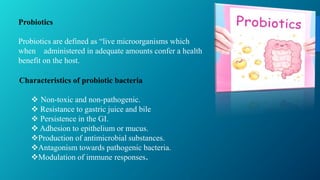
Probiotics
Probiotics are defined as “live microorganisms which
when administered in adequate amounts confer a health
benefit on the host.
Characteristics of probiotic bacteria
 Non-toxic and non-pathogenic.
 Resistance to gastric juice and bile
 Persistence in the GI.
 Adhesion to epithelium or mucus.
Production of antimicrobial substances.
Antagonism towards pathogenic bacteria.
Modulation of immune responses.
Most used probiotic genera
Lactobacillus
Bifidobacterium
Streptococcus (S. thermophilus)
Lactic acid bacteria, especially Lactobacillus, are the most commonly used microorganisms
as probiotics because of the perception that they are desirable members of the intestinal
microflora and because these bacteria have “Generally Recognized As Safe” (GRAS) status.
In practice, lactobacilli and bifidobacteria (and probiotics based on these organisms) are
extremely rare causes of infections in humans.
FAO/WHO guidelines recommended that the antibiotic resistance or susceptibility
pattern of every probiotic strain (including bacteria with GRAS status) be determined.
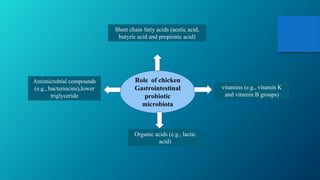
Role of chicken
Gastrointestinal
probiotic
microbiota
Short chain fatty acids (acetic acid,
butyric acid and propionic acid)
Antimicrobial compounds
(e.g., bacteriocins),lower
triglyceride
Organic acids (e.g., lactic
acid)
vitamins (e.g., vitamin K
and vitamin B groups)
The Chicken Digestive System
 Gut Microbiota in the Gastrointestinal tract of Chicken includes the
crop, proventriculus, gizzard, duodenum, jejunum, ileum, caeca, large
intestine, and cloaca. Each GI tract section has different metabolic
functions that shape the microbial community.
Probiotics in poultry industry as
feed supplements
Probiotics are being considered to
fill the gap of antibiotics in
poultry
Weight gain significantly
higher in probiotic fed birds
Enhance the meat quality
Economic importance of probiotics in poultry
Economic importance
of probiotics in poultry
Lactobacillus spp. as probiotics
Lactobacillus was the earliest discovered among other probiotics.
Lactobacillus is the dominant bacteria in animal and human gastrointestinal system.
To isolate and identify lactic acid bacteria from GIT which can be a good source of probiotics.
Huge significant research have been done on probiotic bacteria in last 10 years.
The Lactobacillus species are the most predominant lactic acid bacteria associated with probiotics
as feed supplements for animals.
Many evaluation would confirm that Lactobacillus spp. as a probiotic have potential health benefit specially
clinical gastroenterology.
Thank you

Probiotic from chicken's GIT

  • 1.
    Basic Introduction ofProbiotic microbiota from Gastrointestinal tract of Commercial Poultry. Presentation on Submitted by Galib Ahsan Department of Biotechnology & Genetic Engineering Islamic University, kushtia-7003, Bangladesh
  • 2.
    Probiotics Probiotics are definedas “live microorganisms which when administered in adequate amounts confer a health benefit on the host. Characteristics of probiotic bacteria  Non-toxic and non-pathogenic.  Resistance to gastric juice and bile  Persistence in the GI.  Adhesion to epithelium or mucus. Production of antimicrobial substances. Antagonism towards pathogenic bacteria. Modulation of immune responses.
  • 3.
    Most used probioticgenera Lactobacillus Bifidobacterium Streptococcus (S. thermophilus) Lactic acid bacteria, especially Lactobacillus, are the most commonly used microorganisms as probiotics because of the perception that they are desirable members of the intestinal microflora and because these bacteria have “Generally Recognized As Safe” (GRAS) status. In practice, lactobacilli and bifidobacteria (and probiotics based on these organisms) are extremely rare causes of infections in humans. FAO/WHO guidelines recommended that the antibiotic resistance or susceptibility pattern of every probiotic strain (including bacteria with GRAS status) be determined.
  • 4.
    Role of chicken Gastrointestinal probiotic microbiota Shortchain fatty acids (acetic acid, butyric acid and propionic acid) Antimicrobial compounds (e.g., bacteriocins),lower triglyceride Organic acids (e.g., lactic acid) vitamins (e.g., vitamin K and vitamin B groups)
  • 5.
    The Chicken DigestiveSystem  Gut Microbiota in the Gastrointestinal tract of Chicken includes the crop, proventriculus, gizzard, duodenum, jejunum, ileum, caeca, large intestine, and cloaca. Each GI tract section has different metabolic functions that shape the microbial community.
  • 6.
    Probiotics in poultryindustry as feed supplements Probiotics are being considered to fill the gap of antibiotics in poultry Weight gain significantly higher in probiotic fed birds Enhance the meat quality Economic importance of probiotics in poultry Economic importance of probiotics in poultry
  • 7.
    Lactobacillus spp. asprobiotics Lactobacillus was the earliest discovered among other probiotics. Lactobacillus is the dominant bacteria in animal and human gastrointestinal system. To isolate and identify lactic acid bacteria from GIT which can be a good source of probiotics. Huge significant research have been done on probiotic bacteria in last 10 years. The Lactobacillus species are the most predominant lactic acid bacteria associated with probiotics as feed supplements for animals. Many evaluation would confirm that Lactobacillus spp. as a probiotic have potential health benefit specially clinical gastroenterology.
  • 8.