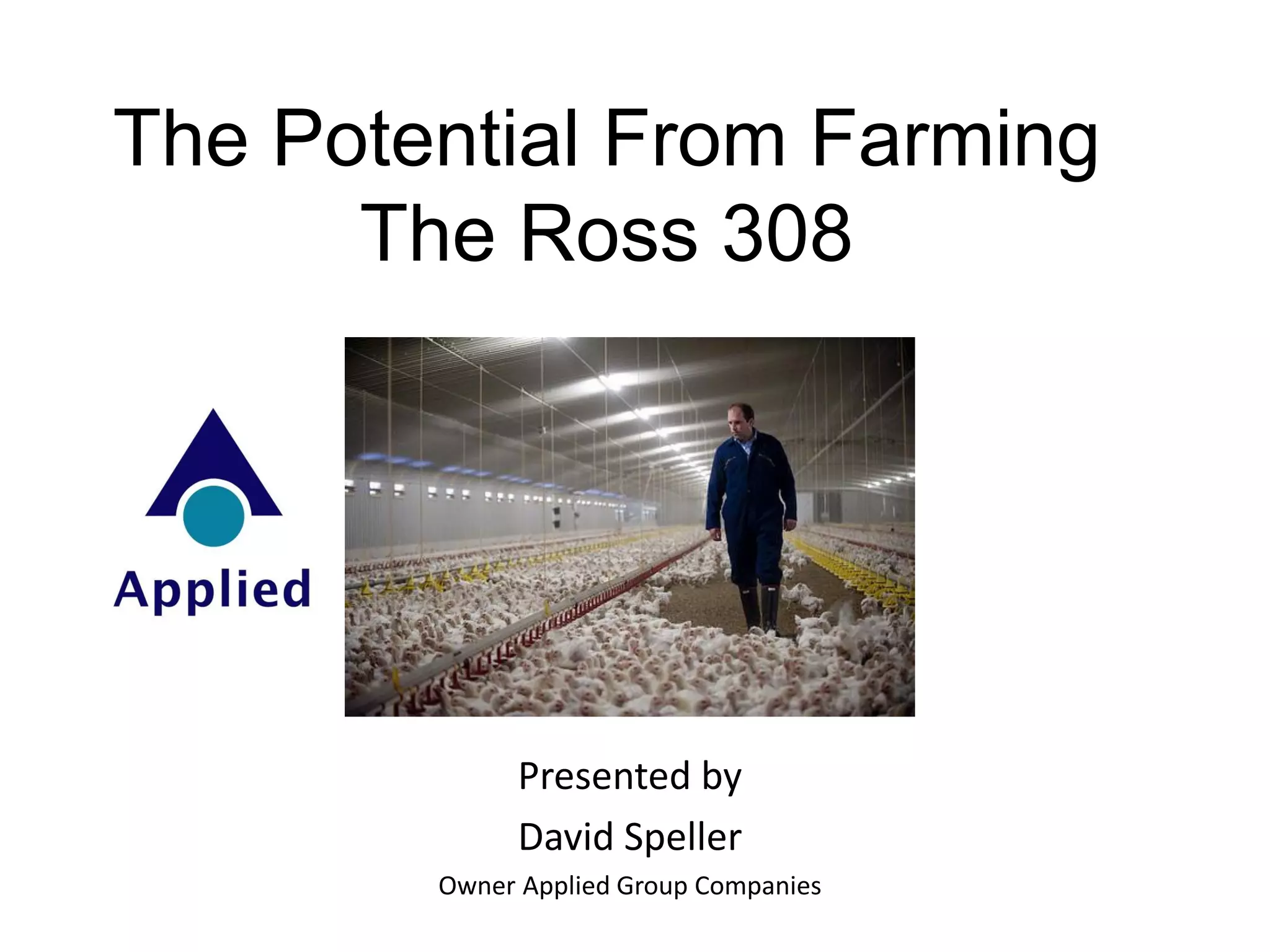
The Potential From Farming
The Ross 308
Presented by
David Speller
Owner Applied Group Companies
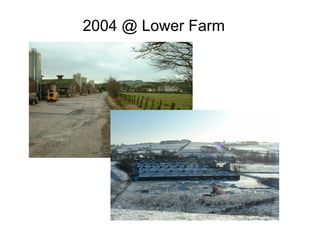
2004 @ Lower Farm
• Customer require more bird places
• Customer offers a financial incentive for new
building programme, not a contracted sum
• Improved bird welfare
• Improved bird quality/ uniformity/ consistency
• Improved environmental controls
Customer Driven Investment
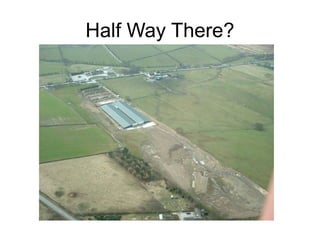
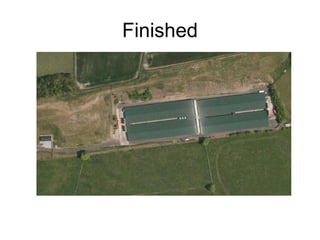
Half Way There?
Finished
Current Farming Operations
• Own 180,000 bird places
• Rent 115,000 bird places
• Building 335,000 bird places share farming
• Supervise for the bank 160,000 bird places
• 1,700,000 bird places under negotiations
• Potentially farming 2.25m birds on 7.5 batches
per farm per year (49 day chick to chick)
• Potential total annual output 17m birds/yr
• All Ross birds for performance and efficiency
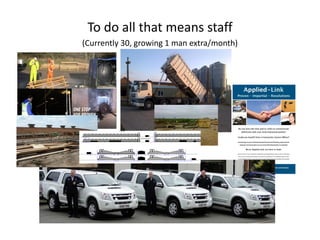
To do all that means staff
(Currently 30, growing 1 man extra/month)
Important factors for me and my
business
8
• Efficiency/ Productivity
• Optimal Welfare Standards
• Good Customer Relations
• Suitable Size/ Scale
• Sound Investment
10
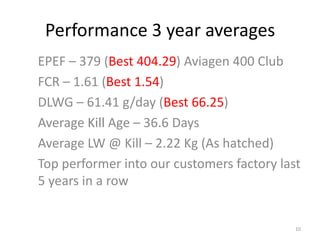
EPEF – 379 (Best 404.29) Aviagen 400 Club
FCR – 1.61 (Best 1.54)
DLWG – 61.41 g/day (Best 66.25)
Average Kill Age – 36.6 Days
Average LW @ Kill – 2.22 Kg (As hatched)
Top performer into our customers factory last
5 years in a row
Performance 3 year averages
Practical Broiler Efficiency
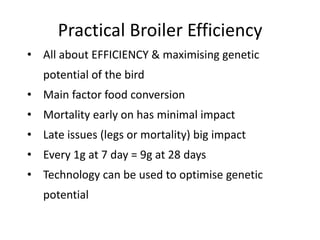
• All about EFFICIENCY & maximising genetic
potential of the bird
• Main factor food conversion
• Mortality early on has minimal impact
• Late issues (legs or mortality) big impact
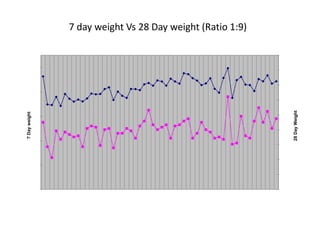
• Every 1g at 7 day = 9g at 28 days
• Technology can be used to optimise genetic
potential
28DayWeight
7Dayweight 7 day weight Vs 28 Day weight (Ratio 1:9)
0.0%
10.0%
20.0%
30.0%
40.0%
50.0%
60.0%
70.0%
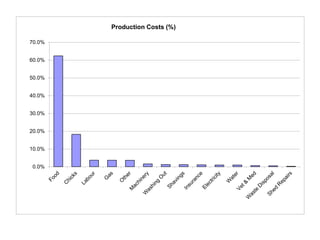
Production Costs (%)
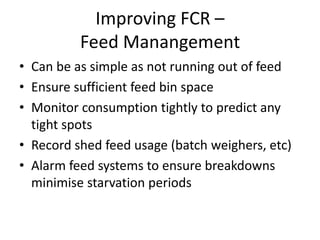
Improving FCR –
Feed Manangement
• Can be as simple as not running out of feed
• Ensure sufficient feed bin space
• Monitor consumption tightly to predict any
tight spots
• Record shed feed usage (batch weighers, etc)
• Alarm feed systems to ensure breakdowns
minimise starvation periods
15
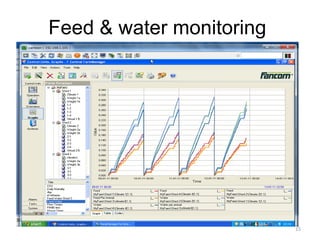
Feed & water monitoring
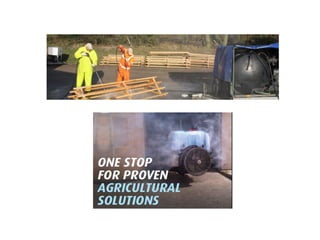
Cleanout / Disinfection
• We take our time
• All areas cleaned including canteen and toilets
• We use the right products and rotate products
• Orchard sprayer used to improve coverage/ efficacy
• We chemically treat floors for Cocci every time
Brooding / Early Environment
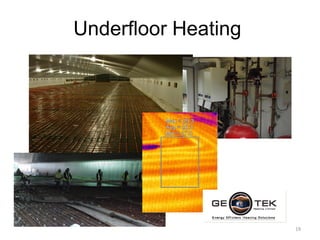
• UFH – warm floors across whole shed
• Indirect heating reduces CO2
• Manage airflows, especially with
indirect heaters that may be on for
longer.
• Humidity is free heat (5% RH = 1oC)
19
Underfloor Heating
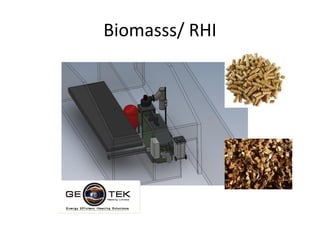
Biomasss/ RHI
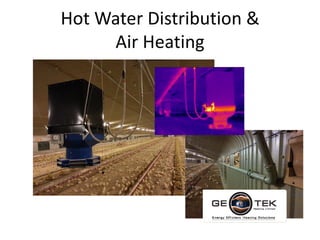
Hot Water Distribution &
Air Heating
22
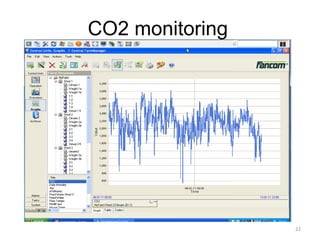
CO2 monitoring
Managing 12-22 day period
• Crumb to pellet change over
• Increasing ventilation
• Vaccination
• Feathering up
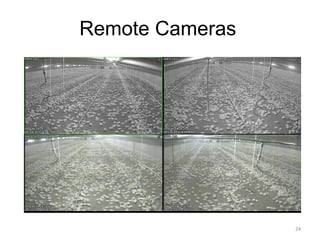
• Remote cameras help access behaviour
• Good data used as a management tool
24
Remote Cameras
25
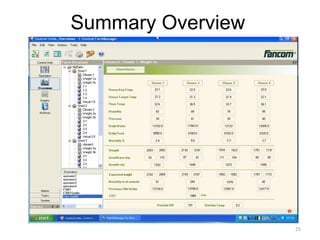
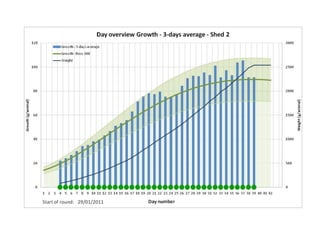
Summary Overview
26
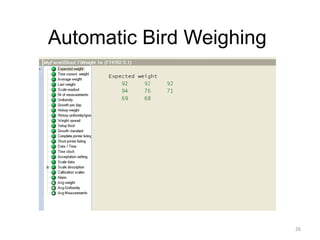
Automatic Bird Weighing
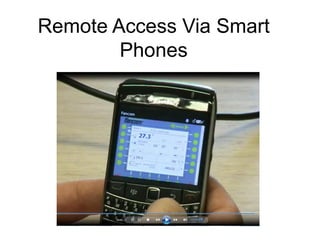
Remote Access Via Smart
Phones
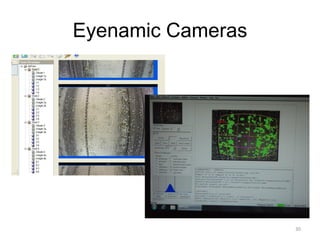
Monitor Activity
• Activity levels indicate welfare/ potential
performance
• Visual and sound used
• Part of an EU project (Precision Livestock
Farming)
• Ensure feeder and drinker facilities can cope
(Eyenamics suggest inconsistent demands)
30
Eyenamic Cameras
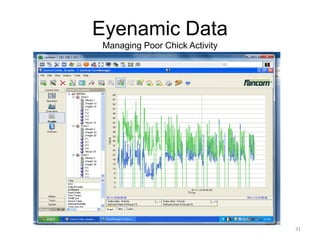
Eyenamic Data
Managing Poor Chick Activity
31
32
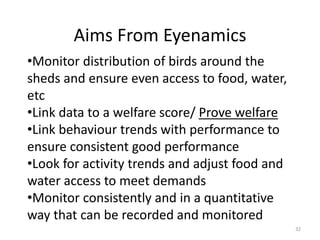
Aims From Eyenamics
•Monitor distribution of birds around the
sheds and ensure even access to food, water,
etc
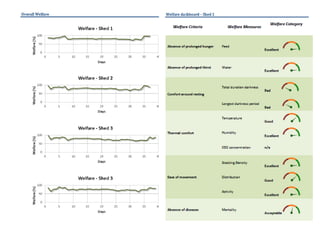
•Link data to a welfare score/ Prove welfare
•Link behaviour trends with performance to
ensure consistent good performance
•Look for activity trends and adjust food and
water access to meet demands
•Monitor consistently and in a quantitative
way that can be recorded and monitored
34
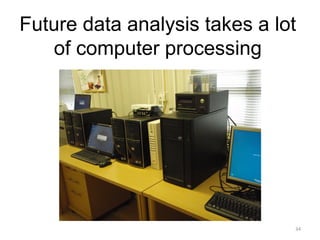
Future data analysis takes a lot
of computer processing
35
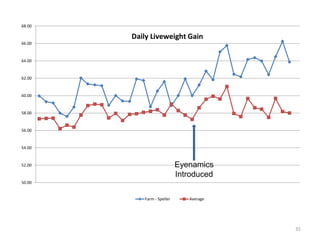
50.00
52.00
54.00
56.00
58.00
60.00
62.00
64.00
66.00
68.00
Farm - Speller Average
Daily Liveweight Gain
Eyenamics
Introduced
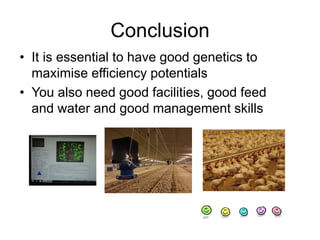
Conclusion
• It is essential to have good genetics to
maximise efficiency potentials
• You also need good facilities, good feed
and water and good management skills
37
Thank you for Listening
David Speller
david@appliedgroup.org.uk

David speller

  • 1.
    The Potential FromFarming The Ross 308 Presented by David Speller Owner Applied Group Companies
  • 2.
  • 3.
    • Customer requiremore bird places • Customer offers a financial incentive for new building programme, not a contracted sum • Improved bird welfare • Improved bird quality/ uniformity/ consistency • Improved environmental controls Customer Driven Investment
  • 4.
  • 5.
  • 6.
    Current Farming Operations •Own 180,000 bird places • Rent 115,000 bird places • Building 335,000 bird places share farming • Supervise for the bank 160,000 bird places • 1,700,000 bird places under negotiations • Potentially farming 2.25m birds on 7.5 batches per farm per year (49 day chick to chick) • Potential total annual output 17m birds/yr • All Ross birds for performance and efficiency
  • 7.
    To do allthat means staff (Currently 30, growing 1 man extra/month)
  • 8.
    Important factors forme and my business 8
  • 9.
    • Efficiency/ Productivity •Optimal Welfare Standards • Good Customer Relations • Suitable Size/ Scale • Sound Investment
  • 10.
    10 EPEF – 379(Best 404.29) Aviagen 400 Club FCR – 1.61 (Best 1.54) DLWG – 61.41 g/day (Best 66.25) Average Kill Age – 36.6 Days Average LW @ Kill – 2.22 Kg (As hatched) Top performer into our customers factory last 5 years in a row Performance 3 year averages
  • 11.
    Practical Broiler Efficiency •All about EFFICIENCY & maximising genetic potential of the bird • Main factor food conversion • Mortality early on has minimal impact • Late issues (legs or mortality) big impact • Every 1g at 7 day = 9g at 28 days • Technology can be used to optimise genetic potential
  • 12.
    28DayWeight 7Dayweight 7 dayweight Vs 28 Day weight (Ratio 1:9)
  • 13.
  • 14.
    Improving FCR – FeedManangement • Can be as simple as not running out of feed • Ensure sufficient feed bin space • Monitor consumption tightly to predict any tight spots • Record shed feed usage (batch weighers, etc) • Alarm feed systems to ensure breakdowns minimise starvation periods
  • 15.
    15 Feed & watermonitoring
  • 16.
    Cleanout / Disinfection •We take our time • All areas cleaned including canteen and toilets • We use the right products and rotate products • Orchard sprayer used to improve coverage/ efficacy • We chemically treat floors for Cocci every time
  • 18.
    Brooding / EarlyEnvironment • UFH – warm floors across whole shed • Indirect heating reduces CO2 • Manage airflows, especially with indirect heaters that may be on for longer. • Humidity is free heat (5% RH = 1oC)
  • 19.
  • 20.
  • 21.
  • 22.
  • 23.
    Managing 12-22 dayperiod • Crumb to pellet change over • Increasing ventilation • Vaccination • Feathering up • Remote cameras help access behaviour • Good data used as a management tool
  • 24.
  • 25.
  • 26.
  • 28.
    Remote Access ViaSmart Phones
  • 29.
    Monitor Activity • Activitylevels indicate welfare/ potential performance • Visual and sound used • Part of an EU project (Precision Livestock Farming) • Ensure feeder and drinker facilities can cope (Eyenamics suggest inconsistent demands)
  • 30.
  • 31.
    Eyenamic Data Managing PoorChick Activity 31
  • 32.
    32 Aims From Eyenamics •Monitordistribution of birds around the sheds and ensure even access to food, water, etc •Link data to a welfare score/ Prove welfare •Link behaviour trends with performance to ensure consistent good performance •Look for activity trends and adjust food and water access to meet demands •Monitor consistently and in a quantitative way that can be recorded and monitored
  • 34.
    34 Future data analysistakes a lot of computer processing
  • 35.
  • 36.
    Conclusion • It isessential to have good genetics to maximise efficiency potentials • You also need good facilities, good feed and water and good management skills
  • 37.
    37 Thank you forListening David Speller david@appliedgroup.org.uk