Low-Tech & Hi-Tech:
Promoting Active Learning
                  Shelley C. Kurland
              Instructional Designer

                    Deon Koekemoer
           Instructional Technologist
Why?


LEARN
Participate and Create Learning
Experiences
21st Century Skills: Problem-solving,
communication, collaboration,
information and media literacy, critical
thinking, and creativity
                     (Lambert & Gong, 2010)
Pedagogy


Constructivist
Social Learning
                      by Mark Brannan from flickr
Scavenger Hunt


LEARN: Influences of Greek mythology
on the Western culture, arts, and
literature
21st Century Skills: Communication,
collaboration, critical thinking,
information/media literacy (hi-tech)
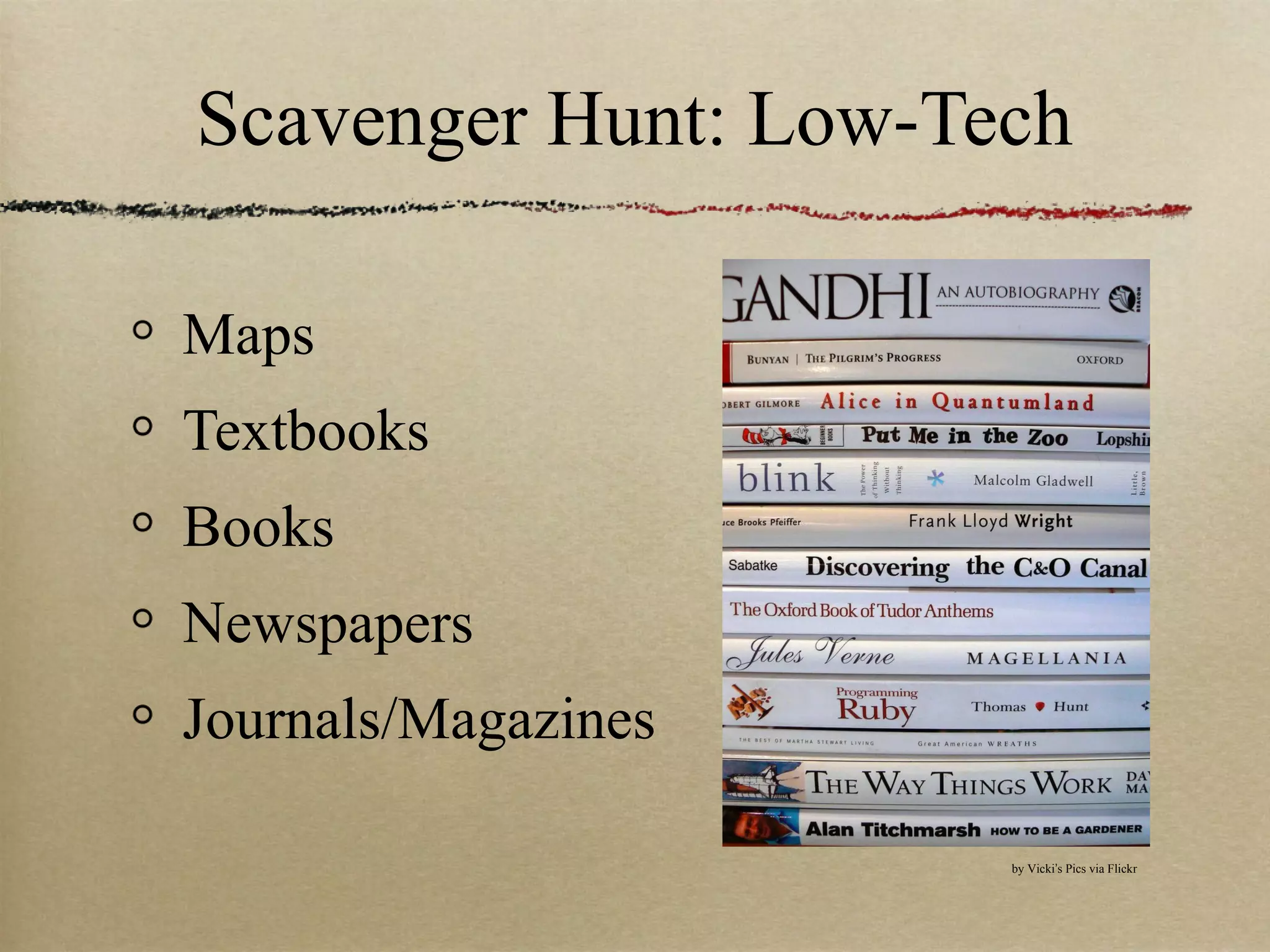
Scavenger Hunt: Low-Tech

Maps
Textbooks
Books
Newspapers
Journals/Magazines

                      by Vicki’s Pics via Flickr
Scavenger Hunt: Hi-Tech


QR Codes
  Maps
  Images/Videos
  Articles
  Websites
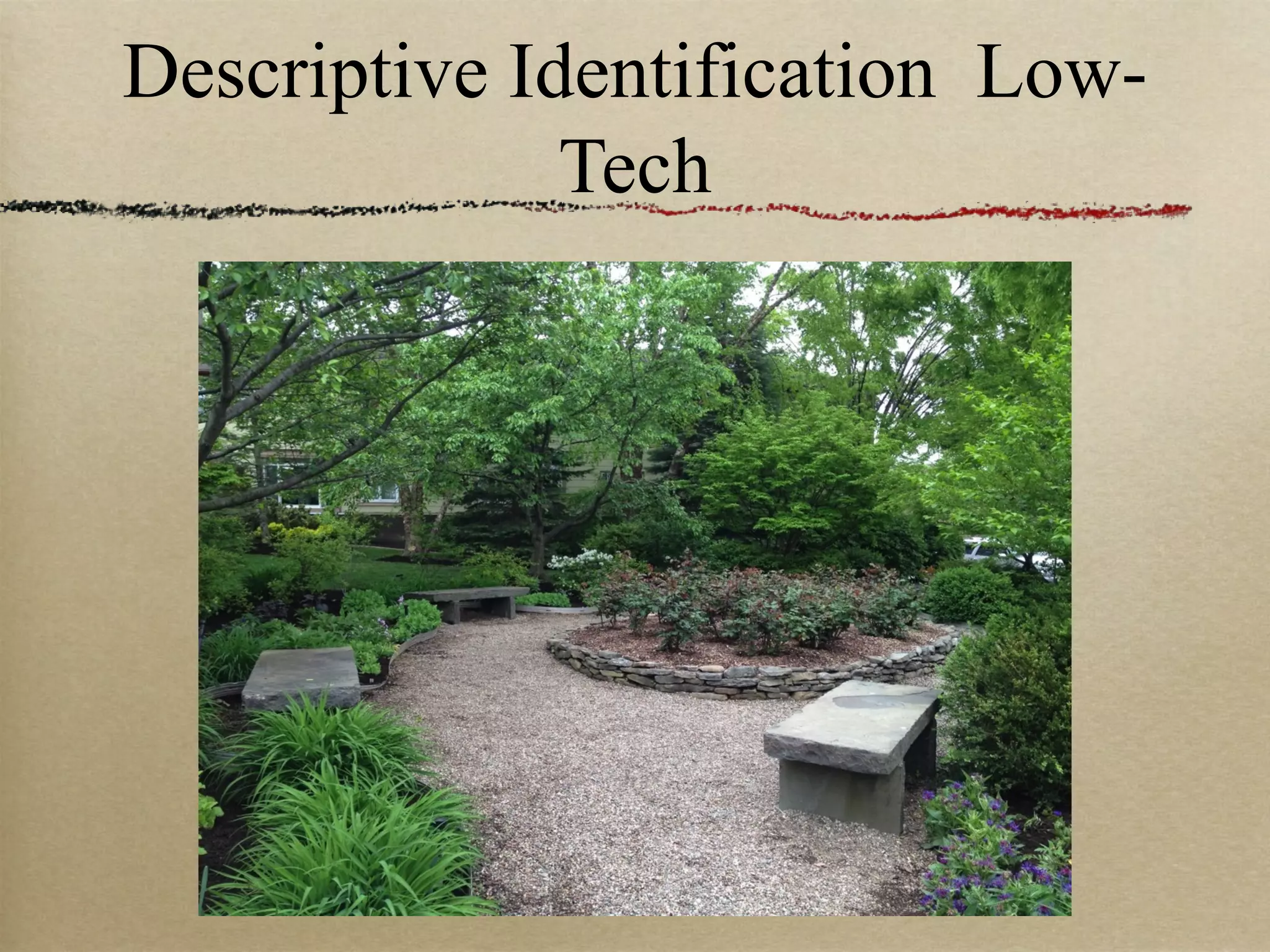
Descriptive Identification


LEARN: Identify Plant name and discuss
impact on the local environment
21st Century Skills: Communication,
collaboration, information/media literacy
(hi-tech)
Descriptive Identification Low-
              Tech
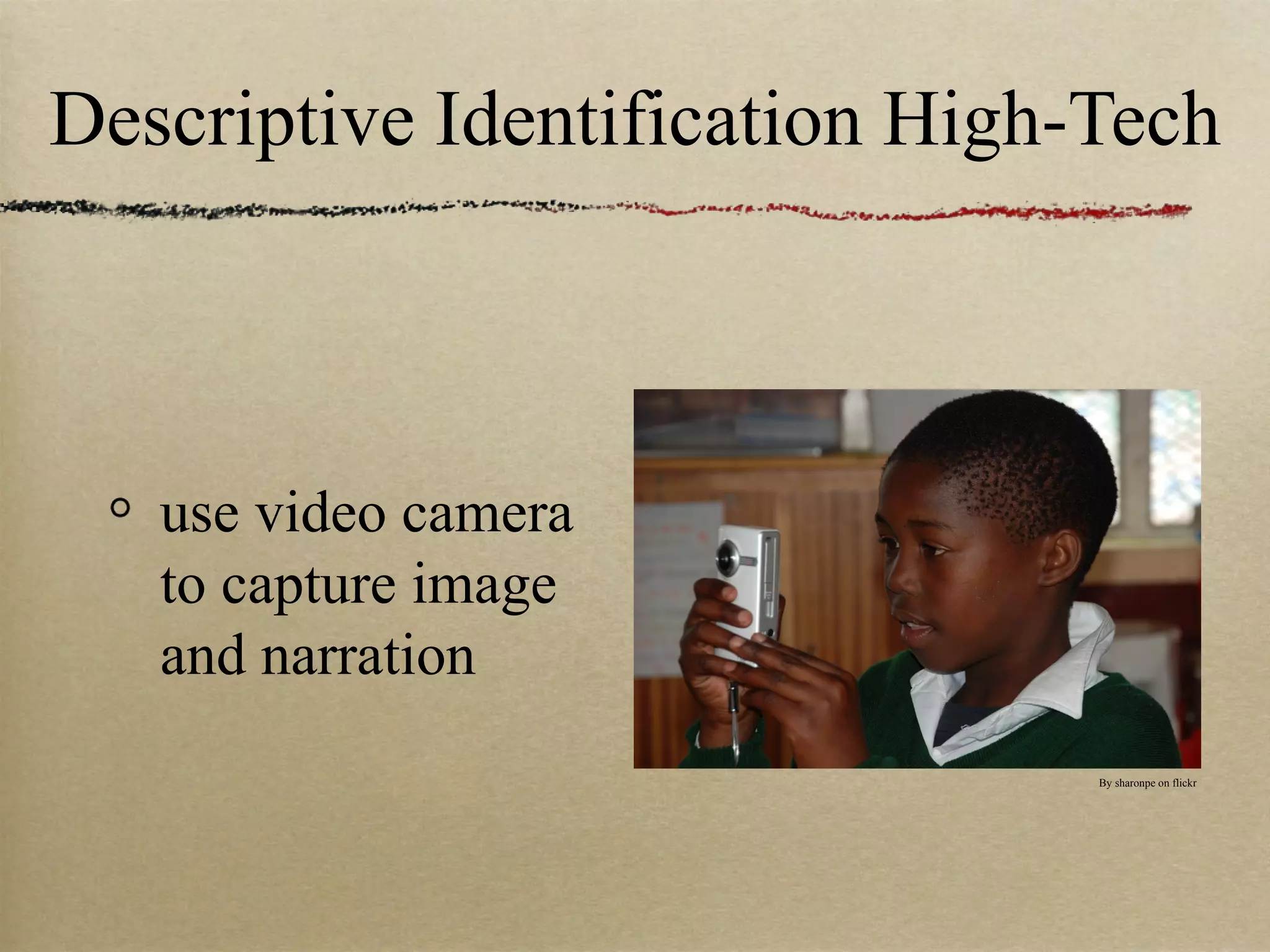
Descriptive Identification High-Tech


   use video camera
   to capture image
   and narration
                                By sharonpe on flickr
Think-Pair-Share


LEARN: What-How-Why of Mean,
Median, Mode
21st Century Skills: communication,
collaboration, problem solving, critical
thinking
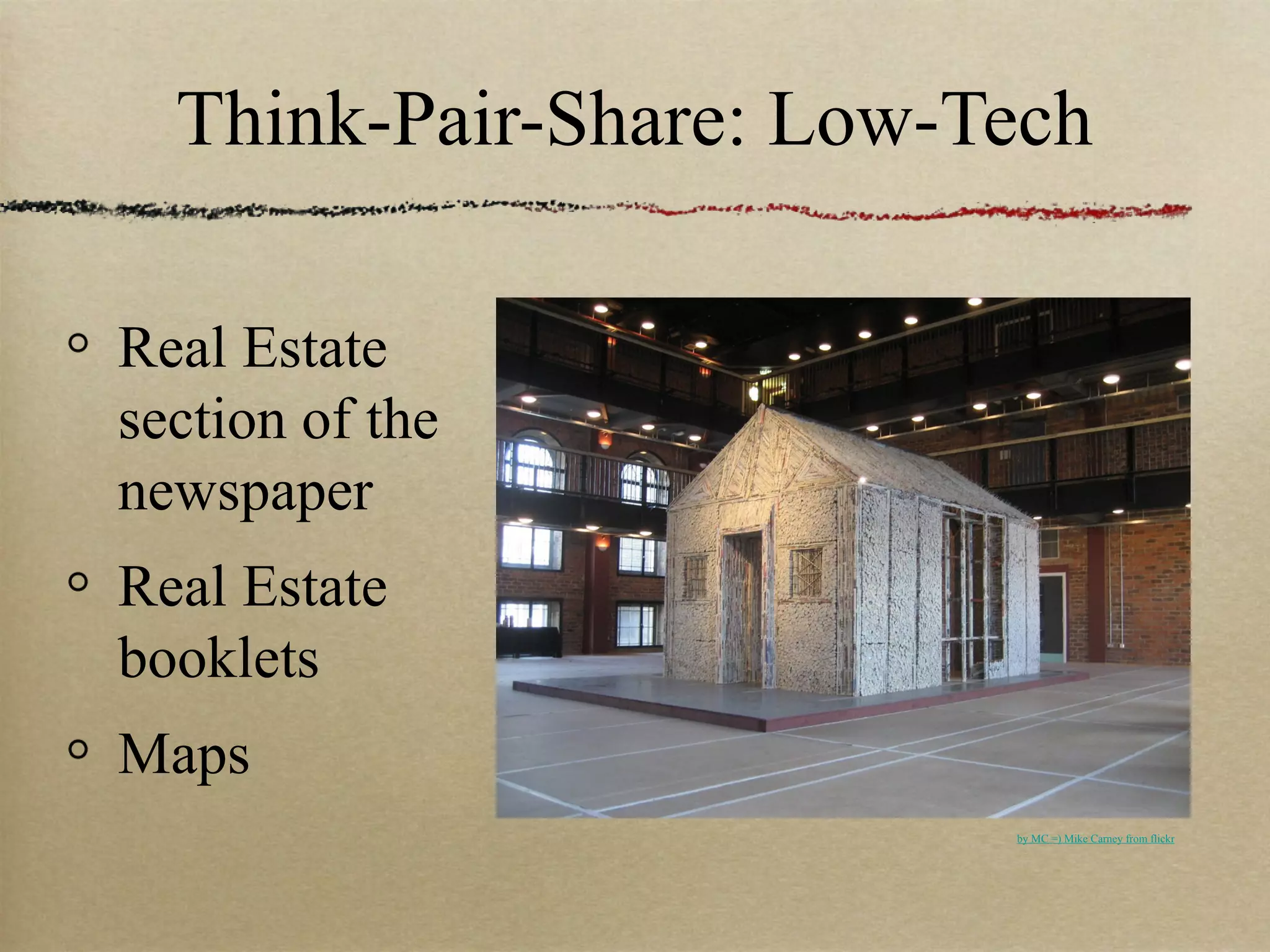
Think-Pair-Share: Low-Tech

Real Estate
section of the
newspaper
Real Estate
booklets
Maps
                         by MC =) Mike Carney from flickr
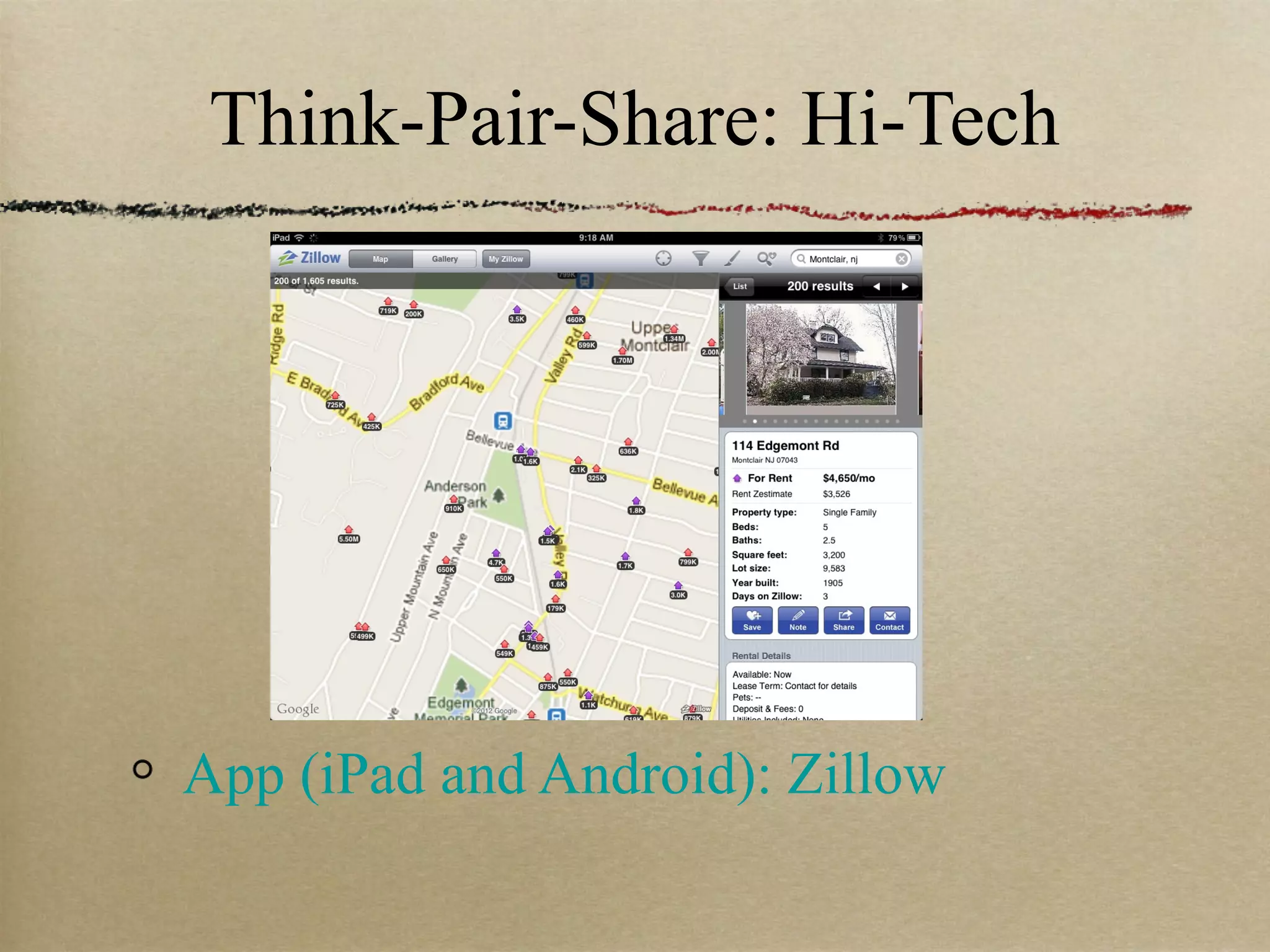
Think-Pair-Share: Hi-Tech


App (iPad and Android): Zillow
Group Discussion


LEARN: Debate on the impact of self
driving cars on society.
21st Century Skills: Communication,
collaboration, critical thinking,
information/media literacy (hi-tech)
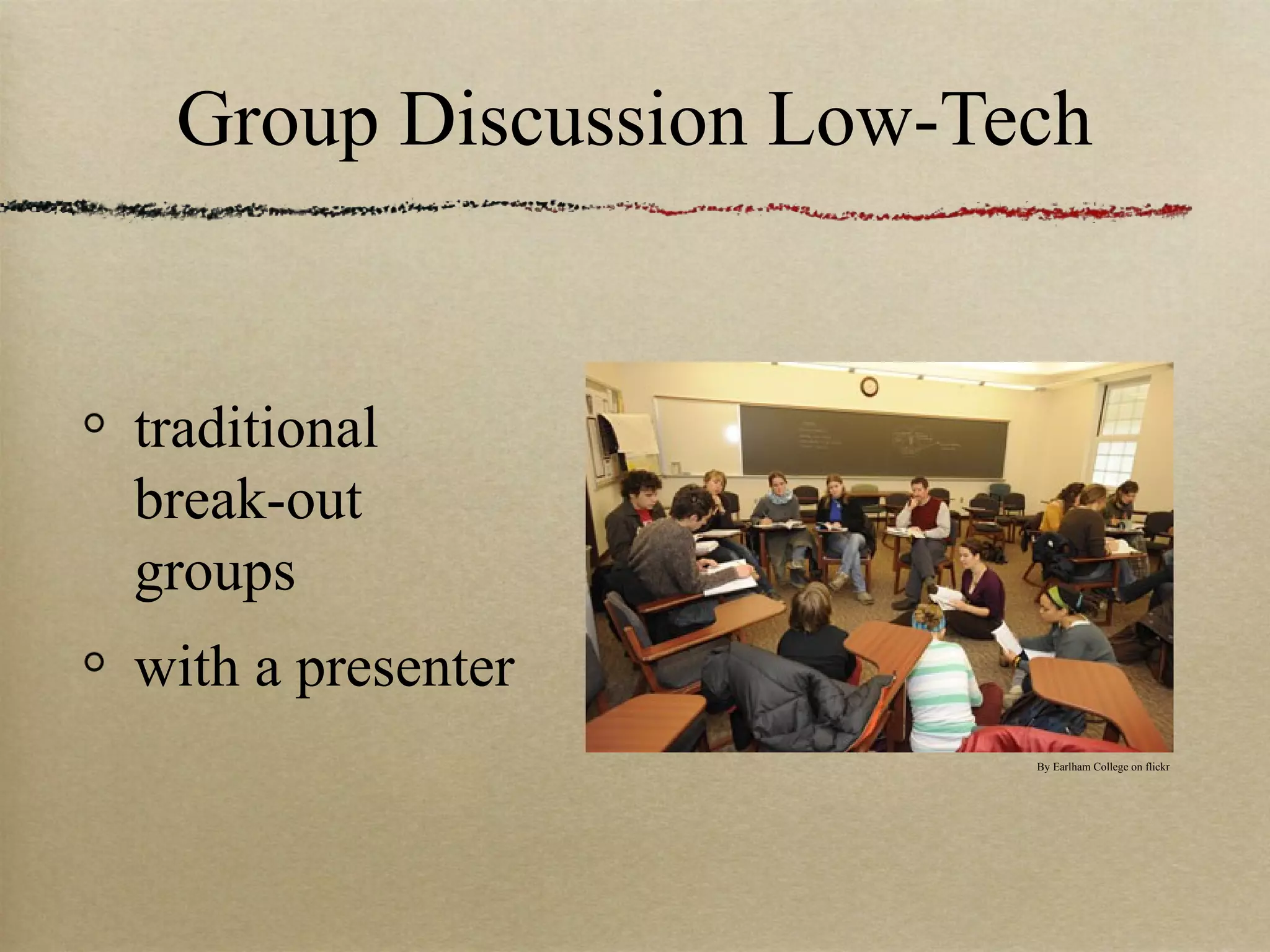
Group Discussion Low-Tech


traditional
break-out
groups
with a presenter
                        By Earlham College on flickr
Group Discussion High-Tech


use backchannal software while talking
set up a meeting room or use a twitter
#tag
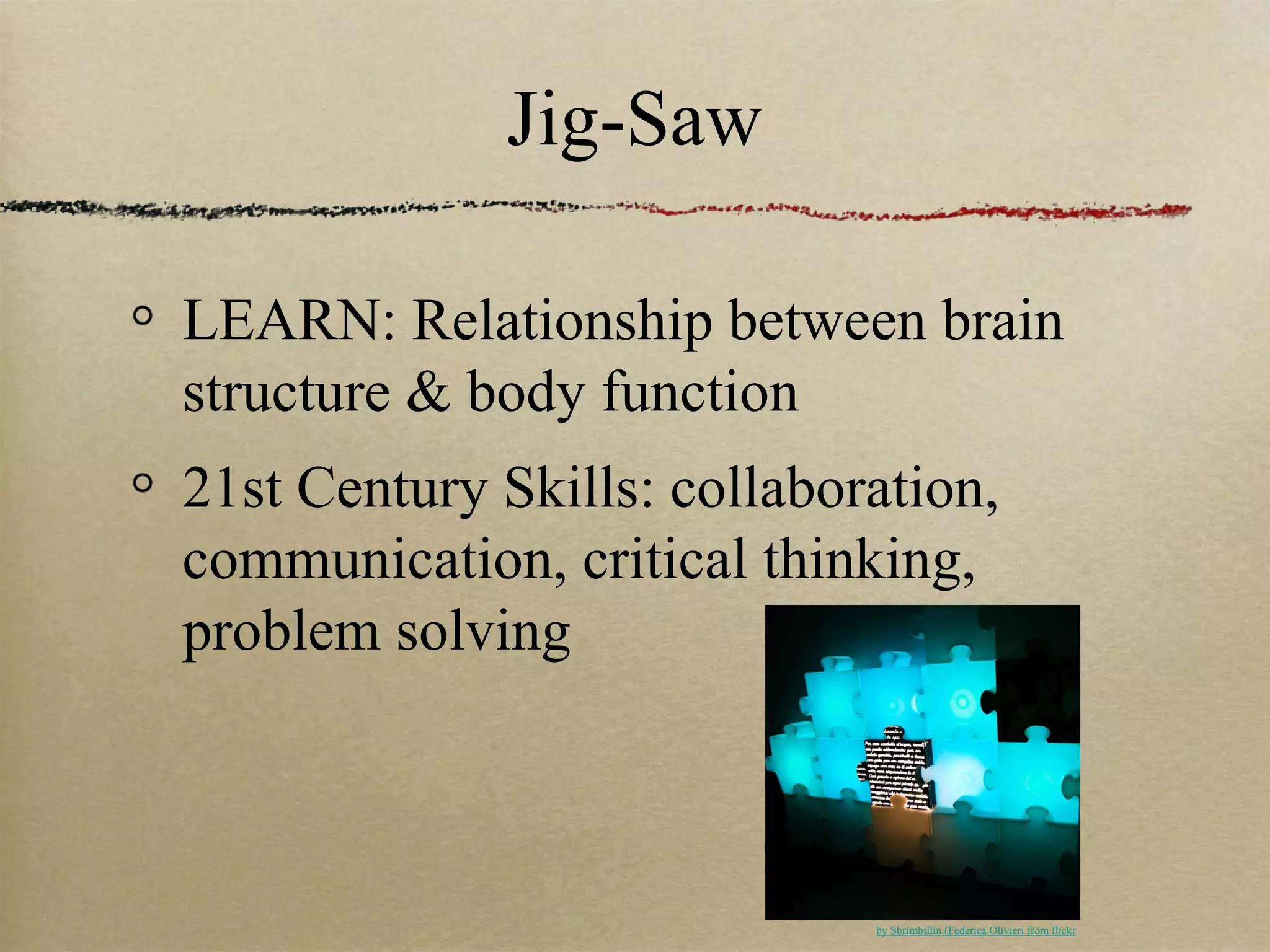
Jig-Saw

LEARN: Relationship between brain
structure & body function
21st Century Skills: collaboration,
communication, critical thinking,
problem solving


                             by Sbrimbillin (Federica Olivieri from flickr
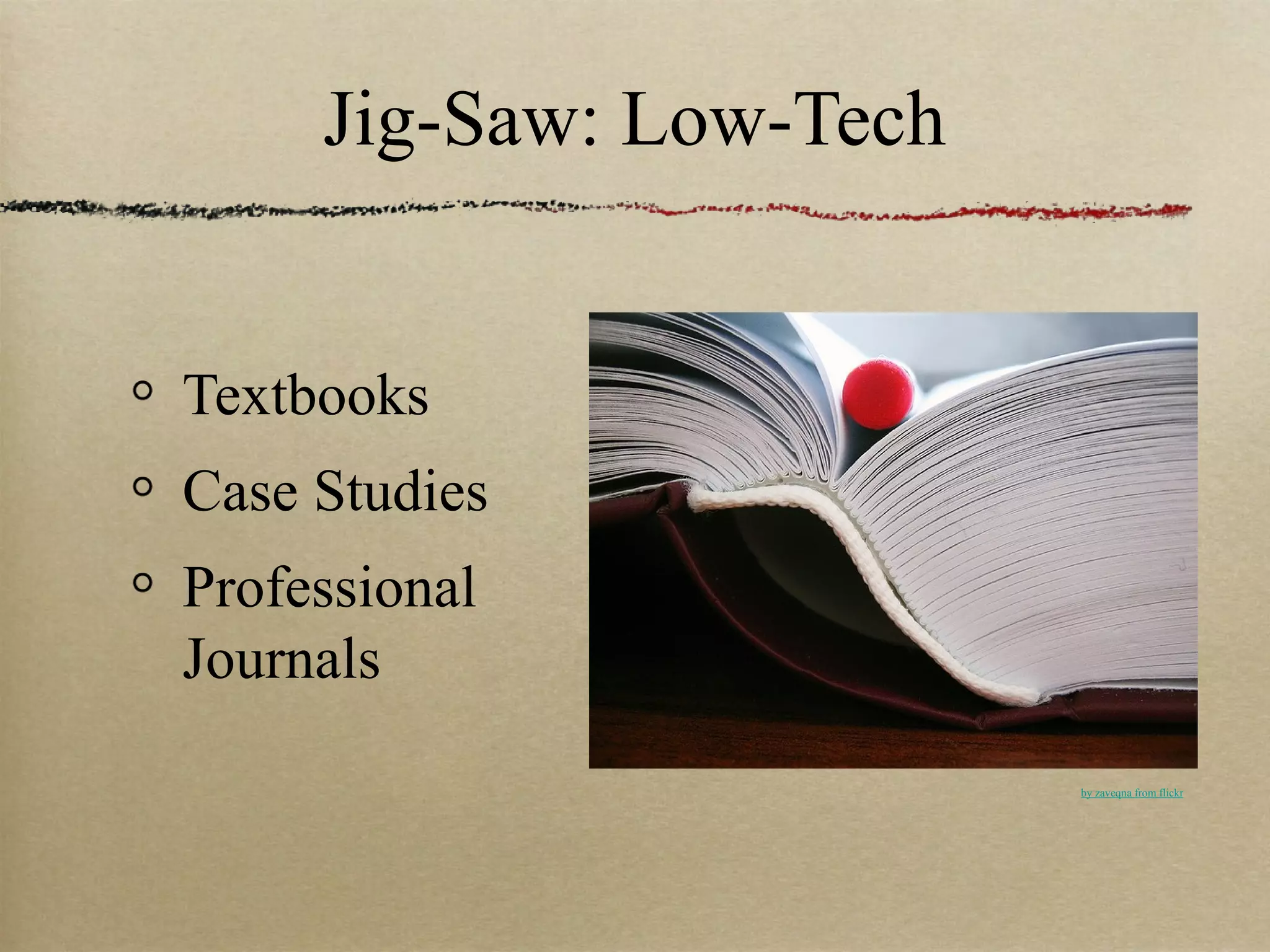
Jig-Saw: Low-Tech


Textbooks
Case Studies
Professional
Journals
                         by zaveqna from flickr
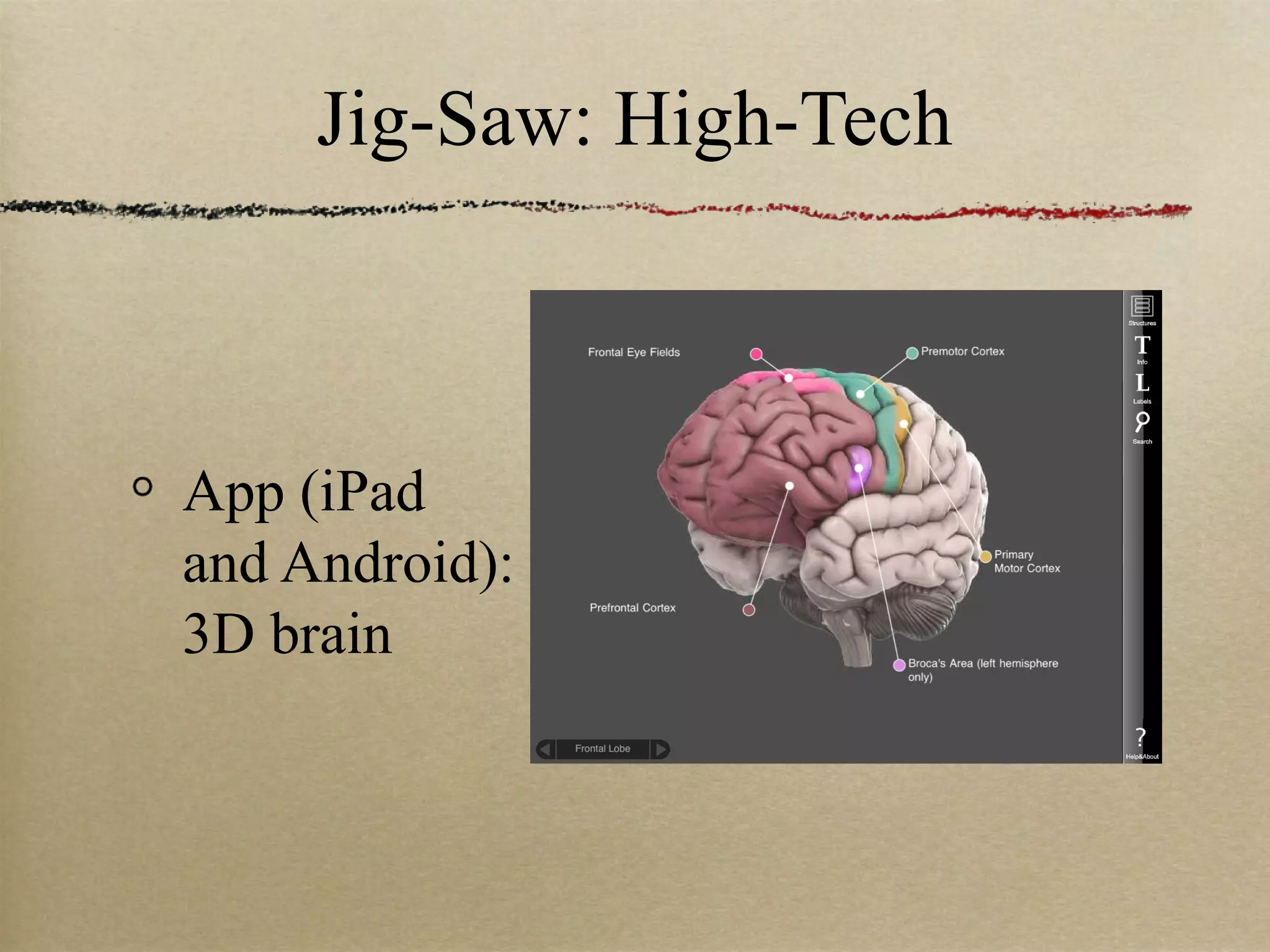
Jig-Saw: High-Tech


App (iPad
and Android):
3D brain
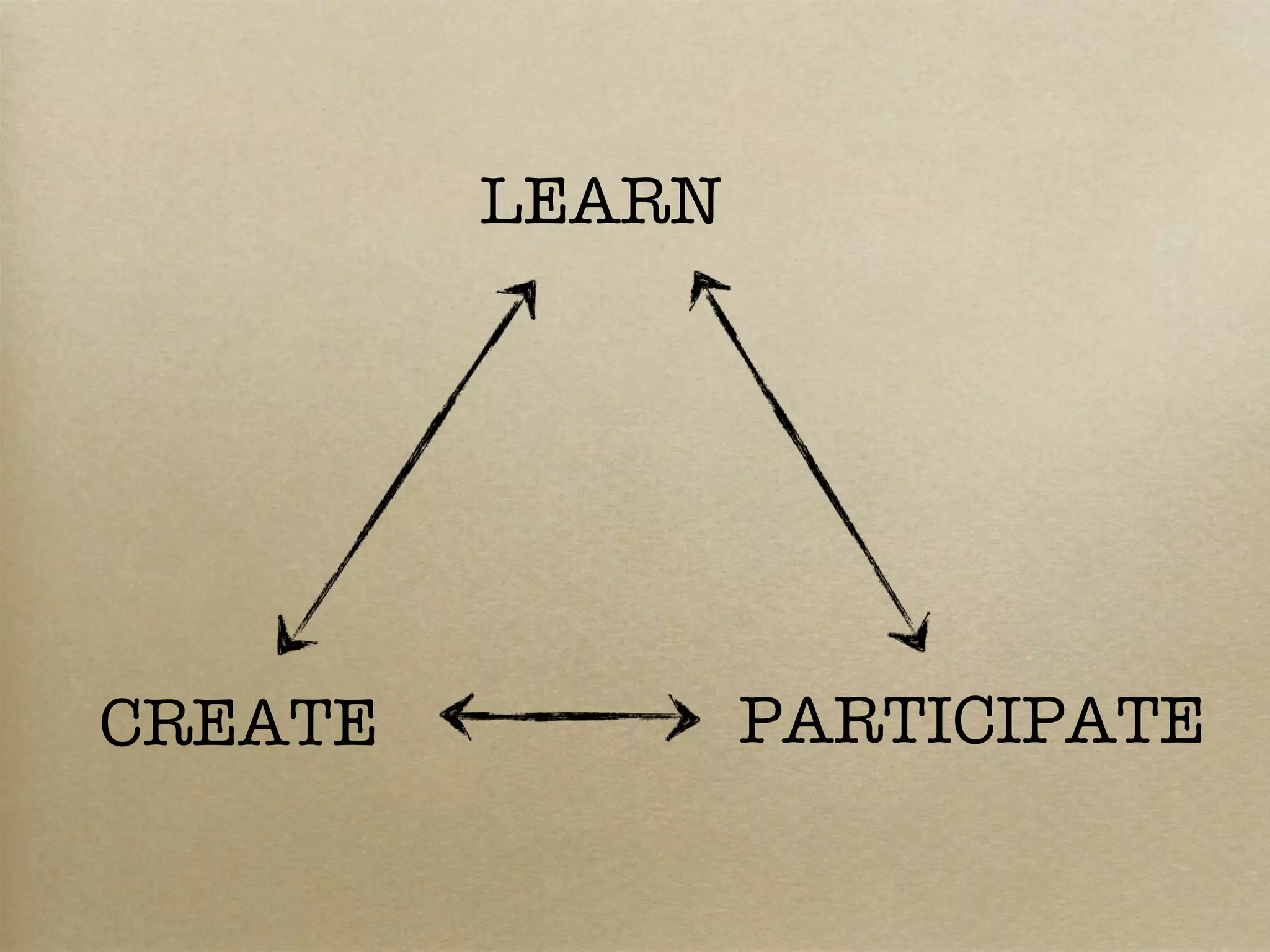
LEARN


CREATE           PARTICIPATE
Thank you


   Shelley C. Kurland
      •


 email: skurland@ccm.edu

  •
    Deon C. Koekemoer
email: dkoekemoer@ccm.edu

"Low-Tech" & "Hi-Tech": Promoting Active Learning

Editor's Notes

  • #2 Introduction... Demonstrate by focus on “ learning ” , we can design the same collaborative learning activities to achieve the same objectives with or without technology.
  • #4 Constructivism is rather nebulous as it is the foundation of various views in either learning or teaching. Duffy & Cunningham in 1984 described two points of consistency: 1. learning is [seen as] an active process of constructing rather than acquiring knowledge 2. instruction is a process of supporting that construction rather than communicating knowledge For our activities, we also used social learning theory as we worked toward developing collaboration among the students.
  • #5 All of the activities we are presenting can be modified to fit a variety of courses and levels (K-20). For this example the objective/outcome is..... The 21st century skills the students will be developing are...
  • #6 Scavenger Hunt is a quest for information. It can allow “ discovery ” and analysis depending on the design of the scavenger hunt. Activity Question: How did Greek mythology influence the culture, arts, and literature of the western world? Provide two specific examples.
  • #7 This scavenger hunt can be created by the teacher or the students in a group project. This exercise will require students to not only develop research skills but also to be able to distinguish between valid and reliable digital resources that are available to them.
  • #8 Activity Question: Identify Plant name and discuss impact on the local environment
  • #9 Activity Question: Identify Plant name and discuss impact on the local environment
  • #10 Activity Question: Identify Plant name and discuss impact on the local environment
  • #11 Think-Pair-Share activities allow each individual student to practice, work with, reflect upon the presented content (think), the pair allow the students to work together to have a chance to resolve any questions or discrepancies, prior to sharing their results with the entire class. For this activity the objectives are ...... The 21st Century skills the students will work on are....
  • #12 Activity Question: What is mean? Median? Mode? Calculate the mean, median, and mode of the neighborhood you chose (please keep it within a 10 mile radius). When would you look at the mean, median, and mode.
  • #13 Activity Question: What is mean? Median? Mode? Calculate the mean, median, and mode of the neighborhood you chose (please keep it within a 10 mile radius). When would you look at the mean, median, and mode.
  • #14 Activity Question: Discuss ow self driving cars will change how we commute and how it could impact the delivery industry.
  • #15 Activity Question: Discuss how self driving cars will change how we commute and how it could impact the delivery industry.
  • #16 Activity Question: Discuss ow self driving cars will change how we commute and how it could impact the delivery industry.
  • #17 Jig-saw is an effective activity to use when you are dealing with a concept with several sub-concepts. For this example, we are using the brain. The general idea for the jig-saw activity is to break up the class into small groups (we recommend no more than 4 per group). Each group is responsible in one of the sub-concepts, in this case a region of the brain and present a deliverable to the class. The objectives is.... The 21st century skills we are working on are...
  • #18 Activity Question: If a patient suffered damage to the part of the brain you are researching, what functions (speech, right side of the body, etc.)will be affected? Why?
  • #19 The 3D brain app is a free app that allows the user to explore various parts of the brain and there is an INFO section that provides information on the identified structure. Using the information, each group will be able to research, analyze and provide the answer to share with the class. Activity Question: If a patient suffered damage to the part of the brain you are researching, what functions (speech, right side of the body, etc.) will be affected? Why?
  • #21 We hope that we were able to demonstrate by shifting the focus back to learning, technology is not driving instruction, instead it is used to enhance the learning process. Thank you.