Experiental Learning
By Juan Carlos Castillo
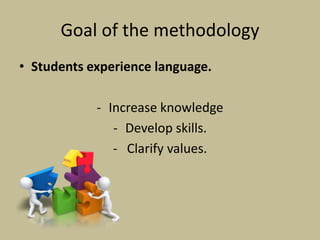
Goal of the methodology
• Students experience language.
- Increase knowledge
- Develop skills.
- Clarify values.
Experiental Learning is also referred as:
• Learning through action.
• Learning through doing.
• Learning through experience.
• Learning through discovery and exploration.
Some of the principles
• Experimental learning occurs when carefully
chosen experiences are supported by
reflection, critical analysis and synthesis.
• Experiences are structured to requiere the
students to take initiative, make decisions and
be accountable for results.
Teacher’s role
• Be willing to accept a less teacher-centric role in the
classroom.
• Identify an experience in which students will find
interest and be personally committed.
• explain the purpose of experimental learning
situation to the students.
Student’s role
• Students will be involved in problems which are practical,
social and personal.
• Students will be allowed freedom in the classroom as long as
they make headway in the learning process.
• Students will self-evaluate their own progression or succes in
the learning process and become open to change.
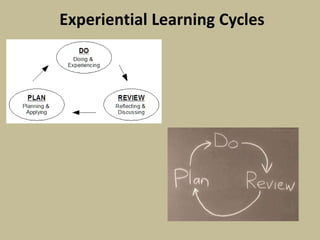
Experiential Learning Cycles
Student testimony
“The ELC gives students the ability to develop
and practice soft skills that employers look for.
Students are able to graduate as polished
professionals due to the experience they
receive working alongside corporate
executives.”
References
• Northern Illinois University, College of Busness Experiental Learning
Center (2011)(ELC)http://www.cob.niu.edu/_pdfs/academics/experiential-
learning-center/project-catalog.pdf
• Neill, J.(2006). Experiential learning & experiential education: Philosophy
theory, practice & resources.
http://www.wilderdom.com/experiential/elc/ExperientialLearningCycle.ht
ml

Experiential learning

  • 1.
  • 2.
    Goal of themethodology • Students experience language. - Increase knowledge - Develop skills. - Clarify values.
  • 3.
    Experiental Learning isalso referred as: • Learning through action. • Learning through doing. • Learning through experience. • Learning through discovery and exploration.
  • 4.
    Some of theprinciples • Experimental learning occurs when carefully chosen experiences are supported by reflection, critical analysis and synthesis. • Experiences are structured to requiere the students to take initiative, make decisions and be accountable for results.
  • 5.
    Teacher’s role • Bewilling to accept a less teacher-centric role in the classroom. • Identify an experience in which students will find interest and be personally committed. • explain the purpose of experimental learning situation to the students.
  • 6.
    Student’s role • Studentswill be involved in problems which are practical, social and personal. • Students will be allowed freedom in the classroom as long as they make headway in the learning process. • Students will self-evaluate their own progression or succes in the learning process and become open to change.
  • 7.
  • 8.
    Student testimony “The ELCgives students the ability to develop and practice soft skills that employers look for. Students are able to graduate as polished professionals due to the experience they receive working alongside corporate executives.”
  • 9.
    References • Northern IllinoisUniversity, College of Busness Experiental Learning Center (2011)(ELC)http://www.cob.niu.edu/_pdfs/academics/experiential- learning-center/project-catalog.pdf • Neill, J.(2006). Experiential learning & experiential education: Philosophy theory, practice & resources. http://www.wilderdom.com/experiential/elc/ExperientialLearningCycle.ht ml