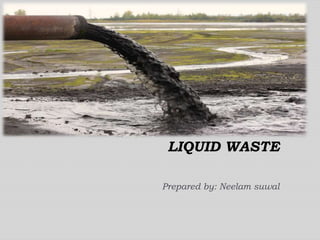
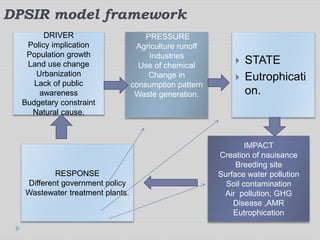
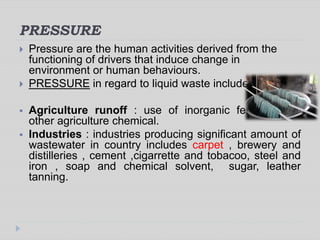
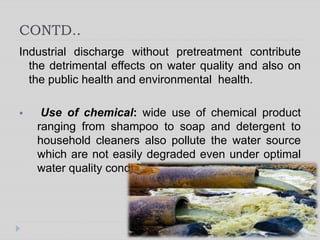
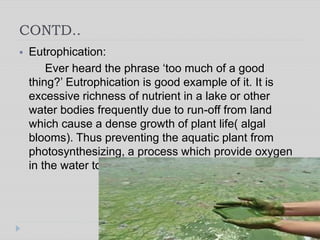
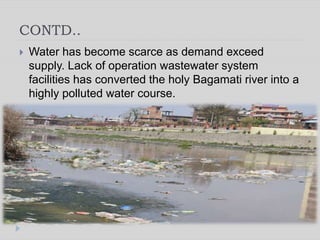
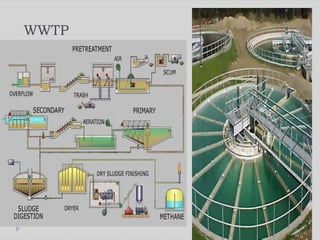
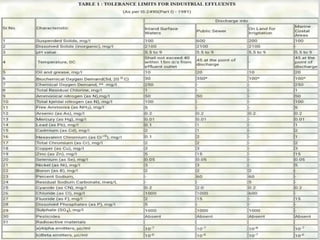
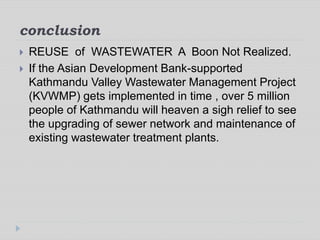
Nepal faces challenges from liquid waste due to lack of proper management systems. Using the DPSIR framework, the document analyzes the drivers, pressures, state, impacts and responses regarding liquid waste in Nepal. The main drivers include population growth, urbanization and lack of public awareness. Pressures stem from agriculture, industries and changing consumption patterns. The state of liquid waste management has caused issues like eutrophication and pollution of rivers. Impacts involve health, environmental and economic problems. Responses from the government include policies, treatment plants and campaigns to address liquid waste management in Nepal.