Liquid waste management
Presenter
Abishek Regmi
Liquid waste can be defined as such Liquids as wastewater, fats, oils or grease
(FOG), used oil, liquids, solids, gases, or sludges and hazardous household
liquids. These liquids that are hazardous or potentially harmful to human health
or the environment.
Liquid waste
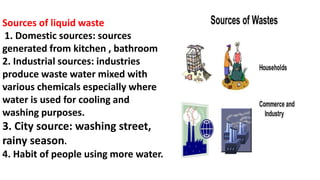
Sources of liquid waste
1. Domestic sources: sources
generated from kitchen , bathroom
2. Industrial sources: industries
produce waste water mixed with
various chemicals especially where
water is used for cooling and
washing purposes.
3. City source: washing street,
rainy season.
4. Habit of people using more water.
Household /Institutional level liquid
waste management
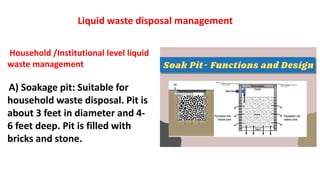
A) Soakage pit: Suitable for
household waste disposal. Pit is
about 3 feet in diameter and 4-
6 feet deep. Pit is filled with
bricks and stone.
Liquid waste disposal management
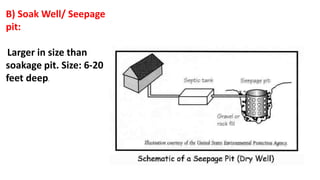
B) Soak Well/ Seepage
pit:
Larger in size than
soakage pit. Size: 6-20
feet deep.
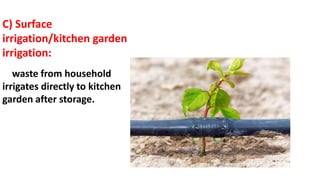
C) Surface
irrigation/kitchen garden
irrigation:
waste from household
irrigates directly to kitchen
garden after storage.
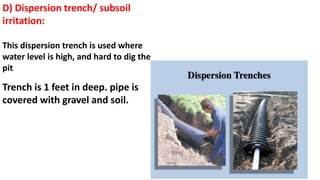
D) Dispersion trench/ subsoil
irritation:
This dispersion trench is used where
water level is high, and hard to dig the
pit.
Trench is 1 feet in deep. pipe is
covered with gravel and soil.
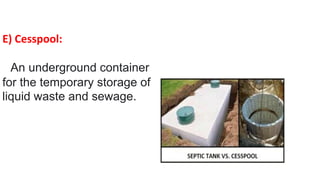
E) Cesspool:
An underground container
for the temporary storage of
liquid waste and sewage.
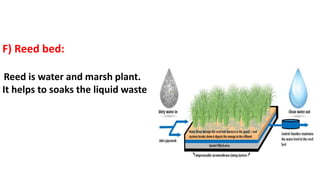
F) Reed bed:
Reed is water and marsh plant.
It helps to soaks the liquid waste
URBAN AREA/ SEWERED AREA
• It consists of water carriage system and sewage treatment plant.
• It implies collecting and transporting waste waster and human excreta from
residential , industrial and commercial area by under ground pipes.
There are two types of water carriage systems
1) Combined sewer system
2) separate sewer system: surface water is not
Combined sewer system
COMBINE SEWER SYSTEM: Carry both the sewage and surface water.
SEPARATE SEWER SYSTEM: Surface water is not admitted.
Sewage is waste water from a community containing solid and liquid excreta,
derived from houses, street and yard washings, factories and industries.
 sewage contain 99.9% of water which is dirty and bad smell.
Water carriage system consists of: household sanitary fittings( water closet,
basin, urinal), house sewer and public sewer.
Sewage treatment
Aims of sewage treatment:
1. Inadequate sewage treatment should not be discharged into river, sea and
other sources of water supply.
2. Bacteria from inadequate treatment water may lead depletion of oxygen and
lead to occur death of plant and animals.
Treatment of sewage
a)Screening
b) Removal of grit
c) Primary sedimentation.
d)Biological sedimentation
e)Final sedimentation
f)Sludge digestion
g)Disposal of effluent
Others methods
• Sea out fall
• River out fall
• Land treatment
• Oxidation ponds and ditches.
Water carriage system
1.Household sanitary fittings:
• House hold sanitary fitting are water closet, wash basin and urinal
• The closet is connected to a small cistern by a pipe2.5-3.75cm in
diameter
• Flushing cistern holds 15 liters of water
2. House Sewer:
• House drain is 10cm in diameter and laid in the courtyard about
15cm below the ground level on a bed of cement
3. Public Sewer:
• Trunk sewers is 22.5 cm in diameter. They are laid 3m below the
ground level with cement concrete.
4. Sewer appurtenances:
These are opening entrance for man to enter the sewer for inspection, repair and cleaning.
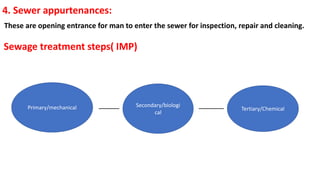
Sewage treatment steps( IMP)
Primary/mechanical Secondary/biologi
cal
Tertiary/Chemical
Primary Rx
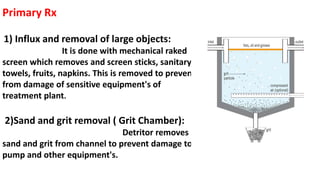
1) Influx and removal of large objects:
It is done with mechanical raked
screen which removes and screen sticks, sanitary
towels, fruits, napkins. This is removed to prevent
from damage of sensitive equipment's of
treatment plant.
2)Sand and grit removal ( Grit Chamber):
Detritor removes
sand and grit from channel to prevent damage to
pump and other equipment's.
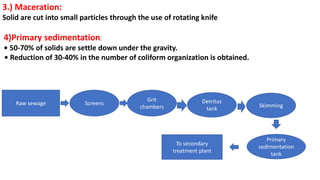
3.) Maceration:
Solid are cut into small particles through the use of rotating knife
4)Primary sedimentation:
• 50-70% of solids are settle down under the gravity.
• Reduction of 30-40% in the number of coliform organization is obtained.
Raw sewage Screens
Grit
chambers
Detritus
tank
Skimming
Primary
sedimentation
tank
To secondary
treatment plant
Secondary Rx
• Secondary Rx is designed to degrade the biological content of the sewage
derived from food ,waste, soap and detergents. Secondary treatment is classified
into two ways :
• Fixed or suspended growth.
• In fixed system such as rock filters the biomass grows on media and the
sewage passes over its surface.
• In suspended growth systems: such as activated sludge the biomass is well
mixed with the sewage.
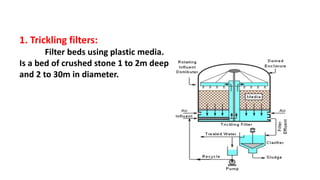
1. Trickling filters:
Filter beds using plastic media.
Is a bed of crushed stone 1 to 2m deep
and 2 to 30m in diameter.
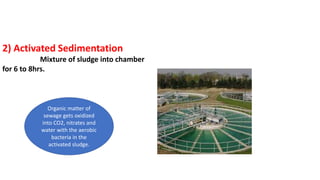
2) Activated Sedimentation
Mixture of sludge into chamber
for 6 to 8hrs.
Organic matter of
sewage gets oxidized
into CO2, nitrates and
water with the aerobic
bacteria in the
activated sludge.
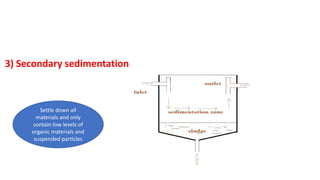
3) Secondary sedimentation
Settle down all
materials and only
contain low levels of
organic materials and
suspended particles
Tertiary RX.
• Final stage before discharge water into environment. Also called Effluent polishing.
A) Filtration: sand filtration residual suspended matter
B) Lagooning:provides settlement and further biological improvement through storage in
large man made ponds or lagoons.
C) constructed wetland: provides high degree of aerobic biological improvement and can be
used instead of secondary treatment for community. Reedbed is used to clean the drainage
D) nutrient removal: All nutrient from water is removed which may be toxic to fish and
invertebrates.
E) Disinfection: in waste water is to reduce the number of living organism in the water.
Effectiveness of disinfection is depend upon the water being treated( PH, Turbidity).
• UV lights is common form of disinfection in UK.
• Chlorination is most common in North America.
• Ozone dis-infection.
Thankyou

Liquid waste management

  • 1.
  • 2.
    Liquid waste canbe defined as such Liquids as wastewater, fats, oils or grease (FOG), used oil, liquids, solids, gases, or sludges and hazardous household liquids. These liquids that are hazardous or potentially harmful to human health or the environment. Liquid waste
  • 3.
    Sources of liquidwaste 1. Domestic sources: sources generated from kitchen , bathroom 2. Industrial sources: industries produce waste water mixed with various chemicals especially where water is used for cooling and washing purposes. 3. City source: washing street, rainy season. 4. Habit of people using more water.
  • 4.
    Household /Institutional levelliquid waste management A) Soakage pit: Suitable for household waste disposal. Pit is about 3 feet in diameter and 4- 6 feet deep. Pit is filled with bricks and stone. Liquid waste disposal management
  • 5.
    B) Soak Well/Seepage pit: Larger in size than soakage pit. Size: 6-20 feet deep.
  • 6.
    C) Surface irrigation/kitchen garden irrigation: wastefrom household irrigates directly to kitchen garden after storage.
  • 7.
    D) Dispersion trench/subsoil irritation: This dispersion trench is used where water level is high, and hard to dig the pit. Trench is 1 feet in deep. pipe is covered with gravel and soil.
  • 8.
    E) Cesspool: An undergroundcontainer for the temporary storage of liquid waste and sewage.
  • 9.
    F) Reed bed: Reedis water and marsh plant. It helps to soaks the liquid waste
  • 10.
    URBAN AREA/ SEWEREDAREA • It consists of water carriage system and sewage treatment plant. • It implies collecting and transporting waste waster and human excreta from residential , industrial and commercial area by under ground pipes. There are two types of water carriage systems 1) Combined sewer system 2) separate sewer system: surface water is not
  • 11.
    Combined sewer system COMBINESEWER SYSTEM: Carry both the sewage and surface water. SEPARATE SEWER SYSTEM: Surface water is not admitted. Sewage is waste water from a community containing solid and liquid excreta, derived from houses, street and yard washings, factories and industries.  sewage contain 99.9% of water which is dirty and bad smell. Water carriage system consists of: household sanitary fittings( water closet, basin, urinal), house sewer and public sewer.
  • 12.
    Sewage treatment Aims ofsewage treatment: 1. Inadequate sewage treatment should not be discharged into river, sea and other sources of water supply. 2. Bacteria from inadequate treatment water may lead depletion of oxygen and lead to occur death of plant and animals.
  • 13.
    Treatment of sewage a)Screening b)Removal of grit c) Primary sedimentation. d)Biological sedimentation e)Final sedimentation f)Sludge digestion g)Disposal of effluent Others methods • Sea out fall • River out fall • Land treatment • Oxidation ponds and ditches.
  • 14.
    Water carriage system 1.Householdsanitary fittings: • House hold sanitary fitting are water closet, wash basin and urinal • The closet is connected to a small cistern by a pipe2.5-3.75cm in diameter • Flushing cistern holds 15 liters of water 2. House Sewer: • House drain is 10cm in diameter and laid in the courtyard about 15cm below the ground level on a bed of cement 3. Public Sewer: • Trunk sewers is 22.5 cm in diameter. They are laid 3m below the ground level with cement concrete.
  • 15.
    4. Sewer appurtenances: Theseare opening entrance for man to enter the sewer for inspection, repair and cleaning. Sewage treatment steps( IMP) Primary/mechanical Secondary/biologi cal Tertiary/Chemical
  • 16.
    Primary Rx 1) Influxand removal of large objects: It is done with mechanical raked screen which removes and screen sticks, sanitary towels, fruits, napkins. This is removed to prevent from damage of sensitive equipment's of treatment plant. 2)Sand and grit removal ( Grit Chamber): Detritor removes sand and grit from channel to prevent damage to pump and other equipment's.
  • 17.
    3.) Maceration: Solid arecut into small particles through the use of rotating knife 4)Primary sedimentation: • 50-70% of solids are settle down under the gravity. • Reduction of 30-40% in the number of coliform organization is obtained. Raw sewage Screens Grit chambers Detritus tank Skimming Primary sedimentation tank To secondary treatment plant
  • 18.
    Secondary Rx • SecondaryRx is designed to degrade the biological content of the sewage derived from food ,waste, soap and detergents. Secondary treatment is classified into two ways : • Fixed or suspended growth. • In fixed system such as rock filters the biomass grows on media and the sewage passes over its surface. • In suspended growth systems: such as activated sludge the biomass is well mixed with the sewage.
  • 19.
    1. Trickling filters: Filterbeds using plastic media. Is a bed of crushed stone 1 to 2m deep and 2 to 30m in diameter.
  • 20.
    2) Activated Sedimentation Mixtureof sludge into chamber for 6 to 8hrs. Organic matter of sewage gets oxidized into CO2, nitrates and water with the aerobic bacteria in the activated sludge.
  • 21.
    3) Secondary sedimentation Settledown all materials and only contain low levels of organic materials and suspended particles
  • 22.
    Tertiary RX. • Finalstage before discharge water into environment. Also called Effluent polishing. A) Filtration: sand filtration residual suspended matter B) Lagooning:provides settlement and further biological improvement through storage in large man made ponds or lagoons. C) constructed wetland: provides high degree of aerobic biological improvement and can be used instead of secondary treatment for community. Reedbed is used to clean the drainage D) nutrient removal: All nutrient from water is removed which may be toxic to fish and invertebrates. E) Disinfection: in waste water is to reduce the number of living organism in the water. Effectiveness of disinfection is depend upon the water being treated( PH, Turbidity). • UV lights is common form of disinfection in UK. • Chlorination is most common in North America. • Ozone dis-infection.
  • 23.