Water supply and Sanitary
engineering
Topic : Classification of solid
waste
Name : Gagiya Narendra
What is solid waste
Any material that we discard, that is not
liquid or gas, is solid waste
 Advantages of Classification of solid waste
1. Easiness in Recycling
2. Stable Collection system
3. Proper Disposal
Major classification
1. Organic waste
This waste is subjected to decay with time and evolve highly
offensive odour and gases which are highly detrimental to health.
it breeds flies, mosquitoes, etc. produces diseases like typhoid,
diarrhea, etc.
2. Inorganic waste
This consists of non-combustible materials such as grit, dust,
mud, metal pieces, metal containers, broken glass, waste building
material, etc.
it is not subjected to decay and is therefore not harmful to
public health.
Other Classification
1. Municipal waste
2. Commercial waste
3. Garbage
4. Construction & Demolition waste
5. Industrial waste
6. Hazardous waste
7. Agricultural wastes
8. Biomedical/Hospital waste
9. Plastics
1. Municipal Waste
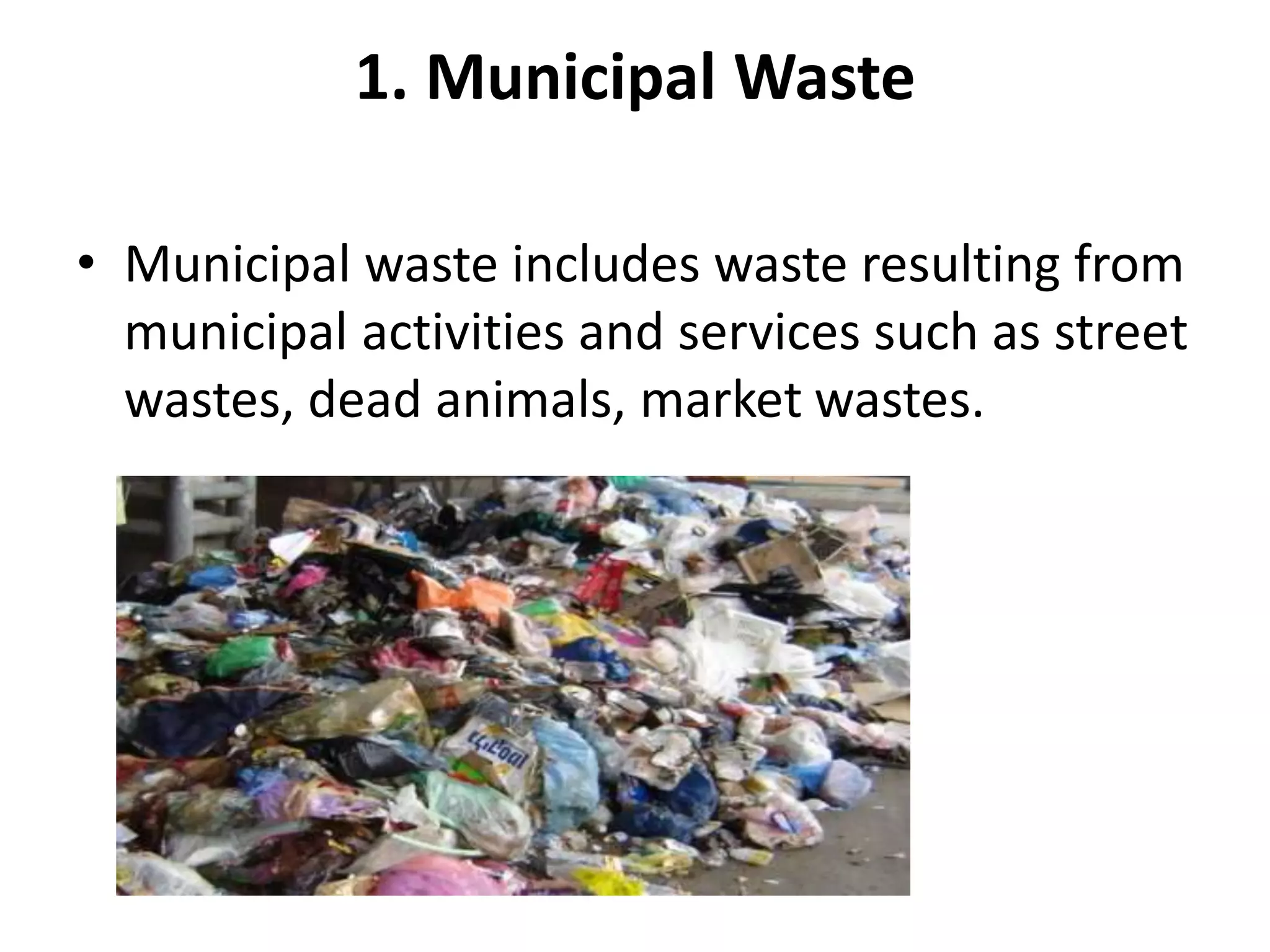
• Municipal waste includes waste resulting from
municipal activities and services such as street
wastes, dead animals, market wastes.
2. Commercial Waste
• Included in this category are solid wastes that
originate in offices, wholesale and retail
stores, restaurants, hotels, warehouses.
3. Garbage
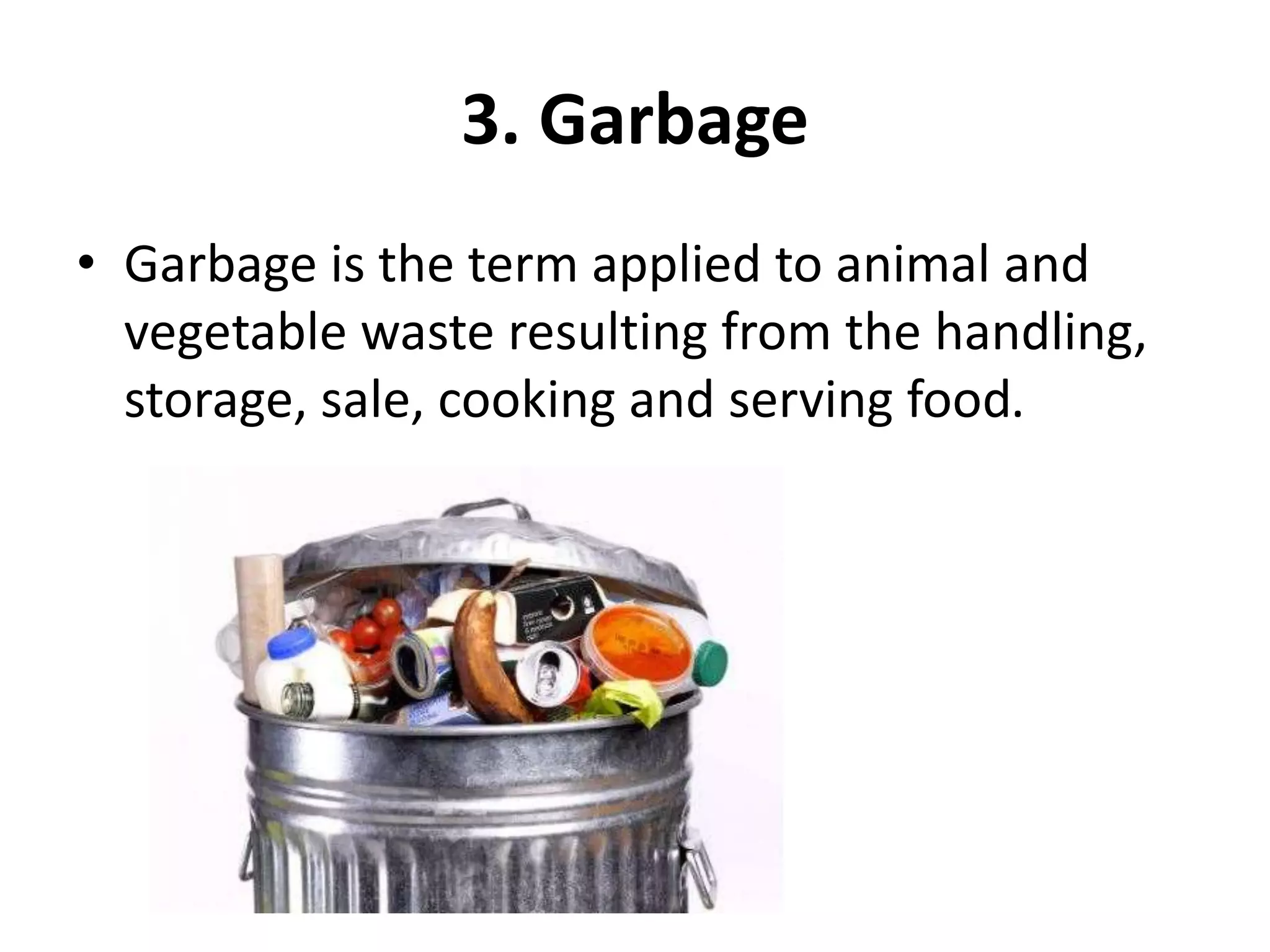
• Garbage is the term applied to animal and
vegetable waste resulting from the handling,
storage, sale, cooking and serving food.
4. Construction and Demolition
Wastes:
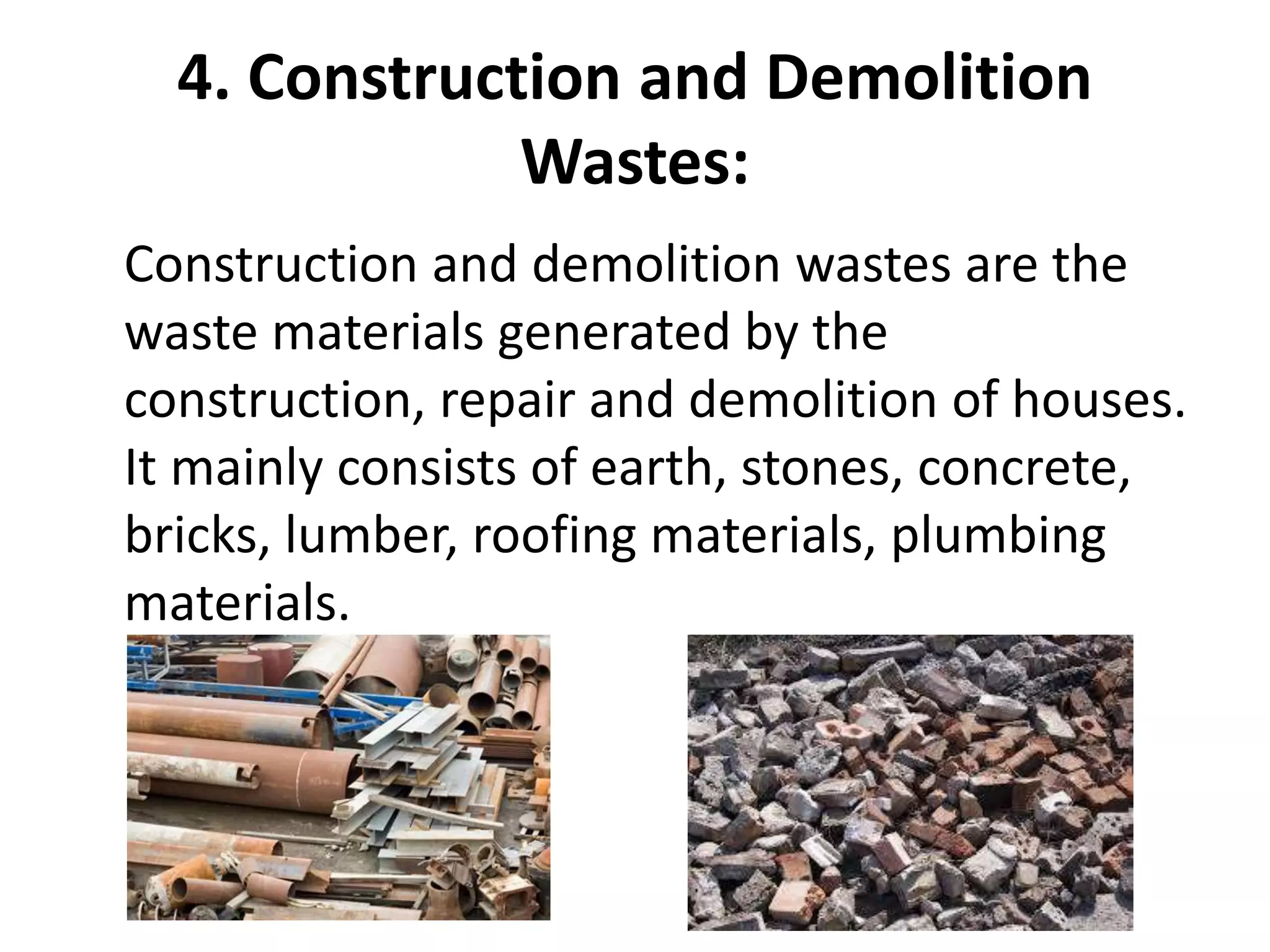
Construction and demolition wastes are the
waste materials generated by the
construction, repair and demolition of houses.
It mainly consists of earth, stones, concrete,
bricks, lumber, roofing materials, plumbing
materials.
5. Industrial Wastes
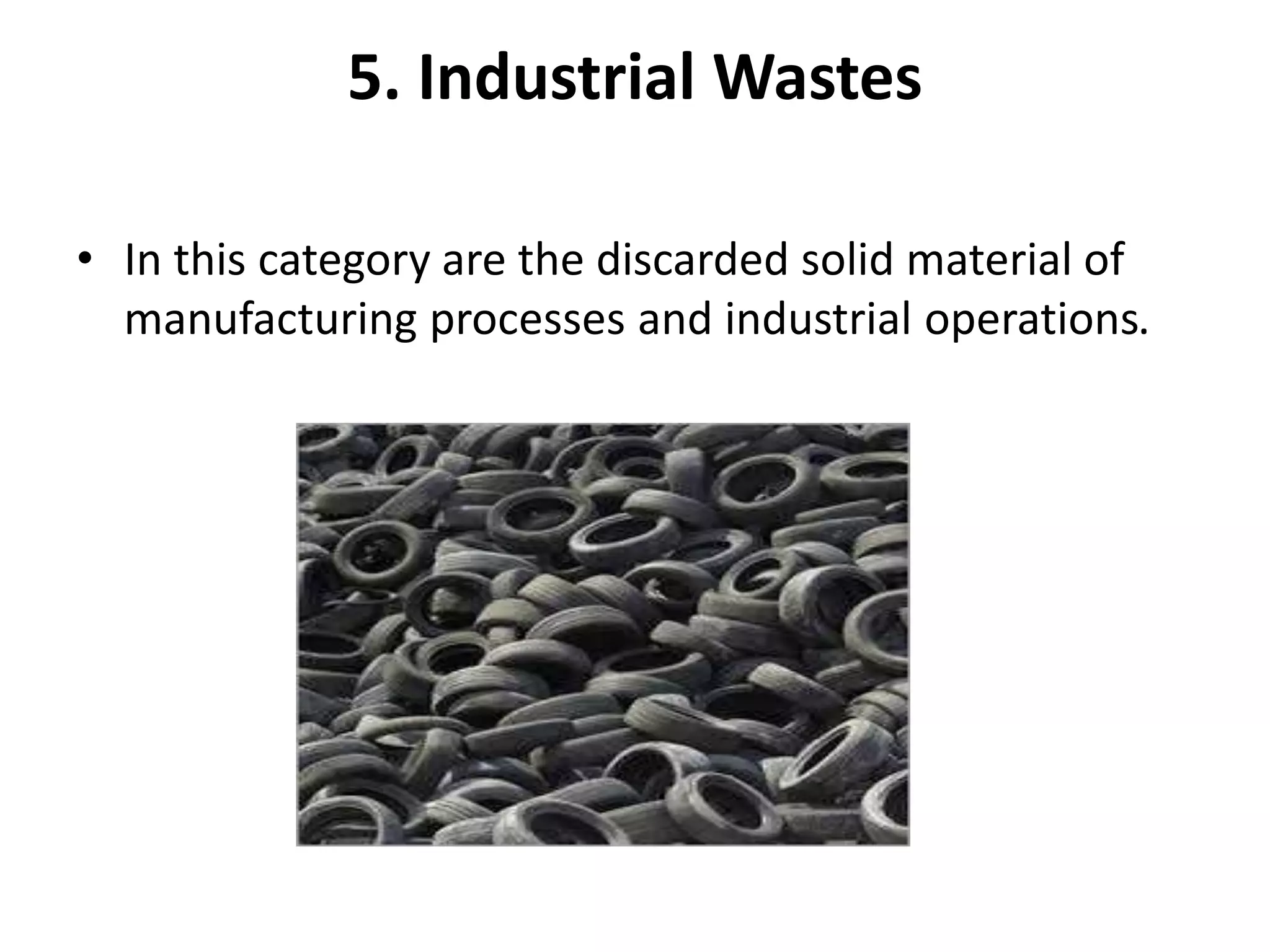
• In this category are the discarded solid material of
manufacturing processes and industrial operations.
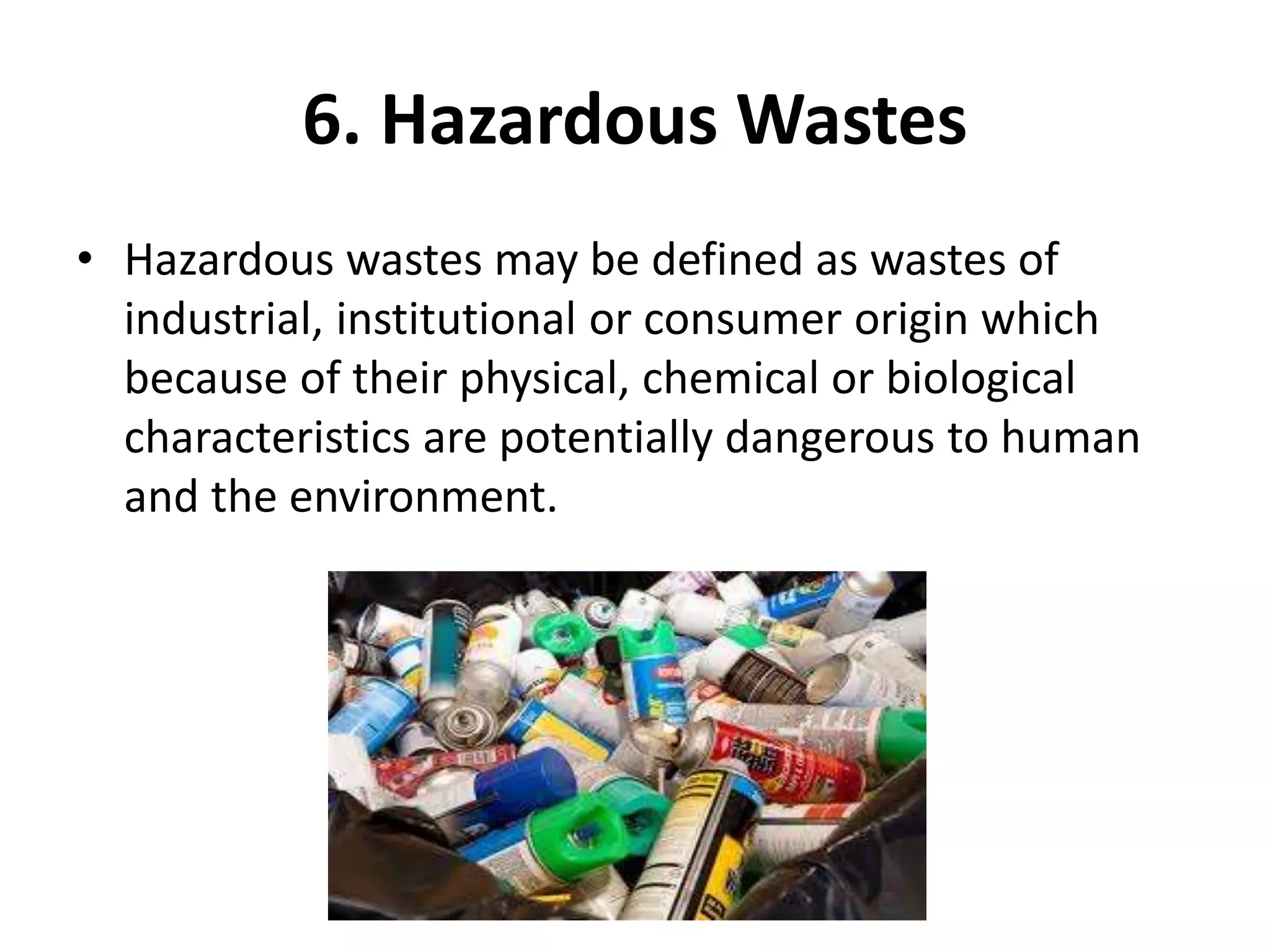
6. Hazardous Wastes
• Hazardous wastes may be defined as wastes of
industrial, institutional or consumer origin which
because of their physical, chemical or biological
characteristics are potentially dangerous to human
and the environment.
7.Agricultural Wastes
• includes both natural (organic) and non-natural
wastes, is a general term used to describe waste
produced on a farm through various farming
activities like leaf, waste Vegetables & Fruits.
8. Biomedical/Hospital Waste
• Hospital waste is generated during the diagnosis,
treatment, or immunization of human beings or
animals or in research activities. It may include
wastes like sharps, soiled waste, disposables,
anatomical waste, cultures, discarded medicines,
chemical wastes, etc.
9. Plastics
• Plastics, due to their versatility in use and impact on
environment can be grouped under a different
category of solid waste.
Thank you

Classification of solid waste

  • 1.
    Water supply andSanitary engineering Topic : Classification of solid waste Name : Gagiya Narendra
  • 2.
    What is solidwaste Any material that we discard, that is not liquid or gas, is solid waste  Advantages of Classification of solid waste 1. Easiness in Recycling 2. Stable Collection system 3. Proper Disposal
  • 3.
    Major classification 1. Organicwaste This waste is subjected to decay with time and evolve highly offensive odour and gases which are highly detrimental to health. it breeds flies, mosquitoes, etc. produces diseases like typhoid, diarrhea, etc. 2. Inorganic waste This consists of non-combustible materials such as grit, dust, mud, metal pieces, metal containers, broken glass, waste building material, etc. it is not subjected to decay and is therefore not harmful to public health.
  • 4.
    Other Classification 1. Municipalwaste 2. Commercial waste 3. Garbage 4. Construction & Demolition waste 5. Industrial waste 6. Hazardous waste 7. Agricultural wastes 8. Biomedical/Hospital waste 9. Plastics
  • 5.
    1. Municipal Waste •Municipal waste includes waste resulting from municipal activities and services such as street wastes, dead animals, market wastes.
  • 6.
    2. Commercial Waste •Included in this category are solid wastes that originate in offices, wholesale and retail stores, restaurants, hotels, warehouses.
  • 7.
    3. Garbage • Garbageis the term applied to animal and vegetable waste resulting from the handling, storage, sale, cooking and serving food.
  • 8.
    4. Construction andDemolition Wastes: Construction and demolition wastes are the waste materials generated by the construction, repair and demolition of houses. It mainly consists of earth, stones, concrete, bricks, lumber, roofing materials, plumbing materials.
  • 9.
    5. Industrial Wastes •In this category are the discarded solid material of manufacturing processes and industrial operations.
  • 10.
    6. Hazardous Wastes •Hazardous wastes may be defined as wastes of industrial, institutional or consumer origin which because of their physical, chemical or biological characteristics are potentially dangerous to human and the environment.
  • 11.
    7.Agricultural Wastes • includesboth natural (organic) and non-natural wastes, is a general term used to describe waste produced on a farm through various farming activities like leaf, waste Vegetables & Fruits.
  • 12.
    8. Biomedical/Hospital Waste •Hospital waste is generated during the diagnosis, treatment, or immunization of human beings or animals or in research activities. It may include wastes like sharps, soiled waste, disposables, anatomical waste, cultures, discarded medicines, chemical wastes, etc.
  • 13.
    9. Plastics • Plastics,due to their versatility in use and impact on environment can be grouped under a different category of solid waste.
  • 14.