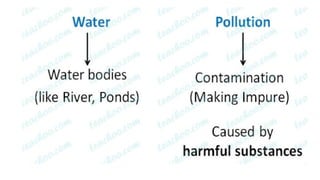
Contamination is simply the presence of a
substance where it should not be or at
concentrations above background.
Pollution is contamination that results in or
can result in adverse biological effects to
resident communities. All pollutants are
contaminants, but not all contaminants are
pollutants.
Pollution and contamination
Sleet is partially frozen rain, measuring less than 5 mm (0.2 inch) in
diameter.
Hail is a round piece of ice that usually falls during thunderstorms.
measuring >5 mm.
আক্রমণাত্মক
contaminated by methylmercury compound nitrate nitrate
taking in too much fluoride
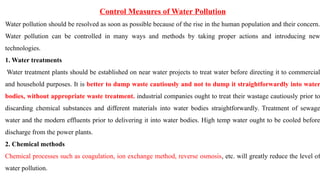
Control Measures of Water Pollution
Water pollution should be resolved as soon as possible because of the rise in the human population and their concern.
Water pollution can be controlled in many ways and methods by taking proper actions and introducing new
technologies.
1. Water treatments
Water treatment plants should be established on near water projects to treat water before directing it to commercial
and household purposes. It is better to dump waste cautiously and not to dump it straightforwardly into water
bodies, without appropriate waste treatment. industrial companies ought to treat their wastage cautiously prior to
discarding chemical substances and different materials into water bodies straightforwardly. Treatment of sewage
water and the modern effluents prior to delivering it into water bodies. High temp water ought to be cooled before
discharge from the power plants.
2. Chemical methods
Chemical processes such as coagulation, ion exchange method, reverse osmosis, etc. will greatly reduce the level of
water pollution.
New technologies to control water pollution
 Bioremediation: Bioremediation is the utilization of microorganisms to debase the natural
contamination into a less poisonous form. Microorganisms can be explicitly intended for
bioremediation utilizing genetic engineering technologies.
 Phytoremediation: Phytoremediation is the utilization of plants to eliminate impurities
from soil and water. Normal phytoremediation is completed by mangroves, estuarine
vegetation, and other wetland vegetation. Water hyacinth an aquatic weed can
decontaminate water by taking a few poisonous materials and various weighty metals from
water. Oil spills in water can be cleaned with the assistance of Bregoli, a by-product of the
paper industry looking like sawdust. Eucalyptus trees should be planted around sewage
lakes. These trees assimilate all overflow wastewater quickly and discharge unadulterated
water fume into the climate.
 Riparian buffers: A riparian buffer is a vegetated region, a buffer strip close to a stream,
typically forested, which helps as shade and acts as a shield to the stream from the effect of
neighboring area uses.
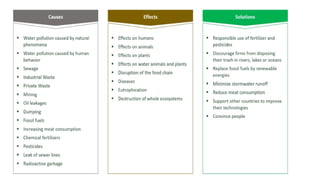
Avoiding the usage of chemical fertilizers
Stop using excessive use of fertilizers and pesticides should be avoided. Using natural
fertilizers and pesticides as substitutes for chemical ones is good for plants and water. Organic
farming and the efficient use of animal residues as fertilizers can replace chemical fertilizers.
Utilization of less water
Clean and fresh water might appear to be copious, yet there is a restricted sum accessible to the
environment. Use water by installing water-saving gadgets on sinks, in latrines, and in showers.
Take baths rather than long showers. Try not to run the water continually while cleaning your
teeth. Wash garments when you have a full heap of clothing. Possibly water your grass and
Try not to dump chemical compounds
Use less chemical-containing substances and cleaners around the home. Not exclusively will you
cut down on indoor air contamination, yet additionally on entering chemicals into the water
system. Try to utilize biodegradable cleaners. Try not to empty oil or different chemicals into the
drainages in the city.
Keeping water checks for lead contamination
Many homes have lead lines or lead-around associations on the lines which convey water to their
homes. Since this lead might enter your drinking water and create clinical issues in children.
Important to have water tests. On the off chance that lead is available, introducing a filter might
tackle the issue.
Do not pollute open-air water sources
Try not to dirty open-air water sources: Do not empty oil or different synthetic substances into the
Use environmentally friendly products
 By using soluble products that do not go on to become pollutants, we can decrease how much
water contamination is brought about by a family.
 As an individual, reusing, reducing, and recycling wherever possible will advance a long way in overcoming the impacts
of water pollution.
Water pollution and Diseases
Water toxins might cause infection or go about as poison. Microbes and parasites in ineffectively treated sewage might enter
drinking water supplies and lead to stomach-related issues like cholera and lose of bowels. Dangerous synthetic
compounds, pesticides, and herbicides from industries, ranches, homes, and fairways can cause intense harmfulness and
quick passing, or constant poisonousness that can prompt neurological issues or malignant growths. Many water poisons
enter our bodies when we use water for drinking and food readiness. The poisons enter the gastrointestinal system and arrive
at different organs in the body and cause different diseases. Synthetic compounds that interact with the skin from washing
garments, or from swimming in contaminated water might prompt skin itchiness. Dangerous synthetics in water systems can
likewise influence the environmental elements of creatures and plants that live there. In some cases, dangerous microbes will
leave within the synthetics in the water system. when it is used for drinking purposes people become sick which leads to
harmful side effects.
Question 7: What is Minamata Incident?
Answer:
The Minamata Incident checked one of the most pessimistic scenarios of water
contamination. In 1932, a factory in Minamata City, Japan started unloading its
industrial effluent Methylmercury, into the sea. The infections and deaths went on for
just about 36 years before they could be authoritatively recognized by the
government authority and the association. At first, dogs and cats were impacted by
this. Before long, similar side effects were seen in individuals, however, the reason
was not clear at that point. Other impacted individuals showed side effects of intense
mercury harming, for example, ataxia, muscle shortcoming, loss of muscle
coordination, harm to discourse and hearing, and so on. In serious cases, loss of
motion happened, which was trailed by extreme lethargies and demise.
*Describe the effect of water pollution
on:
Human
Soil
Plants
Please read the Given PDF
file for water pollution
details.
water pollution.pppppppppppppppppppppppp

water pollution.pppppppppppppppppppppppp

  • 3.
    Contamination is simplythe presence of a substance where it should not be or at concentrations above background. Pollution is contamination that results in or can result in adverse biological effects to resident communities. All pollutants are contaminants, but not all contaminants are pollutants. Pollution and contamination
  • 6.
    Sleet is partiallyfrozen rain, measuring less than 5 mm (0.2 inch) in diameter. Hail is a round piece of ice that usually falls during thunderstorms. measuring >5 mm.
  • 14.
  • 24.
    contaminated by methylmercurycompound nitrate nitrate taking in too much fluoride
  • 29.
    Control Measures ofWater Pollution Water pollution should be resolved as soon as possible because of the rise in the human population and their concern. Water pollution can be controlled in many ways and methods by taking proper actions and introducing new technologies. 1. Water treatments Water treatment plants should be established on near water projects to treat water before directing it to commercial and household purposes. It is better to dump waste cautiously and not to dump it straightforwardly into water bodies, without appropriate waste treatment. industrial companies ought to treat their wastage cautiously prior to discarding chemical substances and different materials into water bodies straightforwardly. Treatment of sewage water and the modern effluents prior to delivering it into water bodies. High temp water ought to be cooled before discharge from the power plants. 2. Chemical methods Chemical processes such as coagulation, ion exchange method, reverse osmosis, etc. will greatly reduce the level of water pollution.
  • 30.
    New technologies tocontrol water pollution  Bioremediation: Bioremediation is the utilization of microorganisms to debase the natural contamination into a less poisonous form. Microorganisms can be explicitly intended for bioremediation utilizing genetic engineering technologies.  Phytoremediation: Phytoremediation is the utilization of plants to eliminate impurities from soil and water. Normal phytoremediation is completed by mangroves, estuarine vegetation, and other wetland vegetation. Water hyacinth an aquatic weed can decontaminate water by taking a few poisonous materials and various weighty metals from water. Oil spills in water can be cleaned with the assistance of Bregoli, a by-product of the paper industry looking like sawdust. Eucalyptus trees should be planted around sewage lakes. These trees assimilate all overflow wastewater quickly and discharge unadulterated water fume into the climate.
  • 31.
     Riparian buffers:A riparian buffer is a vegetated region, a buffer strip close to a stream, typically forested, which helps as shade and acts as a shield to the stream from the effect of neighboring area uses. Avoiding the usage of chemical fertilizers Stop using excessive use of fertilizers and pesticides should be avoided. Using natural fertilizers and pesticides as substitutes for chemical ones is good for plants and water. Organic farming and the efficient use of animal residues as fertilizers can replace chemical fertilizers. Utilization of less water Clean and fresh water might appear to be copious, yet there is a restricted sum accessible to the environment. Use water by installing water-saving gadgets on sinks, in latrines, and in showers. Take baths rather than long showers. Try not to run the water continually while cleaning your teeth. Wash garments when you have a full heap of clothing. Possibly water your grass and
  • 32.
    Try not todump chemical compounds Use less chemical-containing substances and cleaners around the home. Not exclusively will you cut down on indoor air contamination, yet additionally on entering chemicals into the water system. Try to utilize biodegradable cleaners. Try not to empty oil or different chemicals into the drainages in the city. Keeping water checks for lead contamination Many homes have lead lines or lead-around associations on the lines which convey water to their homes. Since this lead might enter your drinking water and create clinical issues in children. Important to have water tests. On the off chance that lead is available, introducing a filter might tackle the issue. Do not pollute open-air water sources Try not to dirty open-air water sources: Do not empty oil or different synthetic substances into the
  • 33.
    Use environmentally friendlyproducts  By using soluble products that do not go on to become pollutants, we can decrease how much water contamination is brought about by a family.  As an individual, reusing, reducing, and recycling wherever possible will advance a long way in overcoming the impacts of water pollution. Water pollution and Diseases Water toxins might cause infection or go about as poison. Microbes and parasites in ineffectively treated sewage might enter drinking water supplies and lead to stomach-related issues like cholera and lose of bowels. Dangerous synthetic compounds, pesticides, and herbicides from industries, ranches, homes, and fairways can cause intense harmfulness and quick passing, or constant poisonousness that can prompt neurological issues or malignant growths. Many water poisons enter our bodies when we use water for drinking and food readiness. The poisons enter the gastrointestinal system and arrive at different organs in the body and cause different diseases. Synthetic compounds that interact with the skin from washing garments, or from swimming in contaminated water might prompt skin itchiness. Dangerous synthetics in water systems can likewise influence the environmental elements of creatures and plants that live there. In some cases, dangerous microbes will leave within the synthetics in the water system. when it is used for drinking purposes people become sick which leads to harmful side effects.
  • 34.
    Question 7: Whatis Minamata Incident? Answer: The Minamata Incident checked one of the most pessimistic scenarios of water contamination. In 1932, a factory in Minamata City, Japan started unloading its industrial effluent Methylmercury, into the sea. The infections and deaths went on for just about 36 years before they could be authoritatively recognized by the government authority and the association. At first, dogs and cats were impacted by this. Before long, similar side effects were seen in individuals, however, the reason was not clear at that point. Other impacted individuals showed side effects of intense mercury harming, for example, ataxia, muscle shortcoming, loss of muscle coordination, harm to discourse and hearing, and so on. In serious cases, loss of motion happened, which was trailed by extreme lethargies and demise.
  • 37.
    *Describe the effectof water pollution on: Human Soil Plants
  • 39.
    Please read theGiven PDF file for water pollution details.