Lipid-lowering drugs
Dr. Remya Krishnan MD PhD(Ay)
 Dr. Remya Krishnan MD PhD(Ay)
Atherosclerosis and lipoprotein metabolism
Atheromatous disease is ubiquitous and underlies the commonest causes
of death (e.g. myocardial infarction) and disability (e.g. stroke) in industrial
countries
Hypertension and dyslipidemia are ones of the most important risk factors,
amenable to drug therapy
ATHEROMA is a focal disease of the intima of large and medium-sized
arteries
A t h e r o g e n e s i s involves several stages:
- endothelial dysfunction with altered PGI2 and NO synthesis
- monocyte attachment
- endothelial cells bind LDL
- oxidatively modified LDL is taken up by macrophages
- having taken up oxidised LDL, these macrophages (now foam cells) migrate
subendothelially
- atheromatous plaque formation
- rupture of the plaque
Atherosclerosis and lipoprotein metabolism
LIPIDS, including CHOLESTEROL (CHO) and TRIGLYCERIDES (TG), are
transported in the plasma as lipoproteins, of which there are four classes:
- chylomicrons transport TG and CHO from the GIT to the tissues, where
they are split by lipase, releasing free fatty acids.There are taken up in muscle
and adipose tissue. Chylomicron remnants are taken up in the liver
- very low density lipoproteins (VLDL), which transport CHO and newly
synthetised TG to the tissues, where TGs are removed as before, leaving:
- low density lipoproteins (LDL) with a large component of CHO, some of which
is taken up by the tissues and some by the liver, by endocytosis via specific
LDL receptors
- high density lipoproteins (HDL).which absorb CHO derived from cell
breakdown in tissues and transfer it to VLDL and LDL
Atherosclerosis and lipoprotein metabolism
There are two different pathways for exogenous and endogenous
lipids:
THE EXOGENOUS PATHWAY: CHO + TG absorbed from the GIT are
transported in the lymph and than in the plasma as
CHYLOMICRONS to capillaries in muscle and adipose tissues. Here
the core TRIGL are hydrolysed by lipoprotein lipase, and the
tissues take up the resulting FREE FATTY ACIDS
CHO is liberated within the liver cells and may be stored,
oxidised to bile aids or secreted in the bile unaltered
Alternatively it may enter the endogenous pathway of lipid
transpor in VLDL
Atherosclerosis and lipoprotein metabolism
CHO
may be
stored
oxidised
to
bile acids
secreted
in
the bile
unaltered
ENDOGENOUS
PATHWAY
EXOGENOUS
PATHWAY
Atherosclerosis and lipoprotein metabolism
THE ENDOGENOUS PATHWAY
CHO and newly synthetised TG are transported from the liver as VLDL to
muscle and adipose tissue, there TG are hydrolysed and the resulting
FATTY ACIDS enter the tissues
The lipoprotein particles become smaller and ultimetaly become LDL ,
which provides the source of CHO for incorporation into cell membranes, for
synthesis of steroids, and bile acids
Cells take up LDL by endocytosis via LDL receptors that recognise LDL apolipoproteins
CHO can return to plasma from the tissues in HDL particles and the resulting
cholesteryl esters are subsequently transferred to VLDL or LDL
One species of LDL – lipoprotein - is associated with atherosclerosis
(localised in atherosclerotic lesions). LDL can also activate platelets,
constituting a further thrombogenic effect
Dyslipidemia
The normal range of plasma total CHO concentration < 6.5 mmol/L.
There are smooth gradations of increased risk with
elevated LDL CHO conc, and with reduced HDL CHO conc.
Dyslipidemia can be primary or secondary.
The primary forms are genetically determined
Secondary forms are a consequence of other conditions
such as diabetes mellitus, alcoholism, nephrotic sy,
chronic renal failure, administration of drug…
Lipid-lowering drugs
 Several drugs are used to decrease plasma
LDL-CHO
 Drug therapy to lower plasma lipids is
only one approach to treatment
 and is used in addition to dietary
management
and correction of other modifiable
cardiovascular risk factors
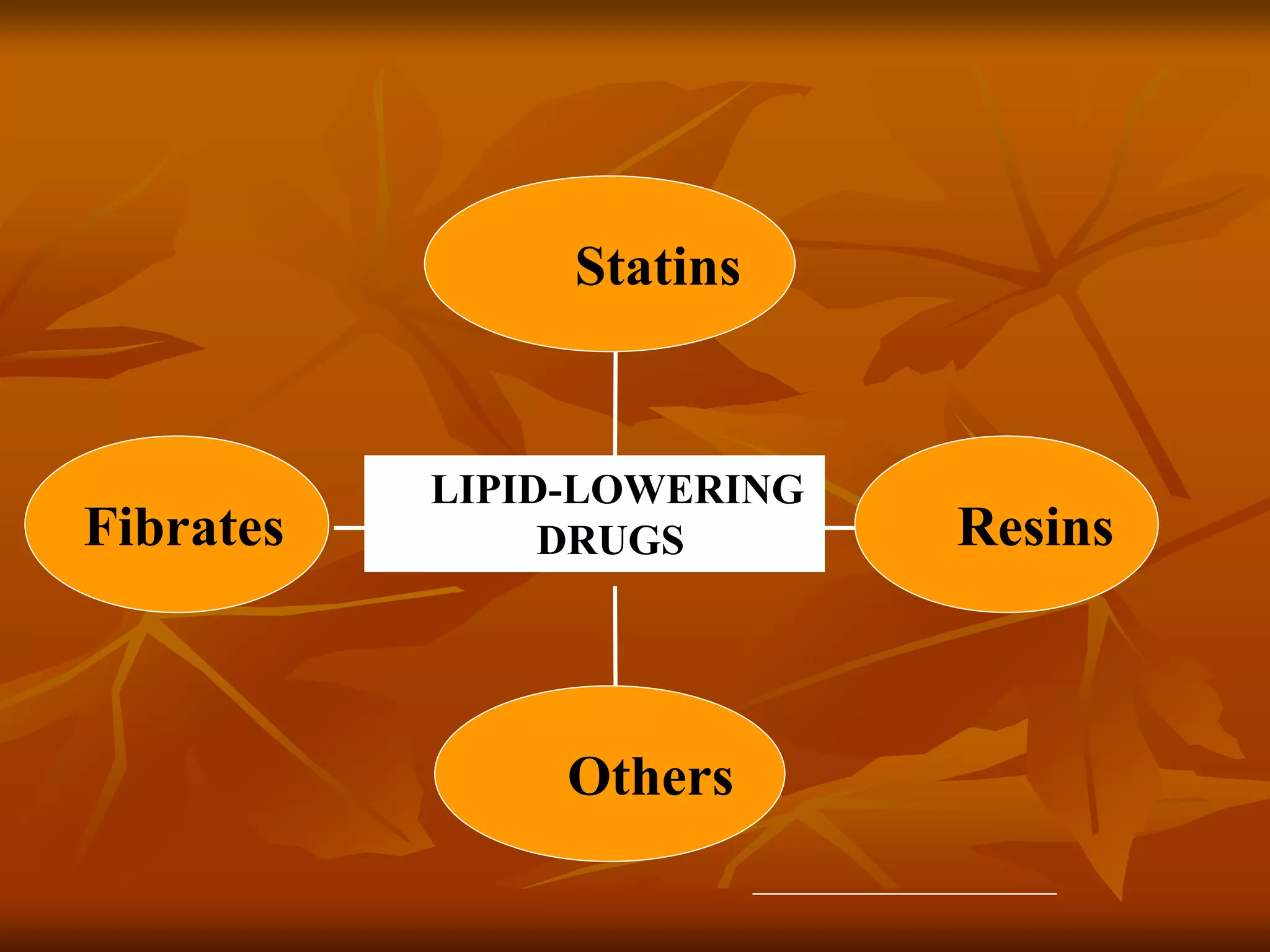
Fibrates
Others
Resins
Statins
LIPID-LOWERING
DRUGS
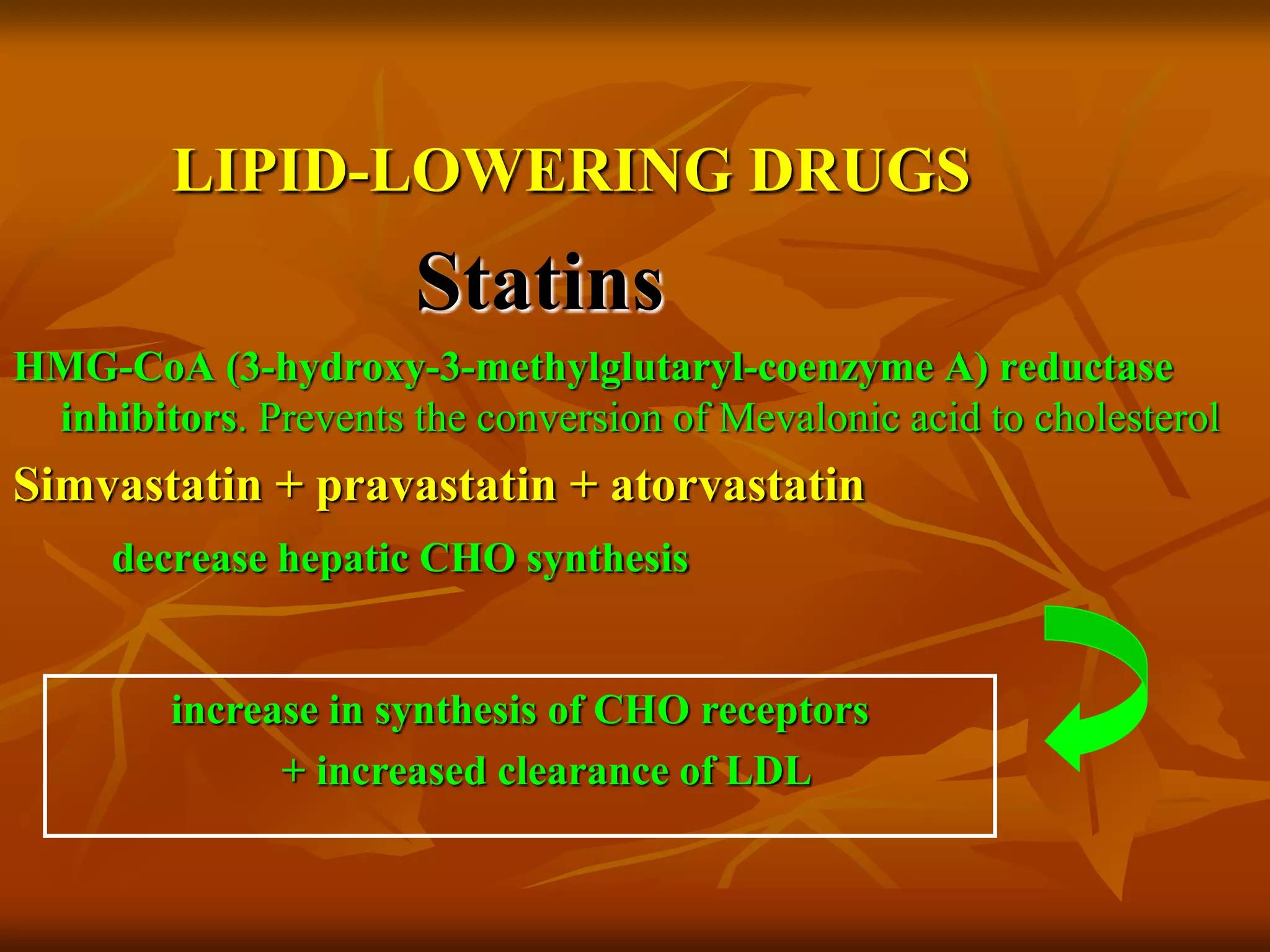
LIPID-LOWERING DRUGS
Statins
HMG-CoA (3-hydroxy-3-methylglutaryl-coenzyme A) reductase
inhibitors. Prevents the conversion of Mevalonic acid to cholesterol
Simvastatin + pravastatin + atorvastatin
decrease hepatic CHO synthesis
increase in synthesis of CHO receptors
+ increased clearance of LDL
LIPID-LOWERING DRUG
Statins
Pharmacokinetics
- well absorbed when given orally
- extracted by the liver (target tissue), undergo
extensive presystemic biotransformation
Simvastatin is an inactive pro-drug
LIPID-LOWERING DRUG
Statins
C l i n i c a l u s e s
 Secondary prevention of myocardial infarction and
stroke in patients who have symptomatic atherosclerotic disease
(angina, transient ischemic attacks) following acute myocardial
infarction or stroke
 Primary prevention of arterial disease in patients who
are at high risk because of elevated serum CHO concentration,
especially it there are other risk factors for atherosclerosis
 Atorvastatin lowers serum CHO in patients with
homozygous familiar hypercholesterolemia
LIPID-LOWERING DRUG
Statins
A d v e r s e e f f e c t s:
- mild gastrointestinal disturbances
- increased plasma activities in liver enzymes
- severe myositis (rhabdomyolysis)
and angio-oedema (rare)
LIPID-LOWERING DRUGS
Fibrates
- stimulate the beta-oxidative degradation of fatty acids
- liberate free fatty acids for storage in fat or for metabolism in
striated muscle
- increase the activity of lipoprotein lipase,
hence increasing hydrolysis of triglyceride in chylomicrons
and VLDL particles
- reduce hepatic VLDL production and increase hepatic LDL
uptake
LIPID-LOWERING DRUGS
Fibrates
O t h e r e f f e c t s :
improve glucose tolerance
inhibit vascular smooth muscle inflammation
fenofibrate clofibrate
gemfibrozil ciprofibrate
LIPID-LOWERING DRUGS
Fibrates
A d v e r s e e f f e c t s:
in patients with renal impairment myositis (rhabdomyolysis)
myoglobulinuria, acute renal failure
Fibrates should be avoided in such patients and also in alcoholics)
mild GIT symptoms
LIPID-LOWERING DRUGS
Fibrates
C l i n i c a l u s e s
mixed dyslipidemia(i.e. raised serum TG and CHO)
patients with low HDL and high risk of atheromatous
disease (often type 2 diabetic patients)
patients with severe treatment- resistant
dyslipidemia (combination with other lipid-lowering
drugs)
LIPID-LOWERING DRUGS
Bile acid binding resins
sequester bile acids in the GIT prevent their reabsorption
and enterohepatic recirculation
The r e s u l t is:
decreased absorption of exogenous CHO and increased metabolism of
endogenous CHO into bile acid acids
increased expression of LDL receptors on liver cells
increased removal of LDL from the blood
reduced concentration of LDL CHO in plasma
LIPID-LOWERING DRUGS
Bile acid binding resins
A d v e r s e e f f e c t s:
GIT symptoms - nauzea, abdominal bloating,
constipation or diarrhea
resins are unappetising. This can be minimized by
suspending them in fruit juice
interfere with the absorption of fat-soluble vitamins
and drugs (chlorothiazide, digoxin, warfarin)
These drugs should be given at last 1 hour before or 4-6 hours after a resin
LIPID-LOWERING DRUGS
Others
Nicotinic acid inhibits hepatic TG production and VLDL
secretion
modest reduction in LDL and increase in HDL
A d v e r s e e f f e c t s:
flushing, palpitations , GIT disturbances
LIPID-LOWERING DRUGS
Others
Fish oil (rich in highly unsaturated fatty acids)
the omega-3 marine TG
- reduce plasma TG but increase CHO (CHO is more strongly
associated wih coronary artery disease)
-the effects on cardiac morbidity or mortality is unproven
( although there is epidemiological evidence that eating fish
regularly does reduce ischemic heart disease)
Resins
 Resins: (Colestipol [Colestid], Cholestyramine
[Questran]) and Colesevelam [Welchol]
 1. Bind bile salts in gut and block enterohepatic cycle
of bile acids.
 2. Lowers cellular cholesterol content by increasing
bile acid synthesis.
 3. Increases LDL receptors in liver.
 4. The rise in receptor-mediated endocytosis of LDL
lowers plasma LDL levels.
 . Statins : (Fluvastatin, Rosuvastatin
[Crestor], Pravastatin, Lovastatin,
Simvastatin
 [Zocor] and Atorvastatin [Lipitor].
 1. Competitive inhibitors of HMG-CoA
reductase (regulates cholesterol formation).
 2. Decreased cellular cholesterol level
increases LDL receptors.
Fibrates
 Fibrates (Gemfibrozil [Lopid] and Fenofibrate
 1. Increase VLDL clearance
 2. Decrease VLDL production by inhibiting adipose
tissue lipolysis.
 3. Lowers IDL and LDL production and content.
 4. Increase HDL levels (20-30%).
 5. Adverse effects: GI distress, rashes, liver injury
and headaches, ↑ gallstone risk.

Lipid lowering drugs

  • 1.
    Lipid-lowering drugs Dr. RemyaKrishnan MD PhD(Ay)
  • 2.
     Dr. RemyaKrishnan MD PhD(Ay)
  • 3.
    Atherosclerosis and lipoproteinmetabolism Atheromatous disease is ubiquitous and underlies the commonest causes of death (e.g. myocardial infarction) and disability (e.g. stroke) in industrial countries Hypertension and dyslipidemia are ones of the most important risk factors, amenable to drug therapy ATHEROMA is a focal disease of the intima of large and medium-sized arteries A t h e r o g e n e s i s involves several stages: - endothelial dysfunction with altered PGI2 and NO synthesis - monocyte attachment - endothelial cells bind LDL - oxidatively modified LDL is taken up by macrophages - having taken up oxidised LDL, these macrophages (now foam cells) migrate subendothelially - atheromatous plaque formation - rupture of the plaque
  • 4.
    Atherosclerosis and lipoproteinmetabolism LIPIDS, including CHOLESTEROL (CHO) and TRIGLYCERIDES (TG), are transported in the plasma as lipoproteins, of which there are four classes: - chylomicrons transport TG and CHO from the GIT to the tissues, where they are split by lipase, releasing free fatty acids.There are taken up in muscle and adipose tissue. Chylomicron remnants are taken up in the liver - very low density lipoproteins (VLDL), which transport CHO and newly synthetised TG to the tissues, where TGs are removed as before, leaving: - low density lipoproteins (LDL) with a large component of CHO, some of which is taken up by the tissues and some by the liver, by endocytosis via specific LDL receptors - high density lipoproteins (HDL).which absorb CHO derived from cell breakdown in tissues and transfer it to VLDL and LDL
  • 5.
    Atherosclerosis and lipoproteinmetabolism There are two different pathways for exogenous and endogenous lipids: THE EXOGENOUS PATHWAY: CHO + TG absorbed from the GIT are transported in the lymph and than in the plasma as CHYLOMICRONS to capillaries in muscle and adipose tissues. Here the core TRIGL are hydrolysed by lipoprotein lipase, and the tissues take up the resulting FREE FATTY ACIDS CHO is liberated within the liver cells and may be stored, oxidised to bile aids or secreted in the bile unaltered Alternatively it may enter the endogenous pathway of lipid transpor in VLDL
  • 6.
    Atherosclerosis and lipoproteinmetabolism CHO may be stored oxidised to bile acids secreted in the bile unaltered ENDOGENOUS PATHWAY EXOGENOUS PATHWAY
  • 7.
    Atherosclerosis and lipoproteinmetabolism THE ENDOGENOUS PATHWAY CHO and newly synthetised TG are transported from the liver as VLDL to muscle and adipose tissue, there TG are hydrolysed and the resulting FATTY ACIDS enter the tissues The lipoprotein particles become smaller and ultimetaly become LDL , which provides the source of CHO for incorporation into cell membranes, for synthesis of steroids, and bile acids Cells take up LDL by endocytosis via LDL receptors that recognise LDL apolipoproteins CHO can return to plasma from the tissues in HDL particles and the resulting cholesteryl esters are subsequently transferred to VLDL or LDL One species of LDL – lipoprotein - is associated with atherosclerosis (localised in atherosclerotic lesions). LDL can also activate platelets, constituting a further thrombogenic effect
  • 8.
    Dyslipidemia The normal rangeof plasma total CHO concentration < 6.5 mmol/L. There are smooth gradations of increased risk with elevated LDL CHO conc, and with reduced HDL CHO conc. Dyslipidemia can be primary or secondary. The primary forms are genetically determined Secondary forms are a consequence of other conditions such as diabetes mellitus, alcoholism, nephrotic sy, chronic renal failure, administration of drug…
  • 9.
    Lipid-lowering drugs  Severaldrugs are used to decrease plasma LDL-CHO  Drug therapy to lower plasma lipids is only one approach to treatment  and is used in addition to dietary management and correction of other modifiable cardiovascular risk factors
  • 10.
  • 11.
    LIPID-LOWERING DRUGS Statins HMG-CoA (3-hydroxy-3-methylglutaryl-coenzymeA) reductase inhibitors. Prevents the conversion of Mevalonic acid to cholesterol Simvastatin + pravastatin + atorvastatin decrease hepatic CHO synthesis increase in synthesis of CHO receptors + increased clearance of LDL
  • 12.
    LIPID-LOWERING DRUG Statins Pharmacokinetics - wellabsorbed when given orally - extracted by the liver (target tissue), undergo extensive presystemic biotransformation Simvastatin is an inactive pro-drug
  • 13.
    LIPID-LOWERING DRUG Statins C li n i c a l u s e s  Secondary prevention of myocardial infarction and stroke in patients who have symptomatic atherosclerotic disease (angina, transient ischemic attacks) following acute myocardial infarction or stroke  Primary prevention of arterial disease in patients who are at high risk because of elevated serum CHO concentration, especially it there are other risk factors for atherosclerosis  Atorvastatin lowers serum CHO in patients with homozygous familiar hypercholesterolemia
  • 14.
    LIPID-LOWERING DRUG Statins A dv e r s e e f f e c t s: - mild gastrointestinal disturbances - increased plasma activities in liver enzymes - severe myositis (rhabdomyolysis) and angio-oedema (rare)
  • 15.
    LIPID-LOWERING DRUGS Fibrates - stimulatethe beta-oxidative degradation of fatty acids - liberate free fatty acids for storage in fat or for metabolism in striated muscle - increase the activity of lipoprotein lipase, hence increasing hydrolysis of triglyceride in chylomicrons and VLDL particles - reduce hepatic VLDL production and increase hepatic LDL uptake
  • 16.
    LIPID-LOWERING DRUGS Fibrates O th e r e f f e c t s : improve glucose tolerance inhibit vascular smooth muscle inflammation fenofibrate clofibrate gemfibrozil ciprofibrate
  • 17.
    LIPID-LOWERING DRUGS Fibrates A dv e r s e e f f e c t s: in patients with renal impairment myositis (rhabdomyolysis) myoglobulinuria, acute renal failure Fibrates should be avoided in such patients and also in alcoholics) mild GIT symptoms
  • 18.
    LIPID-LOWERING DRUGS Fibrates C li n i c a l u s e s mixed dyslipidemia(i.e. raised serum TG and CHO) patients with low HDL and high risk of atheromatous disease (often type 2 diabetic patients) patients with severe treatment- resistant dyslipidemia (combination with other lipid-lowering drugs)
  • 19.
    LIPID-LOWERING DRUGS Bile acidbinding resins sequester bile acids in the GIT prevent their reabsorption and enterohepatic recirculation The r e s u l t is: decreased absorption of exogenous CHO and increased metabolism of endogenous CHO into bile acid acids increased expression of LDL receptors on liver cells increased removal of LDL from the blood reduced concentration of LDL CHO in plasma
  • 20.
    LIPID-LOWERING DRUGS Bile acidbinding resins A d v e r s e e f f e c t s: GIT symptoms - nauzea, abdominal bloating, constipation or diarrhea resins are unappetising. This can be minimized by suspending them in fruit juice interfere with the absorption of fat-soluble vitamins and drugs (chlorothiazide, digoxin, warfarin) These drugs should be given at last 1 hour before or 4-6 hours after a resin
  • 21.
    LIPID-LOWERING DRUGS Others Nicotinic acidinhibits hepatic TG production and VLDL secretion modest reduction in LDL and increase in HDL A d v e r s e e f f e c t s: flushing, palpitations , GIT disturbances
  • 22.
    LIPID-LOWERING DRUGS Others Fish oil(rich in highly unsaturated fatty acids) the omega-3 marine TG - reduce plasma TG but increase CHO (CHO is more strongly associated wih coronary artery disease) -the effects on cardiac morbidity or mortality is unproven ( although there is epidemiological evidence that eating fish regularly does reduce ischemic heart disease)
  • 23.
    Resins  Resins: (Colestipol[Colestid], Cholestyramine [Questran]) and Colesevelam [Welchol]  1. Bind bile salts in gut and block enterohepatic cycle of bile acids.  2. Lowers cellular cholesterol content by increasing bile acid synthesis.  3. Increases LDL receptors in liver.  4. The rise in receptor-mediated endocytosis of LDL lowers plasma LDL levels.
  • 24.
     . Statins: (Fluvastatin, Rosuvastatin [Crestor], Pravastatin, Lovastatin, Simvastatin  [Zocor] and Atorvastatin [Lipitor].  1. Competitive inhibitors of HMG-CoA reductase (regulates cholesterol formation).  2. Decreased cellular cholesterol level increases LDL receptors.
  • 25.
    Fibrates  Fibrates (Gemfibrozil[Lopid] and Fenofibrate  1. Increase VLDL clearance  2. Decrease VLDL production by inhibiting adipose tissue lipolysis.  3. Lowers IDL and LDL production and content.  4. Increase HDL levels (20-30%).  5. Adverse effects: GI distress, rashes, liver injury and headaches, ↑ gallstone risk.