PHARMACY COUNCIL OF INDIA, NEW DELHI
PHARMACOLOGY-II (BP503 T)
DRUGS USED HYPERLIPIDEMIC DRUGS.
BY
DR SACHIN P. PADOLE
M.PHARM, PHD
Dr. Rajendra Gode Institute of Pharmacy,
University - Mardi Road,
Amravati - 444602
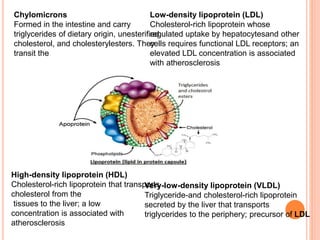
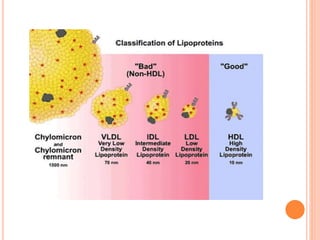
Chylomicrons
Formed in the intestine and carry
triglycerides of dietary origin, unesterified
cholesterol, and cholesterylesters. They
transit the
Low-density lipoprotein (LDL)
Cholesterol-rich lipoprotein whose
regulated uptake by hepatocytesand other
cells requires functional LDL receptors; an
elevated LDL concentration is associated
with atherosclerosis
High-density lipoprotein (HDL)
Cholesterol-rich lipoprotein that transports
cholesterol from the
tissues to the liver; a low
concentration is associated with
atherosclerosis
Very-low-density lipoprotein (VLDL)
Triglyceride-and cholesterol-rich lipoprotein
secreted by the liver that transports
triglycerides to the periphery; precursor of LDL
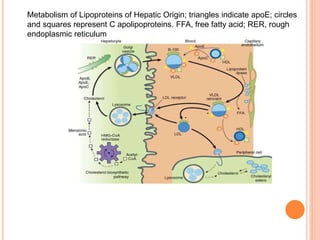
Metabolism of Lipoproteins of Hepatic Origin; triangles indicate apoE; circles
and squares represent C apolipoproteins. FFA, free fatty acid; RER, rough
endoplasmic reticulum
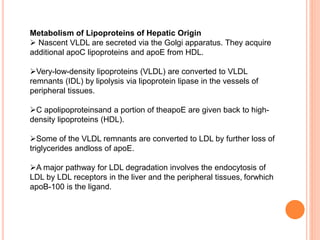
Metabolism of Lipoproteins of Hepatic Origin
 Nascent VLDL are secreted via the Golgi apparatus. They acquire
additional apoC lipoproteins and apoE from HDL.
Very-low-density lipoproteins (VLDL) are converted to VLDL
remnants (IDL) by lipolysis via lipoprotein lipase in the vessels of
peripheral tissues.
C apolipoproteinsand a portion of theapoE are given back to high-
density lipoproteins (HDL).
Some of the VLDL remnants are converted to LDL by further loss of
triglycerides andloss of apoE.
A major pathway for LDL degradation involves the endocytosis of
LDL by LDL receptors in the liver and the peripheral tissues, forwhich
apoB-100 is the ligand.
Anti-hyperlipidemic drugs classification
HMG-CoA Reductase Inhibitors
Bile acid –binding resine
Nicotinic acid
Fibrates
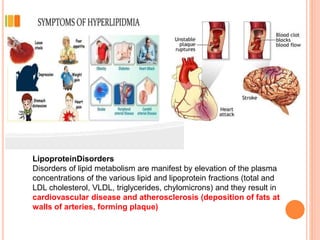
LipoproteinDisorders
Disorders of lipid metabolism are manifest by elevation of the plasma
concentrations of the various lipid and lipoprotein fractions (total and
LDL cholesterol, VLDL, triglycerides, chylomicrons) and they result in
cardiovascular disease and atherosclerosis (deposition of fats at
walls of arteries, forming plaque)
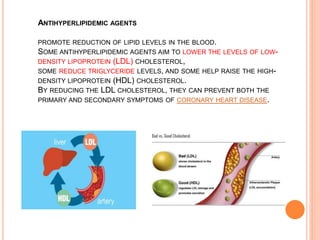
ANTIHYPERLIPIDEMIC AGENTS
PROMOTE REDUCTION OF LIPID LEVELS IN THE BLOOD.
SOME ANTIHYPERLIPIDEMIC AGENTS AIM TO LOWER THE LEVELS OF LOW-
DENSITY LIPOPROTEIN (LDL) CHOLESTEROL,
SOME REDUCE TRIGLYCERIDE LEVELS, AND SOME HELP RAISE THE HIGH-
DENSITY LIPOPROTEIN (HDL) CHOLESTEROL.
BY REDUCING THE LDL CHOLESTEROL, THEY CAN PREVENT BOTH THE
PRIMARY AND SECONDARY SYMPTOMS OF CORONARY HEART DISEASE.
Drug Therapy:
The primary goal of therapy is to:
Decrease levels of LDL
Increase in HDL
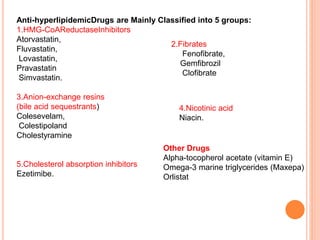
Anti-hyperlipidemicDrugs are Mainly Classified into 5 groups:
1.HMG-CoAReductaseInhibitors
Atorvastatin,
Fluvastatin,
Lovastatin,
Pravastatin
Simvastatin.
3.Anion-exchange resins
(bile acid sequestrants)
Colesevelam,
Colestipoland
Cholestyramine
5.Cholesterol absorption inhibitors
Ezetimibe.
2.Fibrates
Fenofibrate,
Gemfibrozil
Clofibrate
4.Nicotinic acid
Niacin.
Other Drugs
Alpha-tocopherol acetate (vitamin E)
Omega-3 marine triglycerides (Maxepa)
Orlistat
Disorders of lipid metabolism a
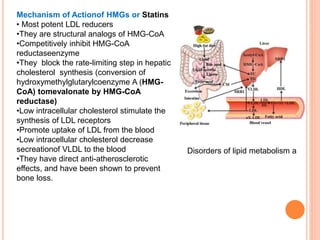
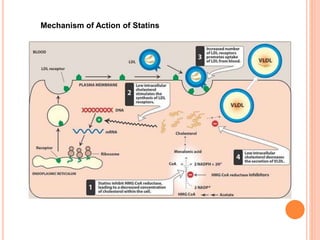
Mechanism of Actionof HMGs or Statins
• Most potent LDL reducers
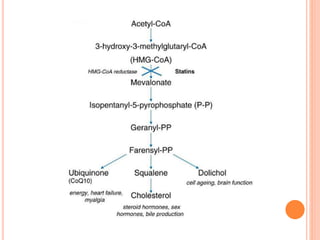
•They are structural analogs of HMG-CoA
•Competitively inhibit HMG-CoA
reductaseenzyme
•They block the rate-limiting step in hepatic
cholesterol synthesis (conversion of
hydroxymethylglutarylcoenzyme A (HMG-
CoA) tomevalonate by HMG-CoA
reductase)
•Low intracellular cholesterol stimulate the
synthesis of LDL receptors
•Promote uptake of LDL from the blood
•Low intracellular cholesterol decrease
secreationof VLDL to the blood
•They have direct anti-atherosclerotic
effects, and have been shown to prevent
bone loss.
Mechanism of Action of Statins
Therapeutic Uses:
These drugs are effective in lowering LDL cholesterol levels
especially when used in combination with other cholesterol lowering
drugs.
They reduce the risk of coronary events and mortality in patients
with ischemic heart disease, and they also reduce the risk of
ischemic stroke.
Rosuvastatin, atorvastatin, and simvastatinhave greater maximal
efficacy than the other statinswhile Fluvastatinhas less maximal
efficacy
↓Triglycerides and ↑HDL cholesterol in patients with triglycerides
levels that are higher than 250 mg/dLand with reduced HDL
cholesterol levels.
Pharmacokinetics
Lovastatinand simvastatinare prodrugsthat arehydrolyzed in the
gastrointestinal tract to the active derivatives
Pravastatin, Atorvastatin, fluvastatinand rosuvastatinare active as given
Absorption varies from 40% to 75% but Fluvastatincompletely absorbed.
Most of the absorbed dose is excreted in the bile;
5–20% is excreted in the urine.
Plasma Half lives of these drugs range from 1 to 3 hours, atorvastatin (14
hours), pitavastatin(12 hours) and rosuvastatin(19 hours).
Because of a circadian rhythm to LDL-receptor synthesis& the cholesterol
synthesis also occurs predominantly at night, reductase inhibitors-except
atorvastatin and rosuvastatin-should be given in the evening if a single daily
dose is used.
Adverse Effect of Statins
1.Transient, and minor abnormality of liver function tests (Mild
elevations of serum aminotransferases)
2.Increase in creatinekinase (released from skeletal muscle) in 10%
of patients (when there is muscle damage such as a heart attack,
skeletal muscle injuries, certain muscle disorders, or strenuous
exercise. )
3.Myopathy and rhabdomyolysis( disintegration or dissolution of
muscle and elevation of muscle enzymes (creatinekinase, CPK)
NOTE: In patients with renal insufficiency, Plasma
creatinekinaselevels should be determined regularly.
Drug Interactions:
The HMG CoAreductase inhibitors are metabolized by the cytochrome
P450 system; drugs or foods (eg, grapefruit juice) that inhibit cytochrome
P450 activity increase the risk of hepatotoxicity and myopathy.
The HMG CoA reductase inhibitors may also increase warfarin levels.
Thus, it is important to evaluate INR
Cyclosporine, itraconazole, erythromycin and gemfibrozil or niacin.
Plasma creatine kinase levels should be determined regularly in patients
taking drugs.
Contraindications:
Pregnancy (teratogenic)
Nursing mothers.
Children or teenagers
FibricAcid Derivatives (Fibrates)
Bezafibrate
Ciprofibrate
Fenofibrate
Gemfibrozil
Fibrates are medicines prescribed to help
•lower high triglyceride levels.
•Fibrates also may help raise your HDL (good) cholesterol.
•High triglycerides along with low HDL cholesterol increase the risk
of heart disease and stroke
Mechanism of Action
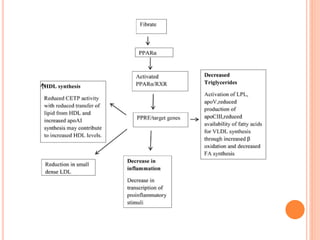
Agonists atPPAR-α(peroxisomeproliferator-activated receptor-
α)→ expression of genes responsible for increased activity of
plasma lipoprotein lipase enzyme → hydrolysis of VLDL and
chylomicrons→ ↓serum TGs
↑ apoA-I and apoA-II
↓ apoC-III, an inhibitor of lipolysis.
A major effect is an increase in oxidation of fatty acids in
liver and striated muscle
They increase lipolysisof lipoprotein triglyceride via LPL
Increase clearance of LDL by liver & ↑ HDL.
Note: Proliferator-activated receptor-alpha (PPAR-α) is
Member of a family of nuclear transcription regulators that
participate in the regulation of metabolic processes; target of
the fibrate drugs and omega-3 fatty acids
Pharmacokinetic of FibricAcid Derivatives:
Well absorbed from the gastrointestinal tract
Extensively bound to plasma proteins
Excreted mainly by the kidney as unchanged drug or
metabolites.
Contraindication
Where hepatic or renal function is severely impaired (but
gemfibrozil has been used in uraemicand nephrotic patients
without aggravating deterioration in kidney function)
Pregnant or lactating women
AdveresEffect of FibricAcid Derivatives
Gastrointestinal effects, rash
Myopathy, arrhythmias, hypokalemia,
Increase in aminotransferasesor alkaline phosphatase
Lithiasis: Because these drugs increase biliary cholesterol excretion,
there is a predisposition to the formation of gallstones.
Fibric acid derivatives may induce a Myopathyand
rhabdomyolysistherisk is greater in:
•Patients with poor renal Function
•In patients taking a statin.
Fibrates enhance the effect of co-administered oral Anticoagulants.
Anion-exchange Resins (Bile Acid
Sequestrants):
Cholestyramine
Colesevelam
Colestipol
It is an ion-exchange resin or ion-exchange polymer is
a resin or polymer that acts as a medium for ion exchange. It is
an insoluble matrix
Mechanism of Action:
Anion exchange resins bind bile acids in the intestine
forming complex →loss of bile acids in the stools →↑
conversion of cholesterol into bile acids in the liver.
Decreased concentration of intrahepaticcholesterol →
compensatory increase in LDL receptors →↑ hepatic uptake
of circulating LDL → ↓ serum LDL cholesterol levels.
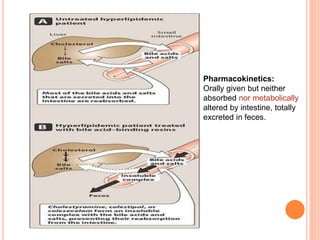
Pharmacokinetics:
Orally given but neither
absorbed nor metabolically
altered by intestine, totally
excreted in feces.
Adverse Effect of Anion –Exchange
Resins (Bile Acid Sequestrants)
Gastrointestinal effects: bloating,
constipation, and an unpleasant gritty
taste.
Impaired absorptions: Absorption of
vitamins (eg, vitamin K, dietary folates)
and drugs (eg, thiazide diuretics, warfarin,
pravastatin and fluvastatin) is impaired by
the resins
Niacin (Nicotinic Acid)
Mechanism of Action:
Through multiple actions, niacin (but not nicotinamide) ↓ LDL
cholesterol, triglycerides, and VLDL and ↑ HDL cholesterol.
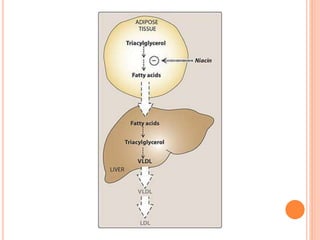
In the liver, ↓VLDL synthesis, which in turn ↓ LDL levels
Inhibits the intracellular lipase of adipose tissue via receptor-
mediatedsignaling and thus ↓ plasma fatty acid and
triglyceride levels. Consequently, LDL formation is ↓and
↓LDL cholesterol.
↑Clearance of VLDL by the lipoprotein lipase
associatedwith capillary endothelial cells ↓ in plasma
triglyceride
Niacin reduces the catabolic rate for HDL.
↓circulating fibrinogen a,↑tissue plasminogenactivator.
↓Endothelial dysfunction →↓thrombosis
Niacin (Nicotinic Acid)
Therapeutic Uses:
Niacin lowers plasma levels of both cholesterol and triacylglycerol.
Particularly useful in the treatment of familial hyperlipidemias.
Niacin is used to treat other severe hypercholesterolemiasin
combination with other antihyperlipidemicagents.
Raising plasma HDL levels, which is the most common indication
Pharmacokinetics:
Niacin is administered orally. It is converted in the body to
nicotinamide, which is incorporated into the cofactor
nicotinamide-adenine dinucleotide(NAD+).
Niacin, its nicotinamide derivative, and other metabolites are
excreted in the urine.
Note: Nicotinamide alone does not decrease plasma lipid
levels.
Adverse Effects:
1.Cutaneous flush )most common side effects( accompanied by an
uncomfortable feeling of warmth) and pruritus. Administration of aspirin
prior to taking niacin decreases the flush, which is prostaglandin
mediated. The sustained-release formulation of niacin, which is taken
once daily at bedtime, reduces bothersome initial adverse effects.
2.Nausea and abdominal pain.
3.Hyperuricemia and gout (Niacin inhibits tubular secretion of uric acid)
4.Impaired glucose tolerance
5.Hepatotoxicity
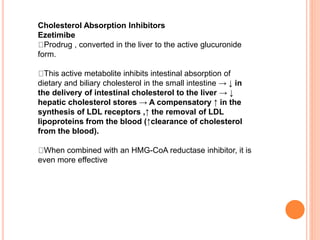
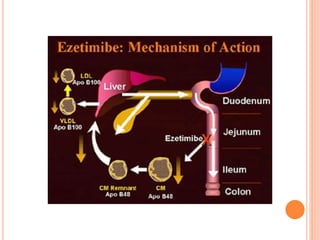
Cholesterol Absorption Inhibitors
Ezetimibe
Prodrug , converted in the liver to the active glucuronide
form.
This active metabolite inhibits intestinal absorption of
dietary and biliary cholesterol in the small intestine → ↓ in
the delivery of intestinal cholesterol to the liver → ↓
hepatic cholesterol stores → A compensatory ↑ in the
synthesis of LDL receptors ,↑ the removal of LDL
lipoproteins from the blood (↑clearance of cholesterol
from the blood).
When combined with an HMG-CoA reductase inhibitor, it is
even more effective
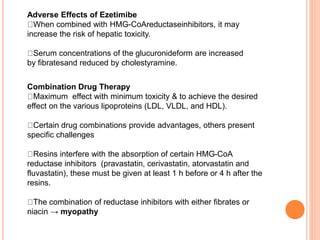
Adverse Effects of Ezetimibe
When combined with HMG-CoAreductaseinhibitors, it may
increase the risk of hepatic toxicity.
Serum concentrations of the glucuronideform are increased
by fibratesand reduced by cholestyramine.
Combination Drug Therapy
Maximum effect with minimum toxicity & to achieve the desired
effect on the various lipoproteins (LDL, VLDL, and HDL).
Certain drug combinations provide advantages, others present
specific challenges
Resins interfere with the absorption of certain HMG-CoA
reductase inhibitors (pravastatin, cerivastatin, atorvastatin and
fluvastatin), these must be given at least 1 h before or 4 h after the
resins.
The combination of reductase inhibitors with either fibrates or
niacin → myopathy
study with interest

hyperlipidemic drugs..pptx

  • 1.
    PHARMACY COUNCIL OFINDIA, NEW DELHI PHARMACOLOGY-II (BP503 T) DRUGS USED HYPERLIPIDEMIC DRUGS. BY DR SACHIN P. PADOLE M.PHARM, PHD Dr. Rajendra Gode Institute of Pharmacy, University - Mardi Road, Amravati - 444602
  • 2.
    Chylomicrons Formed in theintestine and carry triglycerides of dietary origin, unesterified cholesterol, and cholesterylesters. They transit the Low-density lipoprotein (LDL) Cholesterol-rich lipoprotein whose regulated uptake by hepatocytesand other cells requires functional LDL receptors; an elevated LDL concentration is associated with atherosclerosis High-density lipoprotein (HDL) Cholesterol-rich lipoprotein that transports cholesterol from the tissues to the liver; a low concentration is associated with atherosclerosis Very-low-density lipoprotein (VLDL) Triglyceride-and cholesterol-rich lipoprotein secreted by the liver that transports triglycerides to the periphery; precursor of LDL
  • 4.
    Metabolism of Lipoproteinsof Hepatic Origin; triangles indicate apoE; circles and squares represent C apolipoproteins. FFA, free fatty acid; RER, rough endoplasmic reticulum
  • 5.
    Metabolism of Lipoproteinsof Hepatic Origin  Nascent VLDL are secreted via the Golgi apparatus. They acquire additional apoC lipoproteins and apoE from HDL. Very-low-density lipoproteins (VLDL) are converted to VLDL remnants (IDL) by lipolysis via lipoprotein lipase in the vessels of peripheral tissues. C apolipoproteinsand a portion of theapoE are given back to high- density lipoproteins (HDL). Some of the VLDL remnants are converted to LDL by further loss of triglycerides andloss of apoE. A major pathway for LDL degradation involves the endocytosis of LDL by LDL receptors in the liver and the peripheral tissues, forwhich apoB-100 is the ligand.
  • 6.
    Anti-hyperlipidemic drugs classification HMG-CoAReductase Inhibitors Bile acid –binding resine Nicotinic acid Fibrates
  • 7.
    LipoproteinDisorders Disorders of lipidmetabolism are manifest by elevation of the plasma concentrations of the various lipid and lipoprotein fractions (total and LDL cholesterol, VLDL, triglycerides, chylomicrons) and they result in cardiovascular disease and atherosclerosis (deposition of fats at walls of arteries, forming plaque)
  • 8.
    ANTIHYPERLIPIDEMIC AGENTS PROMOTE REDUCTIONOF LIPID LEVELS IN THE BLOOD. SOME ANTIHYPERLIPIDEMIC AGENTS AIM TO LOWER THE LEVELS OF LOW- DENSITY LIPOPROTEIN (LDL) CHOLESTEROL, SOME REDUCE TRIGLYCERIDE LEVELS, AND SOME HELP RAISE THE HIGH- DENSITY LIPOPROTEIN (HDL) CHOLESTEROL. BY REDUCING THE LDL CHOLESTEROL, THEY CAN PREVENT BOTH THE PRIMARY AND SECONDARY SYMPTOMS OF CORONARY HEART DISEASE.
  • 9.
    Drug Therapy: The primarygoal of therapy is to: Decrease levels of LDL Increase in HDL
  • 10.
    Anti-hyperlipidemicDrugs are MainlyClassified into 5 groups: 1.HMG-CoAReductaseInhibitors Atorvastatin, Fluvastatin, Lovastatin, Pravastatin Simvastatin. 3.Anion-exchange resins (bile acid sequestrants) Colesevelam, Colestipoland Cholestyramine 5.Cholesterol absorption inhibitors Ezetimibe. 2.Fibrates Fenofibrate, Gemfibrozil Clofibrate 4.Nicotinic acid Niacin. Other Drugs Alpha-tocopherol acetate (vitamin E) Omega-3 marine triglycerides (Maxepa) Orlistat
  • 11.
    Disorders of lipidmetabolism a Mechanism of Actionof HMGs or Statins • Most potent LDL reducers •They are structural analogs of HMG-CoA •Competitively inhibit HMG-CoA reductaseenzyme •They block the rate-limiting step in hepatic cholesterol synthesis (conversion of hydroxymethylglutarylcoenzyme A (HMG- CoA) tomevalonate by HMG-CoA reductase) •Low intracellular cholesterol stimulate the synthesis of LDL receptors •Promote uptake of LDL from the blood •Low intracellular cholesterol decrease secreationof VLDL to the blood •They have direct anti-atherosclerotic effects, and have been shown to prevent bone loss.
  • 13.
  • 14.
    Therapeutic Uses: These drugsare effective in lowering LDL cholesterol levels especially when used in combination with other cholesterol lowering drugs. They reduce the risk of coronary events and mortality in patients with ischemic heart disease, and they also reduce the risk of ischemic stroke. Rosuvastatin, atorvastatin, and simvastatinhave greater maximal efficacy than the other statinswhile Fluvastatinhas less maximal efficacy ↓Triglycerides and ↑HDL cholesterol in patients with triglycerides levels that are higher than 250 mg/dLand with reduced HDL cholesterol levels.
  • 15.
    Pharmacokinetics Lovastatinand simvastatinare prodrugsthatarehydrolyzed in the gastrointestinal tract to the active derivatives Pravastatin, Atorvastatin, fluvastatinand rosuvastatinare active as given Absorption varies from 40% to 75% but Fluvastatincompletely absorbed. Most of the absorbed dose is excreted in the bile; 5–20% is excreted in the urine. Plasma Half lives of these drugs range from 1 to 3 hours, atorvastatin (14 hours), pitavastatin(12 hours) and rosuvastatin(19 hours). Because of a circadian rhythm to LDL-receptor synthesis& the cholesterol synthesis also occurs predominantly at night, reductase inhibitors-except atorvastatin and rosuvastatin-should be given in the evening if a single daily dose is used.
  • 16.
    Adverse Effect ofStatins 1.Transient, and minor abnormality of liver function tests (Mild elevations of serum aminotransferases) 2.Increase in creatinekinase (released from skeletal muscle) in 10% of patients (when there is muscle damage such as a heart attack, skeletal muscle injuries, certain muscle disorders, or strenuous exercise. ) 3.Myopathy and rhabdomyolysis( disintegration or dissolution of muscle and elevation of muscle enzymes (creatinekinase, CPK) NOTE: In patients with renal insufficiency, Plasma creatinekinaselevels should be determined regularly.
  • 17.
    Drug Interactions: The HMGCoAreductase inhibitors are metabolized by the cytochrome P450 system; drugs or foods (eg, grapefruit juice) that inhibit cytochrome P450 activity increase the risk of hepatotoxicity and myopathy. The HMG CoA reductase inhibitors may also increase warfarin levels. Thus, it is important to evaluate INR Cyclosporine, itraconazole, erythromycin and gemfibrozil or niacin. Plasma creatine kinase levels should be determined regularly in patients taking drugs. Contraindications: Pregnancy (teratogenic) Nursing mothers. Children or teenagers
  • 18.
    FibricAcid Derivatives (Fibrates) Bezafibrate Ciprofibrate Fenofibrate Gemfibrozil Fibratesare medicines prescribed to help •lower high triglyceride levels. •Fibrates also may help raise your HDL (good) cholesterol. •High triglycerides along with low HDL cholesterol increase the risk of heart disease and stroke
  • 19.
    Mechanism of Action AgonistsatPPAR-α(peroxisomeproliferator-activated receptor- α)→ expression of genes responsible for increased activity of plasma lipoprotein lipase enzyme → hydrolysis of VLDL and chylomicrons→ ↓serum TGs ↑ apoA-I and apoA-II ↓ apoC-III, an inhibitor of lipolysis. A major effect is an increase in oxidation of fatty acids in liver and striated muscle They increase lipolysisof lipoprotein triglyceride via LPL Increase clearance of LDL by liver & ↑ HDL. Note: Proliferator-activated receptor-alpha (PPAR-α) is Member of a family of nuclear transcription regulators that participate in the regulation of metabolic processes; target of the fibrate drugs and omega-3 fatty acids
  • 21.
    Pharmacokinetic of FibricAcidDerivatives: Well absorbed from the gastrointestinal tract Extensively bound to plasma proteins Excreted mainly by the kidney as unchanged drug or metabolites. Contraindication Where hepatic or renal function is severely impaired (but gemfibrozil has been used in uraemicand nephrotic patients without aggravating deterioration in kidney function) Pregnant or lactating women
  • 22.
    AdveresEffect of FibricAcidDerivatives Gastrointestinal effects, rash Myopathy, arrhythmias, hypokalemia, Increase in aminotransferasesor alkaline phosphatase Lithiasis: Because these drugs increase biliary cholesterol excretion, there is a predisposition to the formation of gallstones. Fibric acid derivatives may induce a Myopathyand rhabdomyolysistherisk is greater in: •Patients with poor renal Function •In patients taking a statin. Fibrates enhance the effect of co-administered oral Anticoagulants.
  • 23.
    Anion-exchange Resins (BileAcid Sequestrants): Cholestyramine Colesevelam Colestipol It is an ion-exchange resin or ion-exchange polymer is a resin or polymer that acts as a medium for ion exchange. It is an insoluble matrix Mechanism of Action: Anion exchange resins bind bile acids in the intestine forming complex →loss of bile acids in the stools →↑ conversion of cholesterol into bile acids in the liver. Decreased concentration of intrahepaticcholesterol → compensatory increase in LDL receptors →↑ hepatic uptake of circulating LDL → ↓ serum LDL cholesterol levels.
  • 24.
    Pharmacokinetics: Orally given butneither absorbed nor metabolically altered by intestine, totally excreted in feces.
  • 25.
    Adverse Effect ofAnion –Exchange Resins (Bile Acid Sequestrants) Gastrointestinal effects: bloating, constipation, and an unpleasant gritty taste. Impaired absorptions: Absorption of vitamins (eg, vitamin K, dietary folates) and drugs (eg, thiazide diuretics, warfarin, pravastatin and fluvastatin) is impaired by the resins
  • 26.
    Niacin (Nicotinic Acid) Mechanismof Action: Through multiple actions, niacin (but not nicotinamide) ↓ LDL cholesterol, triglycerides, and VLDL and ↑ HDL cholesterol. In the liver, ↓VLDL synthesis, which in turn ↓ LDL levels Inhibits the intracellular lipase of adipose tissue via receptor- mediatedsignaling and thus ↓ plasma fatty acid and triglyceride levels. Consequently, LDL formation is ↓and ↓LDL cholesterol. ↑Clearance of VLDL by the lipoprotein lipase associatedwith capillary endothelial cells ↓ in plasma triglyceride Niacin reduces the catabolic rate for HDL. ↓circulating fibrinogen a,↑tissue plasminogenactivator. ↓Endothelial dysfunction →↓thrombosis
  • 29.
    Niacin (Nicotinic Acid) TherapeuticUses: Niacin lowers plasma levels of both cholesterol and triacylglycerol. Particularly useful in the treatment of familial hyperlipidemias. Niacin is used to treat other severe hypercholesterolemiasin combination with other antihyperlipidemicagents. Raising plasma HDL levels, which is the most common indication Pharmacokinetics: Niacin is administered orally. It is converted in the body to nicotinamide, which is incorporated into the cofactor nicotinamide-adenine dinucleotide(NAD+). Niacin, its nicotinamide derivative, and other metabolites are excreted in the urine. Note: Nicotinamide alone does not decrease plasma lipid levels.
  • 30.
    Adverse Effects: 1.Cutaneous flush)most common side effects( accompanied by an uncomfortable feeling of warmth) and pruritus. Administration of aspirin prior to taking niacin decreases the flush, which is prostaglandin mediated. The sustained-release formulation of niacin, which is taken once daily at bedtime, reduces bothersome initial adverse effects. 2.Nausea and abdominal pain. 3.Hyperuricemia and gout (Niacin inhibits tubular secretion of uric acid) 4.Impaired glucose tolerance 5.Hepatotoxicity
  • 31.
    Cholesterol Absorption Inhibitors Ezetimibe Prodrug, converted in the liver to the active glucuronide form. This active metabolite inhibits intestinal absorption of dietary and biliary cholesterol in the small intestine → ↓ in the delivery of intestinal cholesterol to the liver → ↓ hepatic cholesterol stores → A compensatory ↑ in the synthesis of LDL receptors ,↑ the removal of LDL lipoproteins from the blood (↑clearance of cholesterol from the blood). When combined with an HMG-CoA reductase inhibitor, it is even more effective
  • 33.
    Adverse Effects ofEzetimibe When combined with HMG-CoAreductaseinhibitors, it may increase the risk of hepatic toxicity. Serum concentrations of the glucuronideform are increased by fibratesand reduced by cholestyramine. Combination Drug Therapy Maximum effect with minimum toxicity & to achieve the desired effect on the various lipoproteins (LDL, VLDL, and HDL). Certain drug combinations provide advantages, others present specific challenges Resins interfere with the absorption of certain HMG-CoA reductase inhibitors (pravastatin, cerivastatin, atorvastatin and fluvastatin), these must be given at least 1 h before or 4 h after the resins. The combination of reductase inhibitors with either fibrates or niacin → myopathy
  • 34.