Lipid-lowering drugs
Presented by:
Y. Sri kala
11T21R00H3
IV year B.Pharm
Under the guidance of:
Mr.M.Raghavendra
Department of pharmacology
TABLE OF CONTENTS
Introduction
Need for study
Aim and objectives of study
Pathology
Treatment
Conclusion
References
INTRODUCTION
 These are the drugs which lower the levels of lipids and
lipoproteins in blood.
 The hypolipidaemic drugs have attracted considerable
attention because of their potential to prevent
cardiovascular disease by retarding the accelerated
atherosclerosis in hyperlipidaemic individuals.
GOALS OF DRUG THERAPY
1. Prevent ATHEROSCLEROSIS i.e., the presumptive
cause of coronary heart
disease and stroke. Although treatment of hyperlipidemia
causes slow physical regression of
plaques (over the course of years), there is a documented
decrease in acute coronary events in the
first few months following vigorous treatment that is
thought to be chiefly due to decreased
inflammatory activity of macrophages.
2. Prevent acute pancreatitis and retard development of
xanthomas.
PLASMA PROTEINS
Cholesterol, triglycerides, phospholipids,
free fatty acids.
They transported as lipoproteins.
core-hydrophobic lipids- cholesteryl
esters, triglycerides.
coat-hydrophilic lipids- cholesterol,
phospholipids.
LIPOPROTEINS
Lipoprotein
class
Diameter
)nm(
Lipid
contained
Source of lipid Function
chylomicrons 100-500 TG>>CHE Diet Dietary TG
transport
Chylomicron
remnant
30-50 CHE>>TG Diet,
chylomicrons
Dietary CH
transport
VLDL 40-80 TG>>CHE Liver Endogenous
TG transport
IDL 30-35 CHE>_TG VLDL Transport CHE
and TG to liver,
source of LDL
LDL 20-25 CHE IDL Transport CH
to tissues and
liver
HDL 5-10 Phospholipids,
CHE
Tissues, cell
membrane
Removal of CH
from tissues
TYPES OF PRIMARY HYPERLIPOPROTEINAEMIAS
Type Disorder Cause Occurrence Elevated
plasma
lipoprotein
CH TG
I Familial
lipoprotein
lipase deficiency
G Very rare Chylomicron
IIa Familial
hypercholestero
laemia
G Less common LDL N
IIb Polygenic
hypercholestero
laemia
MF Commonest LDL N
III Familial
dysbetalipoprot
einaemia
G Rare IDL,chy.rem.
IV Hypertriglyceri
daemia
MF,G Common VLDL N
V Familial
combined
hyperlipidaemia
G Less common VLDL,LDL
HYPERLIPOPROTEINAEMIAS
Hyperlipoproteinaemias can be:
i. Secondary: associated with
diabetes,myxoedema,nephrotic syndrome, chronic
alcolism,drugs(corticosteroids, oral contraceptives,β-
blockers)etc.
ii. Primary: due to:
a. a single gene defect: is familial and called ‘monogenic’ or
genetic.
b. Multiple genetic, dietary and physical activity related
causes: ‘polygenic’ or multifactorial.
TREAMENT STRATEGIES
Life style modification
Diet
Restrict intake of saturated fat
Regular exercise
Obesity reduction
Stop smoking and alcoholism
Plenty of fruits and vegetables
Hypolipidaemic drugs
HYPOLIPIDAEMIC DRUGS
Fibrates
Others
Resins
Statins
LIPID-
LOWERNG DRUGS
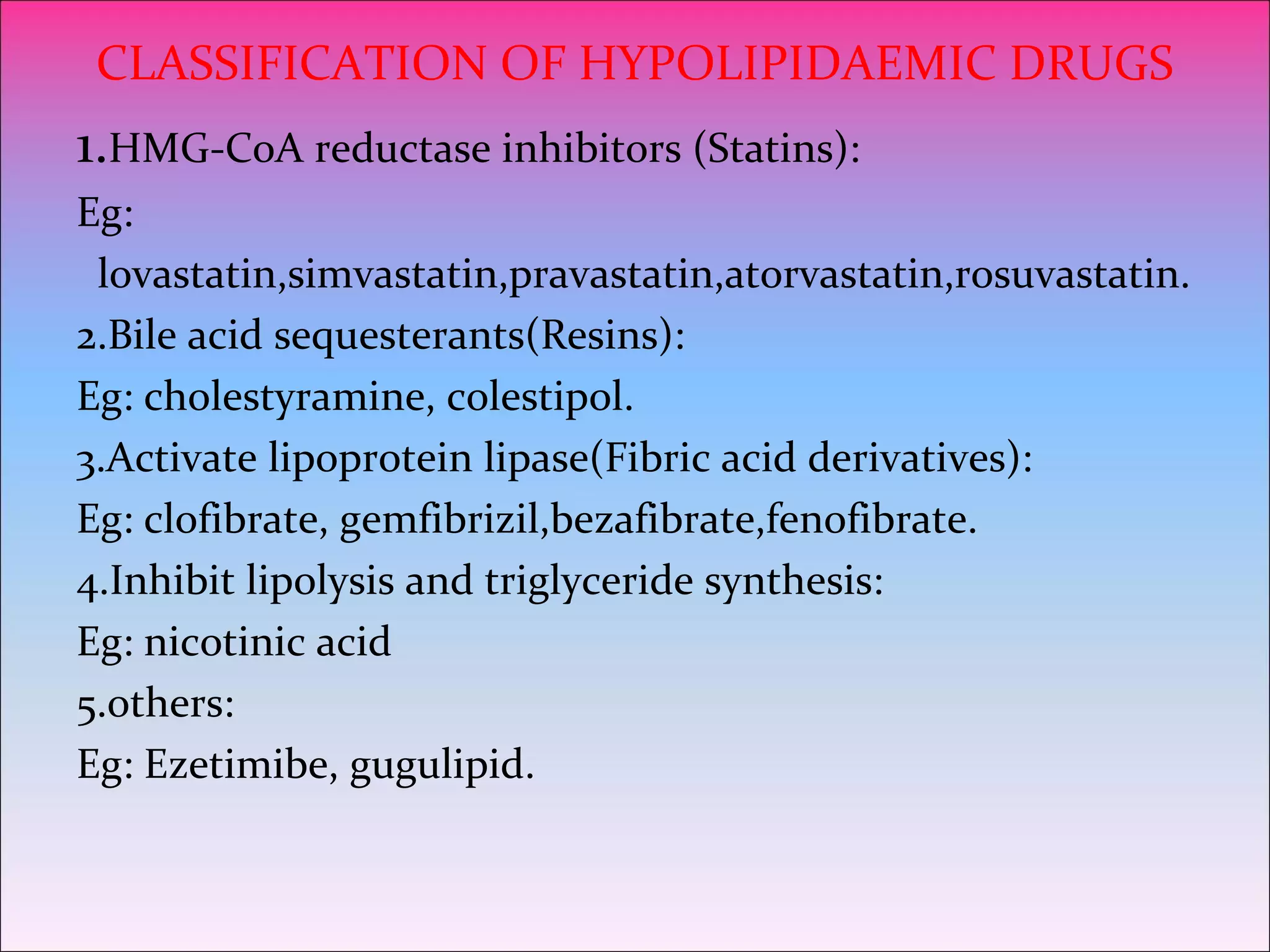
CLASSIFICATION OF HYPOLIPIDAEMIC DRUGS
1.HMG-CoA reductase inhibitors (Statins):
Eg:
lovastatin,simvastatin,pravastatin,atorvastatin,rosuvastatin.
2.Bile acid sequesterants(Resins):
Eg: cholestyramine, colestipol.
3.Activate lipoprotein lipase(Fibric acid derivatives):
Eg: clofibrate, gemfibrizil,bezafibrate,fenofibrate.
4.Inhibit lipolysis and triglyceride synthesis:
Eg: nicotinic acid
5.others:
Eg: Ezetimibe, gugulipid.
HMG-CoA REDUCTASE INHIBITORS (“statins”):
Mechanism of Action:
 Competitive inhibitors of cholesterol synthesis at
the rate-limiting step.
 Action is more complicated than simply reducing the
amount of cholesterol synthesized.
 Compensatory induction of LDL receptors.
 Enhanced extraction of circulating LDL-CE from serum.
 Synergistic with bile acid binding resins (BABR) and
EZETIMIBE.
HMG-CoA REDUCTASE INHIBITORS (“statins”):
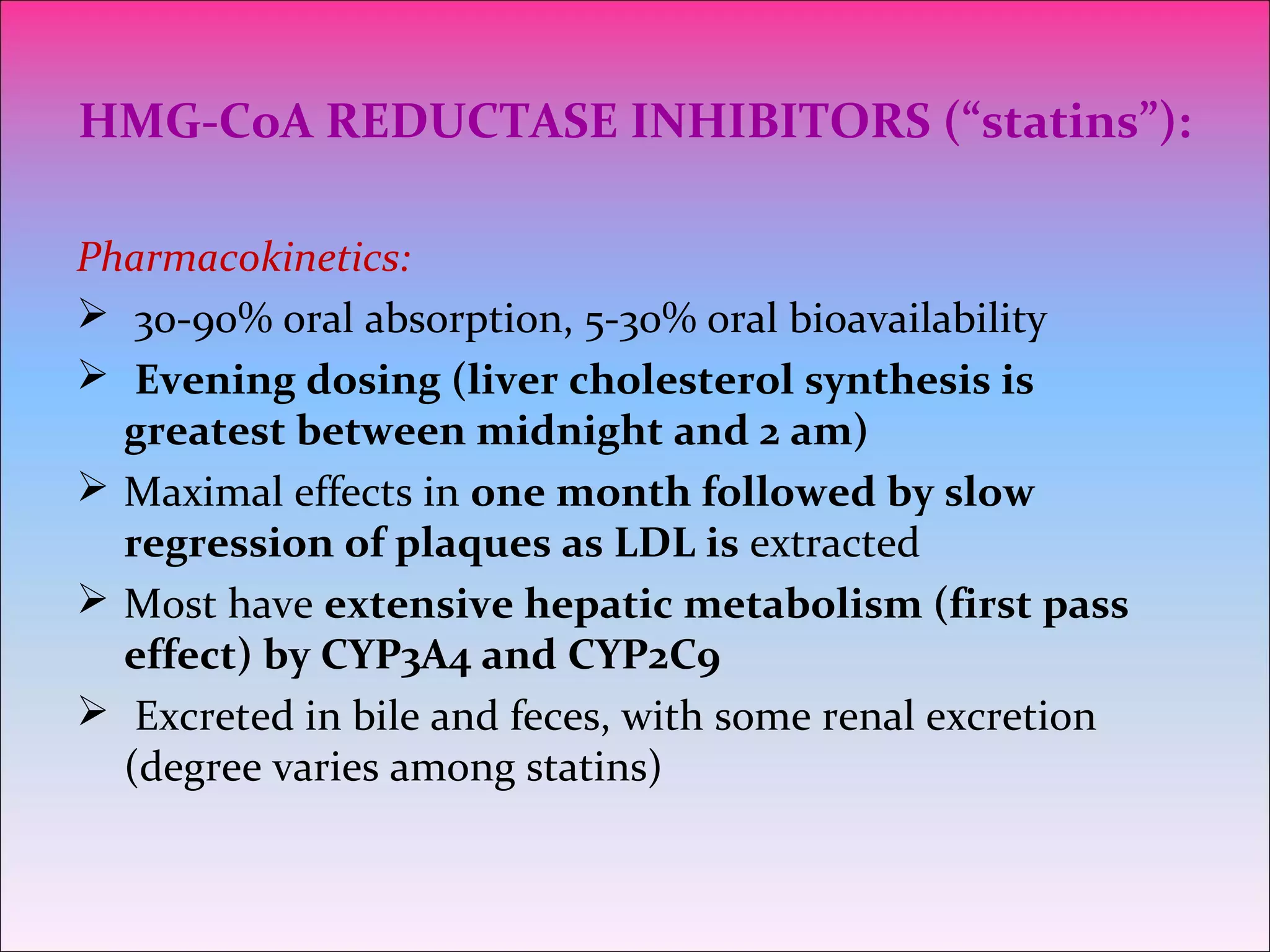
Pharmacokinetics:
 30-90% oral absorption, 5-30% oral bioavailability
 Evening dosing (liver cholesterol synthesis is
greatest between midnight and 2 am)
 Maximal effects in one month followed by slow
regression of plaques as LDL is extracted
 Most have extensive hepatic metabolism (first pass
effect) by CYP3A4 and CYP2C9
 Excreted in bile and feces, with some renal excretion
(degree varies among statins)
HMG-CoA REDUCTASE INHIBITORS (“statins”):
Therapeutic Effects:
1.plasma LDL by 18-55%
2. Slight in HDL (depending upon the statin)
3. Modest VLDL, TG(not shown to be of therapeutic benefit)
4.Other cardio protective effects (vasorelaxation,
stabilization of plaques, decreased inflammation and
coagulation, decreased LDL oxidation)
5. LOVASTATIN and SIMVASTATIN may have estrogenic
effect
6. 20% reduction in likelihood of cancer (particularly
prostate and renal cancer)
HMG-CoA REDUCTASE INHIBITORS (“statins”):
Adverse Effects:
 Liver and muscle function must be monitored throughout treatment
- liver function is especially important (PRAVASTATIN may be a
better choice in patients with liver disorders because of its renal
excretion).
 Birth defects
 Hyperurecemia and gout
 Drug interactions: cyclosporine, itraconazole, erythromycin,
GEMFIBROZIL,NICOTINIC ACID, BABR, cytochrome P450
inhibitors (warfarin)
 Mild headache and GI disturbances (nausea, dyspepsia, diarrhea,
cramps)
C/I: patients with hepatic and renal disorders, gout, diabetes mellitus,
cardiac arrhythmias, pregnant women or pre-pubertal children.
LIPID-LOWERING DRUGS
FibratesFibrates
- stimulate the beta-oxidative degradation of fatty acids
- liberate free fatty acids for storage in fat or for metabolism in
striated muscle
- increase the activity of lipoprotein lipase,
hence increasing hydrolysis of triglyceride in chylomicrons
and VLDL particles
- reduce hepatic VLDL production and increase hepatic LDL
uptake
LIPID-LOWERING DRUGS
FibratesFibrates
O t h e r e f f e c t s :
Improve glucose tolerance.
Inhibit vascular smooth muscle inflammation.
A d v e r s e e f f e c t s:
 In patients with renal impairment myositis (rhabdomyolysis)
myoglobulinuria, acute renal failure.
Fibrates should be avoided in such patients and also in
alcoholics.
Mild GIT disturbances
LIPID-LOWERING DRUGS
FibratesFibrates
mixed dyslipidemia (i.e. raised serum TG and CHO)
patients with low HDL and high risk of atheromatous
disease (often type 2 diabetic patients)
patients with severe treatment- resistant
dyslipidemia (combination with other lipid-lowering
drugs)
LIPID-LOWERING DRUGS
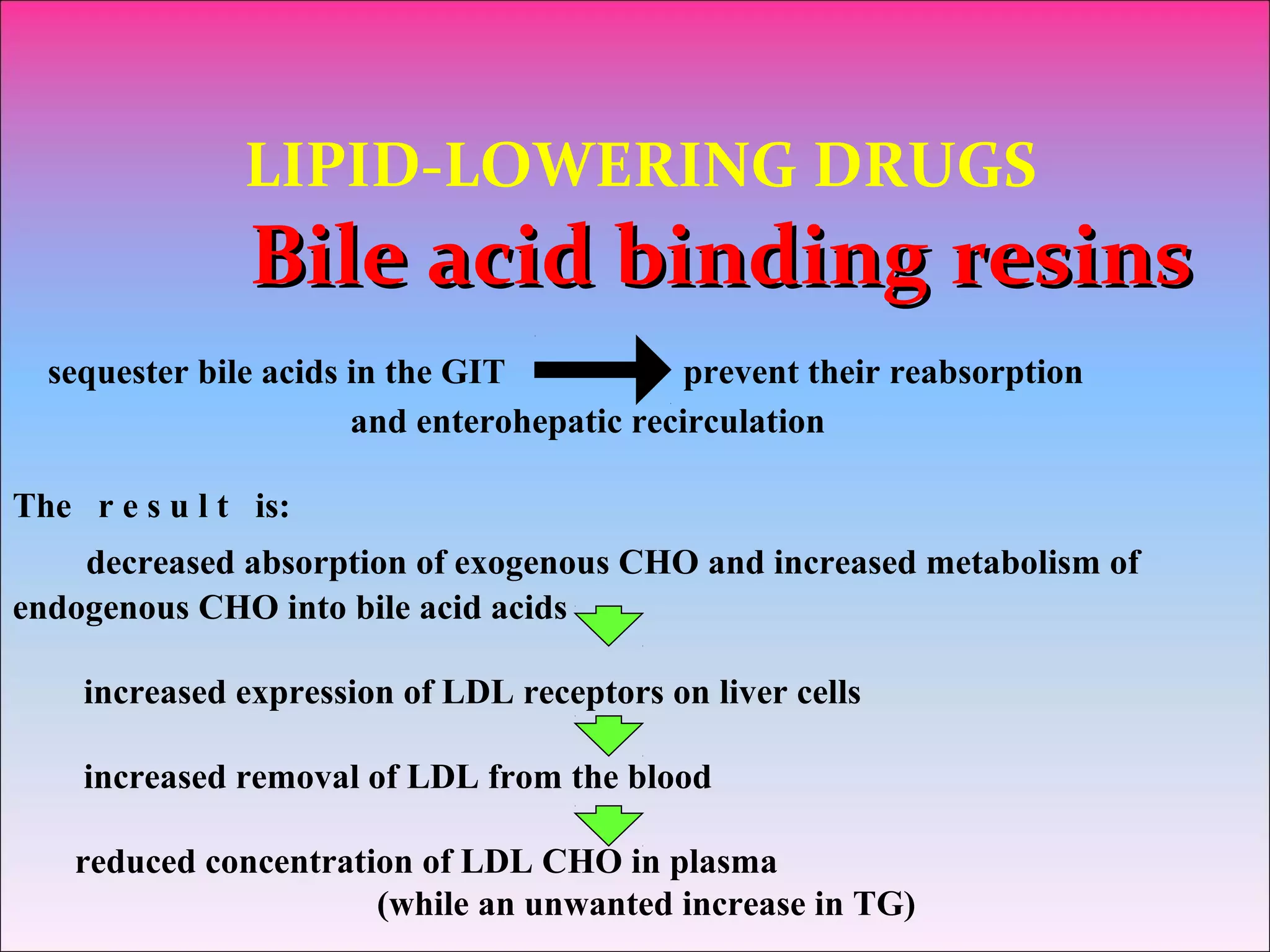
Bile acid bindingBile acid binding resinsresins
sequester bile acids in the GIT prevent their reabsorption
and enterohepatic recirculation
The r e s u l t is:
decreased absorption of exogenous CHO and increased metabolism of
endogenous CHO into bile acid acids
increased expression of LDL receptors on liver cells
increased removal of LDL from the blood
reduced concentration of LDL CHO in plasma
(while an unwanted increase in TG)
LIPID-LOWERING DRUGS
Bile acid binding resinsBile acid binding resins
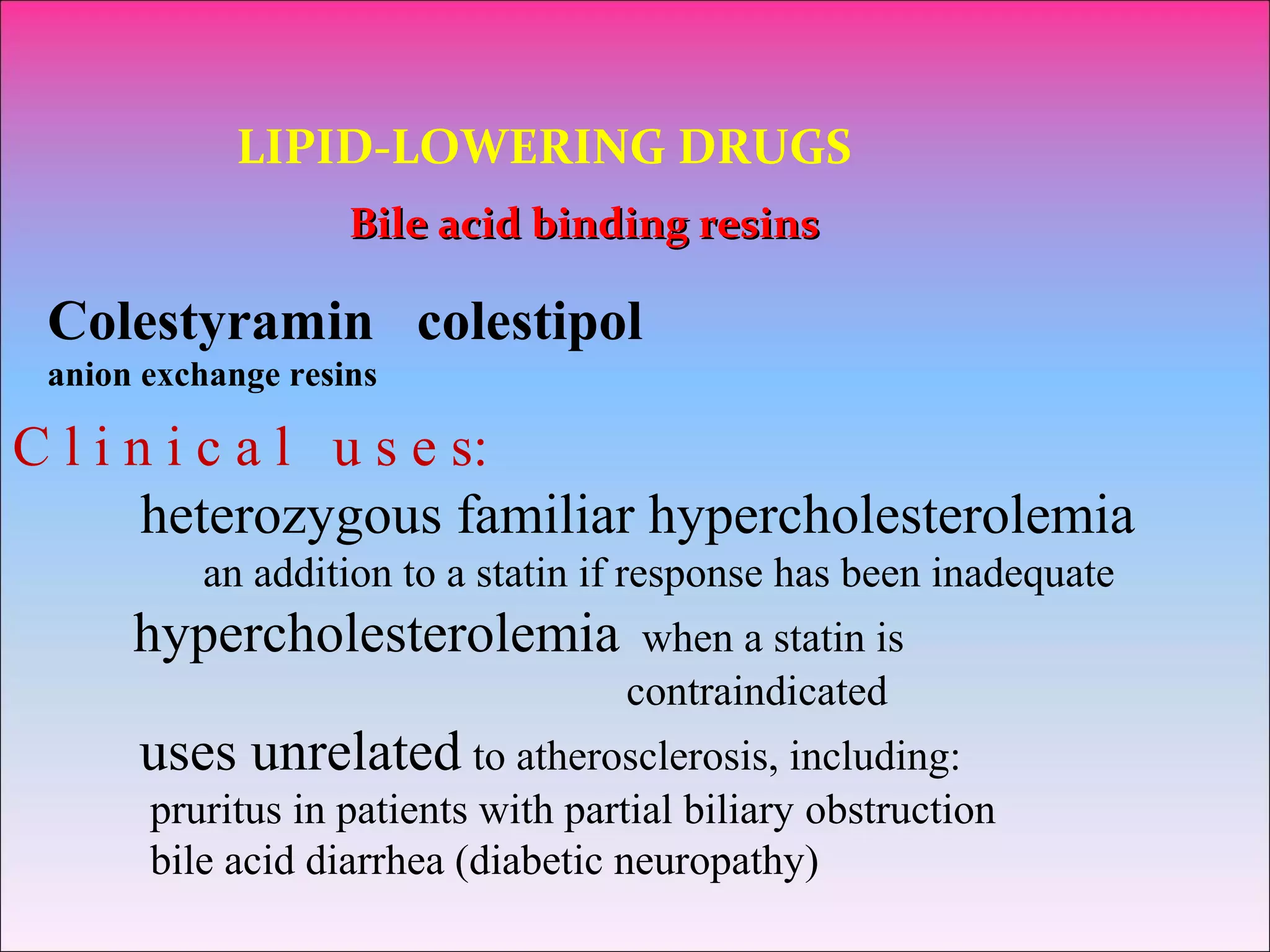
Colestyramin colestipol
anion exchange resins
C l i n i c a l u s e s:
heterozygous familiar hypercholesterolemia
an addition to a statin if response has been inadequate
hypercholesterolemia when a statin is
contraindicated
uses unrelated to atherosclerosis, including:
pruritus in patients with partial biliary obstruction
bile acid diarrhea (diabetic neuropathy)
LIPID-LOWERING DRUGS
Bile acid binding resinsBile acid binding resins
A d v e r s e e f f e c t s:
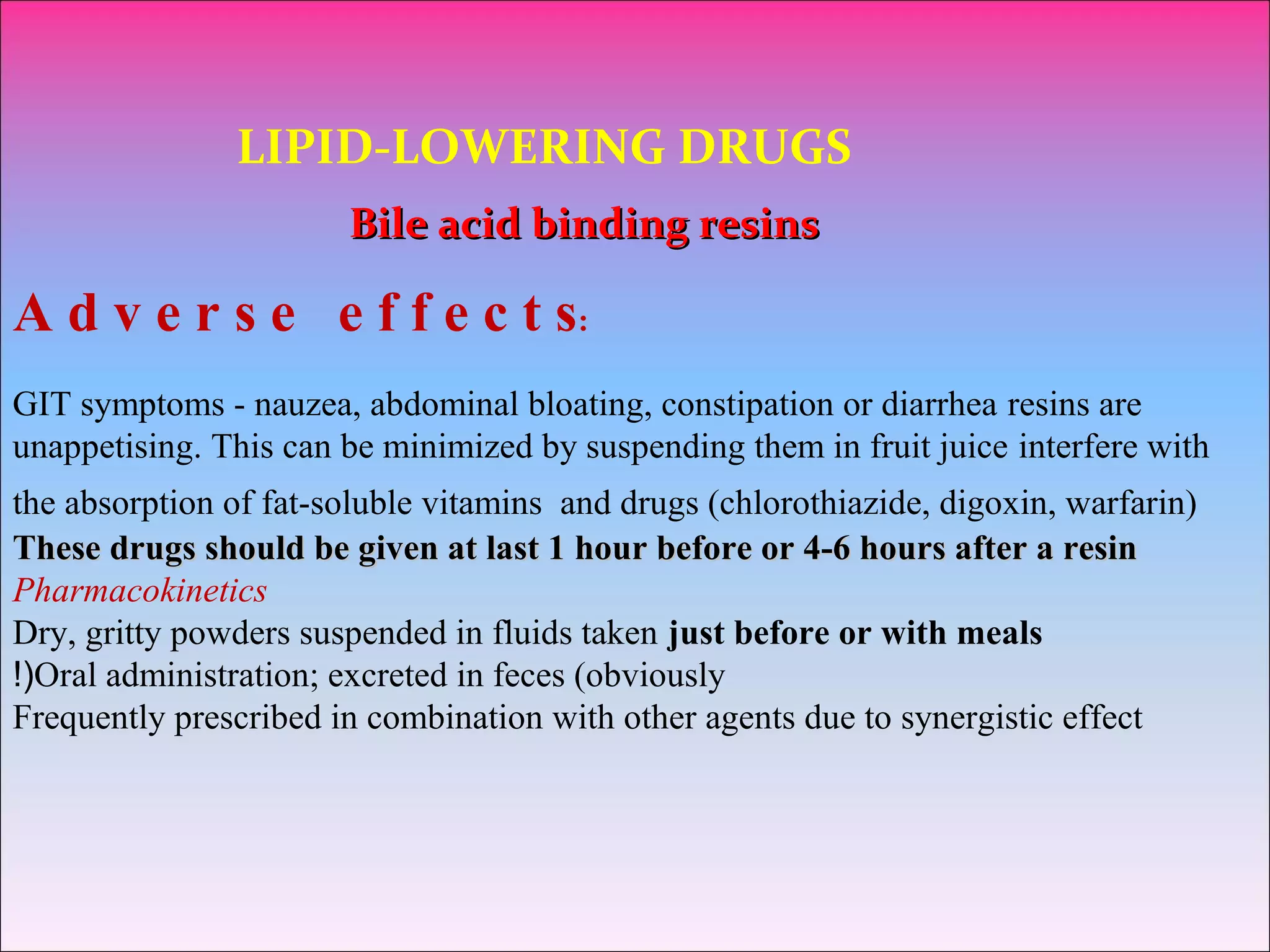
GIT symptoms - nauzea, abdominal bloating, constipation or diarrhea resins are
unappetising. This can be minimized by suspending them in fruit juice interfere with
the absorption of fat-soluble vitamins and drugs (chlorothiazide, digoxin, warfarin)
These drugs should be given at last 1 hour before or 4-6 hours after a resinThese drugs should be given at last 1 hour before or 4-6 hours after a resin
Pharmacokinetics
Dry, gritty powders suspended in fluids taken just before or with meals
Oral administration; excreted in feces (obviously!(
Frequently prescribed in combination with other agents due to synergistic effect
LIPID-LOWERING DRUGS
OthersOthers
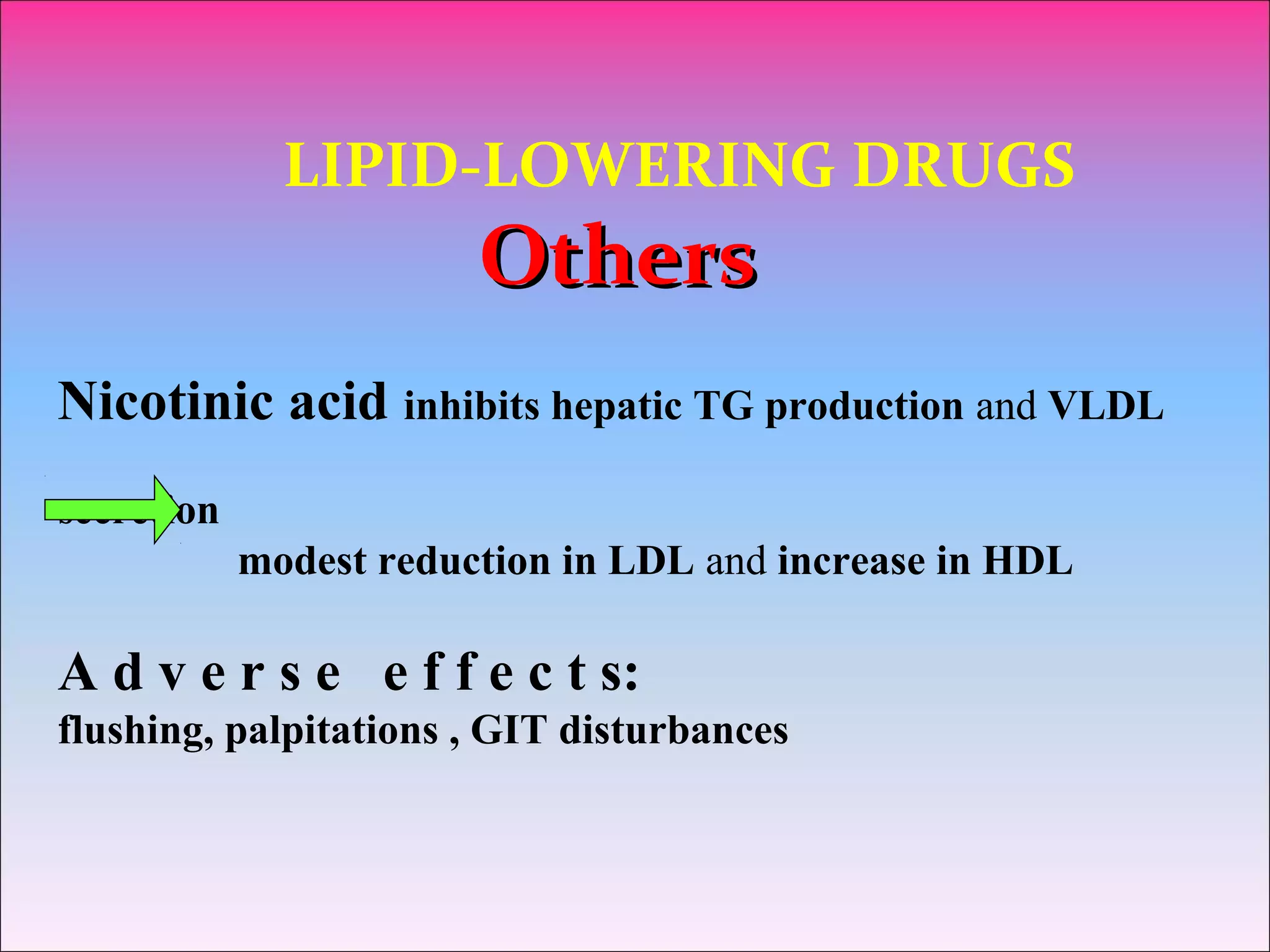
Nicotinic acid inhibits hepatic TG production and VLDL
secretion
modest reduction in LDL and increase in HDL
A d v e r s e e f f e c t s:
flushing, palpitations , GIT disturbances
LIPID-LOWERING DRUGS
OthersOthers
Fish oil (rich in highly unsaturated fatty acids)
the omega-3 marine TG
- reduce plasma TG but increase CHO (CHO is more strongly
associated wih coronary artery disease)
-the effects on cardiac morbidity or mortality is unproven
( although there is epidemiological evidence that eating fish
regularly does reduce ischemic heart disease)
Conclusion:
Nowadays, hypolipidemic drugs are widely
used to treat hyperlipidemia and obesity.
So, there is an necessity to develop new
formulations without more adverse effects.
References:
An review article by Dr. Janet fitzakerley.
An article by Stephanie durlin.
An article by Mr.petra hirsova.
Essentials of medical pharmacology by
K.D. tripathi
Pharmacology by rang and dale.
A review article by varsha menghani
THANK YOU
lipid lowering agents

lipid lowering agents

  • 1.
    Lipid-lowering drugs Presented by: Y.Sri kala 11T21R00H3 IV year B.Pharm Under the guidance of: Mr.M.Raghavendra Department of pharmacology
  • 2.
    TABLE OF CONTENTS Introduction Needfor study Aim and objectives of study Pathology Treatment Conclusion References
  • 3.
    INTRODUCTION  These arethe drugs which lower the levels of lipids and lipoproteins in blood.  The hypolipidaemic drugs have attracted considerable attention because of their potential to prevent cardiovascular disease by retarding the accelerated atherosclerosis in hyperlipidaemic individuals.
  • 4.
    GOALS OF DRUGTHERAPY 1. Prevent ATHEROSCLEROSIS i.e., the presumptive cause of coronary heart disease and stroke. Although treatment of hyperlipidemia causes slow physical regression of plaques (over the course of years), there is a documented decrease in acute coronary events in the first few months following vigorous treatment that is thought to be chiefly due to decreased inflammatory activity of macrophages. 2. Prevent acute pancreatitis and retard development of xanthomas.
  • 5.
    PLASMA PROTEINS Cholesterol, triglycerides,phospholipids, free fatty acids. They transported as lipoproteins. core-hydrophobic lipids- cholesteryl esters, triglycerides. coat-hydrophilic lipids- cholesterol, phospholipids.
  • 6.
    LIPOPROTEINS Lipoprotein class Diameter )nm( Lipid contained Source of lipidFunction chylomicrons 100-500 TG>>CHE Diet Dietary TG transport Chylomicron remnant 30-50 CHE>>TG Diet, chylomicrons Dietary CH transport VLDL 40-80 TG>>CHE Liver Endogenous TG transport IDL 30-35 CHE>_TG VLDL Transport CHE and TG to liver, source of LDL LDL 20-25 CHE IDL Transport CH to tissues and liver HDL 5-10 Phospholipids, CHE Tissues, cell membrane Removal of CH from tissues
  • 7.
    TYPES OF PRIMARYHYPERLIPOPROTEINAEMIAS Type Disorder Cause Occurrence Elevated plasma lipoprotein CH TG I Familial lipoprotein lipase deficiency G Very rare Chylomicron IIa Familial hypercholestero laemia G Less common LDL N IIb Polygenic hypercholestero laemia MF Commonest LDL N III Familial dysbetalipoprot einaemia G Rare IDL,chy.rem. IV Hypertriglyceri daemia MF,G Common VLDL N V Familial combined hyperlipidaemia G Less common VLDL,LDL
  • 8.
    HYPERLIPOPROTEINAEMIAS Hyperlipoproteinaemias can be: i.Secondary: associated with diabetes,myxoedema,nephrotic syndrome, chronic alcolism,drugs(corticosteroids, oral contraceptives,β- blockers)etc. ii. Primary: due to: a. a single gene defect: is familial and called ‘monogenic’ or genetic. b. Multiple genetic, dietary and physical activity related causes: ‘polygenic’ or multifactorial.
  • 9.
    TREAMENT STRATEGIES Life stylemodification Diet Restrict intake of saturated fat Regular exercise Obesity reduction Stop smoking and alcoholism Plenty of fruits and vegetables Hypolipidaemic drugs
  • 10.
  • 11.
    CLASSIFICATION OF HYPOLIPIDAEMICDRUGS 1.HMG-CoA reductase inhibitors (Statins): Eg: lovastatin,simvastatin,pravastatin,atorvastatin,rosuvastatin. 2.Bile acid sequesterants(Resins): Eg: cholestyramine, colestipol. 3.Activate lipoprotein lipase(Fibric acid derivatives): Eg: clofibrate, gemfibrizil,bezafibrate,fenofibrate. 4.Inhibit lipolysis and triglyceride synthesis: Eg: nicotinic acid 5.others: Eg: Ezetimibe, gugulipid.
  • 12.
    HMG-CoA REDUCTASE INHIBITORS(“statins”): Mechanism of Action:  Competitive inhibitors of cholesterol synthesis at the rate-limiting step.  Action is more complicated than simply reducing the amount of cholesterol synthesized.  Compensatory induction of LDL receptors.  Enhanced extraction of circulating LDL-CE from serum.  Synergistic with bile acid binding resins (BABR) and EZETIMIBE.
  • 13.
    HMG-CoA REDUCTASE INHIBITORS(“statins”): Pharmacokinetics:  30-90% oral absorption, 5-30% oral bioavailability  Evening dosing (liver cholesterol synthesis is greatest between midnight and 2 am)  Maximal effects in one month followed by slow regression of plaques as LDL is extracted  Most have extensive hepatic metabolism (first pass effect) by CYP3A4 and CYP2C9  Excreted in bile and feces, with some renal excretion (degree varies among statins)
  • 14.
    HMG-CoA REDUCTASE INHIBITORS(“statins”): Therapeutic Effects: 1.plasma LDL by 18-55% 2. Slight in HDL (depending upon the statin) 3. Modest VLDL, TG(not shown to be of therapeutic benefit) 4.Other cardio protective effects (vasorelaxation, stabilization of plaques, decreased inflammation and coagulation, decreased LDL oxidation) 5. LOVASTATIN and SIMVASTATIN may have estrogenic effect 6. 20% reduction in likelihood of cancer (particularly prostate and renal cancer)
  • 15.
    HMG-CoA REDUCTASE INHIBITORS(“statins”): Adverse Effects:  Liver and muscle function must be monitored throughout treatment - liver function is especially important (PRAVASTATIN may be a better choice in patients with liver disorders because of its renal excretion).  Birth defects  Hyperurecemia and gout  Drug interactions: cyclosporine, itraconazole, erythromycin, GEMFIBROZIL,NICOTINIC ACID, BABR, cytochrome P450 inhibitors (warfarin)  Mild headache and GI disturbances (nausea, dyspepsia, diarrhea, cramps) C/I: patients with hepatic and renal disorders, gout, diabetes mellitus, cardiac arrhythmias, pregnant women or pre-pubertal children.
  • 16.
    LIPID-LOWERING DRUGS FibratesFibrates - stimulatethe beta-oxidative degradation of fatty acids - liberate free fatty acids for storage in fat or for metabolism in striated muscle - increase the activity of lipoprotein lipase, hence increasing hydrolysis of triglyceride in chylomicrons and VLDL particles - reduce hepatic VLDL production and increase hepatic LDL uptake
  • 17.
    LIPID-LOWERING DRUGS FibratesFibrates O th e r e f f e c t s : Improve glucose tolerance. Inhibit vascular smooth muscle inflammation. A d v e r s e e f f e c t s:  In patients with renal impairment myositis (rhabdomyolysis) myoglobulinuria, acute renal failure. Fibrates should be avoided in such patients and also in alcoholics. Mild GIT disturbances
  • 18.
    LIPID-LOWERING DRUGS FibratesFibrates mixed dyslipidemia(i.e. raised serum TG and CHO) patients with low HDL and high risk of atheromatous disease (often type 2 diabetic patients) patients with severe treatment- resistant dyslipidemia (combination with other lipid-lowering drugs)
  • 19.
    LIPID-LOWERING DRUGS Bile acidbindingBile acid binding resinsresins sequester bile acids in the GIT prevent their reabsorption and enterohepatic recirculation The r e s u l t is: decreased absorption of exogenous CHO and increased metabolism of endogenous CHO into bile acid acids increased expression of LDL receptors on liver cells increased removal of LDL from the blood reduced concentration of LDL CHO in plasma (while an unwanted increase in TG)
  • 20.
    LIPID-LOWERING DRUGS Bile acidbinding resinsBile acid binding resins Colestyramin colestipol anion exchange resins C l i n i c a l u s e s: heterozygous familiar hypercholesterolemia an addition to a statin if response has been inadequate hypercholesterolemia when a statin is contraindicated uses unrelated to atherosclerosis, including: pruritus in patients with partial biliary obstruction bile acid diarrhea (diabetic neuropathy)
  • 21.
    LIPID-LOWERING DRUGS Bile acidbinding resinsBile acid binding resins A d v e r s e e f f e c t s: GIT symptoms - nauzea, abdominal bloating, constipation or diarrhea resins are unappetising. This can be minimized by suspending them in fruit juice interfere with the absorption of fat-soluble vitamins and drugs (chlorothiazide, digoxin, warfarin) These drugs should be given at last 1 hour before or 4-6 hours after a resinThese drugs should be given at last 1 hour before or 4-6 hours after a resin Pharmacokinetics Dry, gritty powders suspended in fluids taken just before or with meals Oral administration; excreted in feces (obviously!( Frequently prescribed in combination with other agents due to synergistic effect
  • 22.
    LIPID-LOWERING DRUGS OthersOthers Nicotinic acidinhibits hepatic TG production and VLDL secretion modest reduction in LDL and increase in HDL A d v e r s e e f f e c t s: flushing, palpitations , GIT disturbances
  • 23.
    LIPID-LOWERING DRUGS OthersOthers Fish oil(rich in highly unsaturated fatty acids) the omega-3 marine TG - reduce plasma TG but increase CHO (CHO is more strongly associated wih coronary artery disease) -the effects on cardiac morbidity or mortality is unproven ( although there is epidemiological evidence that eating fish regularly does reduce ischemic heart disease)
  • 24.
    Conclusion: Nowadays, hypolipidemic drugsare widely used to treat hyperlipidemia and obesity. So, there is an necessity to develop new formulations without more adverse effects.
  • 25.
    References: An review articleby Dr. Janet fitzakerley. An article by Stephanie durlin. An article by Mr.petra hirsova. Essentials of medical pharmacology by K.D. tripathi Pharmacology by rang and dale. A review article by varsha menghani
  • 26.