Beta blockers :
B-blockers in heart failure
Ajay Kumar Yadav
PGY2, Internal medicine
IOM-TUTH, Kathmandu
2074/10/14
Beta-receptors
 Three types of Beta-receptors (β1, β2, β3)
• β1 receptors : Heart
• β2 receptors : Vascular and bronchial smooth muscle
• β3 receptors : Adipocytes
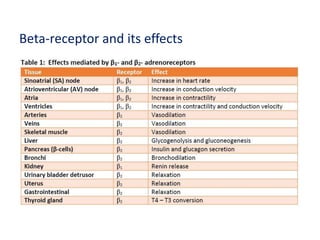
Beta-receptor and its effects
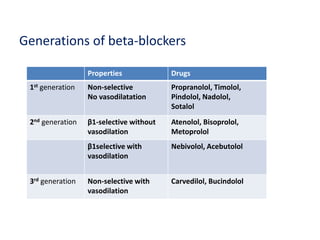
Generations of beta-blockers
Properties Drugs
1st generation Non-selective
No vasodilatation
Propranolol, Timolol,
Pindolol, Nadolol,
Sotalol
2nd generation β1-selective without
vasodilation
Atenolol, Bisoprolol,
Metoprolol
β1selective with
vasodilation
Nebivolol, Acebutolol
3rd generation Non-selective with
vasodilation
Carvedilol, Bucindolol
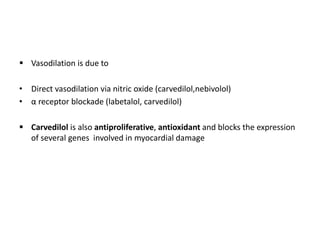
 Vasodilation is due to
• Direct vasodilation via nitric oxide (carvedilol,nebivolol)
• α receptor blockade (labetalol, carvedilol)
 Carvedilol is also antiproliferative, antioxidant and blocks the expression
of several genes involved in myocardial damage
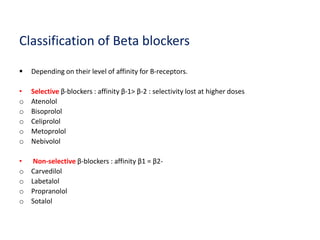
Classification of Beta blockers
 Depending on their level of affinity for B-receptors.
• Selective β-blockers : affinity β-1> β-2 : selectivity lost at higher doses
o Atenolol
o Bisoprolol
o Celiprolol
o Metoprolol
o Nebivolol
• Non-selective β-blockers : affinity β1 = β2-
o Carvedilol
o Labetalol
o Propranolol
o Sotalol
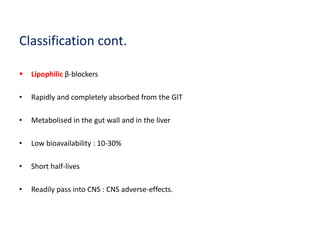
Classification cont.
 Lipophilic β-blockers
• Rapidly and completely absorbed from the GIT
• Metabolised in the gut wall and in the liver
• Low bioavailability : 10-30%
• Short half-lives
• Readily pass into CNS : CNS adverse-effects.
Classification cont.
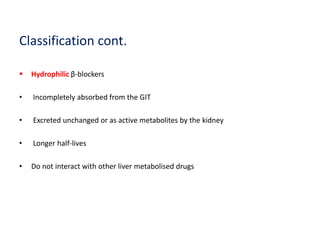
 Hydrophilic β-blockers
• Incompletely absorbed from the GIT
• Excreted unchanged or as active metabolites by the kidney
• Longer half-lives
• Do not interact with other liver metabolised drugs
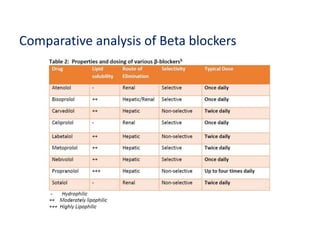
Comparative analysis of Beta blockers
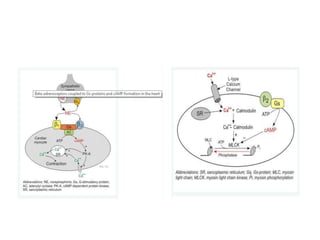
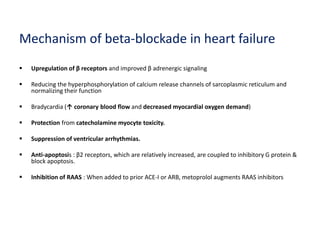
Mechanism of beta-blockade in heart failure
 Upregulation of β receptors and improved β adrenergic signaling
 Reducing the hyperphosphorylation of calcium release channels of sarcoplasmic reticulum and
normalizing their function
 Bradycardia (↑ coronary blood flow and decreased myocardial oxygen demand)
 Protection from catecholamine myocyte toxicity.
 Suppression of ventricular arrhythmias.
 Anti-apoptosis : β2 receptors, which are relatively increased, are coupled to inhibitory G protein &
block apoptosis.
 Inhibition of RAAS : When added to prior ACE-I or ARB, metoprolol augments RAAS inhibitors
Indications
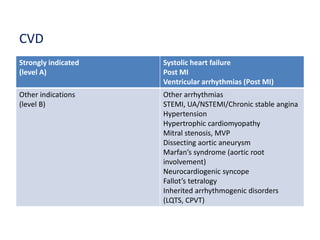
CVD
Strongly indicated
(level A)
Systolic heart failure
Post MI
Ventricular arrhythmias (Post MI)
Other indications
(level B)
Other arrhythmias
STEMI, UA/NSTEMI/Chronic stable angina
Hypertension
Hypertrophic cardiomyopathy
Mitral stenosis, MVP
Dissecting aortic aneurysm
Marfan’s syndrome (aortic root
involvement)
Neurocardiogenic syncope
Fallot’s tetralogy
Inherited arrhythmogenic disorders
(LQTS, CPVT)
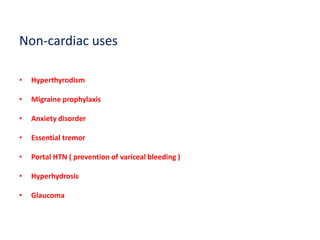
Non-cardiac uses
• Hyperthyrodism
• Migraine prophylaxis
• Anxiety disorder
• Essential tremor
• Portal HTN ( prevention of variceal bleeding )
• Hyperhydrosis
• Glaucoma
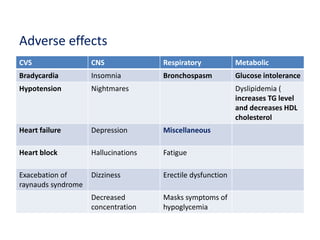
Adverse effects
CVS CNS Respiratory Metabolic
Bradycardia Insomnia Bronchospasm Glucose intolerance
Hypotension Nightmares Dyslipidemia (
increases TG level
and decreases HDL
cholesterol
Heart failure Depression Miscellaneous
Heart block Hallucinations Fatigue
Exacebation of
raynauds syndrome
Dizziness Erectile dysfunction
Decreased
concentration
Masks symptoms of
hypoglycemia
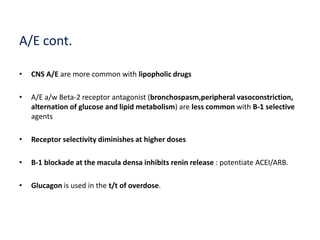
A/E cont.
• CNS A/E are more common with lipopholic drugs
• A/E a/w Beta-2 receptor antagonist (bronchospasm,peripheral vasoconstriction,
alternation of glucose and lipid metabolism) are less common with B-1 selective
agents
• Receptor selectivity diminishes at higher doses
• B-1 blockade at the macula densa inhibits renin release : potentiate ACEI/ARB.
• Glucagon is used in the t/t of overdose.
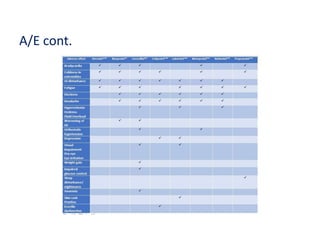
A/E cont.
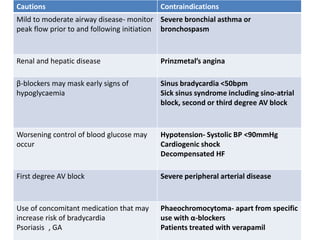
Cautions and contraindications for β-blockers
Cautions Contraindications
Mild to moderate airway disease- monitor
peak flow prior to and following initiation
Severe bronchial asthma or
bronchospasm
Renal and hepatic disease Prinzmetal’s angina
β-blockers may mask early signs of
hypoglycaemia
Sinus bradycardia <50bpm
Sick sinus syndrome including sino-atrial
block, second or third degree AV block
Worsening control of blood glucose may
occur
Hypotension- Systolic BP <90mmHg
Cardiogenic shock
Decompensated HF
First degree AV block Severe peripheral arterial disease
Use of concomitant medication that may
increase risk of bradycardia
Psoriasis , GA
Phaeochromocytoma- apart from specific
use with α-blockers
Patients treated with verapamil
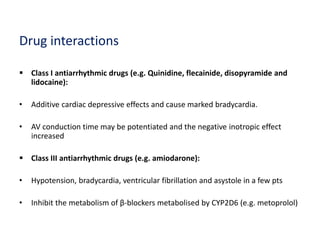
Drug interactions
 Class I antiarrhythmic drugs (e.g. Quinidine, flecainide, disopyramide and
lidocaine):
• Additive cardiac depressive effects and cause marked bradycardia.
• AV conduction time may be potentiated and the negative inotropic effect
increased
 Class III antiarrhythmic drugs (e.g. amiodarone):
• Hypotension, bradycardia, ventricular fibrillation and asystole in a few pts
• Inhibit the metabolism of β-blockers metabolised by CYP2D6 (e.g. metoprolol)
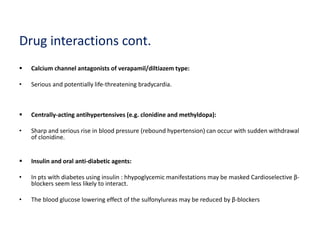
Drug interactions cont.
 Calcium channel antagonists of verapamil/diltiazem type:
• Serious and potentially life-threatening bradycardia.
 Centrally-acting antihypertensives (e.g. clonidine and methyldopa):
• Sharp and serious rise in blood pressure (rebound hypertension) can occur with sudden withdrawal
of clonidine.
 Insulin and oral anti-diabetic agents:
• In pts with diabetes using insulin : hhypoglycemic manifestations may be masked Cardioselective β-
blockers seem less likely to interact.
• The blood glucose lowering effect of the sulfonylureas may be reduced by β-blockers
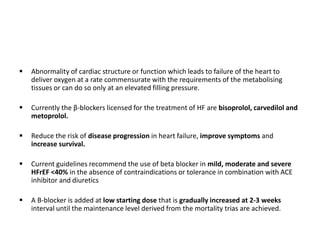
Heart failure
 Abnormality of cardiac structure or function which leads to failure of the heart to
deliver oxygen at a rate commensurate with the requirements of the metabolising
tissues or can do so only at an elevated filling pressure.
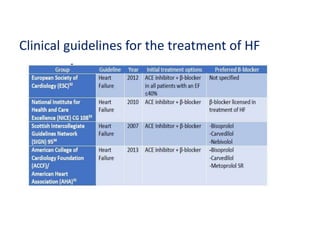
 Currently the β-blockers licensed for the treatment of HF are bisoprolol, carvedilol and
metoprolol.
 Reduce the risk of disease progression in heart failure, improve symptoms and
increase survival.
 Current guidelines recommend the use of beta blocker in mild, moderate and severe
HFrEF <40% in the absence of contraindications or tolerance in combination with ACE
inhibitor and diuretics
 A B-blocker is added at low starting dose that is gradually increased at 2-3 weeks
interval until the maintenance level derived from the mortality trias are achieved.
Metoprolol
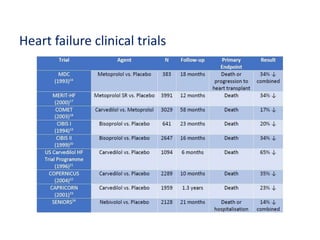
 First drug to be studied in HF in the MDC trial in 1993 : shown to reduce
mortality and the need of transplantation by 34% compared to placebo
 MERIT-HF trial :
• Efficacy of metoprolol in moderate HF patients with NYHA class II-IV using
a long-acting metoprolol formulation.
• Stopped early due to a significant decrease in all-cause mortality of 34%.
• 39% decrease in cardiovascular mortality, 49% decrease in death caused
by progressive heart failure and 35% reduction in hospitalisations.
Bisoprolol
 CIBIS I trial
• One of the early trials to demonstrate the importance of β-blocker therapy in HF.
• Pts. with moderate HF treated with bisoprolol demonstrated a reduction in
mortality and hospitalisation of 20%.
 CIBIS II trial
• The trial was stopped early due the significant mortality benefits.
• The primary end-point showed a reduction of 34% in mortality and there were
significantly fewer sudden deaths and all-cause hospital admissions in the
bisoprolol group.
Carvedilol
 The US Carvedilol Heart Failure Programme
• Compared carvedilol to placebo in pts with chronic HF and LVEF <35%.
• Shown to reduce mortality risk by 65% compared with placebo and 38%
reduction in the combined end-point of hospitalisation or death.
 COPERNICUS trial
• Compared carvedilol to placebo in severe HF patients with NYHA III – IV.
• Significant 35% decrease in all-cause mortality and was well tolerated
with fewer treatment discontinuations than the placebo group
Carvedilol cont.
 CAPRICORN study
• Evaluated if the addition of carvedilol to standard management of MI in pts. with LVSD would
reduce morbidity and mortality compared to placebo.
• Decreased the risk of mortality by 23%.
 COMET study
• Only study to compare two β-blockers : carvedilol Vs metoprolol, in terms of mortality in patients
with chronic HF with reduced LVEF.
• Carvedilol reduced mortality by 17% compared with metoprolol .
• The formulation of metoprolol was different to that used in MERIT-HF (metoprolol tartrate versus
slow release metoprolol succinate) and the target dose used was lower (50mg/12h versus
100mg/12h).
Heart failure clinical trials
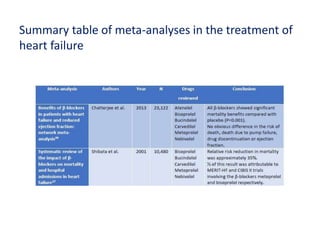
Summary table of meta-analyses in the treatment of
heart failure
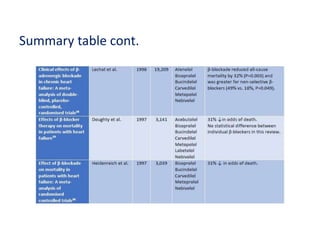
Summary table cont.
Summary
 The use of β-blockers in clinical studies have been shown to
reduce mortality and hospital admissions by approximately
34% when included as part of standard HF therapy.
Clinical guidelines for the treatment of HF
Controversies?
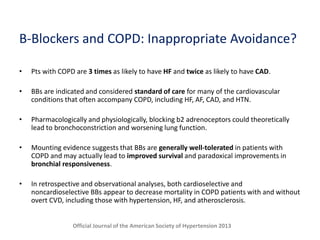
B-Blockers and COPD: Inappropriate Avoidance?
• Pts with COPD are 3 times as likely to have HF and twice as likely to have CAD.
• BBs are indicated and considered standard of care for many of the cardiovascular
conditions that often accompany COPD, including HF, AF, CAD, and HTN.
• Pharmacologically and physiologically, blocking b2 adrenoceptors could theoretically
lead to bronchoconstriction and worsening lung function.
• Mounting evidence suggests that BBs are generally well-tolerated in patients with
COPD and may actually lead to improved survival and paradoxical improvements in
bronchial responsiveness.
• In retrospective and observational analyses, both cardioselective and
noncardioselective BBs appear to decrease mortality in COPD patients with and without
overt CVD, including those with hypertension, HF, and atherosclerosis.
Official Journal of the American Society of Hypertension 2013
B-blockers and COPD cont.
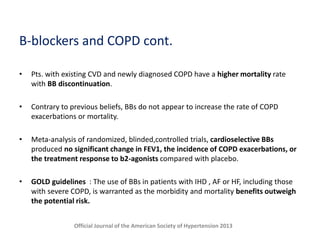
• Pts. with existing CVD and newly diagnosed COPD have a higher mortality rate
with BB discontinuation.
• Contrary to previous beliefs, BBs do not appear to increase the rate of COPD
exacerbations or mortality.
• Meta-analysis of randomized, blinded,controlled trials, cardioselective BBs
produced no significant change in FEV1, the incidence of COPD exacerbations, or
the treatment response to b2-agonists compared with placebo.
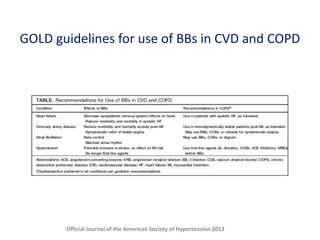
• GOLD guidelines : The use of BBs in patients with IHD , AF or HF, including those
with severe COPD, is warranted as the morbidity and mortality benefits outweigh
the potential risk.
Official Journal of the American Society of Hypertension 2013
GOLD guidelines for use of BBs in CVD and COPD
Official Journal of the American Society of Hypertension 2013
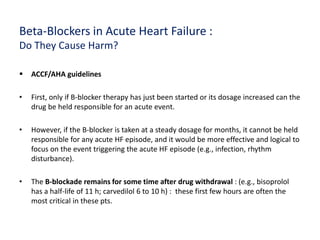
Beta-Blockers in Acute Heart Failure :
Do They Cause Harm?
 ACCF/AHA guidelines
• First, only if B-blocker therapy has just been started or its dosage increased can the
drug be held responsible for an acute event.
• However, if the B-blocker is taken at a steady dosage for months, it cannot be held
responsible for any acute HF episode, and it would be more effective and logical to
focus on the event triggering the acute HF episode (e.g., infection, rhythm
disturbance).
• The B-blockade remains for some time after drug withdrawal : (e.g., bisoprolol
has a half-life of 11 h; carvedilol 6 to 10 h) : these first few hours are often the
most critical in these pts.
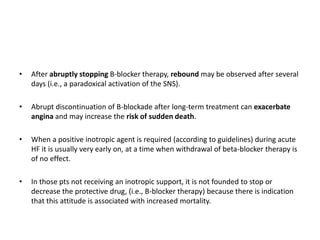
• After abruptly stopping B-blocker therapy, rebound may be observed after several
days (i.e., a paradoxical activation of the SNS).
• Abrupt discontinuation of B-blockade after long-term treatment can exacerbate
angina and may increase the risk of sudden death.
• When a positive inotropic agent is required (according to guidelines) during acute
HF it is usually very early on, at a time when withdrawal of beta-blocker therapy is
of no effect.
• In those pts not receiving an inotropic support, it is not founded to stop or
decrease the protective drug, (i.e., B-blocker therapy) because there is indication
that this attitude is associated with increased mortality.
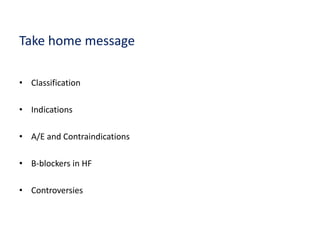
Take home message
• Classification
• Indications
• A/E and Contraindications
• B-blockers in HF
• Controversies
Who runs in ur family ?
Thank you!!

Beta blockers

  • 1.
    Beta blockers : B-blockersin heart failure Ajay Kumar Yadav PGY2, Internal medicine IOM-TUTH, Kathmandu 2074/10/14
  • 2.
    Beta-receptors  Three typesof Beta-receptors (β1, β2, β3) • β1 receptors : Heart • β2 receptors : Vascular and bronchial smooth muscle • β3 receptors : Adipocytes
  • 3.
  • 5.
    Generations of beta-blockers PropertiesDrugs 1st generation Non-selective No vasodilatation Propranolol, Timolol, Pindolol, Nadolol, Sotalol 2nd generation β1-selective without vasodilation Atenolol, Bisoprolol, Metoprolol β1selective with vasodilation Nebivolol, Acebutolol 3rd generation Non-selective with vasodilation Carvedilol, Bucindolol
  • 6.
     Vasodilation isdue to • Direct vasodilation via nitric oxide (carvedilol,nebivolol) • α receptor blockade (labetalol, carvedilol)  Carvedilol is also antiproliferative, antioxidant and blocks the expression of several genes involved in myocardial damage
  • 7.
    Classification of Betablockers  Depending on their level of affinity for B-receptors. • Selective β-blockers : affinity β-1> β-2 : selectivity lost at higher doses o Atenolol o Bisoprolol o Celiprolol o Metoprolol o Nebivolol • Non-selective β-blockers : affinity β1 = β2- o Carvedilol o Labetalol o Propranolol o Sotalol
  • 8.
    Classification cont.  Lipophilicβ-blockers • Rapidly and completely absorbed from the GIT • Metabolised in the gut wall and in the liver • Low bioavailability : 10-30% • Short half-lives • Readily pass into CNS : CNS adverse-effects.
  • 9.
    Classification cont.  Hydrophilicβ-blockers • Incompletely absorbed from the GIT • Excreted unchanged or as active metabolites by the kidney • Longer half-lives • Do not interact with other liver metabolised drugs
  • 10.
  • 11.
    Mechanism of beta-blockadein heart failure  Upregulation of β receptors and improved β adrenergic signaling  Reducing the hyperphosphorylation of calcium release channels of sarcoplasmic reticulum and normalizing their function  Bradycardia (↑ coronary blood flow and decreased myocardial oxygen demand)  Protection from catecholamine myocyte toxicity.  Suppression of ventricular arrhythmias.  Anti-apoptosis : β2 receptors, which are relatively increased, are coupled to inhibitory G protein & block apoptosis.  Inhibition of RAAS : When added to prior ACE-I or ARB, metoprolol augments RAAS inhibitors
  • 12.
  • 13.
    CVD Strongly indicated (level A) Systolicheart failure Post MI Ventricular arrhythmias (Post MI) Other indications (level B) Other arrhythmias STEMI, UA/NSTEMI/Chronic stable angina Hypertension Hypertrophic cardiomyopathy Mitral stenosis, MVP Dissecting aortic aneurysm Marfan’s syndrome (aortic root involvement) Neurocardiogenic syncope Fallot’s tetralogy Inherited arrhythmogenic disorders (LQTS, CPVT)
  • 14.
    Non-cardiac uses • Hyperthyrodism •Migraine prophylaxis • Anxiety disorder • Essential tremor • Portal HTN ( prevention of variceal bleeding ) • Hyperhydrosis • Glaucoma
  • 15.
    Adverse effects CVS CNSRespiratory Metabolic Bradycardia Insomnia Bronchospasm Glucose intolerance Hypotension Nightmares Dyslipidemia ( increases TG level and decreases HDL cholesterol Heart failure Depression Miscellaneous Heart block Hallucinations Fatigue Exacebation of raynauds syndrome Dizziness Erectile dysfunction Decreased concentration Masks symptoms of hypoglycemia
  • 16.
    A/E cont. • CNSA/E are more common with lipopholic drugs • A/E a/w Beta-2 receptor antagonist (bronchospasm,peripheral vasoconstriction, alternation of glucose and lipid metabolism) are less common with B-1 selective agents • Receptor selectivity diminishes at higher doses • B-1 blockade at the macula densa inhibits renin release : potentiate ACEI/ARB. • Glucagon is used in the t/t of overdose.
  • 17.
  • 18.
    Cautions and contraindicationsfor β-blockers Cautions Contraindications Mild to moderate airway disease- monitor peak flow prior to and following initiation Severe bronchial asthma or bronchospasm Renal and hepatic disease Prinzmetal’s angina β-blockers may mask early signs of hypoglycaemia Sinus bradycardia <50bpm Sick sinus syndrome including sino-atrial block, second or third degree AV block Worsening control of blood glucose may occur Hypotension- Systolic BP <90mmHg Cardiogenic shock Decompensated HF First degree AV block Severe peripheral arterial disease Use of concomitant medication that may increase risk of bradycardia Psoriasis , GA Phaeochromocytoma- apart from specific use with α-blockers Patients treated with verapamil
  • 19.
    Drug interactions  ClassI antiarrhythmic drugs (e.g. Quinidine, flecainide, disopyramide and lidocaine): • Additive cardiac depressive effects and cause marked bradycardia. • AV conduction time may be potentiated and the negative inotropic effect increased  Class III antiarrhythmic drugs (e.g. amiodarone): • Hypotension, bradycardia, ventricular fibrillation and asystole in a few pts • Inhibit the metabolism of β-blockers metabolised by CYP2D6 (e.g. metoprolol)
  • 20.
    Drug interactions cont. Calcium channel antagonists of verapamil/diltiazem type: • Serious and potentially life-threatening bradycardia.  Centrally-acting antihypertensives (e.g. clonidine and methyldopa): • Sharp and serious rise in blood pressure (rebound hypertension) can occur with sudden withdrawal of clonidine.  Insulin and oral anti-diabetic agents: • In pts with diabetes using insulin : hhypoglycemic manifestations may be masked Cardioselective β- blockers seem less likely to interact. • The blood glucose lowering effect of the sulfonylureas may be reduced by β-blockers
  • 22.
  • 23.
     Abnormality ofcardiac structure or function which leads to failure of the heart to deliver oxygen at a rate commensurate with the requirements of the metabolising tissues or can do so only at an elevated filling pressure.  Currently the β-blockers licensed for the treatment of HF are bisoprolol, carvedilol and metoprolol.  Reduce the risk of disease progression in heart failure, improve symptoms and increase survival.  Current guidelines recommend the use of beta blocker in mild, moderate and severe HFrEF <40% in the absence of contraindications or tolerance in combination with ACE inhibitor and diuretics  A B-blocker is added at low starting dose that is gradually increased at 2-3 weeks interval until the maintenance level derived from the mortality trias are achieved.
  • 24.
    Metoprolol  First drugto be studied in HF in the MDC trial in 1993 : shown to reduce mortality and the need of transplantation by 34% compared to placebo  MERIT-HF trial : • Efficacy of metoprolol in moderate HF patients with NYHA class II-IV using a long-acting metoprolol formulation. • Stopped early due to a significant decrease in all-cause mortality of 34%. • 39% decrease in cardiovascular mortality, 49% decrease in death caused by progressive heart failure and 35% reduction in hospitalisations.
  • 25.
    Bisoprolol  CIBIS Itrial • One of the early trials to demonstrate the importance of β-blocker therapy in HF. • Pts. with moderate HF treated with bisoprolol demonstrated a reduction in mortality and hospitalisation of 20%.  CIBIS II trial • The trial was stopped early due the significant mortality benefits. • The primary end-point showed a reduction of 34% in mortality and there were significantly fewer sudden deaths and all-cause hospital admissions in the bisoprolol group.
  • 26.
    Carvedilol  The USCarvedilol Heart Failure Programme • Compared carvedilol to placebo in pts with chronic HF and LVEF <35%. • Shown to reduce mortality risk by 65% compared with placebo and 38% reduction in the combined end-point of hospitalisation or death.  COPERNICUS trial • Compared carvedilol to placebo in severe HF patients with NYHA III – IV. • Significant 35% decrease in all-cause mortality and was well tolerated with fewer treatment discontinuations than the placebo group
  • 27.
    Carvedilol cont.  CAPRICORNstudy • Evaluated if the addition of carvedilol to standard management of MI in pts. with LVSD would reduce morbidity and mortality compared to placebo. • Decreased the risk of mortality by 23%.  COMET study • Only study to compare two β-blockers : carvedilol Vs metoprolol, in terms of mortality in patients with chronic HF with reduced LVEF. • Carvedilol reduced mortality by 17% compared with metoprolol . • The formulation of metoprolol was different to that used in MERIT-HF (metoprolol tartrate versus slow release metoprolol succinate) and the target dose used was lower (50mg/12h versus 100mg/12h).
  • 28.
  • 29.
    Summary table ofmeta-analyses in the treatment of heart failure
  • 30.
  • 31.
    Summary  The useof β-blockers in clinical studies have been shown to reduce mortality and hospital admissions by approximately 34% when included as part of standard HF therapy.
  • 32.
    Clinical guidelines forthe treatment of HF
  • 33.
  • 34.
    B-Blockers and COPD:Inappropriate Avoidance? • Pts with COPD are 3 times as likely to have HF and twice as likely to have CAD. • BBs are indicated and considered standard of care for many of the cardiovascular conditions that often accompany COPD, including HF, AF, CAD, and HTN. • Pharmacologically and physiologically, blocking b2 adrenoceptors could theoretically lead to bronchoconstriction and worsening lung function. • Mounting evidence suggests that BBs are generally well-tolerated in patients with COPD and may actually lead to improved survival and paradoxical improvements in bronchial responsiveness. • In retrospective and observational analyses, both cardioselective and noncardioselective BBs appear to decrease mortality in COPD patients with and without overt CVD, including those with hypertension, HF, and atherosclerosis. Official Journal of the American Society of Hypertension 2013
  • 35.
    B-blockers and COPDcont. • Pts. with existing CVD and newly diagnosed COPD have a higher mortality rate with BB discontinuation. • Contrary to previous beliefs, BBs do not appear to increase the rate of COPD exacerbations or mortality. • Meta-analysis of randomized, blinded,controlled trials, cardioselective BBs produced no significant change in FEV1, the incidence of COPD exacerbations, or the treatment response to b2-agonists compared with placebo. • GOLD guidelines : The use of BBs in patients with IHD , AF or HF, including those with severe COPD, is warranted as the morbidity and mortality benefits outweigh the potential risk. Official Journal of the American Society of Hypertension 2013
  • 36.
    GOLD guidelines foruse of BBs in CVD and COPD Official Journal of the American Society of Hypertension 2013
  • 37.
    Beta-Blockers in AcuteHeart Failure : Do They Cause Harm?  ACCF/AHA guidelines • First, only if B-blocker therapy has just been started or its dosage increased can the drug be held responsible for an acute event. • However, if the B-blocker is taken at a steady dosage for months, it cannot be held responsible for any acute HF episode, and it would be more effective and logical to focus on the event triggering the acute HF episode (e.g., infection, rhythm disturbance). • The B-blockade remains for some time after drug withdrawal : (e.g., bisoprolol has a half-life of 11 h; carvedilol 6 to 10 h) : these first few hours are often the most critical in these pts.
  • 38.
    • After abruptlystopping B-blocker therapy, rebound may be observed after several days (i.e., a paradoxical activation of the SNS). • Abrupt discontinuation of B-blockade after long-term treatment can exacerbate angina and may increase the risk of sudden death. • When a positive inotropic agent is required (according to guidelines) during acute HF it is usually very early on, at a time when withdrawal of beta-blocker therapy is of no effect. • In those pts not receiving an inotropic support, it is not founded to stop or decrease the protective drug, (i.e., B-blocker therapy) because there is indication that this attitude is associated with increased mortality.
  • 39.
    Take home message •Classification • Indications • A/E and Contraindications • B-blockers in HF • Controversies
  • 40.
    Who runs inur family ?
  • 41.