


THE EYELID MUSCLESHow the lids are kept in placeDr. Anupama Karanthwww.ophthalclass.blogspot.com
The palpebral fissure
What maintains the palpebral fissure?The eyelid retractorsThe eyelid  protractors
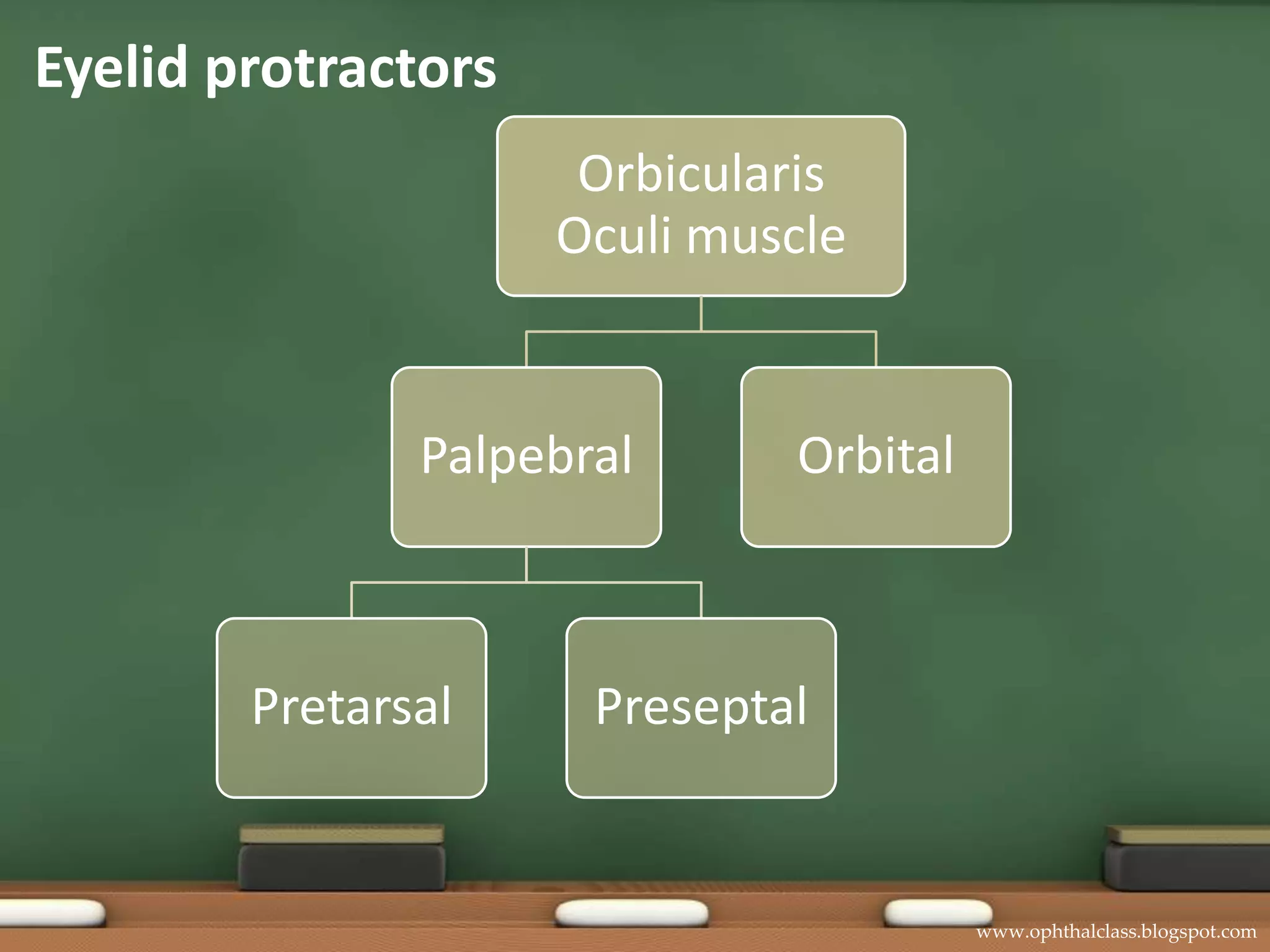
Eyelid protractors
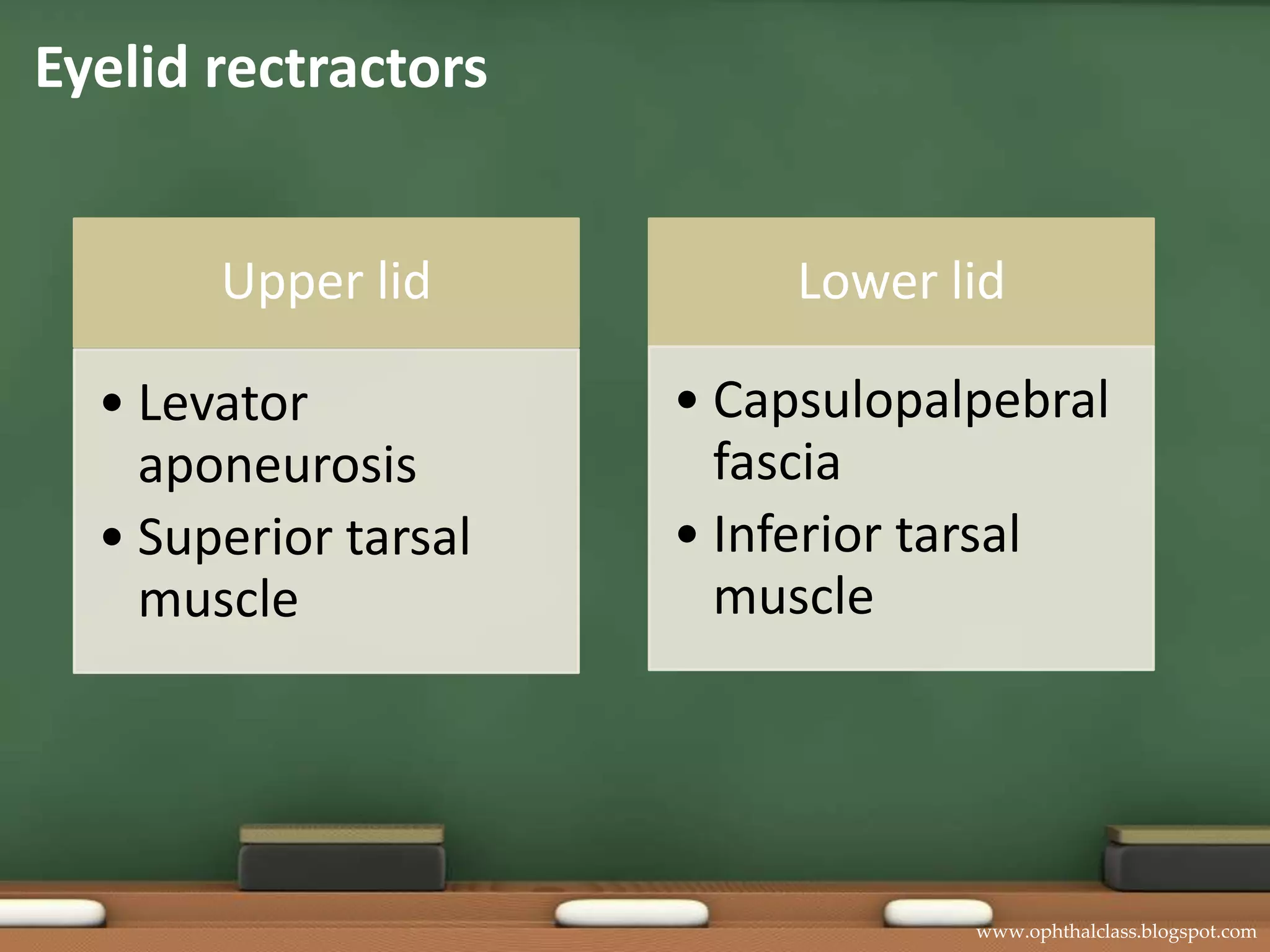
Eyelid rectractors
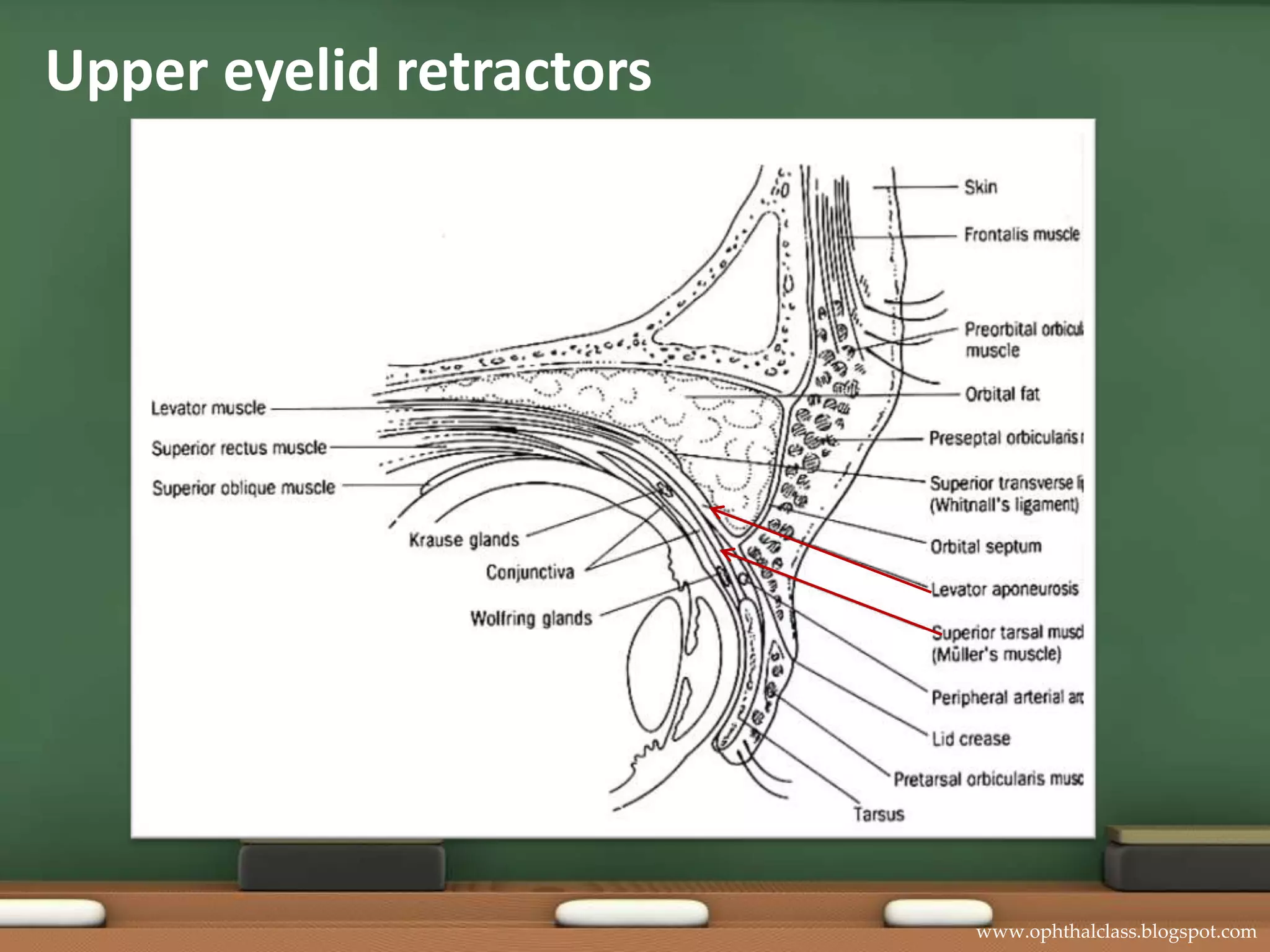
Upper eyelid retractors
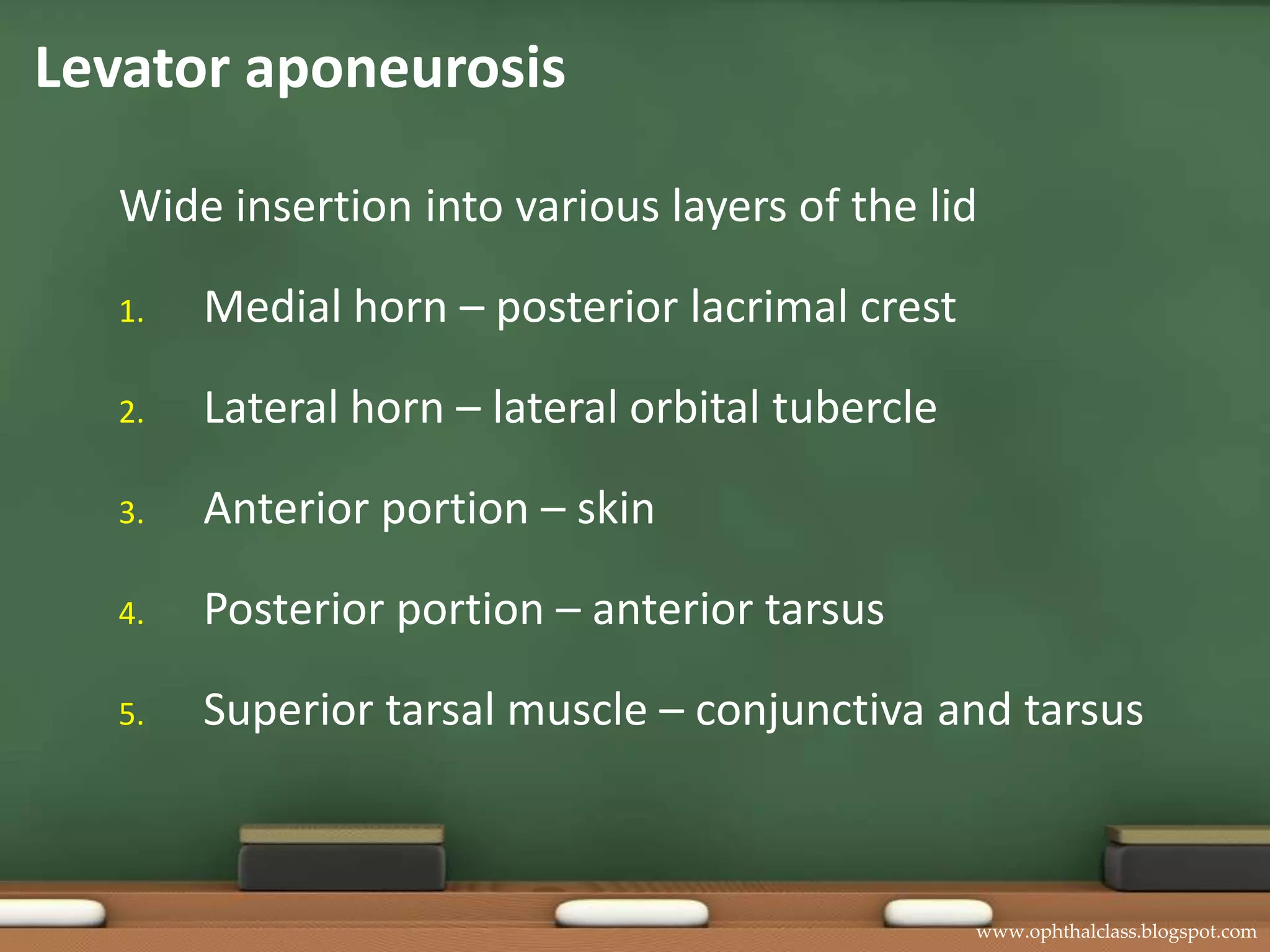
LevatoraponeurosisWide insertion into various layers of the lidMedial horn – posterior lacrimal crestLateral horn – lateral orbital tubercleAnterior portion – skinPosterior portion – anterior tarsusSuperior tarsal muscle – conjunctiva and tarsus
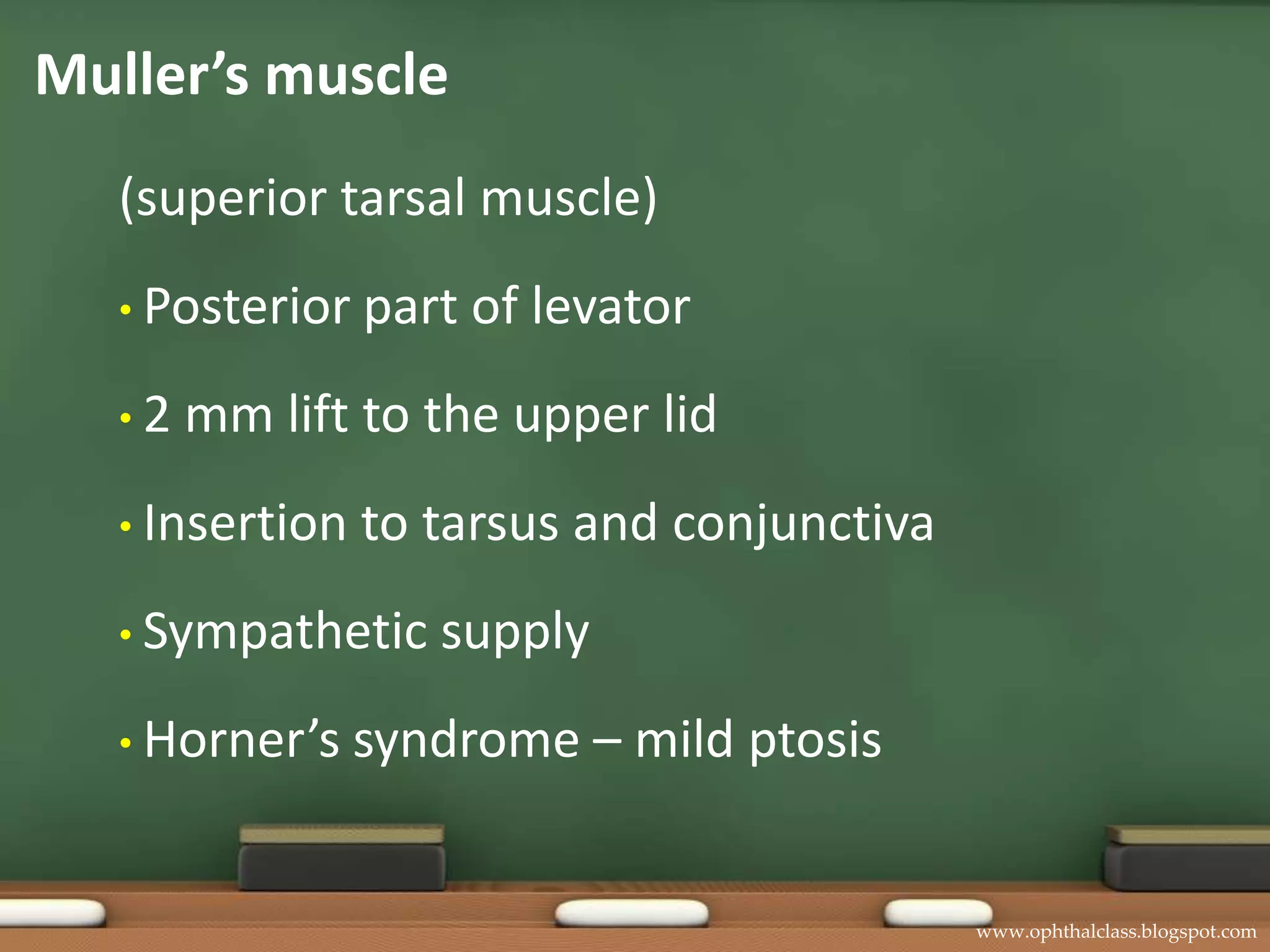
Muller’s muscle(superior tarsal muscle)Posterior part of levator2 mm lift to the upper lidInsertion to tarsus and conjunctivaSympathetic supplyHorner’s syndrome – mild ptosis
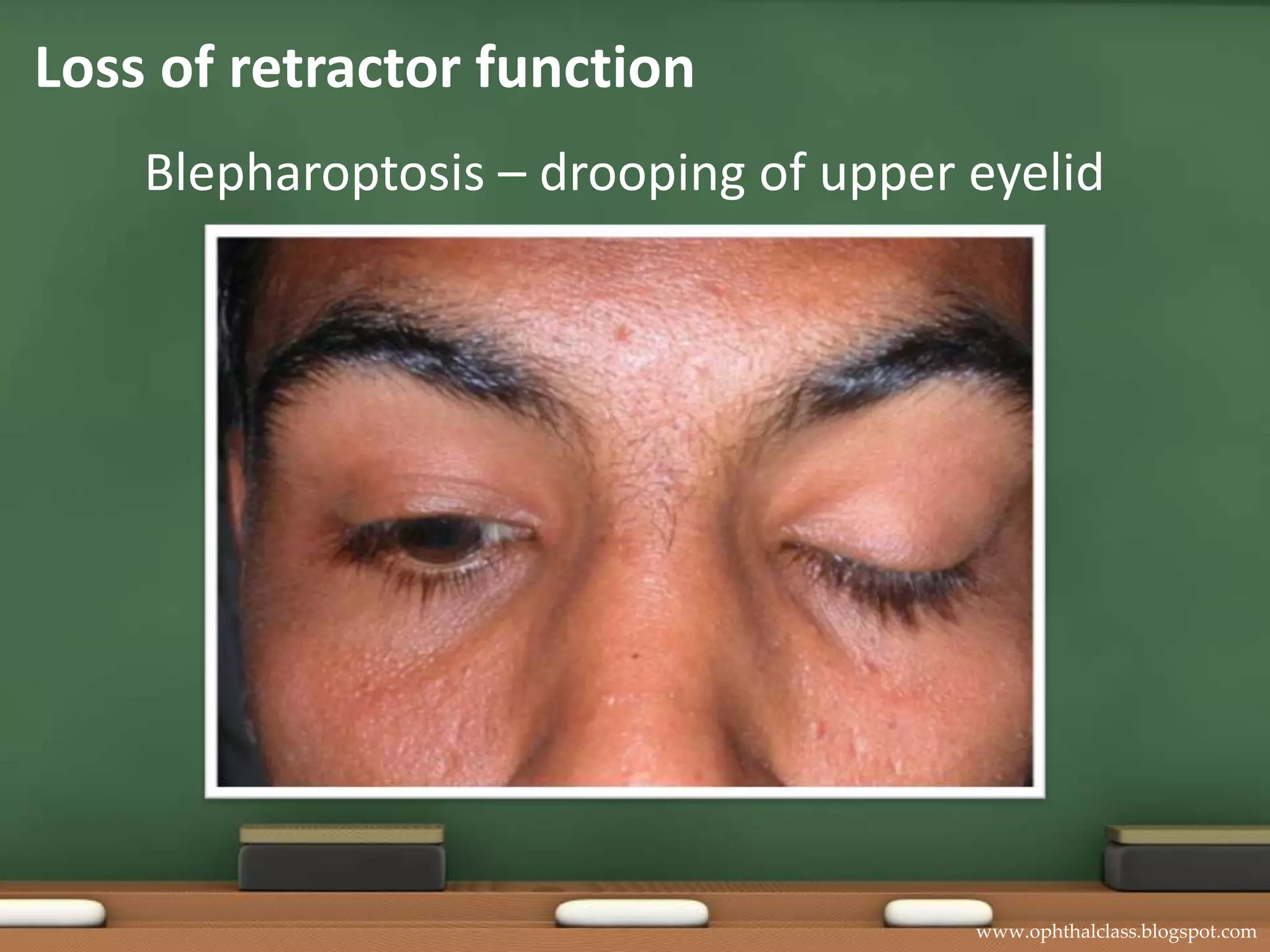
Loss of retractor functionBlepharoptosis – drooping of upper eyelid
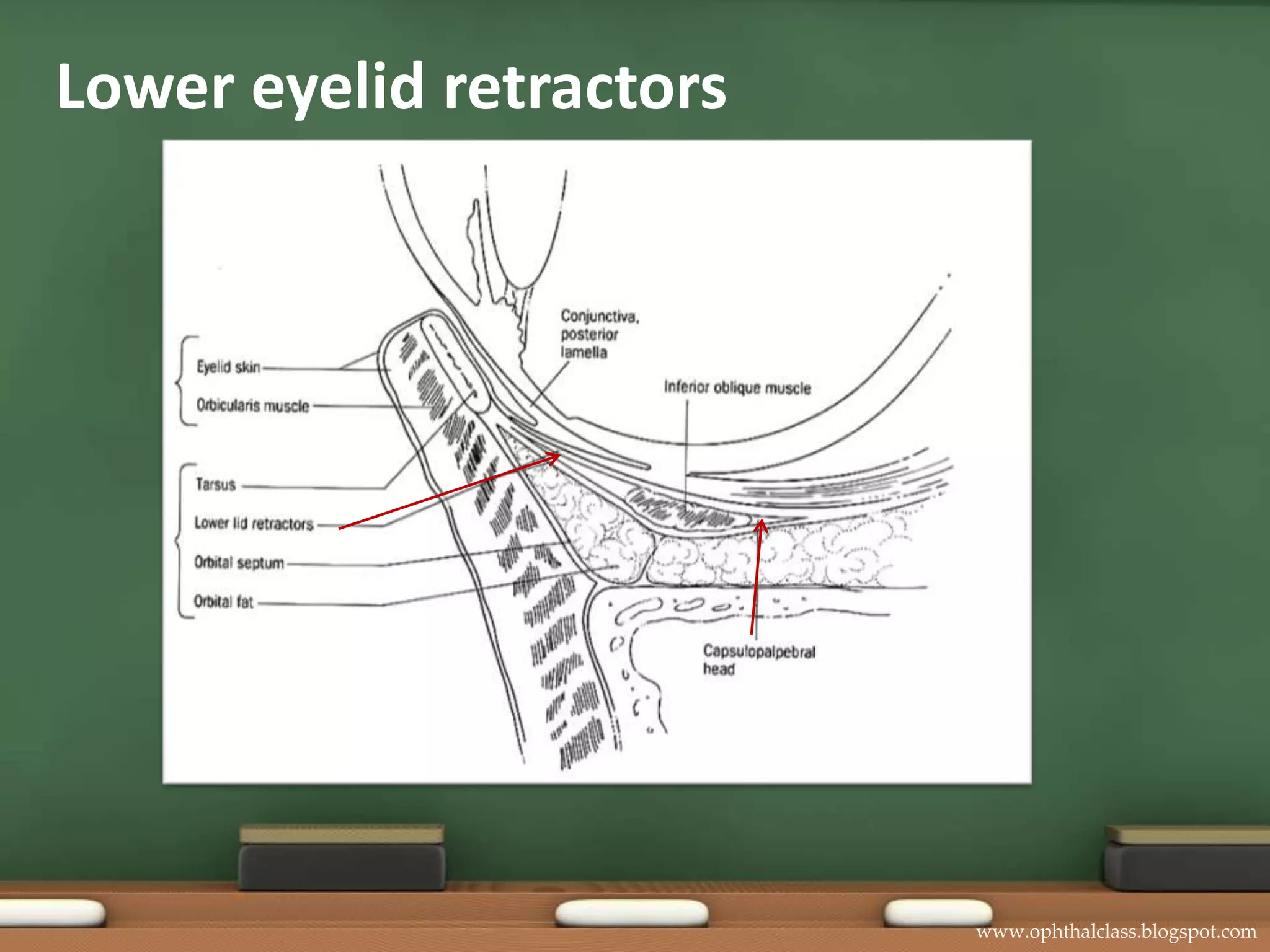
Lower eyelid retractors
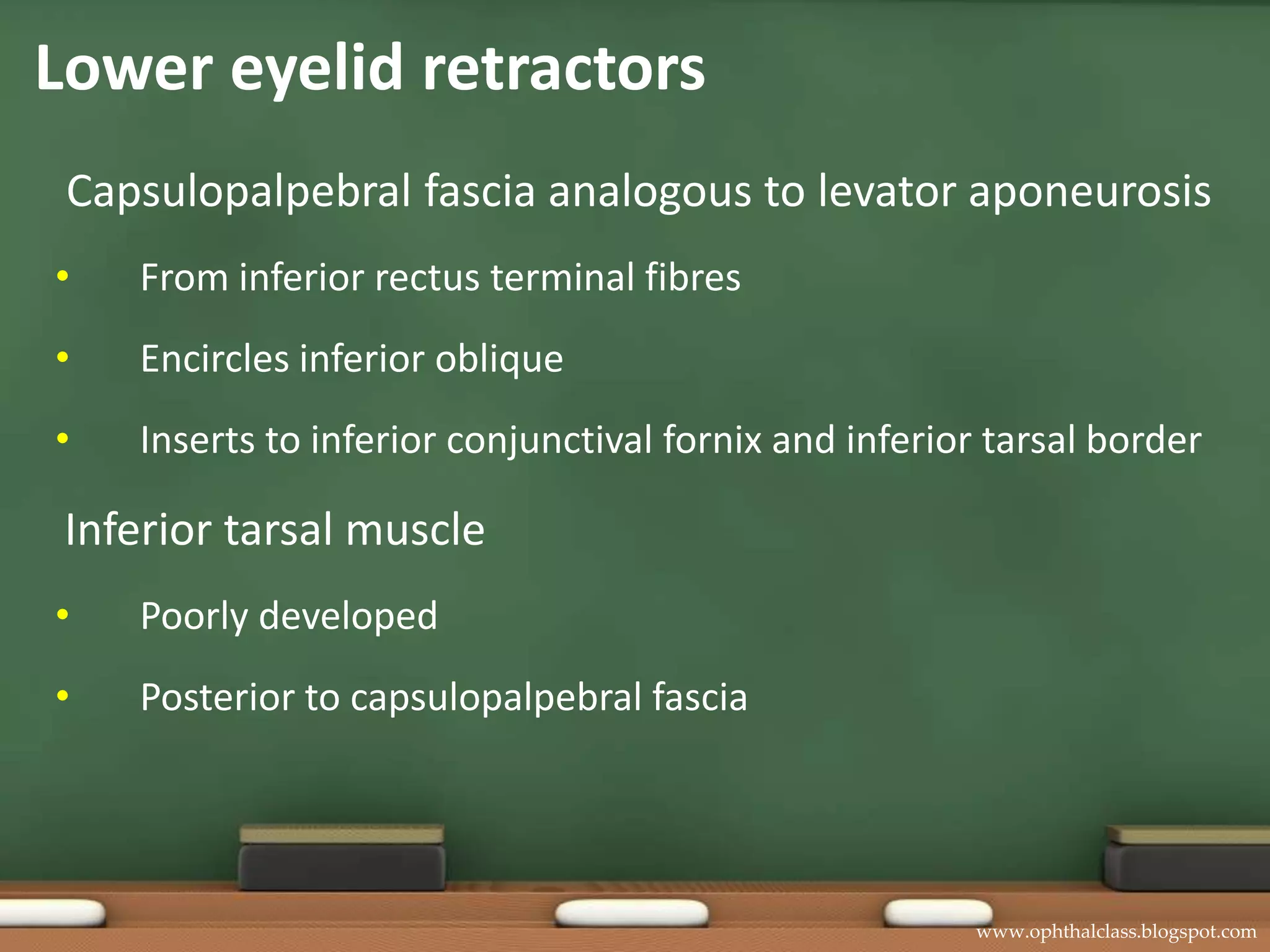
Lower eyelid retractorsCapsulopalpebral fascia analogous to levatoraponeurosisFrom inferior rectus terminal fibresEncircles inferior oblique Inserts to inferior conjunctival fornix and inferior tarsal borderInferior tarsal muscle Poorly developedPosterior to capsulopalpebralfascia
The lid globe apposition
The lid and the globeWhy do the eyelids not fall outwards?Why do the eyelids not turn inwards?
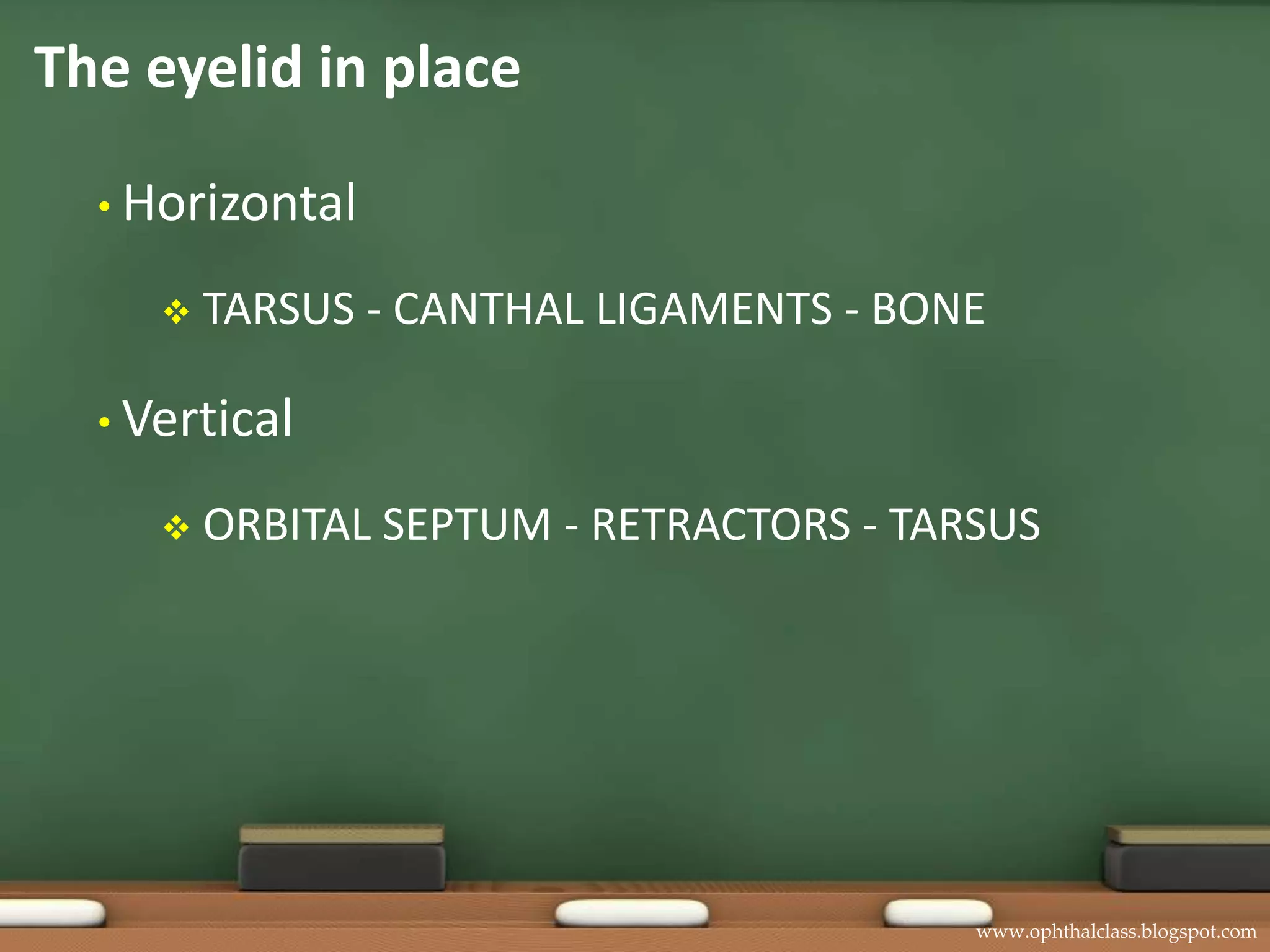
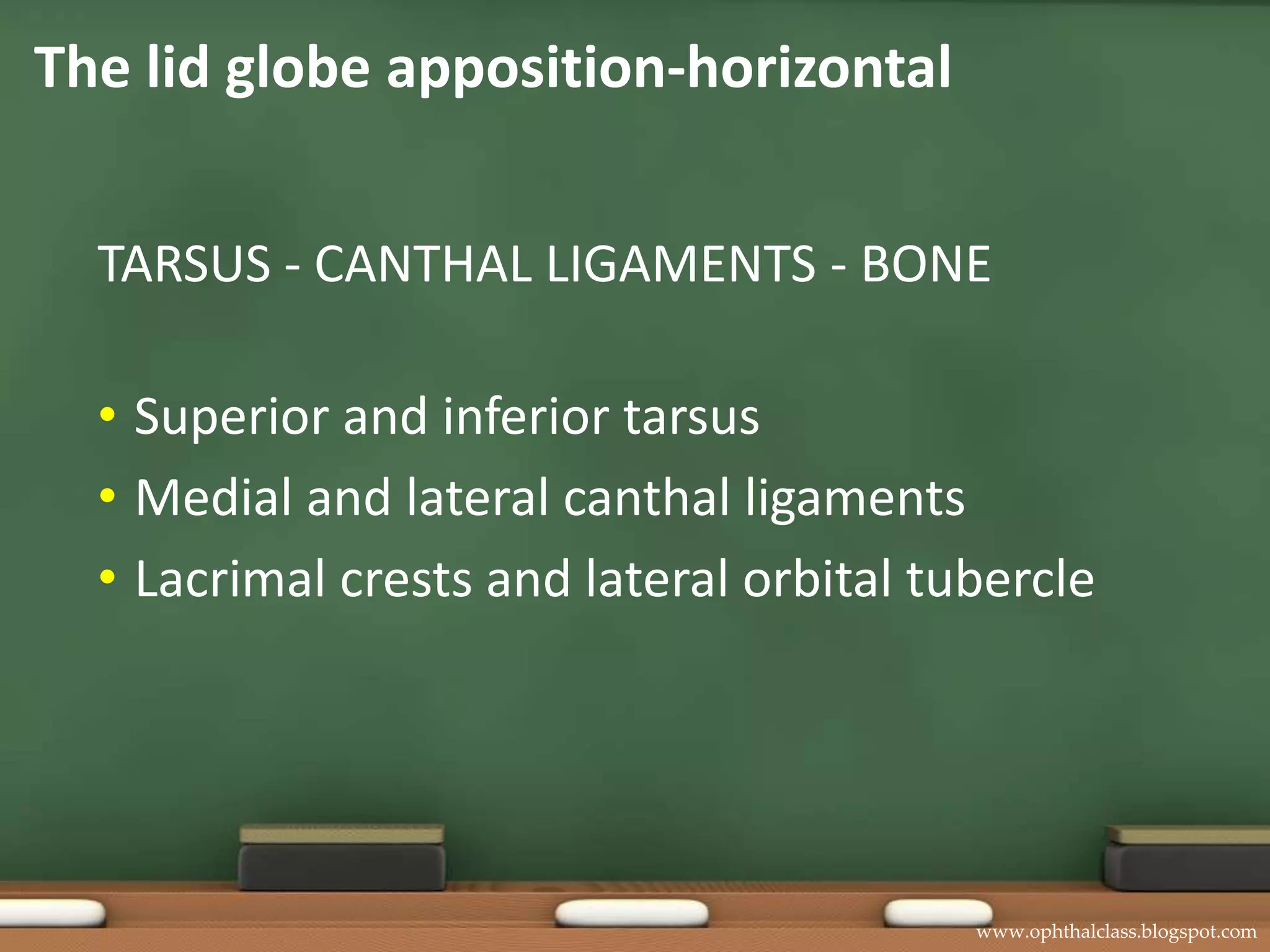
The eyelid in placeHorizontal  TARSUS - CANTHAL LIGAMENTS - BONEVertical  ORBITAL SEPTUM - RETRACTORS - TARSUSThe lid globe apposition-horizontalTARSUS - CANTHAL LIGAMENTS - BONE Superior and inferior tarsus Medial and lateral canthal ligamentsLacrimalcrests and lateral orbital tubercle
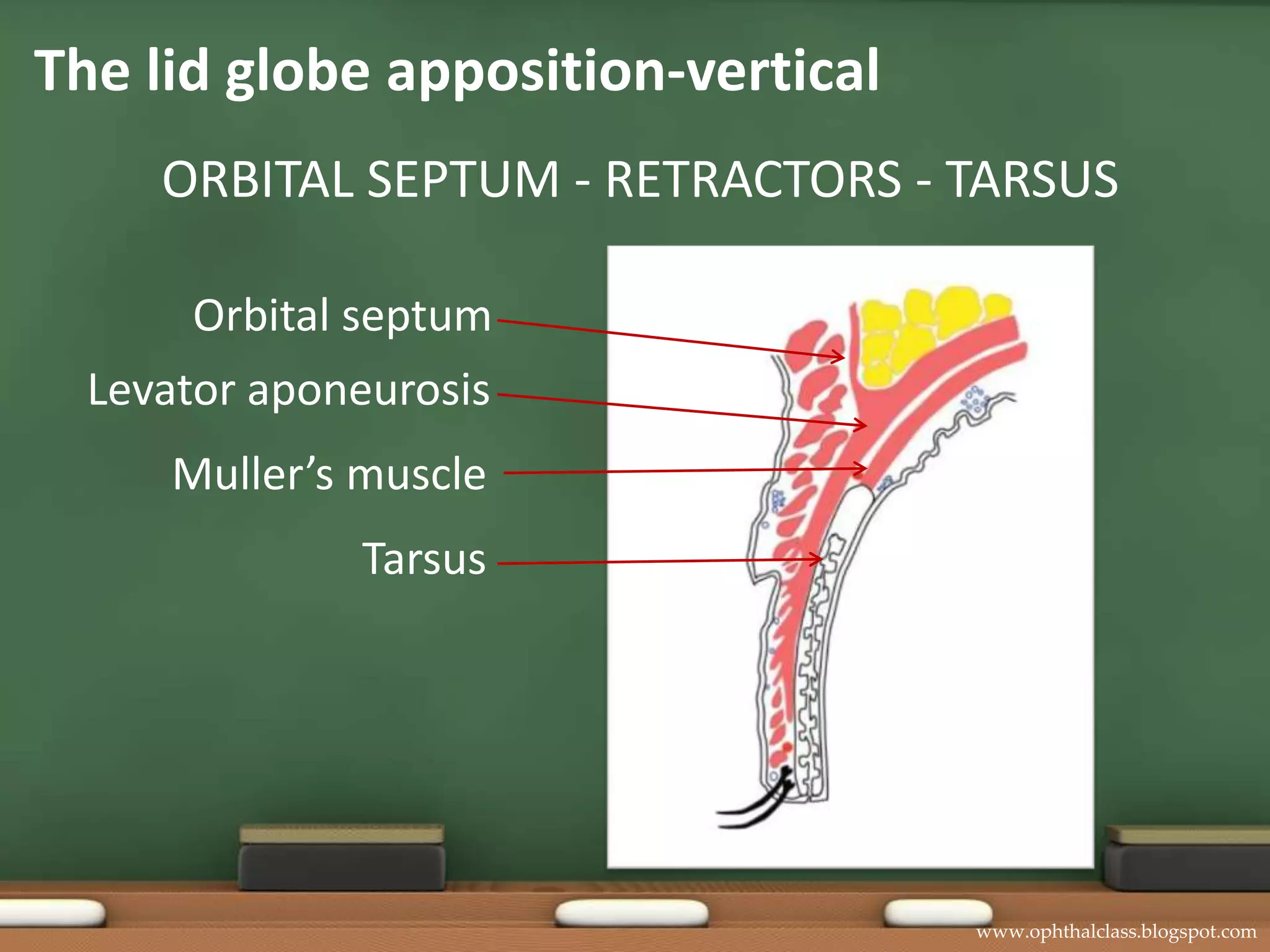
The lid globe apposition-verticalORBITAL SEPTUM - RETRACTORS - TARSUSOrbital septumLevatoraponeurosisMuller’s muscleTarsus
Loss of lid-globe apposition
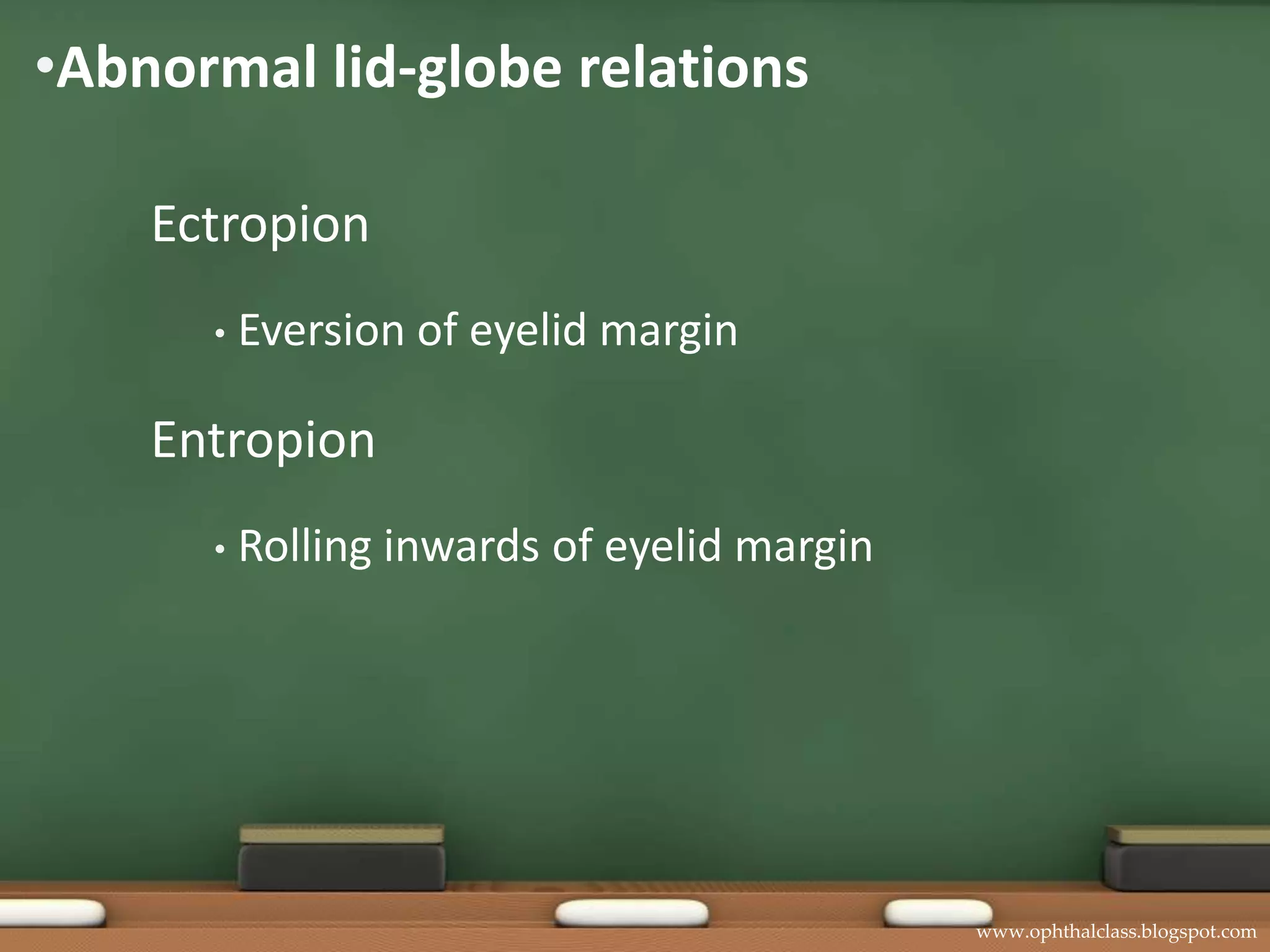
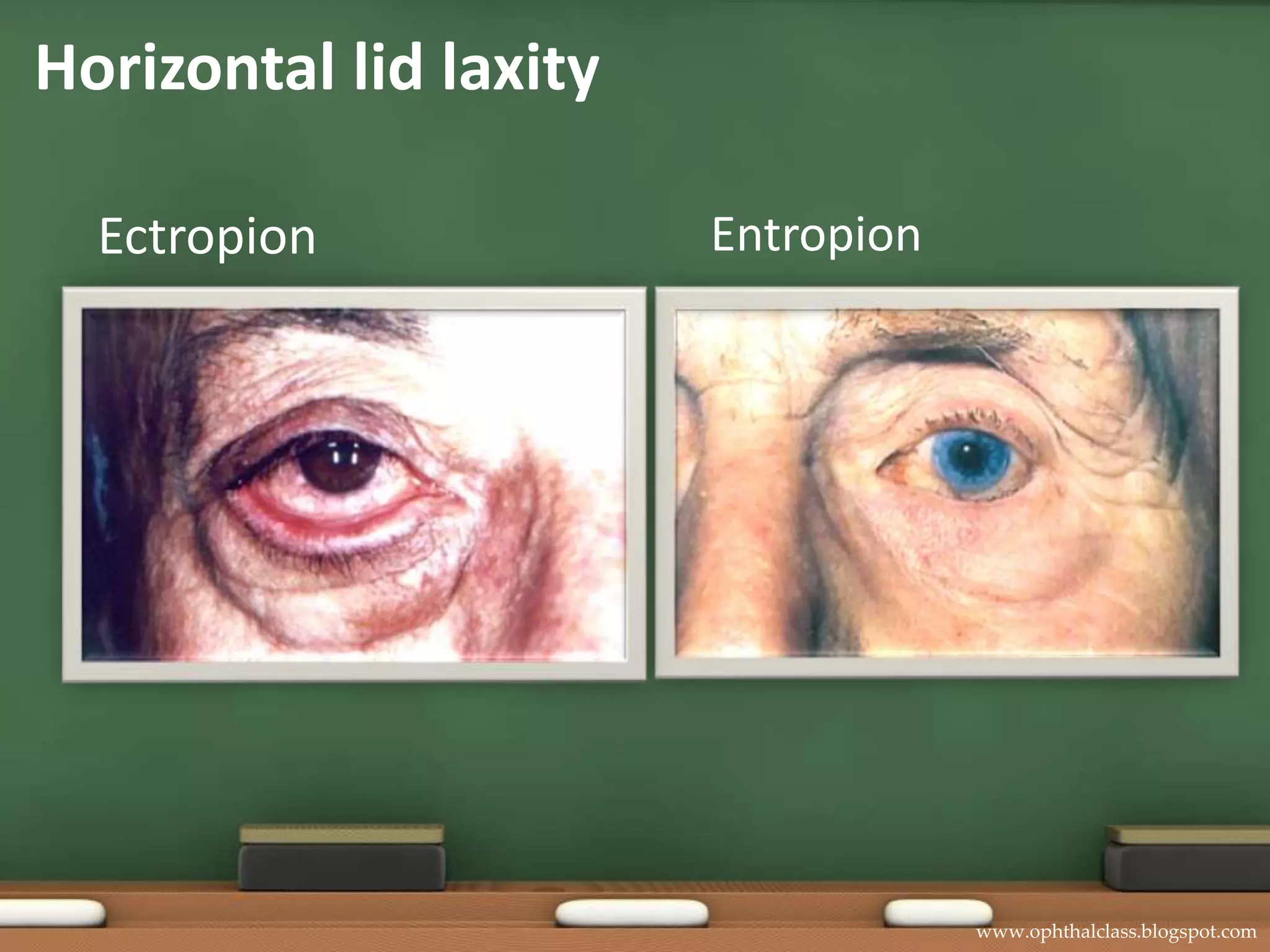
Abnormal lid-globe relationsEctropionEversion of eyelid marginEntropionRolling inwards of eyelid margin
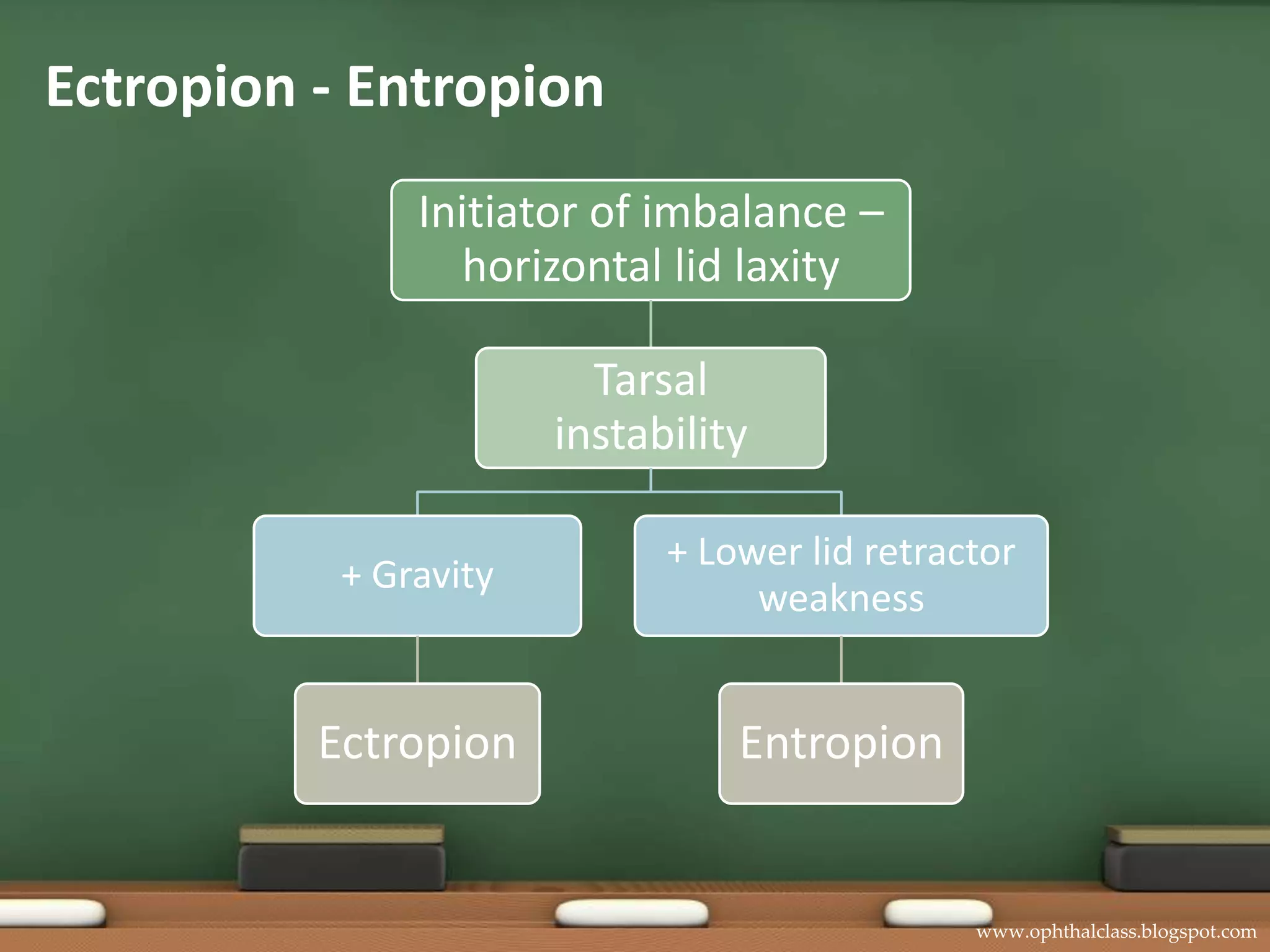
Ectropion - Entropion
Horizontal lid laxityEctropionEntropion
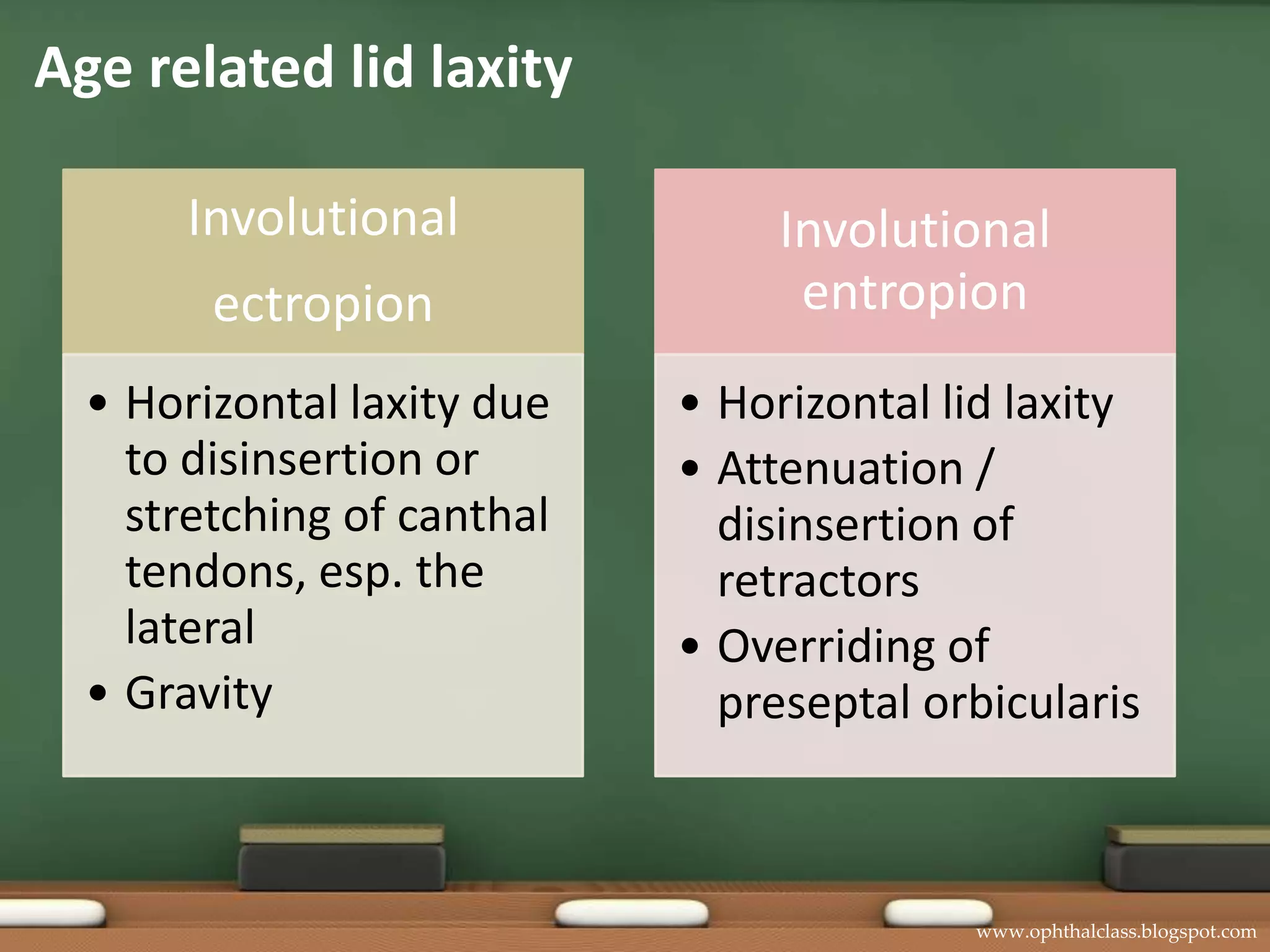
Age related lid laxity
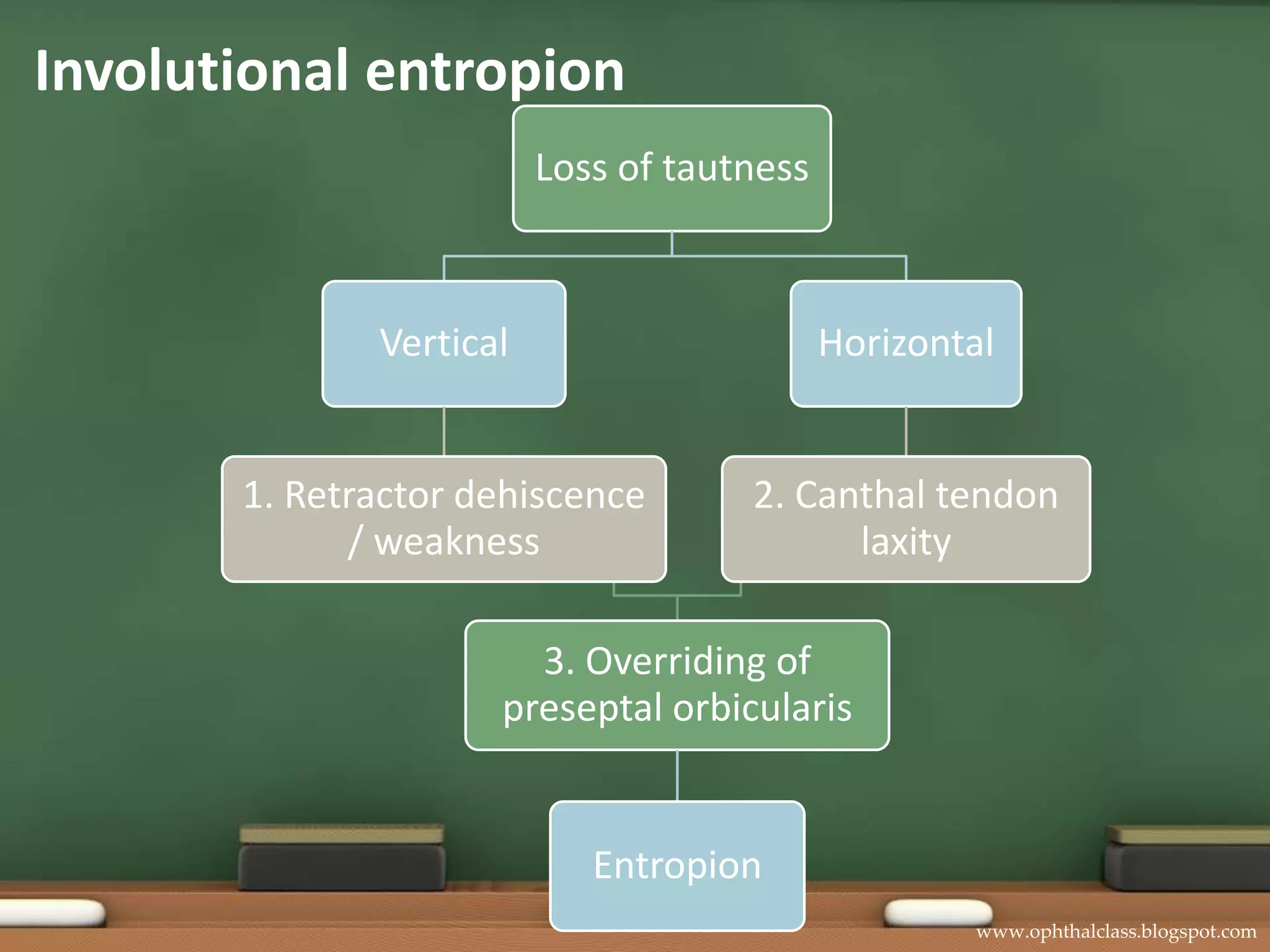
Involutionalentropion
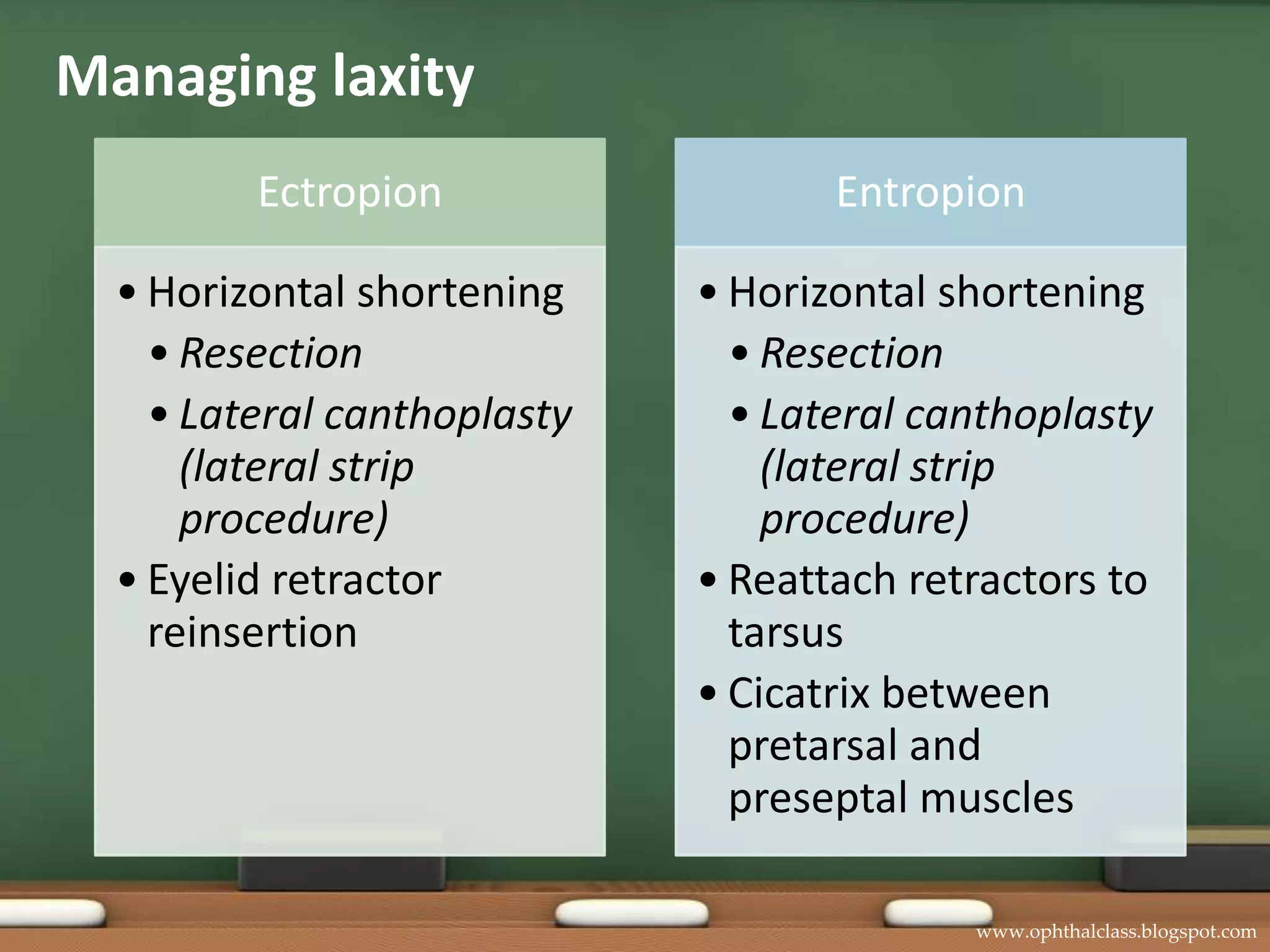
Managing laxity
Lids and Adnexa Class 2 Part A - Ectropion and Entropion

Lids and Adnexa Class 2 Part A - Ectropion and Entropion