
LID MALPOSITIONSPtosis, Entropion,& EctropionDr Anupama Karanthwww.ophthalclass.blogspot.com
Result from imbalance between forces on anterior and posterior lamellae of the eyelidEctropion - EntropionAnterior lamella	  skin and orbicularisPosterior lamella	  tarsus and conjunctiva
InvolutionalEctropion and Entropion
Outward turning of eyelid marginTypesCongenitalInvolutionalParalyticCicatricialMechanicalEctropion
Most common type in practice - InvolutionalPrimary etiologic factor - Horizontal eyelid laxityClinical test - The snap testEctropion
Snap testTesting lid laxityThe lid does not snap back into position when pulled out and released.
The canthi get displaced when lower lid is pulled laterally or mediallyDisplacement of canthi
Ectropion – Clinical features
InvolutionalectropionEctropion
Paralytic ectropionEctropionFacial palsy
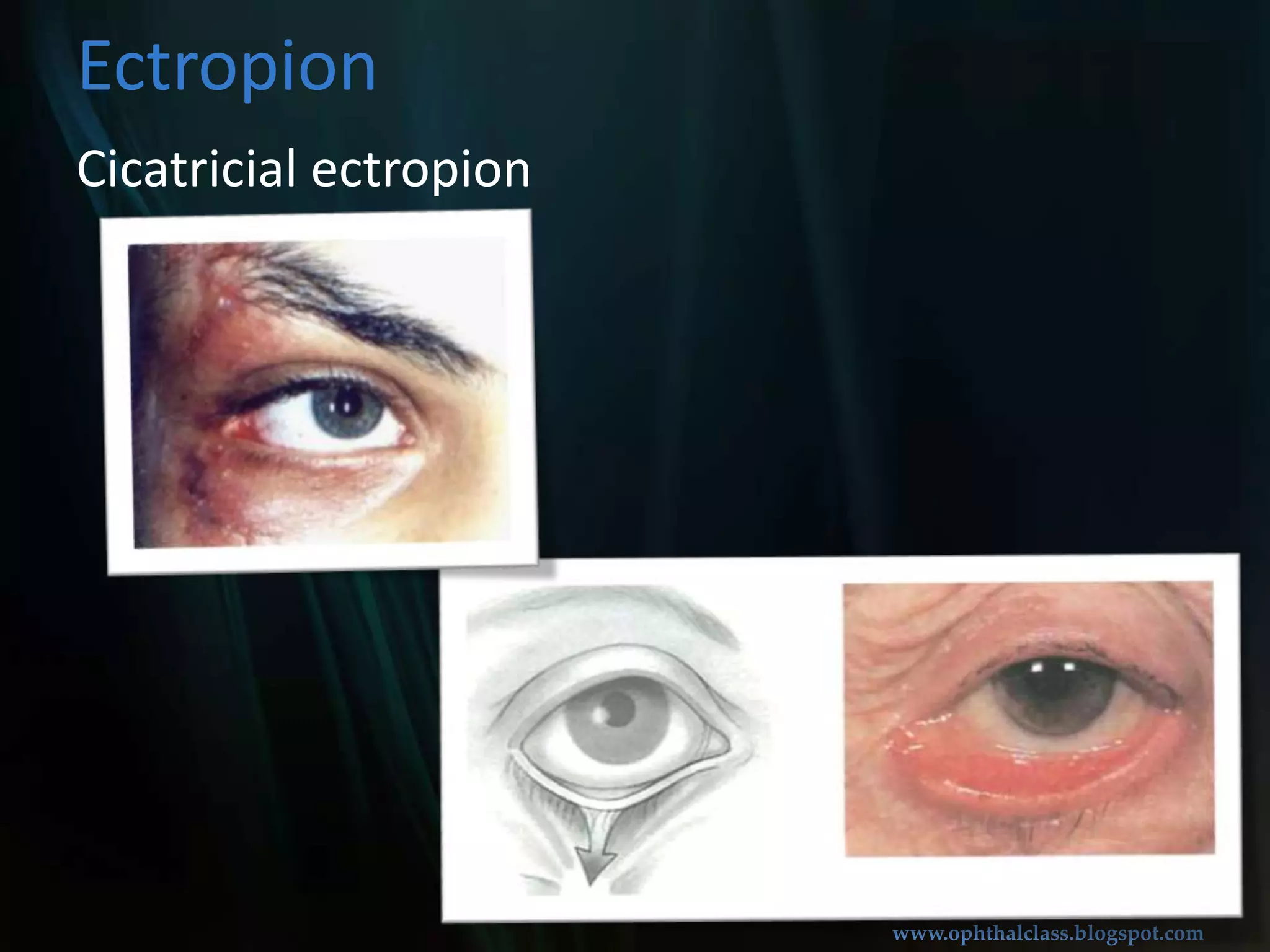
CicatricialectropionEctropion
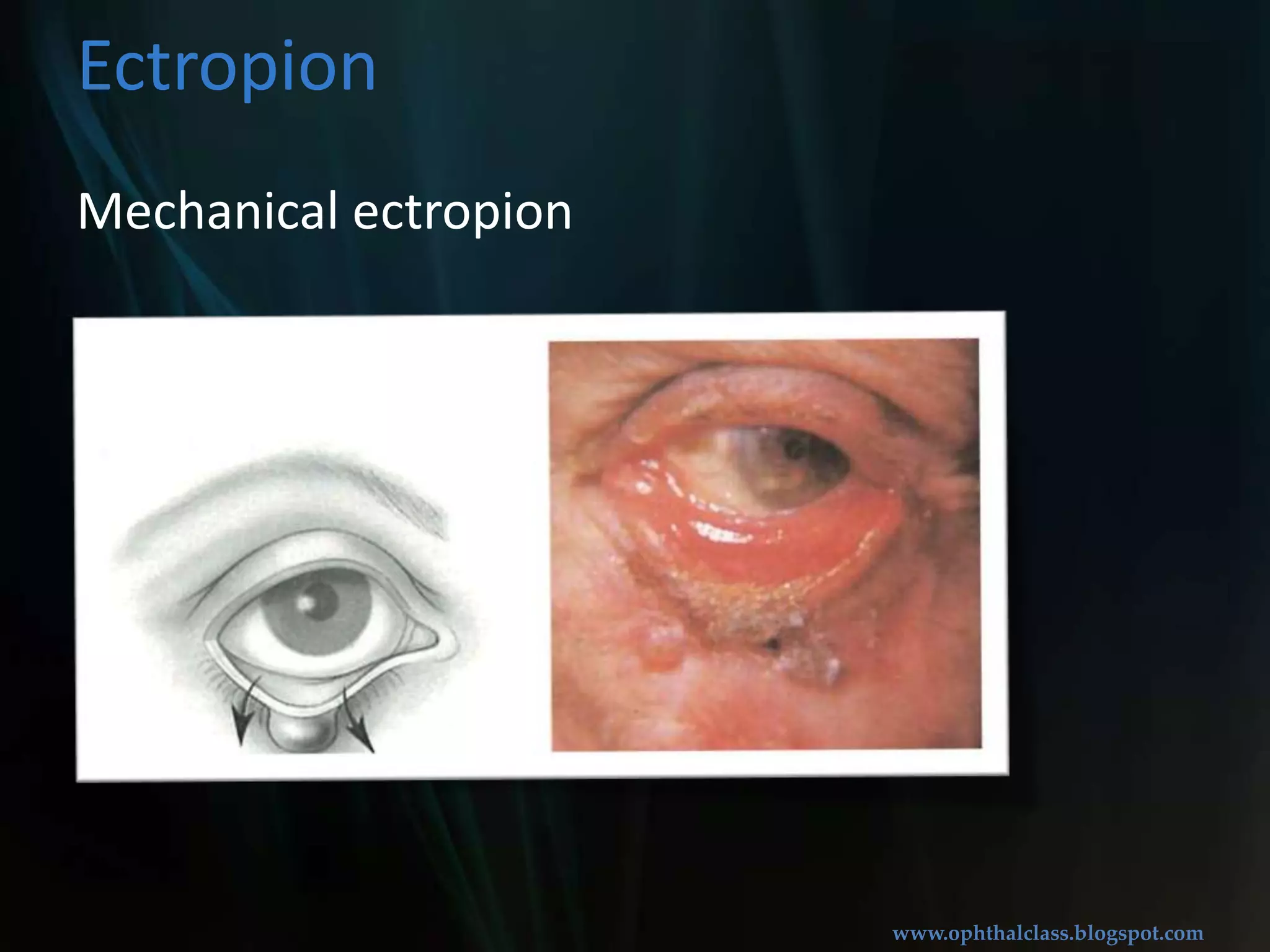
Mechanical ectropionEctropion
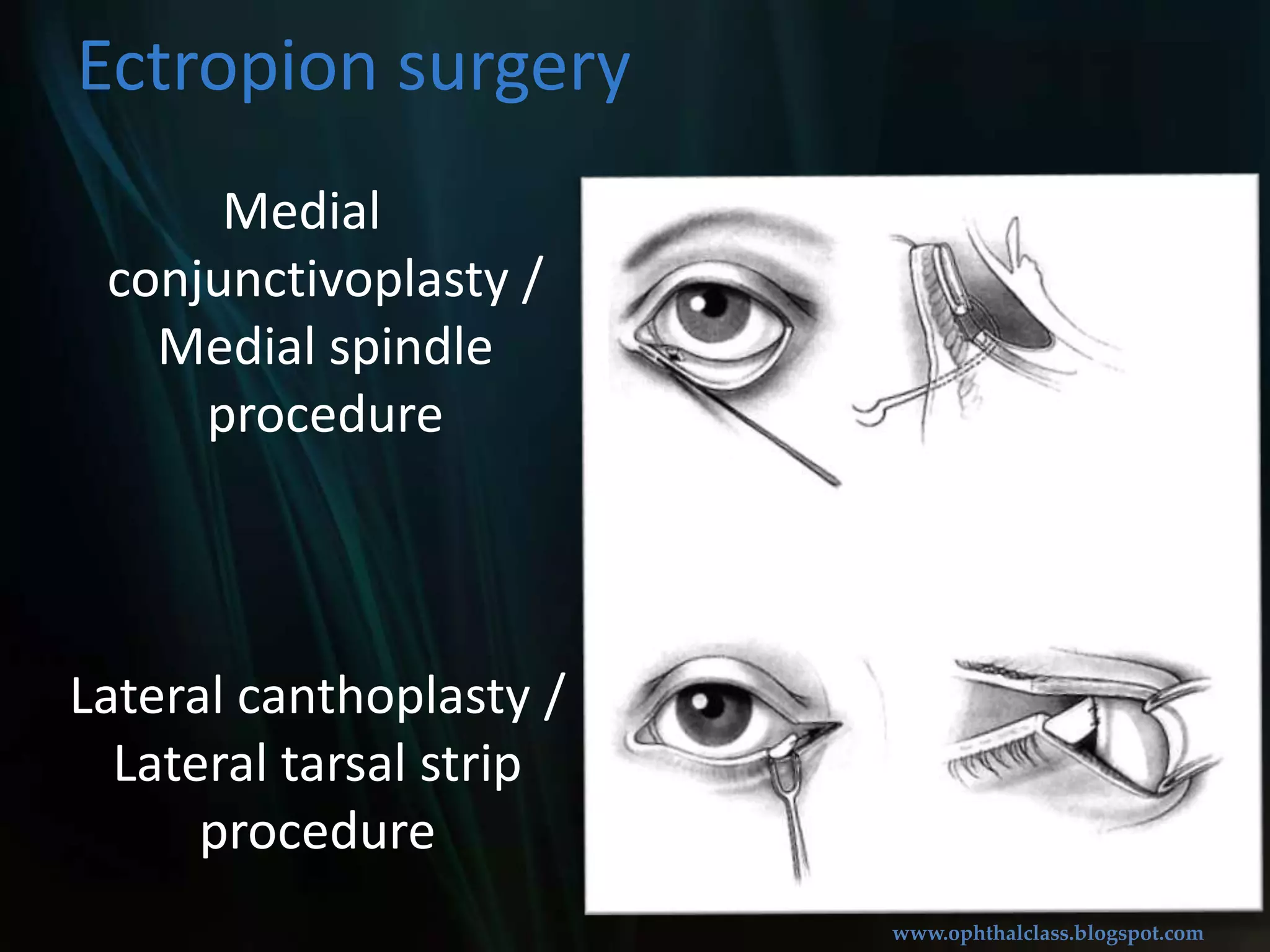
Medial conjunctivoplasty / Medial spindle procedureEctropion surgeryLateral canthoplasty / Lateral tarsal strip procedure
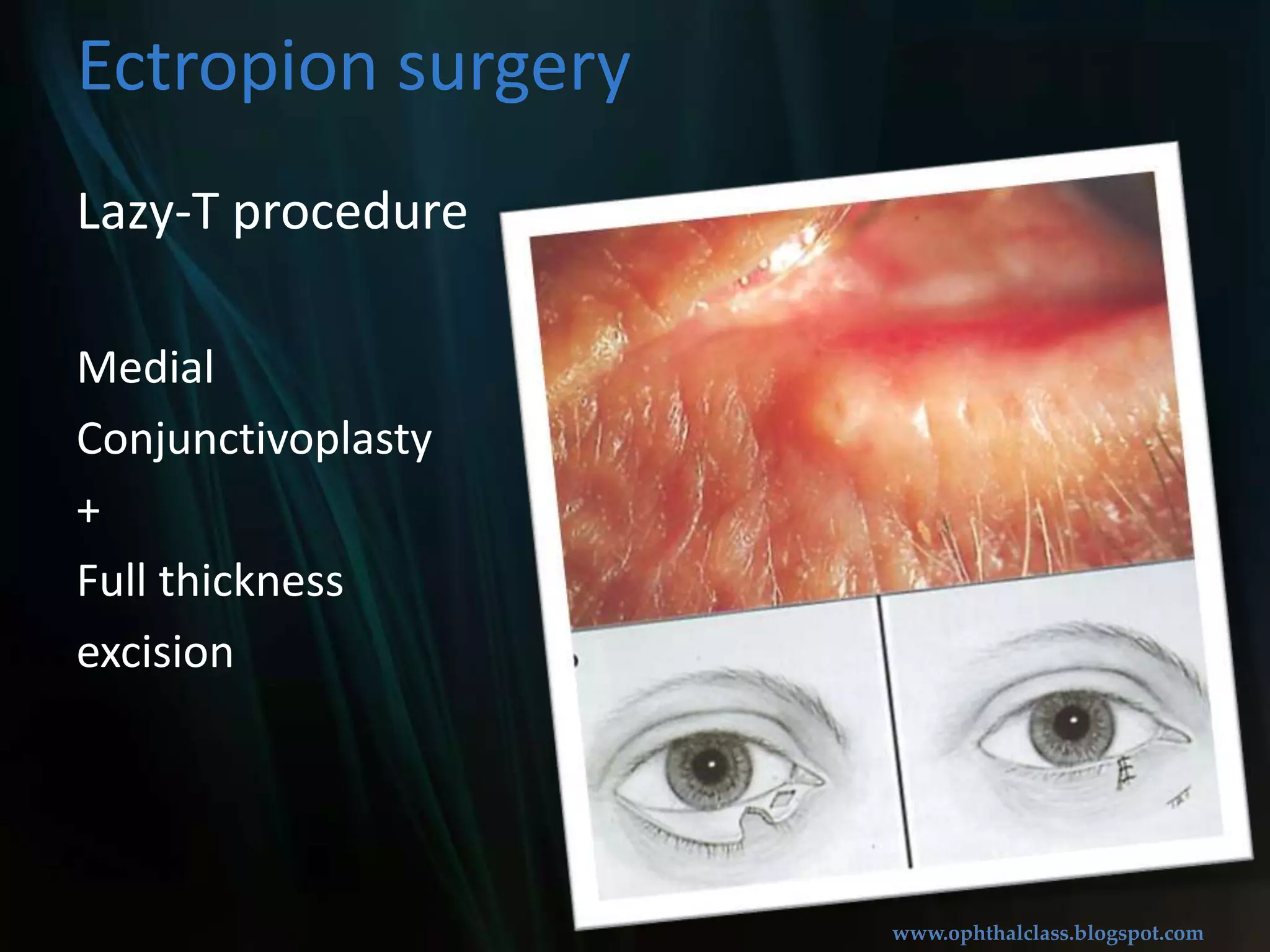
Lazy-T procedureMedialConjunctivoplasty+Full thickness excisionEctropion surgery
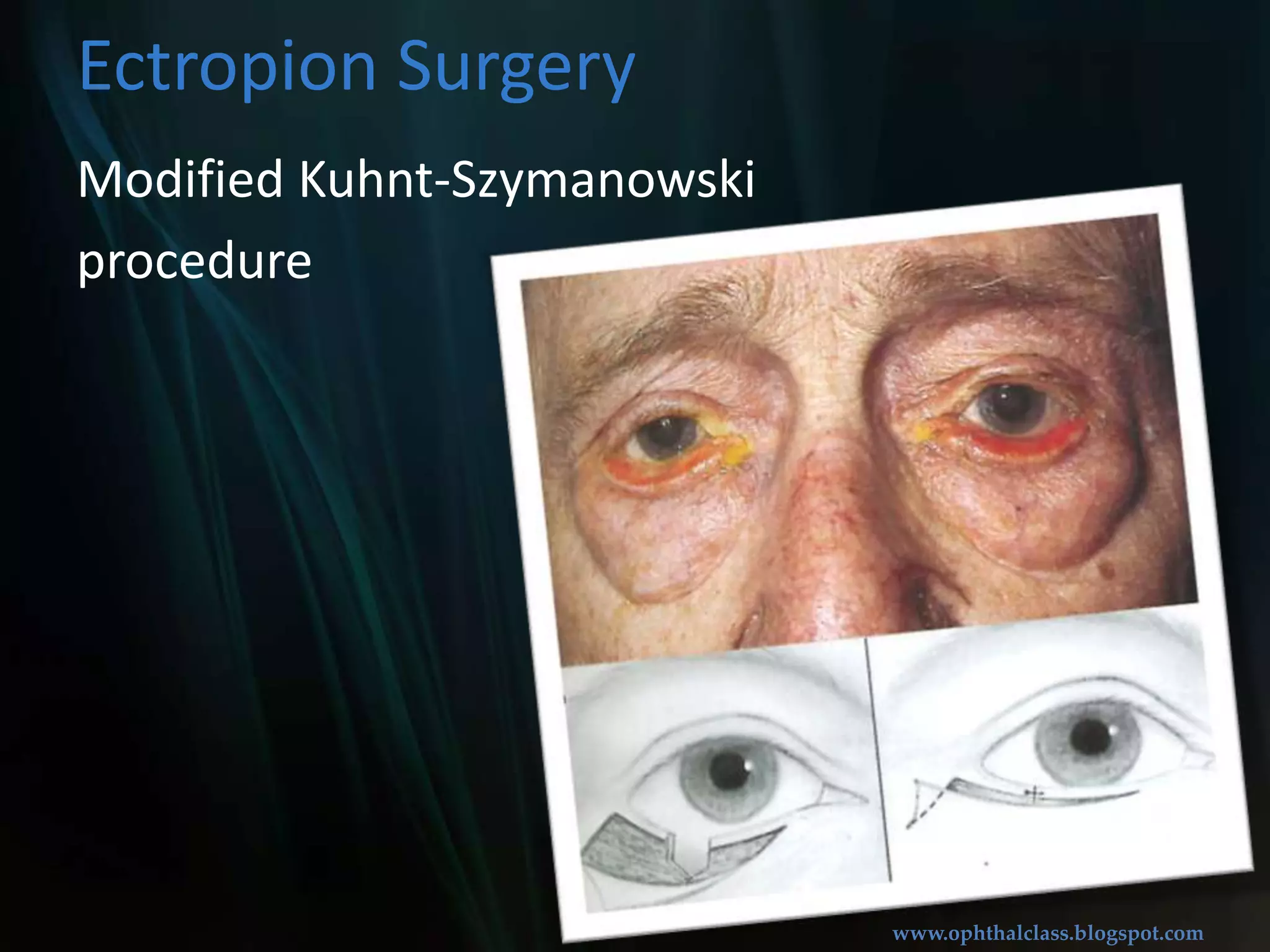
Modified Kuhnt-SzymanowskiprocedureEctropion Surgery
Inversion of eyelid marginTypesCongenitalAcute spasticInvolutionalCicatricialLower lid involutionalentropion is more common Entropion
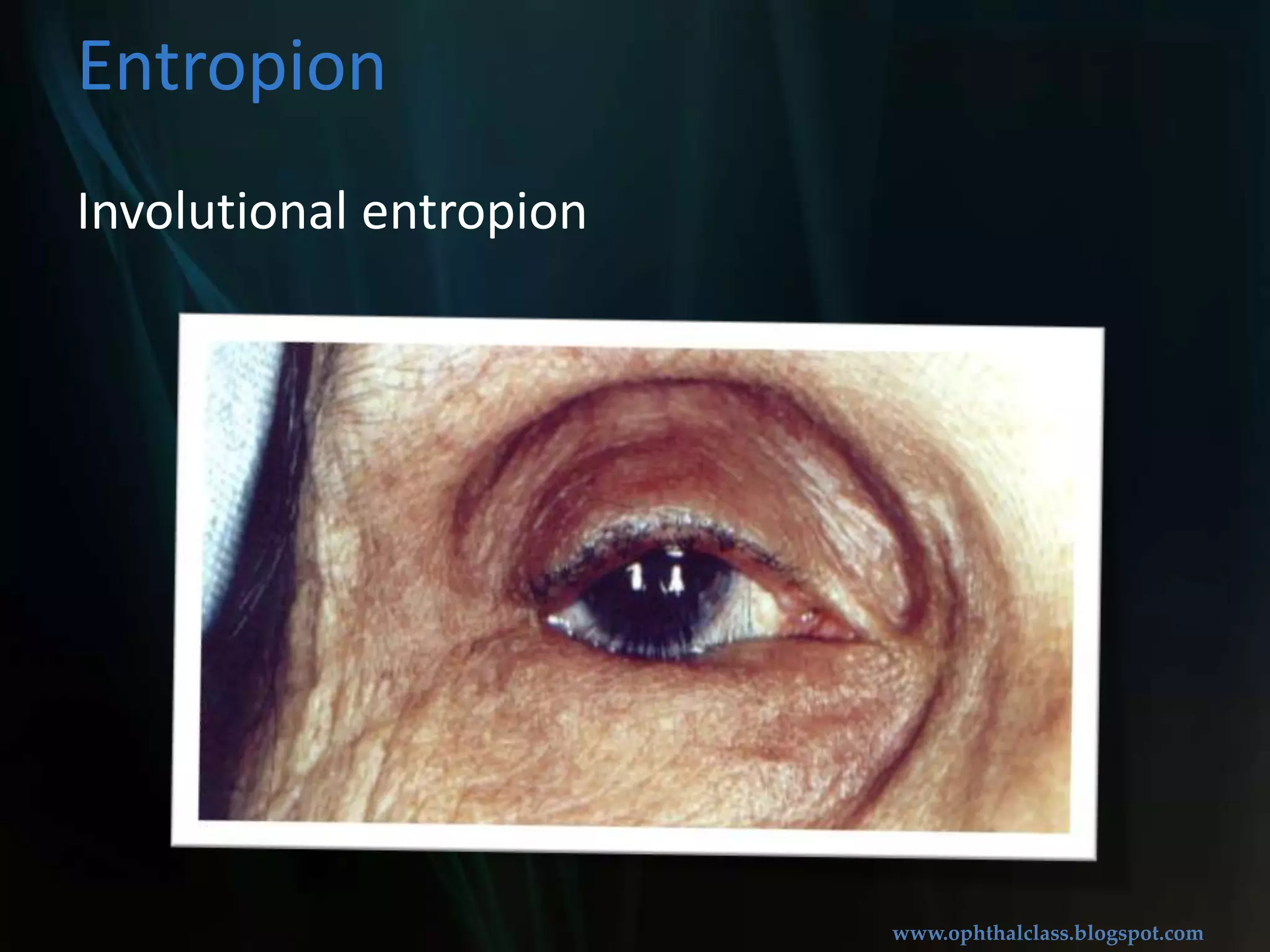
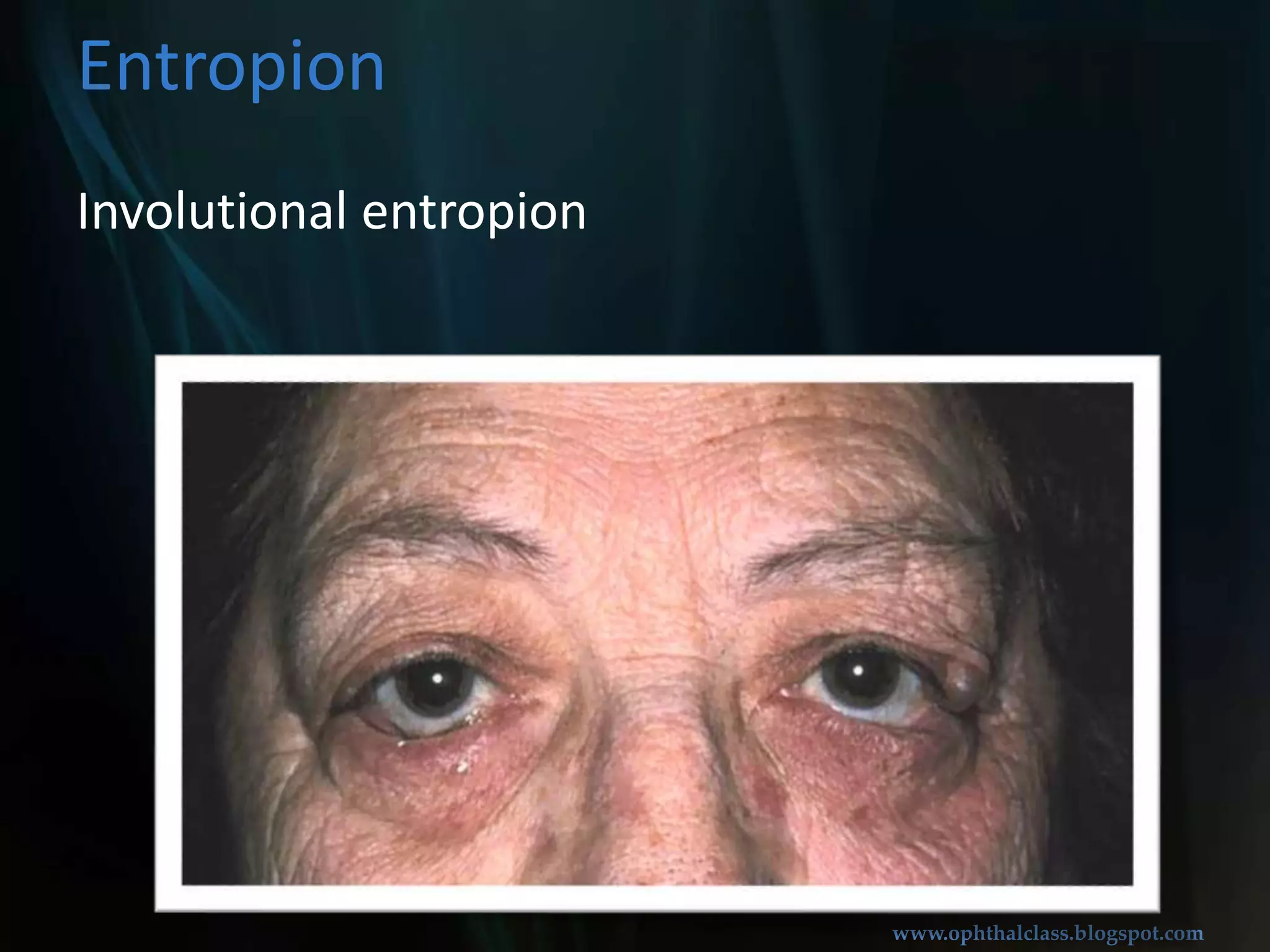
InvolutionalentropionEntropion
LacrimationRecurrent corneal erosionsCorneal vascularizationCorneal opacitiesEntropion – Clinical features
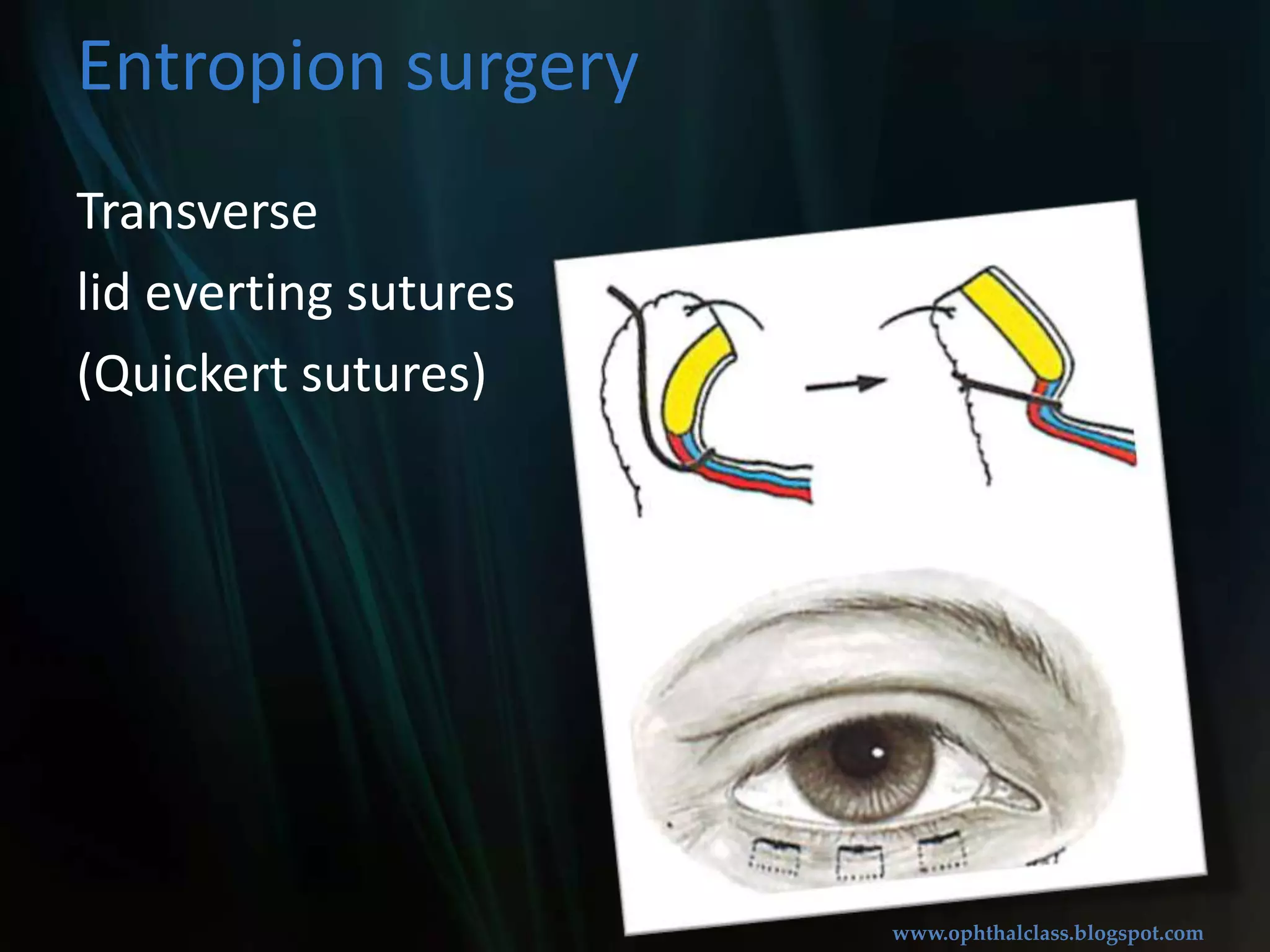
Transverse lid everting sutures(Quickert sutures)Entropion surgery

Lids and Adnexa Class 2 Part B - Lid malpositions