Pragadeesh.g
Definition
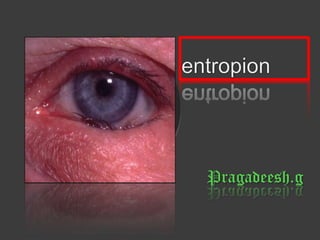
o Rolling inwards of lid
margin is called entropion.
o Produced by disparity in
length and tone between
anterior skin muscle,and
posterior tarsoconjunctival
laminae of eyelid.
Classification
 INVOLUTIONAL
 CICATRICIAL
 SPASTIC
 CONGENITAL
Clinical picture
SYMPTOMS
 Foreign body sensation
 Photophobia
 Irritation
 Pain
 Lacrimation
Clinical picture
SIGNS
 Lid margin is inturned
 Depending on degree of in turning,dividing into
three grades.
 Grade 1 only posterior lid border is
inrolled.
 Grade 2 inturning of intermarginal strip.
 Grade 3 whole lid margin including
anterior border inturned
Clinical picture
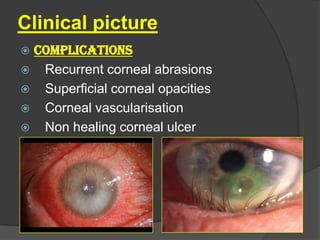
 COMPLICATIONS
 Recurrent corneal abrasions
 Superficial corneal opacities
 Corneal vascularisation
 Non healing corneal ulcer
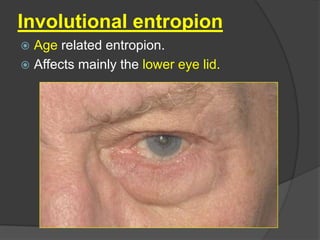
Involutional entropion
 Age related entropion.
 Affects mainly the lower eye lid.
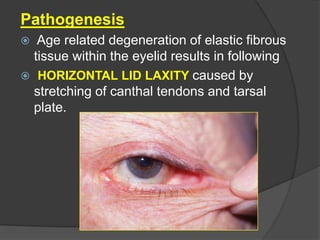
Pathogenesis
 Age related degeneration of elastic fibrous
tissue within the eyelid results in following
 HORIZONTAL LID LAXITY caused by
stretching of canthal tendons and tarsal
plate.
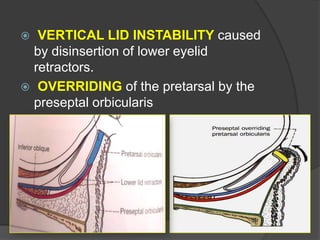
 VERTICAL LID INSTABILITY caused
by disinsertion of lower eyelid
retractors.
 OVERRIDING of the pretarsal by the
preseptal orbicularis
Treatment
MEDICAL
 Lubricants
 Taping
 Soft bandage contact
lenses
 Adhesive tape-pulling
the skin outward with
strip of adhesive tape
 injection of botulinum
toxin
SURGERY
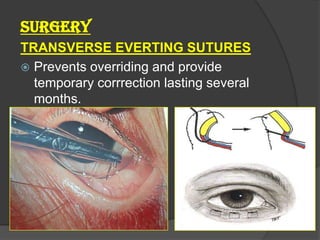
TRANSVERSE EVERTING SUTURES
 Prevents overriding and provide
temporary corrrection lasting several
months.
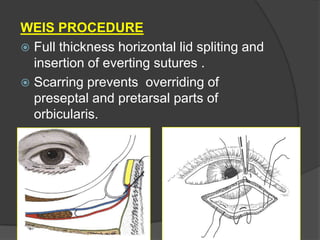
WEIS PROCEDURE
 Full thickness horizontal lid spliting and
insertion of everting sutures .
 Scarring prevents overriding of
preseptal and pretarsal parts of
orbicularis.
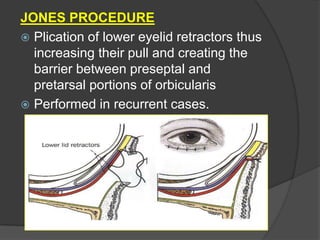
JONES PROCEDURE
 Plication of lower eyelid retractors thus
increasing their pull and creating the
barrier between preseptal and
pretarsal portions of orbicularis
 Performed in recurrent cases.
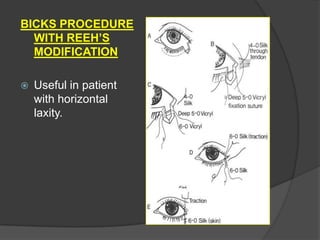
BICKS PROCEDURE
WITH REEH’S
MODIFICATION
 Useful in patient
with horizontal
laxity.
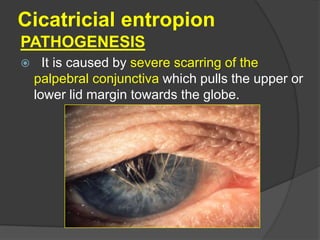
Cicatricial entropion
PATHOGENESIS
 It is caused by severe scarring of the
palpebral conjunctiva which pulls the upper or
lower lid margin towards the globe.
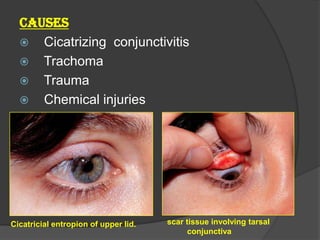
CAUSES
 Cicatrizing conjunctivitis
 Trachoma
 Trauma
 Chemical injuries
Cicatricial entropion of upper lid. scar tissue involving tarsal
conjunctiva
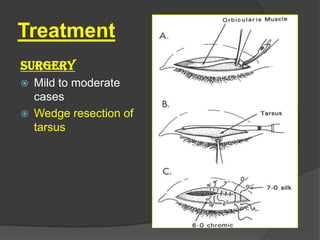
Treatment
SURGERY
 Mild to moderate
cases
 Wedge resection of
tarsus
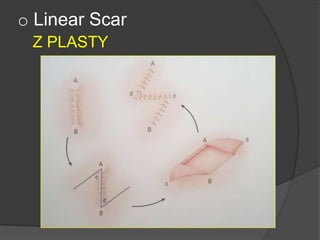
o Linear Scar
Z PLASTY
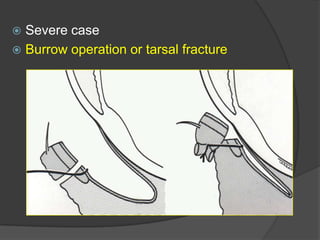
 Severe case
 Burrow operation or tarsal fracture
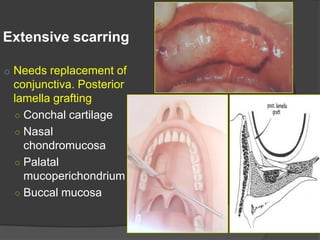
Extensive scarring
o Needs replacement of
conjunctiva. Posterior
lamella grafting
○ Conchal cartilage
○ Nasal
chondromucosa
○ Palatal
mucoperichondrium
○ Buccal mucosa
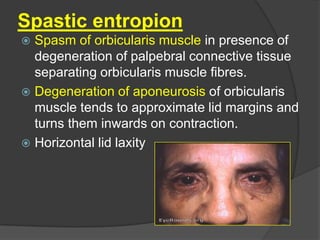
Spastic entropion
 Spasm of orbicularis muscle in presence of
degeneration of palpebral connective tissue
separating orbicularis muscle fibres.
 Degeneration of aponeurosis of orbicularis
muscle tends to approximate lid margins and
turns them inwards on contraction.
 Horizontal lid laxity
CAUSES
 Ocular irritations causing inflammation
and trauma
Chronic conjunctivitis
Keratitis
 Tight bandage post operatively
 Blepharophimosis
Treatment
MEDICAL
 Lubricants for surface disorders
 Antibiotics for conjunctival or lid
inflammation.
 Removal of bandage.
 Injection of botulinum toxin.
 In elderly ,eversion of lid margin with
adhesive plaster.
SURGERY
 A ridge of fibrous tissue in orbicularis
muscle is made for preventing the sliding
of fibres vertically.
 If the spasm is not relieved then the
following procedures can be done.
•Weis procedure
•Jones procedure
•Bicks procedure
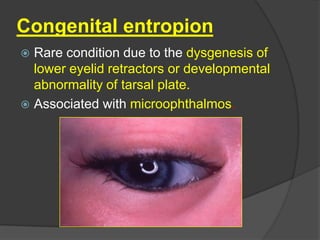
Congenital entropion
 Rare condition due to the dysgenesis of
lower eyelid retractors or developmental
abnormality of tarsal plate.
 Associated with microophthalmos.
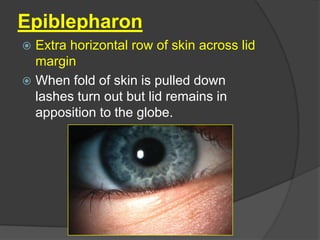
Epiblepharon
 Extra horizontal row of skin across lid
margin
 When fold of skin is pulled down
lashes turn out but lid remains in
apposition to the globe.
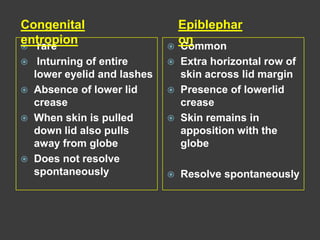
 rare
 Inturning of entire
lower eyelid and lashes
 Absence of lower lid
crease
 When skin is pulled
down lid also pulls
away from globe
 Does not resolve
spontaneously
 Common
 Extra horizontal row of
skin across lid margin
 Presence of lowerlid
crease
 Skin remains in
apposition with the
globe
 Resolve spontaneously
Congenital
entropion
Epiblephar
on
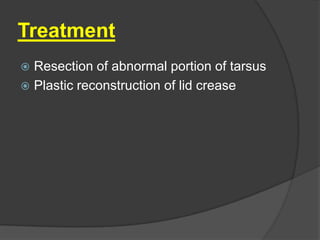
Treatment
 Resection of abnormal portion of tarsus
 Plastic reconstruction of lid crease
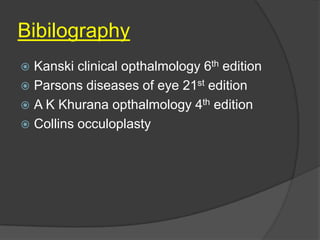
Bibilography
 Kanski clinical opthalmology 6th edition
 Parsons diseases of eye 21st edition
 A K Khurana opthalmology 4th edition
 Collins occuloplasty
THANK YOU

ENTROPION

  • 1.
  • 2.
    Definition o Rolling inwardsof lid margin is called entropion. o Produced by disparity in length and tone between anterior skin muscle,and posterior tarsoconjunctival laminae of eyelid.
  • 3.
  • 4.
    Clinical picture SYMPTOMS  Foreignbody sensation  Photophobia  Irritation  Pain  Lacrimation
  • 5.
    Clinical picture SIGNS  Lidmargin is inturned  Depending on degree of in turning,dividing into three grades.  Grade 1 only posterior lid border is inrolled.  Grade 2 inturning of intermarginal strip.  Grade 3 whole lid margin including anterior border inturned
  • 6.
    Clinical picture  COMPLICATIONS Recurrent corneal abrasions  Superficial corneal opacities  Corneal vascularisation  Non healing corneal ulcer
  • 7.
    Involutional entropion  Agerelated entropion.  Affects mainly the lower eye lid.
  • 8.
    Pathogenesis  Age relateddegeneration of elastic fibrous tissue within the eyelid results in following  HORIZONTAL LID LAXITY caused by stretching of canthal tendons and tarsal plate.
  • 9.
     VERTICAL LIDINSTABILITY caused by disinsertion of lower eyelid retractors.  OVERRIDING of the pretarsal by the preseptal orbicularis
  • 10.
    Treatment MEDICAL  Lubricants  Taping Soft bandage contact lenses  Adhesive tape-pulling the skin outward with strip of adhesive tape  injection of botulinum toxin
  • 11.
    SURGERY TRANSVERSE EVERTING SUTURES Prevents overriding and provide temporary corrrection lasting several months.
  • 12.
    WEIS PROCEDURE  Fullthickness horizontal lid spliting and insertion of everting sutures .  Scarring prevents overriding of preseptal and pretarsal parts of orbicularis.
  • 13.
    JONES PROCEDURE  Plicationof lower eyelid retractors thus increasing their pull and creating the barrier between preseptal and pretarsal portions of orbicularis  Performed in recurrent cases.
  • 14.
    BICKS PROCEDURE WITH REEH’S MODIFICATION Useful in patient with horizontal laxity.
  • 15.
    Cicatricial entropion PATHOGENESIS  Itis caused by severe scarring of the palpebral conjunctiva which pulls the upper or lower lid margin towards the globe.
  • 16.
    CAUSES  Cicatrizing conjunctivitis Trachoma  Trauma  Chemical injuries Cicatricial entropion of upper lid. scar tissue involving tarsal conjunctiva
  • 17.
    Treatment SURGERY  Mild tomoderate cases  Wedge resection of tarsus
  • 18.
  • 19.
     Severe case Burrow operation or tarsal fracture
  • 20.
    Extensive scarring o Needsreplacement of conjunctiva. Posterior lamella grafting ○ Conchal cartilage ○ Nasal chondromucosa ○ Palatal mucoperichondrium ○ Buccal mucosa
  • 21.
    Spastic entropion  Spasmof orbicularis muscle in presence of degeneration of palpebral connective tissue separating orbicularis muscle fibres.  Degeneration of aponeurosis of orbicularis muscle tends to approximate lid margins and turns them inwards on contraction.  Horizontal lid laxity
  • 22.
    CAUSES  Ocular irritationscausing inflammation and trauma Chronic conjunctivitis Keratitis  Tight bandage post operatively  Blepharophimosis
  • 23.
    Treatment MEDICAL  Lubricants forsurface disorders  Antibiotics for conjunctival or lid inflammation.  Removal of bandage.  Injection of botulinum toxin.  In elderly ,eversion of lid margin with adhesive plaster.
  • 24.
    SURGERY  A ridgeof fibrous tissue in orbicularis muscle is made for preventing the sliding of fibres vertically.  If the spasm is not relieved then the following procedures can be done. •Weis procedure •Jones procedure •Bicks procedure
  • 25.
    Congenital entropion  Rarecondition due to the dysgenesis of lower eyelid retractors or developmental abnormality of tarsal plate.  Associated with microophthalmos.
  • 26.
    Epiblepharon  Extra horizontalrow of skin across lid margin  When fold of skin is pulled down lashes turn out but lid remains in apposition to the globe.
  • 27.
     rare  Inturningof entire lower eyelid and lashes  Absence of lower lid crease  When skin is pulled down lid also pulls away from globe  Does not resolve spontaneously  Common  Extra horizontal row of skin across lid margin  Presence of lowerlid crease  Skin remains in apposition with the globe  Resolve spontaneously Congenital entropion Epiblephar on
  • 28.
    Treatment  Resection ofabnormal portion of tarsus  Plastic reconstruction of lid crease
  • 30.
    Bibilography  Kanski clinicalopthalmology 6th edition  Parsons diseases of eye 21st edition  A K Khurana opthalmology 4th edition  Collins occuloplasty
  • 31.