Peziza
By
Hem Chander
Assistant Professor (Botany)
Career Point University Hamirpur (HP) 176041
hemchander78@gmail.com
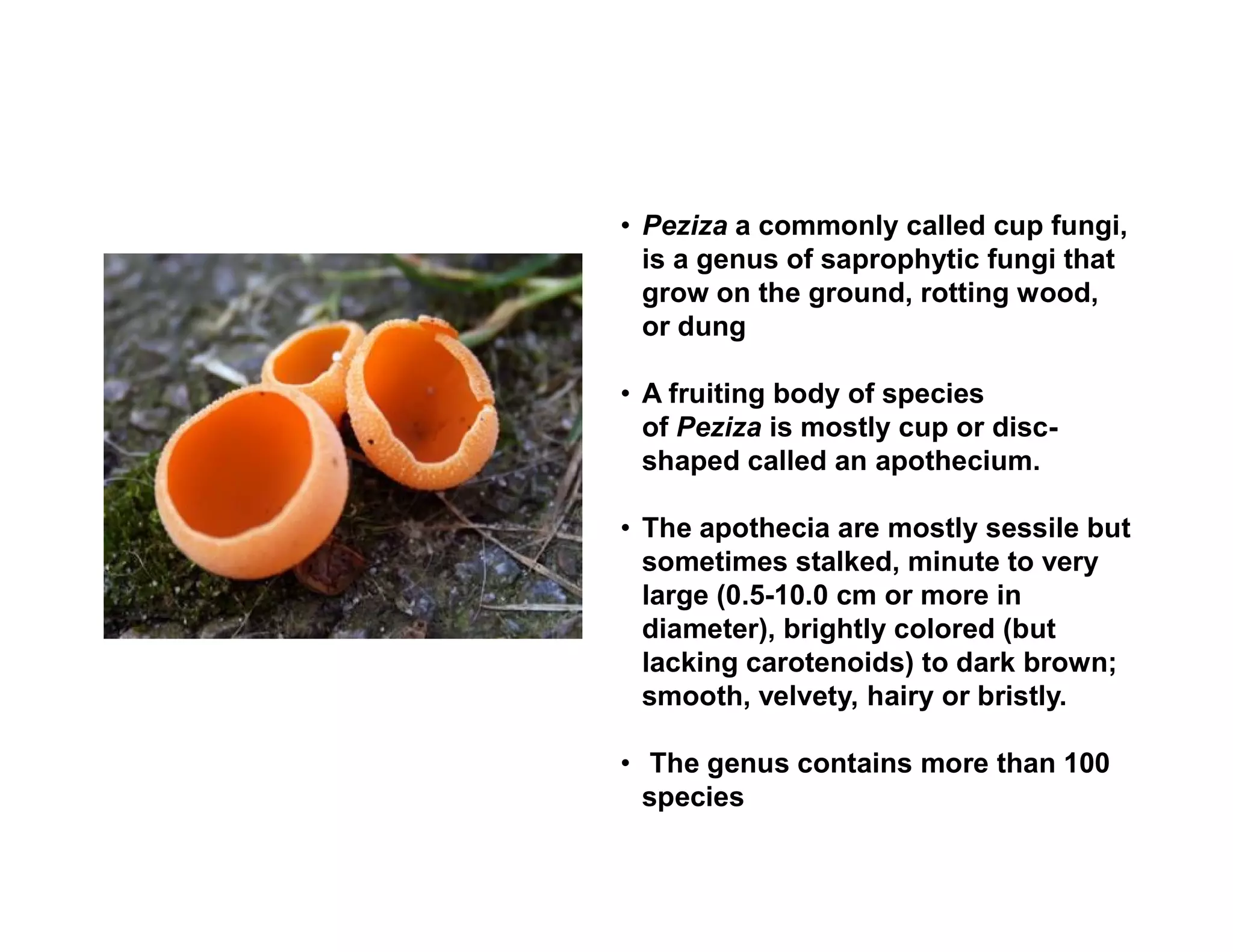
• Peziza a commonly called cup fungi,
is a genus of saprophytic fungi that
grow on the ground, rotting wood,
or dung
• A fruiting body of species
of Peziza is mostly cup or disc-
shaped called an apothecium.
• The apothecia are mostly sessile but
sometimes stalked, minute to very
large (0.5-10.0 cm or more in
diameter), brightly colored (but
lacking carotenoids) to dark brown;
smooth, velvety, hairy or bristly.
• The genus contains more than 100
species
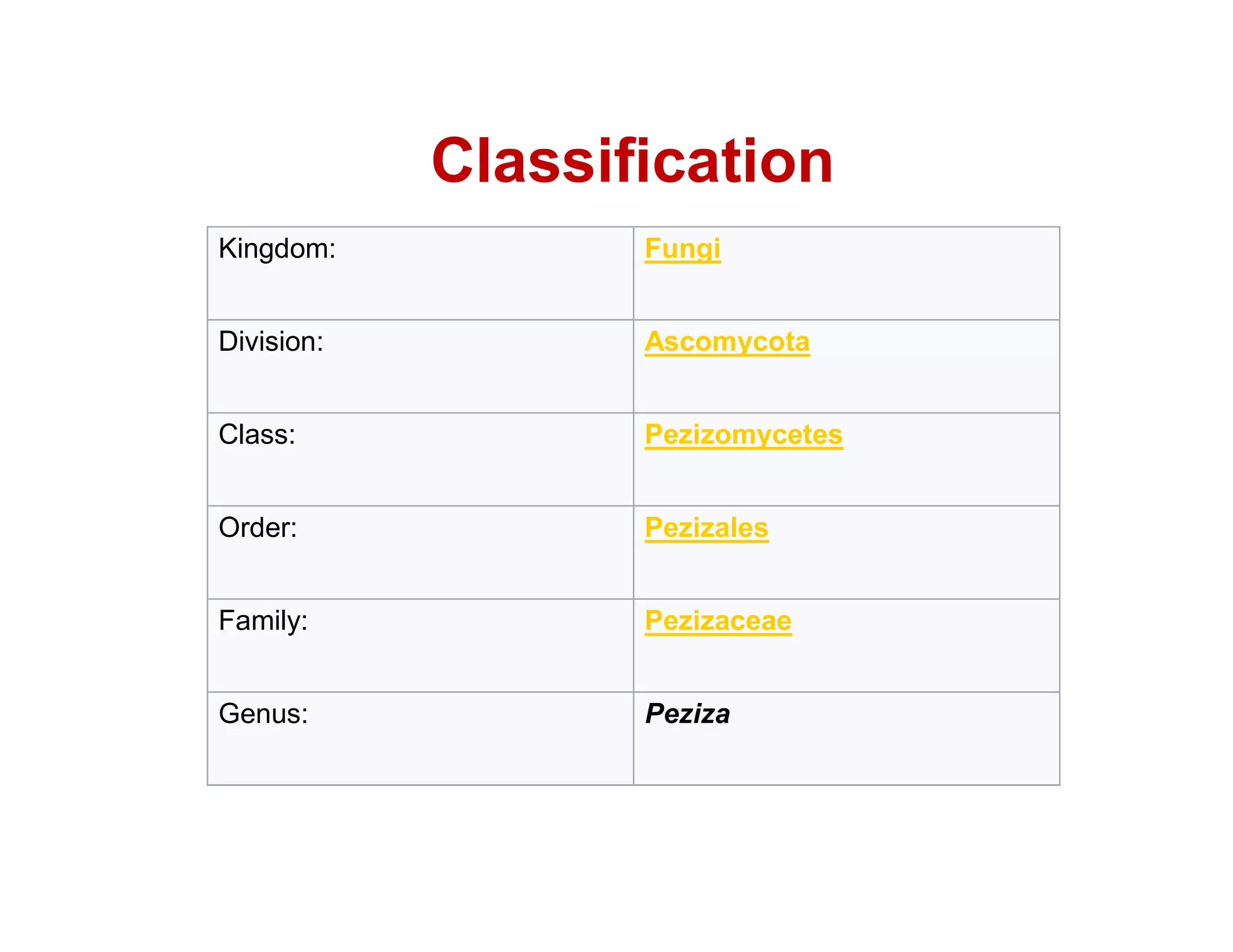
Kingdom: Fungi
Division: Ascomycota
Class: Pezizomycetes
Classification
Order: Pezizales
Family: Pezizaceae
Genus: Peziza
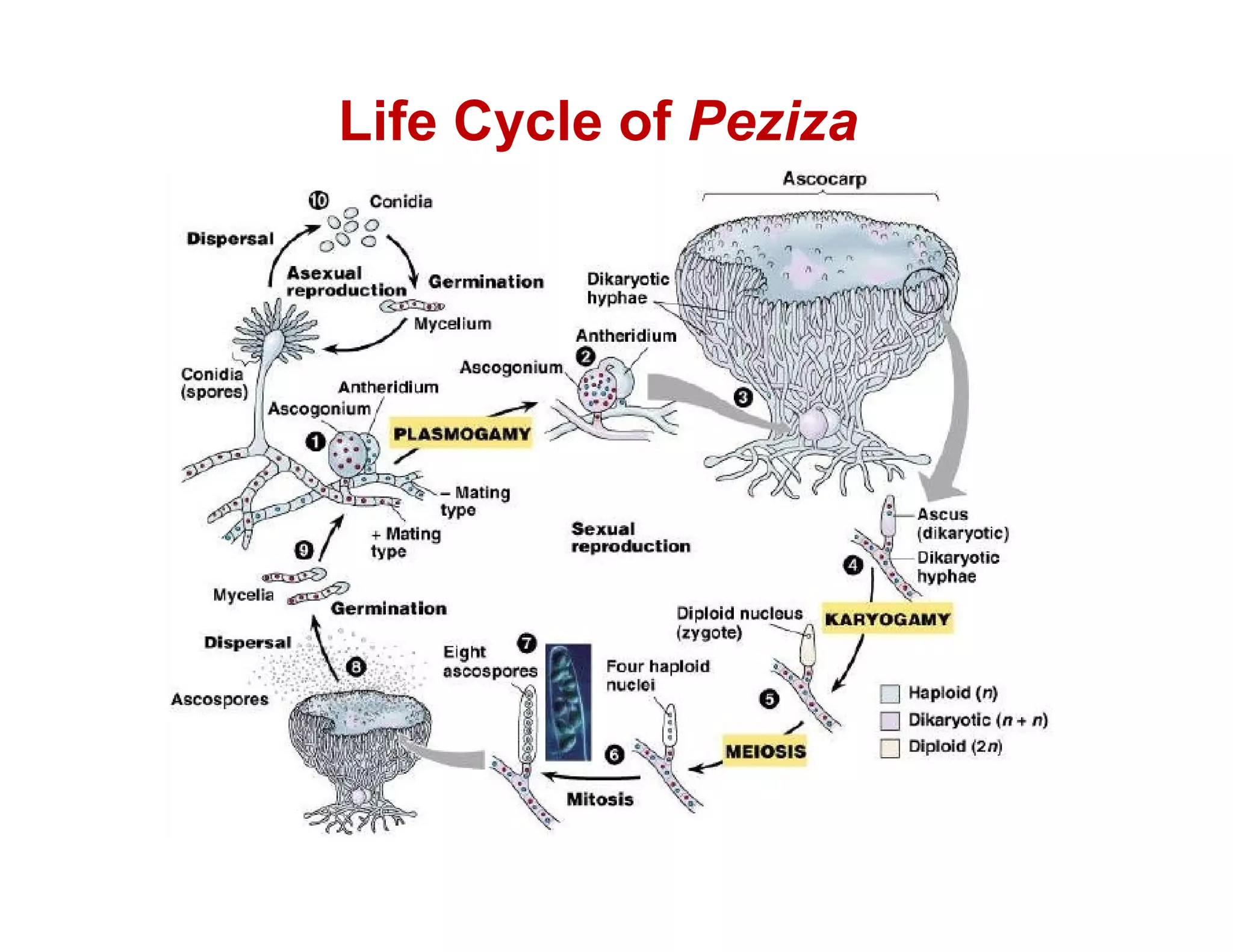
• Asexual reproduction takes place by conidia and
chlamydospores.
• The conidia are formed exogenously at the tip of
conidiophores.
Asexual Reproduction
• Conidia germinate to form the new mycelium.
• Some intercalary, thick-walled cells are formed in
the mycelium. These are chlamydospores. On
germination, they form new mycelium.
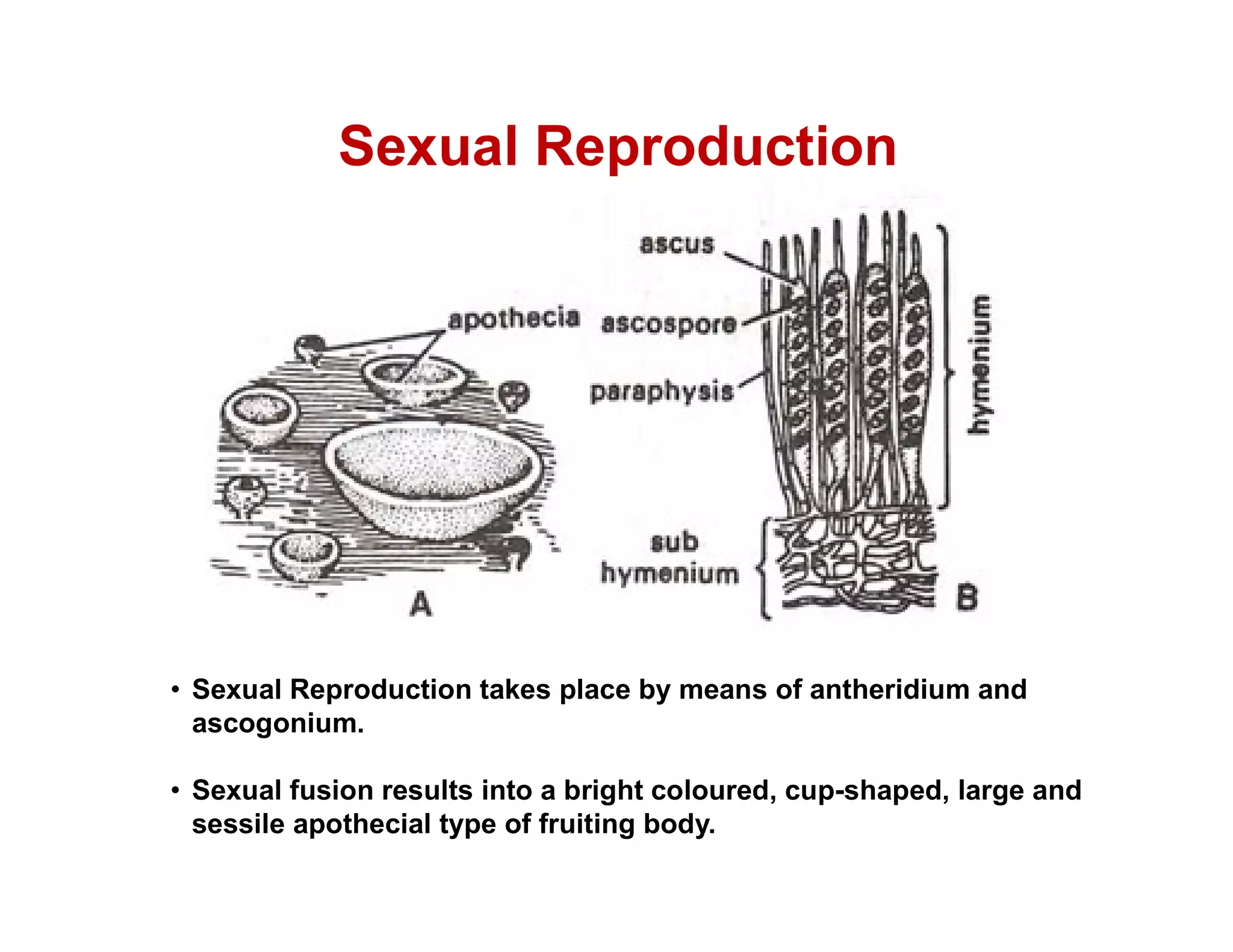
Sexual Reproduction
• Sexual Reproduction takes place by means of antheridium and
ascogonium.
• Sexual fusion results into a bright coloured, cup-shaped, large and
sessile apothecial type of fruiting body.
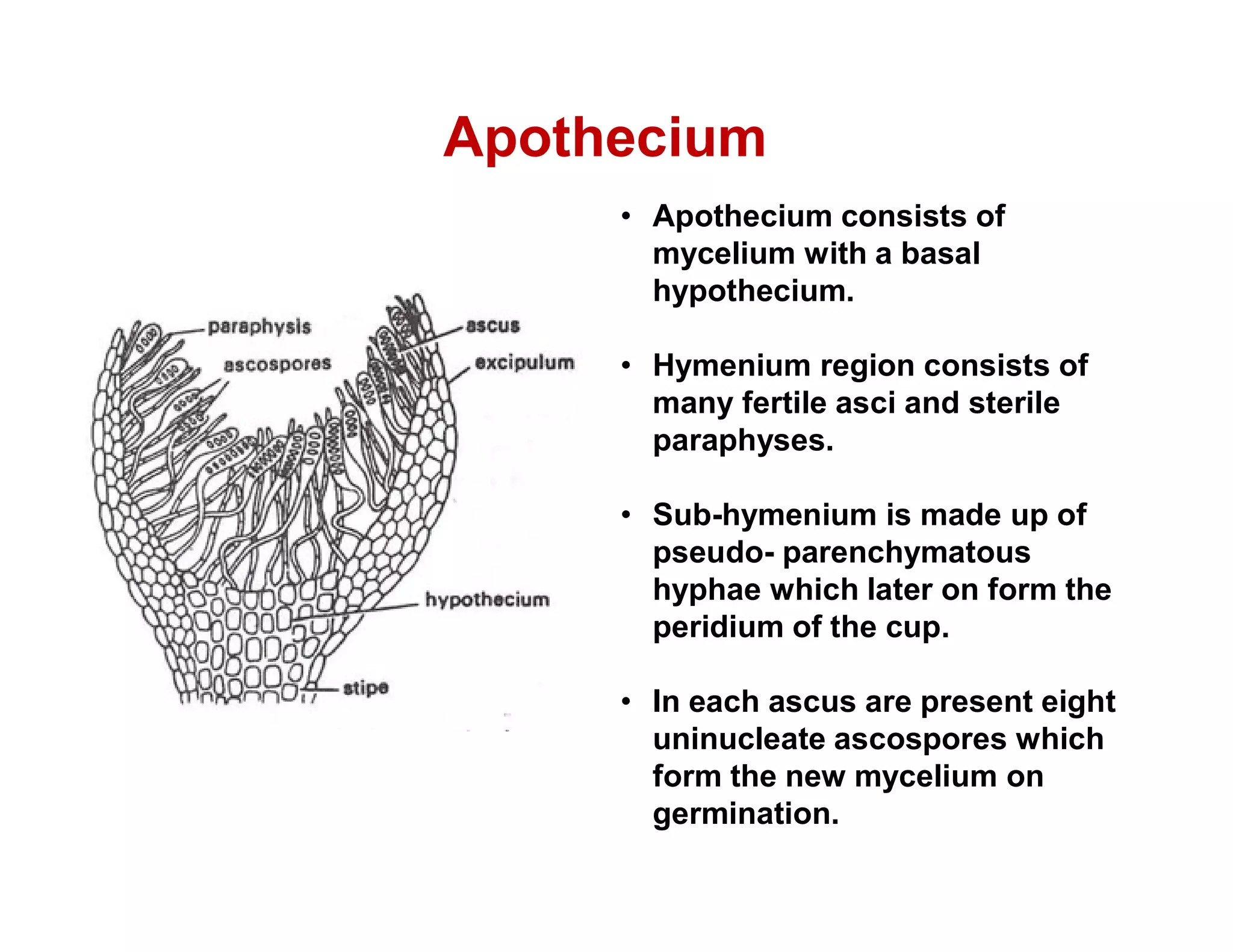
• Apothecium consists of
mycelium with a basal
hypothecium.
• Hymenium region consists of
many fertile asci and sterile
paraphyses.
Apothecium
• Sub-hymenium is made up of
pseudo- parenchymatous
hyphae which later on form the
peridium of the cup.
• In each ascus are present eight
uninucleate ascospores which
form the new mycelium on
germination.
Life Cycle of Peziza
14. Peziza.pdf

14. Peziza.pdf

  • 1.
    Peziza By Hem Chander Assistant Professor(Botany) Career Point University Hamirpur (HP) 176041 hemchander78@gmail.com
  • 2.
    • Peziza acommonly called cup fungi, is a genus of saprophytic fungi that grow on the ground, rotting wood, or dung • A fruiting body of species of Peziza is mostly cup or disc- shaped called an apothecium. shaped called an apothecium. • The apothecia are mostly sessile but sometimes stalked, minute to very large (0.5-10.0 cm or more in diameter), brightly colored (but lacking carotenoids) to dark brown; smooth, velvety, hairy or bristly. • The genus contains more than 100 species
  • 3.
    Kingdom: Fungi Division: Ascomycota Class:Pezizomycetes Classification Order: Pezizales Family: Pezizaceae Genus: Peziza
  • 4.
    • Asexual reproductiontakes place by conidia and chlamydospores. • The conidia are formed exogenously at the tip of conidiophores. Asexual Reproduction • Conidia germinate to form the new mycelium. • Some intercalary, thick-walled cells are formed in the mycelium. These are chlamydospores. On germination, they form new mycelium.
  • 5.
    Sexual Reproduction • SexualReproduction takes place by means of antheridium and ascogonium. • Sexual fusion results into a bright coloured, cup-shaped, large and sessile apothecial type of fruiting body.
  • 6.
    • Apothecium consistsof mycelium with a basal hypothecium. • Hymenium region consists of many fertile asci and sterile paraphyses. Apothecium • Sub-hymenium is made up of pseudo- parenchymatous hyphae which later on form the peridium of the cup. • In each ascus are present eight uninucleate ascospores which form the new mycelium on germination.
  • 7.