LICHENS
Presented by ADS (I) To Prof: Saba Arshad.
Lichens
• Lichens are association consisting of
phycobiontiant and mycobiant.
• There are 18000 to 20000 species of lichens
are known.
Occurrence
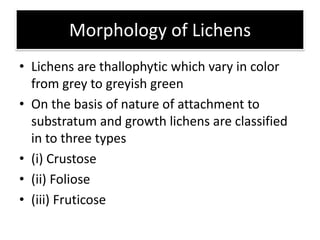
• On the basis of habitat lichens are of three types
• (I) Saxicolous:Those lichen found in bare rocks
and deserts.
• Terricolous: Those lichens that grow on soil.
• Corticolous: These are lichens that grow on
woods and barks of trees.
Components
• A lichen is consist of a two members one is
algae and other is fungi.
• Algal component is called a photobionts.
• Fungal component is called a mycobionts.
Photobionts
• About 24 species of algae are involved in
lichen formation
• These members belongs to chlorophyceae and
cyanophyceae e.g
• chlorophyceae= cocomyxa, cladophora
• Cyanophyceae= nostoc seytonema
Mycobionts
• In lichens three groups of fungi are found
• Ascomycetes,Basidomycetes and
Deutromycetes e.g.
• correla, Cora, peltizera
Morphology of Lichens
• Lichens are thallophytic which vary in color
from grey to greyish green
• On the basis of nature of attachment to
substratum and growth lichens are classified
in to three types
• (i) Crustose
• (ii) Foliose
• (iii) Fruticose
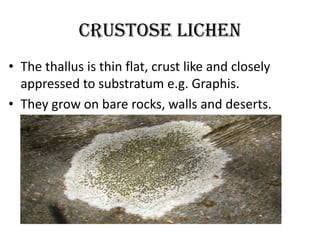
Crustose Lichen
• The thallus is thin flat, crust like and closely
appressed to substratum e.g. Graphis.
• They grow on bare rocks, walls and deserts.
Foliose Lichen
• The thallus is flat, leaf like lobed and branched
• They attach to substratum with help of
rhizines e.g in physcia
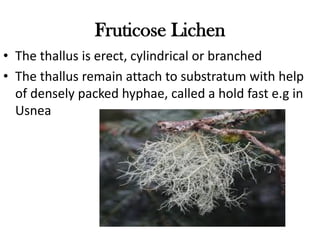
Fruticose Lichen
• The thallus is erect, cylindrical or branched
• The thallus remain attach to substratum with help
of densely packed hyphae, called a hold fast e.g in
Usnea
Internal structure of Thallus
• On the basis of distribution of algal cells lichens
are of two types
• Homiomerous
• Heteromerous
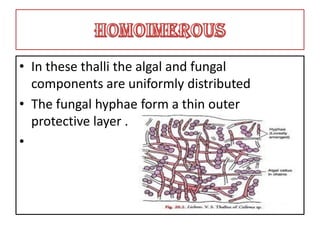
• In these thalli the algal and fungal
components are uniformly distributed
• The fungal hyphae form a thin outer
protective layer .
•
Hetromerous
• In these thalli the algal cells form a distinct
layer usually toward the upper side
• The main bulk of thallus is formed by fungal
hyphae
• The following tissues can observed in these
• The upper Cortex
• The Algal layer
• Medulla
• The lower Cortex
The upper Cortex
• It is a dense layer formed of fungal hyphae
• It act as a protective and water retaining layer
• The fungal hyphae woven to form a parenchyma
like a tissue called a pseudo parenchyma tissue.
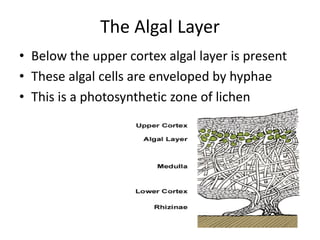
The Algal Layer
• Below the upper cortex algal layer is present
• These algal cells are enveloped by hyphae
• This is a photosynthetic zone of lichen
Medulla
• It is the central portion consisting of fungal
hyphae
• The hyphae are interwoven to form a
prosenchyma.
• These are conducting cells
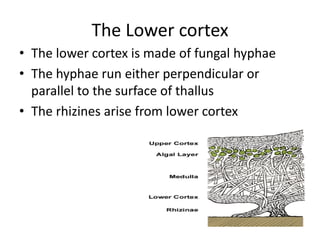
The Lower cortex
• The lower cortex is made of fungal hyphae
• The hyphae run either perpendicular or
parallel to the surface of thallus
• The rhizines arise from lower cortex
Reproduction
• Lichens reproduce by three ways
• (1) Vegetative reproduction
• (2) Asexual reproduction
• (3) Sexual reproduction
Vegetative Reproduction
• Lichen reproduce vegetatively by following
methods
• By Fragmentation
• By Isidia
• By Soredia
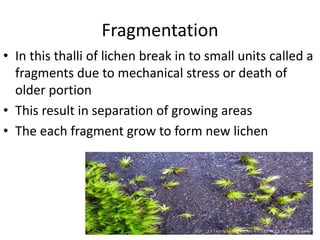
Fragmentation
• In this thalli of lichen break in to small units called a
fragments due to mechanical stress or death of
older portion
• This result in separation of growing areas
• The each fragment grow to form new lichen
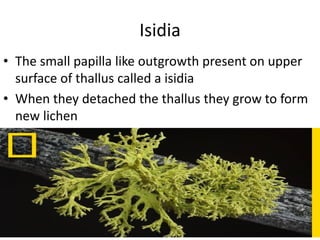
Isidia
• The small papilla like outgrowth present on upper
surface of thallus called a isidia
• When they detached the thallus they grow to form
new lichen
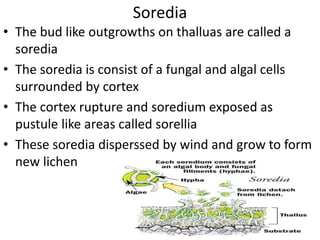
Soredia
• The bud like outgrowths on thalluas are called a
soredia
• The soredia is consist of a fungal and algal cells
surrounded by cortex
• The cortex rupture and soredium exposed as
pustule like areas called sorellia
• These soredia disperssed by wind and grow to form
new lichen
Asexual Reproduction
• The component organisms reproduce
undependably by formation of asexual spores
• These include Conidia, Oidia formation etc.
Sexual Reproduction
• As lichen thalli have a dual nature, therefor
reproduction of both partners discussed here
• Reproduction of Mycobionts
• Reproduction of Ascolichens
Reproduction of Mycobionts
• Fungal partner of lichen form a there
characteristic spores
• These spores release from lichen thallus and
grow to form new mycelium
Reproduction of Ascolichens
• The ascolichen reproduce by ascospore produced
in asci which are arranged in ascocarp
Importance of Lichen
• Lichens are pioneers of succession they establish a
terrestrial ecosystem
• These are pollution indicators
• They cause a forest fire due to dry nature
• Many lichens are rich in carbohydrates and they
use as a food
• Many commercial products like perfumes,litmus
alcohol,beers and soaps are manufacture by
lichens
• These are used to prepapare medicines
Lichens

Lichens

  • 2.
    LICHENS Presented by ADS(I) To Prof: Saba Arshad.
  • 3.
    Lichens • Lichens areassociation consisting of phycobiontiant and mycobiant. • There are 18000 to 20000 species of lichens are known.
  • 4.
    Occurrence • On thebasis of habitat lichens are of three types • (I) Saxicolous:Those lichen found in bare rocks and deserts. • Terricolous: Those lichens that grow on soil. • Corticolous: These are lichens that grow on woods and barks of trees.
  • 5.
    Components • A lichenis consist of a two members one is algae and other is fungi. • Algal component is called a photobionts. • Fungal component is called a mycobionts.
  • 6.
    Photobionts • About 24species of algae are involved in lichen formation • These members belongs to chlorophyceae and cyanophyceae e.g • chlorophyceae= cocomyxa, cladophora • Cyanophyceae= nostoc seytonema
  • 7.
    Mycobionts • In lichensthree groups of fungi are found • Ascomycetes,Basidomycetes and Deutromycetes e.g. • correla, Cora, peltizera
  • 8.
    Morphology of Lichens •Lichens are thallophytic which vary in color from grey to greyish green • On the basis of nature of attachment to substratum and growth lichens are classified in to three types • (i) Crustose • (ii) Foliose • (iii) Fruticose
  • 9.
    Crustose Lichen • Thethallus is thin flat, crust like and closely appressed to substratum e.g. Graphis. • They grow on bare rocks, walls and deserts.
  • 10.
    Foliose Lichen • Thethallus is flat, leaf like lobed and branched • They attach to substratum with help of rhizines e.g in physcia
  • 11.
    Fruticose Lichen • Thethallus is erect, cylindrical or branched • The thallus remain attach to substratum with help of densely packed hyphae, called a hold fast e.g in Usnea
  • 12.
    Internal structure ofThallus • On the basis of distribution of algal cells lichens are of two types • Homiomerous • Heteromerous
  • 13.
    • In thesethalli the algal and fungal components are uniformly distributed • The fungal hyphae form a thin outer protective layer . •
  • 14.
    Hetromerous • In thesethalli the algal cells form a distinct layer usually toward the upper side • The main bulk of thallus is formed by fungal hyphae • The following tissues can observed in these • The upper Cortex • The Algal layer • Medulla • The lower Cortex
  • 15.
    The upper Cortex •It is a dense layer formed of fungal hyphae • It act as a protective and water retaining layer • The fungal hyphae woven to form a parenchyma like a tissue called a pseudo parenchyma tissue.
  • 16.
    The Algal Layer •Below the upper cortex algal layer is present • These algal cells are enveloped by hyphae • This is a photosynthetic zone of lichen
  • 17.
    Medulla • It isthe central portion consisting of fungal hyphae • The hyphae are interwoven to form a prosenchyma. • These are conducting cells
  • 18.
    The Lower cortex •The lower cortex is made of fungal hyphae • The hyphae run either perpendicular or parallel to the surface of thallus • The rhizines arise from lower cortex
  • 19.
    Reproduction • Lichens reproduceby three ways • (1) Vegetative reproduction • (2) Asexual reproduction • (3) Sexual reproduction
  • 20.
    Vegetative Reproduction • Lichenreproduce vegetatively by following methods • By Fragmentation • By Isidia • By Soredia
  • 21.
    Fragmentation • In thisthalli of lichen break in to small units called a fragments due to mechanical stress or death of older portion • This result in separation of growing areas • The each fragment grow to form new lichen
  • 22.
    Isidia • The smallpapilla like outgrowth present on upper surface of thallus called a isidia • When they detached the thallus they grow to form new lichen
  • 23.
    Soredia • The budlike outgrowths on thalluas are called a soredia • The soredia is consist of a fungal and algal cells surrounded by cortex • The cortex rupture and soredium exposed as pustule like areas called sorellia • These soredia disperssed by wind and grow to form new lichen
  • 24.
    Asexual Reproduction • Thecomponent organisms reproduce undependably by formation of asexual spores • These include Conidia, Oidia formation etc.
  • 25.
    Sexual Reproduction • Aslichen thalli have a dual nature, therefor reproduction of both partners discussed here • Reproduction of Mycobionts • Reproduction of Ascolichens
  • 26.
    Reproduction of Mycobionts •Fungal partner of lichen form a there characteristic spores • These spores release from lichen thallus and grow to form new mycelium
  • 27.
    Reproduction of Ascolichens •The ascolichen reproduce by ascospore produced in asci which are arranged in ascocarp
  • 28.
    Importance of Lichen •Lichens are pioneers of succession they establish a terrestrial ecosystem • These are pollution indicators • They cause a forest fire due to dry nature • Many lichens are rich in carbohydrates and they use as a food • Many commercial products like perfumes,litmus alcohol,beers and soaps are manufacture by lichens • These are used to prepapare medicines