Management
Information System
(MIS)
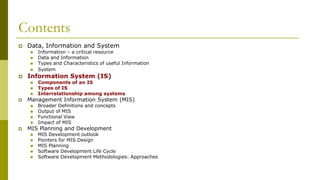
Contents
 Data, Information and System
 Information – a critical resource
 Data and Information
 Types and Characteristics of useful Information
 System
 Information System (IS)
 Components of an IS
 Types of IS
 Interrelationship among systems
 Management Information System (MIS)
 Broader Definitions and concepts
 Output of MIS
 Functional View
 Impact of MIS
 MIS Planning and Development
 MIS Development outlook
 Pointers for MIS Design
 MIS Planning
 Software Development Life Cycle
 Software Development Methodologies: Approaches
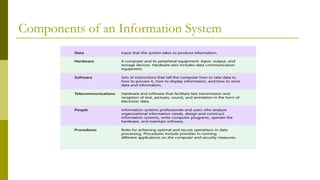
Components of an Information System
Corporate
Headquarters
Finance Production
Marketing
and Sales
Corporate
Databases
Mainframe
Divisional
Databases
Local Area Network:
PCs with Local Databases
Salesforce
Notebooks
Regional
Office
Work-
stations Plant Minicomputers
Telecommunications
Link
Divisional
Minicomputers
with Divisional
Databases
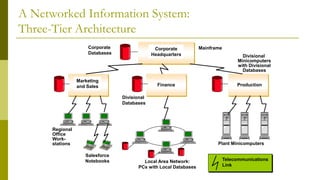
A Networked Information System:
Three-Tier Architecture
Types of Information Systems
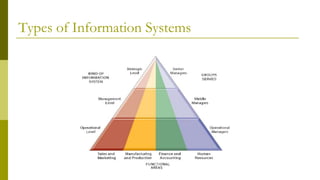
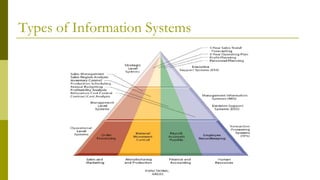
 Operational-level systems support operational managers by keeping track of
the elementary activities and transactions of the organization, such as sales,
receipts, cash deposits, payroll, credit decisions, and the flow of materials in a
factory.
 Management-level systems serve the monitoring, controlling, decision-
making, and administrative activities of middle managers. The principal question
addressed by such systems is this: Are things working well?
 Strategic-level systems help senior management tackle and address strategic
issues and long-term trends, both in the firm and in the external environment.
Types of Information Systems
Transaction Processing System
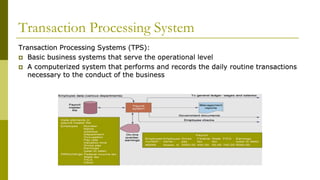
Transaction Processing Systems (TPS):
 Basic business systems that serve the operational level
 A computerized system that performs and records the daily routine transactions
necessary to the conduct of the business
Management Information System
 Serve middle management
 Structured and semi-structured decisions
 Provide reports on firm’s current performance, based on data from TPS
 Past and Present Data
 Internal Orientation
 Provide answers to routine questions with predefined procedure for
answering them
 Typically have little analytic capability
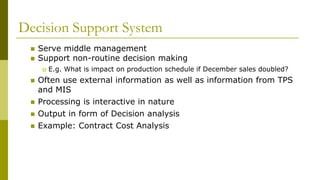
Decision Support System
 Serve middle management
 Support non-routine decision making
 E.g. What is impact on production schedule if December sales doubled?
 Often use external information as well as information from TPS
and MIS
 Processing is interactive in nature
 Output in form of Decision analysis
 Example: Contract Cost Analysis
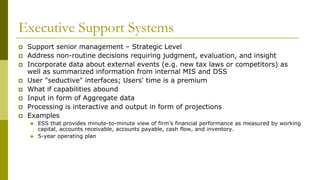
Executive Support Systems
 Support senior management – Strategic Level
 Address non-routine decisions requiring judgment, evaluation, and insight
 Incorporate data about external events (e.g. new tax laws or competitors) as
well as summarized information from internal MIS and DSS
 User "seductive" interfaces; Users' time is a premium
 What if capabilities abound
 Input in form of Aggregate data
 Processing is interactive and output in form of projections
 Examples
 ESS that provides minute-to-minute view of firm’s financial performance as measured by working
capital, accounts receivable, accounts payable, cash flow, and inventory.
 5-year operating plan
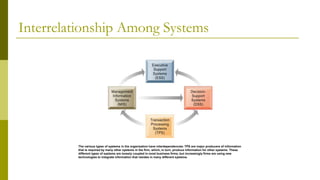
Interrelationship Among Systems
The various types of systems in the organization have interdependencies. TPS are major producers of information
that is required by many other systems in the firm, which, in turn, produce information for other systems. These
different types of systems are loosely coupled in most business firms, but increasingly firms are using new
technologies to integrate information that resides in many different systems.

Management Information System (MIS) Session 2.pptx

  • 1.
  • 2.
    Contents  Data, Informationand System  Information – a critical resource  Data and Information  Types and Characteristics of useful Information  System  Information System (IS)  Components of an IS  Types of IS  Interrelationship among systems  Management Information System (MIS)  Broader Definitions and concepts  Output of MIS  Functional View  Impact of MIS  MIS Planning and Development  MIS Development outlook  Pointers for MIS Design  MIS Planning  Software Development Life Cycle  Software Development Methodologies: Approaches
  • 3.
    Components of anInformation System
  • 4.
    Corporate Headquarters Finance Production Marketing and Sales Corporate Databases Mainframe Divisional Databases LocalArea Network: PCs with Local Databases Salesforce Notebooks Regional Office Work- stations Plant Minicomputers Telecommunications Link Divisional Minicomputers with Divisional Databases A Networked Information System: Three-Tier Architecture
  • 5.
  • 6.
    Types of InformationSystems  Operational-level systems support operational managers by keeping track of the elementary activities and transactions of the organization, such as sales, receipts, cash deposits, payroll, credit decisions, and the flow of materials in a factory.  Management-level systems serve the monitoring, controlling, decision- making, and administrative activities of middle managers. The principal question addressed by such systems is this: Are things working well?  Strategic-level systems help senior management tackle and address strategic issues and long-term trends, both in the firm and in the external environment.
  • 7.
  • 8.
    Transaction Processing System TransactionProcessing Systems (TPS):  Basic business systems that serve the operational level  A computerized system that performs and records the daily routine transactions necessary to the conduct of the business
  • 9.
    Management Information System Serve middle management  Structured and semi-structured decisions  Provide reports on firm’s current performance, based on data from TPS  Past and Present Data  Internal Orientation  Provide answers to routine questions with predefined procedure for answering them  Typically have little analytic capability
  • 10.
    Decision Support System Serve middle management  Support non-routine decision making  E.g. What is impact on production schedule if December sales doubled?  Often use external information as well as information from TPS and MIS  Processing is interactive in nature  Output in form of Decision analysis  Example: Contract Cost Analysis
  • 11.
    Executive Support Systems Support senior management – Strategic Level  Address non-routine decisions requiring judgment, evaluation, and insight  Incorporate data about external events (e.g. new tax laws or competitors) as well as summarized information from internal MIS and DSS  User "seductive" interfaces; Users' time is a premium  What if capabilities abound  Input in form of Aggregate data  Processing is interactive and output in form of projections  Examples  ESS that provides minute-to-minute view of firm’s financial performance as measured by working capital, accounts receivable, accounts payable, cash flow, and inventory.  5-year operating plan
  • 12.
    Interrelationship Among Systems Thevarious types of systems in the organization have interdependencies. TPS are major producers of information that is required by many other systems in the firm, which, in turn, produce information for other systems. These different types of systems are loosely coupled in most business firms, but increasingly firms are using new technologies to integrate information that resides in many different systems.