LET’S MAKE
WAVES/
ANATOMY
OF A WAVE
Activity 1 and 2 :
 Discussion
ACTIVITY 1: LET’S MAKE WAVES

Board work: Draw three sketches
of the rope showing the motion
of the pulse at three subsequent
instances (snapshots at three
different times).
Draw an arrow to represent the
direction of the pulse’s motion.
BASED ON THE ILLUSTRATION SHOWN
ON THE BOARD, ANSWER THE FF:
a. What is a wave pulse?
b. What is the source of the wave
pulse?
c. Describe the motion of your
hand as you create the pulse.
d. Describe the motion of the pulse
with respect to the source.
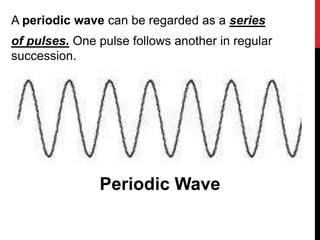
A periodic wave can be regarded as a series
of pulses. One pulse follows another in regular
succession.


               Periodic Wave
BOARDWORK:
Attach a colored ribbon on one part
of the rope. You may use adhesive
tape to fix the ribbon. Make a wave
by continuously vibrating the end of
the rope with quick up-and-down
movements of your hand. (Activity)
Draw the waveform or the shape of
the wave that you have created.
BASED ON YOUR ACTIVITY/ ILLUSTRATION
ON THE BOARD, ANSWER THE FF:
a. Does the wave transport the
colored ribbon from its original
position to the end of the rope?
b. Describe the vibration of the
colored ribbon. How does it move as
waves pass by? Does it move in the
same direction as the wave?
c. Describe transverse waves.
BOARDWORK:

Observe the waves along the
coil spring.
Draw how the coil spring looks
like as you move it back-and-
forth.
Attach a colored ribbon on one part of the
coil spring. You may use an adhesive
tape to fix the ribbon.
Ask a friend to vibrate the coil spring
back-and-forth while you observe the
motion of the colored ribbon.
 Remember that the colored ribbon
serves as a marker of a chosen segment
of the coil spring. (Activity)
BASED ON THE ACTIVTY, ANSWER THE
FF:
a. Does the wave transport the
colored ribbon from its original
position to the end of the coil spring?
b. Describe the vibration of the
colored ribbon. How does it move as
waves pass by?
c. Describe longitudinal waves.
BOARDWORK:
Create a wave pulse by tapping the
surface of the water with your index finger
and observe the direction of travel of the
wave pulse.Tap the surface of the water
at regular intervals to create periodic
waves. (Activity)
View the waves from above and draw the
pattern that you see. In your drawing,
mark the source of the disturbance.
BASED ON THE ACTIVTY, ANSWER
THE FF:
Wait for the water to become still before you
place your paper boat on the surface. Create
periodic waves and observe what happens to
your paper boat. (Activity)
a. Do the waves set the paper boat into
motion? What is required to set an
object into motion?
b. If you exert more energy in creating
periodic waves by tapping the surface
with greater strength, how does this
affect the movement of the paper boat?
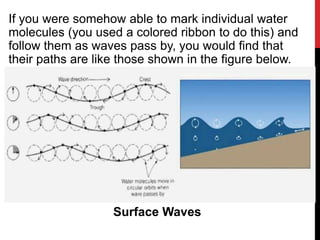
If you were somehow able to mark individual water
molecules (you used a colored ribbon to do this) and
follow them as waves pass by, you would find that
their paths are like those shown in the figure below.


                   Surface Waves
a. As shown in the figure, the
passage of a wave across a surface
of a body of water involves the
motion of particles following
a___________ pattern about their
original positions.
b. Does the wave transport water
molecules from the source of the
vibration? Support your answer using
the shown figure.
SUMMARY FOR ACT. 1
1. Waves can be typified according to the
direction of motion of the vibrating
particles with respect to the direction in
which the waves travel.
a. Waves in a rope are called
____________ waves because the
individual segments of the rope vibrate
____________ to the direction in which
the waves travel.
b. When each portion of a coil spring
is alternatively compressed and
extended, ____________ waves are
produced.
c. Waves on the surface of a body of
water are a combination of
transverse and longitudinal waves.
Each water molecule moves in a
_______________ pattern as the
waves pass by.
2. How do we know
that waves carry
energy?
3. What happens
when waves pass by?
ACTIVITY 2. ANATOMY OF A WAVE
HOW DO YOU DESCRIBE WAVES?

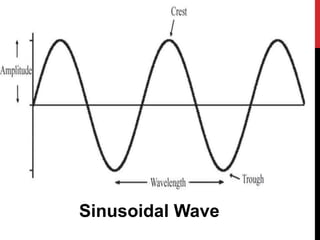
Most periodic waves have sinusoidal
waveforms as shown below. The
highest point and lowest point of a
wave are called the crest and the
trough respectively. The amplitude
is the maximum displacement of a
vibrating particle on either side of its
normal position when the wave
passes.
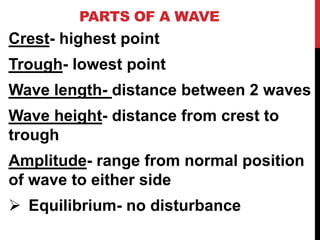
PARTS OF A WAVE
Crest- highest point
Trough- lowest point
Wave length- distance between 2 waves
Wave height- distance from crest to
trough
Amplitude- range from normal position
of wave to either side
 Equilibrium- no disturbance
Sinusoidal Wave
HOW CAN YOU MEASURE THE
WAVELENGTH OF A WAVE?
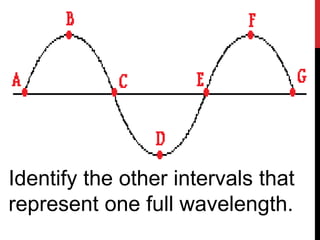
The wavelength of a wave refers
to the distance between any
successive identical parts of the
wave. For instance, the distance
from one crest to the next is equal
to one full wavelength. In the
following illustration, this is given
by the interval B to F.
Identify the other intervals that
represent one full wavelength.
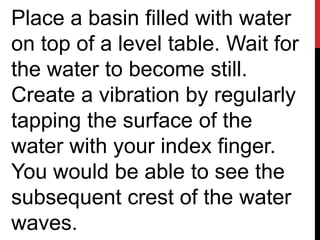
Place a basin filled with water
on top of a level table. Wait for
the water to become still.
Create a vibration by regularly
tapping the surface of the
water with your index finger.
You would be able to see the
subsequent crest of the water
waves.
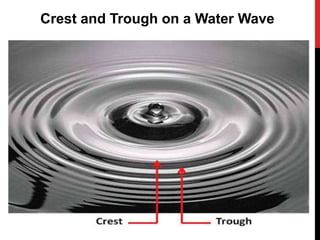
Crest and Trough on a Water Wave
BOARDWORK:

Draw the water waves
as you see them from
the top of the basin.
Label one wavelength
in your drawing.
Increase the rate of the vibrations you
create by tapping the surface of the
water rapidly. What happens to the
wavelength of the waves?
______________________________
Draw the water waves as you see
them from the top of the basin.
Compare it with your first drawing.
HOW DO YOU MEASURE THE
FREQUENCY OF A WAVE?
The frequency of a series of periodic
waves is the number of waves that pass a
particular point every one second. It is
also useful to consider the period of a
wave, which is the time required for one
complete wave to pass a given point. The
period of each wave is
                  =   ___1___
From the identified frequency
of the observed periodic
waves, the period can be
calculated. For example, if two
waves per second are passing
by, each wave has a period of
½ seconds.
Show your table on the board.
If you increase the
frequency of vibration by
jerking the end of the
rope at a faster rate,
what happens to the
wavelength?
HOW DO YOU MEASURE THE SPEED OF
A WAVE?
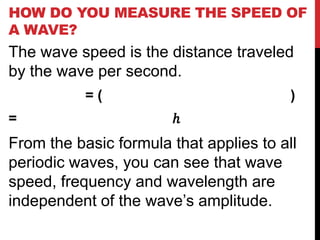
The wave speed is the distance traveled
by the wave per second.
           =(                            )
=                      ℎ
From the basic formula that applies to all
periodic waves, you can see that wave
speed, frequency and wavelength are
independent of the wave’s amplitude.
SUMMARY:
1. What is the relationship between wave
speed, wavelength and
frequency?
2. Suppose you observed an anchored boat to
rise and fall once every 4.0 seconds as waves
whose crests are 25 meters apart pass by it.
a. What is the frequency of the observed
waves?
b. What is the speed of the waves?
Let’s make waves

Let’s make waves

  • 1.
  • 2.
    Activity 1 and2 : Discussion
  • 3.
    ACTIVITY 1: LET’SMAKE WAVES Board work: Draw three sketches of the rope showing the motion of the pulse at three subsequent instances (snapshots at three different times). Draw an arrow to represent the direction of the pulse’s motion.
  • 4.
    BASED ON THEILLUSTRATION SHOWN ON THE BOARD, ANSWER THE FF: a. What is a wave pulse? b. What is the source of the wave pulse? c. Describe the motion of your hand as you create the pulse. d. Describe the motion of the pulse with respect to the source.
  • 5.
    A periodic wavecan be regarded as a series of pulses. One pulse follows another in regular succession. Periodic Wave
  • 6.
    BOARDWORK: Attach a coloredribbon on one part of the rope. You may use adhesive tape to fix the ribbon. Make a wave by continuously vibrating the end of the rope with quick up-and-down movements of your hand. (Activity) Draw the waveform or the shape of the wave that you have created.
  • 7.
    BASED ON YOURACTIVITY/ ILLUSTRATION ON THE BOARD, ANSWER THE FF: a. Does the wave transport the colored ribbon from its original position to the end of the rope? b. Describe the vibration of the colored ribbon. How does it move as waves pass by? Does it move in the same direction as the wave? c. Describe transverse waves.
  • 8.
    BOARDWORK: Observe the wavesalong the coil spring. Draw how the coil spring looks like as you move it back-and- forth.
  • 9.
    Attach a coloredribbon on one part of the coil spring. You may use an adhesive tape to fix the ribbon. Ask a friend to vibrate the coil spring back-and-forth while you observe the motion of the colored ribbon. Remember that the colored ribbon serves as a marker of a chosen segment of the coil spring. (Activity)
  • 10.
    BASED ON THEACTIVTY, ANSWER THE FF: a. Does the wave transport the colored ribbon from its original position to the end of the coil spring? b. Describe the vibration of the colored ribbon. How does it move as waves pass by? c. Describe longitudinal waves.
  • 11.
    BOARDWORK: Create a wavepulse by tapping the surface of the water with your index finger and observe the direction of travel of the wave pulse.Tap the surface of the water at regular intervals to create periodic waves. (Activity) View the waves from above and draw the pattern that you see. In your drawing, mark the source of the disturbance.
  • 12.
    BASED ON THEACTIVTY, ANSWER THE FF: Wait for the water to become still before you place your paper boat on the surface. Create periodic waves and observe what happens to your paper boat. (Activity) a. Do the waves set the paper boat into motion? What is required to set an object into motion? b. If you exert more energy in creating periodic waves by tapping the surface with greater strength, how does this affect the movement of the paper boat?
  • 13.
    If you weresomehow able to mark individual water molecules (you used a colored ribbon to do this) and follow them as waves pass by, you would find that their paths are like those shown in the figure below. Surface Waves
  • 14.
    a. As shownin the figure, the passage of a wave across a surface of a body of water involves the motion of particles following a___________ pattern about their original positions. b. Does the wave transport water molecules from the source of the vibration? Support your answer using the shown figure.
  • 15.
    SUMMARY FOR ACT.1 1. Waves can be typified according to the direction of motion of the vibrating particles with respect to the direction in which the waves travel. a. Waves in a rope are called ____________ waves because the individual segments of the rope vibrate ____________ to the direction in which the waves travel.
  • 16.
    b. When eachportion of a coil spring is alternatively compressed and extended, ____________ waves are produced. c. Waves on the surface of a body of water are a combination of transverse and longitudinal waves. Each water molecule moves in a _______________ pattern as the waves pass by.
  • 17.
    2. How dowe know that waves carry energy? 3. What happens when waves pass by?
  • 18.
    ACTIVITY 2. ANATOMYOF A WAVE HOW DO YOU DESCRIBE WAVES? Most periodic waves have sinusoidal waveforms as shown below. The highest point and lowest point of a wave are called the crest and the trough respectively. The amplitude is the maximum displacement of a vibrating particle on either side of its normal position when the wave passes.
  • 19.
    PARTS OF AWAVE Crest- highest point Trough- lowest point Wave length- distance between 2 waves Wave height- distance from crest to trough Amplitude- range from normal position of wave to either side  Equilibrium- no disturbance
  • 20.
  • 21.
    HOW CAN YOUMEASURE THE WAVELENGTH OF A WAVE? The wavelength of a wave refers to the distance between any successive identical parts of the wave. For instance, the distance from one crest to the next is equal to one full wavelength. In the following illustration, this is given by the interval B to F.
  • 22.
    Identify the otherintervals that represent one full wavelength.
  • 23.
    Place a basinfilled with water on top of a level table. Wait for the water to become still. Create a vibration by regularly tapping the surface of the water with your index finger. You would be able to see the subsequent crest of the water waves.
  • 24.
    Crest and Troughon a Water Wave
  • 25.
    BOARDWORK: Draw the waterwaves as you see them from the top of the basin. Label one wavelength in your drawing.
  • 26.
    Increase the rateof the vibrations you create by tapping the surface of the water rapidly. What happens to the wavelength of the waves? ______________________________ Draw the water waves as you see them from the top of the basin. Compare it with your first drawing.
  • 27.
    HOW DO YOUMEASURE THE FREQUENCY OF A WAVE? The frequency of a series of periodic waves is the number of waves that pass a particular point every one second. It is also useful to consider the period of a wave, which is the time required for one complete wave to pass a given point. The period of each wave is = ___1___
  • 28.
    From the identifiedfrequency of the observed periodic waves, the period can be calculated. For example, if two waves per second are passing by, each wave has a period of ½ seconds. Show your table on the board.
  • 29.
    If you increasethe frequency of vibration by jerking the end of the rope at a faster rate, what happens to the wavelength?
  • 30.
    HOW DO YOUMEASURE THE SPEED OF A WAVE? The wave speed is the distance traveled by the wave per second. =( ) = ℎ From the basic formula that applies to all periodic waves, you can see that wave speed, frequency and wavelength are independent of the wave’s amplitude.
  • 31.
    SUMMARY: 1. What isthe relationship between wave speed, wavelength and frequency? 2. Suppose you observed an anchored boat to rise and fall once every 4.0 seconds as waves whose crests are 25 meters apart pass by it. a. What is the frequency of the observed waves? b. What is the speed of the waves?