




Lesson Plan
Qulb e Abbas
Teacher Resource cum Subject Specialist
By the end of this session we will be able
to
• know Electronic Charges.
• Understand Direction of Flow of Electrons.
• Measuring Electric Charge.
• Define Electric Force.
• Describe Electric Field.
• Explain Electric Potential.
Lesson 1 : Introduction to Electric Current
Lesson Plan with linkages
Electronic Charges
Like Mass and Length, Electric Charge also is a
fundamental property of all matter.
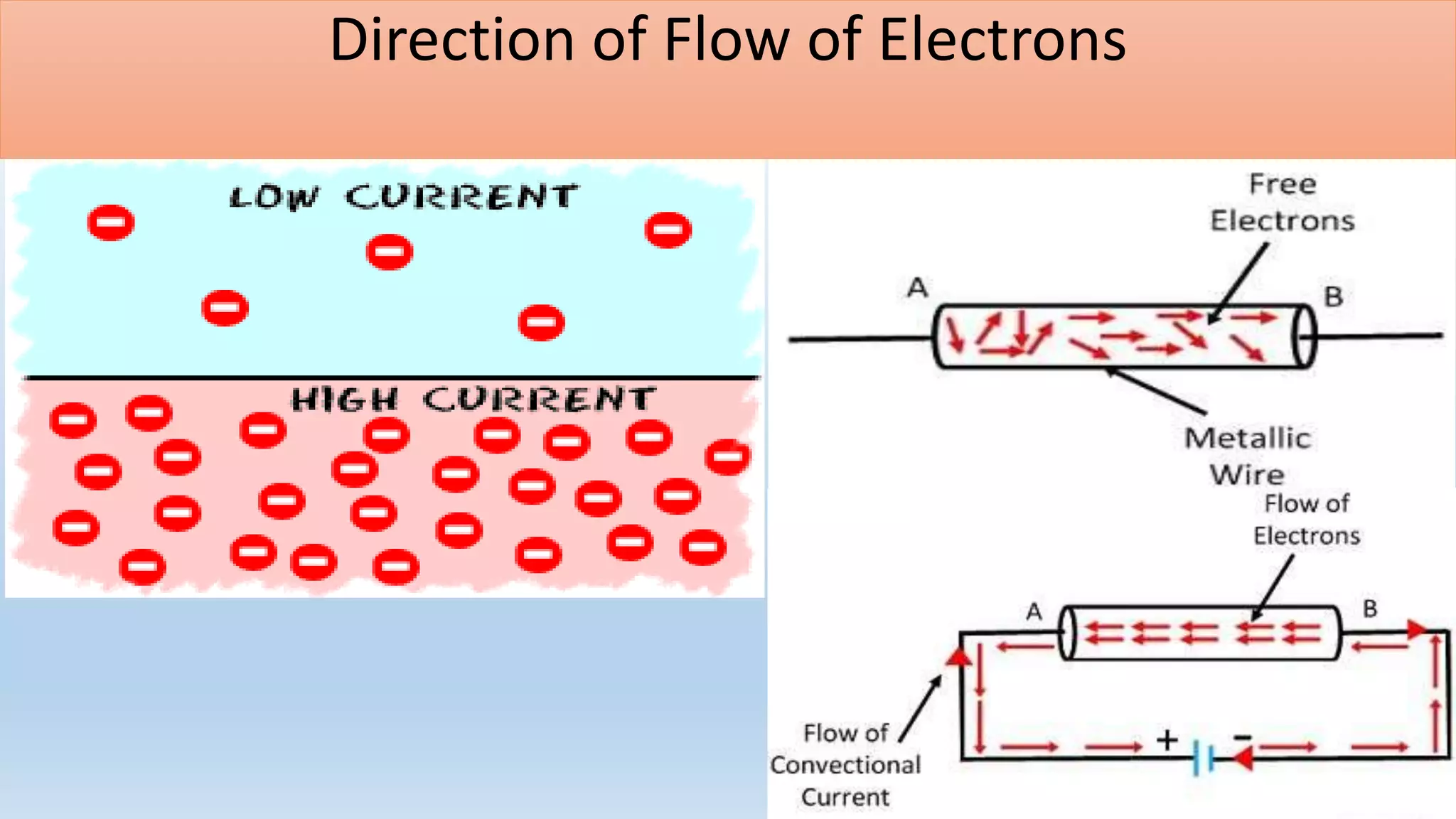
Direction of Flow of Electrons
There is a wrong understanding that we need protons to get a
positive charge.
Actually, protons are well seated inside the nucleus of an atom.
They cannot be easily removed from or added to the nucleus of
an atom.
We deal only with electrons for getting a negative as well as
positive ions. The excess electrons make an object negative and
deficit of electrons make it positive.
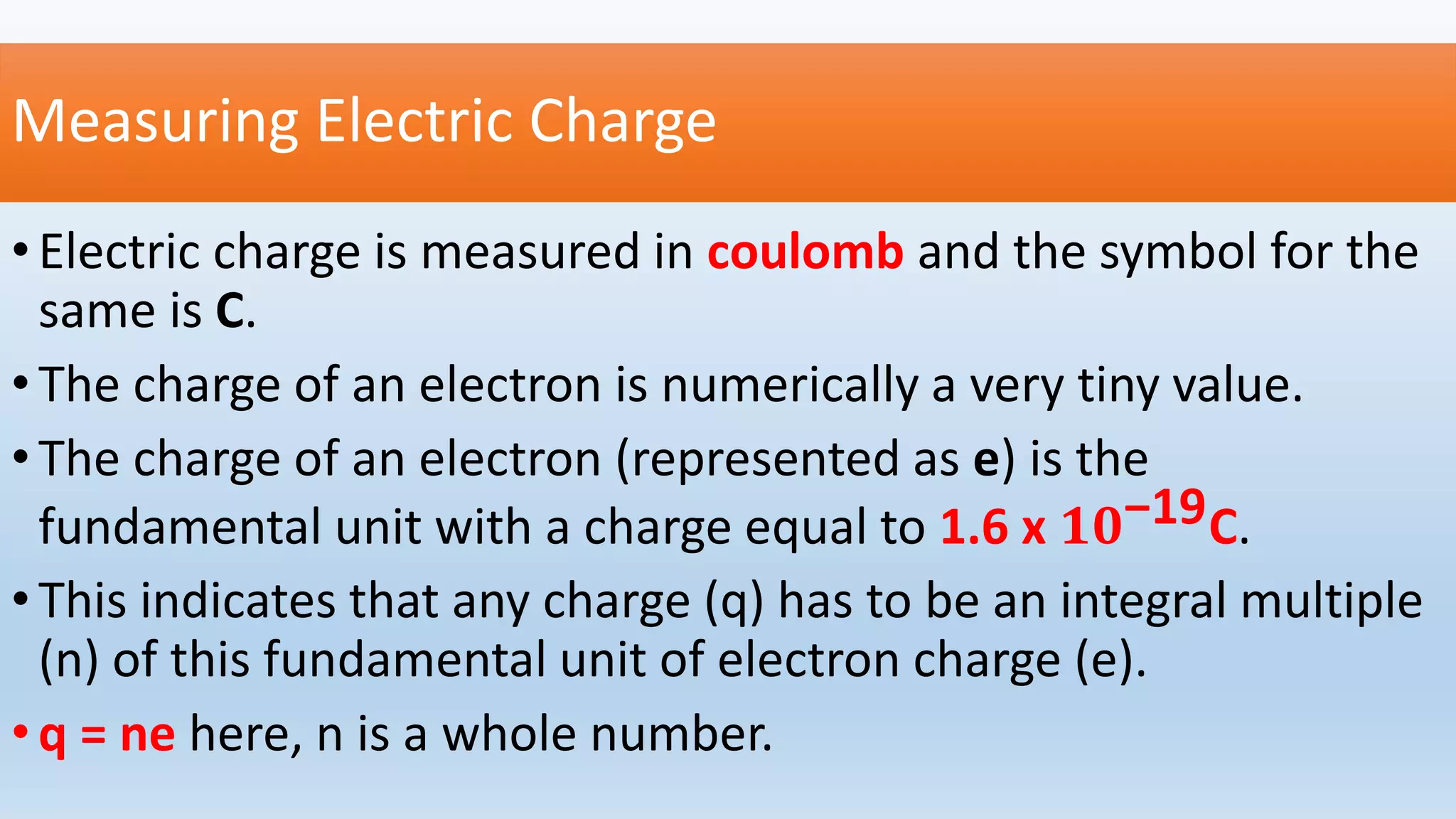
Measuring Electric Charge
•Electric charge is measured in coulomb and the symbol for the
same is C.
•The charge of an electron is numerically a very tiny value.
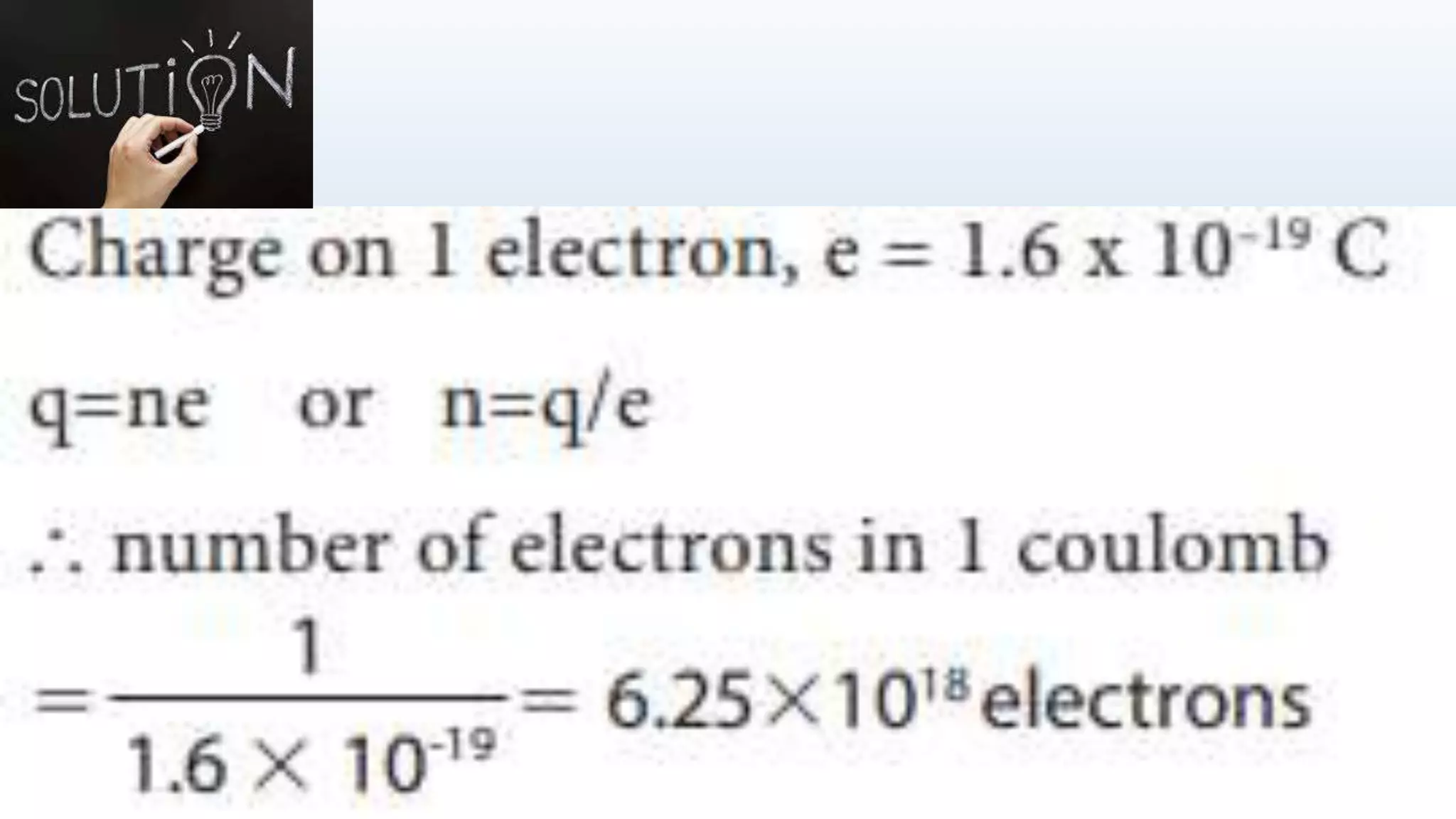
•The charge of an electron (represented as e) is the
fundamental unit with a charge equal to 1.6 x 𝟏𝟎−19C.
•This indicates that any charge (q) has to be an integral multiple
(n) of this fundamental unit of electron charge (e).
•q = ne here, n is a whole number.
How many electrons will be there in
one coulomb of charge?
Electric Force
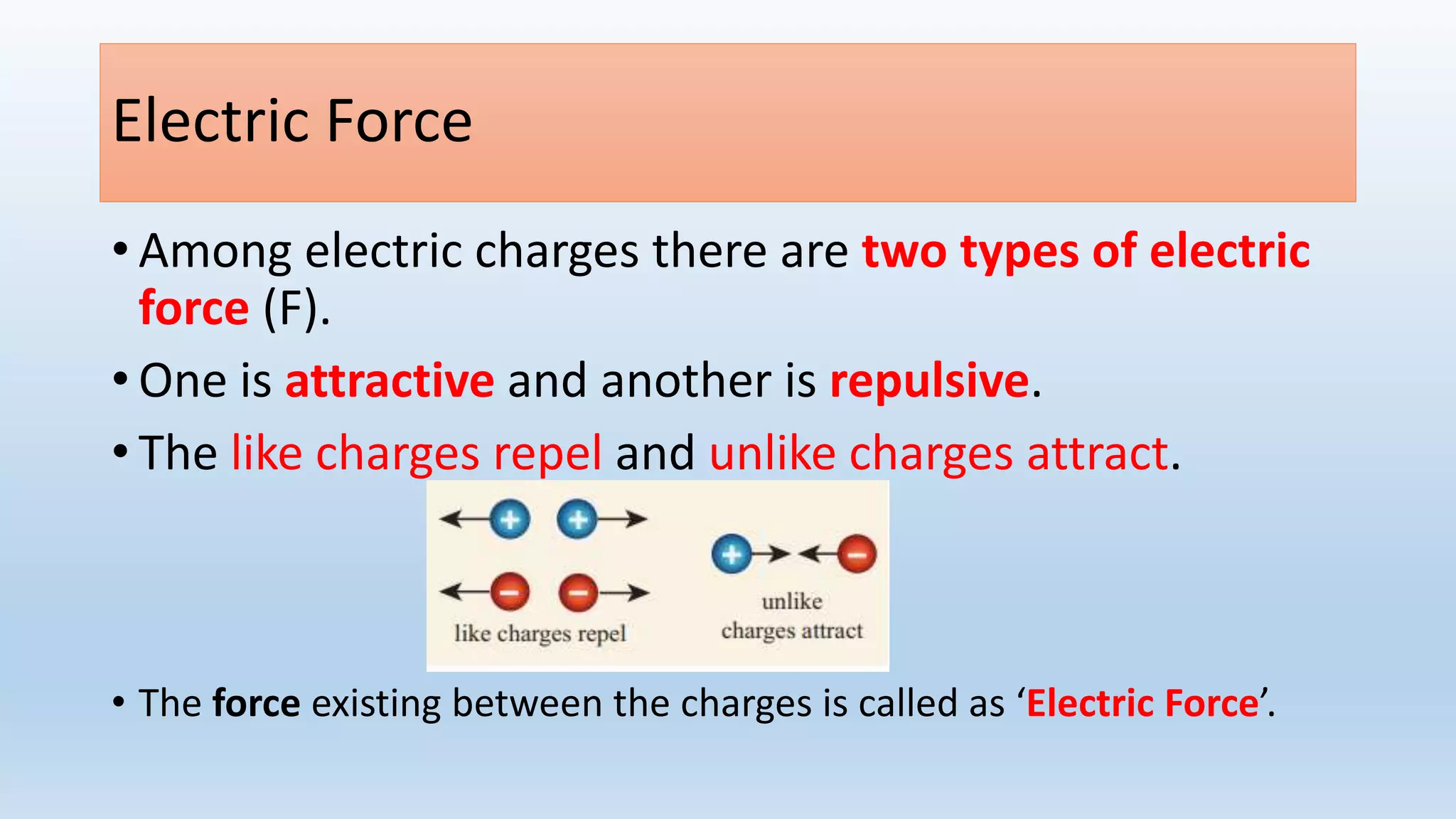
• Among electric charges there are two types of electric
force (F).
• One is attractive and another is repulsive.
• The like charges repel and unlike charges attract.
• The force existing between the charges is called as ‘Electric Force’.
The numerical value (magnitude) of electric
force Electric Force depend on:
i. value of charges on them
ii. distance between them
iii. nature of medium between them
Electrostatic forces between two point charges
obey Newton’s third law.
The force on one charge is the action and on
the other is reaction and vice versa.
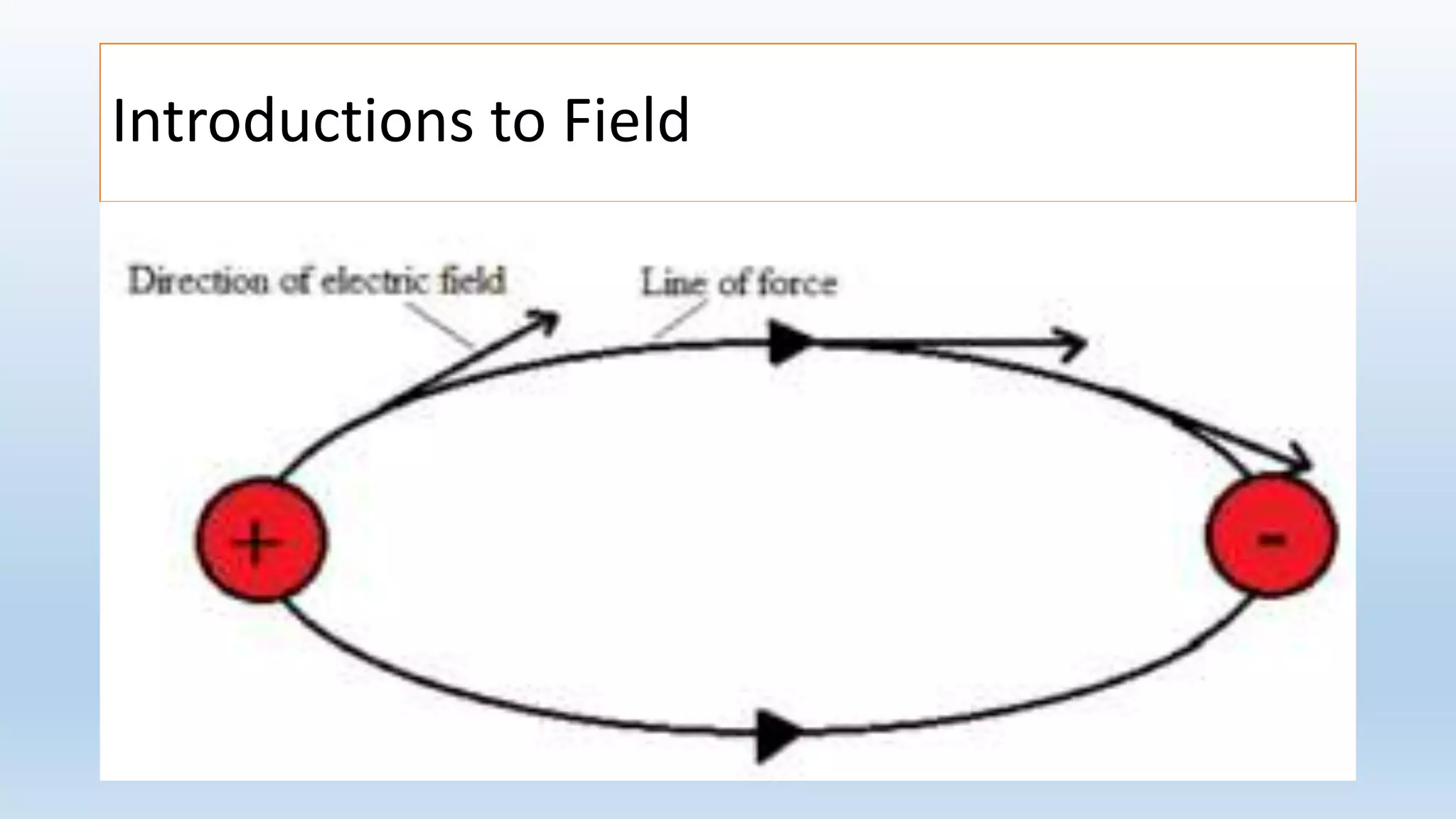
Introductions to Field
Electric Field
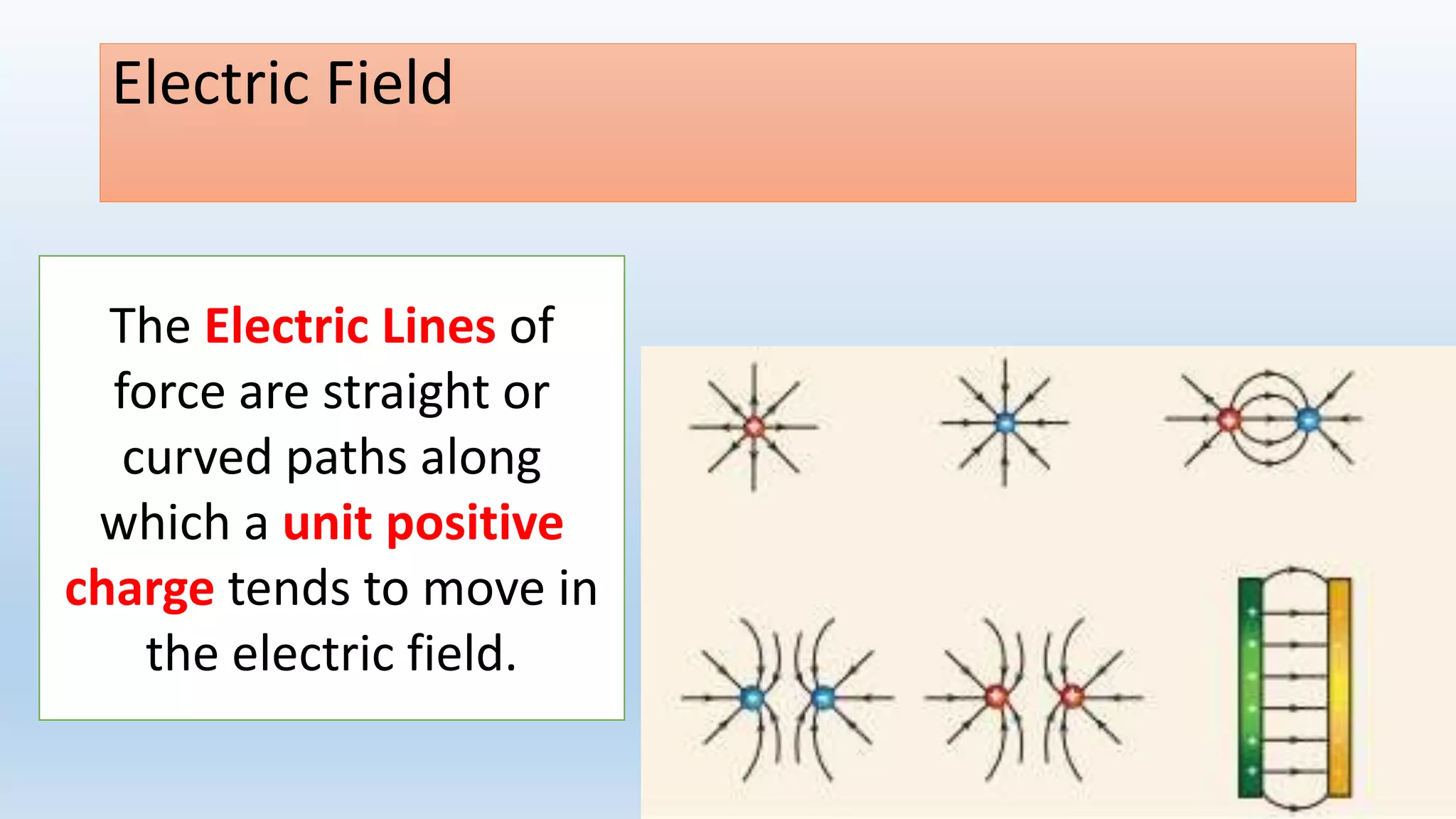
The Electric Lines of
force are straight or
curved paths along
which a unit positive
charge tends to move in
the electric field.
Introduction to Potential
Electric Potential
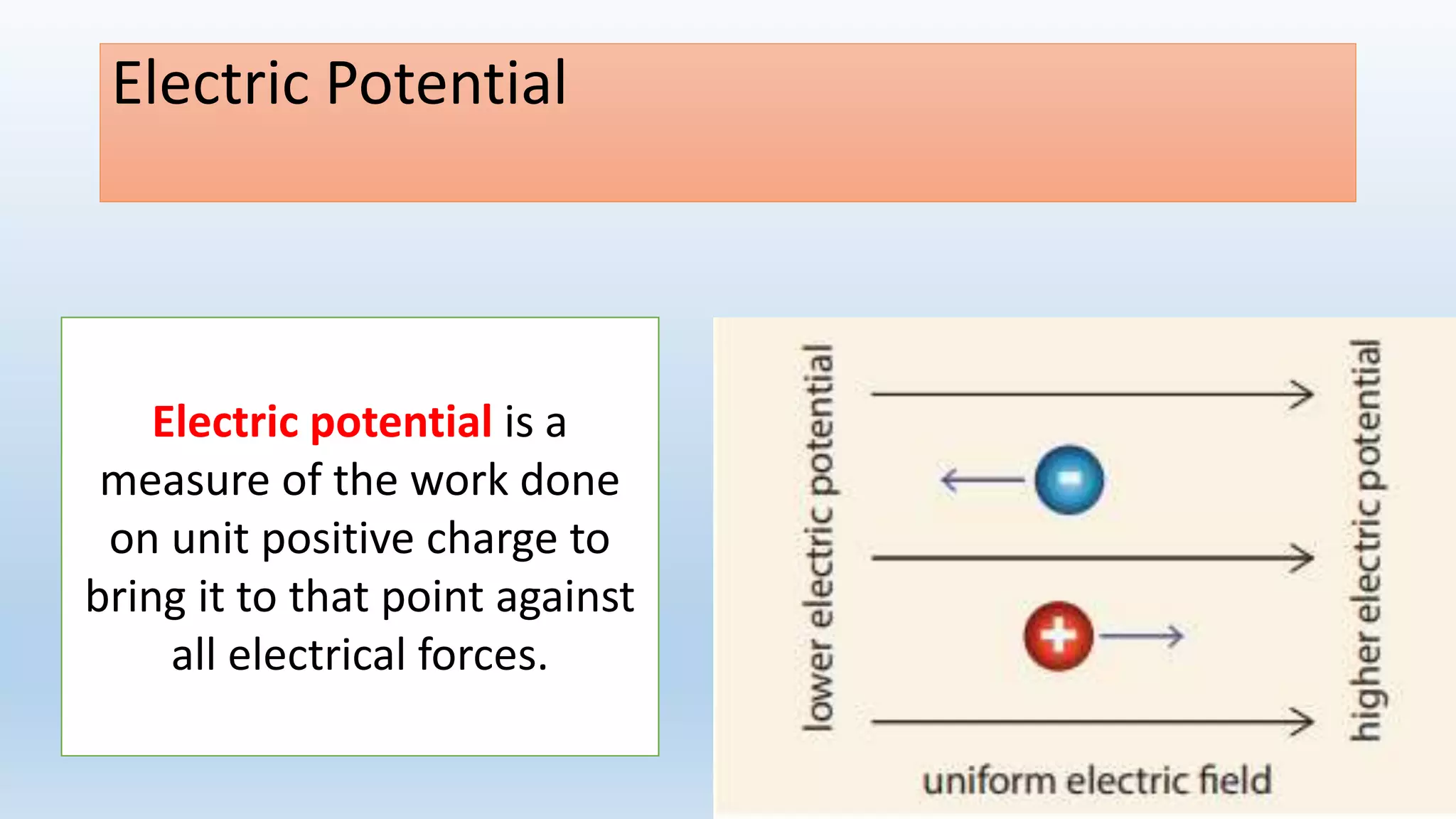
Electric potential is a
measure of the work done
on unit positive charge to
bring it to that point against
all electrical forces.
For All PowerPoint of Physics class 9 and 10
Mail id: jafshah298@gmail.com
Mobile: 03364493801

Lesson plan physics class 10 introduction to electric current

  • 1.
    Lesson Plan Qulb eAbbas Teacher Resource cum Subject Specialist
  • 2.
    By the endof this session we will be able to • know Electronic Charges. • Understand Direction of Flow of Electrons. • Measuring Electric Charge. • Define Electric Force. • Describe Electric Field. • Explain Electric Potential.
  • 3.
    Lesson 1 :Introduction to Electric Current
  • 5.
  • 6.
    Electronic Charges Like Massand Length, Electric Charge also is a fundamental property of all matter.
  • 7.
    Direction of Flowof Electrons
  • 8.
    There is awrong understanding that we need protons to get a positive charge. Actually, protons are well seated inside the nucleus of an atom. They cannot be easily removed from or added to the nucleus of an atom. We deal only with electrons for getting a negative as well as positive ions. The excess electrons make an object negative and deficit of electrons make it positive.
  • 9.
    Measuring Electric Charge •Electriccharge is measured in coulomb and the symbol for the same is C. •The charge of an electron is numerically a very tiny value. •The charge of an electron (represented as e) is the fundamental unit with a charge equal to 1.6 x 𝟏𝟎−19C. •This indicates that any charge (q) has to be an integral multiple (n) of this fundamental unit of electron charge (e). •q = ne here, n is a whole number.
  • 10.
    How many electronswill be there in one coulomb of charge?
  • 12.
    Electric Force • Amongelectric charges there are two types of electric force (F). • One is attractive and another is repulsive. • The like charges repel and unlike charges attract. • The force existing between the charges is called as ‘Electric Force’.
  • 13.
    The numerical value(magnitude) of electric force Electric Force depend on: i. value of charges on them ii. distance between them iii. nature of medium between them
  • 14.
    Electrostatic forces betweentwo point charges obey Newton’s third law. The force on one charge is the action and on the other is reaction and vice versa.
  • 15.
  • 16.
    Electric Field The ElectricLines of force are straight or curved paths along which a unit positive charge tends to move in the electric field.
  • 17.
  • 18.
    Electric Potential Electric potentialis a measure of the work done on unit positive charge to bring it to that point against all electrical forces.
  • 20.
    For All PowerPointof Physics class 9 and 10 Mail id: jafshah298@gmail.com Mobile: 03364493801