Chapter 20:
National Security Policymaking
Foreign Policy Instruments
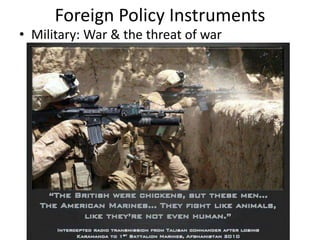
• Military: War & the threat of war
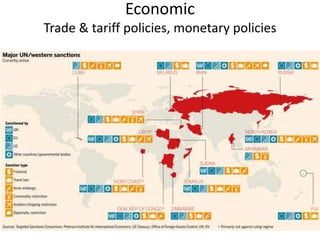
Economic
Trade & tariff policies, monetary policies
Diplomatic
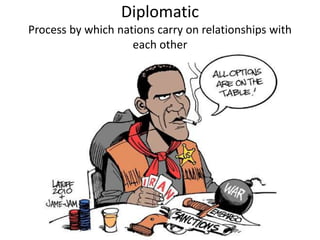
Process by which nations carry on relationships with
each other
Actors in Foreign Relations
• International Organizations
– UN, OPEC
• Regional Organizations
– NATO, EU, NAFTA, SEATO
• Multinational Corporations
– Coca-Cola, McDonald’s, Marriot, Google, Microsoft
• Nongovernmental Organizations
– Amnesty International, Greenpeace, Red Cross,
Doctors without Borders
• Individuals
– Tourists, Immigrants, Refugees
• Terrorists
– Al Qaeda, Drug Cartels
Policymakers
• President
– Commander-in-Chief, Chief Diplomat (appoints
ambassadors, dep’t. heads, negotiates treaties, executive
orders, recognition)
• Diplomats
– Sec’y of State
• National Security Establishment
– Sec’y of Defense & Dep’t. of Defense
– Joint Chiefs of Staff: commanding officers of each branch of
service
– National Security Council: diplomatic & military
– CIA: coordinates intelligence activities
• Congress: authority over foreign & defense policy
– Advice & consent, “power of the purse”
U.S. Foreign Policy
• 1789-1945: Isolationism
– Monroe Doctrine & Roosevelt Corollary
– WWI & WWII
• 1945-1991: Interventionism & Containment
– UN; Peacekeeping Operations (’45-present)
– Cold War: Arms Race, proxy wars
– Détente: 1970s
– Reagan Rearmament: 1980s
• 11 Sept 2001-present: “War on Terror(ism)”
– Iraq, Afghanistan
Military Policy
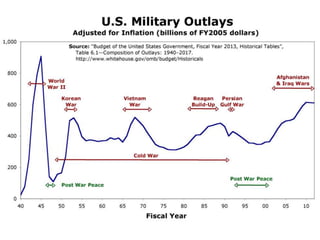
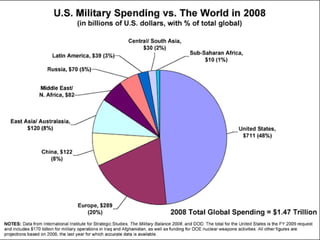
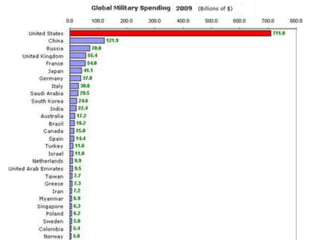
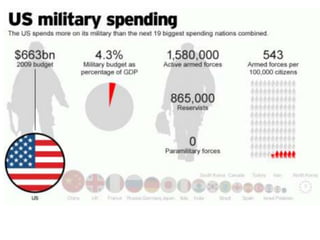
• Military Expenditures
• Personnel
• Weapons
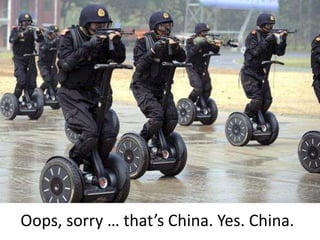
Oops, sorry … that’s China. Yes. China.
Chapter_20.pptx

Chapter_20.pptx

  • 1.
  • 2.
    Foreign Policy Instruments •Military: War & the threat of war
  • 3.
    Economic Trade & tariffpolicies, monetary policies
  • 4.
    Diplomatic Process by whichnations carry on relationships with each other
  • 5.
    Actors in ForeignRelations • International Organizations – UN, OPEC • Regional Organizations – NATO, EU, NAFTA, SEATO • Multinational Corporations – Coca-Cola, McDonald’s, Marriot, Google, Microsoft • Nongovernmental Organizations – Amnesty International, Greenpeace, Red Cross, Doctors without Borders • Individuals – Tourists, Immigrants, Refugees • Terrorists – Al Qaeda, Drug Cartels
  • 6.
    Policymakers • President – Commander-in-Chief,Chief Diplomat (appoints ambassadors, dep’t. heads, negotiates treaties, executive orders, recognition) • Diplomats – Sec’y of State • National Security Establishment – Sec’y of Defense & Dep’t. of Defense – Joint Chiefs of Staff: commanding officers of each branch of service – National Security Council: diplomatic & military – CIA: coordinates intelligence activities • Congress: authority over foreign & defense policy – Advice & consent, “power of the purse”
  • 7.
    U.S. Foreign Policy •1789-1945: Isolationism – Monroe Doctrine & Roosevelt Corollary – WWI & WWII • 1945-1991: Interventionism & Containment – UN; Peacekeeping Operations (’45-present) – Cold War: Arms Race, proxy wars – Détente: 1970s – Reagan Rearmament: 1980s • 11 Sept 2001-present: “War on Terror(ism)” – Iraq, Afghanistan
  • 8.
    Military Policy • MilitaryExpenditures • Personnel • Weapons
  • 13.
    Oops, sorry …that’s China. Yes. China.