4/27/2021
Dr.GVSRK/DSP 1
Session-1
4/27/2021
Dr.GVSRK/DSP 2
Definitions:
Down Stream Processing
“Complicated series of Isolation and Purification steps,
which are usually quite costly”
“Application of Principles of Bioseparations in a manner
that will apply to bioproducts not yet invented, and
biological molecules not yet produced on a large scale, as
well as the molecules that form the basis of the current
industry”
“Application of fundamental engineering and biological
principles to the design of adsorbents, systems, and
processes for the separation of biological molecules with
a mechanistic analysis as a key phenomena at a
microscopic level”
4/27/2021
Dr.GVSRK/DSP 3
Challenge of Down Stream Processing
It is difficult to efficiently and economically
recover a high purity biochemical product
from a complex mixture of related and
functional molecules, impurities and
contaminants which have similar physical and
chemical properties.
Bioseparations Engineering
“The Systematic study of the scientific and engineering
principles utilized for large-scale purification of
biological products
4/27/2021
Dr.GVSRK/DSP 4
4/27/2021
Dr.GVSRK/DSP 5
4/27/2021
Dr.GVSRK/DSP 6
4/27/2021
Dr.GVSRK/DSP 7
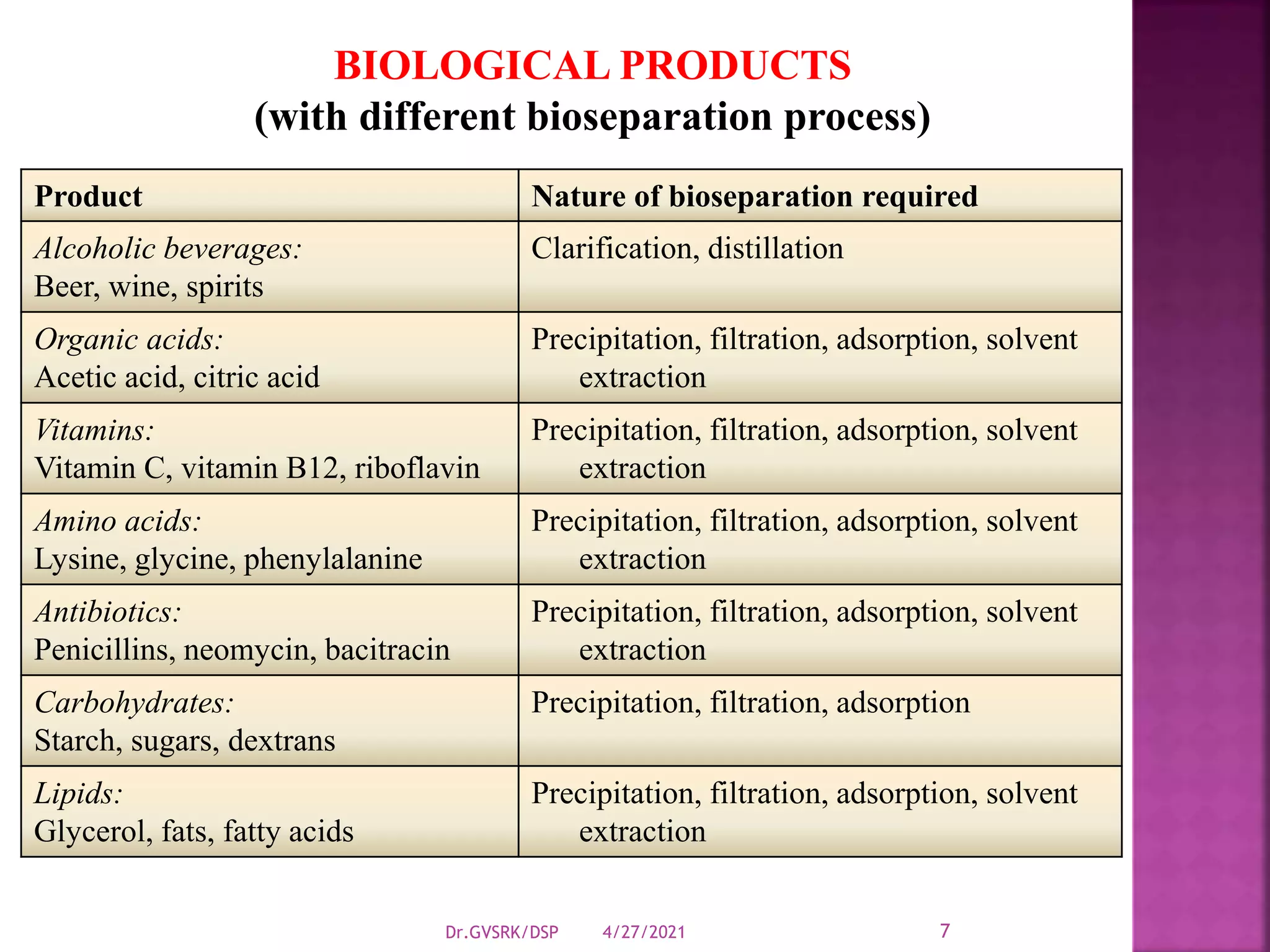
BIOLOGICAL PRODUCTS
(with different bioseparation process)
Product Nature of bioseparation required
Alcoholic beverages:
Beer, wine, spirits
Clarification, distillation
Organic acids:
Acetic acid, citric acid
Precipitation, filtration, adsorption, solvent
extraction
Vitamins:
Vitamin C, vitamin B12, riboflavin
Precipitation, filtration, adsorption, solvent
extraction
Amino acids:
Lysine, glycine, phenylalanine
Precipitation, filtration, adsorption, solvent
extraction
Antibiotics:
Penicillins, neomycin, bacitracin
Precipitation, filtration, adsorption, solvent
extraction
Carbohydrates:
Starch, sugars, dextrans
Precipitation, filtration, adsorption
Lipids:
Glycerol, fats, fatty acids
Precipitation, filtration, adsorption, solvent
extraction
4/27/2021
Dr.GVSRK/DSP 8
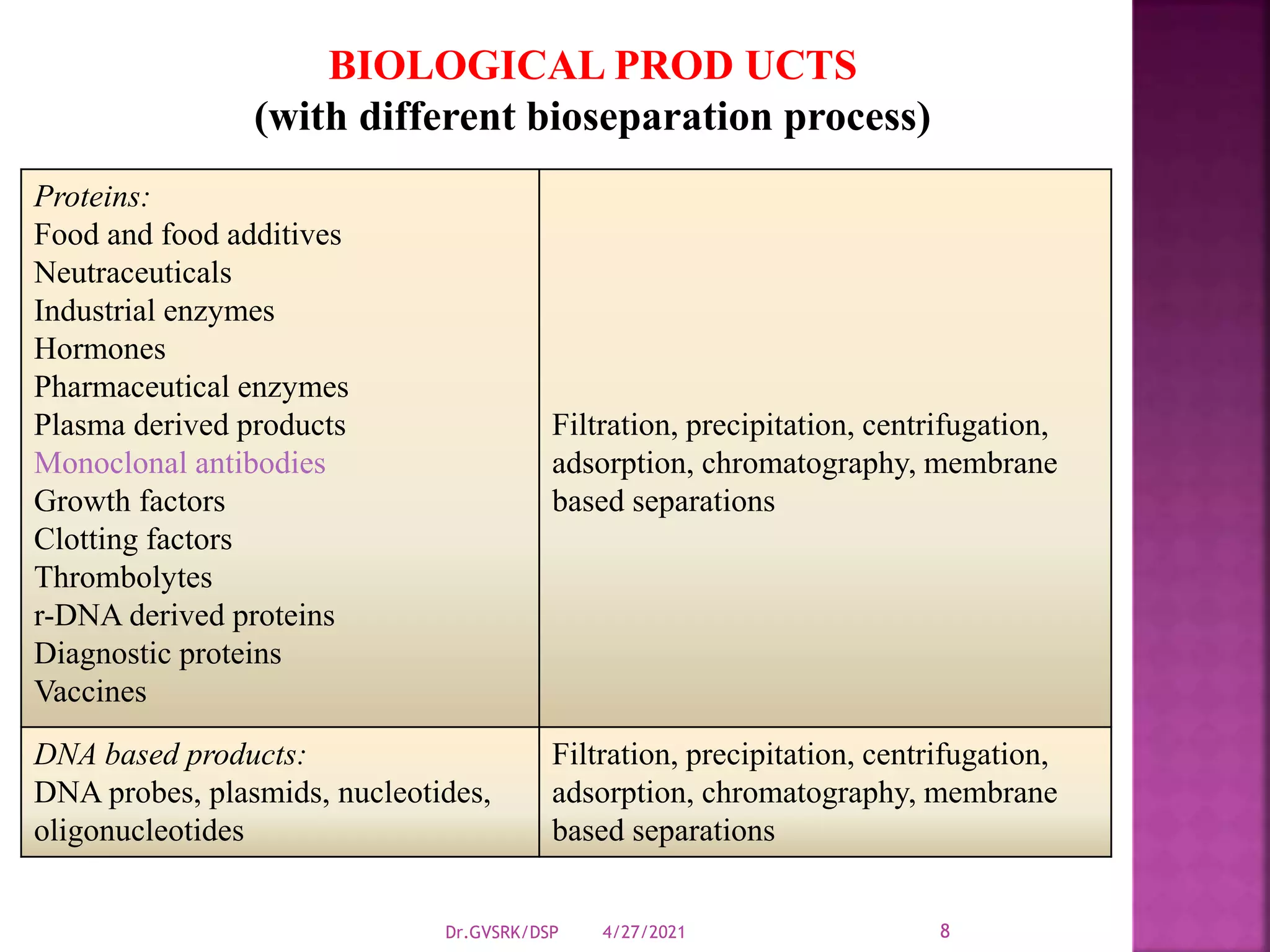
Proteins:
Food and food additives
Neutraceuticals
Industrial enzymes
Hormones
Pharmaceutical enzymes
Plasma derived products
Monoclonal antibodies
Growth factors
Clotting factors
Thrombolytes
r-DNA derived proteins
Diagnostic proteins
Vaccines
Filtration, precipitation, centrifugation,
adsorption, chromatography, membrane
based separations
DNA based products:
DNA probes, plasmids, nucleotides,
oligonucleotides
Filtration, precipitation, centrifugation,
adsorption, chromatography, membrane
based separations
BIOLOGICAL PROD UCTS
(with different bioseparation process)
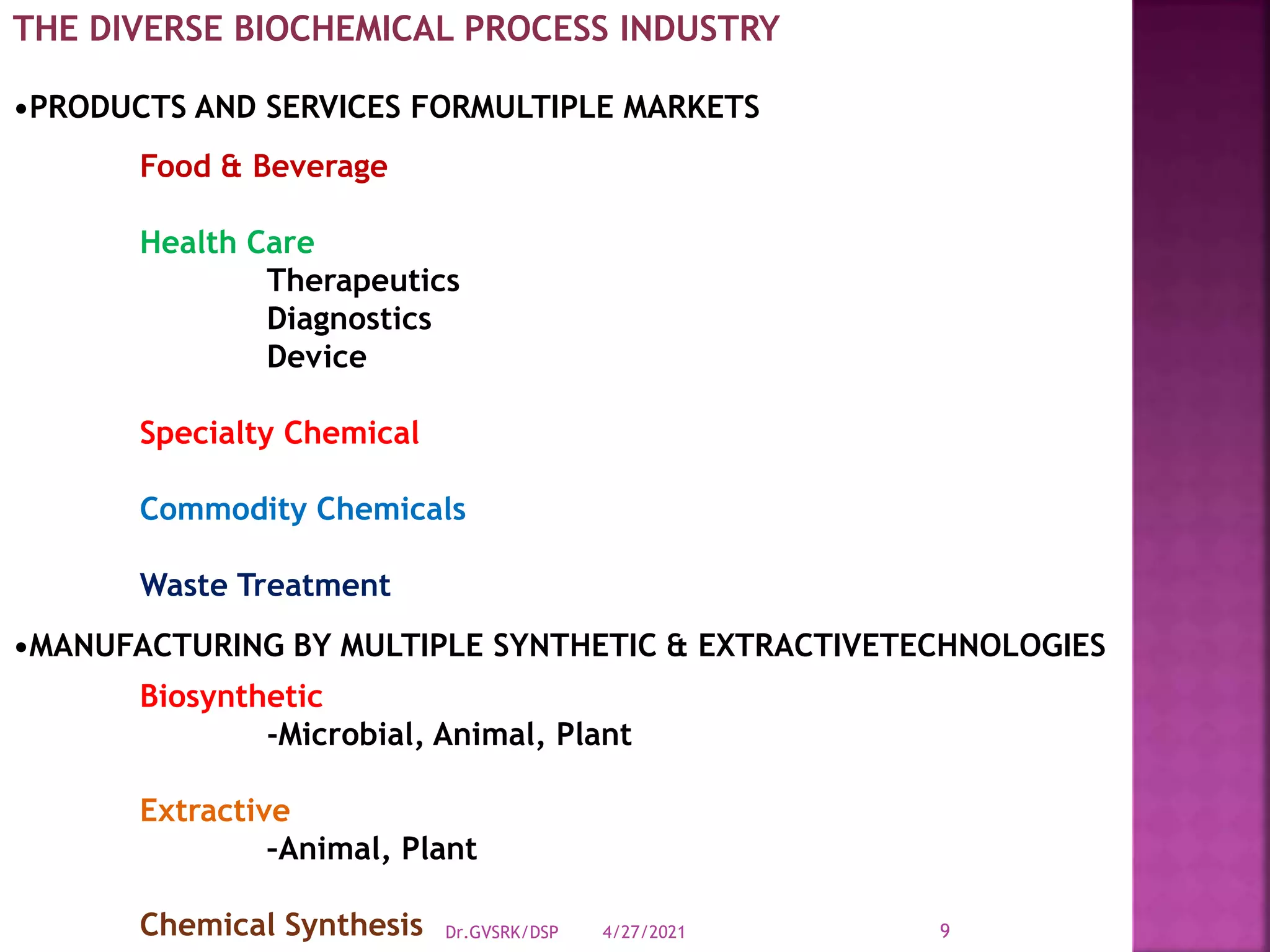
THE DIVERSE BIOCHEMICAL PROCESS INDUSTRY
•PRODUCTS AND SERVICES FORMULTIPLE MARKETS
Food & Beverage
Health Care
Therapeutics
Diagnostics
Device
Specialty Chemical
Commodity Chemicals
Waste Treatment
•MANUFACTURING BY MULTIPLE SYNTHETIC & EXTRACTIVETECHNOLOGIES
Biosynthetic
-Microbial, Animal, Plant
Extractive
–Animal, Plant
Chemical Synthesis 4/27/2021
Dr.GVSRK/DSP 9
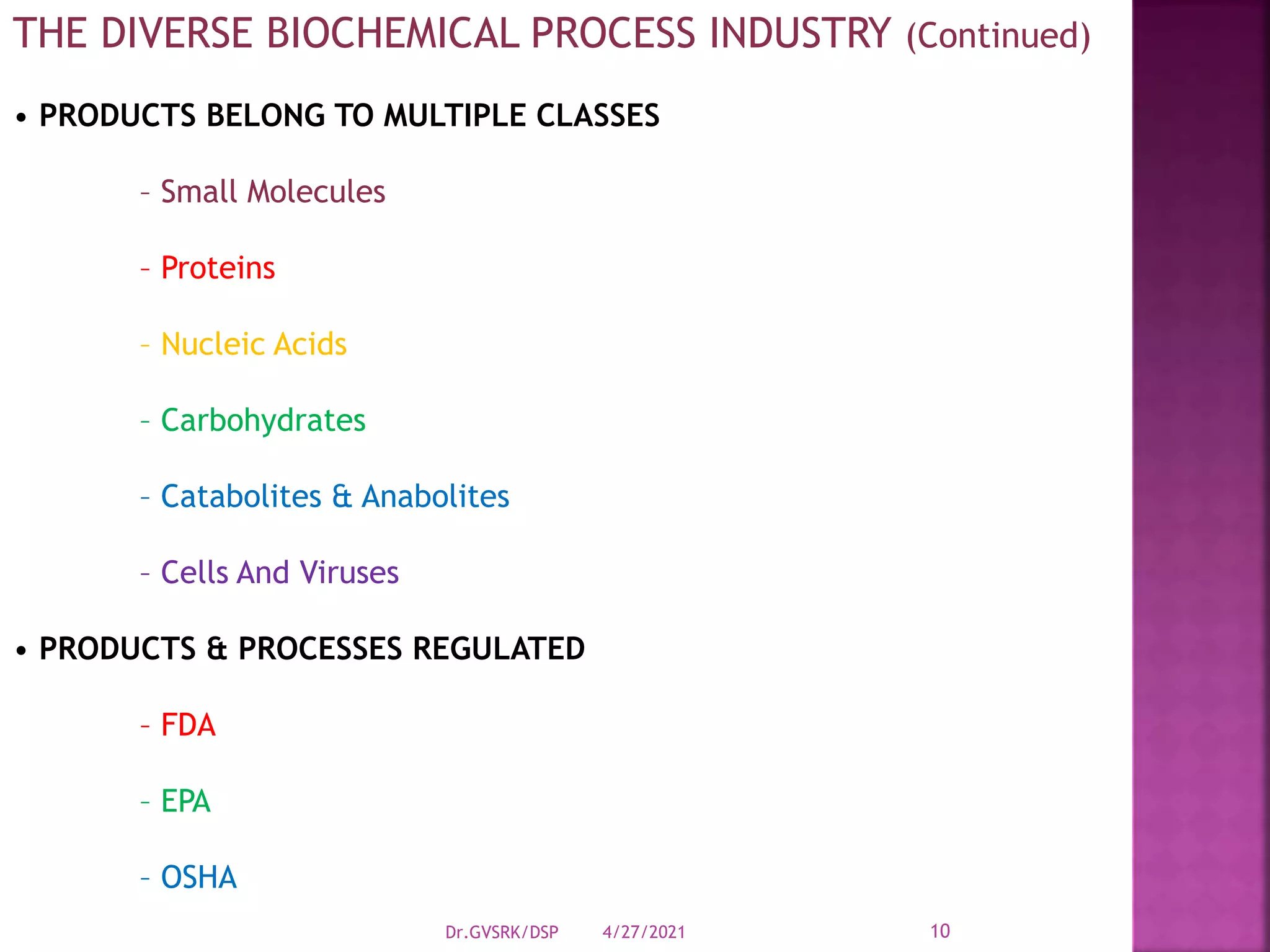
THE DIVERSE BIOCHEMICAL PROCESS INDUSTRY (Continued)
• PRODUCTS BELONG TO MULTIPLE CLASSES
– Small Molecules
– Proteins
– Nucleic Acids
– Carbohydrates
– Catabolites & Anabolites
– Cells And Viruses
• PRODUCTS & PROCESSES REGULATED
– FDA
– EPA
– OSHA
4/27/2021
Dr.GVSRK/DSP 10
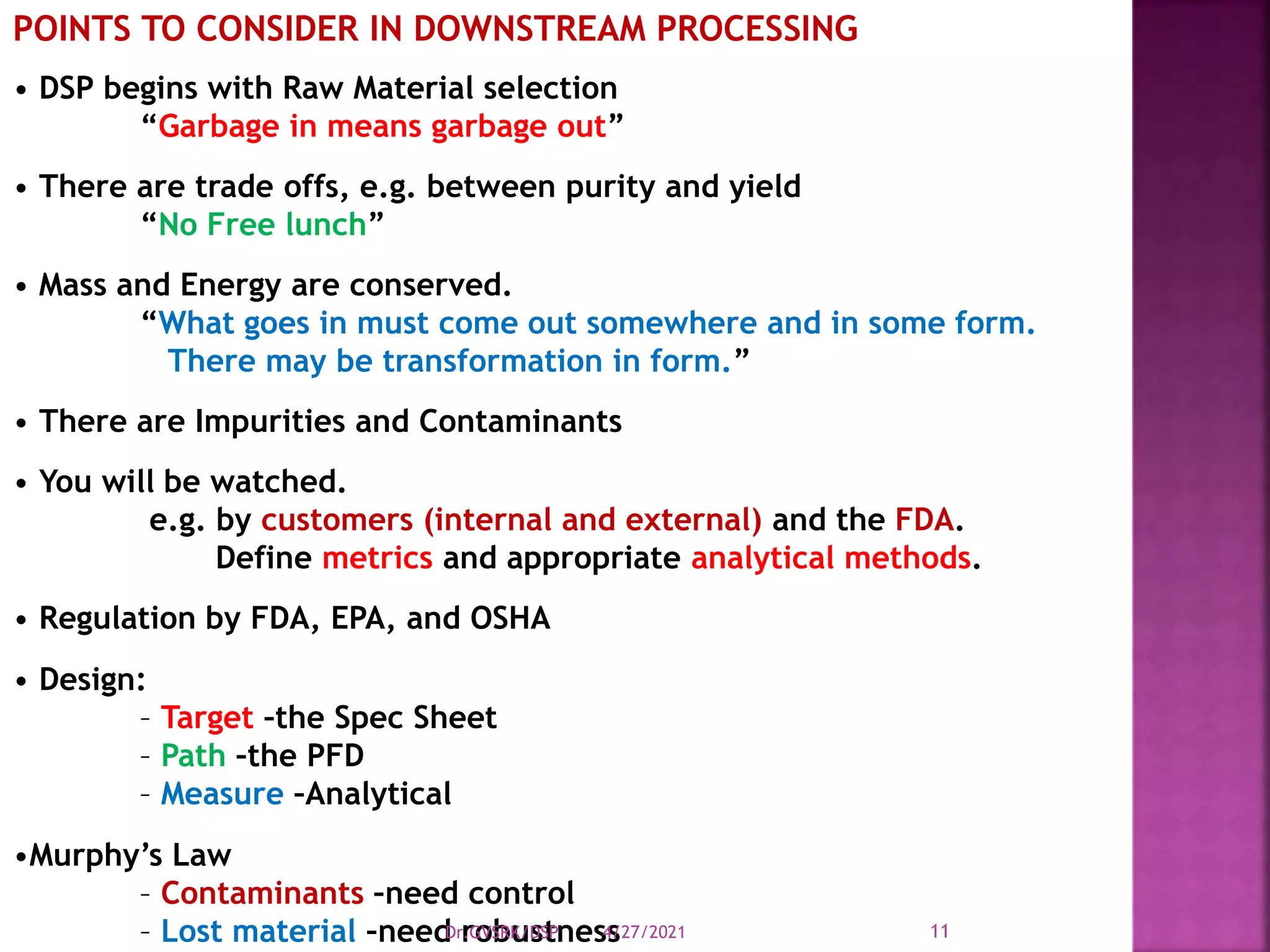
POINTS TO CONSIDER IN DOWNSTREAM PROCESSING
• DSP begins with Raw Material selection
“Garbage in means garbage out”
• There are trade offs, e.g. between purity and yield
“No Free lunch”
• Mass and Energy are conserved.
“What goes in must come out somewhere and in some form.
There may be transformation in form.”
• There are Impurities and Contaminants
• You will be watched.
e.g. by customers (internal and external) and the FDA.
Define metrics and appropriate analytical methods.
• Regulation by FDA, EPA, and OSHA
• Design:
– Target –the Spec Sheet
– Path –the PFD
– Measure –Analytical
•Murphy’s Law
– Contaminants –need control
– Lost material –need robustness
4/27/2021
Dr.GVSRK/DSP 11
4/27/2021
Dr.GVSRK/DSP 12
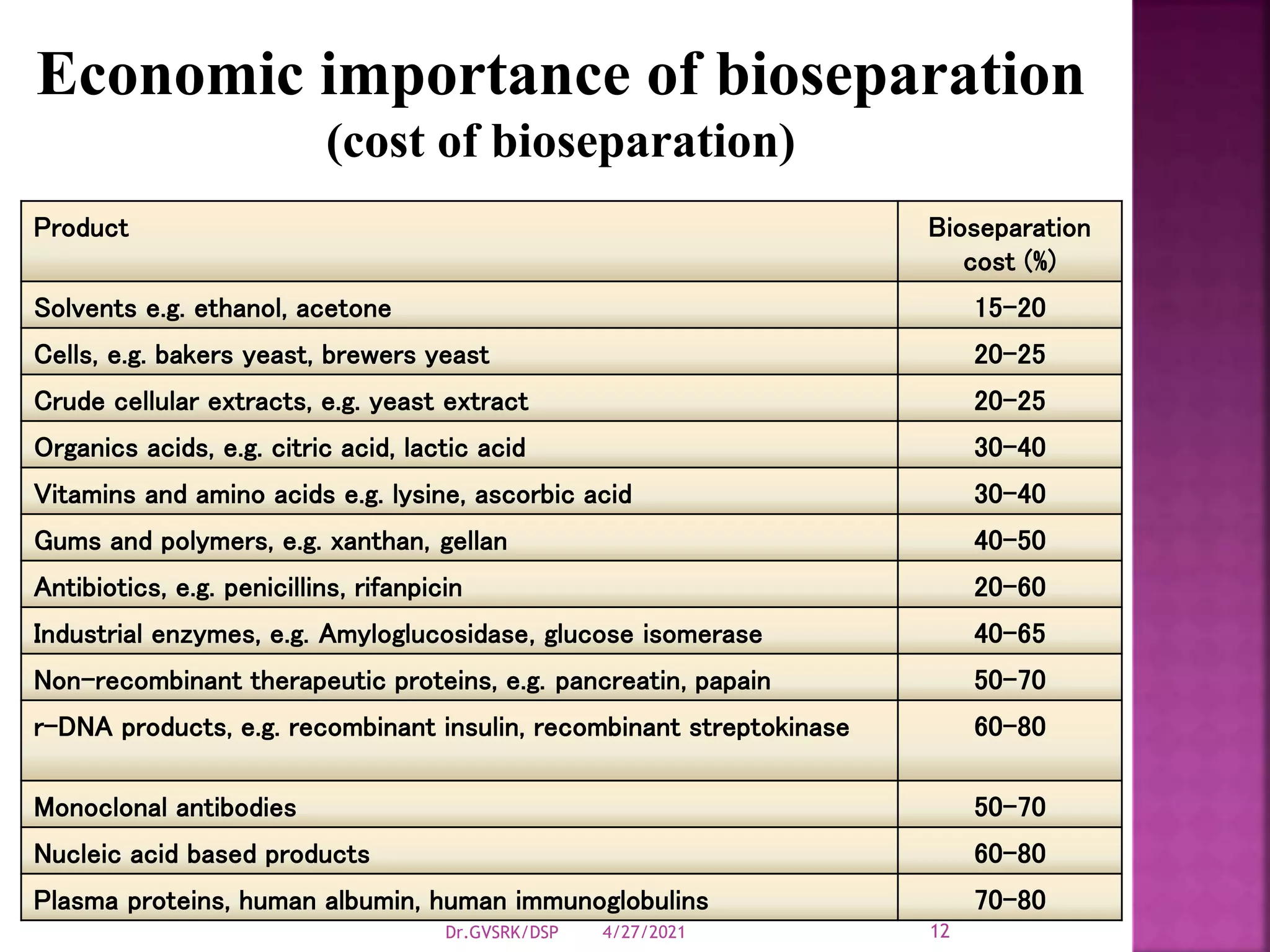
Product Bioseparation
cost (%)
Solvents e.g. ethanol, acetone 15-20
Cells, e.g. bakers yeast, brewers yeast 20-25
Crude cellular extracts, e.g. yeast extract 20-25
Organics acids, e.g. citric acid, lactic acid 30-40
Vitamins and amino acids e.g. lysine, ascorbic acid 30-40
Gums and polymers, e.g. xanthan, gellan 40-50
Antibiotics, e.g. penicillins, rifanpicin 20-60
Industrial enzymes, e.g. Amyloglucosidase, glucose isomerase 40-65
Non-recombinant therapeutic proteins, e.g. pancreatin, papain 50-70
r-DNA products, e.g. recombinant insulin, recombinant streptokinase 60-80
Monoclonal antibodies 50-70
Nucleic acid based products 60-80
Plasma proteins, human albumin, human immunoglobulins 70-80
Economic importance of bioseparation
(cost of bioseparation)
4/27/2021
Dr.GVSRK/DSP
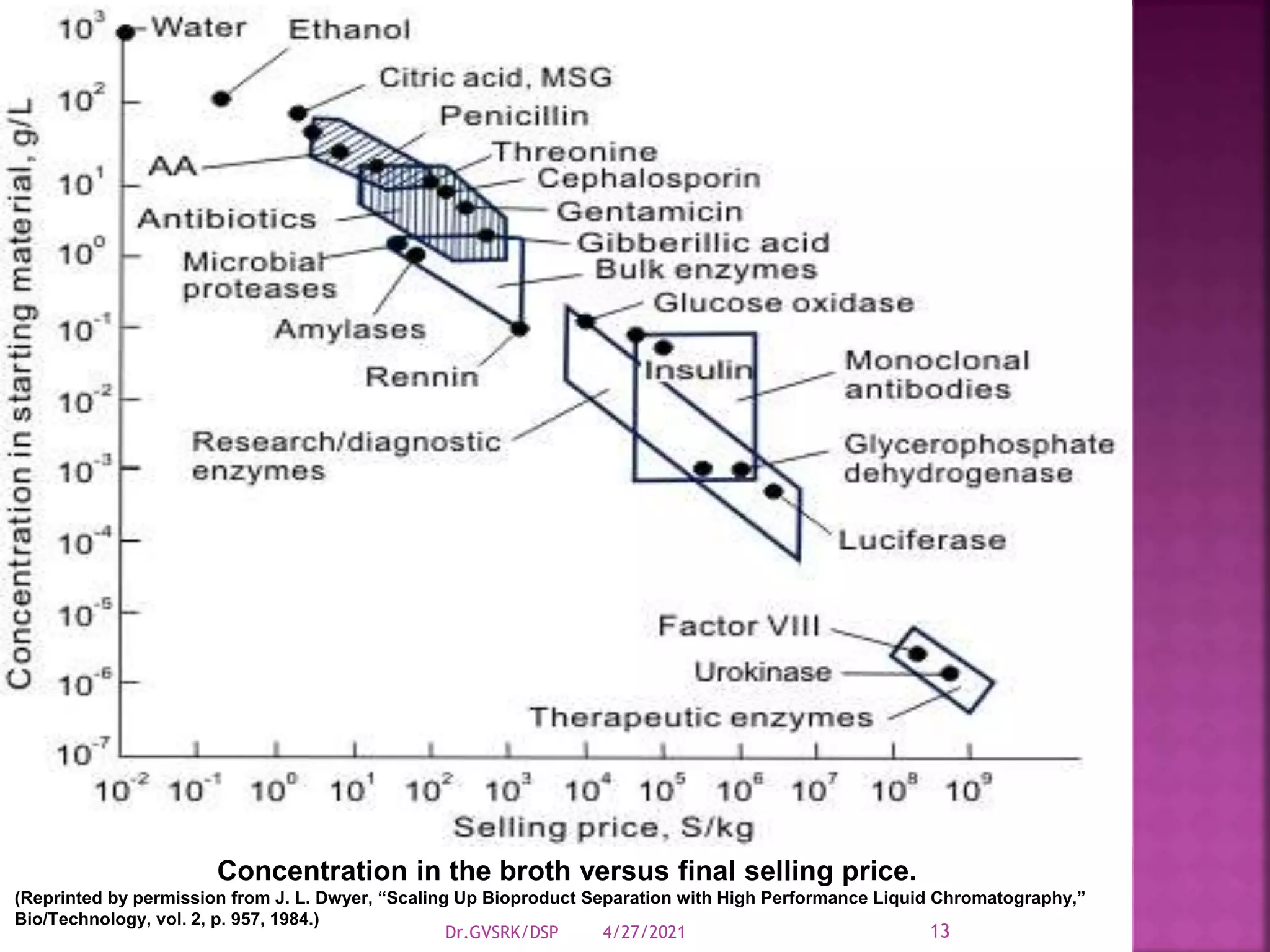
Concentration in the broth versus final selling price.
(Reprinted by permission from J. L. Dwyer, “Scaling Up Bioproduct Separation with High Performance Liquid Chromatography,”
Bio/Technology, vol. 2, p. 957, 1984.)
13
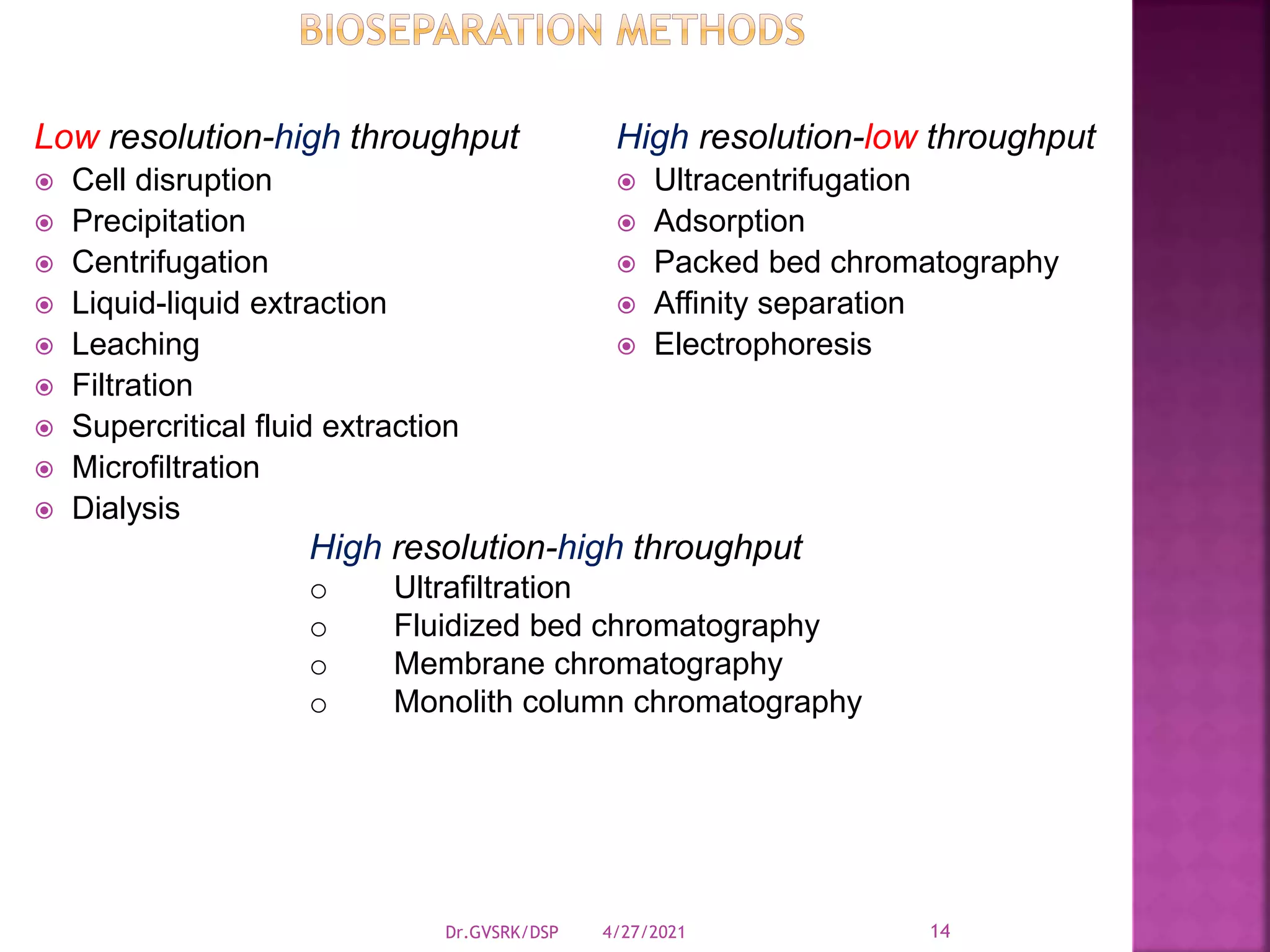
Low resolution-high throughput
 Cell disruption
 Precipitation
 Centrifugation
 Liquid-liquid extraction
 Leaching
 Filtration
 Supercritical fluid extraction
 Microfiltration
 Dialysis
High resolution-low throughput
 Ultracentrifugation
 Adsorption
 Packed bed chromatography
 Affinity separation
 Electrophoresis
High resolution-high throughput
o Ultrafiltration
o Fluidized bed chromatography
o Membrane chromatography
o Monolith column chromatography
4/27/2021
Dr.GVSRK/DSP 14
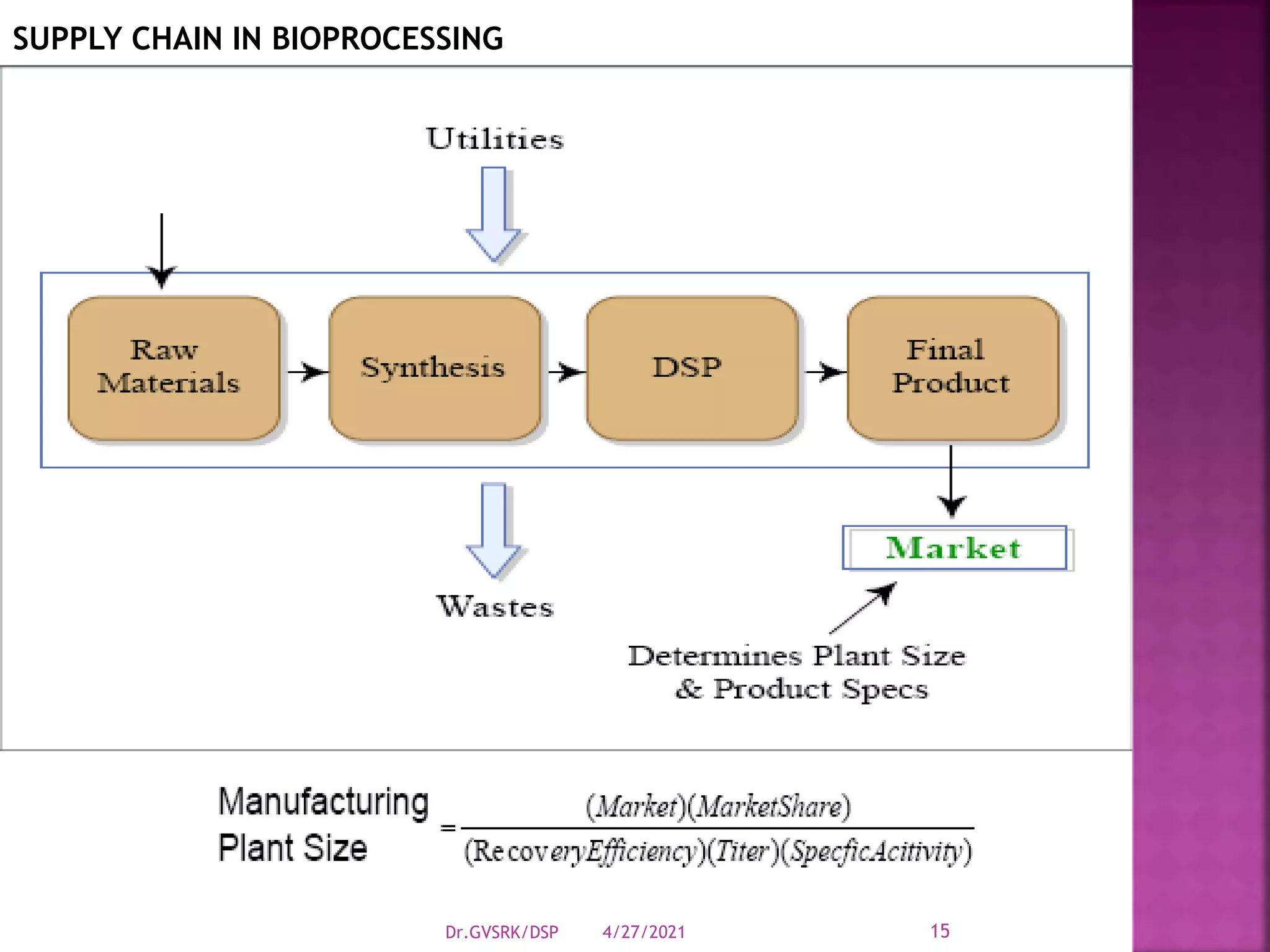
SUPPLY CHAIN IN BIOPROCESSING
4/27/2021
Dr.GVSRK/DSP 15
4/27/2021
Dr.GVSRK/DSP 16
1. What is the product?
2. What is the value of product?
3. What is the acceptable product quality for the proposed end
use?
4. Where is the product in the complex mixture?
5. What are the physical and chemical properties of the
product and the impurities?
6. Is the product stable?
7. What are the economic of the various isolation procedure?
8. Are they any contamination / health risk?
9. Can the isolation procedure be scaled up?
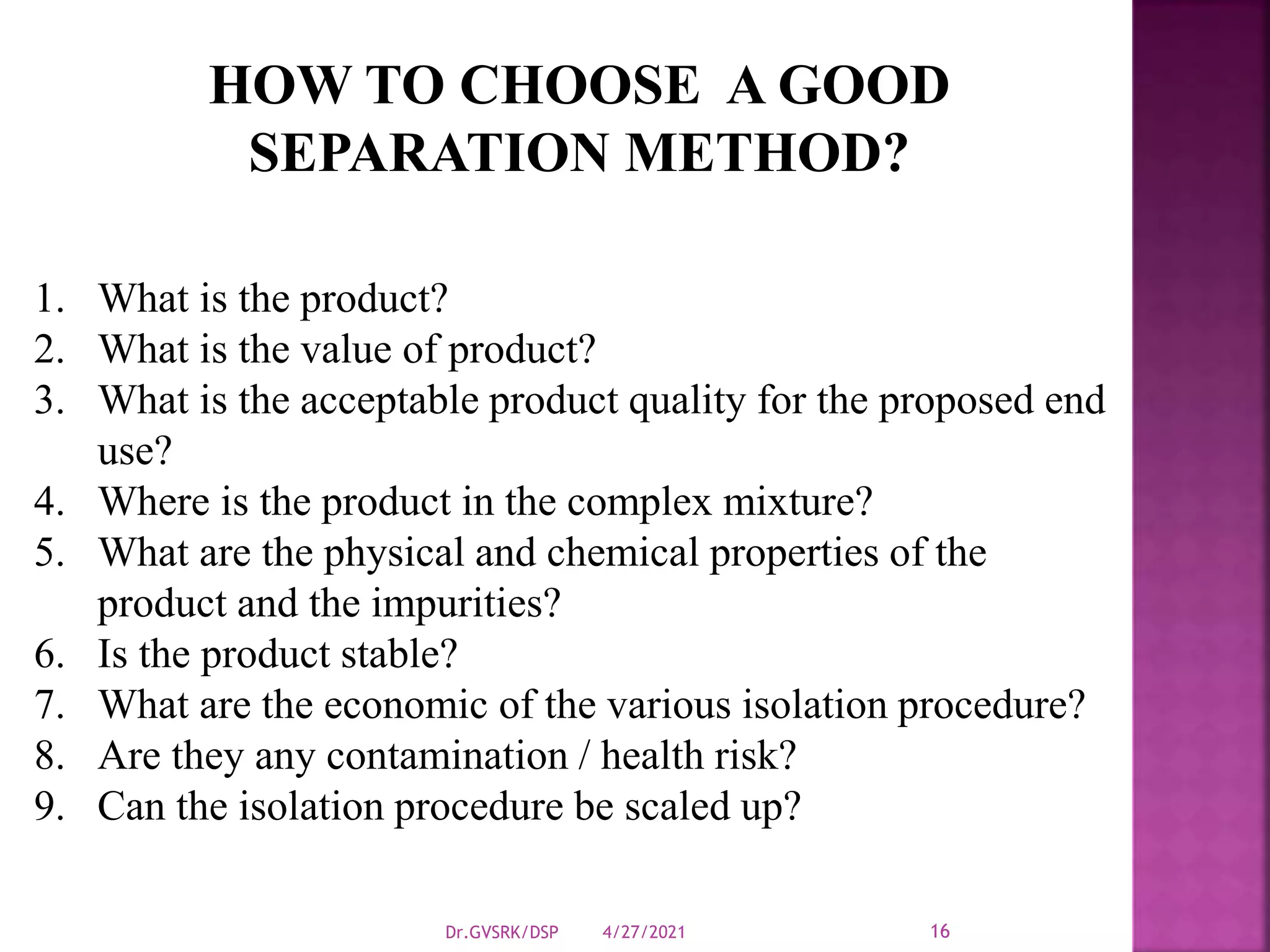
HOW TO CHOOSE A GOOD
SEPARATION METHOD?
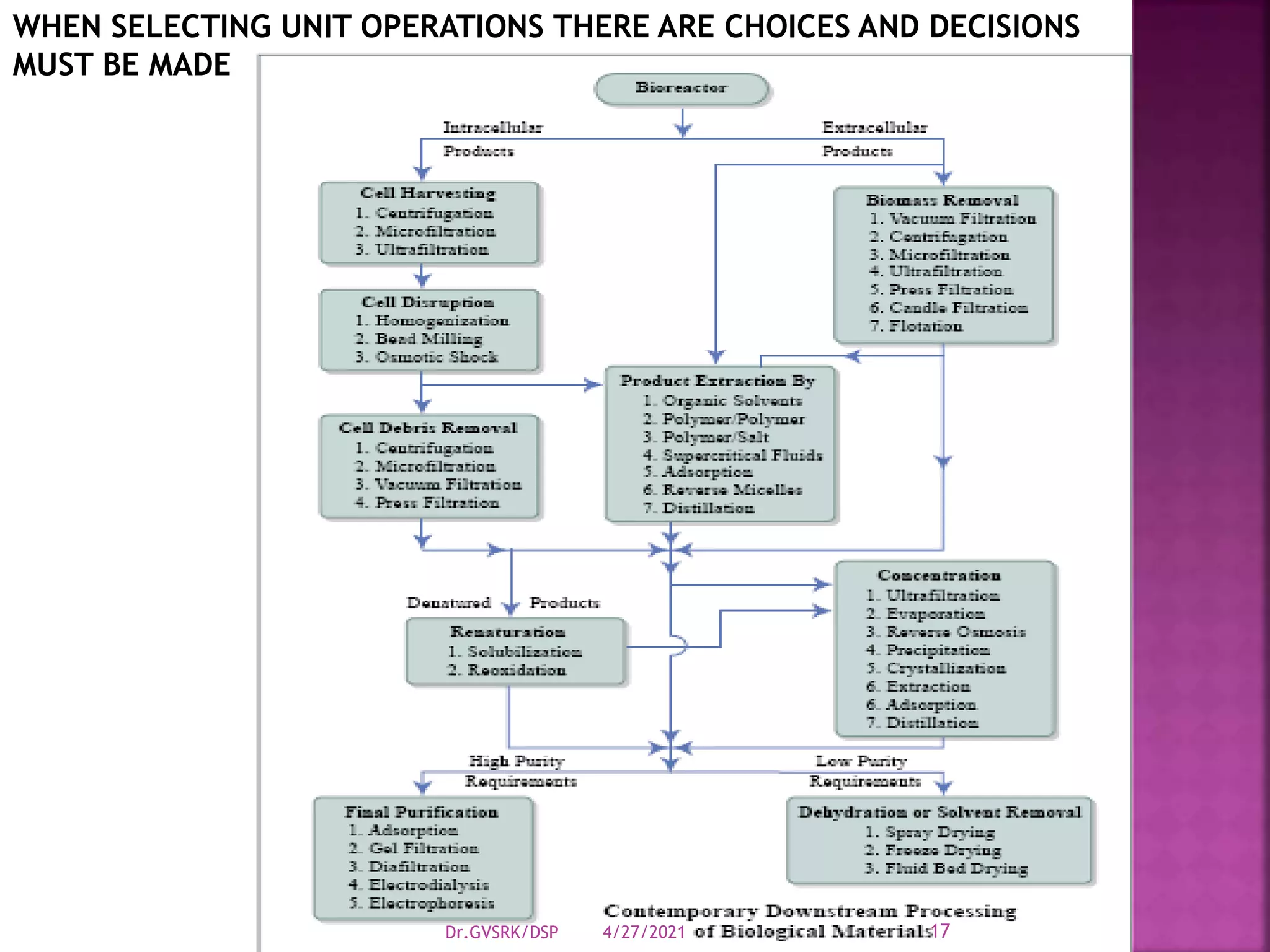
WHEN SELECTING UNIT OPERATIONS THERE ARE CHOICES AND DECISIONS
MUST BE MADE
4/27/2021
Dr.GVSRK/DSP 17
4/27/2021
Dr.GVSRK/DSP 18
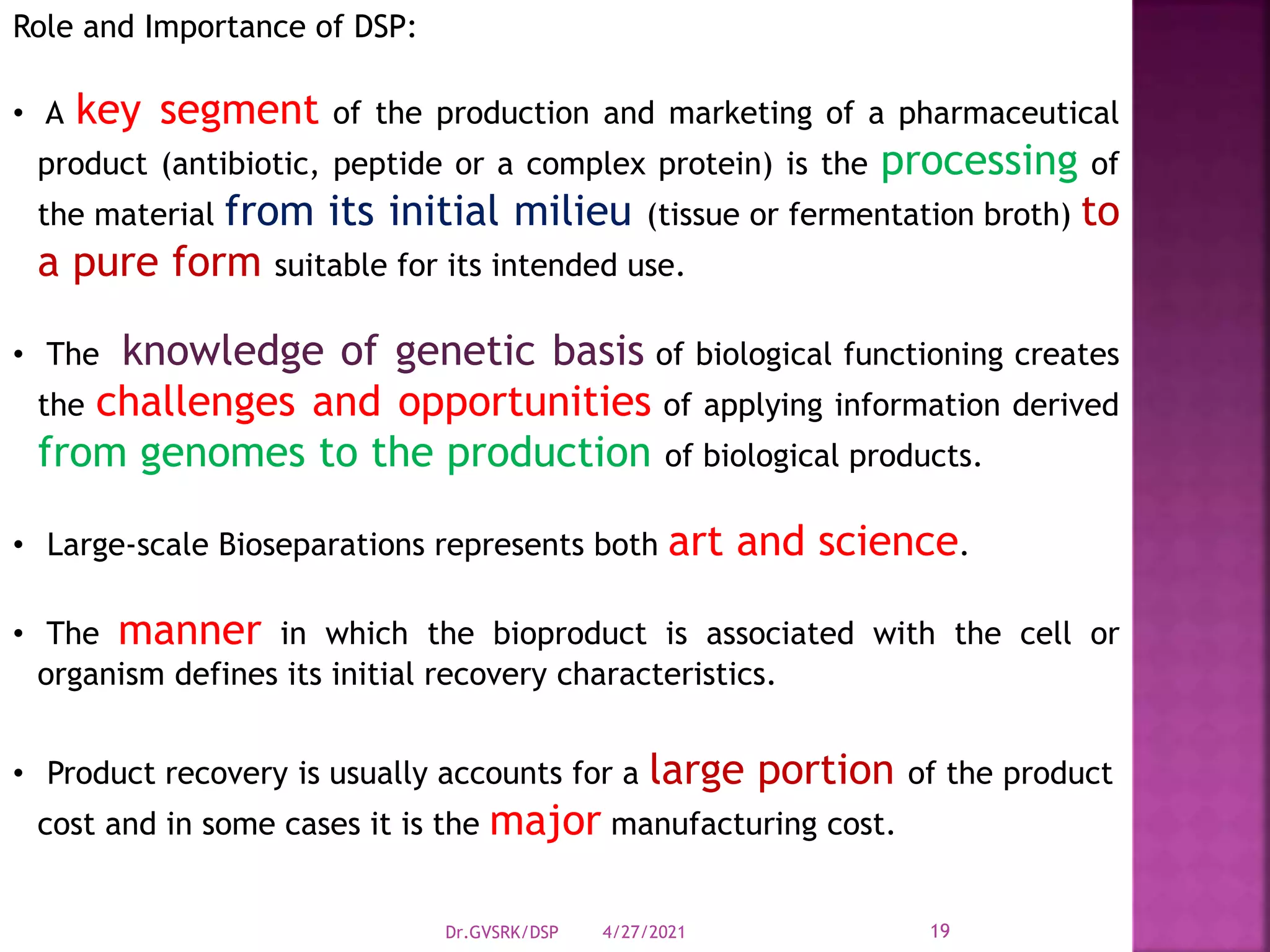
Role and Importance of DSP:
• A key segment of the production and marketing of a pharmaceutical
product (antibiotic, peptide or a complex protein) is the processing of
the material from its initial milieu (tissue or fermentation broth) to
a pure form suitable for its intended use.
• The knowledge of genetic basis of biological functioning creates
the challenges and opportunities of applying information derived
from genomes to the production of biological products.
• Large-scale Bioseparations represents both art and science.
• The manner in which the bioproduct is associated with the cell or
organism defines its initial recovery characteristics.
• Product recovery is usually accounts for a large portion of the product
cost and in some cases it is the major manufacturing cost.
4/27/2021
Dr.GVSRK/DSP 19

Session 1 role and importance of dsp in biotechnology

  • 1.
  • 2.
  • 3.
    Definitions: Down Stream Processing “Complicatedseries of Isolation and Purification steps, which are usually quite costly” “Application of Principles of Bioseparations in a manner that will apply to bioproducts not yet invented, and biological molecules not yet produced on a large scale, as well as the molecules that form the basis of the current industry” “Application of fundamental engineering and biological principles to the design of adsorbents, systems, and processes for the separation of biological molecules with a mechanistic analysis as a key phenomena at a microscopic level” 4/27/2021 Dr.GVSRK/DSP 3
  • 4.
    Challenge of DownStream Processing It is difficult to efficiently and economically recover a high purity biochemical product from a complex mixture of related and functional molecules, impurities and contaminants which have similar physical and chemical properties. Bioseparations Engineering “The Systematic study of the scientific and engineering principles utilized for large-scale purification of biological products 4/27/2021 Dr.GVSRK/DSP 4
  • 5.
  • 6.
  • 7.
    4/27/2021 Dr.GVSRK/DSP 7 BIOLOGICAL PRODUCTS (withdifferent bioseparation process) Product Nature of bioseparation required Alcoholic beverages: Beer, wine, spirits Clarification, distillation Organic acids: Acetic acid, citric acid Precipitation, filtration, adsorption, solvent extraction Vitamins: Vitamin C, vitamin B12, riboflavin Precipitation, filtration, adsorption, solvent extraction Amino acids: Lysine, glycine, phenylalanine Precipitation, filtration, adsorption, solvent extraction Antibiotics: Penicillins, neomycin, bacitracin Precipitation, filtration, adsorption, solvent extraction Carbohydrates: Starch, sugars, dextrans Precipitation, filtration, adsorption Lipids: Glycerol, fats, fatty acids Precipitation, filtration, adsorption, solvent extraction
  • 8.
    4/27/2021 Dr.GVSRK/DSP 8 Proteins: Food andfood additives Neutraceuticals Industrial enzymes Hormones Pharmaceutical enzymes Plasma derived products Monoclonal antibodies Growth factors Clotting factors Thrombolytes r-DNA derived proteins Diagnostic proteins Vaccines Filtration, precipitation, centrifugation, adsorption, chromatography, membrane based separations DNA based products: DNA probes, plasmids, nucleotides, oligonucleotides Filtration, precipitation, centrifugation, adsorption, chromatography, membrane based separations BIOLOGICAL PROD UCTS (with different bioseparation process)
  • 9.
    THE DIVERSE BIOCHEMICALPROCESS INDUSTRY •PRODUCTS AND SERVICES FORMULTIPLE MARKETS Food & Beverage Health Care Therapeutics Diagnostics Device Specialty Chemical Commodity Chemicals Waste Treatment •MANUFACTURING BY MULTIPLE SYNTHETIC & EXTRACTIVETECHNOLOGIES Biosynthetic -Microbial, Animal, Plant Extractive –Animal, Plant Chemical Synthesis 4/27/2021 Dr.GVSRK/DSP 9
  • 10.
    THE DIVERSE BIOCHEMICALPROCESS INDUSTRY (Continued) • PRODUCTS BELONG TO MULTIPLE CLASSES – Small Molecules – Proteins – Nucleic Acids – Carbohydrates – Catabolites & Anabolites – Cells And Viruses • PRODUCTS & PROCESSES REGULATED – FDA – EPA – OSHA 4/27/2021 Dr.GVSRK/DSP 10
  • 11.
    POINTS TO CONSIDERIN DOWNSTREAM PROCESSING • DSP begins with Raw Material selection “Garbage in means garbage out” • There are trade offs, e.g. between purity and yield “No Free lunch” • Mass and Energy are conserved. “What goes in must come out somewhere and in some form. There may be transformation in form.” • There are Impurities and Contaminants • You will be watched. e.g. by customers (internal and external) and the FDA. Define metrics and appropriate analytical methods. • Regulation by FDA, EPA, and OSHA • Design: – Target –the Spec Sheet – Path –the PFD – Measure –Analytical •Murphy’s Law – Contaminants –need control – Lost material –need robustness 4/27/2021 Dr.GVSRK/DSP 11
  • 12.
    4/27/2021 Dr.GVSRK/DSP 12 Product Bioseparation cost(%) Solvents e.g. ethanol, acetone 15-20 Cells, e.g. bakers yeast, brewers yeast 20-25 Crude cellular extracts, e.g. yeast extract 20-25 Organics acids, e.g. citric acid, lactic acid 30-40 Vitamins and amino acids e.g. lysine, ascorbic acid 30-40 Gums and polymers, e.g. xanthan, gellan 40-50 Antibiotics, e.g. penicillins, rifanpicin 20-60 Industrial enzymes, e.g. Amyloglucosidase, glucose isomerase 40-65 Non-recombinant therapeutic proteins, e.g. pancreatin, papain 50-70 r-DNA products, e.g. recombinant insulin, recombinant streptokinase 60-80 Monoclonal antibodies 50-70 Nucleic acid based products 60-80 Plasma proteins, human albumin, human immunoglobulins 70-80 Economic importance of bioseparation (cost of bioseparation)
  • 13.
    4/27/2021 Dr.GVSRK/DSP Concentration in thebroth versus final selling price. (Reprinted by permission from J. L. Dwyer, “Scaling Up Bioproduct Separation with High Performance Liquid Chromatography,” Bio/Technology, vol. 2, p. 957, 1984.) 13
  • 14.
    Low resolution-high throughput Cell disruption  Precipitation  Centrifugation  Liquid-liquid extraction  Leaching  Filtration  Supercritical fluid extraction  Microfiltration  Dialysis High resolution-low throughput  Ultracentrifugation  Adsorption  Packed bed chromatography  Affinity separation  Electrophoresis High resolution-high throughput o Ultrafiltration o Fluidized bed chromatography o Membrane chromatography o Monolith column chromatography 4/27/2021 Dr.GVSRK/DSP 14
  • 15.
    SUPPLY CHAIN INBIOPROCESSING 4/27/2021 Dr.GVSRK/DSP 15
  • 16.
    4/27/2021 Dr.GVSRK/DSP 16 1. Whatis the product? 2. What is the value of product? 3. What is the acceptable product quality for the proposed end use? 4. Where is the product in the complex mixture? 5. What are the physical and chemical properties of the product and the impurities? 6. Is the product stable? 7. What are the economic of the various isolation procedure? 8. Are they any contamination / health risk? 9. Can the isolation procedure be scaled up? HOW TO CHOOSE A GOOD SEPARATION METHOD?
  • 17.
    WHEN SELECTING UNITOPERATIONS THERE ARE CHOICES AND DECISIONS MUST BE MADE 4/27/2021 Dr.GVSRK/DSP 17
  • 18.
  • 19.
    Role and Importanceof DSP: • A key segment of the production and marketing of a pharmaceutical product (antibiotic, peptide or a complex protein) is the processing of the material from its initial milieu (tissue or fermentation broth) to a pure form suitable for its intended use. • The knowledge of genetic basis of biological functioning creates the challenges and opportunities of applying information derived from genomes to the production of biological products. • Large-scale Bioseparations represents both art and science. • The manner in which the bioproduct is associated with the cell or organism defines its initial recovery characteristics. • Product recovery is usually accounts for a large portion of the product cost and in some cases it is the major manufacturing cost. 4/27/2021 Dr.GVSRK/DSP 19