LEPROSY
HANSEN’S DISEASE
ANJU ANTHARJANAM V.S.
S2 Msc.Biochemistry
Dept.of Biochemistry
University of Kerala
Kariavattom campus
INTRODUCTION
Leprosy is a chronic,infectious disease caused
by Mycobacterium leprae.
 Hansen’s disease.
World’s oldest recorded disease.
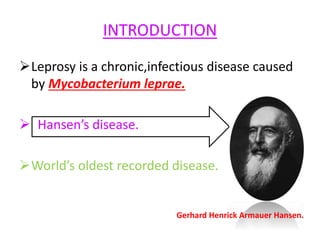
Gerhard Henrick Armauer Hansen.
Leprosy…
• The disease mainly effects the skin,the
peripherel nerves,mucosa of the upper
respiratory tract etc.
 Most common in the tropics and subtropics.
AETIOLOGY
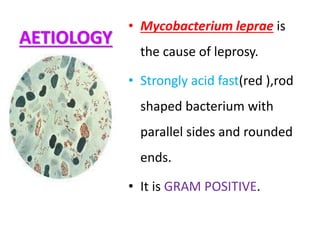
• Mycobacterium leprae is
the cause of leprosy.
• Strongly acid fast(red ),rod
shaped bacterium with
parallel sides and rounded
ends.
• It is GRAM POSITIVE.
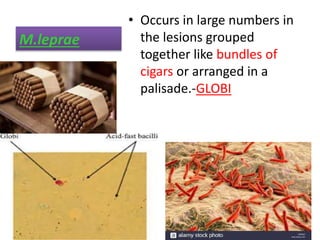
M.leprae
• Occurs in large numbers in
the lesions grouped
together like bundles of
cigars or arranged in a
palisade.-GLOBI
Types of leprosy
• Madrid classification 1953.
»LEPROMATOUS
»TUBERCULOID
»DIMORPHOUS
»INDETERMINATE
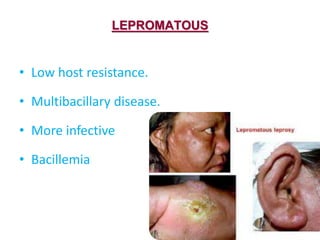
LEPROMATOUS
• Low host resistance.
• Multibacillary disease.
• More infective
• Bacillemia
TUBERCULOID
• High host resistance
• Few skin lesions,deformities
• Paucibacillary disease.
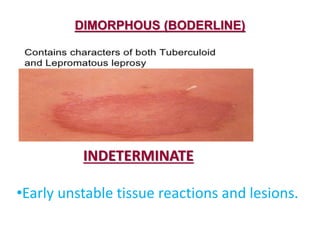
DIMORPHOUS (BODERLINE)
INDETERMINATE
•Early unstable tissue reactions and lesions.
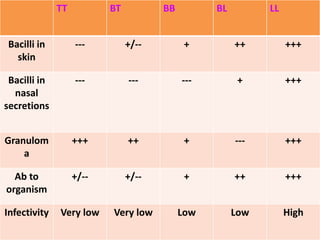
According to Ridely and Jopling
(1966)..
–Tuberculoid (TT)
–Boderline Tuberculoid (BT)
–Boderline (BB)
–Boderline Lepromatous (BL)
–Lepromatous (LL)
TT BT BB BL LL
Bacilli in
skin
--- +/-- + ++ +++
Bacilli in
nasal
secretions
--- --- --- + +++
Granulom
a
+++ ++ + --- +++
Ab to
organism
+/-- +/-- + ++ +++
Infectivity Very low Very low Low Low High
EPIDEMIOLOGY • Leprosy is an exclusively
human disease and the
only source of infection is
the patient.
• Bacilli are shed in nasal
secretions.
• The mode of entry may be either through the
respiratory tract or skin.
• The incubation period is very long and
averages 2-5 years.
• The bacterium invades the skin cells and
peripheral nerves and becomes an obligately
intra cellular parasite.
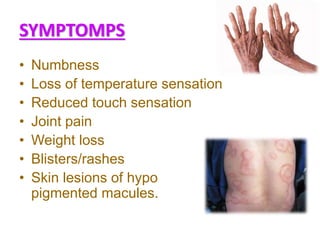
SYMPTOMPS
• Numbness
• Loss of temperature sensation
• Reduced touch sensation
• Joint pain
• Weight loss
• Blisters/rashes
• Skin lesions of hypo
pigmented macules.
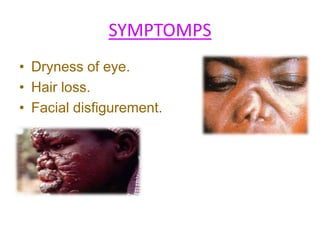
SYMPTOMPS
• Dryness of eye.
• Hair loss.
• Facial disfigurement.
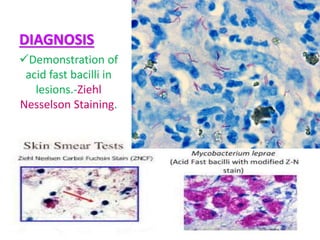
DIAGNOSIS
Demonstration of
acid fast bacilli in
lesions.-Ziehl
Nesselson Staining.
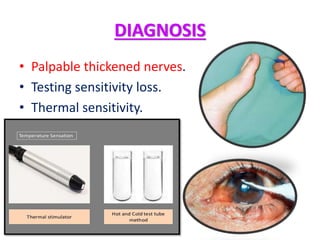
DIAGNOSIS
• Palpable thickened nerves.
• Testing sensitivity loss.
• Thermal sensitivity.
DIAGNOSIS
• Biopsy specimens-direct fluorescent antibody
staining.
• DNA amplification.
• ELISA.
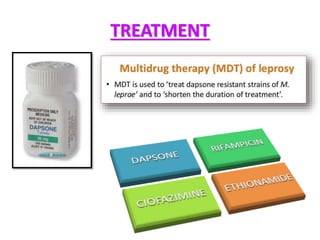
TREATMENT
REFERENCES
Bahr, Manson, and D.R.Bell.“Manson’s Tropical
Diseases”.(1996).
Textbook Of Microbiology: Ananthanarayanan
And C.K.J.Paniker (8th edition).
Prescott’s Microbiology,Joanne M. Willey
Et.Al.,(8th Edition) Mcgraw-Hill International
Edition.
THANK YOU…

Leprosy

  • 1.
    LEPROSY HANSEN’S DISEASE ANJU ANTHARJANAMV.S. S2 Msc.Biochemistry Dept.of Biochemistry University of Kerala Kariavattom campus
  • 2.
    INTRODUCTION Leprosy is achronic,infectious disease caused by Mycobacterium leprae.  Hansen’s disease. World’s oldest recorded disease. Gerhard Henrick Armauer Hansen.
  • 3.
    Leprosy… • The diseasemainly effects the skin,the peripherel nerves,mucosa of the upper respiratory tract etc.  Most common in the tropics and subtropics.
  • 4.
    AETIOLOGY • Mycobacterium lepraeis the cause of leprosy. • Strongly acid fast(red ),rod shaped bacterium with parallel sides and rounded ends. • It is GRAM POSITIVE.
  • 5.
    M.leprae • Occurs inlarge numbers in the lesions grouped together like bundles of cigars or arranged in a palisade.-GLOBI
  • 6.
    Types of leprosy •Madrid classification 1953. »LEPROMATOUS »TUBERCULOID »DIMORPHOUS »INDETERMINATE
  • 7.
    LEPROMATOUS • Low hostresistance. • Multibacillary disease. • More infective • Bacillemia
  • 8.
    TUBERCULOID • High hostresistance • Few skin lesions,deformities • Paucibacillary disease.
  • 9.
  • 10.
    According to Ridelyand Jopling (1966).. –Tuberculoid (TT) –Boderline Tuberculoid (BT) –Boderline (BB) –Boderline Lepromatous (BL) –Lepromatous (LL)
  • 11.
    TT BT BBBL LL Bacilli in skin --- +/-- + ++ +++ Bacilli in nasal secretions --- --- --- + +++ Granulom a +++ ++ + --- +++ Ab to organism +/-- +/-- + ++ +++ Infectivity Very low Very low Low Low High
  • 12.
    EPIDEMIOLOGY • Leprosyis an exclusively human disease and the only source of infection is the patient. • Bacilli are shed in nasal secretions.
  • 13.
    • The modeof entry may be either through the respiratory tract or skin. • The incubation period is very long and averages 2-5 years. • The bacterium invades the skin cells and peripheral nerves and becomes an obligately intra cellular parasite.
  • 14.
    SYMPTOMPS • Numbness • Lossof temperature sensation • Reduced touch sensation • Joint pain • Weight loss • Blisters/rashes • Skin lesions of hypo pigmented macules.
  • 15.
    SYMPTOMPS • Dryness ofeye. • Hair loss. • Facial disfigurement.
  • 16.
    DIAGNOSIS Demonstration of acid fastbacilli in lesions.-Ziehl Nesselson Staining.
  • 17.
    DIAGNOSIS • Palpable thickenednerves. • Testing sensitivity loss. • Thermal sensitivity.
  • 18.
    DIAGNOSIS • Biopsy specimens-directfluorescent antibody staining. • DNA amplification. • ELISA.
  • 19.
  • 21.
    REFERENCES Bahr, Manson, andD.R.Bell.“Manson’s Tropical Diseases”.(1996). Textbook Of Microbiology: Ananthanarayanan And C.K.J.Paniker (8th edition). Prescott’s Microbiology,Joanne M. Willey Et.Al.,(8th Edition) Mcgraw-Hill International Edition.
  • 22.