SEMINAR ON BASIC
ELECTRONICS
TOPIC-LED & VARACTOR DIODES
AVNEET SINGH LAL
EC-3
LED
ABOUT LED
 LED is an opto-electronic device which emits a narrow
bandwidth of visible or invisible light when its internal diode
junction is stimulated by a forward electric current or
voltage.
 LEDs convert electrical energy into light energy.
 The material used for LEDs are the direct Band Gap
Semiconductors which are made from group 3rd and group 5th
elements. For eg.- GaAs
OPERATION OF LED
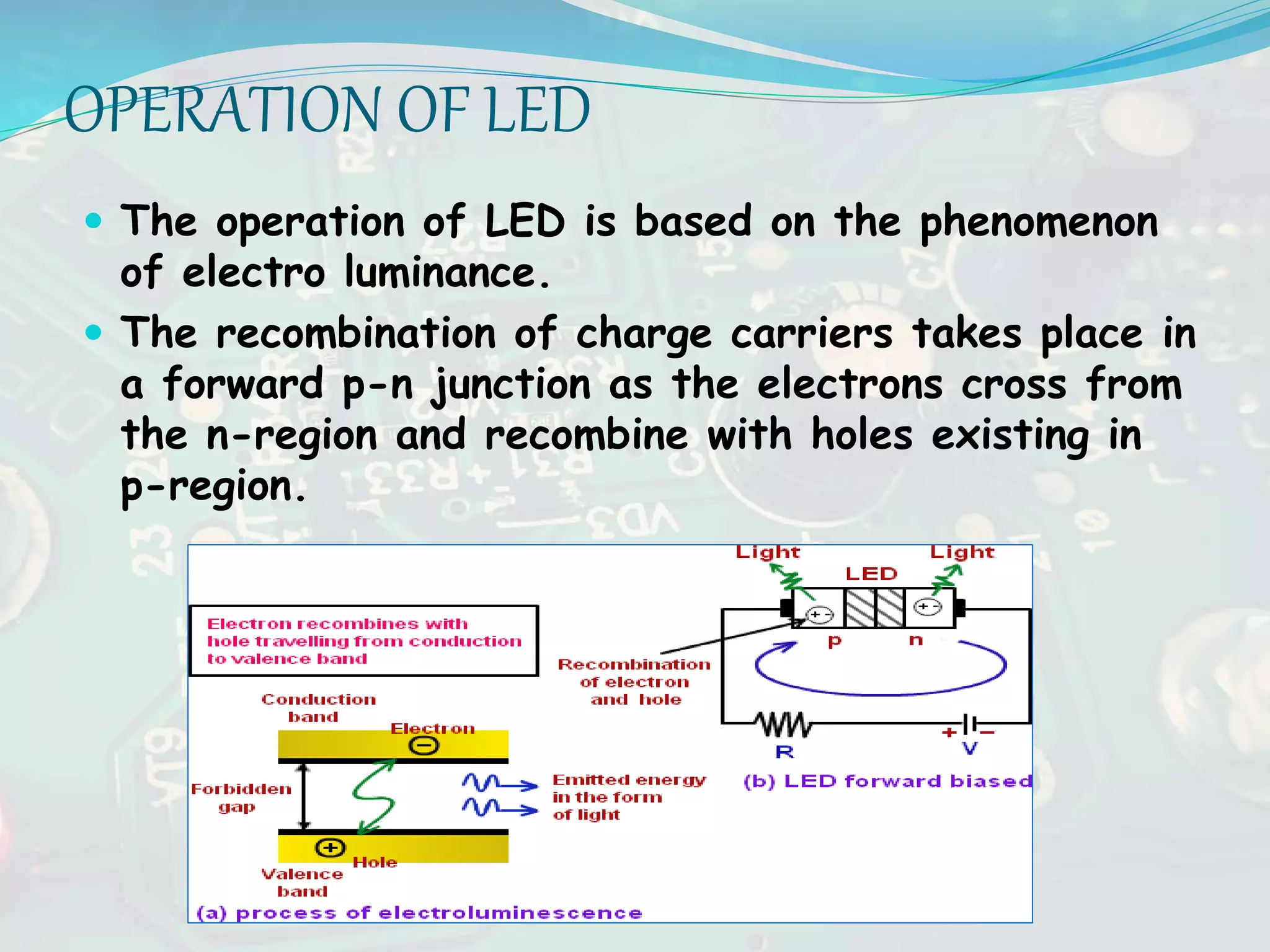
 The operation of LED is based on the phenomenon
of electro luminance.
 The recombination of charge carriers takes place in
a forward p-n junction as the electrons cross from
the n-region and recombine with holes existing in
p-region.
ADVANTAGES OF LED
 LEDs are small in size and can be used to form
numeric and alpha numeric display in high density
matrix.
 LEDs are rugged.
 They need moderate power.
 High Lighting Efficiency
 Long Life
 High Reliability & Safety
 Environment Friendly
 Excellent Colour Rendering
 No warm up period
DISADVANTAGES
 A very limited variety and selection for your home
compared to other types of lighting.
 Hard to find in smaller towns where consumers may
have a smaller interest in this lighting alternative.
 Significantly more expensive than regular lighting
and not budget conscious.
 Although they are available in many colours, the
quality of the colours is not quite as good as with
regular lighting.
APPLICATIONS
 Medical Instrumentation
 Bar Code Readers
 Fibre Optic Communication
 Digital Cameras
 Laptops
 Traffic Signals
 Rail
 Tower Lights
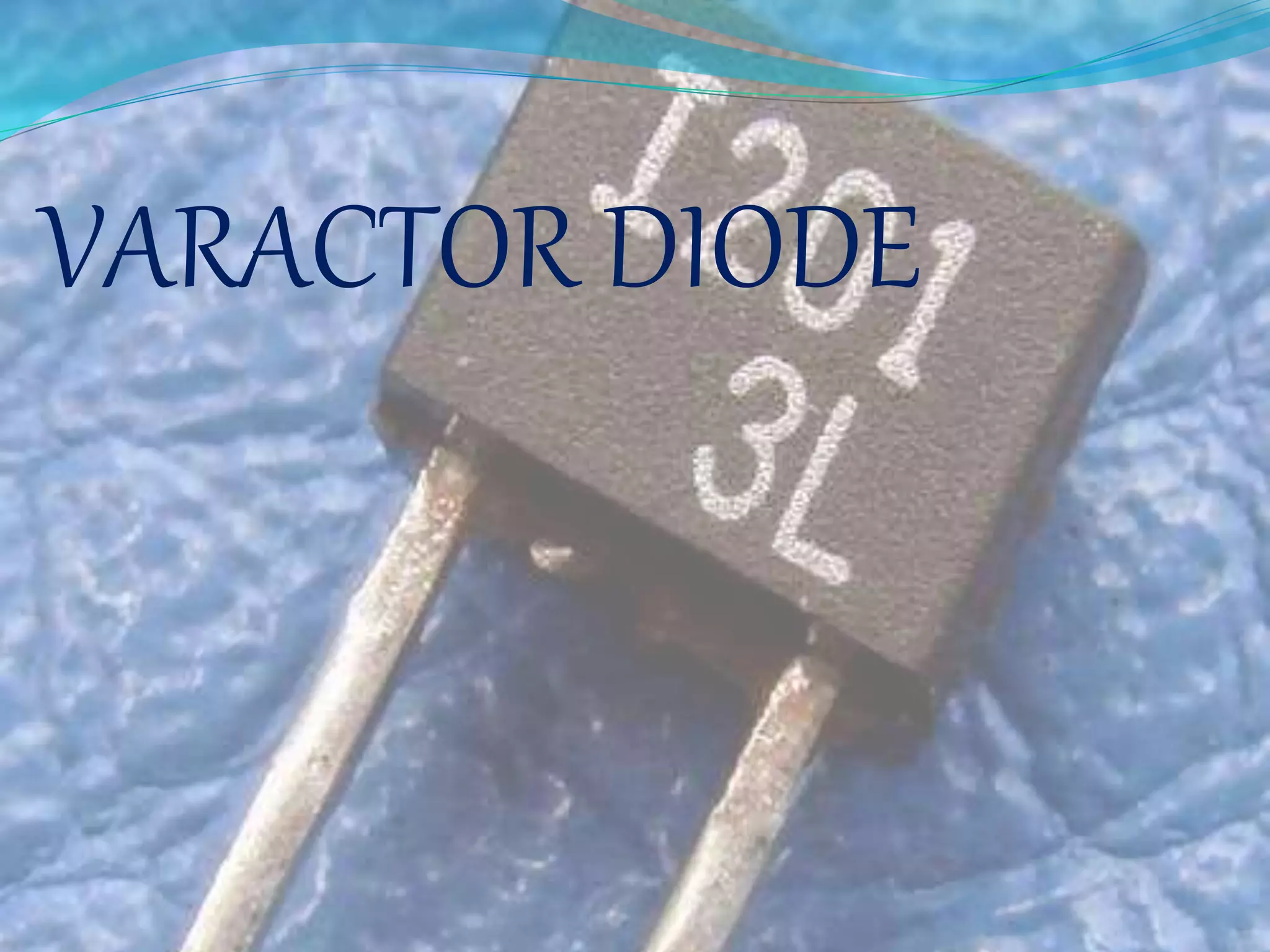
VARACTOR DIODE
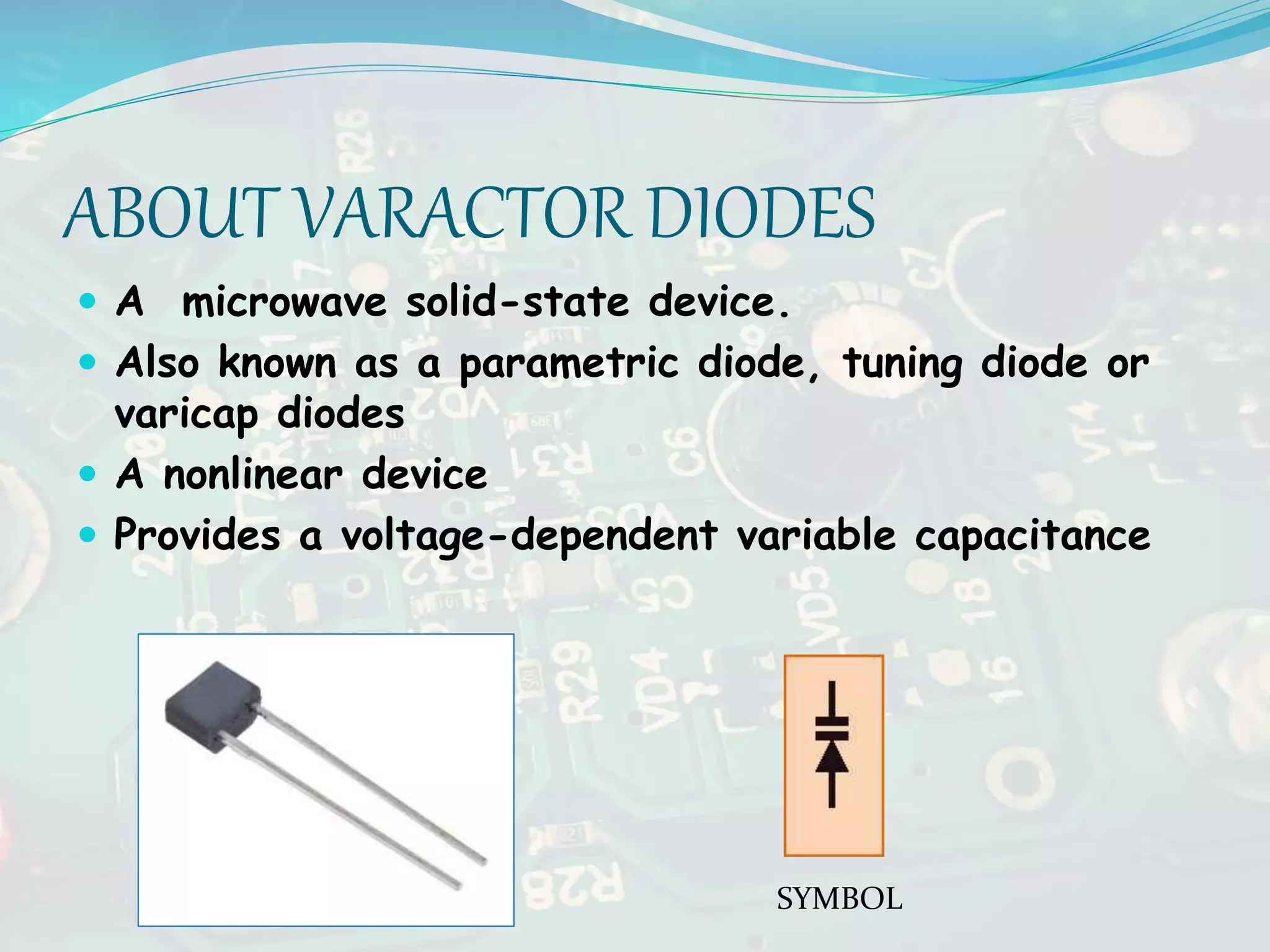
ABOUT VARACTOR DIODES
 A microwave solid-state device.
 Also known as a parametric diode, tuning diode or
varicap diodes
 A nonlinear device
 Provides a voltage-dependent variable capacitance
SYMBOL
OPERATION
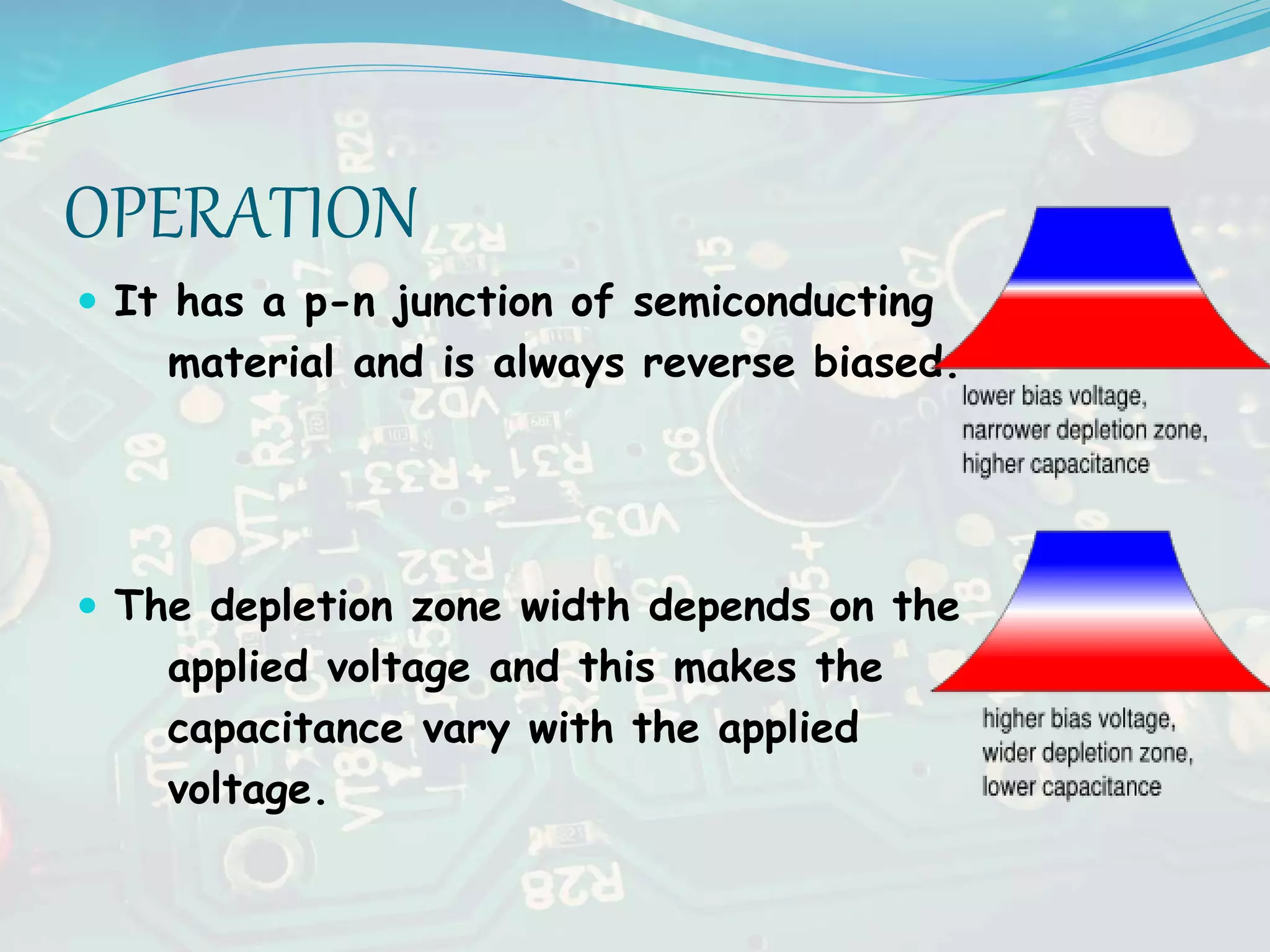
 It has a p-n junction of semiconducting
material and is always reverse biased.
 The depletion zone width depends on the
applied voltage and this makes the
capacitance vary with the applied
voltage.
CHARACTERISTICS
 Low noise
 Low cost
 High reliability
 Light weight
 Small size
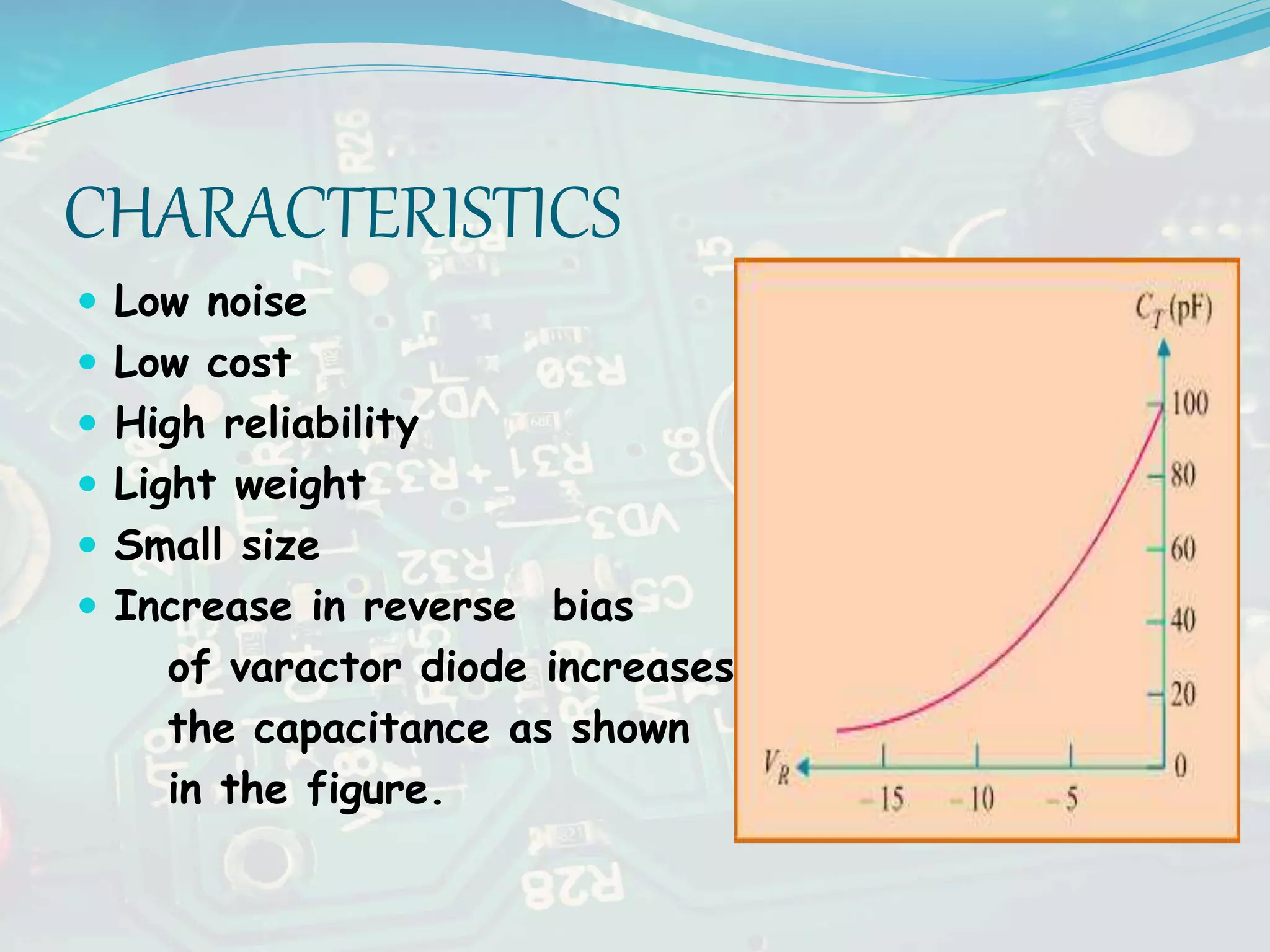
 Increase in reverse bias
of varactor diode increases
the capacitance as shown
in the figure.
APPLICATIONS
 Variable reactor in microwave circuits.
 It can be used for voltage tuning of
LC resonant circuit.
 It is used for generation of FM
Waves.
CONCLUSIONS
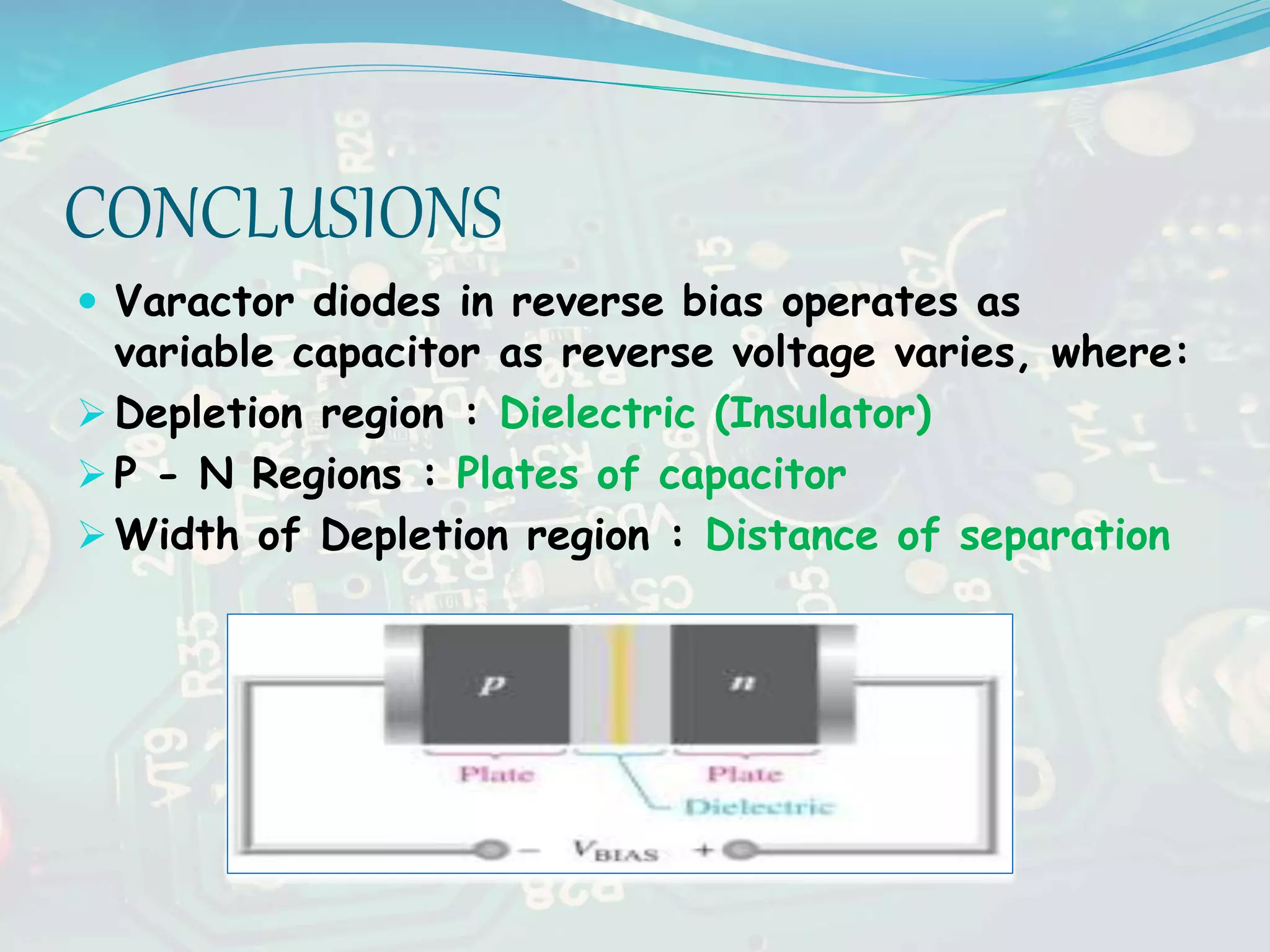
 Varactor diodes in reverse bias operates as
variable capacitor as reverse voltage varies, where:
 Depletion region : Dielectric (Insulator)
 P - N Regions : Plates of capacitor
 Width of Depletion region : Distance of separation
THE END
THANK YOU FOR YOU
ATTENTION

Led and varactor diode

  • 1.
    SEMINAR ON BASIC ELECTRONICS TOPIC-LED& VARACTOR DIODES AVNEET SINGH LAL EC-3
  • 2.
  • 3.
    ABOUT LED  LEDis an opto-electronic device which emits a narrow bandwidth of visible or invisible light when its internal diode junction is stimulated by a forward electric current or voltage.  LEDs convert electrical energy into light energy.  The material used for LEDs are the direct Band Gap Semiconductors which are made from group 3rd and group 5th elements. For eg.- GaAs
  • 4.
    OPERATION OF LED The operation of LED is based on the phenomenon of electro luminance.  The recombination of charge carriers takes place in a forward p-n junction as the electrons cross from the n-region and recombine with holes existing in p-region.
  • 5.
    ADVANTAGES OF LED LEDs are small in size and can be used to form numeric and alpha numeric display in high density matrix.  LEDs are rugged.  They need moderate power.  High Lighting Efficiency  Long Life  High Reliability & Safety  Environment Friendly  Excellent Colour Rendering  No warm up period
  • 6.
    DISADVANTAGES  A verylimited variety and selection for your home compared to other types of lighting.  Hard to find in smaller towns where consumers may have a smaller interest in this lighting alternative.  Significantly more expensive than regular lighting and not budget conscious.  Although they are available in many colours, the quality of the colours is not quite as good as with regular lighting.
  • 7.
    APPLICATIONS  Medical Instrumentation Bar Code Readers  Fibre Optic Communication  Digital Cameras  Laptops  Traffic Signals  Rail  Tower Lights
  • 8.
  • 9.
    ABOUT VARACTOR DIODES A microwave solid-state device.  Also known as a parametric diode, tuning diode or varicap diodes  A nonlinear device  Provides a voltage-dependent variable capacitance SYMBOL
  • 10.
    OPERATION  It hasa p-n junction of semiconducting material and is always reverse biased.  The depletion zone width depends on the applied voltage and this makes the capacitance vary with the applied voltage.
  • 11.
    CHARACTERISTICS  Low noise Low cost  High reliability  Light weight  Small size  Increase in reverse bias of varactor diode increases the capacitance as shown in the figure.
  • 12.
    APPLICATIONS  Variable reactorin microwave circuits.  It can be used for voltage tuning of LC resonant circuit.  It is used for generation of FM Waves.
  • 13.
    CONCLUSIONS  Varactor diodesin reverse bias operates as variable capacitor as reverse voltage varies, where:  Depletion region : Dielectric (Insulator)  P - N Regions : Plates of capacitor  Width of Depletion region : Distance of separation
  • 14.
    THE END THANK YOUFOR YOU ATTENTION