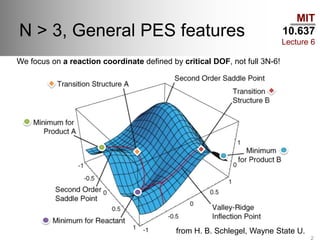
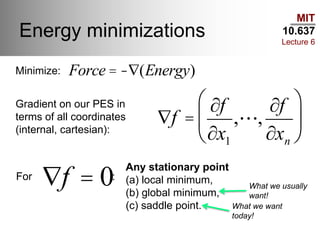
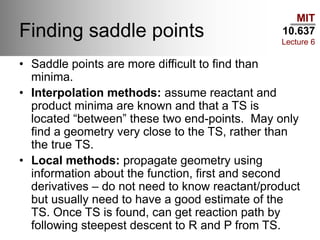
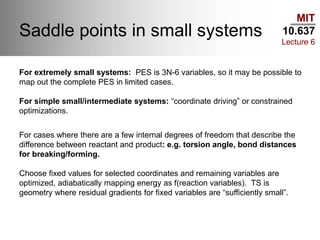
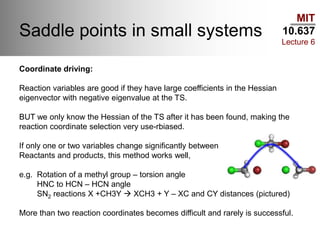
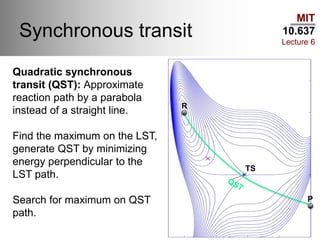
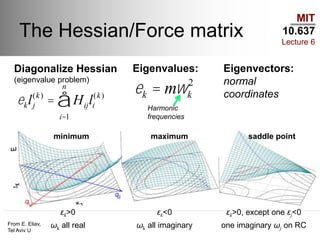
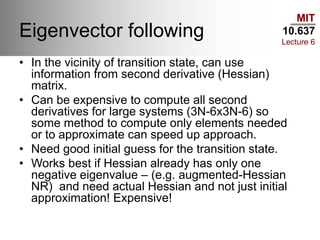
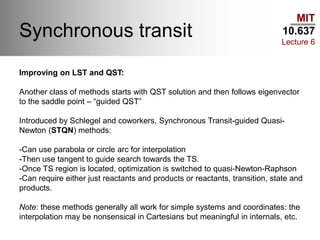
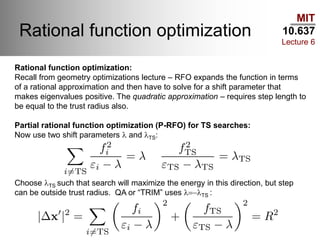
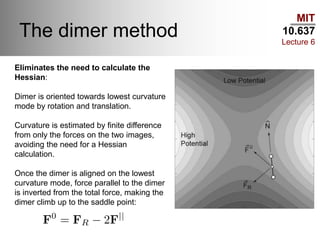
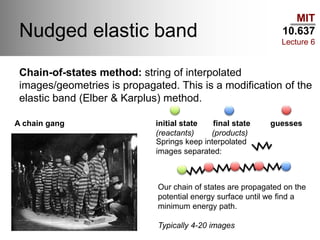
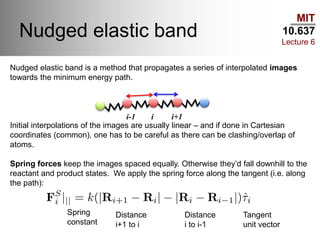
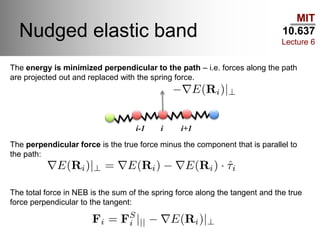
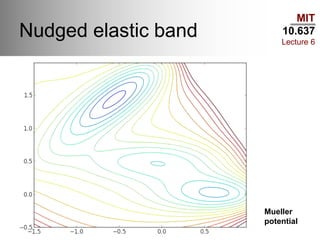
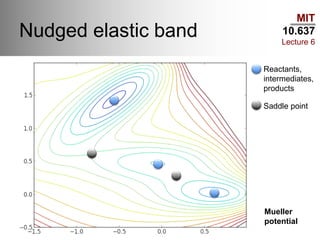
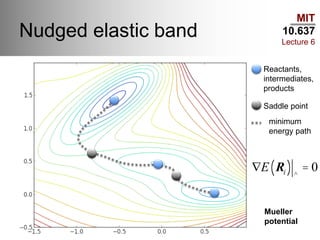
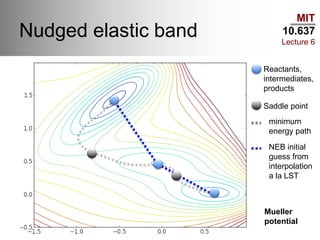
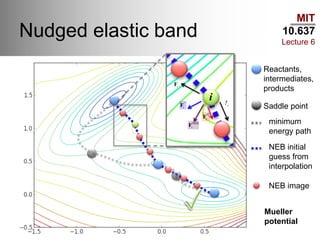
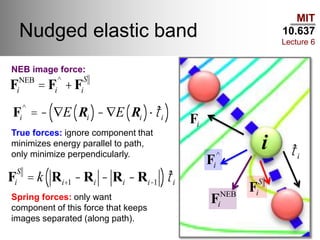
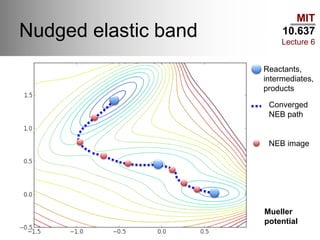
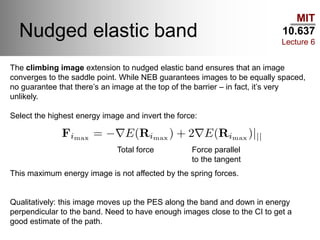
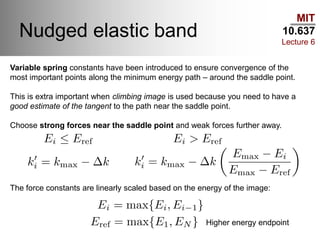
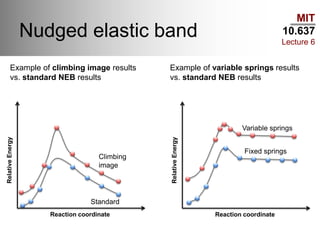
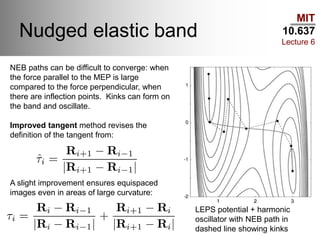
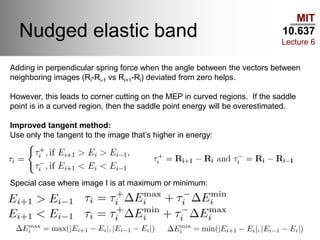
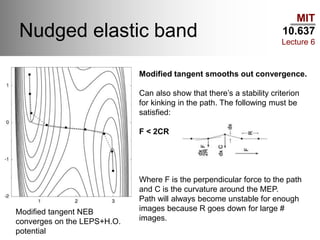
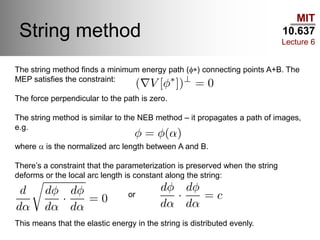
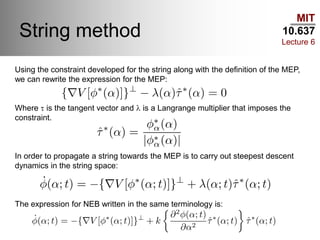
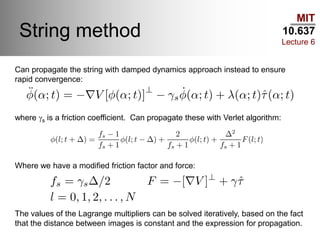
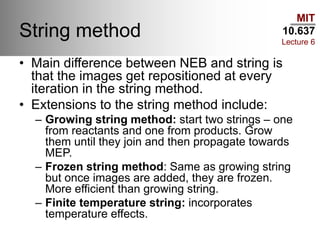
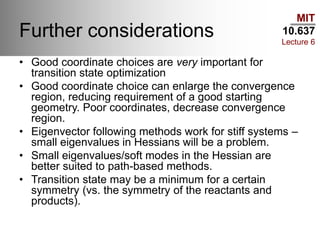
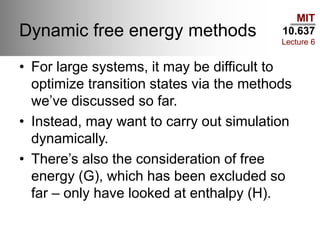
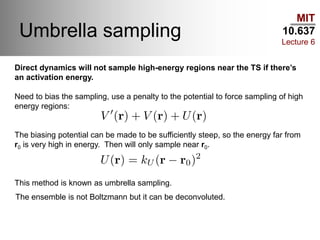
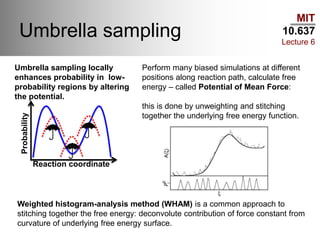
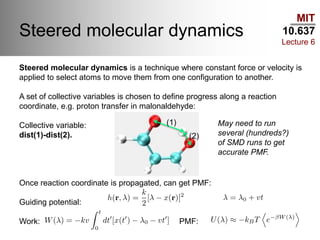
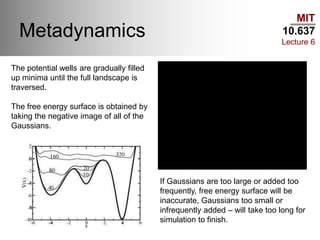
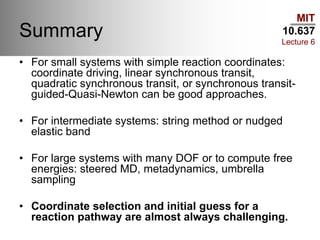
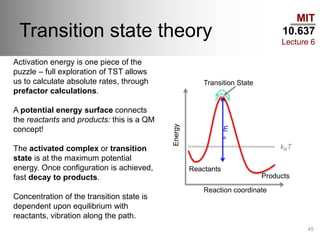
The MIT 10.637 Lecture 6 covers transition state searches and potential energy surface (PES) sampling methods, focusing on finding saddle points, which are more challenging than minima. Various techniques such as quadratic synchronous transit (QST), nudged elastic band (NEB), and string methods are discussed for optimizing transition states and minimizing energy paths, emphasizing the importance of coordinate selection. Additionally, dynamic methods like umbrella sampling and steered molecular dynamics are introduced to effectively sample high-energy regions and enhance probability distributions during simulations.





![Polymer [ बहुलक ] Chemistry Notes PDF - Irfanullah Mehar - JJ Sir Chemistry.pdf](https://cdn.slidesharecdn.com/ss_thumbnails/polymerchemistrynotespdf-irfanullahmehar-jjsirchemistry-260210172118-3f9b37f7-thumbnail.jpg?width=640&height=640&fit=bounds)


