Introduction to Genetics
Gregor Mendel
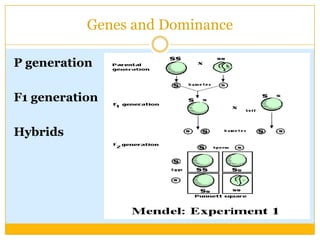
Genes and DominanceP generationF1 generationHybrids
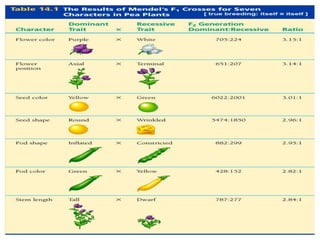
Genes and DominanceThe F1 generation had the character of only of the parentsMendel drew two conclusionsBiological inheritance is determined by factors that are passed from generation to the nextThe principle of dominance GenesAlleles
Segregation
Genetics and ProbabilityThe likelihood that a particular event will occur is called probabilityThe principles of probability can be used to predict the outcomes of genetic crosses
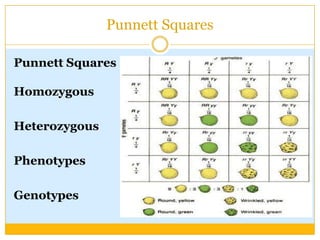
Punnett SquaresPunnett SquaresHomozygousHeterozygousPhenotypesGenotypes
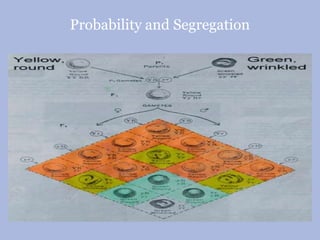
Probability and Segregation
The Two Factor Cross: F1Two different genes passing from generation to anotherFirst, Mendel crossed tree-breeding plants (RRYY x rryy)All of the F1 offspring produced the dominant genes
The Two Factor Cross: F2Mendel knew that all the F1 plants were heterozygous for both genesThe F2 generation shows how alleles segregateSince the alleles for both genes segregated independently of each other (independent assortment), the ratio was 9:3:3:1The principle of independent assortment states that genes for different traits can segregate independently during the formation of gametes.  Independent assortment helps account for the many genetic variations observed in plants, animals, and other organisms
Summary of Mendel’s Principles
Summary of Mendel’s PrinciplesThe inheritance of biological characteristics is determined by individual units known as genes.  Genes are passed from parents to their offspringIn cases in which two or more alleles of the gene for a single trait exist, some forms of the gene may be dominant and others may be recessiveIn most sexually reproducing organisms, each adult has two copies of each gene - one from each parent.  These gens are segregated from each other when gametes are formedThe alleles for different genes usually segregate independently of one another
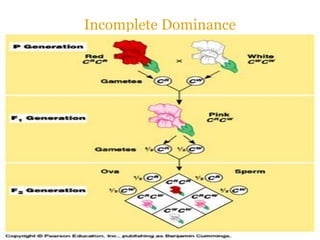
Incomplete Dominance
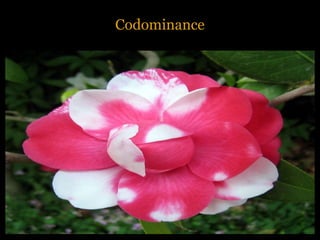
Codominance
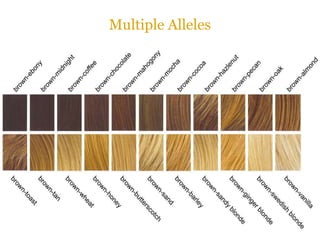
Multiple Alleles
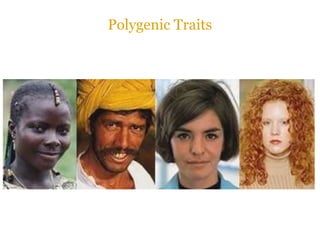
Polygenic Traits
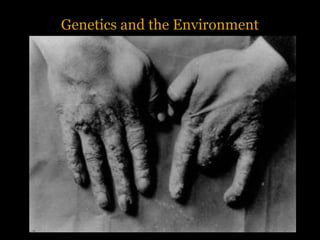
Genetics and the Environment

Lecture eight

  • 1.
  • 2.
  • 3.
    Genes and DominancePgenerationF1 generationHybrids
  • 4.
    Genes and DominanceTheF1 generation had the character of only of the parentsMendel drew two conclusionsBiological inheritance is determined by factors that are passed from generation to the nextThe principle of dominance GenesAlleles
  • 5.
  • 6.
    Genetics and ProbabilityThelikelihood that a particular event will occur is called probabilityThe principles of probability can be used to predict the outcomes of genetic crosses
  • 7.
  • 8.
  • 9.
    The Two FactorCross: F1Two different genes passing from generation to anotherFirst, Mendel crossed tree-breeding plants (RRYY x rryy)All of the F1 offspring produced the dominant genes
  • 10.
    The Two FactorCross: F2Mendel knew that all the F1 plants were heterozygous for both genesThe F2 generation shows how alleles segregateSince the alleles for both genes segregated independently of each other (independent assortment), the ratio was 9:3:3:1The principle of independent assortment states that genes for different traits can segregate independently during the formation of gametes. Independent assortment helps account for the many genetic variations observed in plants, animals, and other organisms
  • 11.
  • 12.
    Summary of Mendel’sPrinciplesThe inheritance of biological characteristics is determined by individual units known as genes. Genes are passed from parents to their offspringIn cases in which two or more alleles of the gene for a single trait exist, some forms of the gene may be dominant and others may be recessiveIn most sexually reproducing organisms, each adult has two copies of each gene - one from each parent. These gens are segregated from each other when gametes are formedThe alleles for different genes usually segregate independently of one another
  • 13.
  • 14.
  • 15.
  • 16.
  • 17.
    Genetics and theEnvironment