

Meiosis and Gene Linkage
PMAT
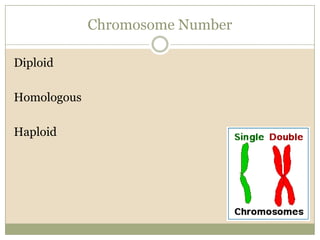
Chromosome NumberDiploidHomologousHaploid
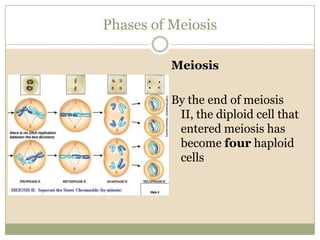
Phases of MeiosisMeiosisBy the end of meiosis II, the diploid cell that entered meiosis has become four haploid cells
What Happens When It Goes Wrong?
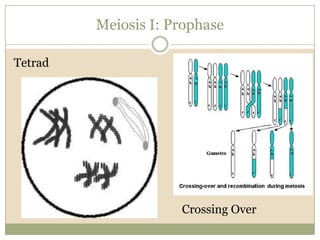
Meiosis I: ProphaseTetradO		Crossing Over
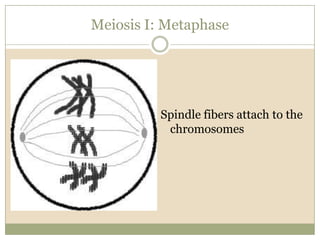
Meiosis I: MetaphaseSpindle fibers attach to the chromosomes
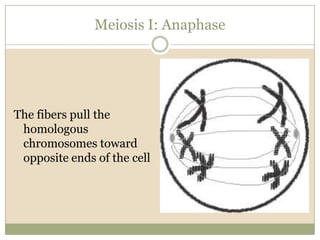
Meiosis I: AnaphaseThe fibers pull the homologous chromosomes toward opposite ends of the cell
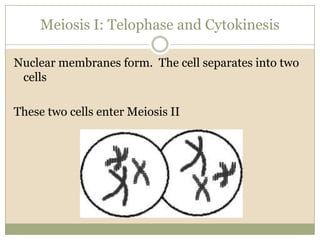
Meiosis I: Telophase and CytokinesisNuclear membranes form.  The cell separates into two cellsThese two cells enter Meiosis II
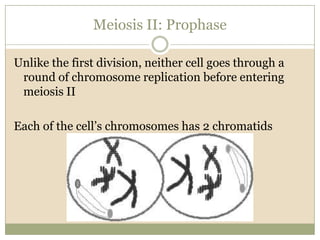
Meiosis II: ProphaseUnlike the first division, neither cell goes through a round of chromosome replication before entering meiosis IIEach of the cell’s chromosomes has 2 chromatids
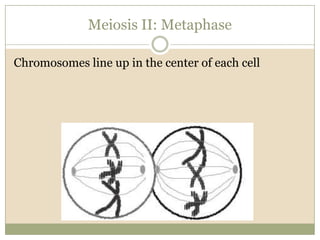
Meiosis II: MetaphaseChromosomes line up in the center of each cell
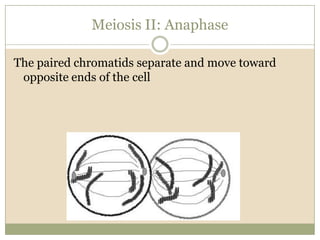
Meiosis II: AnaphaseThe paired chromatids separate and move toward opposite ends of the cell
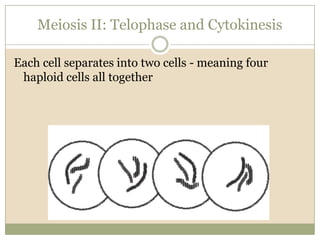
Meiosis II: Telophase and CytokinesisEach cell separates into two cells - meaning four haploid cells all together
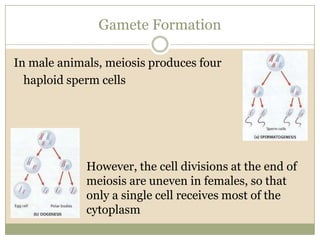
Gamete FormationIn male animals, meiosis produces four 	haploid sperm cells			   However, the cell divisions at the end of			   meiosis are uneven in females, so that 			   only a single cell receives most of the 			   cytoplasm
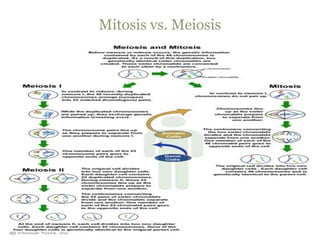
Mitosis vs. Meiosis
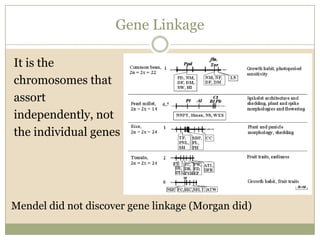
Gene LinkageIt is the chromosomes that assort independently, not the individual genesMendel did not discover gene linkage (Morgan did)
Gene Maps

Lecture nine