Ethics of Innovation
Lecture 9
C O P Y R I G H T S R E S E R V E D B Y F A R I Z A H A N I S A B D U L
R A Z A K U I T M M A L A Y S I A
Invention
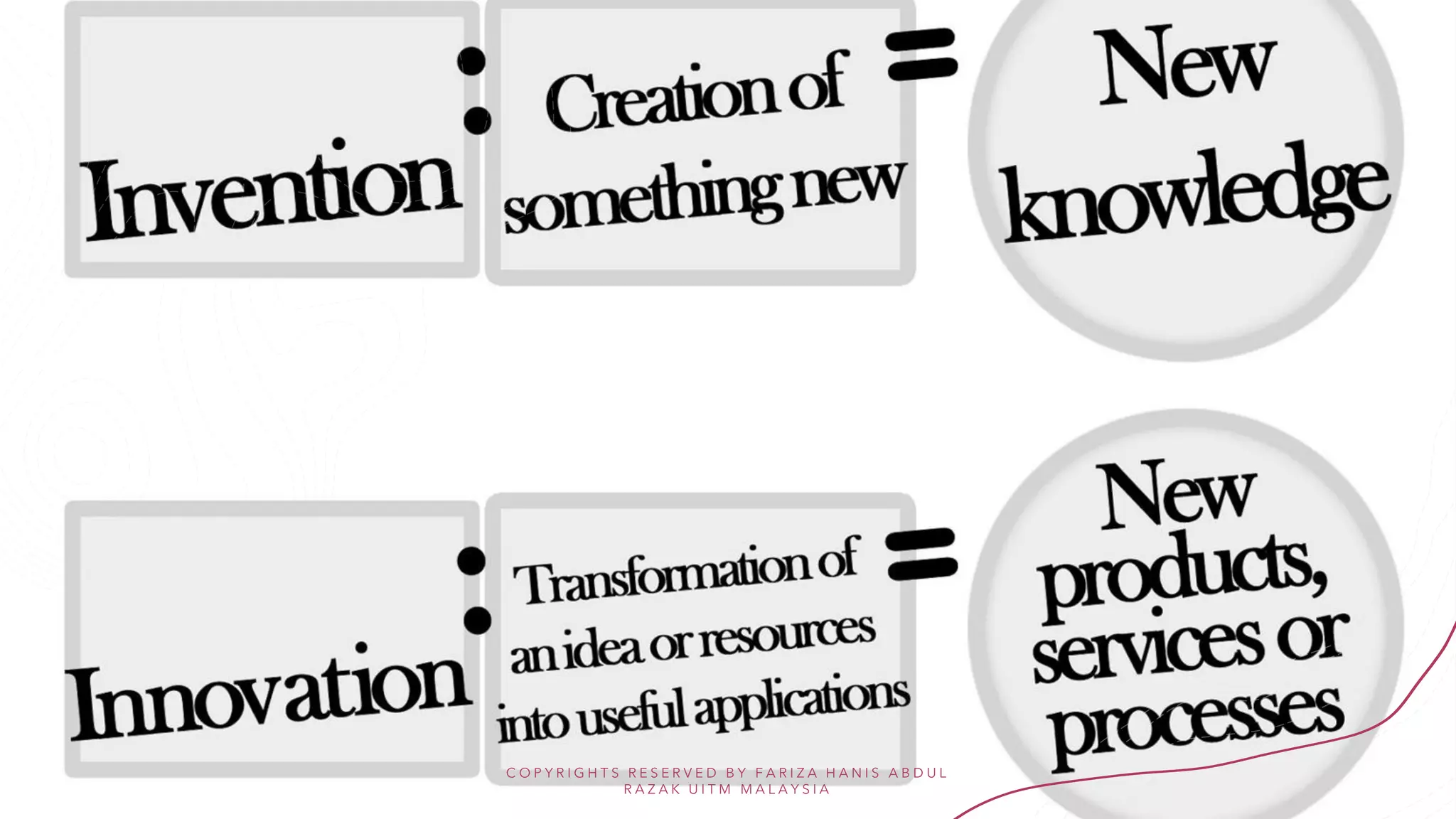
Invention is defined as the creation of a product or
the introduction of a process for the first time.
Invention solves a concrete problem with the means of
technology.
It is a novel scientific idea conceived through research
and experimentation that turns into a tangible object.
It can be a new process of producing a product or may
be an improvement upon a product or a new product.
Inventions can be patented, as it provides security to
the inventor, for intellectual property rights, and also
identifies it as an actual invention.
C O P Y R I G H T S R E S E R V E D B Y F A R I Z A H A N I S A B D U L
R A Z A K U I T M M A L A Y S I A
Innovation
+ Is the transformation of an idea
into reality.
+ Can be described as a change
that adds value to the products
or services; that fulfills the
needs of the customers.
+ Can be an introduction or
development of new product,
process, technology, service or
improving/redesigning the
existing ones that provide
solutions to the current market
requirements. C O P Y R I G H T S R E S E R V E D B Y F A R I Z A H A N I S A B D U L
R A Z A K U I T M M A L A Y S I A
Invention vs
Innovation
BASIS FOR COMPARISON INVENTION INNOVATION
Meaning Invention refers to the occurrence of an idea
for a product or process that has never been
made before.
Innovation implies the implementation of idea
for product or process for the very first time.
What is it? Creation of a new product. Adding value to something already existing.
Concept An original idea and its working in theory. Practical implementation of new idea.
Skills required Scientific skills Set of marketing, technical and strategic skills.
Occurs when New idea strikes a scientist. A need is felt for a product or improvement in
existing product.
Concerned with Single product or process. Combination of various products and process.
Activities Limited to R & D department. Spread across the organization.
C O P Y R I G H T S R E S E R V E D B Y F A R I Z A H A N I S A B D U L
R A Z A K U I T M M A L A Y S I A
C O P Y R I G H T S R E S E R V E D B Y F A R I Z A H A N I S A B D U L
R A Z A K U I T M M A L A Y S I A
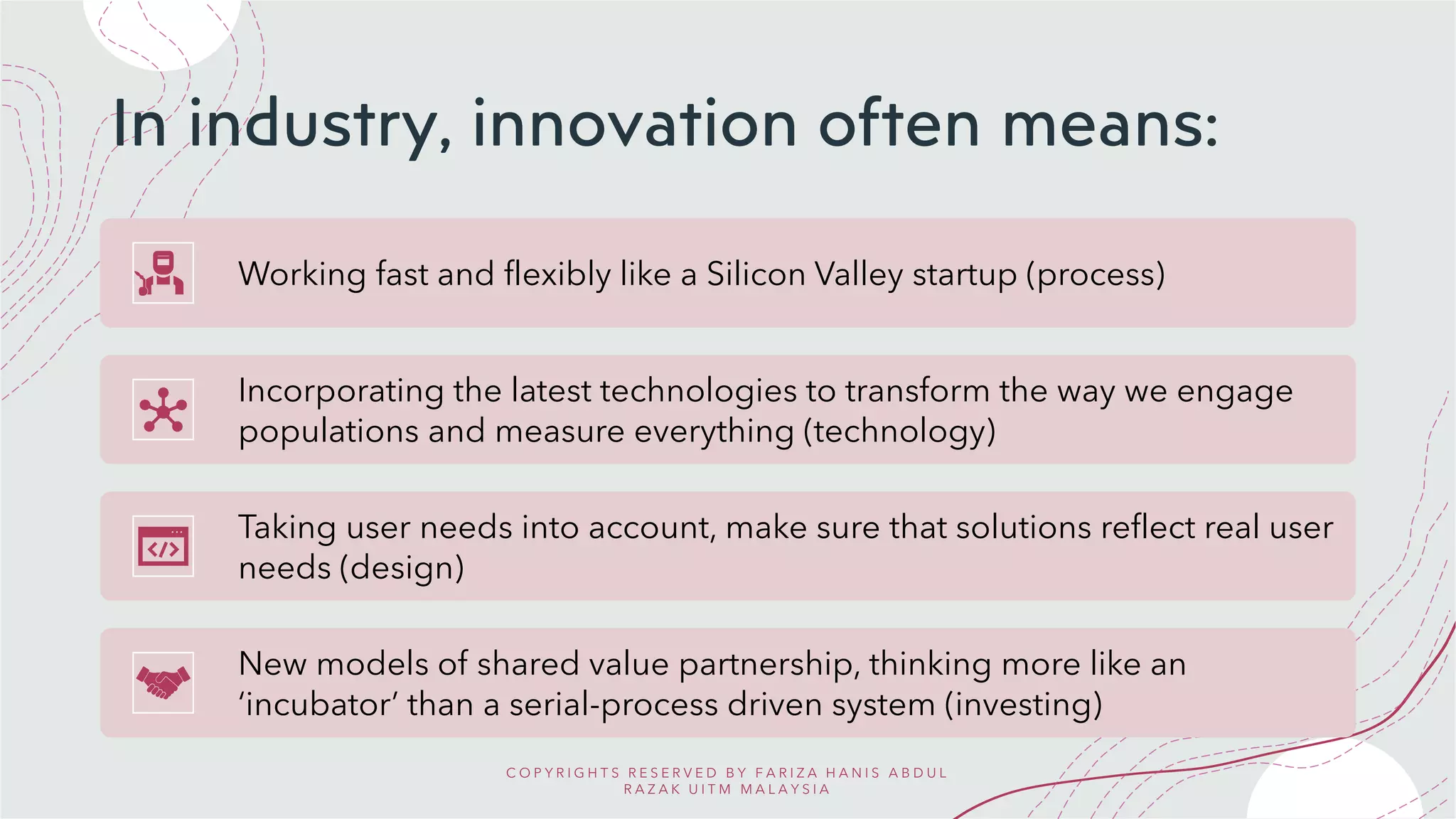
In industry, innovation often means:
Working fast and flexibly like a Silicon Valley startup (process)
Incorporating the latest technologies to transform the way we engage
populations and measure everything (technology)
Taking user needs into account, make sure that solutions reflect real user
needs (design)
New models of shared value partnership, thinking more like an
‘incubator’ than a serial-process driven system (investing)
C O P Y R I G H T S R E S E R V E D B Y F A R I Z A H A N I S A B D U L
R A Z A K U I T M M A L A Y S I A
Ethical
Framework of
Innovation
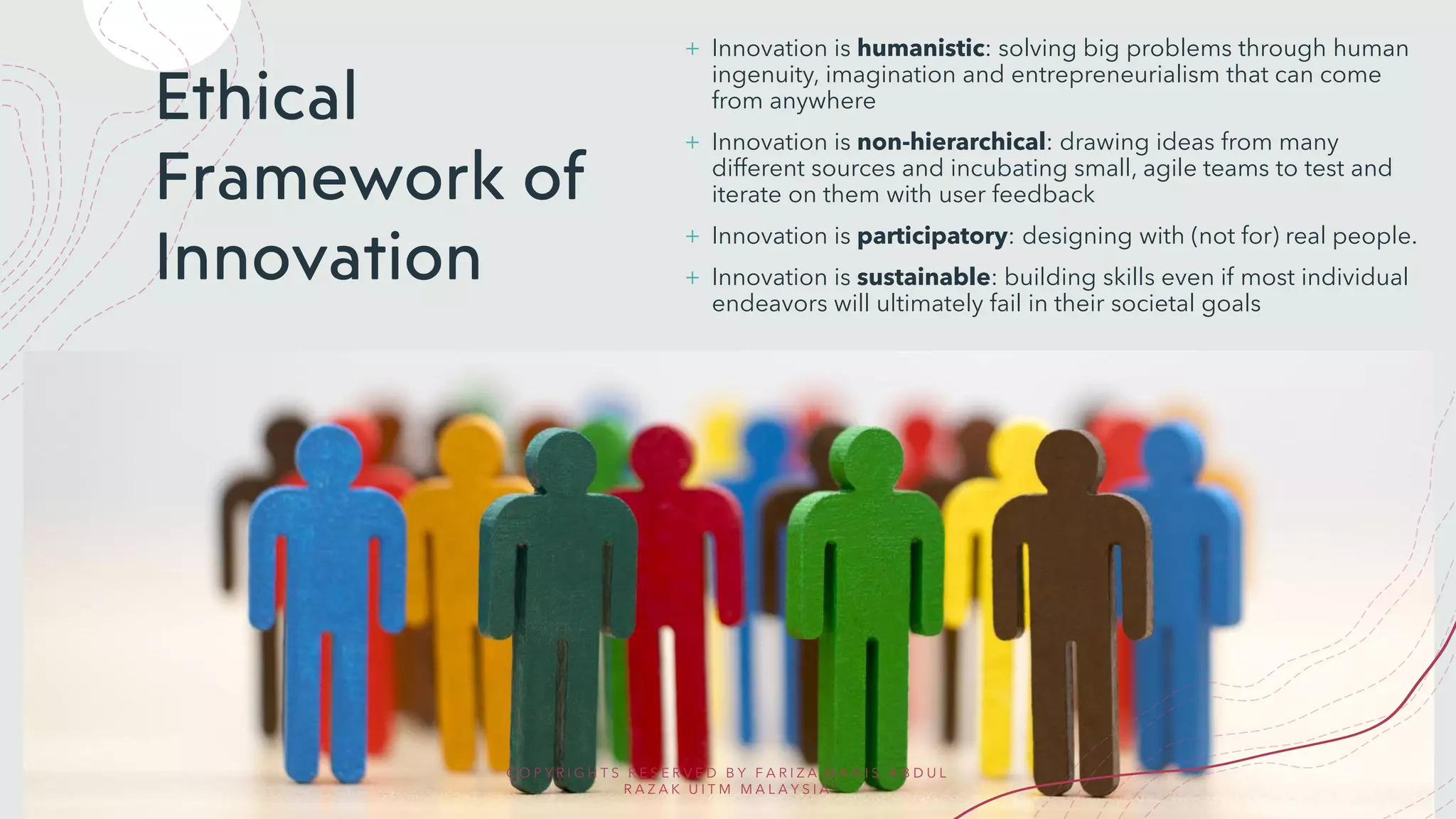
+ Innovation is humanistic: solving big problems through human
ingenuity, imagination and entrepreneurialism that can come
from anywhere
+ Innovation is non-hierarchical: drawing ideas from many
different sources and incubating small, agile teams to test and
iterate on them with user feedback
+ Innovation is participatory: designing with (not for) real people.
+ Innovation is sustainable: building skills even if most individual
endeavors will ultimately fail in their societal goals
C O P Y R I G H T S R E S E R V E D B Y F A R I Z A H A N I S A B D U L
R A Z A K U I T M M A L A Y S I A
Nine principles of
ethics
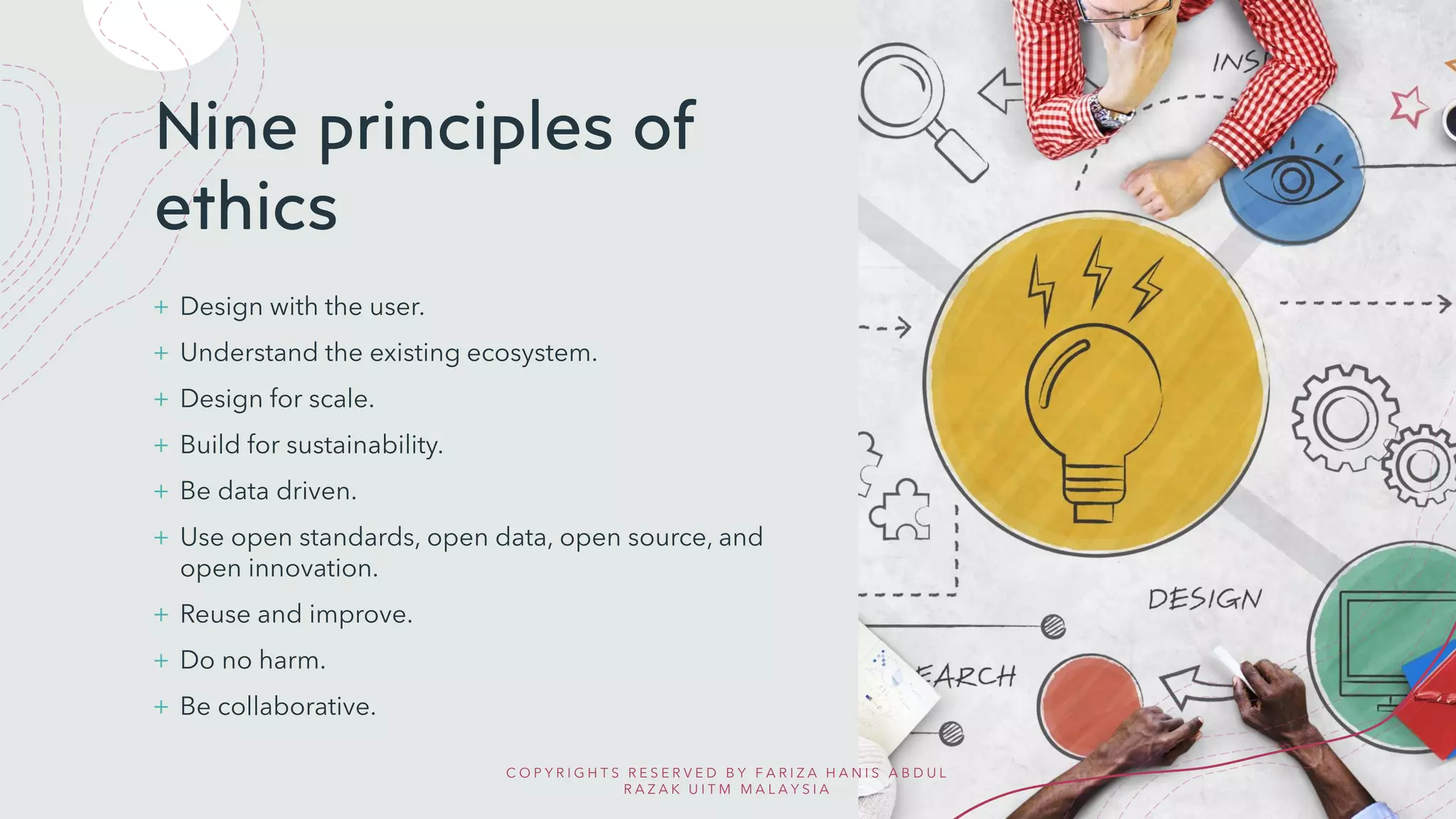
+ Design with the user.
+ Understand the existing ecosystem.
+ Design for scale.
+ Build for sustainability.
+ Be data driven.
+ Use open standards, open data, open source, and
open innovation.
+ Reuse and improve.
+ Do no harm.
+ Be collaborative.
C O P Y R I G H T S R E S E R V E D B Y F A R I Z A H A N I S A B D U L
R A Z A K U I T M M A L A Y S I A

Lecture 9 - Ethics of Innovation.pdf

  • 1.
    Ethics of Innovation Lecture9 C O P Y R I G H T S R E S E R V E D B Y F A R I Z A H A N I S A B D U L R A Z A K U I T M M A L A Y S I A
  • 2.
    Invention Invention is definedas the creation of a product or the introduction of a process for the first time. Invention solves a concrete problem with the means of technology. It is a novel scientific idea conceived through research and experimentation that turns into a tangible object. It can be a new process of producing a product or may be an improvement upon a product or a new product. Inventions can be patented, as it provides security to the inventor, for intellectual property rights, and also identifies it as an actual invention. C O P Y R I G H T S R E S E R V E D B Y F A R I Z A H A N I S A B D U L R A Z A K U I T M M A L A Y S I A
  • 3.
    Innovation + Is thetransformation of an idea into reality. + Can be described as a change that adds value to the products or services; that fulfills the needs of the customers. + Can be an introduction or development of new product, process, technology, service or improving/redesigning the existing ones that provide solutions to the current market requirements. C O P Y R I G H T S R E S E R V E D B Y F A R I Z A H A N I S A B D U L R A Z A K U I T M M A L A Y S I A
  • 4.
    Invention vs Innovation BASIS FORCOMPARISON INVENTION INNOVATION Meaning Invention refers to the occurrence of an idea for a product or process that has never been made before. Innovation implies the implementation of idea for product or process for the very first time. What is it? Creation of a new product. Adding value to something already existing. Concept An original idea and its working in theory. Practical implementation of new idea. Skills required Scientific skills Set of marketing, technical and strategic skills. Occurs when New idea strikes a scientist. A need is felt for a product or improvement in existing product. Concerned with Single product or process. Combination of various products and process. Activities Limited to R & D department. Spread across the organization. C O P Y R I G H T S R E S E R V E D B Y F A R I Z A H A N I S A B D U L R A Z A K U I T M M A L A Y S I A
  • 5.
    C O PY R I G H T S R E S E R V E D B Y F A R I Z A H A N I S A B D U L R A Z A K U I T M M A L A Y S I A
  • 6.
    In industry, innovationoften means: Working fast and flexibly like a Silicon Valley startup (process) Incorporating the latest technologies to transform the way we engage populations and measure everything (technology) Taking user needs into account, make sure that solutions reflect real user needs (design) New models of shared value partnership, thinking more like an ‘incubator’ than a serial-process driven system (investing) C O P Y R I G H T S R E S E R V E D B Y F A R I Z A H A N I S A B D U L R A Z A K U I T M M A L A Y S I A
  • 7.
    Ethical Framework of Innovation + Innovationis humanistic: solving big problems through human ingenuity, imagination and entrepreneurialism that can come from anywhere + Innovation is non-hierarchical: drawing ideas from many different sources and incubating small, agile teams to test and iterate on them with user feedback + Innovation is participatory: designing with (not for) real people. + Innovation is sustainable: building skills even if most individual endeavors will ultimately fail in their societal goals C O P Y R I G H T S R E S E R V E D B Y F A R I Z A H A N I S A B D U L R A Z A K U I T M M A L A Y S I A
  • 8.
    Nine principles of ethics +Design with the user. + Understand the existing ecosystem. + Design for scale. + Build for sustainability. + Be data driven. + Use open standards, open data, open source, and open innovation. + Reuse and improve. + Do no harm. + Be collaborative. C O P Y R I G H T S R E S E R V E D B Y F A R I Z A H A N I S A B D U L R A Z A K U I T M M A L A Y S I A