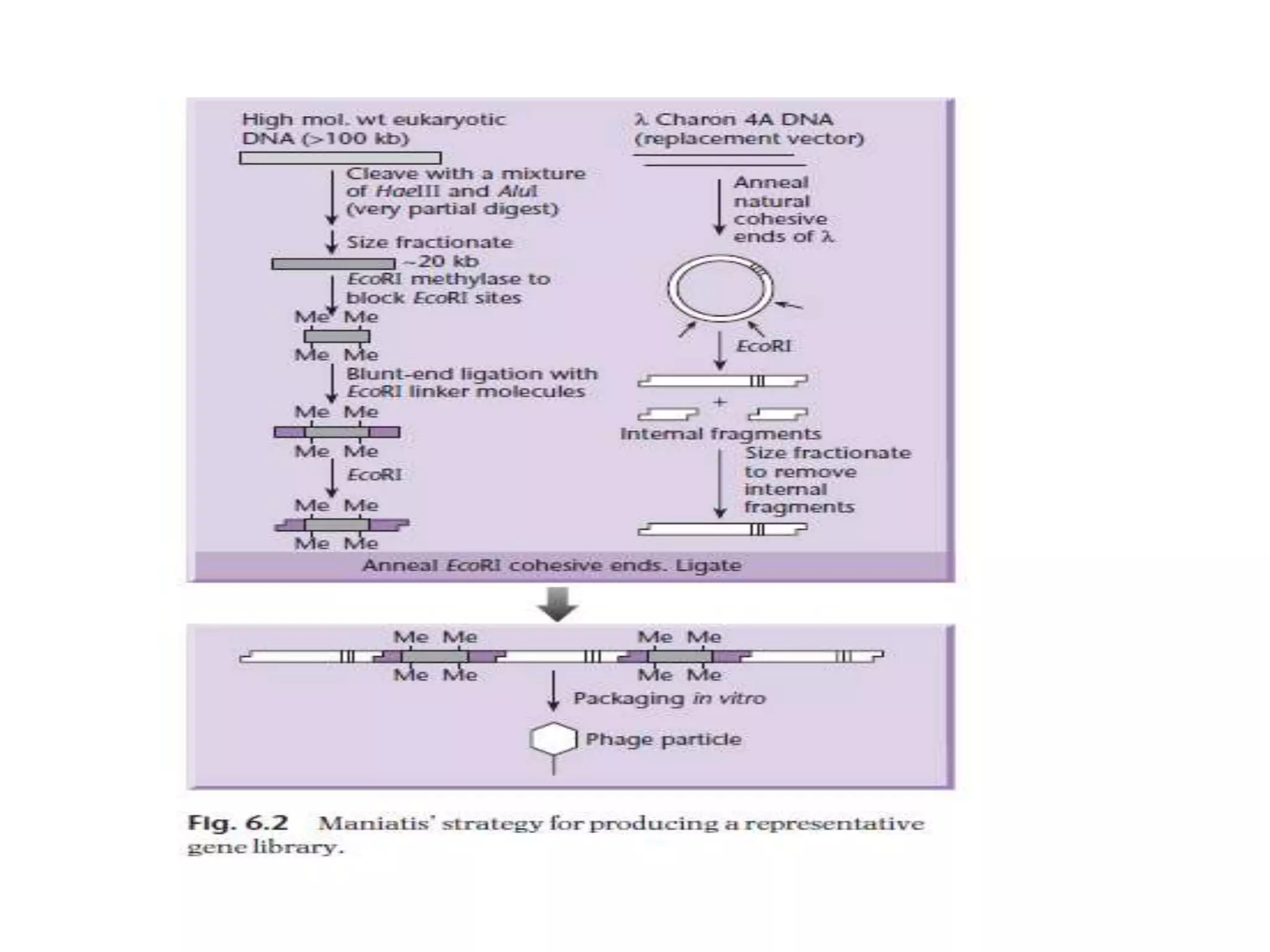
In the strategy devised by Maniatis et al. (1978) (Fig. 6.2) the target DNA is
digested with a mixture of two restriction enzymes. These enzymes have
tetranucleotide recognition sites, which therefore occur frequently in the target
DNA and in a complete double-digest would produce fragments averaging less
than 1 kb. However, only a partial restriction digest is carried out, and therefore
the majority of the fragments are large (in the range 10–30 kb). Given that the
chances of cutting at each of the available restriction sites are more or less
equivalent, such a reaction effectively produces a random set of overlapping
fragments. These can be size fractionated, e.g. by gel electrophoresis, so as to give
a random population of fragments of about 20 kb, which are suitable for insertion
into a λ replacement vector. Packaging in vitro (p. 70) ensures that an
appropriately large number of independent recombinants can be recovered,
which will give an almost completely representative library.
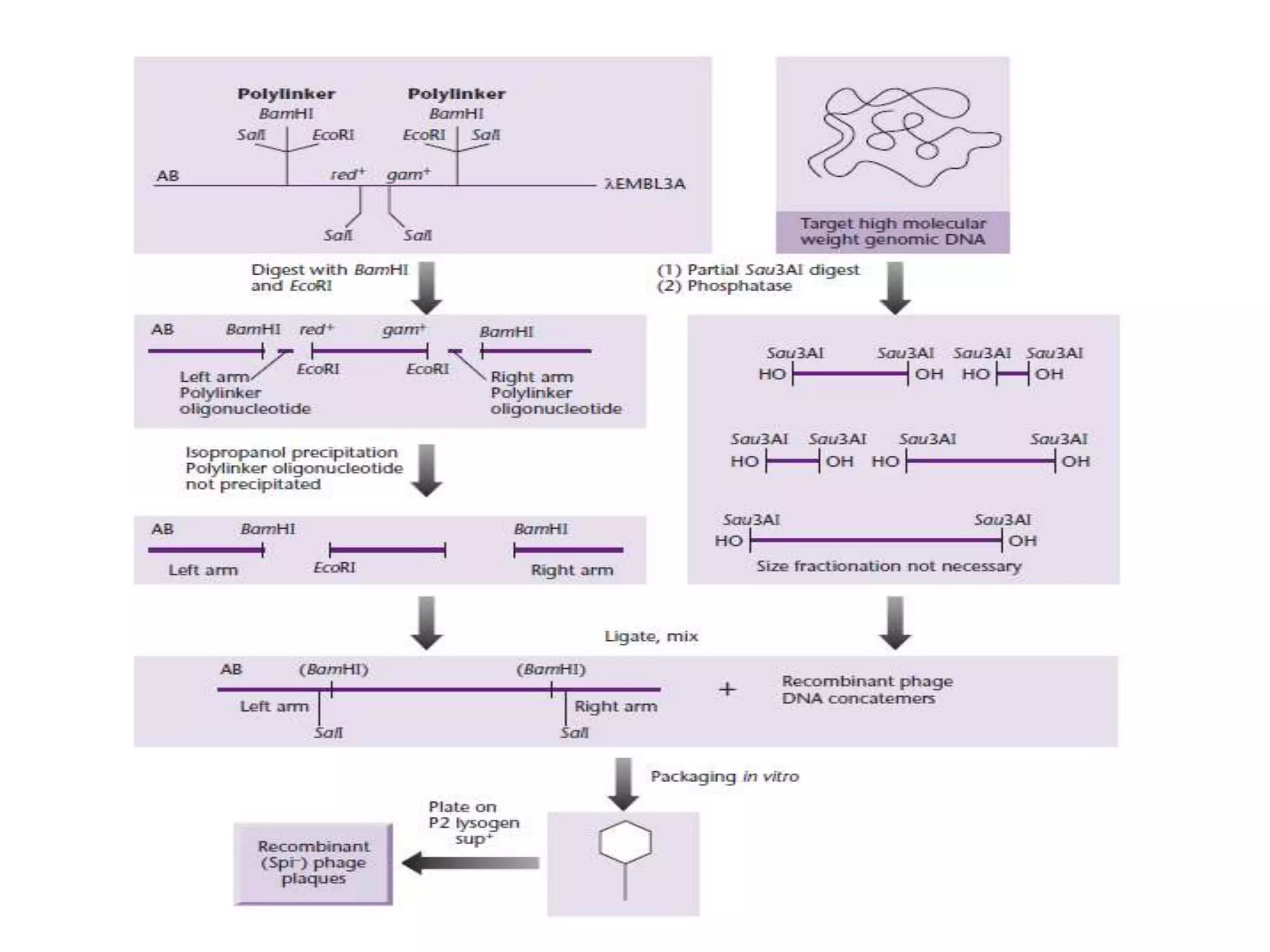
A convenient simplification can be achieved by using a single restriction endonuclease
that cuts frequently, such as Sau3AI. This will create a partial digest that is slightly less
random than that achieved with a pair of enzymes. However, it has the great
advantage that the Sau3AI fragments can be readily inserted into λ replacement
vectors, such as λEMBL3 (Frischauf et al. 1983), which have been digested
with BamHI (Fig. 6.3). This is because Sau3AI and BamHI create the same cohesive
ends (see p. 41). Due to the convenience and efficiency of this strategy, the λEMBL
series of vectors have been very widely used for genomic library construction. Note
that λEMBL vectors also carry the red and gam genes on the stuffer fragment and a chi
site on one of the vector arms, allowing convenient positive selection on the basis of
the Spi phenotype.
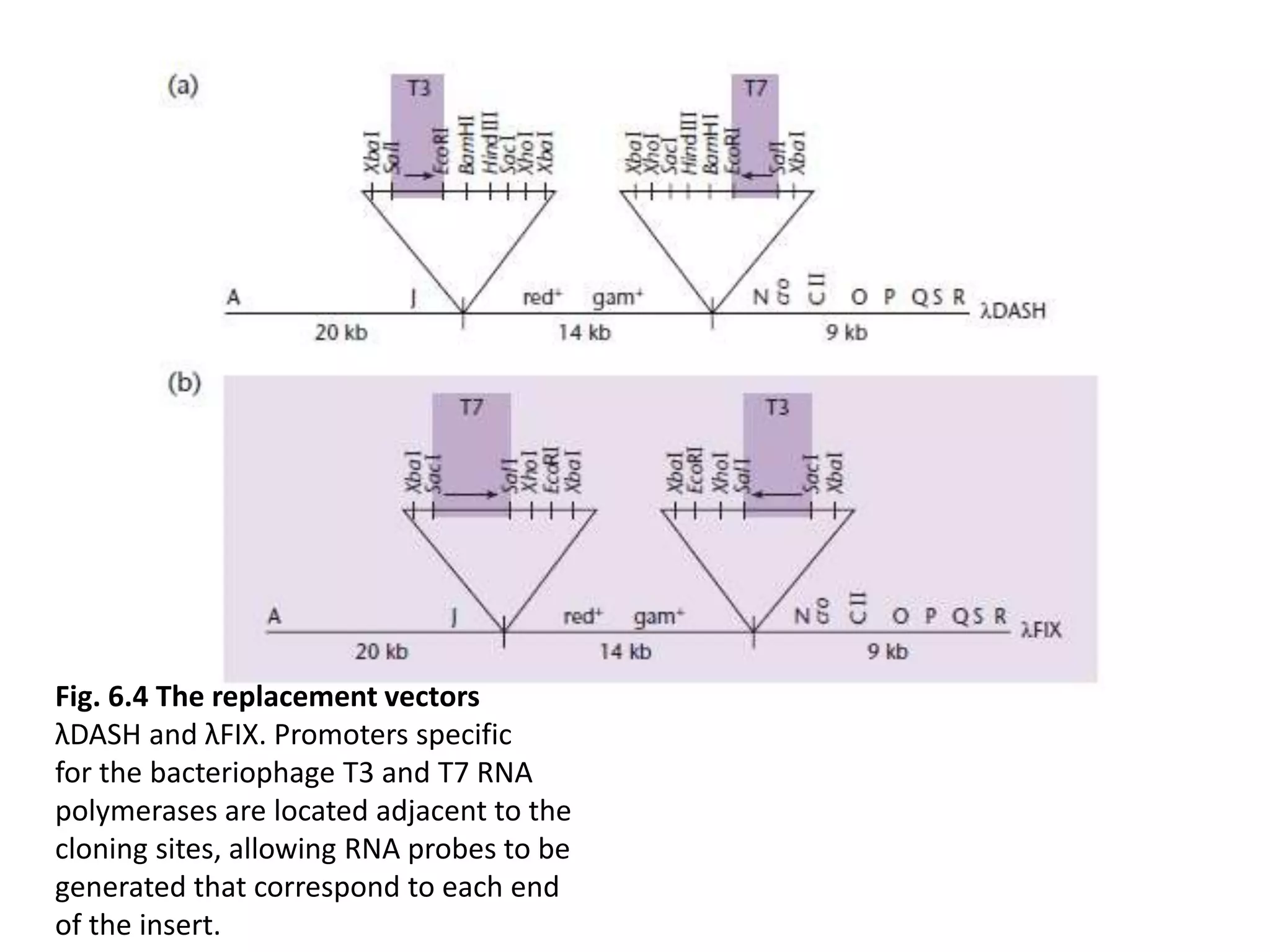
Fig. 6.4 The replacement vectors
λDASH and λFIX. Promoters specific
for the bacteriophage T3 and T7 RNA
polymerases are located adjacent to the
cloning sites, allowing RNA probes to be
generated that correspond to each end
of the insert.
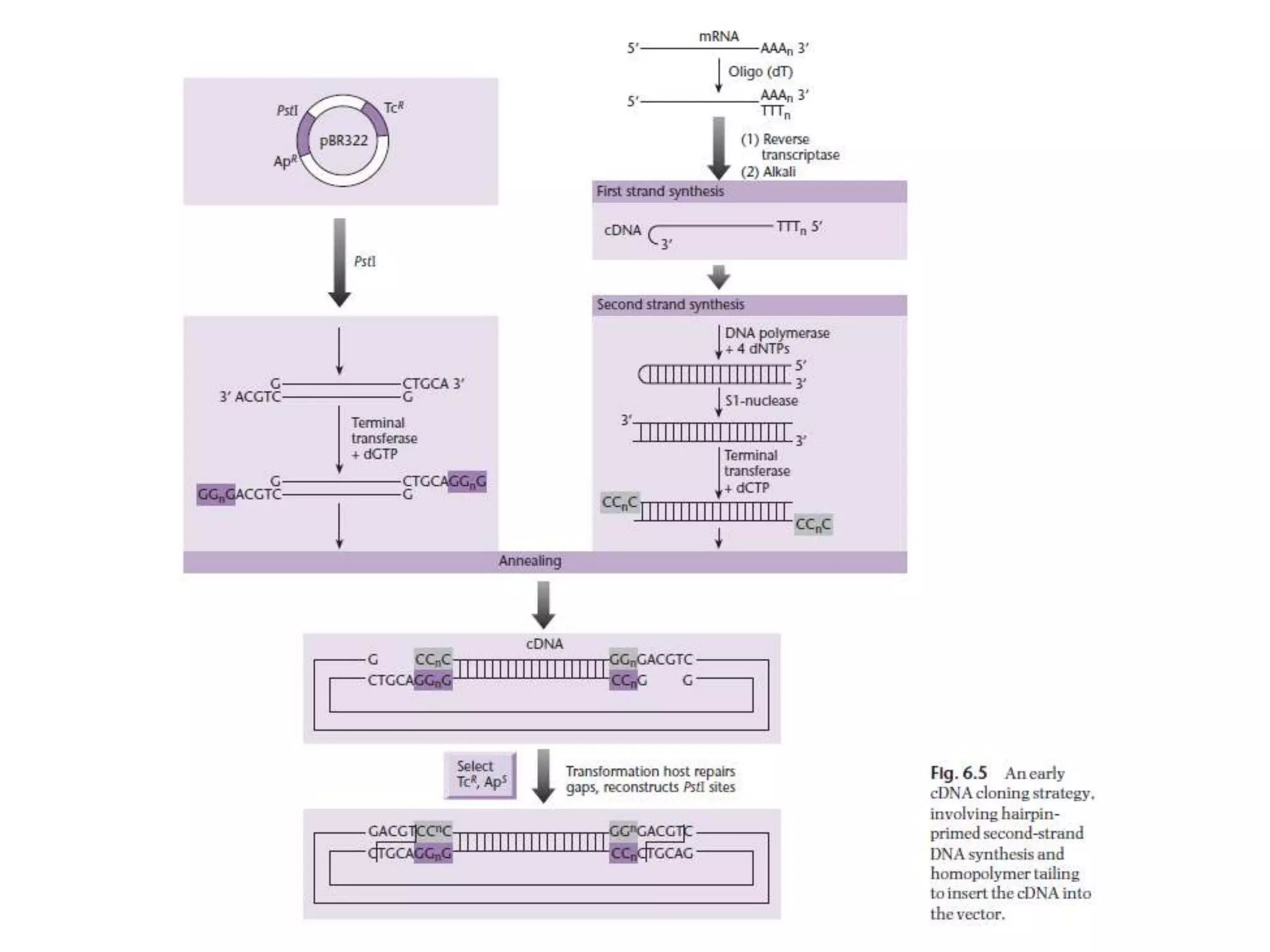
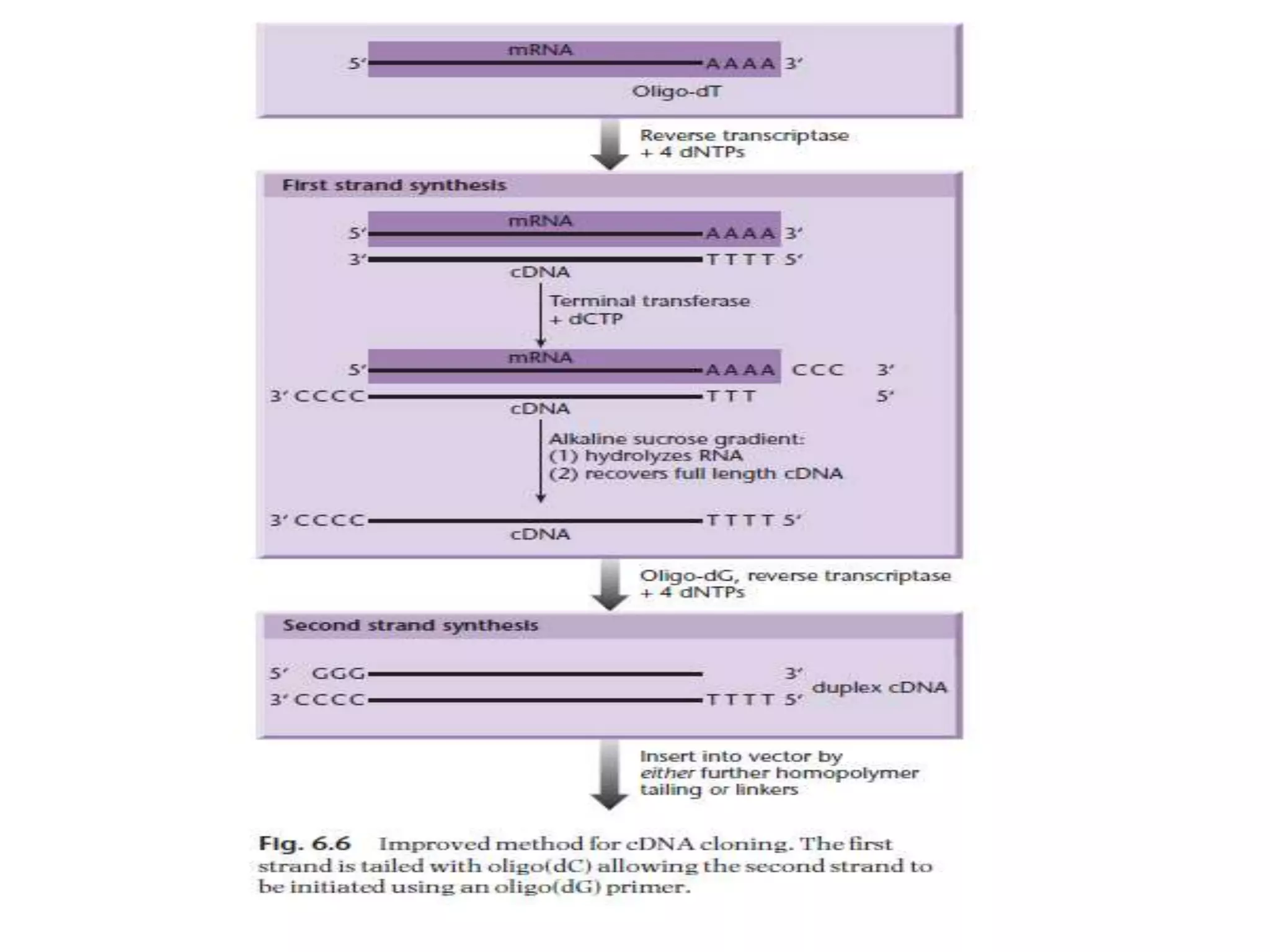
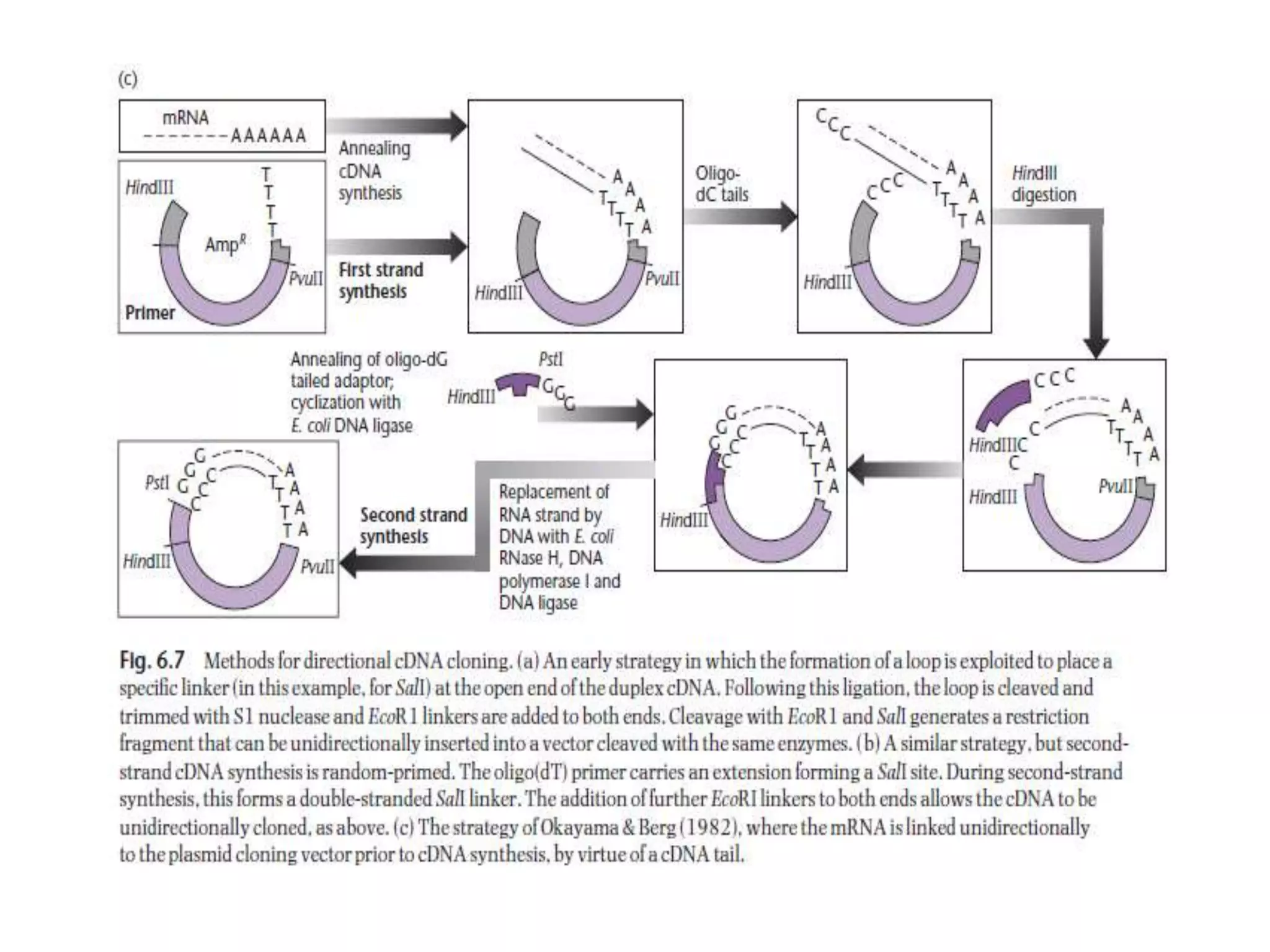
After first-strand synthesis, which is primed with an oligo-dT primer as usual, the
cDNA is tailed with a string of cytidine residues using the enzyme terminal
transferase. This artificial oligo-dC tail is then used as an annealing site for a
synthetic oligo-dG primer, allowing synthesis of the second strand.
Lecture 3 gene cloning strategies

Lecture 3 gene cloning strategies

  • 5.
    In the strategydevised by Maniatis et al. (1978) (Fig. 6.2) the target DNA is digested with a mixture of two restriction enzymes. These enzymes have tetranucleotide recognition sites, which therefore occur frequently in the target DNA and in a complete double-digest would produce fragments averaging less than 1 kb. However, only a partial restriction digest is carried out, and therefore the majority of the fragments are large (in the range 10–30 kb). Given that the chances of cutting at each of the available restriction sites are more or less equivalent, such a reaction effectively produces a random set of overlapping fragments. These can be size fractionated, e.g. by gel electrophoresis, so as to give a random population of fragments of about 20 kb, which are suitable for insertion into a λ replacement vector. Packaging in vitro (p. 70) ensures that an appropriately large number of independent recombinants can be recovered, which will give an almost completely representative library.
  • 7.
    A convenient simplificationcan be achieved by using a single restriction endonuclease that cuts frequently, such as Sau3AI. This will create a partial digest that is slightly less random than that achieved with a pair of enzymes. However, it has the great advantage that the Sau3AI fragments can be readily inserted into λ replacement vectors, such as λEMBL3 (Frischauf et al. 1983), which have been digested with BamHI (Fig. 6.3). This is because Sau3AI and BamHI create the same cohesive ends (see p. 41). Due to the convenience and efficiency of this strategy, the λEMBL series of vectors have been very widely used for genomic library construction. Note that λEMBL vectors also carry the red and gam genes on the stuffer fragment and a chi site on one of the vector arms, allowing convenient positive selection on the basis of the Spi phenotype.
  • 10.
    Fig. 6.4 Thereplacement vectors λDASH and λFIX. Promoters specific for the bacteriophage T3 and T7 RNA polymerases are located adjacent to the cloning sites, allowing RNA probes to be generated that correspond to each end of the insert.
  • 14.
    After first-strand synthesis,which is primed with an oligo-dT primer as usual, the cDNA is tailed with a string of cytidine residues using the enzyme terminal transferase. This artificial oligo-dC tail is then used as an annealing site for a synthetic oligo-dG primer, allowing synthesis of the second strand.