LEAN THINKING
MBA Program
48 FD
By: Ahmed Ibrahim Ebaied
Ali Fakhry
To : prof. Dr :Mohsen Elshamma
Acknowledgement
I would like to Express My
Appreciation to Prof.
For His Guidance During This
Valuable Course .
Without His Valuable Assistance
,This MBA Program Would Not
Have Been Fruitful.
AGENDA
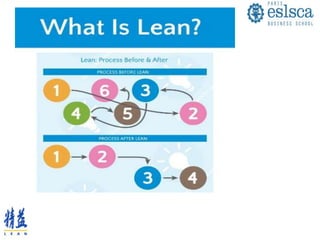
 What Is Lean?
 How Does Lean Work?
 Who Is Lean Applicable To?
 5 Principles Of Lean
 The Toyota Production System
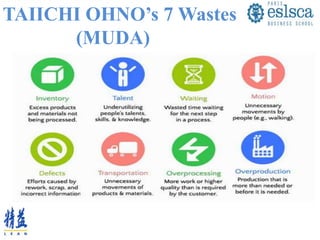
 TAIICHI OHNO’S 7 Wastes
 7 Service Wastes
 5 S’s
 Summary
Development of lean
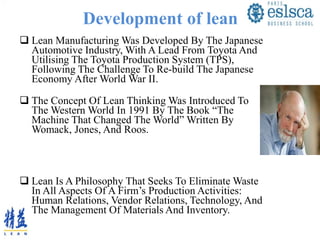
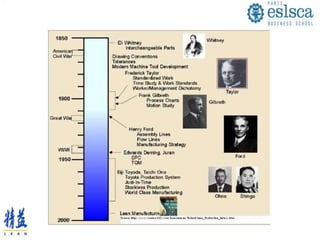
 Lean Manufacturing Was Developed By The Japanese
Automotive Industry, With A Lead From Toyota And
Utilising The Toyota Production System (TPS),
Following The Challenge To Re-build The Japanese
Economy After World War II.
 The Concept Of Lean Thinking Was Introduced To
The Western World In 1991 By The Book “The
Machine That Changed The World” Written By
Womack, Jones, And Roos.
 Lean Is A Philosophy That Seeks To Eliminate Waste
In All Aspects Of A Firm’s Production Activities:
Human Relations, Vendor Relations, Technology, And
The Management Of Materials And Inventory.
Who Is Lean Applicable To?
Lean Is Principally Associated With Manufacturing
Industries But Can Be Equally Applicable To Both
Service And Administration Processes.
It’s Not A New Phenomenon, Japanese Auto
Manufacturers Have Been Developing Lean For
Over 50 Years.
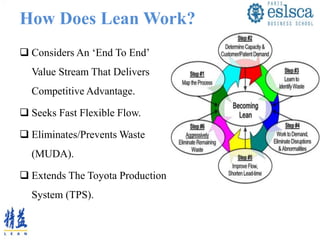
How Does Lean Work?
 Considers An ‘End To End’
Value Stream That Delivers
Competitive Advantage.
 Seeks Fast Flexible Flow.
 Eliminates/Prevents Waste
(MUDA).
 Extends The Toyota Production
System (TPS).
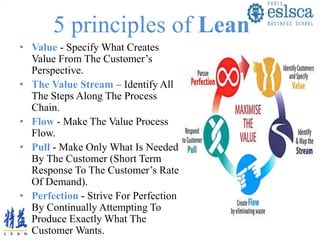
5 principles of Lean
• Value - Specify What Creates
Value From The Customer’s
Perspective.
• The Value Stream – Identify All
The Steps Along The Process
Chain.
• Flow - Make The Value Process
Flow.
• Pull - Make Only What Is Needed
By The Customer (Short Term
Response To The Customer’s Rate
Of Demand).
• Perfection - Strive For Perfection
By Continually Attempting To
Produce Exactly What The
Customer Wants.
VALUE
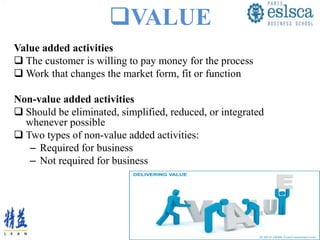
Value added activities
 The customer is willing to pay money for the process
 Work that changes the market form, fit or function
Non-value added activities
 Should be eliminated, simplified, reduced, or integrated
whenever possible
 Two types of non-value added activities:
– Required for business
– Not required for business
Non-Value Added
Value Added
Value Added vs. Non-Value Added
 Continuous focus on increasing
value added activities
 If value added activities are
increased by 10% = gain of only
2%!
 Focus on reducing non-value
added activities by 10% = gain of
8% value added!
20%
80%
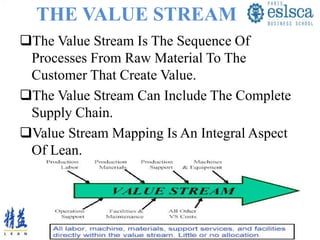
THE VALUE STREAM
The Value Stream Is The Sequence Of
Processes From Raw Material To The
Customer That Create Value.
The Value Stream Can Include The Complete
Supply Chain.
Value Stream Mapping Is An Integral Aspect
Of Lean.
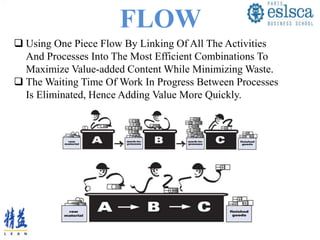
FLOW
 Using One Piece Flow By Linking Of All The Activities
And Processes Into The Most Efficient Combinations To
Maximize Value-added Content While Minimizing Waste.
 The Waiting Time Of Work In Progress Between Processes
Is Eliminated, Hence Adding Value More Quickly.
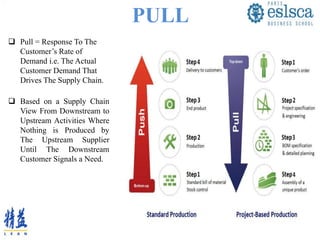
PULL
 Pull = Response To The
Customer’s Rate of
Demand i.e. The Actual
Customer Demand That
Drives The Supply Chain.
 Based on a Supply Chain
View From Downstream to
Upstream Activities Where
Nothing is Produced by
The Upstream Supplier
Until The Downstream
Customer Signals a Need.
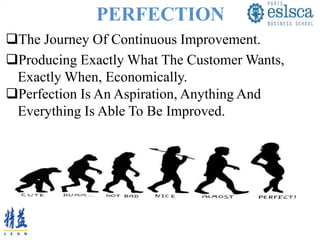
PERFECTION
The Journey Of Continuous Improvement.
Producing Exactly What The Customer Wants,
Exactly When, Economically.
Perfection Is An Aspiration, Anything And
Everything Is Able To Be Improved.
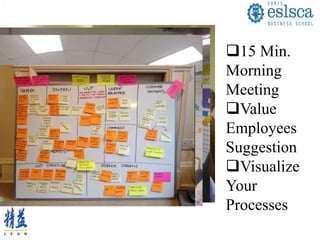
15 Min.
Morning
Meeting
Value
Employees
Suggestion
Visualize
Your
Processes
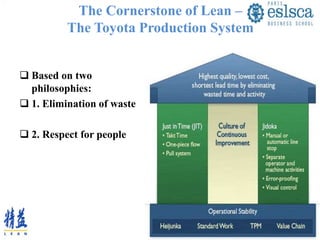
The Cornerstone of Lean –
The Toyota Production System
 Based on two
philosophies:
 1. Elimination of waste
 2. Respect for people
TOYOTA PRODUCTION SYSTEM’S
FOUR RULES
1. All Work Shall Be Highly Specified As To Content,
Sequence, Timing, And Outcome.
2. Every Customer-supplier Connection Must Be Direct,
And There Must Be An Unambiguous Yes-or-no Way To
Send Requests And Receive Responses.
3. The Pathway For Every Product And Service Must Be
Simple And Direct.
4. Any Improvement Must Be Made In Accordance With
The Scientific Method, Under The Guidance Of A
Teacher, At The Lowest Possible Level In The
Organization.
TAIICHI OHNO’s 7 Wastes
(MUDA)
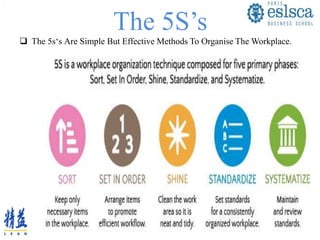
The 5S’s
 The 5s‘s Are Simple But Effective Methods To Organise The Workplace.
The Japanese Origins
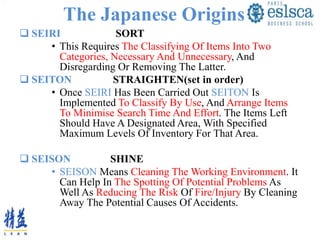
 SEIRI SORT
• This Requires The Classifying Of Items Into Two
Categories, Necessary And Unnecessary, And
Disregarding Or Removing The Latter.
 SEITON STRAIGHTEN(set in order)
• Once SEIRI Has Been Carried Out SEITON Is
Implemented To Classify By Use, And Arrange Items
To Minimise Search Time And Effort. The Items Left
Should Have A Designated Area, With Specified
Maximum Levels Of Inventory For That Area.
 SEISON SHINE
• SEISON Means Cleaning The Working Environment. It
Can Help In The Spotting Of Potential Problems As
Well As Reducing The Risk Of Fire/Injury By Cleaning
Away The Potential Causes Of Accidents.
The Japanese Origins
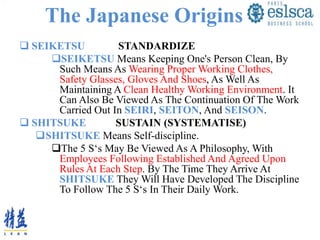
 SEIKETSU STANDARDIZE
SEIKETSU Means Keeping One's Person Clean, By
Such Means As Wearing Proper Working Clothes,
Safety Glasses, Gloves And Shoes, As Well As
Maintaining A Clean Healthy Working Environment. It
Can Also Be Viewed As The Continuation Of The Work
Carried Out In SEIRI, SEITON, And SEISON.
 SHITSUKE SUSTAIN (SYSTEMATISE)
SHITSUKE Means Self-discipline.
The 5 S‘s May Be Viewed As A Philosophy, With
Employees Following Established And Agreed Upon
Rules At Each Step. By The Time They Arrive At
SHITSUKE They Will Have Developed The Discipline
To Follow The 5 S‘s In Their Daily Work.
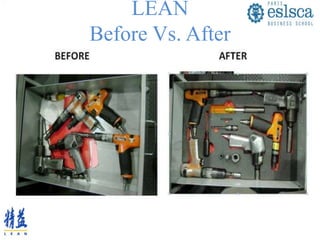
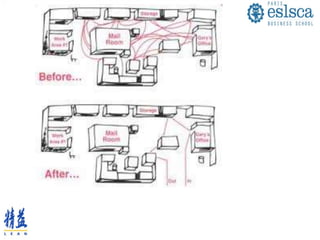
LEAN
Before Vs. After
video
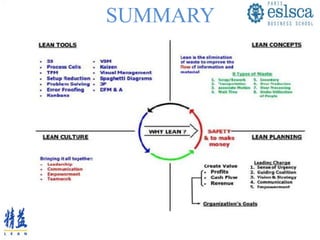
SUMMARY
Lean manufacturing was developed by the Japanese.
Lean is a philosophy that seeks to eliminate waste in
all aspects of a firm’s production activities.
Lean is principally associated with manufacturing
industries but can be also equally applicable to both
service and administration processes.
Works on 5 basic principles.
Cornerstone of Lean is the Toyota Production
System.
Considers 7 Wastes (MUDA).
Utilises 5 S methodology.
Lean management

Lean management

  • 1.
    LEAN THINKING MBA Program 48FD By: Ahmed Ibrahim Ebaied Ali Fakhry To : prof. Dr :Mohsen Elshamma
  • 2.
    Acknowledgement I would liketo Express My Appreciation to Prof. For His Guidance During This Valuable Course . Without His Valuable Assistance ,This MBA Program Would Not Have Been Fruitful.
  • 3.
    AGENDA  What IsLean?  How Does Lean Work?  Who Is Lean Applicable To?  5 Principles Of Lean  The Toyota Production System  TAIICHI OHNO’S 7 Wastes  7 Service Wastes  5 S’s  Summary
  • 5.
    Development of lean Lean Manufacturing Was Developed By The Japanese Automotive Industry, With A Lead From Toyota And Utilising The Toyota Production System (TPS), Following The Challenge To Re-build The Japanese Economy After World War II.  The Concept Of Lean Thinking Was Introduced To The Western World In 1991 By The Book “The Machine That Changed The World” Written By Womack, Jones, And Roos.  Lean Is A Philosophy That Seeks To Eliminate Waste In All Aspects Of A Firm’s Production Activities: Human Relations, Vendor Relations, Technology, And The Management Of Materials And Inventory.
  • 8.
    Who Is LeanApplicable To? Lean Is Principally Associated With Manufacturing Industries But Can Be Equally Applicable To Both Service And Administration Processes. It’s Not A New Phenomenon, Japanese Auto Manufacturers Have Been Developing Lean For Over 50 Years.
  • 9.
    How Does LeanWork?  Considers An ‘End To End’ Value Stream That Delivers Competitive Advantage.  Seeks Fast Flexible Flow.  Eliminates/Prevents Waste (MUDA).  Extends The Toyota Production System (TPS).
  • 10.
    5 principles ofLean • Value - Specify What Creates Value From The Customer’s Perspective. • The Value Stream – Identify All The Steps Along The Process Chain. • Flow - Make The Value Process Flow. • Pull - Make Only What Is Needed By The Customer (Short Term Response To The Customer’s Rate Of Demand). • Perfection - Strive For Perfection By Continually Attempting To Produce Exactly What The Customer Wants.
  • 11.
    VALUE Value added activities The customer is willing to pay money for the process  Work that changes the market form, fit or function Non-value added activities  Should be eliminated, simplified, reduced, or integrated whenever possible  Two types of non-value added activities: – Required for business – Not required for business
  • 12.
    Non-Value Added Value Added ValueAdded vs. Non-Value Added  Continuous focus on increasing value added activities  If value added activities are increased by 10% = gain of only 2%!  Focus on reducing non-value added activities by 10% = gain of 8% value added! 20% 80%
  • 13.
    THE VALUE STREAM TheValue Stream Is The Sequence Of Processes From Raw Material To The Customer That Create Value. The Value Stream Can Include The Complete Supply Chain. Value Stream Mapping Is An Integral Aspect Of Lean.
  • 14.
    FLOW  Using OnePiece Flow By Linking Of All The Activities And Processes Into The Most Efficient Combinations To Maximize Value-added Content While Minimizing Waste.  The Waiting Time Of Work In Progress Between Processes Is Eliminated, Hence Adding Value More Quickly.
  • 15.
    PULL  Pull =Response To The Customer’s Rate of Demand i.e. The Actual Customer Demand That Drives The Supply Chain.  Based on a Supply Chain View From Downstream to Upstream Activities Where Nothing is Produced by The Upstream Supplier Until The Downstream Customer Signals a Need.
  • 16.
    PERFECTION The Journey OfContinuous Improvement. Producing Exactly What The Customer Wants, Exactly When, Economically. Perfection Is An Aspiration, Anything And Everything Is Able To Be Improved.
  • 17.
  • 18.
    The Cornerstone ofLean – The Toyota Production System  Based on two philosophies:  1. Elimination of waste  2. Respect for people
  • 19.
    TOYOTA PRODUCTION SYSTEM’S FOURRULES 1. All Work Shall Be Highly Specified As To Content, Sequence, Timing, And Outcome. 2. Every Customer-supplier Connection Must Be Direct, And There Must Be An Unambiguous Yes-or-no Way To Send Requests And Receive Responses. 3. The Pathway For Every Product And Service Must Be Simple And Direct. 4. Any Improvement Must Be Made In Accordance With The Scientific Method, Under The Guidance Of A Teacher, At The Lowest Possible Level In The Organization.
  • 21.
    TAIICHI OHNO’s 7Wastes (MUDA)
  • 22.
    The 5S’s  The5s‘s Are Simple But Effective Methods To Organise The Workplace.
  • 23.
    The Japanese Origins SEIRI SORT • This Requires The Classifying Of Items Into Two Categories, Necessary And Unnecessary, And Disregarding Or Removing The Latter.  SEITON STRAIGHTEN(set in order) • Once SEIRI Has Been Carried Out SEITON Is Implemented To Classify By Use, And Arrange Items To Minimise Search Time And Effort. The Items Left Should Have A Designated Area, With Specified Maximum Levels Of Inventory For That Area.  SEISON SHINE • SEISON Means Cleaning The Working Environment. It Can Help In The Spotting Of Potential Problems As Well As Reducing The Risk Of Fire/Injury By Cleaning Away The Potential Causes Of Accidents.
  • 24.
    The Japanese Origins SEIKETSU STANDARDIZE SEIKETSU Means Keeping One's Person Clean, By Such Means As Wearing Proper Working Clothes, Safety Glasses, Gloves And Shoes, As Well As Maintaining A Clean Healthy Working Environment. It Can Also Be Viewed As The Continuation Of The Work Carried Out In SEIRI, SEITON, And SEISON.  SHITSUKE SUSTAIN (SYSTEMATISE) SHITSUKE Means Self-discipline. The 5 S‘s May Be Viewed As A Philosophy, With Employees Following Established And Agreed Upon Rules At Each Step. By The Time They Arrive At SHITSUKE They Will Have Developed The Discipline To Follow The 5 S‘s In Their Daily Work.
  • 25.
  • 27.
  • 28.
  • 29.
    Lean manufacturing wasdeveloped by the Japanese. Lean is a philosophy that seeks to eliminate waste in all aspects of a firm’s production activities. Lean is principally associated with manufacturing industries but can be also equally applicable to both service and administration processes. Works on 5 basic principles. Cornerstone of Lean is the Toyota Production System. Considers 7 Wastes (MUDA). Utilises 5 S methodology.

Editor's Notes