




A Focus on Learning 
Mike McNeff, Jared Blikre & Jason 
Gullickson 
Link to presentation: 
http://tinyurl.com/nh8g6me
Learning targets 
• Culture of learning 
• Partnership principles 
• High quality professional learning practices 
• Structural changes 
• Activities 
• Practical examples: professional learning 
plans
Every Teacher Can Improve
Culture 
Describe the culture in your school? From 
adults to students, is the focus on 
learning? 
Discuss:
Partnership Principles (Knight, 2011) 
Equality 
Choice 
Voice 
Reflection 
Dialogue 
Praxis 
Reciprocity
Equality 
“Partners don’t decide for each other, 
they decide together” (Knight, 2011)
Choice 
“Without freedom to choose we are 
doomed to live someone else’s life” 
(Knight, 2011).
Voice 
“Implementing step-by-step programs or 
practices without asking for their 
thoughts or suggestions, we 
communicate the message that we do 
not trust teachers to think for 
themselves” (Knight, 2011).
Reflection 
“School leaders who do not create 
frequent opportunities for teachers to 
reflect, do so at peril” (Knight 2011). 
1. Look back 
2. Look at 
3. Look ahead
Dialogue 
“Good professional learning is centered 
around dialogue” (Knight, 2011).
Praxis 
“Praxis is enabled when teachers have a 
change to explore, prod, stretch, and re-create 
whatever it is they are studying – 
to roll up their sleeves, and really 
consider how they teach” (Knight, 2011).
Reciprocity 
“When adults are passionate about learning, 
their love of growth and development rubs off 
on students and often infects them with the 
same passion” (Knight, 2011).
Current reality 
Take time to reflect on the seven principles. 
What is your current reality? What will you 
focus on when you head back to your school? 
(Equality, choice, voice, reflection, dialogue, 
praxis and reciprocity)
Learn Forward Definition of PD 
Primarily occurs several times per week among 
established teams of teachers, principals, and 
other instructional staff members where the 
teams of educators engage in a continuous 
cycle of improvement.
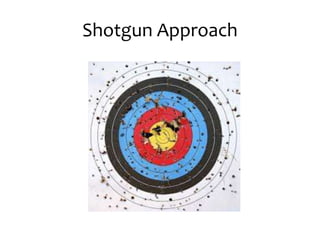
Shotgun Approach
What works best in PD (Knight, 2011) 
• Learning opportunities extend past the in-service 
days. (Follow up) 
• Engagement of teachers during the learning 
process. 
• Provide PD that challenges the teacher. 
• Talk to teachers about teaching. 
• PD is more effective when school leadership 
participate actively.
Deep principal leadership isn’t 
enough, teacher engagement 
must be at a point where they 
actively shape the work.
Journey 
• Shift from professional learning largely 
planned by admin to now planned with and 
for teachers 
• Teacher led professional learning 
• Established target = Improve engagement 
• Risk/Reward 
• June 10-11 meeting - another shift 
– Development of professional learning plans 
– Placed all learning on PLCs 
– PD mentors
Structure 
• Professional Development Team (7 teachers, 3 
admin) 
• Late start Wednesday (8:00-8:50) 
– 50 great minutes 
• Professional learning days moved into the 
school year 
• Reflection
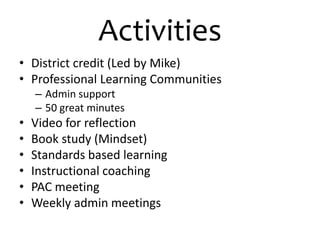
Activities 
• District credit (Led by Mike) 
• Professional Learning Communities 
– Admin support 
– 50 great minutes 
• Video for reflection 
• Book study (Mindset) 
• Standards based learning 
• Instructional coaching 
• PAC meeting 
• Weekly admin meetings
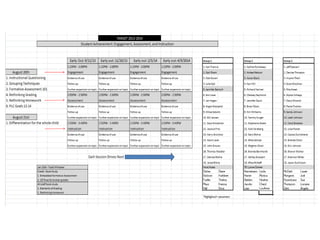
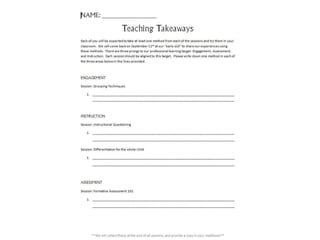
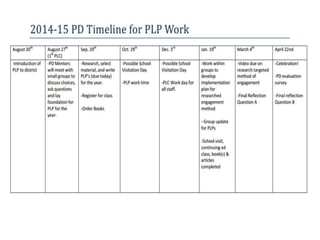
Professional Learning Plan 
• Descriptions 
• Plan 
• Calendar 
• Timeline 
• Walkthrough
Twitter 
• Lonely in small 
schools/at top 
• Great PD for 
admin/teachers 
• @mdmcneff 
• @blikre1 
• @jasongullickson
Questions to ponder… 
• How will you implement a culture of learning? 
• How will you restructure your school day to 
embed professional learning during the work 
day? 
• How will you provide choice, voice, and make 
PD meaningful for each individual?

A Focus on Learning

  • 1.
    A Focus onLearning Mike McNeff, Jared Blikre & Jason Gullickson Link to presentation: http://tinyurl.com/nh8g6me
  • 2.
    Learning targets •Culture of learning • Partnership principles • High quality professional learning practices • Structural changes • Activities • Practical examples: professional learning plans
  • 3.
  • 4.
    Culture Describe theculture in your school? From adults to students, is the focus on learning? Discuss:
  • 5.
    Partnership Principles (Knight,2011) Equality Choice Voice Reflection Dialogue Praxis Reciprocity
  • 6.
    Equality “Partners don’tdecide for each other, they decide together” (Knight, 2011)
  • 7.
    Choice “Without freedomto choose we are doomed to live someone else’s life” (Knight, 2011).
  • 8.
    Voice “Implementing step-by-stepprograms or practices without asking for their thoughts or suggestions, we communicate the message that we do not trust teachers to think for themselves” (Knight, 2011).
  • 9.
    Reflection “School leaderswho do not create frequent opportunities for teachers to reflect, do so at peril” (Knight 2011). 1. Look back 2. Look at 3. Look ahead
  • 10.
    Dialogue “Good professionallearning is centered around dialogue” (Knight, 2011).
  • 11.
    Praxis “Praxis isenabled when teachers have a change to explore, prod, stretch, and re-create whatever it is they are studying – to roll up their sleeves, and really consider how they teach” (Knight, 2011).
  • 12.
    Reciprocity “When adultsare passionate about learning, their love of growth and development rubs off on students and often infects them with the same passion” (Knight, 2011).
  • 13.
    Current reality Taketime to reflect on the seven principles. What is your current reality? What will you focus on when you head back to your school? (Equality, choice, voice, reflection, dialogue, praxis and reciprocity)
  • 14.
    Learn Forward Definitionof PD Primarily occurs several times per week among established teams of teachers, principals, and other instructional staff members where the teams of educators engage in a continuous cycle of improvement.
  • 16.
  • 17.
    What works bestin PD (Knight, 2011) • Learning opportunities extend past the in-service days. (Follow up) • Engagement of teachers during the learning process. • Provide PD that challenges the teacher. • Talk to teachers about teaching. • PD is more effective when school leadership participate actively.
  • 18.
    Deep principal leadershipisn’t enough, teacher engagement must be at a point where they actively shape the work.
  • 19.
    Journey • Shiftfrom professional learning largely planned by admin to now planned with and for teachers • Teacher led professional learning • Established target = Improve engagement • Risk/Reward • June 10-11 meeting - another shift – Development of professional learning plans – Placed all learning on PLCs – PD mentors
  • 22.
    Structure • ProfessionalDevelopment Team (7 teachers, 3 admin) • Late start Wednesday (8:00-8:50) – 50 great minutes • Professional learning days moved into the school year • Reflection
  • 25.
    Activities • Districtcredit (Led by Mike) • Professional Learning Communities – Admin support – 50 great minutes • Video for reflection • Book study (Mindset) • Standards based learning • Instructional coaching • PAC meeting • Weekly admin meetings
  • 27.
    Professional Learning Plan Professional Learning Plan • Descriptions • Plan • Calendar • Timeline • Walkthrough
  • 28.
    Twitter • Lonelyin small schools/at top • Great PD for admin/teachers • @mdmcneff • @blikre1 • @jasongullickson
  • 29.
    Questions to ponder… • How will you implement a culture of learning? • How will you restructure your school day to embed professional learning during the work day? • How will you provide choice, voice, and make PD meaningful for each individual?

Editor's Notes

  • #2 Introductions, Mike, Jared, Jason. Ultimate goal to improve the teacher and student achievement and narrow the focus. We are going to cruise through this presentation and we will provide time to reflect and discuss throughout. We have an hour and we wish we had longer. If you have lingering questions please contact any of us and we can walk you through some of the documents near the end. Can’t remember where I read this, but I agree with this statement: I believe we have an adult learning problem. To truly increase student achievement it must start with the adults in the building. We must develop a culture of learning that begins with teachers and trickles down to students. In this session I will provide practical ideas that will help your district create a focus on learning.
  • #4 Every teacher has to get better. Every teacher fails on a daily basis. Commitment to carry on our practice until we retire or die. One of the mistakes I think I have made is that any time you look to change something people automatically think they are doing something wrong. I think we have to be careful on how we communicate change. It should be more about encouraging and implementing a structure in your school that allows people to get better every single day. It is about continuous improvement, its not about communicating to people that what they are doing is wrong and correcting it.
  • #5 Is your culture focused on learning or do we just provide lip service? Reinvigorating your school culture begins at the top. Principals and superintendents should be the lead learners. Not in the sense that we keep throwing new stuff from book we read at them, but in the sense that people know that we are learning too. If we are learning too it impacts the culture positively. Our learning should be visible, by that I mean we should share with our teachers what we are learning. We should actively take part in book studies with our teachers.
  • #6 Creating a thriving learning culture begins with creating these principles according to Jim Knight Equality – We have to put ourselves on the same level as teachers. Power is automatically attached to admin positions, but to create a partnership with them we have to relinquish some of it. (Partners don’t decide for each other, they decide together). Eliminate us vs them mentality that exists in schools. Choice – Professional learning should provide choice for the teacher and administrator. How do we do this under the current setup? We all basically do the same thing 3 -7 days of PD, and 4 half days. In my research for my dissertation the schools that I interviewed made the decisions as an admin group. They decided what was good for them. We will provide an option for all of us as we progress through the presentation. “Without freedom to choose we are doomed to live someone else’s life.” Voice – coincides with choice. Professional learning needs to value the opinions of all participants not just those of the change leader. Implementing step-by-step programs or practices without asking for their thoughts or suggestions, we communicate the message that we do not trust teachers to think for themselves. Reflection – We reflect in three ways – Look back, Look at, Look ahead. 1. Look back: We consider an event that has passed and think about how it proceeded and what we might have done differently. 2. Look at: We monitor how well an activity is proceeding, considering adjustments that have to be made, and making decisions about what the best method might be for going forward. 3. Look ahead: Think about about how to use an idea, practice or plan in the future. “School leaders who do not create frequent opportunities for teachers to reflect, do so at peril.” Dialogue – Good professional learning is centered around dialogue – Knight shares three pieces to effective dialogue. Humility in dialogue means that we simply withhold our opinion so that we can hear others. (If you know it all how can we possibly learn something from someone else?) The purpose of conversation is learning. Critical Thinking – Only dialogue is capable of generation critical thinking. “When we go into conversation to confirm our views rather than to learn, we choose to think by ourselves rather than with others.” Hope – When I listen to you, and you listen to me there is hope that we can create something new and better, that we can advance thought, and through dialogue we can create a better tomorrow . Praxis – Describes the act of applying new ideas to our own lives. When we learn, reflect, and act, we are engaged in praxis. Praxis is not memorizing a new routine so that we can teach it in our classes exactly a we memorized. Praxis is enabled when teachers have a change to explore, prod, stretch, and re-create whatever it is they are studying – to roll up their sleeves, really consider how they teach., really learn a new approach, and then reconsider their teacher practices and reshape the new approach, if necessary, until it can work in their classroom. Reciprocity – Learning leaders cannot succeed unless they live and breath learning themselves. Reciprosity is the believe that each learning action is an opportunity for everyone to learn. “When adults are passionate about learning, their love of growth and development rubs off on students and often infects them with the same passion.
  • #7 Equality – We have to put ourselves on the same level as teachers. Power is automatically attached to admin positions, but to create a partnership with them we have to relinquish some of it. Eliminate us vs them mentality that exists in schools.
  • #8 Choice – Professional learning should provide choice for the teacher and administrator. How do we do this under the current setup? We all basically do the same thing 3 -7 days of PD, and 4 half days. In my research for my dissertation the schools that I interviewed made the decisions as an admin group. They decided what was good for them. We will provide an option for all of us as we progress through the presentation.
  • #9 Voice – coincides with choice. Professional learning needs to value the opinions of all participants not just those of the change leader. Implementing step-by-step programs or practices without asking for their thoughts or suggestions, we communicate the message that we do not trust teachers to think for themselves.
  • #10 Reflection – We reflect in three ways – Look back, Look at, Look ahead. 1. Look back: We consider an event that has passed and think about how it proceeded and what we might have done differently. 2. Look at: We monitor how well an activity is proceeding, considering adjustments that have to be made, and making decisions about what the best method might be for going forward. 3. Look ahead: Think about about how to use an idea, practice or plan in the future. “School leaders who do not create frequent opportunities for teachers to reflect, do so at peril.”
  • #11 Dialogue – Good professional learning is centered around dialogue – Knight shares three pieces to effective dialogue. Humility in dialogue means that we simply withhold our opinion so that we can hear others. (If you know it all how can we possibly learn something from someone else?) The purpose of conversation is learning. Critical Thinking – Only dialogue is capable of generation critical thinking. “When we go into conversation to confirm our views rather than to learn, we choose to think by ourselves rather than with others.” Hope – When I listen to you, and you listen to me there is hope that we can create something new and better, that we can advance thought, and through dialogue we can create a better tomorrow .
  • #12 Praxis – Describes the act of applying new ideas to our own lives. When we learn, reflect, and act, we are engaged in praxis. Praxis is not memorizing a new routine so that we can teach it in our classes exactly a we memorized. Praxis is enabled when teachers have a change to explore, prod, stretch, and re-create whatever it is they are studying – to roll up their sleeves, really consider how they teach., really learn a new approach, and then reconsider their teacher practices and reshape the new approach, if necessary, until it can work in their classroom.
  • #13 Reciprocity – Learning leaders cannot succeed unless they live and breath learning themselves. Reciprosity is the believe that each learning action is an opportunity for everyone to learn. “When adults are passionate about learning, their love of growth and development rubs off on students and often infects them with the same passion.
  • #15 Very challenging. We have implemented various opportunities but I don’t believe we are to this point. I do believe for us to make serious gains and move from good to great we have to establish a culture of learning in our schools. That begins with structure of the day. We can’t continue to expect teachers to do this work outside of the school day. I am a huge believer in job embedded PD, and I keep want to rethink what we are doing.
  • #16 How many feel their Professional resembles something like this? How often have you organized bad PD? I have been on both sides, as a former social studies teacher I can remember several times where I felt like nothing applied to me. This was one of the things that I set out to change with how we would organize professional development.
  • #17 Past - we didn’t know where are target was. I think there should be a link with everything we are doing. All of our school improvement activities and our professional learning should be intertwined. In my research on rural principals as part of my dissertation when asked who made the decisions on professional development all mentioned the admin team.
  • #18 Learning opportunities: Effective PD is not one and done – we need follow up throughout the year. The whole point of PD is for it to enter the classroom. Engagement: We must remind ourselves that good instructional methods for kids are good methods for adults. “We know sit & git doesn’t work for students. Why would we think it will work for teachers?” Tom Whitby PD that challenges: To improve we need to be challenged. As educators we need to be able to see and understand that what we may be doing is inneffective. Talk to teachers = How often does our PD actually talk about teaching? Our focus is on the teacher, the quality of the teacher has the largest impact on student achievement. PD is more effective = School leaders need and should take an active role in PD. Walking out of the room after the presentation begins sends a terrible message to teachers. If the principal isn’t here than it must not be that important.
  • #19 “The single most important factor in moving schools forward is that the principal is also a learner” (Fullan, 2010) “Leaders who are respected are those who walk the talk.” “If a principal does not vocally, symbolically, and authentically stress the importance of instructional improvement, then it most likely won’t happen.”
  • #20 I would describe our professional learning process as continuous improvement. We had an idea last year where we tried to provide more choice, follow up, and sustained discussion on the topics throughout the year. We found even with more choice, that this wasn’t enough. We still weren’t seeing praxis. We are taking a risk in turning all power over to teachers to help plan their professional learning aligned to our AdvancED goals. This process will fall entirely on the PLC groups, they must come together and create their professional learning plan. This will provide the autonomy, and a level of trust that we hope will lead to innovation.
  • #21 Explain last year Revamped – still was not enough individualization, or meaningful Ownership increased – empowered teachers to become leaders.
  • #22 Keep the focus on and force teachers to try new methods and share.
  • #23 Culture is probably most important to develop a learning centered school, but if you don’t have the structure to provide time within the school day it more than likely the change in culture will not occur. I believe just as strongly in structure as I do in culture. Lets be honest we don’t We will talk about practical methods that we are using and many other districts are beginning to use. Late start concept.
  • #24 Discuss structure: PLCs, Book studies, PD days, and etc. PLCs = 4 days of additional professional learning Book studies = once a month Credit class once a month – AM/PM PD Days 3 = largely directed by PLC groups
  • #28 Research based
  • #29 Who uses Twitter in here?