
get over 
YOURSELF leadership communication 
isNOTabout YOU 
Luke VanWingerden 
@ljvanwingerden
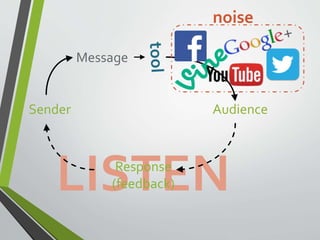
Sender 
Message 
noise 
LISTEN 
Response 
(feedback) 
Audience
“Man's inability to communicate is a 
result of his failure to listen effectively." 
- Carl Rogers
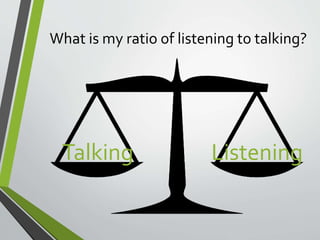
What is my ratio of listening to talking? 
Talking Listening
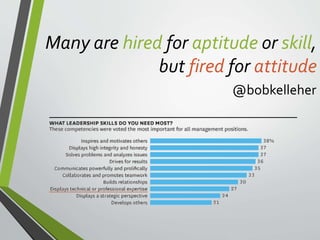
Many are hired for aptitude or skill, 
but fired for attitude 
@bobkelleher
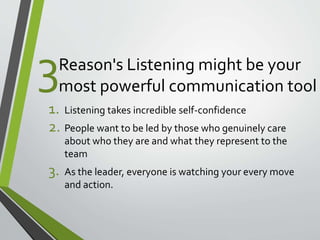
Reason's Listening might be your 
most powerful communication tool 
1. Listening takes incredible self-confidence 
2. People want to be led by those who genuinely care 
about who they are and what they represent to the 
team 
3. As the leader, everyone is watching your every move 
and action. 
3
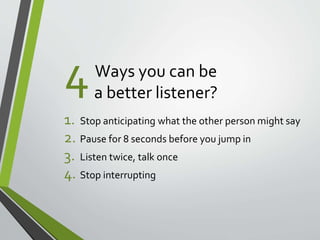
Ways you can be 
a better listener? 
4 
1. Stop anticipating what the other person might say 
2. Pause for 8 seconds before you jump in 
3. Listen twice, talk once 
4. Stop interrupting
3 
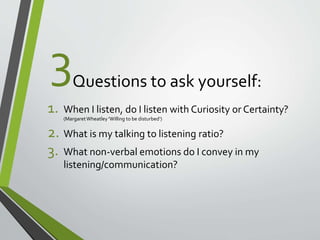
Questions to ask yourself: 
1. When I listen, do I listen with Curiosity or Certainty? 
(Margaret Wheatley 'Willing to be disturbed‘) 
2. What is my talking to listening ratio? 
3. What non-verbal emotions do I convey in my 
listening/communication?
Let me know your thoughts: 
@Ljvanwingerden 
or 
luke@uscupstate.edu

Leadership communication

  • 1.
    get over YOURSELFleadership communication isNOTabout YOU Luke VanWingerden @ljvanwingerden
  • 2.
    Sender Message noise LISTEN Response (feedback) Audience
  • 3.
    “Man's inability tocommunicate is a result of his failure to listen effectively." - Carl Rogers
  • 4.
    What is myratio of listening to talking? Talking Listening
  • 5.
    Many are hiredfor aptitude or skill, but fired for attitude @bobkelleher
  • 6.
    Reason's Listening mightbe your most powerful communication tool 1. Listening takes incredible self-confidence 2. People want to be led by those who genuinely care about who they are and what they represent to the team 3. As the leader, everyone is watching your every move and action. 3
  • 7.
    Ways you canbe a better listener? 4 1. Stop anticipating what the other person might say 2. Pause for 8 seconds before you jump in 3. Listen twice, talk once 4. Stop interrupting
  • 8.
    3 Questions toask yourself: 1. When I listen, do I listen with Curiosity or Certainty? (Margaret Wheatley 'Willing to be disturbed‘) 2. What is my talking to listening ratio? 3. What non-verbal emotions do I convey in my listening/communication?
  • 9.
    Let me knowyour thoughts: @Ljvanwingerden or luke@uscupstate.edu