Objectives
• Defining communication and its process
• filters/barriers in a communication process
• Practice active listening
• Tips to improve communication
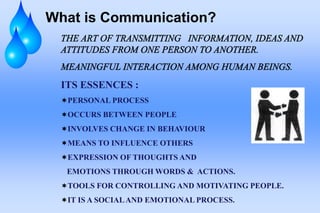
What is Communication?
ITS ESSENCES :
PERSONAL PROCESS
OCCURS BETWEEN PEOPLE
INVOLVES CHANGE IN BEHAVIOUR
MEANS TO INFLUENCE OTHERS
EXPRESSION OF THOUGHTS AND
EMOTIONS THROUGH WORDS & ACTIONS.
TOOLS FOR CONTROLLING AND MOTIVATING PEOPLE.
IT IS A SOCIALAND EMOTIONAL PROCESS.
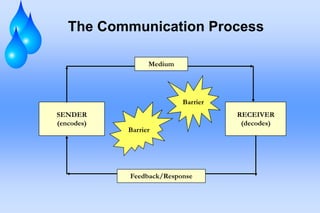
The Communication Process
SENDER
(encodes)
RECEIVER
(decodes)
Barrier
Barrier
Medium
Feedback/Response
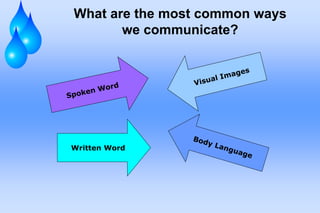
What are the most common ways
we communicate?
Written Word
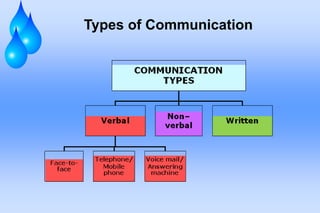
Types of Communication
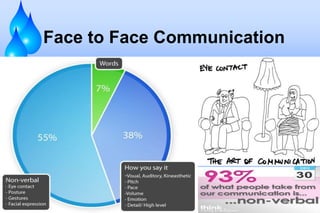
Face to Face Communication
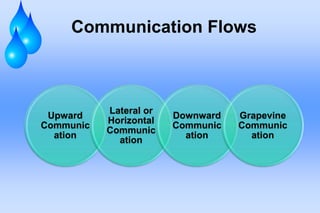
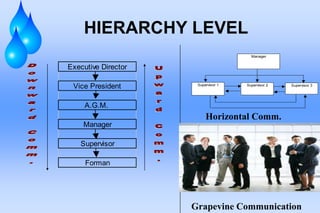
Communication Flows
Upward
Communic
ation
Lateral or
Horizontal
Communic
ation
Downward
Communic
ation
Grapevine
Communic
ation
HIERARCHY LEVEL
Executive Director
Vice President
A.G.M.
Manager
Supervisor
Forman
Supervisor 3Supervisor 1 Supervisor 2
Manager
Horizontal Comm.
Grapevine Communication
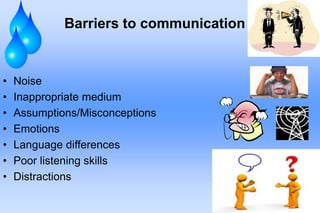
Barriers to communication
• Noise
• Inappropriate medium
• Assumptions/Misconceptions
• Emotions
• Language differences
• Poor listening skills
• Distractions
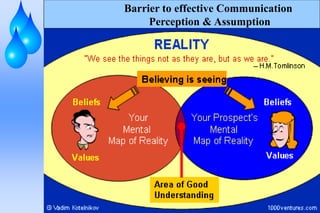
Barrier to effective Communication
Perception & Assumption
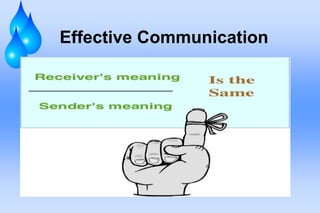
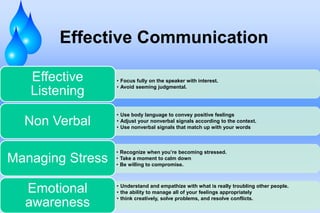
Effective Communication
• Focus fully on the speaker with interest.
• Avoid seeming judgmental.
Effective
Listening
• Use body language to convey positive feelings
• Adjust your nonverbal signals according to the context.
• Use nonverbal signals that match up with your words
Non Verbal
• Recognize when you’re becoming stressed.
• Take a moment to calm down
• Be willing to compromise.
Managing Stress
• Understand and empathize with what is really troubling other people.
• the ability to manage all of your feelings appropriately
• think creatively, solve problems, and resolve conflicts.
Emotional
awareness
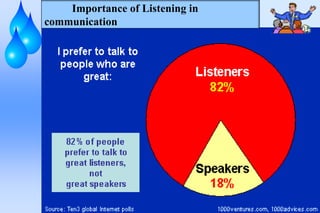
Importance of Listening in
communication
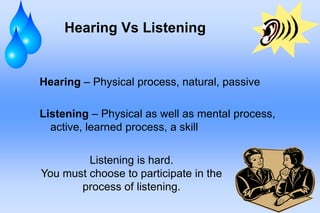
Hearing Vs Listening
Hearing – Physical process, natural, passive
Listening – Physical as well as mental process,
active, learned process, a skill
Listening is hard.
You must choose to participate in the
process of listening.
VALUE OF LISTENING
 Listening to others is an elegant art.
 Good listening reflects courtesy and good manners.
 Listening carefully to the instructions of superiors improve competence
and performance.
 The result of poor listening skill could be disastrous in business,
employment and social relations.
Good listening can eliminate a number of imaginary grievances of
employees.
Good listening skill can improve social relations and conversation.
Listening is a positive activity rather than a passive or negative activity.
Think ahead -what you are going to say.
Use simple words and phrases
Increase your knowledge on all subjects you are required to speak.
Speak clearly and audibly.
Check twice with the listener whether you have been understood accurately
or not
In case of an interruption, always do a little recap of what has been already
said.
Always pay undivided attention to the speaker while listening.
While listening, always make notes of important points.
Always ask for clarification if you have failed to grasp other’s point of view.
Repeat what the speaker has said to check whether you have understood
accurately.
ESSENTIALS OF COMMUNICATION--- Dos
ESSENTIALS OF COMMUNICATION
DON’Ts
Do not use technical terms & terminologies not understood by
majority of people.
Do not speak too fast or too slow.
Do not speak in inaudible surroundings, as you won’t be heard.
Do not assume that every body understands you.
While listening do not glance here and there as it might distract the
speaker.
Do not interrupt the speaker.
Do not jump to the conclusion that you have understood every thing.
How to Improve Existing Level of
COMMUNICATION?
IMPROVE LANGUAGE. & PRONUNCIATIOON.
WORK ON VOICE MODULATION.
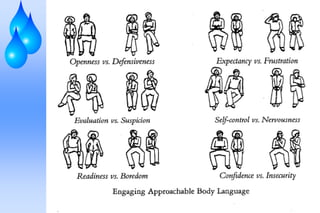
WORK ON BODY LANGUAGE.
READ MORE
LISTEN MORE
INTERACT WITH QUALITATIVE PEOPLE.
PRACTICE MEDITATION & GOOD THOUGHTS.
THINK AND SPEAK.
DO NOT SPEAK TOO FAST.
USE SIMPLE VOCABULARY.
DO NOT SPEAK ONLY TO IMPRESS SOMEONE.
LOOK PRESENTABLE AND CONFIDENT.
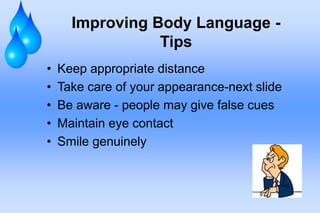
Improving Body Language -
Tips
• Keep appropriate distance
• Take care of your appearance-next slide
• Be aware - people may give false cues
• Maintain eye contact
• Smile genuinely
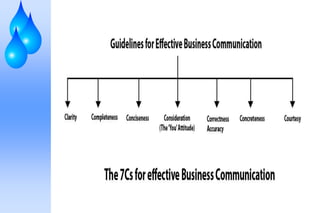
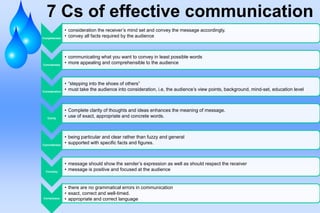
7 Cs of effective communication
Completeness
• consideration the receiver’s mind set and convey the message accordingly.
• convey all facts required by the audience
Conciseness
• communicating what you want to convey in least possible words
• more appealing and comprehensible to the audience
Consideration
• “stepping into the shoes of others”
• must take the audience into consideration, i.e, the audience’s view points, background, mind-set, education level
Clarity
• Complete clarity of thoughts and ideas enhances the meaning of message.
• use of exact, appropriate and concrete words.
Concreteness
• being particular and clear rather than fuzzy and general
• supported with specific facts and figures.
Courtesy
• message should show the sender’s expression as well as should respect the receiver
• message is positive and focused at the audience
Correctness
• there are no grammatical errors in communication
• exact, correct and well-timed.
• appropriate and correct language
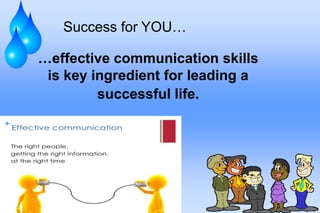
…effective communication skills
is key ingredient for leading a
successful life.
Success for YOU…
THANK YOU

Effective Communication skills

  • 2.
    Objectives • Defining communicationand its process • filters/barriers in a communication process • Practice active listening • Tips to improve communication
  • 3.
    What is Communication? ITSESSENCES : PERSONAL PROCESS OCCURS BETWEEN PEOPLE INVOLVES CHANGE IN BEHAVIOUR MEANS TO INFLUENCE OTHERS EXPRESSION OF THOUGHTS AND EMOTIONS THROUGH WORDS & ACTIONS. TOOLS FOR CONTROLLING AND MOTIVATING PEOPLE. IT IS A SOCIALAND EMOTIONAL PROCESS.
  • 4.
  • 5.
    What are themost common ways we communicate? Written Word
  • 6.
  • 7.
    Face to FaceCommunication
  • 8.
  • 9.
    HIERARCHY LEVEL Executive Director VicePresident A.G.M. Manager Supervisor Forman Supervisor 3Supervisor 1 Supervisor 2 Manager Horizontal Comm. Grapevine Communication
  • 10.
    Barriers to communication •Noise • Inappropriate medium • Assumptions/Misconceptions • Emotions • Language differences • Poor listening skills • Distractions
  • 11.
    Barrier to effectiveCommunication Perception & Assumption
  • 12.
  • 13.
    Effective Communication • Focusfully on the speaker with interest. • Avoid seeming judgmental. Effective Listening • Use body language to convey positive feelings • Adjust your nonverbal signals according to the context. • Use nonverbal signals that match up with your words Non Verbal • Recognize when you’re becoming stressed. • Take a moment to calm down • Be willing to compromise. Managing Stress • Understand and empathize with what is really troubling other people. • the ability to manage all of your feelings appropriately • think creatively, solve problems, and resolve conflicts. Emotional awareness
  • 15.
    Importance of Listeningin communication
  • 16.
    Hearing Vs Listening Hearing– Physical process, natural, passive Listening – Physical as well as mental process, active, learned process, a skill Listening is hard. You must choose to participate in the process of listening.
  • 17.
    VALUE OF LISTENING Listening to others is an elegant art.  Good listening reflects courtesy and good manners.  Listening carefully to the instructions of superiors improve competence and performance.  The result of poor listening skill could be disastrous in business, employment and social relations. Good listening can eliminate a number of imaginary grievances of employees. Good listening skill can improve social relations and conversation. Listening is a positive activity rather than a passive or negative activity.
  • 18.
    Think ahead -whatyou are going to say. Use simple words and phrases Increase your knowledge on all subjects you are required to speak. Speak clearly and audibly. Check twice with the listener whether you have been understood accurately or not In case of an interruption, always do a little recap of what has been already said. Always pay undivided attention to the speaker while listening. While listening, always make notes of important points. Always ask for clarification if you have failed to grasp other’s point of view. Repeat what the speaker has said to check whether you have understood accurately. ESSENTIALS OF COMMUNICATION--- Dos
  • 19.
    ESSENTIALS OF COMMUNICATION DON’Ts Donot use technical terms & terminologies not understood by majority of people. Do not speak too fast or too slow. Do not speak in inaudible surroundings, as you won’t be heard. Do not assume that every body understands you. While listening do not glance here and there as it might distract the speaker. Do not interrupt the speaker. Do not jump to the conclusion that you have understood every thing.
  • 20.
    How to ImproveExisting Level of COMMUNICATION? IMPROVE LANGUAGE. & PRONUNCIATIOON. WORK ON VOICE MODULATION. WORK ON BODY LANGUAGE. READ MORE LISTEN MORE INTERACT WITH QUALITATIVE PEOPLE. PRACTICE MEDITATION & GOOD THOUGHTS. THINK AND SPEAK. DO NOT SPEAK TOO FAST. USE SIMPLE VOCABULARY. DO NOT SPEAK ONLY TO IMPRESS SOMEONE. LOOK PRESENTABLE AND CONFIDENT.
  • 21.
    Improving Body Language- Tips • Keep appropriate distance • Take care of your appearance-next slide • Be aware - people may give false cues • Maintain eye contact • Smile genuinely
  • 24.
    7 Cs ofeffective communication Completeness • consideration the receiver’s mind set and convey the message accordingly. • convey all facts required by the audience Conciseness • communicating what you want to convey in least possible words • more appealing and comprehensible to the audience Consideration • “stepping into the shoes of others” • must take the audience into consideration, i.e, the audience’s view points, background, mind-set, education level Clarity • Complete clarity of thoughts and ideas enhances the meaning of message. • use of exact, appropriate and concrete words. Concreteness • being particular and clear rather than fuzzy and general • supported with specific facts and figures. Courtesy • message should show the sender’s expression as well as should respect the receiver • message is positive and focused at the audience Correctness • there are no grammatical errors in communication • exact, correct and well-timed. • appropriate and correct language
  • 25.
    …effective communication skills iskey ingredient for leading a successful life. Success for YOU…
  • 26.