Into – Who we are? Yermi Kurkus Simon Garceau Jacquie Snelling
Intro – Our Subject Communication in Leadership – The effective way! Different types of leaders in a business environment and their methods of communication. Which style is the most effective?
Intro - Discussion Types of experiences you had with a boss, manager, supervisor etc? What do you feel when the boss calls you into his office for a “talk”?
Intro – Our Presentation Leadership Styles Their theories Possible outcomes of different methods of communication Identify the “ideal situation”
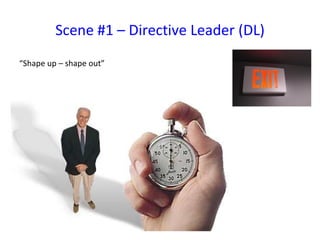
Scene #1 – Directive Leader (DL) “ Shape up – shape out”
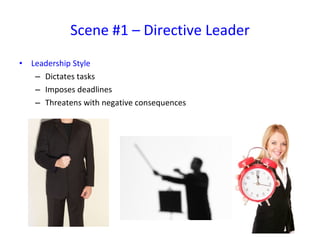
Leadership Style Dictates tasks Imposes deadlines  Threatens with negative consequences Scene #1 – Directive Leader
Considerations Not the parties involved Not the employees expectations and involvement Not the situation Scene #1 – Directive Leader
Focus Task at hand Leader’s ambitions and success Power Seniority Control Scene #1 – Directive Leader
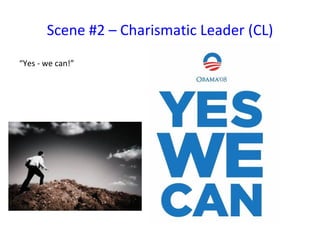
Scene #2 – Charismatic Leader (CL) “ Yes - we can!”
Leadership Style Diplomatic Motivates employees  Offers more incentives Cute smile and pat on the back Scene #2 – Charismatic Leader
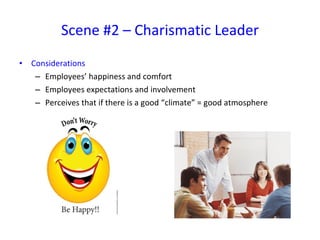
Considerations Employees’ happiness and comfort Employees expectations and involvement Perceives that if there is a good “climate” = good atmosphere Scene #2 – Charismatic Leader
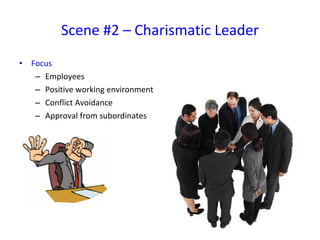
Focus Employees Positive working environment Conflict Avoidance Approval from subordinates Scene #2 – Charismatic Leader
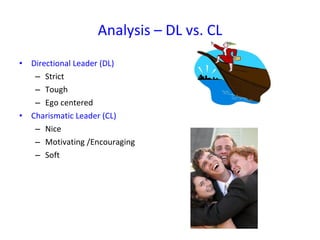
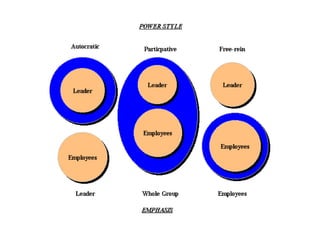
Analysis – DL vs. CL Directional Leader (DL) Strict Tough Ego centered Charismatic Leader (CL) Nice Motivating /Encouraging Soft
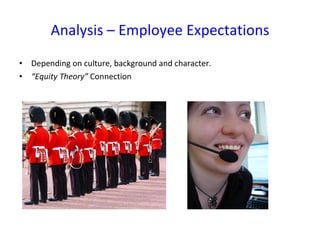
Analysis – Employee Expectations Depending on culture, background and character. “ Equity Theory”  Connection
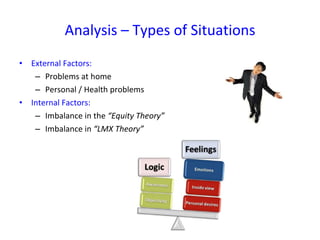
Analysis – Types of Situations External Factors: Problems at home Personal / Health problems Internal Factors: Imbalance in the  “Equity Theory” Imbalance in  “LMX Theory”
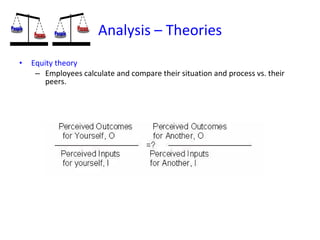
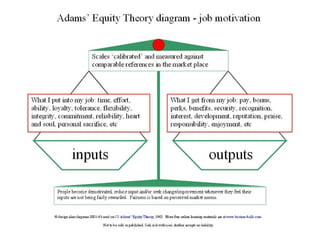
Analysis – Theories Equity theory Employees calculate and compare their situation and process vs. their peers.
 
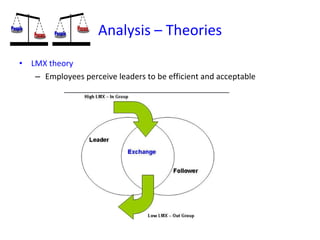
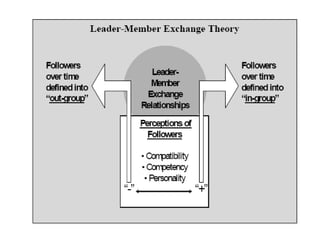
Analysis – Theories LMX theory Employees perceive leaders to be efficient and acceptable
 
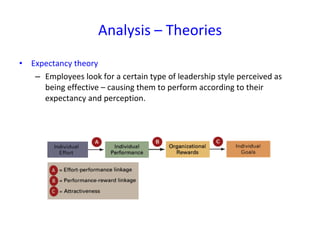
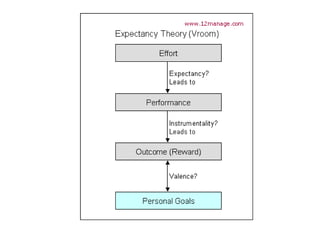
Analysis – Theories Expectancy theory Employees look for a certain type of leadership style perceived as being effective – causing them to perform according to their expectancy and perception.
 
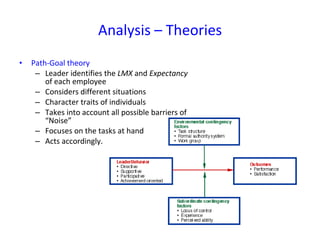
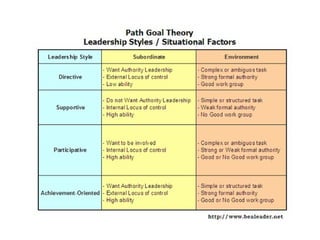
Analysis – Theories Path-Goal theory Leader identifies the  LMX  and  Expectancy  of each employee Considers different situations  Character traits of individuals Takes into account all possible barriers of “Noise”  Focuses on the tasks at hand  Acts accordingly.
 
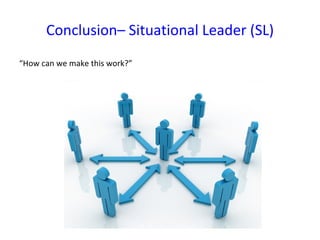
Conclusion– Situational Leader (SL) “ How can we make this work?”
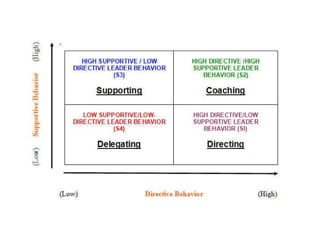
Leadership Style Mixture of the two other types of leadership Indentifies the strengths and interests of subordinates Empowers the right employee for the right task Monitors all possible situational and motivational factors Takes care of the problems right away Conclusion– Situational Leader (SL)
Considerations Employees expectations External and internal barriers/factors Conclusion– Situational Leader (SL)
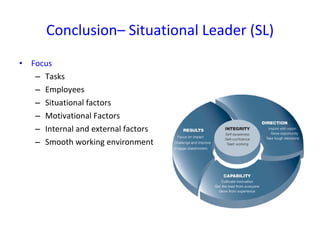
Focus Tasks Employees Situational factors Motivational Factors Internal and external factors Smooth working environment Conclusion– Situational Leader (SL)


Q&A Which leader is the most effective? In you opinion, which leader is more likely to use which communication method? Can you identify different leaders that match to the different styles in our presentation?

Communication In Leadership

  • 1.
  • 2.
    Into – Whowe are? Yermi Kurkus Simon Garceau Jacquie Snelling
  • 3.
    Intro – OurSubject Communication in Leadership – The effective way! Different types of leaders in a business environment and their methods of communication. Which style is the most effective?
  • 4.
    Intro - DiscussionTypes of experiences you had with a boss, manager, supervisor etc? What do you feel when the boss calls you into his office for a “talk”?
  • 5.
    Intro – OurPresentation Leadership Styles Their theories Possible outcomes of different methods of communication Identify the “ideal situation”
  • 6.
    Scene #1 –Directive Leader (DL) “ Shape up – shape out”
  • 7.
    Leadership Style Dictatestasks Imposes deadlines Threatens with negative consequences Scene #1 – Directive Leader
  • 8.
    Considerations Not theparties involved Not the employees expectations and involvement Not the situation Scene #1 – Directive Leader
  • 9.
    Focus Task athand Leader’s ambitions and success Power Seniority Control Scene #1 – Directive Leader
  • 10.
    Scene #2 –Charismatic Leader (CL) “ Yes - we can!”
  • 11.
    Leadership Style DiplomaticMotivates employees Offers more incentives Cute smile and pat on the back Scene #2 – Charismatic Leader
  • 12.
    Considerations Employees’ happinessand comfort Employees expectations and involvement Perceives that if there is a good “climate” = good atmosphere Scene #2 – Charismatic Leader
  • 13.
    Focus Employees Positiveworking environment Conflict Avoidance Approval from subordinates Scene #2 – Charismatic Leader
  • 14.
    Analysis – DLvs. CL Directional Leader (DL) Strict Tough Ego centered Charismatic Leader (CL) Nice Motivating /Encouraging Soft
  • 15.
    Analysis – EmployeeExpectations Depending on culture, background and character. “ Equity Theory” Connection
  • 16.
    Analysis – Typesof Situations External Factors: Problems at home Personal / Health problems Internal Factors: Imbalance in the “Equity Theory” Imbalance in “LMX Theory”
  • 17.
    Analysis – TheoriesEquity theory Employees calculate and compare their situation and process vs. their peers.
  • 18.
  • 19.
    Analysis – TheoriesLMX theory Employees perceive leaders to be efficient and acceptable
  • 20.
  • 21.
    Analysis – TheoriesExpectancy theory Employees look for a certain type of leadership style perceived as being effective – causing them to perform according to their expectancy and perception.
  • 22.
  • 23.
    Analysis – TheoriesPath-Goal theory Leader identifies the LMX and Expectancy of each employee Considers different situations Character traits of individuals Takes into account all possible barriers of “Noise” Focuses on the tasks at hand Acts accordingly.
  • 24.
  • 25.
    Conclusion– Situational Leader(SL) “ How can we make this work?”
  • 26.
    Leadership Style Mixtureof the two other types of leadership Indentifies the strengths and interests of subordinates Empowers the right employee for the right task Monitors all possible situational and motivational factors Takes care of the problems right away Conclusion– Situational Leader (SL)
  • 27.
    Considerations Employees expectationsExternal and internal barriers/factors Conclusion– Situational Leader (SL)
  • 28.
    Focus Tasks EmployeesSituational factors Motivational Factors Internal and external factors Smooth working environment Conclusion– Situational Leader (SL)
  • 29.
  • 30.
  • 31.
  • 32.
    Q&A Which leaderis the most effective? In you opinion, which leader is more likely to use which communication method? Can you identify different leaders that match to the different styles in our presentation?