How to Use Type Preferences to Work Together and
Communicate Effectively
Barry University School of Law – Presentation for Library Staff
 MBTI Certified Practitioner since 2009
 Director of Career Services
 Career & Professional Development
 Attorney at Law (CT Licensure)
Sonja Hayes, J.D.
ESFJ
 Get better acquainted with one another while
developing a stronger team dynamic
 Become aware of preferences for taking in
information and making decisions
 Discover individual and team problem-solving styles
 Foster an exchange of viewpoints
 Learn and practice better ways of working together
 Attack the problem, not the person
 Give everyone the opportunity to state his or
her opinion
 Remember that opinions differ; there may be
several perspectives on the same situation
 Talk solely about your own beliefs and
experiences—avoid blanket statements such
as “Everyone feels that …”; instead, try “I feel
that …”
 Present feedback in a constructive manner only
 Avoid side conversations, stay with the process,
and attend to whoever is speaking
 Keep all discussions during the teambuilding
confidential; unless the team agrees to share
information, what is said in the workshop stays in
the workshop
 Remember that resolving team problems is the
responsibility of team members; facilitating is the
responsibility of the teambuilder
 Type is innate
 Type can be influenced
 Type is not a box
 Type is non-judgmental
 Type is not an excuse
 Type doesn’t explain everything
 Type is a journey
 Type is about preferences; it is not about knowledge,
skills, or abilities
 There are no right or wrong preferences
 No preferences are unhealthy or inappropriate
 Type is not an excuse—we can all use every function
and every attitude
 Team members are the best judges of their own
preferences
 Type should empower team members, not limit them
 “What Type Am I”
 My story
HOW WE GAIN ENERGY
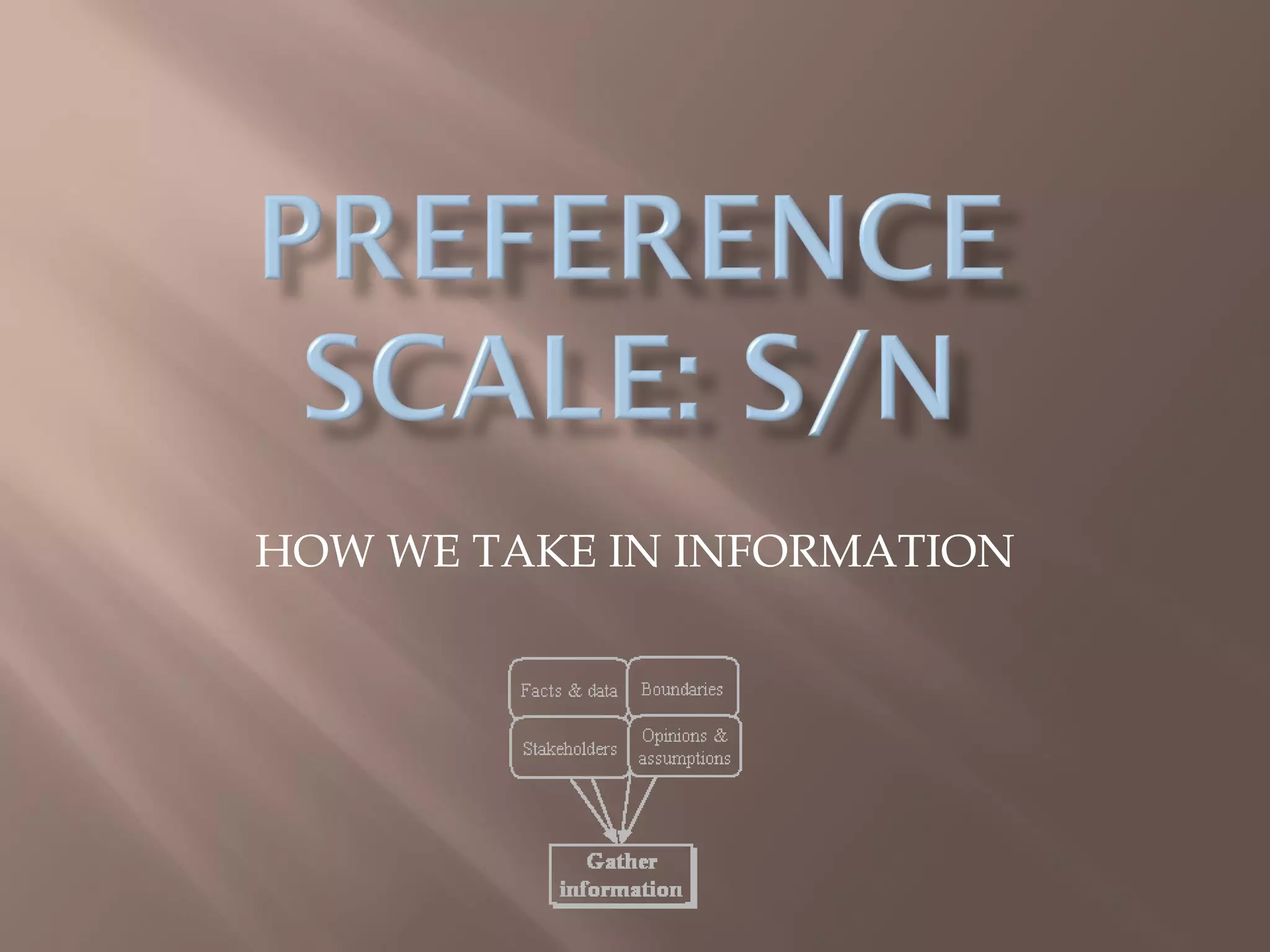
HOW WE TAKE IN INFORMATION
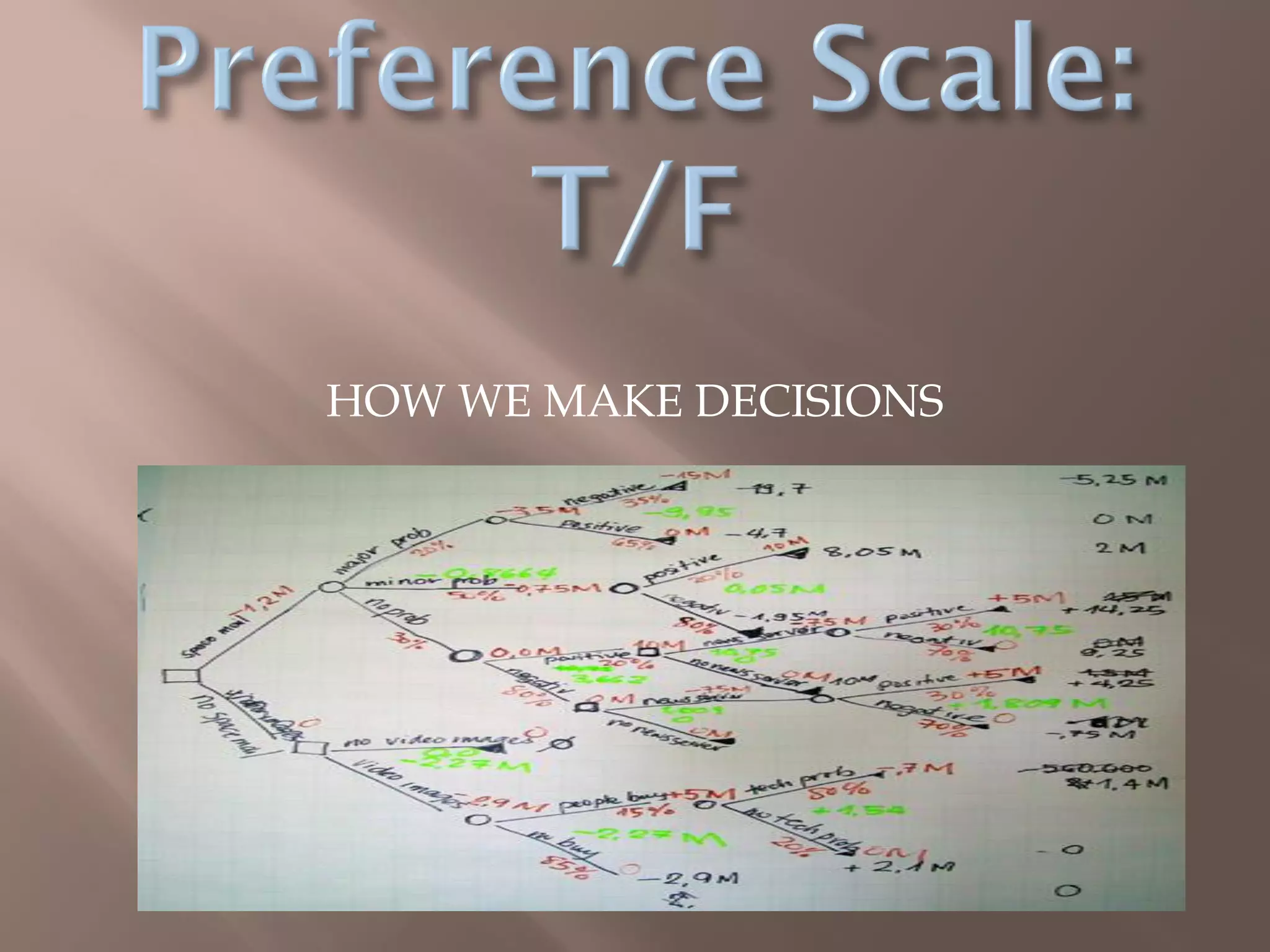
HOW WE MAKE DECISIONS
HOW WE APPROACH LIFE
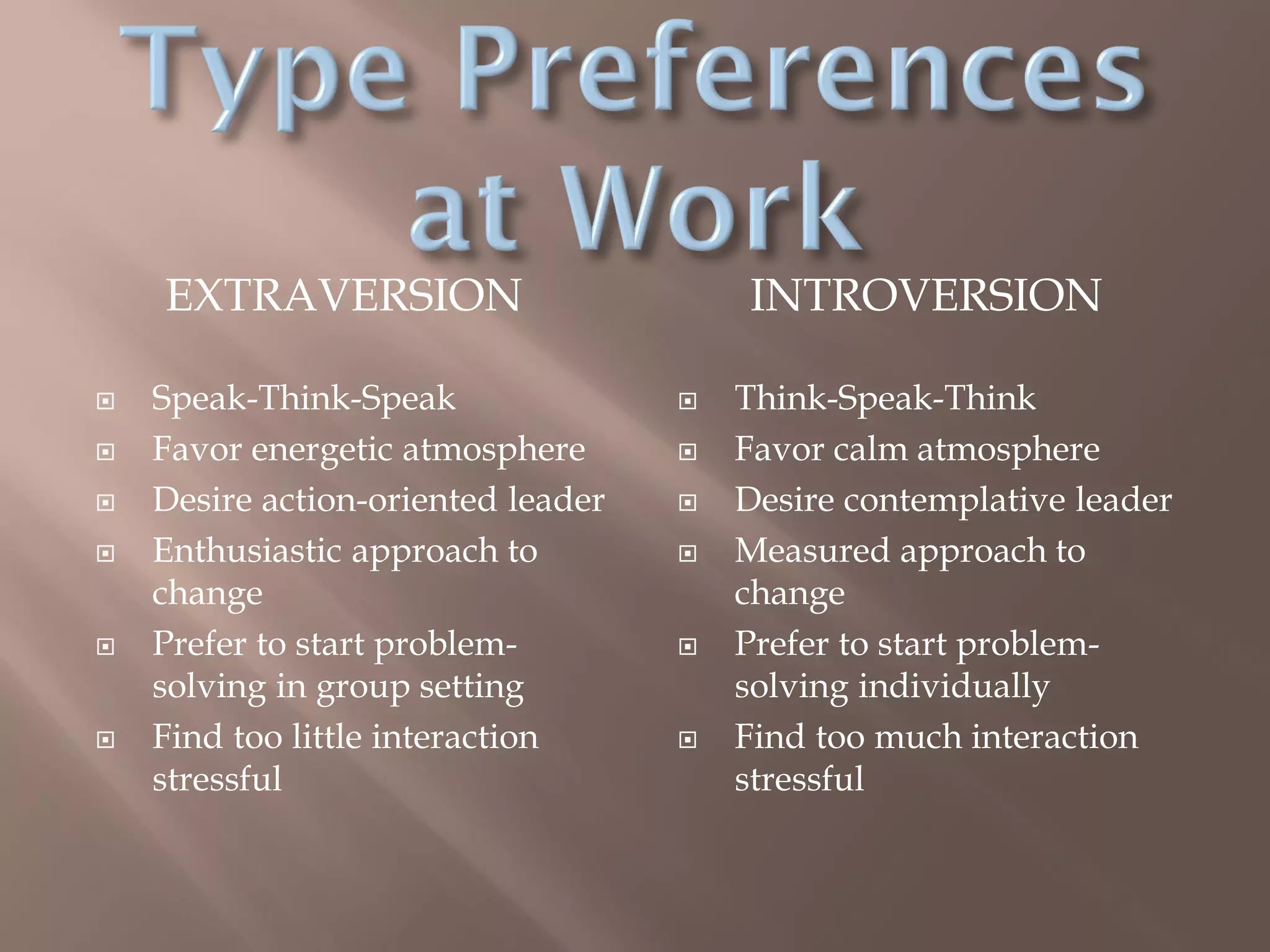
EXTRAVERSION INTROVERSION
 Speak-Think-Speak
 Favor energetic atmosphere
 Desire action-oriented leader
 Enthusiastic approach to
change
 Prefer to start problem-
solving in group setting
 Find too little interaction
stressful
 Think-Speak-Think
 Favor calm atmosphere
 Desire contemplative leader
 Measured approach to
change
 Prefer to start problem-
solving individually
 Find too much interaction
stressful
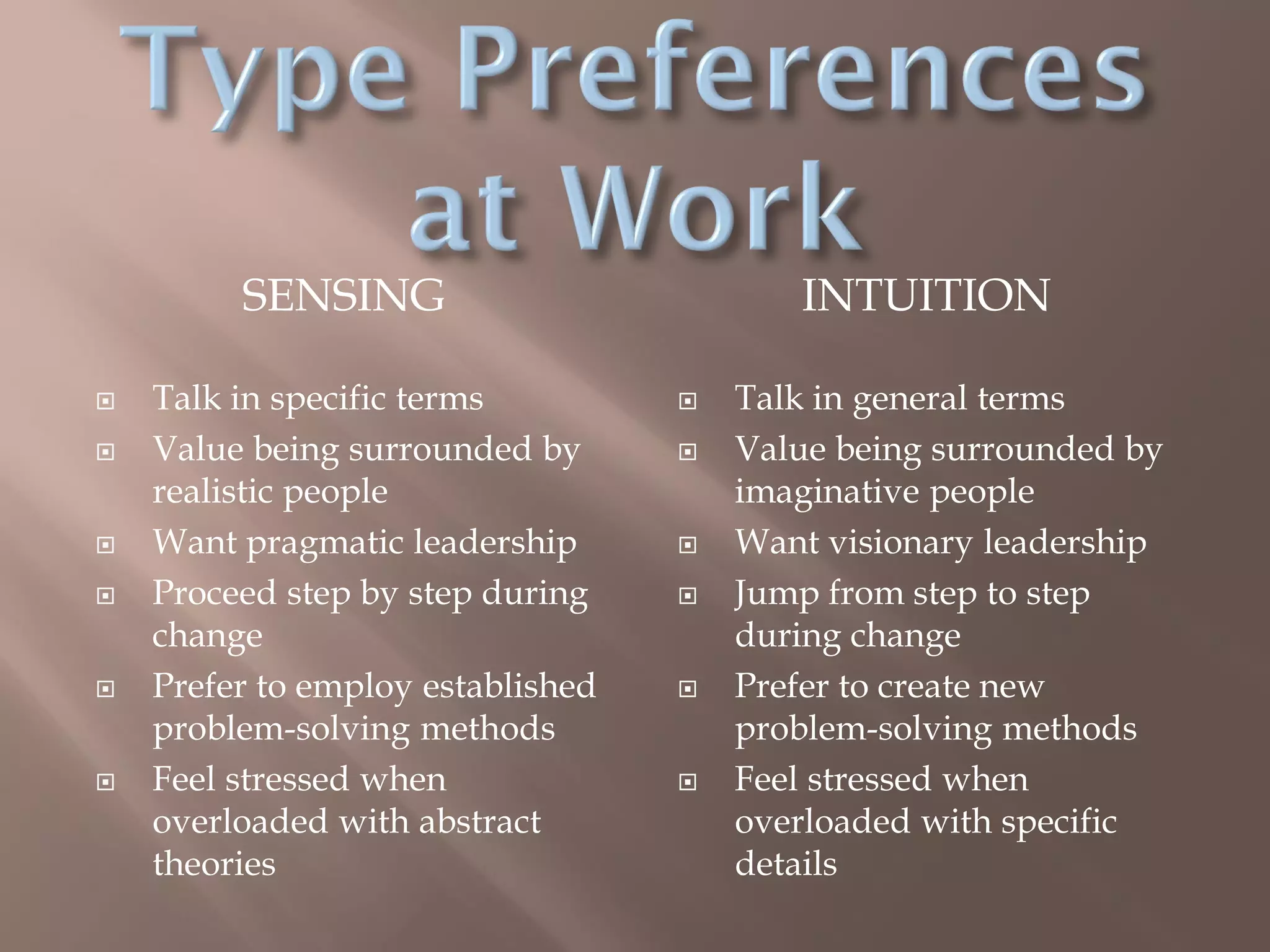
SENSING INTUITION
 Talk in specific terms
 Value being surrounded by
realistic people
 Want pragmatic leadership
 Proceed step by step during
change
 Prefer to employ established
problem-solving methods
 Feel stressed when
overloaded with abstract
theories
 Talk in general terms
 Value being surrounded by
imaginative people
 Want visionary leadership
 Jump from step to step
during change
 Prefer to create new
problem-solving methods
 Feel stressed when
overloaded with specific
details
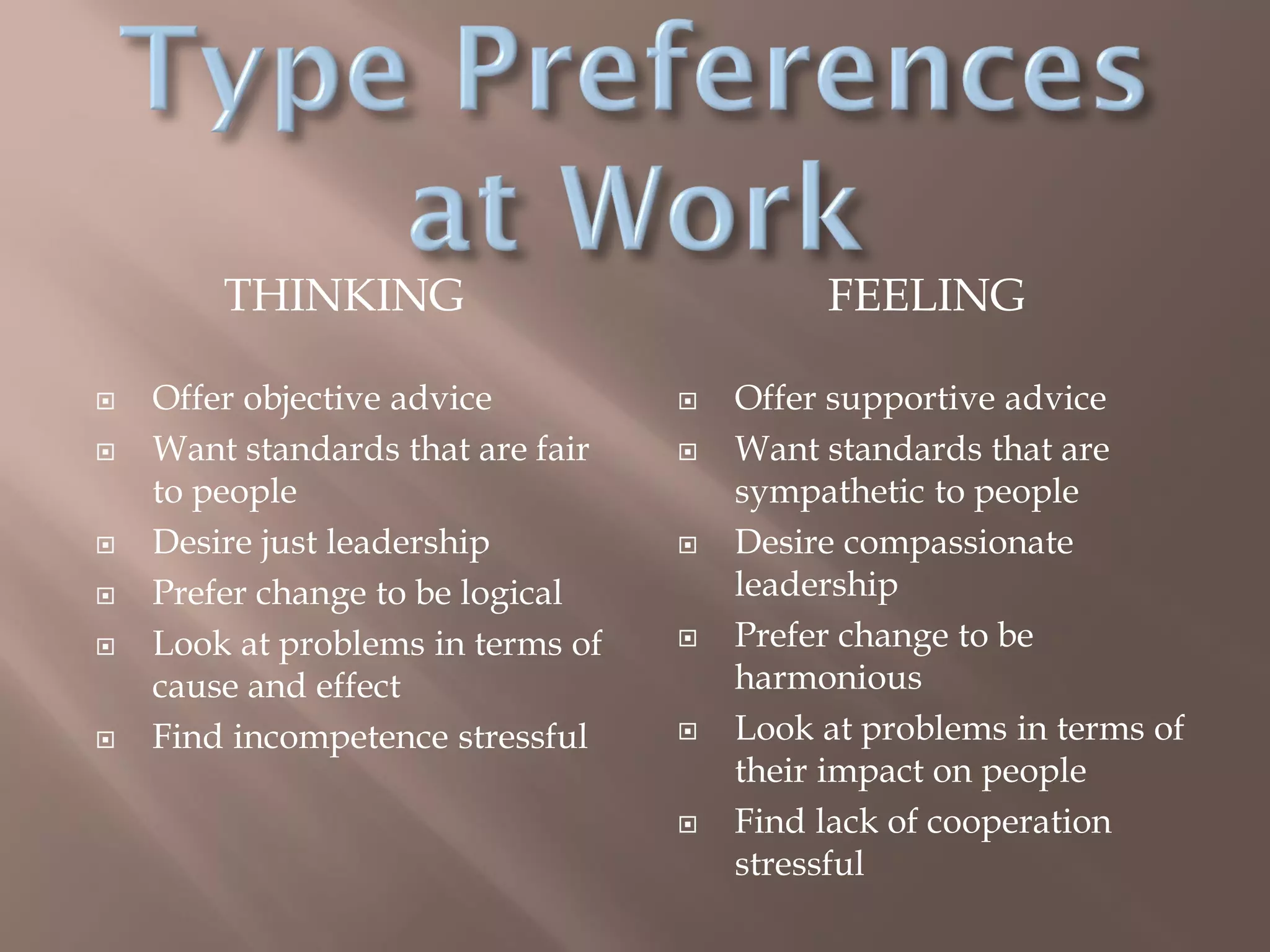
THINKING FEELING
 Offer objective advice
 Want standards that are fair
to people
 Desire just leadership
 Prefer change to be logical
 Look at problems in terms of
cause and effect
 Find incompetence stressful
 Offer supportive advice
 Want standards that are
sympathetic to people
 Desire compassionate
leadership
 Prefer change to be
harmonious
 Look at problems in terms of
their impact on people
 Find lack of cooperation
stressful
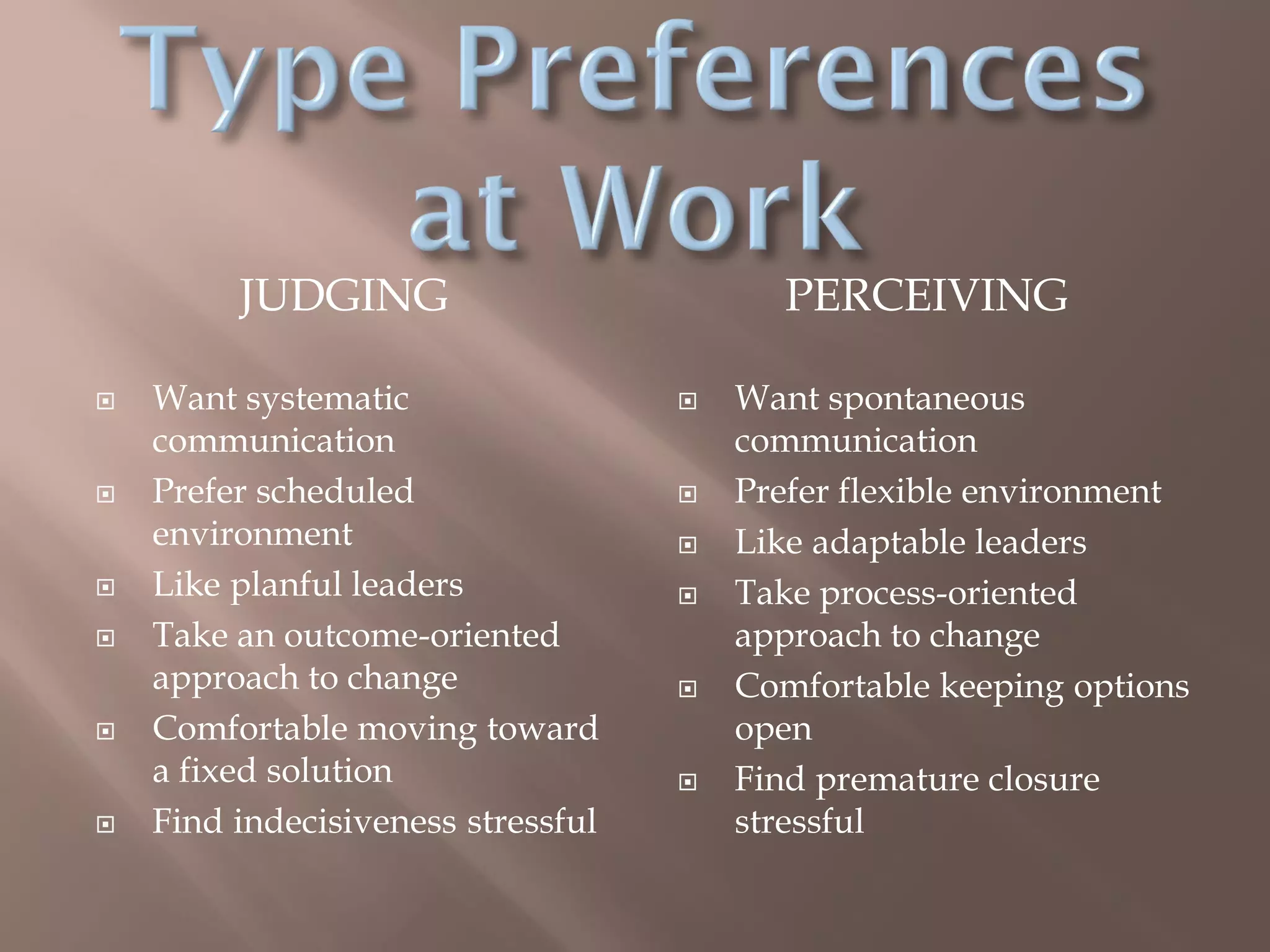
JUDGING PERCEIVING
 Want systematic
communication
 Prefer scheduled
environment
 Like planful leaders
 Take an outcome-oriented
approach to change
 Comfortable moving toward
a fixed solution
 Find indecisiveness stressful
 Want spontaneous
communication
 Prefer flexible environment
 Like adaptable leaders
 Take process-oriented
approach to change
 Comfortable keeping options
open
 Find premature closure
stressful
MBTI Type & Team Building Presentation Slides

MBTI Type & Team Building Presentation Slides

  • 1.
    How to UseType Preferences to Work Together and Communicate Effectively Barry University School of Law – Presentation for Library Staff
  • 2.
     MBTI CertifiedPractitioner since 2009  Director of Career Services  Career & Professional Development  Attorney at Law (CT Licensure) Sonja Hayes, J.D. ESFJ
  • 3.
     Get betteracquainted with one another while developing a stronger team dynamic  Become aware of preferences for taking in information and making decisions  Discover individual and team problem-solving styles  Foster an exchange of viewpoints  Learn and practice better ways of working together
  • 4.
     Attack theproblem, not the person  Give everyone the opportunity to state his or her opinion  Remember that opinions differ; there may be several perspectives on the same situation  Talk solely about your own beliefs and experiences—avoid blanket statements such as “Everyone feels that …”; instead, try “I feel that …”
  • 5.
     Present feedbackin a constructive manner only  Avoid side conversations, stay with the process, and attend to whoever is speaking  Keep all discussions during the teambuilding confidential; unless the team agrees to share information, what is said in the workshop stays in the workshop  Remember that resolving team problems is the responsibility of team members; facilitating is the responsibility of the teambuilder
  • 7.
     Type isinnate  Type can be influenced  Type is not a box  Type is non-judgmental  Type is not an excuse  Type doesn’t explain everything  Type is a journey
  • 8.
     Type isabout preferences; it is not about knowledge, skills, or abilities  There are no right or wrong preferences  No preferences are unhealthy or inappropriate  Type is not an excuse—we can all use every function and every attitude  Team members are the best judges of their own preferences  Type should empower team members, not limit them
  • 9.
     “What TypeAm I”  My story
  • 10.
  • 11.
    HOW WE TAKEIN INFORMATION
  • 12.
    HOW WE MAKEDECISIONS
  • 13.
  • 16.
    EXTRAVERSION INTROVERSION  Speak-Think-Speak Favor energetic atmosphere  Desire action-oriented leader  Enthusiastic approach to change  Prefer to start problem- solving in group setting  Find too little interaction stressful  Think-Speak-Think  Favor calm atmosphere  Desire contemplative leader  Measured approach to change  Prefer to start problem- solving individually  Find too much interaction stressful
  • 17.
    SENSING INTUITION  Talkin specific terms  Value being surrounded by realistic people  Want pragmatic leadership  Proceed step by step during change  Prefer to employ established problem-solving methods  Feel stressed when overloaded with abstract theories  Talk in general terms  Value being surrounded by imaginative people  Want visionary leadership  Jump from step to step during change  Prefer to create new problem-solving methods  Feel stressed when overloaded with specific details
  • 18.
    THINKING FEELING  Offerobjective advice  Want standards that are fair to people  Desire just leadership  Prefer change to be logical  Look at problems in terms of cause and effect  Find incompetence stressful  Offer supportive advice  Want standards that are sympathetic to people  Desire compassionate leadership  Prefer change to be harmonious  Look at problems in terms of their impact on people  Find lack of cooperation stressful
  • 19.
    JUDGING PERCEIVING  Wantsystematic communication  Prefer scheduled environment  Like planful leaders  Take an outcome-oriented approach to change  Comfortable moving toward a fixed solution  Find indecisiveness stressful  Want spontaneous communication  Prefer flexible environment  Like adaptable leaders  Take process-oriented approach to change  Comfortable keeping options open  Find premature closure stressful